Midweek Update

Midweek Update

From Washington, DC,

  • The New York Times reports,
    • “Healthcare facilities across the west coast of Florida, from clinics to nursing homes, are temporarily shutting their doors and evacuating patients in preparation for Hurricane Milton’s potentially devastating landfall.
    • “Mandatory evacuation orders in Pinellas County, which includes Clearwater and St. Petersburg, affect about 6,600 patients at six hospitals, 25 nursing homes and 44 assisted living facilities, according to the order. Scores of medical clinics and dialysis centers across the region have also closed, including dozens of outpatient facilities operated by the BayCare, a health care network.
    • “The region’s only Level 1 trauma center, Tampa General Hospital, has deployed a temporary flood barricade that officials hope will stave off the storm surge. Most of the hospitals in the region that are still open have suspended elective operations or have stopped accepting new patients.
    • “University of Florida Health, which operates about a dozen hospitals across the state, had enough food, water and fuel to keep its facilities operating for 96 hours, according to Peyton Wesner, a spokesman.”
  • and
    • “U.S. officials approved airlifts of IV fluids from overseas manufacturing plants on Wednesday to ease shortages caused by Hurricane Helene that have forced hospitals to begin postponing surgeries as a way to ration supplies for the most fragile patients.
    • “The current shortage occurred when flooding coursed through western North Carolina and damaged a Baxter plant, which is now closed for cleaning. The plant makes about 60 percent of the United States’ supply of fluids used in IVs, for in-home dialysis and for people who rely on IV nutrition. They include premature babies in intensive care and patients who rely on tube feeding to survive.
    • “The situation could become even more dire now that Hurricane Milton is hitting Florida. On Tuesday, workers at B. Braun, makers of a fourth of the nation’s IV fluids, loaded trucks at the company’s plant in Daytona Beach with the medical bags and drove them north through the night to what they hoped would be a safer location.
    • “The Baxter plant, in Marion, N.C., and the B. Braun site in Daytona Beach manufacture about 85 percent of the nation’s supply of IV fluids. Experts on shortages have long pointed out the risk of such over-concentration of critical supplies, citing exposure to disasters like those now at hand. Even before the latest storm, supplies were tight and reflected a longstanding problem of how few companies are willing to produce crucial but low-cost and low-profit medical products.”
  • Here’s a link to an HHS Secretary letter to healthcare leaders about the IV fluid shortage, and Beckers Payer Issues offers five notes on insurer response to Hurricane Milton.
  • Kevin Moss, writing in Govexec, takes a closer look at 2025 FEHB premiums.
  • CMS has issued a memorandum with payment parameters guidance for the 2026 plan year
    • The 2025 maximum limit on cost sharing for FEHB and other group plans is $10.150 for self only coverage and $20,300 for other than self only coverage. These limits represent approximately a 10.3% increase over the 2025 maximum limits of $9,200 for self only coverage and $18,400 for other than self only coverage.
  • “The International Foundation of Employee Benefit Plans shares links to the final 1094-B, 1095-B, 1094-C, and 1095-C forms [and instructions] that employers, plan sponsors and group health insurers will use to report 2024 health coverage to plan members, and the IRS as required by the Affordable Care Act (ACA).” 
  • STAT News tells us,
    • “A new report from congressional budget experts this week estimated that it would cost Medicare an additional $35 billion over nine years if the program began covering GLP-1 drugs for obesity. But the report also noted that half of seniors who would qualify for obesity coverage already have access to the drugs for other conditions.”
  • The American Hospital Association News notes,
    • “The Centers for Medicare & Medicaid Services Oct. 9 released a request for information and a sample list of prescription drugs it intends to include under a proposed Medicare $2 Drug List Model. Under the model, people enrolled in a Part D plan would have access to these drugs for a low, fixed copayment no higher than $2 for a month’s supply per drug. The model would provide individuals more certainty about out-of-pocket costs for these generic covered drugs that would target common conditions such as high cholesterol and high blood pressure. The Center for Medicare and Medicaid Innovation’s model aims to test whether a simplified approach to offering low-cost, clinically important generic drugs can improve medication adherence, lead to better health outcomes and improve satisfaction with the Part D prescription drug benefit among Medicare beneficiaries and prescribers. It is also aligned with Executive Order 14087, “Lowering Prescription Drug Costs for Americans,” which directed the creation of new payment models to lower drug costs and promote access. Comments are due Dec. 9 through a CMS survey.”
  • KFF provides us with “A Current [Detailed] Snapshot of the Medicare Part D Prescription Drug Benefit.”
  • The Wall Street Journal reports,
    • CVS Health filed a motion seeking to disqualify top Federal Trade Commission officials from participating in a case regarding some of its businesses over alleged bias against pharmacy benefit managers.
    • “The healthcare company said Chair Lina Khan, Commissioner Rebecca Kelly Slaughter and Commissioner Alvaro Bedoya through public statements show they have prejudged the matter at hand and that their participation would violate the due process rights of respondents Caremark Rx and Zinc Health Services.
    • “CVS specified that past statements made false assertions that are critical to the merits of the case, including that pharmacy benefit managers “control” drug pricing and patient access to drugs including insulin.
    • Cigna Group, on behalf of Express Scripts and other of its businesses, also filed a motion seeking to disqualify Khan, Slaughter and Bedoya.
    • UnitedHealth Group, who reportedly filed a similar motion, didn’t immediately respond to a request for comment.”

From the public health and medical research front,

  • STAT News points out,
    • “A trio of scientists who opened new doors in our understanding of the structure of proteins — the fundamental building blocks of biology — and even came up with ways to create new proteins won the Nobel Prize in chemistry Wednesday.
    • “The prize went to David Baker of the University of Washington, and to Demis Hassabis and John Jumper, who work at Google DeepMind in London. Baker will receive half the 11 million Swedish kronor (just over $1 million) prize, while Hassabis and Jumper will split the other half.” * * *
    • “Baker said he was sleeping when he received the Nobel call early Wednesday morning, as is often the case for laureates in the U.S. When he was told he had won the prize, his wife started yelling, drowning out the person on the phone. He had to go to another room so he could hear the rest of the call, he said. 
    • “Asked by one journalist to pick his favorite protein, Baker demurred, saying he didn’t want to identify just one. But he did highlight one that he and his colleagues had crafted that could potentially block the coronavirus behind Covid-19 from infecting cells, hinting at one of the applications of his discoveries that researchers are now pursuing. 
    • “I’ve been very excited about the idea of a nasal spray of little designed proteins that would protect against all possible pandemic viruses,” he said.”
  • Kudos to the recipients.
  • The American Medical Association tells us what doctors wish their patients knew about microplastics.
  • The National Cancer Institute shares its Cancer Information Highlights about “Breast Cancer | Jaw Necrosis | Leiomyosarcoma.”
  • Per National Institutes of Health press release,
    • “The National Institutes of Health has launched a nationwide consortium to address the dramatic rise in youth diagnosed with type 2 diabetes over the past two decades, a trend that is expected to continue. The effort aims to advance understanding of the biologic, social, and environmental drivers of youth-onset type 2 diabetes, with the goals of determining which children are at highest risk for developing the disease and how to better prevent, screen for, and manage type 2 diabetes in young people.
    • “Our children who are overweight or have obesity are at risk, but we don’t know how best to identify the children who will progress to type 2 diabetes,” said Rose Gubitosi-Klug, M.D., Ph.D., study lead, and chief of pediatric endocrinology at Case Western Reserve University/Rainbow Babies and Children’s Hospital, Cleveland. “This study will bring us closer to our goal of prevention of type 2 diabetes in future generations of youth.” * * *
    • “For more information about the study, known as DISCOVERY of Risk Factors for Type 2 Diabetes in Youth, please visit discovery.bsc.gwu.edu.”

From the U.S. healthcare business front,

  • The American Hospital Association News lets us know,
    • “The average annual premium for employer-sponsored family health coverage rose 7% in 2024 to $25,572, according to the latest KFF annual survey. It is the second consecutive year with a 7% increase. For workers who have an annual deductible for single coverage, the 2024 average is $1,787, similar to last year’s $1,735 and up 8% from 2019. The survey found that the amount workers’ pay toward annual premiums has increased less than 5% since 2019, which may be due to a tight labor market.”
  • Per Beckers Hospital CFO Report,
    • “Chicago-based CommonSpirit is “investing significantly in high-growth markets,” such as Arizona and Colorado, to ensure the long-term sustainability of the health system, CFO Dan Morissette said during the company’s investor call on Oct. 4.
    • “Last year, Centennial, Colo.-based Centura Health folded into CommonSpirit, which manages 20 hospitals and more than 240 care sites in Colorado, Kansas and Utah that were previously managed by Centura. 
    • “The news came shortly after CommonSpirit and Altamonte Springs, Fla.-based AdventHealth said they would end their Centura Health joint venture after 27 years, with each system directly managing their respective care sites in Kansas and Colorado. 
    • “Much of our focus in this market is on transition alignment and ambulatory care sites, as well as future inpatient growth to meet the rapidly expanding demand,” Mr. Morissette said. “We also announced a partnership with Kaiser in this market, which is an important new collaboration for us.Intentional capital deployment means taking a system-level approach to reviewing and 
    • “CommonSpirit is also diversifying its service line in these high-growth markets. Areas of focus include behavioral health, cancer care and outpatient care.”
  • Per Fierce Pharma,
    • “GSK has agreed to pay up to $2.2 billion to resolve approximately 80,000 lawsuits brought by users of Zantac who claimed the heartburn drug caused their cancer.
    • “The agreement frees the British pharma giant from litigating 93% of the state court cases it faced in the U.S., most of which had been consolidated in Delaware. The settlement was reached with 10 plaintiff firms with the agreement that GSK does not admit liability, the company said.
    • “With the deal, lawyers representing the plaintiffs are unanimously recommending that clients accept terms of the settlement, which is expected to be complete by the end of the first half of 2025, GSK said.
    • “The agreement is in line with a similar settlement Sanofi reportedly made earlier this year. The French pharma consented to pay $100 million to resolve roughly 4,000 Zantac claims, Bloomberg reported in April. That deal paid plaintiffs roughly $25,000 each. The GSK settlement comes to approximately $27,500 per claimant.
    • ‘In May of this year, Pfizer also settled approximately 10,000 Zantac lawsuits for an undisclosed figure. Pfizer had the rights to sell the antacid from 1998 to 2006.
    • “In addition to the $2.2 billion deal, GSK also said on Wednesday that it will pay $70 million to resolve a qui tam complaint filed by Connecticut-based laboratory Valisure, which first raised alarm bells about Zantac’s risks in 2019 during routine batch testing.”
  • Per MedTech Dive,
    • “The number of medical devices with artificial intelligence technology has risen sharply in the past decade. 
    • “The Food and Drug Administration has authorized 950 AI or machine learning-enabled devices as of Aug. 7, 2024, according to the agency’s database. While the FDA authorized the first AI-enabled device in 1995, the number of submissions has spiked in recent years.
    • “In 2015, the FDA authorized six AI medical devices. In 2023, the agency authorized 221 devices, according to data reviewed by MedTech Dive.
    • “The trend has been driven by more connected devices, more investment into AI and machine learning and growing familiarity with how software is regulated as a medical device, experts said in interviews.
    • “We’re definitely seeing huge increases in investment. There’s no doubt about that,” said Jennifer Goldsack, CEO of the Digital Medicine Society, an industry group for digital health.”

Tuesday Tidbits

Photo by Patrick Fore on Unsplash

From Washington, DC,

  • Yesterday, the Supreme Court invited the Solicitor General to submit a brief expressing her views on the 10th Circuit’s decision in PCMA v. Mulready which is favorable to ERISA and Medicare preemption of state PBM reform laws.
  • The Solicitor General typically submits a brief favoring Supreme Court review no later than December so that the Court can hear the case in its current term. If the Solicitor General opposes Supreme Court review, her brief likely will be submitted next April.
  • The FEHBlog hopes that the Solicitor General files an April 2025 brief.
  • Also yesterday, the Defense Department announced a one-year pilot program to provide no-cost supplemental health support services to DoD civilian employees serving in Japan after a yearlong effort to identify and address concerns regarding access to medical care.
    • “This pilot is called the Pilot Health Insurance Enhancement for DoD Civilian Employees in Japan and will assist [11,000] eligible civilian employees with health care navigation and upfront costs associated with accessing Japan’s healthcare system.
    • “To be eligible, the employee must be enrolled in a participating health plan through the Federal Employees Health Benefits (FEHB) program. The enrollment window for eligible employees will be the Federal Benefits Open Season, which runs this year Nov. 11 through Dec. 9. Federal Benefits Open Season allows federal civilians to enroll in or change health care options.
    • “The services provided under this pilot will begin Jan. 1, 2025, when participants can use the services and access support through a call center. The call center will be open 24/7 and staffed with bilingual service representatives who will assist callers with identifying their needs, make appointments with provider offices, and issue payment guarantees up front. Dependents are not eligible for services during the pilot, which runs through Sept. 29, 2025. * * *
    • “The Office of the Assistant Secretary of Defense for Health Affairs will oversee the pilot program and has awarded a $4.2 million contract to International SOS Government Services Inc., which is also the prime contractor for the TRICARE Overseas Program. The contract for this pilot is being funded by the military departments, defense agencies and DoD field activities that have civilian employees working in Japan.
    • “Active-duty service members and TRICARE Prime beneficiaries have prioritized access to health care in military hospitals and clinics based on current federal law and DoD policy. DoD civilians who are not TRICARE beneficiaries may use military health facilities on a space-available basis. [This unfortunate 2023 policy change led to this pilot.]
    • “Agreements with FEHB insurance carriers who currently provide coverage for DoD civilian employees in Japan will be established to provide direct billing agreements. Non-appropriated Fund (NAF) employees are eligible for this program if enrolled in an Aetna International plan.”
  • The FEHBlog finds it odd that the DOD pilot does not cover eligible family members.
  • Health Affairs Forefront provides even more details on the lengthy proposed 2026 Notice of Benefit and Payment Parameters for the ACA marketplace released last Friday.
  • Federal News Network tells us,
    • “After making improvements for two months, the Office of Personnel Management retirement backlog saw a decline in claims received and processed claims for the month of September.
    • “OPM received 5,618 claims in September, 1,465 less than the month of August’s claims received. OPM processed 6,302 claims in September, 1,400 less than in August.”
    • That appears to be a wash to the FEHBlog.

From the public health and medical research front,

  • American Hospital News informs us,
    • “The Centers for Disease Control and Prevention last week confirmed the first two human cases of H5 bird flu in California. The individuals were workers who had contact with infected dairy cows, CDC said. There have been 16 total human cases of H5 bird flu reported in humans across the country this year, with six being linked to exposure to sick or infected dairy cows, nine with exposure to infected poultry, and one case in Missouri with an origin that has yet to be determined. The CDC’s risk assessment of a bird flu outbreak for the general public remains low.”
  • Per BioPharma Dive,
    • “Vaccine maker GSK unveiled new data Tuesday showing its respiratory syncytial virus vaccine Arexvy protected older adults over three seasons against disease caused by infection.
    • “Across the entire time period, one dose of Arexvy was 63% effective against RSV broadly, and 67% effective against severe disease, GSK said. However, the shot’s efficacy waned, falling to an estimated 48% in the third season alone.
    • “Currently, the Centers for Disease Control and Prevention doesn’t recommend a second RSV vaccine dose. While GSK described the three-season data as evidence of the shot’s “significant health impact,” it said that “over time, revaccination is expected to be required to maintain an optimal level of protection.”
  • CNN reports,
    • “A new study found that having your arm in the wrong position during blood pressure checks — either at home or the doctor’s office — can result in readings “markedly higher” than when your arm is in the recommended position: appropriately supported on a table with the middle of the cuff positioned at heart level.
    • “This suggests that not consistently having your arm positioned and supported appropriately during a blood pressure reading might result in a misdiagnosis of high blood pressure, which some experts worry could possibly lead to unnecessary treatment.
    • “The study, published Monday in the journal JAMA Internal Medicine, found that having your arm resting in the lap during a blood pressure reading can lead to an overestimated systolic blood pressure measurement by 3.9 mm Hg and overestimated diastolic reading by 4 mm Hg. And having your arm hang by your side can lead to an overestimated systolic reading by 6.5 mm Hg and overestimated diastolic reading by 4.4 mm Hg.”
  • Per Healio,
    • “A blood test for men at the time of a metastatic prostate cancer diagnosis may predict treatment response and survival, according to study results.
    • “The test could help oncologists decide which patients should receive standard treatment and who might derive more benefit from a clinical trial, researchers concluded.”
  • The Washington Post lets us know,
    • “Children should spend up to two hours a day outside to reduce their risk of myopia, or nearsightedness, according to a new consensus report from the National Academies of Sciences, Engineering and Medicine. At least one of those hours should take place during the school day, the report says.
    • Myopia is a condition in which distant objects are blurry but close-up objects look clear. The National Academies report cites research indicating a significant rise in myopia worldwide.”
  • The National Institutes of Health posted the latest issue of “Women’s Health In Focus at NIH, Volume 7, Issue 3, 2024.” This is a quarterly publication of NIH’s Office of Research on Women’s Health.
  • The International Foundation of Employee Benefit Plans offers flu season advice to employers.

From the U.S. healthcare business front,

  • The KFF-Peterson Health Tracker shares a “chart collection explores how health spending is expected to grow in coming years, based on National Health Expenditure (NHE) projections from federal actuaries. A related chart collection explores how U.S. health spending has changed over time using historical data, and an interactive tool allows users to explore health spending changes over time.”
  • Modern Healthcare reports,
    • “Four large nonprofit health systems created a new company to use as a testing ground for boosting access to drugs, improved care coordination for Medicare Advantage patients and streamlined billing processes.
    • Baylor Scott & White HealthMemorial Hermann Health SystemNovant Health and Providence are the founding members of Longitude Health. Each health system has made an undisclosed financial commitment to fund Longitude, which is a Delaware-based holding company owned and managed by its founders.
    • “The health system-led, for-profit entity plans to form three operating companies that will essentially act as startups on pharmaceutical development, care coordination and billing. Chief executive officers of the participating systems make up the Longitude board, along with Longitude CEO Paul Mango, former chief of staff at the Centers for Medicare and Medicaid Services.
    • “Executives hope to create additional operating companies and attract more health systems and investors over the next year.”
  • Beckers Hospital Review adds, “The U.S. spent $99 billion on both oral and clinician-administered cancer therapies in 2023, according to a report published in April by analytics firm IQVIA. As cancer drug prices continue to increase, spending is projected to grow.”
  • Per Fierce Pharma,
    • “As the eastern U.S. braces for another storm in the form of Hurricane Milton, at least one major drugmaker is stepping up to support Florida locals and preserve access to critical medical supplies and drugs.
    • “Pfizer—which opened a global hub in Tampa, Florida, in 2021—is setting out to bolster emergency services, pool donations and ease medical supply needs as Milton touches down this week, the company’s CEO, Albert Bourla, Ph.D., said in a post on X (formerly Twitter) Tuesday.
    • “Like many people, I have watched with a heavy heart as the scale of the damage caused by Hurricane Helene has become fully evident,” the chief executive said. “Now it seems Hurricane Milton is heading toward the Tampa area, where we have a major Pfizer facility.”
    • “In light of the impending natural disaster, Bourla said Pfizer is pledging all it can to support the community during this trying time.”
  • Per MedTech Dive,
    • “Baxter said Monday it has made progress restoring a North Carolina manufacturing plant damaged by Hurricane Helene. 
    • “Rain and storm surge from Hurricane Helene flooded the plant and damaged access bridges. So far, Baxter has not identified any structural damage to the facility. The Marion, North Carolina, site is the company’s largest manufacturing facility and produces dialysis solutions and IV fluids.
    • “Baxter is resuming shipments of dialysis products to hospitals and patients after a temporary hold last week.”
  • and
    • “Mercury Medical has recalled 1,300 emergency breathing support devices in response to a problem that can affect ventilation of the patient.
    • “The Food and Drug Administration, which published an alert about the problem Monday, categorized the action as a Class I recall. Mercury asked customers to stop the use and distribution of the affected devices.
    • “No reported injuries or deaths have been associated with the issue, but the FDA said affected products could cause serious adverse health consequences.”
  • Beckers Hospital Review points out,
    • “A group representing companies that produce copycat versions of Eli Lilly weight loss medications has filed a lawsuit against the FDA following the agency’s recent decision to remove the drugs from its shortage list, Bloomberg reported Oct. 7. 
    • “The Outsourcing Facilities Association, along with compounding pharmacy FarmaKeio Superior Custom Compounding, alleged the FDA acted arbitrarily and failed to provide prior notice regarding its decision. 
    • “The plaintiffs asserted that the shortage of Lilly’s drugs is not truly over and argued that the FDA’s action limits patient access to essential medications. The lawsuit seeks to overturn the FDA’s removal of Lilly’s weight loss drugs from the shortage list. 
    • “With the FDA announcement, many patients who relied on compounded versions of the medications now face the choice of switching to higher priced brand-name medications or seeking alternatives from Novo Nordisk.” 
  • Per SHRM, Mercer Consulting predicts
    • “Employers may be cautious about pay due to economic concerns, but they are planning to stay consistent with salaries next year—at least for now.
    • “On average, U.S. employers are budgeting for 3.3% merit increases and 3.6% increases for their total salary budgets for nonunionized employees, according to new data from consulting firm Mercer, which surveyed more than 1,100 employers to gauge what pay will look like in 2025. These numbers are the same as the actual pay increases that employers delivered in 2024.
    • “Mercer’s analysis also found that, in addition to remaining consistent with salary increases, employers are planning to promote just under 10% of their employees in 2025. For companies with a separate promotion budget, the average promotion increase budget for 2025 is 1%, down slightly from 1.1% in 2024.
    • “There are variations in compensation projections across industries, Mercer found. For example, technology and life sciences reported above-average compensation budgets, with merit and total increase budgets at 3.5% and 3.9%, respectively. On the other end of the spectrum, retail and wholesale reported merit and total increase budgets of 3.1% and 3.3%, respectively.”

Monday Roundup

Photo by Sven Read on Unsplash

From Washington, DC,

  • Federal News Network tells us,
    • “Close to 15,000 blue-collar federal employees working in trade, craft and manual labor jobs are likely to see their federal pay rates increase by as much as 12%, once a new proposed rule from the Office of Personnel Management becomes finalized.
    • “The proposed regulations, which OPM released on Monday, aim to improve overall pay parity for roughly 168,000 blue-collar federal workers who are paid hourly through the Federal Wage System (FWS). In practice, OPM’s proposal would align the map of FWS wage areas more closely with the General Schedule’s locality pay map.
    • “This would lead to greater equity across federal pay systems, with FWS workers’ pay more aligned with GS workers who work in the same geographic area,” OPM wrote in a press release Monday.
    • ‘As a result of the proposed re-mapping, around 15,000 blue-collar federal employees would begin receiving higher pay rates once OPM’s regulations become final — as long as there are no major changes to how the proposed regulations are currently written.”
  • and
    • “The Postal Service, more than three years into a 10-year reform plan, is seeking a higher borrowing limit with the Treasury Department to sustain its infrastructure upgrades.
    • ‘USPS, in an update to its “Delivering for America” plan last week, said its current $15 billion debt limit with Treasury was set in the 1970s, and has not been adjusted for inflation in decades.
    • “We continue to lack access to capital and credit markets that most in the private sector rely on in transformative situations like ours,” USPS wrote in a report last week.
    • “USPS is also calling on the Office of Personnel Management to reassess what it pays into the Civil Service Retirement System, the pension system for federal employees who began government service before 1987.”
  • Gallagher timely reminds us about ACA FAQ 63 which told us
  • The American Hospital Association News informs us,
    • “AHA President and CEO Rick Pollack Oct. 7 sent a letter to President Biden urging the Administration to take immediate actions to increase the supply of IV solutions for hospitals and other health care providers that are struggling with shortages following the closure of a Baxter manufacturing plant as a result of Hurricane Helene.  
    • “Our members are already reporting substantial shortages of these lifesaving and life-supporting products,” Pollack wrote. “Patients across America are already feeling this impact, which will only deepen in the coming days and weeks unless much more is done to alleviate the situation and minimize the impact on patient care.”  
    • “The letter includes a number of specific actions the AHA is asking the Administration to take to support hospitals’ ability to care for patients and communities. In addition, the AHA invited the White House and agency experts to join the association in a forum to communicate directly with hospitals and health systems to “inform each other in real time on the status of the situation while we work together to mitigate the impact on patients.” 
  • Fierce Healthcare offers a summary of HHS’s proposed 2026 notice of benefit and payment parameters for the ACA marketplace. The public comment deadline is November 12, 2024.

From the Food and Drug Administration front,

  • Per an FDA press release,
    • “Today [October 7], the U.S. Food and Drug Administration granted marketing authorization for the Healgen Rapid Check COVID-19/Flu A&B Antigen Test. The test, authorized for use without a prescription, is for use by individuals experiencing respiratory symptoms and uses a nasal swab sample to deliver at-home results in approximately 15 minutes for COVID-19 and influenza (flu). The test detects proteins from both SARS-CoV-2 (the virus that causes COVID-19) and influenza A and B (the viruses that causes flu).  
    • “This is the first over the counter (OTC) test that can detect influenza to be granted marketing authorization using a traditional premarket review pathway, which enables the test to be marketed in the absence of an applicable emergency use declaration. Other OTC flu/COVID tests are currently available under emergency use authorization.” 
  • Per MedTech Dive,
    • The Food and Drug Administration approved Exact Sciences’ Cologuard Plus colorectal cancer test, the company said Friday [October 4]
    • The product is an updated version of Exact Sciences’ existing stool-based cancer test. The company expects to launch the test, which has higher specificity than its predecessor, with Medicare coverage and guideline inclusion in 2025.
    • Exact Sciences recently failed to land a Medicare price premium for Cologuard Plus, but Leerink Partners and William Blair analysts expect one of the company’s subsequent attempts to succeed.

From the public health and medical research front,

  • The Wall Street Journal reports,
    • “The Nobel Prize in medicine was awarded to Victor Ambros and Gary Ruvkun for the discovery of microRNA, molecules that help control how genes are expressed.
    • “Their findings unlocked new areas of research into the roles these molecules play in human health. Researchers are exploring microRNA treatments for cancer, heart disease and dementia.”
    • “Ruvkun and Ambros were giddy with excitement on Monday after learning of their Nobel honors.”
    • Kudos to the recipients.
  • and, on a different topic,
    • “Inflammaging, a chronic low-grade inflammation, is associated with an increased risk of heart attack, cancer, Alzheimer’s and other conditions. It occurs as we age, but some people develop it more than others.
    • “Chronic inflammation can be caused by cellular senescence, where damaged aging cells secrete inflammatory proteins. 
    • “Prevention and treatment measures include lifestyle changes such as exercise, healthy diet and adequate sleep.”
  • The American Medical Association lets us know eight things that doctors wish their patient knew about the flu vaccine.
  • Consumer Reports, writing in the Washington Post, fills us in on how to choose the right multivitamin for your body’s needs.
  • Per BioPharma Dive,
    • “An experimental, muscle-preserving therapy from Scholar Rock succeeded in a Phase 3 trial in spinal muscular atrophy, positioning the biotechnology company to seek approvals in the U.S. and Europe early next year.
    • “A regimen of Scholar Rock’s drug, apitegromab, and a standard SMA therapy significantly improved motor function after one year versus treatment with a typical SMA medicine and a placebo, the company said Monday. Specifically, a prespecified, pooled analysis showed children between 2 and 12 years old who received one of two tested doses had an average difference versus placebo of about a 1.8-point change from baseline on a scale used to evaluate their physical abilities.
    • “Motor function benefits were also observed in a smaller, exploratory group of 13- to 21-year-olds, according to the company. No new safety findings were reported, and no one dropped out of the trial due to side effects. “We believe these data collectively show that apitegromab has the potential to become part of a new standard of care,” CEO Jay Backstrom said on a conference call. Shares more than quadrupled in value Monday.”

From the U.S. healthcare business front,

  • Per Fierce Healthcare,
    • “The healthcare industry is making the push toward greater adoption of value-based care, yet it’s not a secret that progress has been slow-moving.
    • “With that backdrop, UnitedHealth Group has released its latest “A Path Forward” report, which is a biennial look at progress in the shift to value. The paper includes dozens of policy recommendations that the team believes can accelerate that transformation.
    • “Wyatt Decker, M.D., UnitedHealth Group executive vice president and chief physician who’s leading the charge at the company on value-based care and innovation, told Fierce Healthcare in an interview that the U.S. healthcare system is extremely effective at addressing crises, complex patient conditions and end-stage needs. But it’s in prevention where “we really fall down,” he said.
    • “We don’t, by and large, have a system that focuses on keeping people healthy and well,” Decker said. “Most people wonder why their physician or their assistants don’t reach out when it’s time to get a screening and why they have so much trouble scheduling appointments, finding doctors, and, of course, figuring out how much it’s all going to cost.” 
  • and
    • “GenAI experimentation, research and potential use cases proliferate by the day. Like other industries, healthcare is hurrying to jump on the opportunity. A growing number of companies are creating genAI products to help organizations streamline their administrative workflows, simplify physician notetaking or respond to basic patient questions. But publicly available tools, like ChatGPT, are popular, easy to access and simple to use. If consumers are using them, are doctors, too?
    • “The answer, Fierce Healthcare finds, is yes. In the first in-depth look of its kind into physician use of public genAI tools, Fierce Healthcare spoke with nearly two dozen doctors, students, AI experts and regulators, and helped conduct a survey of more than 100 physicians. The reporting confirms that some doctors are turning to tools intended for non-clinical uses to make clinical decisions. With no standardized guidelines, lagging physician training and regulators racing to try to keep up with rapidly changing technology, guardrails to protect patients appear to be years behind current rates of utilization.
    • “You have an uncertain regulatory environment, you’ve got a march of technology and at the same time, you have an uptake by both consumers and healthcare professionals. And the consequences of that are very much uncertain,” Peter Bonis, M.D., chief medical officer at Wolters Kluwer, an information services company, told Fierce Healthcare.”

  • The FEHBlog learned a new use for the work “hallucination” today at the Texas Bar Association’s Health Law Conference. A generative AI mistake is a hallucination.
  • McKinsey and Company discuss “Advancing inclusive care pathways for people with disabilities. Across disease types, patients with disabilities experience inequities all along the care pathway—with consequently worse outcomes. Inclusive pathway designs and targeted interventions could help.”

Friday Factoids

From Washington DC

  • Federal News Network points out
    • “The Office of Personnel Management is still facing several long-standing management challenges, but one challenge in particular has been knocked off the latest list from OPM’s inspector general office.
    • “Due to “continued improvements,” the federal retirement claims processing backlog at OPM is no longer a top management challenge for the agency, OPM IG Krista Boyd wrote in an Oct. 1 report.”
  • Here are some of the FEHBlog’s long-standing management challenges which are not mentioned in the IG’s report
    • OPM and Congress should place a moratorium a new FEHB benefit mandates in order to allow competition in the FEHB to flourish.
    • OPM should at long last implement a statute added to the FEHB Act in 1989, 5 U.S.C. Section 8910(d), requiring OPM in cooperation with CMS to offer FEHB carriers a Medicare coordination of benefits database.
    • OPM should share with carriers much more information from its study of the FEHB Program called for by 5 USC Section 8910(a).
    • OPM should follow the path created by all other large employers in the U.S. by providing carriers with a HIPAA 820 electronic enrollment roster that would allow carriers to reconcile enrollment and premiums at the individual enrollee level.
  • The Congressional Budget Office released a report about “Alternative Approaches to Reducing Prescription Drug Prices.”
  • Bloomberg reports,
    • “Proposed guidelines for operating Obamacare insurance exchanges in 2026 call for tightening protections against unauthorized actions by agents and brokers who help consumers enroll in coverage. 
    • ‘The proposal, released Friday by the Centers for Medicare & Medicaid Services, sets standards for health insurers and ACA marketplaces, as well as requirements for agents, brokers, and others who help consumers enroll in marketplace coverage. It also includes policies that affect Medicaid, the Children’s Health Insurance Program, and the Basic Health Program.
    • “The 2026 Benefit and Payment Parameters proposed rule (RIN 0938-AV41) includes a number of proposals, including ways to prevent unauthorized marketplace activity by agents and brokers; standards for allowable “Silver Loading,” the raising of premiums for silver plans to offset the cost of providing cost-sharing reductions; and advancing health equity and mitigating health disparities.
    • “Our goal with these proposed requirements is providing quality, affordable coverage to consumers while minimizing administrative burden and ensuring program integrity,” the proposed rule’s preamble said.”
  • Fierce Healthcare informs us,
    • “Last month, Rep. Debbie Dingell, D-Michigan, introduced a new bill in the House to profoundly expand dental coverage for millions of Americans through The Comprehensive Dental Care Reform Act of 2024 [HR 9622].
    • “The bill is a clean companion to similar legislation brought forward by Senator Bernie Sanders, D-Vermont, which would expand coverage for individuals in Medicare, Medicaid, the individual market and the Department of Veterans Affairs.
    • “A lack of dental care can worsen other serious medical conditions, but without adequate coverage, millions of Americans go without the critical oral care they need,” said Dingell in a statement. “This comprehensive legislation will make it easier for Americans to get the dental care they deserve, by expanding coverage and increasing care providers, especially in rural and underserved communities.”

From the U.S. public health and medical research front,

  • The Centers for Disease Control and Prevention announced today,
    • “Summary
      • “COVID-19 activity is declining in most areas. Seasonal influenza is low nationally. Signs of increased RSV activity have been detected in the southeastern U.S. including Florida, particularly in young children.
    • “COVID-19
      • “Nationally, COVID-19 activity has continued declining in most areas. COVID-19-associated ED visits and hospitalizations are decreasing overall. Laboratory percent positivity is 9.2%. ED visits for COVID-19 are highest among infants and older adults. Hospitalizations for COVID-19 are highest among older adults. Provisional trends in deaths associated with COVID-19 have remained stable at 2.0% of all deaths nationally.
      • “A new variant, XEC, has been detected and is estimated to comprise 2-13% of circulating viruses in the U.S. as of September 28, 2024. Because XEC is recombined from two JN.1 lineage viruses, the 2024-2025 COVID-19 vaccines that already include JN.1 strains are still expected to provide protection.
      • Similarly, there are no impacts currently expected on tests, treatments, or symptoms at this time. For additional information, please see CDC COVID Data Tracker: Variant Proportions. There are many effective tools to prevent spreading COVID-19 or becoming seriously ill.
    • “Influenza
    • “RSV
      • “Nationally, RSV activity remains low. However, signs of increased RSV activity have been detected in the southeastern U.S. including Florida, particularly in young children.
    • “Vaccination
      • “Vaccinations to prevent fall respiratory virus have started for the 2024-25 respiratory illness season. RSV, influenza, and COVID-19 vaccines are available to provide protection during the 2024-25 respiratory illness season.”
  • The University of Minnesota’s CIDRAP adds that “wastewater levels—still highest in the West [for Covid] —now are at moderate levels.”
  • CBS News reports,
    • “The effectiveness of this year’s influenza vaccine was lower in South America than last season, the Centers for Disease Control and Prevention reported Thursday, which might be a clue to how much protection the shots could offer people in the U.S. this winter.
    • “Vaccine effectiveness was 34.5% against hospitalization, according to interim estimates from a new article published by the CDC’s Morbidity and Mortality Weekly Report, among high-risk groups like young children, people with preexisting conditions and older adults. That means, vaccinated people in those groups were 34.5% less likely than unvaccinated people to get sick enough to go to the hospital.
    • “Last year, the CDC’s report had estimated vaccine effectiveness in South America was 51.9% against hospitalization among at-risk groups. A study by the same group looking at data from 2013 to 2017 estimated effectiveness was around 43% for fully vaccinated young children and 41% for older adults.
    • “These data come from a research network coordinated by the Pan American Health Organization, including Argentina, Brazil, Chile, Paraguay and Uruguay.” 
  • STAT News notes, “After a rocky debut for new RSV tools [in 2023], hopes are high as a new season approaches. The fall’s rollout of a vaccine and an antibody shot is expected to be smoother.”
    • “Anyone who works in the pediatric field understands that if we can immunize children against RSV, whether it’s through maternal vaccination or through nirsevimab, that’s really going to be life changing as far as admissions to the hospital,” Peacock, director of the immunization services division in the Centers for Disease Control and Prevention’s National Center on Immunization and Respiratory Diseases, told STAT in a recent interview.
    • “The good news is that many people who work in this field believe this year’s rollout of the new medical tools will run a lot smoother than last year’s rocky debut outing. They warned, though, that some hurdles will remain.
    • “I expect it will be better. I can’t say how much better,” said Sean O’Leary, professor of pediatrics at the University of Colorado School of Medicine, and a pediatric infectious diseases specialist at Children’s Hospital Colorado.” * * *
    • “Despite the potential for lingering challenges, [Dr. Joseph] Domachowske, from SUNY Upstate Medical University, is hopeful the societal benefit of protecting babies from RSV will soon be apparent. “It’s working,” he said, pointing to a study the CDC published in early March that showed the effectiveness of Beyfortus in preventing RSV hospitalization in infants was 90% from October 2023 to February 2024. “We just need to improve our distribution and make sure we increase the number of babies that are eligible who are getting it.”
  • The University of Minnesota’s CIDRAP tells us,
    • “California health officials yesterday announced the state’s second H5N1 avian flu infection in a dairy farm worker who had no known connection to its first case, as federal health officials announced new steps to boost the supply of H5N1 vaccines, if needed.
    • “In related developments, federal officials today shared updates about the investigation into a recent Missouri H5N1 case with no clear exposure source and what other federal agencies are doing to manage the threat to people and animals.
    • “California’s second patient also had conjunctivitis
    • “Hours after California announced its first H5N1 case in a farm worker yesterday, officials announced a second similar case in a worker at a second farm impacted by recent outbreaks in cows. Both patients worked on farms in the Central Valley, where the virus has now been detected in 56 dairy farms since September.
    • “The California Department of Public Health said, as in the first case, the second patient had mild symptoms, including conjunctivitis. Neither reported respiratory symptoms or was hospitalized.”
  • Fierce Pharma adds,
    • “CSL Seqirus, Sanofi and GSK have collectively secured $72 million in funding from the U.S. health department to boost the country’s supply of bird flu vaccines.
    • “The grant comes from the Department of Health and Human Services’ Center for Biomedical Advanced Research and Development Authority (BARDA) under a national preparedness initiative, the Administration for Strategic Preparedness and Response said Friday.
    • “The three companies will fill and finish additional doses of their influenza A(H5) vaccines, turning bulk materials into ready-to-use vials or syringes that can be immediately distributed if needed.”
  • NBC News informs us,
    • “After the recommended age to start screening for colorectal cancer was lowered to 45, there was a small but significant increase in screenings among younger people, according to a study published in the journal JAMA Network Open
    • “The lower screening age was put into place in 2021 by the U.S. Preventive Services Task Force, which previously recommended starting screenings at age 50. 
    • “Colorectal cancer cases have been rising in people younger than 50 over the last two decades. The U.S. Preventive Services Task Force isn’t the first group to suggest lowering the screening age. In 2018, the American Cancer Society also recommended to start getting checked at 45.” 
  • Per Healio,
    • “Tirzepatide and semaglutide confer greater weight loss than other FDA-approved obesity medications with no significantly higher risk for adverse events, according to findings from a network meta-analysis published in Obesity.
    • “Over the years, we’ve had all these drugs that were approved by FDA,” Priyanka Majety, MD, assistant professor of internal medicine and adult outpatient diabetes director in the division of endocrinology, diabetes and metabolism at Virginia Commonwealth University Health System, told Healio. “Recently, the GLP-1s and tirzepatide have had such huge success, so we wanted to compare all of the FDA-approved medications for obesity and see if we can provide some guidance to physicians and patients to see which one would be the most beneficial.”
  • Per an FDA press release,
    • “On Thursday, the FDA Office of Women’s Health (OWH) released its updated Women’s Health Research Roadmap. The Roadmap, provides a science-based framework to address women’s health research questions and to build women’s health science into the FDA’s research activities and outlines priority areas in which new or further research is needed and serves as a catalyst for research collaborations both internal and external to the FDA. 
    • “The updated roadmap serves as a guide to drive research that will address the health needs of women and bridge knowledge gaps to improve health outcomes.,” said Kaveeta Vasisht, M.D., Pharm.D., FDA’s Associate Commissioner for Women’s Health and Director, Office of Women’s Health.”

From the U.S. healthcare business front,

  • Beckers Payer Issues offer sixteen expert opinions about the headwinds facing payers.
  • Modern Healthcare reports,
    • “VillageMD’s tumultuous year continues as Dr. Rishi Sikka, president of Village Medical primary care operations, is leaving the role after one year.
    • “Effective Oct. 21, Sikka will succeed Dale Maxwell as CEO at Presbyterian Healthcare Services, a nine-hospital nonprofit system based in Albuquerque, New Mexico. Maxwell is retiring after 23 years at Presbyterian, according to a Thursday news release.”
  • and
    • “There’s a new morning ritual in Pinedale, Wyoming, a town of about 2,000 nestled against the Wind River Mountains.
    • “Friends and neighbors in the oil- and gas-rich community “take their morning coffee and pull up” to watch workers building the county’s first hospital, said Kari DeWitt, the project’s public relations director.
    • “I think it’s just gratitude,” DeWitt said.
    • “Sublette County is the only one in Wyoming — where counties span thousands of square miles — without a hospital. The 10-bed, 40,000-square-foot hospital, with a similarly sized attached long-term care facility, is slated to open by the summer of 2025.”
  • Kaufmann Hall lets us know,
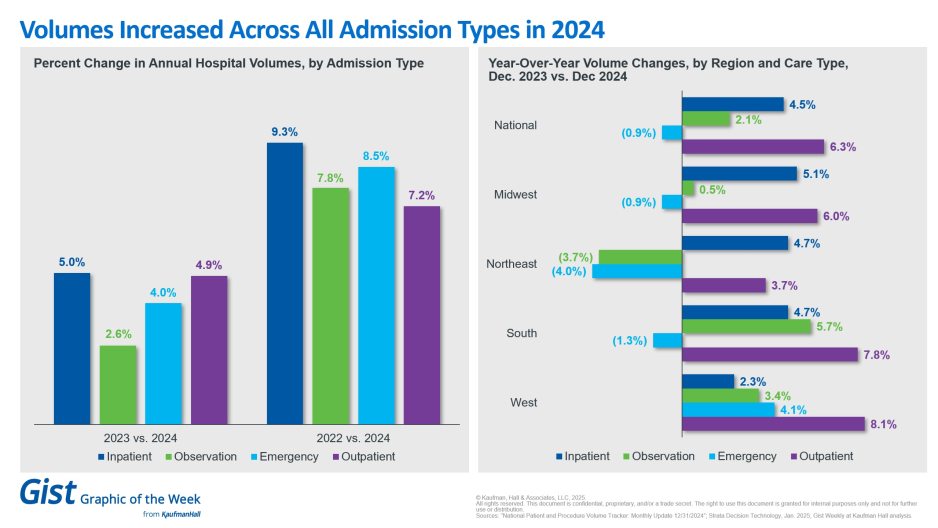
    • “Hospital financial performance remained relatively stable during the month of August, and despite higher patient volume, revenue and expenses declined on a volume-adjusted basis.
    • “The median Kaufman Hall Calendar Year-To-Date Operating Margin Index reflecting actual margins for the month of August was 4.2%.
    • “The most recent National Hospital Flash Report with August 2024 metrics covers these and other key performance metrics.”
  • Beckers Health IT notes,
    • “Cleveland Clinic expanded its Care at Home program to Weston (Fla.) Hospital, a 258-bed nonprofit facility. 
    • “The program was launched in April 2023 at Cleveland Clinic Indian River Hospital and has since expanded to two other locations. The program reduced hospital readmissions and helped 1,800 patients recover successfully in the first 18 months.
    • “The Care at Home patients are digitally connected to physicians and nurses who continuously monitor them and are available for immediate connection if the patient pushes a button. The program serves patients with congestive heart failure, kidney infections and pneumonia, among other ailments.”
  • Per Healthcare Dive,
    • “Iredell Health System announced this week it completed a deal to purchase two North Carolina-based hospitals from Community Health Systems.
    • “The hospitals include Davis Regional Psychiatric Hospital and Davis Regional Medical Center in Statesville, North Carolina. Terms of the deal were not disclosed. 
    • “The acquisition comes five months after CHS’ previous deal to sell struggling Davis Regional Psychiatric to Novant Health fell apart amid a challenge from the Federal Trade Commission.” 
  • Per BioPharma Dive,
    • “Over the past decade, the medicine Enjaymo has been passed around no less than five times by developers large and small. Now it’s trading hands again, through a deal announced Friday.
    • “Sanofi is selling global rights to Enjaymo to the Italy-based drugmaker Recordati, in exchange for an upfront payment of $825 million. And if the medicine hits certain sales goals, Sanofi could take home up to $250 million more.
    • “For Recordati, which specializes in rare diseases, the deal adds a ninth marketed product to the company’s portfolio. Enjaymo is approved in the U.S., Europe and Japan as a treatment for an uncommon type of anemia. In this condition, known as cold agglutinin disease or CAD, the body’s immune system mistakenly attacks and destroys some red blood cells. Enjaymo is designed to tamp down that immune response and spare the cells, thereby decreasing the need for red blood cell transfusions.”

Thursday Miscellany

Photo by Josh Mills on Unsplash

From Washington, DC

  • The Wall Street Journal reports,
    • Eli Lilly has finally made enough supply of its popular medicine tirzepatide to meet soaring demand, which should help the company widen its share of the booming weight-loss drug market.
    • “The Food and Drug Administration said late Wednesday that Lilly had resolved the shortage. It had started in 2022, just months after the drug was introduced with the brand Mounjaro for diabetes. Tirzepatide was approved as Zepbound in late 2023 as a weight-loss treatment.
    • ‘The milestone means that compounding pharmacies that make knockoff versions of tirzepatide will likely face new restrictions on what they can produce.
    • “The compounding pharmacies had legal cover to sell knockoff tirzepatide as long as it was on the FDA shortage list, and many patients turned to these products as a cheaper alternative. Yet in announcing the end of the shortage, the FDA said federal law bars compounders from making copies of drugs that aren’t on the shortage list, though they may make certain amounts.
    • “This essentially precludes compounded tirzepatide from being produced commercially,” BMO Capital Markets analysts said.” * * *
    • “Lilly’s rival, Novo Nordisk, also has been expanding its production capacity to resolve shortages of a similar drug, semaglutide, sold as Ozempic for diabetes and Wegovy for weight loss. The lowest dose of Wegovy is currently in shortage, while higher Wegovy doses and all Ozempic doses are available, according to the FDA shortage list.”

  • Per Healthcare Dive,
    • “A bipartisan group of two dozen lawmakers is urging the Biden administration to extend telehealth prescribing flexibilities for opioid use disorder treatment. 
    • “The representatives, led by Reps. Annie Kuster, D-N.H., and Carol Miller, R-W.Va., argued flexibilities allowing telehealth prescriptions of buprenorphine without an in-person visit has increased access to treatment and reduced overdoses.
    • “But those flexibilities are set to expire at the end of the year. Lawmakers also raised concerns that the Drug Enforcement Administration could propose more stringent requirements for telehealth prescriptions of buprenorphine, a medication that be used to treat opioid use disorder, limiting its use just as overdose deaths have begun to decline.” 
  • STAT News reports,
    • “A key aspect of the Democrat-passed law to lower drug prices is significantly more expensive to the government than expected, according to nonpartisan budget experts in Congress.
    • “The redesign of the Medicare Part D drug benefit will cost $10 billion to $20 billion more next year than the Congressional Budget Office initially projected. That office estimates that a separate recently announced program to pay insurers to lower drug premiums will cost $5 billion.”
  • Per Fierce Healthcare,
    • The Biden administration could stand to take a firmer hand on hospital price transparency, especially when it is unclear whether the price data being published are even accurate, the Government Accountability Office (GAO) wrote in a Wednesday report.
      The Centers for Medicare & Medicaid Services (CMS) has required hospitals to post the prices for numerous services annually and this past summer raised the bar by ensuring hospitals were doing so using a standardized file format.
    • Numerous reports from stakeholders criticized hospitals’ compliance along the way, with hospitals themselves often saying that the requirements were burdensome and often too vague.
    • On instruction from Congress, the GAO conducted a review of the requirements, the CMS’ enforcement and whether the agency’s policy was successfully serving patients, payers and researchers.
    • The GAO interviewed 16 stakeholder groups—representing those three groups—who described difficulties making effective comparisons and compiling the data for large-scale use. These hurdles were tied to inconsistent file formats, pricing complexities that came across poorly in the machine-readable format and what they perceived to be incomplete and inaccurate data sets.
    • “While the use of hospital price transparency data has been limited so far, many stakeholders we interviewed noted that they expect use to increase over time if the data usability challenges are overcome or addressed,” the GAO wrote in the report. “Further, some stakeholders also noted that it will take health plans and employers time to figure out how to effectively use the pricing data as part of their price negotiations and their efforts to develop networks of health care providers.”
  • The GAO also issued a healthcare capsule report on treatment for drug misuse.
  • Per an HHS press release,
    • “As part of the Biden-Harris administration’s efforts to ensure Americans access to affordable medicines and strengthen American medical supply chains, the Administration for Strategic Preparedness and Response (ASPR) today announced a $12.3 million agreement with California-based Amyris to expand U.S.-based manufacturing of key starting materials and active pharmaceutical ingredients needed to make essential medicines.” 
  • Tammy Flanagan, writing in Govexec, discusses end of year retirement planning for federal couples.
  • Per an OPM press release,
    • “The U.S. Office of Personnel Management (OPM) has authorized the use of an emergency leave transfer program (ELTP) for federal employees and their families adversely impacted by Tropical Cyclone, Tropical Storm, and Hurricane Helene.    
    • “After coordinating with federal agencies to assess the impact on employees by Tropical Cyclone, Tropical Storm, and Hurricane Helene and its aftermath, OPM, in consultation with the Office of Management and Budget (OMB), has determined that the establishment of an ELTP is warranted. The establishment of an ELTP permits employees in the executive and judicial branches, or agency leave banks established under 5 U.S.C. 6363 to donate unused leave for transfer to employees within their agency or at other agencies who are severely adversely affected or have family members who are severely adversely affected by a major disaster or emergency as declared by the President and who need additional time off from work without having to use their own paid leave. This ELTP will assist federal employees in the declared disaster areas in Alabama, Florida, Georgia, North Carolina, South Carolina, Tennessee, and Virginia. Furthermore, if President Biden approves other disaster declarations because of Helene, federal employees in those areas will also become eligible for ELTP donations.”    
  • Federal News Network tells us,
    • “The Merit Systems Protection Board has brought a historic backlog of federal employee adverse action cases down to nearly zero.
    • “By the end of September, MSPB reported that it had issued decisions on 94% of the thousands of federal employee appeal cases that had been sitting stagnant during the record five-year period without a quorum. Between 2017 and 2022, vacant board seats left the agency unable to issue case decisions, and thousands of federal employees without answers on their pending appeals.
    • “As an agency, MSPB aims to protect federal employees against prohibited personnel practices, like whistleblower retaliation, by adjudicating adverse action appeals from employees. But during more than five years without a quorum — which requires at least two of the three board seats to be occupied — MSPB amassed nearly 3,800 pending cases from federal employees looking to appeal a decision on an adverse action.
    • “The process of shrinking the significant case backlog has so far taken about 2.5 years for the current MSPB members. During fiscal 2025, the board expects to fully eliminate the remaining pending cases that built up during the lack of quorum. The agency will likely take the “inherited inventory” down to zero by the end of December, according to an MSPB spokesperson.”

From the public health and medical research front,

  • The Wall Street Journal reports,
    • “The U.S.’s largest maker of intravenous fluids will slash shipments to hospitals after Hurricane Helene took down one of its manufacturing plants in North Carolina. 
    • Baxter sent letters to hospitals telling them that future shipments of IV fluids would be about 40% of what they normally receive after the storm flooded its facility in Marion, N.C., Dr. Paul Biddinger, chief preparedness and continuity officer at Mass General Brigham in Boston said during a conference call Thursday. 
    • “Mass General Brigham, a prestigious hospital system, said it is continuing to treat patients normally, but is conserving its fluid supplies. This includes switching to oral hydration—Gatorade or water—for patients who are healthy enough for it, and not discarding partially used IV fluid bags when patients are moved to a different part of the hospital, Biddinger said. The organization uses hundreds of thousands of liters of IV fluids each month, and a majority of patients admitted to a hospital receive fluids at some point, Biddinger said.
    • “Right now we’re continuing all of our clinical care as we normally do,” Biddinger said. “Our intent is to preserve clinical care in the face of this shortage as long as we possibly can.” 
  • Beckers Hospital Review identifies the 73 drugs and intravenous fluids made at the flooded Baxter facility.
  • The Washington Post explains “Why fears of human-to-human bird flu spread in Missouri are overblown. Hospital workers reported respiratory symptoms after encountering a Missouri patient with H5N1 who had not been exposed to farm animals. Officials say bird flu transmission is unlikely.”
  • The NIH Director, writing in her blog, tells us,
    • “In recent years, medical researchers have been looking for ways to use artificial intelligence (AI) technology for diagnosing cancer. So far, most AI models have been developed to perform specific tasks in cancer diagnosis, such as detecting cancer presence or predicting a tumor’s genetic profile in certain cancer types. But what if an AI system could be more flexible, like a large language model such as ChatGPT, performing a variety of diagnostic tasks across multiple cancer types?
    • “As reported in the journal Nature, researchers have developed an AI system that can perform a wide range of cancer evaluation tasks and outperforms current AI methods in tasks like cancer cell detection and tumor origin identification. It was tested on 19 cancer types, leading the researchers to refer to it as “ChatGPT-like” in its flexibility. According to the research team, whose work is supported in part by NIH, this is also the first AI model based on analyzing slide images to not only accurately predict if a cancer is likely to respond to treatment, but also to validate these predictions across multiple patient groups around the world.” * * *
    • “This is all good news, but there’s much more work ahead before an AI model like this could be used in the clinic. Next steps for the researchers include training the model on images of tissues from rare cancers, as well as from pre-cancerous and non-cancerous conditions. With continued development and validation, the researchers aim to enable the system to identify cancers most likely to benefit from targeted or experimental therapies in hopes of improving outcomes for more people with cancer in diverse clinical settings around the world.”
  • Healio informs us,
    • “The addition of HPV vaccination into routine postpartum care may increase vaccination rates, which can reduce patient costs, prevent HPV-related cancers and vaccinate vulnerable populations, researchers reported in Obstetrics & Gynecology
    • “The postpartum period has been identified as a missed opportunity for HPV vaccination counseling and administration,” Sara E. Brenner, MD, MPH, third-year resident in the department of gynecology and obstetrics at Emory University School of Medicine, and colleagues wrote. “Many vaccinations are already given routinely in the postpartum period such as the Tdap and the measles-mumps-rubella vaccines. These are often incorporated into perinatal workflows so that patients are routinely educated on their options for vaccination during their prenatal visits and postpartum patients can receive them before leaving the hospital.”
  • The American Hospital Association News informs us about “refreshed webpages dedicated to maternal and child health. The redesigned platform offers three distinct subpages focused on Better Health for Mothers and Babies, child and adolescent health, and advocacy and policy. Hospitals and health systems are encouraged to explore the tools and resources, such as case studies, podcasts, infographics and action plans to drive their own improvement in maternal and child health.”
  • Per STAT News,
    • “Apple Watch may help keep people with Parkinson’s disease out of the hospital. That’s according to early data from a Kaiser Permanente pilot program.
    • “Since late 2023, Kaiser Permanente has been giving some of its Parkinson’s patients in California an Apple Watch app called StrivePD, developed by Rune Labs. The app uses the onboard sensors in the device to track tremors associated with the disease; dyskinesia, a side effect of medication; activity; sleep; and falls. Using Rune’s software, people can also track medication intake and other data.” * * *
    • “Kaiser and Rune presented data from 138 patients enrolled in the program at the International Congress of Parkinson’s Disease and Movement Disorders in late September. In a limited run, the program reduced patient visits to the emergency department by 42% and reduced visits to movement disorder specialists by 18%. Three-quarters of people in the program reported that they found StrivePD helpful for staying on top of medications.
    • “It’s important to note that the data is only a snapshot from the first 100 days that people are in the program. It is not a randomized control that researchers would want to see to establish the benefits of a treatment program. And the data has not been published in a peer-reviewed publication.”

From the U.S. healthcare business front,

  • The Wall Street Journal reports this evening,
    • “U.S. dockworkers agreed to return to work after port operators sweetened their contract offer, ending a three-day strike that threatened to disrupt the American economy.
    • “The breakthrough Thursday came after port employers offered a 62% increase in wages over six years, according to people familiar with the matter.
    • “The agreement ends a strike that had closed container ports from Maine to Texas and threatened to disrupt everything from the supply of bananas in supermarkets to the flow of cars through America’s factories.”
  • Per Fierce Healthcare,
    • “Another significant legal headache related to star ratings is on the table of the federal government just days before open enrollment begins.
    • “UnitedHealthcare companies in various states are suing the Centers for Medicare & Medicaid Services (CMS) for decreasing the insurer’s star ratings unfairly. They are looking for an injunction and corrected ratings before Oct. 15.
    • “The plaintiffs allege one metric, call center customer service performance, was downgraded based on an “arbitrary and capricious assessment” of one phone call [by a CMS test caller] that lasted eight minutes. It caused the insurer to earn a four-star rating on the call center measure instead of a five-star rating.”
    • UnitedHealthcare said the star ratings downgrade would “misinform millions of current and potential customers” from choosing their plans, the insurer said in the lawsuit.
  • Per BioPharma Dive,
    • “Eli Lilly on Wednesday announced plans to spend $4.5 billion on a new facility that will use advancements in technology for research and manufacturing.
    • “Dubbed the Lilly Medicine Foundry, the new site will be located in the “LEAP Research and Innovation District” in Lebanon, Indiana. The latest infusion of cash brings Lilly’s investment in the LEAP district to more than $13 billion.
    • “The facility will allow Lilly to produce medicines for clinical trials while also researching new methods of manufacturing, the company said. Technologies developed at the foundry can then be deployed at other production sites around the world.”

Midweek Update

From Washington, DC,

  • Per an HHS press release,
    • “As part of the continued implementation of the Biden-Harris Administration’s historic prescription drug law, the Inflation Reduction Act, the U.S. Department of Health and Human Services (HHS), through the Centers for Medicare & Medicaid Services (CMS), released final guidance – PDF
       today outlining the process for the second cycle of negotiations under the Medicare Drug Price Negotiation Program. The guidance also explains how CMS will help ensure people with Medicare can access drugs at the negotiated prices from the first and second cycles when those prices become effective beginning in 2026 and 2027, respectively.” * * *
    • “For the fact sheet on the Medicare Drug Price Negotiation Program Final Guidance for Initial Price Applicability Year 2027 and Manufacturer Effectuation of the Maximum Fair Price in 2026 and 2027, visit https://www.cms.gov/files/document/fact-sheet-medicare-drug-price-negotiation-program-ipay-2027-final-guidance-and-mfp-effectuation.pdf – PDF
      .
  • Modern Healthcare lets us know,
    • “Getting top quality scores will continue to be a challenge for Medicare Advantage insurers that had grown accustomed to high star ratings and lucrative bonus payments.
    • “That’s because the Centers for Medicare and Medicaid Services is elevating most of the “cut points” used to calculate 2025 Medicare Advantage star ratings, according to financial analysts and consultants who previewed the agency’s guidelines before the highly anticipated release of the latest ratings later this month. Cut points are the upper and lower thresholds for each measure that collectively generates a plan’s overall score on a one-to-five scale.
    • “Higher cut points will make it more difficult for plans to score better or even retain current ratings for individual metrics, said Alexis Levy, senior partner at HealthScape Advisors, which is part of the consultancy Chartis Group.
    • “If you’re a health plan and your performance stay the same, but the cut points move, you could lose a star rating on a given measure because you didn’t keep up with the overall market,” Levy said.”
  • The Wall Street Journal adds,
    • Humana shares slid more than 10% Wednesday after the health insurer warned that a steep drop in the federal government’s quality ratings of its Medicare plans could hit its results in 2026.
    • “Humana said it has about 25% of its members currently enrolled in plans rated four stars and above for 2025 based on preliminary 2025 Medicare Advantage ratings data from the Centers for Medicare and Medicaid Services, down from 94% this year. 
    • ‘The quality ratings, on a scale of one to five stars, are tied to bonuses paid to insurers. The downgrade could have a huge revenue impact in 2026, with analysts suggesting a range of figures, from less than $2 billion to far higher.
    • “The scale of the drop is a shock,” said Sarah James, an analyst with Cantor Fitzgerald, who projected the shift in stars could affect nearly $3 billion in 2026 revenue if Humana isn’t able to alleviate it.”
  • FedWeek offers a generic comparison of 2025 FEHB and PSHB plans.
  • Fedsmith delves into the recent FEHB / PSHB premium increase.

From the public health and medical research front,

  • STAT News reports,
    • “U.S. health officials have run into obstacles in their efforts to determine whether a Missouri person infected with H5N1 bird flu passed the virus on to others, causing a delay that will likely fuel concerns about the possibility that there has been human-to-human transmission.
    • “The Centers for Disease Control and Prevention has blood samples from several health workers and a household contact of the Missouri case that it plans to test for antibodies that would indicate whether they too had been infected with the virus, an agency official told STAT.
    • “But the CDC has had to develop a new test to look for those antibodies because key genetic changes to the main protein on the exterior of the virus found in the Missouri case meant the agency’s existing tests might not have been reliable, Demetre Daskalakis, director of the CDC’s National Center on Immunization and Respiratory Diseases, said in an interview. He suggested it will be mid-October before the work can be completed.
    • “The antibodies that would grow in the person exposed to that virus would then be different then the antibodies that would grow in a person who had a virus without those mutations,” Daskalakis said.
    • “Developing the new test has been challenging because the sample from the patient contained so little viral material that the CDC was not able to grow whole viruses from it. Instead, its scientists have had to reverse engineer H5N1 viruses that contain the changes to use them as the basis for the new serology test, he said.”
  • Healio informs us,
    • “Adults who more frequently consumed several flavonoid-rich foods, like berries and tea, had a significantly lower risk for dementia, according to an analysis published in JAMA Network Open.
    • “Certain individuals, like those with depressive symptoms or hypertension, benefited even more from higher adherence to a flavonoid-rich diet, the researchers found.
    • “Flavonoids and flavonoid-rich foods have been previously tied to reduced risk for several diseases and health outcomes, including type 2 diabetes and mortality in those with colorectal cancer.”
  • Health Day adds,
    • “Folks who received the three doses of a COVID vaccine got heart protection, too
    • “The protection translated to reduced risk of serious heart problems stemming from a COVID infection
    • “However, the short-term risk of a serious heart complication owing to the vaccine was real but rare.”
  • Per an NIH press release,
    • “A scientific team supported by the National Institutes of Health (NIH) unveiled the first complete map of the neural connections of the common fruit fly brain. The map provides a wiring diagram, known as a connectome, and is the largest and most complete connectome of an adult animal ever created. This work offers critical information about how brains are wired and the signals that underlie healthy brain functions. The study, which details over 50 million connections between more than 130,000 neurons, appears as part of a package of nine papers in the journal Nature.  
    • “The diminutive fruit fly is surprisingly sophisticated and has long served as a powerful model for understanding the biological underpinnings of behavior,” said John Ngai, Ph.D., director of NIH’s Brain Research Through Advancing Innovative Neurotechnologies Initiative®, or The BRAIN Initiative®. “This milestone not only provides researchers a new set of tools for understanding how the circuits in the brain drive behavior, but importantly serves as a forerunner to ongoing BRAIN-funded efforts to map the connections of larger mammalian and human brains.”
  • The American Hospital Association News notes,
    • “As health care environments shift, hospitals and health systems can experience challenges in adjusting their infection and prevention control practices to accommodate the changes. AHA examined these challenges in partnership with member hospitals and Upstream Thinking and determined that using human-centered design can help identify ways to improve upon current practice. READ MORE 

From the U.S. healthcare business front,

  • KFF finds,
    • “One or two health systems controlled the entire market for inpatient hospital care in nearly half (47%) of metropolitan areas in 2022.
    • “In more than four of five metropolitan areas (82%), one or two health systems controlled more than 75 percent of the market.
    • ‘Nearly all (97% of) metropolitan areas had highly concentrated markets for inpatient hospital care when applying HHI thresholds from antitrust guidelines to MSAs.”
  • Modern Healthcare reports,
    • “Independent lab companies have continued their transaction spree in 2024, either by forming partnerships with hospitals and health systems or by outright acquiring some of their lab assets.
    • Quest Diagnostics has announced seven acquisitions this year, including its recent purchase of select lab assets from Minneapolis-based Allina Health. Slated to close later this year are deals with OhioHealth in Columbus and University Hospitals in Cleveland.
    • ‘Meanwhile, Labcorp has closed three acquisitions this year, with Springfield, Massachusetts-based Baystate Health, Renton, Washington-based Providence Health and Services and Naples, Florida-based NCH Healthcare System. It recently announced plans to acquire the lab assets of Johnson City, Tennessee-based Ballad Health in a deal expected to close in December.”
  • The American Hospital Association News points out,
    • “The Department of Health and Human Services Sept. 30 released a statement on the dockworker strike at ports along the East and Gulf coasts, saying that immediate impacts to medicines, medical devices and other goods should be limited. HHS, the Food and Drug Administration and the Administration for Strategic Preparedness and Response are working with trade associations, distributors and manufacturers to limit impacts on consumers and assess vulnerabilities. The AHA is monitoring the situation.  
    • “According to Healthcare Ready, a nonprofit organization that works with the government, providers, and supply chain organizations to enhance the resiliency of communities before, during and after disasters, a substantial number of pharmaceuticals commonly used in the care of patients come through the ports every day. Given the shortages that already exist for many medications, and the disruption in the supply of IV solutions caused by the flooding of the Baxter plant in North Carolina, AHA will be alert for potential shortages of vital pharmaceuticals related to the strike.”
  • Per Healthcare Dive,
    • A major California health plan has struck a novel deal directly with a drug manufacturer for a cheaper version of Humira, cutting out pharmacy benefit managers — controversial middlemen in the drug supply chain that typically control access to medication — entirely.
    • As a result of the deal, Blue Shield of California will purchase a Humira biosimilar for $525 per monthly dose, significantly below the drug’s net price of $2,100.
    • The biosimilar will be available for most of BSCA’s commercial members at $0 co-pay starting Jan. 1, 2025, according to the insurer, which announced the deal Tuesday.

Happy New Federal Fiscal Year!

From Washington, DC,

  • The FEHBlog was in college when Congress moved the beginning of the federal fiscal year from July 1 to October 1 to give Congress more time to decide on appropriations.
  • Congratulations to former President Jimmy Carter who turned 100 years old today. Mr. Carter is the first former President to reach the century mark. The FEHBlog heard on the radio today that October 1, 1924, was only 98 and 1/4 years after July 4, 1826, the date when Presidents John Adams and Thomas Jefferson passed away.
  • Blue Cross FEP has posted its 2025 benefits information on the internet.
  • CMS has turned on its 2025 Medicare open enrollment decision making tool, and Fierce Healthcare discusses the various Medicare Advantage offerings. The Medicare open enrollment period begins on October 15 and ends on December 7, 2024.
  • The Department of Labor launched an online tool that “provides access to more than 700 accommodation ideas for workers with disabilities and their employers.”
  • BioPharma Dive points out five FDA decisions to watch in the fourth quarter of 2024. “Over the next three months, the agency could approve a rival to a fast-selling Pfizer heart drug, a much-debated lung cancer medicine and an addition to Vertex’s dominant cystic fibrosis business.”
  • The American Hospital Association News lets us know,
    • “The Centers for Medicare & Medicaid Services Sept. 30 released a report on the hospital-at-home program, which found that patients and caregivers overall had positive experiences in the program. Patients in the H@H program were more likely to be white, urban-living and less likely to receive Medicaid or low-income subsidies. The report does not provide insight into the criteria participating hospitals use to identify patients suitable for H@H care but does note that hospitals used evidence and an awareness of their own capacity to support care in the home to establish their criteria. Patients were most commonly treated for respiratory, circulatory and renal conditions, as well as infectious diseases. The study also found that H@H patients had a lower mortality rate than those in brick-and-mortar facilities but had a slightly longer length of stay.”

From the public health and medical research front,

  • The New York Times reports,
    • “Rates of breast cancer — the second leading cause of cancer deaths in U.S. women — climbed by 1 percent a year from 2012 to 2021, and even more sharply among women under age 50 and among Asian American/Pacific Islander women of all ages, according to an American Cancer Society report published on Tuesday.
    • “The biennial report is among the most comprehensive and detailed studies of breast cancer occurrence over recent years. One in 50 U.S. women will develop invasive breast cancer by the age of 50, the authors said, based on National Cancer Institute calculations.
    • “The sharpest increases in young adults by age during the decade were among women in their 20s, whose rate increased by about 2.2 percent a year, though their absolute risk remains very low, at about 6.5 per 100,000 women. 
    • “Among Asian American/Pacific Islander women, who historically also have had a low prevalence of the disease, rates increased by 2.7 percent a year among those under 50, and by 2.5 percent a year among older women.”
  • STAT News informs us,
    • “Across all kinds of cancer, Black Americans have higher rates of mortality and, often, more aggressive forms of the disease. A growing body of research suggests the reasons may not have to do with African ancestry as much as social and environmental factors like racism, housing discrimination, and — according to a new study — exposure to pollution.
    • “The study, published in Nature Communications, found that in several types of cancer, Black patients had more cancers with extra copies of genes. But the team found that these genetic duplications, which can make cancers more aggressive, didn’t seem to be linked to anything ancestral. Rather, the team reported genetic duplications were more likely in cells exposed to pollutants.
    • “What this paper hints at, is that we’re seeing something which looks like a genetic difference, but the source of that might actually not be genetic — it’s more environmental,” said Kanika Arora, a computational biologist at Memorial Sloan Kettering who was not involved with the new study.” * * *
    • “[T]he study highlights the need to reduce people’s exposure to pollutants and the importance of prioritizing genetic screening to understand a person’s individual cancer risk, according to Melissa Davis, the head of the Institute of Genomic Medicine at Morehouse School of Medicine. Davis also notes if pollutants are driving disparate cancer rates, cancer treatment and prevention methods need to change accordingly.”  
  • MedPage Today tells us,
    • “Nearly 11% of older adults with an injurious fall were diagnosed with dementia 1 year later.
    • “Compared with other traumatic injuries, falls were tied to a 21% increased risk of a subsequent dementia diagnosis.
    • “Findings support cognitive screening for older adults who have a fall that involves an ED visit or hospital admission.”
  • McKinsey & Co. interview “Marcus Schindler, executive vice president for R&D and chief scientific officer at Novo Nordisk. They discuss how Novo Nordisk is expanding its external innovation capabilities and moving into new therapeutic areas. They also explore his efforts to embed AI throughout the R&D organization, establish Novo Nordisk as a leader of AI ecosystems (in Boston and beyond), and eventually advance from treating diseases to curing them, with help from AI.

From the U.S. healthcare business front,

  • Healthcare Dive reports
    • “CVS plans to lay off 2,900 workers amid swirling reports that the healthcare behemoth is undergoing a strategic review, including a potential breakup of its businesses.
    • “The layoffs, which were confirmed by a CVS spokesperson, will affect about 1% of CVS’ 300,000 employees.
    • “CVS unveiled a plan to cut $2 billion in costs this summer in a bid to bolster flagging operational performance amid rising costs for its health insurance arm Aetna and shaky reimbursement at its pharmacies.”
  • Per Fierce Healthcare,
    • “On the same day that Johnson & Johnson confirmed layoffs at its home base in New Jersey, the company made waves with a major manufacturing announcement in Wilson, North Carolina. 
    • “J&J is planning to build a state-of-the-art biologics plant to provide supplies for treatments across the oncology, immunology and neuroscience treatment areas, J&J said in a Tuesday press release. Construction is slated to begin in the first half of 2025, and the site will have a workforce of 420 once fully operational. 
    • “The company’s total investment in the site is expected to reach “more than $2 billion,” according to J&J’s release.”
  • Beckers Payer Issues tells us five things to know about United Healthcare’s prior authorization gold card which launched today.
  • Beckers Hospital Review notes,
    • “Dallas-based Tenet Healthcare has completed the sale of its 70% majority ownership interest in Birmingham, Ala.-based Brookwood Baptist Health to Orlando (Fla.) Health,” and offers six things to know about the transaction.
  • and
    • Detroit-based Henry Ford Health and Ascension Michigan have officially launched their joint venture to improve healthcare access, experience and outcomes and offers seven things to know about this joint venture.
  • The Wall Street Journal explores the future of dental care.
    • “Imagine a world where you could regenerate a missing tooth with a single drug, and microrobots clean your teeth every night.
    • “That future is getting closer, scientists say. “We are really looking for disruptive technology,” says Dr. Hyun (Michel) Koo, co-founding director of the Center for Innovation & Precision Dentistry at the University of Pennsylvania.”

Monday Roundup

Photo by Sven Read on Unsplash

From Washington, DC,

  • Per an HHS press release,
    • “The U.S. Department of Health and Human Services (HHS), through the Assistant Secretary for Technology Policy/Office of the National Coordinator for Health Information Technology (hereafter ASTP), today published the final 2024-2030 Federal Health IT Strategic Plan – PDF in accordance with the Health Information Technology for Economic and Clinical Health (HITECH Act.) The Strategic Plan presents federal health information technology (health IT) goals and objectives to achieve a future state where health IT and electronic health information are used to:
      • Promote health and wellness;
      • Enhance the delivery and experience of care;
      • Accelerate research and innovation; and
      • Connect the health system with health data.
    • “The draft Strategic Plan was published by ASTP in March 2024 following a comprehensive and collaborative effort with more than 25 federal agencies that are central to the advancement of health IT. These federal agencies regulate, purchase, develop, fund, research, and use health IT to improve patient care and health outcomes. The Strategic Plan was subsequently updated and finalized following a 60-day public comment period, which produced comments from a variety of organizations including health care systems, associations and specialty societies, electronic health record developers, patient advocates, and others.”
  • In related news, the Sequoia Project made the following announcement,
    • “TEFCA RCE Webinar on TEFCA Exchange for Public Health
    • Friday, October 11 | 11:00 a.m. – 12:00 p.m. ET
      • “Access to health information is an important tool for Public Health Authorities (PHAs) and their Delegates to support core public health services including, but not limited to, assessing and monitoring population health and investigating, diagnosing, and addressing health hazards and root causes. Use cases described in the recently released Public Health Exchange Purposes Implementation SOP, allow PHAs to identify disease trends, track and monitor outbreaks, and prevent and control future outbreaks.
      • “Join experts from the Trusted Exchange Framework and Common Agreement™(TEFCA™) Recognized Coordinating Entity® (RCE™) and the Assistant Secretary for Technology Policy/Office of the National Coordinator for Health Information Technology (ASTP/ONC) for an informative webinar, where we’ll cover the essentials of TEFCA Exchange and dive into the details of the Public Health Exchange Purposes Implementation SOP.” * * *
      • “Don’t Miss Out  Register Now!
  • The American Hospital Association News lets us know,
    • “Johnson & Johnson Sept. 30 notified the Health Resources and Services Administration that it is ceasing implementation of its proposed 340B rebate model. The decision comes after HRSA Sept. 27 said it would terminate J&J’s Pharmaceutical Pricing Agreement and/or impose civil monetary penalties if J&J didn’t halt implementation of the program.” * * *
    • “The AHA is pleased that Johnson & Johnson has decided to cease implementation of its 340B rebate proposal, which would have harmed patients and 340B providers,” said Rick Pollack, AHA president and CEO. “We are especially appreciative of HRSA’s efforts to convince J&J to put an end to this unlawful proposal and those members of Congress who demonstrated their firm support of the 340B program.” 
  • Per another HHS press releases,
    • “The U.S. Department of Health and Human Services (HHS), through the Centers for Medicare & Medicaid Services (CMS), today announced that some Medicare enrollees will pay less for 54 drugs available through Medicare Part B. The drugs will have a lowered Part B coinsurance rate from October 1, 2024 – December 31, 2024, since drug companies raised prices for each of these 54 drugs faster than the rate of inflation. Over 822,000 people with Medicare use these drugs annually to treat conditions such as cancer, osteoporosis, and pneumonia. Since April 1, 2023, people with Medicare have seen savings on over 100 drugs thanks to Inflation Reduction Act’s Medicare Prescription Drug Inflation Rebate Program.” * * *
    • “For more information on the Medicare Prescription Drug Inflation Rebate Program visit, https://www.cms.gov/inflation-reduction-act-and-medicare/inflation-rebates-medicare.
    • “To view the fact sheet on the 54 Part B drugs with a coinsurance reduction for the quarter October 1, 2024 – December 31, 2024, visit, https://www.cms.gov/files/document/reduced-coinsurance-certain-part-b-rebatable-drugs-october-1-december-31-2024.pdf – PDF
  • ICD10 Monitor identifies eleven key takeaways from ICD-10 changes that code changes that will go into effect for hospital discharges on Oct. 1, 2024.
  • HR Dive informs us,
    • Federal enforcement of new workplace protections for pregnant workers is picking up steam, just as regulations implementing those requirements reach 100 days on the books.
    • The U.S. Equal Employment Opportunity Commission filed its first lawsuit alleging violations of the Pregnant Workers Fairness Act earlier this month and followed it up with two more Wednesday [September 25].

From the public health and medical research front,

  • Beckers Clinical Leadership tells us,
    • “After its detection in 28 countries, the CDC began tracking the proportions of COVID-19 variant XEC. 
    • “Currently accounting for 6% of U.S. cases, XEC is the fifth most dominant variant in the nation. Other leading variants include KP.3.1.1 (58.7%), KP.2.3 (9.4%), LB.1 (7.9%) and KP.3 (7.1%). 
    • “As of Sept. 19, the XEC lineage has been detected in 633 COVID-19 cases after first appearing June 28, according to Scripps Research’s Outbreak.info. Twenty-four states have at least one XEC case. In early September, XEC was seen in 12 states and 15 countries. 
    • “It is too early to determine whether the variant is more transmissible or more severe than current strains, experts told NBC News in a Sept. 27 article.”
  • The Centers for Disease Control and Prevention (CDC) informs us,
    • “CDC reported one new flu-related death in a child last week, bringing the total number of U.S. pediatric deaths for the 2023-2024 season to 200. This number of pediatric deaths exceeds the previous high reported for a regular (non-pandemic) flu season. The previous high of 199 deaths was reported during the 2019-2020 season. Consistent with other seasons, of children who were eligible for a flu vaccine and for whom vaccination status was known, about 80 percent were not fully vaccinated.
    • “Getting your child a flu vaccine is the most effective step to reduce the risk of flu illness and flu-related doctor’s visits and missed school days; flu vaccination also reduces the risk of flu-related hospitalization and death. In the 2023-2024 season, estimates indicated that flu vaccination reduced the risk of flu related medical visits by approximately two-thirds and halved the risk of flu-related hospitalization for vaccinated children. September and October are the best times for most children to receive flu vaccine. CDC recommends everyone 6 months and older get an annual flu vaccine, especially children at higher risk for serious flu complications.”
  • The Washington Post reports,
    • “Nearly 90 percent of adults over 65 took prescription medication in the previous 12 months in 2021 and 2022, according to a recent report by the Centers for Disease Control and Prevention.
    • “Drawing on data from the 2021 and 2022 National Health Interview Survey, the report focused on 17,706 adults 65 and older. According to the analysis, 88.6 percent of older adults took prescription medications in the previous 12 months.
    • “Use was similar for men and women, but higher for those 75 and above than those 65 to 74. White older adults were also more likely than Black, Hispanic and Asian adults to take prescription medication. The study also found that 82.7 percent of older adults had prescription drug coverage, and that coverage was higher among men, White adults and those with higher incomes.”
  • Consumer Reports, writing in the Washington Post, offer tips about “how to deal with heel pain. Plantar fasciitis, Achilles’ problems and other issues can cause the tenderness. Stretches, the right footwear and shifting your activities can help.”
  • Healio notes,
    • “Hospitalized older adults are more likely to die from RSV than influenza B, though the risk is similar for influenza A.
    • “Improved testing strategies and outreach could lower the risk for death.”

From the U.S. healthcare business front,

  • The Wall Street Journal reports,
    • CVS Health is conducting a strategic review of options for the company, including a possible breakup of the industry giant, according to people with knowledge of the matter. 
    • “The company’s board of directors has retained bankers to facilitate the review, which has been ongoing for weeks, the people said. 
    • “No decision by CVS is imminent, and it is possible there won’t be any major changes in the business as a result, they added. 
    • “The review includes different options, including various forms a potential breakup could take, some of the people said.”
  • Per Beckers Hospital Review,
    • “Dana Filmore, a grandmother from Columbus, Ohio, is among thousands of plaintiffs filing a federal lawsuit against pharmaceutical companies Novo Nordisk and Eli Lilly, alleging Ozempic and Mounjaro caused gastroparesis, USA Today reported Sept. 27. 
    • “Gastroparesis, a condition characterized by stomach paralysis that severely impacts digestion, caused Filmore, who turned to the medication to control her blood sugar to have persistent nausea and bowel issues. 
    • “The lawsuit alleges that the drug manufacturers failed to adequately warn patients about the risks associated with the medications and central to the lawsuit were claims of gastroparesis, according to the USA Today report.”
  • Per MedTech Dive,
    • “Establishment Labs received Food and Drug Administration approval for its Motiva breast implants for primary and revision breast augmentation.
    • “Motiva is the first new breast implant to receive U.S. premarket approval since 2013, according to Establishment Labs’ Thursday announcement. Since then, the market has been reshaped by safety problems that led to the withdrawal of Allergan’s Biocell textured breast implant.
    • “Motiva devices have a surface designed to enhance biocompatibility and promote low inflammation, according to the company. Establishment Labs won approval on the strength of three-year clinical data.”

Weekend Update

Photo by B VV on Unsplash

From Washington, DC

  • Congress is on the campaign trail until sometime after the national election on November 5.
  • The Supreme Court will hold its opening conference of its October term 2024 tomorrow. Among the cert petitions to be considered is the State of Oklahoma’s challenge to a 10th Circuit opinion holding that ERISA preempts an Oklahoma PBM reform law (No. 23-1213). That opinion is helpful to FEHB carriers. A Supreme Court decision to grant Oklahoma’s petition would be posted on FriCBS day October 4. A Supreme Court decision to deny Oklahoma’s petition or ask the Solicitor General for her views would be posted on Monday October 7.
  • MedCity News delves into the FTC’s recent administrative complaint against the big three PBMs’ handling of insulin pricing.

From the public health and medical research front,

  • CBS News reports that “Free COVID tests [from the federal government] are back. But there are more accurate tests for sale.”
  • Per NPR Shots,
    • “Three-dimensional imaging outperformed older digital mammography at reducing anxiety-producing callbacks for more breast cancer testing, a new study shows. The research, published this month in the journal Radiology also suggests the newer technology might find more worrisome cancers earlier during routine screenings.
    • “Lead author Dr. Liane Philpotts, a Yale School of Medicine radiology professor, hailed 3D mammography, also known as digital breast tomosynthesis or DBT, as “a win, win, win.”
    • “We have the benefit of a lower recall rate, or fewer false positives. We have increased cancer detection, and we have a lower rate of advanced cancers,” she said. “So it’s truly a game changer.” * * *
    • “Still, the new studyfails to definitively answer the question of whether newer, more expensive 3D mammography finds troublesome breast cancers earlier than 2D mammography, sparing women harsh treatment and saving lives, an accompanying editorial says.
    • “The verdict won’t come until 2030, at the conclusion of a large-scale randomized controlled trial comparing 3D to 2D mammography, according to the editorial written by two Korea University Guro Hospital radiology professors.
    • “Pending the 2030 trial results, the editorial concludes, the new study provides “indirect evidence suggesting the potential of DBT screening in improving survival outcomes.” 
  • Fortune Well asks us “Getting enough sleep but still exhausted? These 7 types of rest can help.”
  • The Washington Post lets us know,
    • “Suicide rates are lower in U.S. counties with more health insurance coverage and broadband internet access and higher income, a recent Centers for Disease Control and Prevention analysis suggests.
    • “The report analyzed more than 49,000 suicide deaths in 2022 from the National Vital Statistics database. Researchers compared county suicide rates to the percent of residents with health insurance coverage, households with broadband access and households with income above the federal poverty level.
    • ‘The overall U.S. suicide rate in 2022 was 14.2 per 100,000 people, the CDC report said. Suicide rates were highest among non-Hispanic American Indians or Alaska Natives (27.1 per 100,000 population) and White people (17.6 per 100,000). The suicide rate for boys and men was nearly four times higher than for girls and women (23 per 100,000 for males vs. 5.9 per 100,000 for females). Rural residents and those ages 45 to 64 (19 per 100,000) and 24 to 44 (18.9 per 100,000) had the highest suicide rate, according to the CDC report.”

From the U.S. healthcare business front,

  • STAT News reports,
    • “Dr. Ralph de la Torre, a former heart surgeon who built and became the face of Steward Health Care and its network of neglected hospitals, is stepping down from the company Tuesday and will no longer serve as board chairman and chief executive, the company said in a statement to the Globe Saturday.
    • “With his affinity for luxury yachts and corporate jets, de la Torre became a symbol of greed in for-profit health care, amid mounting stories this year of patients harmed by shortages of staff and critical supplies at Steward hospitals. De la Torre is believed to hold a majority of shares in the private company, which was one of the nation’s largest for-profit, private health care systems, and is now being taken apart in bankruptcy proceedings.”
  • Per BioPharma Dive,
    • “The Food and Drug Administration on Friday approved Regeneron Pharmaceuticals and Sanofi’s inflammatory disease drug Dupixent for a common lung condition. The decision could significantly expand use of what is already one of the industry’s best-selling medicines.
    • “Dupixent is now cleared for use as an add-on maintenance treatment for adults with a certain kind of chronic obstructive pulmonary disease, or COPD, that can’t be controlled with other medications.
    • “The decision makes Dupixent the first biologic medicine approved in the U.S. for COPD, a lung disease that makes it difficult to breathe and is typically treated with inhaled medicines. Regeneron estimates about 300,000 people in the U.S. have the specific type of COPD that would make them eligible for treatment with Dupixent, which is administered via injection under the skin.”
  • Per Healthcare Dive,
    • “When independent hospitals are acquired by multi-hospital health systems, they experience boosts to profitability and efficiency, according to a new study published in the Journal of Political Economy Microeconomics this week. 
    • “Acquired hospitals saw profitability increase by about $14 million per year, on increased consumer prices and cuts to nonclinical staff. 
    • “However, when corporate-owned hospitals are acquired by other health systems, they do not experience similar efficiency gains, the study found, suggesting there is likely a limit to how much consolidation can benefit hospital performance.”

Friday Factoids

From Washington, DC,

  • Per a CMS press release,
    • “Today, the Centers for Medicare & Medicaid Services (CMS) announced that average premiums, benefits, and plan choices for Medicare Advantage (MA) and the Medicare Part D prescription drug program will remain stable in 2025. Average premiums are projected to decline in both the MA and Part D programs from 2024 to 2025. Enhancements adopted in the 2025 MA and Part D Final Rule, as well as payment policy updates in the 2025 MA and Part D Rate Announcement, support this stability and increase enrollee protections and access to care for people with Medicare. In addition, the Inflation Reduction Act is reducing prescription drug costs and delivering more comprehensive benefits than ever before, including an annual $2,000 cap on out-of-pocket drug costs. CMS is committed to ensuring these programs work for people with Medicare, that they have access to strong and stable choices, and that they have the information they need to make informed choices about what is best for them. 
    • “CMS is releasing this key information, including 2025 premiums, benefits, and access to plan options for MA and Medicare Part D prescription drug plans, ahead of the upcoming Medicare Open Enrollment, which runs from October 15, 2024, to December 7, 2024, to help people with Medicare determine the best Medicare coverage option for their health care needs. * * *
    • “For more information on MA and Medicare Part D offerings for 2025, view the fact sheet
    • “To view the premiums and costs of 2025 Medicare Advantage and Part D plans, please visit https://www.cms.gov/medicare/coverage/prescription-drug-coverage. Select the 2025 landscape source file in the downloads section of the webpage. This year, CMS has combined the Landscape files into one file, instead of five individual files as was the case historically, and made additional enhancements to improve the end-user experience and simplify the format. The accompanying readme file at the link above provides important notes about the format and file columns.    
    • “For state-by-state information, important dates, and enrollment resources for Medicare Advantage and Part D in 2025, please visit: https://www.cms.gov/files/document/2025-ma-part-d-landscape-state-state-fact-sheet.pdf.
    • “For information on the Medicare Advantage Value-Based Insurance Design Model, including plan participation in 2025, please visit: https://www.cms.gov/newsroom/fact-sheets/medicare-advantage-value-based-insurance-design-model-calendar-year-2025-model-participation.” 
  • Beckers Payer Issues offers ten notes on the CMS press release.
  • The American Hospital Association News lets us know,
    • “The Health Resources and Services Administration Sept. 27 sent a final warning letter to Johnson & Johnson urging the company to inform the agency by Monday, Sept. 30 that it would halt its proposed 340B rebate model scheduled to go into effect next month. 
    • “As outlined in HRSA’s September 17, 2024, letter, if J&J proceeds with implementing its rebate proposal without Secretarial approval, it will violate section 340B(a)(1) of the Public Health Service Act,” HRSA wrote today. “If J&J has not notified HRSA that it is ceasing implementation of its rebate proposal by September 30, 2024, HRSA will begin the process outlined in J&J’s Pharmaceutical Pricing Agreement related to terminating the agreement. In addition, if J&J moves forward with implementation of its rebate proposal, HRSA will initiate a referral to the HHS Office of Inspector General pursuant to 42 U.S.C. § 256b(d)(1)(B)(vi).” 
  • Federal. News Network informs us,
    • “Postmaster General Louis DeJoy is telling lawmakers the Postal Service is ready to handle a high volume of mail-in ballots ahead of Election Day.
    • “DeJoy told members of the House Appropriations Committee on Thursday that USPS has a “track record of success” delivering ballots.
    • “In 2020, at the height of the COVID-19 pandemic, USPS delivered 99.89% of ballots from voters to election officials within seven days.
    • “That year, when USPS delivered a “historically high number of ballots,” DeJoy said they accounted for just 0.1% of its annual mail volume.
    • “We will be even better prepared for 2024,” DeJoy said. “Our network is designed to readily handle a surge in mail volume, just like we do every election and holiday season.”
    • “DeJoy recommends voters mail their ballots early, at least seven days before their state’s election deadline.”

From the public health and medical research front,

  • The Centers for Disease Control and Prevention announced today,
    • “Seasonal influenza and RSV activity are low nationally, but COVID-19 activity is elevated.
    • “COVID-19
      • “There are continued signs of declines in COVID-19 activity in many areas. COVID-19 test positivity, emergency department visits, and rates of COVID-19–associated hospitalizations are decreasing. There are many effective tools to prevent spreading COVID-19 or becoming seriously ill.
    • “Influenza
    • “RSV
      • “Nationally, RSV activity remains low.
    • “Vaccination
      • “Vaccinations to prevent fall respiratory virus have started for the 2024-25 respiratory illness season with 4.5% of adults 18 years and older reporting receipt of the updated 2024-25 COVID-19 vaccine and 9.6% reporting receipt of an influenza vaccine. Among adults 75 years and older, 34.0% reported ever receiving an RSV vaccine. RSV, influenza, and COVID-19 vaccines are available to provide protection during the 2024-25 respiratory illness season.”
  • The University of Minnesota CIDRAP informs us,
    • Wastewater levels for COVID-19 remain high but low for RSV and influenza. Of flu cases identified through specimens testing, the H1N1 strain accounts for 53.5% of cases, H3N2 for 46.5%, and influenza B for 1.2%. Influenza test positivity for the week ending on September 21 was 0.6%.
  • and
    • “A new study on COVID-19’s effects on US infants notes that the proportion of hospitalized babies of mothers vaccinated during pregnancy plunged from 18% in October 2023 to 4% in April 2024, underscoring the need for increased vaccine uptake.
    • “And another report estimates that unexpected infant deaths jumped as much as 14% in 2021 relative to pre-pandemic totals.”
  • and
    • “A pair of new studies on COVID-19 antiviral drugs suggest that resistance mutations that emerge after treatment with nirmatrelvir-ritonavir (Paxlovid) or remdesivir (Veklury) are rare and that almost a third of US adults have never heard of Paxlovid.”
  • The American Hospital Association News points out,
    • “The National Foundation for Infectious Diseases Sept. 25 released a survey showing that less than one in five U.S. adults are concerned about themselves or a family member getting a respiratory virus infection this fall and winter. The survey, conducted in August, found that 20% are concerned about COVID-19, 17% are concerned about flu, 17% are concerned about pneumococcal disease and 16% are concerned about respiratory syncytial virus. Additionally, it found that while 67% of adults agree that an annual flu vaccination is the most effective way to prevent flu-related hospitalizations and deaths, 45% said they do not plan to or are unsure if they will receive a flu vaccine this season, and 38% said they definitely plan to. Regarding COVID-19, 26% of adults said they will definitely get an updated vaccine. Among those for whom a vaccine is recommended, only 21% said they will definitely get an RSV vaccine and 24% said they would definitely receive one against pneumococcal disease.”
  • The New York Times reports,
    • “A possible cluster of bird-flu infections in Missouri has grown to include eight people, in what may be the first examples of person-to-person transmission in the United States, the Centers for Disease Control and Prevention reported on Friday.
    • “If confirmed, the cases in Missouri could indicate that the virus may have acquired the ability to infect people more easily. Worldwide, clusters of bird flu among people are extremely rare. Most cases have resulted from close contact with infected birds.
    • “Health officials in Missouri initially identified a patient with bird flu who was hospitalized last month with unusual symptoms. The patient may have infected one household member and six health care workers, all of whom developed symptoms, according to the C.D.C.
    • “Investigators have not yet confirmed whether any of those seven individuals were infected with the virus, called H5N1, leaving open the possibility that they had Covid or some other illness with flulike symptoms.”
  • and
    • “Major heart defects are more common — but still rare — in babies conceived through certain fertility treatments, including in vitro fertilization, researchers reported on Thursday in the largest study of its kind.
    • “The research, which included medical records of more than seven million Nordic children, also bolstered evidence that I.V.F. is associated with a small but significant uptick in birth abnormalities.
    • “It’s an increased risk, but the absolute risk is very small,” said Dr. Ulla-Britt Wennerholm, the senior author of the paper and a professor of obstetrics and gynecology at the University of Gothenburg in Sweden.
    • “I think that’s a reassuring finding, actually.”
    • “The study focused on children born between 1984 and 2015 in Denmark, Sweden, Norway and Finland as a result of a class of fertility treatments called assisted reproductive technology, the most common of which is I.V.F.”
  • STAT News tells us,
    • “Prostate cancer presents a tricky screening challenge. Catching it early could mean dodging a painful journey with advanced cancer. Yet a sizable majority of prostate cancers are “indolent” — slow growing tumors that most likely would never metastasize during the patient’s lifetime, and whose treatment  would do more harm than good.
    • “Experts have long clashed over these considerations, with some arguing that the harms of PSA testing outstrip the benefits and others adamant that lives are saved with screening. The balance may now be shifting as researchers and physicians find methods that reduce the harms of screening, in particular with the use of MRI. A new study published in the New England Journal of Medicine on Wednesday showed using MRI scans can reduce unnecessary diagnosis and treatment of screen-detected prostate cancer by more than half.
    • “That result should be a reason for experts to rethink prostate cancer screening guidelines with MRI in mind, according to Jonas Hugosson, a professor of urology at the University of Gothenburg in Sweden and the study’s lead author. “In my opinion, this is the last piece of the puzzle to have real evidence that the benefits of prostate screening exceed the harms on a population level,” he said. “This paper is the message to healthcare authorities around the world to look over recommendations for men.”
    • “That may be easier said than done, other experts said. There may not be enough MRI infrastructure to support a prostate screening program requiring the scans.” 
  • STAT News also calls attention to the fact that the “Sickle cell community scrambles to find safe plan after a drug is pulled from the market. Pfizer’s abrupt decision left many feeling they had no guidance on what to do next.”
    • “The vast majority of Americans with the disease are Black, its research long neglected, its care long suffused with racism and stigma. “There’s a lot of people in the sickle cell warrior community where they felt like, historically, they’ve been guinea pigs,” said Habib.
    • “This week, the feeling can cut two ways, in the sense that some patients may have been prescribed a medication that may have been dangerous, and in the sense that some are losing something helpful with no warning. It wasn’t just the news about a drug that some people had been taking daily for years; it was how it was rolled out, with little warning or guidance. One patient advocate said she was too devastated to comment. Another was so shocked she didn’t believe it at first. 
    • “You know I’m just worried about everyone’s safety. I want to make sure no one is having extreme side effects,” said Quannecia McCruse, president and CEO of the Sickle Cell Association of Houston, who had considered quitting her Oxbryta cold turkey this week because she’s done so before and had no issues. Yet she also found the whole thing weirdly precipitous, and wondered if the drug might still end up in the medicine cabinet — perhaps for a more specific group. “Not one sickle cell person is like another.”
  • The New York Times identifies five common signs of dementia other than memory loss
    • Financial problems,
    • Sleep issues,
    • Personality changes,
    • Driving difficulties, and
    • Loss of smell.
  • The New York Times also notes,
    • “Women are increasingly using guns to die by suicide in the United States, challenging long-held assumptions that they will usually resort to less lethal means, according to data released on Thursday by the Centers for Disease Control and Prevention.
    • “Gun-related suicide is most often associated with men, largely because men are more likely than women to purchase guns and to die by suicide. But in 2020, gun-related suicides surpassed poisoning and suffocation for the first time among women and have continued to rise since then.
    • “Suicide attempts with guns are far more lethal than those by other means, and firearm injuries now account for more than half of all suicide deaths.
    • “The findings, drawn from federal health data, showed that in 2022, 20 out of every million women used a gun to die by suicide, up from 14 women in 2002. This marks a 43 percent increase. The report also found that suicide rates have risen among women over the past two decades.”

From the U.S. healthcare business front,

  • The Institute for Clinical and Economic Research follows up on yesterday’s FEHBlog post,
    • “The FDA approved Karuna Therapeutics’ xanomeline tartrate/trospium chloride (also known as KarXT) for schizophrenia yesterday.
    • “ICER released a Final Evidence Report assessing the comparative clinical effectiveness and value of KarXT this year. At ICER’s public meeting, the independent appraisal committee voted that current evidence is not adequate to demonstrate superior net health benefits for KarXT compared to generically available aripiprazole. If long-term data confirm KarXT’s benefits and lack of weight gain, KarXT would achieve common thresholds for cost-effectiveness if priced between $16,000 to $20,000 per year. Karuna Therapeutics [ a subsidiary of Bristol, Myers, Squibb] priced the therapy close to the upper bound of ICER’s recommended range, at $22,500 per year.
    • “ICER’s Chief Medical Officer David Rind, MD, MSc stated:
      • “Schizophrenia is a serious mental illness that affects how a person thinks, feels, and behaves. Among the important side effects of current treatments is weight gain leading to metabolic syndrome. This, in turn, places patients at risk for cardiovascular events and death. KarXT has a novel mechanism of action and, at least in the short run, does not seem to cause weight gain. This may lead to major health benefits compared with existing treatments, however current evidence on benefits and harms is limited.” 
  • Fierce Healthcare lets us know,
    • “As employers face rising costs, many are looking to rethink plan designs rather than emphasize shifting expenses to workers, according to a new WTW report.
      WTW released its 2024 Best Practices in Healthcare Survey on Thursday, which polled 417 employers representing 6 million workers. It found that these firms are expecting costs to balloon by 7.7% in 2025, compared to an increase of 6.9% in 2024 and 6.5% for 2023.
    • “Despite the increase, however, only 34% told WTW that they intend to shift those costs to employees by raising premiums. Twenty percent said they will push high-deductible health plans or account-based coverage to address costs.
    • “Instead, 52% said they intend to roll out programs that reduce total costs, and 51% said they would use plan designs and network models to steer workers to lower-cost and higher-quality providers.”