Tuesday Report

Tuesday Report

From Washington, DC,

  • The Hill reports,
    • “Congress has just 10 days until government funding is set to run out, and lawmakers don’t have a deal to keep the lights on during the holidays.
    • “Members on both sides of the aisle expect the government will stay open past the Dec. 20 shutdown deadline. But negotiators are keeping their colleagues guessing about how that will be achieved as funding talks enter a critical stretch.” * * *
    • “Lawmakers are expecting leadership to land on a stopgap that runs through sometime next March, although some Republicans in both chambers have pushed for a CR that ends sooner to push Congress to finish up its funding work faster. 
    • Others are also concerned about taking up too much of President-elect Trump’s first months in office on finalizing fiscal 2025 spending bills.” 
  • The American Hospital Association News tells us,
    • “The Department of Health and Human Services Dec. 10 amended the Public Readiness and Emergency Preparedness Act declaration for COVID-19, extending liability protections for certain COVID-19 countermeasure activities through 2029. Among other changes, the protections apply to all medical countermeasure activities provided through a federal agreement, as well as to pharmacists, pharmacy interns and pharmacy technicians who administer COVID-19 and seasonal flu vaccines and COVID-19 tests. These protections apply regardless of a federal agreement or emergency declaration.”
  • Per a Health and Human Services press release,
    • “The Scientific Report of the 2025 Dietary Guidelines Advisory Committee is now available on DietaryGuidelines.gov. The report contains the 2025 Dietary Guidelines Advisory Committee’s (Committee) independent, evidence-based findings and advice to the U.S. Department of Health and Human Services (HHS) and the U.S. Department of Agriculture (USDA). The Scientific Report, alongside public comments and federal agency input, will inform the two departments as they develop the Dietary Guidelines for Americans, 2025-2030, which is expected to be published in late 2025.” * * *
    • “HHS and USDA will open a 60-day public comment period and encourage the public to provide written comments on the Committee’s Scientific Report. The departments will also hold a public meeting on January 16, 2025, to listen to oral comments from the public on the Scientific Report. Pre-registration is required for the public meeting. More information on the public meeting and comment period is available on DietaryGuidelines.gov.”
  • The Wall Street Journal adds,
    • “The fight over what you should eat is escalating, with a new report out that moves the government closer to recommending Americans limit red meat, eat more beans, and cast a wary eye on ultra processed foods.
    • “Draft recommendations, by a committee of scientists advising the U.S. government on its next round of dietary guidelines, were first discussed in October. 
    • “Tuesday’s report comes at a time of growing debate about which foods are healthy—and who decides. For years, Americans largely accepted the guidelines, once dominated by the famous food pyramid. Now plenty of people are just as comfortable taking dietary advice from TikTok nutritionists and longevity podcasters as they are from mainstream doctors.
    • Donald Trump’s election has further amped up the debate about what Americans should eat as more links are drawn between diet and chronic disease. Robert F. Kennedy Jr., the president-elect’s nominee to lead the Department of Health and Human Services, has criticized ultra processed foods and artificial dyes and other additives found in many foods. And there’s a battle brewing over the best source of protein, with red meat champions in one camp and plant-based supporters in another.
    • “Food is a hot-button issue,” said Christina A. Roberto, director of the Center for Food and Nutrition Policy at the University of Pennsylvania. “It’s wrapped up in tradition.” That’s part of what makes people resistant to being told they need to change how they eat, she notes.”
  • The U.S. Preventive Services Task Force proposed new Grade A cervical cancer screening recommendations for women aged 21 to 65.
    • The USPSTF recommends screening for cervical cancer every 3 years with cervical cytology alone in women ages 21 to 29 years and then every 5 years with clinician- or patient-collected high-risk human papillomavirus (HPV) primary screening in women ages 30 to 65 years.
    • As an alternative to HPV primary screening for women ages 30 to 65 years, the USPSTF recommends continued screening every 3 years with cervical cytology alone or screening every 5 years with high-risk HPV testing in combination with cytology (cotesting).
  • The second sub-bullet is a new recommendation. The comment period on the proposed recommendation ends on January 13, 2025.
  • The New York Times adds,
    • “The [USPSTF] advice was issued amid growing concern about a falloff in cancer screenings, and confusion resulting from changes over time in screening regimens and tests used for early detection and prevention of cervical cancer.
    • “Use of self-collected vaginal swabs for HPV tests is being recommended for the first time in the guidelines, partly in an effort to increase screening and make it easier.
    • “It’s important to emphasize that cervical cancer is one of the most treatable and preventable types of cancer,” because screening is so effective, said Dr. John Wong, vice chair of the task force.
    • “Cervical cancer tends to be slow-growing, he explained. Pap smears can pick up precancerous changes, while HPV tests pick up persistent infections that don’t resolve on their own and may trigger cancerous cellular changes over time.”
  • The Washington Post points out,
    • “The Environmental Protection Agency on Monday banned two known carcinogens used in a variety of consumer products and industrial settings that can seep into the environment through the soil and waterways.
    • “The new rules, which underscore President Joe Biden’s efforts to enact key protections against harmful chemicals before leaving office, include the complete ban of trichloroethylene — also known as TCE — a substance found in degreasing agents, furniture care and auto repair products. The agency also banned all consumer uses and many commercial uses of perc — also known as perchloroethylene and PCE — an industrial solvent long used in applications such as dry cleaning and auto repair.
    • “Both of these chemicals have caused too much harm for too long, despite the existence of safer alternatives,” said Jonathan Kalmuss-Katz, a senior attorney at Earthjustice.”
  • The Wall Street Journal adds,
    • “Nigel Brockton, vice president of research at the American Institute for Cancer Research, says the general population’s exposure to these chemicals is likely very limited.
    • ​“It’s a good thing that [the EPA] are eliminating these carcinogens but unless you’ve had substantial exposure, either through occupation or through industrial contamination of your environment, we would still say focus on the factors that you can control,” says Brockton, who recommends activities like eating a healthy diet and limiting alcohol.”

From the judicial front,

  • Reuters informs us,
    • “The U.S. Supreme Court on Monday declined to hear an appeal by the nation’s leading drug industry group challenging an Arkansas law requiring pharmaceutical companies to offer discounts on drugs dispensed by third-party pharmacies that contract with hospitals and clinics serving low-income populations.
    • “The court’s decision comes as the industry group, Pharmaceutical Research and Manufacturers of America, known as PhRMA, and individual drugmakers have filed a series of similar lawsuits in recent months over other state laws meant to ensure that hospitals can use contract pharmacies while participating in the federal 340B discount program.”
  • STAT New lets us know,
    • “The Ohio Supreme Court ruled that three of the largest pharmacy chain operators in the U.S. could not be held liable under a state nuisance law for contributing to the long-running opioid crisis.
    • “In a 5-to-2 vote, the court determined that the law barred two Ohio counties from obtaining a $650.9 million judgment that was won in a federal court against CVS Health, Walgreens, and Walmart. In explaining the decision, the court maintained that a state product liability law, which had been amended in 2007, superseded the nuisance claims.”
  • The Wall Street Journal relates,
    • “A federal judge blocked Kroger from acquiring Albertsons, siding with Biden administration antitrust enforcers who said the $20 billion supermarket merger would erode competition and raise prices for consumers.
    • U.S. District Judge Adrienne Nelson agreed with the Federal Trade Commission’s argument that Kroger would become the dominant player in traditional supermarkets if allowed to add nearly 2,000 stores by taking over Albertsons, its smaller rival. Nelson rejected the companies’ counterargument that selling 579 stores to C&S Wholesale Grocers would replace the lost competition.
    • “Evidence shows that defendants engage in substantial head-to-head competition and the proposed merger would remove that competition,” Nelson wrote in the ruling.” * * *
    • “Representatives for Kroger and Albertsons said the companies were disappointed by the decision and that they are weighing their options.”
       
  • The New York Times reports,
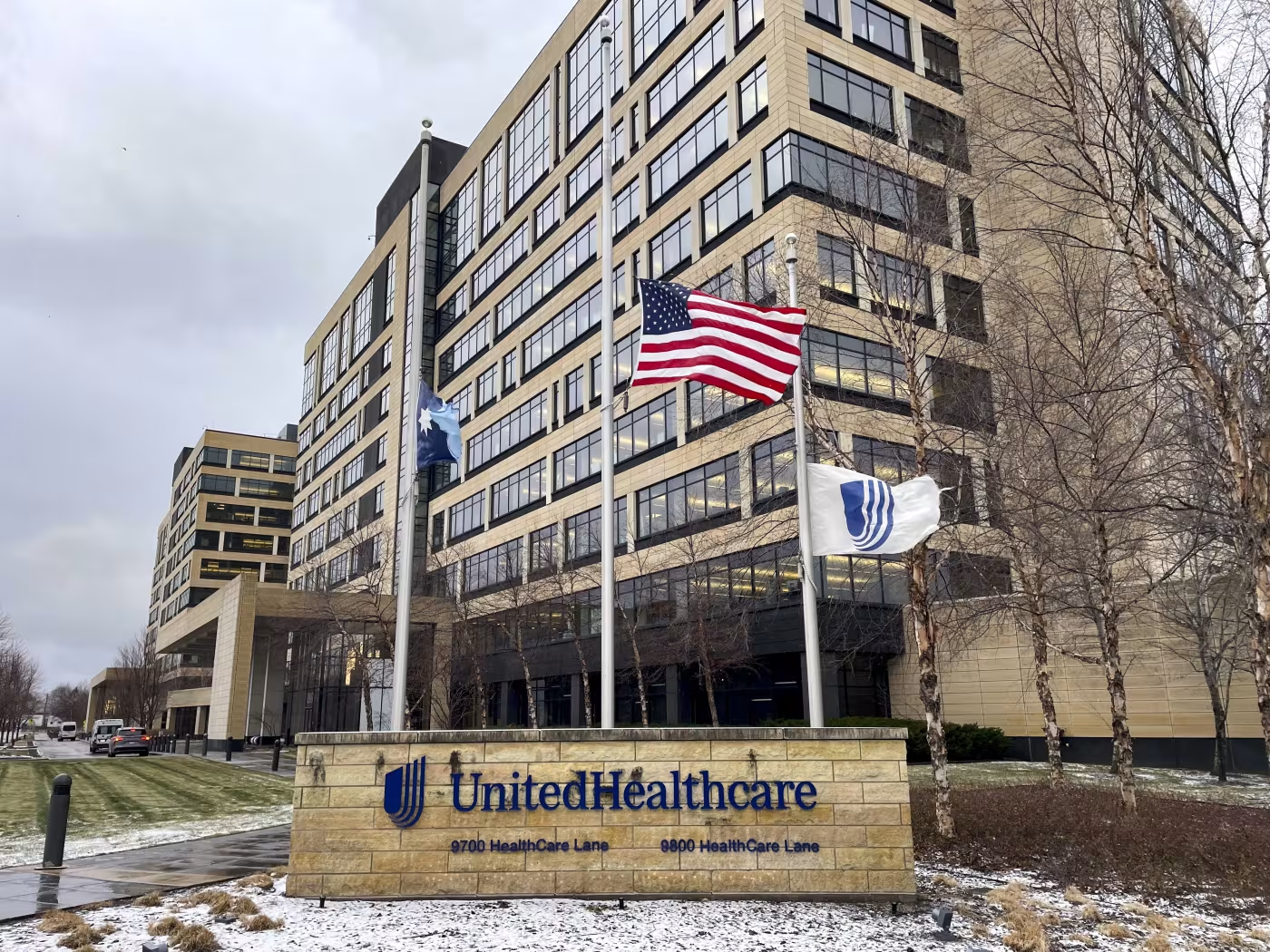
    • “A suspect charged with murder in New York in the assassination of the chief executive of UnitedHealthcare in Midtown Manhattan will fight extradition to New York to face murder charges, potentially keeping him in custody in Pennsylvania for weeks.
    • “He is contesting it,” said his lawyer, Thomas Dickey.
    • “The suspect, Luigi Mangione, 26, was charged late Monday in Manhattan with second-degree murder, forgery and three gun charges.” 
  • and
    • “Brian Thompson, the chief executive of UnitedHealthcare who was gunned down in a brazen killing in New York, was laid to rest this week at a private funeral service in his Minnesota hometown.
    • “On Monday, while the nation was transfixed by the arrest of a 26-year-old man from Maryland who was charged with the murder, family and friends of the slain executive gathered at a Lutheran church in Maple Grove, Minn., to mourn the loss of a husband and father who ascended from modest roots in Iowa to one of the most powerful roles in the health care industry.”
    • RIP

From the public health and medical research front,

  • The American Hospital Association News lets us know,
    • “A study released Dec. 9 by FAIR Health shows an increase in cancer treatment rates for people aged 18-49. The study examined treatment rates for that age group between 2016 and 2023 and noted an overall decrease. From 2020-2023, however, patients aged 18-29 experienced the largest increase in treatment rates at 11.7%, followed by a 7.5% increase for patients aged 40-49 and a 7.2% increase for individuals aged 30-39.”
  • The Washington Post notes,
    • “Federal disease trackers reported Tuesday that the first child diagnosed with bird flu in an ongoing U.S. outbreak was infected with a virus strain moving rapidly through dairy cattle, even though there is no evidence the youngster was exposed to livestock or any infected animals.
    • “The finding by the Centers for Disease Control and Prevention about the child, who lives in California, deepened the mystery about the spread of H5N1 bird flu, a viral ailment that epidemiologists have watched warily for more than two decades, fearing it could spark a pandemic.”
  • KFF CEO Drew Altman discusses the twin problems of mental healthcare — access and affordability.
  • Per Infectious Disease Advisor,
    • “Severe outcomes are uncommon among children with pneumonia regardless of whether antibiotics are received, according to study results published in JAMA Network Open.” * * *
    • “These results suggest that some children diagnosed with pneumonia can likely be managed without antibiotics and highlight the need for prospective studies to identify these children,” the researchers concluded.”
  • Per a National Institutes of Health press release,
    • “The antiviral drug tecovirimat did not reduce the time to lesion resolution or have an effect on pain among adults with mild to moderate clade II mpox and a low risk of developing severe disease, according to an interim data analysis from the international clinical trial called the Study of Tecovirimat for Mpox (STOMP). There were no safety concerns associated with tecovirimat.
    • “Considering these definitive findings, the study’s Data Safety and Monitoring Board (DSMB) recommended stopping further enrollment of participants who were being randomized to tecovirimat or placebo. As the study sponsor, the National Institutes of Health’s (NIH) National Institute of Allergy and Infectious Diseases (NIAID) accepted the DSMB’s recommendation. Given the lack of an efficacy signal, NIAID also closed enrollment into an open-label study arm for participants with or at elevated risk of severe disease that was not designed to estimate the drug’s efficacy.”
  • STAT News informs us,
    • New data suggests researchers may have found one of their most promising candidates yet for the next generation in immunotherapy drugs — bispecific antibodies targeting two key proteins in cancer, PD1 or PD-L1 and VEGF.
    • A small early trial on one such bispecific compound was presented by researchers working with BioNTech at the San Antonio Breast Cancer Symposium on Tuesday. The bispecific compound, called BNT-327, had positive results in patients with triple negative breast cancer. If future trials on the bispecific produce more positive data, it could become a critical part of how triple negative breast cancer — and potentially other cancers — are treated.
    • The research builds on the 1990s discovery of immunotherapy drugs called checkpoint inhibitors, which was “transformative” in oncology, BioNTech co-founder and CMO Özlem Türeci told STAT. Drugs like Merck’s Keytruda can help stimulate the immune system to find and kill cancer cells and have become a mainstay in the standard treatment of many different cancer types. 
    • “But there’s still space for improvement. We all were looking for the next-generation checkpoint inhibitors,” Türeci said. “I believe PD-L1 or PD1 and anti-VEGF bispecifics are exactly this next-generation compound.”
  • Per BioPharma Dive,
    • “An experimental drug from NewAmsterdam Pharma has shown it may protect heart health in a Phase 3 study, a finding Wall Street analysts believe boosts the medicine’s chances of improving the outcomes of people with cardiovascular disease in an ongoing, closely watched clinical trial. 
    • NewAmsterdam on Tuesday said the drug, obicetrapib, met its main goalin the third of three late-stage trials. People with either an inherited condition called heterozygous familial hypercholesterolemia or atherosclerotic cardiovascular disease who received obicetrapib alongside other medicines saw their levels of LDL, or “bad,” cholesterol fall by an average of 33% after 84 days when adjusted for placebo. That result is similar to what was observed in the two previous Phase 3 trials and will form the basis of approval filings NewAmsterdam intends to discuss with U.S. regulators next year, according to the company.
    • “Obicetrapib’s safety profile, including its potential impact on blood pressure — a concern for drugs of its kind, known as CETP inhibitors — were also comparable to a placebo. A higher percentage of patients in the placebo arm dropped out of the trial due to treatment-related side effects, NewAmsterdam said. 
    • “Notably, though the study wasn’t set up to definitively prove whether obicetrapib could lower the risk of heart disease-related complications, testing revealed signs of a possible benefit.” 
  • BioPharma Dive also brings us a report from the American Society of Hematology’s meeting in San Diego.

From the U.S. healthcare business front,

  • The Wall Street Journal reports,
    • “Walgreens is in talks to sell itself to a private-equity firm in a deal that would take the pharmacy chain off the public market after its shares have been on a downward slide for nearly a decade. 
    • “Walgreens Boots Alliance and Sycamore Partners have been discussing a deal that could be completed early next year, assuming talks don’t fall apart, according to people familiar with the matter.
    • “Walgreens’s market value reached a peak of over $100 billion in 2015 but had since shrunk to around $7.5 billion as of Monday. Mounting pressures on both its pharmacy and retail businesses had helped send its shares down nearly 70% so far this year before The Wall Street Journal reported on the deal talks Tuesday.
    • “Walgreens’s shares closed up 18% Tuesday after the report—marking the highest one-day jump in the company’s history and giving it a market value of around $9 billion.”
  • and
    • “Weight-loss drugs could be a boon for insurers, but it is too soon to tell whether the industry will be transformed, the head of Swiss Re’s life and health reinsurance arm said.
    • “The market for obesity drugs such as Eli Lilly’s Zepbound and Novo Nordisk’s Wegovy is booming after studies found the treatments helped patients shed weight and showed promise for health problems ranging from heart-attack risk to alcohol abuse. Lower rates of obesity—which has long been a public health crisis in the U.S. and is linked to many chronic conditions—could lead to smaller health-related claims for insurers and better underwriting margins.
    • “While excitement about the drugs is high, Swiss Re Life & Health Chief Executive Paul Murray said in an interview that many questions remain unanswered.
    • “Often when you get new things, they look shiny and new and we learn over time that it’s best to kind of wait and see a bit what the impact is,” Murray said. Reinsurers like Swiss Re backstop insurance companies’ largest risks.
    • “The rising use of these therapies has the potential to accelerate improvements in life expectancy, which has implications for the life insurance market, Murray said. However, it remains to be seen how long the health benefits of the drugs last, whether people are willing to stay on them long term or can afford to do so, and what happens when they stop taking them, he added.
    • “As things stand today, I would bet pricing will improve, but of course we have to wait and see what the data tells us about the longer-term impact of these drugs,” Murray said.
    • “We don’t know if it’s unilaterally healthy for people to hold food in their stomach for longer,” the chief executive added. The main ingredient of these medications—which were originally developed for diabetes—mimics gut hormones, suppressing appetite and slowing digestion.”
  • MedPage Today identifies the hospitals which offer the most outstanding maternity care.
  • Per the American Hospital Association News,
    • “Baxter has resumed production on all of its 3-liter irrigation and peritoneal dialysis solutions manufacturing lines, the company announced Dec. 5. The company noted that despite production resuming for those lines, more time is needed to restore output to levels reached prior to Hurricane Helene. Baxter expects all manufacturing lines to resume operation by the end of the month.”

Friday Report

  • Healthcare Dive lets us know,
    • “Major health insurers are deleting images of their top leadership from corporate websites or removing executive pages entirely following the brazen killing of UnitedHealthcare CEO Brian Thompson earlier this week.
    • “Thompson, 50, was shot multiple times in midtown Manhattan on Wednesday in what appeared to be a targeted attack. Though many of Thompson’s peers expressed grief, the killing set off a morbidly gleeful celebration on social media, where posters on sites like X and Reddit applauded and joked about the crime to vent frustration and anger with health insurers.
    • “The shooting and subsequent reaction has spurred healthcare companies to increase security around their executives, according to reports. Such measures appear to be extending online, as major insurers scrub identifying details of top personnel from their sites.”
  • The New York Times reports,
    • “Jessica Tisch, commissioner of the New York Police Department, said in an interview with CNN that investigators have “reason to believe” that the person they seek in the killing of Brian Thompson has left New York City. Joseph Kenny, the chief of detectives, said the police have video of him entering a bus terminal the day of the attack. “We don’t have any video of him exiting, so we believe he may have gotten on a bus,” he told CNN.” * * *
    • “The Atlanta Police Department is working with the New York police on the investigation into the killing of Brian Thompson. The Atlanta department said in a statement that it “will now be providing assistance as needed. The N.Y.P.D. is the lead agency.” The Greyhound bus that took the suspect to New York originated in Atlanta, law enforcement officials have said.”
  • Modern Healthcare adds,
    • “The New York Police Department is waiting on DNA test results that could help in the hunt for the killer of insurance chief Brian Thompson, who was fatally shot outside the New York Hilton Midtown Hotel on early Wednesday morning. 
    • “Investigators pulled DNA from an Ethos water bottle that was found in the alleyway of the building that used to house the Ziegfeld Theater, according to a person with knowledge of the matter. It was the same spot where the shooter is believed to have pre-positioned an e-bike used for his getaway and where he dropped a Motorola burner phone, the person said. Police also tested DNA from a Starbucks cup the suspect dropped in a garbage can before he gunned Thompson down.
    • “The items were sent for testing on Wednesday with results expected within three days, potentially bolstering an investigation that is centered on identifying a male suspect who checked into a hostel on Manhattan’s Upper West Side. Police and New York’s Mayor Eric Adams are appealing to the public for help in identifying the suspect, offering $10,000 for tips.”

From Washington, DC,

  • The Washington Post lets us know,
    • “Congressional Democrats have privately proposed a deal to Republicans that would extend expiring Affordable Care Act subsidies by one year, with lawmakers worried by new estimates that 2.2 million people will otherwise lose health coverage, according to five people who spoke on the condition of anonymity to discuss the proposal.
    • “The move accompanied a broader package of health-care proposals submitted to Republicans on Thursday night ahead of year-end spending negotiations.
    • “Lawmakers are fiercely hammering out a bill to fund the government, and health-care leaders are pushing to add priorities to one of the final pieces of legislation this Congress. Negotiations are also occurring on other measures, such as more funding for community health centers, proposals to address bipartisan frustrations about pharmacy benefit managers and other extensions of ongoing health-care programs, four of the people said.
    • “A one-year deal to extend the expiring ACA subsidies would avoid what was expected to be a bruising battle for both parties. Democrats, who crafted the subsidies and have fought to defend them, are set to lose control of the Senate and the White House next year, complicating their ability to make policy. Republicans, who are set to gain control of Washington, are wary of being punished by voters for any perception that they are rolling back health-care coverage, with the backlash to their ACA repeal efforts still fresh in many lawmakers’ minds.”
  • Govexec tells us,
    • “A Republican senator told the head of the U.S. Postal Service on Thursday that he would do everything he could to prevent the agency leader from instituting one of his key reforms, setting up a key divide between Congress and USPS. 
    • “Postmaster General Louis DeJoy faced bipartisan pushback from members of the Senate Homeland Security and Governmental Affairs, with multiple exchanges turning testy. DeJoy vehemently defended his efforts and said the senators standing in his way would bring about the end of the Postal Service. 
    • “Sen. Josh Hawley, R-Mo., became angry with DeJoy when discussing his plan to slow down delivery for some mail, which is expected to disproportionately impact rural areas.
    • “I hate this plan and I’m going to do everything I can to kill it,” Hawley said.”
  • Fierce Healthcare explains “How Trump could roll back Biden-era healthcare regulations.”
  • BioSpace relates,
    • “An appeals court on Wednesday ruled against Novartis in its bid to block the entry of MSN Pharmaceuticals’ generic competitor to the blockbuster heart failure drug Entresto (sacubitril/valsartan), according to Reuters and other outlets.
    • “First approved in 2015, Entresto is an oral drug indicated for the treatment of heart failure in adults. It combines the neprilysin blocker sacubitril with the angiotensin receptor inhibitor valsartan to lower blood pressure and vascular resistance. Since hitting the market, Entresto has become Novartis’ top-selling asset, raking in more than $6 billion in net sales globally last year.
    • “In its decision on Wednesday, the U.S. Court of Appeals for the Federal Circuit agreed with a lower court’s verdict that Novartis had not sufficiently proven that it could win a patent suit against MSN. The appellate judges saw “no clear error in the district court’s analysis,” as reported by Reuters.”

From the public health and medical research front,

  • The Centers for Disease Control and Prevention announced today,
    • “COVID-19 activity remains low in most areas but is expected to increase in the coming weeks. Seasonal influenza activity remains low nationally but continues to increase slowly. RSV activity is moderate and continues to increase in most areas of the United States, particularly in young children. Respiratory infections caused by the bacterium Mycoplasma pneumoniae remain elevated among young children in the United States.
    • “COVID-19
      • “Wastewater levels, laboratory percent positivity, emergency department visits, and hospitalizations are stable or decreasing nationally while deaths remain at very low levels. However, based on CDC modeled estimates of epidemic growth, we predict COVID-19 illness to increase in the coming weeks as it usually does in the winter.
      • “There is still time to benefit from getting your recommended immunizations to reduce your risk of illness this season, especially severe illness and hospitalization.
      • “CDC expects the 2024-2025 COVID-19 vaccine to work well for currently. There are many effective tools to prevent spreading COVID-19 or becoming seriously ill.
    • “Influenza
    • “RSV
      • “RSV activity is moderate nationally and continues to increase in most areas of the United States, particularly in young children. Emergency department visits and hospitalizations are increasing in children and hospitalizations are increasing among older adults in some areas.
    • “Vaccination
      • “Vaccination coverage with influenza and COVID-19 vaccines are low among U.S. adults and children. Vaccination coverage with RSV vaccines remains low among U.S. adults. Many children and adults lack protection from respiratory virus infections afforded by vaccines.
  • The Wall Street Journal reports,
    • “The Agriculture Department said it would launch national testing of cow’s milk for the presence of bird flu to help regulators monitor U.S. dairy processors.
    • “The USDA’s Animal and Plant Health Inspection Service said Friday that its “National Milk Testing Strategy” is designed to quickly find the presence of the disease in cow’s milk or in the cows themselves, by compiling random samples from different processing plants and testing them for the highly pathogenic H5N1 strain of avian influenza.
    • “The virus is widespread among bird flocks, having been detected in over 110 million poultry birds, as well as more wild birds. The disease spread to U.S. cattle herds and has been transmitted to humans, according to the federal Centers for Disease Control and Prevention. The CDC reported nearly 60 human cases, mostly among dairy and poultry workers.
    • “The testing regime is expected to provide more comprehensive data on the proliferation of the disease into cows, the USDA said. The first round of testing is scheduled to begin the week of Dec. 16.”
  • Cardiovascular Business tells us,
    • “Depression is associated with a heightened risk of cardiovascular disease (CVD) among women, according to new data published in Circulation: Genomic and Precision Medicine.[1] The same trend is not seen in men.
    • “The study’s authors focused on three different major psychiatric disorders: major depression (MD), bipolar disorder (BD) and schizophrenia. 
    • “Few studies have investigated the sex differences in the cardiovascular comorbidity of schizophrenia and BD, and observational studies have presented inconsistent findings on the sex-specific association between depression and CVD outcomes,” wrote first author Jiayue-Clara Jiang, PhD, with the Institute for Molecular Bioscience at the University of Queensland in Australia, and colleagues.
    • “Jiang et al. examined U.K. Biobank data from more than 345,000 patients, focused on MD, BD and schizophrenia may impact a patient’s long-term risk of developing atrial fibrillation (AFib), coronary artery disease or heart failure.” 

From the U.S. healthcare business front,

  • Modern Healthcare relates,
    • “The vast majority of people in the U.S. are dissatisfied with the cost of healthcare, according to researchers. Meanwhile, the percentage of those who would rate the quality of U.S. healthcare as excellent or good has hit its lowest point in more than two decades.
    • “Research and polling firm Gallup’s annual Health and Healthcare poll, released Friday, found that 11% of Americans said healthcare quality was excellent and 33% said it was good. Additionally, nearly 80% of respondents said they were dissatisfied with the cost of healthcare.
    • The survey was conducted through telephone interviews between Nov. 6 and Nov. 20 among a random sample of 1,001 adults across all 50 states.” * * *
    • “When asked about what they saw as the most urgent health problem facing the country, survey participants’ number one response was cost, followed by access and obesity.” 
  • Medical Economics adds,
    • “The Business Group on Health has identified health care costs as a major trend employers will need to navigate in 2025. With the cost of care growing at historic rates, businesses are preparing for a year of challenging decisions to manage expenses while maintaining quality care for their employees. Many of these changes could affect primary care physicians and their patients.
    • “A multitude of factors shape these 2025 trends, including the economy, technology, innovation, the political environment, and the evolving role of employers in the broader health and well-being landscape,” said Ellen Kelsay, president and CEO of the Business Group on Health, in a statement. “As employers head into the new year, they face formidable challenges stemming from climbing health care costs, which are putting pressure on how employers manage their overall health and well-being programs.”
    • “The 2025 Trends to Watch, outlined by the largest non-profit organization representing employer interests in health and workforce strategies, highlight the complexities businesses will encounter in addressing cost growth, mental health challenges, and an evolving relationship with vendors and health care partners.”
  • Per Kaufmann Hall,
    • “Following the release of Q3 financial reports, this week’s graphic takes stock of large health insurance companies’ recent financial performances. Nearly all the major payers reported higher medical loss ratios (MLRs) in Q3 2024 compared to Q4 2022. The MLR refers to the percentage of premium dollars spent on medical claims and quality improvements and is an important metric payers use to evaluate their operations. This upward trend has affected some payers more than others, with CVS’s MLR rising by more than 9% compared to UnitedHealth Group’s (UHG) 2.4% increase in this time frame. The only payer to report a decreased MLR was Cigna, which appears to be benefitting from its continued pullback from the Medicare Advantage (MA) market.
    • Notably, payers have often cited higher utilization among MA patients­­­­—their previous blueprint for growth—as the leading reason for these rising costs. Additionally, relying on the profitability of other business segments to fuel future strategic investments may not be a sustainable plan for the two largest vertically integrated payers. 
    • Despite directing substantial resources into their non-insurance segments, nearly all these companies’ other business units have also been less profitable through Q3 2024, compared to the same period last year. After riding high for several years, the payers are showing signs that, despite their size, they are running into many of the same challenges as providers: rising drug costsan aging population, and higher labor costs.
  • Per Beckers Hospital Review,
    • “Blue Shield of California is set to launch a drug benefit initiative in January, partnering with Amazon Pharmacy and pharmacy benefit manager Abarca, Forbes reported Dec. 5. 
    • “The collaboration, called the Pharmacy Care Reimagined Initiative, aims to reduce prescription drug costs and improve transparency for the insurer’s 5 million health plan members.” 
    • This initiative was first announced in August 2023.

Thursday Report

Healthcare Dive shares observations and news about yesterday’s murder of United Healthcare’s CEO Brian Thompson.

Yahoo News delves into the investigation of Mr. Thompson murder by the New York City Police Department. The FEHBlog has the utmost confidence that this investigation will end with at least one arrest.

From Washington, DC

  • Federal News Network informs us,
    • “Enrollees in the new Postal Service Health Benefits program will have a few extra days of Open Season to review their plan options and make changes to their benefits for plan year 2025.
    • “The Office of Personnel Management officially extended Open Season for PSHB participants until Dec. 13, Federal News Network has learned. Participants in the Federal Employees Health Benefits program and other federal benefits programs will still see Open Season end on the original Dec. 9 deadline.
    • “OPM said the transition to the new PSHB program is “a big change” for enrollees, and it’s extending Open Season by four days to give Postal employees, annuitants and their family members additional time to look at plans and make changes as they see fit.
    • “We feel it is important to extend Open Season for customers of the PSHB program to give them ample time to shop for plans and change their elections if they want to,” OPM said.
  • Tammy Flanagan, writing in Govexec, discusses Open Season and tax savings.
  • Politico reports,
    • “The House is losing several health policy leaders after this Congress, and they’ll likely want to make their mark in their last two months on Capitol Hill.
    • “While Congress negotiates its end-of-year legislative package, some key departing lawmakers are rallying to pass projects before their terms end — although expectations for a health care package are low. Historically, Congress has sometimes shown a willingness to give outgoing lawmakers a win.”
    • Politico shares the legacy goals of the retiring House members.
  • Among the bills for possible inclusion in the lame duck health care package is S. 1339, Pharmacy Benefit Manager Reform Act. The Congressional Budget Office issued a report on this bill today.
  • The Washington Post informs us,
    • “A bipartisan group of senators grilled Food and Drug Administration officials Thursday on the agency’s failure to more tightly regulate ultra-processed foods and food dyes, highlighting a key part of the health agenda promoted by Robert F. Kennedy Jr.
    • “Kennedy, President-elect Donald Trump’s controversial pick to lead the sprawling Department of Health and Human Services, which oversees the FDA, has blamed the nation’s surge of chronic disease and declining life expectancy on ultra-processed foods — a position that aligns with Sen. Bernie Sanders (I-Vermont), who convened the hearing as chairman of the Senate health committee.
    • “Congress and the FDA have allowed large corporations to make huge profits by enticing children and adults to consume ultra-processed food and beverages loaded up with sugar, salt and saturated fat,” Sanders said Thursday, pointing to the billions of dollars the food-and-beverage industry spends on advertising.”
  • Govexec notes,
    • “The leaders of President-elect Trump’s new advisory panel aiming to slash government spending, Elon Musk and Vivek Ramaswamy, met with Republican lawmakers at the Capitol on Thursday in what leaders pitched as an informational session to share ideas. 
    • “Congressional Republicans and a handful of Democrats have embraced Trump’s Department of Government Efficiency, which will function as a non-governmental commission, and on Thursday were eager to share their ideas for identifying areas for cuts. Some Republicans cautioned, however, that the advisory panel must work through the appropriate channels and win congressional support for their initiatives. 
    • “Nearly every House and Senate member that emerged from the various meetings called them productive and suggested a unifying idea supported by both lawmakers and Trump’s designated efficiency czars: recalling teleworking employees back to the office.”  
  • Per Department of Health and Human Services press releases,
  • and
    • “Today, the U.S. Department of Health & Human Services (HHS), Office for Civil Rights (OCR), issued a “Dear Colleague” letter – PDF to help federally funded health care providers, plan grantees, and others better understand their civil rights obligations under the new final rule on Section 1557 of the Affordable Care Act (“Section 1557”).  
    • “Section 1557 provides nondiscrimination protections by requiring covered entities (e.g., recipients of Federal financial assistance, programs administered by HHS, and entities established under Title I of the Affordable Care Act (ACA)) to provide language assistance to individuals with limited English proficiency (LEP) or disability.”
  • Modern Healthcare reports,
    • “Hospitals have expanded their legal push for the federal government to boost Medicare reimbursement.
    • “More than 500 hospitals last week sued the Health and Human Services Department for allegedly miscalculating a 40-year-old Inpatient Prospective Payment System base reimbursement rate that providers say has lowered years of subsequent Medicare payments to hospitals. The lawsuit is the latest in a series of similar complaints that allege the Health and Human Services Department must increase Medicare inpatient pay.
    • “Each lawsuit challenges different batches of denied requests to amend reimbursement rates, but the arguments are largely the same. Hundreds of millions of dollars are at stake, providers allege. If the federal government changes the inpatient base pay rate, hospitals stand to not only recoup money from prior fiscal years but also increase future reimbursement rates.”
  • The American Hospital Association News tells us,
    • “A $2.8 billion settlement from Blue Cross Blue Shield to health care providers resolving a 12-year antitrust lawsuit received preliminary approval yesterday from the U.S. District Court for the Northern District of Alabama. The settlement will also “significantly improve how Providers will interact with the Blues, bringing more transparency and efficiency to their dealings, and increase Blue Plan accountability,” according to the court filing. 
    • “The lawsuit alleged that BCBS member companies violated antitrust laws by agreeing to allocate markets via exclusive service areas and fixing prices paid to health care providers through the organization’s BlueCard Program.”
  • and
    • “Approximately 988,000 consumers who currently do not have health insurance coverage through the individual marketplace have signed up for a 2025 health plan through the federally facilitated Health Insurance Marketplace, the Centers for Medicare & Medicaid Services announced yesterday. Nearly 4.4 million returning consumers have selected 2025 plans. The open enrollment period began Nov. 1 and continues through Jan. 15.”
    • The deadline for January 1, 2025, enrollments is December 15, 2024. Later enrollments will begin on February 1, 2025.
  • and
    • “The Food and Drug Administration yesterday released recommendations for streamlining the approval process for medical devices that use artificial intelligence. The guidance recommends information to include in a predetermined change control plan as part of a marketing submission for a medical device using AI. The PCCP should include a description of the device’s planned modifications; methods to develop, validate and implement the modifications; and an assessment of the modification’s impacts. FDA will then review the PCCP within the submission to ensure the device’s safety and effectiveness without needing additional marketing submissions for each modification.” 

From the public health and medical research front,

  • The Washington Post reports,
    • “Scientists from the Scripps Research Institute are reporting that it would take just a single mutation in the version of bird flu that has swept through U.S. dairy herds to produce a virus adept at latching on to human cells, a much simpler step than previously imagined.
    • “To date, there have been no documented cases of one human passing avian influenza to another, the Scripps scientists wrote in their paper, which was published Thursday in the journal Science. The mutation they identified would allow the virus to attach to our cells by hitching itself to a protein on their surface, known as the receptor.
    • “William Schaffner, a professor of infectious diseases at Vanderbilt University Medical Center who did not participate in the study, called the research “sobering,” adding, “I had not known it would take just one mutation in the virus for it to attach itself to the receptors on human cells.
    • “However, he stressed that the H5N1 virus has been active for 20 years and “has multiplied billions upon billions upon billions of times and the spontaneous mutation that the authors describe,” has not been found, despite intense surveillance.
    • “Yoshihiro Kawaoka, a professor of virology at the University of Wisconsin, who was not involved in the latest research but has studied bird flu extensively, said that statistically, the mutation probably already exists in H5N1-infected cows and humans, given that 1 in 10,000 infectious particles of the influenza virus is a mutant.
    • “James C. Paulson, one of the paper’s authors, and several other top scientists agreed that it is statistically likely the mutation has occurred in the H5N1 virus but stressed that it has yet to be detected, and other barriers remain before the virus could be transmitted from one person to another. Paulson is a professor in the Department of Molecular Medicine at Scripps.”
  • The National Institutes of Health Director, Dr. Monica Bertagnolli, writes in her blog,
    • “Your memories of life experiences are encoded in collections of neurons in the brain that were active at the time the event took place. Later, those same patterns of neural activity are replayed in your mind to help stabilize your memories of past events. But new research suggests those memories aren’t fixed. An NIH-supported study in male mice reveals how an older memory can be “refreshed” and altered by association with newer events.
    • “The findings, reported in Nature , show that a memory of a recent negative event can become linked to the memory of a neutral event that took place days earlier, changing the way it’s remembered. This provides important insight into what we know about how the brain updates and reorganizes memories based on new information. These findings could also have implications for our understanding of neurobiological processes that might occur in the brain in memory-related mental health conditions like post-traumatic stress disorder (PTSD), when people feel stress or fear even in situations that present no danger.” *. * *
    • “Although these findings were obtained in a mouse model, according to the researchers, the study results suggest that our brains may integrate memories to form a cohesive understanding of real-world experiences in ways that offer stability and flexibility. These insights suggest that memories of the past are constantly updated and refreshed by new experiences in ways that may help us function in a world marked by constant change.
    • “The findings also suggest that negative experiences can lead us to fear seemingly unrelated places or events in ways that are detrimental. This may help to explain why for people with PTSD, exposure therapy—in which people work to overcome fears through gradual exposures to them in a safe environment—can stop being effective. The hope is that findings like these might shed light on potential new ways to treat PTSD and related disorders.”
  • Per an NIH press release,
    • “Improvements in cancer prevention and screening have averted more deaths from five cancer types combined over the past 45 years than treatment advances, according to a modeling study led by researchers at the National Institutes of Health (NIH). The study, published Dec. 5, 2024, in JAMA Oncology, looked at deaths from breast, cervical, colorectal, lung, and prostate cancer that were averted by the combination of prevention, screening, and treatment advances. The researchers focused on these five cancers because they are among the most common causes of cancer deaths and strategies exist for their prevention, early detection, and/or treatment. In recent years, these five cancers have made up nearly half of all new cancer diagnoses and deaths.
    • “Although many people may believe that treatment advances are the major driver of reductions in mortality from these five cancers combined, the surprise here is how much prevention and screening contribute to reductions in mortality,” said co-lead investigator Katrina A. B. Goddard, Ph.D., director of NCI’s Division of Cancer Control and Population Sciences. “Eight out of 10 deaths from these five cancers that were averted over the past 45 years were due to advances in prevention and screening.”
    • “A single prevention intervention, smoking cessation, contributed the lion’s share of the deaths averted: 3.45 million from lung cancer alone. When considering each cancer site individually, prevention and screening accounted for most deaths averted for cervical, colorectal, lung, and prostate cancer, whereas treatment advances accounted for most deaths averted from breast cancer.
    • “To reduce cancer death rates, it’s critical that we combine effective strategies in prevention and screening with advances in treatment,” said W. Kimryn Rathmell, M.D., Ph.D., director of NCI. “This study will help us understand which strategies have been most effective in reducing cancer deaths so that we can continue building on this momentum and hopefully increase the use of these strategies across the United States.”
  • The AP adds,
    • “Many moms-to-be opt for blood tests during pregnancy to check for fetal disorders such as Down syndrome. In rare instances, these tests can reveal something unexpected — hints of a hidden cancer in the woman.
    • “In a study of 107 pregnant women whose test results were unusual, 52 were ultimately diagnosed with cancer. Most of them were treated and are now in remission, although seven with advanced cancers died.
    • “They looked like healthy, young women and they reported themselves as being healthy,” said Dr. Diana Bianchi, the senior author of the government study published Wednesday in the New England Journal of Medicine.
    • “Of the discovered cancers, lymphoma blood cancers were the most common, followed by colon and breast cancers.
    • “The blood test is called cell-free DNA sequencing. It looks for fetal problems in DNA fragments shed from the placenta into the mother’s bloodstream. It also can pick up DNA fragments shed by cancer cells.”
  • NBC News relates,
    • “Prescription fills for blockbuster weight loss medications in the U.S. more than doubled in 2024, even with limited insurance coverage and high out-of-pocket costs for the treatments.
    • “That’s according to new data from drug savings company GoodRx, which examined fill trends and spending patterns for weight loss drugs such as Novo Nordisk’s Wegovy and Eli Lilly’s Zepbound.
    • “It offers more evidence of the insatiable demand for a buzzy class of medications called GLP-1 and GIP agonists, which have hefty list prices of roughly $1,000 per month before insurance or savings cards.”
  • More on prevention from Physicians’ Weekly,
    • “People with type 2 diabetes mellitus (T2DM) face a high risk of cardiovascular disease (CVD), but the timing of this elevated risk before diagnosis is not well understood.  
    • “Researchers conducted a retrospective study to examine CVD occurrence up to 30 years before and 5 years after a diagnosis of type 2 diabetes.  
    • ‘They included individuals diagnosed with type 2 diabetes in Denmark (2010 and 2015) n=127,092 and matched comparisons n=381,023. Conditional logistic regression was used to compute ORs for the prevalence of CVD in the 30 years before diagnosis, and Cox proportional hazards regression models to calculate HRs for 5-year CVD incidence after diagnosis.  
    • ‘The results showed that, in the 30 years before diagnosis, 14,179 (11.2%) individuals with type 2 diabetes and 17,871 (4.7%) comparisons experienced CVD. The odds of CVD were higher for individuals with type 2 diabetes, ranging from 2.18 (95% CI: 1.91-2.48) in the earliest period (25-30 years before diagnosis) to 2.96 (95% CI: 2.85-3.08) in the latest period (less than 5 years before diagnosis). After diagnosis, the 5-year CVD incidence was higher for individuals with type 2 diabetes (HR: 2.20; 95% CI: 2.12-2.27).  
    • “They concluded that individuals with type 2 diabetes experienced twice the number of CVD events compared to matched controls, starting up to 30 years before diagnosis, suggesting that early preventive strategies may be necessary.”  

From the U.S. healthcare business front,

  • The Wall Street Journal reports,
    • Eli Lilly said it would invest $3 billion to expand a recently acquired manufacturing facility to meet growing demand for its diabetes and weight-loss medicines.
    • “The drugmaker said the Kenosha County, Wis., plant expansion would extend the reach of its injectable-product manufacturing and add 750 jobs. The facility already employs around 100 people.
    • “Overall, the expanded facility would focus on manufacturing injectable medicines, device assembly and packaging for medicines across multiple therapeutic areas, the Indianapolis company said.
    • “The decision comes months after Lilly resolved shortages for its weight-loss and diabetes drugs, Zepbound and Mounjaro. Lilly’s rival, Novo Nordisk, has been expanding its production capacity to resolve shortages.”
  • Per Fierce Healthcare,
    • “Amazon has added digital musculoskeletal care company Hinge Health to its health conditions program, a service it rolled out in January to help connect customers with virtual care benefits.
    • “Hinge Health is the first digital musclosketal platform to join Amazon Health Services’ offering that aims to help people discover and enroll in digital health programs available through their employer or health plan at no additional cost.
    • “It marks the fourth company to join Amazon Health Services’ digital health benefits program, following Omada Health, as its first launch partner, Talkspace and behavioral health company Rula Health.”
  • Per Fierce Pharma,
    • “AstraZeneca has picked off another label expansion for its cancer blockbuster Imfinzi (durvalumab) as the FDA has blessed the PD-L1 inhibitor for limited-stage small cell lung cancer (LS-SCLC) patients who have not had disease progression after concurrent chemotherapy and radiation treatments.
    • “With the nod, Imfinzi becomes the first immunotherapy for LS-SCLC, an aggressive form of the disorder with a survival rate between 15% and 30% after diagnosis. The subtype includes roughly 30% of all SCLC cases. It often recurs and progresses rapidly despite initial response to standard-of-care chemo and radiation treatment.
    • “The approval is backed by results from the ADRIATIC trial which showed that, compared to placebo, Imfinzi extended patients’ lives by 27% among those who had not progressed following chemoradiotherapy. The estimated median overall survival was 55.9 months for Imfinzi versus 33.4 months for placebo.”
  • BioPharma Dive points out,
    • “Inside every human cell are thousands of snippets of genetic code that serve as the directions for creating proteins. And over the past four years, a small biotechnology company has been trying to prove that, by looking closely enough at this assembly of instructions, it can find new ways to treat diseases like Alzheimer’s, Parkinson’s and multiple sclerosis.
    • “The company, Muna Therapeutics, now has a nod of confidence from one of the world’s largest drugmakers, as it announced on Thursday a collaboration with GSK that could ultimately be worth hundreds of millions of dollars.
    • “Per deal terms, Muna will analyze brain tissue samples from a variety of sources, from healthy individuals to Alzheimer’s patients to centenarians with and without cognitive impairment. The company will then use different technologies to determine where protein instructions are (or aren’t) in those tissues, with the goal being to identify and validate new targets for Alzheimer’s drugs.”
  • RAND Healthcare shares its key findings on telehealth policy.

Tuesday Tidbits

Photo by Patrick Fore on Unsplash

From Washington, DC,

  • Govexec let us know,
    • “The top House Republicans for veterans’ issues are pushing a new measure to codify and expand privatized health care on the taxpayer dime, reigniting a controversial issue that is likely to come back to the fore under President-elect Trump. 
    • “The Complete the Mission Act would serve as a followup to the 2018 Mission Act that Trump signed into law, which streamlined and expanded veterans’ access to private sector care paid for by the Veterans Affairs Department. Congress passed the Mission Act on a bipartisan basis to follow a 2014 law with similar goals, but lawmakers have since disagreed over its implementation. 
    • “The new bill, introduced by House Veterans Affairs Committee Chairman Mike Bost, R-Ill., would ensure existing access standards for private sector “community care” are codified in law. Those rules allow veterans living more than a 30-minute drive on average from the nearest VA facility to access the community care network for services such as primary care, mental health and some extended care. For specialized care, veterans must live more than a one-hour drive from the nearest VA facility. They can also access private care when a close VA facility does not provide the service they are seeking, or when their VA doctor recommends it. 
    • “Bost’s measure would expand extended care options in the private sector and bar VA from considering telehealth availability when calculating community care eligibility. It would also require VA to consider veterans’ preference of where to seek treatment. The bill would create a three-year pilot in which patients could enroll in non-VA outpatient mental health or substance use treatment without requiring.”
  • Federal News Network informs us,
    • “Agency leaders in charge of combatting fraud are highlighting the importance of workforce training and data sharing, as the White House touts a deep decline in the governmentwide rate of improper payments.
    • “The Office of Management and Budget last week reported the governmentwide rate improper payment rate had fallen to 3.97%, the lowest since 2014. The rate has dropped by nearly 50% since fiscal 2021, when improper payments and fraud soared amid emergency COVID relief spending.
    • “The total amount of improper and unknown payments in fiscal 2024 was $161.5 billion, compared to just under $236 billion in fiscal 2023, according to data posted on PaymentAccuracy.gov.
    • “The White House said the past year’s progress was driven by “a government-wide approach focused on improving up-front controls, prioritizing fraud prevention, and driving increased collaboration between agencies and their inspectors general.”
  • The Internal Revenue Service announced that “The applicable dollar amount that must be used to calculate the [PCORI] fee imposed by sections 4375 and 4376 for policy years and plan years that end on or after October 1, 2024, and before October 1, 2025, is $3.47.
  • The Office of Personnel Management’s Inspector General released her latest semi-annual report to Congress.
  • Adam Fein, writing in his Drug Channels blog, shares four revelations about Minnesota’s first 340B program transparency report.

From the public health and medical research front,

  • STAT News reports,
    • “At the annual meeting of the Menopause Society earlier this fall, researchers presented new evidence that hormone therapy can be beneficial to menopausal women’s heart health, reducing insulin resistance and other cardiovascular biomarkers. It was the latest in a long line of research showing the benefits of hormone therapy for women in menopause, which also includes alleviating symptoms like hot flashes, sleep disturbances, vaginal dryness, and pain during sex.
    • “But despite this evidence, hormone therapy’s use has plummeted over the past few decades. In 1999, almost 27% of menopausal women in the U.S. used estrogen. By 2020, less than 5% did. 
    • “So why aren’t more women in menopause taking advantage of treatments known to be effective? Misconceptions about the risks of hormone therapy are one reason, according to experts. So is the lingering cultural taboo around discussing menopause, which has created “a perfect storm for under-treatment,” said Theodoros Kapetanakis, an OB-GYN at Mount Auburn Hospital’s Endometriosis Center in Waltham, Mass.” 
  • Healio tells us.
    • “The beneficial impact of physical activity on mortality risk remained consistent across the adult lifespan, even growing stronger later in life, according to study results published in JAMA Open Network.
    • “In contrast, other modifiable health factors saw their effects on the risk for mortality decrease with increasing age.
  • RAND offers a report titled “Improving the Detection of Cognitive Impairment and the Pathway to Treatment.”‘
    • “Low cognitive ability, functional limitations, and poor physical health are strong predictors of dementia as many as 20 years before its onset. Lifestyle factors, such as never drinking alcohol or drinking excessively, never exercising, and low engagement in hobbies, are associated with cognitive impairment and dementia.
    • “Early detection of cognitive impairment helps people take mitigating actions to prepare for future loss of their financial and physical independence.
    • “Older adults’ take-up of cognitive testing is low, and many who do get tested exit the clinical care pathway before being diagnosed and receiving treatment. Take-up of cognitive tests would increase if tests were free and readily accessible. Treatments would be more palatable if they had fewer side effects and helped patients maintain independence longer.
    • “More engagement of primary care practitioners and team-based care in the clinical care pathway and the use of new technologies, such as blood-based biomarkers, could ease health care system capacity constraints on dementia specialists and reduce wait times for patients.”
  • McKinsey & Company offers ideas about “How to address healthcare inequities for people with disabilities.”
    • “Globally, people with disabilities have a mortality rate that is 2.24 times higher than those without disabilities. And although people with disabilities often have greater healthcare needs, they also experience more and higher barriers to care. McKinsey’s Dr. Mona Hammami and coauthors write that in the patient care pathway, people with disabilities are more likely to report:
      • “skipping or delaying care because of cost
      • “having difficulty securing transportation to a health facility
      • “encountering inaccessible facilities
      • “meeting workers with inadequate skills or flexibility to provide quality care
    • “This International Day of Persons with Disabilities (IDPD), examine inequities in the patient care pathway, potential interventions to overcome them, and a three-step approach to reducing inequities across communicable and non-communicable disease types.”
  • The New York Times reports
    • “Health officials have closed their investigations into an E. coli outbreak linked to raw onions on McDonald’s Quarter Pounder hamburgers that sickened more than a hundred people, the Food and Drug Administration (FDA) announced Tuesday.
    • “In total, 104 people from 14 states were sickened from the contaminated food and 34 were hospitalized. One older person in Colorado died.
    • “Officials said there did not appear to be a “continued food safety concern,” because McDonald’s had not served slivered onions — which investigators determined to be the “likely source of contamination”— on the Quarter Pounders for more than a month. The onions were recalled. And in many states, Quarter Pounders were removed from the menu altogether for several weeks.
    • “There have not been any new illnesses since McDonald’s decided to remove the onions from its menu on Oct. 22, according to the Centers for Disease Control and Prevention.”
  • Per an FDA announcement,
    • “On Monday, the FDA updated the outbreak advisory for Salmonella Typhimurium infections linked to cucumbers. As of November 26, 2024, a total of 68 people infected with the outbreak strain of Salmonella have been reported from 19 states. Of the 50 people for whom information is available, 18 have been hospitalized. No deaths have been reported. Of the 33 people interviewed, 27 (82%) reported eating cucumbers.
    • “On November 27, 2024, SunFed Produce, LLC initiated a voluntary recall of all sizes of American/slicer cucumbers that were grown by Agrotato, S.A. de C.V. in Sonora, Mexico. On November 29, 2024, Baloian Farms of Arizona Co., Inc. initiated a voluntary recall of all sizes of American/slicer cucumbers that were grown by Agrotato, S.A. de C.V. On December 1, 2024, Russ Davis Wholesale initiated a voluntary recall of American/slicer cucumbers and multiple products containing recalled cucumbers.
    • “The FDA is working with the recalling firms and their direct customers to determine if additional downstream customer recalls are necessary. The FDA’s investigation is ongoing.”

From the U.S. healthcare business front,

  • Modern Healthcare relates,
    • “Kaiser Permanente-backed Risant Health acquired Cone Health on Sunday, making it the second health system to join Risant in less than a year.
    • “Cone is following in the footsteps of Geisinger Health, which was folded into the newly-formed Risant in March. Kaiser created Washington, D.C.-based Risant earlier this year as a nonprofit entity to buy systems and form a national network for value-based care.” * * *
    • “Having two of these close in one year has made for a pretty busy year,” said Dr. Jaewon Ryu, CEO at Risant. “It’s great to get on the other side of the regulatory approvals and finalize welcoming [Cone] into Risant Health.”
  • Beckers Hospital Review notes,
    • “California was CommonSpirit’s top-performing market in terms of margins in the first quarter of fiscal year 2025 (the three months ending Sept. 30) but the Chicago-based system’s South region, which includes Texas and Kentucky, “remains challenged,” Benjie Loanzon, senior vice president and corporate controller, said during the company’s Dec. 2 earnings call. 
    • “We are taking a range of actions in this region, focusing on our ambulatory strategy,” Mr. Loanzon said. “We are encouraged by recent performance improvements, though a significant amount of work will be needed to reach an acceptable level [of] performance.”
    • “CFO Dan Morissette said the health system continues to look at ways to improve the South region’s performance. Key focus areas include contracting, efficiency, growth and cost containment. 
    • “Although Texas didn’t perform well in Q1, we are encouraged by other achievements in terms of the volume and cost containment,” Mr. Loanzon said. “Kentucky is the most improved market in terms of the financial performance. In terms of the volume and cost containment, it has a positive EBIDTA compared to the past.”
  • Per BioPharma Dive,
    • “Shares of Janux Therapeutics surged to record highs following the release of study results for a drug that, if ultimately successful in testing, would represent a new type of therapy for prostate cancer. 
    • “The findings come from an early-stage study testing the biotechnology company’s therapy, dubbed JANX007, in 16 people with a form of advanced prostate cancer. Data Janux first disclosed earlier this year vaulted the company’s market value past $2 billion. While early and from a small clinical trial, the new results announced Monday afternoon pushed Janux’s shares nearly 75% higher, changing hands Tuesday morning at more than $70 apiece.”‘
  • Beckers Payer Issues tells us how much health plans are paying for GLP-1 drugs.
    • The prices for some GLP-1s have dropped significantly in recent years for individuals covered by Medicare and commercial insurance, according to a new report from HHS,
    • In 2024, the U.S. list prices for a one-month supply for most GLP-1s are stable or increasing, but after payer negotiations and rebates, net prices for many GLP-1s have decreased since 2022. Net prices for GLP-1s are between 24% and 73% lower than list prices, indicating that most insurers are paying less than the manufacturer’s list price.
    • “In the net prices, we see evidence of the impact of competition as new drugs in the class enter the market,” HHS wrote. “While list prices are consistently stable or increasing, for many of these drugs, including Ozempic, Rybelsus, Saxenda, and Victoza, net prices fell.”
  • Healthcare Dive explains “Healthcare organizations must carefully vet AI tools, address patient concerns and keep an eye on standards and regulation, according to industry experts who spoke at a Healthcare Dive virtual event.”

Happy Veterans Day!

Photo by Megan Lee on Unsplash

Thanks to all those who served our great country.

From Washington, DC,

  • The Washington Post reports,
    • “With Republicans on the cusp of unified control of Washington, Congress appears primed to extend the deadline for a government shutdown well past President-elect Donald Trump’s inauguration.
    • “Lawmakers are discussing a temporary measure that would fund the government into March, according to two people briefed on the discussions, who spoke on the condition of anonymity because they were not authorized to speak publicly.
    • “That would give the Senate plenty of time to begin confirming Trump’s Cabinet nominees, and the House time to plot out maneuvers on tax legislation, without the threat of an imminent government shutdown. Without new legislation, financing for federal agencies will expire Dec. 20.”
  • Modern Health informs us,
    • “A Centers for Disease Control and Prevention report released Friday shows 7.6% of Americans, or 25.3 million people, lacked health insurance during the time of data collection from April to June. Although the rate represents a 0.4 percentage point increase from the year-ago period, it is consistent with 2023’s full-year uninsured rate — a historic annual low.
    • “More people have health insurance coverage than ever before — and the peace of mind that comes with it,” Health and Human Services Department Secretary Xavier Becerra said in a statement Sunday. “That is all thanks to the Affordable Care Act’s expansion of Medicaid and creation of the Marketplace.”
  • The American Hospital Association News tells us,
    • In comments Nov. 11 to the Centers for Medicare & Services on its Notice of Benefit and Payment Parameters for 2026, the AHA expressed support for navigators and other assistance personnel as CMS explores how to expand their responsibilities. Navigators and non-navigator assistance personnel work with hospitals and health systems to help connect consumers to financial assistance resources. 
    • “Navigators are already trusted community resources for navigating health insurance coverage and would be a great asset in helping to reach patients who are otherwise not accessing available financial assistance,” the AHA wrote. “We also encourage navigators and assisters to expand their enrollment counseling to help patients enroll in plans with affordable deductible and cost-sharing requirements based on the patient’s financial resources.”
  • The FEHBlog wishes he knew the objectives of the PSHB navigators and the level of their success in achieving those objectives.

From the public health and medical research front,

  • The Washington Post lets us know,
    • “About 41 percent of U.S. adults with hypertension are unaware they have it, according to a report from the National Center for Health Statistics. Left untreated, high blood pressure can increase the risk for heart disease and stroke.
    • “The American College of Cardiology defines hypertension as having systolic blood pressure of 130 mm Hg or above, or diastolic blood pressure of 80 mm Hg or above.
    • The NCHS data is drawn from a two-year survey, from August 2021 to August 2023, of the U.S. population. The survey sample “is selected through a complex, multistage design,” the NCHS report says. The survey information was collected in stages, including interviews conducted in subjects’ homes and a standardized health examination in a mobile exam site. An average of up to three blood pressure readings were taken.
    • “In adults over age 18, 48 percent of the survey’s 6,084 subjects were found to have hypertension — 60 percent of whom were aware that they had high blood pressure.” 
  • HR Dive relates,
    • “Women’s use of health benefits can influence workplace outcomes such as attendance, retention and productivity, according to a Nov. 6 report from the Integrated Benefit Institute.
    • “For instance, 89% of employed U.S. women said employer benefits positively influence overall workplace satisfaction, and 85% said benefits play a crucial role in attracting and retaining talent.
    • “In particular, benefit use was associated with fewer missed workdays, with the greatest effects seen from mental health benefits, reproductive health services and maternity care.
  • The American Medical Association points out what doctors wish their patients knew about ultra processed foods.
  • Per Healio
    • “Low-level lead poisoning remains prevalent across the United States and globally, warranting screening and identification of those at highest risk, according to a recently published review.
    • “Such poisonings are especially dangerous in children because of their adverse links to cognitive and behavioral development, the researchers pointed out in The New England Journal of Medicine.
  • Per MedPage Today
    • “Healthy lifestyle choices in midlife may offset genetic risks for dementia, stroke, and late-life depression.
    • Brain Care Scores measure modifiable risk factors for age-related brain diseases.
    • “Compared with lower Brain Care Scores, higher scores were tied to reduced risk of brain disease in people with genetic predisposition to such diseases.”

From the U.S. healthcare business front,

  • Beckers Payer Issues lets us know,
    • Cigna directly confirmed that it is not pursuing a merger with Humana. 
    • “The Cigna Group remains committed to its established M&A criteria and would only consider acquisitions that are strategically aligned, financially attractive, and have a high probability to close,” the company said in a Nov. 11 news release
  • Beckers Hospital Review relates,
    • “Oakland, Calif.-based Kaiser Permanente posted a $608 million operating loss (-2.1% operating margin) in the third quarter of 2024, down from an operating income of $156 million (0.6% operating margin) in the same quarter last year, according to its Nov. 8 financial report.  
    • “Kaiser posted an operating revenue of $29 billion in the three months ended Sept. 30, up from $24.9 billion over the same period in 2023. The system reported operating expenses of $29.6 billion in the third quarter, up from $24.7 billion over the same period last year. 
    • “The system said that it continues to experience “increased medical expenses due to higher-than-expected utilization of services, patient acuity and pharmacy costs.” Kaiser also said that its third-quarter performance also included the “impact of Medicaid and other true-ups of annual contracts that normally occur earlier in the year.”
  • STAT News reports,
    • “AbbVie said Monday that its experimental treatment for schizophrenia failed to significantly help patients in two trials, a blow to the company, which got the drug through its recent $9 billion acquisition of Cerevel Therapeutics.
    • “In Phase 2 studies, patients on different doses of the drug, called emraclidine, did not experience significant improvements on a test called the Positive and Negative Syndrome Scale (PANSS) compared with the placebo group.
    • “While we are disappointed with the results, we are continuing to analyze the data to determine next steps,” Roopal Thakkar, AbbVie’s chief scientific officer, said in a statement.”
  • Per Beckers Payer Issues,
    • “A mobile app offered to individuals covered by Centene’s Medicaid plan in Arizona improved medication adherence, and reduced healthcare visits and costs, according to a study published Oct. 21 in The American Journal of Managed Care.
    • “The study found that using the Wellth app helped Medicaid patients with chronic conditions stick to their medications more consistently and reduced unnecessary healthcare visits, ultimately leading to cost savings. The Wellth app uses financial incentives to encourage people to take their medications as prescribed.
    • “Managed care decision makers should consider these findings when deciding what types of behavioral interventions and supports to offer insurance plan members, particularly those managing chronic conditions, to reduce avoidable healthcare expenses,” the researchers wrote.”

Friday Factoids

From Washington, DC

  • NBC 10 Buffalo NY reports
    • Capital District Physicians’ Health Plan (CDPHP) will no longer be offering its plan for Federal Government employees. A spokesperson for CDPHP said this affects about 6,000 members.
    • “At the beginning of 2024, due to compounding regulations and rising administrative costs, CDPHP made the difficult decision to exit the Federal plan at the end of this plan year,” said the spokesperson. “Federal plan employees will need to select a new plan/carrier during this year’s Open Season.”
    • The FEHBlog remembers an OPM FEHB carrier conference which featured a CDPHP speaker due to the quality of the Plan’s services.
    • OPM does pile benefit and administrative costs on FEHB carriers. The straw that may have broken the camel’s back was OPM’s January 2023 mandate to cover GLP-1 drugs for obesity. That unexpected cost still reverberates in FEHB premiums today.
    • The FEHBlog is not saying that OPM should not have mandated GLP-1 drugs for obesity. The FEHBlog is saying that OPM should have put that mandate in a call letter for benefit and rate proposals so that plans could build the cost into their premiums as federal procurement law requires.
  • The OPM Inspector General weighed in again on the Postal Service Health Benefits Program implementation process.
  • The Miller and Chevalier law firm lets us know,
    • “On October 17, 2024, the Internal Revenue Service (IRS) issued Notice 2024-75 to expand preventive care benefits permitted by a high deductible health plan (HDHP) under section 223(c)(2)(C) of the Internal Revenue Code. The guidance states that over-the-counter (OTC) contraceptives and male condoms, types of breast cancer screenings beyond mammography, and certain types of diabetes care all qualify as preventive care.” * * *
    • “Notice 2024-75 is generally effective for plan years that begin on or after December 30, 2022.”
    • “In related concurrent guidance, the IRS issued Notice 2024-71, which provides a safe harbor for amounts paid for condoms by use by the taxpayer, spouse, or dependent under section 213(d) of the Code. “
  • The American Hospital Association tells us,
    • “The Centers for Medicare & Medicaid Services Oct. 25 launched a preview of health coverage options available through the Open Enrollment Period for the HealthCare.gov marketplaces, set to open on Nov. 1. The Administration also announced Deferred Action for Childhood Arrivals recipients will be eligible to enroll in a marketplace plan and may be eligible for other benefits to lower health insurance out of pocket costs. As part of this year’s open enrollment, CMS updated the HealthCare.gov webpage and made it mobile-friendly to ease the enrollment process. The ACA marketplace open enrollment runs from Nov. 1 to Jan. 15.”
  • Here is a link to the related CMS fact sheet.
  • Per JD Supra,
    • “On October 15, Maryland Attorney General Anthony G. Brown announced that his office reached a $27 million settlement with Precision Toxicology to resolve allegations that it submitted false claims to government health programs for medically unnecessary urine drug tests and provided illegal kickbacks to physicians.
    • “Precision Toxicology, headquartered in San Diego, CA, is one of the nation’s largest urine drug testing laboratories. According to the fact recitation in the settlement documents, Precision allegedly submitted false claims for drug tests to Medicare, Medicaid, TRICARE, the Federal Employees Health Benefits Program (FEHBP), and the Department of Veterans Affairs (VA) for a period of approximately 10 years. The drug test claims submitted to the programs were allegedly medically unreasonable and unnecessary. Specifically, Precision allegedly utilized nonallowable blanket orders for urine drug tests without physician authorization and offered free point-of-care drug test cups to physicians in exchange for referrals, in violation of the Anti-Kickback Statute.”

From the public health and medical research front,

  • The Centers for Disease Control and Prevention announced today,
    • “COVID-19 activity is declining in most areas. Minimal seasonal influenza activity is occurring nationally. Signs of increased RSV activity have been detected in the southeastern United States, particularly in young children. Respiratory infections caused by the bacterium Mycoplasma pneumoniae have increased in the United States, especially in young children.
    • “COVID-19
      • “Nationally, COVID-19 activity has continued declining in most areas. Wastewater levels, laboratory percent positivity, emergency department visits, and hospitalizations are continuing to decrease nationally while deaths remain at low levels. Nationally, COVID-19 infections are predicted to be growing slowly from a low level.
      • “The XEC variant is predicted to increase to 14-22% among circulating viruses as of October 26, 2024. Because XEC is recombined from two JN.1 lineage viruses, the 2024-2025 COVID-19 vaccines that already include JN.1 strains are still expected to provide protection. Similarly, there are no impacts currently expected on tests, treatments, or symptoms at this time. For additional information, please see CDC COVID Data Tracker: Variant Proportions. There are many effective tools to prevent spreading COVID-19 or becoming seriously ill.
    • “Influenza
    • “RSV
      • “Nationally, RSV activity is low. However, signs of increased RSV activity have been detected in the southeastern U.S., particularly in young children.
    • “Vaccination
  • The University of Minnesota’s CIDRAP adds,
    • Wastewater detections [of the COVID virus] remain at low levels nationally, but detections tracking a bit higher in the West and Midwest compared to other regions, according to CDC data. Similarly, WastewaterSCAN, a national wastewater monitoring system based at Stanford University in partnership with Emory University, said its monitoring has the nation at the medium level, with a downward trend over the past 3 weeks. It said the South and West are now in the low category.
  • The Food and Drug Administration informs us,
    • “Today, the FDA updated the advisory for the outbreak of E. coli O157:H7. A specific ingredient has not yet been confirmed as the source of the outbreak, but most sick people report eating McDonald’s Quarter Pounder burgers. Investigators are working to determine if the slivered onions or beef patties on Quarter Pounder burgers are the likely source of contamination. McDonald’s has temporarily stopped using Quarter Pounder slivered onions and beef patties in affected states. Diced onions and other types of beef patties used at McDonald’s have not been implicated in this outbreak. Additionally, Taylor Farms has initiated a voluntary recall of some onions sent to food service customers. Customers who are impacted have been contacted directly. As of Oct. 24, 75 people infected with the outbreak strain of E. coli O157:H7 have been reported from 13 states. Illnesses started on dates ranging from Sept. 27, 2024, to Oct. 10, 2024. Of 61 people with information available, 22 have been hospitalized and two people developed hemolytic uremic syndrome, a serious condition that can cause kidney failure. One death has been reported from an older adult in Colorado. Of the 42 people interviewed, all 42 (100%) report eating at McDonald’s and 39 people report eating a beef hamburger. Consumers who have already eaten at McDonald’s and have symptoms of E. coli infection should contact their health care provider to report their symptoms and receive care immediately. The FDA is working closely with the U.S. Department of Agriculture, the Food Safety and Inspection Service, the Centers for Disease Control and Prevention and state partners to determine if the slivered onions or beef patties on Quarter Pounder burgers are the likely source of contamination. Additional information will be published in the advisory as it becomes available.” 
  • The American Medical Association offers “top health tips that pediatricians want parents to know.”
  • Per Fierce Pharma,
    • “Despite recent concerns from the FDA about potential off-label use and antimicrobial resistance, Dublin-based Iterum Therapeutics has scored a green light for its oral antibiotic sulopenem.
    • “Sulopenem, which will now go by the commercial moniker Orlynvah, was approved by the FDA Friday to treat uncomplicated urinary tract infections (uUTIs) caused by E. coli, Klebsiella pneumoniae or Proteus mirabilis in adult women who have limited or no alternative antibacterial treatment options.
    • “The FDA nod—Iterum’s first—marks the second approval this year for a uUTI medicine after two decades of stagnation in the field. It also represents the first U.S. approval for an oral penem—a class of antibiotics.
    • “Back in April, the FDA approved Utility Therapeutics’ Pivya (pivmecillinam). The penicillin antibiotic underpinning Utility’s drug had never before been cleared in the U.S., despite being approved in Europe for more than 40 years.”
  • Medscape tells us,
    • “The incidence of atrial fibrillation (AF) is on the rise, and recent joint guidelines from the American College of Cardiology and American Heart Association (ACC/AHA) stress the role of primary care clinicians in prevention and management.
    • One in three White and one in five Black Americans will develop AF in their lifetime, and the projected number of individuals diagnosed with AF in the United States is expected to double by 2050.
    • Cardiologists who spoke to Medscape Medical News said primary care clinicians can help control AF by focusing on diabetes and hypertension, along with lifestyle factors such as diet, exercise, and alcohol intake.
    • “It’s not just a rhythm abnormality, but a complex disease that needs to be addressed in a multidisciplinary, holistic way,” said Jose Joglar, MD, a professor in the Department of Internal Medicine at the UT Southwestern Medical Center in Dallas and lead author of the guidelines.
    • Joglar said primary care clinicians can play an important role in counseling on lifestyle changes for patients with the most common etiologies such as poorly controlled hypertension, diabetes, and obesity.”
  • STAT News lets us know,
    • “For people with obesity, surgeries that shrink, reshape, or otherwise alter the anatomy of the stomach have long reigned supreme as the surest way to weight loss. But in the last few years, with the approval of GLP-1 drugs like Wegovy and Zepbound, more and more people are opting for obesity medicines over gold-standard surgical treatments. 
    • “On a population level, among a subset of commercially insured individuals, that is the tradeoff that is happening” said Thomas Tsai, the lead author of a new study that looked at health records of 17 million privately insured Americans with obesity. It found that between 2022 and 2023, as prescriptions for GLP-1 drugs more than doubled, rates of bariatric surgery fell by 25.6%.
    • The findings, published Wednesday in JAMA Network Open, mark a sharp turnaround from trends over the last decade, and spell an uncertain future for hospitals and clinics that derive a significant portion of their revenues from such procedures.”

From the U.S. healthcare business front

  • Beckers Payer Issues relates,
    • “Centene reported $713 million in net income in the third quarter, per its earnings report published Oct. 25.
    • “Total revenues in the third quarter were $42 billion, up 10.5% year over year.
    • “Total net earnings in the third quarter were $713 million, up 52% since the same period last year.
    • “The company reaffirmed its year-end adjusted EPS guidance of greater than $6.80.
    • ‘The company’s medical loss ratio was 89.2% in the third quarter and 87% during the same period last year.”
  • Per Healthcare Dive,
    • “Medicaid payment rates have yet to catch up with rising costs in the safety-net insurance program. However, conservative planning — along with business growth — yielded a surprisingly positive third quarter for health insurer Molina, according to analysts.
    • “Molina beat Wall Street expectations for earnings and revenue with a topline of $10.3 billion in the quarter, up 21% year over year, thanks in part to higher premiums. Profit of $326 million was up 33% year over year.
    • “Molina appears to be “beating the odds again” in Medicaid, Jefferies analyst David Windley said in a note on the payer’s results.”
  • Beckers Hospital Review points out that “Nashville, Tenn.-based HCA Healthcare posted an operating income of $1.9 billion (10.9% operating margin) in the third quarter of 2024, up from an operating income of $1.6 billion (10.1% margin) over the same period last year, according to its Oct. 25 financial report.”
  • Per MedTech Dive,
    • “Baxter plans to restart its highest throughput manufacturing line for IV solutions within the next week, “barring any unanticipated developments,” the company said on Thursday.
    • “Baxter is working to restore production at a North Carolina plant that makes about 60% of the U.S. supply of IV fluids, and is an important supplier of peritoneal dialysis solutions, according to the American Hospital Association.
    • “The company still has not shared a timeline for restoring full production at the facility after it was flooded by Hurricane Helene in early October. Baxter’s goal is to begin resuming production in phases by the end of the year.”
  • The Washington Post offers an interview with JC Scott, president and CEO of the Pharmaceutical Care Management Association (PCMA), the PBM trade association.
  • Beckers Payers Issues shares executive opinions on “opportunities payers can seize next year.”
  • Per Healthcare Dive,
    • “Cost management company MultiPlan is facing yet another lawsuit for allegedly conspiring to underpay providers — this time, from the largest physician association in the United States.
    • The American Medical Association’s complaint, filed Thursday in an Illinois district court, accuses MultiPlan of colluding with major health insurers to set artificially low reimbursement rates for out-of-network care, forcing providers to accept payments that often don’t cover their operating costs.
    • “The litigation, which asks the judge for an injunction requiring MultiPlan to halt the illegal practices, is the latest in a long string of suits against the company. Congress is also scrutinizing MultiPlan, which denies the allegations.”

Tuesday’s Tidbits

Photo by Patrick Fore on Unsplash

From Washington, DC

  • OMB’s Office of Information and Regulatory Affairs disclosed it has completed its work on OPM’s supplemental Postal Service Health Benefits rule. That rule now should appear in the Federal Register’s public inspection list shortly. The rule by the way is not on today’s list.
  • The International Foundation of Employee Benefit Plans tells us,
    • The Internal Revenue Service (IRS) released annual inflation adjustments for more than 60 tax provisions in Revenue Procedure 2024-40. Many of these adjustments affect employee benefits.
    • For example,
      • Health flexible spending cafeteria plans. For the taxable years beginning in 2025, the dollar limitation for employee salary reductions for contributions to health flexible spending arrangements rises to $3,300, increasing from $3,200 in tax year 2024. For cafeteria plans that permit the carryover of unused amounts, the maximum carryover amount rises to $660, increasing from $640 in tax year 2024.
      • HSA/HDHP changes were announced before the call letter responses were due at the end of May 2024.
  • The Wall Street Journal adds,
    • “The brackets that determine how much Americans pay in taxes each year are moving up by their smallest amount in a few years.
    • “It will take more income to reach each higher tax bracket after the roughly 2.8% inflation adjustment for 2025, the Internal Revenue Service said Tuesday. The annual adjustments are based on formulas tied to inflation.
    • “This year’s adjustments slightly outpace the current inflation rate, which has been cooling. Still, average hourly earnings rose 4% from a year earlier in September, the Labor Department said.”
  • Per an HHS press release,
    • “Today, the Department of Health and Human Services (HHS), through the Office of Assistant Secretary for Planning and Evaluation (ASPE), released new data showing that nearly 1.5 million people with Medicare Part D saved nearly $1 billion in out-of-pocket prescription drugs costs in the first half of 2024 because of the Biden-Harris Administration’s Inflation Reduction Act. Thanks to the Inflation Reduction Act, some people with high drug costs have their out-of-pocket drug costs capped at around $3,500 in 2024. Next year that cap lowers to $2,000 for everyone with Medicare Part D. The report shows that if the $2,000 cap had been in effect this year, 4.6 million enrollees would have hit the cap by June 30 and would not have to pay any more out-of-pocket costs for the rest of the year.”
    • “To view the full ASPE issue brief, “Medicare Part D Enrollees Reaching the Out-of-Pocket Limit by June 2024” visit: https://aspe.hhs.gov/reports/medicare-part-d-oop-cap
  • KFF offers a data note.
    • “Overall, just under half of individuals with job-based health coverage are enrolled as a dependent on a family member’s plan (47%). The likelihood of enrolling as a dependent decreases with age. Nearly all children (ages 0-17) with employer-sponsored coverage are enrolled as dependents, usually on a parent’s plan. Young adults, particularly those ages 18-25, are more likely to be covered as dependents than adults overall (72% vs. 32%).
    • “The Affordable Care Act (ACA) requires most employer plans allow young adults to remain on a parent’s plan until age 26. Before the ACA, employers typically limited dependent eligibility for young adults to an age less than 26 and often imposed additional eligibility requirements. This provision of the ACA maintains considerable popularity and has been credited with reducing the uninsured rate among young adults. In 2024, 56% or 19.3 million young adults aged 18-25 were covered on an employer-sponsored plan (Figure 1).
    • “As young adults age, a greater share of those with employer coverage transitions from dependent coverage to being policyholders. For instance, while a majority of 18 and 19-year-olds with employer-sponsored coverage are still covered as dependents, the proportion decreases among those aged 24 and 25 (93% vs. 50%) (Figure 2).”
  • Seeking Alpha lets us know,
    • “Sen. Dick Durbin (D-Ill.), chairman of the Senate Judiciary Committee, has sent letters to Pfizer and Eli Lilly regarding the two drug giants’ relationships with telehealth platforms.
    • “Durbin is seeking to find out whether the two pharmaceutical companies are violating federal anti-kickback laws, according to the letters.
    • “Both Pfizer and Lilly this year launched websites for consumers to find out about their medications, as well as links to talk to a physician online that can prescribe them and an online pharmacy to get prescriptions filled. Pfizer’s is called PfizerForAll, while Lilly’s is name LillyDirect.
    • “Durbin, along with Sens. Bernie Sanders (I-Vt.), Elizabeth Warren (D-Mass.), and Peter Welch (D-Vt.), argue that these setups are designed to push consumers to particular drugs “and create the potential for inappropriate prescribing that can increase spending for federal health programs.”
    • “Regarding Pfizer’s platform, the senators say the ease of getting meds prescribed “creates the impression that any patient interested in a particular medication can indeed receive it with just a few clicks, and the appearance of Pfizer’s approval that these chosen telehealth providers can ensure a patient receives the given medication.”
  • It strikes the FEHBlog as strange that these legislators are attacking the drug manufacturers for disintermediating the middlemen.
  • Fierce Pharma reports
    • “With Johnson & Johnson sweetening the pot and mustering up the support of 83% of those who claim that the company’s talc products caused their cancer, it had appeared that the sides were speeding toward a resolution of the litigation through J&J’s third bankruptcy attempt.
    • “But the U.S. Department of Justice (DOJ) has called a foul.
    • “In federal bankruptcy court in Houston, Texas, the U.S. Trustee program—the DoJ’s unit that oversees bankruptcy cases—has filed a motion (PDF) to dismiss a Johnson & Johnson subsidiary’s Chapter 11 bid to settle the 60,000-plus talc lawsuits.”
  • MedTech Dive lets us know,
    • “The Food and Drug Administration on Tuesday named Michelle Tarver as the permanent director of the agency’s device center, first reported by Stat and confirmed by MedTech Dive.
    • “Tarver was appointed as acting director of the Center for Devices and Radiological Health in July, when longtime leader Jeff Shuren stepped down. 
    • “FDA Commissioner Robert Califf emphasized Tarver’s “passion about data, science, medicine, and the evidence” and work to build collaboration and transparency at the agency, in an email to staff announcing the new director’s appointment viewed by MedTech Dive.”

From the public health and medical research front,

  • The American Hospital Association News tells us,
    • “Four workers at a commercial egg farm in Washington tested presumptively positive for H5N1 bird flu, the Washington State Department of Health announced Oct. 20. These are the first presumed human cases in the state. The individuals experienced mild symptoms and Benton-Franklin Health District officials have forwarded test samples to the Centers for Disease Control and Prevention for final confirmation and analysis. Washington is the sixth state with human H5N1 infection, which has caused outbreaks in poultry, dairy cattle and wildlife. The CDC considers the risk of H5N1 bird flu to the general public to be low.”
  • The New York Times tells us,
    • “New guidelines for preventing strokes spell out for the first time the risks faced by women, noting that pre-term births and conditions like endometriosis and early menopause can raise the risk.
    • “Prior guidelines tended to be sex-agnostic,” said Dr. Brian Snelling, director of the stroke program at Baptist Health South Florida’s Marcus Neuroscience Institute, who was not involved in writing the guidelines.
    • “Now we have more data about sex-specific subgroups, so you’re able to more appropriately screen those patients.”
    • “The focus of the recommendations by the American Stroke Association, published on Monday in the journal Stroke, is primary prevention — the effort to prevent strokes in individuals who have never had one. It represents the first such update in a decade, and it’s the playbook by which millions of Americans will be cared for.”
  • BioPharma Dive reports about “RNA editing: emerging from CRISPR’s shadow. Early study data from Wave Life Sciences suggests how editing RNA may yield viable medicines. Large and small drugmakers say such results are just the start.”
    • “RNA editing is a fast growing corner of the biotechnology sector. About a dozen companies, from privately held startups to established biotech firms, are pursuing the technology. One already has early, but promising, clinical trial results. Others could follow soon. And large pharmaceutical companies, such as Eli LillyRoche and Novo Nordisk, have taken an interest.
    • “RNA editing’s proponents say it may be safer and more flexible than DNA editing. Those advantages, they contend, will enable RNA editing to address more diseases, including common conditions that are now beyond genetic medicine’s reach.
    • “It has all the features of a technology that could leapfrog other editing technologies,” said Michael Ehlers, a general partner at Apple Tree Partners and the CEO of RNA editing startup Ascidian Therapeutics.”
  • The U.S. Preventive Services Task Force has opened for public comment its Grade B recommendation that doctors “provide or refer pregnant and postpartum persons to interventions that support breastfeeding.” This is a confirmation of a 2016 Grade B recommendation. The public comment period is open until November 18, 2024.
  • Per Food Navigator
  • The Centers for Disease Control and Prevention issued the following alert today.
    • CDC, FDA, USDA FSIS, and public health officials in multiple states are investigating an outbreak of E. coli O157:H7 infections. Most people in this outbreak are reporting eating the Quarter Pounder hamburger at McDonald’s before becoming sick. It is not yet known which specific food ingredient is contaminated.
    • McDonald’s is collaborating with investigation partners to determine what food ingredient in Quarter Pounders is making people sick [mostly in Colorado and Nebraska]. McDonald’s stopped using fresh slivered onions and quarter pound beef patties in several states while the investigation is ongoing to identify the ingredient causing illness.
  • The Washington Post reports,
    • TreeHouse Foods has expanded an earlier recall of frozen waffles to include all its griddle products, including Belgian waffles and pancakes, over possible listeria contamination.
    • Though no illnesses have been reported, TreeHouse Foods has previously said that the breakfast products were widely distributed throughout the United States and Canada, primarily as private-label offerings by Walmart, Target, Tops, Harris Teeter, Publix and other large merchants.
    • The suspected contamination was discovered through routine testing at a manufacturing facility in Ontario, according to the company announcement.
    • “We are working with our retail customers to retrieve and destroy the recalled products, and encourage consumers to check their freezers for any of the products subject to the recall and dispose of them, or return them to the place of purchase for a refund,” the company said in an unsigned email.

From the U.S. healthcare business front,

  • OptumRx discusses its efforts to “automate prior authorization process for prescription drugs to improve the patient and provider experience.”
  • MedTech Dive brings us up to date on what happened at the MedTech Conference held last week in Canada.

Monday Roundup

Photo by Sven Read on Unsplash

From Washington, DC

  • Today, the Affordable Care Act (ACA) regulators issued ACA FAQ 68 and a related HHS fact sheet. This letter addresses ongoing preventive care coverage issues separate from the proposed ACA rule, also issued today along with an HHS fact sheet, to expand contraceptive coverage with no cost sharing to include the OTC contraceptive pill and more.  The proposed rule will be open for public comment for sixty days after publication in the Federal Register. Government actions like the proposed rule, in the FEHBlog’s opinion, are a principal cause of skyrocketing medical costs.
  • Govexec reports,
    • “More than 200,000 U.S. Postal Service employees will receive a nearly 5% pay raise over the next year if its largest letter carriers’ union agrees to the new contract its leaders have negotiated with agency management. 
    • “The employees will also have more opportunities for overtime and be able to reach the top slots of their pay scales more quickly, the National Association of Letter Carriers said of their new tentative agreement. The contract must still be approved by NALC members before it goes into effect. A failure to ratify the deal would likely result in arbitration. 
    • “The agreement would cover the period from May 2023 into November 2026, meaning the first two of the three scheduled 1.3% wage increases would apply retroactively. Employees would also receive a series of cost-of-living adjustments, the first three would also be paid retroactively and total around $2,300. 
    • “After almost 20 months of tireless negotiations, we are pleased to reach a fair agreement that rewards our members for their contributions to the Postal Service and their service to the American people,” NALC President Brian Renfroe said.” 
  • MedTech Dive informs us,
    • “Boston Scientific received Food and Drug Administration approval for Farawave Nav, a treatment for paroxysmal atrial fibrillation (AFib) that enables cardiac mapping and pulsed field ablation (PFA) therapy with a single integrated catheter.
    • “In tandem, the company gained 510(k) clearance for new software, called Faraview, to provide visualization for cardiac ablation procedures with its Farapulse PFA system, the medical device maker said Friday. Boston Scientific will immediately launch the Farawave Nav ablation catheter and Faraview software in the U.S. 
    • “In a race among medtech companies in the PFA space, Boston Scientific is now the first with mapping-integrated PFA, “a meaningful technology step-forward,” Stifel analyst Rick Wise said Sunday in a note to clients.”
  • and
    • “The Food and Drug Administration updated the recall notice for a Boston Scientific product that blocks blood flow.
    • “Boston Scientific recalled the product, Obsidio Conformable Embolic, in February in response to a problem then linked to seven injuries and two deaths. On Friday, the FDA updated its Class I recall notice, reporting an additional two deaths and eight injuries.
    • “The FDA provided the new information after Boston Scientific on Oct. 11 updated its instructions for use for the device, which stayed on the market after the recall. While the prior alert warned of risks for lower gastrointestinal (GI) bleeding, the revised instructions reflect evidence of risks when the product is used anywhere in the GI area.”

From the public health and medical research front,

  • Health Day tells us,
    • “Walking pneumonia cases are surging among young children in the United States, federal health officials warn.
    • “Bacterial infections caused by Mycoplasma pneumoniae increased in the United States since late spring and have remained high,” a statement issued Friday by the U.S. Centers for Disease Control and Prevention noted. “The proportion of patients discharged from emergency departments with a diagnosis of M. pneumoniae-associated pneumonia or acute bronchitis has been increasing over the past six months, peaking in late August.”
    • “The worst rates of the illness have been seen in young children ages 2 to 4, according to the agency.
    • “The increase in children ages 2–4 years is notable because M. pneumoniae historically hasn’t been recognized as a leading cause of pneumonia in this age group,” the CDC added.”
  • NBC News informs us,
    • “Since 2000, breast cancer incidence among Asian American and Pacific Islander women under 50 years old has increased by 50%, more than 2% every year since 2012, according to a new report from the American Cancer Society.
    • “Asian American and Pacific Islander women in this age cohort had the second-lowest rate of breast cancer among all racial groups in 2000. They now have the highest rate alongside white women, about 86 per 100,000.
    • “Breast cancer is still more common the older we get, but it’s alarming to see younger women being diagnosed,” said Dr. Helen Chew, director of the clinical breast cancer program at UC Davis Health.
    • “Breast cancer has risen sharply among younger Asian American women in the past quarter-century due in part to acculturation and greater awareness around screenings, though experts say more research is required to determine exact causes for specific ethnic groups.
    • “Asian women like Huang have a higher prevalence of dense breasts, meaning there are more glands and tissue than fat, than women of other races, likely due to genetic factors and lower body mass indexes, experts say. And women with dense breasts are four times as likely to develop breast cancer as those with fatty breasts, an issue experts say needs more awareness.”
  • MedPage Today points out,
    • “The American Heart Association and the American Stroke Association updated guidelines for the primary prevention of stroke, emphasizing primary care screening, lifestyle management, and risk factor control.
    • “The guideline, published in Stroke, replaced the 2014 version to guide management for individuals with no prior history of stroke.
    • “This guideline is important because new discoveries have been made since the last update 10 years ago. Understanding which people are at increased risk of a first stroke and providing support to preserve heart and brain health can help prevent a first stroke,” said writing group chair Cheryl Bushnell, MD, MHS, of Wake Forest University School of Medicine in Winston-Salem, North Carolina, in a press release.
  • The Wall Street Journal relates,
    • Novo Nordisk’s once-daily pill to treat type 2 diabetes has shown it cuts the risk of heart attacks and strokes in patients by up to 14%, according to a new trial.
    • “Rybelsus is an oral form of semaglutide, the active ingredient in the company’s blockbuster Ozempic and Wegovy diabetes and weight-loss drugs, and was tested in the trial on diabetic patients who also suffered from established cardiovascular disease and/or chronic kidney disease.
    • “Approximately one in three adults with type 2 diabetes also have cardiovascular disease; therefore, it is crucial to have therapies that can address both conditions,” said Martin Holst Lange, executive vice president and head of Development at Novo Nordisk.
    • “The company said the drug appeared to have a safe and well-tolerated profile in line with previous oral semaglutide trials and showed it reduces the risk of major cardiovascular events such as cardiovascular death, non-fatal myocardial infarction and non-fatal stroke.
    • “Novo Nordisk expects to file for regulatory approval of a label expansion for Rybelsus in both the U.S. and European Union around the turn of the year.”
  • The American Medical Association lets us know what doctors wish their patients knew about childhood obesity.
  • Consumer Reports discusses urinary tract infections that afflict older folks.
  • The Institute for Clinical and Economic Review published a Final Evidence Report on Treatments for Transthyretin Amyloid Cardiomyopathy.
    • An independent appraisal committee voted that current evidence is adequate to demonstrate superior net health benefits for tafamidis, acoramidis, and vutrisiran when compared to no disease-specific therapy; tafamidis and acoramidis would achieve common thresholds for cost-effectiveness if priced between $13,600 to $39,000 per year.

From the U.S. healthcare business front,

  • Modern Healthcare reports,
    • “Technology giant Amazon is partnering with a high-profile provider to expand its primary care offerings.
    • “Amazon One Medical will collaborate with Cleveland Clinic to open a primary care office in 2025, with plans for additional locations over the next few years, the organizations said Monday.
    • “We’re starting small with a couple of locations, … then we’ll see where it takes us,” said. Dr. Tomislav Mihaljevic, CEO and president at Cleveland Clinic. “We’re continuously evaluating potential partnerships, and this is the one that just rose to the top of what we think is the right thing for our patients.”
    • “Facilities will be staffed by One Medical clinicians. Although walk-in care will be publicly available, only One Medical members will be able to make appointments online or access telehealth, among other services.
    • “The affiliation will enable One Medical members to access specialty care at Cleveland Clinic via patient referrals, the organizations said.”
  • Per MedTech Dive,
    • “Intuitive Surgical is on track to take the da Vinci 5 robot from a limited rollout to a broader launch in mid-2025.
    • “Intuitive placed 110 da Vinci 5 systems in the third quarter, up from 70 in the second quarter, bringing the total installed base to 188, executives said on an earnings call Thursday. Customers so far have completed more than 12,000 procedures with the new platform over about the past six months, they added.
    • “Da Vinci 5 installations are “well ahead of lofty buy-side expectations,” said BTIG analyst Ryan Zimmerman. “Limited launch or not, that’s a lot of [da Vinci 5] demand,” the analyst wrote in a note to clients after the call. BTIG estimated the number of cases completed with da Vinci 5 equals nearly 32 procedures per system per quarter.”

Midweek Update

From Washington, DC

  • CBS News lets us know,
    • “The Biden administration says it has invoked the wartime powers of the Defense Production Act to speed rebuilding of a major American factory of intravenous fluids that was wrecked by Hurricane Helene last month. Damage to the plant in North Carolina has worsened a nationwide shortage of IV fluids, and hospitals say they are still postponing some surgeries and other procedures as a result. 
    • “Some 60% of the nation’s IV supplies had relied on production from the plant, run by medical supplier Baxter, before it was damaged by the storm.”
  • CMS released its “Final 2026 Actuarial Value Calculator Methodology.”
  • CMS announced,
    • “Today, the U.S. Department of Health and Human Services (HHS), through the Centers for Medicare & Medicaid Services (CMS), approved section 1115 demonstration amendments that allow, for the first time ever, Medicaid and Children’s Health Insurance Program (CHIP) coverage of traditional health care practices provided by Indian Health Service (IHS) facilities, Tribal facilities, and urban Indian organizations (UIO). Today’s action is expected to improve access to culturally appropriate health care and improve the quality of care and health outcomes for tribal communities in Arizona, California, New Mexico, and Oregon, and will support IHS, Tribal, and UIO facilities in serving their patients. 
    • “Traditional health care practices have been a way of life in many communities. And they are extremely important for American Indian and Alaska Native populations,” said HHS Secretary Xavier Becerra. “But, too often, health insurance does not cover them. With Medicaid and CHIP’s inclusion of traditional health care practices at certain IHS facilities, we are extending access to culturally appropriate, quality health care in Tribal communities.”
  • The Wall Street Journal reports,
    • Novavax said federal regulators put a clinical hold on its application for a combination Covid-19 and influenza vaccine and stand-alone flu inoculation, sending shares down sharply.
    • “The vaccine maker on Wednesday said the Food and Drug Administration placed the hold because of a report of a “serious adverse event” of motor neuropathy in one clinical-trial participant outside the U.S., who received the vaccine in January of 2023.
    • “This participant was part of a Phase 2 trial for the combination vaccine that was completed in July 2023 and reported the adverse event in September of this year, the Gaithersburg, Md., company said.
    • “While we do not believe causality has been established for this serious adverse event, we are committed to working expeditiously to fulfill requests for more information from the FDA,” Novavax Chief Medical Officer Robert Walker said. “Our goal is to successfully resolve this matter and to start our Phase 3 trial as soon as possible.”
  • Reg Jones, writing in FedWeek, explains how court orders can impact federal retirement benefits.

From the public health and medical research front,

  • The Wall Street Journal tells us
    • “Frozen shoulder, a painful condition that immobilizes the shoulder joint, tends to strike midlife women.
    • “Treatments for frozen shoulder include steroid injections and physical therapy.
    • “Preliminary data suggests that hormone therapy might help prevent frozen shoulder in midlife women.”
  • and
    • “Scientists hope body tissues grown in labs will become a familiar sight in medicine. 
    • “Researchers around the world are working to grow heart valves, lungs and more from human cells. They have succeeded in bringing some to market such as knee cartilage and skin grafts, but advances for more complicated anatomy have been slow-going for years. 
    • “Now scientists are gaining ground in tissue engineering that could help a host of people who deal with circulatory-system problems.”
  • The American Medical Association offers “four steps to care for patients with prolonged symptoms of Lyme disease.”
  • BioPharma Dive notes,
    • “The Food and Drug Administration on Tuesday approved a new device to treat non-small cell lung cancer, Novocure’s Optune Lua, which creates electric fields that its manufacturer says disrupts malignant cell division. The FDA cleared the device for use with immunotherapy or chemotherapy in people whose cancer has spread and progressed following chemo.
    • “Approval was based on results from “Lunar,” a Phase 3 trial in which people who used the device with standard therapies had a 26% reduced risk of death over a median follow up of around 10 months. The results were controversial, however, because the trial included concurrent care with immunotherapies, which are typically used as a first-line treatment, as well as chemo.”
  • Per MedPage Today,
    • The long-term risk of distant recurrence for women with early breast cancer has declined significantly, a decades-long analysis of clinical trial data showed, largely a result of patients enrolling with lower-risk disease along with improved adjuvant therapy.
  • KFF discusses how “More Mobile Clinics Are Bringing Long-Acting Birth Control to Rural Areas.”
  • Per Health Day,
    • “Most Americans 50 and older don’t place much trust in health advice generated by artificial intelligence, a new survey finds.
    • “About 74% of middle-aged and senior Americans would have very little to no trust in health info generated by AI, the University of Michigan poll found.
    • “At the same time, these older adults have a lot of confidence in their ability to suss out bad info about health matters.
    • “Only 20% said they had little to no confidence they could spot misinformation about a health topic if they came across it.
    • “Among all older adults who’d scanned the web recently for health info, only 32% said it’s very easy to find accurate advice.
    • “Amid this lack of trust, our findings also highlight the key role that health care providers and pharmacists play as trusted health messengers in older adults’ lives, and even the role that friends or family with medical backgrounds can play,” said poll director Dr. Jeffrey Kullgren, an associate professor of internal medicine at the University of Michigan.”

From the U.S. healthcare business front,

  • Fierce Healthcare alerts us that U.S. News and World Report has released its Medicare Advantage and Part D plan ratings.
  • Beckers Hospital Review reports,
    • “UnitedHealth Group is seeing “unusually aggressive and high unit cost asks” from hospitals, CEO Andrew Witty said. 
    • “On an Oct. 15 call with investors, Mr. Witty said UnitedHealth wants to find a “new way of working with hospitals.” 
    • “We want to see less abrasion in the marketplace,” Mr. Witty said. “We believe that ought to come with more competitive rates in the marketplace.” 
    • “UnitedHealth reported its third-quarter earnings Oct. 15. CFO John Rex said medical costs rose in the third quarter, driven by increased pharmacy costs, Medicaid rates and an increase in coding intensity by hospitals.” * * *
    • “Mr. Witty told investors UnitedHealth wants to collaborate with hospitals to drive better value for the healthcare system. The company’s newly launched gold card program, which relaxes prior authorization requirements for some providers, is one example of this collaboration, Mr. Witty said. 
    • “The company is also seeking out partnerships with drug manufacturers to bring down prescription spending, Mr. Witty said. 
    • “Whether that be with drug companies that are interested in new ways of working to bring down costs, or whether that’s with hospital systems who want to work with us to reimagine what the patient experience, what the doctor experience is — [that’s] all part of bringing down the unit cost. Those are areas that are super important for the long run,” Mr. Witty said.” 
  • Per Fierce Pharma,
    • “With Gilead Sciences sprinting to a likely approval next year for its long-acting pre-exposure prophylaxis (PrEP) drug for HIV, the California company has a chance to one-up GSK. While the British company’s long-acting Apretude is injected every two months, Gilead’s answer is dosed just twice a year.
    • “Later this decade, GSK hopes to launch PrEP options that have four and six months of staying power. But, until then, it will do battle with Apretude (cabotegravir long-acting), which has just excelled in several real-world studies.
    • “In two real-world evidence studies of nearly 1,300 people, Apretude has shown better than 99% effectiveness in preventing HIV infections. GSK’s ViiV Healthcare unit also presented findings from the PILLAR implementation study, which show reductions in stigma and anxiety among users of the treatment. The new results are being presented Wednesday through Saturday in Los Angeles during IDWeek 2024.
    • “The results add to the positive momentum for Apretude, which was approved in December 2021 as the first long-acting PrEP option for HIV. The drug offers an alternative to daily pills such as Gilead’s Truvada and its follow-on Descovy.”
  • Investing.com relates,
    • “Aetna, a CVS Health company (NYSE: NYSE:CVS), has introduced a new health plan option called SimplePay Health, aimed at self-insured customers to potentially lower health care costs, enhance health outcomes, and streamline the health care experience. This plan offers a unique payment approach and tools for selecting high-quality health care providers.
    • “SimplePay Health, which is part of Aetna’s expanding portfolio, is designed to offer price certainty and simplicity for members. It features a copay-only structure with no deductibles or coinsurance, providing members with clear cost information for services prior to visits or treatments. The copay encompasses all aspects of a service, such as hospital visits or specialty services like labs.
    • “The plan claims to have resulted in a 60 percent increase in the use of top-quality providers and a 12 percent reduction in total care costs for employers and members. Members are equipped with an app to find providers based on cost and outcome quality, and they receive a single monthly statement summarizing all medical and pharmacy claims, similar to a credit card statement but with no interest and no payment due at the time of service.
    • “Aetna asserts that SimplePay Health enhances the overall health care experience by offering transparent cost insights and quality information to aid members in making informed decisions. Additionally, the plan includes a 0% interest rate line of credit benefit for paying balances, which is integrated into the medical plan.”

Midweek Update

From Washington, DC,

  • The New York Times reports,
    • “Healthcare facilities across the west coast of Florida, from clinics to nursing homes, are temporarily shutting their doors and evacuating patients in preparation for Hurricane Milton’s potentially devastating landfall.
    • “Mandatory evacuation orders in Pinellas County, which includes Clearwater and St. Petersburg, affect about 6,600 patients at six hospitals, 25 nursing homes and 44 assisted living facilities, according to the order. Scores of medical clinics and dialysis centers across the region have also closed, including dozens of outpatient facilities operated by the BayCare, a health care network.
    • “The region’s only Level 1 trauma center, Tampa General Hospital, has deployed a temporary flood barricade that officials hope will stave off the storm surge. Most of the hospitals in the region that are still open have suspended elective operations or have stopped accepting new patients.
    • “University of Florida Health, which operates about a dozen hospitals across the state, had enough food, water and fuel to keep its facilities operating for 96 hours, according to Peyton Wesner, a spokesman.”
  • and
    • “U.S. officials approved airlifts of IV fluids from overseas manufacturing plants on Wednesday to ease shortages caused by Hurricane Helene that have forced hospitals to begin postponing surgeries as a way to ration supplies for the most fragile patients.
    • “The current shortage occurred when flooding coursed through western North Carolina and damaged a Baxter plant, which is now closed for cleaning. The plant makes about 60 percent of the United States’ supply of fluids used in IVs, for in-home dialysis and for people who rely on IV nutrition. They include premature babies in intensive care and patients who rely on tube feeding to survive.
    • “The situation could become even more dire now that Hurricane Milton is hitting Florida. On Tuesday, workers at B. Braun, makers of a fourth of the nation’s IV fluids, loaded trucks at the company’s plant in Daytona Beach with the medical bags and drove them north through the night to what they hoped would be a safer location.
    • “The Baxter plant, in Marion, N.C., and the B. Braun site in Daytona Beach manufacture about 85 percent of the nation’s supply of IV fluids. Experts on shortages have long pointed out the risk of such over-concentration of critical supplies, citing exposure to disasters like those now at hand. Even before the latest storm, supplies were tight and reflected a longstanding problem of how few companies are willing to produce crucial but low-cost and low-profit medical products.”
  • Here’s a link to an HHS Secretary letter to healthcare leaders about the IV fluid shortage, and Beckers Payer Issues offers five notes on insurer response to Hurricane Milton.
  • Kevin Moss, writing in Govexec, takes a closer look at 2025 FEHB premiums.
  • CMS has issued a memorandum with payment parameters guidance for the 2026 plan year
    • The 2025 maximum limit on cost sharing for FEHB and other group plans is $10.150 for self only coverage and $20,300 for other than self only coverage. These limits represent approximately a 10.3% increase over the 2025 maximum limits of $9,200 for self only coverage and $18,400 for other than self only coverage.
  • “The International Foundation of Employee Benefit Plans shares links to the final 1094-B, 1095-B, 1094-C, and 1095-C forms [and instructions] that employers, plan sponsors and group health insurers will use to report 2024 health coverage to plan members, and the IRS as required by the Affordable Care Act (ACA).” 
  • STAT News tells us,
    • “A new report from congressional budget experts this week estimated that it would cost Medicare an additional $35 billion over nine years if the program began covering GLP-1 drugs for obesity. But the report also noted that half of seniors who would qualify for obesity coverage already have access to the drugs for other conditions.”
  • The American Hospital Association News notes,
    • “The Centers for Medicare & Medicaid Services Oct. 9 released a request for information and a sample list of prescription drugs it intends to include under a proposed Medicare $2 Drug List Model. Under the model, people enrolled in a Part D plan would have access to these drugs for a low, fixed copayment no higher than $2 for a month’s supply per drug. The model would provide individuals more certainty about out-of-pocket costs for these generic covered drugs that would target common conditions such as high cholesterol and high blood pressure. The Center for Medicare and Medicaid Innovation’s model aims to test whether a simplified approach to offering low-cost, clinically important generic drugs can improve medication adherence, lead to better health outcomes and improve satisfaction with the Part D prescription drug benefit among Medicare beneficiaries and prescribers. It is also aligned with Executive Order 14087, “Lowering Prescription Drug Costs for Americans,” which directed the creation of new payment models to lower drug costs and promote access. Comments are due Dec. 9 through a CMS survey.”
  • KFF provides us with “A Current [Detailed] Snapshot of the Medicare Part D Prescription Drug Benefit.”
  • The Wall Street Journal reports,
    • CVS Health filed a motion seeking to disqualify top Federal Trade Commission officials from participating in a case regarding some of its businesses over alleged bias against pharmacy benefit managers.
    • “The healthcare company said Chair Lina Khan, Commissioner Rebecca Kelly Slaughter and Commissioner Alvaro Bedoya through public statements show they have prejudged the matter at hand and that their participation would violate the due process rights of respondents Caremark Rx and Zinc Health Services.
    • “CVS specified that past statements made false assertions that are critical to the merits of the case, including that pharmacy benefit managers “control” drug pricing and patient access to drugs including insulin.
    • Cigna Group, on behalf of Express Scripts and other of its businesses, also filed a motion seeking to disqualify Khan, Slaughter and Bedoya.
    • UnitedHealth Group, who reportedly filed a similar motion, didn’t immediately respond to a request for comment.”

From the public health and medical research front,

  • STAT News points out,
    • “A trio of scientists who opened new doors in our understanding of the structure of proteins — the fundamental building blocks of biology — and even came up with ways to create new proteins won the Nobel Prize in chemistry Wednesday.
    • “The prize went to David Baker of the University of Washington, and to Demis Hassabis and John Jumper, who work at Google DeepMind in London. Baker will receive half the 11 million Swedish kronor (just over $1 million) prize, while Hassabis and Jumper will split the other half.” * * *
    • “Baker said he was sleeping when he received the Nobel call early Wednesday morning, as is often the case for laureates in the U.S. When he was told he had won the prize, his wife started yelling, drowning out the person on the phone. He had to go to another room so he could hear the rest of the call, he said. 
    • “Asked by one journalist to pick his favorite protein, Baker demurred, saying he didn’t want to identify just one. But he did highlight one that he and his colleagues had crafted that could potentially block the coronavirus behind Covid-19 from infecting cells, hinting at one of the applications of his discoveries that researchers are now pursuing. 
    • “I’ve been very excited about the idea of a nasal spray of little designed proteins that would protect against all possible pandemic viruses,” he said.”
  • Kudos to the recipients.
  • The American Medical Association tells us what doctors wish their patients knew about microplastics.
  • The National Cancer Institute shares its Cancer Information Highlights about “Breast Cancer | Jaw Necrosis | Leiomyosarcoma.”
  • Per National Institutes of Health press release,
    • “The National Institutes of Health has launched a nationwide consortium to address the dramatic rise in youth diagnosed with type 2 diabetes over the past two decades, a trend that is expected to continue. The effort aims to advance understanding of the biologic, social, and environmental drivers of youth-onset type 2 diabetes, with the goals of determining which children are at highest risk for developing the disease and how to better prevent, screen for, and manage type 2 diabetes in young people.
    • “Our children who are overweight or have obesity are at risk, but we don’t know how best to identify the children who will progress to type 2 diabetes,” said Rose Gubitosi-Klug, M.D., Ph.D., study lead, and chief of pediatric endocrinology at Case Western Reserve University/Rainbow Babies and Children’s Hospital, Cleveland. “This study will bring us closer to our goal of prevention of type 2 diabetes in future generations of youth.” * * *
    • “For more information about the study, known as DISCOVERY of Risk Factors for Type 2 Diabetes in Youth, please visit discovery.bsc.gwu.edu.”

From the U.S. healthcare business front,

  • The American Hospital Association News lets us know,
    • “The average annual premium for employer-sponsored family health coverage rose 7% in 2024 to $25,572, according to the latest KFF annual survey. It is the second consecutive year with a 7% increase. For workers who have an annual deductible for single coverage, the 2024 average is $1,787, similar to last year’s $1,735 and up 8% from 2019. The survey found that the amount workers’ pay toward annual premiums has increased less than 5% since 2019, which may be due to a tight labor market.”
  • Per Beckers Hospital CFO Report,
    • “Chicago-based CommonSpirit is “investing significantly in high-growth markets,” such as Arizona and Colorado, to ensure the long-term sustainability of the health system, CFO Dan Morissette said during the company’s investor call on Oct. 4.
    • “Last year, Centennial, Colo.-based Centura Health folded into CommonSpirit, which manages 20 hospitals and more than 240 care sites in Colorado, Kansas and Utah that were previously managed by Centura. 
    • “The news came shortly after CommonSpirit and Altamonte Springs, Fla.-based AdventHealth said they would end their Centura Health joint venture after 27 years, with each system directly managing their respective care sites in Kansas and Colorado. 
    • “Much of our focus in this market is on transition alignment and ambulatory care sites, as well as future inpatient growth to meet the rapidly expanding demand,” Mr. Morissette said. “We also announced a partnership with Kaiser in this market, which is an important new collaboration for us.Intentional capital deployment means taking a system-level approach to reviewing and 
    • “CommonSpirit is also diversifying its service line in these high-growth markets. Areas of focus include behavioral health, cancer care and outpatient care.”
  • Per Fierce Pharma,
    • “GSK has agreed to pay up to $2.2 billion to resolve approximately 80,000 lawsuits brought by users of Zantac who claimed the heartburn drug caused their cancer.
    • “The agreement frees the British pharma giant from litigating 93% of the state court cases it faced in the U.S., most of which had been consolidated in Delaware. The settlement was reached with 10 plaintiff firms with the agreement that GSK does not admit liability, the company said.
    • “With the deal, lawyers representing the plaintiffs are unanimously recommending that clients accept terms of the settlement, which is expected to be complete by the end of the first half of 2025, GSK said.
    • “The agreement is in line with a similar settlement Sanofi reportedly made earlier this year. The French pharma consented to pay $100 million to resolve roughly 4,000 Zantac claims, Bloomberg reported in April. That deal paid plaintiffs roughly $25,000 each. The GSK settlement comes to approximately $27,500 per claimant.
    • ‘In May of this year, Pfizer also settled approximately 10,000 Zantac lawsuits for an undisclosed figure. Pfizer had the rights to sell the antacid from 1998 to 2006.
    • “In addition to the $2.2 billion deal, GSK also said on Wednesday that it will pay $70 million to resolve a qui tam complaint filed by Connecticut-based laboratory Valisure, which first raised alarm bells about Zantac’s risks in 2019 during routine batch testing.”
  • Per MedTech Dive,
    • “The number of medical devices with artificial intelligence technology has risen sharply in the past decade. 
    • “The Food and Drug Administration has authorized 950 AI or machine learning-enabled devices as of Aug. 7, 2024, according to the agency’s database. While the FDA authorized the first AI-enabled device in 1995, the number of submissions has spiked in recent years.
    • “In 2015, the FDA authorized six AI medical devices. In 2023, the agency authorized 221 devices, according to data reviewed by MedTech Dive.
    • “The trend has been driven by more connected devices, more investment into AI and machine learning and growing familiarity with how software is regulated as a medical device, experts said in interviews.
    • “We’re definitely seeing huge increases in investment. There’s no doubt about that,” said Jennifer Goldsack, CEO of the Digital Medicine Society, an industry group for digital health.”