Monday Roundup

Monday Roundup

Photo by Sven Read on Unsplash

From Capitol Hill, the Senate late this afternoon agreed by a 74-17 vote to end debate on the Postal Reform Act of 2022 (H.R. 3076). “The Senate stands in recess until 10:30 am on Tuesday, March 8, 2022.  Following Leader remarks, the Senate will resume consideration of Calendar #273, H.R. 3076, Postal Service Reform Act, post-cloture.” The time for the final Senate vote on H.R. 3076 is yet to be determined. Senate passage, which requires a simple majority vote, is assured.

Federal News Network calls attention to the fact that a month ago today the White House issued a statement of administration policy on H.R. 3076 which reads in pertinent part

H.R. 3076 would also establish a new, separate Postal Service Health Benefits Program (PSHBP)
within the existing Federal Employees Health Benefits Program (FEHBP), that integratesPostal
employees and annuitants into Medicare. Making these changes would improve the Postal
Service’s long-run financial outlook, without sacrificing quality, affordable healthcoverage for
Postal employees and retirees. The Administration is mindful that these reforms wouldimpose
administrative burdens on the Office of Personnel Management and FEHBP, and further,that
there could be potential challenges with operationalizing Medicare integration and withensuring
ongoing funding to support administration of the new PSHPB. The Administration looks
forward to working with Congress to ensure that the goals of H.R. 3076 are met in anefficient,
equitable, and cost-effective manner, while safeguarding the continued stability of the FEHBP

Roll Call reports

Top appropriators and congressional leaders are aiming to wrap up omnibus negotiations within 24 hours so they can file the massive spending package in the House on Tuesday, vote on it in that chamber Wednesday and get it through the Senate before Friday at midnight when stopgap funding expires.

While so-called open items remained, there was confidence on both sides of the aisle that talks were going well enough on the massive, long-overdue package that a fourth continuing resolution for the fiscal year that began Oct. 1 wouldn’t be necessary. 

From the Omicron front, STAT News informs us

A new report released Monday charts a path for the transition out of the Covid-19 pandemic, one that outlines both how the country can deal with the challenge of endemic Covid disease and how to prepare for future biosecurity threats.

The report plots a course to what its authors call the “next normal” — living with the SARS-CoV-2 virus as a continuing threat that needs to be managed. Doing so will require improvements on a number of fronts, from better surveillance for Covid and other pathogens to keeping tabs on how taxed hospitals are; and from efforts to address the air quality in buildings to continued investment in antiviral drugs and better vaccines. The authors also call for offering people sick with respiratory symptoms easy access to testing and, if they are positive for Covid or influenza, a quick prescription for the relevant antiviral drug.

The 136-page report was written by nearly two dozen experts, a number of whom have advised the Biden administration on its Covid-19 policies. Thirty other experts contributed to the report, entitled “Getting to and Sustaining the Next Normal: A Roadmap to Living with Covid.”

Helpful. Speaking of which, the Centers for Disease Control offers advice on how to prepare children and teens for Covid vaccination.

From the healthcare cost front, Healthcare Dive reports

Higher-priced emergency care was associated with lower mortality in hospital markets with less hospital concentration, but survival rates were similar for low- and high-priced hospitals in more concentrated markets, according to a working paper released last week from the nonprofit National Bureau of Economic Research.

The researchers determined that additional spending on quality improvements at expensive hospitals in unconcentrated markets is potentially cost-effective. 

However, they found no evidence of better outcomes among patients admitted for emergency care to pricier hospitals in markets with less competition, despite substantially higher costs. “In these concentrated markets, high prices likely reflect patients’ lack of alternative options, not hospital quality,” the study said.

From the healthcare business front, Fierce Healthcare tells us

GoodRx is scooping up vitaCare Prescription Services from TherapeuticsMD to beef up its growing pharma manufacturer solutions business.

VitaCare is a technology and services platform designed to make the complex process of filling prescriptions simple, cost-effective and stress-free for patients. 

In recent months, the COVID-19 pandemic has highlighted the value of pharmaceutical companies being able to connect directly with patients, according to TherapeuticsMD in its latest earnings release. This in combination with the rise of interest and investment in other hub service and pharmacy services companies has driven outside interest in vitaCare both from pharmaceutical companies seeking to utilize vitaCare for their products and from potential partners or sponsors seeking to acquire a controlling interest in vitaCare.

GoodRx has agreed to acquire vitaCare for $150 million in cash, with an additional $7 million consideration contingent upon vitaCare’s financial performance through 2023, according to the companies.

The transaction is expected to close in mid-2022.

From the telehealth from, HR Tech shares large employer tips on how to promote employee use of telehealth or as its now called virtual care.

March is Women’s History Month, and the Veterans Administration gives us a chance to virtually meet several VA oncologists, some of the women who are making cancer history.

Weekend Update

Thanks to ACK15 for sharing their work on Unsplash.

From Capitol Hill, the House of Representatives and the Senate will be in session this week for Committee business and floor voting. Of note, the Senate will continue its voting process on the Postal Reform Act of 2022 (H.R. 3076) at 5:30 pm ET tomorrow. The continuing resolution funding the the federal government expires after 11:59 pm on Friday March 11.

The Wall Street Journal notes “House Democrats set to be in Philadelphia starting Wednesday for a long-planned retreat, negotiators need to make progress quickly.” The Journal’s article adds “Some aides and lawmakers of both parties said that the chances of passing an omnibus spending measure this week had increased, in part because a fiscal 2022 measure would include financing for Ukraine and Eastern European allies and give the military flexibility for any related needs.”

From the Omicron front —

  • The New York Times reports on the difficulties encountered in the distributing the Evusheld antibiotic treatment that shields immunocompromised Americans who cannot receive a Covid vaccination. According to the article, immunocompromised Americans represent 3% of the population.
  • The Wall Street Journal informs us

Novavax Inc.’s long-awaited Covid-19 vaccine is moving toward U.S. authorization after the company said it resolved manufacturing problems that had held up its application. 

Clearance in the U.S. isn’t imminent because the Food and Drug Administration must sort through a large amount of study data from several countries, a person familiar with the matter said. A decision is getting closer, however, since Novavax formally submitted an authorization request in late January.

If the shot is rolled out in the U.S., it could boost vaccination efforts that have flagged among the hesitant, according to Novavax and doctors.

  • The Journal also tells us

Vaccination campaigns have lagged behind in much of the developing world, as many countries struggle to distribute shots outside major urban areas. In Asia, countries like India, Indonesia and the Philippines have fully vaccinated half their populations. That is higher than the 13% of people living in Africa who are vaccinated, with 4% immunized in Nigeria, the continent’s most populous country. Latin America has done better. Many countries, including Brazil and Peru, have vaccinated more than 70% of their people.

Natural immunity, which refers to antibodies acquired through infection, was widespread in Indonesia when Omicron arrived. One study from October to December of roughly 20,000 Indonesians found that 74% of unvaccinated Indonesians had protective antibodies, according to Pandu Riono, a University of Indonesia epidemiologist who worked with government researchers on the study.

Based in part on the results, Mr. Riono and his colleagues estimate that 70% of Indonesians had been infected with Covid-19 as of December, far higher than the 34% of Americans who had been infected by then, according to a survey by the U.S. Centers for Disease Control and Prevention.

From the federal employment front, Federal News Network offers a transcript of an interview between Federal News Network reporter Tom Temin and American University professor Bob Tobias about the demographic characteristics of federal employees. For example, “74% of the workforce, federal workforce is 40 or older, versus 54% in the private sector.” Unquestionably, the experience of the federal employee population benefits all of us, but older workforce also impacts FEHB premiums.

From the telehealth front, Fierce Healthcare reports

Striking the balance between virtual and in-person care is a key trend to watch heading into the rest of 2022, according to a new survey from Evernorth.

Ipsos surveyed 3,000 consumers, 575 human resources professionals and 58 health plan leaders on behalf on the Cigna subsidiary. The report underscores patients’ growing comfort with virtual care and telemedicine in the wake of COVID-19, with 75% saying they agree more care will be provided virtually; 57% of those surveyed said they used virtual care over the last year.

However, consumers are not enthusiastic about virtual options in all settings, according to the survey. While 35% of those surveyed said they were satisfied with their experience in virtual primary care, just 11% said the same about behavioral health care. Nineteen percent said they were satisfied with virtual care for specialty services, while 5% said the same for physical therapy and 6% for nutrition and diet services.

While satisfaction with virtual behavioral health care was mixed in the survey, a growing number of people are seeking behavioral health services in virtual settings.

Boom!

From the strategery front, Becker’s ASC News discusses the 2022 growth strategies of Optum’s three business divisions:

  • Optum Health, the healthcare provider division which includes physician groups and ambulatory surgery centers
  • Optum Insight, which houses the data analytics platforms designed to connect clinical, administrative and financial data, and
  • Optum Rx, a pharmacy benefits and care services business.

Friday Stats and More

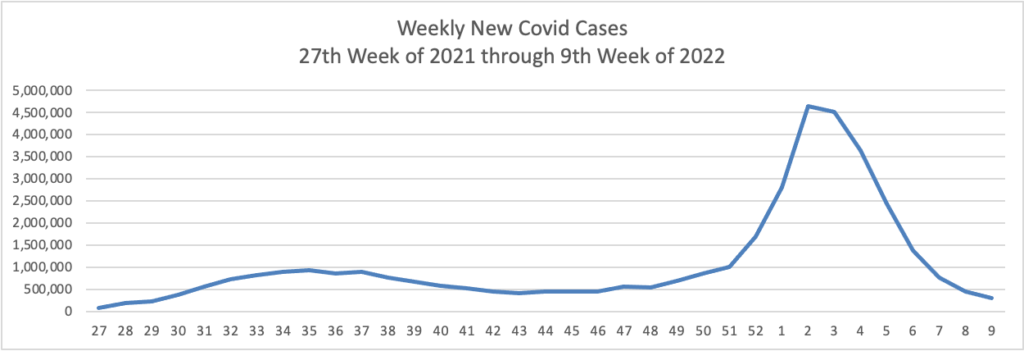
Based on the Centers for Disease Control’s Covid Data Tracker and using Thursday as the first day of the week, here is the FEHBlog’s latest weekly chart of new Covid cases

The American Hospital Association informs us

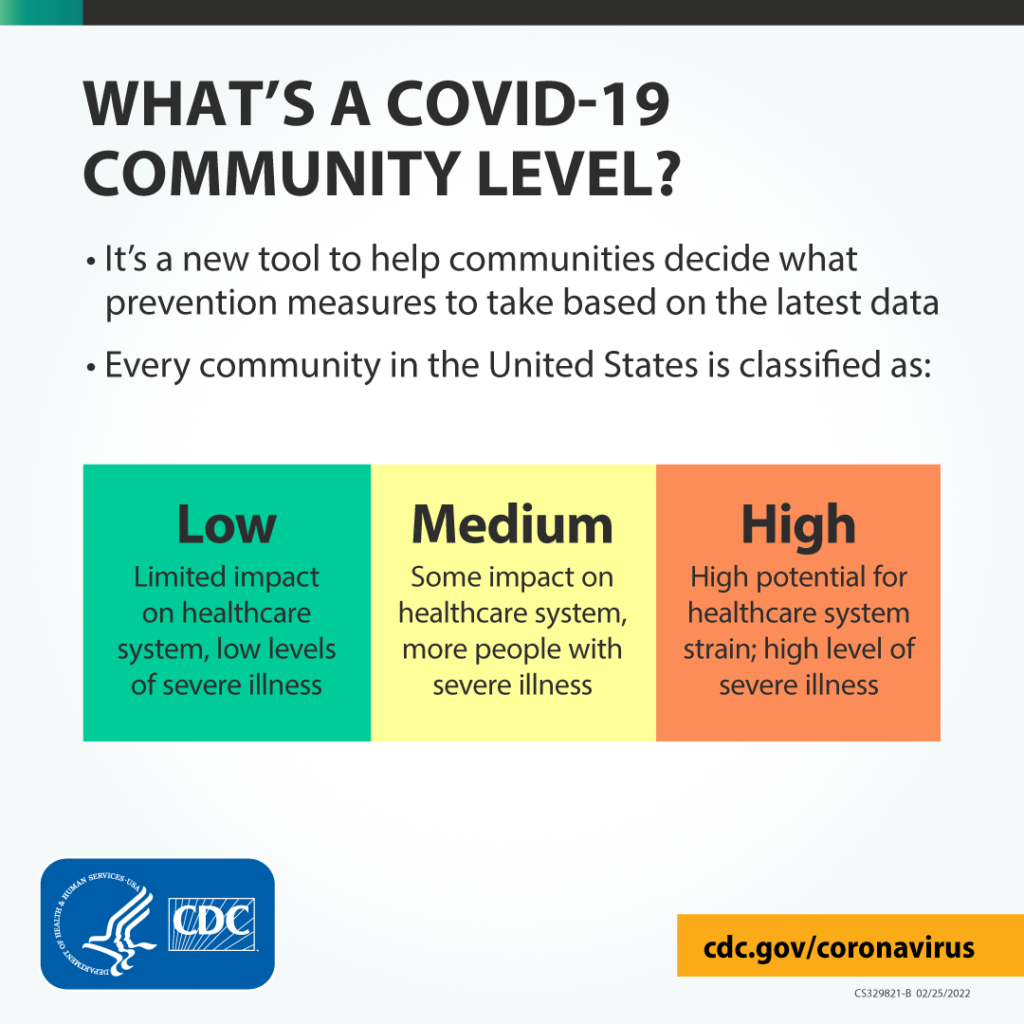
The Centers for Disease Control and Prevention yesterday said more than 90% of the U.S. population now lives in a county with a low or medium COVID-19 Community Level, a new CDC measure for communities considering whether to require face coverings in public indoor settings. The agency plans to update the county data every Thursday going forward.

Becker’s Hospital Review adds

Cases of the highly transmissible omicron subvariant appear to be doubling every week in the U.S., but there isn’t clear evidence BA.2 will cause another major surge, epidemiologist Michael Osterholm, PhD, told Becker’s March 2. * * *

Cases will likely continue to drop over time, Dr. Osterholm said, adding he is hopeful cases will reach or fall below levels not seen since last June, when the nation’s new case average fell below 12,000. 

It’s worth noting that the FEHBlog weekly chart of new cases found above begins with the low point Dr. Osterholm references, new cases under 12,000 and new deaths under 1,000.

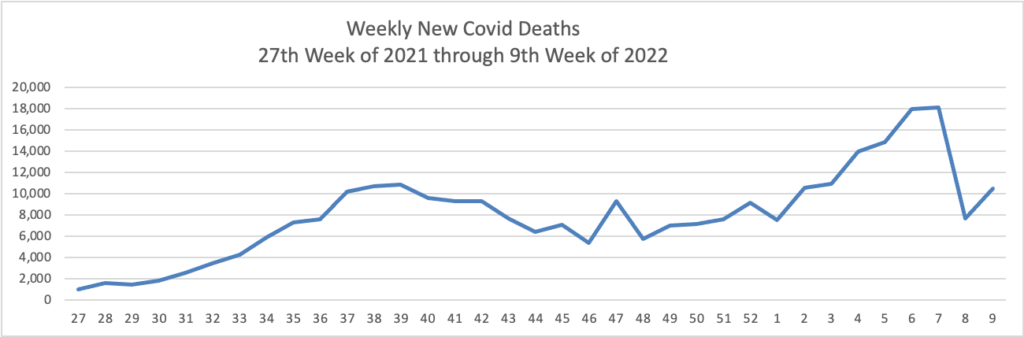
Here’s the FEHBlog’s weekly chart of new COVID deaths

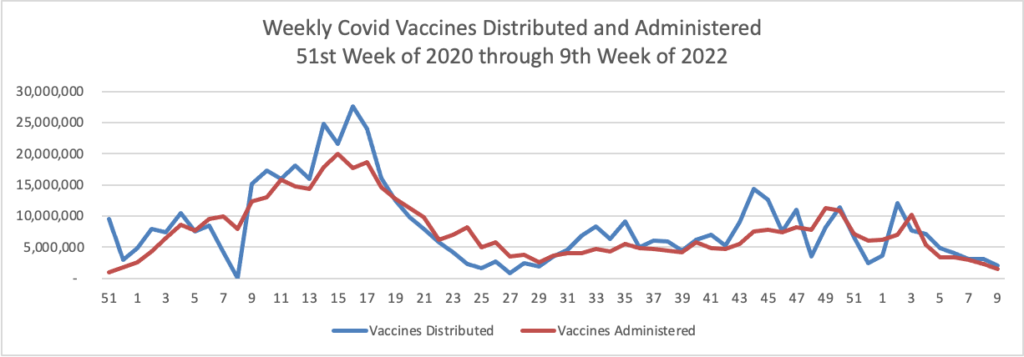
Here’s the FEHBlog’s weekly chart of Covid vaccinations distributed and administered from the 51st week of 2020 through the 9th week of 2022

From the Covid vaccine front, Bloomberg informs us

Parents still hesitating to get their kids vaccinated may be reassured by reporting that shows Covid inoculations protected children and teenagers from severe disease, even after the rise of the immune-evasive omicron variant.

Omicron came to the U.S. late last year armed with some 30 mutations in its spike protein that make it less recognizable to immune antibodies. Afterward, vaccine protection against infection and urgent care visits declined for 5- to 17-year-olds who’d received primary inoculations, according to U.S. Centers for Disease Control and Prevention data released Tuesday. However, vaccinated children and teens were still less likely to get infected than their unvaccinated peers, the agency said in its Morbidity and Mortality Weekly Report.

The CDC released recommendations last week saying that schools in areas of low and moderate risk can drop indoor mask mandates, the first update to its guidance on the topic since July — and the new findings may add confidence in moves to relax social  measures as infections fall across the U.S. But many parents have been slow to get shots for their kids since the vaccine was recommended in November, and vaccinations among kids ages 5 to 11 have fallen to their lowest levels since the shots were first cleared.

While kids generally don’t get as sick as adults from the coronavirus, clearing a vaccine for elementary school-age children marked a major milestone in the pandemic. It provided peace of mind for many concerned parents, allowing kids to resume activities that had been on hold since the virus first began spreading in the U.S.

Pfizer and BioNTech’s is the only shot that has been authorized for use in U.S. children and teens. The CDC looked at vaccine protection against infection, urgent care visits, hospitalization, and death among vaccinated children ages 5 through 11 and adolescents ages 12 through 17 before and during the omicron surge.

That’s solid information for health plans to share with their members.

Here’s a link to the CDC’s Weekly Review of its Covid statistics. Beckers Hospital Review saves you time by breaking down those stats at this link.

The CDC’s weekly FluView tells us “Sporadic influenza activity continues across the country. In some areas, influenza activity is increasing.”

From Capitol Hill, Roll Call informs us

Negotiations over an omnibus spending package remained far from complete Thursday as the late arrival of a White House supplemental funding request threw a wrench in the talks. 

The White House on Thursday formally asked lawmakers to attach to the fiscal 2022 spending package $32.5 billion in emergency funds for government response efforts to the ongoing COVID-19 pandemic and Russian war with Ukraine. 

The long-awaited details from the administration on its justification for the extra spending, on top of the roughly $1.5 trillion expected to be appropriated for the current fiscal year, come barely a week before stopgap funding expires March 11. 

To pass the omnibus before that deadline, Senate Appropriations ranking member Richard C. Shelby, R-Ala., said lawmakers need to get a final deal by Tuesday — and even that may be too late to avoid the need for another short-term continuing resolution. 

“We made good progress this week. But we make progress and we’re stalled,” he said. “And we can’t afford to stall this weekend. If we do, we’re headed for a CR.”

From the SOTU front, AHIP released AHIP President Matt Eyles’s comments on the President’s address.

From the health equity front, Mercer Consulting released a report finding a surprising gender gap in employer-sponsored health benefits continues to exist.

Tuesday’s Tidbits

From Capitol Hill, the Senate approved a motion to proceed to a vote on the Postal Reform Act of 2022 (HR 3076) by a voice vote. This vote suggests to the FEHBlog that the Senate will approve the bill this week.

Roll Call discusses the status of the Consolidated Appropriations Act for Fiscal Year 2022. Congress has a week and half to finish cobbling together this law before it needs a fourth continuing resolution.

From the Omicron vaccine front, the American Hospital Association tells us

The Centers for Disease Control and Prevention today released a study examining the effectiveness of the Pfizer COVID-19 vaccine at preventing emergency department and urgent care visits by children aged 5-11 and 12-17. Among children aged 5-11, effectiveness 14-67 days after dose 2 (the longest interval in this age group) was 46%, significantly lower than overall estimates for adolescents aged 12-17. However, most encounters among children aged 5-11 occurred during omicron predominance, when the vaccine’s effectiveness also significantly declined for adolescents, suggesting that the lower effectiveness for children aged 5-11 was likely driven by the predominant variant rather than differences in effectiveness across age groups, the authors said. During omicron predominance, there was no evidence 2 doses protected adolescents after 150 days; however, a booster dose restored effectiveness to 81% in this age group, the authors said.

Another study released today by the CDC looks at reactions to the Pfizer booster in adolescents aged 12-17, which were generally mild to moderate and transient. Myocarditis was less frequently reported after a booster dose than a second primary dose, the authors said.

From the Omicron masking and testing front —

Federal agencies can relax their mask and testing protocols in the wake of new public health guidance. 

The Centers for Disease Control and Prevention’s released on Friday a “new framework” that “moves beyond just looking at cases and test positivity to evaluate factors that reflect the severity of disease, including hospitalizations and hospital capacity, and helps to determine whether the level of COVID-19 and severe disease are low, medium, or high in a community,” Dr. Rochelle Walensky, the agency’s director, said on a call with reporters. Guidance from the Biden administration’s Safer Federal Workforce Task Force on Monday reflects this new framework. 

“This document provides federal agencies with initial implementation guidance they should follow in utilizing the CDC’s COVID-19 Community Levels to determine the appropriate mask-wearing and screening testing requirements for each federal facility at a given time,” said the guidance. 

Nearly half of the 500 million free COVID-19 tests the Biden administration recently made available to the public still have not been claimed as virus cases plummet and people feel less urgency to test.

Wild demand swings have been a subplot in the pandemic, from vaccines to hand sanitizer, along with tests. On the first day of the White House test giveaway in January, COVIDtests.gov received over 45 million orders. Now officials say fewer than 100,000 orders a day are coming in for the packages of four free rapid tests per household, delivered by the U.S. Postal Service.

It would be a good idea for the federal government to tell health plans to refer their members to the federal site if they are interested in receiving test kits.

To sum it up from the Omicron front, check out the lead article from the NIH Director’s blog titled “How Covid immunity holds up over time.”

From the tidbits department —

  • The CDC discusses the unholy connection between diabetes and chronic kidney disease.
  • Fierce Healthcare discusses telehealth provider Amwell’s fourth quarter results.
  • Beckers Payer Issues notes

UnitedHealth Group is beginning to act on its November promise to shore up its sustainability efforts by halting its mailing paper of prior authorization and clinical decisions to providers, according to a Feb. 25 post on the California Medical Association website. 

The first move — a nationwide shift to digital clinical decision letters — is effective March 4 for most UnitedHealthcare Medicare Advantage and commercial plan members. Instead of receiving a mail appeal decision, providers can view the decisions digitally immediately after they are made. 

President Joe Biden is calling for more federal employees to return to the office, saying “significant progress” fighting the COVID-19 pandemic has made it safer to do so.

Ahead of his State of the Union address, Biden issued a letter Tuesday thanking the federal workforce for its “tireless work this past year” confronting the pandemic and leading economic recovery efforts.

A return to the office, however, doesn’t necessarily mean a return to the pre-pandemic status quo.

Biden urged agencies to “build on the innovations and technologies that we put to work serving the American people throughout the pandemic, making our government more efficient, resilient, and effective.”

Good luck, OPM.

Midweek update

Photo by Josh Mills on Unsplash

From the Omicron front —

MedCity News reports

Sanofi and GlaxoSmithKline weathered clinical trial delays for their Covid-19 vaccine, but the partners now have data to support filings seeking regulatory authorizations. Key features of the vaccine may be able to persuade the vaccine hesitant; it may also be well-suited for use as a booster. 

This news bears similarities to the reports about the Novavax Covid vaccine already submitted to the Food and Drug Administration for emergency use authorization.

The American Hospital Association informs us

The Food and Drug Administration yesterday listed all over-the-counter COVID-19 diagnostic tests authorized for home use, including links to home use instructions for each test.

Fierce Healthcare adds

Walmart has administered tens of millions of COVID-19 vaccines to date, with 80% delivered in medically underserved communities, the retail giant announced Wednesday.

The company released a report (PDF) looking back at its progress in providing vaccines over the course of 2021. Cheryl Pegus, M.D., executive vice president of health and wellness at Walmart, told Fierce Healthcare the company has focused on connecting with people who may not otherwise have been able to get the shot.

From the health equity front —

The American Hospital Association tells us

The U.S. maternal mortality rate increased to 23.8 deaths per 100,000 live births in 2020 from 20.1 in 2019 as rates for Black and Hispanic women increased, according to data released today by the Centers for Disease Control and Prevention. The maternal mortality rate for Black women was nearly three times the rate for white women. Mortality rates increased with maternal age, with the rate for women aged 40 and over nearly eight times higher than the rate for women under 25.

The AHA’s Better Health for Mothers and Babies initiative offers resources to help hospitals and health systems eliminate maternal mortality and address health disparities for mothers and babies. 

What can be more tragic than a baby losing a mother?

Beckers Payer Issues adds from the mental health perspective

Work-sponsored health plans aren’t addressing the growth of loneliness, which leads to employees missing work and decreased productivity, according to data from Cigna’s Loneliness Index shared with Becker’s

The data, which is slated to be published in the Journal of Organizational Effectiveness: People and Performance, surveyed nearly 6,000 employees between July 16 and Aug. 2, 2019. 

Six insights:

1. The widespread presence of loneliness affected 3 in 5 (62 percent) adults before the COVID-19 pandemic. Feelings of loneliness play key roles both in employee health and work performance, according to the study.

2. On average, preventable, stress-related absences caused lonely employees to miss about five more work days than their counterparts who did not identify as lonely.

3. Employees who reported higher levels of loneliness were almost twice as likely to consider quitting their current job than employees who were less lonely. 

4. The study estimates that absenteeism and productivity losses tied to preventable loneliness cost employers $154 billion each year. 

5. The study said work-based factors like communication, work-life balance and social companionship play key roles in determining employee loneliness. Personal resilience and a feeling of connection outside of the workplace also play a role. 

6. Employers looking to combat employee loneliness should consider actions that hit on these factors, including flexible work hours, email “blackout” periods and forming employee resource groups.

From the Black History Month department, Everywell, an at-home testing service, celebrates ten Black pioneers who improved healthcare in our country. Bravo.

From the U.S. healthcare front, Healthcare Finance News reports

Including federal government support, national health spending grew by 3.4% in 2021, according to new data released by Altarum.

This growth in spending, the analysis found, reflected the fact that support from the federal government was strong in 2020, likely in response to the recession caused by the COVID-19 pandemic, and was lower in 2021.

Taking these support dollars out of both 2020 and 2021 estimates, spending growth from 2020 to 2021 would have been 8.4%, as the economy continued to recover.

From the healthcare business front —

Healthcare Dive informs us

Despite worries that demand for telehealth could fall as the U.S. emerges from the COVID-19 pandemic, virtual care giant Teladoc beat Wall Street expectations with its 2021 financial results, and issued strong future growth projections Tuesday.

The New York-based vendor posted revenue of more than $2 billion in 2021, 86% higher than in 2020. Total visits were up 38% to 15.4 million, and Teladoc closed out the year with 53.6 million U.S. paid members, up just slightly from the year prior.

Beckers Hospital Review identifies 92 U.S. health systems with CMS-approved “hospital at home” programs.

Managed Healthcare Executive tells us

Tired of grappling with the rising costs and poor quality of healthcare, a coalition of major healthcare purchasers is taking things into its own hands, establishing a company that is designing healthcare products to meet its members’ needs. “There’s an incredibly high frustration level among buyers of healthcare,” says Elizabeth Mitchell, president and CEO of the Purchaser Business Group on Health (PBGH) in San Francisco. 

The nonprofit PBGH represents almost 40 large private employers and public entities that together spend $100 billion each year on healthcare services for more than 15 million Americans and their families. PBGH members include Microsoft, Walmart and American Airlines.

The decision to create the company, Emsana Health, was made about two years ago, with the initial focus on “really understanding the needs on a deep level,” Mitchell says. The company officially launched in the fall, and its first venture is setting up a pharmacy benefit manager (PBM), EmsanaRx, which went started operating on Jan. 1.

Finally, in a troubling tidbit, the Wall Street Journal reports

U.S. life insurers, as expected, made a large number of Covid-19 death-benefit payouts last year. More surprisingly, many saw a jump in other death claims, too.

Industry executives and actuaries believe many of these other fatalities are tied to delays in medical care as a result of lockdowns in 2020, and then, later, people’s fears of seeking out treatment and trouble lining up appointments.

Some insurers see continued high levels of these deaths for some time, even if Covid-19 deaths decline this year.

Weekend update

In commemoration of the President’s Day holiday tomorrow, Congress is on a local work break this week and will be back in session on February 28.

From the Omicron front, the New York Times offers an interactive article seeking to uncover the mysteries of “Long Covid.”

The accuracy of Bloomberg’s welcome report on the growing availability of Pfizer’s Paxlovid and Merck’s molnupiravir Covid pills is evidenced by the Wall Street Journal’s report that pharmacists are demanding more money to dispense those pills. Why?

Pharmacists say Paxlovid and molnupiravir prescriptions typically take more than 30 minutes to fill, longer than other drugs. They say they must often gather the medical history of new customers and then make sure they aren’t taking any other drugs that the Covid-19 pills can’t be used with safely.

Pharmacists also say they have to spend substantial time counseling patients on taking the pills.

Here’s where it stands.

The National Community Pharmacists Association trade group has urged the Centers for Medicare and Medicaid Services to recommend a fee similar to the $40 that Medicare pays pharmacies administering Covid-19 vaccines.

The National Association of Chain Drug Stores, which represents pharmacies including Kroger Co. and Walgreens Boots Alliance Inc., also supports a CMS recommendation, though it isn’t specifying an amount. The figure could help pressure all commercial and government health plans to increase how much they are paying, said Sara Roszak, senior vice president for health and wellness strategy and policy for the industry group.

Benefit managers will likely revise fees, but are looking for the government to provide more direction on what the fees should be, said JC Scott, chief executive of the Pharmaceutical Care Management Association, the trade group for pharmacy-benefit managers.

The Wall Street Journal also reports

U.S. health regulators are looking at potentially authorizing a fourth dose of a Covid-19 vaccine in the fall, according to people familiar with the matter. 

The planning is still in early stages, and authorization would depend on ongoing studies establishing that a fourth dose would shore up people’s molecular defenses that waned after their first booster and reduce their risk of symptomatic and severe disease, the people said.

The Food and Drug Administration, however, has begun reviewing data so it can make a decision, the people said.

The thinking among regulators is that the agency would look at authorizing a second booster dose of the messenger RNA vaccines from Pfizer Inc. and partner BioNTech SE and from Moderna Inc., one of the people said.

Among the issues that need to be resolved, the person said, are whether the second booster should be authorized for all adults or particular age groups, and whether it should target the Omicron variant or be formulated differently. Whether the fourth booster could ultimately be the start of an annual Covid-19 vaccination is also under consideration.

It strikes the FEHBlog that this would be a good occasion for the Centers for Disease Control to position this evaluation as part of their effort to refocus Covid from pandemic to endemic status. An epidemiologist writing in STAT News explains

I’m not confident about how the pandemic endgame will play out. While I do think the most likely future scenario for SARS-CoV-2 is that it will become endemic, the other more worrisome scenarios I describe here are within the realm of possibility: a mutant that produces a different disease, a new recombinant virus, or a variant that exploits immunity. And these scenarios are not mutually exclusive. A new SARS-CoV-2 recombinant virus containing animal coronavirus genes might well cause altered disease.

After two years, why not position the country for the most likely scenario?

Friday Stats and More

Based on the CDC’s Covid Data Tracker and using Thursday as the first day of the week, here are the FEHBlog’s weekly charts of new Covid cases and deaths beginning with the 27th week of 2021 and ending with the 7th week of 2022.

At last, both charts are headed down.

Here’s the FEHBlog’s weekly chart of Covid vaccinations distributed and administered beginning with the 51st week of 2020, when the vaccination program launched, and the 7th week of this year.

As of today, nearly 75% of Americans aged 18 and older (74.7%) are fully vaccinated, and 46.5% of Americans in that age group are boostered.

Precision Vaccines reports

More than one year after the first COVID-19 vaccine was administered in the United States, new data from a recent survey conducted online by The Harris Poll show 73% of consumers would like to see additional COVID-19 vaccines become available.

Currently, the World Health Organization has listed ten different COVID-19 vaccines based on various technologies.

But the U.S. FDA has only authorized/approved three COVID-19 vaccines.

Moreover, consumers would like to see COVID-19 vaccines developed from traditional methods, such as technologies used to produce diphtheria, mumps, chickenpox, or polio vaccines.

Novavax’s traditionally developed Covid vaccine is pending Food and Drug Administration emergency use authorization. The FDA’s Vaccines Advisory Committee will consider the EUA application first. That Committee’s next meeting will be held on March 3, 2022. The agenda is not available yet.

In great news, Bloomberg reports

[W]ith [Covid] cases plummeting thanks to the omicron decline, and government orders continuing to roll into pharmacies, doctors and health officials in New York and across the country say the supply is looking plentiful in many areas.

“You have lots of the drug and very few cases — that’s the best place you could possibly be,” says Infectious Diseases Society of America spokesman Aaron E. Glatt. The pills are broadly available, he said, though not at every corner drugstore.

The federal government tracks Paxlovid on a public-facing website that names which pharmacies have it, and a federal website for health-care providers indicates more than 130,000 courses are available.

Dare we hope that the country will be prepared for the next Covid variant if it crops up?

Here are links to the CDC’s Covid Data Tracker weekly review and its FluView. The top line of FluView reads, “Sporadic influenza activity continues across the country. In some areas, influenza activity is increasing.” The current winter continues to mirror the 2020-21 winter, with Omicron edging out the flu.

From the Covid fallout front, Health Payer Intelligence informs us

Senior members might continue to see canceled or delayed care even as coronavirus cases decline, a trend which has had significant impacts on payer revenues and spending in 2020 and 2021, a report from the University of Michigan’s National Poll on Healthy Aging found.

Nearly three out of ten adults over 50 (28 percent) delayed care due to the coronavirus pandemic in 2021.

“Whether they chose to postpone or their provider did, these patients missed opportunities for preventive care and for early detection and effective management of chronic conditions, not to mention operations and procedures to address a pressing health need,” said Jeffrey Kullgren, MD, associate director of the poll and a health care researcher and associate professor of internal medicine at Michigan Medicine in the University of Michigan’s academic medical center.

The National Poll on Healthy Aging surveyed 1,011 adults ages 50 and older in late January 2022. Seniors could complete the survey by phone or online.

Considering the FEHB’s demographics, this report should be relevant to FEHB carriers.

Speaking earlier of the FDA, here is a link to the FDA’s roundup for February 18, 2022. Moreover, Fierce Healthcare reports

Hospitals on average charge double the price for the same drugs compared to those offered by specialty pharmacies, according to a new insurer-funded study released as federal regulators ponder a probe into the pharmacy benefit management industry.

The study (PDF), released Wednesday by insurance lobbying group AHIP, comes as specialty pharmacies have grown in use among PBMs and payers to dispense specialty products. The study was released a day before a scheduled meeting Thursday of the Federal Trade Commission on whether to probe the competitive impact of PBM contracts and how they could disadvantage independent and specialty pharmacies.

“The data are clear, specialty pharmacies lower patient costs by preventing hospitals and physicians from charging patients, families, and employers excessively high prices to buy and store specialty medicines themselves,” said Matt Eyles, president and CEO of AHIP, in a statement.

From the telehealth front, mHealth Intelligence notes

Though patients have previously made their preference for virtual waiting rooms over traditional ones known, new survey results show that a majority of telehealth patients would rather just be notified by a text or call when their doctor is ready to see them.

Doximity, an online networking service and telehealth platform for healthcare professionals, conducted the new survey last November, polling 2,000 US adults, of whom 1,000 identified as having a chronic illness.

As telehealth becomes integrated into care delivery, questions around patient preferences arise. The survey helps shed some light, showing that 79 percent of patients would prefer a call or text letting them know that their doctor is ready to see them versus having to wait in a virtual waiting room. Even among chronic illness patients only, an overwhelming majority (81 percent) would prefer to receive a call or text.

Patients also displayed a strong preference for familiarity with a provider. Overall, 83 percent of patients surveyed said they would wait one to three days to see their current doctor rather than seeing a new physician immediately.

If these statistics float your boat, you will find many more exciting telehealth stats in the article.

Midweek Update

From Capitol Hill —

Today, the Senate invoked cloture on the resolution to continue funding the federal government until March 11 by unanimous consent. Consequently, the new resolution should be approved by Congress tomorrow, which is the day before funding expires under the current resolution.

The House of Representatives has returned the correct version of the Postal Reform Act, H.R. 3076, to the Senate, and the Senate has had the correct version read twice. We will have to wait and see if anything happens with the bill tomorrow.

In the meantime, check out the Congressional Research Service’s February 11, 2022, report on the Postal Reform bill approved by the House, H.R. 3076. In the FEHBlog’s view, a unique feature of the House version compared to earlier versions is that the bill destined to become law creates a transitional Open Season. The Transitional Open Season will auto-enroll those Postal employees and annuitants who failed to transfer over to the PSHBP in the 2024 Open Season for the 2025 plan year. The receiving PSHBP plan will be the lowest premium nationwide PSHBP plan that is not a high deductible plan and does not require dues payments. Also, the House version makes the Postal Service financially responsible for the late Medicare Part B enrollment fees otherwise owed by the Postal annuitants with Part A only who take advantage of a special Part B enrollment period in 2024.

Following up on Robert Califf’s second confirmation as Food and Drug Administrator yesterday, STAT News identified the six major drug approval decisions awaiting him, including Pfizer’s toddler COVID vaccine, the Novovax Covid vaccine, and Alzheimer’s Disease treatments. Good luck, Mr. Califf.

Also among those drug approval decisions awaiting Mr. Califf is a Covid treatment discussed in Bloomberg

After omicron weakened some of the defenses that doctors have against Covid, an experimental treatment being developed by Novartis and a small Swiss biotech partner holds some promise as a new therapy.

Last week, Novartis sought emergency approval from the U.S. Food and Drug Administration for an intravenous drug, called ensovibep, that’s similar in some ways to monoclonal antibody treatments. However, the way it works is significantly different, which might allow it to succeed where antibody therapies fail against omicron.

The compound uses tiny proteins to attack the coronavirus’s spike protein in not just one, but multiple places. That appears to give it a leg up in fighting the virus even as it mutates.

In other federal leadership changes, STAT News adds

President Joe Biden is replacing a top science adviser who resigned under a cloud with two individuals who will split his duties on an interim basis.

Biden is tapping [Alondra Nelson, ]a deputy in the White House science and technology office along with [Dr. Francis Collins] the recently retired director of the National Institutes of Health, according to a personal familiar with the president’s plans.

From the Omicron front, Beckers Hospital Review tells us

The COVID-19 omicron subvariant BA.2, dubbed “stealth omicron,” has spread to at least 74 countries and 47 states across the U.S., according to data from outbreak.info.

Four more updates: 

1. BA.2 is most prevalent in HHS’ region 3, which includes Pennsylvania, West Virginia, Virginia, Delaware and Maryland, according to CDC data.

2. Region 7, which includes Iowa, Kansas, Missouri and Nebraska, had the lowest percentage of BA.2 cases last week, according to CDC data. 

3. BA.2 currently accounts for 3.9 percent of total COVID-19 cases in the U.S., with omicron subvariant BA.1.1 accounting for 73.2 percent of cases, CDC data shows. 

4. A South African study analyzing nearly 100,000 COVID-19 cases found that BA.2 doesn’t cause significantly more severe illness than the original omicron variant, Bloomberg reported Feb. 16.

From the Covid vaccine front, The American Medical Association reports

The New York Times (2/15, Anthes) reports infants born to mothers who “received two doses of an mRNA coronavirus vaccine during pregnancy are less likely to be admitted to the hospital for COVID-19 in the first six months of life, according to a new study from the Centers for Disease Control and Prevention.” The study found that “overall, maternal vaccination was 61% effective at preventing infant hospitalization.”

Reuters (2/15, Mishra, Steenhuysen) reports, “That protection rose to 80% when the mothers were vaccinated 21 weeks through 14 days before delivery.” Meanwhile, the “effectiveness fell to 32% for the babies whose mothers were inoculated earlier during pregnancy.”

The Hill (2/15, Sullivan) reports the study used data “from 20 pediatric hospitals in 17 states, from July 2021 to January 2022.”

From the Covid front, Fierce Healthcare reports

Anthem has launched a new pilot that aims to offer a digital concierge care experience to members recovering from COVID-19.

Through COVID Concierge Care, eligible members can access an app and fill out a questionnaire that tracks their symptoms on a daily basis. They can connect with a clinician via secure, two-way text-based messages in the app or via text or email.

In addition, based on their reported symptoms, members can access evidence-based educational tools and wellness content to help them self-manage their conditions. For example, members can connect with breathing exercise guides to manage stress or health articles about their symptoms.

From the Covid vaccine mandate front, Federal News Network tells us

The Postal Service is laying the groundwork to track the vaccination and testing status of its workforce amid the COVID-19 pandemic, or any future public health emergency.

USPS, however, says it’s only giving notice as it prepares for “potential future contingencies,” and is not, at this time, updating its COVID-19 vaccine or testing requirements, nor is it seeking to collect data on the vaccination status of its workforce.

In healthcare business news, Healthcare Dive informs us

The Department of Justice is preparing a lawsuit to block UnitedHealth from purchasing Change Healthcare, according to a new report, as regulators take a more aggressive stance on checking consolidation in the healthcare industry.

According to Dealreporter, which cited sources familiar with the matter, UnitedHealth and Change are expected to meet with the DOJ soon for a “last rites” meeting on the proposed deal, first announced early last year. Despite UnitedHealth and Change exploring divestitures to assuage antitrust concerns, the DOJ has not found any that would make the deal acceptable, according to Dealreporter’s sourcing.

From the health savings account front, Health Payer Intelligence offers nine best practices for high deductible health plan design based on a recent report from the National Pharmaceutical Council (NPC) and Gallagher.

From the antibiotic overutilization front, AHIP lets us know

A study published in the CDC’s Morbidity and Mortality Weekly Report found 41% of antibiotic prescriptions for Medicare Part D beneficiaries in 2019 were written by just 10% of prescribers. Researchers found nearly half of these high-volume prescribers practiced in southern states, and they had a median antibiotic prescribing rate of 680 per 1,000 beneficiaries, compared with 426 per 1,000 beneficiaries among low-volume prescribers. 

Tuesday’s Tidbits

Photo by Patrick Fore on Unsplash

From the Capitol Hill front —

The Wall Street Journal reports

Sen. Marsha Blackburn lifted a hold on a stopgap bill needed to avoid a partial government shutdown this weekend after she won a commitment from the Biden administration that it wouldn’t fund pipes for smoking illicit substances through a substance-abuse program. * * *

[Senate Minority Leader Sen. Mitch] McConnell said Tuesday that he expected there to be some amendment votes in conjunction with the vote on the so-called continuing resolution. “I think it will all be worked out,” he said. “There’s no danger of a government shutdown.”

The House of Representatives held a pro forma, the four-minute-long session this morning at which

[The] Clerk notified the House that she had received the following message from the Secretary of the Senate on February 14, 2022, at 6:30 p.m.: That the Senate agreed to return the papers to the House of Representatives at their request for H.R. 3076 [the Postal Reform Act of 2022] * * *.

The House is not scheduled to resume floor voting until February 28 and the Senate will be on a State work period next week so Congressional passage of this bill may not occur until next month.

FInally Roll Call reports

The Senate on Tuesday confirmed Robert Califf to lead the Food and Drug Administration, 50-46, a much narrower vote than when he previously held the position during the Obama administration, though many thought the latest vote could be even closer.

Califf’s confirmation means the Biden administration has a permanent FDA commissioner during the COVID-19 pandemic after 13 months with longtime agency official Janet Woodcock acting as its leader.

Califf needed bipartisan support to cross the finish line. Retiring Sens. Patrick J. Toomeyof Pennsylvania and Roy Blunt of Missouri joined four Republicans who sit on the Health, Education, Labor and Pensions Committee to confirm Califf.

From the Omicron front, the Wall Street Journal offers interesting commentary from Dr. Marc Siegal about the Novovax vaccine which is the subject of an emergency use authorization at the Food and Drug Administration.

The Novavax vaccine is based on tried and true technology. It involves growing the virus’s spike protein in moth cells and then combining it with an adjuvant, a chemical that amplifies the protein’s effect on the immune system. Whereas the mRNA vaccines signal human cells to make part of the protein, Novavax injects it directly as a “nanoparticle,” which induces a robust immune response (antibodies and T-cells). Side effects appear to be minimal: flulike symptoms, headache, temporary fatigue and pain at the injection site.

There are several reasons to think that Novavax may give a more powerful boost than a third or fourth mRNA shot. For one thing, the nanoparticle includes the whole spike protein, which could provoke a more complete immunity. So could the glycosylation of the spike—the addition of a sugar molecule in insect cells, which isn’t what the virus is expecting. Perhaps most important, the adjuvant (known as Matrix-M1), which comes from the inner bark of a Chilean soapbark tree, is very high in quality and has been used to make a malaria vaccine effective.

From the health equity front, Health Payer Intelligence discusses a Northeast Business Group on Health report on strategies for making progress on resolving inequities created by social determinants of health. Check it out.

In a similar vein, the Agency of Healthcare Research and Quality blog post on integrating patient-generated health data into electronic health records.

The 63-year-old patient has hypertension. With encouragement from his family, he checks his blood pressure daily using a digital blood pressure monitor. And thanks to advances in digital technology, he saves each reading on a mobile application whether he’s at home, at work, or on vacation.

What is the reward for his persistence? With his health data easily integrated into his electronic health record, his primary care doctor has a fuller picture of his health—one that is not limited to the traditional snapshot taken in an exam room. Using that data, he and his physician can have more informed conversations about treatment options and next steps.

While this scenario accurately recognizes that today’s patients can easily collect their own health data outside of the clinical setting, many ambulatory care practices lack the technical infrastructure, functional workflows, workforce capacity, and training to support the intake and use of patient-generated health data (PGHD).

With those challenges in mind, AHRQ has released a new guide on increasing the use of PGHD, one that provides practical tools for ambulatory care practices to implement PGHD programs and improve patient outcomes. It includes tips, ideas, and learning activities to let users tailor solutions to their needs. To our knowledge, this is the first practical guide that includes detailed considerations and steps for implementing a PGHD program.

The AHRQ guide may be helpful to health plan case managers, too.

From the tidbits department

  • Roll Call and Fierce Healthcare offer different takes on the public comments submitted on the Centers for Medicare Services controversial proposed national coverage deterimination on Biogen’s Alzheimers Disease drug Aduhelm. A final decision is expected in April.
  • The CDC encourages people with pre-diabetes to become heart health role models.

Cigna’s Evernorth is adding Monument’s virtual care services to its behavioral health network, the insurer announced Tuesday.

The platform is now available to all Evernorth clients and to Cigna members in employer plans or Affordable Care Act marketplace plans in 20 states.

Monument offers an evidence-based, virtual treatment program for alcohol use disorder. Evernorth said in the announcement that alcohol use has been on the rise for the past several decades, and that some 60% of people have reported higher alcohol intake under the pandemic.

Monday Roundup

Photo by Sven Read on Unsplash

From Capitol Hill we are presented with some surprising developments —

Govexec tells us

Sen. Rick Scott, R-Fla., blocked the Senate from moving forward with the bipartisan 2021 Postal Reform Act, which won overwhelming support last week in the House. Lawmakers in both parties have attempted for years to eliminate much of the agency’s debt and restructure some of its operations and the efforts appeared to finally reach a breakthrough with the successful vote in the lower chamber. The bill has the backing of 14 Republican senators, indicating broad support and votes that will ultimately clear the 60-member support threshold with ease. 

When the House sent the bill to the Senate last week, however, it passed along the wrong version that did not include the most up-to-date text. The House on Friday quickly corrected the error by unanimously approving a measure to send over the correct version. Senate Majority Leader Chuck Schumer, D-N.Y., had already started the process of approving the incorrect bill last week and was hoping to move the House-backed technical correction on Monday with unanimous consent, allowing the chamber to resume consideration of the full bill. 

That is when Sen. Rick Scott, R-Fla., objected, sending the process into chaos. The Senate is slated to recess on Friday and will likely not have time to pass the bill until after it returns in March.  * * *

Scott said on the floor he was concerned the measure had not gone through the committee process on the Senate side and about the funding for a potential increase in Medicare costs. The Congressional Budget Office said in a recent score the measure would save the government $1.5 billion over the next 10 years. Lawmakers have estimated it will save the Postal Service $50 billion over the same period.

The Wall Street Journal reports

Sen. Marsha Blackburn (R., Tenn.) said that she will hold up a bill to keep the government funded until the Biden administration responds to her questions about whether a program intended to help people with substance-abuse disorders could be used for pipes to smoke illicit substances.

Her position injects uncertainty into the government’s ability to avoid a partial shutdown later this week. While a single senator can’t stop legislation, he or she can slow down the process by declining to consent to cutting out procedural hurdles.

The Senate is aiming to pass a three-week government funding bill by Feb. 18, when a current funding bill expires, in order to provide breathing room for negotiators to reach a deal funding the full fiscal year. A Senate Democratic aide said that there isn’t enough time to go through each step in the process with the maximum amount of debate time and still avoid a temporary shutdown.

“All we want to know is how much money they are using for safe-smoking kits? What is in the kits? Where is this money going?” Ms. Blackburn said in an interview. “Once I get an answer, I will lift my hold. I’m just waiting for an answer.”

Roll Call informs us

The Biden administration’s nominee to lead the Food and Drug Administration, Robert Califf, survived a Senate procedural vote, 49-45, on Monday evening with the help of five Republicans.

A confirmation vote on the Senate floor is expected to take place Tuesday, and it’ll likely be a close one. Sens. Susan Collins, R-Maine; Lisa Murkowski, R-Alaska; Mitt Romney, R-Utah; Richard M. Burr, R-N.C.; and Roy Blunt, R-Mo., joined Democrats to help shut off debate on Califf’s nomination.

Califf faced controversy throughout his nomination process from both parties. The former FDA commissioner had to cut deals with multiple lawmakers ahead of the floor vote, trading policy promises for votes. Several Senate Democrats opposed Califf’s nomination, due to his past ties to the pharmaceutical industry and handling of the opioid crisis when he led the FDA during the tail end of the Obama administration.

From the Omicron front, STAT News explains why the COVID vaccines are a “freaking miracle.”

Two years into the Covid-19 pandemic, it’s easy to lament all that has come to pass. The devastating losses. The upending of what we regarded as normal ways of life. The sheer relentlessness of it all.

But let’s stop for a moment and consider something else that may have escaped you: You have witnessed — and you are a beneficiary of — a freaking miracle.

That miracle is the development, testing, manufacturing, and global distribution of Covid vaccines.

How freaking true. It’s worth a read.

From the telehealth front, STAT New also delves into what we know and don’t know about whether telehealth can cut costs. This article gives the FEHBlog an opportunity to express his opinion that hub and spoke telehealth services, like Teladoc, can save costs by offering mental healthcare therapy on a long-term basis. Teletherapy is more accessible than in person therapy and all hub and spoke teletherapists are in-network. What’s not to like?

From the consumer driven health care front, Health Payer Intelligence considers the pros and cons of CDHP products in 2022. There are lots of FEHB CDHP offerings.