Midweek Update

Midweek Update

Photo by Josh Mills on Unsplash

The American Hospital Association informs us that

The Senate early this morning approved on a party line vote a $3.5 trillion budget resolution, which included reconciliation instructions which will provide the majority party with the means to pass a comprehensive reconciliation package with just 51 votes in the Senate, rather than the usual 60-vote hurdle. The House will reconvene on Aug. 23 to consider the budget resolution. Once the resolution has passed both chambers, the House and Senate majorities can proceed with the reconciliation process, a resolution to which is expected in the fall. 

Bloomberg adds

Translating the budget framework into law will require Biden and Democratic congressional leaders keeping their party’s moderate and progressive wings marching together.

Just hours after passage of the budget blueprint, Senator Joe Manchin, a Democrat from West Virginia, said he couldn’t support a social spending bill with a $3.5 trillion price tag. Senator Kyrsten Sinema, an Arizona Democrat, has said the same. One Democratic objection is all it would take to scuttle the package in the Senate.

Time will tell but we are talking about $3.5 trillion on top of the $1 trillion infrastructure bill and multi-trillion COVID-19 relief bills that Congress has passed in the last 18 months. It appears that Congress is trying to disprove the adage that money can’t solve all problems.

One of the initiatives in the budget reconciliation package is to add dental, vision, and hearing coverage to Medicare. Kaiser Health News discusses the issue here.

From the Delta variant front

  • The Centers for Disease Control’s Advisory Committee on Immunization Practice released a helpful report on COVID-19 adverse side effects which it summarized as follows

What is already known about this topic?

Rare serious adverse events have been reported after COVID-19 vaccination, including Guillain-Barré syndrome (GBS) and thrombosis with thrombocytopenia syndrome (TTS) after Janssen COVID-19 vaccination and myocarditis after mRNA (Pfizer-BioNTech and Moderna) COVID-19 vaccination.

What is added by this report?

On July 22, 2021, the Advisory Committee on Immunization Practices reviewed updated benefit-risk analyses after Janssen and mRNA COVID-19 vaccination and concluded that the benefits outweigh the risks for rare serious adverse events after COVID-19 vaccination.

What are the implications for public health practice?

Continued COVID-19 vaccination will prevent COVID-19 morbidity and mortality far exceeding GBS, TTS, and myocarditis cases expected. Information about rare adverse events should be disseminated to providers, vaccine recipients, and the public.

  • Forbes tells us that today “The Centers for Disease Control and Prevention encouraged anyone pregnant and breastfeeding to get vaccinated against coronavirus Wednesday, pointing to a growing amount of evidence that vaccines are safe and effective as new cases and hospitalizations linked to the virus surge across the country.” The Washington Post adds “Just 23 percent of pregnant women have received at least one shot of vaccine.”
  • Also from Forbes as schools begin to reopen “Vaccine rates among teenagers have remained lower than the U.S. population overall, with only 43% of 12- to 15-year-olds and 52.8% of 16- and 17-year-olds receiving at least a first dose as compared with 58.9% of the total population and 71.2% of adults.”
  • The Boston Globe discusses this teenage hesitancy issue — “The top reservation among parents of unvaccinated teens was the lack of information about the long-term effects of the shot, followed by concerns about side effects and fertility — despite conclusive evidence that the vaccine has no negative impacts on reproduction. Dr. Jill Kasper, a pediatrician at Cambridge Health Alliance, said she typically encounters ‘very little hesitancy’ from parents about routine adolescent vaccinations. That hasn’t been the case with COVID-19.”

The HHS Agency for Healthcare Quality and Research issued two noteworthy studies today. Here are the topline findings

  • #1 Overuse or low-value procedures may result in patient physical, psychological, or emotional harm. This study explored the association between eight low-value care procedures and length of stay (LOS) and cost. All eight procedures were associated with increased LOS and cost, particularly spinal fusion. Patients receiving low-value care may be exposed to increased risk of adverse events and hospital-acquired conditions.
  • #2 Medication administration errors made by parent or caregivers can result in medication errors at home. This systematic review found that 30% to 80% of pediatric patients experience a medication error at home, and that the risk increases based on characteristics of the caregiver and if a prescription contains more than two drugs.

Healthcare Dive informs us that

  • CVS Health said its Aetna unit will offer virtual primary care to self-funded employers nationwide in a move that underscores the growing popularity of telehealth services fueled by the COVID-19 public health emergency.
  • Using Teladoc Health’s physician-led care team model, the Aetna Virtual Primary Care service is intended to help strengthen the patient-doctor relationship and improve access to care, the vertically integrated company announced Tuesday. Members can receive health services remotely and in person.

Such support for primary care should be applauded.

In other healthcare news

  • STAT News reports that The Department of Veterans Affairs has decided not to cover a new Alzheimer’s drug from Biogen [Adulhelm], citing insufficient evidence of “a robust and meaningful clinical benefit” and concerns about safety. In a notice issued by the agency, the VA said it will make exceptions for “highly selected patients” and listed several hurdles that must be cleared before the medicine will be covered, such as requiring it to be prescribed by providers who specialize in treating dementia and ensuring patients had recently received MRI brain scans. * * * ‘Its bad news for Biogen,’ said Ira Loss of Washington Analysis, which tracks legislative and regulatory issues affecting the pharmaceutical industry for investors, who noted several private insurers have either declined or delayed coverage for the drug. ‘The VA is a big buyer of medicines. And you don’t like this kind of publicity, that’s for sure.’”
  • Fierce Healthcare continues to report from the HIMSS conference in Las Vegas. “Health IT giant Epic launched a new customer story-sharing website that lets Epic users share insights, tips and creative ideas around using health IT to improve their organizations and patient care. The site, EpicShare.org, combines insights from industry leaders, quick tips on improving outcomes and performance, in-depth case studies as well as a “Hey Judy” column from Epic founder and CEO Judy Faulkner.”

Friday Stats and More

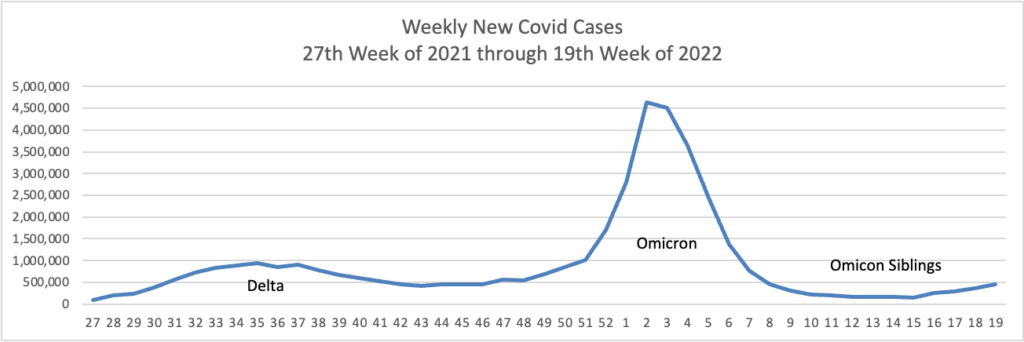
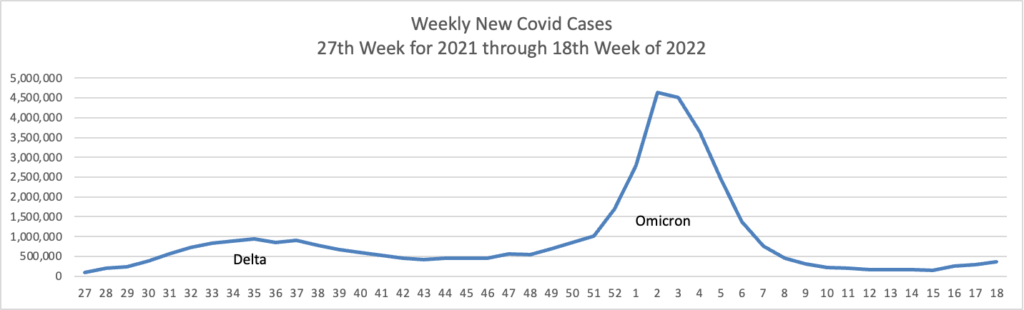
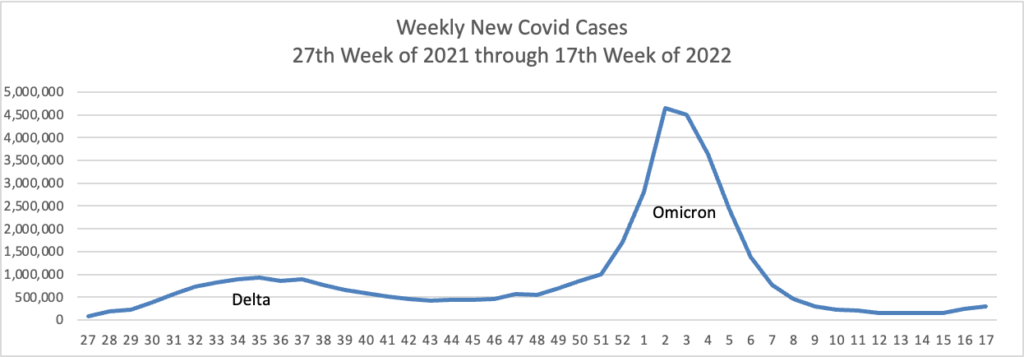
Based on the Centers for Disease Control’s COVID-19 Data Tracker website, here is the FEHBlog’s chart of new weekly COVID-19 cases and deaths over the 14th week of 2020 through 30th week of this year (beginning April 2, 2020, and ending July 28, 2021; using Thursday as the first day of the week in order to facilitate this weekly update):

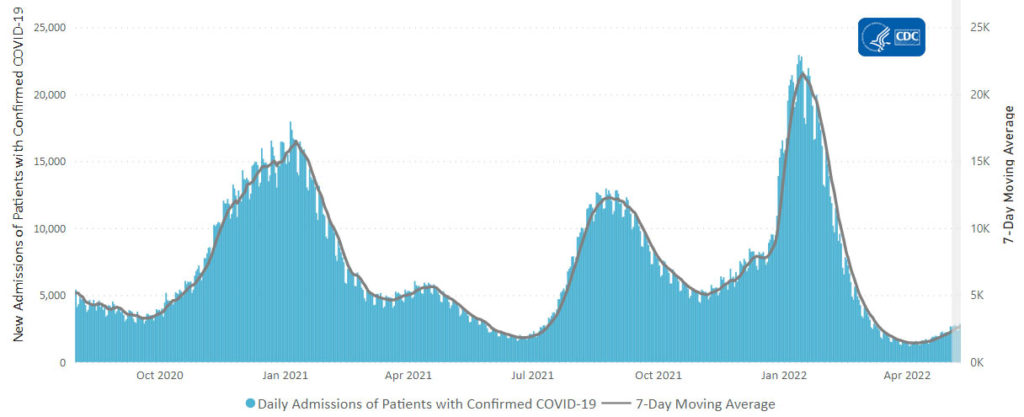
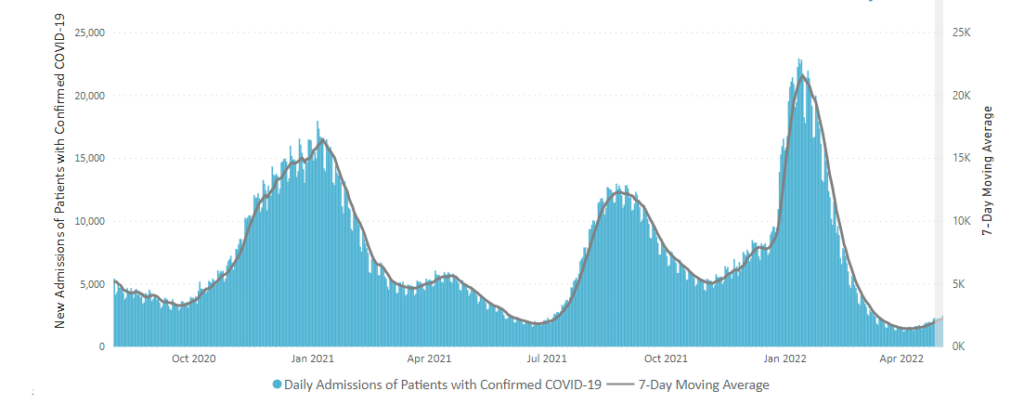
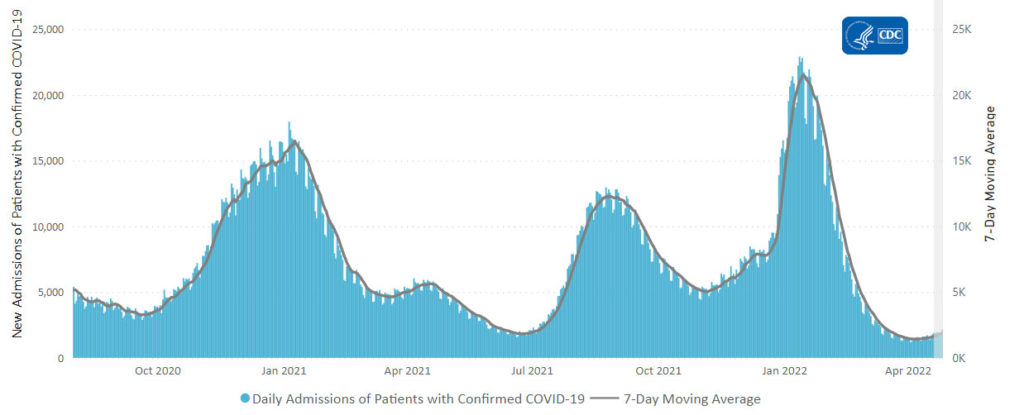
and here is the CDC’s latest overall weekly hospitalization rate chart for COVID-19:

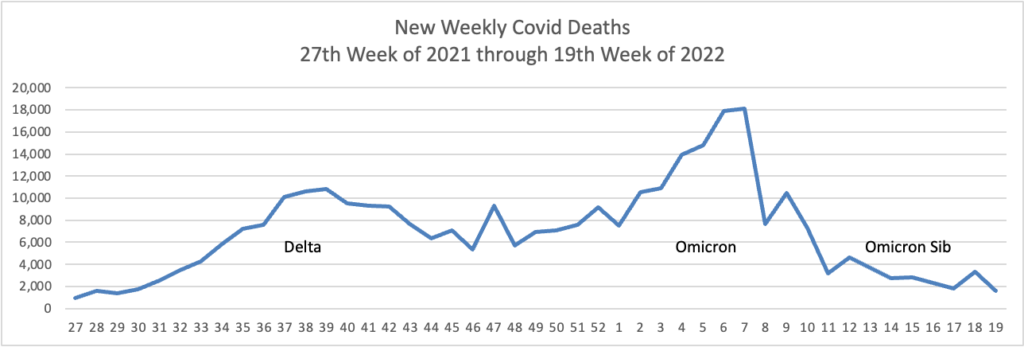
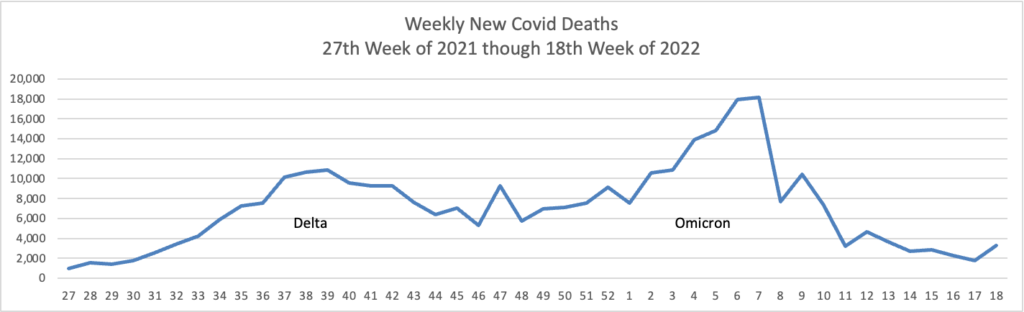
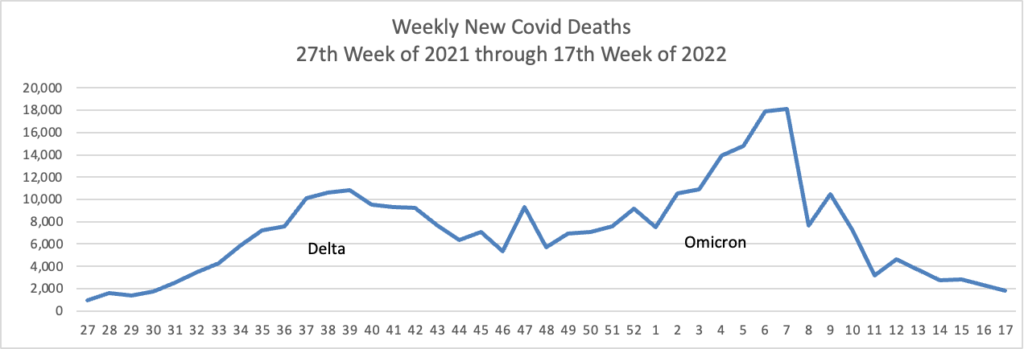
The FEHBlog has noticed that the new cases and deaths chart shows a flat line for new weekly deaths  because new cases significantly exceed new deaths. Accordingly here is a chart of new COVID-19 deaths over the period (April 2, 2020, through July 28, 2021):

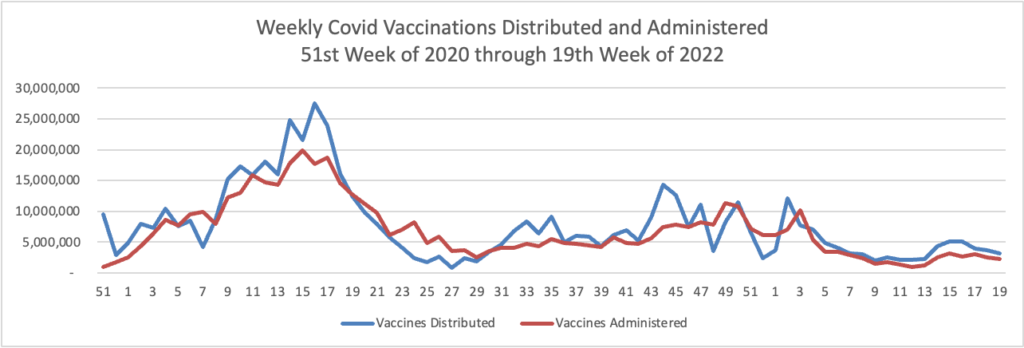
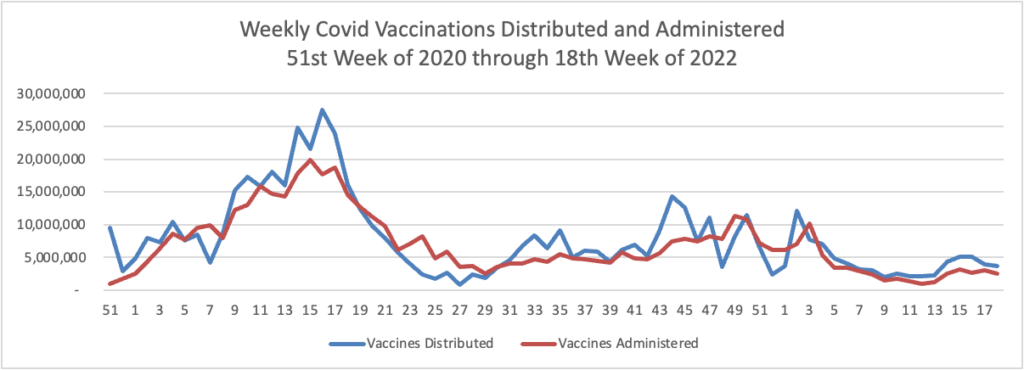
Finally here is a COVID-19 vaccinations chart over the period December 17, 2020, through July 28, 2021, which also uses Thursday as the first day of the week:

Due to the Delta variant, new cases and hospitalizations are trending up while new deaths have remained low for two months.

Happily COVID-19 vaccinations are trending up again. As of today according to the CDC, 60% of the U.S. population over age 18 and 80% of those over age 65 are fully vaccinated. GEHA, the largest employee organization plan in the FEHB, announced that it has extended its COVID-19 vaccine incentive program to Labor Day, September 6.

The CDC defended its new masking policy for the vaccinated population by pointing to a case in which as reported by the Wall Street Journal

127 vaccinated people infected with the Delta variant during the outbreak appeared to carry as much virus as 84 unvaccinated or partially vaccinated people who became infected. The report referred to an outbreak in Barnstable County, Mass. Local officials there have said that at least 430 confirmed Covid-19 cases have been linked to one cluster following festivities over the July 4 weekend in Provincetown, on the tip of Cape Cod.

Among the 469 cases linked to the Barnstable outbreak in the CDC report, nearly 75% were fully vaccinated. For people with breakthrough infections, almost 80% had symptoms of cough, headache, sore throat or fever. Four were hospitalized and no deaths were reported, the CDC said. Infected people reported attending densely packed indoor events and outdoor events at bars, restaurants and houses.

Toward the conclusion of the article the journalist speaks with Dr. Ashish Jha, dean of the public-health school at Brown University.

Dr. Jha said he thinks this week’s guidance recommending masking in high-risk areas of the U.S. was reasonable, but also risked suggesting that vaccines aren’t effective against the Delta variant, which could discourage unvaccinated people from getting shots. We have the tools to address this variant, and they’re called vaccines,” Dr. Jha said.

The FEHBlog certainly would wear a mask at an indoor or outdoor super spreader event in a high risk area like the one where the FEHBlog is temporarily living, Travis County Texas. It’s worth noting this US Health Weather map which gauges the risk of catching a respiratory infection like COVID-19 or the flu in a particular US county. Ironically, my county of permanent residence, Montgomery County, Maryland, is low risk.

STAT News adds that the Food and Drug Administration is accelerating the process of reviewing Pfizer-Biotech’s application for full marketing approval of their COVID-19 vaccine. (Moderna also has made this filing.)

A typical review of an application like Pfizer’s takes 10 months. The agency granted Pfizer a “priority review” for its vaccine earlier this month, which signifies that staff will strive to finish the review of the application within six months. At the same time, he FDA has said it does not expect the process to take that long — a view echoed even by President Biden.

“My expectation …  is that sometime, maybe in the beginning of the school year, at the end of August, beginning of September, October, they’ll get a final approval” Biden said last week when asked when the FDA would formally approve the Covid-19 vaccines, including the one developed by Pfizer and its partner BioNTech.

Jesse Goodman, who led the FDA’s biologics center from 2003 to 2009, said that the August-September time frame is “possible … if all goes smoothly.” He said the idea of a sprint is “reasonable,” so long the biologics center follows the normal chain of command for reviewing these applications.

In other news

  • Federal News Network tells us that “The House of Representatives on Thursday cleared a $600 billion package of seven spending bills, a small step forward in boosting civilian agency funding next year.The seven-bill “minibus” cleared the House Thursday afternoon by a 219 to 208 vote. The minibus is silent on federal pay for 2022, a silent endorsement of President Joe Biden’s proposed 2.7% raise for civilian employees. * * * The spending package also includes $42 million for the Office of Personnel Management over current levels and allows the agency to stand up an IT working capital fund.” The House is close to completing approval of the twelve appropriations bills. The Senate has not begun to vote on those bills and new federal fiscal year begins in two months, October 1.
  • The Congressional Budget Office released its financial analysis of the President’s budget proposal for the upcoming new federal fiscal year.
  • The ICD10 Monitor explains that yesterday the Centers for Medicare and Medicaid Services finalized four Medicare Part A payment rules which take effect on October 1 — skilled nursing facilities (SNFs), hospices,
  • inpatient rehabilitation facilities (IRFs), and inpatient psychiatric facilities (IPFs). The Monitor’s article summarizes each final rule.
  • The American Hospital Association offers a useful article on approaches to resolving COVID-19 vaccine hesitancy.
  • Fierce Healthcare informs us about insurer comments on the third 2022 Notice of Benefit and Payment Parameters, which proposed changes to the ACA marketplace.

Friday Stats and More

Based on the Centers for Disease Control’s COVID-19 Data Tracker website, here is the FEHBlog’s chart of new weekly COVID-19 cases and deaths over the 14th week of 2020 through 28th week of this year (beginning April 2, 2020, and ending July 14, 2021; using Thursday as the first day of the week in order to facilitate this weekly update):

and here is the CDC’s latest overall weekly hospitalization rate chart for COVID-19:

The FEHBlog has noticed that the new cases and deaths chart shows a flat line for new weekly deaths  because new cases materially exceed new deaths. Accordingly here is a chart of new COVID-19 deaths over the period (April 2, 2020, through July 14, 2021):

Finally here is a COVID-19 vaccinations chart over the period December 17, 2020, through July 14, 2021 which also uses Thursday as the first day of the week:

As of today, according to the Centers for Disease Control, 160.7 million Americans are fully vaccinated against COVID-19, which figure represents 59.6% of the population eligible to be vaccinated (age 12 and up). 79.3% of the population over age 65 is fully vaccinated. That’s a key fact.

The American Hospital Association informs us that “Pfizer today said its COVID-19 vaccine will receive a priority review from the Food and Drug Administration, indicating that Pfizer has completed its rolling submission of its application for the vaccine’s full authorization. The company’s Biologics License Application, which is intended for individuals age 16 and older, is supported by clinical date from its phase 3 clinical trial.” That’s good news.

The Washington Post reports that “A federal advisory panel [the CDC’s Advisory Committee on Immunization Practices] is expected next week to consider whether health-care workers should be allowed to give additional coronavirus shots to patients with fragile immune systems, even as top U.S. health officials have said an additional dose of vaccine is not widely needed. * * * The advisory panel[on July 22] plans to focus on the 2 to 4 percent of U.S. adults who have suppressed immunity, a population that includes organ transplant recipients, people on cancer treatments and people living with rheumatologic conditions, HIV and leukemia.”

From the prescription drug front —

  • STAT News reports that “A prominent panel of medical experts [convened by the Institute of Clinical and Economic Review] unanimously voted that there is no evidence to suggest the recently approved Alzheimer’s drug offers patients any health benefits beyond the usual care. * * * After the voting, a roundtable discussion was held during which Mark McClellan, a former Centers for Medicare & Medicaid Administrator, said that access to Aduhelm “is going to be pretty limited at least until the nine-month period is over” and that we are “not going to see very big numbers in the near term.” This is likely because many payers will want to wait for Medicare to make its coverage decision in early 2022.”
  • Bloomberg reports that ” When a new obesity medication from the Danish drugmaker Novo Nordisk A/S began selling in the U.S. in June, it became the most effective weight loss drug on the market. Wegovyhelps patients lose an average of about 15% of their body weight, almost double the rates demonstrated by other prescription treatments, according to study results. That translates to a loss of about 20 to 70 pounds for eligible patients. Only costly and invasive bariatric surgery has shown the ability to eliminate more pounds. With more than 100 million people categorized as obese, the U.S. is a potentially huge market for Wegovy, which costs $1,350 for four weekly injections and is being pitched as a long-term therapy. * * * Insurance companies, pharmacy benefit managers, and employers determine whether health plans cover weight loss drugs, and which ones. Today only about half the clients of Cigna Corp.’s Express Scripts unit and Prime Therapeutics LLC, two major pharmacy benefit managers, reimburse for weight loss drugs. Express Scripts recently added Wegovy to its largest formulary, covering about 24 million people. Insurers Anthem Inc. and CVS Health Corp.’s Aetna don’t typically cover weight loss drugs, but both have indicated Wegovy will likely get some coverage. Others have yet to decide. Although “it’s not for everyone,” Wegovy has a role to play in treating obesity, says Amy Bricker, president of Express Scripts. She says she’s optimistic that treating obesity will lower costs for Express Scripts’ health plans.”

HealthTech Magazine offers a useful article on integrating virtual care into a healthcare organization’s overall delivery strategy. During the NCQA / HL7 Digital Quality Measure conference this week more than one doctor remarked that no one has found the Goldilocks level for virtual care, but at least study appears underway.

Monday Roundup

Photo by Sven Read on Unsplash

Bloomberg has released its latest COVID-19 resilience ranking.

Almost a year and a half into the pandemic, the best and worst places to be in the Covid-19 era are increasingly defined by one thing: normalization.

The biggest vaccination drive in history is enabling parts of the globe to abolish mask mandates, relax restrictions and dismantle border curbs, making the magnitude of reopening key to quality of life. Taming cases and deaths was once paramount, along with ensuring a robust health-care system. Now, the ability to essentially turn back the clock and return to pre-pandemic times is taking on an even greater significance.

Central to that is an economy’s openness to the world, and that’s why we’ve introduced a new element—Reopening Progress—to Bloomberg’s Covid Resilience Ranking. Two new metrics capture the ease of moving in and out of a place and how much air travel has recovered, alongside our 10 other measures tracking mortality rates to infection counts, freedom of movement to economic growth.

This pivot has ushered in dramatic changes to the ranks. The U.S. is now No. 1, with its fast and expansive vaccine rollout, dominated by the highly effective Messenger RNA shots, stemming what was once the world’s worst outbreak.

The U.S. Supreme Court today according to Fierce Healthcare

declined to hear an appeal of a lower court decision upholding the Department of Health and Human Services’ (HHS’) site-neutral payments policy.

The appeal was requested by the American Hospital Association (AHA) in February as part of a multiyear legal battle challenging HHS’ authority to bring Medicare payments to off-campus clinics in line with independent physician practices. The AHA’s bid was supported by a long list of other provider industry stakeholders.

By taking a pass on the case, the top court has now paved the way for HHS to move forward with the 2019 Outpatient Prospective Payment System rule—a policy the agency has said would have saved the Centers for Medicare & Medicaid Services roughly $800 million in payments to outpatient departments during 2020. * * *

HHS’ rule aims to remove payment disparities where hospital-affiliated clinics receive more Medicare reimbursement than physicians’ offices providing the same services. Researchers have suggested over the years that these disparities have played a part in provider consolidation.

Also today the Department of Health and Human Services released a third notice of Affordable Care Act Benefit and Payment Parameters as a proposed rule. Fierce Healthcare informs us that the proposed rule would set the ACA’s open season at an expanded November 1 through January 15 and also would allow exchanges to offer special enrollment periods for low income customers who may benefit from the American Rescue Plan’s expanded premium credits. Health Payer Intelligence discusses two impacts from the current ongoing special ACA open enrollment period which runs until August 15.

In other round up items

  • The ICD-10 Monitor tells us that the Centers for Disease Control released new ICD-10-CM codes for federal fiscal year 2022 which include 19 new social determinants of health codes in the “Z” chapter. Many of these new “Z” codes are attributable to the Gravity Project which is an HL7 FHIR accelerator organization.
  • The Wall Street Journal discusses what doctors want their patients to know about the new Alzheimer’s disease drug Aduhelm. For example, “The treatment would work over years, not weeks or months. Dr. [Paul] Aisen estimates that patients with mild cognitive impairment, which is often a precursor to dementia, might get an extra year or two before they start losing their ability to function independently.”
  • Fierce Healthcare reports that

Future demand for healthcare services will be relatively flat to declining, with little to no effect from the COVID-19 pandemic, according to a new forecast report.

At the same time, hospitals and health systems are facing increasing competition from consumer businesses such as Amazon and Walmart, retail behemoths that are rapidly expanding the supply of healthcare services.

The implications of softening demand and increasing supply suggest that pricing trends are ultimately unsustainable for healthcare providers, according to a new report from health system analytics company Trilliant Health.

The company’s analysis, based on 70 billion medical claims across 309 million patient visits, contradicts the commonly held belief that the demand for healthcare services nationwide is rising, according to Sanjula Jain, Ph.D., senior vice president of market strategy and chief research officer at Trilliant Health.

Time will tell.

Friday Stats and More

Based on the Centers for Disease Control’s COVID-19 Data Tracker website, here is the FEHBlog’s chart of new weekly COVID-19 cases and deaths over the 14th week of 2020 through 25th week of this year (beginning April 2, 2020, and ending June 23, 2021; using Thursday as the first day of the week in order to facilitate this weekly update):

According to the Centers for Disease Control (“CDC”),

The current 7-day moving average of daily new cases (11,343) decreased 4.4% compared with the previous 7-day moving average (11,867). Compared with the highest peak on January 10, 2021 (252,166), the current 7-day average decreased 95.5%. A total of 33,409,895 COVID-19 cases have been reported as of June 23.

Here is the CDC’s latest overall weekly hospitalization rate chart for COVID-19 which also has been steadily decreasing:

The FEHBlog has noticed that the new cases and deaths chart shows a flat line for new weekly deaths  because new cases significantly exceed new deaths. Accordingly here is a chart of new COVID-19 deaths over the period (April 2, 2020, through June 23, 2021):

Finally here is a COVID-19 vaccinations chart over the period December 17, 2020, through June 23, 2021, which also uses Thursday as the first day of the week:

As of today, according to the Centers for Disease Control, over 150 million Americans are fully vaccinated. The vaccination campaign has lead to the low levels of new cases and deaths in our country. The Associated Press observes:

Nearly all COVID-19 deaths in the U.S. now are in people who weren’t vaccinated, a staggering demonstration of how effective the shots have been and an indication that deaths per day — now down to under 300 — could be practically zero if everyone eligible got the vaccine.

An Associated Press analysis of available government data from May shows that “breakthrough” infections in fully vaccinated people accounted for fewer than 1,200 of more than 853,000 COVID-19 hospitalizations. That’s about 0.1%.

And only about 150 of the more than 18,000 COVID-19 deaths in May were in fully vaccinated people. That translates to about 0.8%, or five deaths per day on average.

The CDC also reminds us that

Currently, several variants are found around the world, including in the United States. On June 15, 2021, the B.1.617.2 (Delta)* variant was classified as a VOC because it spreads from person to person more easily than other variants and may cause more severe disease. B.1.617.2 has been reported in 77 countries and in the United Kingdom has become the main variant in COVID-19 cases. In the United States, the proportion** of B.1.617.2 for the 2-week period ending June 19, 2021, is predicted to increase to 20.6% nationally and be higher in regions 2, 6, 7, 8, and 9.

The more a virus circulates in a population, the more opportunities it has to transform itself and can reduce the effectiveness of our vaccines. Recent studies have shown that the vaccines available in the United States are effective against variants currently circulating, including B.1.617.2. Vaccines interrupt the ability of the virus that causes COVID-19 to move between people and mutate, so it is important for everyone to get vaccinated as soon as they’re eligible. If you have questions or concerns about vaccines, please contact your healthcare professional, state or local health department, or local pharmacist or visit the CDC website. To find a place in your community to get a vaccine, visit Vaccines.gov or your local public health department website.

In the More department

  • The American Managed Care Journal reports that AHIP hosted a small group of U.S. Senators at a recent conference where the Senators offered their thoughts on future federal healthcare legislation.
  • Tammy Flanagan in Govexec discusses NARFE’s legislative conference on pending legislation in Congress affecting federal employees, annuitants and their benefit programs, including the Postal Reform Act.
  • Healthcare Dive informs us that “The Biden administration’s top health policy official on Thursday [June 24] reiterated his support for expanded telehealth access after the COVID-19 national emergency expires, as Congress considers a slate of bills that would permanently nix regulatory barriers to virtual care. “We are absolutely supportive of efforts to give us the authority to utilize telehealth in greater ways,” HHS Secretary Xavier Becerra said at a virtual event on digital health hosted by The Washington Post. Becerra also stressed that, though affordable telehealth should be available to all, HHS would be doubling down in making sure there’s accountability for quality of care. “We’re going to be doing a lot of bird-dogging, a lot of oversight,” he said.”
  • Fierce Healthcare reports on the winners of the IBM XPrize competition to create artificial intelligence tools to tackle global problems. For example, “An Israeli startup that uses artificial intelligence and other tech tools to wipe out malaria took the top prize in IBM Watson’s AI competition, nabbing $3 million to expand its operations. ZzappMalaria, a subsidiary of Sight Diagnostics, developed an AI-powered mobile app and dashboard to tackle malaria on the eradication level, specifically in developing countries.” Very 21st Century.

New OPM Director plus Tuesday’s Tidbits

OPM Headquarters a/k/a the Theodore Roosevelt Building

The Senate narrowly confirmed Kiran Ahuja to be Office of Personnel Management Director this afternoon. Here’s the Senate play by play from the Senate Press Gallery website.

1:37 p.m. Cloture was invoked on the Ahuja nomination, 51-50. Vice President Harris broke the tie.

2:26 p.m. Senator Peters spoke in support of the Ahuja nomination.

2:30 p.m. The Senate began a vote on confirmation of Executive Calendar #107 Kiran Arjandas Ahuja to be Director of the Office of Personnel Management for a term of four years.

3:26 p.m. By a vote of 51-50, the Senate confirmed Executive Calendar #107 Kiran Arjandas Ahuja to be Director of the Office of Personnel Management for a term of 4 years. The Vice President cast the tie breaking vote. 

Here is a link to Ms. Ahuja’s Wikipedia page. Here are links to the Federal Times, Govexec and Federal News Network reports on this event. The FEHBlog wishes Ms. Ahuja good luck.

The Senate Health Education Labor and Pensions Committee held a hearing on COVID-19 vaccination efforts today. Here is a link to the Sen. Patty Murray’s (D Wash) statement on the hearing. Sen. Murray is the Committee chair.

In this regard, the Wall Street Journal reports that

The White House said the U.S. will fall short of President Biden’s goal for 70% of the adult population to receive at least one coronavirus vaccine dose by July 4.

Mr. Biden had set the goal in early May, with an aim for a return to normalcy to mark the Independence Day holiday. White House Covid-19 coordinator Jeffrey Zients said Tuesday the target had been met for those age 30 and over but not for the overall eligible population.

Mr. Zients said it would take a few extra weeks to reach the president’s target and cited a reluctance to get the vaccine among people between the ages of 18 and 26 as one of the challenges facing the country.

“The reality is many younger Americans have felt like Covid-19 is not something that impacts them and they have been less eager to get the shot,” Mr. Zients said.

On Thursday, June 24, at 10 am, the Financial Services and General Government Subcommittee of the House Appropriations Committee will markup the fiscal year 2022 appropriations bill that includes OPM and FEHB appropriations. Here’s a link to a Fedweek article on the markup.

STAT News offers a couple of sobering articles, one on antibiotic resistance and the other on health equity concerns

  • According to a new STAT Report an estimated 700,000 people die annually from antimicrobial resistance, a number that could rise to 10 million by 2050, according to a World Health Organization report issued in 2019. In the U.S. alone, there are more than 2.8 million antibiotic-resistant infections and 35,000 deaths from those infections each year, according to data from the Centers for Disease Control and Prevention. A number of issues have fueled resistance and stunted development of new antibiotics. And while there are various efforts underway to address those challenges, creating incentives to change the trajectory of antibiotic resistance takes commitment and imagination. There are several experiments under way that aim to spur development of new products while still ensuring profit. In the U.K. and Sweden, pilot programs are testing a pull incentive, which involves a subscription-style business model in which a government offers upfront payments to drug makers in exchange for unlimited access to their antibiotics. The idea is to enable drug companies to recover their costs and make an appropriate profit without having to sell large volumes of antibiotics. Last week, U.S. lawmakers re-introduced legislation to create a similar mechanism.
  • [Researchers have identified]232 counties in the mainland U.S. where men aged 49 and under are at unusually high risk of dying from colorectal cancer, according to a study published last year in the American Journal of Cancer Research. The researchers also found that compared with white men, Black men in these hot spots who have colorectal cancer are more likely to be diagnosed with advanced stages of the disease and less likely to survive it. * * * [S]ince the 1990s, even as colorectal cancer rates have declined for people 50 and older, they have more than doubled among American adults under 50, according to the National Cancer Institute. By 2030, predicts a study published in April, colorectal cancer will be the leading cause of cancer-related deaths in people aged 20 to 49. The reason behind the rise remains a mystery. “We don’t know where this is coming from,” said Charles R. Rogers, an assistant professor of public health at the University of Utah School of Medicine and lead author of the hot spots study. “Just like we don’t really know why Black people have the highest chance of getting and dying from it.” The article explains how researches like Professor Rogers are shedding light on the cause of this inequity by studying the hot spots, among other things.

In brighter Tuesday Tidbits

  • The Patient Centered Outcomes Research Institute funded by health plan premiums is seeking public comment on its national health priorities. The public comment period runs from June 28 through August 27.
  • Fierce Healthcare reports that “Five Blues plans are teaming up to invest in a new pharmacy solutions venture called Evio. Blue Cross Blue Shield of Massachusetts, Blue Cross Blue Shield of Michigan, Blue Shield of California, Highmark Health and Independence Blue Cross are backing Evio, according to an announcement released Tuesday. The new company aims to establish outcomes-based arrangements with drugmakers, especially for high-cost therapies. In addition, Evio aims to collect and provide real-world evidence for medications to ensure the right product is getting to the right patient.” Makes sense to the FEHBlog.
  • Fierce Healthcare also informs us that “Amazon Web Services wants to help incubate early-stage digital health companies that can collaborate with the tech giant’s healthcare customers and partners. Amazon’s cloud division launched a healthcare accelerator to boost startups’ growth in cloud technologies and enable early-stage companies to tap into AWS’ technical and commercial expertise. The program will focus on technologies such as remote patient monitoring, data analytics, patient engagement, voice technology and virtual care, according to a blog post from Sandy Carter, vice president of worldwide public sector partners and programs at AWS.”

Midweek Update

Photo by Dane Deaner on Unsplash

The Senate took no action on Kiran Ahuja’s nomination to be OPM Director today as Senators Booker and Peters remain out of pocket due to family illnesses.

On the hospital front —

  • The Advisory Board informs us about U.S. News and World Reports most recent rankings of children’s hospitals.
  • Axios reports that “Some of the hospitals with the highest revenue in the country also have some of the highest prices, charging an average of 10 times more than the actual cost of the care they deliver, according to new research by Johns Hopkins University provided exclusively to Axios.”

On the mental healthcare front, we have two articles on start- up companies from Katie Jennings in Forbes. One concerns Burlingame, Calif.-based Lyra Health and the other concerns “Lifestance Health Group, one of the nation’s largest outpatient mental health providers.” Check them out.

On the prescription drug front —

  • Healthcare Dive reports that “Anthem, one of the biggest U.S. payers, has joined an initiative to create low-cost generic drugs for hospital and retail pharmacies. The initiative CivicaScript, a subsidiary of hospital-owned nonprofit drugmaker Civica Rx, plans to initially develop and manufacture six to 10 common but pricey generic medicines that don’t have enough market competition to drive down cost, officials said Wednesday. The first generics could be available as early as 2022.”
  • Fierce Pharma informs us that “Antibody treatments have shown little success in helping COVID-19 patients with  severe disease. But a large [UK] study of hospitalized patients reveals that Regeneron’s antibody cocktail can reduce the chance of death in patients who haven’t produced their own antibody responses to the disease.”
  • STAT News interviews the Alzheimer Association’s CEO about the newly approved drug Aduhelm.

In miscellaneous news

  • The Wall Street Journal reportsApple Inc. Chief Executive Tim Cook has said the company’s greatest contribution to mankind will be in health. So far, some Apple initiatives aimed at broadly disrupting the healthcare sector have struggled to gain traction, according to people familiar with them and documents reviewed by The Wall Street Journal.”
  • Healthcare Dive tells us that “A University of Pennsylvania study that tracked Medicare claims for about 1.35 million beneficiaries who had joint replacement surgery found that hospitals participating in bundled payment programs spent less on the hip and knee joint procedures than hospitals receiving traditional fee-for-service payments. Spending, however, did not differ between hospitals that voluntarily joined bundling programs and those whose involvement was mandatory, according to the findings, which were published in a JAMA research letter. The results failed to validate assumptions that voluntary participants tend to achieve greater savings because they choose programs for the opportunity to reduce spending. The findings come as the head of the Center for Medicare and Medicaid Innovation, Elizabeth Fowler, suggested the agency would look to shift away from voluntary arrangements in favor of more mandatory models.”
  • Fierce Healthcare informs us that “The Centers for Disease Control and Prevention (CDC) released new interim guidance late Monday for healthcare providers treating patients with post-COVID conditions—an umbrella term the agency is using to capture a wide range of physical and mental health issues that sometimes persist four or more weeks after an individual’s COVID-19 infection. Sometimes referred to as “long COVID,” the conditions can present among COVID-19 patients regardless of whether they were symptomatic during their acute infection, the agency wrote in the guidance.”

Midweek Update

Mark Gongloff in Bloomberg opinion lays out the global COVID-19 situation quite clearly

Former FDA chief Scott Gottlieb, a sensible observer throughout this disaster, tells Michael R. Strain he sees Covid-19 becoming like the flu, both in its seasonality and fatality rate. He figures Americans will be fully back to work and school by the fall and then face a new Covid wave in the winter. But with widespread vaccinations, it shouldn’t be worse than a bad flu season. Sounds kind of nice. 

But in the developing world, vaccinations are lagging badly, giving the disease too many chances to evolve. The scariness of India’s “delta” variant may be overhyped, but it seems both more transmissible and severe than others, writes Sam Fazeli. Vaccines are effective against it. But it could make Covid more tiger-like again for unvaccinated Americans and Brits, including young people.

So developed countries must get far more serious about vaccinating the rest of the world to stem further deaths, mutations and economic damage. President Joe Biden promising to give the world 500 million Pfizer doses is a great start, but it’s only a start. 

Former U.K. Prime Minister Gordon Brown writes this Friday’s G-7 meeting is a chance for countries to commit to more such concrete action and spending. The world’s biggest countries must pony up to the best of their ability, as they have with other emergencies. 

Also from the COVID-19 front

  • The Centers for Medicare and Medicaid Services announced today that

While many Medicare beneficiaries can receive a COVID-19 vaccine at a retail pharmacy, their physician’s office, or a mass vaccination site, some beneficiaries have great difficulty leaving their homes or face a taxing effort getting around their communities easily to access vaccination in these settings. To better serve this group, Medicare is incentivizing providers and will pay an additional $35 per dose for COVID-19 vaccine administration in a beneficiary’s home, increasing the total payment amount for at-home vaccination from approximately $40 to approximately $75 per vaccine dose. For a two-dose vaccine, this results in a total payment of approximately $150 for the administration of both doses, or approximately $70 more than the current rate.

  • The Department of Health and Human Services announced that

The U.S. government will procure approximately 1.7 million courses of an investigational antiviral treatment, molnupiravir (MK-4482), for COVID-19 from Merck, pending emergency use authorization (EUA) or approval from the U.S. Food and Drug Administration (FDA).

Molnupiravir (MK-4482) is designed to induce viral genome copying errors to prevent the virus from replicating in the human body, and evidence to date from clinical trials in patients with COVID-19 suggests that molnupiravir may reduce replication of the SAR-CoV-2 virus.

This treatment is being evaluated in an ongoing Phase 3 trial for its potential to reduce the risk of hospitalization or death in non-hospitalized patients who have symptoms for five days or less and are at high risk for severe illness. The trial plans to enroll a total of 1,850 patients globally with final data expected in the fall of 2021.

  • FedSmith offers more details on Blue Cross Federal Employee Program (FEP)’s announcement that it will offer a $50 wellness incentive to FEP members over age 18 who are fully vaccinated against COVID-19. Notably, “FedSmith has been advised that eligible members who have already been vaccinated for COVID-19 can also take advantage of this program and receive the $50 on their MyBlue Wellness Card. These individuals will also have to submit evidence of their COVID-19 vaccination record.”

From the general healthcare front

  • PriceWaterhouseCoopers (PwC) released its Health Research Institute’s 2022 projection of medical cost trend.

PwC’s Health Research Institute (HRI) is projecting a 6.5% medical cost trend in 2022, slightly lower than the 7% medical cost trend in 2021 and slightly higher than it was between 2016 and 2020. Healthcare spending is expected to return to pre-pandemic baselines with some adjustments to account for the pandemic’s persistent effects.

HRI defines medical cost trend as the projected percentage increase in the cost to treat patients from one year to the next, assuming benefits remain the same. Typically, spending data from the prior year is used as an input in the projection. For 2021 and 2022, the medical cost trend is the projected percentage increase over the prior year’s spending, with the effects of the pandemic removed from the prior year’s spending.

  • Not surprisingly, the American Hospital Association sent a letter to UnitedHealthcare stating in pertinent part that

America’s hospitals and health systems are deeply concerned by UnitedHealthcare’s (UHC) recent policy announcement [recently mentioned in the FEHBlog] to allow for the retroactive denial of coverage for emergency-level care in facilities. This policy would put patients’ health and wellbeing in jeopardy, and we urge you to reverse the policy immediately.

The AHA contends that UHC’s policy violates the Affordable Care Act’s requirement that heath plans adjudicate emergency care claims using a prudent layperson standards. The FEHBlog expects that UHC has taken this legal requirement into account. The FEHBlog will continue to follow this matter.

  • mHealth Intelligence reports that “New research out of the University of California Davis finds that telehealth treatments for people with non-urgent mental health needs can be delivered via an asynchronous (store-and-forward) platform just as well as through an audio-visual platform.” This approach could make the delivery of mental healthcare more efficient.
  • According to a company press release, “Datavant, the leader in helping healthcare organizations securely connect their data, and Ciox Health, the leader in clinical data exchange, today announced that they have signed a definitive agreement to merge the two companies in a transaction valued at $7.0 billion. The combined entity, to be named Datavant, will be the nation’s largest health data ecosystem, enabling patients, providers, payers, health data analytics companies, patient-facing applications, government agencies, and life science companies to securely exchange their patient-level data. “The fragmentation of health data is one of the single greatest challenges facing the healthcare system today,” said Pete McCabe, CEO of Ciox Health. “Each of us has many dozens of interactions with the healthcare system over the course of our lives, and that information is retained in siloed databases across disparate institutions. Every informed patient decision and every major analytical question in healthcare requires the ability to pull that information from across the health data ecosystem while protecting patient privacy. We are thrilled to join forces with the Datavant team to connect health data to improve patient outcomes. Together we are well positioned to navigate the technical, operational, legal, and regulatory challenges to doing so, and are committed to acting as a neutral connectivity solution for our many customers and partners.”
  • The National Committee for Quality Assurance answers questions about the use of electronic clinical data in HEDIS reporting. For example,

Q: How does administrative reporting relate to ECDS reporting?

A: Administrative claims are considered a key data source for ECDS reporting if the data can also be made available to a member’s care team. It is one of the four major data categories for ECDS reporting. The ECDS reporting method expands the types of data permitted for HEDIS® reporting by allowing the use of structured data from electronic health records, health information exchanges and clinical registries, and case management systems in addition to administrative claims.

Q: Is NCQA going to phase out the hybrid method of data collection from HEDIS?

A: NCQA is actively assessing the appropriateness of removing the hybrid reporting method from select HEDIS measures as other data sources improve.

Friday Stats and More

Based on the Centers for Disease Control’s COVID-19 Data Tracker website, here is the FEHBlog’s chart of new weekly COVID-19 cases and deaths over the 14th week of 2020 through 22nd week of this year (beginning April 2, 2020, and ending June 2, 2021; using Thursday as the first day of the week in order to facilitate this weekly update):

and here is the CDC’s latest overall weekly hospitalization rate chart for COVID-19:

The FEHBlog has noticed that the new cases and deaths chart shows a flat line for new weekly deaths  because new cases significantly exceed new deaths. Accordingly here is a chart of new COVID-19 deaths over the period (April 2, 2020, through June 2, 2021):

Finally here is a COVID-19 vaccinations chart over the period December 17, 2020, through June 2, 2021 which also uses Thursday as the first day of the week:

In this week’s COVID-19 update, the CDC advises

With summer upon us, many adolescents are looking forward to returning to activities they may have missed last summer, including travel, hanging out with friends, work, and summer campVaccinating adolescents is an important step toward stopping the spread of COVID-19. As of June 3, 2021, more than 5.9 million adolescents ages 12-17 years have received at least one dose of a COVID-19 vaccine. Fully vaccinated adolescents are at low risk of symptomatic or severe infection and are less likely to transmit COVID-19 to others. If you or someone you know is considering adolescent vaccination, talk with your pediatrician or healthcare provider about the benefits of vaccination. To find a vaccine provider near you, visit vaccines.gov.

In other new

  • The tri-agencies which administer the Affordable Care Act issued FAQ 46 today which reminds interested that the Biden Administration lowered the in-network out-of-pocket maximum limit for 2022 that the Trump Administration had proposed. As the FEHBlog reported in early May 2021, the maximum annual limitation on [in-network] cost sharing for the 2022 plan year will be $8,700 for self- only coverage, and $17,400 for other than self-only coverage.”
  • Fierce Pharma reports that “Friday brought news that the FDA has made Regeneron’s monoclonal antibody cocktail [to treat COVID-19] more user friendly, allowing it to be administered by subcutaneous injection in addition to its original administration form of intravenous infusion. The agency also approved a lower dose of the Regeneron drug, 1200 mg, allowing the company and officials to stretch available supply.”
  • The American Medical Association informs us about “Ochsner’s Connected MOM (Maternity Online Monitoring) initiative, which uses digital health tools to offer expectant mothers a convenient way to safely manage their pregnancy in collaboration with their physicians.” Oschner, of course, is a major health system serving New Orleans, LA, and environs.
  • HR Dive tells us about the types of incentives that employers are offering to encourage employees to get COVID-19 vaccinations. “Adam Sencenbaugh, partner at Haynes and Boone, said he has seen several creative forms of incentives from clients, ranging from paid time off to raffles. That mirrors reports of what other employers have done to incentivize vaccination, with ideas including direct payments and transportation provided to those receiving a vaccine. “We have yet to have a client ask us about a program that would be coercive in that respect,” Sencenbaugh added. “It’s been something that, if done appropriately, can even boost morale.”

Thursday Miscellany

Photo by Juliane Liebermann on Unsplash

President Biden today announced a strategy for sharing “at least 80 million U.S. [COVID 19] vaccine doses globally by the end of June.

On the U.S. COVID-19 vaccination front

  • David Leonhardt reports in the New York Times that

When the C.D.C. reversed its Covid-19 guidelines last month and said that vaccinated Americans rarely needed to wear masks, it caused both anxiety and uncertainty.

Many people worried that the change would cause unvaccinated people to shed their masks and create a surge of new cases. On the flip side, a more optimistic outcome also seemed possible: that the potential to live mostly mask-free would inspire some vaccine-hesitant Americans to get their shots.

Almost three weeks after the change, we can begin to get some answers by looking at the data. So far, it suggests that the optimists were better prognosticators than the pessimists.

  • HR Dive informs us that “Vaccine mandates are not a consideration for 83% of employers responding to law firm Fisher Phillips’ recent pulse survey. That figure is up from January, when the firm recorded 64% of respondents saying they would not impose a vaccine requirement. At that time, 27% of employers said they had yet to decide if they would mandate vaccinations. “Most employers — 75% — said they are encouraging workers to get their vaccines, the May 25 survey results revealed.”

Fortune Magazine released its Fortune 500 and sitting in the top 10 are four healthcare companies (CVS Health (4), United Health Group (5), McKesson (7) and AmerisourceBergen (8). For the second year in a row the top two companies are Walmart and Amazon, both of which are attempting to break into the healthcare market.

In his latest FedWeek column, Reg Jones discusses continuing FEHB coverage of unmarried children of enrollees beyond age 26 provided the child is incapable of self-support. “The term “incapable of self support” generally means that the child earns less than the equivalent of GS-5, step 1 [$30,414 in 2021]. However, this is not a hard and fast rule. In making a decision, consideration is given to the child’s earnings and condition or prognosis.”

From the Centers for Medicare and Medicaid Services front:

  • Kaiser Health News reports that expanding health insurance coverage is the top priority of the newly installed CMS Administrator, Chiquita Brooks-Lasure.
  • Healthcare Dive tells us that Elizabeth Fowler, head of the Center for Medicare and Medicaid Innovation, said that CMMI’s ongoing strategy review has resulted in more conscious choices in where it should invest, which includes pivoting away from voluntary models. “Voluntary models are subject to risk selection, which has a negative impact on the ability to generate system-level savings. Providers that aren’t generating the extra revenue tend to exit the program, and those that are tend to stay,” Fowler, now on her third month at the job, said at a Health Affairs briefing. “So we are exploring more mandatory models.”
  • Fierce Healthcare informs us that Congress wants CMMI to be more transparent in its spending. A bipartisan letter “said CMMI’s authorizing statute, which was part of the Affordable Care Act, calls for the center to gather input from interested parties. However, this requirement has often been shunted aside by the center and rarely observed.”

Medcity News reports that the Labor Department’s top health benefits law enforcement priority is compliance with the federal mental health parity law.

To uphold the law and ensure parity in coverage, the labor department has two strategies in place, [Secretary of Labor] Walsh said.

The department’s Employee Benefits Security Administration agency has created a task force that focuses on enforcement of the act, he said. The task force is reviewing its inventory of case files, looking to identify potential violations and send out requests to payers for data on parity analyses, which they are required to maintain to show their compliance with the law.

Further, the Department of Labor, along with other government agencies involved in this work such as the Department of Health and Human Services and Internal Revenue Service, is providing regular reports to Congress on their findings and enforcement actions, Walsh said. This can help inform legislation on insurance coverage moving forward.

Govexec provides the latest Postal Service news, including a confirmed report that the FBI is investigating Postmaster General DeJoy “for allegations that he illegally pressured employees at his former company to donate to Republican candidates while promising to later reimburse them through bonuses.”

The Wall Street Journal reports today that

A drug sold by AstraZeneca PLC and Merck & Co. reduced the recurrence of breast cancer in women with an early but aggressive form of the disease, a long-running [blinded] international study found. The finding, which on Thursday was published online by the New England Journal of Medicine and released at a major cancer-research meeting, marked the latest advance in cancer treatments targeting the genetic traits of tumors. It could expand the arsenal of weapons against a hereditary form of breast cancer. The result also helps validate the pharmaceutical industry’s investment in a pricey new class of drugs that target cancer cells, known as PARP inhibitors.  * * *

PARP inhibitors work by blocking cancer cells from relying on a survival tactic: the ability to repair their own DNA after their DNA is damaged naturally or by other drug treatments. This, in turn, contributes to cancer-cell death.

Health regulators have approved these types of drugs in recent years to treat ovarian, breast, prostate and pancreatic cancers. The drugs have been found to be particularly useful against cancers associated with harmful mutations in genes known as BRCA1 and BRCA2. Women with these hereditary mutations have a higher risk of developing breast cancer, and often at a younger age than is typical. The BRCA mutations account for about 5% of the estimated 281,000 cases of breast cancer diagnosed annually in the U.S.