Monday Report

Monday Report

Photo by Sven Read on Unsplash

From Washington, DC,

  • This afternoon, a cloture petition on the nomination of Russell Vought to be Director of the Office of Management and Budget was filed with the Senate. The next step will be a vote on the cloture motion which requires 51 votes.
  • Per a Senate news release,
    • “U.S. Senate Finance Committee Chairman Mike Crapo (R-Idaho) and Finance Committee member Michael Bennet (D-Colorado), with Ranking Member Ron Wyden (D-Oregon) and Finance Committee member Tim Scott (R-South Carolina), reintroduced the Medicare Multi-Cancer Early Detection (MCED) Screening Coverage Act that would ensure Medicare beneficiaries’ access to cutting-edge tests capable of detecting multiple types of cancer before symptoms appear.  Bipartisan companion legislation (H.R. 842) was also introduced in the U.S. House of Representatives.” * * *
    • Bill text can be found here
  • Nature adds,
    • “US Preventive Services Task Force (USPSTF) guidelines recommend single-cancer screening for select cancers (e.g., breast, cervical, colorectal, lung). Advances in genome sequencing and machine learning have facilitated the development of blood-based multi-cancer early detection (MCED) tests intended to complement single-cancer screening. MCED tests can interrogate circulating cell-free DNA to detect a shared cancer signal across multiple tumor types. We report real-world experience with an MCED test that detected cancer signals in three individuals subsequently diagnosed with cancers of the ovary, kidney, and head/neck that lack USPSTF-recommended screening. These cases illustrate the potential of MCED tests to detect early-stage cancers amenable to cure.”
  • The New York Times reports,
    • The U.S. Food and Drug Administration has given the green light to two biotechnology companies for clinical trials that will transplant organs from genetically modified pigs into people with kidney failure. If successful, these studies could lead to the broader use of cross-species transplantation, a dream of medical scientists for centuries.
    • One of the companies, United Therapeutics Corporation, will begin its trial with six patients, but that number could eventually rise to 50. The other, eGenesis, said it would begin with three patients and grow the study from there.
    • “We are entering a transformative era in organ transplantation,” said Mike Curtis, the president and chief executive of eGenesis.
  • The Government Accountability Office released a report on food safety.
    • “Millions of Americans get sick from foodborne illness every year. While many cases are mild, some cases can result in hospitalization, long-lasting complications, or even death.
    • “In this Q&A, we reported that the safety and quality of the U.S. food supply is governed by at least 30 federal laws, collectively administered by 15 federal agencies. Federal agencies have developed some agency-specific and joint goals related to reducing foodborne illness, but most of these goals have not been met.
    • “A national food safety strategy could help ensure agencies are working together in an effective and efficient manner to reduce foodborne illness.”
  • AHIP offers for public download a report on Medicare Advantage Demographics. “The most recent demographic data [released last Friday January 31] show that MA continued to be a vital source of coverage for low-income Medicare enrollees and diverse populations.”

From the public health and medical research front,

  • The New York Times considers whether the “Bird Flu Could Become Airborne? Scientists were slow to recognize that Covid spreads through the air. Some are now trying to get ahead of the bird flu.”
  • BioPharma Dive adds, “Drugmakers prep for bird flu outbreak, despite continued low risk. While the virus hasn’t made a sustained leap into humans, vaccines and treatments are being developed ahead of an outbreak.”
  • The American Medical Association lets us know what doctors wish their patients knew about Alzheimer’s Disease.
  • The Washington Post informs us,
    • “Those who go hungry or worry about getting food while pregnant are at higher risk of complications such as preeclampsia and gestational diabetes, a new analysis suggests.
    • “The paper, published in JAMA Network Open, used data from an online health survey of more than 19,300 pregnant Kaiser Permanente Northern California members between June 2020 and September 2022. Researchers did not find similar risks among those who received food assistance while pregnant.”
  • Per MedPage Today,
    • “Just over half of patients with overweight or obesity discontinued their GLP-1 receptor agonist within 1 year, with rates even higher among the subset without type 2 diabetes, according to a retrospective cohort study.
    • “Among over 125,000 patients, 53.6% discontinued their GLP-1 receptor agonist by 1 year, and these rates were significantly higher for patients without versus with type 2 diabetes (64.8% vs 46.5%), reported Ezekiel J. Emanuel, MD, PhD, of the University of Pennsylvania in Philadelphia, and colleagues.
    • “Regardless of diabetes status, every 1% of body weight loss was tied to a 3% lower risk of discontinuation, they wrote in JAMA Network Open.
    • “Of the 41,792 patients who stopped treatment and had a weight measurement at discontinuation available, 47.3% and 36.3% of those with and without type 2 diabetes, respectively, restarted their GLP-1 agent at 1 year, and 57.3% and 46.4% restarted within 2 years. For every 1% of body weight regained after discontinuing treatment, there was a 2% to 3% increased hazard of restarting treatment.
    • “The high discontinuation rate did not come as much of a surprise, as prior studies have reported GLP-1 receptor agonist discontinuation rates of up to 81%, Emanuel’s group wrote. They added that the links between weight loss and discontinuation and between weight regain and reinitiation “suggest that weight management is an important factor regardless of type 2 diabetes status.”
  • Per BioPharma Dive,
    • “Adding Pfizer’s cancer drug Braftovi to standard treatments helped people with a form of colorectal cancer live longer without their disease worsening than those who got the typical care alone in a Phase 3 trial, the company said Monday.
    • “The result confirms earlier research from the study, called Breakwater, which had shown that trial volunteers receiving Braftovi were significantly more likely to see their tumors shrink or disappear. Those data were used to support an accelerated U.S. clearance for Braftovi in colorectal cancer in December.”

From the U.S. healthcare business front,

  • Healthcare Dive tells us,
    • “Health supply chain costs and pharmaceutical expenses are projected to rise modestly between July 2025 and June 2026, according to new research from healthcare services company Vizient.
    • “Pharmacy spend will rise 3.8%, driven in part by increased demand for specialty medications. AbbVie’s autoimmune disease drug Humira will continue to be the most popular drug by total spend, however popular GLP-1s like Ozempic, Wegovy and Mounjaro are projected to enter the top-10 list of medications by total spend.
    • “Supply chain costs will rise by approximately 2% during the period, following higher prices for raw materials, increased freight and shipping costs and tariffs on medical-surgical products, according to the report.”
  • Fierce Healthcare adds,
    • “Moody’s Ratings is downgrading the insurance industry’s credit outlook to negative as elevated medical costs continue to batter payers.
    • “Moody’s analysts noted in a report that spending in the commercial market alone is set to increase by 8% this year, the fastest rate recorded in 13 years. Spending in the individual market, meanwhile, is set to climb by 7.5%, another increase that’s higher than in recent years.
    • “Factors driving these spending hikes include inflation, prescription drug spending and higher utilization of behavioral health. Based on those trends, Moody’s projects spending in Medicare Advantage (MA) will also increase by between 5% and 7%.
    • “We are changing our outlook on the health insurance sector to negative from stable,” the Moody’s analysts wrote. “Although we expect EBITDA growth to remain in the low single digits, insurers will continue to grapple with medical costs in excess of reimbursement rates for MA and Medicaid, while commercial coverage also faces continued high medical costs.
  • Per Healthcare Dive,
    • “Cigna has released a plan it says will make healthcare more affordable and accessible for its members — including tying executive compensation to customer satisfaction — as health insurers continue to reckon with discontent with their industry since the killing of a major insurance executive late last year.
    • Cigna plans to start linking bonus awards for high-level officers to the company’s net promoter score, a measure of customer loyalty and satisfaction, the Connecticut-based insurer said Monday.
    • “Cigna will also invest in more care advocates, pare back hurdles to receiving care and make it easier for doctors to update patients on the status of prior authorization requests. Cigna also plans to release an annual “customer transparency” report starting next year with information on its business practices, including data on prior authorization requests, appeals and denials.”
  • and
    • Bankrupt Prospect Medical Holdings said Friday it intends to sell Crozer Health, its four-hospital health system based in Pennsylvania, to an unnamed consortium of nonprofit healthcare operators.
    • Attorneys for Prospect said the proposed sale is the “only viable alternative to an immediate, forced shutdown of the Pennsylvania Hospitals” in documents filed in federal bankruptcy court on Friday.
    • Prospect will appear before the bankruptcy court on Thursday to seek approval for the transaction. As of Monday morning, the hospital operator had yet to file critical details about the sale to the court, including a proposed purchase price or the names of the possible buyers. However, a press release says the deal would include all Crozer hospitals, ambulatory surgery centers, clinics and physician offices.

Friday Report

From Washington, DC,

White House News

  • Per a White House fact sheet,
    • “ELIMINATING 10 REGULATIONS FOR EACH NEW REGULATION ISSUED: Today, President Donald J. Trump signed an Executive Order to unleash prosperity through deregulation. 
    • “The Order requires that whenever an agency promulgates a new rule, regulation, or guidance, it must identify at least 10 existing rules, regulations, or guidance documents to be repealed.  
    • “The Director of the Office of Management and Budget will ensure standardized measurement and estimation of regulatory costs.
    • “It requires that for fiscal year 2025, the total incremental cost of all new regulations, including repealed regulations, be significantly less than zero.'”
  • FEHBlog observation – The White House needs to turn its attention to subregulatory guidance.

Capitol Hill news

  • Modern Healthcare reports,
    • “Doctors and some bipartisan allies on Capitol Hill advanced their campaign to boost Medicare physician reimbursements with the release of new legislation Friday.
    • “The Medicare Patient Access and Practice Stabilization Act of 2025 would give doctors a 6.6% rate increase through 2026 and be retroactive to the beginning of this year, when a 2.9% cut took effect.” * * *
    • “The next government funding bill, which must pass by March 14 to prevent a partial shutdown, is an obvious vehicle. Supporters would likely have a greater chance getting Medicare physician reimbursements into that legislation than into a broader bill with many billions in healthcare cuts that Trump and GOP leaders are drafting on a partisan track.”
  • Per a Senate press release,
    • “U.S. Senate Democratic Whip Dick Durbin (D-IL) and U.S. Senator Chuck Grassley (R-IA), a senior member and former chairman of the Senate Finance Committee, today sent a letter to the President and CEO of the Pharmaceutical Research and Manufacturers of America (PhRMA) urging them to embrace their bipartisan legislation, the Drug-price Transparency for Consumers (DTC) Act, to empower patients and providers and commit to voluntarily disclosing list prices in DTC advertisements. 
    • “The Senators wrote, “The United States is one of only two developed countries in the world that permits such pharmaceutical commercials. President Trump’s nominee for Health and Human Services Secretary has expressed interest in outright banning this practice. It would be wise for drug companies to adopt commonsense solutions to address the concerns that have been raised about DTC prescription drug advertising. As you are aware, the United States Senate previously voted unanimously to pass our measure to require that pharmaceutical companies disclose their list prices in DTC ads, and it is our hope that this policy will become law this Congress. This bipartisan legislation would ensure that when patients are bombarded with information about the newest wonder drug, the price is not kept secret. President Trump previously has issued regulations to advance this policy.” * * *
    • Full text of the letter is available here.

OPM News

  • OPM issued an addendum (FEHBlog Dropbox link) to its 2026 FEHB / PSHB call letter today which implements two of the President’s executive orders.
  • Federal News Network reports,
    • “Trump administration officials are taking major steps to cut down the size of the workforce and federal programs at the Office of Personnel Management.
    • “During an internal meeting Friday morning, Trump administration officials directed OPM senior career staff to begin making plans to cut the agency’s workforce and programs by 70%. Multiple sources with direct knowledge of the meeting confirmed the details of the meeting to Federal News Network.
    • “Sources who provided information to Federal News Network on the condition of anonymity said the political leadership at the agency also directed OPM leaders to stop work on anything that is not statutorily required.
    • “Trump administration officials told agency office leaders and associate directors at OPM to prepare briefs over the weekend detailing all of their work and programs that are statutorily required. By Monday, all OPM offices are expected to give political leaders organizational staffing charts with plans for an initial 30% reduction for both federal employees and contractors.”

Postal Service news

  • Federal News Network tells us
    • “The Postal Service’s regulator warns the next phase of a 10-year reform plan would slow mail delivery for a “significant portion of the nation,” but wouldn’t save USPS enough money to justify the changes.
    • “The Postal Regulatory Commission, in an advisory opinion on key parts of the USPS “Delivering for America” plan, found upcoming changes meant to cut billions of dollars each year wouldn’t do much to help the agency regain its long-term financial footing — but would lead to “disproportionate” cuts in service across rural communities.
    • “A PRC official told Federal News Network that nearly 40% of single-piece first-class mail — including letters and postcards — would see a service downgrade under these changes — and that the impact would be even greater in rural areas.
    • “The Commission urges the Postal Service to reconsider whether the speculative, meager gains from this proposal outweigh the certain downgrade in service for a significant portion of the nation,” the PRC wrote Friday.”

FDA News

  • MedPage Today informs us,
    • “The FDA approved an oral combination of meloxicam and rizatriptan (Symbravo) to treat adults with acute migraine with or without aura, Axsome Therapeutics announcedopens in a new tab or window.
    • “Meloxicam is a COX-2 preferential non-steroidal anti-inflammatory drug (NSAID) and rizatriptan is a 5-HT 1B/1D agonist (triptan). The newly approved drug uses a proprietary technology called MoSEIC to increase meloxicam’s solubility and speed of absorption after the drug is taken orally while maintaining its extended plasma half-life.
    • “A significant proportion of migraine patients experience inadequate efficacy with currently available acute treatments, leading to even greater suffering, and an increased risk of worsening of migraine pain and attack frequency,” said Richard Lipton, MD, of Albert Einstein College of Medicine in New York City, in a statement. “Results of multiple clinical trials demonstrate that Symbravo can provide rapid and long-lasting freedom from migraine pain, whether treatment is taken early in the attack while the pain is mild, or later in the attack when the pain may be severe.”

From the public health and medical research front,

  • The Centers for Disease Control and Prevention announced today
    • “Seasonal influenza activity remains elevated and continues to increase across the country. COVID-19 activity is elevated in many areas of the country. RSV activity is declining in many areas of the country.
    • “COVID-19
      • “COVID-19 activity is elevated in many areas of the country. Though wastewater levels are high, emergency department visits are at low levels, and laboratory percent positivity was similar to last week. Emergency department visits and hospitalizations are highest in older adults and emergency department visits are also elevated in young children.
      • “There is still time to benefit from getting your recommended immunizations to reduce your risk of illness this season, especially severe illness and hospitalization.
      • “CDC expects the 2024-2025 COVID-19 vaccine to work well for currently circulating variants. There are many effective tools to prevent spreading COVID-19 or becoming seriously ill.
    • “Influenza
    • “RSV
      • “RSV activity remains elevated but is declining in many areas of the country. Emergency department visits and hospitalizations are highest in children and hospitalizations are elevated among older adults in some areas.
    • “Vaccination
      • “Vaccination coverage with influenza and COVID-19 vaccines are low among U.S. adults and children. Vaccination coverage with RSV vaccines remains low among U.S. adults. Many children and adults lack protection from respiratory virus infections provided by vaccines.
  • News supplementing the CDC report
    • Health Day notes,
      • “People still see COVID-19 as an ongoing public health threat, even though the pandemic officially ended in 2023, according to a new HealthDay/Harris Poll.
      • “Nearly 3 in 4 people (72%) agree COVID is still a serious public health issue, including more than a third (35%) who strongly agree, the poll found.
      • “COVID has settled into the sort of ongoing health threat already posed by the seasonal flu, which had its turn as a pandemic back in 1918, Dr. Paul Offit, director of the Vaccine Education Center at the Children’s Hospital of Philadelphia, said.
      • “You’ll get hundreds of thousands of people hospitalized with influenza every year,” Offit told HealthDay TV. “You’ll get tens of thousands of people who die every year from influenza. I think that’s what COVID is now. I think this virus will be with us for decades, if not longer.”
    • The University of Minnesota’s CIDRAP lets us know
      • “The nation’s flu activity continued a steady rise last week, with 44 states at the high or very high level and that national test positivity just shy of 30%, the Centers for Disease Control and Prevention (CDC) said today in its weekly update.
      • “Outpatient visits for flulike illness have been above the national baseline for 9 weeks in a row. Of samples that tested positive for flu at public health labs, nearly all were influenza A, and subtyped influenza A samples were about evenly split between the H3N2 and 2009 H1N1 strains.
      • “On the CDC’s flu activity map, most of the country is awash in shades of red that reflect high or very high activity. However, some states are shaded purple, the highest level on the activity scale. They include Southeastern states such as Louisiana, South Carolina, and Tennessee, but also several in the Northeast, including Massachusetts, New Jersey, New York, and New Hampshire.
      • “The CDC reported 16 more pediatric flu deaths, which push the season’s total to 47. The deaths occurred between the middle of December and the week ending January 25. All involved influenza A, and, of 13 subtyped samples, 7 were H1N1 and 6 were H3N2. 
      • “For deaths overall, the level remained steady, with flu making up 1.6% of all deaths last week.
      • “Emergency department (ED) visits for flu are at the very high level and are increasing in all age-groups, making up 7% of all ED visits, the CDC said in its weekly respiratory virus snapshot. Meanwhile, hospitalizations for flu remain elevated and are likewise on the rise for all age-groups.”
  • Per STAT News,
    • “Researchers confirmed that antidepressants lead to a significant reduction in generalized anxiety
    • “The long-awaited update, published by the Cochrane Database of Systematic Reviews, considered by some to be the gold-standard of evidence-based health care, considered evidence from 37 unique randomized control trials with 12,226 participants and found that these drugs are effective compared to a placebo.
    • “The drugs’ long-term impacts are muddier, said Prof. Peter Tyrer, an emeritus psychiatry professor at Imperial College London who was not involved in the study. Some patients have difficulties stopping antidepressants because of withdrawal problems. 
    • “The main reason why antidepressants were preferred to benzodiazepines (drugs that are equally effective in treating generalised anxiety) was the dependence risk, we just seem to have shifted the problem of adverse effects from one class of drugs to another,” Tyrer said. 
  • and
    • “To create one of the most advanced immunotherapies in cancer, CAR-T cell therapies, scientists engineer immune T cells to carry a synthetic protein on their surfaces. This protein, called the chimeric antigen receptor or CAR, is what gives these engineered cells such potency against certain cancers and allows them to recognize and destroy malignant cells. In a new study, scientists have found that CAR-T cells are able to donate this synthetic protein to normal T cells, essentially arming other cells in the immune system with advanced technology to kill cancer.
    • “While this finding is fascinating scientists and cancer researchers, it’s not yet clear how sharing CARs between T cells might impact CAR-T therapy efficacy or influence the design of future synthetic receptors, experts told STAT. However, the work does reveal new biology around how T cells share proteins with one another and gives bioengineers some insights into how to manipulate that process.”

From the U.S. healthcare business front,

  • Beckers Payer Issues tells us,
    • “Aetna, Blue Shield of California and Centene’s Health Net have launched a shared, value-based payment model for reimbursing primary care physicians in California.
    • “The project, led by the California Quality Collaborative and the Integrated Healthcare Association, involves 11 providers across the state, covering about 17,000 patients. The single payment model went live on Jan. 1 and aims to address primary care reimbursement challenges, improve health equity, and boost health outcomes. The model focuses on small, independent practices and could eventually expand beyond California, according to a Jan. 30 news release.
    • “Instead of each health plan using its own payment system, the three insurers use a single, shared system that rewards physicians for providing high-quality care, especially among underserved populations. The CQC will help practices implement the new system, improve care coordination, and integrate mental and physical health services. A platform called Cozeva will provide data to help physicians track their performance and close care gaps.
    • “Participating providers are here. A full model guide is available here.
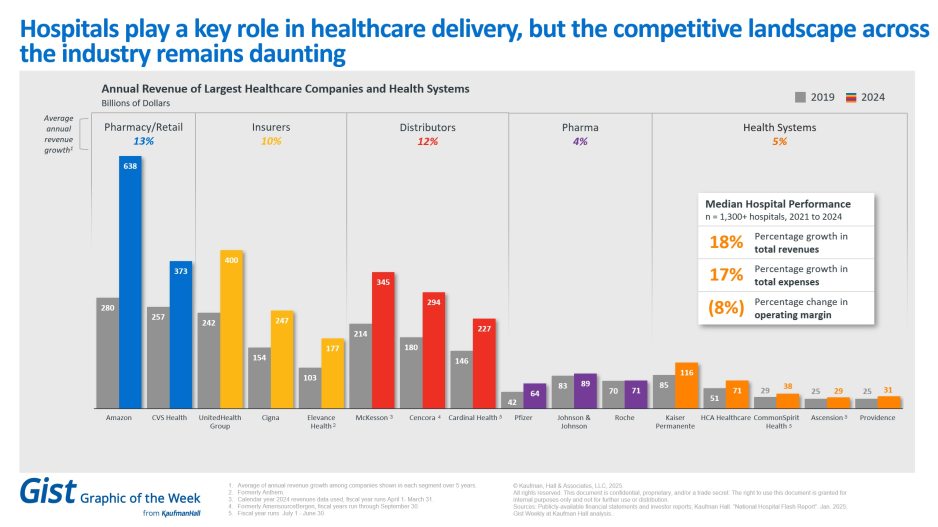
  • Kauffman Hall offers an infographic about the state of rural healthcare.
  • BioPharma Dive considers the following — “After decades of research, Vertex Pharmaceuticals has an approved pain medicine. Can one of the most powerful biotechs contend with a healthcare system that’s long favored opioids?” The FEHBlog hopes so.
  • Per Fierce Pharma,
    • “One of the most important launches for Novartis in recent years is off with a bang.
    • “Following a broad FDA approval for the adjuvant treatment of HR-positive, HER2-negative early breast cancer in September, Novartis’ Kisqali grew U.S. sales by 65% year over year—or nearly 25% sequentially—to $549 million in the fourth quarter of 2024.
    • “A Novartis presentation released on Friday shows that Kisqali’s new patient starts jumped from an average of around 1,500 per month before the approval to about 2,200 in both October and November. Data for December were not yet available.”
  • and
    • “Two years after AbbVie’s loss of market exclusivity for Humira, those “How it Started and How it’s Going” memes are looking better each quarter for the Illinois drugmaker.
    • “On Friday, when AbbVie reported its quarterly earnings, the pharma giant jacked up its 2027 projected sales of Humira follow-ons Skyrizi and Rinvoq to a combined $31 billion. It is a $4 billion increase on the company’s previous guidance for the immunology duo.
    • “Chief commercial officer Jeff Stewart explained that the projection increase has come because of growing “share capture.” Skyrizi now holds 40% of the total prescription share of the biologics psoriasis market, he said.
    • “Of the $4 billion adjustment to the 2027 projection, $2 billion has been added to Skyrizi’s estimate in inflammatory bowel disease (IBD) and $500 million has been added to Rinvoq’s in the same indication.  
    • “Across the board, we’re seeing tremendous performance, particularly in IBD,” Stewart explained.”

Tuesday Report

OPM Headquarters a/k/a the Theodore Roosevelt Building

From Washington, DC

  • The Washington Post reports,
    • “The White House’s Office of Personnel Management sent an email blast Tuesday to civilian government employees offering them an easy way to quit with pay through Sept. 30, the most sweeping effort yet by the new Trump administration to shrink the ranks of the federal workforce.
    • “The email instructed employees to reply to the message saying they want to resign if they would like to take the offer, which would provide the incentive for workers who accept by Feb. 6, said an Office of Personnel Management spokesperson. Not all employees will be eligible, according to the spokesperson, who said some of the exemptions will be up to agency heads. Additional carveouts exist for immigration officers, some people in national security-focused roles, the Postal Service and the armed forces, the spokesperson said.”
  • Here is a link to OPM’s FAQs on its “Fork in the Road” program.
  • Federal News Network adds,
    • “Federal employees have filed a lawsuit against the Trump administration’s Office of Personnel Management, after the agency created and began testing an email system meant to deliver mass communications directly to federal employees’ inboxes.
    • “The lawsuit from two anonymous federal employees in the executive branch alleges OPM violated the 2002 E-Government Act by not releasing details of how the communication system will manage federal employees’ personal information stored in the system.
    • “Kel McClanahan, executive director of the National Security Counselors law firm, filed the pro bono lawsuit on behalf of the plaintiffs, alleging that the email system poses security risks for federal employees’ personal information.”
  • and
    • “President Donald Trump’s pick to oversee much of the federal government’s real estate portfolio is looking to significantly downsize the amount of office space that agencies occupy.
    • “Michael Peters, commissioner of Public Buildings Service within the General Services Administration, said the agency is looking at cutting up to half its total real estate portfolio over the coming years.
    • “I’m just getting ramped up, but I think our initial review says that number could be up to a 50% reduction on our square footage across the portfolio. We’re not going to do that in six months, but we’re going to try to do this as rapidly as we can,” Peters said Tuesday.
    • “Peters said a “disproportionate amount of that space” would come from the Washington, D.C. metro area — and will include GSA moving out of its own 1800 F Street headquarters.”
  • The President issued an executive order today announcing, “the policy of the United States that it will not fund, sponsor, promote, assist, or support the so-called “transition” of a child [including teenagers under age 19] from one sex to another, and it will rigorously enforce all laws that prohibit or limit these destructive and life-altering procedures.”
    • With respect to the FEHB Program
      • “The Director of the Office of Personnel Management, as appropriate and consistent with applicable law, shall:
        • “(a)  include provisions in the Federal Employee Health Benefits (FEHB) and Postal Service Health Benefits (PSHB) programs call letter for the 2026 Plan Year specifying that eligible carriers will exclude coverage for pediatric transgender surgeries or hormone treatments; and
        • “(b)  negotiate to obtain appropriate corresponding reductions in FEHB and PSHB p
          premiums.”
  • STAT News informs us,
    • “The Center for Medicare and Medicaid Innovation is continuing plans to implement a pilot project testing new ways for state Medicaid programs to pay for multimillion-dollar cell and gene therapies.
    • “The pilot was started during the Biden administration, following an executive order from former President Biden that directed the center to come up with new ideas to lower drug prices. President Trump rescinded that executive order on Inauguration Day, which initially left the future of the pilot unclear. 
    • “President Trump’s Executive Order never rescinded the work that was underway by the CMS Innovation Center on drug models,” a Department of Health and Human Services spokesperson said in an email to STAT.
    • “The pilot addresses an existential issue for state Medicaid programs: how to pay for cell and gene therapies that are highly effective, but expensive, on fixed budgets. 
    • “Two drug manufacturers that make treatments for sickle cell disease are participating: Bluebird Bio, which makes Lyfgenia, and Vertex Pharmaceuticals, which makes Casgevy. Lyfgenia’s list price is $3.1 million, and Casgevy’s list price is $2.2 million.” 
  • The Wall Street Journal lets us know,
    • Novo Nordisk said the Food and Drug Administration approved the diabetes-drug Ozempic to be used to help kidney-disease patients.
    • “Ozempic, or semaglutide, can now be used to reduce the risk of worsening kidney disease or kidney failure in adults with type 2 diabetes and chronic kidney disease, the company said Tuesday.
    • “The approval makes Ozempic the most broadly indicated GLP-1 drug on the market, the Bagsvaerd, Denmark, company said. The FDA approved semaglutide for weight loss under the brand name Wegovy in 2021.”
  • BioPharma Dive adds,
    • “The Food and Drug Administration on Monday expanded use of AstraZeneca and Daiichi Sankyo’s Enhertu, allowing the drug to be given earlier and more broadly in people with an aggressive form of breast cancer.
    • Since 2022, Enhertu has been approved in the U.S. to treat advanced breast tumors expressing “low,” but still detectable, levels of the HER2 protein. With its new decision, the agency widened Enhertu’s availability to include treatment of tumors with “ultralow” HER2 expression. HER2 protein levels must be determined by an FDA-approved test, AstraZeneca and Daiichi said in a statement.”

From the public health and medical research front,

  • The Washington Post reports,
    • “A new strain of avian influenza has been identified for the first time in the United States, raising concerns that the virus is transforming in a way that could eventually cause wider outbreaks among humans.
    • “U.S. officials disclosed the discovery of the virulent H5N9 strain at a California duck farm in a report in recent days to the World Organization for Animal Health, which maintains a database of animal disease threats.
    • “That disclosure comes as the United States confronts a growing outbreak of another bird flu strain, H5N1, that is spreading in poultry farms across the nation and has infected dairy cows for the first time. Human cases have been sporadic and confined mostly to dairy workers exposed to sick animals.
    • “The H5N9 strain itself does not pose a grave threat to humans, officials and experts said.”
  • The American Hospital Association News tells us,
    • “Dementia cases in the U.S. are expected to double by 2060, reaching 1 million new cases per year, according to a study released Jan. 13 by NYU Langone Health. The study found that the risk of developing dementia any time after age 55 is 42%, more than double the risk reported in prior studies. The study authors attributed previous underestimates of dementia risk to unreliable documentation in health records and on death certificates, minimal surveillance of early-stage dementia cases and underreporting of cases by race.” 
  • The New York Times relates,
    • “Rates of sudden unexpected infant death in the United States increased by nearly 12 percent from 2020 to 2022, according to new research published on Monday in the journal JAMA Pediatrics.
    • “Though the study offered some good news — overall infant mortality rates dropped by 24 percent from 1999 to 2022 — it also raised questions about why more babies appear to be dying during sleep, and why rates of sleep-related death remain notably higher among Black, Native American and Pacific Islander babies than among white and Asian infants.
    • “Dr. Elizabeth Wolf, an associate professor of pediatrics with Children’s Hospital of Richmond at Virginia Commonwealth University who was among the new study’s authors, called the findings “pretty alarming.”
    • “The death of an infant from SIDS or SUID is unbelievably horrific,” Dr. Wolf continued, using two acronyms that describe sleep-related deaths among infants. “And we as a public health community need to do everything we can to try and reduce the risk factors as much as possible.”
  • Cardiovascular Business relates,
    • “Cannabis use is on the rise throughout the United States, but it is not as harmless as some people may believe. In fact, according to a new in-depth analysis in Nature Reviews Cardiology, regular cannabis use increases a person’s risk of multiple adverse cardiovascular outcomes, including myocardial infarction, arrhythmias and cardiomyopathy.[1]
    • “The study’s authors, a group of researchers with the Stanford Cardiovascular Institute, explored a wide variety of topics, including ongoing policy trends related to cannabis and the science behind why it appears to make such a significant impact on the cardiovascular system. The group also emphasized that it will be important to learn more about the long-term impact of cannabis use as time goes on. 
    • “Cannabis is emerging as a risk factor for adverse cardiovascular health,” wrote first author Mark Chandy, MD, PhD, who is now an assistant professor at Western University in Ontario, Canada, and colleagues. “With changing public perceptions and an overall decline in tobacco use, cannabis is poised to replace tobacco as a legal drug of choice. Previous restrictions are ending with the widespread decriminalization and legalization of cannabis, boosting use of the drug. A public perception that cannabis is harmless and therapeutically beneficial persists, despite mounting evidence from preclinical and clinical studies showing that cannabis use can harm the cardiovascular system and pose other serious health problems, not unlike tobacco.”
  • Per Beckers Hospital Review,
    • “Cedars-Sinai experts are advocating for patients to have access to GLP-1 medications such as semaglutide as a key component to caring for and preventing cardiovascular disease. 
    • “Physicians are now able to improve multiple “downstream” conditions, such as heart disease, by prescribing one medication “upstream,” according to a Jan. 10 news release from Los Angeles-based Cedars Sinai. 
    • “Amanda Velazquez, MD, director of obesity medicine at the health system, said in the release that semaglutide has enabled patients with high blood pressure to reduce their antihypertensive medications.
    • “Martha Gulati, MD, director of preventive cardiology and the Anita Dann Friedman Chair in Women’s Cardiovascular Medicine and Research at Cedars-Sinai, said although semaglutide has been associated with blood pressure and cholesterol level improvements, it does not replace statins. 
    • ‘Dr. Gulati also said the effectiveness of the drug class raises the important question: “Do we want patients to get CVD and only then treat them? Or should we treat them earlier so we can prevent CVD events?”
  • The Wall Street Journal discusses “The Scientific Fight Over Whether Aging Is a Disease.”

From the U.S. healthcare business front,

  • The Wall Street Journal reports,
    • “Drugmakers raised the list prices of more than 800 prescription drugs for blood pressure, cancer and other conditions by a median 4% at the start of this year.
    • “The modest size of the annual increases could help companies avoid criticism of gouging from President Trump while seeking his administration’s support for such priorities as taking aim at the rebates given to middlemen and altering a federal program providing discounts to certain hospitals. Last year’s median price increase was 4.5%.”
  • Fierce Healthcare points out,
    • “The National Community Pharmacists Association (NPCA) is warning the feds that independent pharmacists are likely to face significant financial hardship due to Medicare drug price negotiations.
    • “In comments submitted on the latest Medicare advance notice, the organization says it conducted a survey of 8,000 pharmacy owners and managers about the drug price negotiation program and found that 93.2% have either decided not to stock drugs under negotiation or are considering not stocking these products.
    • “The survey found that 32.8% of independent pharmacists have already made the decision to not stock one or more of the 10 drugs in the first round of negotiations. In addition, 60.4% of those surveyed said they are considering similar steps.
    • “The NCPA said this is because they’re concerned about “financial losses” through the program.
    • “That will be devastating to the program,” said NCPA CEO B. Douglas Hoey in a press release. “Patients who need these prescriptions will be unable to get them, because their pharmacies cannot participate in the program.'”
  • Per Beckers Hospital Review,
    • “In less than a year, Mark Cuban’s Cost Plus Marketplace has expanded its portfolio to more than 6,000 medicines. 
    • ‘Mark Cuban Cost Plus Drug Co. launched the Marketplace in February 2024, which at the time had more than 4,000 medicines in short supply to directly sell to healthcare facilities. 
    • ‘Since then, customers have realized savings between 40% and 60% compared to traditional wholesalers, according to Chief Commercial Officer Alan Bowe. 
    • “The Marketplace now sells to thousands of hospitals, clinics, ambulatory surgery centers, long-term care sites, dialysis centers and retail pharmacies in all 50 states, Mr. Bowe told Becker’s Jan. 23.”
  • Beckers also brings us up to date on current drug shortages.
  • Fierce Healthcare lets us know,
    • CVS Health is rolling out a new customer app that aims to make it simpler and more convenient for users to manage health benefits, pharmacy benefits and prescriptions.
    • Within the application, users can monitor prescriptions for themselves as well as family members across CVS’ pharmacies, Caremark mail orders and CVS Specialty. This includes “full transparency” into the status of a prescription order and the cost, CVS said.
    • In addition, users can schedule key immunizations for their entire family, and access spending and benefits details from both Aetna and Caremark through the app.
  • Beckers explains the new normal in hospital capacity and announces
    • “UNC Health and Duke University Health System, based in Chapel Hill, N.C., and Durham, N.C., respectively, are uniting to build a comprehensive healthcare campus, featuring the state’s first freestanding children’s hospital.
    • “The two institutions filed legal documents Jan. 28 with the state to establish a nonprofit entity, North Carolina Children’s, according to a joint news release. 
    • NC Children’s will feature a 500-bed children’s hospital on a 100-plus-acre campus at a yet-to-be-identified site in the Research Triangle region.
    • “The new campus will also include a children’s behavioral health center, outpatient clinics, research and teaching facilities, hospitality houses (e.g., Ronald McDonald House) and mixed-use infrastructure to accommodate hotels, restaurants and retail stores, according to the release.”

Monday Report

Photo by Sven Read on Unsplash

From Washington, DC,

  • Nextgov/FCW reports,
    • “Billionaire Elon Musk paid a visit to the Office of Personnel Management’s building on Friday, people familiar have confirmed to Nextgov/FCW.” * * *
    • “Amanda Scales, a former employee of Musk’s artificial intelligence company xAI, is OPM’s new chief of staff.” 
  • Fedscoop informs us,
    • “The Trump administration is giving agency leaders two weeks to submit plans for how they intend to comply with the presidential directive to return all eligible employees to full-time, in-person work, the latest salvo in the restructuring of the federal workforce.  
    • “In a memo sent to agency heads Monday, the acting directors of the Office of Personnel Management and the Office of Management and Budget set a Feb. 7 deadline for return-to-work implementation plans, which will be reviewed and approved by OPM and OMB.”
  • The Senate confirmed Scott Bessent to be Secretary of the Treasury today by a 68-29 vote. The Secretary of the Treasury along with the Secretary of Health and Human Services and the Secretary of Labor, are Affordable Care Act regulators.
  • Roll Call adds,
    • “Bessent, 62, will become the nation’s first openly gay Treasury secretary and the highest-ranking LGBTQ government official in the country’s history.” * * *
    • “He brings a wealth of private-sector experience in the economy and markets to his new role, as well as a concern for the needs of working Americans,” Senate Majority Leader John Thune, R-S.D., said on the floor Monday before the vote.
    • “Senate Finance Chairman Michael D. Crapo, R-Idaho, during the confirmation process similarly praised Bessent’s character, demeanor and experience, while defending him from Democratic attacks about the nominee’s handling of his taxes.”
  • Roll Call also tells us,
    • “The Senate keeps processing President Donald Trump’s nominees this week, but much of the congressional attention will be on South Florida, where House Republicans are gathering for their annual issues and strategy conference.
    • “The conference is taking place at Trump National Doral in Miami, the president’s own private golf club, and Trump is expected to address the assembled lawmakers Monday evening.
    • “Punchbowl News reported over the weekend that Vice President JD Vance is expected to join the retreat as a headliner on Tuesday.
    • “Much of the discussion will focus on trying to plot the way forward for a filibuster-proof budget reconciliation package — especially to try to implement Trump’s immigration and tax policy agenda.”
  • The acting HHS Secretary Dorothy Fink announced,
    • “For nearly 50 years, the Hyde Amendment has protected taxpayer funds administered by the Department from paying for elective abortion. Pursuant to the President’s Executive Order of Jan. 24 (Enforcing the Hyde Amendment) and guidance from Office of Management and Budget, the Department will reevaluate all programs, regulations, and guidance to ensure Federal taxpayer dollars are not being used to pay for or promote elective abortion, consistent with the Hyde Amendment. This review will be conducted consistent with guidance issued by the Office of Management and Budget.”
  • Per BioPharma Dive,
    • “The Food and Drug Administration has approved monthly maintenance dosing of Eisai and Biogen’s Alzheimer’s disease drug Leqembi.
    • “After taking Leqembi every two weeks for 18 months, patients can now transition to a monthly dose that the companies say is supported by modeling of data from Phase 2 and Phase 3 testing. Leqembi works by removing toxic aggregates of a protein from the brain.”

From the public health and medical research front,

  • STAT News reports
    • “In 2022, about 40% of deaths in the U.S. were caused by cardiovascular heart disease, including heart disease and stroke, which kill more people in the U.S. than the next two biggest killers — all forms of cancer and accidental deaths — combined. That’s according to an annual update from the American Heart Association on heart disease and stroke statistics, published today in Circulation
    • “Cardiovascular disease is “common, catastrophic, and costly,” an accompanying editorial notes. Despite its dominance, the overall number of deaths is leveling out after the pandemic shot numbers upwards. Yet contributing risk factors like high blood pressure and obesity continue to rise. 
    • Here are some more interesting findings:
      • The percentage of high schoolers who are physically active for over an hour every day decreased from almost 29% to just under 24% between 2011 to 2021.
      • Nearly 47% of all Americans have high blood pressure. In 2022, the prevalence was worst in Mississippi at about 40% and best in Colorado, at just under 25%. 
      • The rate of gestational diabetes in the U.S. increased 38% from 2016 to 2021, to 8.3% of pregnancies.
  • and
    • “Almost a century after people living in certain neighborhoods around Seattle and Tacoma, Washington were systemically denied financial services — a discriminatory, racist practice known as redlining — young cancer patients in those areas are dying at higher rates than those who live in unaffected areas. 
    • “An association between historic redlining and survival of adult-onset cancers has already been shown, but the data on adolescent and young-adult cancers come from a study published today in CANCER. Researchers analyzed data from 2000 to 2019 in those Washington cities on more than 4,300 patients aged 40 or younger, along with homeowners’ loan data and recent census tracts. They found that five years and 10 years after diagnosis, fewer people in previously redlined neighborhoods were still alive than those unaffected. (That’s about 85% vs. 90% five years out and 81% vs. 88% after ten years.)
    • “The disparity in deaths remained even after adjusting for factors like poverty. It emphasizes the importance of contextualizing today’s health disparities, the authors write, as well as the impact discrimination can have generations down the line.”
  • The New York Times suggests “‘A Dangerous Virus’: Bird Flu Enters a New Phase. A pandemic is not inevitable, scientists say. But the outbreak has passed worrisome milestones in recent weeks, including cattle that may have been reinfected.”
  • KAKE News from Wichita, Kansas, reports,
    • “State public health officials are calling an ongoing tuberculosis outbreak in northeast Kansas “unprecedented.” 
    • “The Kansas Department of Health and Environment [KDHE] reports 66 active cases of tuberculosis and 79 infections in the Kansas City Metro area in 2024. As of this month, the number of active cases rose to 67.
    • “In a Senate Committee on Public Health and Welfare meeting on Tuesday, Deputy Secretary of KDHE Ashley Goss said the department is working collaboratively with the Centers for Disease Control and Prevention.
    • “Some of you are aware we have mobilized staff and resources addressing an unprecedented tuberculosis outbreak in one of our counties,” Goss said. “We are working collaboratively with the CDC on that. The CDC remains on the ground with us to support.” * * *
    • “According to the KDHE website, there are currently 60 active cases of TB in Wyandotte County and seven in Johnson County. 
    • “Despite this, the KDHE says the cases are “very low risk” to the general public, including surrounding counties. 
    • “We are trending in the right direction right now, more to come on that,” Goss said in the meeting. “Hopefully we can get it wound down quickly.” 
  • The American Medical Association lets us know what doctors wish their patients knew about contagious norovirus.
  • Per Healio
    • “The vast majority of people in a study with long COVID had experienced multiple SARS-CoV-2 infections over the course of a 4-year period, researchers reported.
    • “While it is possible that the causes of long COVID could be many and variable depending on the patient population studied, with this cohort the evidence is clear that by having COVID numerous times, patients became more at-risk for developing long COVID,” Sean Clouston, PhD, professor in Stony Brook University’s Renaissance School of Medicine, said in a press release.”
  • and
    • “An investigational blood-based test identified nearly 80% of individuals who had colorectal cancer, according to results of a large prospective trial presented at ASCO Gastrointestinal Cancers Symposium. 
    • “The test also had a specificity greater than 90% for advanced colorectal neoplasia (ACN) and negative-predictive value for ACN.
    • “This new blood test may provide a convenient, effective option for colorectal cancer screening in the intended-use population, and perhaps help us boost adherence to screening,” Aasma Shaukat, MD, MPH, director of outcomes research and Robert M. and Mary H. Glickman professor of medicine at NYU Grossman School of Medicine, said during a press briefing.
  • Per BioPharma Dive,
    • “Treatment with an experimental drug from Akero Therapeutics substantially reversed liver damage in a mid-stage study of people with cirrhosis due to metabolic dysfunction-associated steatohepatitis, a common disease that was formerly known as NASH.
    • Announced Monday by Akero, the study results exceeded investor expectations, more than doubling the value of shares in the biotechnology company. They also helped to push up the stock of 89bio, a competitor developing a similar type of drug to Akero’s.
    • “While the Food and Drug Administration last year approved the first treatment for MASH, its use is limited to people whose livers aren’t yet cirrhotic. According to Akero, its drug is the first compound to show a significant reversal of cirrhosis due to MASH in clinical testing.”
  • The Wall Street Journal reports,
    • “Late-stage trial data for Roche’s drug against muscle-wasting Elevidys showed positive results after two years of treatment for male patients aged 4 or older with Duchenne muscular dystrophy.
    • “The data read-out reduced difficulties in standing, walking and running that were statistically significant, which increased between one year and two years after treatment, the company said. The safety profile was in line with the drug’s profile and no new safety signals were identified, it said.
    • “The treatment is on market for people living with Duchenne aged four years old and over regardless of their ambulatory status in the U.S., United Arab Emirates, Qatar, Kuwait, Bahrain and Oman. It is approved for the treatment of ambulatory individuals aged four through seven years in Brazil and Israel.
    • “Duchenne muscular dystrophy is a genetic disorder characterized by the progressive loss of muscle.”
  • STAT News relates,
    • “Right now, patients with obesity and cirrhosis have few treatments for their progressive liver disease, but a new study offers one available option: bariatric surgery. Weight loss operations significantly cut the long-term risk of developing serious liver complications when compared to standard nonsurgical therapy.
    • “The 62 patients with obesity and cirrhosis in the clinical trial who underwent bariatric surgery — either gastric bypass or gastric sleeve procedures — later had a 72% lower risk of developing more serious liver disease compared to the 106 patients who didn’t have surgery. After 15 years, 20.9% in the surgical group but 46.4% in the nonsurgical group developed one of the major complications of liver disease, including liver cancer and death. 
    • “We showed, regardless of the stage of disease, if we help people to lose weight, we can improve their outcomes. That can provide hope for patients and medical providers,” said Ali Aminian, director of the Bariatric and Metabolic Institute at the Cleveland Clinic and co-author of the study published Monday in Nature Medicine.  “We can change the trajectory of the disease.”
  • Per Beckers Hospital Review,
    • “An Alabama woman who received a gene-edited pig kidney transplant at NYU Langone in November is recovering well more than 60 days after the procedure. 
    • “On Nov. 25, a team of clinicians at the New York City-based health system successfully transplanted UKidney, a 10-gene-edited pig kidney into Towana Looney, 53. Ms. Looney was on a transplant waiting list for nearly eight years before physicians determined the probability of a safe human transplant was slim. 
    • “Now, Ms. Looney is the longest-living recipient of the four Americans who have received a gene-edited pig organ, having surpassed the two-month mark. 
    • “If you saw her on the street, you would have no idea that she’s the only person in the world walking around with a pig organ inside them that’s functioning,” Robert Montgomery, MD, PhD, director of NYU Langone’s Transplant Institute, told the Associated Press in a Jan. 25 report at NBC News. 
    • “Unlike previous xenotransplant patients, Ms. Looney was in better overall health at the time of her transplant, leaving experts optimistic about the potential for broader success in the emerging field of xenotransplantation. Earlier cases involved individuals who were critically ill when they underwent the experimental procedures.”

From the U.S. healthcare business front,

  • Beckers Hospital CFO Report tells us,
    • “Cleveland Clinic served the largest number of patients in its history in 2024 with more than 15 million patient encounters worldwide, generating nearly $16 billion in revenue and ending the year with a 1.7% operating margin.  
    • “The year-end findings come from the annual State of the Clinic address made by CEO and President Tom Mihaljevic, M.D., on Jan. 27. 
    • “Years have passed since the COVID-19 pandemic and healthcare has not recovered. Today, about 40% of U.S. hospitals continue to lose money,” Dr. Mihaljevic said. “In the past, we could predict Cleveland Clinic’s financial health based on our productivity and expense management, but even that has changed.”
    • ‘Dr. Mihaljevic noted that despite the handling of more than 15 million patient encounters, the health system’s 1.7% operating margin fell short of its anticipated 2.7%. He attributed this shortfall to new financial pressures, including unexpected increase in charity care totaling $370 million, surging cost of malpractice insurance and rising costs of drugs due to smaller discounts on medications.”
  • Per Healthcare Dive,
    • “HCA Healthcare reported fourth quarter earnings on Friday that narrowly beat analysts’ expectations following back-to-back hurricanes this fall.
    • “The Nashville-based provider posted $18.3 billion in revenue for quarter, up 6% year over year. However, profit dipped compared to the same period last year, falling from $1.6 billion to $1.4 billion.
    • “Still, several analysts noted HCA’s financial guidance for 2025 is slightly more conservative than expected, raising concerns that Trump administration funding cuts to Medicaid and the Affordable Care Act could impact hospitals’ bottom lines.”
  • Modern Healthcare reports,
    • “Shares of Walgreens Boots Alliance tumbled today following a CNBC report that the Deerfield-based pharmacy chain was unlikely to sell itself to a private-equity firm.
    • “CNBC’s David Faber said on air this morning that sources say the possible deal in which Walgreens would sell itself to New York-based Sycamore Partners is “mostly dead.”
  • Fierce Pharma identifies the ten most anticipated drug launches of 2025.
  • McKinsey & Co. point out “Most top pharma companies derive more than 60 percent of their revenue from therapies for diseases that affect women uniquely, differently, or disproportionately, putting them in a prime position to close the sex- and gender-based health gap.”

Friday Report

Photo by JOSHUA COLEMAN on Unsplash

From Washington, DC

  • Govexec tells us,
    • “A 50-page document, compiled by GOP members of the House Budget Committee and first reported by Politico, outlines a list of provisions that could be included in the [budget reconciliation] package, which would not be subject to the Senate’s 60-vote filibuster threshold, includes a litany of proposals increasing federal workers’ contribution to their retirement and health care benefits, in exchange for worse payouts.” * * *
    • “On health care benefits, the House GOP proposes replacing the current system, by which the federal government pays for a percentage of health care premiums through the Federal Employees Health Benefits Program and the new Postal Service Health Benefits program, with a “voucher model.”
    • “Under this option, the FEHB and PSHB programs would be reformed by replacing the current premium-sharing structure with a voucher, which would not be subject to income and payroll taxes,” the document states.
    • “And the document calls for enactment of a bill introduced last year to require the Office of Personnel Management to audit FEHBP for improper enrollments. But OPM has said that under the current “decentralized” nature of the program, the agency does not have the capabilities to conduct such an audit.
    • “Prior to the presidential transition, then-President Biden’s OPM sent Congress a legislative proposal, drawn on lessons learned in launching the PSHB program this year, to revamp how it administers FEHBP so that it can conduct better oversight.”
    • FEHBlog observation — Better oversight starts with giving FEHBP and FEDVIP carriers the HIPAA 820 enrollment roster transactions that would allow them to reconcile individual enrollees with premiums paid.
  • MedPage reports,
    • “Legislation providing more scrutiny for pharmacy benefit managers (PBMs) that failed to make it through Congress in the waning days of 2024 seems to still be viable for passage this year, according to a House staff member.
    • “I think there’s plenty of political will there; that’s what I’ve seen from members,” Preston Bell, a professional staff member on the House Ways & Means Committee, said Thursday at an event sponsored by the American Enterprise Institute (AEI) on the future of the Medicare prescription drug benefit. “I do think there are disparate ideas across Congress as to how much intervention within the PBM market is appropriate. What you’ve seen come through Congress in the [massive continuing resolution] package [released and rejected in December 2024] is probably the litmus test, or maximum, of what is feasible for that type of reform.”
  • Healthcare Dive informs us,
    • “Sara Brenner, a Food and Drug Administration official in the agency’s medical device division, has been named the FDA’s acting commissioner, according to an update made online to the regulator’s leadership biography page. * * *
    • “Brenner will lead the agency until a permanent commissioner is installed. President Donald Trump has nominated Johns Hopkins surgeon Marty Makary as FDA commissioner, but he has not yet been confirmed by the Senate. Confirmation hearings for Robert F. Kennedy Jr., who, as Trump’s pick to run the Department of Health and Human Services, would be Makary’s boss, are scheduled for Jan. 29 and Jan. 30.
    • “Brenner worked in the FDA’s medical devices branch, most recently as chief medical officer for in vitro diagnostics and associate director for medical affairs. A preventive medicine physician, Brenner has been at the agency since 2019, according to her LinkedIn page, and helped coordinate diagnostic standards and policy as part of HHS’ COVID-19 response. 
    • “Brenner was previously a senior policy advisor at the White House Office of Science and Technology Policy under the first Trump administration.”
  • The Hill lets us know,
    • “The Food and Drug Administration (FDA) has withdrawn a rule that would have banned menthol cigarettes and flavored cigars, putting a formal end to a policy that had been indefinitely delayed under the Biden administration. 
    • “A regulatory filing showed the rule had been “withdrawn” on Jan. 21, President Trump’s second day in office. The move is a significant blow to public health groups who said banning menthol had the potential to save hundreds of thousands of lives, particularly among Black smokers.”
  • The IRS released its 2024 tax return edition of Publication 969 which concerns health savings accounts and other tax favored health plans.

From the judicial front,

  • Bloomberg Law reports,
    • “A former Johnson & Johnson executive’s allegations that the drug company overpaid for prescription drug benefits are “speculative and hypothetical,” and injuries she did suffer cannot be resolved by the court, a New Jersey federal judge ruled.
    • “The decision Friday dismissed most of Ann Lewandowski’s high-profile class action that argued the pharmaceutical giant violated its fiduciary duties under the Employee Retirement Income Security Act by not negotiating better drug prices with its pharmacy benefit manager, Express Scripts, or switching to a different PBM. 
    • “The lawsuit is one of several recent [actually it was the first] attempts to hold employers responsible through ERISA for monitoring and reducing health-care costs. The claims against J&J reveal that not even large drug companies are immune to complaints over high drug prices.
    • “Judge Zahid N. Quraishi in the US District Court for the District of New Jersey concluded that Lewandowski lacked standing to sue in dismissing two of her three claims. Lewandowski’s argument that J&J’s plan forced her to pay higher premiums and cost her higher wages was speculative “at best,” he said.
    • “And while Lewandowski did show that her copays for some drugs exceeded prices offered by other health plans, the court could not fulfill a key requirement for standing by making her whole, the judge said. Any amount refunded to her would have to go through the health plan for money it spent after she hit her out-of-pocket limit, Quraishi said.
    • “In straightforward terms, a favorable decision would not be able to compensate Plaintiff for the money she already paid,” he wrote.
    • “The judge did find that Lewandowski has standing to pursue her claim against J&J for not providing more information she requested around the plan’s drug prices, including the contract with Express Scripts, which was not a party to the suit. Quraishi invited Lewandowski to amend her complaint.”
  • The Wall Street Journal points out,
    • “Enforcement of the Corporate Transparency Act, which requires millions of companies to disclose their true ownership, remains on hold despite a U.S. Supreme Court ruling in favor of the Treasury Department. 
    • “The Supreme Court on Thursday overturned a lower court order that was blocking enforcement of the CTA. However, a separate national injunction issued earlier this month by a federal judge apparently remains in place and continues to block the law’s implementation.
    • “The Treasury’s Financial Crimes Enforcement Network, which is overseeing the law’s implementation, issued an alert Friday confirming compliance with the CTA isn’t mandatory while the injunction remains in force.” 
  • Fierce Healthcare relates,
    • “The Centers for Medicare & Medicaid Services has changed course on plans to appeal a court ruling that determined it must recalculate UnitedHealthcare’s Medicare Advantage star ratings.
    • “The agency submitted a filing in Texas district court earlier this week saying it intended to file an appeal to the Fifth Circuit Court. In new court documents filed Friday, CMS has withdrawn its notice of appeal.”

From the public health and medical research front,

  • The Center for Disease Control and Prevention announced today,
    • Seasonal influenza activity remains elevated across the country and is increasing in most areas. COVID-19 activity is elevated in many areas of the country. RSV activity has peaked in many areas of the country.
    • COVID-19
      • COVID-19 activity is elevated in many areas of the country, though wastewater levels are moderate, emergency department visits are at low levels, and laboratory percent positivity has declined in the last week. Emergency department visits and hospitalizations are highest in older adults and emergency department visits are also elevated in young children.
      • There is still time to benefit from getting your recommended immunizations to reduce your risk of illness this season, especially severe illness and hospitalization.
      • CDC expects the 2024-2025 COVID-19 vaccine to work well for currently circulating variants. There are many effective tools to prevent spreading COVID-19 or becoming seriously ill.
    • Influenza
      • Seasonal influenza activity remains elevated across the country and is increasing in many areas.
    • RSV
      • RSV activity has peaked in many areas of the country. Emergency department visits and hospitalizations are highest in children and hospitalizations are elevated among older adults in some areas.
    • Vaccination
      • Vaccination coverage with influenza and COVID-19 vaccines are low among U.S. adults and children. COVID-19 vaccine coverage in older adults has increased compared with the 2023-2024 season. Vaccination coverage with RSV vaccines remains low among U.S. adults. Many children and adults lack protection from respiratory virus infections provided by vaccines.
  • BioPharma Dive relates,
    • “An experimental obesity drug from Novo Nordisk helped people lose an average of up to 22% of their body weight over 36 weeks in an early-stage trial, results that, if reproduced in further testing, could rival medicines Eli Lilly has on the market and in development.  
    • ‘Novo said Friday it is planning “further clinical development” of the drug, called amycretin, but didn’t specify the design of additional trials or when they might begin. Amycretin affects the same two targets as a Novo drug called cagrisema that recently missed expectations in a Phase 3 trial but does so in a single molecule rather than a two-drug combination.”
       
  • Per Healio,
    • “Integrating lifestyle care into low back pain management resulted in greater improvements in disability, weight loss and physical quality of life vs. just guideline-recommended care, a randomized study showed.
    • “The findings, published in JAMA Network Open, “could influence future updates to back pain guidelines,” Emma Mudd, PhD, senior research officer at the University of Sydney in Australia and the analysis’ lead author, said in a press release. “Patients valued the holistic support, and the outcomes speak for themselves.”
  • Earlier this week, the CVS Health Foundation announced $4 million in grants related to its health aging initiative.

From the U.S. healthcare business front,

  • Beckers Hospital Review notes,
    • “Mayo Clinic’s chief executive said at the World Economic Forum’s annual meeting in Davos, Switzerland, that he is fully committed to the adoption of artificial intelligence in healthcare, the Rochester (Minn.) Post Bulletin reported.
    • “I personally would not want to have my healthcare, in some specialties, without AI because I firmly believe I will get a better outcome,” said Gianrico Farrugia, MD, president and CEO of the Rochester-based health system, according to the newspaper’s coverage of the event Jan. 22.
    • “Mayo Clinic has been at the forefront of developing and deploying healthcare AI, with 320 algorithms in use, the news outlet reported.”
  • Beckers Payer Issues adds,
    • Insurers do not have to own every part of the healthcare system to improve connection, according to Jim Boyman, vice president of GuideWell Health. 
    • GuideWell is the parent company of Florida Blue. In December, the company launched an initiative to manage cancer care for Florida Blue ACA members. Through a partnership with Cerritos, Calif.-based The Oncology Institute and primary care organization Sanitas, Florida Blue members diagnosed with cancer will be connected with an oncology team to manage a personalized treatment plan. 
    • “Everyone talks about how fragmented healthcare is,” Mr. Boyman told Becker’s. “This shows how you don’t necessarily have to own all parts of the system to reduce that fragmentation. You can use technology and relationships to collaborate and overcome fragmentation through programs like this.” 
  • Fierce BioTech reports,
    • “Neomorph is building out its supply of Big Pharma partnerships, this time stamping down an option-to-license pact with AbbVie that centers around the biotech’s molecular glue platform.
    • “AbbVie will pay the San Diego biotech an undisclosed upfront sum and offer up to $1.64 billion in option fees and milestones, plus royalties, according to a Jan. 23 release.
    • “The new partners will look to develop molecular glue degraders—a novel class of small molecules designed to selectively degrade proteins that drive disease—for multiple targets across oncology and immunology.
    • “Protein degraders represent a groundbreaking advancement in the field of drug discovery and at AbbVie we are committed to advancing this technology forward,” Steven Elmore, Ph.D., AbbVie’s vice president of small molecule therapeutics and platform technologies, said in the release. “We are excited to collaborate with Neomorph to develop novel molecular glue degraders that could pave the way for new, effective therapies in the treatment of immune disorders and cancer.”
    • “Neomorph emerged in 2020 and quickly garnered a neuro deal worth up to $1.45 billion in biobucks with Biogen, plus a partnership with Novo Nordisk that offers up to $1.46 billion.” 
  • Per Fierce Healthcare,
    • “Self-funded employer health plan Centivo is announcing Centivo Care, a tech-forward virtual primary care platform integrated with behavioral health specialists.
    • “Centivo’s virtual offerings, which will be available in states where the company operates, are increasingly desired by its clients’ members, said Wayne Jenkins, M.D., chief medical officer for Centivo and president of Centivo Care, in an interview with Fierce Healthcare.
    • “He said at first, just 5% to 10% of people preferred the virtual option, but now it’s closer to 20%. For some employers, they see an even higher adoption rate. One of its clients, JetBlue Airlines, sees high utilization since their employees travel so often and can more easily text with a physician or schedule a video call than attend an appointment in person.
    • “Centivo Care is one of few primary care practices to earn a Patient-Centered Medical Home accreditation from the National Committee for Quality Assurance, the company said in a news release. These virtual appointments are free, and members receive personalized care plans, after-visit summaries, preventive care reminders and more.”
  • Per Beckers Hospital Review,
    • Telehealth utilization grew across most U.S. regions in October 2024, with the Midwest as the sole exception, according to FAIR Health’s monthly telehealth regional tracker.
    • Nationally, telehealth claim lines increased from 4.80% of medical claim lines in September to 4.89% in October, marking a 2% rise. Regional increases varied, with the West seeing the largest growth at 2.8%, while the Midwest experienced a 3.7% decrease.
    • Here are four things to know about telehealth utilization, according to FAIR Health’s tracker:
      • Psychiatric nurses moved up to the second-most common telehealth specialty nationally in October, overtaking family practice, which fell to fourth place.
      • Mental health conditions remained the leading telehealth diagnostic category nationally and regionally. 
      • The tracker revealed modest differences in telehealth costs compared to office visits. For instance, the median cost for a nutritional therapy reassessment was typically $1 to $2 lower via telehealth than in-office, except in the West, where telehealth costs were slightly higher.
      • Telehealth usage was highest among patients aged 31–40, followed by those aged 19–30, a pattern consistent across all regions.

Tuesday Report

From Washington, DC,

  • The Hill reports, “Senate Republicans hit their full 53-member majority on Tuesday as Sens. John Husted (R-Ohio) and Ashley Moody (R-Fla.) were sworn into office by Vice President Vance.” 
  • Fierce Healthcare reviews how yesterday’s executive orders and other actions impact healthcare.
  • The U.S. Preventive Services Task Force highlights its most recent final recommendations.
  • Fierce Pharma tells us,
    • “Already on its way to becoming a blockbuster drug, Johnson & Johnson’s Spravato has received another potential boost as the FDA has blessed the nasal spray to be used as a monotherapy for major depressive disorder (MDD).
    • “Spravato was originally approved in 2019 to be used along with an oral antidepressant for patients who have not seen results with other antidepressant medications.
    • “In 2020, the U.S. regulator tacked on another nod for Spravato to be used by patients with MDD who experience acute suicidal thoughts or behavior.
    • “The standalone endorsement allows patients to use Spravato without taking oral antidepressants. Spravato can work as quickly as 24 hours, Bill Martin, Ph.D., who heads up J&J neuroscience, said in a release.
    • “Treatment-resistant depression can be very complicated, especially for patients who do not respond to oral antidepressants or cannot tolerate them,” Martin added. “For too long, healthcare providers have had few options to offer patients much-needed symptom improvement.”
  • and
    • “After hitting a regulatory roadblock in 2022, Sanofi’s consumer healthcare business Opella has secured the FDA’s blessing to move forward with its ambition to convert its erectile dysfunction med Cialis into an over-the-counter product.
    • “The agency previously placed a clinical hold on the company’s planned actual use trial (AUT) for the conversion, citing problems with protocol design. AUTs are a key step in the FDA’s process for switching drugs from prescription to OTC products and are meant to prove that consumers can adequately diagnose and treat themselves without the help of a healthcare provider.
    • “Now, after a review, the FDA’s green light marks a “significant step forward in Opella’s data-driven efforts to switch a PDE-5 inhibitor like Cialis,” Opella’s chief science officer Josephina Fubera, Ph.D., said in a company release.
    • “We look forward to continuing our work to bring safe and expanded access to the many consumers who will benefit from nonprescription Cialis,” Fubera added.”

From the public health and medical research front,

  • The University of Minnesota’s CIDRAP lets us know today,
    • “Over the past few days, the US Department of Agriculture (USDA) confirmed more H5N1 avian flu outbreaks in poultry from eight states, including the first at a commercial farm in Georgia.
    • “Meanwhile, the Food and Drug Administration (FDA) and the USDA on January 17 announced new steps to step up the safety of raw pet food, following recent reports of H5N1 infections in household cats.”
  • and
    • “A new real-world study published in PLOS Medicine that looked at outcomes of 703,647 patients with COVID-19 seen at 34 US clinics in 2022 and 2023 found that Paxlovid use was correlated with lower rates of hospitalization and death, particularly among older patients. 
    • “Both vaccinated and unvaccinated patients benefitted from Paxlovid when administered within 5 days of COVID-19 infection confirmation, the authors said. But researchers observed lower rates of use among Black and Hispanic patients than among White patients. 
    • “The study was based on the National COVID Cohort Collaborative’s (N3C) electronic health record database. While clinical trials showed as high as an 88.9% reduction in the risk of COVID-related hospitalization or death among those who received Paxlovid compared to those who received placebos, limited real-world data has been gathered in the post-Omicron era on Paxlovid efficacy.”
  • Consumer Reports, writing in the Washington Post, discusses “What to look for — and what to avoid — in an energy bar. Many are little more than candy bars and don’t deliver the health benefits you might expect.”

From the U.S. healthcare business front,

  • RAND opines,
    • “The typical cost of developing new medications may not be as high as generally believed, with a few ultra-costly medications skewing public discussions about the cost of pharmaceutical research and development, according to a new RAND study.
    • “Using a novel method to assess spending on research and development for 38 drugs that were recently approved by the U.S. Food and Drug Administration, researchers found that the mean, or average, cost of developing a new drug was much higher than the mid-point (median) cost of development.
    • “Researchers estimated a median direct research and development cost of $150 million compared to a mean of $369 million.
    • “Costs were higher after adjusting for earnings drug developers could have made if they had invested these amounts in other activities and for drugs that never made it to the market. With these adjustments, researchers estimated a median research and development cost of $708 million across the 38 drugs examined, with the average cost rising to $1.3 billion driven by a small number of high-cost outliers.
    • “The average cost of developing a new drug was 26 percent lower when excluding just two drugs, dropping from $1.3 billion to $950 million. The findings are published in the journal JAMA Network Open.”
  • Employee Benefit News explains why “costly gene therapy is top of mind for benefits administrators.” Check it out.
  • Per Fierce Healthcare,
    • “Healthcare technology company Innovaccer announced its acquisition of Humbi AI, an actuarial software, services and analytics company used by providers, payers and life sciences companies.
    • “Innovaccer’s cloud powers a slew of healthcare AI features like an AI-assisted care management system, contract management, ambient documentation, pre-visit summary and AI-suggested differential diagnoses.
    • “Financial details of the deal were not disclosed.
    • “The Humbi AI acquisition will help build out Innovaccer’s data analytics capabilities. The Nashville-based company combines healthcare data analytics and actuarial consulting to help healthcare organizations improve value-based contracts, manage risk and design benefits.
    • “Humbi AI’s actuarial capabilities will be an integral component of Innovaccer’s cloud platform, and the company plans to launch its own actuarial copilot, executives said in a press release.”
  • Modern Healthcare adds,
    • “Digital health companies at last week’s J.P. Morgan Healthcare Conference weren’t just looking for investors. They were looking for dance partners.
    • “The desire of digital health companies to scale through mergers and acquisitions or partnerships was one of the most buzzed-about topics at the conference. Marissa Moore, principal at venture capital firm Omers Ventures, said potential buyers and sellers were trying to size up prospects during the event.
    • “People were soliciting us, ‘Hey, we’re trying to spin off this asset, do you know any good buyers?’ Every conversation we were having [at JPM] was an M&A conversation,” Moore said. “We were approached by corporate development executives from big tech companies…you could tell they were trying to get a pulse on what was struggling and what might fit into their growing portfolios, and where there might be an opportunity to partner.”
    • “That search was particularly active for companies selling digital health solutions to employers, a market that has become challenged as employers grapple with the rising cost of healthcare and low usage rates of their offerings. Employers are looking to reduce the number of companies they contract with to reduce costs and simplify the experience for their employees, said Jim Winkler, chief strategy officer at Business Group on Health, an industry group that represents large employers.”

Friday Report

OPM Headquarters a/k/a the Theodore Roosevelt Building

From Washington, DC,

  • OPM has posted on its website its January 15, 2025, call letter for 2026 FEHB benefit and rate proposals. Oddly enough, the 2018 call letter is dated January 11, 2017, while the 2022 call letter is dated February 17, 2021.
  • The 2026 letter fails to address carrier concerns / initiatives to lower benefit and administrative costs.
  • Govexec tells us,
    • “The Office of Personnel Management is updating the qualifications and characteristics used to select and assess members of the Senior Executive Service for the first time in more than 15 years. 
    • “OPM’s updates to the SES executive core qualifications, announced Wednesday, will take effect on July 1. 
    • “Acting OPM Director Robert Shriver wrote in a memo to agency heads that technological advances influenced the decision to make changes to the performance criteria.” 
  • The American Hospital Association News informs us,
    • “The Centers for Medicare & Medicaid Services Jan. 17 announced a record 24.2 million consumers selected health coverage through the Health Insurance Marketplace for the 2025 enrollment period that ended Jan. 15. The total more than doubled the number of enrollees from 2021, CMS said. Of this year’s total, 3.9 million consumers signed up for the first time.”
  • and
    • “The Department of Health and Human Services Jan. 17 announced 15 Medicare Part D drugs selected for the latest round of price negotiations. Negotiations will occur this year and any resulting prices will become effective in 2027. The drugs selected accounted for nearly $41 billion in total Part D gross covered prescription drug costs, or about 14%, between November 2023 and October 2024. 
    • “Drugmakers have until Feb. 28 to decide whether they will participate in negotiations. Prices for the first 10 drugs selected during the first round of negotiations were announced in August, with discounts ranging from 38% to 79% off list prices.”
  • BioPharma Dive adds,
    • “Semaglutide, the popular drug sold by Novo Nordisk as Ozempic for diabetes and Wegovy for weight loss, is among a group of widely used medicines selected by the U.S. government for the next round of price negotiations under a 2022 law aimed at curtailing pharmaceutical costs within Medicare.” * * *
    • “Also on the list are Xtandi, Ibrance, Calquence and Pomalyst, blockbuster drugs for cancers of the prostate, breast, blood and bone marrow. Trelegy Ellipta, an inhaler used for asthma and chronic obstructive sleep apnea, is included, as are Otezla, a psoriasis medicine, and Vraylar, an antipsychotic.”
  • Eli Liily’s semaglutide drugs sold as Mounjaro for diabetes and Zepbound for obesity are not on this list.
  • Per a Labor Department news release,
  • The Washington Post relates,
    • “National security officials are creating an independent panel to examine the origins of the coronavirus pandemic, as scientists and intelligence experts continue to wrestle over the highly charged issue of how the pandemic began.
    • “Jake Sullivan, the Biden administration’s national security adviser, on Sunday asked the Office of the Director of National Intelligence to assemble an outside panel of experts who would take a fresh look at the existing findings on the coronavirus and examine the government’s conclusions, according to two administration officials.
    • “Biden officials say the panel’s creation, coming days before the incoming Trump administration takes office, was driven by Sullivan’s desire to understand a virus that killed more than 1 million Americans and upended society.
    • “Sullivan also requested on Dec. 17 that intelligence agencies update their own assessments of the pandemic’s origins, according to one official who spoke on the condition of anonymity to describe national security matters.” * * *
    • “Republicans on Friday greeted the news with skepticism, calling it overdue and insufficient. Rep. Mariannette Miller-Meeks (R-Iowa), who sat on the House panel reviewing the nation’s coronavirus response, said Democrats had missed opportunities to investigate the virus’s origins during the past four years.”

From the judicial front,

  • Biopharma Dive reports,
    • “CMS’s selection [of Ozempic and Wegovy for its price negotiation list] triggered a lawsuit from Novo, citing CMS inclusion of multiple products by way of selecting one active ingredient.
    • “That suit could provide an opportunity, albeit a long shot, to exempt Wegovy and Rybelsus from this round of price negotiations. CMS in its guidance said it applies price negotiations across products using the same active ingredient or moiety because it reduces the incentive for companies to engage in “product hopping,” or making small changes in drug formulation to extend patent-protected exclusivity.
    • “Novo claimed the guidance went beyond what the IRA allowed because it interpreted the law’s call for price negotiations on “drug products” and “biological products” to mean all those with the same active moiety or ingredient. By grouping together all of Novo’s insulin products, CMS invoked negotiations on more than the 10 products permitted by the IRA in the initial round, Novo argued.”
  • The Wall Street Journal points out,
    • “A group representing 100 large employers sued the Labor Department over Biden administration rules aimed at ensuring mental-health treatment is covered like conditions such as cancer and heart disease. 
    • “Filed in federal court Friday, just days before Donald Trump’s inauguration, the suit seeks to block the regulations. It argues the Biden-era rules overstep a 2008 law requiring health plans to cover mental-health and addiction care on par with other medical care. 
    • “The lobbying group behind the suit—the Erisa Industry Committee, or ERIC—hopes that stopping enforcement now will give the new Trump administration room to revise or issue new regulations, said Tom Christina, executive director of the ERIC Legal Center. Unlike an executive order, which can be rescinded with the stroke of a pen, agency-issued regulations must go through a lengthy process to be revoked or revised.
    • “ERIC’s lead lawyer in the case is Eugene Scalia, who served as Secretary of Labor in Donald Trump’s first presidential term and is now an attorney with Gibson Dunn. The approximately 100 companies it represents, which include brands such as PepsiCo, Comcast and L’Oréal USA, are subject to the regulations because they sponsor health-insurance plans for their employees.” * * *
    • “ERIC’s members support the goals of 2008 law and recognize America’s mental-health and substance-abuse crises, Christina said. But the group believes the latest rule crosses the line into mandating mental-health benefits. Connie Garner, a former Senate policy director who helped draft the 2008 law, said new efforts to improve upon it should give priority to boosting the quality of care and the size of the mental-health workforce rather than focusing on analysis and compliance requirements.”
  • Good luck ERIC in your challenge to this ridiculously complicated regulation.
  • The Wall Street Journal adds,
    • “The U.S. Justice Department has filed suit against Walgreens, accusing the company of helping to fuel the opioid crisis by filling millions of unlawful prescriptions.
    • “The pharmacy and retail chain since August 2012 filled prescriptions that lacked a legitimate medical purpose, were invalid or weren’t issued in professional practice, the Justice Department said Friday. These prescriptions included excessive quantities and early refills of opioids, as well as the “trinity,” a drug composed of an opioid, a benzodiazepine and a muscle relaxant, according to the complaint.
    • “We are asking the court to clarify the responsibilities of pharmacies and pharmacists and to protect against the government’s attempt to enforce arbitrary ‘rules’ that do not appear in any law or regulation and never went through any official rule-making process,” a Walgreens spokesperson said.
    • “The company added that it stands behind its pharmacists, all of whom it said are “dedicated healthcare professionals who live in the communities they serve, filling legitimate prescriptions for FDA-approved medications written by DEA-licensed prescribers in accordance with all applicable laws and regulations.”
  • Per Fierce Healthcare,
    • “MultiPlan and its partner health insurers are pushing back against antitrust allegations from numerous provider organizations, filing Thursday a motion to dismiss their collective lawsuit against the data company. 
    • “Individual health systems and the American Medical Association (see below) have filed cases against MultiPlan in recent months, leading to multidistrict litigation consolidating dozens of plaintiff complaints. They accuse the company of forming agreements with insurers—UnitedHealth Group, Elevance Health, Aetna and Cigna are listed as “co-conspirators”—to set out-of-network prices using a common collective data set and methodology, as opposed to competing with each other individually.”
    • “MultiPlan and the insurers, in their Thursday filing, argued that the plaintiffs do not plausibly allege antitrust standing, an antitrust conspiracy or the standalone product that could be fixed. The company’s out-of-network reimbursement-recommendation product uses common, publicly available data sources, not competitor data, when making its recommendations to managed care organizations and third-party administrators. 
    • “Legal representation for MultiPlan and the partner insurers also noted that “numerous” similar lawsuits brought against MultiPlan in the past—including by some of the consolidated complaint—have been dismissed for failing to make an antitrust case.”
  • Good luck, Multiplan and partners.
  • Per Healthcare Dive,
    • “The Federal Trade Commission has reached a deal with Welsh, Carson, Anderson and Stowe limiting the private equity firm’s influence in the U.S. anesthesia market.
    • “The settlement released Friday comes after the FTC threatened Welsh Carson with another lawsuit — this time in the agency’s own administrative court — after regulators failed to triumph in federal proceedings last year over the PE firm’s alleged anticompetitive behavior in Texas.
    • “The deal is relatively toothless, including no monetary penalties or admission of wrongdoing for Welsh Carson. However, Welsh Carson will have to limit its involvement with its anesthesia business that’s been accused of suppressing competition and notify the FTC of any acquisitions or investments in anesthesia and other hospital-based physician practices in the future.”
  • and
    • “The Department of Justice recorded over $2.9 billion in settlements and judgments under the False Claims Act in 2024, with the majority of settlements coming from healthcare.
    • “Healthcare settlements totaled $1.67 billion. The money will go toward restoring defrauded federal healthcare programs, including Medicare, Medicaid and the military health program Tricare, according to Wednesday’s release.
    • “The DOJ once again said fraud enforcement in Medicare Advantage is of “critical importance.” Concerns about MA fraud have grown in recent years as the program has increased in popularity.”

From the public health and medical research front,

  • The Center for Disease Control and Prevention announced today,
    • “Seasonal influenza activity remains elevated across the country. COVID-19 activity has increased in most areas of the country. RSV activity has peaked in many areas of the country.
    • “COVID-19
      • “COVID-19 activity has increased in most areas of the country, with high COVID-19 wastewater levels and elevated emergency department visits and laboratory percent positivity. Emergency department visits and hospitalizations are highest in older adults and emergency department visits are also elevated in young children.
      • “There is still time to benefit from getting your recommended immunizations to reduce your risk of illness this season, especially severe illness and hospitalization.
      • “CDC expects the 2024-2025 COVID-19 vaccine to work well for currently circulating variants. There are many effective tools to prevent spreading COVID-19 or becoming seriously ill.
    • “Influenza
      • “Seasonal influenza activity, including outpatient and emergency department visits, hospitalizations, and deaths, remains elevated across the country. Additional information about current influenza activity can be found at: Weekly U.S. Influenza Surveillance Report | CDC
    • “RSV
      • “RSV activity has peaked in many areas of the country. Emergency department visits and hospitalizations are highest in children and hospitalizations are elevated among older adults in some areas.
    • “Vaccination
      • “Vaccination coverage with influenza and COVID-19 vaccines are low among U.S. adults and children. COVID-19 vaccine coverage in older adults has increased compared with the 2023-2024 season. Vaccination coverage with RSV vaccines remains low among U.S. adults. Many children and adults lack protection from respiratory virus infections provided by vaccines.”
  • The Wall Street Journal reports,
    • Moderna secured a $590 million package from the U.S. Health and Human Services Department to accelerate the development of its bird influenza vaccine as concerns grow about a bird flu pandemic in humans.
    • “The financial package will fund the expansion of clinical studies for up to five additional subtypes of bird influenza and provide additional support for late-stage development and licensure of prepandemic mRNA-based vaccines, the biotechnology company said Friday.
    • “Highly pathogenic avian influenza has been rampant in poultry farms in the U.S., and there have been several recent human cases in dairy and poultry workers, according to the Centers for Disease Control and Prevention.
    • “The current public-health risk is low, but the CDC is watching the situation carefully and working with states to monitor people with animal exposure.
    • “The financial support from the federal government comes ahead of President-elect Donald Trump’s inauguration on Monday, and while Moderna is preparing to advance its mRNA-1018 investigational pandemic influenza vaccine into a Phase 3 trial.
    • “The company plans to present the data at a coming medical meeting.”
  • The Washington Post discusses, “What to know about genetic testing for cancer, and when to request it. Genetic testing is recommended for those with personal and family histories of several types of cancer — including pancreatic and breast cancer.”
  • Cardiovascular Business lets us know,
    • “A “vascular fingerprint” located at the back of the eye can help predict a person’s stroke risk, according to new data published in Heart. Researchers noted that this new approach could be just as effective as more traditional risk factors. 
    • “The study focused on an advanced artificial intelligence (AI) algorithm trained to evaluate more than 100 different details about a patient’s retinal blood vessels using high-quality photos of the inside of their eye. The AI model assessed data from more than 45,000 participants with an average age of 55 years old. More than 700 of those participants experienced a stroke over an average follow-up period of 12.5 years. All data came from the large-scale UK Biobank study, which tracks lifestyle and health information about hundreds of thousands of participants.
    • “Overall, 29 different parameters were linked to directly influencing a participant’s stroke risk. Changes in some of those parameters increased the risk of stroke by up to 19%.
    • “The performance of this vascular fingerprint, combined with the participant’s age and sex, was found to be comparable to more traditional risk factors.
    • “Given that age and sex are readily available, and retinal parameters can be obtained through routine fundus photography, this model presents a practical and easily implementable approach for incident stroke risk assessment, particularly for primary healthcare and low-resource settings,” wrote Mayinuer Yusufu, a researcher with the department of surgery at The University of Melbourne in Australia, and colleagues.
    • “The group added that retinal analysis sets the stage for “easier, more accessible stroke risk screening, especially in primary care settings.”
  • Per STAT News,
    • “A high dose of Novo Nordisk’s obesity drug Wegovy led patients to lose substantial weight in a clinical trial, but still less than what’s been seen with competitor Eli Lilly’s Zepbound.
    • “In a 72-week study, a 7.2-milligram dose of Wegovy led patients with obesity to lose 18.7% of their weight, when looking at all participants regardless of how well they adhered to treatment. That compared with 15.6% weight loss among people taking the currently approved 2.4-mg dose, and 3.9% among people taking placebo, Novo said Friday.
    • Zepbound led to 20.9% weight loss over 72 weeks in its pivotal trial.

From the U.S. healthcare business front,

  • Beckers Payer Issues tells us,
    • “The medical cost challenges that have challenged insurers in 2024 will not be going away in 2025, UnitedHealth Group executives said
    • “The nation’s largest insurer reported its fourth-quarter and full-year 2024 earnings Jan. 16. UnitedHealth Group’s medical loss ratio was 85.5% in 2024, up from 83.2% in 2023. * * *
    • “The company said it expects its medical loss ratio to increase to around 86.5%. UnitedHealth also expects to see similar medical costs in 2025 to 2024, Mr. Rex told investors. The Inflation Reduction Act and continued risk adjustment changes in Medicare Advantage will also contribute to the rising expenses, he said. 
    • “The company has cut its operating costs as medical costs rise, Mr. Rex said.
    • “Some of these advances are the result of the very early-stage impacts we are beginning to realize from AI-driven initiatives to help our customer service representatives respond to consumers’ needs more effectively and quickly,” he said. “We see continuing opportunities, both in the near term, with operating costs for ’25 improving further, and well beyond, given the rapidly expanding scope and impact of these initiatives.” 
  • MedTech Dive provides its own “JPM25 recap: Robotics, PFA and OTC glucose sensors in the spotlight. CEOs from Medtronic, Intuitive Surgical, Boston Scientific and Dexcom were on hand this week in San Francisco to discuss the year ahead at the J.P. Morgan Healthcare Conference.”
  • Beckers Hospital Review calls attention to “10 healthcare billing fraud cases that Becker’s has reported since Dec. 27.”

Thursday Report

Photo by Josh Mills on Unsplash

From Washington, DC,

  • The American Hospital Association News tells us,
    • “The Medicare Payment Advisory Commission today voted to recommend that Congress update Medicare payment rates for hospital inpatient and outpatient services by the current law amount plus 1% for 2026 and reiterated its recommendation to distribute an additional $4 billion to safety-net hospitals by transitioning to a Medicare safety-net index policy. The AHA last week urged the committee for higher updates.  
    • “In other action, MedPAC recommended that Congress update 2026 Medicare payments for physicians and other health professional services by the Medicare Economic Index minus one percentage and enact a non-budget-neutral add-on payment under the physician fee schedule to services provided to low-income Medicare beneficiaries. The commission also recommended reducing the 2026 payment rates for home health agencies by 7%, skilled nursing facilities by 3% and inpatient rehabilitation facilities by 7%. 
    • “In addition, MedPAC voted to recommend eliminating the 190-day lifetime limit in freestanding inpatient psychiatric facilities and the reduction of the number of covered inpatient psychiatric days. The commission also presented status reports for the Part D program and ambulatory surgical centers.”  
  • Federal News Network informs us,
    • “If Russell Vought’s confirmation hearing to run the Office of Management and Budget was a boxing match, the judges would’ve given him the win on points. Democrats on the Senate Homeland Security and Governmental Affairs Committee didn’t land any knockout questions and Vought bobbed and weaved enough to avoid any self-inflicted knock downs.
    • “Vought offered some insights around hot management topics like telework and remote work. He stayed away from getting Democrat jabs about Schedule F. And he ducked questions about how he would address the Impoundment Control Act, the 1974 law that restricts presidential authority to impound funds enacted by law. Vought and other incoming Trump administration supporters have said they believe the Impoundment Control Act is illegal and plan to challenge the law.
    • “Nothing in the almost two-hour hearing seems to indicate Vought will not win enough Republican support to get through the committee vote, and likely the full Senate.”
  • OPM has unveiled a new public website.
  • Per an FDA press release,
    • “Today, the U.S. Food and Drug Administration authorized the marketing of 20 ZYN nicotine pouch products through the premarket tobacco product application (PMTA) pathway following an extensive scientific review. This is the first time the agency has authorized products commonly referred to as nicotine pouches, which are small synthetic fiber pouches containing nicotine designed to be placed between a person’s gum and lip.  
    • “The FDA determined that the specific products receiving marketing authorization met the public health standard legally required by the 2009 Family Smoking Prevention and Tobacco Control Act. This standard considers the risks and benefits of products to the population as a whole.” 

From the judicial front,

  • Fierce Healthcare points out,
    • “Teva Pharmaceuticals is suing the Centers for Medicare & Medicaid Services (CMS) for its implementation of the drug price negotiation program under the Inflation Reduction Act (IRA).
    • “Teva claims the program is a “fiction” and “upsets the delicate balance between innovation and affordability,” in its lawsuit (PDF). The company argues CMS guidance contradicts key elements of the IRA, which dictate drugs are only eligible for the program if they’ve been marketed for a specified amount of time or declares they are exempt when non-branded competitors enter the market.
    • “Another source of contention is the agency’s definition of a qualifying single source drug, or a drug eligible for negotiation.
    • “Under CMS’ made-up definition, the agency can decide that two or more drugs approved under distinct FDA applications held by the same entity should be treated as one Qualifying Single Source Drug because they have the same active moiety—that is, the same active molecule,” the lawsuit reads.”

From the public health and medical research front,

  • The Wall Street Journal reports,
    • “The face of cancer in the U.S. is getting younger—and more feminine. 
    • “Cancer rates for women in the U.S. have risen over the past half-century, particularly among women under age 65 diagnosed with breast cancer, the American Cancer Society said Thursday. Men, meanwhile, have experienced a decline in cancer rates compared with prior decades. 
    • “If you’re a woman under the age of 65, you’re now more likely to develop cancer than a man” in that same age group, said Dr. William Dahut, the American Cancer Society’s chief scientific officer.
    • “For decades, the cancer burden in the U.S. was higher for men, who started smoking en masse in the 20th century. Their rates of lung-cancer cases and deaths soared. Lung cancer remains the biggest cancer killer for men in the U.S., but case and death rates have dropped, after smoking rates declined. 
    • “Women started smoking heavily later than men and have been slower to quit, so their lung-cancer decline started later and hasn’t been as steep. 
    • “That has had a significant impact: Lung cancer incidence among women under 65 was greater than among men for the first time in 2021. Women are also more likely to get diagnosed with lung cancer as nonsmokers.” 
  • STAT News lets us know,
    • “The field of Huntington’s disease research has been undergoing a radical reshaping of how the brain-ravaging disease — and what drives it — is understood. After decades focused on the notion that Huntington’s is caused by the slow, lifelong accumulation of toxic proteins produced by a mutant gene, more and more scientists are now turning to the dynamics of the gene itself.  
    • “The HTT gene, which produces a protein called huntingtin, is littered with a sort of genetic stutter — repeats of a sequence of three DNA letters: “C-A-G.” A hallmark of Huntington’s disease is that the number of CAG repeats a person has determines when in life symptoms start, if ever. 
    • “Forty or more generally result in the arrival of Huntington’s symptoms, including involuntary movements, loss of coordination, cognitive decline, irritability, and compulsive behavior, in the person’s mid-to-late 30s. All are due to neuronal death in the movement-controlling striatum as well as the cerebral cortex. More than 60 repeats can bring symptoms as early as adolescence. And the more CAG repeats there are, the more unstable the gene becomes, causing it to continue to grow over time. This “somatic expansion,” as it’s known, is what an increasing number of scientists believe is to blame for the death of brain cells.” * * *
    • “Even more striking, the study, which was published Thursday by a team from Harvard Medical School, the Broad Institute of MIT and Harvard, and McLean Hospital, showed that only once a medium spiny neuron’s DNA expansion reaches a threshold number of CAGs — roughly 150 repeats — does the cell rapidly deteriorate and die. This process is happening at different rates in different neurons. For some, it could take years, for some, decades. But only once enough of them have died do symptoms of Huntington’s disease appear.” 
  • and
    • “Last week, Sana Biotechnology, a once-mysterious and still-buzzy biotech startup, released clinical trial results showing that it had managed to implant insulin-producing cells in the arm muscle of a patient with type 1 diabetes without provoking immune rejection.
    • “Beyond the fact that there were only results available for a single patient, researchers had only one month’s worth of follow-up data at a very low dose. At first blush, the results might have prompted a shrug.
    • “It’s actually very exciting,” said Jay Skyler, an endocrinologist at the University of Miami, even as he acknowledged the caveats. Even if the results hold up, Sana would have to develop a different formulation of the treatment then put it through many stages of safety and efficacy testing before the company could submit it for regulatory approval or consider it — the ultimate goal — a cure fortype 1 diabetes, which typically develops in childhood.
    • “But the results, Skyler said, were a big step forward. “I think it’s much closer today than yesterday. It is an exciting result, a real exciting result,” he said.
    • “The data represent one of those moments in medical science where it is clear a company is moving forward quickly through dense fog — but where the shore cannot be seen and it is not clear exactly how much farther there is to go.”
  • The American Hospital Association News notes,
    • “The Centers for Disease Control and Prevention today released an advisory recommending clinicians expedite subtyping of type A influenza samples from hospitalized patients, particularly individuals in an intensive care unit. The CDC recommends that this subtyping occur as soon as possible following admission — ideally within 24 hours — to determine whether the virus is a seasonal influenza A subtype (i.e. A[H1] and A[H3]) or a novel influenza A virus, such as avian influenza A H5N1. The agency said these efforts can help prevent delays in identifying human H5N1 bird flu infections and support timely infection control and investigation.  
    • “The CDC still considers bird flu a low risk to the public. The agency said while seasonal flu levels are high nationally, nearly all individuals currently hospitalized with type A flu infections are likely experiencing a seasonal strain.” 
  • Medscape relates,
    • “The latest glucagon-like peptide 1 (GLP-1) receptor agonists have been heralded for their potential to not only boost weight loss and glucose control but also improve cardiovascular, gastric, hepatic, and renal values.
    • “Throughout 2024, research has also indicated GLP-1 drugs may reduce risks for obesity-related cancer as well.
    • “In a US study of more than 1.6 million patients with type 2 diabetes, cancer researchers found that patients who took a GLP-1 drug had significant risk reductions for 10 of 13 obesity-associated cancers, as compared with patients who only took insulin.
    • “The research team found a reduction in esophageal, colorectal, endometrial, gallbladder, kidney, liver, ovarian, and pancreatic cancers, as well as meningioma and multiple myeloma. They also saw a declining risk for stomach cancer, though it wasn’t considered statistically significant, but not a reduced risk for postmenopausal breast cancer or thyroid cancer.
    • “The associations make sense, particularly because GLP-1 drugs have unexpected effects on modulating immune functions linked to obesity-associated cancers.”
  • Per an NIH press release,
    • “In a follow up study funded by the National Institutes of Health (NIH), researchers found that children who wore special contact lenses to slow progression of nearsightedness, known as myopia, maintained the treatment benefit after they stopped wearing the contacts as older teens. Controlling myopia progression in childhood can help to potentially decrease the risks of vision-threatening myopia complications later in life, such as retinal detachment and glaucoma. Rates of myopia have been increasing in recent years with some implications that higher use of personal devices plays a role.”
  • Endocrinology Advisor shares an interesting study result — “A layperson-delivered telephone-based empathetic engagement was associated with improved glycemic control among patients with diabetes.”

From the U.S. healthcare business front,

  • Healthcare Dive reports
    • “UnitedHealth brought in a record $400.3 billion in revenue in 2024 despite a string of crises for the nation’s largest healthcare company, including a massive cyberattack, heavy congressional and regulatory scrutiny and the shooting of its top insurance executive.
    • “However, UnitedHealth’s annual net income plummeted to $14.4 billion — its smallest profit since 2019 — as the company spent billions to recover from the cyberattack on claims processing subsidiary Change Healthcare and made less from offering Medicare and Medicaid plans, according to financial results released Thursday morning.
    • Still, when excluding the cyberattack costs (and other factors UnitedHealth believes aren’t representative of its overall business performance in the year), the Minnesota healthcare behemoth reported adjusted profit of $25.7 billion — an all-time record.” * * *
    • “Amid Washington’s focus on PBM reform, Optum Rx plans to phase out all models that allow it to retain savings from negotiations with drugmakers over the next three years, Witty said.
    • “The CEO noted that Optum Rx already passes through 98% of rebate discounts, but the remaining fraction it retains gives critics leverage to argue PBMs are profiteering from their middleman status in the drug supply chain.
    • “We’re committed to fading out those remaining arrangements so that 100% of rebates will go to customers by 2028 at the latest,” Witty said. “This will help make more transparent who is really responsible for drug pricing in this country: the drug companies themselves.”
  • Reuters adds,
    • “UnitedHealth (UNH.N), opens new tab CEO Andrew Witty said on Thursday that healthcare in the U.S. needs to be “less confusing, less complex and less costly” during the company’s first earnings call since the murder of Brian Thompson, the head of its insurance unit.
    • “Thompson’s killing outside a hotel where the company was to hold its investor day meeting was met with shock across the industry as well as a social media outpouring of anger from Americans frustrated over their dealings with health insurers, citing medical care denials and high costs.
    • “Witty said the company would work with policymakers to reduce the frequency of prior authorization approvals required before a patient can access medical treatment in its Medicare business for people aged 65 and older or with disabilities.
    • “Some of this work we can do on our own and we are doing it, but we are encouraged by industry and policymaker interest in solving for this particular friction in the system,” said Witty, who was previously CEO of British drugmaker GlaxoSmithKline.”
  • BioPharma Dive sums up this week’s JP Morgan Healthcare conference, and reports that “A fast-improving pipeline of drugs invented in China is attracting pharma dealmakers, putting pressure on U.S. biotechs and the VC firms that back them.”
  • McKnight’s Long-Term Care News lets us know,
    • “Many older adults use various types of digital health technology, but patient portals top the list, a new survey finds.
    • “Investigators used data from the internet and phone calls conducted in 2021 that were completed through the National Poll on Healthy Aging. A total of 2,110 participants were between 50 and 80 years old at the time of the interview, according to the report published Wednesday in JAMA Network Open.
    • “The team measured older adults’ use of patient portals, telehealth visits and mobile applications on computers, smartphones, smartwatches, tablets and fitness trackers. Among 81.4% of those using technology, 64.5% used patient portals, 49.1% utilized telehealth and 44% used mobile applications.
    • “The data showed that an older adult’s physical and cognitive needs can affect their technology use. Still, older adults tend to follow the same predicting factors as younger folks that drive technology usage (education level, income, etc.)”

Midweek Report

Photo by Manasvita S on Unsplash

From Washington, DC,

  • Per HHS press releases,
  • and
    • “The Substance Abuse and Mental Health Services Administration (SAMHSA), an agency within the U.S. Department of Health and Human Services (HHS), today released updated National Behavioral Health Crisis Care Guidance (National Guidance), comprised of three documents: 2025 National Guidelines for a Behavioral Health Coordinated System of Crisis Care; Model Definitions for Behavioral Health Emergency, Crisis, and Crisis-Related Services; and a draft Mobile Crisis Team Services: An Implementation Toolkit, which is being released today for public comment. The updated National Guidance now reflects the national transition to the 988 Suicide & Crisis Lifeline in 2022 and other progress and emerging needs related to behavioral health crisis care and provides a framework for transforming behavioral health crisis care systems in communities throughout the United States, at a time when the U.S. continues to face record high rates of suicide and overdose.”
  • and
    • “Today, the U.S. Department of Health and Human Services (HHS), Office for Civil Rights (OCR) announced a settlement with South Broward Hospital District d/b/a Memorial Healthcare System (Memorial Healthcare System), a Florida health system, concerning a potential violation of the Health Insurance Portability and Accountability Act of 1996 (HIPAA) Privacy Rule. The settlement resolves litigation resulting from an investigation about a complaint alleging a lack of timely access to an individual’s protected health information (PHI). The HIPAA Right of Access provisions require that individuals or their personal representatives receive timely access to their health information for a reasonable cost. OCR’s investigation determined that Memorial Healthcare System failed to provide timely access within 30 calendar days. Memorial Healthcare System has agreed to pay $60,000. The agreement marks OCR’s 52nd Right of Access enforcement action.”
  • The American Hospital Association News informs us,
    • “The Department of Health and Human Services and Drug Enforcement Administration published a series of rules Jan. 15 related to telemedicine prescribing of controlled substances, including a special registration proposed rule and a final rule on telemedicine prescribing of buprenorphine
    • “The proposed rule for special registration outlines three types of registration to waive in-person visit requirements prior to virtual prescribing of controlled substances and a state registration for every state in which a patient is treated by the special registrant. Providers would need to apply for the special registrations. The DEA also proposes that providers be required to review nationwide prescription drug monitoring programs after three years. Comments on the proposed rule are due March 15. 
    • “The DEA’s final rule for the telemedicine prescribing of buprenorphine will enable practitioners to prescribe a six-month initial supply of Schedule III-V medications to treat opioid use disorder via audio-only telemedicine interaction without a prior in-person evaluation. Practitioners can then prescribe additional medication via other telemedicine encounters (real-time, two-way audio-visual) or after an in-person encounter. The agency finalized a stipulation that providers will need to complete a review of the PDMP for the state where the patient is located. Requirements for the special registration proposed rule would not apply to clinicians prescribing buprenorphine for OUD.”
  • and
    • “The Centers for Medicare & Medicaid Services announced Jan. 15 that 53.4% of people with Traditional Medicare are in an accountable care relationship with a provider, a 4.3% increase from last year. The agency said it is the largest increase since it began tracking accountable care relationships. 
    • “For 2025, CMS approved 228 applications for the Medicare Shared Savings Program, bringing the total number of accountable care organizations participating in MSSP to 476. Approved applicants included 55 new ACOs and 173 renewing or reentering ACOs, the most in the program’s history.  
    • “CMS said there was also a 16% increase from last year in federally qualified health centers, rural health clinics and critical access hospitals participating in the MSSP. In addition, 103 ACOs are continuing participation in CMS’ ACO Realizing Equity, Access, and Community Health Model, and 78 kidney contracting entities and 15 CMS Kidney Care First Practices are continuing participation in the Kidney Care Choices Model.”  
  • The Census Bureau has partnered with the Department of Defense to track how veterans fare in labor market when they return to civilian life. Check out their report.

From the Food and Drug Administration front,

  • The Wall Street Journal reports
    • Eli Lilly said it received Food and Drug Administration approval for its treatment for moderate to severely active Crohn’s disease, an inflammatory bowel disease that causes chronic abdominal pain.
    • “The treatment, developed by the pharmaceutical company under the brand name Omvoh, is now approved to treat two types of inflammatory bowel disease in the U.S., the Indianapolis company said Wednesday. The drug was previously approved to treat ulcerative colitis in adults in October 2023.
    • “Omvoh’s approval as a treatment for Crohn’s disease was based on results from a study in which 53% of patients treated with the drug achieved clinical remission, and 46% of patients had visible healing of the intestinal lining, at one year.”
  • and
    • The Food and Drug Administration is banning the use of Red No. 3, an artificial dye linked to cancer in animals, from food and ingested drugs.
    • The move will impact thousands of food products on the market in the U.S., including Betty Crocker’s loaded mashed potatoes and MorningStar Farms plant-based bacon strips. It is even in products that aren’t red, such as Brach’s candy corn. 
    • Food manufacturers will have until early 2027 to reformulate products that use Red 3. Consumer advocates pushed the agency to revoke authorization for the additive after two studies linked it to cancer in male laboratory rats. 
  • Roll Call adds,
    • “The Food and Drug Administration unveiled a proposal on Wednesday to limit the amount of nicotine allowed in cigarettes and some other combustible tobacco products, a final step for the agency before the Trump administration takes over next week.
    • The FDA first announced it would pursue regulatory changes to maximum nicotine levels in combustible smoking products in 2022 in an effort to reduce the public health effects related to addiction and minimize youth uptake.
    • “The agency is seeking public comment on the rule, but the proposal’s fate is unclear given the coming change in administration.”
  • STAT News described the last two FDA steps along with Tuesday’s proposal putting nutrition labels on the front of food packages as springing into Making America Healthy Again.

From the judicial front,

  • Beckers Payer Issues lets us know that insurer lawsuits over Medicare Advantage Star ratings are piling up.
  • STAT News relates,
    • “After years of sparring, the Biden administration and Gilead Sciences have settled a contentious lawsuit over patents for a pair of HIV prevention pills in a case that raised questions about the extent to which government-funded research should lead to affordably priced medicines.
    • “At issue was a battle over patents for Truvada and a newer, upgraded version called Descovy — two highly effective and lucrative medications — as well as the role played by the federal government in making it possible to prevent transmission of a highly infectious disease that plagued the American public for decades.
    • “The Centers for Disease Control and Prevention, which had funded academic research into HIV prevention that later formed the basis for the pills, maintained that Gilead infringed its patent rights. The U.S. Department of Health and Human Services also contended that the company had refused to reach a licensing agreement despite several attempts to strike a deal.
    • “Gilead, however, maintained it had invented the pills and that the concept of using Truvada to prevent HIV was well-known by the time the CDC tried to obtain its patents. The company also insisted it negotiated in good faith with the government. After a May 2023 trial, a jury sided with Gilead, finding it did not infringe on patents held by the CDC and, moreover, that those patents were invalid. The Biden administration, which sought $1 billion in royalties, subsequently appealed the decision.
    • “In a statement, the company said Wednesday that it will receive a license to “certain” current and future patents concerning HIV prevention that “will protect Gilead’s freedom to operate for years to come.” Any additional terms were not disclosed, although a Gilead spokeswoman wrote to say the settlement does not contain any payments from Gilead or the federal government.”

From the public health and medical research front,

  • The Hill reports,
    • “Respiratory illnesses are spreading throughout the U.S., causing multiple states to see a spike in hospital visits. The latest data shows another virus, known as HMPV, has also been spiking in some parts of the country. 
    • “The Centers for Disease Control and Prevention previously confirmed it was monitoring a spike in cases of HMPV, or human metapneumovirus, in China’s northern provinces. The agency noted the cases of the virus, which is not new, were not a “cause for concern in the U.S.” and that rates of infection nationwide are at typical “pre-pandemic” levels.
    • “HMPV is considered relatively common, with most infected before age 5, according to Dr. Eileen Schneider, an epidemiologist with the CDC. It often circulates during flu season and causes symptoms similar to the common cold, including coughing, wheezing, congestion and shortness of breath.” * * *
    • “Across Iowa, Kansas, Missouri and Nebraska, more than 5.8% of tests submitted for HMPV tested positive through the first week of the year, data shows. That’s more than double the positivity rate across the next-highest region — Alaska, Washington, Oregon and Idaho — which sits at around 2.7%.” * * *
    • “HMPV is typically diagnosed based on symptoms, the Cleveland Clinic explains, and not testing, unless you have serious symptoms.
    • “There are no vaccines or treatment therapies for HMPV, which makes preventing the spread of HMPV especially important. Health experts recommend washing your hands often and avoiding contact with those who are infected with HMPV if possible.”
  • Becker Hospital Review tells us,
    • “The latest data from the American Society of Health-System Pharmacists reports that the active number of drug shortages in the U.S. has decreased to 271, down from a high of 323 in the first quarter of 2024. However, despite this decline, ongoing challenges continue to burden healthcare providers.” 
  • and
    • “Eli Lilly expects its experimental weight loss pill, orforglipron, to receive approval as early as next year, CEO David Ricks told Bloomberg Jan. 13.
    • “The company is preparing to release key late-stage trial data on the drug by mid-2025. The weight loss pill aims to compete with popular injectable treatments like Eli Lilly’s own Zepbound and Novo Nordisk’s Wegovy, which currently dominate the space. 
    • “If approved, orforglipron would offer a pill alternative to the current injectables, making it easier for patients to use while also addressing manufacturing challenges. 
    • “In mid-stage trials, the drug helped patients lose up to 14.7% of body weight, compared to just 2.3% for those who took a placebo.”
  • The National Cancer Institute points out,
    • “For people with a history of smoking, a diagnosis of lung cancer can cause feelings of guilt and shame due to the stigma that’s often associated with the disease. This stigma can hinder open communication between patients and health care providers and hinder patients’ use of tobacco cessation counseling. Researchers at Memorial Sloan Kettering Cancer Center have developed a training program to help health care providers reduce lung cancer–related stigma. In this interview, the trial’s leaders, Smita Banerjee, Ph.D., a behavioral scientist, and Jamie Ostroff, Ph.D., a psychologist, discuss the impact of stigma on people with lung cancer and an NCI-supported clinical trial that’s evaluating the training program.”

From the U.S. healthcare business front,

  • Fierce Healthcare reports “As deadly fires continue to rage in Los Angeles, healthcare companies far and wide are stepping up to serve those affected. At least 24 people have died from the fires, and dozens remain missing.” Bravo.  
  • STAT News notes,
    • “When Eli Lilly last year started offering lower-priced vials of its blockbuster obesity drug Zepbound, which were previously sold in injectable pens, it framed the move as a way to expand patient access. But some experts weren’t convinced, noting that Lilly was only offering the lowest doses in vials, and the new prices, $399 or $549 a month, are still prohibitive for many patients.
    • “CEO Dave Ricks said Lilly is now considering expanding the vial offering. “We’d like to lower the entry cost, and we’d like to have more doses available. That’s not something we’re announcing today, but we see that as an option,” he said Tuesday at a taping of ”The Readout LOUD,” STAT’s biotech podcast.”
  • Kaufmann Hall shares its “Winter 2025 Kaufman Hall Report: Highlights from the 2024 Healthcare Leadership Conference.”
  • Per Healthcare Dive,
    • “Teladoc Health is joining an Amazon marketplace that aims to connect consumers with health benefits programs, the telehealth vendor said Monday.
    • “Now, eligible users can find and enroll in Teladoc’s diabetes, hypertension, pre-diabetes and weight management programs through Amazon’s Benefits Connector.
    • “The program could help drive enrollment in Teladoc’s chronic care offerings, executives said at the J.P. Morgan Healthcare Conference in San Francisco on Monday. “I wouldn’t count on it bringing revenue for us very quickly, but it is certainly something that we will continue to pursue in terms of growing our chronic care program,” Teladoc CFO Mala Murthy said.”
  • Medical Economics explains why 2024 was a ‘blockbuster year’ for concierge medicine.
  • Fierce Pharma offers news from the third day of JP Morgan healthcare conference.
  • Healthcare Dive discusses top healthcare technology trends in 2025. The shape of AI regulation will be uncertain under the Trump administration this year, while healthcare companies will continue bolstering cyber defenses to withstand increasing attacks, experts say.

Tuesday Report

OPM Headquarters a/k/a the Theodore Roosevelt Building

From Washington, DC

  • Today, the U.S. Office of Personnel Management released a list of its accomplishments during the Biden-Harris administration.
  • Here is a link to Andreessen Horowitz bio of Scott Kupor who is President elect Trump’s designee for OPM Director.
  • The Washington Post is maintaining a website outside its paywall providing comprehensive news on Mr. Trump’s nominations.
  • The Wall Street Journal reports,
    • “Two vaccine skeptics who had been advising Robert F. Kennedy, Jr. as he prepares to become health secretary have been sidelined by Trump transition officials, people familiar with the matter said, underscoring a split over immunizations in the “Make America Healthy Again” movement.
    • “Adviser Stefanie Spear and lawyer Aaron Siri had asked prospective administration hires about their beliefs around vaccines even if they were interviewing for posts that had little to do with immunizations, people familiar with the interviews said. Kennedy, whose hearings to lead the Department of Health and Human Services could start on Capitol Hill as early as next week, also lobbed questions related to inoculation, the people said.
    • “The questions were different from those asked in separate meetings with President-elect Donald Trump’s staff, according to some of the people. Trump’s team asked about topics traditionally important to conservatives, such as the size of government and deregulation.
    • “Siri is no longer advising the presidential transition, a transition spokeswoman confirmed, and people familiar with the matter said his vaccine stances played a role. Spear, who had told others she would be Kennedy’s chief of staff, was passed over for that post in favor of a veteran of the first Trump administration—in part because of her vaccine priorities and in part because of her lack of experience, according to people familiar with the matter.”
  • The No Surprises Act regulators, which group includes OPM, released FAQ 69 which concerns an important opinion from the U.S. Court of Appeals for the Fifth Circuit handed down October 30, 2024. The Court has not issued its mandate in the case while it considers the Texas Medical Association’s motion for rehearing and rehearing en banc. The FAQ also includes compliance advice about the No Surprises Act anti-gag clause.
  • Per a Federal Trade Commission news release,
    • “The Federal Trade Commission today published a second interim staff report on the prescription drug middleman industry, which focuses on pharmacy benefit managers’ (PBMs) influence over specialty generic drugs, including significant price markups by PBMs for cancer, HIV, and a variety of other critical drugs.
    • Staff’s latest report found that the ‘Big 3 PBMs’—Caremark Rx, LLC (CVS), Express Scripts, Inc. (ESI), and OptumRx, Inc. (OptumRx)—marked up numerous specialty generic drugs dispensed at their affiliated pharmacies by thousands of percent, and many others by hundreds of percent. Such significant markups allowed the Big 3 PBMs and their affiliated specialty pharmacies to generate more than $7.3 billion in revenue from dispensing drugs in excess of the drugs’ estimated acquisition costs from 2017-2022. The Big 3 PBMs netted such significant revenues all while patient, employer, and other health care plan sponsor payments for drugs steadily increased annually, according to the staff report.” 
  • STAT News adds,
    • “In response to the latest report, a CVS spokesperson wrote that “any proposed policy regulating PBMs should face a simple test: will this increase or decrease drug costs? Nearly all recently proposed ‘anti-PBM’ policies would ultimately increase U.S. drug costs and serve as a handout to the pharmaceutical industry. Instead of focusing on the impact to consumers and organizations that pay for prescription drugs, the FTC has prioritized comments from the conflicted pharmaceutical and pharmacy industries that would profit from a weakened PBM guardrail.”
    • “The company also argued it is “inappropriate and misleading to draw broad conclusions from cherry-picked” generic drugs. Between 2017-2022, specialty generic products have represented less than 1.5% of total spending on medicines by health plans contracted with CVS. In contrast, branded specialty products represent more than 50% of total spending.
    • “A spokeswoman for Cigna, which owns Express Scripts, wrote to say “this is another set of misleading conclusions based on a subset of medications that represent less than 2% of what our health plans spend on medications in a year — much like their first interim report that the FTC itself has already said is ‘limited’ and ‘tentative’. Nothing in the FTC’s report addresses the underlying cause of increasing drug prices, or helps employers, unions, and municipalities keep prescription benefits affordable for their members. We look forward to continuing to address the blatant inaccuracies in the Commission’s reports.”
    • “One Wall Street analyst maintained the FCC report does not tell the complete PBM story. TD Cowen analyst Charles Rhyee wrote in an investor note that “the fundamental issue with the FTC’s claims… is that they use only data on specialty generics, a small subset of the overall drug market – 0.9% of total drug spending – and is not representative of the value that the PBM industry delivers as a whole.”
  • Per a Food and Drug Administration press release,
    • “Today, the U.S. Food and Drug Administration is announcing an important step to provide nutrition information to consumers by proposing to require a front-of-package (FOP) nutrition label for most packaged foods. This proposal plays a key role in the agency’s nutrition priorities, which are part of a government-wide effort in combatting the nation’s chronic disease crisis. If finalized, the proposal would give consumers readily visible information about a food’s saturated fat, sodium and added sugars content—three nutrients directly linked with chronic diseases when consumed in excess.  
    • “The proposed FOP nutrition label, also referred to as the “Nutrition Info box,” provides information on saturated fat, sodium and added sugars content in a simple format showing whether the food has “Low,” “Med” or “High” levels of these nutrients. It complements the FDA’s iconic Nutrition Facts label, which gives consumers more detailed information about the nutrients in their food.” * * *
    • “Comments on the proposed rule can be submitted electronically to http://www.regulations.gov by May 16, 2025.”
       
  • The Wall Street Journal adds,
    • “It is unclear how the incoming Trump administration will view the rule. Robert F. Kennedy Jr., the prospective next head of U.S. health policy, is a critic of processed foods and has been outspoken about his view that U.S. food companies are partly to blame for sickening Americans.
    • “Consumer advocacy groups and public health organizations cheered the rule, though some said they hoped the Trump administration would consider labels similar to those adopted in other countries that bear more pointed warnings.
    • “Industry groups have warned the FDA that they could sue to challenge mandatory front-of-package labels. Such labels, they said, could threaten First Amendment rights—because companies could consider them a form of forced speech—and only Congress has the authority to require them.” 
  • The New York Times reports,
    • “Among both men and women, drinking just one alcoholic beverage a day increases the risk of liver cirrhosis, esophageal cancer, oral cancer and various types of injuries, according to a federal analysis of alcohol’s health effects issued on Tuesday.
    • “Women face a higher risk of developing liver cancer at this level of drinking, but a lower risk of diabetes. And while one alcoholic drink daily also reduces the likelihood of strokes caused by blood clots among both men and women, the report found, even occasional heavy drinking negates the benefits.
    • “The report, prepared by an outside scientific review panel under the auspices of the Department of Health and Human Services, is one of two competing assessments that will be used to shape the influential U.S. Dietary Guidelines, which are to be updated this year.”
  • Monica M. Bertagnolli, M.D., issued a statement on ending her tenure as NIH director January 17, 2025. The FEHBlog has enjoyed her Director’s blog entries.

From the public health and medical research front,

  • The U.S. Preventive Services Task Force today gave B grades to the following recommended preventive services:
    • “The USPSTF recommends screening for osteoporosis to prevent osteoporotic fractures in women 65 years or older.”
    • “The USPSTF recommends screening for osteoporosis to prevent osteoporotic fractures in postmenopausal women younger than 65 years who are at increased risk for an osteoporotic fracture as estimated by clinical risk assessment.”
  • and an inconclusive grade to the following preventive service
    • “The USPSTF concludes that the current evidence is insufficient to assess the balance of benefits and harms of screening for osteoporosis to prevent osteoporotic fractures in men.”
  • The USPSTF notes,
    • “This recommendation updates the 2018 USPSTF recommendation on screening for osteoporosis. In 2018, the USPSTF recommended screening for osteoporosis with bone measurement testing to prevent osteoporotic fractures in women 65 years or older and in postmenopausal women younger than 65 years who are at increased risk of osteoporosis, as determined by a formal clinical risk assessment tool.45 For the current recommendation, the USPSTF has noted that screening can include DXA BMD, with or without fracture risk assessment. The current recommendation is otherwise generally consistent with the 2018 recommendation.”
  • The Journal of the American Medical Association expands on this USPSTF note in an editorial comment.
    • “At first glance, the updated US Preventive Services Task Force (USPSTF) Recommendation Statement on osteoporosis screening1 appears nearly identical to the previous 2018 statement, especially regarding the recommendation for universal screening in women 65 years or older and insufficient evidence to support a recommendation for or against screening in men. However, subtle revisions to the 2018 recommendation2 may result in substantive changes in screening of younger postmenopausal women in clinical practice. While a B recommendation for higher-risk postmenopausal women younger than 65 years is common to both statements, the 2018 statement recommended assessing risk of osteoporosis in these women using a formal clinical risk assessment tool, whereas the 2024 Recommendation Statement1 recommends screening those at increased risk for an osteoporotic fracture as estimated by clinical risk assessment. Additionally, the screening test for both younger and older postmenopausal women in the 2018 recommendation is specified broadly as bone measurement testing. By contrast, the 2024 statement is more specific and defines screening as central (hip or lumbar spine) dual-energy x-ray absorptiometry (DXA) bone mineral density (BMD) testing with or without fracture risk assessment.
    • “In postmenopausal women younger than 65 years, osteoporosis screening presents several challenges. While time is often limited and resources scarce in the overstretched primary care practice environment, the USPSTF recommends a 2-step process to identify women in this age group who warrant screening. The clinician first determines whether traditional osteoporosis risk factors such as low body weight or tobacco use are present. For women with 1 or more risk factors, the USPSTF then advises risk assessment with a clinical risk assessment tool (eg, the Osteoporosis Self-Assessment Tool [OST], the Osteoporosis Risk Assessment Instrument [ORAI], or the Fracture Risk Assessment Tool [FRAX]) calculated without BMD information to further select women who warrant BMD testing. Primary care clinicians should be aware that the OST and ORAI were designed to identify osteoporosis (BMD T score ≤−2.5), while FRAX was developed to estimate 10-year absolute probabilities of hip and major osteoporotic fracture. Use of the OST or ORAI entails a simple calculation with few inputs (e.g., the OST is based on age and weight alone), whereas use of FRAX requires entering information on 11 clinical risk factors into a web-based algorithm. Table 2 in the Recommendation Statement1 provides “frequently used thresholds for increased osteoporosis risk” for OST (score <2) and ORAI (score ≥9), indicating that these thresholds identify women for whom central DXA BMD testing is suggested. In contrast to the 2011 and 2018 recommendations, the 2024 USPSTF Recommendation Statement1 does not suggest a specific FRAX threshold to define increased osteoporosis risk.
  • Per a National Cancer Institute news release,
    • “Feeding fructose to lab animals with cancer made their tumors grow faster, a new study has shown. But the tumors didn’t directly consume fructose, the researchers found. Instead, the liver converted it into a type of fat that cancer cells gobbled up.
    • “Studies have suggested that diets containing excess fructose—which is found in high-fructose corn syrup and table sugar—can help tumors grow. But how this common dietary sweetener might do so has been a bit of a mystery. The researchers believe their study provides some important answers. 
    • “The NIH-funded study, published December 4 in Nature, showed that several types of cancer cells lacked the enzyme needed to use fructose directly. However, liver cells have the necessary enzyme, called KHK, and used it to convert fructose into fats called lipids
    • “The findings could open up a new avenue for potential cancer treatments, said the study’s senior researcher, Gary Patti, Ph.D., of Washington University in St. Louis. A drug that blocks the KHK enzyme slowed fructose-fueled tumor growth in mice, the scientists showed.”
  • The National Institutes of Health released an NIH research matters bulletin concerning “Cancer prevention and screening | Improving flu vaccines | LDL structure.”
  • AP reports,
    • “A group of global experts is proposing a new way to define and diagnose obesity, reducing the emphasis on the controversial body mass index and hoping to better identify people who need treatment for the disease caused by excess body fat. 
    • “Under recommendations released Tuesday night, obesity would no longer be defined solely by BMI, a calculation of height and weight, but combined with other measurements, such as waist circumference, plus evidence of health problems tied to extra pounds. 
    • “Obesity is estimated to affect more than 1 billion people worldwide. In the U.S., about 40% of adults have obesity, according to the U.S. Centers for Disease Control and Prevention. 
    • “The whole goal of this is to get a more precise definition so that we are targeting the people who actually need the help most,” said Dr. David Cummings, an obesity expert at the University of Washington and one of the 58 authors of the report published in The Lancet Diabetes & Endocrinology journal.”
  • Per MedPage Today,
    • “Integrating smoking cessation into a lung cancer screening program had the biggest benefit for patients who wanted to quit, a randomized trial showed.
    • “Self-reported tobacco abstinence was greater at both 3 and 6 months with higher levels of integration of smoking cessation assistance in the lung cancer screening program, reported Paul Cinciripini, PhD, of the University of Texas MD Anderson Cancer Center in Houston, and colleagues in JAMA Internal Medicine.”
  • and
    • “Antiviral drugs commonly used to treat non-severe influenza appeared to have little or no effect on key clinical outcomes, except for baloxavir (Xofluza), according to a systematic review and meta-analysis of 73 randomized trials.”

From the U.S. public health front,

  • STAT News adds,
    • “Since society rebounded from the pandemic, Teladoc Health has gone from a soaring rocket ship considered an emblem of the potential of health tech to a cautionary tale about overblown hype. Its telehealth services are now viewed by many as an interchangeable commodity in a crowded market.
    • “In his first prominent public appearance as CEO of the virtual care giant, Chuck Divita showed up [at the JPM Conference] and played the part — promising growth and stability and reminding investors of the company’s strong foundation.”
  • Beckers Hospital Review points out,
    • Eli Lilly is leading a push with other pharmaceutical companies to request a pause in the Biden administration’s drug pricing negotiations, even as officials prepare to release a new list of medications to be targeted for price reductions, Bloomberg reported Jan. 13. 
    • Speaking at the JPMorgan HealthCare Conference in San Francisco, Eli Lilly CEO Dave Ricks emphasized the need for changes to the Inflation Reduction Act before additional drugs are included in the program. 
  • MedCity News relates, “Nvidia announced four new partnerships focused on scaling AI models across the healthcare industry. The company is teaming up with Mayo Clinic, Illumina, IQVIA and Arc Institute” at JPM Conference.
  • BioPharma Dive lets us know,
    • “Eli Lilly on Tuesday said the company’s revenue in 2024 totaled about $45 billion, a 32% jump on 2023’s total but less than what it had estimated in October.
    • “Third quarter sales of Mounjaro and Zepbound, its GLP-1 drugs for diabetes and obesity, were below Wall Street analysts’ expectations at $3.5 billion and $1.9 billion, respectively. CEO David Ricks said GLP-1 market growth was slower than the company anticipated.
    • “Shares of the Indianapolis-based company fell by as much as 8% in morning trading, shaving tens of billions of dollars from its market valuation. Since hitting a high of $960 apiece in late August, shares have tumbled in value by about one-fifth as Zepbound sales have fallen short of forecasts.”
  • McKinsey & Company explains “How healthcare entities can use M&A to build and scale new businesses.”