Midweek update

Midweek update

Lincoln Memorial in the Fall

From the Federal Employee Benefits Open Season front —

  • FedWeek offers its Open Season report.

  • My Federal Retires explains Open Season options available to those with Medicare coverage.
  • Govexec promotes healthcare flexible savings accounts, which are only available to federal and Postal employees. The FEHBlog was surprised to learn that “less than 20% of active feds have an FSA.” The article explains the mechanics of the FSA, among other things.

In other federal employee benefits news, Reg Jones, writing in the Federal Times, tells us how to calculate federal disability retirement benefits and answers a question about survivor annuitant coverage.

In other OPM news, Govexec tells us how the OPM Director is celebrating Work and Family Month.

From the Omicron and siblings front, Beckers Hospital Review informs us that “Omicron subvariants BQ.1 and BQ.1.1 — dubbed “escape variants” for their immune evasiveness — are steadily gaining prevalence in the U.S. and now account for more than 16 percent of all COVID-19 cases confirmed nationwide, CDC data shows.”

Beckers adds

Data analysis from the Los Angeles-based Smidt Heart Institute at Cedars-Sinai found heart attack deaths rose significantly with COVID-19 surges, including omicron surges.

Heart attack deaths were on the decline before the pandemic. However, during COVID-19 surges, deaths increased — especially among individuals ages 25-44, according to an Oct. 24 release shared with Becker’s.

In other public health news

A new national study has suggested that chemical hair straighteners could pose a small risk for uterine cancer. Rates of the disease are still relatively low, said Dr. Alexandra White, head of the environment and cancer epidemiology group of the National Institute of Environmental Health Sciences and the lead author on the study. The research also did not definitively show that hair straighteners cause cancer. But the findings are cause for concern, she said.

Rates of uterine cancer have been increasing in the United States, particularly for Black and Hispanic women. The number of cases diagnosed each year rose to 65,950 this year, compared to 39,000 15 years ago. Black women are also more likely to have more aggressive cases of the cancer, Dr. White said, and the study showed they were disproportionately more likely to use hair straighteners.

If you have used chemical hair straighteners, you do not need to seek out medical attention or consult your doctor unless you have symptoms for uterine cancer, said Dr. Otis Brawley, an oncologist at Johns Hopkins University. But women should regularly see a gynecologist, and be aware of the risk factors and early signs of the disease. [The article also explains uterine cancer risk factors and symptoms.]

Roll Call tells us

The Biden administration is preparing a comprehensive initiative to fight hepatitis C that would streamline testing and treatment and secure an agreement with drugmakers to bring down the cost of treatment of the disease, which has spiked during the pandemic.

Francis Collins, special project adviser to President Joe Biden and former longtime director of the National Institutes of Health, said Monday the administration hopes to secure some funding this year for the yet to be formally unveiled initiative.

He said he has briefed Biden on the plan, and the Office of Management and Budget is “enthusiastic about figuring out how to fit this into the budgetary requests.”

The National Institutes of Health announced

Long-term use of electronic cigarettes, or vaping products, can significantly impair the function of the body’s blood vessels, increasing the risk for cardiovascular disease. Additionally, the use of both e-cigarettes and regular cigarettes may cause an even greater risk than the use of either of these products alone. These findings come from two new studies supported by the National Heart, Lung, and Blood Institute (NHLBI), part of the National Institutes of Health (NIH).  

From the Food and Drug Administration front —

BioPharma Dive informs us

The Food and Drug Administration on Tuesday approved a first-of-its-kind treatment for multiple myeloma from Johnson & Johnson, but put restrictions on its use due to the drug’s potentially dangerous side effects.

Healthcare providers offering the drug, which will be sold as Tecvayli, will need to follow guidelines set up in a Risk Evaluation and Mitigation Strategy, or REMS. Prescribers and pharmacies must be certified in the Tecvayli REMS program, which will focus on monitoring and counseling for patients.

The FDA has required REMS for dozens of medicines since the program was authorized by Congress in 2007. The list includes Bristol Myers Squibb’s cell therapy Abecma, which won approval for multiple myeloma last year.

Fierce Pharma relates

AstraZeneca’s long-troubled cancer immunotherapy tremelimumab has finally secured its first FDA approval, but the regulatory blessing comes in what could be an increasingly competitive tumor type.

To be sold under the brand name Imjudo, tremelimumab has won an FDA go-ahead in combination with AstraZeneca’s PD-L1 inhibitor Imfinzi for treating unresectable hepatocellular carcinoma, the most common type of liver cancer.

The FDA nod officially puts an end to the streak of clinical trial failures that tremelimumab endured over recent years in multiple cancer types, including non-small cell lung cancer, head and neck cancer and bladder cancer. But while the CTLA-4 inhibitor has now crossed the regulatory finish line, a commercial fight lies ahead.

From the Medicare front – –

  • STAT News discusses a new CMS policy aimed at controlling dialysis prices.
  • Fierce Healthcare tells us “Starting next year, insurers will not be able to air any television ads for Medicare Advantage (MA) plans before getting approval from federal regulators.” Tough break for Joe Namath.  

From the ACA marketplace front —

  • The Department of Health and Human Services discusses its plans for the upcoming Open enrollment period.
  • Benefits Pro discusses the popularity of alternative health reimbursement accounts which allow employers to offer marketplace coverage to their employees.

Speaking of account-based health plans, the Plan Sponsors Council of America released its 2022 benchmarking survey of health savings accounts.

From the U.S. healthcare business front —

  • Health Data Management assesses whether Amazon and Walmart can build effective value based care models.

Tuesday’s Tidbits

Photo by Patrick Fore on Unsplash

From the Omicron and siblings front —

The American Hospital Association reports

The Department of Health and Human Services will launch a national advertising campaign and tour to encourage families to get the updated Pfizer or Moderna COVID-19 vaccine booster to protect themselves against the omicron variants before winter and the holiday season, the White House announced today. As part of the tour, HHS will host pop-up vaccination events, and encourage others to share information on COVID-19 vaccines and host vaccination events.

NPR Shots reflects on Omicron’s staying power.

Whereas alpha, beta, gamma and the other named variants sprouted new branches on the SARS-CoV-2 family tree, those limbs were dwarfed by the omicron bough, which is now studded with a plethora of subvariant stems.

“The children of omicron — so the many direct children and cousins within the diverse omicron family — those have displaced each other” as the dominant strains driving the pandemic, says Emma Hodcroft, a molecular epidemiologist at the University of Bern. “But that same family has been dominating” by outcompeting other strains.

The article delves into the future as well.

From the Rx coverage front —

  • Fierce Healthcare tells us that health insurer Centene announced its third-quarter results and a new PBM contract with Express Scripts.
  • Florida Blue Cross announced a mail-order pharmacy agreement with Amazon.

From the telehealth front —

  • The Federal Times discusses FEHB telehealth coverage available in 2023.

As federal employees prepare to make their selections for next year’s health insurance benefits, some may wonder whether telehealth services, made especially popular and necessary by the COVID-19 pandemic, will stick around.

For the most part, beneficiaries under the Federal Employee Health Benefits program will not see a major drop-off of telehealth options for 2023, said the White House’s Office of Personnel Management’s Edward DeHarde, who leads federal employee insurance operations, in an interview.

  • While the Federal Times article is focused on the hub and spoke telehealth services, STAT News considers the growing practice of pharmaceutical manufacturers making their drugs available to consumers through a third-party telehealth service.

From the tidbits department

  • The Wall Street Journal discusses the impact of health insurance spending on the consumer price index. In short, “The subindex of the consumer-price index is about to turn from a driver of inflation into a deflationary drag.”
  • The U.S. Public Health Service Task Force released for public comment a draft I (or inconclusive_ recommendation: “The USPSTF concludes that the current evidence is insufficient to assess the balance of benefits and harms of visual skin examination by a clinician to screen for skin cancer in [asymptomatic] adolescents and adults.” The comment deadline is November 21, 2022.
  • CNN reports “One in 10 Americans over 65 had dementia, while 22% experienced mild cognitive impairment, the earliest stage of the slow slide into senility, according to a new study conducted between 2016 and 2017.” The study — the first in 20 years — breaks down its results by demographic categories.
  • My Federal Retirement offers its take on Medicare income adjusted premiums, known as IRMAA.

Employees and retirees are to be reminded that the IRMAA determination is usually based on Medicare Part B beneficiary’s federal income tax returns from two years earlier [e.g. 2021 governs 2023]. If a beneficiary’s income has dropped in the following year, then the beneficiary can appeal the IRMAA decision using Social Security Form SSA-44 (Medicare Income-Related Monthly Adjustment Amount -Life-Changing Event), providing proof that the beneficiary has experienced a “life-changing” event such as the death of a spouse or a divorce resulting in a significant decrease in income in the following year.

Weekend update

Congress remains on the campaign trail this week.

This is Red Ribbon Week, “an ideal way for people and communities to unite and take a visible stand against drugs.”

Speaking of illegal drugs, the Wall Street Journal tells the stories of three “high achieving” New York City dwellers who died on one day in March 2021 due to fentanyl-laced cocaine delivered by a single dealer.

New York City authorities have been warning of the risks of unknowingly taking fentanyl in cocaine and of its increased presence in cocaine seized by police. Health officials put up posters and sent drink coasters to clubs warning cocaine users to start with a small dose and to have naloxone, an opioid reversal drug, on hand to counter an overdose. They are handing out fentanyl testing strips that can be used to test cocaine and other drugs for fentanyl’s presence.

Multiple people died within hours from tainted cocaine in Long Island, N.Y., and in Newport Beach, Calif., last year. Nine were killed in Washington, D.C., in January. Law-enforcement officials said dealers often use coffee grinders or other basic equipment to cut drugs and prepare them for sale, which can result in deadly batches.

From the FEHB front, Tammy Flanagan, writing in Govexec, advises federal and postal employees and annuitants on how to prepare for the upcoming Federal Employee Benefits Open Season. The FEHBlog’s advice is to stack your plan’s summary of benefits and coverage which is available on all FEHB plan websites against other plans in which you are interested. The summary of benefits and coverage, which is an Affordable Care Act requirement, is four double-sided pages including consumer-tested practical information.

From the Omicron and siblings’ front

  • STAT News reports “FDA’s vaccines chief [Peter Marks, MD] sees the possibility of more Covid boosters — sooner than he’d like.”

Pfizer is considering hiking the price of its COVID-19 vaccine by roughly four times what it currently charges as it prepares for sales in the U.S. to shift from government contracts to the private market.

The pharmaceutical company is targeting between $110 and $130 per adult vaccine dose after that transition, said Angela Lukin, Pfizer’s head of global primary care and U.S. president, on an analyst and investor call Thursday.

“We feel confident that this range will be seen as highly cost effective and definitely one that will help to enable and ensure appropriate access and reimbursement to the vaccine,” Lukin said on the call. Discussions with insurers are still in early stages, she added.

No doubt this charming development seeks to pressure Congress to add more federal Covid dollars in the lame-duck session following the November 8 Congressional election.

In other vaccine news, MedPage Today reports

  • The CDC’s vaccine advisors updated their recommendations to clarify when to administer the 20-valent conjugate pneumococcal vaccine (PCV20; Prevnar 20) in adults who previously received the 13-valent conjugate vaccine (PCV13; Prevnar 13).
  • Three doses of hepatitis B vaccine with a cytosine phosphoguanine adjuvant (HepB-CpG; Heplisav-B) notched a perfect mark when it came to seroprotection for people with HIV who had never before been vaccinated against the hepatitis B virus (HBV), early results of a phase III trial showed.

In prescription drug development news, Fierce Healthcare points out “three drugs are set for FDA determinations soon.” The article explains why Optum says payers should take notice.

From the monkeypox front, Medpage Today adds

Cases of monkeypox are continuing to decline in the U.S., but the disease is still disproportionately affecting people of color, a White House official said.

“In the U.S., about 27,635 cases were reported as of yesterday,” Demetre Daskalakis, MD, White House National Monkeypox Response deputy coordinator, said at an online briefing Thursday. “We continue to have a decrease over time — we’re about 85% down from where we were at the peak of the outbreak. So that’s a lot of hopeful news, that we continue to see monkeypox going under better and better control.”

From the mental healthcare front, the Department of Health and Human Services “through the Substance Abuse and Mental Health Services Administration (SAMHSA), announced more than $100 million this week in funding from the Bipartisan Safer Communities Act (BSCA) to states and territories for mental health emergency preparedness, crisis response, and the expansion of 988 Suicide & Crisis Lifeline services. BSCA, signed into law by President Biden earlier this year, provided unprecedented funding to address the nation’s mental health crisis and make our communities safer.”

From the maternal care front, Health Payer Intelligence informs us Blue Cross and Blue Shield of Michigan has “decided to go beyond traditional maternal healthcare benefits, such as prenatal and postpartum care coverage. They teamed up with a virtual care provider for women and family health, Maven, to offer a suite of solutions that integrated family care and maternal healthcare.”

From the SDOH front, Beckers Payer Issues relates

In a letter to HHS Secretary Xavier Becerra and Management and Budget Office Director Shalanda Young, AHIP explained its vision for how demographic data can be improved and standardized across the healthcare system. 

Five things to know about the association’s recommendations for improving demographic data:  

1. Current challenges with demographic data include the lack of specificity for questions on race. AHIP highlights that current census and HHS standards do not include an option for people to identify as Arab, Middle Eastern or North African. Additionally, AHIP recommends options should be tailored to the local area, depending on the populations that live there. 

2. Current demographic questions do not have an “I choose not to respond” option. AHIP advises that a lack of information about how demographic information is used can lead to a lack of trust from patients. 

3. Current regulations that require multiple providers and payers to collect demographic information lead to inconsistent results and greater burden on patients, AHIP says.

4. To reduce burdens on providers and patients, AHIP wants demographic data to be electronic and able to be shared with other places in the healthcare system with patient consent. 

5. AHIP wants a wide range of government agencies to adopt its recommendations for demographic data collection, which include questions on race, ethnicity, language preference, sexual orientation, gender, diability status, veteran status and spirtual beliefs. 

Read the full letter here.

Interesting approach.

From the miscellany department —

  • STAT New discusses weaknesses in traditional Medicare catastrophic coverage. FEHBlog suggests that Congress stop permitting Medicare supplemental plans to impose pre-existing condition limitations unless circumscribed by state law.
  • The Society for Human Resources Management tells us

Employee 401(k) contributions for 2023 will top off at $22,500—a $2,000 increase from the $20,500 cap for 2022—the IRS announced on Oct. 21. Plan participants age 50 or older next year can contribute an additional $7,500, up $1,000 from 2022. * * *

he limit on total employer-plus-employee contributions to defined contribution plans will increase to $66,000 in 2023, up by $5,000 from $61,000 in 2022. “This limit usually increases by $1,000 at a time but now it’s jumping five steps in one year,” Sit said.

The IRS announced the 2023 adjustments for 401(k) and similar defined contribution plans, and for defined benefit pension plan, in Notice 2022-55.

  • The American Hospital Association reports “The AHA and American Medical Association Oct. 19 filed a friend-of-the-court brief in support of a Texas Medical Association lawsuit claiming the revised independent dispute resolution process for determining payment for out-of-network services under the No Surprises Act skews the arbitration results in commercial insurers’ favor in ways that violate the compromise Congress reached in the Act.”
  • Business Insurance tells us “The U.S. Department of Justice has asked for more details on CVS Health Corp.’s proposed $8 billion deal to buy Signify Health, in a possible indication that the transaction will face a longer deal review rather than a quick approval, Reuters reports. The deal, announced last month, was expected to face a tough antitrust review even though the two companies do not compete directly in any market, according to experts.”
  • Following up on last Thursday’s post, RSV is a type of common cold according to the CDC.

Monday Roundup

Photo by Sven Read on Unsplash

From the FEHB Open Season front, OPM issued today its annual open season benefits administration letter identifying FEHB and FEDVIP contract changes for 2023 A/K/A, the Significant Changes letter and appendix. OPM also released its Federal Benefits Fast Facts for the upcoming Open Season.

The Federal Times offers an Open Season overview.

From the No Surprises Act front, Newfront, an insurance brokerage, issued an important reminder on the revised NSA consumer notice that health plans must post by January 1, 2023. Here are the current and future notices.

From the Covid vaccine mandate front, the Miller & Chevalier law firm tells us

On October 14, 2022, the Safer Federal Workforce Task Force released a roadmap for federal contractors of anticipated guidance on how federal agencies would be handling the implementation and enforcement of the federal contractor vaccine mandate and workplace safety requirements of Executive Order 14042, “Ensuring Adequate Safety Protocols for Federal Contractors.”  The Task Force — created by President Biden to provide guidance to federal agencies on handling operational issues related to the COVID-19 pandemic — anticipates a “potential narrowing of the existing nationwide injunction on October 18, 2022.” As a result, the Task Force anticipates the release of three documents: (1) notice from the Office of Management and Budget (OMB) to federal agencies regarding compliance with injunctions and the inclusion of vaccine mandate clauses in future solicitations and contracts; (2) updates to Task Force guidance on safety protocols for covered contractor and subcontractor workplace locations, including a timeline for implementation; and (3) additional guidance from OMB on “timing and considerations for provision of written notice from agencies to contractors regarding enforcement of contract clauses” implementing vaccine and workplace safety mandates. Notably, until OMB issues the guidance above, agencies are directed not to take any steps to require compliance with the Task Force guidance or enforce any contract clauses implementing the requirements of Executive Order 14042.

This Task Force guidance stems from an August 26, 2022, U.S. Court of Appeals for the 11th Circuit opinion replacing the lower court’s nationwide injunction with an injunction applying to the plaintiffs. However, several other U.S. Courts of Appeals are hearing cases involving this mandate so we may be waiting a while for the OMB guidance.

Also, from the Omicron and siblings front, Beckers Hospital Review discusses the new Omicron variants BQ.1 and BQ1.1.

CDC estimates indicate a new omicron variant, BQ.1, and its descendent BQ.1.1 account for 11.4 percent of cases nationwide. The pair have been dubbed “escape variants” for their ability to escape immunity and are currently most prevalent in New York and New Jersey, where they account for nearly 20 percent of new infections. * * *

Experts are optimistic that the bivalent omicron boosters will offer protection against BQ.1 and BQ.1.1 since they’re descendants of BA.5. (Updated boosters are designed to target the original SARS-CoV-2 strain, BA.4 and BA.5.)

“The bad news is that there’s a new variant that’s emerging and that has qualities or characteristics that could evade some of the interventions we have. But, the somewhat encouraging news is that it’s a BA.5 sublineage, so there are almost certainly going to be some cross protection that you can boost up,” Dr. Fauci said. 

From the monkeypox front, the American Hospital Association reports

The Centers for Disease Control and Prevention today reported the first U.S. monkeypox case in a health care worker since the outbreak began in May. The report describes how an emergency department nurse in Florida was exposed to the virus through a needlestick, and recommends approaches to preventing infections in health care workers. CDC also released a report describing five patients who acquired ocular monkeypox, a rare but sight-threatening condition, including four who were hospitalized. The report recommends health care providers advise monkeypox patients to practice hand hygiene and avoid touching their eyes, and consider urgent ophthalmologic evaluation and monkeypox-directed treatment for patients with ocular signs and symptoms.

From the influenza front —

Beckers Hospital Review relates

The U.S. is seeing flu activity rise earlier than usual, with Southern states reporting the highest levels of activity, according to the CDC’s latest FluView report for the week ending Oct. 8. 

Overall, activity remains low, “but increasing in most of the country,” the CDC said. HHS region 4 (Kentucky, Tennessee, Mississippi, Alabama, Georgia, South Carolina, North Carolina, Florida) and region 6 (New Mexico, Texas, Oklahoma, Arkansas, Louisiana) are reporting the highest levels of flu activity. 

Furthermore, STAT News “talked on Friday with Lynnette Brammer, a flu epidemiologist and team lead for domestic surveillance in the CDC’s influenza division, to get a sense of what the agency is seeing.”

Thinking about this flu season and what you’re seeing so far, what’s your best guess for what’s ahead?

Our syndromic surveillance methods are much trickier to try and interpret now, with Covid in the picture. It just muddies the water, basically.

We’ll have to see if the flu and Covid circulate at the same time. Right now, it looks like Covid is still trending down in a lot of the country, but flu’s going up in a lot of the country.

If individuals start to feel crappy this winter, how will they know if it’s a cold? Flu? Covid?

I think testing is going to be really important given that, for flu and Covid, there are treatments that — particularly for high-risk people — can make a huge difference in how well they are able to get through their illness. So it’s going to be really important to test so physicians can know the appropriate treatment for their patients.

In related news, the Government Accountability Office released a report on routine vaccination rates in our country.

U.S. school children generally have higher rates of vaccination to protect them from preventable illness compared with adults.

We found gaps in adult rates for flu, shingles, tetanus, and pneumococcal (prevents pneumonia and more) vaccines. Among other things:

Adults were about 40% more likely to get the tetanus and pneumococcal vaccines than the shingles vaccine

Vaccination rates for Black or African American and Hispanic or Latino adults were about 13% below that of White adults for each vaccine

Health and Human Services is using social media and its website to raise public awareness on the importance of being vaccinated.

From the ACA reporting front, the Internal Revenue Service issued its Forms 1095-B and 1095-C for 2022. The Service also released an employee fringe benefits guide for federal, state, and local government employers.

From the Rx coverage front, BioPharma Dive predicts “five questions facing drugmakers as third-quarter earnings begin. Alzheimer’s study results, drug pricing law, bring new questions for many of the industry’s top companies.”

Mid-week Update

Following up on this week’s posts

Forbes unpacks the colonoscopy study that the FEHBlog discussed in Monday’s post. The critical consideration is that “while colonoscopy may not be the gold standard it’s been made out to be, one or more colorectal cancer screening tools are essential to detect cancer and lower mortality rates.” Check it out.

Prof. Katie Keith writing in Health Affairs Forefront explores the final family glitch rule that the FEHBP mentioned in yesterday’s post. Two points suggest to the FEHBlog that the final rule will not materially impact the FEHB Program.

This situation—where employee-only coverage is affordable, but family coverage is not—is not uncommon. Most employers offer family coverage, but many do not subsidize it for family members which keeps the cost high for workers and their families.

That’s not the case in the FEHB Program. Moreover,

The final rule will not affect liability under the employer mandate, a fact confirmed by the IRS. Why not? The employer mandate requires certain large employers to offer coverage to employees and dependents. But penalties for violating the mandate are triggered only when an employee receives premium tax credits through the marketplace. The final rule extends premium tax credits to only the family members of workers who are not offered affordable job-based family coverage. It does not affect the eligibility of employees and thus does not implicate the employer mandate.

That’s an important consideration. Implementing the final rule is OPM’s responsibility as the FEHB Program’s regulator.

From the Omicron and siblings’ front —

The Associated Press reports

The White House on Tuesday said eligible Americans should get the updated COVID-19 boosters by Halloween to have maximum protection against the coronavirus by Thanksgiving and the holidays, as it warned of a “challenging” virus season ahead.

Dr. Ashish Jha, the White House COVID-19 coordinator, said the U.S. has the tools, both from vaccines and treatments, to largely eliminate serious illness and death from the virus, but stressed that’s only the case if people do their part. * * *

So far the Centers for Disease Control and Prevention says only about 11.5 million Americans have received the updated shots, which are meant to provide a boost of protection against both the original strain of COVID-19 and the BA.5 variant that is dominant around the world. Jha said studies suggest that if more Americans get the updated vaccines, “we could save hundreds of lives each day this winter.”

The American Hospital Association informs us

The Centers for Disease Control and Prevention today recommended Moderna’s bivalent COVID-19 vaccine booster for children aged 6-17 and Pfizer’s bivalent COVID-19 vaccine booster for children aged 5-11 after the Food and Drug Administration authorized them for these ages. CDC previously recommended the Pfizer bivalent booster for Americans 12 and older and the Moderna bivalent booster for adults. The boosters protect against the most recently circulating omicron variants as well as the original virus strain.

MedPage Today offers more information on this FDA decision and a modeling study of 1.2 million global Covid patients showing (1) “Long COVID — defined as one or more clusters of symptoms lasting three months or longer — occurred in about 6% of people with symptomatic SARS-CoV-2 infection” and (2) “at one year, 15% of long COVID patients had ongoing cognitive or respiratory problems or fatigue.”

In other public health news, NPR offers a transcript of a monkeypox discussion among NPR healthcare reports. The upshot is

Just a few months ago, it looked like the U.S. had lost its chance to get monkeypox under control. Cases were soaring, and vaccines were in short supply. But now the story has taken a turn and this time in a good direction. In fact, some disease experts are even raising the idea that the U.S. could nearly eliminate the virus. 

From the medical research front —

Healthcare Dive reports

Walmart is getting into clinical trials with the launch of the Walmart Healthcare Research Institute, as the retail giant focuses on high-margin businesses in healthcare.

Walmart said the venture is meant to improve diversity in clinical trials, focusing on interventions and medications that can make an impact in underrepresented communities. That includes older adults, rural residents, women and minority populations, the company said in a release.

It could also become a valuable stream of revenue for Walmart from drug companies looking for participants for potential trials and studies.

The NIH Directors’ Blog tells us about two NIH-supported chemists, Carolyn R. Bertozzi and K. Barry Sharpless, who won the 2022 Nobel Prize in Chemistry for their work in click chemistry.

This form of chemistry has made it possible for researchers to snap together, like LEGO pieces, molecular building blocks to form hybrid biomolecules, often with easy-to-track imaging agents attached. Not only has click chemistry expanded our ability to explore the molecular underpinnings of a wide range of biological processes, but it has provided us with new tools for developing drugs, diagnostics, and a wide array of “smart” materials.

Kudos to the winners.

STAT News reports

Merck on Wednesday agreed to extend an ongoing collaboration with Moderna to develop a personalized vaccine for the treatment of patients with skin cancer.

Moderna is getting $250 million from Merck to secure opt-in rights to the cancer vaccine candidate, called mRNA-4157. The two companies are jointly conducting a mid-stage clinical trial that combines the customized, mRNA-based vaccine with Merck’s checkpoint inhibitor Keytruda.

Results from this randomized study will be announced before the end of the year, but the timing of Wednesday’s deal suggests Merck and Moderna have seen enough encouraging data to advance mRNA-4157 into larger studies.

From the Rx coverage front, the HHS Agency for Healthcare Research and Quality updated its consumer tool “How To Create a My Medicines List,” previously known as “My Pills List.”

From the healthcare quality front, NCQA released a slide deck and recording of last week’s Future of HEDIS webinar focused on health equity.

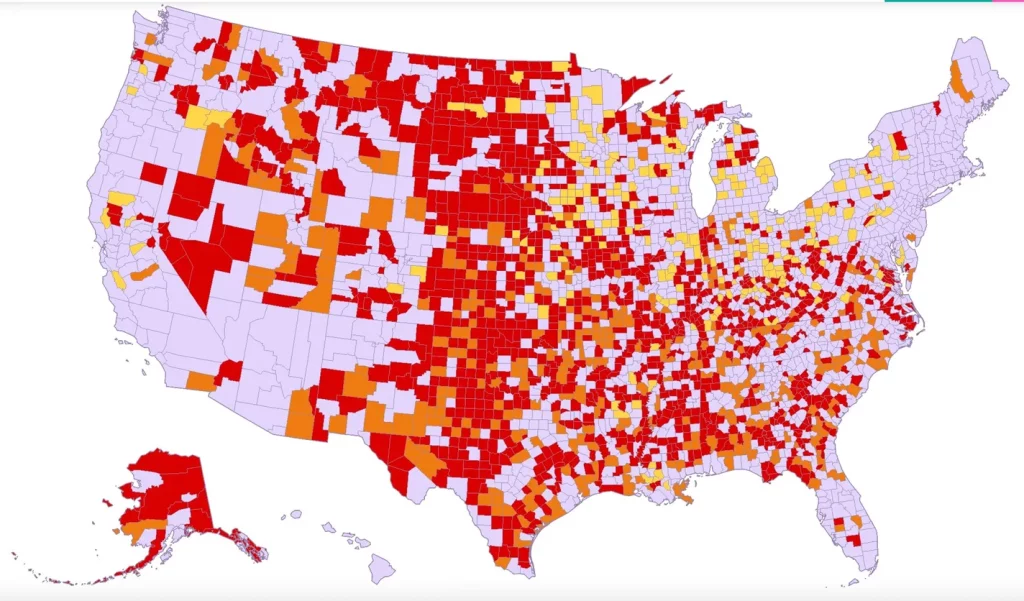
From the maternity care front, Health Day reports on a March of Dimes report on maternity care deserts and related matters. Here’s the federal government’s maternity care map:

Maternity care deserts [red]: low access [orange]; moderate access [yellow]; full access [light purple] Source: U.S. Health Resources and Services Administration (HRSA), Area Health Resources Files, 2021

Tuesday’s Tidbits

Photo by Patrick Fore on Unsplash

From the Affordable Care Act front, the International Foundation of Employee Benefit Plans explains

The Internal Revenue Service (IRS) issued final regulations on affordability of employer coverage for family members of employees.

The final regulations under section 36B of the Internal Revenue Code (Code):

* Amend the regulations regarding eligibility for the premium tax credit (PTC) to provide that affordability of employer-sponsored minimum essential coverage (employer coverage) for family members of an employee is determined based on the employee’s share of the cost of covering the employee and those family members, not the cost of covering only the employee;

* Add a minimum value rule for family members of employees based on the benefits provided to the family members; and

* Affect taxpayers who enroll, or enroll a family member, in individual health insurance coverage through a Health Insurance Exchange (Exchange) and who may be allowed a PTC for the coverage. 

The final regulations are effective 60 days after publication in the Federal Register.

IRS issued Notice 2022-41 in conjunction with regulations under section 36B.

The notice expands the application of the permitted change-in-status rules for health coverage under a section 125 cafeteria plan (cafeteria plan). In particular, the notice addresses the situation in which, during a period of coverage (typically a plan year), a cafeteria plan participant may wish to revoke the employee’s election under the cafeteria plan for other than-self-only (family) coverage under a group health plan (other than a flexible spending arrangement (FSA)) in order to allow one or more family members to enroll in a Qualified Health Plan (QHP) through a Health Insurance Exchange (Exchange) in the individual market. 

Under the notice, the employee will be able to elect out of family coverage and into self-only coverage (or family coverage including one or more already-covered related individuals) under that health plan prospectively during a period of coverage, provided specific conditions are satisfied.

The Department of the Treasury and IRS intend to modify the Income Tax Regulations under section 125 of the Code consistent with the provisions of the notice.

Taxpayers may rely on the guidance in the notice for plan amendments allowing elections effective on or after January 1, 2023.

These rules are intended to fix the so-called “family glitch” in the ACA. Responsibility for implementing this rule in the FEHB Program falls on the employer, here OPM. More to follow on Wednesday because the FEHBlog needs to understand this change better.

Speaking of ACA changes, the U.S. Preventive Task Force gave a B grade to a modified description of its recommendation for primary care physicians to screen asymptomatic adolescents aged 12 to 18 for major depressive disorder and suicide risk. The USPSTF also expanded its new B grade anxiety screening recommendation for adults to asymptomatic adolescents and children aged 8 to 18.

Access to and availability of mental health providers must be expanded as well. Healthcare IT News reports on “how telehealth can help curb the mental health staffing shortage. A physician and virtual care expert discusses how demand for behavioral health services is increasing and what telemedicine can do to meet these needs. He shows how the tech can help serve vulnerable populations.”

On similar notes, McKinsey delves in “How to protect and improve mental health on World Mental Health Day,” which was this month and “The Gathering Storm in U.S. Healthcare.”

In the U.S healthcare business news, Healthcare Dive informs us

Walgreens is buying the remaining 45% stake in post-acute and home care services provider CareCentrix for roughly $392 million, the pharmacy giant said Tuesday.

Walgreens acquired a 55% majority stake in CareCentrix, which coordinates home care for health plans, patients and medical providers, for $330 million in a deal that closed earlier this year.

The Illinois-based retailer has said the buy will expand its reach in the health sector, especially in the fast-growing areas of primary.

Holiday weekend update

Congress remains on the campaign trail this coming.

The Medicare Open Enrollment period begins on Saturday, October 15. The New York Times adds

Social Security will soon announce the largest inflation adjustment to benefits in four decades — a welcome development for millions of older Americans struggling to keep up with fast-rising living costs.

The cost-of-living adjustment for 2023 is likely to be around 8.7 percent, based on the latest government inflation figures. The final COLA, as the adjustment is known, will be released Thursday, when the federal government announces inflation figures for September. Medicare enrollees can anticipate some additional good news: The standard Part B premium, which is typically deducted from Social Security benefits, will decline next year.

The COLA, one of Social Security’s most valuable features, will give a significant boost to more than 70 million Americans next year. While retirement comes to mind when most people think about Social Security‌, the program plays a much broader role in providing economic security.

In August, the program paid benefits to 52.5 million people over age 65, but younger beneficiaries — survivors of insured workers and recipients of disability benefits‌ and Supplemental Security Income, the program for very low income people — added 17.9 million people to the total, according to Social Security Administration data.

The Federal Times discusses the upcoming open enrollment for the Federal Employee Dental and Vision Programs.

Twelve dental carriers provide 23 dental plan options available across the program. Seven dental carriers offer fourteen nationwide dental plan options available to all potential enrollees. Five vision carriers provide 10 nationwide vision plan options available to all potential enrollees.

The FEHB, FEDVIP, and FSAFeds Programs share the same open enrollment season, which this year will run from November 14 to December 12.

The health insurance marketplace open enrollment period begins on November 1, 2022, and ends on January 23, 2023.

From the public health front —

  • The New York Times discusses why Americans need a flu shot. As to timing

Immunity against the flu tends to wane over the course of a season. You have higher protection a couple of weeks after receiving the shot, compared with four or five months later, so it is a good idea to schedule your vaccine appointment close to the beginning of flu season, and not too early, Dr. Martin said. “I tend to get vaccinated in October so my antibodies are ramped up by the time holiday travel begins,” she said.

Some people wait longer, until November or December, especially if they are keeping a close eye on cases. But experts agree that it is important to receive the vaccine before cases start to surge. Your body needs at least two weeks after the shot to ramp up its defenses against the flu. People who are more susceptible to severe flu — especially older adults, pregnant women and very young children — should not delay their shots.

  • MedPage Today reports “Long COVID Persists in People With Symptomatic SARS-CoV-2 Infection — At one year, 15% of long COVID patients had ongoing cognitive or respiratory problems or fatigue.” Fierce Healthcare delves into health plan coverage of this tricky disease.
  • The New York Times offers expert opinions about various aspects of monkeypox.

From the healthcare personnel front, Healthcare Dive reports

Effective Oct. 17, [Amar] Desai who [currently is President and Chief Executive Officer, Optum Pacific West] will lead CVS’ newly created health care delivery division, overseeing implementation of CVS’ health services and care delivery strategy, according to a release from the Woonsocket, Rhode Island-based company. That includes CVS’ clinical delivery strategy in retail health, chronic disease management and behavioral health.

The division will work to link different aspects of CVS’ portfolio to develop payer-agnostic products and services, according to CEO Karen Lynch.

Good luck, Mr. Desai.

From the medical research front —

  • STAT News tells us about a large “gold-standard” European study concluding that colonoscopies are not all they have been cracked up to be in the U.S.

The trial’s primary analysis found that colonoscopy only cut colon cancer risk by roughly a fifth, far below past estimates of the test’s efficacy, and didn’t provide any significant reduction in colon cancer mortality. Gastroenterologists, including Bretthauer, reacted to the trial’s results with a mixture of shock, disappointment, and even some mild disbelief.

It’s the first randomized trial showing outcomes of exposing people to colonoscopy screening versus no colonoscopy. And I think we were all expecting colonoscopy to do better,” said Samir Gupta, a gastroenterologist at the University of California, San Diego and the VA who didn’t work on the trial. And, he said, it raises an uncomfortable question for doctors. “Maybe colonoscopy isn’t as good as we always thought it is.”

He stressed that the study does not invalidate colonoscopies as a useful screening tool. Colonoscopies are still a good test, Gupta said, but it may be time to reevaluate their standing as the gold standard of colon cancer screens. “This study provides clear data,” he said, “that it’s not as simple as saying, ‘Colonoscopy is the most sensitive test, and therefore it is the best.’ It still prevented cancers.”

The study has not shattered the FEHBlog’s confidence in the procedure, but it’s worth discussing the study with your physician down the line.

  • Bloomberg prognosis reports, “AstraZeneca Plc’s nasal spray vaccine failed to elicit a strong immune response to Covid-19 in a [small] early trial, a blow to the U.K. drU.K. giant’s ambitions for developing an alternative approach to preventing the disease.”

Weekend update

Photo by Dane Deaner on Unsplash

Happy New Year. Shanah Tovah.

The House of Representatives and the Senate are scheduled to be in session this week for Committee business and floor voting. Congress is set to go on an election break on September 30, the end of the federal fiscal year. Due to the incentive to get on the campaign trail, the FEHBlog expects Congress to wrap up by the end of next weekend a continuing resolution funding the federal government through December 16. The Senate version of the continuing resolution will be released tomorrow as negotiations are ongoing.

From the Omicron and siblings front, the Department of Health and Human Services announced how the federal government supports the Covid treatment market as its funding shifts to the private sector.

From the Rx coverage front, STAT News tells us

Brand-name drugmakers increased wholesale prices by 4.9% in the second quarter this year, up slightly from 4.4% a year ago. But when accounting for inflation, wholesale prices fell by 3.7%. Inflationary pressures are likely to push wholesale prices still higher, STAT writes, citing a new analysis. At the same time, net prices that health plans paid for medicines — after subtracting rebates, discounts, and fees — dropped by 0.8%, but after considering inflation, net prices actually fell 7.9% compared with 3.8% in this year’s first quarter. This was the largest quarterly decline in real terms seen by analysts at SSR Health, which conducted the analysis.

From the litigation front, Health Affairs Forefront provides helpful background on a September 7 decision from a Texas district federal court holding the Appointments clause of the U.S. Constitution bars the federal government from treating U.S Preventive Services Task Force recommendations as binding on health plans. The lawsuit also involves a Religious Freedom Restoration Act (“RFRA”)claim. The Court has reserved a ruling on appropriate remedies. The FEHBlog expects that the Appointments clause challenge will not survive appellate review but who knows what can happen with an RFRA claim. Another remaining issue is the plaintiffs’ challenge to the contraceptive mandate.

From the maternal care front, MedCity News informs us

Racial disparities in maternal health complications grew amid Covid-19, BCBS report finds
Pregnancy-related complications increased 9% between 2018 and 2020 among all women, but the rate of change is even more significant among women of color. The disparities exist regardless of having commercial insurance or Medicaid. * * *

The fact that racial disparities exist regardless of commercial insurance or Medicaid coverage suggests that the issues are due to broader health challenges, including underlying conditions, racial inequities and biases in the healthcare system, according to the report.

To combat these disparities, BCBS listed several actions players in the healthcare industry can take. This includes adding nurse-midwives and birthing centers to provider networks, expanding coverage for postpartum care to one year after giving birth and using value-based contracts for maternal health.

BCBS doesn’t just call on healthcare leaders to act, but the government as well. In the report, the payer urges Congress to pass the Congressional Black Maternal Health Caucus’ Momnibus package, which provides steps to improve health outcomes for pregnant women and mothers of color. BCBS also asks for states to extend Medicaid coverage from 60 days to a full year postpartum, an option provided through the American Rescue Plan Act.

One’s race or ethnicity should not determine how likely you are to suffer from pregnancy-related complications. We must address deep-rooted issues like implicit bias and systemic racism that cause these disparities in the first place,” [Dr. Adam] Myers said in a news release.

Midweek Update

Happy First Day of Autumn!

From Capitol Hill, Roll Call discusses the Senate Majority Leader’s plans for successfully passing the continuing resolution funding the federal government through December 16, 2022.

[I]n theory the tentative plan to start the process this Thursday could lead to a final Senate vote by next Friday, when the current fiscal year expires. It might even enable the House to take up the Senate-passed bill and clear it in time to beat the midnight deadline.

All that assumes everything goes according to plan and that there’s an acceptable stopgap funding package that can pass in both chambers. None of those details have been released, but top appropriators and other lawmakers said Wednesday there’s no talk yet of a very short-term CR to buy more time.

From the Omicron and siblings’ front —

  • Fierce Healthcare tells us about the possible blossoming of another Omicron variant BF.7
  • The Wall Street Journal reports on the rollout of nasal Covid vaccines in Asia “though just how effective they are remains to be seen.” These are adenovirus, not mRNA-based, vaccines. Nonetheless

Delivering a vaccine through the nose has the potential to build up a type of immune response known as mucosal immunity, or immunity in the upper airway tract, said David Curiel, professor of radiation oncology at Washington University School of Medicine who co-developed the Bharat vaccine. That is important because mucosal immunity could more effectively block infection and transmission of the coronavirus than the type of immunity induced by injected vaccines, he said.

In other virus news, Forbes offers an illuminating article by Gayle Smith, the CEO of the ONE Campaign, which fights to end extreme poverty and preventable disease. Ms. Smith writes on the emergence of polio.

The re-emergence of polio is worrisome, particularly considering the politicization of and uneven response to the Covid-19 pandemic. Panic, however, is unwise. What is needed is vigilance and vaccination coverage. Fortunately, there are millions of people who are living proof that polio vaccines work.

This is a moment when the world can do the right thing and eradicate a preventable disease. Since the mid-1950s, a concerted global effort has confined endemic polio to only two countries and proven that this is a virus we can defeat. 

Going all the way is a moonshot and a win for the world. It is not without its challenges, of course. But it is far easier right now than defeating Covid, or malaria, or AIDS. One can only hope that ridding the world of a disease known as “infantile paralysis” might be something we can all agree on — if not for ourselves then for the children whose lives continue to be at risk.

Also, from the public health front, the National Institutes of Health helpfully informs us

In a large clinical trial that directly compared four drugs commonly used to treat type 2 diabetes, researchers found that insulin glargine and liraglutide performed the best of four medications approved by the U.S. Food and Drug Administration to maintain blood glucose levels in the recommended range. Blood glucose management is a key component of keeping people with type 2 diabetes healthy. All four medications evaluated were added to treatment with metformin, which is the first-line drug to treat type 2 diabetes. The trial was funded by the National Institute of Diabetes and Digestive and Kidney Diseases (NIDDK), part of the National Institutes of Health.

More than 37 million Americans have diabetes, and approximately 90 to 95% of them have type 2 diabetes. People with diabetes who keep their blood glucose levels in the near-normal range generally have a much lower risk of developing diabetes complications such as nerve, kidney, and eye diseases. Most people with type 2 diabetes require more than one medication to control blood sugar levels over time. 

While there is general agreement among health care professionals that metformin combined with diet and exercise is the best early approach in diabetes care, there is no consensus on what to do next to best keep high blood glucose in check.

From the wellness front, Fierce Health relates that United Healthcare is expanding its relationship with exercise machine marker Peleton. As a result, UHC will be making Pelton’s fitness services available to as many as 10 million of its members.

From the federal compensation and benefits front

  • Govexec reports on locality pay developments, and Social Security changes that Congress may approve this year.
  • Reg Jones writing in FedWeek provides a personal story about federal survivor benefits worth a gander.

Tuesday Tidbits

Photo by Patrick Fore on Unsplash

From Capitol Hill, Govexec lays out what appears to be an unnecessarily complicated path to a continuing resolution funding the federal government for 10 weeks into the new federal fiscal year beginning October 1. The Senate majority leadership crafted the rocky path that stems from the compromise which lead to Congressional passage of the budget reconciliation act earlier this summer.

From the No Surprises Act front, the American Medical Association informs us

The AHA and American Medical Association today moved to dismiss their challenge to the federal government’s September 2021 interim final rule governing the No Surprises Act’s independent dispute resolution process.

The groups challenged the rule in a District of Columbia court last December, but the lawsuit became moot when the Administration released a revised final rule on Aug. 26. However, the AHA and AMA remain concerned that the final rule continues to favor insurers and does not line up with what Congress intended when it passed the law.

In a joint statement the AHA and AMA said, “No patient should fear receiving a surprise medical bill. That is why the AHA and AMA strongly supported the No Surprises Act to protect patients from unexpected medical bills and keep them out of the middle of any billing disputes between providers and commercial health insurance companies. Congress enacted the law with a balanced, patient-friendly approach, and it should be implemented that way. We have serious concerns that the August 2022 final rule departs from Congressional intent just as the September 2021 interim final rule did. Hospitals and doctors intend to make our voices heard in the courts very soon about these continued problems.”

The AHA and AMA’s suit did not seek to prevent the law’s core patient protections from moving forward. It sought only to force the Administration to bring the regulations in line with the law before the dispute negotiations begin.

The AHA / AMA lawsuit is consolidated with a suit filed by an air ambulance association which may explain why these two large provider associations are dismissing its case rather than amending their complaint. The FEHBlog does not understand why the provider associations refuse to give the new rule a chance before bringing another expensive lawsuit.

From the U.S. healthcare business front —

Fierce Healthcare reports

Walgreens Boots Alliance on Tuesday said it will buy the remaining stake in specialty pharmacy company Shields Health Solutions for approximately $1.37 billion.

Walgreens last year spent $970 million to increase its stake in the company to 71%, according to Reuters, with the possibility of taking full ownership over the pharmacy company.

The transaction is expected to be completed by the end of the year. * * *

As a specialty pharmacy, Shields offers medications with unique handling, administration and monitoring requirements. Specialty drugs are used to treat complex or rare conditions such as cancer, hepatitis and transplants. Shields currently names 30 health systems as partners, including 1,000 hospitals.

and

Employer health startup Transcarent is making its next move with the launch of its new pharmacy program.

Transcarent’s Pharmacy Care offering is designed to be fully transparent and integrate with its other platforms. The goal, executives said, is to break through the noise for members and make it easier for them to understand their pharmacy benefits while offering employers full control over formulary, benefit design and data.

The platform is available to self-funded employers as well as health systems, Transcarent said in an announcement. Snezana Mahon, Transcarent’s chief operating officer, told Fierce Healthcare that the company’s employer clients have felt the market changes and are seeking a way to “coexist” in a world where there are traditional pharmacy benefits, cash pay and coupon cards all working together.

From the healthcare quality front, Beckers Hospital Review calls attention to

A new data visualizer shows the 10 most similar hospitals to any one benchmark hospital, challenging traditional, ordinal rank lists like those from U.S. News & World Report.

SimilarityIndex | Hospitals comes from Trilliant Health Labs, which created the tool so health economy stakeholders can learn how similar a selected benchmark hospital is to — or different from — highly regarded U.S. hospitals. 

Users can compare hospitals to find peers in either quality alone or aggregate — the latter reflects an equally weighted combination of measurements in the categories of hospital quality (including 30-day mortality and readmission rates), outpatient service line, financial (including operating margin and average inpatient service costs), patient mix and market share.

Nifty.

From the public health front —

The US Preventive Services Task Force (USPSTF) today posted for public comment draft recommendations on screening for anxiety, depression, and suicide risk in adults.

For the first time, the task force is recommending screening all adults aged 64 and younger for anxiety — including pregnant and postpartum women.

This “B” recommendation reflects “moderate certainty” evidence that screening for anxiety in this population has a moderate net benefit, the task force notes in a draft recommendation statement posted on its website.

The recommendation applies to adults aged 19-64 years who do not have a diagnosed mental health disorder or are not showing recognized signs or symptoms of anxiety.

The public comment deadline is October 17.

  • The Wall Street Journal offers advice on timing the annual flu shot and the upcoming flu season in general.
  • The CDC released a vital signs report warning that rates of screening and treatment of children with sickle cell anemia for life-threatening problems are far too low.

Two recommended healthcare measures to prevent complications in children with sickle cell anemia are:

* Transcranial doppler (TCD) ultrasound screening, which identifies children with increased risk for stroke.

* Hydroxyurea therapy, which reduces the occurrence of several complications, including severe acute pain episodes and acute chest syndrome, which can result in lung injury and trouble breathing.

Far too few patients are receiving these potentially lifesaving prevention measures, recommended by an expert panel in 2014. 

  • The CDC also called attention to its website about gestational diabetes.

From the Rx coverage front, Bio Pharma Dive relates

The Food and Drug Administration on Friday [September 16] granted accelerated approval to a personalized gene therapy for an ultra-rare childhood brain disease, called cerebral adrenoleukodystrophy or CALD.

Built from a patient’s own stem cells, the therapy is the first medicine to be made available in the U.S. for CALD, which affects young boys and typically results in severe disability or death. It was developed by the biotechnology company Bluebird bio and will be sold as Skysona.

Its approval is Bluebird’s second in four weeks, following an Aug. 17 FDA decision on another gene therapy from the company for the blood disorder beta thalassemia. * * *

In the U.S., an estimated 50 boys are born each year who will go on to develop CALD. Bluebird expects to treat about 10 annually.

Meant to be a one-time infusion, Skysona will cost $3 million. The price tag makes the therapy one of the most expensive ever launched on a single-use basis, exceeding the $2.8 million cost of Bluebird’s other gene therapy. * * *

Bluebird expects Skysona to be available by the end of the year, and is planning to work with a “limited number” of centers that are experienced in treating CALD and in stem cell transplantation, including Boston Children’s Hospital and CHOP [Children’s Hospital of Philadelphia].

[Due to the small number of patients, t]he company is not putting in place “outcomes-based” coverage agreements with insurers for Skysona as it did with its other gene therapy, for which it’s offering to reimburse part of the cost if patients don’t continue to benefit.

From the surveys department —

A majority of healthcare executives think value-based-care has replaced fee-for-service billing, a new survey found

Of 160 C-suite executives and other high-level staff surveyed, just 4 percent said they think payers use traditional fee-for-service billing with no connection to quality and value. The majority of executives think payers use FFS models with connections to the quality and value of care taken into account. 

The survey, conducted by business intelligence firm Morning Consult and health tech company Innovaccer, found just 1 percent of executives think FFS billing with no connection to value will be in use in 2025. 

According to a Sept.14 news release, payers report that FFS billing with no account for value makes up more than 10 percent of billing, higher than providers estimated. 

“So, providers think the transition to value has substantially occurred, when in fact we’re only at the very beginning,” Brian Silverstein, MD, Innovaccer’s chief population health officer, said in the release. “The amount of financial risk providers have is going to increase significantly in the next few years.”

  • Beckers Hospital Review tells us “Patients who are publicly insured or uninsured are more likely to be treated unfairly in healthcare settings compared to patients with private insurance, according to a report from the Urban Institute with support from the Robert Wood Johnson Foundation.”

In closing Federal News Network shares the list of deserving federal employees receiving the 2022 Partnership for Public Service’s Samuel J. Heyman Service to America Medals — affectionately known as the Sammies. These awards “often dubbed the “Oscars” of federal service” will be presented at a gala tonight. Hearty congratulations to the award winners and the other nominees.