Thursday Miscellany

Thursday Miscellany

Photo by Josh Mills on Unsplash

From Capitol Hill, the Wall Street Journal reports

Rep. Kevin McCarthy stepped up negotiations with Republican detractors, offering fresh concessions to win support after a third day of House speaker votes yielded no movement toward a winner in the GOP-controlled chamber.

Mr. McCarthy and some of his detractors appeared to be coalescing around a deal, stepping up the pace of discussions as the House marked its 11th round of votes with no winner, the most since just before the Civil War. While most Republicans backed Mr. McCarthy over three days of tallies, 20 continued to oppose him, and it wasn’t known if enough detractors would potentially change their votes to give Mr. McCarthy the gavel. All Democrats supported their pick, Rep. Hakeem Jeffries of New York. 

Shortly after 8 p.m., lawmakers voted 219-213 to adjourn until Friday at noon, with Republicans in favor and Democrats opposed.

Voting is expected to continue into the weekend.

From the Affordable Care Act front, the FEHBlog discovered today that on December 12, 2022, the Department of Health and Human Services announced the maximum 2024 out-of-pocket limits for in-network care offered by FEHB and other group health plans.

[T]he 2024 maximum annual limitation on cost sharing is $9,450 for self-only coverage and $18,900 for other than self-only coverage. This represents an approximately 3.8 percent increase above the 2023 parameters of $9,100 for self-only coverage and $18,200 for other than self-only coverage.

The announcement also covers other ACA topics: the premium adjustment percentage, reduced maximum annual limitation on cost sharing, and required contribution percentage, which apply to marketplace plans.

From the New Year front —

  • Mercer offers strategic planning guidance for health plan and human resources executives.
  • STAT News identifies three drug pricing issues to watch this year — 1. Inflation Reduction Act implementation; 2. Medicare’s lecanemab coverage decision, and 3. Insulin cost protections.
  • Tammy Flanagan writes in Govexec about Federal “Employee Benefit Changes for 2023; How new pay rates, Social Security earnings limits and other factors could affect your retirement planning.” 
  • Bloomberg Prognosis offers a January guide to weight loss.
    • Healio adds, “More physical activity was associated with a lower risk for type 2 diabetes regardless of age, sex, BMI or sedentary time, according to an analysis published in The Journal of Clinical Endocrinology & Metabolism.”

    From the telehealth front —

    Healthcare Dive tells us

    Teladoc Health announced on Thursday it’s launching a new app allowing users to access its full range of services in one place and under one account.

    The app, which includes primary care, mental health and chronic condition management, is meant to integrate all of Teladoc’s assets in one personalized platform, making care navigation and selection easier for consumers,

    Teladoc Chief Medical Officer Vidya Raman-Tangella told Healthcare Dive. The app is available to a select number of Teladoc’s existing clients this month. Teladoc plans to make the app available to the full market later this year.

    Fierce Healthcare adds “Teladoc’s full suite of services will be available in the Spanish language on the mobile app and the website, marking a critical shift with more than 40 million people in the United States reporting they speak Spanish at home.”

    CMS announced adding “a new telehealth indicator on clinician profile pages on Medicare Care Compare and in the Provider Data Catalog (PDC). The new indicator helps beneficiaries and caregivers more easily find clinicians who provide telehealth services.”

    From the post-Dobbs front, the Hill reports

    Two of the biggest pharmacy chains in the country are planning to seek the certification needed to dispense abortion pills in the states where it is legal, according to spokespeople for the companies.

    The decisions by Walgreens and CVS are likely to provide a boost to a new Food and Drug Administration (FDA) policy announced Tuesday that will allow retail pharmacies to dispense mifepristone from a certified prescriber if they meet certain criteria. 

    Until 2021, mifepristone could only be dispensed in person by a physician. The FDA temporarily lifted that requirement because of the COVID-19 pandemic, and the Biden administration made the change permanent in December 2021, paving the way for doctors to prescribe the drug digitally and then mail the pills to patients.

    Happy New Year 2023

    NPR shares its favorite articles with “actionable, evidence-based strategies for cultivating a healthy body and mind.”

    Fortune Well identifies “six foods and drinks to choose in the New Year to improve mood, energy, and longevity” and discusses the differences between dry January and damp January.

    The American Medical Associations tells us about what doctors wish their patients knew about effective New Years resolutions.

    From Capitol Hill, the Wall Street Journal reports

    A new era of divided government dawns this week as the 118th Congress begins, with Republicans looking to deploy their power with a fragile majority in the House and Democrats doing the same in the Senate.

    The House of Representatives will convene on Tuesday, a date designated by the 20th Amendment of the U.S. Constitution that stipulates Congress should begin each new session at noon on Jan. 3.

    The first order of business will be electing a new Speaker. The last time that the election went beyond one ballot was one hundred years ago, but the streak could be broken tomorrow as Roll Call explains.

    The Senate whose leadership is not changing will hold a routine opening day tomorrow.

    No Congressional Committee hearings will be held this week.

    From the Omicron and siblings front, NBC News and Forbes each offer detailed looks at the latest dominant Omicron variant XBB and XBB 1.5. NBC News states

    “It’s clear that there’s immune evasive properties of XBB,” said Dr. Isaach Bogoch, an infectious disease physician and epidemiologist at the University of Toronto. “That’s been demonstrated both in laboratory studies and seen clinically in cases and hospitalizations.” 

    Given the high level of population immunity in the U.S. — either through infection, vaccination or both — Bogoch and others hope that, even if cases start to rise significantly, there won’t be a dramatic spike in hospitalizations or deaths as seen in previous waves. 

    Antibody studies don’t tell the whole story. Other parts of the immune system can protect against the virus and the Covid vaccines should remain effective at preventing severe illness and death from the virus, evidence suggests.

    From the FEHB front, the Postal Service’s Inspector General released a “primer” on the 2022 Postal Reform Act, which requires a new Postal Service Health Benefits Program to be launched in two years.

    From the Affordable Care Act marketplace, Health Payer Intelligence informs us

    Affordable Care Act (ACA) marketplace enrollment has grown 18 percent from last year, with 11.5 million people signing up for coverage as of December 15, 2022, HHS announced.

    “Unprecedented investments lead to unprecedented results. Under President Biden’s leadership, we have strengthened the Affordable Care Act Marketplace with continued record affordability, robust competition, and historic outreach efforts – and today’s enrollment numbers reflect that,” HHS Secretary Xavier Becerra said in the press release. * * *

    “Thanks to the Inflation Reduction Act, four out of five customers will be able to find a plan for $10 or less. As we head into the new year, there is no greater gift than the peace of mind that comes with having high-quality, affordable health care. There is still time to sign up until January 15 – visit HealthCare.gov today,” Becerra added.

    Midweek update

    Photo by JOSHUA COLEMAN on Unsplash

    Mercer Marsh Benefits presents the top five trends from its 2023 employer-sponsored health plan survey of 225 insurers located in 56 countries:

    1. Per-person medical cost increases are back to pre-pandemic levels. 68% of insurers expect plan sponsors to prioritize improvements. This is even though double-digit medical cost increases are forecast for some markets.
    2. COVID-19 continues to impact the claims experience. 55% of insurers report an increase in the later-stage illness diagnosis due to deferred care.
    3. Plan modernization has begun. To make coverage more inclusive for those who identify as LGBTQ+, one in two insurers have changed or expect to change eligibility requirements and eligible expenses.
    4. The mental health gaps persist. 16% of insurers report not providing plans that cover mental health services (versus 26% in 2022).
    5. Plan management requires greater rigor. More than one in five insurers in Asia are adjusting their medical plan premiums based on an individual’s COVID-19 vaccination status.

    All five main points ring true, but the prime examples for the fourth and fifth points don’t fit the FEHB market.

    The American Medical Association points out six often overlooked steps to better health while Rebecca G. Baker, Ph.D., the director of the NIH HEAL Initiative® looks back at a virtual stakeholder briefing to visit the initiative’s progress in resolving chronic pain and opioid misuse issues and to describe future plans. 

    From the public health front, the New York Times reports about

    a large study published on Tuesday found a surprising trend among adolescents who repeatedly visited the hospital. The patients most likely to reappear in emergency rooms were not patients who harmed themselves, but rather those whose agitation and aggressive behavior proved too much for their caregivers to manage.

    In many cases, repeat visitors had previously received sedatives or other drugs to restrain them when their behavior became disruptive. * * *

    The results suggest that researchers should focus more attention on families whose children have cognitive and behavioral problems, and who may turn to emergency rooms for respite, Dr. [Anna] Cushing [an author of the study] said.

    “I’m not sure we’ve been spending as much time talking about these agitated and behaviorally disregulated patients, at least on a national scale,” she said.

    The JAMA study found that overall visits to pediatric emergency rooms for mental health crises increased 43 percent from 2015 to 2020, rising by 8 percent per year on average, with an increase in emergency visits for every category of mental illness. By comparison, emergency room visits for all medical causes rose by 1.5 percent annually.

    Nearly one-third of visits were related to suicidal ideation or self-harm, and around one-quarter of patients presented with mood disorders, followed by anxiety disorders and impulse control disorders. Around 13 percent of patients made a repeat visit within six months.

    From the telehealth front, Axio informs us

    There are few things more stressful than getting a serious medical diagnosis, but pandemic-era changes in virtual care are prompting more patients to obtain a second opinion without leaving home.

    Why it matters: The telehealth explosion made it easier to get advice from top doctors across the country — and for health systems to grow business beyond their physical footprints and even treat some of the people seeking consultations.

    Case in point: The Clinic, a joint venture between Cleveland Clinic and telehealth giant Amwell, launched in 2020 just before the pandemic began.

    The idea was to pair the Cleveland Clinic brand with Amwell’s virtual tools and its existing connections with private insurers to make it easier for patients to get their records reviewed, said Frank McGillin, CEO of The Clinic.

    In litigation news, Health Payer Intelligence relates

    A United States district court has ruled against Blue Cross Blue Shield of Illinois (BCBSIL), stating that the payer cannot exclude coverage for medically necessary gender-affirming care in its employer-sponsored ERISA health plans.

    Lambda Legal and Sirianni Youtz Spoonemore Hamburger PLLC filed a class action lawsuit against BCBSIL on behalf of a 17-year-old transgender man, CP, and his parents. According to the lawsuit, the payer administered discriminatory exclusions of gender-affirming care, violating the anti-discrimination of the Affordable Care Act (ACA), known as Section 1557. * * *

    The court determined that BCBSIL is a “health program or activity” that receives federal funds and thus cannot discriminate based on race, national origin, sex, age, or disability in its role in administering ERISA health plans.

    From inside the Beltway, Govexec reports

    The White House released a plan on Wednesday for how the Biden administration seeks to foster a more open and accountable government.

    Transparency is something for which many presidential administrations strive, but success can be elusive, as shown during the Obama and Trump presidencies. Nevertheless, the almost-two year old Biden administration unveiled its first and the fifth overall U.S. Open Government National Action Plan, shared exclusively with Government Executive ahead of its release. This builds on many of the Biden administration’s efforts, including the president’s management agenda. 

    Omnibus bill passes

    Per Roll Call, the House of Representatives followed the Senate by passing the Consolidated Apppropriations Act 2023 and the one week further extension of the continuing resolution to December 30, 2023. The 117th Congress has completed its work.

    The Centers for Disease Control will not be published its weekly interpretation of Covid statistics until next year as today and next Friday precede three day weekends.

    The CDC did update its Covid data tracker and Fluview which happens on Thursdays. The new daily Covid cases and deaths for the week ending December 22 averaged approximately 69,600 cases and 420 deaths. “Seasonal influenza activity remains high but is declining in most areas.” As noted in yesterday post, RSV cases appear to have peaked.

    In No Surprises Act news, the Labor Department’s Employee Benefit Administration announced this afternoon

    • Effective January 1, 2023, the administrative cost for holding an arbitration under an independent dispute resolution process will increase from $50 per party to $350 per party. That should tamp down the number of NSA arbitrations.
    • ACA FAQs 56 concerning the NSA prescription drug reporting that health plans, including FEHB plans, are scheduled to submit next Tuesday, December 27, for the 2020 and 2021 plan years. Significantly,

    For the 2020 and 2021 data submissions that are due by December 27, 2022, the Departments will not take enforcement action with respect to any plan or issuer that uses a good faith, reasonable interpretation of the regulations and the Prescription Drug Data Collection (RxDC) Reporting Instructions in making its submission. The Departments are also providing a submission grace period through January 31, 2023, and will not consider a plan or issuer to be out of compliance with these requirements provided that a good faith submission of 2020 and 2021 data is made on or before that date.

    • Initial Report on the Independent Dispute Resolution Process: April 15 – September 30, 2022.

    The FEHBlog will release Cybersecurity Saturday on December 24 and the Holiday weekend update on December 26. Merry Christmas and of course Jingle Bells.

    Thursday Miscellany

    Photo by Josh Mills on Unsplash

    From Capitol Hill, the Wall Street Journal reports

    The Senate passed an $858 billion defense-policy bill [National Defense Authorization Act] on Thursday that authorizes U.S. military leaders to purchase new weapons and would increase pay for service members, checking a major item off Congress’s year-end to-do list.

    The House passed the legislation last week with 350 votes in favor and 80 votes against. It now goes to President Biden’s desk for his signature.

    The Journal also provides information on the NDAA’s key provisions.

    The Washington Post adds,

    The Senate late Thursday approved a measure to fund the government through Dec. 23, securing a one-week deadline extension that gives Democrats and Republicans one final opportunity to work out a longer-term spending deal.

    The 71-19 vote — coming a day after the House adopted it — sends the stopgap to President Biden and staves off a federal government shutdown that otherwise would have occurred after midnight this Friday.

    From the Omicron and siblings front, the American Hospital Association informs us,

    The Department of Health and Human Services today recommended governors take certain actions to prepare for a potential further increase in COVID-19 cases and hospitalizations this winter, and has pre-positioned N-95 masks, gloves, gowns and ventilators at strategic locations should states need them, the Biden Administration announced.

    The Administration also announced that all U.S. households can now order four more free at-home COVID-19 tests, which will begin shipping the week of Dec. 19.

    From the public health front, AP reports

    The number of U.S. deaths dropped this year, but there are still more than there were before the coronavirus hit.

    Preliminary data — through the first 11 months of the year — indicates 2022 will see fewer deaths than the previous two COVID-19 pandemic years. Current reports suggest deaths may be down about 3% from 2020 and about 7% vs. 2021.

    The National Institutes of Health announced

    The percentage of adolescents reporting substance use in 2022 largely held steady after significantly declining in 2021, according to the latest results(link is external) from the Monitoring the Future survey(link is external) of substance use behaviors and related attitudes among eighth, 10th, and 12th graders in the United States. Reported use for almost all substances decreased dramatically from 2020 to 2021 after the onset of the COVID-19 pandemic and related changes like school closures and social distancing. In 2022, reported use of any illicit drug within the past year remained at or significantly below pre-pandemic levels for all grades, with 11% of eighth graders, 21.5% of 10th graders, and 32.6% of 12th graders reporting any illicit drug use in the past year.

    The Monitoring the Future survey is conducted each year by researchers at the University of Michigan, Ann Arbor, and funded by the National Institute on Drug Abuse (NIDA), part of the National Institutes of Health.

    From the Rx coverage front –

    BioPharma Dive takes a “deep dive” reporting on a recently approved drug called to treat ALS or Lou Gehrig’s disease. “Amylyx Pharmaceuticals’ Relyvrio is in high demand in clinics across the U.S. Though some patients are already getting it, insurance and out-of-pocket costs remain a source of anxiety. * * * In the clinical trial that led to its approval, Relyvrio appeared to slow the functional decline associated with ALS. The trial also found patients treated with the drug lived a median of five months longer than those given a placebo. While Relyvrio’s benefits have been called modest, the drug has become a vital source of hope for many ALS patients.”

    BioPharma Dive also lets us know that

    • Yet another competitor for the top-selling inflammatory disease drug Humira will be waiting in the wings after Fresenius Kabi won U.S. approval of its copycat version called Idacio.
    • The Food and Drug Administration cleared the medicine for all the eligible indications of Humira, Fresenius Kabi said Wednesday. Due to a previous patent settlement with AbbVie, the company won’t launch Idacio in the U.S. until July.
    • Idacio, developed by Fresenius Kabi SwissBioSim, is currently available in 37 countries after initially launching in 2019. Fresenius Kabi said it has made selling biosimilars worldwide a priority.

    Health Affairs Forefront offers Parts 1 and 2 of its insights on drug pricing reform enacted this past summer’s federal budget reconciliation act.

    From the regulatory front

    • The FEHBlog noticed that the HHS press release concerning the 2024 Medicare Part D proposed rule (posted yesterday) lacked links to the proposed rule and the fact sheets. So here are the missing links:

    The proposed rule can be accessed at the Federal Register at https://www.federalregister.gov/public-inspection/2022-26956/medicare-program-contract-year-2024-policy-and-technical-changes-to-the-medicare-advantage-program. Comments on the proposed rule are due by February 13, 2023.

    View the fact sheet on the proposed rule here.

    • Health Affair’s Forefront’s second article on Monday’s proposed 2024 ACA benefit and payments parameter rule is here. This article concerns risk adjustment.

    From the telehealth front, Health Payer Intelligence relates that

    • Most patients who had a telehealth visit didn’t need an in-person follow-up appointment in the next three months, according to new research from Epic. The trend was reflected in almost every specialty included in the study.
    • For specialties that required follow-ups, the additional visits were likely due to patients needing additional, not duplicative, care, Epic researchers said. That’s because high follow-up rates were only present in specialties that require regular hands-on care, such as obstetrics and surgery.
    • The study is the latest addressing whether telehealth results in duplicative care, instead of replacing an in-person encounter. The question is being debated by lawmakers as they consider how much telehealth flexibility should be allowed once the COVID-19 public health emergency expires.

    In innovation news, Fierce Healthcare discusses

    ElliQ, [which is] a voice-operated care companion for the elderly, is getting an update with 2.0 hardware and software including a companion app for family members and caregivers.

    The robot, called the first proactive AI care companion and a Time Best Invention of 2022, was developed to address the loneliness epidemic in older adults and has shown the ability to decrease loneliness by 80%, according to the company. * * *

    Interventions like the ones ElliQ performs are shown to improve the quality of life for seniors living alone by 80% through increasing fitness and facilitating social connections, according to a recent McKinsey report.

    The first ElliQ impact studies have shown that 80% of users report a reduction in loneliness, 82% experienced better mental health and 90% feel overall better since using the robot.

    Midweek Update

    From Capitol Hill, the Wall Street Journal reports

    The House on Wednesday passed a one-week government funding measure to give congressional negotiators time to complete and pass a full-year omnibus spending bill, overcoming opposition from Republicans who urged postponing any deal until next year, when the GOP will take control of the chamber. * * *

    The Senate is expected to next approve the one-week extension [on Thursday December 15]. 

    The vote on a one-week continuing resolution, which keeps the government funded at fiscal 2022 spending levels, follows the announcement Tuesday that Democratic and Republican negotiators had reached agreement on a framework and would turn to completing the details. 

    From the public health front, Healthcare Dive tells us

    • National health spending grew almost 3% in 2021, reaching $4.3 trillion as big increases in healthcare use and insurance coverage were offset by lower government spending on COVID-19.
    • The year’s growth rate was smaller than the 10% notched in 2020. CMS actuaries chalked the deceleration up to lower federal health spending, which fell 3.5% in 2021 compared to a 37% increase in 2020 as funding to combat the pandemic skyrocketed.
    • Health spending grew at a much slower clip than the nation’s gross domestic product, which increased 11% in 2021 — the largest growth rate since 1984.

    Here’s the report which is posted on Health Affairs.

    Medscape relates

    New more aggressive targets for blood pressure and lipids are among the changes to the annual American Diabetes Association (ADA) Standards of Care in Diabetes — 2023.

    The document, long considered the gold standard for care of the more than 100 million Americans living with diabetes and prediabetes, was published December 12 as a supplement in Diabetes Care. The guidelines are also accessible to doctors via an app; last year’s standards were accessed more than 4 million times.

    The Agency for Healthcare Quality and Research’s Director is posting a series of four reports concerning the agency’s effort to rethink healthcare quality in view of the fact

    In seven years, the United States is expected to reach a demographic tipping point that will redraw the picture of healthcare delivery in America.  

    In 2030, all baby boomers [birth dates from 1946 to 1964] will be older than 65, according to the U.S. Census Bureau. Just four years later—in 2034—older adults will outnumber children for the first time in history. The scope of this and future demographic shifts—including our population’s growing racial and ethnic diversity—will profoundly impact how healthcare is accessed, delivered, paid for, and evaluated.

    The National Institutes of Health reports “Two randomized, placebo-controlled trials evaluating three Ebola vaccine administration strategies in adults and children found that all the regimens were safe in both age groups, according to results published today in the New England Journal of Medicine.”

    Health Payer Intelligence informs us

    Privately-insured Americans experienced higher rates of heat-related illness diagnoses in 2021 compared to 2016, in some cases a more than 37 percent increase, according to a report from FAIR Health.

    “The Centers for Disease Control and Prevention has identified projected increases in extreme summer heat as one source of adverse health impacts from climate change. However, systematic, national data on trends in heat-related illnesses in the United States have been lacking,” the report began.

    From the omicron and siblings front, a subset of public health —

    • The New York Times explores the question — who are the never Coviders? Even if you have never had Covid, you certainly have been impacted mightily by Covid. Nevertheless, it is an interesting article.
    • MedPage Today notes “Long COVID played a role in more than 3,500 deaths in the U.S. since the start of the pandemic, according to data from the CDC’s National Center for Health Statistics (NCHS).” The NCHS report may be overestimating because the first death occurred in April 2020 just after Covid got rolling and the most commonly mentioned term on death certificates with long COVID was “post COVID,” which was mentioned in 89.6% of long COVID-related deaths.” This may be a rare case in which the “retrospectoscope” is cloudy. See Dr. Martin Markary’s opinion piece on long Covid in yesterday’s Wall Street Journal.

    From the regulatory front —

    • CMS issued a proposed rule on Medicare Part D changes for 2024.
    • Health Affairs began a series of three informative articles on the proposed 2024 notice of benefit payments and parameters released on Monday.
    • STAT News discusses a feature of the parameters notice that is drawing industry attention. To wit, “The Biden administration signaled Monday that it will require health plans on federal exchanges to cover more of the costs of generic drugs, a small tweak that nevertheless has industry groups divided on how best to manage drug costs.”
    • Health Leaders Media examines the gap that must be bridged to achieve a recent HHS proposed rule’s goal of implementing electronic prior authorization.

    In agency event news —

    • OPM issued a press release about its “first government-wide summit for diversity, equity, inclusion, and accessibility (DEIA) on December 6-8, 2022.”

    Monday Roundup

    Photo by Sven Read on Unsplash

    From Capitol Hill, Govexec reports

    Congress will vote this week on a seven-day stopgap funding bill to avoid a shutdown Friday evening and buy negotiators more time to reach a deal on full-year appropriations. 

    Top lawmakers voiced optimism on Monday for the first time in weeks as they inched toward an agreement on setting line-by-line funding levels across the government. The current continuing resolution is set to expire late Friday, while the new measure would push that back by one week and set the new deadline just two days before Christmas.

    “Over the weekend, appropriators held positive and productive conversations, enough that both sides are moving forward in good faith to reach a deal,” Senate Majority Leader Chuck Schumer, D-N.Y., said Monday. He advised his colleagues to prepare to take “quick action” on a one-week CR “so we can give appropriators more time to finish a full funding bill before the holidays.” * * *

    “We’re trading serious suggestions back and forth,” said Sen. Richard Shelby, R-Ala., who serves as ranking member on the Senate Appropriations Committee. “The main thing is, fund the government. Don’t shut it down.” 

    WisPolitics tells us

    On Monday, U.S. Sen. Ron Johnson (R-Wis.) and U.S. Sen. Rick Scott (R-Fla.) sent a letter to Gene Dodaro, Comptroller General of the Government Accountability Office (GAO), requesting an audit of health care providers under the Federal Employees Health Benefits (FEHB) Program. Following reports on similar programs, GAO uncovered potential fraud through improper payments causing an increase in the cost of the FEHB Program.

    “GAO’s previous work on similar issues in the Medicare program and the Veterans Community Care program has uncovered a number of potentially ineligible providers, flagged weaknesses in provider vetting controls, and made valuable recommendations for improving program integrity and managing the potential risk to the care of Medicare enrollees and veterans, respectively, from ineligible providers,” explained the senators.

    FEHB is an employer-sponsored health benefits program with strong controls. The FEHBlog does not expect the GAO to find similar problems in FEHB.

    Govexec reports that the incoming Republican Chair of the House Oversight and Reform Committee says that his Committee will return “to its primary duty to root out waste, fraud, abuse, and mismanagement in the federal government.”

    From the regulatory front —

    • The Department of Health and Human Services issued its proposed 2024 Notice of Benefit and Payment Parameters as the Affordable Care Act (ACA) requires. Here’s the Fact Sheet.
    • The Internal Revenue Service finalized the rule that it first issued in December 2021 to modify Form 1095-B and 1095-C following the Tax Cuts and Jobs Act sunsetting the ACA’s individual penalty for failure to maintain essential coverage during the tax year. The final rule makes some helpful tweaks to the 2021 modifications.

    Today the FEHBlog attended the first day of the American Bar Association’s Washington Health Law Summit. Of note, there was a talk about the looming end of the Covid public health emergency, which, according to Politico reporters, is likely to occur in the first half of 2023. A “soft landing” is predicted, which is the outcome the FEHBlog also expects.

    Others spoke about healthcare worker burnout / the workforce problem. Two speakers noted that a noticeable increase in hospital code calls for security assistance compounds the problem. The FEHBlog had not heard of that factor.

    Following up on yesterday’s healthcare business post, Healthcare Dive tells us

    Amgen on Monday said it has agreed to acquire Ireland-based drugmaker Horizon Therapeutics, outlasting rival suitors Sanofi and Johnson & Johnson in takeover negotiations that were first disclosed last month.

    The deal values Horizon at $27.8 billion on a fully diluted basis. In dollar terms, it’s the largest in Amgen’s four-decade history, eclipsing a 2002 acquisition of Immunex that gave the California biotechnology company rights to Enbrel, its top-selling drug and for years one of the most lucrative pharmaceutical products.

    While buying Horizon is not likely to give Amgen its next Enbrel, it does hand the company a portfolio of rare and immune disease drugs that are projected to bring in sales of $3.6 billion this year.

    Enbrel will lose market exclusivity at the end of this decade and Amgen, like other pharmas facing looming patent cliffs, has turned to dealmaking to hunt for new products. In August, it spent $4 billion to acquire ChemoCentryx and its inflammatory disease drug Tavneos.

    Per terms of the acquisition, Amgen will pay $116.50 per Horizon share, a roughly 20% premium to their closing price Friday and 48% higher than what they were worth before Horizon disclosed it was in deal talks. 

    Thursday Miscellany

    From the Federal Employees Benefit Open Season front, Tammy Flanagan, writing in Govexec, explains the relationship between FEHB and Medicare coverage for the benefit of annuitants over age 65.

    From the OPM front, Govexec and Federal News Network discuss an OPM management report released yesterday that includes more details on OPM’s 2022 Federal Employee Viewpoint Survey.

    From Capitol Hill, Medpage Today informs us that “Telehealth, Mental Health Likely Topics for the New Congress in 2023, Experts Say.” In this regard, today the bipartisan leadership of the Senate Finance Committee “released a [fifth and final mental health parity] discussion draft including policies aimed at improving mental health parity in Medicare and Medicaid and helping to put access to mental health and substance use disorder (SUD) services on par with physical health care. Mental health parity includes a set of laws aimed at ensuring mental and physical health care are covered equally by health insurance. * * * The full text of the discussion draft is available here. A summary of all provisions released by the committee as a part of the bipartisan mental health effort, including mental health parity, is available here.”

    From the Omicron and siblings front —

    Beckers Hospital Review reports

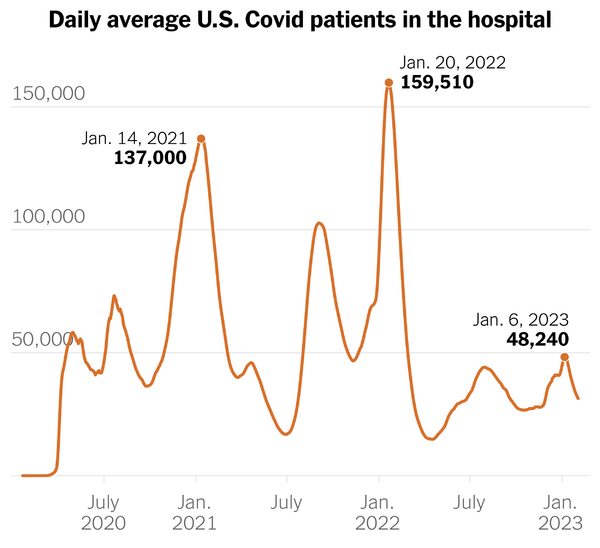
    COVID-19 hospitalizations have ticked up nationwide in recent weeks amid concerns of a potential winter surge, according to data tracked by The New York Times.

    As of Nov. 29, the nation’s daily hospitalization average was 31,125, up 12 percent over the last 14 days. This figure is still down significantly from the more than 800,000 daily hospitalizations recorded during the peak of last winter’s omicron surge. 

    MedPage Today informs us

    People with acute respiratory illness during the pandemic suffered similar levels of poor well-being in the months afterward whether they tested positive for SARS-CoV-2 or not, a registry study showed.

    In a cohort of people who all had initial symptoms suggestive of COVID-19, those who had moderate to severe scores at 3 months on the pain, mood, and other quality-of-life measures on the Patient-Reported Outcomes Measurement Information System (PROMIS) scale were actually less likely to have tested positive for the coronavirus as to have had other causes of illness (39.6% vs 53.5%, P<0.001).

    From the public health front —

    MedPage Today explains how patients can try to distinguish among different respiratory illnesses, including RSV and the flu because at home testing is unavailable.

    Politico Pulse reports

    The Biden administration looks to end its public health emergency declaration for mpox — the virus formerly known as monkeypox until recently — a sign that officials believe they’ve brought the unprecedented outbreak under control, POLITICO’s Adam Cancryn reports.

    Health officials are likely to issue a 60-day notice later this week for winding down the declaration, two people with knowledge of the matter told POLITICO, putting it on track to expire by Jan. 31. The decision isn’t yet final and could still change, the people cautioned. * * *

    Some administration officials see the potential unwinding of the mpox emergency declaration as a test run for eventually ending the yearslong Covid emergency — a more complex challenge — that Biden aides expect to happen at some point next year.

    From the Affordable Care Act and No Surprises Act front

    The American Hospital Association (“AHA”) informs us

    The Centers for Medicare & Medicaid Services seeks public input on topics related to essential health benefits — items and services that all non-grandfathered health plans in the individual and small group markets must cover under the Affordable Care Act. The agency is requesting feedback on how essential health benefits may need to be updated to reflect changes in medical evidence and scientific advancement, address gaps in coverage and health equity, or remove barriers to accessing services. In particular, CMS seeks feedback on essential health benefits related to maternal health, behavioral health and prescription drug coverage. The agency will publish the request for information in the Dec. 2 Federal Register, with comments accepted for 60 days. 

    and

    AHA today urged the Centers for Medicare & Medicaid Services not to establish a national directory of health care providers and services (NDH) at this time.

    “The AHA shares CMS’ goals to improve patient access to provider information and to facilitate health information exchange and data reporting,” the association wrote. “We appreciate the commitment CMS has invested in striving to meet these objectives. However, we are concerned that adding one more provider directory requirement will not support patients in accessing the information they need about their care providers. In fact, adding an additional data source without sufficiently addressing how or why it differs from the myriad provider directories already in existence could further complicate patients’ ability to access accurate information. Meanwhile, such a requirement would add considerable, duplicative burden on providers. Additionally, we have significant reservations about the current state of readiness of the essential technology needed for a centralized data hub such as the NDH.”

    Mercer Consulting offers insights on the prescription drug and healthcare spending reports that health plans must submit to the federal government by December 27. Jingle bells.

    Healthcare Dive reports that the Texas Medical Association has filed another lawsuit challenging different aspect of the independent dispute resolution rule. Haven’t the TMA lawyers heard about the opportunity available under the Federal Rules of Civil Procedure to amend their existing complaint?

    From the Rx coverage front —

    STAT News relates

    The Food and Drug Administration approved the first therapy using bacteria from stool samples to treat a bowel disorder on Wednesday, paving the way for several similar treatments in development.

    The drug, called Rebyota, is given as a one-dose treatment for Clostridium difficile infections, commonly known as C. diff., in which the toxin-producing bacteria disrupts the normal balance in a person’s digestive system. Rebyota is designed to restore balance by introducing good bacteria taken from donor stool samples. 

    “We are delighted that FDA has approved the first fecal microbiome restoration therapy for recurrent C. diff. This is an enormous step forward for the nearly 200,000 people who battle rCDI each year,” ​​said Christian John Lillis, the executive director of the C. diff advocacy organization the Peggy Lillis Foundation. 

    and

    Amgen released detailed data on Thursday suggesting an early-stage drug can induce significant weight loss in patients with obesity, with less frequent dosing than current treatments but a safety profile that remains unclear.

    The results for the molecule, codenamed AMG133, throw Amgen in a long-gestating race with other major drugmakers that burst into the popular press this year.

    Eli Lilly and the diabetes giant Novo Nordisk both market drugs that were recentlyshown to lower body weight by around 15% to 20% after a little over a year. (Lilly’s is currently approved only for diabetes, but it plans to submit for obesity next year.) The injectables have been highly sought after by both obesity specialist physicians, who have long searched in vain for something safe and effective to offer their patients, and celebrities hoping to look svelte in their next appearance.

    From the miscellany department —

    Beckers Hospital Review interviews a Kaiser Permanente expert about their successful use of remotely monitoring patients with diabetes and high blood pressure. The monitors deliver their results to Kaiser Permanente’s electronic health records for 40,000 members. Kudos.

    Beckers also lets us know about large hospital systems that are having a profitable 2022.

    STAT News reports

    Elon Musk’s brain-machine interface company Neuralink aims to put its first implant in a human subject in the next six months, he said during an event Wednesday.

    Musk said the company has been “working hard to be ready for our first human,” and has submitted most of the required paperwork to the Food and Drug Administration to launch a study in humans. The company — which is designing a device to translate the brain’s signals into actions — also announced it will first focus specifically on two applications: restoring human vision, and helping people who can’t move their muscles to control devices like smartphones or even return the ability to move to people with severed spinal cords, Musk said.

    Though it’s starting with certain parts of the brain, Musk said Neuralink’s long-term goal is to create a system that can translate impulses from the entire brain into actions.

    Midweek update

    From Capitol Hill, the Wall Street Journal reports

    Republicans won a majority of seats in the House of Representatives with a victory in California, the Associated Press said late Wednesday, bolstering their ability to steer the agenda on Capitol Hill after two years of Democratic control of both chambers of Congress and the White House.

    The Congressional Research Service released a report on health care provisions expiring at the end of this 117th Congress.

    Healthcare Dive adds

    With midterm elections resulting in a narrowly divided Congress, the HHS will be free to focus on longstanding priorities for the health department, such as implementing drug negotiation policy within Medicare, HHS Secretary Xavier Becerra said at the HLTH conference in Las Vegas on Tuesday.

    “In a way, we’re now going to be able to concentrate on the work we have to still execute on,” Becerra said,

    Under the Inflation Reduction Act passed earlier this year, Congress granted Medicare the power to negotiate how much it pays for certain prescription drugs starting in 2026, and to receive rebates from pharmaceutical manufacturers that hike drug costs above the rate of inflation starting in 2023.

    Of course, HHS and its partners have a lot of work on implementing the No Surprises Act. Health Payer Intelligence discusses the good faith estimate and advance explanation of benefits comments that an ERISA plan trade association, ERIC, submitted to the NSA regulators yesterday.

    In other HLTH 2022 conference news,

    • Healthcare Dive tells us about Google’s plans for offering personal health records and Maven Clinic‘s efforts to build a maternal health business by, e.g., recently landing a $90 million Series E amid increasing investor focus on women’s health.
    • MedCity News informs us, “Cell and gene therapies are offering patients potentially curative treatments for a growing scope of diseases. Insurance companies are trying to figure out how to pay for them. Industry consultants speaking at the HLTH conference offered some strategies they see payers taking to these new therapies.”

    From the federal employee benefits front,

    • Govexec collected all of its current Open Season articles for convenient access.
    • Reg Jones, writing in Fedweek, recommends that federal employees contemplating retirement should retire on December 31, 2022.
    • Govexec reports that the Postal Service is headed into its busy season with far fewer employees than past years.

    From the Affordable Care Act front —

    • The FEHBlog ran across this updated reference chart on minimum essential coverage under the ACA.
    • The U.S. Preventive Services Task Force issued its 12th Annual Report to Congress which is titled “High-Priority Evidence Gaps for Clinical Preventive Services.”

    From the public health front —

    • Forbes reports “Researchers at the University of Houston have developed a vaccine that could block the effects of fentanyl and prevent addiction, according to a new study that could unlock solutions to the opioid epidemic as more than 150 people die every day from overdoses connected to synthetic opioids.”
    • CNN reports “The five-year lung cancer survival rate has increased 21%, from 21% in 2014 to 25% in 2018, making what experts call “remarkable progress” – but it is still the leading cause of cancer death in the United States. However, in communities of color, a person’s odds of surviving five years after diagnosis are much lower, at only 20%, according to the 2022 State of Lung Cancer report, which was published by the American Lung Association on Tuesday.”
    • The National Institutes of Health tells us “COVID-19 Vaccines Are Safe for People Receiving Cancer Immunotherapy, Study Confirms.”

    From the miscellany department —

    • Forbes informs us “UnitedHealth Group’s pharmacy benefit manager Optum Rx Tuesday said it will put three less expensive “biosimilar” versions of Abbvie’s pricey rheumatoid arthritis drug Humira ‘in the same position as the brand’ on the PBM’s preferred list of drugs known as a formulary.”
    • MedTech Dive discusses how Labcorp, Abbott, BD, and Siemens plan to expand the home testing market
    • NCQA looks back at its recent Health Innovation Summit.

    Tuesday’s Tidbits

    Photo by Patrick Fore on Unsplash

    From the Federal Employees Benefit Open Season front —

    • My Federal Retirement discusses the availability of high deductible plans coupled with health savings accounts in the FEHB.
    • A Federal Times expert, Reg Jones, explains the differences between Open Season and special enrollment periods.

    In related news, Federal News Network tells us

    Over 200 members of the Senior Executive Service this year will receive Presidential Rank Awards, considered the highest honor for career civil servants.

    President Joe Biden picked 233 winners across a total of 33 different agencies for the 2022 awards program, the Office of Personnel Management announced on Nov. 15.

    “Each and every day, our federal employees are working to address the nation’s most pressing issues, developing technologies to improve millions of lives, and ultimately, achieving the seemingly unachievable on behalf of the American public,” OPM Director Kiran Ahuja said in a press statement. “This year’s Presidential Rank Awards reflect the Biden-Harris administration’s support for hardworking civil servants who exemplify strength, integrity, industry and a relentless commitment to public service through their exceptional leadership, contributions and accomplishments.”

    Kudos to the winners.

    From the Omicron and siblings front, the Wall Street Journal reports

    Moderna Inc.’s new updated Covid-19 booster shot for the U.S. generated strong immune responses in people against Omicron subvariants, according to the first data from a company-sponsored study testing the new doses in volunteers.

    Moderna said Monday that people receiving the updated booster shot had more than five times the neutralizing antibodies against Omicron subvariants BA.4 and BA.5 than people who received Moderna’s original booster shot, which targeted an earlier strain of the coronavirus.

    “That really bodes well for the vaccine and public health,” Moderna President Stephen Hoge said in an interview.

    From the conferences’ front —

    • The American Medical Association explains what happened on the closing day of the AMA’s interim meeting.
    • Healthcare Dive offers Dive Briefs from the HLTH conference about Included Health and Elevance Health. Fierce Healthcare adds “Mental health provider SonderMind acquired neuroscience company Total Brain with the goal of revolutionizing personalized therapeutic care and providing individual insights into mental wellbeing.”

    In other U.S. Healthcare business news

    Healthcare Dive informs us

    • “Amazon has launched a message-based virtual health service called Amazon Clinic a little more than two months after the retail giant shuttered its primary care delivery business Amazon Care.
    • “Amazon Clinic, which is currently live and available 24/7 through Amazon’s website and mobile app, is a marketplace for telemedicine providers, connecting consumers with virtual doctors who can diagnose, treat and prescribe medication for a range of common health conditions like acne, birth control and migraines, the retail giant said.
    • “Amazon Clinic will be available in 32 states at launch, with plans to expand to additional states in the coming months, according to a Tuesday blog post announcing the news. * * *
    • “Consultation cost will vary by provider, including follow-up messages with a clinician for up to two weeks after the consultation. Consultations start at $30.
    • “Amazon Clinic does not accept insurance. The company didn’t disclose whether that would change in the future.”

    Minnesota Public Radio tells us

    Nearly a decade after unsuccessfully attempting a merger, South Dakota-based Sanford Health and Minnesota’s Fairview Health Services said Tuesday they’re again in talks to combine.

    The two regional health care giants say they intend to complete a merger next year. The new entity would be called Sanford Health and be run by Sanford’s current CEO. The deal would include the University of Minnesota hospitals, which Fairview purchased in 1997.

    Financial details and any cost-cutting plans tied to the proposed merger were not immediately disclosed.

    From the Food and Drug Administration front —

    On Thursday [November 10], the FDA, in conjunction with the CDC, released results on youth tobacco use from the 2022 National Youth Tobacco Survey. Findings show that in 2022, more than one in 10 middle and high school students (3.08 million) had used a tobacco product during the past 30 days – including 16.5% of high school and 4.5% of middle school students. The full results are available here

    Today, the FDA announced an unprecedented advancement in foodborne illness prevention through the finalization of a rule to more effectively trace contaminated food through the food supply, whether sourced in the U.S. or abroad. 

    Also [t]oday, the FDA issued a Federal Register notice, Safety and Effectiveness of Certain Naloxone Hydrochloride Drug Products for Nonprescription Use, that may help facilitate the development and approval of certain nonprescription naloxone drug products, including through the switch of certain naloxone drug products from prescription status to nonprescription status. Naloxone is a medicine that can help reduce opioid overdose deaths and when administered timely, usually within minutes of the first signs of an opioid overdose, can counter the overdose effects.

    From the No Surprises Act front, today was the deadline for the public to submit comments to the NSA regulators concerning two unnecessarily complicated consumer protections found in the law — the good faith estimate and the advance explanation of benefits. In the FEHBlog’s view, the NSA regulators would be well served if they limited those protections to surprise billing situations not elsewhere covered by the law, for example, (1) complicated procedures and (2) reoccurring services that take place over a prolonged period, e.g. chiropractor care, mental health care. The WEDI group, which is an advisor to the HHS Secretary, also offers useful comments on the matter.

    From the Affordable Care Act front, the U.S. Preventive Services Task Force gave an inconclusive (I) grade today to screening for obstructive sleep apnea in adults. “The USPSTF concludes that the current evidence is insufficient to assess the balance of benefits and harms of screening for obstructive sleep apnea in the general adult population.” The USPSTF previously graded the apnea screening service an I grade in January 2017.

    In closing, here’s a tidbit from the Wall Street Journal

    The Earth is now home to eight billion people, the United Nations said, because people are living longer and fertility rates have surged in some countries. * * *

    There were about 300 million people on Earth two millennia ago, according to the U.N. The population fluctuated in the centuries after that, largely because of plagues and natural disasters. Then the population accelerated, reaching one billion in 1804, four billion in 1974 and seven billion in 2011. * * *

    Demographers project the world will reach its next population milestone—nine billion—around 2037.

    The U.N. predicts that the global population will peak at around 10.4 billion during the 2080s and remain near that level until the start of the next century. Another forecast, from the Wittgenstein Centre for Demography and Global Human Capital at the University of Vienna, has it peaking at 9.67 billion in 2070, before a slow decline as fertility rates drop.