FEHBlog

Friday Factoids

From Washington, DC

  • Federal News Network points out three reasons why federal and postal employees and annuitants should consider their FEHB plan options before Open Season ends on December 9.
  • FedWeek updates its Open Season FAQs for the benefit of Postal employees and annuitants.
  • The Government Accountability Office released a report comparing employer sponsored plans against Affordable Care Act marketplace plans.
    • “In 2023, about 165 million individuals in the U.S. got their health coverage through an employer and about 16 million got coverage through Affordable Care Act Marketplaces.
    • “Comparing the costs of these plans isn’t straightforward. For example, people with employer-sponsored plans pay their premiums with pre-tax dollars. People with Marketplace plans pay their premiums with after-tax dollars. Other factors (e.g., geographic area, level of coverage) can also affect costs.
    • “We estimated that people with employer-sponsored plans had lower average premiums, but their average contributions to those premiums were higher than those in Marketplace plans.”
  • Beckers Payer Issues informs us,
    • “Some insurers are sounding the alarm that Medicare coverage of weight loss drugs could increase premiums. 
    • “On Nov. 26, CMS issued its proposed rule for Medicare Advantage plans in 2026. The rule included a proposal to allow the program to pay for weight loss drugs for individuals with obesity. 
    • “The coverage would also extend to Medicaid beneficiaries. The White House estimated more than 7 million people would be eligible for weight loss drugs if coverage is expanded. 
    • Ceci Connolly, president of the Alliance of Community Health Plans, called the proposal “irresponsible, without further analysis and stakeholder engagement.” 
    • “We are deeply concerned with the proposed coverage expansion of weight-loss drugs in Medicare and Medicaid,” Ms. Connolly said. “The excessive prices drugmakers command for GLP-1s have enormous cost consequences for consumers, taxpayers and employers.” 
    • “The organization represents 30 nonprofit health plans.”
  • STAT News reports,
    • “Bristol Myers Squibb has filed a lawsuit accusing the Biden administration of unlawfully preventing the company from using rebates to pay hospitals that participate in a federal drug discount program, the fourth large pharmaceutical company to attempt a change in payment terms in recent weeks.
    • “The drugmaker sought that move for its widely prescribed Eliquis blood thinner, but the U.S. Department of Health and Human Services maintained such a switch would violate federal law. The agency recently made the same determination in rejecting moves by Johnson & Johnson and Eli Lilly to change payment terms, both of which filed lawsuits. Sanofi also wants to change payment terms but has not filed a lawsuit.
    • ‘In its lawsuit, Bristol argued that the 340B Drug Discount Program is rife with waste and abuse. The program was created three decades ago to help hospitals and clinics care for low-income and rural patients. Drug companies that want to take part in Medicare or Medicaid must offer their medicines at a discount — typically, 25% to 50%, but sometimes higher — to participating hospitals and clinics.
    • “However, Bristol had an additional motive for filing its suit. Eliquis was selected by Medicare for price negotiations. And the agency wants manufacturers to ensure the 340B discount and maximum fair price under the Inflation Reduction Act are not applied to the same drug. By offering rebates instead of discounts, the company is trying to avoid this conundrum. J&J stated the same concern in its lawsuit.”

From the public health and medical research front,

  • The Wall Street Journal tells us,
    • “More than 1 in 4 people over age 65 fall each year. Earlier this month, the veteran TV host and comedian Jay Leno was one of them. Leno, 74, left his hotel near Pittsburgh looking for a bite to eat. It would have been a long walk to the restaurant, so he took a shortcut down a grassy hill. A tumble on the slope left him with a broken wrist and significant bruises to his face and entire left side. 
    • “Leno still managed to do his comedy act that night. He was luckier than many fall victims. Every year falls among older Americans result in about 3.6 million emergency room visits and 1.2 million hospital stays, at a cost of roughly $80 billion. Nationwide, 41,000 senior citizens die from falls annually, according to the Centers for Disease Control and Prevention. In recent years, prominent figures such as comedian Bob Saget, former Connecticut Sen. Joe Lieberman and Ivana Trump died after a fall.
    • “And despite progress in care and prevention techniques, a University of Michigan study found that the number of falls goes up about 1.5% every year. “It could be that efforts aren’t working—or that they are, by mitigating even worse potential injury risk in the population,” said Geoffrey Hoffman, a gerontologist at the University of Michigan. “Either way, more investment in prevention and funding for fall education and prevention programs would help.” 
    • “The CDC operates a program known as STEADI (Stopping Elderly Accidents, Deaths and Injuries) to assist healthcare providers in screening older patients for fall risk factors, such as a history of falls, vision problems, inadequate vitamin D intake and foot problems. In one common test, the patient must get up from a chair, walk 10 feet, turn around, walk back and sit down. If this takes more than 12 seconds, they are deemed to be at risk for a fall.
    • “Earlier this year, Rep. Carol Miller of West Virginia, a Republican, introduced legislation to make fall-risk assessment part of Medicare’s annual wellness benefit for all seniors. The bill, known as the SAFE Act, would also direct the Department of Health and Human Services to report annual statistics about falls to Congress.”
  • Medscape discusses new data supporting the most promising treatments for long Covid.
  • Per an NIH press release,
    • “Children of mothers who took certain antiseizure medications while pregnant do not have worse neurodevelopmental outcomes at age 6, according to a long-running study funded by the National Institutes of Health (NIH). The study was published in JAMA Neurology.
    • “Controlling seizures during pregnancy is an important part of prenatal care for women with epilepsy, but for years, the effects of newer antiseizure medications on their children was unknown,” said Adam Hartman, M.D., program director at NIH’s National Institute of Neurological Disorders and Stroke (NINDS). “One major component of this study was correlating the cognitive abilities of children with maternal blood levels of the drugs. This opens the door to future work and might inform better dosing strategies.”
    • “Treating epilepsy during pregnancy is challenging, as some antiseizure medications, primarily older drugs such as valproate, are known to cause serious birth defects and cognitive problems in children, including lower IQ and autism spectrum disorders. Newer antiseizure drugs that are widely used today are generally considered safe, but little is known about whether they affect cognition in children after fetal exposure.”
  • The Washington Post reports,
    • “A farm that supplies organic, pasture-raised eggs for Costco has issued a recall for more than 10,000 products sent to 25 retail locations in five southern states.
    • “Handsome Brook Farms said the eggs, which were sold in packs of 24 under the label of Kirkland Signature, could be contaminated with salmonella. The recalled eggs were sent to Costco stores in Alabama, Georgia, North Carolina, South Carolina and Tennessee, the farm said. The affected products were sent beginning Nov. 22 and bear the UPC 9661910680, along with the code 327 and a “use by” date of Jan. 5, 2025, printed on the side.
    • “Handsome Brook Farms, which is working with the Food and Drug Administration on the recall, said no one has reported being sickened by the eggs. Salmonella is a bacteria that can cause diarrhea, fever and abdominal cramps, according to the FDA. More severe cases can be fatal, and children, elderly people and those with weakened immune systems are more vulnerable to more acute infections.”
  • NBC News adds,
    • “An Arizona produce company is recalling all sizes of its whole, fresh American cucumbers in 26 states and parts of Canada because they could be contaminated with salmonella, it said.
    • “SunFed said in an announcement posted online Thursday by the Food and Drug Administration that cucumbers it sold from Oct. 12 to Nov. 26 were recalled because of the potential contamination, which can cause serious and sometimes fatal infections in young children, frail or elderly people and others with weakened immune systems.
    • “The recalled cucumbers were packaged in bulk cardboard containers marked with the SunFed label or in generic white boxes or black plastic crates with stickers naming the grower, according to the company.
    • “The produce was distributed in 26 states: Alaska, Arizona, Arkansas, California, Colorado, Connecticut, Florida, Idaho, Illinois, Indiana, Kansas, Maryland, Massachusetts, Minnesota, Missouri, New Jersey, New York, North Carolina, Oklahoma, Pennsylvania, Tennessee, Texas, Utah, Virginia, Washington and Wisconsin.”
  • The CDC notes that “Due to the Thanksgiving holiday, the weekly respiratory virus data and summaries will not update on Friday, November 29, 2024. Data updates will resume on Monday, December 2, 2024.”  Lo siento.

From the U.S. healthcare business front,

  • Health Affairs Scholar lets us know,
    • As policymakers continue to grapple with rising health care costs and prices, understanding trends and variations in inpatient prices among hospital characteristics is an important benchmark to allow policymakers to craft targeted policies. In this study, we provide descriptive trends on variation in inpatient prices paid by commercial health plans stratified by hospital characteristics using data from Health Care Cost Institute’s employer-sponsored insured claims data.
    • Our analyses found evidence of considerable variation among inpatient price levels and growth among system affiliation and profitability. Prices among system-affiliated hospitals grew from $14,281.74 in 2012 to $20,731.95 in 2021, corresponding to a 45.2% increase during this period. On the other hand, prices among independent hospitals grew more slowly, from $13,460.50 in 2012 to $18,196.90 in 2021, corresponding to a 35.2% increase.
    • We did not observe a similar trend in growth rates among case mix index by hospital characteristics, implying that differential inpatient price growth is not driven by changes in case mix by hospital characteristics. Heterogeneity in hospital prices and price growth by type of hospital suggests that public and private policymakers aiming to rein in health spending should consider policies that address this variation.
  • Per BioPharma Dive
    • “For drug companies, predicting how much money a product will make is a risky endeavor. If the estimate ends up being far off, then investors may question how well a developer understands its own business or the markets in which it operates. That’s especially true when the prediction is too high.
    • “Analysts on Wall Street were therefore surprised last month to hear Intra-Cellular Therapies, which never much entertained this guessing game, say that its brain-rebalancing drug Caplyta would reach $5 billion in annual sales sometime in the next decade. This year alone, the New Jersey-based company expects $665 million to $685 million in net product sales from Caplyta. * * *
    • “Known scientifically as lumateperone, Caplyta is already approved to treat schizophrenia and bipolar depression and could be cleared for major depressive disorder as early as next year. Intra-Cellular licensedthe drug from Bristol Myers Squibb in 2005, just a few years after the company formed and right as big pharma really started backing away from neuroscience and psychiatry. Now, the company has about 530 sales reps and plans to expand again in preparation for the move into major depression.”
    • In the article, BioPharma Dive interviews Sharon Mates, Intra-Cellular’s founder and CEO.
  • Modern Healthcare reports,
    • “Tim Barry, the CEO of VillageMD, has left the company following a rocky few years mired by its failure to help execute on a healthcare push launched by majority-owner Walgreens Boots Alliance.
    • “It’s unclear exactly when Barry left the Chicago-based company, but VillageMD Chief Operations Officer Jim Murray replaced him “effective immediately,” assuming all day-to-day leadership responsibilities, spokeswoman Molly Lynch said in a statement to Crain’s today.
    • “VillageMD reaffirms its commitment to providing high-quality, accessible healthcare services for individuals and communities across the United States,” Lynch said. She declined to provide additional information about the transition.
    • “Barry co-founded VillageMD in 2013 as a primary care company focused on value-based care, growing to hundreds of locations across the country.”

Happy Thanksgiving!

The FEHBlog will be back on Friday.

From Washington, DC,

Transition News

  • Govexec tells us,
    • “President-elect Trump has reached an agreement with the Biden administration that will allow his teams to deploy throughout federal government, ending a standoff that had blocked official presidential transition efforts taking place. 
    • “Transition staff assigned to each agency, known as landing teams or agency review teams, will now physically enter headquarters offices throughout government. Once there, they will meet with assigned career senior executive staff, receive already drafted briefings on agency activities and begin the process of exchanging information about existing projects and future priorities.”
  • STAT News reports,
    • “President-elect Trump has chosen Stanford University professor Jay Bhattacharya to lead the National Institutes of Health, his transition announced Tuesday.
    • “If confirmed by the Senate, Bhattacharya would be in charge of implementing the incoming Trump administration’s bold goals to reform the agency. 
  • The Wall Street Journal adds,
    • “Bhattacharya is both a doctor and economist who became known during the Covid-19 pandemic as a co-author of the Great Barrington Declaration, a document that called for ending lockdowns and isolating the vulnerable so that young, healthy people could get infected and build up immunity in the population. 
    • “Other doctors and public-health researchers, including then-infectious disease chief Dr. Anthony Fauci, criticized the document and said its approach was flawed and would lead to unnecessary deaths.”
  • The Hill notes,
    • President-elect Trump’s choice for deputy secretary of Health and Human Services is Jim O’Neill, an investor and historically close associate of billionaire Peter Thiel, the president-elect said Tuesday.”

Medicare / GLP-1 Drug News

  • The American Hospital Association News informs us,
    • “The Department of Health and Human Services Nov. 26 issued a final rule that expands access to kidney and liver transplants for individuals with HIV by removing clinical research requirements. Specifically, the rule implements a stipulation under the HIV Organ Policy Equity Act, eliminating the need for approval from the clinical research and institutional review board for kidney and liver transplants between donors with HIV and recipients with HIV. The change was based on research showing the safety and effectiveness of such transplants, HHS said. The final rule is effective Nov. 27.
    • “In tandem with the final rule, the National Institutes of Health published a notice seeking public comment on a proposed revision to its research criteria for HOPE Act transplants of other organs, such as heart, lung and pancreas, with a 15-day comment period.”
  • and
    • “The Centers for Medicare & Medicaid Services Nov. 26 proposed changes to the Medicare Advantage and prescription drug programs for contract year 2026. Those changes would permit coverage of anti-obesity medications in the Medicare and Medicaid programs; fortify existing limitations on insurer use of internal coverage criteria and requirements for MA plans to provide coverage for all reasonable and necessary Medicare Part A and B benefits; and apply additional guardrails to insurer use of artificial intelligence to ensure it does not result in inequitable treatment or access to care. CMS also proposes to update MA and Part D plan medical loss ratio reporting requirements to improve oversight, align reporting with commercial and Medicaid reporting, and request additional information on MLR and vertical integration. 
    • “Among other provisions, the proposed rule would require MA plans to make provider directory information more widely available through the Medicare Plan Finder tool; limit enrollee cost sharing for behavioral health services to an amount that is no greater than Traditional Medicare; enhance CMS oversight of MA agent and broker marketing and communication materials; increase insurer reporting requirements related to insurer use of prior authorization and potential health equity implications; and add new requirements governing MA plan use of debit cards to administer enrollee supplemental benefits. Finally, the proposed rule would also codify several provisions in the Inflation Reduction Act, such as capping certain out-of-pocket costs in Medicare Part D, and other pharmacy-related provisions, such as new requirements for Part D sponsors on formulary inclusion and placement of generic drugs and biosimilars.” 
  • Here is a link to the CMS fact sheet about the Medicare Advantage and Part D proposed changes for 2026.
  • KFF already has issued a policy watch about CMS’s proposal to cover GLP-1 drugs for obesity under Medicare Part D and Medicaid beginning in 2026. The FEHBlog is surprised that CMS made this decision knowing that the Inflation Reduction Act has placed financial pressure on standalone Medicare Part D plans.
  • The Wall Street Journal notes,
    • The [GLP-1 drug] proposal, which would have to be finalized by the Trump administration, faces uncertain prospects.
  • In this regard, Beckers Hospital Review shares the recent comments of President-elect Trump’s nominee for HHS Secretary Robert F. Kennedy, Jr., concerning GLP-1 drugs.
  • The Wall Street Journal adds,
    • “Meantime, Mehmet Oz, the choice to run the Centers for Medicare and Medicaid Services, has said on X that the drugs “can be a big help. We need to make it as easy as possible for people to meet their health goals, period.” * * *
  • On a related note, MedCity News discusses “The Promise and Challenge of GLP-1 Medications: Ensuring ROI in Obesity Care.”

Federal Employment Tidbits

  • Federal News Network reports
    • “Federal Executive Boards are looking to expand their offerings to even more federal employees working outside of the Washington, D.C., region.
    • “After reporting successful training sessions, recruitment events and cost savings in the last fiscal year, the Office of Personnel Management sees an opportunity to extend FEBs’ reach to more than double the number of feds who can access the program’s resources.
    • “The expansion would now be possible, after the FEB program went a restructuring, as well as recently developing a new funding model, OPM said.
    • “This transformation is designed to enhance the FEBs’ effectiveness in fostering interagency collaboration, better serve the 85% of federal employees located outside Washington, D.C., and expand FEBs’ reach to areas with significant federal activity but no FEB presence,” OPM wrote in its fiscal 2023 FEB annual report, published earlier this month.”
  • FedWeek lets us know,
    • “Availability of telework has had a positive impact on recruitment and retention, a sampling of four agencies told GAO, but its effect on customer service and other agency operations is hard to gauge—and three of the four have done little to even try.
    • “The effect on productivity has become a major focus in the ongoing debate over agency telework levels that, although well below the peak of the pandemic period, remain high by historic measures. The GAO report, while not conclusive, adds information to a debate that may result in moves to restrict telework starting in January by the new Congress, the Trump administration, or both.”

FDA News

  • Per Fierce Pharma,
    • “In 2001, a Time Magazine cover story touted Novartis’ targeted leukemia treatment Gleevec (imatinib) as a new kind of “ammunition in the war against cancer.” Along with a picture of the Gleevec pills, Time exclaimed: “These are the bullets.”
    • “Twenty-three years later, patients no longer need to take a “bullet” to reap the benefits of imatinib as Shorla Oncology has scored an FDA approval for its strawberry-flavored drink version of the treatment. Dubbed Imkeldi, it becomes the first oral liquid form of imatinib, Shorla said in a press release.
    • “The therapy can help patients combat myelodysplastic syndrome/myeloproliferative disease (MDS/MPD), gastrointestinal tumors (GIST) and cancers such as chronic myeloid leukemia (CML) and acute lymphoblastic leukemia (ALL).”
  • Per MedTech Dive,
    • “Zimmer Biomet said Monday that it received approval for a cementless partial knee replacement implant in the U.S.
    • “The Oxford Cementless Partial Knee launched in England in 2004. The device is established in Europe, where the company said it has a 60% market share, but will be the first product of its type available in the U.S. The orthopedic company plans to launch the implant in the first quarter of 2025.
    • “Zimmer has identified the device as a good fit for ambulatory surgical centers (ASC) and CEO Ivan Tornos has forecast the product will be one of the top three knee growth drivers in the U.S.”

From the public health and medical research front,

  • The Wall Street Journal reports,
    • “A highly anticipated obesity-drug candidate from biotech Amgen helped patients shed a significant amount of weight in a mid-stage study but fell short of the loftier expectations of some investors. 
    • “Subjects taking Amgen’s MariTide lost 20% of their body weight compared with those who received placebos, Amgen said Tuesday. Analysts had generally expected the drug to achieve weight reduction of 20% or more.
    • “About 11% of subjects dropped out of the study because of side effects, the most common of which included nausea and vomiting.”
  • BioPharma Dive offers a tracker for obesity drug trials.
  • Beckers Hospital Review relates,
    • “A new study on asthma medication Singulair has raised concerns about its potential mental health side effects, USA Today reported Nov. 24. 
    • “The study, presented by the FDA at the American College of Toxicology meeting in Austin, Texas, found that the drug binds to multiple brain receptors linked to mood, cognition, sleep and impulse control. While the research does not confirm if this binding causes harmful side effects, experts warned it could be a significant concern. 
    • “Singulair, commonly prescribed for asthma and allergy symptoms, has been linked to severe neuropsychiatric issues, including anxiety, depression, hallucinations, irritability and suicidal thoughts, USA Today reported.
    • ‘In 2020, the FDA added a boxed warning to the drug, highlighting the risk of severe mental health side effects. Since its introduction in 1998, Singulair has been associated with dozens of suicides and other psychiatric disorders, with reports of adverse effects continuing into recent years. 
    • “Despite the new findings, the FDA said it will not immediately update the drug’s label. The agency also emphasized that more research is needed to fully understand the extent of the drug’s impact on the brain, according to the report.”
  • The National Institutes of Health shares news about “Sleep and heart healing | Liver-brain communication | Characterizing sensory nerves.”
  • Beckers Hospital Review offers a “‘straight-A’ hospital’s safety playbook.”

From the U.S. healthcare business front,

  • Fierce Healthcare points out,
    • “Pittsburgh-based health insurer and provider Highmark Health has brought in $529 million in net income through the first three quarters of the year, according to its latest financial details released Tuesday.
    • “That’s on $22.1 billion in revenue through the first nine months of 2024, along with $273 million in operating gain.
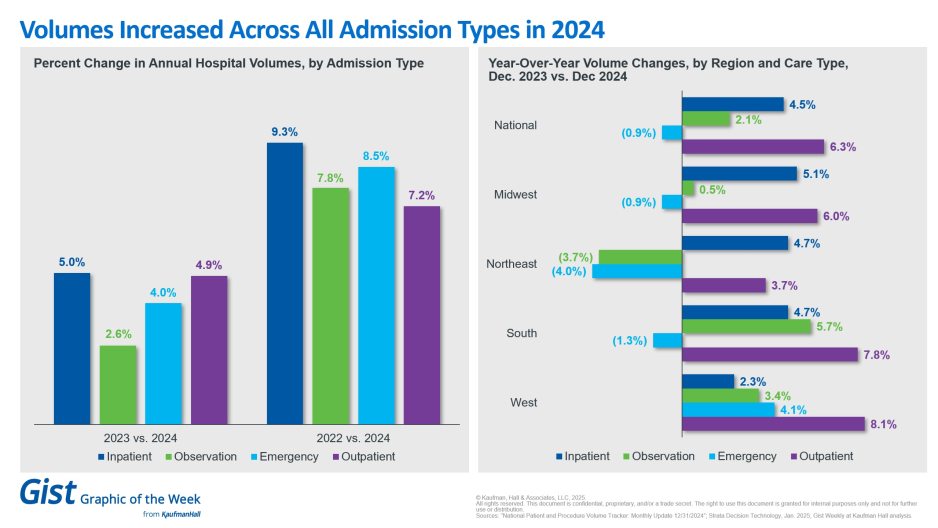
    • “Highmark said that its financial performance is driven by its health plans along with increased volumes at its Allegheny Health Network (AHN). As of Sept. 30, the AHN saw a 3% increase in inpatient discharges and observations as well as 7% more outpatient registrations compared to the same time last year.
    • “In addition, the AHN logged a 5% increase in physician visits and a 6% increase in visits to the emergency room.”
  • Modern Healthcare reports,
    • “Community Health Systems scrapped a $120 million deal to sell three Pennsylvania hospitals and related facilities to WoodBridge Healthcare.
    • “CHS and WoodBridge mutually decided to dissolve the agreement Friday due to WoodBridge’s inability to satisfy funding requirements, according to a Tuesday news release. Investment banking firm Zeigler was unable to sell the bonds needed to fund the acquisition, despite earlier indications of confidence in the bond sales, WoodBridge said in a separate release.”
  • Chief Healthcare Executive (11/22, Southwick) reported, “The majority of hospital and health care facility reviews on Yelp are negative, according to a new study.” Investigators found that “in March 2020, 54.3% of reviews on Yelp were positive, but that number has dropped to 47.9%” Chief Healthcare Executive adds, “Since the second half of 2021, positive reviews haven’t surpassed 50%.” The research was published in JAMA Network Open. Thanks, Covid.

Monday Roundup

From Washington, DC,

Photo by Sven Read on Unsplash
  • Govexec tells us,
    • “The U.S. Postal Service said it is well positioned to handle a blitz of mail and packages ahead of the holiday season, though it will confront its busiest time of the year after once again hiring fewer seasonal employees. 
    • “USPS will bring on just 7,500 temporary workers to help the agency complete processing and delivery efforts, with employees having started as early as October and staying on as late as mid-January. That is down slightly from its target of 10,000 hires last year and precipitously from 45,000 in 2021. Postal management has maintained that its efforts to convert nearly 200,000 part-time staff to full-time, career employees over the last several years has mitigated its need to onboard seasonal workers. “
  • The American Hospital Association News lets us know,
    • “More than 496,900 consumers who currently do not have health insurance coverage have signed up for a 2025 health plan through the federally facilitated Health Insurance Marketplace, the Centers for Medicare & Medicaid Services reported last week. They join over 2.5 million returning consumers who selected plans for 2025 during the open enrollment period. Open enrollment began Nov. 1 and continues through Jan. 15. Last year, 21.4 million people signed up for coverage.” 
  • Per an HHS press release,
    • “The Administration for Strategic Preparedness and Response (ASPR), part of the U.S. Department of Health and Human Services, today announced two additional Defense Product Act (DPA) Title III Active Pharmaceutical Ingredient (API) investments focused on solving ongoing drug shortages. These new investments seek to rebuild and protect the U.S. public health supply chain as an essential part of national defense.” * * *
    • “Under DPA Title III, ASPR’s Office of Industrial Base Management and Supply Chain (IBMSC) will provide $32.4 million to Manus Bio, Inc., a private company in Waltham, Massachusetts, to expand its facilities for the production of key starting materials for essential medicines. Manus will utilize biomanufacturing and incorporate a continuous flow process which enables automated multi-step chemical synthesis. Manus has developed a suite of optimized microbial chassis which gives access to more than 150,000 natural products, known as bioalternatives, including terpenoids, polyketides, phenylpropanoids, and flavonoids.  
    • “ASPR IBSMC also will provide up to $12 million to Antheia, Inc., a private pharmaceutical ingredient manufacturer located in Menlo Park, California. Antheia’s biomanufacturing platform leverages bioengineering and computational biology to produce critical drug substances in an efficient and scalable one-step fermentation process. Antheia will focus on key starting materials and APIs used in the production of essential medicines.”
  • KFF considers “how [a bunch of] pending health-related lawsuits could be impacted by the incoming Trump Administration.”

From the public health and medical research front,

  • The Washington Post reports,
    • “Bird flu, a virus that can also affect humans, has been discovered in a batch of raw milk sold in California store refrigerators, state regulators said Sunday. While there have been no reported illnesses in this most recent case, it comes just a few days after a child tested positive for bird flu for the first time in U.S. history.
    • “A batch of whole raw milk from Raw Farm that has a “best by” date of Nov. 27, 2024, has been recalled after Santa Clara County health officials detected bird flu in a sample purchased for testing, the California Department of Public Health said in a news release. The farm is in Fresno County.
    • “Retailers have been notified to pull the product from their refrigerator racks, the state health department said. Consumers who may have it in their homes are advised not to drink it.”
  • MedPage Today adds,
    • “Last week, it was reported that an infant died from a Listeria infection in an outbreak tied to ready-to-eat-meat products. Meanwhile, recalls continue after an outbreak of Escherichia coli from bagged organic carrots led to 15 hospitalizations and a death.
    • “What seems like a marked rise in reports of foodborne illnesses in recent months may not be an illusion — but experts say the reasons behind a presumed increase may be more related to how we track these outbreaks than the outbreaks themselves.”
  • The American Medical Association explains what doctors wish their patients knew about peripheral artery disease.
  • Consumer Reports, writing in the Washington Post, tells us “Sugar substitutes are everywhere. How safe are they to eat? Manufacturers are responding to growing demand by using non-sugar sweeteners to replace some or all of the sugar in many foods and drinks.”
  • Per STAT News,
    • “Alector Therapeutics said Monday that its Phase 2 trial for an experimental Alzheimer’s antibody failed, dealing a blow to what had been one of the leading dark horse approaches to treating the neurodegenerative disease.
    • “The drug, called AL002, is designed to activate a group of surveilling neuronal immune cells called microglia. It was among several efforts, now in or nearing clinical trials, predicated on the notion that modulating the brain’s immune system could slow the degenerative disease. 
    • “In the 381-person trial, however, patients who received AL002 didn’t decline more slowly than patients who were on placebo, as measured by a scale called the Clinical Dementia Rating Sum of Boxes. Alector said the trial also failed to show an effect on secondary measures of cognition and function, or on biomarkers associated with the disease, such as amyloid levels.”
  • Per Fierce Pharma,
    • “Incyte’s previously disclosed phase 3 win in relapsed or refractory follicular lymphoma (R/R FL) sent the company racing to file an expansion bid for its Monjuvi (tafasitamab) by year-end. Now, a clearer picture of the drug’s success in the patient population has been revealed courtesy of a research paper published ahead of this year’s American Society of Hematology Annual Meeting & Exposition.
    • “In the phase 3 inMIND study, Monjuvi—added to Bristol Myers Squibb’s Revlimid and Roche’s Rituxan—triggered a 57% reduction in the risk of disease progression, relapse or death in R/R FL patients compared with those who were treated with placebo, Revlimid and Rituxan, according to the paper.
    • “Researchers determined a median investigator-assessed progression free survival of 22.4 months for the treatment arm versus 13.9 months for the control group. The benefits in progression-free survival were consistent across subgroups, the researchers said.”
  • and
    • “After a recent failed showing in a breast cancer subgroup raised doubts around AstraZeneca’s Truqap, the first-in-class AKT inhibitor is making inroads in a prostate cancer subtype.
    • “High-level results from the company’s ongoing CAPltello-281 phase 3 study demonstrated that a combination of Truqap, Johnson & Johnson’s Zytiga and androgen deprivation therapy (ADT) delivered statistically significant and clinically meaningful improvements on the trial’s primary endpoint of radiographic progression-free survival (rPFS), AZ said on Monday.
    • “The trial compared the regimen versus the standard-of-care Zytiga and ADT in patients with PTEN-deficient de novo metastatic hormone-sensitive prostate cancer (mHSPC), a specific type of prostate cancer with a particularly poor prognosis, AZ said in its Monday press release.”
  • Per BioPharma Dive,
    • “Adding Merck & Co.’s new cardiovascular drug Winrevair to background therapy helped people with severe lung hypertension stay alive and avoid invasive medical care longer than those who only received background therapy, the company said Monday.
    • “Data from the ZENITH trial could potentially expand use of a drug that’s now forecast to earn $5 billion a year at its peak. A trial steering committee stopped the trial early at an interim checkpoint because data indicated the Winrevair combination clearly outperformed placebo, Merck said.
    • “Merck obtained Winrevair in 2021 with its $11 billion acquisition of Acceleron in 2021. The pharmaceutical company is looking for sales of heart disease drugs to drive growth in coming years as its biggest seller, the cancer treatment Keytruda, loses market exclusivity later in the decade.”
  • and
    • “An experimental, muscle-preserving drug from Biohaven fell short of its goal in a Phase 3 study of people with spinal muscular atrophy, but showed enough promise in its effects on body composition that the company plans to advance it as a treatment for obesity.
    • “A regimen of Biohaven’s drug, taldefgrobep alfa, and a standard SMA therapy didn’t significantly improve motor function after 48 weeks compared to treatment with a typical SMA medicine and placebo. Biohaven didn’t provide full study data in a Monday statement, but claimed it found “efficacy signals” in certain subgroups and plans to discuss potential paths forward in SMA with U.S. regulators.
    • “Treatment was associated with positive changes on body composition, Biohaven said. The “overall strength and consistency” of those findings has encouraged the company to “rapidly advance” the drug into a placebo-controlled Phase 2 trial in obesity by the end of the year.”

From the U.S. healthcare business front,

  • The Washington Post discusses at length hospital and emergency care at home programs.
  • Fierce Pharma informs us,
    • “After six straight quarters in which Eli Lilly or Novo Nordisk achieved the highest year-over-year revenue growth among the top companies in the biopharma industry, there was a new champion in the third quarter—and it was a major surprise.
    • “With a 32% increase in sales, Pfizer delivered the No. 1 bump among large drugmakers in the period, topping the sales growth figures for Novo (21%) and reigning champion Lilly (20%).
    • Pfizer’s performance came during a remarkable quarter of revenue growth for the industry. Of the industry’s top 20 companies by sales, nine posted double-digit increases and just three saw declines. This contrasts, for example, to the first quarter of 2023, when Novo at 27% was the only company with a double-digit increase in sales and was among only six of the top 20 drugmakers that had a year-over-year (YOY) revenue boost.”
  • Beckers Hospital Review warns that 705 rural hospitals are at risk of closure and discusses the ongoing legal battle between GLP-1 drugmakers and compound pharmacies.
  • MedCity News interviews Nworah Ayogu, head of healthcare impact at Thrive Capital, who suggests three mindset shifts that providers should adopt in order to succeed at consumer driven care.
  • Modern Healthcare reports,
    • “Mount Sinai Health System has opened a $100 million building dedicated to artificial intelligence.
    • “The Hamilton and Amabel James Center for Artificial Intelligence and Human Health is dedicated to the research and development of AI tools that can be used across the eight-hospital system, Mt. Sinai said Monday.
    • “The facility is housed in a 65,000-square-foot building on New York City’s Upper East Side near the system’s main campus. It will centralize Mount Sinai’s AI efforts in genomics, imaging, pathology, electronic health records and clinical care.”
  • MedTech Dive relates,
    • “Boston Scientific said Monday it has agreed to acquire Intera Oncology, which makes treatments for liver tumors primarily caused by metastatic colorectal cancer.
    • “Newton, Massachusetts-based Intera developed the Intera 3000 hepatic artery infusion (HAI) pump and chemotherapy drug floxuridine, both of which are approved by the Food and Drug Administration.
    • “The companies did not disclose the terms of the deal. Boston Scientific expects the acquisition to close in the first half of 2025, subject to closing conditions.”
  • Per Fierce Healthcare,
    • “Teladoc Health launched an artificial-intelligence-enabled technology that allows hospital staff to virtually detect when a patient is at risk of falling from a hospital bed. The solution, unveiled Monday and called Virtual Sitter, is now commercially available.
    • “Hospitalized patients may be at risk of falling from their hospital beds for innocuous reasons, such as needing to use the bathroom, leaning to get a cup of water or to reach a phone and contact family. Nearly 1 million hospitalized patients experience falls each year, and 30% result in lasting injuries, Teladoc Health cited in a press release.
    • “The Virtual Sitter uses AI to detect when a patient performs a movement that puts them at risk of falling. Using computer vision, the Virtual Sitter technology detects when the patient moves beyond set spatial boundaries. Teladoc’s advanced AI can distinguish the patient from other people in the room, can determine whether the patient is sitting up or lying down to determine risky movements, and tracks limb movements.
    • “On the other end of the Virtual Sitter is a hospital-trained, nonclinical staff person who can safely monitor up to 25% more patients with the technology. The AI movement detection alerts the remote staff member when a patient crosses the boundaries of the Bounding Box or moves in a risky fashion.”

Weekend Update

From Washington, DC,

  • The House of Representatives and the Senate are on District / State work breaks from Capitol Hill this week due to the Thanksgiving holiday.
  • The Hill offers backgrounds on the Food and Drug Administration commissioner, Centers for Disease Control director, and Surgeon General nominees that President-elect Trump announced Friday evening.
  • STAT News reports
    • “A conservative federal judge in Texas has ruled in favor of UnitedHealth Group, saying the federal government unlawfully factored in a “disputed” phone call to lower UnitedHealth’s Medicare Advantage ratings. 
    • “The Centers for Medicare and Medicaid Services will now have to revise UnitedHealth’s 2025 Medicare Advantage ratings by taking out the call center metric, and “immediately publish the recalculated star ratings in the Medicare Plan Finder,” Judge Jeremy Kernodle wrote in his ruling.”
    • Congrats UHG.
    • “Four other large Medicare Advantage insurers — Humana, Elevance Health, Centene, and Blue Cross Blue Shield of Louisiana — have also sued Medicare for downgrading their 2025-star ratings. The lawsuits from Humana and Centene similarly involve the government’s evaluation of their call centers.”
  • Federal News Network tells us,
    • “The Office of Personnel Management has a new leader to focus specifically on federal employees working in HR. Jeff Bardwell will be the first-ever senior executive to serve as the advisor for human resources workforce programs at OPM. In the new position, Bardwell will be tasked with developing and managing the direction of the HR workforce governmentwide. His work will likely include defining HR career paths and improving HR training and professional development opportunities. Bardwell previously spent 15 years working at the Department of Homeland Security.”

From the public health and medical research front,

  • The New York Times discusses how healthcare can unnecessarily take time away from senior citizens.
    • “[S]lowing the health care treadmill — an approach Dr. Montori has called “minimally disruptive medicine” — is possible.
    • “If doctors and clinics and health care systems paid attention to ways to lessen the burden, we’d all be better off,” Dr. Ganguli said. “And some are fairly simple.”
    • “One strategy: reducing what experts call “low-value care.” Her research has confirmed what critics have pointed out for years: Older people receive too many services of dubious worth, including prostate cancer screening in men over 70 and unneeded tests before surgery.”
  • Fortune Well shares “Tips and habits for getting a good night’s rest and boosting your health.”
  • The Wall Street Journal offers an obituary for “Janelle Goetcheus, the ‘Mother Teresa of Washington, D.C.,’ dies at 84. She felt a pull to practice medicine and a call to serve God—the two were always intertwined.
    • “Goetcheus [and her husband, a Methodist minister] spent the [last] half-century treating the unhoused in Washington, D.C. She helped open clinics, organizations and warm buildings to support and care for them. She also visited patients on park benches and in the street—treating people where they are was central to her mission.
    • “Sometimes called the “Mother Teresa of Washington, D.C.,” Goetcheus was best known for co-founding Christ House with a group that included her husband, the Rev. Allen Goetcheus. A “medical respite,” Christ House is a place where men who are no longer sick enough to be in a hospital, but don’t have an appropriate place to convalesce, can live while they recover. It was also the home where the couple raised their three children and where she died, Oct. 26, at the age of 84.” * * *
    • “We wanted to learn to be with people and not just to do for people,” Goetcheus said in the oral-history interview.”
    • RIP Dr. Goetcheus.

From the U.S. healthcare business front,

  • The Washington Post reports,
    • “A growing number of companies have begun to offer employees access to menopause-related benefits in their health insurance, including paid time off, access to health providers knowledgeable about menopause, coverage of medication for menopause symptoms, and even altered work schedules and relaxed dress code options. These benefits are meant to help employees cope with symptoms such as hot flashes, depression and other physical discomforts.
    • “The benefits are designed to meet the needs of people dealing with menopause and of their employers, who are adding such coverage to help retain employees, many who have decades of experience, are in management and senior leadership positions or are in line for those posts.
    • “Among the companies offering a variety of menopause-related benefits are Microsoft, Genentech, Adobe and insurer Healthfirst.”
  • BioPharma Dive reports,
    • “The Food and Drug Administration has approved a new medicine for a deadly genetic heart condition, boosting its developer, BridgeBio Pharma, and teeing up a battle for control of a lucrative market targeted by several drugmakers.
    • “The agency on Friday cleared Attruby, known scientifically as acoramidis, for people with a cardiac form of transthyretin amyloidosis, a progressive disease that leads to heart failure and death.
    • “In testing, Attruby helped keep people alive and out of the hospital longer than those who’d received a placebo. Treatment was also associated with improvements in quality of life as well as markers of heart health.
    • “Notably, the drug is approved to prevent hospitalization or death resulting from heart complications of transthyretin amyloidosis with cardiomyopathy. Investors had been skeptical BridgeBio would earn such a distinction from regulators, leading to doubts about Attruby’scommercial prospects. 
    • “BridgeBio priced Attruby at just under $19,000 for a 28-day supply, translating to an annual list cost of about $244,000.”
  • McKinsey & Company considers what’s next for AI and healthcare.
    • In healthcare—with patient well-being and lives at stake—the advancement of AI seems particularly momentous. In an industry battling staffing shortages and increasing costs, health system leaders need to consider all possible solutions, including AI technologies. “Organizations are eager to use generative AI to help enhance how healthcare stakeholders work and operate,” write McKinsey’s Jessica Lamb and coauthors, “but some are still adopting a wait-and-see approach.” Where do you stand? Explore these insights to get up to date on AI and healthcare topics including: 
      • Adding artificial intelligence to nurses’ toolbox
      • Making coverage and cost information more understandable
      • AI impact on the payment integrity (PI) value chain
      • AI use cases in claims processing, enrollment, and underwriting.
  • HR Dive provides “a roundup of numbers from the last week of HR news — including the percentage of employers covering GLP-1s for obesity treatment [44%].”

Cybersecurity Saturday

From the cybersecurity policy and law enforcement front,

  • Cyberscoop reports,
    • “Protecting Americans’ health data and strengthening cybersecurity protections throughout the health care sector is the focus of a bill introduced Friday from a bipartisan quartet of Senate lawmakers.
    • “The Health Care Cybersecurity and Resiliency Act of 2024 (S.5390) is the culmination of a yearlong effort from Sens. Bill Cassidy, R-La., Maggie Hassan, D-N.H., John Cornyn, R-Texas, and Mark Warner, D-Va., who formed a working group in November 2023 to examine cyber issues in health care.
    • “Under the umbrella of the Senate Health, Education, Labor and Pensions Committee, the senators aimed to address a staggering stat from the Health and Human Services Department, which found that 89 million Americans’ health information was breached last year, more than twice as many as in 2022.  
    • “In an increasingly digital world, it is essential that Americans’ health care data is protected,” Cornyn said in a statement. “This commonsense legislation would modernize our health care institutions’ cybersecurity practices, increase agency coordination, and provide tools for rural providers to prevent and respond to cyberattacks.” 
  • and
    • “A bill that would require federal contractors to implement vulnerability disclosure policies that comply with National Institute of Standards and Technology guidelines cleared a key Senate panel Wednesday, setting the bipartisan legislation up for a vote before the full chamber.
    • “The Federal Contractor Cybersecurity Vulnerability Reduction Act of 2024 (S. 5028) from Sens. Mark Warner, D-Va., and James Lankford, R-Okla., sailed through the Senate Homeland Security and Governmental Affairs Committee, after a companion bill from Rep. Nancy Mace, R-S.C., passed the House Oversight Committee in May.
    • “The bill from Warner and Lankford would formalize a structure for contractors to receive vulnerability reports about their products and take action against them ahead of an attack. In announcing the legislation in August, Warner said that vulnerability disclosure policies, or VDPs, “are a crucial tool used to proactively identify and address software vulnerabilities,” and that this bill would “better protect our critical infrastructure and sensitive data from potential attacks.”
    • “Federal law mandates that civilian federal agencies have VDPs, but no standard currently exists for federal contractors. The legislation would require contractors to accept, assess and manage any vulnerability reports that they receive.”
  • and
    • “A Russian man who allegedly served as an administrator of the Phobos ransomware that’s extorted millions of dollars from more than a thousand victims is in U.S. custody, the Justice Department said Monday.
    • “South Korea extradited Evgenii Ptitsyn, 42, to the United States for a court appearance Nov. 4, according to a news release about an unsealed 13-count indictment.
    • “The Phobos ransomware has extorted over $16 million from more than 1,000 victims worldwide, including schools, hospitals, government agencies and large corporations, DOJ said. The department chalked up the arrest to international team-ups.”

From the cybersecurity vulnerabilities and breaches front,

  • Per a Cybersecurity and Infrastructure Security Agency press release,
    • “The Cybersecurity and Infrastructure Security Agency (CISA), in collaboration with the Homeland Security Systems Engineering and Development Institute (HSSEDI), operated by MITRE, has released the 2024 CWE Top 25 Most Dangerous Software Weaknesses. This annual list identifies the most critical software weaknesses that adversaries frequently exploit to compromise systems, steal sensitive data, or disrupt essential services.
    • “Organizations are strongly encouraged to review this list and use it to inform their software security strategies. Prioritizing these weaknesses in development and procurement processes helps prevent vulnerabilities at the core of the software lifecycle.”
  • CISA added eight known exploited vulnerabilities to its catalog this week.
  • Cybersecurity Dive adds,
    • “Palo Alto Networks customers are confronting another actively exploited zero-day, a critical authentication bypass vulnerability in the security vendor’s PAN-OS operating system, which runs some of the company’s firewalls, the company said Monday in an updated security advisory.
    • “Palo Alto Networks has identified threat activity targeting a limited number of device management web interfaces,” the security vendor’s threat intelligence firm Unit 42 said in a Monday threat brief. “Observed post-exploitation activity includes interactive command execution and dropping malware, such as webshells, on the firewall.”
    • “The vulnerability, CVE-2024-0012, has a CVSS score of 9.3 and allows an unauthenticated attacker with network access to the management web interface to gain administrator privileges or tamper with the configuration. Active exploitation of the CVE can also allow attackers to exploit other authenticated privilege escalation vulnerabilities, such as CVE-2024-9474, which has a CVSS score of 6.9.” 
  • Security Week adds,
    • “Apple has rushed out major macOS and iOS security updates to cover a pair of vulnerabilities already being exploited in the wild.
    • “The vulnerabilities, credited to Google’s TAG (Threat Analysis Group), are being actively exploited on Intel-based macOS systems, Apple confirmed in an advisory released on Tuesday.
    • “As is customary, Apple’s security response team did not provide any details on the reported attacks or indicators of compromise (IOCs) to help defenders hunt for signs of infections.
    • “Raw details on the patched vulnerabilities:
      • CVE-2024-44308 — JavaScriptCore — Processing maliciously crafted web content may lead to arbitrary code execution. Apple is aware of a report that this issue may have been actively exploited on Intel-based Mac systems.
      • CVE-2024-44309 — WebKit — Processing maliciously crafted web content may lead to a cross-site scripting attack. Apple is aware of a report that this issue may have been actively exploited on Intel-based Mac systems.
    • “The company urged users across the Apple ecosystem to apply the urgent iOS 18.1.1macOS Sequoia 15.1.1 and the older iOS 17.7.2.”
  • Cybersecurity Dive lets us know,
    • “Password-spray attacks yielded prolific results for attackers across multiple sectors in North America and Europe during Q2 and Q3, the Trellix Advanced Research Center said in a Wednesday research report.
    • “The attack surface for password-spray attacks is vast, Trellix found. Attackers commonly target cloud-based systems, including Microsoft 365, Okta, Google Workspace, VPNs, Windows Remote Desktop, AWS, Google Cloud Platform and Microsoft Azure.
    • “Attackers most frequently targeted password-spray attacks at education, energy and transportation organizations during the six-month period, the report found.”
  • HHS Health Sector Cybersecurity Coordination Center offers an alert discussing a widespread phishing campaign abusing DocuSign software by impersonating well-known brands. The alert offers tips for avoiding this scam.
  • Dark Reading lets us know,
    • “Microsoft seized 240 domains belonging to ONNX, a phishing-as-a-serviceplatform that enabled its customers to target companies and individuals since 2017.
    • “ONNX was the top adversary-in-the-middle (AitM) phishing service, according to Microsoft’s “Digital Defense Report 2024,” with a high volume of phishing messages during the first six months of this year. Millions of phishing emails targeted Microsoft 365 accounts each month, and Microsoft has apparently had enough.”

From the ransomware front,

  • The American Hospital Association News reports,
    • joint advisory released Nov. 20 by the Federal Bureau of Investigation, Cybersecurity and Infrastructure Security Agency and international partners warns of cybercriminal activity by the BianLian ransomware group. The agencies said actions by BianLian actors have impacted multiple sectors across the U.S. since 2022. They operate by gaining access to victims’ systems through valid remote desktop protocol credentials and use open-source tools and command-line scripting for finding and stealing credentials. The actors then extort money from victims by threatening to release the stolen data. 
    • “The BianLian group has been listed as one of the most active groups over the last several years, and they have been known to attack the health care sector,” said Scott Gee, AHA deputy national advisor for cybersecurity and risk. “The group often uses RDP for access, which serves as a reminder to ensure that hospitals strictly limit the use of RDP and similar services to help mitigate this threat and the many others which use RDP as part of their initial access to penetrate networks. They do not appear to be encrypting networks and disrupting hospital operations. In the event that anyone’s personally identifiable information is stolen and think they may be a victim of identity theft, an excellent resource to help assist them is identitytheft.gov.” 
       
  • Hacker News informs us,
    • “Cybersecurity researchers have shed light on a Linux variant of a relatively new ransomware strain called Helldown, suggesting that the threat actors are broadening their attack focus.
    • “Helldown deploys Windows ransomware derived from the LockBit 3.0 code,” Sekoia said in a report shared with The Hacker News. “Given the recent development of ransomware targeting ESX, it appears that the group could be evolving its current operations to target virtualized infrastructures via VMware.”
    • “Helldown was first publicly documented by Halcyon in mid-August 2024, describing it as an “aggressive ransomware group” that infiltrates target networks by exploiting security vulnerabilities. Some of the prominent sectors targeted by the cybercrime group include IT services, telecommunications, manufacturing, and healthcare.
    • “Like other ransomware crews, Helldown is known for leveraging data leak sites to pressure victims into paying ransoms by threatening to publish stolen data, a tactic known as double extortion. It’s estimated to have attacked at least 31 companies within a span of three months.”
  • Per Dark Reading,
    • “The Akira ransomware group has updated its data-leak website on Nov. 13-14, listing more than 30 of its latest victims — the highest single-day total since the gang first began its malicious operations in March of last year.
    • “The group spares no one, targeting a variety of industries globally, and operates using a ransomware-as-a-service (RaaS) model, stealing sensitive data before encrypting it.
    • “Twenty-five of the latest victims are from the United States, two are from Canada, and the remaining originate from Uruguay, Denmark, Germany, the UK, Sweden, the Czech Republic, and Nigeria.
    • “The researchers at Cyberint found that the business services sector was most frequently targeted by the group, with 10 of its most recent victims belonging to that industry. Other affected sectors include manufacturing, construction, retail, technology, education, and critical infrastructure.” 
  • Security Intelligence tells us,
    • “Any good news is welcomed when evaluating cybercrime trends year-over-year. Over the last two years, IBM’s Threat Index Reports have provided some minor reprieve in this area by showing a gradual decline in the prevalence of ransomware attacks — now accounting for only 17% of all cybersecurity incidents compared to 21% in 2021.
    • “Unfortunately, it’s too early to know if this trendline will continue. A recent report released by Searchlight Cyber shows that there has been a 56% increase in active ransomware groups in the first half of 2024, providing convincing evidence that the fight against ransomware is far from over.”

From the cybersecurity defenses front,

  • Per Cybersecurity Dive,
    • “Artificial intelligence could ease pernicious labor challenges facing the healthcare sector, but health systems will need to boost their cybersecurity spending to manage increased risks, according to a report by Moody’s Ratings. 
    • “The emerging technology could help recruit and retain staff through tools that help nurses pick more flexible schedules or assist clinicians documenting clinical care, according to the credit ratings agency. 
    • “But new technology also brings more vulnerabilities for hackers to exploit — already a challenge for the healthcare industry, which is dependent on IT systems that house sensitive and valuable patient data.”
  • and
    • “Microsoft unveiled the Windows Resiliency Initiative Tuesday, which follows the July global IT outage linked to a faulty CrowdStrike software update, according to a blog post from David Weston, VP of enterprise and OS security at Microsoft. The effort is intended to advance the company’s prior efforts to overhaul its security culture.
    • “We are committed to ensuring that Windows remains the most reliable and resilient open platform for our customers,” Weston said in the blog. 
    • “Microsoft will allow IT administrators to make changes to Windows Update on PCs, even if the machines are unable to boot up. Administrators will not require physical access to the machines to make the necessary changes. 
    • “The service will be available to the Windows Insider Program community starting in early 2025.”
  • Cyberscoop reports,
    • “Professional liability insurance is designed to protect executives against claims of negligence or inadequate work arising from their services. Companies often use these policies to safeguard a business’s financial assets from the potentially high costs of lawsuits and settlements in the event someone alleges executives have failed to uphold their duties. The policies often cover CEOs, CFOs, and other board members, but often fail to include CISOs. 
    • “New Jersey-based insurer Crum & Forster is looking to change that. The company recently unveiled a policy specifically designed to shield CISOs from personal liability. 
    • “Nick Economidis, vice president of eRisk at Crum & Forster, told CyberScoop that the company saw an opportunity since CISOs may not be recognized as corporate officers under a directors and officers liability policy, which normally covers executive liability. 
    • “CISOs are in a no-win situation,” Economidis said. “If everything goes right, that’s what people expect. If something goes wrong, they’re the person that everybody looks at and they’re left holding the bag. Then, there are potentially significant financial ramifications for them because they’re often not covered by traditional [professional liability] insurance policies.”
  • Here is a link to Dark Reading’s CISO Corner.
  • An ISACA commentator explains how to grow cyber defenses from seed to system using a plant pathology approach.
  • Dark Reading offers a commentary on the importance of learning from cybersecurity mistakes.
    • “Despite massive investments in cybersecurity, breaches are still on the rise, and attackers seem to evolve faster than defenses can keep up. The IBM “Cost of a Data Breach Report 2024” estimates the average global breach cost has reached a staggering $4.88 million. But the true damage goes beyond the financial — it’s about how quickly your organization can recover and grow stronger. Focusing only on prevention is outdated. It’s time to shift the mindset: Every breach is an opportunity to innovate.”

Friday Factoids

From Washington, DC,

  • The Washington Post reports,
    • “In a flurry of Friday night announcements, President-elect Donald Trump said he had selected Scott Bessent, a financier who embraced MAGA, to head the Treasury Department; Russell Vought, a Project 2025 contributor, to run the White House budget office again; and Rep. Lori Chavez-DeRemer (R-Oregon) [who lost her bid for re-election] for labor secretary. The president-elect also said he had selected Janette Nesheiwat, a Fox News contributor, to serve as surgeon general; and former congressman Dave Weldon to head the Centers for Disease Control and Prevention.”
  • The HHS, Labor, and Treasury Secretaries are the principal Affordable Care Act regulators while the Office for Management and Budget carriers a lot of weight with the Office of Personnel Mangement.
  • The American Hospital Association News tells us,
    • “The AHA and 22 other organizations Nov. 22 urged Congress to pass an end-of-year health care package that includes action on alternative payment models and a scheduled physician payment cut. The organizations requested an extension of Medicare’s Advanced Alternative Payment Model incentive payments, ensure that APM qualifying thresholds remain attainable and replacement of a scheduled cut to Medicare physician payments with an update reflective of inflationary pressures.
    • “These payment reforms have generated more than $28 billion in gross savings for Medicare over the past decade,” the organizations wrote. “The Centers for Medicare & Medicaid Services (CMS) recently released results showing that the Medicare Shared Savings Program and [Accountable Care Organization] REACH Model, the largest APMs in Medicare, generated $2.8 billion in net savings for the Medicare program in 2023, while improving patient access and quality.”  
  • HHS’s HRSA shares information on federal government spending to improve rural healthcare.
  • Per MedTech Dive,
    • “The Food and Drug Administration’s medical device center unveiled Thursday a pilot program meant to speed up notices to the public about potentially high-risk product recalls.
    • “The pilot aims to improve the time between when the FDA first knows about certain corrective actions on products and when the public and healthcare providers are notified. The actions include when companies remove products from the market, correct products or update use instructions due to potentially high safety risks.
    • “The program will provide “early alerts” of potentially high-risk device removals or corrections related to cardiovascular, gastro renal, general hospital, obstetrics and gynecology and urology, according to the FDA’s Center for Devices and Radiological Health. The center added, “At this time, there is no change to any other recall process or recall communication timelines for other areas.”
    • “Michelle Tarver, the new CDRH director, said in a statement that the program is meant to increase transparency.”
  • Kevin Moss writing in Federal News Network offers an Open Season checklist for federal employees while FedWeek shares “11 FAQs: Open Season & PSHB/FEHB Switchover.”

From the public health and medical research front,

  • The Centers for Disease Control and Prevention announced today,
    • “COVID-19 activity is stable or declining in most areas. Seasonal influenza activity remains low nationally. RSV activity is elevated and continues to increase in the southern, central, and eastern United States, particularly in young children. Respiratory infections caused by the bacterium Mycoplasma pneumoniae remain elevated among young children in the United States.
    • “COVID-19
      • “Nationally, COVID-19 activity is stable or declining in most areas. Wastewater levels, laboratory percent positivity, emergency department visits, and hospitalizations are continuing to decrease nationally while deaths remain at low levels. COVID-19 activity is low with no meaningful changes in infection levels predicted.
      • “CDC expects that the 2024-2025 COVID-19 vaccine will work well for currently circulating variants. For additional information, please see CDC COVID Data Tracker: Variant Proportions. There are many effective tools to prevent spreading COVID-19 or becoming seriously ill.
    • “Influenza
    • “RSV
      • “RSV activity is elevated and continues to increase in the southern and eastern United States. Activity is low in the rest of the country but increasing in the central and western United States. Emergency department visits and hospitalization rates are increasing in young children in the southern, central, and eastern United States.
    • “Vaccination
      • “Vaccination coverage with influenza and COVID-19 vaccines are low among U.S. adults and children. Vaccination coverage with RSV vaccines remains low among U.S. adults. Many children and adults lack protection from respiratory virus infections afforded by vaccines.”
  • The University of Minnesota’s CIDRAP tells us,
    • “The US Centers for Disease Control and Prevention (CDC) said today that its tests have confirmed H5N1 avian flu in California’s recent suspected case, involving a child who had no known exposure to infected animals.
    • “Also, California announced another confirmed H5 case in a dairy farm worker. The new developments lift the state’s total to 29 human cases of H5 avian flu and the national total since the first of the year to 55.” * * *
    • “The child is recovering, and all family members tested negative for H5 avian influenza but positive for the same common respiratory virus as the child. Contact tracing continues, and there is no sign of human-to-human spread.
    • “Investigation into the child’s exposure to H5N1 is still under way, the CDC said.”
  • The New York Times reports,
    • “The number of deaths caused by alcohol-related diseases more than doubled among Americans between 1999 and 2020, according to new research. Alcohol was involved in nearly 50,000 deaths among adults ages 25 to 85 in 2020, up from just under 20,000 in 1999.
    • “The increases were in all age groups. The biggest spike was observed among adults ages 25 to 34, whose fatality rate increased nearly fourfold between 1999 and 2020.
    • “Women are still far less likely than men to die of an illness caused by alcohol, but they also experienced a steep surge, with rates rising 2.5-fold over 20 years.
    • “The new study, published in The American Journal of Medicine, drew on data from the Centers for Disease Control and Prevention.”
  • A Wall Street Journal reporter observes
    • “After years of pushing the benign myth that a glass of wine a day is good for the heart, it seems the medical establishment has abandoned hedonists and pleasure seekers. Is there a safe amount of alcohol? It turns out no. 
    • “For this and other more amorphous reasons, I have noticed increasing numbers of people around me are sober-ish. They drink only socially or only two glasses of wine a week or only in restaurants. They are not willing to give up drinking entirely, which feels like too vast and depressing a surrender of life’s pleasures. So they make rules for themselves. 
    • “Someone I know has a new ritual of drinking a nonalcoholic beer with nuts on her terrace. Another friend told me that she used to drop by for drinks at friends’ houses in the evenings, and now it is just as often tea.”
  • Medscape discusses the side effects of GLP-1 drugs.
    • “Just a few years after some TikTok videos spiked the demand, one in eight US adults has tried Ozempic (semaglutide) or another drug in its class. Glucagon-like peptide 1 (GLP-1) receptor agonist medications have revolutionized obesity medicine.
    • “But they’re not without problems. In the early days of the social media craze, news reports often featured patients whose gastrointestinal side effects sent them to the emergency room (ER).
    • “It happened a lot then. Patients didn’t want to complain because they were losing weight, and they wound up in the ER with extreme constipation or a small bowel obstruction,” said Caroline Apovian, MD, co-director of the Center for Weight Management and Wellness at Brigham and Women’s Hospital and professor of medicine at Harvard Medical School, Boston.
    • “But that’s not really happening now,” she added.
    • “Research backs up her assertion: A recent clinical review of studies found that many patients still experience side effects, but only at a mild to moderate level, while the dosage increases — and the unpleasantness tapers with time. Roughly 7% of patients discontinue the medications due to these symptoms.”
  • KFF provides findings from its 2024 Women’s Health Survey concerning contraception.
  • Medical Economics informs us,
    • “More than one in five U.S. adults, which equates to 59.3 million people, were living with mental illnesses in 2022, yet just more than half of them (50.6%) had received treatment in the previous year. A new study, from West Health and Gallup, uncovered that 70% of Americans would prefer to be asked about both their physical health and their mental health during appointments with their primary care providers (PCPs).
    • ‘The West Health-Gallup Survey on Mental Health in America reported that 65% of men and 76% of women hoped to discuss both physical and mental health with their PCPs. The survey also found that 66% of U.S. adults have been asked about their mental health by their PCPs or family practitioners, whereas 32% of adults said that had never happened. Women were more likely than men (71% compared to 60%) to be asked about mental health.”
  • The University of Minnesota’s CIDRAP lets us know,
    • “Yesterday, the US Centers for Disease Control and Prevention (CDC) closed its investigation into the multistate Listeria outbreak tied to Boar’s Head deli meat after 61 cases and 10 deaths were reported.”
  • The Food and Drug Administration announced,
    • “On Thursday, the FDA updated the outbreak advisory for E. coli O21:H19 infections linked to organic whole and baby carrots supplied by Grimmway Farms. The retail-packaged organic whole carrots were in stores for purchase from August 14 through October 23, 2024. The organic baby carrots have different best-if-used-by-dates ranging from September 11 through November 12, 2024. The update includes information about recalled product being distributed to markets outside the United States and additional recalls from companies that may have used or repackaged recalled carrots from Grimmway Farms. FDA’s investigation remains ongoing.”
  • The Washington Post reports,
    • “The Detroit-based Wolverine Packing Co. recalled more than 167,000 pounds of ground beef products because of concerns that the meat may be contaminated with E. coli, according to the U.S. Department of Agriculture. The recall affects fresh products that have a use-by date of Nov. 14 and frozen products whose labels contain a production date of Oct. 22, officials said.
    • “On Nov. 13, Minnesota’s Department of Agriculture alerted the Food Safety and Inspection Service, an agency of the USDA, about a group of people who had consumed ground beef before they fell ill.
    • ‘On Nov. 20, a ground beef sample collected by Minnesota officials tested positive for E. coli O157. Federal officials determined that the products from Wolverine Packing Co. were linked to the people who had become sickened in Minnesota.
    • “At least 15 patients have been identified, and the onset of their infections range from Nov. 2 to Nov. 10, the USDA said. At least two have been hospitalized, according to Minnesota officials.
    • “The recalled products have the establishment number EST. 2574B inside the USDA mark of inspection. The items were shipped to restaurant locations nationwide, according to officials.
    • Some products may be in restaurant refrigerators or freezers, officials said.
    • “Restaurants are urged not to serve these products.”

From the U.S. healthcare business front,

  • HR Dive relates,
    • “Insurers are projecting medical costs will increase globally in 2025 — by about 10.4%, according to WTW’s 2025 Global Medical Trends Survey.
    • “Specifically in the U.S., insurers project a 10.2% increase in 2025, up from 9.3% this year.
    • “Notably, WTW researchers said that public healthcare systems worldwide have been overwhelmed due to high demand and low resources, which has led to people turning to private providers.”
  • Health Leaders Media discusses an Oschner Health program with myLaurel which offers value-based medical care at home.
    • “Billing arrangements are a key difference between CMS’ Acute Hospital Care at Home program and Ochsner Health’s Acute Care at Home program.
    • “The Acute Care at Home program features virtual visits with physicians, nurses, and care managers as well as in-person visits with paramedics.
    • “By reducing hospital admissions and readmissions, the Acute Care at Home program is decreasing total cost of care.”
  • Investment News reports,
    • “Despite the benefits of health savings accounts as tax-advantaged retirement savings tools, employees are largely using them to meet current healthcare expenses, according to a new survey by the Plan Sponsor Council of America.
    • “The 2024 HSA Survey, sponsored by HSA Bank, reflects responses from more than 500 employers and shows modest growth in account balances and contributions. However, it also highlights a need for greater education around the long-term benefits of HSAs.
    • “While 90 percent of eligible employees had an HSA in 2023 and three-quarters made contributions, few are leveraging them for retirement planning.
    • “Among other key insights, the survey found that only one-third of employers educate workers about using HSAs as part of their retirement strategies, and fewer than 30 percent allow participants to view their HSA balances alongside retirement accounts for a more holistic view of savings. Less than 10 percent of employers mirror HSA investment options with those available in their 401(k) plans, though interest in doing so has grown.”
  • The Wall Street Journal reports,
    • “An industry fight against lucrative drug discounts for hospitals is intensifying as another drugmaker joins the battle: Sanofi.
    • “The pharmaceutical company plans to change its policy on how it gives discounts to certain hospitals. Sanofi will require institutions to provide pharmacy and medical claims information before receiving federally mandated discounts. The company sent a letter, which was viewed by The Wall Street Journal, to hospitals outlining its new model on Fridayaccording to people familiar with the matter. 
    • “The French company’s plan, which would take effect early next year, comes as the industry escalates its efforts to rein in the federal program known as 340B. Eli Lilly and Johnson & Johnson this month filed separate lawsuits against the federal government for rejecting the companies’ plans to tighten the way they provide the discounts to hospitals in the program.” 
  • Per BioPharma Dive,
    • “Medtronic received Food and Drug Administration clearance for its new InPen smart insulin pen app that can recommend corrections for missed or inaccurate insulin doses at mealtime.
    • “The authorization paves the way for the launch of Medtronic’s Smart MDI system, which combines InPen with the Simplera continuous glucose monitor (CGM), the company said Wednesday. 
    • “With the clearance, Medtronic said Smart MDI will be the first system on the market to provide personalized insights on when and how much insulin to dose in real-time for people who take multiple daily injections.”

Thursday Miscellany

From Washington, DC,

  • The New York Times reports,
    • “Senator Bob Casey, a three-term Democrat from Pennsylvania long seen as an institution in state politics, conceded on Thursday to his Republican challenger, the former hedge-fund executive David McCormick, amid a recount in one of the nation’s top Senate races.
    • “Their Senate contest is the only one that has yet to be called by The New York Times, after heading to a recount because Mr. McCormick led by less than half a percentage point. As Republicans looked to add Pennsylvania to their win column after seizing control of the Senate, the post-election period set off a legal battle between the two sides.” * * *
    • “In his second time running for Senate in Pennsylvania, Mr. McCormick channeled the sour national mood into what appears to be a stunning victory over a well-established incumbent in a top battleground state. Republicans are now set to hold a 53-to-47 advantage in the Senate in addition to narrowly controlling the House, giving President-elect Donald J. Trump more flexibility to pursue his agenda.”
  • The AP puts the House of Representatives election results at 219 Republicans and 213 Democrats while the DecisionDesk HQ split is 220 Republicans and 213 Democrats. A majority is 218 seats. The AP considers three House elections unresolved and DecisionDeskHQ deems two House elections unresolved two weeks following election day.
  • The American Hospital Association News tells us,
    • “The AHA Nov. 20 asked Congress to consider a series of actions to eliminate barriers to addiction treatment. In comments to Reps. Paul Tonko, D-N.Y., and Mike Turner, R-Ohio, the AHA urged Congress to bolster reimbursements for behavioral health providers, repeal the institution for mental diseases exclusion, remove the 190-day lifetime limit of inpatient care in a psychiatric hospital, repeal the in-person telehealth requirement for behavioral health and strengthen the health care workforce, among other recommendations.”
    • Talk about lack of mental health parity.
  • The Washington Post reports,
    • “[President elect Trump’s nominee for HHS Secretary] Robert F. Kennedy Jr. and his advisers are considering an overhaul of Medicare’s decades-old payment formula, a bid to shift the health system’s incentives toward primary care and prevention, said four people who spoke on the condition of anonymity to discuss private deliberations.
    • “The discussions are in their early stages, the people said, and have involved a plan to review the thousands of billing codes that determine how much physicians get paid for performing procedures and services.
    • “The coding system tends to reward health-care providers for surgeries and other costly procedures. It has been accused of steering physicians to become specialists because they will be paid more, while financial incentives are different in other countries, where more physicians go into primary care — and health outcomes are better.
    • “Although policymakers have spent years warning about Medicare’s billing codes and their skewed incentives, the matter has received little national attention given the challenge of explaining the complex issues to the public, the technicalities of billing codes and the financial interests for industry groups accustomed to how payments are set.”
  • Federal News Network tells us,
    • “Over a week into this year’s Open Season, some enrollees in the new Postal Service Health Benefits program are struggling to review and make changes to their health care options for plan year 2025.
    • “It’s unclear how widespread the issues are, but some PSHB participants have experienced difficulties logging in to PSHB’s enrollment platform, according to the American Postal Workers Union and other sources who wrote directly to Federal News Network.
    • “Other issues have included an incorrect premium rate listed for one PSHB plan option, incomplete information in the PSHB plan comparison tool and issues with the provider search tool, APWU said.
    • “The most pressing problem currently is with Login.gov and the actual enrollment process, which does not link employees’ Postal and [Office of Personnel Management] identities and accounts,” APWU President Mark Dimondstein wrote in a Nov. 20 letter to OPM Acting Director Rob Shriver. “These serious problems with the enrollment process are preventing Postal employees and annuitants from enrolling in PSHB plans.”
  • Blue Cross FEP, writing in Govexec, explains “Why Health Care Costs are Rising and What We Can Do About It.”

From the public health and medical research front,

  • The New York Times reports,
    • “After years of relentless rises in overdose deaths, the United States has seen a remarkable reversal. For seven straight months, according to federal data, drug fatalities have been declining.
    • “Expanded treatment, prevention and education efforts are playing a role, but drug policy experts believe there is another, surprising reason: changes in the drug supply itself, which are, in turn, influencing how people are using drugs.
    • “The fentanyl on the street is starting to become weaker. Anne Milgram, who heads the Drug Enforcement Administration, announced last week that for the first time since 2021, the agency was seeing a decline in fentanyl potency, a development she attributed to the government’s crackdown on Mexican cartels and international supply chains. Last year, seven out of 10 counterfeit pills tested in D.E.A. labs contained a life-threatening amount of fentanyl, she said, but that number has dropped to five out of 10.
    • “Addiction experts say that other interventions contributed to the declining fatalities, including wider distribution of overdose reversal medications like Narcan; an uptick in some states in prescriptions for medication that suppresses opioid cravings; and campaigns warning the public about fentanyl-tainted counterfeit pills.”
  • Health Day informs us,
    • “Nearly 1 in every 10 American adults is living with high levels of cholesterol in their arteries, according to the latest report from the U.S. Centers for Disease Control and Prevention.
    • “The data, from 2021 through 2023, found that 11.3% of adults have high total cholesterol — a number that’s held relatively steady since the introduction of cholesterol-lowering statins in the late 1980s and early 1990s.
    • “High total cholesterol prevalence declined from 1999-2000 to 2013-2014 and then did not change significantly” in the years since, according to a team led by CDC researcher Margaret Carroll
    • “There wasn’t a big difference in rates of high total cholesterol between men (10.6%) and women (11.9%), the researchers noted.
    • “The new data came from a large ongoing federal survey of Americans’ health.”
  • The National Institutes of Health Director, Dr. Monica Bertagnolli, writes in her blog,
    • “In 2018, NIH’s National Cancer Institute launched a research initiative called the Human Tumor Atlas Network (HTAN) to construct detailed, three-dimensional maps of human tumors including their underlying cellular, molecular, and spatial features to better understand cancer biology. I’m pleased to share progress toward this goal through an impressive collection of HTAN studies that elucidate how tumors of various types develop, respond to treatment, and recur.” * * *
    • “Here are some highlights:
      • One study examined the interactions among cancer and non-cancer cells in breast, colon, pancreas, kidney, uterus, and bile duct cancers. The study team used RNA sequencing within single cells to describe tumor structures and define spatially distinct cancer cell clusters or “microregions.” They also used powerful imaging technologies to reconstruct 3D tumor structures to provide insight into the ways tumors are organized.
      • Another study in colorectal cancer mapped differences between normal colon tissue, primary cancer tissue, and metastatic tissue to identify changes that drive colorectal cancer’s progression and transition from a primary tumor to metastatic disease.
      • “Two other studies (here  and here ) also focused on colorectal cancer to define early molecular-level events that drive the transformation of precancerous lesions in the colon into cancer.
      • “Another study profiled 93 samples, including healthy, precancerous, and cancerous tissue, from six people with familial adenomatous polyposis, a genetic condition that causes people to develop hundreds of precancerous polyps in the colon, which increases the risk for colorectal cancer. Studies like this not only provide insight into this condition but are also considered ideal models for exploring the transition from early precancerous states to colorectal cancer.
      • “Two studies in the collection focus on breast cancer. One of these uses single-cell RNA sequencing to profile metastatic cancer from 60 individuals with this disease, while another describes the underlying genetic networks that define breast cancer subtypes based on profiles of thousands of cells from each of 37 tumors.
    • “These studies expand upon the first tumor atlas studies reported in 2020 and 2021. Together, they represent a comprehensive, publicly available resource that will enable cancer researchers in the U.S. and around the world to better understand cancer development and progression, with implications for advancing cancer treatment and prevention.”
  • STAT News lets us know,
    • “Doctors have been using needles as a way to inject people with drugs since the 1600s. Today they’re often used for biologic drugs, which are too large to deliver via pills because they would be dissolved by stomach acid.
    • “Now a group of bioengineers is hoping to give drug delivery an update with a device that draws inspiration from cuttlefish and other sea creatures.
    • “The blueberry-sized device can be swallowed to deliver orally drugs that would normally have to be injected through a needle. It then uses jets, modeled after the organs cephalopods use to propel themselves through the water and to release ink, to eject drugs into the tissue lining the digestive tract. The researchers report in Nature today a series of experiments that serve as a proof of concept, showing that the device was more efficient at delivering drugs than other methods of delivering drugs orally. 
    • “When we want to deliver drugs, we have to bring real, full innovation and creativity to the table, and that’s exactly what this team has shown,” said Samir Mitragotri, a bioengineer at Harvard University who was not part of the new study. “I’m very excited about the doors this opens up both for research as well as clinical care.”
  • The Washington Post reports,
    • “A mysterious byproduct of a chemical used to disinfect the tap water of about one-third of Americans has finally been identified, and the international research team behind the discovery is advocating rapid assessment of its potential toxicity.
    • “The research, reported Thursday in the journal Science, does not claim that tap water containing the byproduct is unsafe to drink or that the finding represents any kind of emergency. All water, including bottled water, contains contaminants.
    • “But the discovery of a new and previously unknown chemical, called chloronitramide anion, could have implications for municipal water systems that use a class of chlorine-based disinfectants called chloramines. For decades these disinfectants, derived from the mixture of chlorine and ammonia, have been added to many municipal water supplies to kill bacteria and prevent waterborne illnesses.
    • “A mysterious byproduct of a chemical used to disinfect the tap water of about one-third of Americans has finally been identified, and the international research team behind the discovery is advocating rapid assessment of its potential toxicity.
    • “The research, reported Thursday in the journal Science, does not claim that tap water containing the byproduct is unsafe to drink or that the finding represents any kind of emergency. All water, including bottled water, contains contaminants.
    • “But the discovery of a new and previously unknown chemical, called chloronitramide anion, could have implications for municipal water systems that use a class of chlorine-based disinfectants called chloramines. For decades these disinfectants, derived from the mixture of chlorine and ammonia, have been added to many municipal water supplies to kill bacteria and prevent waterborne illnesses.
    • “Initial computational modeling of the compound shows similarities to other chemicals with demonstrated toxicity, which “suggests that it is probably not harmless,” Fairey said.”
  • Per Fierce Pharma,
    • “A bispecific antibody has entered the HER2 fray with a differentiated profile from traditional agents and a chance to challenge AstraZeneca and Daiichi Sankyo’s star antibody-drug conjugate Enhertu.
    • “The new drug, Jazz Pharmaceuticals’ zanidatamab, has won an FDA accelerated approval for adults with previously treated HER2-positive biliary tract cancer. The drug, given as an intravenous infusion once every two weeks, will be available under the brand name Ziihera.
    • “With eyes on larger market opportunities in HER2-positive stomach cancer and breast cancer, Jazz has put Ziihera’s peak annual sales potential at more than $2 billion, CEO Bruce Cozadd told Fierce Pharma in an interview ahead of Wednesday’s approval.”

From the U.S. healthcare business front,

  • Healthcare Dive reports,
    • “The average cost of employer-sponsored health insurance climbed to $16,501 per employee in 2024, up 5% from the previous year, according to results from Mercer’s 2024 National Survey of Employer-Sponsored Health Plans released Wednesday. Employers expect it to climb another 6% in 2025, Mercer said. 
    • “That increase is partially driven by prescription drug cost, which is the fastest-growing cost segment, according to a news release. Pharmacy benefit cost increased 7.7% this year, after rising 8.4% in 2023, propelled by greater use of GLP-1 drugs for diabetes and weight loss, the survey of 2,194 employers found.
    • “GLP-1s are nearly universally covered for diabetes but not yet for obesity treatment, although that share is growing. In 2024, coverage for obesity drugs increased to 44% among employers with 500 or more workers, compared to 41% last year, and 64% among the largest companies, up from 56% the previous year, according to the release.”
  • The American Hospital Association News relates,
    • “New analysis conducted by Dobson | DaVanzo released Nov. 21 by the Coalition to Strengthen America’s Healthcare found that integration can provide more financial security and resources to rural hospitals, preserving patients’ access to care. 
    • “Although not necessarily the right choice for all hospitals and communities, aligning with a larger hospital system can reduce the financial vulnerability of rural hospitals as demonstrated by the proportion of rural hospitals that are no longer at high financial risk after affiliating with, merging with, or being acquired by a hospital system,” the report said. 
    • “The report found that 55% of rural hospitals that closed between 2011-2021 were standalone hospitals. Two in three hospitals at high risk of closing were no longer so when they became affiliated with a larger hospital system. The report said that 18% of hospitals affiliated with, merged with or were acquired by a larger hospital system had previously been at high risk of closure. In addition, rural hospitals saw average total margins of 1.5% prior to affiliation, compared to 2.3% post-affiliation. 
    • “The report found that integration could also help address staffing shortages, provide logistical support, standardize care protocols that improve outcomes, update technology and spur innovation that can improve quality and reduce costs.”
  • Fierce Healthcare points out,
    • “Baxter International this week released the first product – 1-liter IV solutions – manufactured post-hurricane at its North Cove, North Carolina facility. 
    • “The product release is ahead of the company’s original expectations and made possible by the dedication and resilience of the North Cove and broader Baxter teams, working in coordination with FDA, the company said in an update posted to its website.
    • “Baxter announced October 31 it restarted its highest-throughput intravenous solutions manufacturing line at its hurricane-hit North Cove facility.
    • “We are making continued strong progress at our North Cove site, including the recent resumption of two manufacturing lines that represent ~50% of the site’s total pre-hurricane production and ~85% of the site’s production of 1-liter IV solutions, the most commonly used size by hospitals and clinics,” company executives said in the update.
    • “Baxter currently expect that peritoneal dialysis (PD) solutions and irrigation will be the next two manufacturing lines to restart in early December.  
    • ‘The company expects all lines will be restarted by the end of the year, but Baxter does not yet have a timeline for when it expects North Cove production to be fully restored to pre-hurricane levels.” 
  • Per BioPharma Dive,
    • “Through a new deal, Novartis has added a handful of experimental gene therapies to its neuroscience research pipeline.
    • “Novartis is betting the gene therapy technologies developed by Kate Therapeutics, a biotechnology startup founded four years ago, can lead to treatments for an array of neuromuscular diseases. The Swiss pharmaceutical giant said Thursday it has acquired Kate, in a transaction that could ultimately be worth as much as $1.1 billion. Novartis did not disclose what it paid upfront, but a spokesperson confirmed the amount was greater than Kate’s Series A round last year.
    • “In buying Kate, Novartis now owns a slate of preclinical gene therapies for rare, muscle-eroding diseases. The biotech’s two most advanced programs respectively target Duchenne muscular dystrophy and a condition known as X-linked myotubular myopathy. Astellas Pharma, one of the largest drugmakers is Japan, has been partnering on that latter program since Kate officially launched in June of last year.”
  • Per MedTech Dive,
    • “Henry Schein said Wednesday it had agreed to acquire Acentus, a medical supplier specializing in delivering products to patients’ homes.
    • “Henry Schein, a medical and dental supplies distributor, said the acquisition brings its homecare medical products platform’s annual revenue base to approximately $350 million. Financial terms of the deal were not disclosed.
    • “Acentus specializes in delivering continuous glucose monitors (CGMs), a product Henry Schein highlighted several times in the announcement. The deal is expected to close in the first quarter of 2025.”

Midweek Update

Photo by Tomasz Filipek on Unsplash

From Washington, DC

  • This afternoon the FEHBlog was listening to an OPM meeting about the PSHBP when someone mentioned a benefit administration letter. The FEHBlog realized that he was overdue in posting the 2025 FEHB and PSHBP Significant Plan Changes notices which appear under on OPM’s benefit administration letters page.
  • Kevin Moss, writing in Govexec, pitches the many advantages available to annuitants over age 65 who enroll in an FEHB or PSHB plan’s Medicare Part D EGWP for 2025. Mr. Moss warns readers about the income adjusted Part D premiums (IRMAA) and the Medicare bar against using manufacturer coupons. In the FEHBlog’s opinion, the combination of the Medicare Part D’s new features for 2025 — a $2000 out of pocket maximum and the Medicare Prescription Payment Plan — outclass manufacturer coupons and diminish the impact of IRMAA which in any case is much lower for Part D compared to Part B.
  • HUB International reminds us,
    • “Back in 2020, the Coronavirus Aid, Relief, and Economic Security (CARES) Act first allowed HDHPs to cover telehealth and other remote care services on a first dollar basis through the end of 2021. This was initially designed to make medical care accessible during the COVID-19 pandemic, when it may not have been for many in need.
    • “Congress first resurrected this relief in April 2022 after a three-month hiatus. This relief was scheduled to end on December 31, 2022, until Congress extended it once again. This second extension is now coming to an end for plan years beginning on or after January 1, 2025.”
  • The lame duck session of Congress could pass a law extending this benefit beyond 2024.
  • The U.S. Preventive Services Taskforce presented its 14th annual report to Congress on “High-Priority Evidence Gaps Across the Lifespan, in All Communities” today.

From the public health and medical research front,

  • MedPage Today tells us,
    • “Among adults with outpatient respiratory syncytial virus (RSV) infections across six RSV seasons, roughly one in 20 were hospitalized within 28 days, according to a large cohort study that used data from three health record databases.
    • “In the cohort of over 67,000 patients with outpatient medically attended RSV infections, hospitalization rates were 4.5% to 6.2%, and 6.5% to 8.5% in a high-risk subgroup, across the three databases, reported Joshua T. Swan, PharmD, MPH, of Pfizer in New York City, and colleagues in JAMA Network Open.
    • “High-risk features included age 65 and older, asthma, chronic obstructive pulmonary disease (COPD), and congestive heart failure (CHF). Across the patients in the three databases, comorbidity prevalence were 20% to 30.5% for COPD, 14.6% to 24.4% for CHF, 14.6% to 24.4% for asthma, and 14% to 54.5% for age 65 and over.
    • “Infection rates for RSV have been underestimated, partly due to underutilization of testing for the viruses, Swan and team noted. Although there are three available vaccines against RSV, there are few approved treatments for it.”
  • and
    • “Diagnoses of postpartum depression (PPD) increased significantly across all racial and ethnic groups and prepregnancy body mass index (BMI) categories over the past decade, according to a California-based cross-sectional study.
    • “An analysis of more than 400,000 pregnancies found that prevalence of PPD doubled from 2010 to 2021 (9.4% vs 19%), according to Darios Getahun, MD, PhD, MPH, of Kaiser Permanente Southern California in Pasadena, and co-authors.
    • “While rates increased across all groups, the largest increases were seen in those who identified as Asian and Pacific Islander (280% increase) and non-Hispanic Black (140% increase), they reported in JAMA Network Open.”
  • The National Cancer Institute released cancer information highlights about “B-Cell Lymphoma | Advanced Cancer | Skin Cancer and Darker Skin.”
  • Per Fierce Pharma,
    • “It was only last October that UCB’s up-and-coming immunology powerhouse Bimzelx first crossed the FDA finish line in psoriasis after an initial delay. Now with a new nod in hidradenitis suppurativa (HS), the drug seems to be carving the path to blockbuster land with five approved indications.
    • “Bimzelx, which is the first to selectively inhibit IL-17F as well as IL-17A, was cleared to treat adults with moderate to severe forms of the disease after proving it could help patients significantly reduce signs and symptoms of the condition. HS is characterized by chronic and recurring painful nodules, abscesses and pus-discharging fistulas that can have a major impact on quality of life.
    • “UCB is “thrilled” with the milestone, head of patient impact and chief commercial officer Emmanuel Caeymaex said in a company press release.”

From the U.S. healthcare business front,

  • Fierce Healthcare informs us,
    • “More than half of health system and health plan executives say AI is an immediate priority, and 73% are increasing their investments in the technology, a new C-suite survey finds.
    • “Many healthcare organizations are moving past early pilot successes to enterprise scaled solutions, but are balancing AI enthusiasm against pragmatism, according to the survey from Define Ventures of C-suite and senior executive leaders from more than 60 providers and payers.
    • “Define Ventures, a venture capital firm focused on early-stage health tech companies, conducted surveys and meetings with executives from 10 of the top 20 providers and three of the top 10 payers to check the industry’s pulse on AI adoption and investment. The survey took place from August through early November.”
  • Per BioPharma Dive,
    • “Pfizer on Wednesday said it will promote Chris Boshoff to chief scientific officer and president of research and development as the giant drugmaker struggles to win back the faith of investors.
    • “Boshoff will assume his new post on Jan. 1, succeeding Mikael Dolsten, who oversaw research at Pfizer for 15 years. The company announced Dolsten’s departure in July.
    • “Boshoff currently serves as chief oncology officer and is credited with delivering 24 approved new medicines and biosimilars during his 11-year tenure at the company. Boshoff has also worked as Pfizer’s head of development in Japan and as chief development officer for oncology and rare disease.”
  • Kauffman Hall discusses the misadventures of primary care.
  • Modern Healthcare reports,
    • “Three lawsuits filed against data analytics firm MultiPlan alleging antitrust law violations for reducing pay for out-of-network providers have been consolidated into one suit seeking class action status.
    • “The American Medical Association and the Illinois State Medical Society filed suit against the company in October in federal court in Illinois. Advanced Orthopedic Center, a medical practice in Poway, California filed its suit in June in federal court in New York. Orthopedic provider Dr. Curtis Robinson filed his suit in federal court in California.
    • “The complaints, all now in the U.S. District Court for the Northern District of Illinois, allege MultiPlan has contracts with 700 large insurers, which allows them to have unfair control of market rates for provider pay.” * * *
    • “A spokesperson for MultiPlan said the company intends to fight the allegations.

Tuesday Tidbits

Photo by Patrick Fore on Unsplash

From Washington, DC,

  • Healthcare Dive lets us know,
    • “President-elect Donald Trump has nominated Dr. Mehmet Oz, a physician, TV personality and former Republican candidate for Senate, to run Medicare and Medicaid as administrator for the CMS.
    • “America is facing a Healthcare Crisis, and there may be no Physician more qualified and capable than Dr. Oz to Make America Healthy Again,” Trump said in his announcement on social media platform Truth Social.
    • “The CMS oversees the healthcare coverage of more than 160 million Americans, or around half the U.S. population, through Medicare, Medicaid, the Children’s Health Insurance Program and Affordable Care Act plans.”
  • Per an HHS press release,
    • “Today, the Surgeon General released a new report on health disparities related to tobacco use, which finds that despite the nation’s substantial progress in reducing cigarette smoking and secondhand smoke exposure in the overall U.S. population, that progress has not been equal for all population groups. Disparities in tobacco use persist by race and ethnicity, income, education, sexual orientation and gender identity, occupation, geography, behavioral health status, and other factors. Additionally, cigarette smoking and secondhand smoke exposure continue to cause nearly half a million deaths a year in the United States—nearly one in five of all deaths.
    • “This report expands upon the 1998 Surgeon General’s report on tobacco use among U.S. racial and ethnic groups to include data and trends by additional demographic factors and their intersection. This report also summarizes research on factors that influence tobacco-related disparities, and outlines actions everyone can take to eliminate these disparities and advance health equity in the United States.” * * *
    • “For Surgeon General’s report information and resources, including the full report, a report executive summary, a consumer guide, and fact sheets, visit www.SurgeonGeneral.gov
      or www.CDC.gov/EndTobaccoDisparities
  • FedManager offers its take on the ongoing Federal Employee Benefits Open Season while Serving Those Who Serve delves into Medicare Part D EGWPs participating in the FEHB and PSHB Programs.
  • HealthITBuzz reflects on a “Year of Movement in Pharmacy Interoperabiilty.” The more electronic health record interoperability, the better, after all.
  • The American Hospital Association News tells us,
    • Data released Nov. 18 by the University of Pennsylvania found that 15% of U.S. adults are familiar with the 988 Suicide and Crisis Lifeline, a 1% increase from last year. Those individuals from the survey reported that they knew the number and correctly stated it when asked in an open-ended format. One percent of respondents inaccurately reported the number was 911, an improvement from 4% in 2023. The 988 hotline launched in July 2022.”
    • The FEHBlog wonders if 911 operators transfer appropriate calls to 988 operators.
  • Per an HHS press release,
    • “Today, the U.S. Department of Health and Human Services (HHS), Office for Civil Rights (OCR), announced a $100,000 civil monetary penalty against Rio Hondo Community Mental Health Center (“Rio Hondo”) in California. The penalty resolves an investigation into Rio Hondo over a failure to provide a patient with timely access to their medical records. The Health Insurance Portability and Accountability Act of 1996 (HIPAA) Privacy Rule’s right of access provisions require that individuals or their personal representatives have timely access to their health information (within 30 days, with the possibility of one 30-day extension) and for a reasonable, cost-based fee. OCR enforces the HIPAA Privacy Rule, which establishes national standards to protect individuals’ medical records; sets limits and conditions on the uses and disclosures of protected health information; and gives individuals certain rights, including the right to timely access and to obtain a copy of their health records.” * * *
    • “The Notice of Final Determination may be found at: https://www.hhs.gov/hipaa/for-professionals/compliance-enforcement/agreements/rio-hondo/notice-final-determination/index.html

From the public health and medical research front,

  • The New York Times reports,
    • “If I drew you a graph that showed the death rate among American kids, you would see a backward check mark: Fewer kids died over the last several decades, thanks to everything from leukemia drugs to bicycle helmets. Then, suddenly, came a reversal.
    • “I first noticed this in 2021 while poking around in mortality data from the virus-ridden year before. It looked bad. I knew that kids who contracted Covid tended to fare better than older people, but was the virus killing them, too?
    • “Nope. It wasn’t the virus. It was injuries — mostly from guns and drugs. From 2019 to 2021, the child death rate rose more steeply than it had in at least half a century. It stayed high after that. Despite all of the medical advances and public health gains, there are enough injuries [from firearms, traffic, drugs and drowning] to have changed the direction of the chart.”
  • Consumer Reports, writing in the Washington Post, informs us about “microplastics, phthalates, BPA and PFAS. We encounter these potentially toxic materials in everyday life. Here’s the difference among them.”
  • BioPharma Dive let us know,
    • “An experimental under-the-skin injection of Merck & Co.’s cancer immunotherapy Keytruda showed similar characteristics as the current intravenous formulation in a Phase 3 clinical trial, the company said Tuesday.
    • “The drugmaker plans to discuss data from the trial, which it didn’t disclose in full, with the Food and Drug Administration and other regulators. The intravenous form of Keytruda is expected to lose U.S. patent protection in 2028, which would open the door to biosimilar competitors.
    • “Rival Roche has already gained FDA approval for a subcutaneous version of its competing immunotherapy Tecentriq, while Bristol Myers Squibb is awaiting an FDA decision on an under-the-skin injection of Opdivo. Merck could be as much as a year or more away from approval of subcutaneous Keytruda.”
  • and
    • “An experimental pill developed by Johnson & Johnson and Protagonist Therapeutics significantly cleared skin in most people with moderate-to-severe plaque psoriasis who enrolled in a Phase 3 trial run by J&J.
    • “Treatment with the drug, called icotrokinra, led to clear or almost clear skin in about two-thirds of participants after four months of testing. Just under half experienced a 90% or greater reduction in their scores on another measure of psoriasis plaque coverage and severity. Only 8% and 4%, respectively, of study participants on placebo hit those same marks.
    • “Responses to icotrokinra improved further through six months and, according to a Monday statement from J&J, a similar percentage of participants in both trial groups experienced side effects. The company plans to present detailed results at an upcoming medical meeting.”
  • The National Institutes of Health offers information about “Weight-loss surgery in teens | Sugar intake and chronic disease risk | Mapping cancer formation and spread.”
  • Per an NIH press release,
    • “Experts convened by the National Institutes of Health (NIH) have identified five elements of a brain-based condition that has emerged as a leading cause of vision impairment starting in childhood in the United States and other industrialized nations. Known as cerebral (or cortical) visual impairment (CVI), some estimates suggest that at least 3% of primary school children exhibit CVI-related visual problems, which vary, but may include difficulty visually searching for an object or person or understanding a scene involving complex motion. Their report, based on evidence and expert opinion, was published today in Ophthalmology.
    • “Lack of awareness about CVI is a large factor leading to it to be misdiagnosed or undiagnosed, which can mean years of frustration for children and parents who are unaware of an underlying vision issue and don’t receive help for it,” said report co-author, Lotfi B. Merabet, O.D., Ph.D., associate professor of ophthalmology, Massachusetts Eye and Ear and Harvard Medical School, Boston.
    • “Clarifying the factors for suspecting CVI should help build awareness and help eye care providers identify children for further assessment so they can benefit from rehabilitation and accommodation strategies as early as possible,” said report co-author, Melinda Y. Chang, M.D., assistant professor of clinical ophthalmology at the University of Southern California, Los Angeles.”
  • The Institute for Clinical and Economic Review (ICER) announced,
    • ICER will assess the comparative clinical effectiveness and value of tolebrutinib (Sanofi) for the treatment of secondary progressive multiple sclerosis (SPMS).
    • The assessment will be publicly discussed during a meeting of the CTAF in June 2025, where the independent evidence review panel will deliberate and vote on evidence presented in ICER’s report.
    • ICER’s website provides timelines of key posting dates and public comment periods for this assessment.
  • The U.S. Preventive Services Task Force opened a public comment period of its Grade A recommendation that all pregnant women undergo early screening for syphilis infection. This recommendation confirms an earlier decision made in 2018. The public comment period ends on December 23, 2024.

From the U.S. healthcare business front,

  • Modern Healthcare reports,
    • “UnitedHealth Group’s Optum Rx, CVS Health’s Caremark and Cigna’s Express Scripts have sued the Federal Trade Commission alleging the agency’s in-house case over insulin prices is unconstitutional.
    • “The companies, the three largest pharmacy benefit managers by market share, are suing to block the administrative proceedings, according to a complaint filed Tuesday in the U.S. District Court for the Eastern District of Missouri. The PBMs’ associated group purchasing organizations Emisar Pharma Services, Zinc Health Services and Ascent Health Services, respectively, are also plaintiffs in the case.” * * *
    • “The PBMs allege the FTC’s claims — which they deny — involve private rights that should be heard in a federal court and allege the administrative proceeding violates their due process rights under the Fifth Amendment.”
  • and
    • “Change Healthcare’s vital clearinghouse platform has been restored after a cyberattack on the UnitedHealth Group subsidiary caused unprecedented billing and payment disruptions for providers nationwide, the company announced on its status webpage.
    • “This is a big step for the technology company after its systems were taken offline following a February ransomware attack that caused widespread disruptions throughout the healthcare system. Change Healthcare operates as the largest clearinghouse for billing and payments in the U.S., processing 15 billion transactions annually and managing about one-third of patient records.” 
  • and
    • “CVS Health is the first company to earn a Health Equity Accreditation from URAC.
    • “The independent nonprofit accrediting organization said CVS was the first to apply to the program, which started in 2023.” * * *
    • “CVS’ social determinants of health dashboard — aimed at helping identify individuals who are at risk of poor outcomes and refer them to community-based programs and screening options — contributed to its accreditation, URAC said. The company’s work in addressing health-related cost and access barriers played a role too, according to URAC.”
  • Fierce Healthcare adds,
    • “Mike Pykosz, the former CEO of Oak Street Health, will leave CVS Health as part of the company’s latest leadership shake-up.
    • “CVS announced Tuesday that Sree Chaguturu, M.D., will step into the role of president for healthcare delivery alongside his existing title as chief medical officer. In the announcement, CEO David Joyner said that Pykosz let the company’s top brass know “earlier in the year that he planned to move on from the company and we appreciate him helping to lead a smooth transition.”
    • “As CMO, Chaguturu oversees CVS’ medical affairs organization and is responsible for clinical quality, patient outcomes, addressing access gaps and managing health costs across the enterprise. He was also previously the chief medical officer at CVS’ Caremark pharmacy benefit manager.”
  • Fierce Pharma identifies the 2024’s Fiercest Women in Life Sciences. Kudos to them!
  • KFF brings us up to date on the national IV fluid shortage created by Hurricane Helene.
    • “[H]ospitals are facing seasonal strains on their already limited IV fluid resources, said Sam Elgawly, chief of resource stewardship at Inova, a health system in the Washington, D.C., area.
    • “We’ve been very aggressive in our conservation measures,” Elgawly said, stressing that he does not believe patient care has been compromised. He told KFF Health News that across the system IV fluid usage has dropped 55% since early October.
    • “Elgawly called the shortage a crisis that he expects to have to continue managing for some time. “We are going to operate under the assumption that this is going to be the way it is through the end of 2024 and have adopted our demand/conservation measures accordingly,” he said.”
  • MedTech Dive tells us,
    • “The Food and Drug Administration alerted healthcare providers Friday about the safety and supply of Getinge/Maquet vessel harvesting devices.
    • “The letter to providers describes issues with Getinge/Maquet VasoView Hemopro Endoscopic Vessel Harvesting (EVH) Systems. Getinge recalled the devices in September after receiving 18 complaints about Hemopro 1.5 devices in four months, including reports of 17 serious injuries.
    • “The FDA letter addresses the injury reports and warns the removal of Hemopro 1.5 may interrupt the supply of EVH devices. The devices are now on the FDA’s device shortage list.”

Monday Round up

Photo by Sven Read on Unsplash

From Washington, DC,

  • Federal News Network Interviews Consumer Checkbook’s Kevin Moss “on how a little planning can offset rise in premium costs” when selecting an FEHB or PSHB plan for 2025.
  • KFF examines Plan Offerings, Premiums and Benefits in Medicare Advantage Plans During the Medicare Open Enrollment Season for Coverage in 2025.
  • The American Hospital Association tells us,
    • “To recognize National Rural Health Day Nov. 21, AHA has released a blog and infographic that address challenges in accessing rural behavioral health care and approaches to solving them, respectively. From Nov. 18-22, AHA will honor our rural workforce by sharing rural health content through AHA Today, social media and other channels.” 
  • The Congressional Research Service released a Focus report about the qualified medical expenses that health savings account (“HSA”) holders can use the HSA to pay.
  • BioPharma Dive lets us know,
    • “Massachusetts-based Syndax Pharmaceuticals won Food and Drug Administration approval Friday for a new kind of drug to treat an aggressive form of leukemia in adults and some children.
    • “The oral drug, which Syndax will sell as Revuforj, is the first of its type, a class of compounds known as menin inhibitors. It’s cleared for patients one year or older who have relapsed or refractory acute leukemia that harbors a specific mutation: translocations in the lysine methyltransferase 2A, or KMT2A, gene.
    • ‘People with this type of leukemia are more likely to relapse and have a median overall survival of less than one year. Syndax plans to launch two doses of the drug, which it priced at about $475,000 per year before rebates or discounts, later in November. A lower dose for patients who weigh less will be available next year.”

The public health and medical research front,

  • The New York Times reports,
    • “One of the first warnings came in a paper published in 2021. There was an unexpected rise in pancreatic cancer among young people in the United States from 2000 to 2018. The illness can be untreatable by the time it is discovered, a death sentence.
    • “With publication of that report, by Dr. Srinivas Gaddam, a gastroenterologist at Cedars-Sinai Medical Center, researchers began searching for reasons. Could the increase be caused by obesity? Ultraprocessed foods? Was it toxins in the environment?
    • “Alternatively, a new study published on Monday in The Annals of Internal Medicine suggests, the whole alarm could be misguided.
    • “The authors of the paper, led by Dr. Vishal R. Patel a surgical resident at Brigham and Women’s Hospital in Boston, did not dispute the data showing a rising incidence. They report that from 2001 to 2019 the number of young people — ages 15 to 39 — diagnosed with pancreatic cancer soared. The rate of pancreatic surgeries more than doubled in women and men.
    • “The problem is that the expected consequence of such a rise in cancers did not occur. With more pancreatic cancers in young people, there should be more pancreatic cancer deaths. And there were not. Nor were more young people getting diagnosed with later-stage cancers. Instead, the increase was confined to cancers that were in very early stages.
    • “Many cancers will never cause harm if left alone, but with increasingly sensitive tools, doctors are finding more and more of them. Because there usually is no way to know if they are dangerous, doctors tend to treat them aggressively. But they would never have shown up in death statistics if they had not been found.
    • “It’s the hallmark of what researchers call overdiagnosis: a rise in incidence without a linked rise in deaths.”
  • STAT News informs us
    • “At the Milken Institute’s Future of Health Summit on Thursday, researchers and health care executives talked about efforts to detect cancers earlier, save lives, and get to the root of why cancers have begun to rise in this population. 
    • “The big question is always why,” said Kimryn Rathmell, director of the National Cancer Institute. “We need to understand the variation so that we can begin to understand which parts are related to obesity, diet and exercise; which ones are more related to sun exposure, smoking, alcohol — the risk factors that are well-known to us, but may have a variation in how they’re being consumed or exposed in younger people today.” * * *
    • “Since cancer is still rare among younger adults, people are likely to get negative test results. That “runs the risk of people, by the time they get older, kind of shrugging their shoulders and saying, ‘Well, I’ve been doing this for 10 years, why should I keep doing it?’” said Harlan Levine, president of health innovation and policy at the City of Hope.
    • “Part of the solution, the group agreed, is to develop more efficient, targeted tests that can detect cancers earlier on. Mohit Manrao, the head of U.S. oncology at AstraZeneca, noted that the company has recently developed an AI tool that can use biomarkers from common hospital tests to predict the likelihood that a person will get a disease, including some cancers, before a doctor would be able to make a diagnosis.
    • “It’s also important to expand outreach to populations that haven’t had access to it in the past. Black women, for example, have a lower incidence of breast cancer than white women but 40% higher chance of dying from it.”
  • and
    • “Lipoprotein(a) is a risk factor for cardiovascular disease you may not hear about in your annual physical. Like LDL, or “bad” cholesterol, too much of the LDL-like particle can create plaque that clogs arteries, creating potential blockages that lead to heart attacks or strokes. It’s also implicated in aortic stenosis, when the aortic valve narrows, pinching blood supply to the rest of the body.
    • “But unlike cholesterol, Lp(a) does not surrender to statins or respond to a healthier lifestyle of improved diet and more physical activity. Its levels are determined by your genes, putting the estimated 1 in 5 people who have high levels at a two- or threefold higher risk than people without what’s called the most common genetic dyslipidemia. In the United States, that would mean 64 million people are at risk and 1.4 billion people worldwide.
    • “At the American Heart Association’s scientific sessions Monday, researchers presented Phase 2 data on two treatments for elevated Lp(a): an oral drug called muvalaplin and an RNA-silencing injection called zerlasiran. Both studies were also published in JAMA and include several of the same co-authors, led by Steven Nissen of the Cleveland Clinic and Stephen Nicholls of Monash University.
    • “These two new reports add to the growing evidence in at least five different drug programs directed for lowering Lp(a) that the agents are potent, capable of 80% reduction or more, with durable effects over extended treatment,” said Eric Topol, cardiologist and geneticist and director of the Scripps Research Translational Institute. He was not involved in either study. “Most of the programs are siRNA injectables but one here is oral, which is encouraging, more practical, and may be less expensive.”
  • Per Medscape,
    • “Artificial intelligence (AI) helps produce echocardiograms more quickly and efficiently, with better-quality images and less fatigue for operators, shows the first prospective randomized controlled trial of AI-assisted echocardiography.
    • “The Japanese study used Us2.ai software, developed from an 11-country research platform and supported by the Singapore Agency for Science, Technology and Research. This system and another newly developed AI system, PanEcho — developed at the Yale School of Medicine in New Haven, Connecticut, and the University of Texas at Austin — can automatically analyze a wide range of structures, functions, and cardiographic views. Studies of these two systems were presented at the American Heart Association (AHA) Scientific Sessions 2024.
  • Per MedPage Today,
    • “More than half of all adults in the U.S. are eligible for semaglutide (Ozempic, Wegovy, Rybelsus), researchers estimated.
    • “Among 25,531 participants in the National Health and Nutrition Examination Survey (NHANES) from 2015 to 2020, 8,504 were eligible for semaglutide, representing an estimated 136.8 million adults across the country. All met the criteria for at least one of three indications that the drug is currently approved for — diabetes, weight management, or secondary cardiovascular disease (CVD) prevention, reported Dhruv S. Kazi, MD, MSc, of Beth Israel Deaconess Medical Center in Boston, and colleagues.”
  • The Washington Post adds,
    • “From August 2021 to August 2023, 4.5 percent of adults in the United States had undiagnosed diabetes, the Centers for Disease Control and Prevention says in a recent report. And a little over 11 percent of U.S. adults had been diagnosed with the condition as of the same time period, the CDC says.” * * *
    • “The study looked at how total, diagnosed and undiagnosed diabetes differed across demographics including age, weight and educational attainment. Undiagnosed diabetes prevalence increased with age. For example, about 1.3 percent of adults ages 20 to 39 with diabetes were undiagnosed vs. 5.6 percent of those 40 to 59. Among those 60 and older, some 6.8 percent of people with diabetes had not been diagnosed.”
  • The American Medical Association shares “what doctors wish patients knew about sciatica.”
  • Per BioPharma Dive,
    • “A single infusion of a CRISPR therapy developed by Intellia Therapeutics showed promising signs of stabilizing a heart disorder caused by the rare disease transthyretin amyloidosis, buoying the company’s hopes of finding success in late-stage clinical trials.
    • Phase 1 study data from 36 people with the cardiomyopathy form of transthyretin, or ATTR, amyloidosis showed Intellia’s gene editing treatment sharply and durably lowered levels of the ATTR protein that misfolds and gathers in the toxic clumps that characterize the disease.
    • “Prior trial results, in fewer people and across shorter periods of time, had already shown Intellia’s therapy capable of reducing ATTR protein. The new findings, which were published Friday in The New England Journal of Medicine, show those reductions appeared to translate to stability or improvement on several markers of cardiac disease progression, too.”
  • Per a National Institutes of Health press release,
    • “Researchers from the National Institutes of Health (NIH) have developed an artificial intelligence (AI) algorithm to help speed up the process of matching potential volunteers to relevant clinical research trials listed on ClinicalTrials.gov. A study published in Nature Communications(link is external) found that the AI algorithm, called TrialGPT, could successfully identify relevant clinical trials for which a person is eligible and provide a summary that clearly explains how that person meets the criteria for study enrollment. The researchers concluded that this tool could help clinicians navigate the vast and ever-changing range of clinical trials available to their patients, which may lead to improved clinical trial enrollment and faster progress in medical research.
    • “A team of researchers from NIH’s National Library of Medicine (NLM) and National Cancer Institute harnessed the power of large language models (LLMs) to develop an innovative framework for TrialGPT to streamline the clinical trial matching process. TrialGPT first processes a patient summary, which contains relevant medical and demographic information. The algorithm then identifies relevant clinical trials from ClinicalTrials.gov for which a patient is eligible and excludes trials for which they are ineligible. TrialGPT then explains how the person meets the study enrollment criteria. The final output is an annotated list of clinical trials—ranked by relevance and eligibility—that clinicians can use to discuss clinical trial opportunities with their patient.
    • “Machine learning and AI technology have held promise in matching patients with clinical trials, but their practical application across diverse populations still needed exploration,” said NLM Acting Director, Stephen Sherry, PhD. “This study shows we can responsibly leverage AI technology so physicians can connect their patients to a relevant clinical trial that may be of interest to them with even more speed and efficiency.”
    • “To assess how well TrialGPT predicted if a patient met a specific requirement for a clinical trial, the researchers compared TrialGPT’s results to those of three human clinicians who assessed over 1,000 patient-criterion pairs. They found that TrialGPT achieved nearly the same level of accuracy as the clinicians.”
  • Per Healio,
    • “Most people at high risk for lung cancer have not discussed screening for the disease with their clinician or have even heard of the test, according to a research letter published in JAMA Network Open.
    • “The findings come despite lung cancer screening demonstrating effectiveness at identifying cancer and reducing related mortality outcomes, a researcher pointed out.
    • “We’ve got a screening test that works. It works as well, if not better, than breast and colorectal cancer screening in terms of mortality reduction. It’s one of the most life-saving things we have for a cancer that kills more people than either of those two combined,” Gerard A. Silvestri, MD, MS, FCCP, a professor of medicine at the Medical University of South Carolina (MUSC) and the study’s senior author, said in a press release.
    • “Silvestri and colleagues noted that physician-patient communication is vital for the uptake of lung cancer screening, which only 18% of eligible patients are up to date on, according to a prior study published in JAMA Internal Medicine.”

From the U.S. healthcare business front,

  • Healthcare Dive reflects,
    • “Despite growing revenues, most major insurers saw their profits from offering health plans shrink in the third quarter as pressures in government programs stretched into the back half of the year.
    • “In Medicare Advantage, seniors are still utilizing more healthcare than insurers expected when pricing their plans. And in Medicaid, states’ payment rates continue to land well below the cost of caring for beneficiaries in the safety-net programs, payers say.
    • “Those forces coalesced to hit insurers, slamming some — notably, CVS-owned Aetna and Humana — while swatting others. Aetna was particularly affected, posting the steepest year-over-year drop in operating profit by a wide margin.
    • “Only two insurers — Cigna and Molina — reported a year-over-year increase in operating profit from insurance arms: Cigna, because most of its members are in commercially insured plans, which shelters the payer from headwinds in government plans; and Molina due to risk corridors that absorbed the worst of unexpected cost trends, and rate updates from Medicaid states. 
    • “Yet overall, medical loss ratios — an important metric of spending on patient care — increased 3.3 percentage points year over year when averaged across the seven major publicly traded payers. That’s a major leap. Again, Aetna saw the most drastic change — and management warned investors the MLR could increase further, from 95.2% this quarter to 95.5% in the fourth.”
  • The Wall Street Journal adds,
    • CVS Health is adding four new members to its board in an agreement with Glenview Capital Management, a hedge fund that pushed for changes at the healthcare company.
    • “The new members include Glenview Chief Executive Larry Robbins, as well as three other executives with health-sector and financial experience. The board’s total membership will be 16 with the new additions.
    • ‘Robbins and CVS Executive Chairman Roger Farah said the company and the investor had agreed to cooperate. 
    • “The board members that are joining bring unique skills, they’ll be additive to the existing board, and we expect to work collaboratively,” Farah said in an interview.”
  • Beckers Hospital Review offers eight predictions about hospital financial stability in 2025 based ona a November 13 report issued by Moody’s Investor Services.
  • Modern Healthcare reports,
    • “Ascension Wisconsin plans to close a hospital in Waukesha and consolidate a few lines of service among other facilities in the southeast region of the state.
    • “The Waukesha “micro-hospital,” which offers emergency and low-acuity care services, is slated to shut down in January, said Ascension Wisconsin Senior Director of External Relations Mo Moorman on Monday.
    • “The facility is part of a joint venture between Glendale-based Ascension Wisconsin and micro-hospital developer Emerus, which staffs and manages the location. The decision to close was due to consistently low patient volumes, Moorman said.
    • “Other facilities run by the joint venture will not be affected.”