Weekend update

Weekend update

Photo of Texas Bluebonnets by Ryan Riggins on Unsplash

From the Capitol Hill front, the House of Representatives and the Senate will be holding Committee business and floor voting this week.

From the Omicron and siblings front, the Wall Street Journal reports

New Omicron subvariants are proliferating even in the face of significant protection from vaccinations and prior infection, as policy makers consider measures including open-ended vaccination drives to keep the evolving virus at bay.

Much of the U.S. population already had some level of antibodies to the virus when Omicron hit late last year, the Centers for Disease Control and Prevention estimates. That likely shielded many from more-severe disease, but the variant still fueled a record case surge and the second-highest peak in Covid-19 deaths. Immune defenses bolstered by the massive wave appear to be muting the impact of the yet-more-infectious Omicron variants even as cases and hospitalizations increase once again. 

These recurring run-ins with a changing virus demonstrate the challenge of maintaining long-lasting defenses, even as Covid-19 vaccines and exposures build up protection against the virus’s worst outcomes. * * *

“To decrease the [variant] changes, it’s about decreasing the space the virus can actually play in and limiting that space to evolve,” said Ali Ellebedy, an immunologist at Washington University School of Medicine in St. Louis.

From the healthcare business front —

The Wall Street Journal informs us

Some hospitals grappling with rising nurse salaries are seeking to raise prices by up to 15%, touching off contract fights with health insurers and businesses and threatening higher premiums.

HCA Healthcare Inc. and Universal Health Services Inc. are among the hospitals asking health plans to pay them more for care to offset mounting nurse costs.

Neither of the chains would specify the price increases they are requesting, but people familiar with negotiations say some hospitals are asking to increase their prices by 7.5% to 15%.

The requests are more than the 4% to 6% price increases that hospitals typically seek, according to employers and insurers. The hospitals usually won an average 3% price increase in recent years, according to Altarum, a nonprofit that does healthcare research.

If hospitals win heftier price increases they are seeking this year, that would likely result in higher premiums for employers and workers.

But insurer and employer groups, which push for lower-cost contracts or negotiate them on behalf of coalitions of businesses, are rejecting the requests. The groups say the priciest hospitals can absorb higher labor costs without raising their rates.

“Most of the employers have been unable to increase the wages of their workers for years primarily because of the increasing cost of healthcare,” said Karen van Caulil, chief executive of employer coalition Florida Alliance for Healthcare Value.

STAT News offers its perspective on these developments here.

From the OPM call letter front, OPM has encouraged plans to offer discounted infertility treatment benefits. The FEHBlog discovered Progyny which offers fertility testing and a network of infertility specialists. Fierce Healthcare reports on Progny’s favorable first quarter 2022 financial results. The article adds

The first fertility benefits management company to ever go public, Progyny has grown its client base to more than 265 large self-insured employers, up from 179 clients a year ago. Those clients represent about 3.9 million covered lives.

The company brought on 85 new self-insured employers in the first quarter, representing 1.2 million covered lives, [CEO Pete] Anevski told Fierce Healthcare. * * *

The company says it offers a “purpose-built, data-driven and disruptive platform” that delivers “superior clinical outcomes in a cost-efficient manner.” Progyny’s benefits solution empowers patients with education and guidance from a dedicated Patient Care Advocate and provides access to a premier network of fertility specialists using the latest science and technologies.

Company executives tout Progyny’s industry-leading clinical outcomes, noting that for the sixth straight year, the company significantly outperformed as compared to the national averages for fertility outcomes released by the Centers for Disease Prevention and Control and Prevention. 

Progyny’s pregnancy rate improved to 17% better than the national average, while its live birth rate, which had been 25% better than the national average a year ago, is now 27% better, Anevski said.

“To give you a sense for just how impactful this is, our higher live birth rate means that Progyny clients need to fund on average significantly fewer rounds of treatment than they otherwise would, had they be using either a carrier program or one of the venture capital-backed startups,” he said. “This once again reveals that Progyny’s uniquely helping people to get pregnant faster, have healthier pregnancies and deliver healthy babies.”

Worth a look.

From the telehealth front, Fierce Healthcare informs us

Cerebral is among a handful of virtual care startups that prescribe controlled substances without patients seeing a doctor in-person. * * *

Last week, Insider reported that the Drug Enforcement Agency (DEA) is investigating the company. U.S. DEA agents interviewed former Cerebral employees about issues with clinician licensing and about allegations that some patients had set up multiple accounts to obtain more drugs, Insider reported, citing sources.

According to Insider’s most recent story, the grand jury subpoena demands documents such as Cerebral’s policies and procedures regarding controlled substances and documents related to Cerebral’s relationship with the online pharmacy Truepill.

Earlier this week, Truepill, which is reportedly Cerebral’s preferred pharmacy, said it was temporarily halting prescriptions for Adderall and other controlled substances used to treat attention-deficit/hyperactivity disorder (ADHD).

Out of an abundance of caution, Truepill is temporarily pausing all fulfillment of schedule 2 substances while we evaluate appropriate next steps,” the company said in a statement to Fierce Healthcare.

The Wall Street Journal was the first to disclose these shenanigans.

Cybersecurity Saturday

From the ransomware front

The HHS Cybersecurity Program released a PowerPoint presentation on ransomware trends in the first quarter of this year.

Here’s a link to Bleeping Computers’ The Week in Ransomware.

Ransomware operations continue to evolve, with new groups appearing and others quietly shutting down their operations or rebranding as new groups. * * * [For example,] the notorious REvil ransomware operation has returned amidst rising tensions between Russia and the USA, with new infrastructure and a modified encryptor allowing for more targeted attacks.

Bleeping Computer adds

The US Department of State is offering up to $15 million for information that helps identify and locate leadership and co-conspirators of the infamous Conti ransomware gang.

Up to $10 million of this reward are offered for info on Conti leaders’ identity and location, and an additional $5 million for leading to the arrest and/or convictions of individuals who conspired or attempted to participate in Conti ransomware attacks.

From the vulnerabilities front

  • The HHS Cybersecurity Program issued a bulletin on “April Vulnerabilities of Interest to the Health Sector”

The FBI has warned that business email compromise (BEC) fraud cost businesses around the world $43 billion in losses during the period between June 2016 and December 2021.  The FBI’s Internet Crime Center (IC3) logged a whopping 241,206 complaints in the four-and-a-half-year period, with losses totaling $43 billion, according to a new public service announcement

From the cyberdefenses front, CISA “is beginning a month-long mission to rock the message that multifactor authentication keeps you more secure! So, join us for MFA May!” Throughout the month of May:

Follow CISA on TwitterFacebookLinkedIn, and Instagram for rocking content all month on MFA.

Tell us on social media that your business or personal devices are now protected by MFA with the hashtag #EnableMFA!  We’ll do our best to Pour Some Sugar on your posts!

And since we all get by With A Little Help from Our Friends, challenge your friends, family, co-workers, and fellow rockers to #EnableMFA too.

For What it’s Worth, you can always learn more about multi-factor authentication at https://www.cisa.gov/mfa

Friday Stats and More

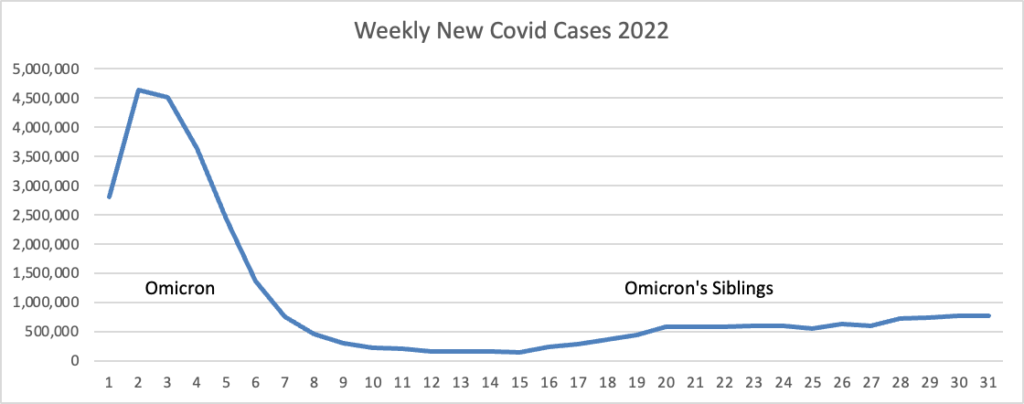
Based on the CDC’s Covid Data Tracker and using Thursday as the first day of the week, here’s the FEHBlog’s weekly chart of new Covid cases displayed from the 27th week of 2021 through the 18th week of 2022.

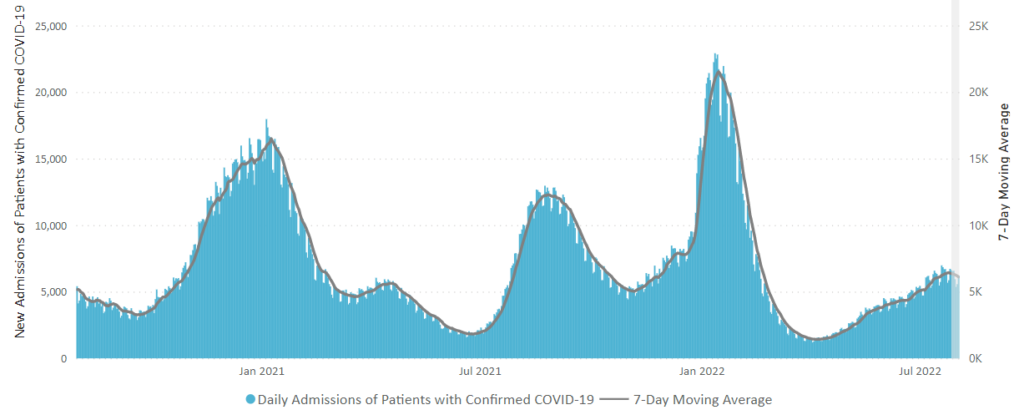
The CDC reports in its latest weekly review that “The current 7-day daily average of new Covid hospital admissions for April 27–May 3, 2022, was 2,219. This is a 16.6% increase from the prior 7-day average (1,903) from April 20–26, 2022.

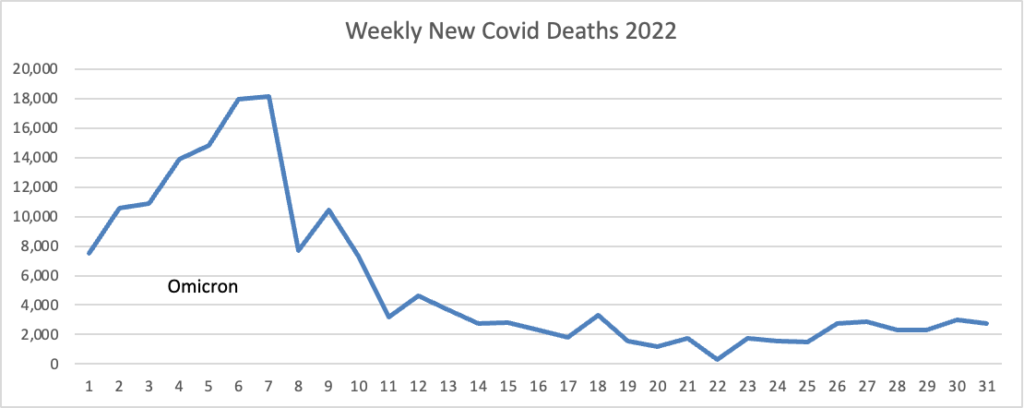
Here’s the FEHBlog’s latest weekly chart of new Covid deaths display from the 27th week of 2021 through the 18th week of 2022.

The CDC’s weekly review sums it up as follows:

COVID-19 cases and hospitalizations are on the rise in the United States. Although deaths continue to decrease, the United States is expected to reach 1 million deaths soon. * * *

As of May 5, 2022, there are 78 (2.42%) counties, districts, or territories with a high COVID-19 Community Level, 316 (9.81%) counties with a medium Community Level, and 2,826 (87.76%) counties with a low Community Level. This represents a slight (0.75 percentage points) increase in the number of high-level counties, a small (+1.86 percentage points) increase in the number of medium-level counties, and a corresponding (−2.61 percentage points) decrease in the number of low-level counties. Sixteen (28.57%) of 56 jurisdictions had no high- or medium-level counties this week.

To check your COVID-19 community level, visit COVID Data Tracker.

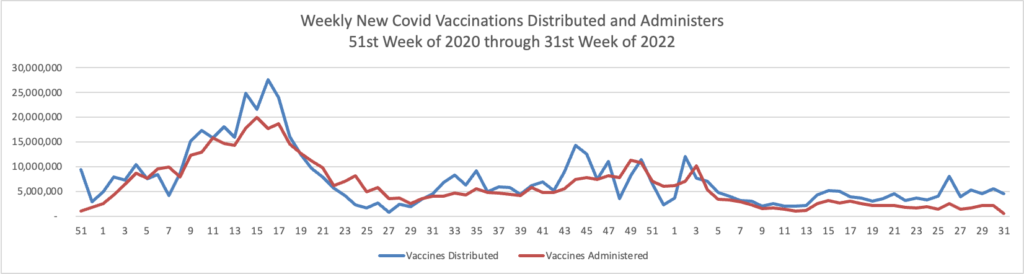
Here’s the FEHBlog’s weekly chart of Covid vaccinations distributed and administered from the inception of the vaccination program until this 18th week of 2021.

Nearly 75% of the U.S. population aged 12 and older are fully vaccinated and nearly 50% of the U.S. population aged 18 and older have received a booster.

STAT News reports

The White House could run out of Covid-19 vaccines if it moves forward with plans to encourage all adults to get a second Covid-19 vaccine booster dose by roughly Sept. 1, according to a tranche of budget documents sent to Congress that have not previously been made public.

In other CDC news, the American Hospital Association informs us

The Centers for Disease Control and Prevention is investigating 109 potential hepatitis cases of unknown cause in U.S. children since last October, including five deaths. More than 90% of the patients were hospitalized, 14% received liver transplants and more than half had a confirmed adenovirus infection, but officials still don’t know the actual cause of their hepatitis and cautioned that it may take time to assess the evidence and learn more. CDC alerted clinicians to the first cases last month.

To date, 25 states and territories have reported potential cases: Alabama, Arizona, California, Colorado, Delaware, Florida, Georgia, Idaho, Illinois, Indiana, Louisiana, Michigan, Minnesota, Missouri, North Carolina, North Dakota, Nebraska, New York, Ohio, Pennsylvania, Puerto Rico, Tennessee, Texas, Washington and Wisconsin.

Potential cases also have been reported in the United Kingdom and other countries

From the Rx coverage front, Medscape tells us

The US Food and Drug Administration (FDA) has cleared the first in vitro diagnostic to aid in the early detection of Alzheimer’s disease (AD).

The Lumipulse G β-Amyloid Ratio 1-42/1-40 (Fujirebio Diagnostics) test detects amyloid plaques associated with AD in adults age 55 or older who are under investigation for AD and other causes of cognitive decline.

“The availability of an in vitro diagnostic test that can potentially eliminate the need for time-consuming and expensive [positron emission tomography (PET)] scans is great news for individuals and families concerned with the possibility of an Alzheimer’s disease diagnosis,” Jeff Shuren, MD, JD, director of the FDA’s Center for Devices and Radiological Health, said in a statement.

“With the Lumipulse test, there is a new option that can typically be completed the same day and can give doctors the same information regarding brain amyloid status, without the radiation risk, to help determine if a patient’s cognitive impairment is due to Alzheimer’s disease,” he added.

From the healthcare business front, Beckers Payer Issues informs us

Cigna reported over $44 billion in total revenues in the first quarter, with the strongest growth in the company’s Evernorth business. Projected revenues at year end stand at $177 billion, according to the company’s earnings report released May 6.

“We’ve had a strong start to the year as we advance our growth strategy and support the health and well-being of our clients and customers,” Chair and CEO David Cordani said. “We’re taking decisive steps forward with innovation, new partnerships and re-investing in our company so we can achieve greater impact for the customers and communities we’re privileged to serve.”

Also, Becker’s Hospital CFO Report tells us

Driven mainly by nonoperating losses, Oakland, Calif.-based Kaiser Permanente recorded a net loss of $961 million in the first quarter of 2022, down from a net income of $2 billion in the same quarter in 2021, according to financial data released May 6. 

For the quarter ending March 31, Kaiser reported total operating revenue of $24.2 billion, up from $23.2 billion the year prior. Tom Meier, corporate treasurer of Kaiser Permanente, said the revenue increase was attributed to several factors, including growth of its health plan. 

Kaiser also saw its expenses increase significantly in the first quarter of 2022 to $24.3 billion, up 9.5 percent from the same quarter last year. Mr. Meier said the health system incurred about $1.4 billion in costs from COVID-19, including $900 million for the cost of care, $550 million for testing and $50 million for vaccinations. 

In related news, Govexec reports

USPS saw a net loss of $639 million in the period between Jan. 1 and March 31, up from $82 million in the same period last year. The Postal Service Reform Act was not enshrined into law until after the second quarter of fiscal 2022, meaning the relief it will provide by eliminating the requirement that the Postal Service prefund health care costs for future retirees was not reflected in the financial results. USPS grew revenue in the quarter by about $900 million, a 5% increase from the same period in 2021. Volume grew by about 3%. 

Federal News Network adds

Postmaster General Louis DeJoy expects the Postal Service will need to keep raising prices on its monopoly mail products for the foreseeable future, as part of a 10-year reform plan to improve its long-term financial health.

DeJoy said Thursday said the mailing industry needs to be prepared for USPS to raise prices on its market-dominant products “at an uncomfortable rate,” until it reaches a point where the agency is on track to be self-sustaining in the long term.

As we approach Mothers’ Day this weekend, the American Hospital Association tells us

The Health Resources and Services Administration will launch May 8 a toll-free hotline for expecting and new mothers experiencing mental health challenges, where trained counselors will provide brief interventions and referrals to community-based and telehealth providers as needed. Callers also will receive evidence-based information and referrals to support groups and other community resources.

“Today, we are creating a safe space for expecting and new moms who are experiencing maternal depression, anxiety or other mental health concerns to have confidential conversations and get the support they need,” said HRSA Administrator Carole Johnson. “Moms can call or text 1-833-9-HELP4MOMS and connect with a counselor at no charge. We are going to continue to grow our investments in this resource, as we know it’s what women need.”

Nothing is too good for our Moms.

Thursday Miscellany

Photo by Josh Mills on Unsplash

From Capitol Hill, Fierce Healthcare reports

Several bipartisan senators are clamoring for more transparency into how pharmacy benefit managers conduct their business, potentially foreshadowing action on legislation to require new disclosures for the industry.

A subcommittee of the Senate Commerce Committee held a hearing Thursday on PBMs and their role in the pharmaceutical marketplace. Senators claimed there is an absence of competition in the industry and potential conflicts of interest.

“PBMs are not the only cause of drug price inflation and excessive pricing, but they are integral to this system,” said Sen. Richard Blumenthal, D-Connecticut, the subcommittee’s chairman. “They are part of an increasingly integrated, uncompetitive system involving PBMs owned or owning insurers and constraining pharmacies in the amount of information that they give to consumers. That is one slice of a broken system.”

Healthcare Dive informs us

Members of the healthcare industry are once again pressuring Congress to remove what they say is a major pain point in their operations and in the delivery of patient care: the ban on a nationwide unique patient identifier.

Almost 120 health IT groups, EHR vendors, hospitals, physicians and health insurers sent letters on Wednesday to House and Senate appropriators urging them to remove decades-old rider language in a 2023 appropriations bill that prevents the HHS from spending federal dollars to create or adopt a UPI standard.

Signees, including payer lobby AHIP, software companies Cerner and Epic, and health systems Banner Health and Intermountain, called the ban “archaic” in the letters. However, regulators have noted a UPI is unlikely to be a silver bullet against the nation’s patient matching problem.

The patient identifier strikes the FEHBlog as a key to interoperability as well as improving patient safety. Fund it, Congress!

From the Omicron and siblings front, Medpage Today reports

Use of Johnson and Johnson’s (J&J) COVID-19 vaccine should only be limited to certain adults, the FDA said on Thursday.

Due to an updated analysis of the rare cases of thrombosis with thrombocytopenia syndrome (TTS), which typically occur 1 to 2 weeks after vaccination, use of the J&J vaccine should be restricted to those for whom mRNA vaccines are “not accessible or clinically appropriate,” or who would not get vaccinated if not for the J&J vaccine, the agency said.

It’s unfortunate that the only one-shot vaccine, which helped public health authorities reach underserved communities, is now knocked down for the mandatory eight count.

From the healthcare innovations front, Fierce Healthcare informs us

UnitedHealthcare has partnered with Kaia Health on a new virtual physical therapy program.

The program aims to offer 24/7, on-demand exercise feedback to eligible members with musculoskeletal conditions, the health insurance giant said. Members who are recovering from surgery or an injury will be asked to complete an assessment of current issues and will be referred to the program based on that assessment.

Eligible members will then be able to download Kaia’s app to access its physical therapy tools, which use artificial intelligence to support patients through physical therapy exercise and monitor progress.

and

Cigna is launching a new provider consult service that aims to improve outcomes for patients with cancer.

The program, backed by the capabilities of the insurer’s Evernorth subsidiary, allows community oncologists to connect with cancer subspecialty experts at centers designated by the National Cancer Institute (NCI). These connections will allow patients to benefit from the latest innovations in cancer care while also keeping their care close to home, Cigna said.

In a pilot, community oncologists had their treatment plans reviewed by experts and in 40% of cases reviewed, patients were recommended alternative tests or treatment based on new advancements in research.

Also a ZDNet reporter discusses his experience of wearing a continuous glucose monitor for 40 days.

I learned a lot about my body and how it reacts, and that’s information I can and do still use on a daily basis even if I don’t have an app yelling at me. Since I stopped wearing the Signos and getting insight, I’ve stuck to a healthier diet and routine exercise.

Good read.

From the healthcare business front, Healthcare Dive tells us

Centene said Thursday it has inked separate agreements to sell two of its pharmacy businesses in deals totaling $2.8 billion.

The payer plans to sell Magellan Rx to Prime Therapeutics and Pantherx to The Vistria Group, General Atlantic and Nautic Partners.

The deals are subject to regulatory approval. Magellan Rx is expected to close in the fourth quarter while Pantherx is anticipated to close in the next two to four months.

Thursday’s news builds on Centene’s plan to sell off non-core assets as it looks to sharpen its focus on its main [health insurance] business.

From the federal employment front, Govexec identifies the agencies who scored best and worst on the key employee morale questions of the recently released OPM 2021 Federal Employee Viewpoint Survey.

The National Science Foundation, Federal Energy Regulatory Commission, General Services Administration and the Pension Benefit Guaranty Corporation each landed in the top five on questions related to employees’ job satisfaction, senior leaders’ ability to motivate the workforce, and whether employees believe their agency will use Federal Employee Viewpoint Survey results to improve the workplace.

On the other hand, four agencies found themselves consistently near the bottom on these same questions. The Homeland Security Department, Social Security Administration, as well as the Justice and State departments all found themselves in the bottom five of at least two of these three questions.

Midweek update

Photo by Thought Catalog on Unsplash

From the Omicron and siblings front

The American Hospital Association informs us

COVID-19 vaccinations prevented an estimated 107,000 Medicare hospitalizations between January and May 2021, resulting in $2.6 billion in savings for Medicare and Medicare Advantage plans, according to a new report by the Department of Health and Human Services. The report estimates the impact of COVID-19 vaccination during a five-month period shortly after the first vaccine was authorized and recommended for health care workers and elderly people in long-term care facilities. Future analyses will examine hospitalizations prevented by vaccination during the delta and omicron waves, HHS said.

Bloomberg Prognosis tells us

Pfizer Inc. executives said patients who suffer a relapse in Covid-19 symptoms after taking a full course of Paxlovid should take more of the treatment, though current U.S. guidelines limit use to five consecutive days.

“Paxlovid does what it has to do: it reduces the viral load,” Chief Executive Officer Albert Bourla said in an interview. “Then your body is supposed to do the job.” But for unknown reasons, the CEO said, some patients aren’t able to clear the virus with the first course of treatment.

In cases where virus levels do rebound, Bourla said, “then you give a second course, like you do with antibiotics, and that’s it.”

As noted in the article, the fly in the ointment is that the FDA emergency use authorization does not expressly approve a second course of the medication.

From the Rx coverage front

MedCity News reports on Bristol Myers Squibb’s (BMS) NEX-T program to improve CAR-T treatments.

The company has described NEX-T as changes to manufacturing driven by the translational insights it has gleaned from treating thousands of patients with its CAR T therapies. In addition to a faster turnaround time, the strategy is intended to reduce the costs of the overall process.

One of the key goals for the next-generation of cell therapies is treating solid tumors.

Another strategy that BMS is pursuing is going after two targets with a single therapy, reducing the risk that a tumor escapes from the treatment

Looking at the flip side of this coin, Forbes reports

Health plans and pharmacy benefit managers (PBMs) that manage drug costs speaking at this year’s Asembia Specialty Pharmacy Summit in Las Vegas say specialty drugs now account for 50% or greater of the total prescription spending they manage. In some cases, employer clients are seeing specialty costs account for 60% or even greater of their total drug spending.

“It really is frightening for our clients,” Lucille Accetta, senior vice president of pharmacy benefit management and specialty product development at CVS Health told hundreds of attendees at the Asembia event, which runs through Thursday and drew more than 5,000 people from the healthcare industry. “We have to be the best purchaser for our clients.” * * *

To reign in the costs of prescription drugs while maintaining access to life-saving treatments, health plans and pharmacies say they are more closely monitoring patients as soon as they are on the drug, said Rina Shah, group vice president of pharmacy operations and services at Walgreens.

The Forbes article adds

Abarca Health [is] an independent PBM that manages more than $5 billion in drug costs annually for more than four million Americans has executives at this week’s Asembia meeting talking up its efforts to better manage specialty pharmacy costs.

The company’s Assura solution launched earlier this year “guarantees the net cost of drugs, including specialty medications, by offering an annual fixed per script cost for a health plan’s entire population,” Abarca said in announcing the new pricing solution earlier this year. The guarantee, Abarca CEO Jason Borschow says, is adjusted each year based on drug benefit coverage changes.

From the healthcare business front

Healthcare Dive informs us

Even as COVID-19’s benefit waned, new plan members across multiple product lines helped drive CVS to $2.3 billion in profit in the first quarter, slightly higher than the $2.2 billion brought in at the same time last year.

In results published Wednesday, the company beat Wall Street expectations on earnings and revenue, with a topline of $76.8 billion, up 11% year over year.

Fierce Healthcare explains how CVS has shifted from a retail to a digital marketing focus.

The Wall Street Journal reports

Moderna Inc. MRNA 5.81% said that its first-quarter revenue and profit tripled from a year earlier on higher sales of its Covid-19 vaccine and that a fall booster-shot campaign could drive continued sales gains.

The biotechnology company’s revenue topped $6 billion in the period ended March 31, beating analyst expectations and rising from $1.94 billion a year earlier, driven almost entirely by sales of its messenger RN

Moderna Inc. MRNA 5.81% said that its first-quarter revenue and profit tripled from a year earlier on higher sales of its Covid-19 vaccine and that a fall booster-shot campaign could drive continued sales gains.

The biotechnology company’s revenue topped $6 billion in the period ended March 31, beating analyst expectations and rising from $1.94 billion a year earlier, driven almost entirely by sales of its messenger RNA-based vaccine, branded as Spikevax. * * *

Moderna is the latest drugmaker to show surging sales due to demand for Covid-19 vaccines and treatments, following recent reports fromEli Lilly & Co., Merck & Co. and Pfizer Inc.

From the health risks front, MedPage Today explains that

Seven risk factors, some modifiable and some not, accounted for the vast majority of risk for first-time acute myocardial infarction (MI) in young adults, according to a case-control study.

The seven factors — diabetes, depression, hypertension, smoking, family history of premature MI, low household income, and hypercholesterolemia — were responsible for 83.9% of the total acute MI risk in young women and 85.1% of the risk in young men, reported Harlan Krumholz, MD, SM, of Yale New Haven Hospital in New Haven, Connecticut, and colleagues.

The UPI reports

Older adults who obtain a flu shot are less likely to suffer a heart attack or stroke and are at lower risk for death from heart-related health events in the year after getting vaccinated, an analysis published Friday found.

Just under 4% of older adults vaccinated against the seasonal virus experienced a “cardiovascular event” within the next year compared to just over 5% of those who did not receive the shot, data published Friday by JAMA Network Open showed.

From the meetings department,

  • HHS provides a readout of a high-level meeting among Labor Department, health insurance and business executives “to discuss compliance with the Mental Health Parity and Addiction Equity Act, adequacy of in-network providers and mental health and substance use disorder treatment during the pandemic, as the nation observes Mental Health Awareness Month.”
  • The National Committee for Quality Assurance reviews the presentations at last week’s Quality Talks conference.

From the federal employee benefits front, FedWeek discusses OPM’s planned improvement to processing retirement applications as unveiled in the Fiscal Year 2023 budget document. Processing federal retirement benefits will be a heavy lift for OPM until Congress simplifies the pension calculation.

Tuesday’s Tidbits

Photo by Patrick Fore on Unsplash

From the Omicron and siblings front, Fortune Well explores earlier pandemics for similarities to our current one.

As U.S. COVID czar Dr. Anthony Fauci and colleagues pointed out in a 2009 New England Journal of Medicine article, “It is not generally appreciated that descendants of the H1N1 influenza A virus that caused the catastrophic and historic pandemic of 1918–1919 have persisted in humans for more than 90 [now 100] years and have continued to contribute their genes to new viruses, causing new pandemics,” including the 2009 H1N1 “swine flu.”

“We are living in a pandemic era that began around 1918,” they wrote 13 years ago—long before the advent of COVID-19.

Harald Brüssow, editor of Microbial Biotechnology, agrees with Fauci and his colleagues that “viruses do not simply disappear.”

“They change and hopefully they adapt and behave,” Brüssow said. “But there are still some escapes, and we might see a return with higher virulence. Vigilance is indicated.”

From the healthcare business front —

The Wall Street Journal reports

Pfizer Inc. expects demand for its Covid-19 antiviral drug to increase as governments return to replenish their supplies and seek to thwart surges as the pandemic virus continues to evolve.

The treatment, a pill called Paxlovid, brought in $1.5 billion in sales during Pfizer’s first quarter, while its vaccine totaled $13.2 billion, reflecting the need for tools to combat the virus despite a slowdown in cases and a growing sense of life trying to return to normal.

The company said Tuesday it is on track to deliver between $98 billion and $102 billion in revenue for the year, with $32 billion coming from its Covid-19 vaccine Comirnaty and $22 billion from Paxlovid. 

“We remain bullish on Paxlovid” said Chief Financial Officer Frank D’Amelio on a call discussing earnings with analysts. “The rhythm of that product looks very good.”

STAT New informs us

Biogen is replacing CEO Michel Vounatsos, the company said Tuesday, ending a five-year tenure in which he presided over the disastrous approval and rollout of its Alzheimer’s treatment, Aduhelm.

The company also said it is “substantially eliminating” all spending on Aduhelm just 10 months after securing U.S. approval — a concession from the struggling biotech that the drug had become a financial liability following a Medicare decision to restrict patient access and payment.

From the Affordable Care Act front, Health Affairs Forefront features the third and final part of Katie Keith’s series on the final 2023 notice of benefit and payment parameters. The third part discusses changes to the ACA marketplace’s risk adjustment program.

From the No Surprises Act, the FEHBlog had understood that the NSA regulators planned to release a final rule on the NSA’s arbitration process, replacing the interim final rule, this month. However, a Justice Department filing with the U.S. Court of Appeals for the Fifth Circuit submitted late last week states, “the Departments expect to issue a final rule early this summer that will supersede the portions of the interim final rule that Plaintiffs [in the Texas Medical Association case] challenged.” No wonder then that the final rule has not been presented yet to OMB’s Office of Information and Regulatory Affairs for its required review before publication in the Federal Register.

From the tidbits department —

  • Here is a link to the new CMS Strategic Plan.
  • Federal News Network tells us,

Agencies’ hiring efforts for the Bipartisan Infrastructure Law (IIJA) are “foot to the pedal,” OPM Director Kiran Ahuja said in an exclusive interview with Federal News Network.

The surge includes filling 3,000 of those new positions over the first six months after President Joe Biden signed the bill into law.

Ahuja has frequently spoken about her goals to attract more early-career workers to federal service. The BIL gives OPM another chance to do just that.

  • FedSmith identifies four personal budget factors Federal retirees must anticipate. One of those factors is our beloved FEHBP.
  • The CDC offers ten tips for coping with diabetes distress.

Monday Roundup

Photo by Sven Read on Unsplash

The President has declared May 1 through May 7 to be Public Service Recognition Week. OPM explains

Celebrated annually during the first week of May since 1985, Public Service Recognition Week (PSRW) (external link) is time set aside to honor the men and women who serve our nation as federal, state, county and local government employees. 

Throughout the country, mayors, governors, agency leaders, communities and public service organizations participate in PSRW by issuing proclamations; hosting award ceremonies and special tribute events; and delivering messages about the value of public service.

To that end, Govexec reports the President took the time today to virtually award Presidential Rank Awards to 230 senior federal employees from 37 agencies.

Speaking directly to the career civil service, Biden said: “Over the last 15 months you’ve helped us deliver so much to the American people,” such as the getting Americans vaccinated against COVID-19, delivering economic relief checks, caring for veterans, implementing the infrastructure package and working to restore the public’s faith in government and democracy. He gave a big “thank you” to them as well as their families. 

The FEHBlog heartily agrees.

From the Omicron and siblings front, WebMd informs us

The FDA’s independent panel of advisors will meet in June to discuss the Pfizer and Moderna COVID-19 vaccines for children under age 5, as well as the Novavax vaccine for adults, according to an FDA announcement released Friday.

On June 7, the FDA’s vaccine committee will review the Novavax shot, which could become the first new COVID-19 vaccine to hit the U.S. market in more than a year. The shot is already authorized in more than three dozen countries, including across Europe.

The FDA has also selected three possible dates — June 8, 21, and 22 — to discuss the shots for kids under age 5. The dates are tentative because the companies haven’t completed their submissions, the agency said.

The FEHBlog is pleased to read about these developments because the Novovax shot which uses a traditional vaccination approach may be acceptable to the vaccine inquisitive and the country needs a vaccine for younger children.

STAT News adds

Pfizer released news late Friday that Paxlovid, the antiviral currently subject to a big push from the U.S. government, failed to prevent people living with Covid patients from catching the infection.

The news is one of several bad headlines for the new Covid pill, but one experts say doesn’t affect the medicine’s primary use: treating people who are already sick.

Paul Sax, clinical director of the division of infectious diseases at Brigham and Women’s Hospital, said he would “absolutely” prescribe Paxlovid to people at high risk of severe disease who have Covid. “Without hesitation,” he said. “Because the net benefit in the high risk study was extremely high.”

From the Affordable Care Act front, Health Affairs Forefront has posted the second part of Katie Keith’s three-part series on last week’s HHS final 2023 notice of ACA benefit and payment parameters. The second part concerns changes specific to the ACA marketplace or exchange plans.

From the Rx coverage front, Health Affairs informs us

UnitedHealthcare is restricting insurance coverage of Aduhelm across all of its health plans, saying the drug “is unproven and not medically necessary for the treatment of Alzheimer’s disease due to insufficient evidence of efficacy,” according to the company’s new policies.

Physicians who plan on giving Aduhelm to UnitedHealthcare patients will need to obtain prior approval from the insurance company, effective June 1. Patients also need to be in an approved clinical trial.

UnitedHealthcare’s decision follows Medicare, which said last month it would only pay for the costly infusion drug for patients who participate in a clinical trial. UnitedHealthcare is the largest Medicare Advantage insurer in the country, covering 8 million people older than 65 and people with disabilities, making this policy particularly important for older Americans on those private plans.

The FEHBlog expects UHC’s announcement to be the tip of the eventual iceberg of similar Aduhelm coverage decisions.

Following up on previous stories mentioned in the FEHBlog, the Wall Street Journal reports

Online pharmacy company Truepill Inc. said it is temporarily halting prescriptions for Adderall and other controlled substances used to treat attention-deficit hyperactivity disorder, and partner Cerebral Inc. told its clinicians to direct those orders to patients’ local pharmacies.

Cerebral, an online mental-health company based in San Francisco that describes Truepill as its preferred pharmacy, informed its clinicians of Truepill’s decision in a Friday email viewed by The Wall Street Journal. The email said Truepill would no longer support mailing Schedule 2 controlled substances, including Adderall and Vyvanse, “to any of their customers.”

Truepill said that, “out of an abundance of caution,” it is temporarily pausing all fulfillment of Schedule 2 substances while it evaluates appropriate next steps. It said Schedule 2 substances such as Adderall make up less than 1% of its total prescription volume. Truepill didn’t provide a list of other partners affected by its decision.

Some of the nation’s largest pharmacies have blocked or delayed prescriptions over the past year from clinicians working for telehealth startups that have sprung up to treat ADHD, according to pharmacies and people familiar with the issue.

The Journal reported last week that pharmacies including Walmart Inc., CVS Health Corp. and Walgreens Boots Alliance Inc. have blocked or delayed prescriptions for companies treating ADHD online or have blocked individual prescribers, according to people familiar with the issue.

That was the right outcome as far as the FEHBlog is concerned.

In U.S. Supreme Court news, Business Insurance reports “Private plaintiffs cannot be reimbursed for emotional distress damages under the 1973 Rehabilitation Act and the Patient Protection and Affordable Care Act, the U.S. Supreme Court ruled” last Thursday in the linked opinion. The Affordable Care Act provision at issue is the ACA’s convoluted individual non-discrimination provision, Section 1557.

From the healthcare business front, Fierce Healthcare tells us

Outpatient volumes and revenue for hospitals and health systems showed a robust rebound in March as expenses eased due to fewer extremely sick patients, a new report said. 

Consulting firm Kaufman Hall released its latest hospital flash report Monday (PDF) detailing the impact of system finances for the month of March. A key takeaway from the report is that while actual hospital margins were negative for the third month in a row, outpatient revenues had a massive bump.

“While the road to recovery remains long for many hospitals, these trends indicate some pressures of the pandemic may be lifting,” said Erik Swanson, senior vice president of data and analytics with Kaufman Hall, in a statement. 

From the mental healthcare front,

Fierce Healthcare reports

Mental health concerns are on the rise across the board, and especially among Blacks, seniors, young adults and LGBTQIA people, a new survey finds.

CVS Health and Morning Consult polled more than 2,200 adults in early April and found that 59% of respondents have experienced challenges with their mental health or that of a friend or family member. That is a 9% increase over 2020 survey data.

More than half (57%) of people surveyed who identify as LGBTQIA expressed concern about their own mental health, 20 percentage points higher than other groups included in the study. Nearly three-quarters (74%) of those aged 18 to 34 said they experienced such concerns either themselves or for a friend or family member, up 12 percentage points from 2020.

The survey also found an 11 percentage point increase in mental health concerns among Black respondents compared to pre-COVID levels. A double-digit increase was also found among people over age 65; about 40% reported mental health concerns for themselves or family and friends, up 10 percentage points from 2020.

AHIP describes ten ways that people can get the mental healthcare services that they need.

Weekend update

Happy Law Day 2022!

The House of Representatives and the Senate will be engaged in Committee business and floor voting this week.

From the Omicron and siblings front

The Wall Street Journal informs us

As new Omicron variants further infiltrate the U.S., a jumble of signals suggest the latest increase in Covid-19 infections hasn’t sparked a commensurate surge in severe illness even as risks remain.

Covid-19 virus levels detected in wastewater in the Northeast, the first region to see significant concentrations of the easily transmitted Omicron BA.2 variant, appear to have flattened out in the past two weeks. Covid-19 hospital admissions have risen in the region, but they remain far below levels during earlier surges that indicated widespread severe illness and taxed healthcare facilities. 

“This wave of Covid in the United States, in the places where it is, is not dangerous in a way that prior waves of Covid were,” said Megan Ranney, an emergency physician and academic dean at Brown University’s School of Public Health.

The fast-mutating virus still poses risks, she said. 

The new Fortune Well website offers timely guidance on the symptomatic differences between Covid and allergies.

Bloomberg Prognosis posted its late April Word Covid resilience rankings. Norway rides atop the rankings for the second month in a row The U.S. dropped six rankings to 30th. The article notes that the U.S. and the U.K are “weighed down by ongoing fatalities—their Covid Mortality Rate scores are among the worst of developed economies.

From the Affordable Care Act front, Health Affairs Forefront posted the ever-reliable Katie Keith’s first of three articles on the final 2023 ACA notice of benefit and payment parameters that was issued last week. This article’s section on Essential Health Benefits is relevant to FEHB carriers as each of them must select an EHB benchmark in order to apply the ACA’s restriction on annual dollar limits. The article’s section on Medical Loss Ratio is relevant to community-rated FEHB plans who generally use that benchmark to determine the reasonableness of their prices.

From the Rx coverage front, Medcity News reports “Bristol Myers Squibb drug Camzyos has received FDA approval for treating obstructive hypertrophic cardiomyopathy, a rare and potentially fatal heart disorder. The drug is projected to become a blockbuster seller, and its approval marks a payoff for BMS’s 2020 acquisition of the medicine’s developer, MyoKardia.”

From the telehealth front, mHealth Intelligence informs us

A majority of clinics (79 percent) used telemedicine to provide contraceptive services during the COVID-19 pandemic, according to a recent study published in the journal Reproductive Health.

For the study, researchers surveyed 907 US providers and clinic staff between April 10, 2020, and Jan. 29, 2021. They collected data on contraceptive service delivery challenges and strategies, including telehealth. The sample of respondents included physicians (17 percent), advanced practice clinicians (41 percent), registered nurses (16 percent), and health educators and social workers (11 percent).

The respondents practiced in a wide array of care settings, including youth clinics/school-based health centers or college health centers (36 percent), primary care clinics or health departments (29 percent), family planning clinics (22 percent), and independent abortion care clinics (4 percent). They saw, on average, 3,184 contraceptive patients annually.

Though only 11 percent of the clinics offered telemedicine for contraceptive services before the pandemic, this figure shot up to 79 percent after March 2020.

Cybersecurity Saturday

From the ransomware front, Cybersecurity Dive reports

The prevalence and scope of ransomware exploded in 2021, as two-thirds of mid-sized organizations worldwide were targets and average ransom payouts saw a five-fold increase, according to the State of Ransomware 2022 report from Sophos released Wednesday. 

Ransomware hit 66% of mid-sized organizations last year, up from 37% in 2020. Average ransom payments reached $812,000 during 2021, compared with $170,000 the prior year.  

Among organizations with encrypted data, 46% paid a ransom to adversaries. In addition, 26% of organizations who were able to restore data from backups, still decided to pay a ransom.

To make matters even worse, Security Week informs us

As part of a recent cyberattack, threat actors deployed ransomware less than four hours after compromising the victim’s environment, according to researchers with The DFIR Report.

The attack started with an IcedID payload being deployed on a user endpoint and led to the execution of Quantum ransomware only three hours and 44 minutes later. DFIR Report researchers described it as one of the fastest ransomware attacks they have observed to date.

In a Ryuk ransomware attack in October 2020, the threat actors started encrypting the victim’s data only 29 hours after the initial breach, but the median global dwell time for ransomware is roughly 5 days, according to Mandiant’s M-Trends 2022 report.

Once the ransomware has been executed, however, the victim’s data may be encrypted within minutes. A recent report from Splunk shows that ransomware needs an average of 43 minutes to encrypt data, while the fastest encryption time is less than 6 minutes.

ZDNet describes how a single failure to patch a vulnerability opened the door to ransomware hackers. The article emphasizes the importantance of basic cybersecurity hygiene advice:

“The biggest lesson here is patch the network infrastructure – whatever is facing the internet, it’s always important for it to be fully patched,” said Daniel dos Santos, head of security research at Forescout

It’s also recommended that organisations monitor their networks for external access from known IP addresses or unusual patterns of behavior. In addition, businesses should backup their servers regularly. Then, if something happens, the network can be restored to a recent point without needing to pay a ransom. 

Perhaps then it is not surprising that a Security Week expert advises “it is important to increase an organization’s ransomware preparedness and assure that the tools needed for remediation, eradication, and recovery are not just in place but also functioning as expected. This is especially true for the recovery of endpoints, which represent an essential tool for remote workers to conduct their assigned business tasks in today’s work-from-anywhere environment.” 

As always and it may be every other week now, here is a link to Bleeping Computer’s The Week in Ransomware.

From the vulnerabilities front, HHS Cybersecurity Program released

  • a report on 2021’s top exploited vulnerabilities
  • a warning about BlackCat/ALPHV Ransomware Indicators of Compromise, and
  • an international joint cybersecurity advisory on Russian State-Sponsored and Criminal Cyber Threats to Critical Infrastructure.

CISA added “seven new vulnerabilities to its Known Exploited Vulnerabilities Catalog, based on evidence of active exploitation.”

Health IT Security notes

Mandiant Threat Intelligence observed a record number of zero-day exploits in 2021, its latest report revealed. The firm identified 80 exploited zero-days in 2021, compared to just 30 in 2020. Threat actors favored zero-days in Google, Microsoft, and Apple products most frequently, largely exhibiting the popularity of those vendors.

The term “zero-day” indicates that there is no time between when a vulnerability is discovered by developers and when it is exploited by bad actors.

From the cyberdefenses front —

  • Healthcare Dive discusses what cyber insurance companies expect from their policyholders.
  • Federal News Network provides insights into achieving zero trust requirements.
  • ISACA explains what you need to know about malicious cybertrends.

Friday Stats and More

Based on the Centers for Disease Control’s Covid Data Tracker and using Thursday as the first day of the week, here are the FEHBlog’s weekly charts of new Covid cases and deaths from the 27th week of 2021 through the 17th week of 2022:

In addition, here’s the CDC’s Chart of Daily Trends in the Number of New COVID-19 Hospital Admissions in the United States:

Can you say endemic?

Below you will find the FEHBlog’s weekly chart of Covid vaccinations distributed and administered from the beginning of the Covid vaccination era in December 2020 to the current week 17.

The CDC’s Covid Data Tracker Weekly Review points out, “This week, the U.S. COVID-19 Vaccination Program marks two milestones: 500 days since the first COVID-19 vaccine was approved for use in the United States, and 100 million first booster doses administered.”

In the New York Times, David Leonhardt reports that the FDA is waiting to receive additional data from Pfizer and Modera [likely next month] to support their emergency use authorizations for Covid vaccines for children between six months and five years. Although the FDA’s preference is to give EUAs to both vaccines simultaneously to provide parents a choice, the agency will not delay a EUA decision on one or the other unnecessarily.

The CDC’s weekly review adds,

Currently, there are 54 (1.68%) counties, districts, or territories with a high COVID-19 Community Level, 256 (7.95%) counties with a medium Community Level, and 2,910 (90.37%) counties with a low Community Level. This represents a slight (0.59%) increase in the number of high-level counties, a small (+1.43%) increase in the number of medium-level counties, and a corresponding (−2.02%) decrease in the number of low-level counties. Seventeen (30.36%) of 56 jurisdictions had no high- or medium-level counties this week.

To check your COVID-19 community level, visit COVID Data Tracker.

From the health savings account front, the Society for Human Resource Management reports

Health savings account (HSA) contribution limits for 2023 are going up significantly in response to the recent inflation surge, the IRS announced April 29, giving employers that sponsor high-deductible health plans (HDHPs) plenty of time to prepare for open enrollment season later this year.

The annual inflation-adjusted limit on HSA contributions for self-only coverage will be $3,850, up from $3,650 in 2022. The HSA contribution limit for family coverage will be $7,750, up from $7,300. The adjustments represent approximately a 5.5 percent increase over 2022 contribution limits, whereas these limits rose by about 1.4 percent between 2021 and 2022.

In Revenue Procedure 2022-24, the IRS confirmed HSA contribution limits effective for calendar year 2023, along with minimum deductible and maximum out-of-pocket expenses for the HDHPs with which HSAs are paired.

Here is that 2023 deductible and OOP max information:

For calendar year 2023, a “high deductible health plan” is defined under § 223(c)(2)(A) as a health plan with an annual deductible that is not less than $1,500 for self-only coverage or $3,000 for family coverage [Self-only: +$100 Family: +200 from 2022], and for which the annual out-of-pocket expenses (deductibles, co-payments, and other amounts, but not premiums) do not exceed $7,500 for self-only coverage or $15,000 for family coverage [Self-only: +$450 Family: +$900 from 2022].

From the Medicare Part D front, Fierce Healthcare reports

CMS is giving Part D plans a little extra time to prepare to funnel price concessions to the member at the point of sale.

The Centers for Medicare & Medicaid Services on Friday finalized a rule with the price concession changes as well as a slew of updates for Medicare Advantage plans.

The agency said in a fact sheet on the regulation that beginning Jan. 1, 2024, it will define the negotiated price for a drug in Part D as the baseline, or lowest possible, payment to a pharmacy to ensure that price concessions are felt at the point of sale by beneficiaries.

“This policy reduces beneficiary out-of-pocket costs and improves price transparency and market competition in the Part D program,” CMS said.

The bell for prescription drug rebates is beginning to toll.

From the healthcare business front, Healthcare Dive tells us

Molina Healthcare in the first quarter recorded its highest COVID-19 costs since the start of the pandemic, CEO Joe Zubretsky said Thursday.

However, those costs were almost entirely offset by members cutting back on healthcare visits, a common trend throughout the pandemic, he said on a call with investors.

After costs peaked in January, they quickly declined in the subsequent months. “When I say [COVID-19 costs] subsided during the quarter, it did so dramatically,” Zubretsky added.   

HR Morning discusses a recent Willis Towers Watson survey on how employers are dealing with rising health care costs. To make healthcare more affordable for employees.

Fifty-five percent said their plan is to improve quality and outcomes to lower overall cost. Adding or enhancing low- or no-cost coverage for specific benefits is the plan for 41%. And 32% will be making changes to employees’ out-of-pocket costs, while 21% said they’ll alter their health plan payroll contributions.

From the preventive services front, the U.S. Preventive Services Task Force made a final grade D recommendation against initiating low-dose aspirin use for the primary prevention of CVD in adults 60 years or older. “For adults aged 40 to 59 years with an estimated 10% or greater 10-year cardiovascular disease (CVD) risk:  The decision to initiate low-dose aspirin use for the primary prevention of CVD in this group should be an individual one.” This is a Grade C recommendation.