Thursday Miscellany

Thursday Miscellany

Photo by Josh Mills on Unsplash

From Washington, DC,

  • The Wall Street Journal reports,
    • “President-elect Donald Trump said he would nominate environmental lawyer and vaccine skeptic Robert F. Kennedy Jr. to serve as health and human services secretary, putting a noted critic of U.S. public policy atop the country’s vast health bureaucracy. 
    • “Kennedy has promised sweeping changes to food-and-drug regulation and government-funded scientific research, in recent days saying the Food and Drug Administration’s nutrition department needed to be eliminated and warning the agency’s employees to “pack your bags.”
    • “Kennedy, 70 years old, abandoned his independent presidential bid in August and endorsed Trump, promising that he and the Republican would work to “make America healthy again.”
    • “Kennedy said on social media after his nomination that “we have a generational opportunity to bring together the greatest minds in science, medicine, industry, and government to put an end to the chronic disease epidemic.”
  • Per an HHS press release,
    • “Today, the Health Resources and Services Administration (HRSA), an agency of the U.S. Department of Health and Human Services (HHS), announced a new nationwide campaign to raise public awareness of the National Maternal Mental Health Hotline (1-833-TLC-MAMA). The National Maternal Mental Health Hotline is a cornerstone of the Biden-Harris Administration’s broader efforts to improve maternal health and supports HRSA’s ongoing initiative to reduce maternal mortality and health disparities. While mental health conditions are the leading cause of pregnancy-related deaths, more than 80 percent of pregnancy-related deaths are preventable according to the Centers for Disease Control and Prevention (CDC).
    • “As part of the campaign, HHS will collaborate with companies and organizations such as retailers, grocers, pharmacies, and health and community associations to publicize mental health resources for moms and pregnant women in everyday locations. The first six Maternal Mental Health Champions announced today have thousands of locations and a broad presence in all 50 states, Washington, D.C., Puerto Rico, and the U.S. Virgin Islands. HRSA Deputy Administrator Jordan Grossman announced this campaign in conjunction with HRSA’s latest state Enhancing Maternal Health Initiative convening in Portland, Oregon.” * * *
    • “The National Maternal Mental Health Hotline is a safe space for pregnant women and new moms to get the emotional and mental health support they need, and we want to continue to reach even more pregnant women, new moms, and their loved ones with this vital support,” said HRSA Administrator Carole Johnson. “That’s why we are excited to partner with grocery stores, pharmacies, and other organizations to help get the word out about this important resource for in communities across the country.” * * *
    • “For more information on the National Maternal Mental Health Hotline and to download new promotional materials, visit: https://mchb.hrsa.gov/national-maternal-mental-health-hotline.”
  • Healthcare Dive lets us know,
    • “The Biden administration is moving to lessen the importance of a controversial metric used to calculate valuable Medicare Advantage star ratings that’s been at the center of recent lawsuits.
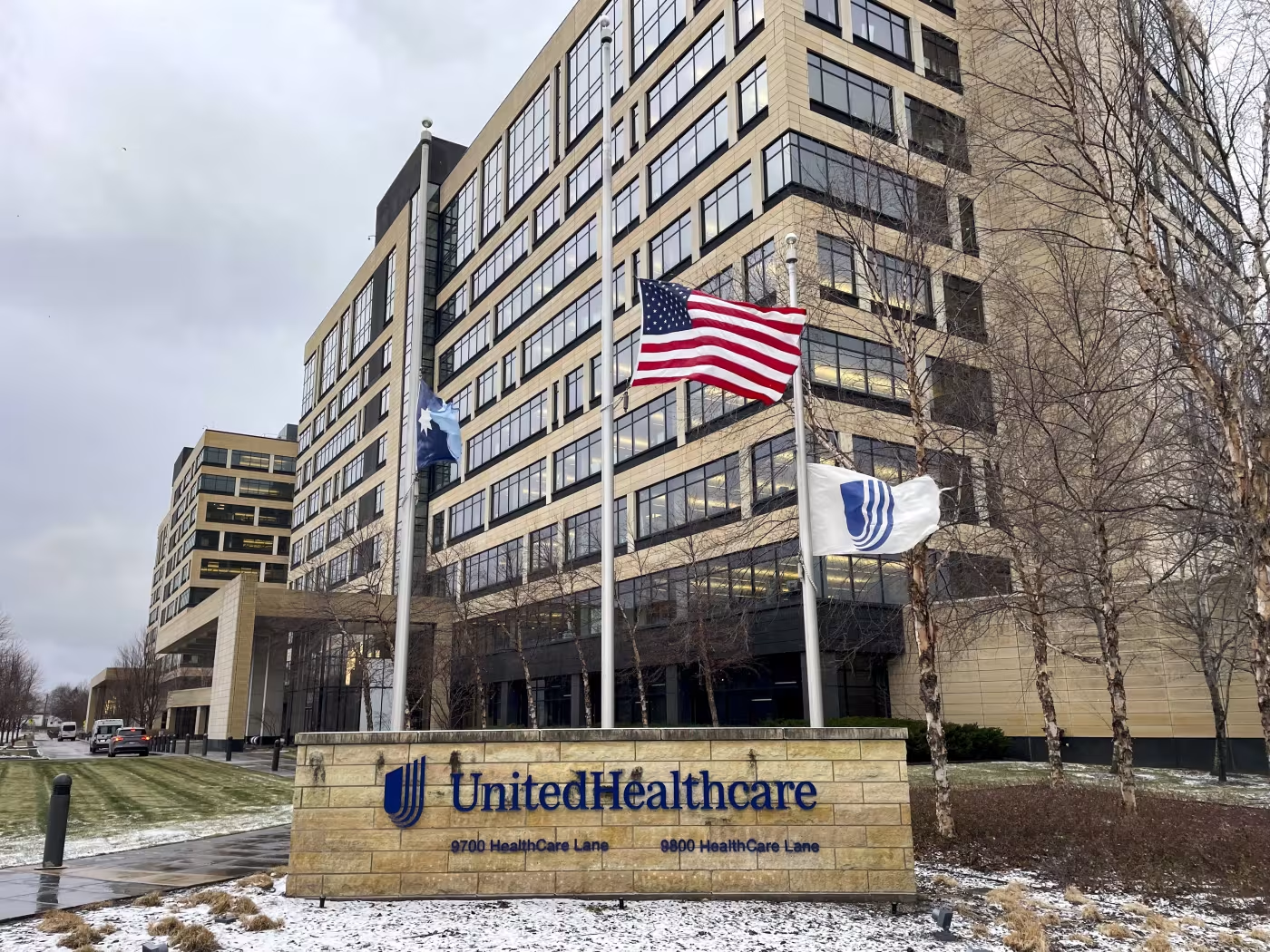
    • “UnitedHealthcare, Centene and Humana have all sued the government this fall for downgrading their quality scores based on assessments of their customer support centers. Payers argued the measure had an outsized impact on final star ratings, and it now seems regulators might agree.
    • “We have already put in place that [the call center metric] is going to have a smaller weighting on star ratings moving forward,” CMS Medicare Director Meena Seshamani said Wednesday at the Milken Institute’s Future of Health Summit in Washington, D.C.”
  • Federal News Network interviews OPM Director Rob Shriver about the Federal Employee Benefits Open Season.
  • Tammy Flanagan, writing in Govexec, identifies federal and postal employee “retirement decisions that require careful consideration since they cannot be changed.”
  • Federal News Network tells us,
    • “The Postal Service is reporting a deeper financial loss than it’s seen in recent years and is calling on Congress and the incoming Trump administration to address rising costs that are beyond its control.  
    • “USPS reported a $9.5 billion net loss for fiscal 2024, despite year-over-year growth in revenue and a reduction in its controllable expenses. The agency saw a $6.5 billion loss in FY 2023. 
    • “USPS officials said 80% of the agency’s losses come from fixed costs — including pension contributions for its retirees and workers’ compensation claims for employees injured on the job.  
    • “The agency will not seek to raise mail prices in January 2025, but it plans to keep setting higher prices each July and January after that, through the end of 2027.
    • “USPS projections show the agency will end FY 2025 with a $6.9 billion net loss for FY 2025 and is falling short of its “break-even” goal under a 10-year reform plan.” 

From the public health and medical research front,

  • STAT News reports,
    • “A Canadian teenager who is in critical condition after contracting H5N1 bird flu was infected with a version of the virus that is different from the one circulating in dairy cattle in the United States, Canadian authorities announced Wednesday.
    • “The National Microbiology Laboratory in Winnipeg confirmed the infection was indeed caused by the H5N1 virus. But genetic sequencing showed that it is of a genotype that has been found in wild birds, not the version that has been circulating in dairy cattle in the U.S. 
    • “Canada has been doing surveillance in dairy cows looking for the virus, but to date has not detected it in any herds.
    • “Bonnie Henry, British Columbia’s provincial health officer, told STAT in an interview that she’d been expecting these genetic sequencing results. “That’s what we’ve been seeing consistently,” she said.”
  • HCPLive informs us,
    • “Initiation of population-wide screening for chronic kidney disease (CKD) followed by treatment with conventional CKD therapy combined with sodium-glucose cotransporter-2 (SGLT2) inhibitors would be cost-effective for US adults when initiated at 55 years of age, according to findings from a recent study.
    • “Results showed screening every 5 years combined with SGLT2 inhibitors from 55-75 years of age would cost $128,400 per quality-adjusted life year (QALY) gained. While initiation of screening at 35 or 45 years of age produced larger population health benefits, these strategies incurred additional costs totaling> $200,000 per QALY gained.
    • “In the absence of effective CKD treatment options at the time, in 2012, the US Preventive Services Task Force found insufficient evidence to show screening and early detection of CKD improved clinical outcomes. However, the recent emergence of SGLT2 inhibitors as a practice-changing therapy for CKD has prompted clinical guideline organizations to update standard of care recommendations for CKD to include these medications.”
  • Per BioPharma Dive,
    • “PTC Therapeutics on Wednesday won Food and Drug Administration approval for Kebilidi, the first gene therapy cleared in the U.S. for direct administration to the brain.
    • “The treatment is designed for patients with aromatic L-amino acid decarboxylase, or AADC, deficiency, a condition that affects the way neurons transmit information to other cells. The potentially fatal disorder typically manifests in the first six months after babies are born and affects all aspects of their lives, both physical and mental.
    • “Kebilidi is designed to deliver a functioning DDC gene into the body, correcting the genetic defect that causes the disorder. It’s administered by a neurosurgeon in four infusions in one session.”
  • Healthcare Dive relates,
    • “Increased telehealth utilization wasn’t linked to more low-value services at primary care clinics, according to a study published this week in JAMA Network Open.
    • “The research found no association between practices that used high levels of telehealth and most types of low-value care, or services that have no clinical benefit for patients and rack up costs.
    • “The findings could reassure policymakers who have raised concerns that virtual care could increase unnecessary or wasteful services and drive-up healthcare spending, the study’s authors wrote.” 
  • The Wall Street Journal reports,
    • “Intermittent fasting probably isn’t the health hack you hoped it would be.
    • “More studies suggest the tactic can help you lose weight, but likely isn’t a silver bullet for other health improvements like lowering your inflammation levels or lengthening your lifespan. And some evidence suggests fasting can make it harder to build and retain muscle.
    • “People were hoping it was this magical thing that did amazing things for them,” says Krista Varady, a professor of nutrition at the University of Illinois Chicago who has been studying intermittent fasting for 20 years. “All it does is help people eat less.”

From the U.S. healthcare business front,

  • AHIP lets us know,
    • “With more than half of Americans – approximately 180 million people – receiving health care coverage through work, a new nationwide poll finds that a strong majority are satisfied with their current employer-provided plans (75%) and prefer to get their coverage through an employer rather than through the federal or state government (74%).
    • “The poll found that Americans’ satisfaction with employer-provided coverage is driven by the comprehensive coverage (49%), affordability (48%) and choice of providers (45%) their plans provide.” * * *
    • “The national survey of 1,000 people with employer-provided coverage was conducted online from July 10-19, 2024, with a margin of error of +/- 3%. 
      • “Click here to view the infographic.
      • “Click here to view the survey results.
      • “Click here to view a slide presentation of the survey results.”
  • Fierce Healthcare reports about the second day of its Fierce Health Payer Summit.
  • The FEHBlog took sometime today listening to the HCPLAN Summit, which was held in Baltimore. At the Summit, HCPLAN released the 2024 results of its Alternative Payment Models survey.
  • Adam Fein, writing in his Drug Channels blog, points out,
    • “Uh oh. As I predicted, the stand-alone Medicare Part D prescription drug plans (PDP) market is vanishing.
    • “For 2025, DCI’s exclusive analysis of Center for Medicare & Medicaid Services’ (CMS) data reveals that the number of PDPs will drop to a historic low. What’s more, the share of plans with a preferred cost sharing pharmacy network will fall to its lowest rate in more than 10 years. Check out the distressing charts below and our review of the remaining national players (Aetna, Cigna, Humana, UnitedHealthcare, and WellCare). 
    • “The destruction of the Part D market marks yet another unintended consequence of the Inflation Reduction Act of 2022 (IRA). The IRA makes PDPs less economically viable and will drive even more seniors into Medicare Advantage Prescription Drug (MA-PD) plans—despite the challenges facing those plans. The 2025 decline will occur even after CMS gifted $7 billion to PDPs to prevent a complete collapse of the 2025 market. 
    • “Legislate in haste. Repent in leisure.”
  • STAT News reports,
    • “In a move to safeguard the company’s dominant position in cancer, Merck said Thursday it will license a new cancer drug from LaNova Medicines, a Shanghai-based firm, for $588 million upfront and as much as $2.7 billion in potential milestone payments.
    • “The cancer immunotherapy Keytruda, Merck’s most important product and the best-selling drug in the world with $23 billion in annual sales, is set to lose patent protection and face competition from generic drugmakers as early as 2028, and investors are already fretting about what will happen at Merck when revenues from the medicine begin to decline.”
  • Healthcare Dive lets us know,
    • “A group of health systems, led by Boston-based Mass General Brigham, is hoping to solve that problem. 
    • “On Wednesday, the academic medical center launched the Healthcare AI Challenge Collaborative, which will allow participating clinicians to test the latest AI offerings in simulated clinical settings. Clinicians will pit models against each other in head-to-head competition and produce public rankings of the commercial tools by the end of the year.
    • “Participating health systems say that the chance to directly compare AI products is overdue.”
  • Per Fierce Healthcare,
    • “Blue Cross Blue Shield of Massachusetts members will benefit from an expanded partnership with Maven Clinic, a new doula pilot program and more caregiving support in collaboration with Cleo, the company announced Nov. 13.
    • “Its doula program, called Accompany Doula Care, connects “racially and ethnically diverse” members with a trained doula. The pilot will collect data to assess whether the program is adequately reaching members through the birthing timeline, including prenatal visits, in-person support during childbirth and postpartum visits.
    • “Black women experience higher levels of maternal morbidity, Blue Cross’ health equity report found.
    • “Eligible Blues members will also have access to Maven Clinic’s Menopause and Midlife Health program. This program can be utilized as a buy-up for self-insured accounts, a news release explains.”
  • and
    • “Amazon One Medical is rolling out a new service to provide Prime members access to clinical treatments for common health and lifestyle conditions like men’s hair loss and anti-aging skin care.
    • “The new service builds on Amazon One Medical’s existing Pay-per-visit telehealth service that offers healthcare for more than 30 common conditions.
    • “The new service offers a subscription plan with low, upfront monthly pricing for a clinical visit, treatment plan, and free medication delivery. The service initially focuses on five conditions: anti-aging skin care treatment, men’s hair loss, erectile dysfunction, eyelash growth, and motion sickness.
    • “Through this service, Prime members can get anti-aging skin care treatment from $10/month; men’s hair loss solutions from $16/month; ED treatment from $19/month; eyelash growth solutions from $43/month; and treatment for motion sickness from $2/use—using Prime Rx at checkout, the company said in a blog post Thursday.”

Weekend Update

From Washington, DC,

  • As we all know, the national election is Tuesday. The current Congress will return to Capitol Hill the following Tuesday November 12, to begin its lame duck session. The new Congress will begin on January 3, 2025.
  • In anticipation of the Federal Employee Benefits Open Season that begins on November 11, OPM has posted 2025 FEHBP and FEDVIP plan comparison tools on its website.
  • Modern Healthcare reports,
    • “Elevance Health is the latest Medicare Advantage insurer to dispute its star ratings quality scores in court.
    • “The health insurance company filed suit against the federal government in the U.S. District Court for the Northern District of Texas on Thursday. According to Elevance Health, the Centers for Medicare and Medicaid Services improperly assessed its quality performance, costing the insurer $375 million in bonus payments. The company won a case regarding its 2024-star ratings on different grounds, which led the agency to recalculate scores across the program.
    • “Elevance Health wants the court to order CMS to redo its ratings and to provide insurers with the data to “validate the 2025-star ratings calculations and future star ratings calculations,” according to its lawsuit. The insurer also seeks reimbursement the court deems appropriate.”

From the public health and medical research front,

  • CBS News asks and answers “Do I have COVID, the flu or something else? 2024 symptoms and testing to know.”
  • The New York Times lets us know,
    • “More than 80 percent of emergency departments in United States hospitals are not fully prepared for pediatric cases, a new study finds, despite the fact that children make up about 20 percent of visits each year.
    • “The new analysis, published Friday in the journal JAMA Network Open, estimated that if every emergency department in the United States had the core features of “pediatric readiness,” more than a quarter of the child deaths that follow E.R. visits could be prevented, a figure that equates to thousands of young lives each year.
    • “Even in the most ill-prepared states, the cost to ready every emergency room would be less than $12 per child living there, the researchers found.
    • “You can now find your state and see: How many children who would otherwise die could we expect to save if we implemented universal pediatric readiness at a high level?” said Dr. Craig Newgard, who was the lead author on the paper, and is the director of the Center for Policy and Research in Emergency Medicine at Oregon Health & Science University.”
  • The Washington Post informs us,
    • “Migraine is a surprisingly common problem, affecting an estimated 15 percent of the global population. Scientists don’t know how triggers lead to attacks but have made some progress in treatment: The latest drugs, inhibitors of a body signaling molecule called CGRP first approved for use in 2018, have been a blessing for many. For others, not so much. And it’s not clear why.”
    • * * * “Despite some failures, CGRP’s successes show that there’s hope for new medicines. CGRP has really paved the way,” says Andrew Russo, a neuroscientist at the University of Iowa in Iowa City who described CGRP as a new migraine target for the Annual Review of Pharmacology and Toxicology in 2015. “It’s a very exciting time for the field.”
  • Fortune Well informs us,
    • “Binge drinking is prevalent across generations, but the dangerous habit is growing among one age group in particular. 
    • “Long associated with college students, binge drinking, defined as having four or more drinks within two hours at least five times per month for women (five drinks for men) is on the rise among older adults. According to The National Survey on Drug Use and Health, 20% of adults aged 60 to 64, reported binge drinking in the last month. For those older than 65, the prevalence of binge drinking is 12%—a rate that has been increasing over the last decade, while binge drinking rates among young adults 18 to 25 have been going down.” * * *
    • “For more education on how to assess your—or a family member’s—drinking habits, visit the NIAAA Healthcare Professional’s Core Resource on Alcohol.”

From the U.S. healthcare business front,

  • Per Legal Dive,
    • “Pennsylvania’s attorney general sued Prospect Medical Holdings and its former parent company, alleging mismanagement by the hospital chain caused two hospital closures and widespread disruptions to patient care.
    • “The lawsuit Tuesday argues Prospect broke the terms of its 2016 purchase agreement of four-hospital system Crozer Health, which required Prospect to keep all acute care hospitals open for at least 10 years.
    • ‘In the suit, Attorney General Michelle Henry asks for a preliminary injunction barring Prospect from closing more hospitals and requests an official receiver step in and manage Crozer Health.”
  • Modern Healthcare tells us,
    • “Zoom, a company that rose to prominence during the COVID-19 pandemic, is looking to expand its presence in healthcare through artificial intelligence. 
    • “The company recently announced plans to incorporate ambient AI documentation technology from digital health company Suki in its clinical platform. Zoom plans to use the ambient AI technology, which turns a recording of a doctor-patient conversation into usable clinical notes in the electronic health record, for virtual and in-person visits. 
    • “It’s the latest move in healthcare from the video teleconferencing company, which has offered telehealth services since 2018.”
  • Per HR Dive,
    • “While the median salary increase stayed at 4% in 2024, average increases dropped from 4.3% to 3.9%, according to survey results collected by Salary.com from more than 1,000 HR professionals in the U.S. and Canada.
    • “The drop is due to fewer companies doling out higher raises, Salary.com found; only 14% of companies gave out raises between 5% and 6.9%, compared with 25% of companies in the previous survey. Additionally, more companies — 38% in 2024, compared to 25% in 2023 — returned to “typical” salary increases in the 3% to 3.9% range.
    • “Last year, we noted that salary increases might be at a peak, even with 4 percent becoming the norm,” Andy Miller, vice president of compensation consulting at Salary.com, said in an Oct. 29 news release. “While 4 percent remained the median in 2024, further analysis suggests a shift is happening.”

Happy Halloween

Photo by Toa Heftiba on Unsplash

From Washington, DC,

  • Tammy Flanagan, writing in Govexec, answers Federal Benefits Open Season questions from readers.
  • Bloomberg reports,
    • “The [U.S. Court of Appeals for the] Third Circuit [sitting in Philadelphia] Wednesday wrestled with the constitutionality of a government drug price negotiation plan, hearing arguments from three drugmakers and the Biden administration over alleged industry harm and violations of property and speech. 
    • “Drugmakers Johnson & Johnson, Bristol-Myers Squibb Co., and AstraZeneca PLC took their challenge against the US government’s Medicare Drug Price Negotiation Program to the US Court of Appeals for the Third Circuit. The plan, created under President Joe Biden’s landmark Inflation Reduction Act, is part of the administration’s efforts to rein in high prescription drug costs by allowing the government to negotiate prices for certain drugs with manufacturers.” 
    • This is the first federal appellate court oral argument on this issue.

From the public health and medical research front,

  • Dr. Monica Bertagnollo, the NIH Director, writes in her blog,
    • “In 2021, NIH launched the Researching COVID to Enhance Recovery (RECOVER) Initiative , a nationwide research program, to fully understand, diagnose, and treat Long COVID. We continue to learn more about this condition, in which some people experience a variety of symptoms for weeks, months, or even years after infection with SARS-CoV-2, the virus that causes COVID-19. But we’re still working to understand the underlying reasons why people develop Long COVID, who is most likely to get it, and how best to treat or prevent it.
    • “Studies have shown that for some people, SARS-CoV-2 doesn’t completely clear out after acute infection. Scientists have observed signs that the virus may persist in various parts of the body, and many suspect that this lingering virus, or remnants consisting of SARS-CoV-2 protein, may be causing Long COVID symptoms in some individuals. Now, in a new study supported by RECOVER, scientists found that people with Long COVID were twice as likely to have these viral remnants in their blood as people with no lingering symptoms. The findings, reported in Clinical Microbiology and Infection, add to evidence that Long COVID may sometimes stem from persistent infection or SARS-CoV-2 protein remnants.” * * *
    • “More study is needed to understand the causes of Long COVID symptoms in people who test negative for persistent infection, the researchers note. They are conducting follow-up studies in even more people with Long COVID, including those with compromised immune systems. They hope to learn more about what causes some people to be at higher risk for retaining some SARS-CoV-2 protein remnants and Long COVID.”
  • Per an NIH press release,
    • “Young people with severe obesity who underwent weight-loss surgery at age 19 or younger continued to see sustained weight loss and resolution of common obesity-related comorbidities 10 years later, according to results from a large clinical study funded by the National Institutes of Health (NIH).
    • “Study participants with an average age of 17 underwent gastric bypass or sleeve gastrectomy weight-loss surgery. After 10 years, participants sustained an average of 20% reduction in body mass index (BMI), 55% reduction of type 2 diabetes, 57% reduction of hypertension, and 54% reduction of abnormal cholesterol. Both gastric bypass and sleeve gastrectomy had similar results.
    • “The 55% reduction in type 2 diabetes was much higher than the rates observed in adults after weight-loss surgery (18% at seven years and 12.7% at 12 years) in a recently published NIH-funded study.
    • “Type 2 diabetes tends to progress more rapidly when it occurs in young people, and these findings demonstrate the greater health benefits and durability of bariatric surgery in youth than would be expected in similarly treated adults.”
  • JAMA Open Network tells us,
    • Question  How have autism diagnosis rates changed over time among children and adults seeking care from a network of health systems in the US?
    • Findings  In this cross-sectional study of electronic US health and insurance claims records for over 9 million individuals per year from 2011 to 2022, relative increases in autism diagnosis rates were greatest among young adults compared with all other age groups, female compared with male individuals, and some racial and ethnic minority groups compared with White individuals among children but not adults.
    • Meaning  Patterns of increase in autism diagnosis rates reflect a need for expanded health care services and continued research on sociodemographic disparities among this growing population.
  • The Institute for Clinical and Economic Review published an Evidence Report on Treatment for Epstein-Barr Virus Positive Post-Transplant Lymphoproliferative Disease
    • Current evidence suggests that tabelecleucel provides a substantial net health benefit when compared to usual care; treatment would achieve common thresholds for cost-effectiveness if priced between $143,900 to $273,700 per treatment cycle. * * *
    • “EBV+ PTLD is a rare and often fatal cancer associated with solid organ transplant and stem cell transplant,” said ICER’s Vice President of Research Foluso Agboola, MBBS, MPH. “Unfortunately, approximately half of EBV+ PTLD cases are refractory to initial treatment or relapse, resulting in a poor prognosis. The limited evidence on tabelecleucel suggests that it provides important clinical benefits in patients with relapsed refractory EBV+ PTLD, extending survival for patients who otherwise do not usually survive beyond a few weeks to months, with few harms.” 
    • “This Evidence Report will be reviewed at a virtual public meeting of the New England CEPAC on November 14, 2024. The New England CEPAC is one of ICER’s three independent evidence appraisal committees comprising medical evidence experts, practicing clinicians, methodologists, and leaders in patient engagement and advocacy.”
  • STAT News informs us,
    • After spending decades fixated on a single hypothesis, Alzheimer’s researchers are increasingly searching for new ways to combat the devastating neurologic disease. One such approach — precisely targeting the brain with magnetic pulses — got a boost when mid-stage trial data was presented Thursday.
    • Scientists reported that patients with mild or moderate Alzheimer’s who received the therapy, known as transcranial magnetic stimulation (TMS), experienced a 44% slowing in their rate of disease progression after a year compared to those given a sham intervention, which mimicked the procedure but delivered no treatment. That finding, which was the study’s main endpoint and was statistically significant, was based on a commonly used disease metric known as Clinical Dementia Rating sum of boxes (CDR-SB).” * * *
    • “But outside experts were quick to caution that the new results, announced at the Clinical Trials on Alzheimer’s Disease conference in Madrid, should be taken with a grain of salt. That’s because the findings come from a small Phase 2 trial conducted at a single medical center in Italy, with 32 patients completing the trial. Sinaptica, a private biotech in Cambridge, Mass. that is developing the treatment and sponsored the trial, is now planning a larger, multicenter pivotal study in hopes of confirming its findings.”

From the U.S. healthcare business front,

  • The American Hospital News lets us know,
    • “Baxter announced Oct. 31 that it has restarted its North Cove, N.C. facility’s highest-throughput IV solutions manufacturing line, which normally accounts for nearly 25% of the site’s total production and approximately 50% of its one-liter IV solutions — the most commonly used size by hospitals and clinics. The earliest new products could begin shipment is late November, Baxter said. The company is continuing to assess and repair equipment at the facility and is working with the Food and Drug Administration to resume operation in phases. Baxter said it does not have a timeline on when production at the facility will be restored to pre-Hurricane Helene levels.” 
  • Healthcare Dive relates,
    • “Cigna CEO David Cordani threw cold water on speculation that the health insurer is interested in acquiring rival Humana during a call with investors on Thursday.
    • “Despite reports earlier this fall that the two payers had reopened deal talks, Cigna plans to use excess cash to buy back shares, Cordani said while discussing Cigna’s third quarter results.
    • “Cigna handily beat Wall Street expectations in the quarter with revenue of $63.7 billion, up 30% year over year after strong demand for specialty drugs spurred growth in its health services division. However, an investment loss of $1 billion tied to the waning value of primary care chain VillageMD drove Cigna’s profit down to $739 million, compared to $1.4 billion same time last year.”
  • Risk & Insurance points out,
    • “Employers that implement strategies like value-based drug formularies and tiered provider networks are experiencing lower health care costs, according to a survey by the National Alliance of Healthcare Purchaser Coalitions.
    • “The survey, which included responses from 188 employers, sheds light on the ongoing challenge of rising health care costs and the various approaches being taken to address this issue, which has significant implications for both businesses and employees.”
  • Modern Healthcare informs us,
    • “Steward Health Care completed the $245 million sale of its physician group, Stewardship Health, to private equity-owned Rural Healthcare Group.
    • “As part of the transaction, Kinderhook Industries, the private equity firm that owns Rural Healthcare Group, plans to rebrand the combined company as Revere Medical, Kinderhook said Thursday in a news release. The acquisition adds about 5,000 employed and affiliated Stewardship physicians across nine states to Revere’s network of 17 primary care clinics in Tennessee and North Carolina.
    • “Revere plans to invest in Stewardship infrastructure and technology and has pledged to allow patients to stay with their doctors, according to the release.
    • “The Stewardship team is excited for this next chapter with Revere Medical as it provides a committed partner focused on quality care and improving the clinic experience for providers, clinic teams, and patients,” Dr. Joseph Weinstein, president of Stewardship, said in the release.
    • “The Stewardship sale is one of the last remaining transactions in Steward’s Chapter 11 bankruptcy restructuring.”
  • Per Fierce Healthcare,
    • “Optum Rx is rolling out a slate of new programs that seek to support independent pharmacies in managing costs and more complex patient needs.
    • “The first offering under this initiative is Optum’s new Independent Pharmacy Network, which is available as an add-on for its pharmacy benefit management clients. In contracts that select this option, independent and community pharmacies will receive 5% higher reimbursements for generics and 0.2% higher for branded drugs.
    • “The PBM said this program follows other changes enacted to support independent pharmacies; for instance, it does not collect direct and indirect remuneration, or DIR, fees and removed clawbacks for independent facilities.”
  • and
    • “Teladoc Health had a better quarter than Wall Street expected, posting $640.5 million in revenue and losing less per share than expected, at $0.19. Quarterly revenue decreased by 3% from 2023 and was down slightly from Q2’s $642.4 million.
    • “In the Q3 earnings call, Teladoc executives stressed the stability of the U.S. virtual care segment, which has gained millions of users since last year. It called BetterHelp a “company in transition,” as the company pivots hard to offset the cost of a $790 million impairment charge in the second quarter.
    • “BetterHelp, Teladoc’s virtual mental health solution, continue to drag down its performance as the segment’s revenue fell 10% year-over-year, coming in at $256.8 million in Q3.”
  • Per Fierce Pharma,
    • “Bristol Myers’ $1.5 billion restructuring initiative that runs through 2025 may not be the end of the company’s ongoing efficiency push. 
    • “BMS management is “reviewing overall spending and prioritizing investments that will deliver the best long-term returns,” CEO Chris Boerner, Ph.D., said during a call Thursday. The New Jersey-based pharma is on track to deliver on its existing $1.5 billion cost-saving target by the end of next year, the CEO confirmed.
    • “We see the drive for greater operational excellence as a continuous process,” Boerner continued. “As such, we are exploring opportunities to further improve productivity and efficiency over the coming quarters.”
    • “Later during the call, CFO David Elkins said BMS is “continuing to look for efficiencies in our cost base, and you’ll continue to hear more about that.”
  • Per BioPharma Dive,
    • “Sales of GSK’s top-selling vaccines fell sharply during the third quarter amid lower demand, sending shares in the British pharmaceutical company down 3% in U.S. trading Wednesday.
    • “GSK, which had downgraded its vaccine sales forecasts in July, did so again Wednesday in reporting earnings for the third quarter. The company now expects vaccine sales to decline by low single digits versus last year.
    • “During the third quarter, sales of GSK’s shingles vaccine dropped by 7% compared to the same period in 2023, while sales of its shot for respiratory syncytial virus, Arexvy, plunged by 72% year over year.
    • “In a presentation, GSK attributed the drop of Arexvy to several factors, including a narrower recommendation from the Centers for Disease Control and Prevention, prioritization of COVID vaccinations in the U.S. and lower rates of RSV infections this season.
    • “The decline mirrored that of Pfizer’s competing vaccine Abrysvo, sales of which came in lower this quarter compared to last year’s. Pfizer also cited the CDC recommendation, which focuses on vaccination for adults 75 years or older, as well as those between 60 and 74 years who are at higher risk of disease. Previously, the CDC had urged all adults 60 and older — for whom both Arexvy and Abrysvo are approved — to discuss vaccination with their doctor.”
  • Per Healthcare Dive,
    • “Oracle will launch a new artificial intelligence-backed electronic health record next year, the technology giant said Tuesday.
    • “The EHR will allow clinicians to use voice for navigation and search. It will also integrate the company’s clinical AI agent and tools for data analysis and tracking patient flow through the hospital.
    • “The new record marks a major health initiative for Oracle, which acquired EHR vendor Cerner for more than $28 billion in 2022. “This isn’t a refurbished Cerner EHR,” Seema Verma, executive vice president and general manager of Oracle Health and Life Sciences, said during the Oracle Health Summit on Tuesday. “Because in this day and age, you can’t leverage modern technology by bolting new innovation to something built in the 1990s.”

Friday Factoids

From Washington, DC

  • An HHS fact sheet lets us know,
    • ‘Following storm damage from Hurricane Helene at Baxter International Inc.’s facility in North Carolina, the U.S. Department of Health and Human Services (HHS) and its subagencies continue taking action to support access to intravenous (IV) fluids, including ensuring restoration of key production sites, protecting products, and opening imports, in partnership with manufacturers, distributors, hospitals, and other stakeholders. As a result of these steps, hospitals have 50% more product available to them now compared to right after the hurricane. Baxter has moved and begun distributing more than 450 truckloads of product from their North Carolina facility over the past 10 days and is already importing additional product from their foreign plants. FDA acted quickly to conduct scientific and regulatory assessments to help facilitate the temporary importation of 23 different IV and peritoneal (PD) fluids from five Baxter facilities around the world. Baxter communicated that supply availability is continually improving, and they expect to further increase customer allocations to 90%-100% of historical levels for many IV solution product codes no later than the end of the year. These supply improvements, combined with increased output from other manufacturers, will help hospitals get more of the product they need over the coming weeks.
    • ‘HHS, Food and Drug Administration (FDA), the Administration for Strategic Preparedness and Response (ASPR), and the Centers for Disease Control and Prevention (CDC) continue to use all available authorities to protect patients, support supply, and keep stakeholders informed, in partnership with manufacturers, distributors, hospitals, and other stakeholders. Additionally, HHS is announcing additional information about the airlift of Baxter products into the U.S. from international facilities, with first flights scheduled for October 19.
  • The New York Times reports,
    • “The Veterans Affairs Department is investigating whether Acadia Healthcare, one of the country’s largest chains of psychiatric hospitals, is defrauding government health insurance programs by holding patients longer than is medically necessary, according to three people with knowledge of the inquiry.
    • “The investigation, led by the agency’s inspector general, comes three weeks after Acadia told investors that it was facing scrutiny for its admissions practices from several other federal investigators, including prosecutors in Manhattan and a grand jury in Missouri. The company, which relies on government insurance programs like Medicare and Medicaid for much of its revenue, said it was also expecting to receive inquiries from the Securities and Exchange Commission and other agencies.
    • “Acadia told investors that it was “fully cooperating with authorities and, at this time, cannot speculate on whether the outcome of these investigations will have any impact on its business or operations.” The company has denied claims that it was improperly holding patients and has said that all decisions about care are made by licensed medical professionals.”
  • STAT News informs us,
    • “Prescription medicines purchased in the U.S. under a controversial government discount program amounted to $63 billion in 2023, a 23.4% increase from the previous year, according to the Health Resources & Services Administration, which oversees the program.
    • “The data mark a steady rise in sales under the 340B Drug Discount Program, which requires drugmakers to offer discounts that are typically estimated to be 25% to 50% — but could be higher — off all outpatient drugs to hospitals and clinics that primarily serve lower-income patients. There are more than 12,000 entities participating in the program, a number that has grown substantially.
    • “Since it began more than 30 years ago, the program has ballooned and fed into the national clash over the cost of medicines. Some $38 billion in prescription medications were purchased under the 340B program in 2020, for instance, which was up from $16.2 billion in 2016. And this fast-paced trajectory has triggered a battle between the pharmaceutical and hospital industries.”

From the public health and medical research front

  • The Center for Disease Control and Prevention announced,
    • “COVID-19 activity is declining in all areas. Minimal seasonal influenza activity is occurring nationally. Signs of increased RSV activity have been detected in the southeastern United States, particularly in young children. Respiratory infections caused by the bacterium Mycoplasma pneumoniae have increased in the United States, especially in young children.
    • “COVID-19
      • “Nationally, COVID-19 activity has continued declining in all areas. Wastewater levels, laboratory percent positivity, emergency department visits, and hospitalizations are continuing to decrease nationally while deaths remain at low levels.
      • “The XEC variant is estimated to comprise 7-16% among circulating viruses as of October 12, 2024. Because XEC is recombined from two JN.1 lineage viruses, the 2024-2025 COVID-19 vaccines that already include JN.1 strains are still expected to provide protection. Similarly, there are no impacts currently expected on tests, treatments, or symptoms at this time. For additional information, please see CDC COVID Data Tracker: Variant Proportions. There are many effective tools to prevent spreading COVID-19 or becoming seriously ill.
    • “Influenza
    • “RSV
      • Nationally, RSV activity is low. However, signs of increased RSV activity have been detected in the southeastern U.S., particularly in young children.
    • Vaccination
  • The University of Minnesota’s CIDRAP adds,
    • “CDC wastewater tracking shows that [COVID] viral levels remain low, with levels currently highest in the northeast. The latest data from WastewaterSCAN, a national wastewater monitoring system based at Stanford University in partnership with Emory University, show that detections are in the medium category nationally, with a downward trend over the last 3 weeks. It said the South and West are currently at the low level.”
  • The AP tells us,
    • “Teen smoking hit an all-time low in the U.S. this year, part of a big drop in the youth use of tobacco overall, the government reported Thursday.
    • “There was a 20% drop in the estimated number of middle and high school students who recently used at least one tobacco product, including cigarettes, electronic cigarettes, nicotine pouches and hookahs. The number went from 2.8 million last year to 2.25 million this year — the lowest since the Centers for Disease Control and Prevention’s key survey began in 1999.
    • “Reaching a 25-year low for youth tobacco product use is an extraordinary milestone for public health,” said Deirdre Lawrence Kittner, director of CDC’s Office on Smoking and Health, in a statement. However, “our mission is far from complete.”
    • A previously reported drop in vaping largely explains the overall decline in tobacco use from 10% to about 8% of students, health officials said.”
  • The UMN CIDRAP mentions,
    • “Including preset treatment orders in the electronic medical records of children with ear infections dramatically improved compliance with antibiotic treatment guidelines, researchers reported at IDWeek 2024.
    • “In a study conducted at the University of Colorado/Children’s Hospital Colorado, researchers analyzed data on 34,324 children aged 61 days to 18 months who visited emergency and urgent care centers in the health system for acute otitis media (AOM) from January 2019 to September 2023. Their aim was to assess the effectiveness of a bundled intervention for AOM that included an electronic health record (EHR) order set (implemented in April 2021) that pre-selected a 5-day antibiotic course for children 24 months and older and a local clinical care pathway (implemented in December 2022) that encouraged observation and pain management for children with non-severe AOM. 
    • “Presenting author Joana Dimo, DO, a doctoral fellow at the University of Colorado, said the bundle was developed to address a common problem in antibiotic prescribing for AOM: while most cases (up to 75%) resolve without antibiotics, most children receive antibiotics, often for longer than needed.
    • “We noticed at our institution that children were being prescribed a lot of antibiotics for ear infections, and that the duration of antibiotics was longer than we thought necessary,” Dimo said at a press briefing.”
  • Per Fierce Pharma,
    • “After a prior rejection, Astellas can head into the weekend celebrating a class-first FDA approval for its new gastric cancer med Vyloy.
    • “The FDA on Friday gave Vyloy (zolbetuximab) the thumbs-up as a first-line treatment for adults with locally advanced unresectable or metastatic human epidermal growth factor receptor 2 (HER2)-negative gastric or gastroesophageal junction adenocarcinoma whose tumors are CLDN18.2 positive.
    • “With the green light, Vyloy becomes the first U.S.-approved anti-CLDN18.2 drug. The transmembrane protein, also known as Claudin-18.2, has become a red-hot target in the oncology field, ginning up interest from the likes of AstraZeneca, Leap Therapeutics, Legend, Moderna and other companies.
    • ‘Friday’s approval specifically covers Vyloy in combination with fluoropyrimidine- and platinum-containing chemotherapy. Patients must have the CLDN18.2 positivity of their tumors confirmed through testing, and, to that end, the FDA has simultaneously approved a new companion diagnostic from Ventana Medical Systems and Roche.”
  • Per BioPharma Dive,
    • “An experimental antibody drug developed by Merck & Co. significantly reduced the incidence of disease due to respiratory syncytial virus infections as well as related hospitalizations in infants, the company said Thursday.
    • “Called clesrovimab, the antibody met all the goals of a Phase 2b/3 study testing it in more than 3,600 healthy pre- and full-term infants. A dose of clesrovimab lowered RSV disease incidence by 60%, and RSV-associated hospitalizations by 84%, compared to placebo through five months post-treatment.
    • “While three RSV vaccines are approved in the U.S. for older adults, only one antibody drug — Sanofi and AstraZeneca’s Beyfortus — is cleared for all infants entering their first RSV season. If approved, clesrovimab would compete with Beyfortus.”
  • and
    • “Gilead will no longer sell its combination drug Trodelvy to treat bladder cancer, announcing Friday it had agreed with the Food and Drug Administration to withdraw it following negative trial results.
    • “The FDA granted Trodelvy accelerated approval for bladder cancer in 2021, based on results that found it shrank tumors in people whose disease had progressed following treatment with chemotherapy and immunotherapies like Merck & Co.’s Keytruda. But a confirmatory study, titled TROPiCS-04, failed to show the medicine helped people live longer.
    • “Trodelvy’s withdrawal is one of several conditional approvals that have been rescinded in recent years, most notably among the “PD-1” class of drugs that includes Keytruda and Bristol Myers Squibb’s Opdivo. The Trodelvy decision, however, came months after negative trial results, a sign the FDA has become more vigilant about resolving so-called “dangling” accelerated approvals.’

From the U.S. healthcare business front,

  • Healthcare Dive tells us,
    • “CVS Health replaced CEO Karen Lynch on Thursday as the healthcare and pharmacy giant’s financial challenges mount.
    • “CVS’ new chief executive is David Joyner, a company veteran who most recently headed up CVS’ pharmacy benefit manager Caremark. Lynch, who held the top spot at CVS since 2021 and previously led insurer Aetna, stepped down “in agreement with the company’s Board of Directors,” according to a release. 
    • “The company also pulled earnings guidance provided last quarter due to higher medical costs in its Aetna health benefits segment. CVS’ stock fell more than 7% in early morning trade Friday following the news.”
  • The Wall Street Journal adds,
    • “Roger Farah, chairman of CVS’s board of directors, will also become executive chair.” * * *
    • “Joyner and Farah said in an interview with the Journal that CVS will now move forward intact. 
    • “We believe that we have a really important part to play in terms of simplifying and delivering a better healthcare experience for this country,” Joyner said. CVS’s assembled assets will allow it “to actually deliver on the promises that we’ve made, and now it’s all about execution.” * * *
    • “CVS will also report that medical costs are still running higher than expected, an issue that has come up in other insurers’ recent reports. Aetna’s medical loss ratio, or the share of premiums spent on healthcare costs, will be around 95.2%, compared with analysts’ expected 91.1%.”
  • Modern Healthcare reports,
    • “Cigna Group has revived efforts to combine with its smaller rival Humana Inc. after merger talks fell apart late last year, according to people familiar with the matter. 
    • “The two health insurance giants have held informal discussions recently about a potential deal, said the people who asked to not be identified because the talks aren’t public. The discussions are in early stages, they added.
    • Cigna is looking to close the sale of its Medicare Advantage business in the coming weeks before committing to any other transactions, one of the people said.
  • Beckers Hospital Review lets us know,
    • “Shifting care from in-person to virtual settings could reduce total medical claims spending by 2.3% to 3.1%, according to an Oct. 17 study from Solera Health.
    • “The research analyzed longitudinal medical claims data from 50 million commercially insured U.S. adults. The study first identified patients eligible for virtual care based on an outpatient visit for a qualifying diagnosis over a six-month period. Researchers then reviewed the previous 12 months of claims to assess whether patients’ conditions were uncomplicated or complex, followed by a 12-month forward analysis to evaluate whether their conditions remained controlled or became uncontrolled after their initial in-person visit. 
    • “According to estimates from CMS on private insurer spending in 2022, this shift to virtual care could result in cost savings of over $50 billion each year.”
  • Per Fierce Healthcare,
    • “Cancer continues to be employers’ biggest treatment cost, driving up healthcare spending. 
    • “Costs for cancer-related medical services and drugs are expected to reach nearly $250 billion in the U.S. by 2030—a 34% increase since 2015, according to a study by the American Association for Cancer Research.
    • “And, while oncology accounts for only 1% of claims volumes, it makes up 15% of the overall employer healthcare spend, according to a report by The Mahoney Group.
    • “Health tech company Color Health is doubling down on its play for employer-sponsored cancer care, building on its work with the American Cancer Society (ACS) to offer comprehensive cancer management.
    • The company developed a fully integrated virtual cancer clinic for employers, unions and health plans that is designed to support individuals from screening and early detection through diagnosis, treatment and survivorship.
    • “Color, a platform for large-scale care delivery, is rolling out its virtual cancer clinic to more than 45 employers, health plans and unions across the country. The offering will be made available to customers starting January 2025.”

Thursday Miscellany

Photo by Josh Mills on Unsplash

From Washington, DC,

  • The Office of Personnel Management tells us,
    • “OPM today released the 2024 OPM Federal Employee Viewpoint Survey (FEVS) results, the largest worldwide survey of government employees that annually tracks how employees view workforce management, policies, and new initiatives. This year’s results show steady improvement in nearly all areas and the highest-ever Employee Engagement Index (EEI) score since OPM began tracking the metric in 2010. The EEI assesses the critical aspects of an engaged workforce including perception of leadership, supervisors, and intrinsic work experience.” * * *
    • “For the full collection of data, see the OPM FEVS dashboard. This tool provides the public with a dynamic way to access and visualize governmentwide and agency-size survey results and trends of the past five years. New content in the 2024 dashboard release features inclusion of results by Federal Executive Board region and will enhance each Board’s ability to address specific challenges within their geographical area.   
    • “For more information on OPM FEVS methods, see the OPM FEVS Technical Report.”   
  • Federal News Network adds,
    • Many federal human capital experts have said receiving the results of FEVS each year is only the first step for long-term workforce planning. To actually make improvements for their employees, experts say agency leaders have to then analyze the FEVS results and make adjustments as necessary. Later this fall, the Chief Human Capital Officers (CHCO) Council plans to publish a FEVS “toolkit” including recommendations for how leaders can make changes based on FEVS, as well as strategies for action planning and better communication with employees.”
  • Tammy Flanagan, writing in Govexec, points out ten important facts about Medicare that folks approach age 65 need to know.
  • Federal News Network is offering a Federal Benefits Open Season feature
  • The American Hospital Association News lets us know,
    • “A report released Oct. 17 by the Senate Homeland Security Committee’s investigative subcommittee scrutinizes some of the nation’s largest Medicare Advantage insurers for their use of prior authorization and high rates of denials for certain types of care. The subcommittee sought documents and information from the three largest MA insurance companies — UnitedHealthcare, Humana and CVS — and investigated their practice of “intentionally using prior authorization to boost profits by targeting costly yet critical stays in post-acute care facilities.”  
    • “The report found that between 2019 and 2022, UHC, Humana and CVS denied prior authorization requests for post-acute care at far higher rates than other types of care. In 2022, UHC and CVS denied prior authorization requests for post-acute care at approximately three times higher than the companies’ overall denial rates, while Humana’s prior authorization denial rate for post-acute care was more than 16 times higher than its overall denial rate. The report also found increases in post-acute care service requests subjected to prior authorization and denial rates for long-term acute care hospitals, among other findings.”
  • In the past, such practices were praised as cost containment, a now forgotten policy.
  • Thompson Reuters delves into “HHS FAQs [that] elaborate on HIPAA Administrative Simplification Enforcement and Compliance.”

From the public health and medical research front,

  • The Washington Post reports the latest news about the ongoing massive meat recall over a Listeria concern.
    • The recalled products include about 11,765,285 pounds of ready-to-eat meat and poultry items [prepared by BrucePac] that have been sold at stores across the country, including Walmart, Target, Aldi, Trader Joe’s, Kroger, Publix, Wegmans and more.
    • Initially, the [USDA Food Safety and Inspection Service] FSIS said the recalled goods have the establishment numbers 51205 or P-51205 inside or under the USDA mark of inspection on their labels, but it cautioned later that some recalled products could bear a different number “due to further distribution and processing by other establishments.”
    • The FSIS is encouraging consumers to review a more than 340-page list of labels and products included in the recall. The list has images of labels with 7-Eleven, Amazon Kitchen, Boston Market, Dole, Taylor Farms, Giant Eagle and ReadyMeals branding, among several other name brands.
    • Among the recalled items are chicken-based salad bowls, wraps, sandwiches, burritos and pastas.
    • In an Oct. 15 update, the FSIS said that the recalled foods had been distributed to schools, in addition to restaurants and institutions, but that a school distribution list was not yet available. “These products should be thrown away or returned to the place of purchase,” it said.
  • The NIH Director Dr. Monica Bertagnolli writes in her blog,
    • “Proteins are vital to our bodies. They serve as structural building blocks for our tissues and organs and are responsible for their functioning in both health and disease. Genes, like recipes, contain instructions for making proteins. Usually, each essential protein is produced from a single gene. Now, new research shows that some bacteria can actually produce two or more proteins from a single gene by “flipping” underlying stretches of DNA.
    • “While scientists have long known that DNA inversions can occur in bacteria, this study is the first to describe these inversions, or “invertons,” within individual genes. What’s more, the findings, from research supported by NIH and reported in the journal Nature , suggest that this flipping happens more often than scientists suspected.
    • “The findings, from Ami S. Bhatt at Stanford Medical School in Stanford, CA, and her colleagues, may have important implications, not only for bacteria, but also for human health. For example, bacteria’s ability to flip genes and alter proteins on their surfaces may restrict the ability of our immune systems to recognize and effectively respond to infectious microbes. Invertons also likely play roles in how our microbiomes, the communities of microorganisms that live in and on us, develop and change within our bodies. Our microbiomes influence our metabolisms, immune responses, and more. * * *
    • “The researchers now want to investigate the mechanisms causing inversions. They expect that these findings are just the tip of the iceberg for understanding the role of invertons in bacteria’s ability to adapt and thrive. They also suggest that, as we learn more about links between this process in bacteria and human diseases, we might find ways to harness it for improving human health.”
  • The Wall Street Journal reports,
    • “Feel like it takes longer to recover from everything these days—whether it’s an injury or poor sleep? That’s the reality of what time is doing to our bodies.
    • “Researchers call our ability to bounce back from health stress “biological resilience.” Evidence suggests that it declines with age, driven by biological and other factors, including parenting, work stress, changes in exercise habits and menopause.
    • “Often, these stresses pile up from early life and can reach a tipping point in our 30s and 40s. 
    • “There are these moments where the whole system seems to undergo like a vibe shift,” says Dr. Heather Whitson, a geriatrician and clinical investigator who directs the Duke University Aging Center.
    • “These midlife declines in resilience parallel emerging science suggesting that aging itself doesn’t happen in a linear way, doctors and researchers say. A small study out of Stanford that looked at biomolecular shifts in the body found two aging “waves” appear to occur around ages 44 and 60
    • “While the Stanford study’s findings are difficult to generalize to the broader adult population, family-medicine doctors report seeing similar age-related changes in their patients. The first shift often happens for patients in their late 30s and early 40s, says Dr. Benjamin Missick, family medicine doctor at Novant Health in North Carolina.”
  • and
    • “Drugs such as Novo Nordisk’s blockbuster Ozempic can cut drug and alcohol abuse by up to 50% according to a new study, adding to mounting evidence that the drugs yield health benefits beyond diabetes and weight loss.
    • “In a study published Thursday in scientific journal Addiction, around 500,000 people with a history of opioid use disorder were analyzed, of which just more than 8,000 were taking either GLP-1 drugs such as Ozempic or the similar GIP class of drugs that Eli Lilly’s Mounjaro belongs to.
    • “GLP-1 drugs work by mimicking a gut hormone to control blood sugar and suppress appetite while GIP medications take a dual-target approach by mimicking both the GLP-1 hormone and a second gut hormone that is believed to enhance the drug’s effectiveness.
    • “The study found that those taking the drugs had a 40% lower rate of opioid overdose compared with those who didn’t.
    • “Similarly, an analysis of more than 5,600 people with a history of alcohol use disorder and who took the drugs showed they had a 50% lower rate of intoxication compared with those who didn’t take them.
    • “Our study… reveals the possibilities of a novel therapeutic pathway in substance use treatment,” the study’s lead researcher Fares Qeadan and co-authors of the research report Ashlie McCunn and Benjamin Tingey said.
  • Per BioPharma Dive,
    • “People with advanced Parkinson’s disease have a new treatment option, as the Food and Drug Administration on Thursday approved a combination therapy from AbbVie that’s designed to provide longer-lasting movement control.
    • “Parkinson’s is hallmarked by unintentional muscle movements like shaking or stiffness — the result of nerve cells progressively breaking down and dying. Two drugs, carbidopa and levodopa, have become mainstay treatments for the motor symptoms associated with the disease. AbbVie’s now-approved Vyalev pairs these medications together, but in a unique way.
    • “Vyalev uses “prodrug” versions of carbidopa and levodopa, meaning their therapeutic effects aren’t felt until they’re metabolized. Additionally, Vyalev is the first and only levodopa-based therapy given as a 24-hour infusion, similar to an insulin pump. That could be particularly useful for people with advanced Parkinson’s, who often have trouble swallowing pills because of their impaired motor function.”
  • HCP Live relates,
    • Low-dose oral food challenges in infants with allergies are safe, with skin symptoms as the most common reaction, and no cases of anaphylaxis reported.
    • The study supports early introduction of allergenic foods to build tolerance, aligning with guidelines for early peanut introduction.
  • Beckers Clinical Research notes,
    • “University of Pennsylvania and Children’s Hospital of Philadelphia researchers have developed the first mRNA Clostridioides difficile vaccine — and it’s shown promising results in animal models.
    • “The mRNA vaccine was found to protect against first-time C. diff infections and relapsing infections, promote clearance of existing C. diff bacteria in the gut and overcome deficits in host immunity to protect animals from infection, according to an Oct. 17 system news release. The study was published in Science and could pave the way for clinical trials.
    • “Researchers used the mRNA-LNP vaccine platform — the same that provided the COVID-19 vaccines — to create the C. diff vaccine.” 

From the U.S. healthcare business front,

  • Per Healthcare Dive,
    • “Elevance Health lowered its profit guidance for 2024 on Thursday as the insurer manages “unprecedented challenges” in its Medicaid business.
    • “The company expects net income per diluted share to be approximately $26.50, down from at least $34.05 it projected last quarter. 
    • “But CEO Gail Boudreaux said the increased costs pressuring its Medicaid segment would alleviate as states updated their payment rates to better match member acuity. “We remain confident in the long-term earnings potential of our diverse businesses as we navigate a dynamic operating environment and unprecedented challenges in the Medicaid business,” she said in a statement.” 
  • Modern Healthcare adds
    • “Elevance Health took a hit on its Medicare Advantage star ratings for 2025 and plans to do something about it, President and CEO Gail Boudreaux told investor analysts Thursday.
    • “The for-profit Blue Cross and Blue Shield licensee is the latest Medicare Advantage insurer to push back on the lower quality scores the Centers for Medicare and Medicaid Services announced last week. UnitedHealthcare parent company UnitedHealth Group already sued the agency and Humana is appealing to CMS before taking other actions.
    • “We have challenged our initial score with CMS and are considering all of our options,” Boudreaux said when announcing the company’s third-quarter financial results.”
  • Fierce Healthcare tells us,
    • “Evernorth has tapped Transcarent to power its Oncology Benefit Services offering, which aims to offer end-to-end support for cancer patients for the course of their care journey.
    • “The companies announced Thursday that the program is built on a digital platform that unites key cancer services across the patients’ medical and pharmacy benefits and connects them to a dedicated care team for personalized support and outreach.
    • “This digital platform makes it easier for employers to offer a “streamlined” experience to workers, according to the announcement. Through it, members can reach dedicated oncology nurse navigators who have an American Cancer Society Leadership in Oncology Navigation (ACS LION) certification, find and schedule appointments with cancer centers of excellence, connect to virtual care or have key drug consultations.
    • “Nurse navigators are also trained to provide support to the patients’ caregivers. They’re able to provide educational materials, assistance in appointment scheduling and answers to key questions.”
  • Beckers Hospital Review points out,
    • “Changing consumer trends and market dynamics are leading to hundreds of pharmacy store closures in the U.S.
    • “Brick-and-mortar locations are losing to mail-order and digital options, according to a J.D. Power study of pharmacy customers. Between 2023 and 2024, overall customer satisfaction in physical drug stores declined 10 points on a 1,000-point scale, and satisfaction scores for mail-order pharmacies increased six points.” 
  • “Deloitte research indicates that by ensuring virtual health offerings prioritize convenience and address consumer preferences, health systems could gain a competitive advantage.”
  • Per MedTech Dive,
    • “CMR Surgical won Food and Drug Administration authorization for its Versius robot with an initial indication for gallbladder removal surgery. CMR will partner with select hospitals as the first part of a multistage strategic plan to introduce the robot in the U.S.
    • “The authorization is the first granted through the FDA’s de novo pathway for a multiport, soft tissue general surgical robot, CMR said in a Monday announcement. The de novo process brings new medical devices to market that may serve as predicates for other 510(k) submissions.
    • “The company announced the milestone less than a week after it named Massimiliano Colella as interim CEO, replacing Supratim Bose, who stepped down for personal reasons after less than two years in the job.” 

Midweek update

Photo by Tomasz Filipek on Unsplash

From Washington, DC,

  • NBC News informs us,
    • “House Republicans on Wednesday defeated their own plan to avert a government shutdown at the end of the month, with the party divided over the length of a short-term funding bill and what, if anything, should be attached to it.
    • “It was an embarrassing blow to Speaker Mike Johnson, R-La., who had yanked the same funding package off the floor last week amid growing GOP defections, only to watch it collapse on Wednesday in a vote that seemed doomed from the start.
    • “The vote was 202-220 with two members voting present. In all, fourteen Republicans voted against the package and three Democrats voted for it.
    • “Thirteen days before money runs out for the federal government, there is still no bipartisan plan to stave off a shutdown. While the GOP-led House could try again, the focus now likely shifts to the Senate, where leaders in both parties agree a shutdown would be disastrous weeks before the election.”
  • Govexec adds,
    • “Legislation to cover a $3 billion shortfall in veterans’ benefits through the end of the month passed the House Tuesday, three days before benefits could be disrupted.  
    • “Lawmakers passed the Veterans Benefits Continuity and Accountability Supplemental Appropriations Act by voice vote Tuesday evening, sending it to the Senate ahead of a Friday deadline to ensure the Veterans Affairs Department can process benefit payments for 7 million veterans. * * *
    • “Senate Veterans’ Affairs Committee Chairman Jon Tester, D-Mont., said in a statement Tuesday that it was critical that the Senate move with haste to pass the legislation.”
  • STAT News reports,
    • “A House committee on Wednesday advanced legislation that would extend Medicare telehealth flexibilities, and a home hospital program adopted during the pandemic, the final step before the bills face a vote by the full House of Representatives.
    • “Congress in 2022 extended pandemic-era flexibilities about where and what kinds of care Medicare enrollees could receive over telehealth. The two-year telehealth extension unanimously passed on Wednesday by the House Energy & Commerce Committee is very similar to bills advanced in May by Commerce’s health subcommittee and the House Ways & Means Committee. 
    • “The two bills set up the House position heading into negotiations with the Senate on extending the telehealth policies, which expire at the end of December.” 
  • Per Federal News Network,
    • “House Democrats are pushing harder to try to help federal employees more easily access IVF treatments. A new bill, called the Right to IVF Act, rolls together four previous bills all aiming to broaden fertility coverage nationwide. Part of the legislation would require carriers in the Federal Employees Health Benefits Program to increase their coverage of IVF for FEHB enrollees. The Democrats who introduced the bill are calling for a House floor vote, but so far, the legislation has no Republican co-sponsors.(Right to IVF Act – Reps. Gerry Connolly (D-Va.), Susan Wild (D-Pa.), Rick Larsen (D-Wash.) and Rosa DeLauro (D-Conn.))”
  • and
    • “Federal benefits for health and retirement are a major recruitment and retention influence for employees, especially for early-career talent.
    • “Women as well as individuals in younger generations ranked the importance of federal benefits more highly than older or male employees, according to the results of the 2023 Federal Employee Benefits Survey (FEBS) from the Office of Personnel Management, obtained exclusively by Federal News Network.
    • “The benefits stemming from the Federal Employees Health Benefits (FEHB) program and the paid parental leave program are particularly important to younger generations of employees, OPM’s survey showed. Specifically, 94% of millennial and Gen Z respondents said the FEHB was either “important” or “extremely important” to them, compared with 84% of baby boomers and older generations who gave the same response.
    • “It is clear that these major benefit programs have an impact on both recruiting and retaining talent in the federal government, making it critical to continuously improve these benefits to meet employee needs,” OPM wrote in the survey results.”
  • A commentator writing in Real Clear Health commends the FEHB Program for being a catalyst for change in women’s health care and suggests three improvements:
    • Provide solutions for perimenopause and menopause
    • Provide a safety net for caregivers, and
    • Provide enhanced family planning and maternal care.
  • Mercer Consulting offers FAQs on the Supreme Court’s recent Loper Bright decision.
    • “The US Supreme Court overturned a 40-year-old principle of administrative law known as the Chevron deference doctrine (Loper Bright Enterprises et al. v. Raimondo, Secretary of Commerce, et al.). That doctrine required courts to defer to administrative agencies’ reasonable interpretation of a federal law that is silent or ambiguous. Now, federal courts must exercise independent judgment when determining the best interpretation of a statute and cannot simply defer to agency interpretations, even when they are reasonable. This will likely increase courts’ scrutiny of federal agency regulations that are subject to legal challenges. These FAQs provide high-level information about the case and its potential impact on employee benefit plans and their sponsors. Also, this Mercer US Health News 15-minute video highlights the practical implications of this opinion on employer-sponsored health plans.”

From the public health and medical research front,

  • MedPage Today lets us know,
    • “The new COVID-19 variant XEC may overtake others in circulation to become dominant in the coming months, experts said but will not prompt a meaningful change in symptoms or vaccine response.” * * *
    • “XEC represents a fairly minor evolution relative to the SARS-CoV-2 diversity currently in circulation, and is not a highly derived novel variant such as those that were granted Greek letters,” like Alpha, Delta, and Omicron, Francois Balloux, PhD, a computational biologist at University College London and director of the UCL Genetics Institute, said in a Science Media Centre statement.
    • “Experts noted that while XEC may have a small advantage in transmission, available vaccines are still likely to provide protection from serious illness.
    • “XEC is a “recombinant variant of some of the other Omicron lineages that have been around for a while, and it does appear to be more immune evasive, giving it a transmissibility advantage in the population with the immunity that it has,” Amesh Adalja, MD, of the Johns Hopkins Center for Health Security in Baltimore, told MedPage Today. “But it doesn’t really change anything, just like the last variant didn’t change anything, or the one before that, one before that, or the one before that.”
  • NBC New points out,
    • “Black women are more likely than white women to die from even the most treatable types of breast cancer, a study published Tuesday in the Journal of Clinical Oncology found.
    • “The findings, experts say, underscore that it’s racial disparities, not biology, driving the biggest differences in death rates between Black and white women. While Black women and white women are diagnosed with breast cancer at similar rates, Black women are 40% more likely to die from the disease.” * * *
    • “If you look at breast cancer data from 40 years ago, there really weren’t differences in mortality for breast cancer between Black and white women. We weren’t very good at treating and diagnosing it. But as we’ve gotten better, the gap between white and Black women has grown,” [lead author Dr. Erica] Warner said. “That is problematic, but that also tells us we have our foot on the pedal for these differences. If we can create them, we can eliminate them.” 
  • STAT News reports,
    • “A long-running race to develop a gene therapy for the most common cause of age-related blindness is heating up.
    • “On Wednesday, 4D Molecular Therapeutics announced new data from its program for the disease, known as wet age-related macular degeneration, or wet-AMD. In one 30-person Phase 2 study, patients’ need for standard-of-care injections fell by 89% after receiving gene therapy, and 73% did not need another standard-of-care shot for at least 32 weeks. 
    • “Notably, only two of 71 patients who received a high dose of therapy have shown signs of ocular inflammation, 4D said. In 2021, another leading contender, Adverum, was set back after a patient with a related disease went blind in one eye. 
    • “I think it’s very positive and there’s a good chance they’ll be able to move toward approval,” said Ron Crystal, chair of genetic medicine at Weill Cornell Medical Hospital, who has served as a scientific adviser to and has stock in Adverum.”
  • The New York Times notes,
    • “Adults under age 50 have been developing breast cancer and colorectal cancer at increasingly higher rates over the last few decades, and alcohol use may be one factor driving the trend, according to a scientific report published on Wednesday.
    • “The report, by the American Association for Cancer Research, highlights scientific breakthroughs that have led to new anticancer drugs and improved overall survival.
    • “But the authors also described a troubling pattern: Even as cancer death rates have declined, the overall incidence of several cancers has been rising inexplicably, with an especially alarming increase among younger adults in cancers of the gastrointestinal system, like colorectal cancer.
    • “The report estimates that 40 percent of all cancer cases are associated with modifiable risk factors. It recommends reducing alcohol consumption, along with making lifestyle changes such as avoiding tobacco, maintaining a healthy diet and weight, exercising, avoiding ultraviolet radiation and minimizing exposure to pollutants.”
  • Per NIH press releases,
    • “Results from a large study supported by the National Institutes of Health show that protein analyses taken during the first trimester of pregnancy did not improve predictions for identifying people at risk for experiencing conditions related to having high blood pressure during pregnancy. Since there is an urgent need to better predict people at risk for developing conditions related to having high blood pressure during pregnancy, also called hypertensive disorders of pregnancy, researchers have been studying if proteins taken from blood or urine samples could provide this insight. This study provides the largest data to date based on using protein analyses from blood samples during early pregnancy.”
  • and
    • “Researchers at the National Institutes of Health (NIH) and their collaborators have identified a protein, known as RNF114, that reverses cataracts, a clouding of the eye’s lens that occurs commonly in people as they age. The study, which was conducted in the 13-lined ground squirrel and rats, may represent a possible surgery-free strategy for managing cataracts, a common cause of vision loss.  The study published in the Journal of Clinical Investigation.
    • “Scientists have long searched for an alternative to cataract surgery, which is effective, but not without risk. Lack of access to cataract surgery is a barrier to care in some parts of the world, causing untreated cataracts to be a leading cause of blindness worldwide,” said Xingchao Shentu, M.D., a cataract surgeon and the co-lead investigator from Zhejiang University, China.” * * *
    • “According to the scientific team, these findings are proof-of-principle that it is possible to induce cataract clearance in animals. In future studies, the process will need to be fine-tuned so scientists can stimulate specific protein degradation to see how to precisely regulate protein stability and turnover. This mechanism is also an important factor in many neurodegenerative diseases, they said.”
  • and
    • “A clinical trial supported by the National Institutes of Health (NIH) was stopped early after researchers found sufficient evidence that a drug used to treat bone marrow cancer and Kaposi sarcoma is safe and effective in treating hereditary hemorrhagic telangiectasia (HHT), a rare bleeding disorder that affects 1 in 5,000 people worldwide. The trial results, which are published in the New England Journal of Medicine, detail how patients with HHT given the drug, called pomalidomide, experienced a significant reduction in the severity of nosebleeds, needed fewer of the blood transfusions and iron infusions that HHT often demands, and showed improved quality of life.
    • “Finding a therapeutic agent that works in a rare disorder is highly uncommon, so this is a real success story,” said Andrei Kindzelski, M.D., Ph.D., of NIH’s National Heart, Lung, and Blood Institute. “Before our trial, there was no reliable therapeutic to treat people with HHT. This discovery will give people who suffer with this disease a positive outlook and better quality of life.”

From the U.S. healthcare business front,

  • Per Beckers Hospital Review,
    • “St.-Louis-based Ascension reported a $79 million operating loss (-0.3% margin) for the 10 months ending April 30, a substantial improvement on the $1.2 billion operating loss in the previous 10-month period. 
    • “The results include $402 million in one-time, non-cash write-downs and non-recurring losses.
    • “In May and June 2024, operations were hampered by the May ransomware attack, resulting in reduced revenues from the associated business interruption along with costs incurred to address the issues and other business-related expenses.
    • “Despite this incident, Ascension drove a $1.2 billion operational improvement year over year for the 10 months ending April 30. The 136-hospital system’s economic improvement plans focused on volume growth, rates and pricing, and cost levers. 
    • “The results are a notable improvement on the $3 billion operating loss (-5.5% margin) reported in fiscal year 2023. Including the cyberattack, Ascension reported a $1.8 billion (-4.9% margin) loss in FY 2024. 
    • “Ascension is also reorganizing its portfolio with several transactions in multiple markets.”
  • Healthcare Dive tells us,
    • “Community Health Systems’ Northwest Urgent Care has signed a definitive agreement to purchase 10 Arizona urgent care centers from Carbon Health for an undisclosed price, according to a press release this week.
    • “The acquisition, which is expected to close in the fourth quarter, will grow CHS’ integrated health network to more than 80 care sites in the Tucson, Arizona region, according to CHS.
    • “The acquisition is a reversal from CHS’ recent string of hospital divestitures, which have been integral to helping the operator deleverage its portfolio.”
  • Per BioPharma Dive,
    • “Organon has agreed to buy Roivant’s dermatology subsidiary Dermavant for $175 million upfront plus more than $1 billion in potential additional payments if certain milestones are hit.
    • “With the acquisition, Organon will gain Dermavant’s cream called Vtama, which was approved in 2022 to treat plaque psoriasis. The medicine is also awaiting action from the Food and Drug Administration that could expand its use to include atopic dermatitis, commonly known as eczema.
    • “Approval in eczema, expected in the fourth quarter, would trigger a $75 million payment, Organon said Wednesday. The deal also includes $950 million in potential commercial milestone payments as well as tiered royalties on net sales to Dermavant shareholders. Roivant owns the majority of Dermavant.”
  • Fierce Healthcare points out,
    • “If a patient receives a continuous glucose monitor device through their medical benefit, they may be more adherent and may have lower costs, according to a new analysis.
    • “Researchers at CCS, which offers clinical services and home delivery for medical supplies for people with chronic conditions, published the peer-reviewed study this week in the Journal of Medical Internet Research Diabetes (JMIR) and found that patients who secured the monitors through their medical coverage had 23% higher rates of adherence.
    • “The study included data on 2,356 people, with 1,178 in the pharmacy benefit group and 1,178 in the durable medical equipment cohort. In addition to greater adherence, the study found that people who received the devices through their medical benefit had 35% lower average annual total costs of care.
    • “And, for patients who were not adherent to their devices, there was a higher rate of reinitiation (22%) for those in the medical benefit compared to those who received the glucose monitors through their pharmacy benefit (11%).”
  • Per MedTech Dive,
    • “Zimmer Biomet will phase out sales of its CPT Hip System by December due to concerns about the risk of thigh bone fractures, the Food and Drug Administration said in a Tuesday notice. 
    • “Despite plans to pull the device, the FDA said it is still concerned about the hip system being implanted in new patients, and it is “working with the manufacturer to address these concerns.” 
    • “Earlier this month, the U.K.’s Medicines and Healthcare products Regulatory Agency (MHRA) flagged a higher risk of thigh bone fracture after surgery with the CPT Hip System, compared with similar hip replacement devices. While the analysis is currently unpublished, the British Hip Society and the British Orthopaedic Association advised against using the implant for elective surgery unless in exceptional circumstances.”

Midweek Update

Photo by Manasvita S on Unsplash

From Washington, DC,

  • Roll Call reports,
    • “Speaker Mike Johnson’s plan to tie a six-month spending extension to a voting restriction bill pushed by former President Donald Trump was stymied Wednesday as the Louisiana Republican was forced to pull the package from the floor schedule.
    • “Johnson announced his decision midday in the face of certain defeat instead of pushing forward with the planned vote around 4:30 p.m. He said GOP leaders would continue to work on the package to try to shore up votes over the weekend, in hopes of bringing it back to the floor as soon as next week.
    • “The whip is going to do the hard work and build consensus. We’re going to work through the weekend on that,” Johnson told reporters shortly before the House convened at noon. “No vote today because we’re in the consensus-building business here in Congress. With small majorities, that’s what you do. …We’re having thoughtful conversations, family conversations, within the Republican conference, and I believe we’ll get there.”
    • “Despite vowing to push forward with the current text, the speaker and his allies will likely need to pivot to a new strategy to avoid a partial government shutdown at the end of the month — or wait and see if the Senate will take action to move its funding extension to mid-December.”
  • Per Healthcare Dive,
    • “More than 300 telehealth and provider organizations are urging Congress and the Biden administration to extend pandemic-era virtual prescribing flexibilities for controlled substances before they expire at the end of the year.
    • “In letters sent to Congressional leaders Tuesday, the groups asked lawmakers to pass a two-year extension of the flexibilities, which allowed clinicians to prescribe some controlled substances via telehealth without an in-person evaluation. The organizations, who want the extension included in an end-of-year legislative package, also pushed the White House to work with the Drug Enforcement Administration and other agencies to avoid an expiration of the telehealth prescribing changes.
    • “The groups argue the window for proposing a new rule is rapidly closing, and an extension would give regulators more time to figure out how to balance access to care and drug enforcement.”
  • Federal News Network discusses FEHB coverage of GLP-1 weight loss drugs.
  • Reg Jones, writing in FedWeek, explains the scope of retiree benefits for Benefits for those with less than a full federal career.
  • KFF posted “a new KFF analysis finds that federal spending on Medicare Advantage bonus payments will total at least $11.8 billion in 2024, a decrease of $1 billion from last year.” 

From the public health and medical research front,

  • NBC News reports,
    • “The number of pregnant women forced to travel farther to deliver their babies — or go without prenatal care entirely — is growing.
    • “A March of Dimes report published Tuesday found that over a third of U.S. counties (35.1%) are what the group calls “maternity care deserts,” meaning they don’t have a single doctor, nurse, midwife or medical center specializing in maternity care.
    • “More than 2.3 million women of childbearing age lived in one of these counties in 2022, when the data was collected for the new report, up from 2.2 million in 2020.
    • “The number of babies born in these counties also rose, from 146,000 to more than 150,000. 
    • “It’s getting worse over time,” said Ashley Stoneburner, lead report author and director of applied research and analytics at the March of Dimes.”  * * *
    • “States in which pregnant women had to travel the farthest to seek medical maternity care included Alaska, Hawaii and Montana.”
  • The New York Times informs us,
    • “About one in six adults — and about a quarter of adults younger than 30 — use chatbots to find medical advice and information at least once a month, according to a recent survey from KFF, a nonprofit health policy research organization.
    • “Supporters hope A.I. will empower patients by giving them more comprehensive medical explanations than a simple Google search might. “Google gives you access to information. A.I. gives access to clinical thought,” said Dave deBronkart, a patient advocate and blogger.
    • “Researchers know very little about how patients are using generative A.I. to answer their medical questions. Studies on this topic have been largely focused on hypothetical medical cases.
    • “Dr. Ateev Mehrotra, a public health researcher and professor at Brown University who studies patient uses for A.I. chatbots, said he doesn’t think experts have grasped just how many people were already using the technology to answer health questions.
    • “We’ve always thought that this is something coming down the pipe, but isn’t being used in big numbers right now,” he said. “I was quite struck by such a high rate” in the KFF survey.”
  • The National Cancer Institute posted its most recent cancer information highlights on the following topics: “Young Adults | Ancient Viruses | Cell Therapy.”
  • Per a National Institute of Health press release,
    • “Newborns who had an atypical pattern of metabolites were more than 14 times as likely to die of sudden infant death syndrome (SIDS), compared to infants who had more typical metabolic patterns, according to a study funded in part by the National Institutes of Health. Metabolites are molecules produced by the body’s various chemical reactions. Researchers found that infants who died of SIDS had a specific pattern of metabolites compared to infants who lived to their first year. The researchers believe that checking for this pattern could provide a way to identify infants at risk for SIDS. The study was conducted by Scott Oltman, M.S., of the University of California San Francisco School of Medicine, and colleagues. It appears in JAMA Pediatrics.
    • “SIDS is the sudden, unexplained death of an infant younger than 1 year of age that remains unexplained after a complete investigation.​ From more than 2 million infants born in California, researchers compared newborn screening test results of 354 SIDS cases to those of 1,416 infants who survived to at least one year old. The state screens all its newborns for many serious disorders. Test results include checking for metabolites that are markers for disorders and conditions. In the study, infants identified with the highest risk metabolic profile involving eight metabolites were 14.4 times more likely to have SIDS than infants with the lowest risk metabolic profile.
    • “The authors say that testing for metabolic patterns may provide a way to identify infants at risk for SIDS soon after birth, which could inform efforts to reduce SIDS risk. Similarly, research on the biochemical pathways that produce the metabolites linked to SIDS may yield insights into the causes of SIDS and ways to reduce its risk. NIH funding for the study was provided by the Eunice Kennedy Shriver National Institute of Child Health and Human Development (NICHD).”
  • Per Fierce Healthcare,
    • “Remote physiologic monitoring company Cadence released data showing that rural patients at Lifepoint Health clinics who took part in Cadence’s Type 2 diabetes and hypertension programs had better outcomes than their urban counterparts.
    • “The data are a result of the companies’ three-year partnership. Brentwood, Tennessee-based Lifepoint is deploying remote monitoring throughout its 60 community hospital campuses, more than 60 rehabilitation and behavioral health hospitals and more than 250 other sites of care. Together, they are serving 4,600 patients. About two-thirds of patients in the remote monitoring programs for diabetes and hypertension lived in rural or underserved areas.
    • “The data, released Wednesday by Cadence, show that 10% more patients achieved their target blood glucose level in rural areas than patients in urban areas—63% compared to 53%—and they achieved better blood glucose reduction.”
  • Per BioPharma Dive,
    • “Sanofi and Regeneron plan to make a second attempt at expanding use of their blockbuster drug Dupixent to people with a chronic skin condition that causes hives.
    • “The Food and Drug Administration rejected the companies’ initial application in chronic spontaneous urticaria, or CSU, last year, requesting additional efficacy data to support the new use. On Wednesday, Sanofi and Regeneron said they now have the results they need to try again and said they plan to submit a new application to the FDA by the end of the year.
    • “The trial, known as LIBERTY-CUPID Study C, enrolled patients with CSU who had uncontrolled symptoms and were taking antihistamines. Patients who added Dupixent to their treatment regimen had almost a 50% reduction in itch and urticaria activity scores, compared with those who received a placebo, Sanofi and Regeneron said.”

From the U.S. healthcare business front,

  • Beckers Hospital Review ranks 36 health systems by second quarter 2024 revenue.
  • ALM Benefits Pro tells us, “U.S. employer health plan medical spending has been rising more quickly for the plan enrollees who rank in the top 10% in terms of claims than for other enrollees, researchers report in a new paper published by the American Journal of Managed Care.”
  • Modern Healthcare reports,
    • “Aetna is leaning into technology it believes will alleviate patient and provider headaches from burdensome utilization management rules, Chief Medical Officer Dr. Cathy Moffitt said.
    • “To expedite care and reduce administrative obstacles, the health insurance company intends to automate about one-third of preapproval requests from providers this year, Moffitt, also a senior vice president at parent company CVS Health, said in an interview. But Aetna is walking a fine line as health insurers face backlash over how they incorporate technologies such as algorithms and artificial intelligence into the preapproval process.”
  • and
    • “Steward Health Care received approval from a U.S. Bankruptcy Court judge to sell three of its Florida hospitals to Orlando Health in a $439 million deal. 
    • “Orlando Health, the highest bidder for the facilities, is acquiring Melbourne Regional Medical Center, Rockledge Regional Medical Center and Sebastian River Medical Center, all in Florida, according to a Tuesday court filing.”
  • Per Fierce Healthcare,
    • “More Kaiser Permanente members in Colorado will soon be able to visit CommonSpirit Health hospitals for their inpatient and emergency care, the nonprofit giants announced Tuesday.
    • “Beginning “in early 2025,” Kaiser will integrate physicians and other employees into four Metro Denver area hospitals—St. Anthony Hospital in Lakewood, St. Anthony North Hospital in Westminster, Longmont United Hospital in Longmont and OrthoColorado Hospital (an orthopedic and spine specialty hospital) in Lakewood.
    • “Physicians who will be working at these centers under the strategic partnership will include hospitalists and surgeons alongside specialists such as cardiologists and pulmonologists, according to the announcement.”

Thursday Miscellany

From Washington, DC,

  • Per an HHS press release,
    • “Today, leaders from the U.S. Department of Health and Human Services (HHS), the Office of National Drug Control Policy (ONDCP), and the Substance Abuse and Mental Health Services Administration (SAMHSA) joined recovery advocates to kick off observance of the 35th National Recovery Month at the second annual SAMHSA Walk for Recovery. The National Walk for Recovery supports and celebrates recovery from substance use and/or mental health conditions while reducing stigma.
    • “In addition to hosting the walk, SAMHSA published the Gallery of Hope which features over 250 visual art entries submitted to the Art of Recovery project. The gallery highlights the transformative impact of art on mental health and substance use recovery. * * *
    • “Recovery Month, observed every September since 1989, promotes evidence-based substance use disorder and mental health treatment and recovery support practices and serves as an opportunity to celebrate the achievements of tens of millions of people in recovery and reduce stigma surrounding substance use and mental health issues. Over 65 million people consider themselves in recovery from substance use and/or mental health issues according to the 2023 National Survey on Drug Use and Health (NSDUH), among adults 18 or older in America. SAMHSA’s National Recovery Month Toolkit is available online and features recovery resources, social media assets, and weekly themes and messaging.”
  • American Hospital Association News lets us know,
    • “The Centers for Medicare & Medicaid Services Sept. 5 published a list of participants for the Transforming Episode Accountability Model. TEAM is a mandatory payment model that will bundle payment to acute care hospitals for five types of surgical episodes. The AHA June 10 urged CMS to make the model voluntary, however the mandatory model was finalized in the CY 2025 Inpatient Prospective Payment System Final Rule.”
  • Per Fierce Pharma,
    • “A year after missing on a trial endpoint, Travere Therapeutics can breathe a sigh a relief. The FDA has converted Filspari’s conditional nod in the kidney disease IgA nephropathy (IgAN) into a full approval.
    • “As part of the conversion Thursday, the FDA has removed a specific urine protein level requirement from Filspari’s label. Now, the only condition for treatment with Filspari is that patients be at risk of disease progression.
    • The adjustment will allow Filspari to reach more patients who’re at lower risk of progression, Travere CEO Eric Dube, Ph.D., said in a recent interview. The company will be able to promote Filspari’s ability to preserve kidney function, and the full approval could give more doctors confidence to start using the drug, he added.
    • During a drug launch, “those later adopters oftentimes look for things like guidelines, support or advocacy from their peers, or in this case, also full approval,” Dube said. “So we do expect that there’s going to be a broader set of nephrologists prescribing.”
  • Federal News Network informs us,
    • “The Postal Service is bringing back a holiday surcharge for some of its package services, as the agency prepares for its busy year-end peak season.
    • “The new prices will take effect on Oct. 6, 2024, and will last through Jan. 19, 2025. USPS announced the return of the holiday surcharge in a press release Thursday.
    • “USPS waived the surcharge last year, in the hopes that that lower prices would help the agency capture a bigger share of the lucrative holiday package business from private-sector competitors like UPS, FedEx and Amazon.
    • “USPS said in a press release Thursday that the temporary price adjustment will “help cover extra handling costs to ensure a successful peak season.”

From the public health and medical research front,

  • The American Hospital Association News tells us,
    • “The California Department of Food and Agriculture Aug. 30 reported cows in three dairy herds tested positive for bird flu. No human cases were confirmed in association with this incident. Both the California Department of Health and the Centers for Disease Control and Prevention consider the risk of bird flu to the general public as low. As of yesterday, there have been 13 total positive cases of H5 bird flu in humans, according to the CDC.” 
  • The New York Times reports,
    • “The number of teenagers who reported using e-cigarettes in 2024 has tumbled from a worrisome peak reached five years ago, raising hopes among public health officials for a sustained reversal in vaping trends among adolescents.
    • “In an annual survey conducted from January through May in schools across the nation, fewer than 8 percent of high school students reported using e-cigarettes in the past month, the lowest level in a decade.
    • “That’s far lower than the apex, in 2019, when more than 27 percent of high school students who took the survey reported that they vaped — and an estimated 500,000 fewer adolescents than last year.
    • “The data is from the National Youth Tobacco Survey, a questionnaire filled out by thousands of middle and high school students that is administered each year by the Food and Drug Administration and the Centers for Disease Control and Prevention.”
  • The Washington Post points out,
    • “A new study adds to a growing body of evidence that Parkinson’s disease, long believed to have its origins in the brain, may begin in the gut.
    • “Gastrointestinal problems are common in patients with neurodegenerative disorders, to the point where a condition known as “institutional colon” was once thought to afflict those who lived in mental health institutions. In Parkinson’s disease, the entire gastrointestinal tract is affected, causing complications such as constipation, drooling, trouble swallowing and delayed emptying of the stomach. These symptoms often appear up to two decades before motor symptoms such as rigidity or tremor.
    • “People have, for the longest time, described Parkinson’s disease as a top-down disease — so, it starts in the brain and then percolates down to the gut, and that’s why patients have issues with their gastrointestinal tract,” said study author Subhash Kulkarni, an assistant professor at Beth Israel Deaconess Medical Center. “Another hypothesis suggests that, in many patients, it may be a bottom-up approach, where it starts in the gut and goes all the way up to the brain.”
    • “Kulkarni and his colleagues found that people with upper gastrointestinal conditions — in particular, ulcers or other types of damage to the lining of the esophagus, stomach, or upper part of the small intestine — were far more likely to develop Parkinson’s disease later in life. The study was published online Thursday in JAMA Network Open.”
  • The NIH Director writes in her blog,
    • “Each year in the U.S. there are about 18,000 new spinal cord injuries, which damage the bundle of nerves and nerve fibers that send signals from the brain to other parts of the body and can affect feeling, movement, strength, and function below the injured site. A severe spinal cord injury can lead to immediate and permanent paralysis, as our spinal cords lack the capacity to regenerate the damaged tissues and heal.
    • “So far, even the most groundbreaking regenerative therapies have yielded only modest improvements after spinal cord injuries. Now, an NIH-supported study reported in Nature Communications offers some new clues that may one day lead to ways to encourage healing of spinal cord injuries in people. The researchers uncovered these clues through detailed single-cell analysis in what might seem an unlikely place: the zebrafish spinal cord.
    • “Why zebrafish? Unlike mammals, zebrafish have a natural ability to spontaneously heal and recover after spinal cord injuries, even when the injuries are severe. Remarkably, after a complete spinal cord injury, a zebrafish can reverse the paralysis and start swimming again within six to eight weeks. Earlier studies in zebrafish after spinal cord injury found that this regenerative response involves many types of cells, including immune cells, progenitor cells, neurons, and supportive glial cells, all of which work together to successfully repair damage. * * *
    • “In future work, the researchers plan to conduct similar studies in the many other cell types known to play some role in spinal cord healing in zebrafish, including supportive glia and immune cells. They’re also continuing to explore how the activities they see in the zebrafish spinal cord compare to what happens in mice and humans. With much more study, these kinds of findings in zebrafish may lead to promising new ideas and even treatments that encourage neural protection, flexibility, and recovery in the human nervous system after spinal cord injuries.”
  • The “Institute for Clinical and Economic Review publishes Evidence Report on treatments for Transthyretin Amyloid Cardiomyopathy — Current evidence suggests that tafamidis and acoramidis provide a net health benefit when compared to no disease-specific therapy; these treatments would achieve common thresholds for cost-effectiveness if priced between $13,600 to $39,000 per year.” * * * “This Evidence Report will be reviewed at a virtual public meeting of the Midwest CEPAC on September 20, 2024.”
  • The U.S. Preventive Services Task Force posted a final research plan for “Early Allergen Introduction to Prevent Food Allergies in Infants: Counseling.
  • Per Reuters,
    • “There is no link between mobile phone use and an increased risk of brain cancer, according to a new World Health Organization-commissioned review of available published evidence worldwide.
    • “Despite the huge rise in the use of wireless technology, there has not been a corresponding increase in the incidence of brain cancers, the review, published on Tuesday, found. That applies even to people who make long phone calls or those who have used mobile phones for more than a decade.”
  • FEHBlog comment: Whew!
  • Per MedPage Today,
    • “Having a medical condition was associated with an increased risk of suicide in a dose-response-like manner, such that the higher the burden of disability, the higher the risk of suicide, according to an observational study in Denmark.
    • “An analysis of more than 6.6 million people found that nine medical condition categories including 31 specific conditions were associated with a statistically significant increased risk of suicide, with the exception of endocrine disorders, reported Søren Dinesen Østergaard, MD, PhD, of Aarhus University Hospital, and co-authors.
    • “The associations were most pronounced for gastrointestinal conditions (incidence rate ratio [IRR] 1.7, 95% CI 1.5-1.8), cancers (IRR 1.5, 95% CI 1.4-1.6), and hematological conditions (IRR 1.5, 95% CI 1.3-1.6), they wrote in JAMA Psychiatry.
    • “The risk was highest in the first 6 months following diagnosis and subsequently faded over time, although the risk after certain medical conditions remained elevated up to 15 years after onset.”

From the U.S. healthcare business front,

  • Beckers Payer Issues provides context to Modern Healthcare’s story in yesterday’s post about HCSC offering a no deductible plan design. It’s a trend.
  • Modern Healthcare adds today,
    • “Cigna Group CEO David Cordani underscored the booming state of the company’s health services business and outlined the unit’s potential growth opportunities during Morgan Stanley’s annual Global Healthcare Conference on Thursday.
    • “Cordani said the company sees opportunities to capitalize on the $400 billion specialty pharmacy market and to drive more business for its pharmacy benefit manager, Express Scripts.
    • “Cigna has been charting strong growth this year for its Evernorth Health Services business as it pulls out of the lucrative Medicare Advantage market, and it’s already seeing positive returns. Evernorth, which houses Cigna’s specialty pharmacy and pharmacy benefits businesses, generated more than 80% of its total revenue in the second quarter ended June 30.
    • “Cordani highlighted Evernorth’s successes as the segment announced another low-cost biosimilar product. Early next year, eligible members will have access to a biosimilar for Johnson & Johnson’s Stelara arthritis drug with no out-of-pocket cost at its specialty pharmacy. Cordani said the new offering could save each member $4,000 annually.”
  • Per Fierce Healthcare,
    • “Over the past several years, Humana has made significant strides in growing its senior-focused primary care business, and a new study highlights areas where it’s seeing success in this model.
    • The study, conducted by the Humana Healthcare Research team along with Harvard researcher J. Michael McWilliams, M.D., Ph.D., digs into data from six senior-focused primary care organizations on more than 421,000 patients who were enrolled in Medicare Advantage coverage in 2021.
    • “It found that patients in these organizations had 17% more primary care visits across the board. This included 39% more visits among Black patients and 21% more among low-income patients, which can address disparities faced by these populations.
    • “The study also suggests that patients who are engaged with a senior-focused primary care model see better outcomes on multiple quality measures including cancer screenings, medication adherence and controlled blood pressure. The researchers did note that future analysis is necessary to refine these findings.”
  • Modern Healthcare notes,
    • “Ochsner Health is expanding its digital medicine program to offer weight management, the health system said Wednesday.
    • “Some [program] patients will have access to popular weight loss medications including glucagon-like peptide agonists, Ochsner said in a release. The digital medicine program has previously focused on patients with hypertension, Type 2 diabetes and hyperlipidemia.” * * * 
    • “Ochsner is the latest organization seeking to leverage the popularity of GLP-1 medications such as Novo Nordisk’s Wegovy and Eli Lilly’s Zepbound. GLP-1s have led many organizations to offer virtual weight management services, including Mayo Clinic. The Rochester, Minnesota-based organization said in January it’s testing a telehealth weight loss offering through its diet program.”  
  • Per Healthcare Dive,
    • “Henry Ford Health and Ascension will launch their joint venture in Michigan at the start of October, moving eight Ascension and Genesys hospitals and an addiction treatment center under the Henry Ford brand, the companies said on Wednesday.
    • “Detroit-based Henry Ford will double in size once the joint venture launches, growing its acute care footprint from five to 14 hospitals.
    • “The no-cash deal, announced nearly a year ago, is expected to create an organization with more than $10.5 billion in annual operating revenue. Henry Ford CEO Bob Riney will serve as the CEO of the new entity.”
  • and
    • “Female physicians and doctors who work in nonrural practices deliver more care via telehealth, according to a study published this week in Health Affairs. 
    • “The research also found differences in virtual care utilization by specialty. For example, 23% of psychiatrists delivered all or nearly all of their visits through telehealth, compared with fewer than 1% for physicians in all other specialties. 
    • “The findings offer insight into long-term patterns of telehealth utilization in the U.S. and help show how virtual care might be affecting care access and outcomes, the study authors wrote.”
  • Per Kauffman Hall,
    • Hospital financial performance remains strong this year, with continued stabilization in the month of July. Outpatient revenue and average lengths of stay showed signs of improvement.
    • The median Kaufman Hall Calendar Year-To-Date Operating Margin Index reflecting actual margins for July was 4.1%.
    • The recent [/July] issue of the National Hospital Flash Report covers these and other key performance metrics.
  • Per MedTech Dive,
    • “Abbott is working to integrate its newest continuous glucose monitor (CGM) with Beta Bionics’ automated insulin delivery (AID) system.
    • “The companies plan to connect Beta Bionics’ iLet Bionic Pancreas to Abbott’s Freestyle Libre 3 Plus CGM, according to the Wednesday announcement. Readings from the CGM will help iLet calculate insulin doses for automated delivery.
    • “Beta Bionics said the integration, which is scheduled to launch in the fourth quarter, will be the first of its kind for Freestyle Libre 3 Plus in the U.S. Abbott also has AID partnerships with Insulet and Medtronic.”

Midweek update

Photo by Manasvita S on Unsplash

From Washington, DC

  • Roll Call reports,
    • “Speaker Mike Johnson is prepping a stopgap funding extension ahead of this month’s deadline that combines some red meat for conservatives with policies that lawmakers in both parties will likely find attractive.
    • “According to sources familiar with the discussions, the Louisiana Republican’s plan would pair a six-month continuing resolution with House-passed legislation aimed at ensuring noncitizens can’t vote in federal elections.
    • “The length of the stopgap measure, if enacted, would ensure that lawmakers won’t get jammed with a lame-duck omnibus package right before Christmas, while punting final spending decisions into the new year and a new Congress — possibly with more GOP leverage to shape the outcome.
    • “In addition, the measure is expected to include a one-year extension of farm bill programs that would otherwise expire Sept. 30, since neither chamber’s multiyear reauthorization package has reached the floor and won’t be reconciled by the deadline.
    • Billions of dollars to address shortfalls in Department of Veterans Affairs programs identified by the department over the summer as well as in the Federal Emergency Management Agency’s main disaster relief account will be included as well, according to sources familiar with the talks.
    • “The current plan is to take up the measure next week when the House returns from its summer break. At least in theory, that would give a reluctant Senate time to make tweaks and send back a new version before the Sept. 30 deadline to avert a partial government shutdown.”
  • Per Modern Healthcare,
    • “Steward Health Care Chief Executive Officer Ralph de La Torre has informed senators he won’t participate in an upcoming hearing probing the hospital operator’s failure until after its bankruptcy has concluded.
    • “Lawyers for de la Torre also said in a Wednesday letter to Bernie Sanders, a Vermont independent, that members of the Senate health committee which Sen. Sanders chairs are attempting to turn an upcoming Sept. 12 hearing “into a pseudo-criminal proceeding in which they use the time, not to gather facts, but to convict Dr. de la Torre in the eyes of public opinion.” The Senate committee in a bipartisan vote authorized the investigation and subpoena of de la Torre to testify.
    • Sanders’ office did not immediately respond to a request for comment.
  • and
    • “Telehealth industry and mental health groups are scrambling amid fears the Drug Enforcement Administration is poised to place strict limits on remote prescribing of controlled substances such as Adderall and Vicodin.
    • “The legal authority for clinicians to prescribe DEA-regulated medications through platforms such as Talkiatry expires in less than four months, and the law enforcement agency has moved slowly to issue a final rule after the draft version released last year triggered protests from providers and telehealth companies.
    • “Anxiety among telehealth stakeholders soared last Wednesday, when Politico Pro reported the DEA intends to produce a regulation that would narrow the list of drugs that remote providers can prescribe and require them to verify that patients aren’t seeking medicines to misuse them. That report is unconfirmed and was attributed to an unnamed former DEA official.”
  • Per Healthcare Dive,
    • “The three biggest U.S. drug distributors have agreed to pay $300 million to health plans to settle lawsuits over their role in perpetuating the deadly opioid epidemic.
    • “McKesson, Cardinal and Cencora have already shelled out billions to resolve claims that their actions made it easier for people to access highly addictive pain medication. The latest suits brought by health insurers and benefits plans argue the drug distributors’ actions forced them to cover overprescribed pills, along with treatment for their members with opioid use disorder that they would not have had to pay for otherwise.
    • “The settlement — which does not require the distributors to admit wrongdoing — was disclosed Friday in an Ohio federal court, and still requires a judge’s approval.”
  • Govexec informs us that, “The USPS inspector general found that despite accurately forecasting air demand and adequately staffing for its busiest period, the agency still saw some on-time delivery and inventory delays.”

From the public health and medical research front,

  • MedPage Today tells us,
    • “During the first season of use, respiratory syncytial virus (RSV) vaccination among older adults was associated with a substantially reduced risk of hospitalization, a test-negative, case-control study indicated.
    • “In adults 60 and over, vaccine effectiveness from October 2023 to March 2024 against RSV-associated hospitalization reached 75% (95% CI 50-87), according to researchers led by Diya Surie, MD, of the CDC in Atlanta.
    • “As reported in JAMA, effectiveness remained similar when estimated with inverse probability of vaccination weighting to balance for potential confounders (79%, 95% CI 56-90), and when analyzed across age groups: at 75% (95% CI 31-91) for adults ages 60 to 74 years and 76% (95% CI 40-91) for those age 75 and older.”
  • The New York Times lets us know,
    • “Experts say most people should get vaccinated [against the flu] between mid-September and late October. The C.D.C. recommends getting your shot by the end of October at the latest.
    • “Generally speaking, your immunity peaks a week or two after a flu shot. Even after it peaks, protection lasts five or six months. This is typically enough protection to get you through flu season, which tends to begin in October and end in March or April.
    • “There are some exceptions to those recommendations. Experts said pregnant women in their third trimester should get vaccinated now to confer flu immunity on their newborns.
    • “Some children between 6 months and 8 years old need two flu shots, four weeks apart. This includes children who have never gotten a flu shot, who have only received one dose or who have an unknown vaccination history. Experts say that for young children, an initial course of two doses provokes the best immune response to flu. Alicia Budd, the team lead of the influenza division at the C.D.C.’s National Center for Immunization and Respiratory Diseases, said children who need two doses can get their first shot now.”
  • Per the Haymarket Medical Network,
    • “Cigar and pipe smoking are independently associated with lower aryl-hydrocarbon receptor repressor gene methylation, which is linked to increased mortality and poor respiratory health outcomes, according to study findings published in Thorax.”
  • and
    • “Patients with respiratory tract infections were significantly more likely to receive antibiotic prescriptions in virtual vs in-person urgent care visits, with the higher prescription volume in virtual settings primarily driven by sinusitis diagnoses.” 
  • The Wall Street Journal reports,
    • “The rate of preeclampsia and other disorders in pregnancy related to high blood pressure more than doubled between 2007 and 2019. “It’s no longer a rare finding,” said Dr. Sadiya Khan, associate professor of medicine at Northwestern University Feinberg School of Medicine. They complicate about 1 in 7 pregnancies a year, she said.
    • “They’re part of what’s become a crisis in healthcare for pregnant women and new mothers in America. The U.S. rate of maternal deaths is the highest among high-income nations and has risen since 2018, even excluding a spike during the Covid-19 pandemic. The rate was 22.3 deaths per 100,000 live births in 2022, up from 17.4 in 2018, according to the Centers for Disease Control and Prevention.
    • “About two-thirds of maternal deaths occur postpartum—a period researchers and doctors increasingly refer to as the “fourth trimester.” Researchers say that postpartum home visits by medical staff and guaranteed paid leave are more common in other high-income nations than in the U.S., factors that can help prevent deadly complications.
    • “Cardiovascular causes—including preeclampsia—were behind about a third of U.S. maternal deaths in 2020. Doctors don’t know why for sure, but possible risk factors include poor diet, obesity, older age and stress. More young people are in worse heart health than in previous generations, said Khan, a cardiologist. Other top causes of maternal death include suicides, drug overdoses and hemorrhages.”
  • and
    • “Please clean the microwave! 
    • “That lunchroom advice has been put to the test by researchers who looked for bacteria inside microwave ovens and found a surprisingly diverse ecosystem that is resistant to the appliances’ heat.
    • “It’s not the same thing to warm up fish or pasta, and then to warm up these tiny microorganisms that may be mixed with some fat in a very thin layer on top of this glass tray that is inside the microwave,” said Manuel Porcar, a researcher at the University of Valencia and chief executive of Darwin Bioprospecting Excellence, a Spanish biotechnology firm.” * * *
    • “The kitchen microwaves had a greater mass of microbes, they found, while the laboratory microwaves hosted greater diversity. 
    • “To rid a microwave of the germs, Porcar said using soap or diluted bleach will do the trick.
    • “Microwaves are as clean or as dirty as the surface of your kitchen table,” he said. “This means that you must not forget to clean it.”
    • “The findings were published in August in the journal Frontiers in Microbiology.”

From the U.S. healthcare business front,

  • Modern Healthcare reports,
    • Health Care Service Corp. is offering large employers a simplified healthcare plan that doesn’t include any deductibles or coinsurance and incentivizes using providers with “the highest-quality, cost-effective health outcomes,” the Chicago-based parent of Blue Cross & Blue Shield of Illinois announced today.
    • “The streamlined alternative plan for large, national self-funded health insurance calls for members to select their providers and receive an upfront estimate of what out-of-pocket costs to expect. At the time of service, the patient pays nothing, but instead receives a bill at the end of the month, HCSC said in a press release.”
  • and
    • “Humana previewed its Medicare Advantage strategy for the coming plan year, including a decision to quit 13 counties where performance has been unsatisfactory, at the Wells Fargo Healthcare Conference on Wednesday.
    • “The Medicare Advantage heavyweight, which had 6.2 million members in those plans as of the second quarter, expects to lose a few hundred thousand enrollees in 2025 as it prioritizes profitable markets, Chief Financial Officer Susan Diamond told investors at the event in Everett, Massachusetts.
    • “In addition to leaving those 13 counties, Humana will offer fewer plans in some other areas, Diamond said. About 560,000 members will have to choose new policies for 2025, most of whom will have other Humana plans available to them, she said.
    • “The exit itself is positive in the sense that those plans were not contributing. And so just exiting, even if we don’t retain the members, is positive,” Diamond said.”
  • and
    • “Companies that have profited from the largesse of Medicare Advantage insurers seeking to lure customers with generous perks are looking ahead to a tough 2025.
    • “Humana and CVS Health subsidiary Aetna are among those signaling that curtailing supplemental benefits such as transportation, fitness memberships, in-home support services, and vision, dental and hearing coverage will be a key part of their strategies to restore margins in a business troubled by high costs and a more restrictive regulatory environment.”
  • Per Fierce Healthcare,
    • “After weathering a few years of COVID-19 interruptions, hospitals are now riding a wave of strong demand for acute care services.
    • “Second-quarter earnings from several major health systems have outlined year-over-year gains across several patient volume metrics. Industrywide data reports have outlined a similar demand recovery trend, as well as the accompanying revenue gains.
    • ‘But the recovery can’t and won’t last forever, warned Tenet Healthcare CEO Saum Sutaria, M.D.. Once hospitals and health systems have made it to the other end of the upturn—likely sometime after 2025, he predicted—it’ll be the organizations that grew their service lines or expanded their capacity without increasing their cost base “as aggressively” that find long-term success. 
    • “While the industry is benefitting from a lot of this demand—and probably some of the financial benefit from the expansion of the exchanges … due to redetermination—ultimately, the discipline around operating efficiency when you end up in a normal demand environment is what’s going to allow you to grow earnings,” the CEO said Wednesday at the 2024 Wells Fargo Healthcare Conference. “That has always been the case in this industry, and I think it will always be the case.”
  • Per Beckers Hospital Review,
    • “Epic reported $4.9 billion revenue last year while expanding its market share, growing the Cosmos database and adding artificial intelligence-driven capabilities, according to CNBC.
    • “The company would have around $45 billion valuation based on S&P 500’s sub-index of software and services companies, but CEO Judy Faulkner is sticking to Epic’s first two commandments: “do not go public” and “do not be acquired.”
  • Health Affairs disclosed,
    • “The rising price of branded drugs has garnered considerable attention from the public and policy makers. This article investigates the complexities of pharmaceutical pricing, with an emphasis on the overlooked aspects of manufacturer rebates and out-of-pocket prices. Rebates granted by pharmaceutical manufacturers to insurers reduce the actual prices paid by insurers, causing the true prices of prescriptions to diverge from official statistics. We combined claims data on branded retail prescription drugs with estimates on rebates to provide new price index measures based on pharmacy prices, negotiated prices (after rebates), and out-of-pocket prices for the commercially insured population during the period 2007–20. We found that although retail pharmacy prices increased 9.1 percent annually, negotiated prices grew by a mere 4.3 percent, highlighting the importance of rebates in price measurement. Surprisingly, consumer out-of-pocket prices diverged from negotiated prices after 2016, growing 5.8 percent annually while negotiated prices remained flat. The concern over drug price inflation is more reflective of the rapid increase in consumer out-of-pocket expenses than the stagnated inflation of negotiated prices paid by insurers after 2016.”

Monday Roundup

Photo by Sven Read on Unsplash

From Washington, DC,

  • Per a Congressional press release,
    • “Today, House Budget Committee Chairman Jodey Arrington (R-TX) and Senate Budget Committee Ranking Member Chuck Grassley (R-IA) spearheaded a letter to Congressional Budget Office (CBO) Director Phillip Swagel asking the CBO to analyze a new Medicare Part D Premium Stabilization Demonstration program that invites an unchecked taxpayer-funded bailout to paper over the flaws in the Inflation Reduction Act (IRA). 
    • Chairman Arrington and Ranking Member Grassley were joined by Senate Finance Committee Ranking Member Mike Crapo (R-ID), House Energy and Commerce Committee Chair Cathy McMorris Rodgers (R-WA), and House Ways and Means Committee Chairman Jason Smith (R-MO).
  • Kevin Moss, now writing in Federal News Network, provides advice on whether to pay an IRMAA tax to obtain Medicare Part B coverage when you are retired with FEHB coverage. He notes that “The only question is whether you expect to be at this high IRMAA level throughout retirement.” The IRMAA tax, which for 2024 is based on your 2022 adjusted gross income, can disappear following retirement. In contrast, the hefty Medicare Part B late enrollment penalty is forever. Planning is important.
  • STAT News reports,
    • Covid caught the world flat-footed. No antiviral drugs were immediately available, and nearly two years would pass and over 800,000 Americans would die before the first pill, Paxlovid, was authorized. The Biden administration was determined not to be caught off guard again. In June 2021, it announced the Antiviral Program for Pandemics, or APP, for which $3.2 billion was to be spread across several government divisions and dozens of academic labs.  * * *
    • “That structure, STAT has learned, was never built. Just five months after the APP was announced, Omicron broke out, sending a seemingly waning pandemic into overdrive. When Congress refused to appropriate more funds to purchase variant-specific vaccines, the White House diverted money from the APP.”
    • The article goes onto to explain in depth why the APP is fizzling out.
  • Per an HHS press release,
    • “The Biden-Harris Administration today continued its historic investment in health care coverage and the Affordable Care Act (ACA) by awarding a new round of $100 million to organizations vital to helping underserved communities, consumers, and small businesses find and enroll in quality, affordable health coverage through HealthCare.gov, the Health Insurance Marketplace®. The Centers for Medicare & Medicaid Services (CMS) is awarding the grants, in advance of this year’s Marketplace Open Enrollment (which begins November 1, 2024) to 44 Navigator grantees in states using HealthCare.gov. The grants are part of a commitment of up to $500 million over five years – the longest grant period and financial commitment to date, and a critical boost for recruiting trusted local organizations to better connect with those who often face barriers to obtaining health care coverage.”
    • That’s a lot of boxes of ziti as they would say on the Sopranos.
  • Per MedTech Dive,
    • “Insulet received Food and Drug Administration clearance on Monday for its newest insulin pump to be used by people with Type 2 diabetes.
    • “The regulatory decision will bring to market the first automated insulin delivery (AID) system, also known as an “artificial pancreas,” for both Type 1 and Type 2 patients. By pairing Insulet’s Omnipod 5 pump with a continuous glucose monitor, the device will automatically adjust insulin delivery based on a person’s blood glucose levels. 
    • “Insulet’s new indication comes as other diabetes device makers target the Type 2 market. Tandem Diabetes Care is running a randomized controlled trial of its Control IQ AID system in people with Type 2 diabetes, which could lead to an expanded indication for its t:slim X2 and Mobi pumps. Meanwhile, Medtronic struck a partnership with Abbott to make a sensor that would pair with Medtronic’s insulin pumps, with the goal of expanding access to its AID algorithms.” 

From the public health and medical research front,

  • The Wall Street Journal reports,
    • “Among Covid’s superlatives is the blow it dealt to people’s career plans en masse. 
    • “Never before have so many Americans redrawn their relationships with work as a result of one public-health crisis. More than four years after the pandemic began, some are still reckoning with how to balance their livelihoods and life with long Covid, the chronic condition doctors are still trying to understand. People at the height of careers in finance, technology and healthcare are operating without clarity on when, or if, they can resume the paths they once laid out.
    • “Covid just kicked me off the train while it was still moving,” said Amie Pascal, 47, who spent years climbing the ladder at a digital-marketing agency in Oregon before getting long Covid.
    • “Long Covid has pushed around one million Americans out of the labor force, economists estimate. More than 5% of adults in the U.S. have long Covid, and it is most prevalent among Americans in their prime working years. About 3.6 million people reported significantly modifying their activities because of the illness in a recent survey by the Centers for Disease Control and Prevention.”
  • KFF offers expert observations on the newly approved Covid booster, while MedPage Today tells us that COVID Vaccine Myocarditis stays mild with a good prognosis over a year later as the evolution of postvaccine myocarditis was tracked for 18 months in a cohort study.
  • The Washington Post alerts us,
    • “A rare but deadly disease spread by mosquitoes has nearly a dozen Massachusetts communities on alert, prompting some towns to close parks after dusk, restrict outdoor activities and reschedule public events.
    • “Massachusetts health officials this month confirmed the state’s first human case of the eastern equine encephalitis virus this year — a man in his 80s exposed in Worcester County, west of Boston. Ten communities are now designated at high or critical risk for the virus, health officials said Saturday. Plymouth, about 40 miles south of Boston, closed all public parks and fields from dusk until dawn, when mosquitoes are most active. Nearby, Oxford banned all outdoor activities on town property after 6 p.m.
    • “We have not seen an outbreak of EEE for four years in Massachusetts,” Robbie Goldstein, the state’s department of public health commissioner, said in a statement. “We need to use all our available tools to reduce risk and protect our communities. We are asking everyone to do their part.” * * *
    • “Residents are urged to use mosquito repellents, drain standing water around their homes, wear clothing that covers skin, and reschedule outdoor activities to avoid the hours between dusk and dawn.”
  • STAT News points out,
    • “The U.N. health agency on Monday launched a six-month plan to help stanch outbreaks of mpox transmission, including ramping up staffing in affected countries and boosting surveillance, prevention and response strategies.
    • “The World Health Organization said it expects the plan from September through February next year will require $135 million in funding and aims to improve fair access to vaccines, notably in African countries hardest hit by the outbreak.
  • MedTech Dive adds,
    • “Roche said it is working with partners to increase laboratory capacity for mpox testing worldwide.
    • “The push to support diagnosis of mpox comes days after the World Health Organization declared an outbreak of the viral disease a public health emergency of international concern. 
    • “A new strain of mpox is spreading rapidly in parts of the Democratic Republic of the Congo (DRC), the WHO said in a statement, and a coordinated international response is needed to stop outbreaks.”
  • The Washington Post notes,
    • “For years, Amanda Smith and her husband were jolted awake at night by a buzz-buzz-beep — an alarm warning that her blood sugar was too high or too low. She would reach for juice boxes stored in her nightstand or fiddle with her pump to release a bolus of insulin.
    • “Smith, a 35-year-old nurse from London, Ontario, has Type 1 diabetes, which wipes out critical islet cells within the pancreas that produce insulin. Without them, Smith relied on vials of insulin from a pharmacy and constant vigilance to stay alive. “You have to pay attention to your diabetes, or you die.”
    • “On Valentine’s Day 2023, doctors transplanted replacement islet cells, grown in a lab from embryonic stem cells, into a blood vessel that feeds Smith’s liver. By August, she no longer needed insulin. Her new cells were churning it out.
    • “I just feel normal again,” Smith said. “You didn’t realize how much of your life it took up — until it’s taking up none, now.”
    • “Smith is at the forefront of a medical experiment that seeks to treat the root cause of diabetes by replacing the cells the disease destroys. It’s a key step forward in the long quest to develop a cure for diabetes and a front-runner to finally deliver the sci-fi promise that has enveloped the stem cell field for more than two decades.”

From the U.S. healthcare business front,

  • Per Fierce Healthcare,
    • “McKesson plans to grow its oncology platform by investing nearly $2.5 billion into a community oncology clinic operator’s business and administrative services arm.
    • “Announced Monday, the deal sees Irving, Texas-based McKesson picking up a 70% stake in Community Oncology Revitalization Enterprise Ventures (Core Ventures), which was launched earlier this year by Florida Cancer Specialists & Research Institute (FCS).
    • “The Fort Myers, Florida-based institute is a group practice of over 250 physicians, 280 advanced practice providers and almost 100 Florida locations that will remain independent following the deal’s close. Its physician owners will retain their minority interest in Core Ventures.
    • “Pending closing conditions and regulatory clearances, Core Ventures would become part of McKesson’s oncology platform.”
  • Per FiercePharma,
    • “When CVS Caremark removed AbbVie’s Humira from its national commercial formularies back in April, biosimilar prescriptions picked up at a whirlwind pace. Now, Cigna’s Express Scripts is following suit in a move that could further chip away at Humira’s market share.
    • “Express Scripts, which is Cigna’s pharmacy benefit unit, is removing branded Humira from its largest commercial formularies come 2025 in favor of biosimilar options from Teva, Sandoz and Boehringer Ingelheim.
    • “We’ve been thoughtful in developing a comprehensive approach that considers not just the formulary placement of biosimilars, but also each product’s clinical efficacy, interchangeability, available supply, dose, and concentration that will provide a seamless patient experience with these more affordable products,” Express Scripts president Adam Kautzner said in a release, adding that the company is “prepared to embrace the savings biosimilars offer.”
  • STAT News discusses the impending launch of the over-the-counter glucose monitors.
    • “By the end of the summer, both Dexcom and Abbott will begin selling CGMs over the counter, without a prescription. Dexcom will start selling its CGM, called Stelo, on Monday. Abbott previously said it planned to release its version, called Lingo, before the end of the summer. The company told STAT it plans to launch and provide pricing details “soon.”
    • “The devices are being targeted at a huge swath of potential users: The nearly 100 million Americans with prediabetes (including the majority who don’t know it), people with type 2 diabetes who don’t use insulin, and even healthy people who want to keep an eye on their blood sugar levels. It’s a giant market for Abbott and Dexcom to tackle, and one especially welcomed by Dexcom, as it recently lowered sales guidance for its prescription CGMs. The companies are also betting that the frenzy over new weight loss drugs, GLP-1s, might generate more consumer interest in tracking glucose. 
    • “But the overall impact of the devices will depend a lot on how both clinicians and consumers decide to use them. “You’re looking at questions like affordability, how often patients are going to use this, whether they’re actually going to change their behavior and keep using it,” said Marie Thibault, a medical technology and digital health analyst at finance firm BTIG.” 
  • The Society for Human Resource Management relates,
    • “Despite the importance of open enrollment, employees aren’t exactly thrilled about reviewing forms for health insurance and other benefits every fall.
    • “Nearly 7 in 10 benefits-eligible employees (67%) spend just 30 minutes or less reviewing their options during open enrollment, while 42% spend 20 minutes or less, according to a 2023 Voya Financial survey. And the overwhelming majority of employees (roughly 90%) choose the same options as they did the previous year, a report by insurance firm Aflac found.
    • “Choosing benefits is “extremely overwhelming for people,” said Christin Kuretich, vice president of supplemental products at Voya, a New York City-based financial and insurance firm. “It’s not something that people generally want to think about or take the time to focus on.” * * *
    • “It’s not that employees don’t care about benefits—they mostly feel overwhelmed, confused, and now cost-conscious, industry experts said. That’s where employers come in, as many have been falling short with their important task of communication.
    • “Educating employees on the importance of open enrollment is always a challenge,” said Jess Gillespie, head of product and underwriting at Prudential Group Insurance. “HR departments can be stretched thin and will sometimes lack the time and resources to communicate about all workplace benefits available, let alone noncore products such as supplemental health.”
    • “In short, Gillespie said, employers “need to ensure employees see the value” of benefits.”