Midweek update

Midweek update

From the alcohol abuse front, MedPage Today tells us

One out of every eight deaths in Americans ages 20 to 64 resulted from drinking too much alcohol, according to a U.S. population-based study.

Nationally, 12.9% of total deaths per year among adults in this age group were attributed to excessive alcohol consumption from 2015 to 2019, and that number rose to 20.3% of total deaths per year when restricted to people ages 20 to 49, reported Marissa Esser, PhD, MPH, of the CDC in Atlanta, and colleagues.

Alcohol-attributed deaths ranged from 9.3% in Mississippi to 21.7% in New Mexico and were more common among men than women (15% vs 9.4%), the authors wrote in JAMA Network Open.

That is startling.

From the unusual viruses front, Beckers Hospital Review explains

Wastewater testing has found polioviruses genetically tied to a case that left an unvaccinated Rockland County, N.Y., resident paralyzed this summer in at least five of the state’s counties, according to a new CDC report. 

The report, published Oct. 28, is based on wastewater testing from samples collected from March 9 through Oct. 11 from 28 sewersheds serving parts of Rockland County and 12 other counties. Eighty-nine samples, or 8.3 percent of 1,076 samples collected, tested positive for poliovirus type 2. Of those, 82 were linked to the virus isolated from the Rockland County patient who was left paralyzed 

“Although most persons in the United States are sufficiently immunized, unvaccinated or undervaccinated persons living or working in Kings, Orange, Queens, Rockland, or Sullivan counties, New York should complete the polio vaccination series to prevent additional paralytic cases and curtail transmission,” the CDC report said. 

CDC officials recently told CNBC they are considering the use of a novel oral polio vaccine not used in 20 years to halt the outbreak. 

From the opioid epidemic front, Healthcare Dive informs us

CVS Health agreed on Wednesday to pay $5 billion to settle almost all opioid-related lawsuits and claims the company been battling over the past decade that alleged it mishandled prescriptions of the painkillers.

If the deal is finalized, CVS will pay $4.9 billion to states and political entities such as counties and cities, and $130 million to U.S. tribes.

The payments, which depend partially on the number of government entities that agree to join the settlement, will be spread out over the next 10 years beginning in 2023.

Cities, counties and states have filed more than 3,000 lawsuits against drugmakers, distributors and pharmacies for their role in perpetrating the opioid epidemic in the U.S. According to government data, three-fourths of the 92,000 drug overdose deaths in 2020 involved an opioid.

Walgreens and Walmart also have reached deals to settle opioid-related claims, Reuters reported, citing people familiar with the matter. Walgreens will pay $5.7 billion over 15 years and Walmart will pay $3.1 billion, mostly up front, according to the report.

If the settlements from the three companies, which are the largest retail pharmacies in the U.S., become final, it may end much of the yearslong litigation over opioids. Cases still are pending against smaller pharmacies such as Rite Aid.

The deals follow some victories for plaintiffs against the chains. 

In related healthcare business news, Beckers Hospital Review reports

CVS Health raised its annual earnings outlook after beating investor expectations in the third quarter, but the company reported $3.4 billion in losses after agreeing to pay into a global opioid lawsuit settlement starting next year.

The $5 billion settlement will be paid out over 10 years and “substantially resolve all opioid lawsuits and claims against the company by states, political subdivisions, such as counties and cities, and tribes in the United States,” the company said in its Nov. 2 earnings report.

The company’s third quarter EPS is $2.09 and $6.71 for 2022. It also raised its full year guidance and expects adjusted EPS to rise from a range of $8.40-$8.60 to $8.55-$8.65.

“We delivered another outstanding quarter, and have raised full-year guidance as a result. We continue to execute on our strategy with a focus on expanding capabilities in health care delivery, and the announced acquisition of Signify Health will further strengthen our engagement with consumers,” President and CEO Karen Lynch said.

and

Humana reported $1.2 billion in profits during the third quarter and is expecting major increases in Medicare Advantage membership, according to the company’s Nov. 2 earnings report.

The company reported $22.8 billion in third quarter revenues, increasing 10.2 percent from $20.7 billion year over year. Total revenues in 2022 are $70.4 billion

The company expects an annual adjusted EPS guidance of $25 and raised its 2022 earnings outlook to $91.6 billion – $93.2 billion.

Healthcare Dive adds

Los Angeles-based Heal, a provider of primary care through house calls, telemedicine visits and remote patient monitoring, said it has partnered with Cigna Medicare Advantage plans in four states as it continues its national expansion.

The organization is now an in-network provider for Cigna MA enrollees in Illinois, North Carolina, South Carolina and Georgia, effective immediately, it said. Its markets also include Louisiana, New Jersey, New York and Washington.

Heal works with Humana, WellCare, Aetna and UnitedHealthcare insurance plans, according to its website.

Fierce Healthcare relates

Nearly 334,000 physicians, nurse practitioners, physician assistants and other clinicians left the workforce in 2021 due to retirement, burnout and pandemic-related stressors, according to new data [found in the Definitive Healthcare report]. * * *

Hospitals and health systems are spending more money to hire and retain healthcare workers, the report found. These facilities are increasing salaries, offering sign-on bonuses, and expanding benefits to lure in new workers. Hospitals nationwide spent a total of about $97.3 million on employees and physician salaries in 2020, compared with $82.7 million in 2016, according to data from the October 2021 Medicare Cost Report.

From the medical devices front, STAT News tells us

A Food and Drug Administration advisory panel suggested Tuesday that the agency improve how it regulates pulse oximeters, calling for clearer labeling and more rigorous testing of the devices. The widely used instruments monitor blood oxygen levels and have been shown to work less well on patients with darker skin, possibly exacerbating health disparities in many racial and ethnic groups. 

Healthcare Dive points out

Optical sensor solution in fingertip monitors gives medical-grade accuracy of oxygen level measurement across skin tones and while in motion.

A patented SpO2 sensor chipset, integrated processing and reference design capability has uses in other wearable devices, according to BioIntelliSense.

The inability of many fingertip monitors to accurately read blood oxygen levels has caused people with darker skin to wait hours for supplemental oxygen and in some cases has caused deaths.

That’s good news for you.

Moreover, Health IT Analytics reports

A team of Yale University researchers has developed a machine learning (ML)-based clinical decision support tool to personalize recommendations for pursuing intensive or standard blood pressure treatment goals among individuals with and without diabetes.

The tool, described in a study published earlier this week in The Lancet Digital Health, is designed to facilitate shared decision-making between providers and patients with hypertension through a data-driven approach. Hypertension is defined as a sustained blood pressure greater than 140/90 mm Hg and is a leading cause of heart disease and mortality.

From the Rx coverage front, STAT News tells us

A blockbuster weight-loss medicine led to dramatic effects for adolescents diagnosed with obesity, a result that will likely widen the use of an in-demand drug — and fan a debate over whether someone’s body weight should be treated as a disease.

The drug, a weekly injection called semaglutide, led to a 17% reduction in body mass index compared to placebo in a study of about 200 people between the ages of 12 and 18. On average, adolescents treated with semaglutide lost 34 pounds, or 15% of their body weight, over the course of the 68-week study, which was published in the New England Journal of Medicine on Wednesday. Those on placebo gained an average of five pounds, or 3% of their baseline weight.

The trial’s relatively small size and short duration leave outstanding questions about whether semaglutide’s side effects, which include nausea and rare cases of gallstones, will lead to long-term problems, said Julie Ingelfinger, a pediatric nephrologist at Massachusetts General Hospital who was not involved in the study. But the results suggest semaglutide, sold by the Danish drug company Novo Nordisk, could be a powerful tool for adolescents unable to lose weight through diet and exercise.

From the post Dobbs front, the New York Times surveys the landscape and finds increasing use of telemedicine services, such as Aid Access, to obtain abortion pills.

Monday Roundup

Photo by Sven Read on Unsplash

Kaiser Health News announced the winner of their fourth annual Halloween haiku contest.

Covid, Ebola,
Monkeypox, seasonal flu —
Who needs Halloween?

— Paul Hughes-Cromwick

The Department of Health and Human Services reminds us that the federal healthcare / Obamacare marketplace will be open for business tomorrow. Professor Katie Keith, writing in Health Affairs Forefront, provides all the details.

The U.S. Office of Personnnel Management issued a press release today with a list of senior staff transitions and additional key staff appointments.

From the Omicron and siblings front, Medscape reports

The U.S. National Institutes of Health’s $1 billion RECOVER Initiative has picked Pfizer Inc’s antiviral drug Paxlovid as the first treatment it will study in patients with long COVID, organizers of the study said on Thursday.

The complex medical condition involves more than 200 symptoms ranging from exhaustion and cognitive impairment to pain, fever and heart palpitations that can last for months and even years following a COVID-19 infection.

According to details of the study, posted on Clinicaltrials.gov, the randomized, placebo-controlled trial will test Pfizer’s treatment or a placebo in 1,700 volunteers aged 18 and older.

The Duke Clinical Research Institute is supervising the study, which is scheduled to start on Jan. 1.

The New York Times offers readers background on the RSV epidemic and related matters.

R.S.V. is a common winter virus that typically causes mild cold-like illness in most people, but can occasionally be very dangerous for young children and older adults, said Emily Martin, an associate professor of epidemiology at the University of Michigan School of Public Health.

“The youngest infants have a high risk of coming into the hospital in what we call their first R.S.V. season,” Dr. Martin said. “If a child is born in the summer and they get exposed for the first time in the winter, they are at risk of having more serious disease. But many infants didn’t experience the first R.S.V. season on the regular schedule that they would have, particularly if they were born in or after 2020.”

In a normal prepandemic year, 1 to 2 percent of babies younger than 6 months with an R.S.V. infection may need to be hospitalized. And virtually all children have gotten an R.S.V. infection by the time they are 2 years old.

But many experts believe masking, social distancing, school closures and other precautions taken during the first year or two of the pandemic protected most children from exposure to the virus and other germs. “As a result, there are still many children who are less than 3 years old who’ve never been exposed to R.S.V.,” said Dr. James Antoon, an assistant professor of pediatrics and pediatric hospitalist at Monroe Carell Jr. Children’s Hospital at Vanderbilt University in Nashville, Tenn. “The virus is now playing catch-up in all these kids.”

No good deed, etc.

From the virtual care front, mHealth Intelligence informs us

In collaboration with Mayo Clinic, Memora Health has launched the first phase of a research program focused on virtual postpartum care.

The program aims to improve communication between patients and providers through the addition of new technology to enhance postpartum care.

Memora Health, which offers digital and automated care programs, is working with Mayo Clinic to implement the virtual care program, which will provide the health system’s maternal care teams access to technology that can help them extend care for postpartum patients in the home and between clinic visits.

From the healthcare cost front, Health Payer Intelligence tells us

Dialysis increased monthly spending for privately-covered members with chronic diseases by approximately 292 percent, according to a study published in JAMA Open Network.

The researchers drew their insights from a sample of nearly 12,400 private insurance enrollees over the course of 309,800 enrollee-months. The data from Health Care Cost Institute spanned 2012 to 2019 and was analyzed from late August 2021 to mid-August 2022. Enrollees had employer-sponsored insurance for a year after starting dialysis.

Most enrollees were in preferred provider organization health plans that were self-funded. * * *

Medicare beneficiaries had much lower costs than their employer-sponsored health plan counterparts. The mean spending for enrollees on Medicare in the year after starting dialysis was $80,509, compared to $238,126 for individuals with private healthcare coverage.

“The large costs borne by private insurers to cover enrollees with kidney failure underscore the importance of Medicare becoming a primary payer after 30 months,” the study indicated. “The differences in spending between enrollees receiving dialysis with private insurance and those with Medicare are especially important given growing concerns about the market power of large dialysis organizations and recent policy proposals.”

The level of spending increase post-dialysis initiation that the researchers discovered in this study was higher than previous studies indicated.

The Wall Street Journal adds

Rival drugmakers are seeking to upend Pfizer Inc.’s dominance of the $7 billion worldwide market for pneumonia vaccines, launching what is shaping up to be one of the industry’s fiercest battles.

Merck & Co. has already introduced a new competitor to Pfizer’s Prevnar vaccine franchise, while GSK PLC and VaxcyteInc. are among companies developing shots that aim to win sales by protecting against even more strains of the pneumonia virus.

The companies are all vying for a piece of a lucrative market that Pfizer has commanded for more than a decade and is forecast to reach more than $10 billion annually by 2028, according to Wall Street analysts.

“It is kind of an all-out battle to see who can get this $10 billion that’s out there on the table,” said Louise Chen, an analyst at Cantor Fitzgerald & Co.

Weekend update

Congress remains on the campaign trail with the November 8 election just nine days away.

The Federal Employees Benefits Open Season starts two weeks from tomorrow.

From the Omicron and siblings front, Fortune Well tells us about the Zoe Health Study, a study of Covid symptoms among five million people.

Getting vaccinated against COVID reduces your risk of severe illness, hospitalization, and death if you do catch the disease—but according to new research, it could also dictate which batch of the milder, more common symptoms of the virus you end up getting. It’s thought that a large proportion of cases are still asymptomatic.

In an update to the ongoing Zoe Health Study, which has collected data from almost 5 million participants since 2020, researchers said they had identified symptoms that had emerged in recent weeks, noting that they appeared to differ depending on vaccination status. 

“Generally, we saw similar symptoms of COVID-19 being reported overall in the app by people who had and hadn’t been vaccinated,” the research team said in its update. “However, fewer symptoms were reported over a shorter period of time by those who had already had a jab, suggesting that they were falling less seriously ill and getting better more quickly.”

Precision Vaccinations informs us

As World Pneumonia Day approaches on November 12th, the ongoing effort to reduce fatalities from infectious diseases has never been more urgent.

Pneumonia is an infection of the lungs that needlessly affects millions worldwide each year. Most of the people affected by pneumonia in the U.S. are adults.

Previous U.S. CDC data indicates 47,000 people died from pneumonia in the U.S. in 2020.

And that negative trend continues today.

According to the National Center for Health Statistics (NCHS) Mortality Surveillance data available on October 27, 2022, 9.2% of infectious disease fatalities that occurred during week #42 were due to pneumonia, influenza, and/or COVID-19 (PIC).

Among the 2,128 PIC deaths reported last week, 1,164 listed pneumonia as an underlying or contributing cause of death on the death certificate, 949 had COVID-19, and 15 listed influenza.

Pneumonia always has been a killer. The FEHBlog’s Dad referred to the disease as “the old man’s friend.” He was not alone. A 2018 medical editorial explains

The term “old man’s friend” is often used when referring to pneumonia. Searching for it on Google yields 16,400 results in 0.33 s for this combination.

The term is attributed to William Osler, who in the first edition of his book The Principles and Practice of Medicine (1892) wrote:

In children and in healthy adults the outlook is good. In the debilitated, in drunkards and in the aged the chances are against recovery. So fatal is it in the latter class [i.e. the elderly] that it has been termed the natural end of the old man [1].

In the 9th edition, published after Osler himself already died (in 1919 from pneumonia at the age of 70 years [2]), this excerpt was rephrased as “.. . one may say that to die of pneumonia is almost the natural end of old people” [3]. But that was 100 years ago. Fortunately, a lot changed for the better in the century that followed.

Today, pneumonia still affects many ‘old’ men. Medical progress made since William Osler’s time has resulted in survival rate for hospitalized pneumonia that now sits above 90–95%. However, longer-term mortality is high. The reasons for this are still largely unknown. A hypothesis from the editors of Pneumonia? Perhaps chronic inflammation leading to silent progression of cardiac disease is an underlying mechanism.

In mental healthcare news, the Wall Street Journal reports

Mental-health screenings for kids are expanding across the country. But as more children are identified as needing assistance, families can face a tough time getting help from resources that are already stretched thin.

and

Startups [i.e., this site] are prescribing ketamine online to treat serious mental-health conditions, raising concern among psychiatrists about the safety of taking the mind-altering anesthetic without medical supervision, sometimes at high doses that raise risks of side effects.

The first story illustrates an issue for which telehealth is a solution, while the story shows why telehealth cannot replace in-person care.

In U.S. healthcare business news, Bloomberg relates

VillageMD, which is majority owned by Walgreens Boots Alliance Inc., is exploring a deal to merge with Warburg Pincus-backed Summit Health, according to people familiar with the matter. 

The acquisition by primary-care provider VillageMD of Summit, a health-care network and the parent of CityMD, would value the combined entity at between $5 billion to $10 billion, said the people, who asked to not be identified because the matter isn’t public.

An agreement could be reached in the coming weeks, though talks could still fall apart, the people added. Representatives for VillageMD, Walgreens and Warburg Pincus declined to comment, while Summit Health didn’t immediately respond to a request for comment. 

Thursday Miscellany

Photo by Josh Mills on Unsplash

From the Omicron and siblings front, the National Institutes of Health announced

As SARS-CoV-2 — the coronavirus that causes COVID-19 — continues to spread, its genetic material mutates, leading to viral variants. These changes happen most often in the virus’s spike protein, which allows the virus to attach to and invade cells.

Because most COVID-19 vaccines are targeted to the spike protein, antibodies resulting from vaccinations provide less immune protection against variants. This increases people’s risk of getting COVID-19 despite vaccination.

Researchers at the National Institute of Allergy and Infectious Diseases (NIAID) are exploring a different idea for vaccines. Instead of focusing on the SARS-CoV-2 spike protein, they are studying the virus’s nucleocapsid (N) protein, which rarely mutates.1 The N protein could be the key to creating a future universal vaccine to fight emerging variants.

Fingers crossed.

In other public health news, the American Hospital Association tells us

Overall cancer death rates continued to decline between 2015 and 2019 for men, women and children and all major racial and ethnic groups, according to the latest Annual Report to the Nation on the Status of Cancer. The overall death rate fell an average 2.3% per year in men and 1.9% per year in women, led by declining rates for lung cancer and melanoma. Death rates increased in men for cancers of the pancreas, brain, bones and joints and in women for cancers of the pancreas and uterus. New cancer cases remained stable for men and children between 2014 and 2018, but increased for women, adolescents and young adults. This year’s report also highlights trends in pancreatic cancer, as well as racial and ethnic disparities in incidence and death rates. 

MedCity News points out three reasons why Americans are underutilizing primary care.

From the Federal Employee Benefits Open Season front, OPM informed agency benefit officers

Please see the attached document listing the 84 FEHB plan choices where the enrollee share of premiums for the Self Plus One enrollment type is higher than for the Self and Family enrollment type for the 2023 plan year.

Please share this information with your employees and inform them that enrollees who wish to cover one eligible family member may elect either the Self and Family or Self Plus One enrollment type.

Enrollees should carefully check the 2023 rates of their current plan and any other plan choices they are considering for 2023.  For enrollees wishing to change, they must do so during Open Season, which is held from November 14th through December 12th.

In all of these cases, the self and family premium exceeds the self plus one premium. Nevertheless, these anomalies occur because FEHB family sizes are small and the self plus one government contribution is lower than the self plus family government.

A FedWeek expert identifies eight mistakes to avoid when shopping for a health plan during the Open Season.

The Kaiser Family Foundation released its 2022 Employer Health Benefits Survey.

In 2022, the average annual premiums for employer-sponsored health insurance are $7,911 for single coverage and $22,463 for family coverage. These amounts are each similar to the average premiums in 2021. In contrast to the lack of premium growth in 2022, workers’ wages increased 6.7% and inflation increased 8%.2 This difference may be due to the fact that many of the premiums for 2022 were finalized in the fall of 2021, before the extent of rising prices became clear. As inflation continues to grow at relatively high levels, we could potentially observe a higher increase in average premiums for 2023 than we have seen in recent years.

In other federal employment news,

  • FedWeek offers federal and postal employees advice on getting a head start on planning for retirement.

More federal employees are working onsite and more often this year than last, continuing a downward trend since the mid-2020 peak in offsite work caused by the pandemic, the Federal Employee Viewpoint Survey showed.

Thirty-six percent said they are present at their worksite all of the time, up from 29 percent in 2021 and 17 percent in 2020, while 18 percent said they had not been present onsite this year, down from 22 and 30 percent. The percentage who said they are onsite less than a quarter of the time fell over the three years from 24 to 20 and now 15.

While the share of full-time telework is down, many of those who are continuing to telework do so a substantial portion of their time, however. Those reporting that they telework three or four days a week now stands at 25 percent, up from 11-12 percent in the prior years, while those doing it one or two days a week stands at 17 percent, up from 8 and 10 percent.

and shares statistics on federal employee use of the new paid parental leave benefit as reported in the Federal Employees Viewpoint Survey — “Four percent of employees took at least some of that time over the last year.”

From the Affordable Care Act front, the Kaiser Family Foundation released its annually updated fact sheet on Preventive Services Covered by Private Health Plans under the ACA. “This fact sheet summarizes the federal requirements for coverage for preventive services in private plans, major updates to the requirement, and recent policy activities on this front.”

From the telehealth front —

  • Beckers Hospital Review offers an interview on the topic of “Telesitting, remote maternity care: Where telehealth is going next at Kaiser Permanente.”
  • Fierce Healthcare informs us “COVID-era emergency department patients who had follow-up appointments via telehealth more often returned to the ED or were hospitalized than those who followed up with doctors in person, according to a new retrospective study [published in JAMA Network Open]. * * * The researchers noted their investigation had several limitations, such as no data on certain “complex” social determinants of health like unemployment and whether patients received a follow-up outside of the health system. The findings “need to be considered in the context of a substantial body of science demonstrating the benefits of telemedicine,” such as those that found lower rates of rehospitalization in certain chronic condition populations tied to telehealth use.”
  • Healthcare Dive reports “Teladoc reported better than expected revenue in the third quarter, on the back of its mental health business, BetterHelp, and issued moderate fourth-quarter guidance, leading some industry watchers to say the telehealth vendor is setting itself up for achievable growth after uncertainty contributed to stock losses this year.”

In other U.S. healthcare business news

  • Politico brings us up to date on the low participation rate in the new federal designation of rural emergency hospitals. It’s back to the drawing board.
  • Beckers Payer Issues reports that CareFirst and Johns Hopkins Medicine “have signed a multiyear contract following a dispute over reimbursement rates that would have left hundreds of thousands of people out of network.” Cheers to that.
  • MedTech Dive informs us, “Labcorp lowers 2022 forecasts after Q3 profit falls on labor costs, declining COVID-19 revenue.”
  • Employers should know that the Equal Employment Opportunity slide has updated its workplace notice. HR Dive warns us, “Hang new EEO poster ‘as soon as possible,’ EEOC advises. An EEOC spokesperson also told HR Dive how employers with remote and hybrid employees should handle the poster.”

From the Rx coverage front

  • Reuters relates that “The U.S. Food and Drug Administration has delayed a meeting of its advisory panel to discuss Perrigo Co Plc’s (PRGO.N) over-the-counter (OTC) contraceptive, the drugmaker said on Wednesday. The meeting, scheduled for Nov. 18, was delayed to review additional information, and no new date has yet been set, in a setback for what was expected to be the first approved daily OTC birth control pill in the United States.”
  • STAT News calls our attention to this news

Amid sporadic shortages of a drug that is essential in preparing patients for lifesaving, cancer-fighting treatments, one manufacturer has returned to the market — but is selling its medicine for 10 to 20 times the prices offered by the only other companies with available supplies.

Over the past week, Areva Pharmaceuticals began marketing vials of fludarabine at a wholesale price of $2,736, a much steeper cost than the $272 charged for the same dosage by Fresenius Kabi and the $109 price tag from Teva Pharmaceuticals, according to data from IBM Micromedex, which gathers pricing data that is reported by manufacturers.

The move comes as hospitals around the U.S. grapple with persistent shortages of fludarabine, an older chemotherapy that is used during the run-up to bone marrow transplants in patients with a form of leukemia. More recently, the drug has also become a crucial tool in readying patients to undergo CAR-T cell therapy, a customized approach to fighting some cancers that involves re-engineering patient cells.

That’s a big bowl of wrong.

Let’s conclude with this wonderful piece of Govexec miscellany explaining the genesis of federal government shutdowns in the late 1970s.

Tuesday’s Tidbits

Photo by Patrick Fore on Unsplash

From the Omicron and siblings front —

The American Hospital Association reports

The Department of Health and Human Services will launch a national advertising campaign and tour to encourage families to get the updated Pfizer or Moderna COVID-19 vaccine booster to protect themselves against the omicron variants before winter and the holiday season, the White House announced today. As part of the tour, HHS will host pop-up vaccination events, and encourage others to share information on COVID-19 vaccines and host vaccination events.

NPR Shots reflects on Omicron’s staying power.

Whereas alpha, beta, gamma and the other named variants sprouted new branches on the SARS-CoV-2 family tree, those limbs were dwarfed by the omicron bough, which is now studded with a plethora of subvariant stems.

“The children of omicron — so the many direct children and cousins within the diverse omicron family — those have displaced each other” as the dominant strains driving the pandemic, says Emma Hodcroft, a molecular epidemiologist at the University of Bern. “But that same family has been dominating” by outcompeting other strains.

The article delves into the future as well.

From the Rx coverage front —

  • Fierce Healthcare tells us that health insurer Centene announced its third-quarter results and a new PBM contract with Express Scripts.
  • Florida Blue Cross announced a mail-order pharmacy agreement with Amazon.

From the telehealth front —

  • The Federal Times discusses FEHB telehealth coverage available in 2023.

As federal employees prepare to make their selections for next year’s health insurance benefits, some may wonder whether telehealth services, made especially popular and necessary by the COVID-19 pandemic, will stick around.

For the most part, beneficiaries under the Federal Employee Health Benefits program will not see a major drop-off of telehealth options for 2023, said the White House’s Office of Personnel Management’s Edward DeHarde, who leads federal employee insurance operations, in an interview.

  • While the Federal Times article is focused on the hub and spoke telehealth services, STAT News considers the growing practice of pharmaceutical manufacturers making their drugs available to consumers through a third-party telehealth service.

From the tidbits department

  • The Wall Street Journal discusses the impact of health insurance spending on the consumer price index. In short, “The subindex of the consumer-price index is about to turn from a driver of inflation into a deflationary drag.”
  • The U.S. Public Health Service Task Force released for public comment a draft I (or inconclusive_ recommendation: “The USPSTF concludes that the current evidence is insufficient to assess the balance of benefits and harms of visual skin examination by a clinician to screen for skin cancer in [asymptomatic] adolescents and adults.” The comment deadline is November 21, 2022.
  • CNN reports “One in 10 Americans over 65 had dementia, while 22% experienced mild cognitive impairment, the earliest stage of the slow slide into senility, according to a new study conducted between 2016 and 2017.” The study — the first in 20 years — breaks down its results by demographic categories.
  • My Federal Retirement offers its take on Medicare income adjusted premiums, known as IRMAA.

Employees and retirees are to be reminded that the IRMAA determination is usually based on Medicare Part B beneficiary’s federal income tax returns from two years earlier [e.g. 2021 governs 2023]. If a beneficiary’s income has dropped in the following year, then the beneficiary can appeal the IRMAA decision using Social Security Form SSA-44 (Medicare Income-Related Monthly Adjustment Amount -Life-Changing Event), providing proof that the beneficiary has experienced a “life-changing” event such as the death of a spouse or a divorce resulting in a significant decrease in income in the following year.

Monday Roundup

Photo by Sven Read on Unsplash

From the Federal Employee Benefits Open Season front, Govexec takes “a closer look at 2023 FEHB premiums.”

On a related note, Health Payer Intelligence informs us

Member experience is key to member retention and, in order to boost member experience, payers must consider whether they are offering easy access to care and straightforward care navigation, according to an Accenture report.

The organization surveyed nearly 21,000 Americans who are consumers of both payers and providers.

Reg Jones, writing in the Federal Times, answers a “lightning round” of cost of living adjustment questions posed by federal and postal employees and annuitants.

In other OPM news, Federal News Network reports

With a fast-approaching deadline to apply for a Public Service Loan Forgiveness limited-time waiver, the Office of Personnel Management said agencies should help federal employees with their applications.

If they have the documentation available, agencies can certify a current employee’s entire work history, including that individual’s time working previously at other agencies.

“The federal employee should present a separate PSLF form for each federal agency and period of employment for which they are seeking certification and the agency official should certify each form as appropriate,” OPM wrote in an Oct. 24 memo.

Employment certification forms are just one of the requirements to apply for the temporary PSLF waiver, which expires on Oct. 31.

From the Omicron and siblings front, the New York Times reports

Younger people have also been less likely to receive boosters than the original vaccinations, and only about one-third of people of all ages have received any booster, The New York Times vaccine tracker indicates. But seniors, who constitute 16 percent of the population, are more vulnerable to the virus’s effects, accounting for three-quarters of the nation’s 1.1 million deaths.

“From the beginning, older people have felt the virus was more of a threat to their safety and health and have been among the earliest adopters of the vaccine and the first round of boosters,” said Mollyann Brodie, the executive director of public opinion at Kaiser Family Foundation, which has been tracking vaccination rates and attitudes.

Now Kaiser’s most recent vaccine monitor survey, published last month, has found that only 8 percent of seniors said they had received the updated bivalent booster, and 37 percent said they intended to “as soon as possible.” As a group, older adults were better informed than younger respondents, but almost 40 percent said they had heard little or nothing about the updated bivalent vaccine, and many were unsure whether the C.D.C. had recommended it for them.

(Currently the C.D.C. recommends that individuals over age 5 receive the bivalent vaccine, which is effective against the original strain of Covid-19 and the Omicron variant, if two months have passed since their most recent vaccination or booster.)

The article adds

Kaiser surveys have found that doctors and other health care professionals are trusted sources of information, and the older population is in frequent contact with them.

“If more providers recognized that four in 10 older adults don’t realize there’s a new booster and they should get it, that’s a lot of opportunity to make an impact,” Dr. Brodie said.

While on patient-provider communications, the Washington Post points out a free National Institute of Aging online resource that helps older adults prepare for doctor’s visits.

From the telehealth front, mHealth Intelligence reports

Telehealth usage has dropped significantly since its peak during the pandemic, with visit volumes falling 37 percent from 73.7 million in the second quarter of 2020 to 46.4 million in the first quarter of 2022, according to a new report by market research firm Trilliant Health.

Further, telehealth’s popularity among patients appears to be waning. Less than half (48.7 percent) of patients who used telehealth in 2021 did so once, and only 6 percent used the care modality five to six times last year.

This data “suggests that expanded availability of virtual care options has not had a widespread impact on consumer preferences,” said Sanjula Jain, Ph.D., senior vice president of market strategy and chief research officer at Trilliant Health, in an email. * * *

Though the overall shifts in telehealth use indicate a move back to in-person care, certain sub-groups continue to flock to telehealth.

Telehealth continues to be widely used to access behavioral healthcare services, the report shows. In Q1 2019, 32.4 percent of all telehealth visits were related to behavioral healthcare. That figure spiked to 59.9 percent by Q1 2022.

For providers, “behavioral health presents the greatest opportunity, and deploying virtual behavioral health services can be a good way to reach broader populations, engage existing customers while bringing in new ones, and provide new revenue opportunities via engagement in other care services,” Jain said.

In addition, telehealth-enabled prescribing is on the rise, according to the report. Around 35 percent of antidepressants and anti-anxiety drugs were prescribed via telehealth in 2020 and 2021, compared to 1 percent in 2019.

In studies news, STAT News discusses the importance of fine-tuning artificial intelligence tools before releasing them for patient use and the cardiovascular differences between women and men.

Tuesday’s Tidbits

Photo by Patrick Fore on Unsplash

From the Affordable Care Act front, the International Foundation of Employee Benefit Plans explains

The Internal Revenue Service (IRS) issued final regulations on affordability of employer coverage for family members of employees.

The final regulations under section 36B of the Internal Revenue Code (Code):

* Amend the regulations regarding eligibility for the premium tax credit (PTC) to provide that affordability of employer-sponsored minimum essential coverage (employer coverage) for family members of an employee is determined based on the employee’s share of the cost of covering the employee and those family members, not the cost of covering only the employee;

* Add a minimum value rule for family members of employees based on the benefits provided to the family members; and

* Affect taxpayers who enroll, or enroll a family member, in individual health insurance coverage through a Health Insurance Exchange (Exchange) and who may be allowed a PTC for the coverage. 

The final regulations are effective 60 days after publication in the Federal Register.

IRS issued Notice 2022-41 in conjunction with regulations under section 36B.

The notice expands the application of the permitted change-in-status rules for health coverage under a section 125 cafeteria plan (cafeteria plan). In particular, the notice addresses the situation in which, during a period of coverage (typically a plan year), a cafeteria plan participant may wish to revoke the employee’s election under the cafeteria plan for other than-self-only (family) coverage under a group health plan (other than a flexible spending arrangement (FSA)) in order to allow one or more family members to enroll in a Qualified Health Plan (QHP) through a Health Insurance Exchange (Exchange) in the individual market. 

Under the notice, the employee will be able to elect out of family coverage and into self-only coverage (or family coverage including one or more already-covered related individuals) under that health plan prospectively during a period of coverage, provided specific conditions are satisfied.

The Department of the Treasury and IRS intend to modify the Income Tax Regulations under section 125 of the Code consistent with the provisions of the notice.

Taxpayers may rely on the guidance in the notice for plan amendments allowing elections effective on or after January 1, 2023.

These rules are intended to fix the so-called “family glitch” in the ACA. Responsibility for implementing this rule in the FEHB Program falls on the employer, here OPM. More to follow on Wednesday because the FEHBlog needs to understand this change better.

Speaking of ACA changes, the U.S. Preventive Task Force gave a B grade to a modified description of its recommendation for primary care physicians to screen asymptomatic adolescents aged 12 to 18 for major depressive disorder and suicide risk. The USPSTF also expanded its new B grade anxiety screening recommendation for adults to asymptomatic adolescents and children aged 8 to 18.

Access to and availability of mental health providers must be expanded as well. Healthcare IT News reports on “how telehealth can help curb the mental health staffing shortage. A physician and virtual care expert discusses how demand for behavioral health services is increasing and what telemedicine can do to meet these needs. He shows how the tech can help serve vulnerable populations.”

On similar notes, McKinsey delves in “How to protect and improve mental health on World Mental Health Day,” which was this month and “The Gathering Storm in U.S. Healthcare.”

In the U.S healthcare business news, Healthcare Dive informs us

Walgreens is buying the remaining 45% stake in post-acute and home care services provider CareCentrix for roughly $392 million, the pharmacy giant said Tuesday.

Walgreens acquired a 55% majority stake in CareCentrix, which coordinates home care for health plans, patients and medical providers, for $330 million in a deal that closed earlier this year.

The Illinois-based retailer has said the buy will expand its reach in the health sector, especially in the fast-growing areas of primary.

Tuesday Tidbits

From the Federal Employee Benefits Open Season front, OPM released its Open Season press announcement today. Its lede is

Thousands of Enrollees Are Leaving Valuable Savings on the Table During Open Season
Enrollees should use Open Season as a period to conduct a wellness or financial check-up and reassess their health needs and coverage

Among other guidance, OPM recommends

Below we’ve provided sample questions to help you assess how you can utilize Open Season to review your benefits and needs to make an informed decision on coverage:

What are my and/or my family’s expected health care needs for 2023? 

* Questions while reviewing your FEHB plan: Am I expecting a new baby? Do I need surgery? Will my medication need change? Does my plan provide a pharmacy mail order option for prescriptions?

* Questions while reviewing FEDVIP: Do I want coverage for my routine dental care? Will I need a crown or root canal? Does my child need braces? Do I need glasses and/or contact lenses? Am I considering laser vision correction surgery?

* Questions while reviewing FSAFEDS: Do I have out-of-pocket expenses I need to consider, such as deductibles, copays, day care, elder care, or over-the-counter drugs and medicines? Do I have medical expenses that may not be covered by my FEHB plan? Do I plan to send my children (under 13) to in-home care or summer camp? 

OPM does not mention the availability of the FEHB plan’s summary of benefits and coverage (“SBC”), an Affordable Care Act requirement. The FEHBlog recalls visiting friends in Denver who were preparing for their employers’ open season by comparing these short but comprehensive SBCs. For example, the SBCs include a broken-out estimate of the plan’s cost-sharing for having a baby, receiving diabetes treatment for a year, and fixing a broken bone. In addition, the federal government consumer tested the SBCs.

FEHB plans update their SBCs annually in advance of Open Season and post them on their websites, usually on the page with forms and brochures.

The Washington Post has an article on the 2023 Open Season, and Federal News Network offers “a few” other expert views on the 2023 Open Season. Fierce Healthcare adds

Open enrollment is coming soon, and foremost on everybody’s mind as these windows draw nearer is just how much health insurance will cost, according to a survey by Gravie and Wakefield Research.

“Consumers are concerned about the high costs of health coverage impacting their access to healthcare, increasing medical debt and the lack of mental health coverage,” according to a press release from the two companies.

From the Omicron and siblings’ front —

  • Beckers Hospital Review tells us

The CDC revised its “up to date” COVID-19 vaccination term Sept. 30 to include the primary series and the recently authorized omicron-targeting booster.  * * *

The CDC’s website still deems people who are not immunocompromised as “fully vaccinated” two weeks after their second dose of Moderna or Pfizer’s series or two weeks after receiving J&J’s COVID-19 vaccine. 

[However, last Friday’s] decision could update the “fully vaccinated” term that experts have urged regulators to update.

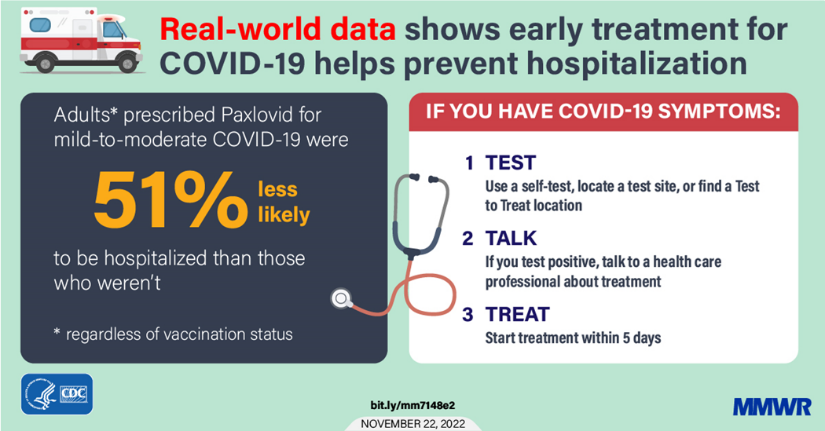
  • HealthLeaders Media reports “Treating COVID-19 patients with Paxlovid significantly reduces hospitalizations and deaths, according to a recent large-scale study by Epic Research.”

AstraZeneca’s Covid-19 pre-exposure prophylactic Evusheld has managed to remain relevant for immunocompromised and other patients when many of its therapeutic peers haven’t with each new Omicron subvariant.

But that win streak may slowly come to a close as the FDA told healthcare providers on Monday that one of the emerging subvariants, BA.4.6, renders Evusheld almost completely useless.

Nationally, BA.4.6 currently makes up about 13% of new cases, compared to just 1% of cases at the beginning of July, according to the CDC. But in some regions, like in Iowa, Missouri, Kansas and Nebraska, the BA.4.6 subvariant makes up more than 20% of all Covid-19 cases.

  • David Leonhardt writing in the New York Times Morning column discusses “A Public Health Success Story; We revisit the subject of Covid and racial inequities”. Check it out.
  • The NIH Directors Blog considers “Understanding Long-Term COVID-19 Symptoms and Enhancing Recovery.”

From the mental healthcare front, MedPage Today reports

Suicide risk was higher in people recently diagnosed with dementia, especially younger patients, a case-control study in England showed.

Compared with people who didn’t have dementia, suicides rose in people who received a dementia diagnosis in the past 3 months (adjusted OR 2.47, 95% CI 1.49-4.09), according to Danah Alothman, BMBCh, MPH, of the University of Nottingham in England, and colleagues.

For people under age 65, suicide risk within 3 months of diagnosis was 6.69 times (95% CI 1.49-30.12) higher than in patients without dementia, the researchers reported in JAMA Neurology

From the U.S. healthcare business front, Bloomberg reports on giant drug manufacturer Pfizer’s future

Pfizer Inc. emerged from the Covid-19 pandemic as the world’s most visible drugmaker, but its success has left investors impatient for an encore.

The windfall from the pharmaceutical giant’s Covid vaccine almost doubled its revenue in just one year. And now the shot, coupled with Pfizer’s Covid antiviral pill, is poised to make up more than half of its expected $100 billion of sales in 2022. That’s left Pfizer flush with cash — $28 billion it could spend on the kinds of deals that for decades fueled its growth into an American colossus.

The pressure is clearly on for Pfizer to show that the muscle it built during the pandemic won’t atrophy. Big Pharma companies don’t normally double revenue so quickly, and nobody expects that kind of growth to continue. But one thing’s clear: Pfizer can’t go back to the sluggish path it was on for years.

The American Hospital Association informs us

Operating margins for U.S. hospitals and health systems were down 24% in August compared to a year ago, driven in large part by a 7.2% increase in labor expenses, according to data from over 900 hospitals reported yesterday by Kaufman Hall.

“Nine months into a challenging year, margins have fluctuated wildly,” the report notes. “Although most metrics improved from July to August, organizations are still operating with negative margins and well below pre-pandemic levels.”

From the Medicare front, the American Hospital Association adds

Effective Oct. 1 for five years, the Centers for Medicare & Medicaid Services will pay average sales price plus 8%, rather than ASP plus 6%, for biosimilars whose average sales price does not exceed the price of the reference biological product. The payment increase was included in the Inflation Reduction Act of 2022. For new biosimilars that qualify, the five-year period will begin on the first day of the calendar quarter for which ASP payment for that biosimilar begins under Medicare Part B.

From the electronic health records front, STAT News reports

Epic Systems has revamped its widely criticized sepsis prediction model in a bid to improve its accuracy and make its alerts more meaningful to clinicians trying to snuff out the deadly condition.

Corporate documents obtained by STAT show that Epic is now recommending that its model be trained on a hospital’s own data before clinical use, a major shift aimed at ensuring its predictions are relevant to the actual patient population a hospital treats. The documents also indicate Epic is changing its definition of sepsis onset to a more commonly accepted standard and reducing its reliance on clinician orders for antibiotics as a way to flag the condition.

The changes follow the publication of a series of investigations by STAT that found an earlier version of Epic’s tool resulted in high rates of false alarms at some hospitals and failed to reliably flag sepsis in advance. One of the investigations found that the model’s use of antibiotics as a prediction variable was particularly problematic, resulting in late alarms to physicians who had already recognized the condition and taken action to treat it.

Fierce Healthcare looks into “How Google, Mayo Clinic and Kaiser Permanente tackle AI bias and thorny data privacy problems.”

From the telehealth front, Healthcare Dive reports

Telehealth utilization varied by region from June to July of 2022 and rose 1.9% nationally, according to Fair Health’s monthly tracker data out Monday. 

In the West, Midwest and South, telehealth utilization rose 5.7%, 2.5% and 4.9%, respectively, from June to July. In the Northeast, telehealth use fell 3.3% during that period.

Mental health conditions remained the top diagnoses nationally, and psychiatrists also delivered more virtual care in some regions.

Monday Roundup

Photo by Sven Read on Unsplash

From the Federal Employee Benefits Open Season front, the FEHBlog has noticed that OPM expanded the number of FEHB and FEDVIP public use files available on its website. “The purpose of the OPM FEHB and FEDVIP Plan and Benefits Information (PBI) Public Use Files (PUFs) is to provide information to the public on FEHB and FEDVIP plans, including information on rates and benefits.” Check it out.

The FEHBlog also has noticed that many FEHB plans promptly posted Open Season information on their websites. In particular, the three largest FEHB carriers, Blue Cross FEP, GEHA, and Kaiser Permanente have done so. That’s a heavy, yet helpful, lift so kudos to the carriers.

From the public health front

  • The New York Times brings us up to date on the polio vaccination campaign in New York State.

The specter of polio becoming endemic in America again was once unthinkable. But as state public health officials embark on an urgent campaign to get more people vaccinated, the low rates among preschoolers in some pockets are evidence of both the challenges they face and the threat to the state’s youngest children — the very age group among whom polio is most likely to spread.

This gap stems from the fact that the polio vaccine is required for school admission.

A bipartisan group of lawmakers has proposed legislation to help create drugs that can fight drug-resistant pathogens as the treatments for life-threatening problems from respiratory infections to sepsis stop working.

But a classic end-of-year congressional quagmire — a tight calendar, a heated election season, fights over spending, and inertia — threatens to stymie progress before the end of the year.

Fingers crossed for passage in the lame duck session.

  • The National Institutes of Health released its monthly NIH News in Health, which is worth a click.

From the U.S. healthcare business front —

  • Fierce Healthcare relates “Francisco Partners, an investment firm, signed a definitive agreement to acquire bSwift from CVS Health.” The acquistion agreement is expected to close by year end and “bSwift will continue to partner with CVS Health and its subsidiary Aetna, an insurance provider, by sharing benefits solutions with its employees and clients.”

From the telehealth front, we have another positive survey report from mHealth Intelligence. “ccording to new research findings from the JD Power 2022 US Telehealth Satisfaction Study, telehealth has become more than a temporary replacement for in-person care due to high consumer preference and its role in expanding access to mental health treatment.”

From the Monday miscellany front —

  • BioPharma Dive identifies five Food and Drug Administration decisions to watch out for this quarter. “The regulator could soon approve medicines from Apellis, Gilead and GSK, as well as decide on whether to pull a controversial preterm birth drug from the market.”
  • The Office of National Coordinator for Health Information Technology issued eight information blocking regulatory reminders for October 6, the end of the phase in period for that rule.
  • Medscape reports on an HHS Office of Inspector General report criticizing the efficiency of the FDA’s accelerated drug approval program.

In granting accelerated approvals, the FDA sets timelines for drugmakers to carry out confirmatory trials. But these target dates are often missed. OIG staff evaluated 104 cases of accelerated approvals for which confirmatory trials have not been completed and found that as of May 5, 2022, 35 drug studies had missed their original target completion dates. * * *

In its report, the OIG staff offered a deep look at the four drugs in which confirmatory trials were furthest past their original completion deadlines:

* Mafenide acetate (Sulfamylon), a topical antimicrobial treatment for burns that was approved in 1998. The trial is 140 months past its original deadline.

* Midodrine hydrochloride (Proamatine), a treatment for postural hypotension that was approved in 1996. The trial is 85 months past its original deadline.

* Pralatrexate (Folotyn), a treatment for T-cell lymphoma that was approved in 2009. The trial is 72 months past its original deadline.

Hydroxyprogesterone caproate (Makena), a drug to reduce risk of preterm birth that was approved in 2011. The trial is 64 months past its original deadline.

Weekend update

Congress has left Capitol Hill after the Congressional election on November 8. The Wall Street Journal reports from the Congressional campaign trail.

Tomorrow, the Supreme Court opens its October 2023 Term. The Journal discusses the legal issues that the Court will be considering this term.

Amy Howe adds

When the justices return to the bench next week to begin the 2022-23 term, members of the public will be able to attend oral arguments for the first time since the COVID-19 pandemic began in 2020. The court also announced on Wednesday that it will continue to provide a live audio feed of oral arguments, a practice that it began during the pandemic.

Masking will be optional at oral arguments, the court said in a press release, and the court’s building will otherwise remain closed to the public.

From the Omicron and siblings front, Forbes reports

As COVID-19 regulations continue to ease across the U.S., some Americans want more protection. Nearly two-thirds (63%) of adults familiar with the recently updated booster shot, which specifically targets the virus’ Omicron variant, say they are likely to get one.

That’s according to the latest Forbes Health-Ipsos Monthly Health Tracker, which polled 1,120 adults between Sept. 27 and 28, 2022. Of those in favor of the new shot, 25% say they are “somewhat likely” to get it, while 38% indicate they are “very likely” to get the booster.

Additionally, about 9% of polled individuals have already received the latest booster, and 28% say they aren’t likely to get this particular booster at all.

Perhaps it’s time for health plans to reach out to members on the bivalent booster.

From the healthcare costs front, the Congressional Budget Office offers “Policy Approaches to Reduce What Commercial Insurers Pay for Hospital and Physician Services.” How timely!

From the Rx coverage front —

Fierce Healthcare tells us

A new report finds that 1,216 pharmaceuticals increased their prices past the inflation rate of 8.5% from July 2021 to July 2022, with an average hike of 31.6%. 

The report and a second report on price trends released Friday by the Department of Health and Human Services (HHS) underline how a new provision in the Inflation Reduction Act—an inflationary cap on Part D costs—will affect prices right as the cap is implemented Oct. 1. 

NPR shots provides patient and expert reaction to the FDA’s decision to approve a new drug to treat amyotrophic lateral sclerosis (“ALS”).

The Food and Drug Administration has approved a controversial new drug for the fatal condition known as ALS, or Lou Gehrig’s disease. 

The decision is being hailed by patients and their advocates, but questioned by some scientists.

Relyvrio, made by Amylyx Pharmaceuticals of Cambridge, Mass., was approved based on a single study of just 137 patients. Results suggested the drug might extend patients’ lives by five to six months, or more. * * *

A much larger study of Relyvrio, the Phoenix Trial, is under way. But results are more than a year off.

The Institute for Clinical and Economic (ICER) review adds

Yesterday, the FDA approved Relyvrio, Amylyx Pharma’s therapy for amyotrophic lateral sclerosis (ALS). According to ICER’s analysis, the therapy would only achieve traditional thresholds of cost-effectiveness if priced between $9,100 to $30,700 per year.

We also recommended that manufacturers should seek to set prices of new medications that will foster affordability and access for all patients by aligning prices with the patient-centered therapeutic value of their treatments, and not based on the price of existing ALS medications. This is especially important for ALS since new drugs are anticipated to be used in combination with other very expensive drugs, creating the highest risk for financial toxicity due to health care costs.

From the telehealth front, mHealth Intelligence informs us

While researching the effects of telehealth and in-person care within a large integrated health system, a study published in JAMA Network Open found that virtual care methods can expand healthcare capabilities, performing on par or better than in-person care on most quality measures evaluated.

Researchers conducted a retrospective cohort study that included 526,874 patients, 409,732 of whom received only in-person care, and 117,142 participated in telehealth visits. Of those who received only in-person care, 49.7 percent were women, 85 percent were non-Hispanic, and 82 percent were White. Of those who received care via telehealth, 63.9 percent were women, 90 percent were non-Hispanic, and 86 percent were White.

Researchers noted that patients in the in-person-only group performed better on medication-based measures. But only three of the five measures had significant differences: patients with cardiovascular disease (CVD) receiving antiplatelets, those with CVD receiving statins, and those with upper respiratory infections avoiding antibiotics.

Researchers also noted that patients participating in telehealth performed better than those in the -person-only group on four testing-based measures. These four measures included patients with CVD with lipid panels, patients with diabetes with hemoglobin A1c testing, patients with diabetes with nephropathy testing, and blood pressure control.

Further, those participating in telehealth performed better than their counterparts on seven counseling-based measures, including cervical cancer screening, breast cancer screening, colon cancer screening, tobacco counseling and intervention, influenza vaccination, pneumococcal vaccination, and depression screening.

Based on these study findings, researchers concluded that telehealth could augment care for various conditions, especially chronic diseases. The study also supplies information that could assist providers in determining an ideal ratio of in-person and telehealth visits.

But researchers also noted several limitations associated with the study. These included their inability to control for the number of in-person and telehealth visits, potential inaccuracies associated with the EMR data used, and sampling limitations.