Midweek update

Midweek update

Another rainy evening in Bethesda MD.

Get a load of this — public health benefits from the great hunkering down:

  • From the Wall Street Journal — “From Argentina to South Africa to New Zealand, countries in the Southern Hemisphere [where it is winter] are reporting far lower numbers of influenza and other seasonal respiratory viral infections this year. In some countries, the flu seems to have all but disappeared, a surprise silver lining that health experts attribute to measures to corral the coronavirus, like mask use and restrictions on air travel.”
  • and from the New York Times (thanks to a friend of the FEHBlog) — “This spring, as countries around the world told people to stay home to slow the spread of the coronavirus, doctors in neonatal intensive care units were noticing something strange: Premature births were falling, in some cases drastically.”

The Wall Street Journal also reports that “[t]he U.S. has agreed to pay Pfizer Inc. PFE 5.10% and BioNTech SE nearly $2 billion to secure 100 million doses of their experimental Covid-19 vaccine to provide to Americans free of charge, the latest sign the government is readying plans to make vaccines available if proved to work safely.” Here is the HHS press release on this welcome purchase. The story reminded me of when the FEHBlog as a youngster was standing in a long line of his peers to receive the second polio vaccine.

On an unrelated note, Fierce Healthcare informs us that health “insurers are worried a raft of proposed changes to the Medicaid Drug Rebate Program could lead to drug manufacturers gaming the system to charge higher prices.” The FEHBlog continue to believe that the upside opportunities from this change are greater than the downside, but he appreciates the skepticism.

Monday roundup

The Wall Street Journal seeks to answer a question that the FEHBlog has been pondering — “Scientists Hoped Summer Temperatures Would Tamp Down Covid-19 Cases. What Happened?” “There are three likely reasons, public-health and infectious-disease experts said. They have to do with the current [relatively low] levels of immunity in the population, how the virus is transmitted [by respiratory droplets] and how people behave [/fail to follow public health guidance].” Oh well.

The Hill reports that “The two main health insurance lobbying groups, America’s Health Insurance Plans (AHIP) and the Blue Cross Blue Shield Association, wrote a letter to congressional leaders on Friday making a [wide] range of requests for the next coronavirus response package, expected later this month.” Check it out.

HHS’s Substance Abuse and Mental Health Services Administration today finalized a revised 42 CFR Part 2 rule intended to better facilitate coordination of patient care. Part 2, which dates back to 1975, applies to substance use disorder patient records held by certain federally assisted health care providers. Here is a link to the FAQs on the final rule. The next time that SAMHSA revises this rule it will do so to align the rule with the generally applicable HIPAA Privacy Rule in accordance with the CARES Act. The statutory deadline for this action is March 27, 2021.

Fedsmith offers an article discussing whether federal annuitants with FEHB coverage also should elect to purchase Medicare Part prescription drug coverage. Here is OPM’s guidance:

Part D: There is a monthly premium for Part D coverage. Most Federal employees do not need to enroll in the Medicare drug program, since all Federal Employees Health Benefits Program plans will have prescription drug benefits that are at least equal to the standard Medicare prescription drug coverage. Still, you may want to be aware of the benefits Medicare is offering, so you can help others make informed decisions. If you have limited savings and a low income, you may be eligible for Medicare’s Low-Income Benefits. For people with limited income and resources, extra help in paying for a Medicare prescription drug plan is available. Information regarding this program is available through the Social Security Administration (SSA). For more information about this extra help, visit SSA online at www.ssa.gov, or call them at 1-800-772-1213 (TTY 1-800-325-0778).

Friday Stats and More

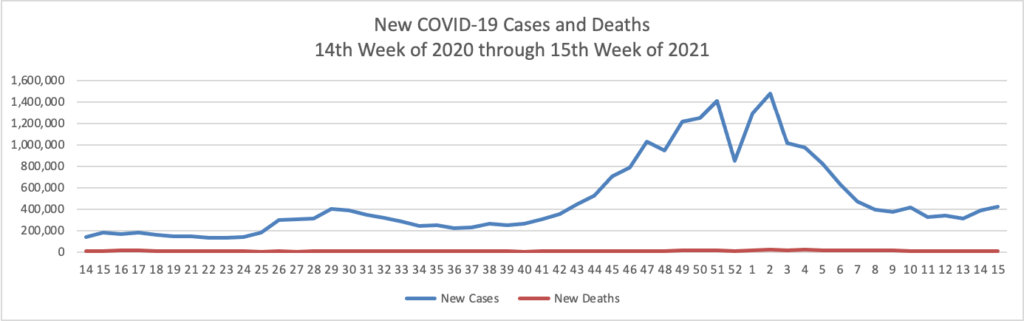
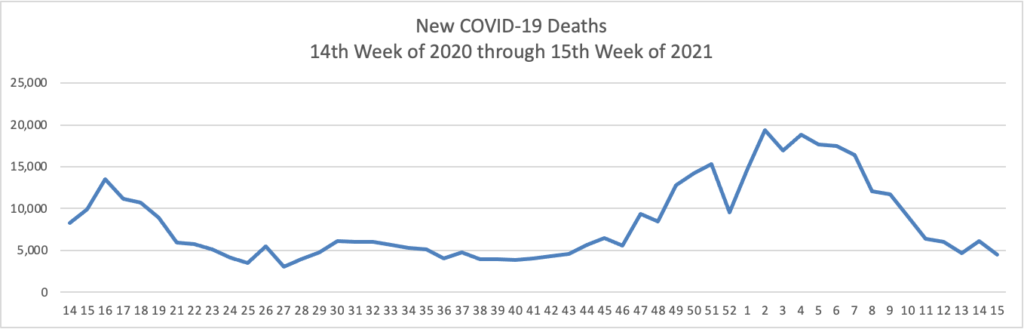
This week’s chart of new COVID-19 cases (and deaths) is startling. Week 27 ended on July 9.

image004.png

What strikes the FEHBlog is that the number of COVID-19 related deaths has remained stable over this time period. If the number of new cases is a leading indicator of deaths, then the number of deaths should have steadily increased following week 20. That hasn’t happened. Why you ask? In the FEHBlog’s opinion, the at risk folks have been taking effective protective measures, and the doctors have learned better approaches to treating the disease.

On the COVID-19 vaccine front —

  • Medcity News reports that Moderna is making progress with its vaccine studies. If the studies prove successful, “The company said that it is on track to provide about 500 million and potentially up to 1 billion doses of the vaccine annually starting next year.”
  • Fierce Pharma reports that “In separate interviews this week, Pfizer CEO Albert Bourla and BioNTech CEO Ugur Sahin said their mRNA vaccine candidate could be ready to submit to regulators in the fall or winter, respectively, pending success in a massive pivotal study yet to kick off.”

Fingers crossed.

Pharma Catalyst informs us that “more than 20 leading biopharmaceutical companies are launching the AMR Action Fund, a ground-breaking partnership to invest nearly $1 billion to ensure a robust and diverse pipeline of new medicines to treat drug-resistant infections.” That’s important too.

The Affordable Care Act created “grandfathered plan” status for electing employer sponsored plans. Grandfather status exempts the plan from many of the ACA mandates. The Obama Administration used its regulatory authority to minimize the availability of this exemption. The Kaiser Family Foundation reported last year that 13% of employees were covered under a grandfathered plan. Most of the grandfathering occurs in the midwest. That’s more than the FEHBlog expected to find. In any event, today the Trump Administration’s ACA regulators issued a proposed rule to create two new flexibilities that would help employers preserve grandfather plan status. Here’s a link to the FAQ on the proposed rule.

Midweek Update

A House of Representatives appropriations subcommittee approved by voice vote today the bill funding financial services and general government for the 2021 fiscal year. That bill encompasses OPM and the FEHBP. Yesterday’s FEHBlog post discussed the relevant substance of the bill considered today. The bill now moves onto full appropriations committee consideration.

Fierce Healthcare reports that “Healthcare leaders and health IT groups are calling on Congress to repeal a section of the law that prevents the U.S. Department of Health and Human Services (HHS) from working with the private sector to develop a nationwide patient identification strategy.” The advocates are pointing to the COVID-19 emergency as another reason for taking this sensible action. ” Amid the COVID-19 pandemic, contact tracing efforts are hampered without accurate demographic information that correctly identifies the right patient.”

Also, on the COVID-19 front, the National Institutes of Health (“NIH”) announced today that “The National Institute of Allergy and Infectious Diseases (NIAID), part of the NIH, has established a new clinical trials network that aims to enroll thousands of volunteers in large-scale clinical trials testing a variety of investigational vaccines and monoclonal antibodies intended to protect people from COVID-19.”

The Wall Street Journal reports that

Drugmaker Emergent Biosolutions Inc. plans to work with Mount Sinai Health System in New York City to test whether a drug derived from the blood plasma of recovered Covid-19 patients can prevent infections in doctors, nurses and military forces. The proposed study, which the partners announced Wednesday, would add to efforts evaluating the coronavirus-fighting potential of experimental drugs made from plasma donated by recovered patients. If the drug proves to work safely, it could help protect health-care workers and other people working in essential jobs who are at high risk of infection until a vaccine is ready and perhaps even after.

On the general U.S. healthcare front Healthcare Dive reports that

Walgreens on Wednesday announced plans to open up to 700 primary care clinics across the country over the next five years in partnership with medical services provider VillageMD, and “hundreds more” after that. As part of the agreement, Walgreens will invest $1 billion in equity and convertible debt in Chicago-based VillageMD over the next three years, including a $250 million equity investment Wednesday. VillageMD will use 80% of the funds to pay for opening the clinics, called Village Medical at Walgreens, and integrate digitally with Walgreens.

and that

Walmart will now sell health insurance policies directly to its customers, a spokesperson told Healthcare Dive, confirming speculation sparked by job postings from the retailer for Medicare sales managers and insurance agents, first reported by the Arkansas Democrat Gazette. Analysts with SVB Leerlink said the move underscores the attractiveness of this market and the likelihood of increased competition over time, while Walmart’s reach across U.S. consumers — including seniors — has the potential to drive up volume for Medicare plans.

What’s more, Health Payer Intelligence discusses why some health plans seek out seriously ill members to wit “By developing a greater understanding of seriously ill populations, payers and policymakers can more accurately target their population health management strategies.”

And a Forbes columnist criticizes government telehealth parity mandates. The column provides an interesting perspective on the telehealth craze. As the FEHBlog’s late grandmother frequently advised “moderation in all things.”

Last but not least, FedWeek explores the OPM Federal Employees Benefits Survey to understand why some federal employees don’t enroll in our beloved FEHBP.

the survey found that of those not enrolled [roughly 19% of the surveyed population], 90 percent are obtaining health care through some other program, most commonly through a spouse’s employment and most commonly through the military TRICARE program. “Less than one percent of respondents said that they are not enrolled in FEHB and do not have health insurance because they do not think there is a need,” OPM said.

Tuesday Tidbits

Federal News Network reports that

House appropriators are silent on federal [employee] pay for now, increasing the likelihood that a planned 1% raise for civilian employees next year will advance as the president intended.

A draft budget bill for 2021, which the House Appropriations Subcommittee on Financial Services and General Government released Tuesday afternoon, makes no mention of a federal pay raise for General Schedule employees next year.

In their silence, House appropriators are essentially deferring to the proposal President Donald Trump offered earlier this year. In his budget request for 2021, the president recommended a 1% across-the-board federal pay raise for civilian employees next year, with no further locality pay adjustments. Military members are on track to receive a 3% pay raise next year.

The House bill also includes the three standard FEHBP appropriations clauses — a provision prohibiting the application of full Cost Accounting Standards coverage to FEHB plans (Sec. 611), a provision restricting abortion coverage (Sec. 611), and a provision mandating contraception coverage (Sec. 613).

Fortune Magazine discusses CMS Administrator Seema Verma’s comments on data accessibility and telemedicine at a Fortune conference today. Fierce Healthcare adds that “

CMS is eyeing ways to make expanding access to telehealth permanent, though the final word in overhauls to Medicare lies with Congress, Verma said. “It’s not a panacea; it’s not going to solve every problem,” she said. “Not everything is going to be able to be addressed by telehealth. But it’s a very powerful tool for medicine.”

Healthcare Dive provides us with background on the healthcare providers who received Payroll Protection Program loans from the federal government. In the FEHBlog’s book, the PPP is one of the best relief measures that Congress has dreamed up.

On the prescription benefit management front, Fierce Healthcare informs us that

Anthem’s pharmacy benefit manager IngenioRx will acquire ZipDrug, a data-driven pharmacy management company.

The acquisition expands IngenioRx’s offerings to include a platform that directs consumers to pharmacies with high-performing pharmacies and that offers home prescription delivery, the insurer announced (PDF) Monday.

IngenioRx will offer ZipDrug’s services both integrated into its broader PBM platform and as a standalone service, according to the announcement.

and that

Startup pharmacy benefit manager Capital Rx is teaming up with Walmart to bring greater transparency to specialty and mail-order prescriptions.

Capital Rx provides PBM services to employers and health plans through its “clearinghouse” model, in which they provide unit costs for drugs upfront to clients. The model is also designed to prevent “spread pricing,” in which a PBM charges a payer significantly more than a pharmacy’s price for a drug to reap profits.

Thursday Stats and More

As tomorrow is the federal holiday celebrating the Fourth of July, the FEHBlog will report COVID-19 stats today. It’s not pretty. The stats are based on the CDC’s COVID-19 Cases in the U.S. website.

Week endingTotal CasesTotal Deaths

May 21

297,581

8,956
June 4148,2107,561
June 18161,2894,865
June 25199,2525,270
July 2304,4966,215

The first row was the high point in new cases and new deaths over the past six weeks. The new cases are back at the mid-May level but deaths are still below mid-May (but above mid-June). The FEHBlog firmly believes that this new surge in cases will be more manageable than the first surge because doctors know how to manage the disease and treatments are available.

Senator Chuck Grassley (R Iowa), who is Chairman of the Senate Finance Committee, has introduced his Updated Prescription Drug Pricing Reduction Act of 2020. It’s worth noting that the Senator’s Committee approved the 2019 version of this bill last summer by a 19-9 vote. Sen. Grassley then worked with Sen. Ron Wyden (D. Ore.) to make the bill more bipartisan in nature. However, the bill has no Democrat Senator co-sponsors because after all this is an election year. There may wind being action on this bill in the lame duck session following the November election.

The Society for Human Resource Management offers three checklists to help employers avoid LGBTQ discrimination in their benefit programs following the recent Supreme Court decision including sexual orientation and gender identity within the scope of prohibited sex discrimination. Check it out.

The Department of Health and Human Services has posted its current list of sub regulatory guidance. The website explains that

On October 9, 2019, the President issued Executive Order (EO) 13891 entitled Promoting the Rule of Law through Improved Agency Guidance Documents (84 FR 552350). The EO requires HHS to establish a single, searchable, indexed database that contains links to all of HHS’s guidance documents currently in effect. Guidance documents come in a variety of formats, including interpretive memoranda, policy statements, manuals, bulletins, advisories, and more. Please note, the contents of this database do not have the force and effect of law and are not meant to bind the public in any way. These documents are intended only to provide clarity to the public regarding existing requirements under the law or HHS policies.

The FEHBlog looks forward to reviewing OPM’s companion site.

Speaking of OPM, Federal News Radio reports

Existing health and retirement benefits are a significant incentive for employees to take or keep a job in the federal government, according to the latest survey results from the Office of Personnel Management.

About 70% of those who took OPM’s 2019 benefits survey said the ability to receive insurance through the Federal Employee Health Benefits Program influenced their decision to a “great or moderate” extent to take a job in government, while 80% said the program influenced their decision to keep their jobs.

Hey what’s not to like? Great benefits and if you have FEHBP coverage for the five years preceding your civil service retirement you carry FEHBP coverage into retirement with the full government contribution. Well deserved benefits.

Monday Roundup

Modern Healthcare reports tonight that

HHS spokesperson Michael Caputo on Monday tweeted that HHS intends to extend the COVID-19 public health emergency that is set to expire on July 25. The extension would prolong the emergency designation by 90 days. Several payment policies and regulatory adjustments are attached to the public health emergency, so the extension is welcome news for healthcare providers.

The Centers for Disease Control released updated guidance on the use of cloth face coverings during the COVID-19 emergency.

Cloth face coverings are recommended as a simple barrier to help prevent respiratory droplets from traveling into the air and onto other people when the person wearing the cloth face covering coughs, sneezes, talks, or raises their voice. This is called source control. This recommendation is based on what we know about the role respiratory droplets play in the spread of the virus that causes COVID-19, paired with emerging evidence from clinical and laboratory studies that shows cloth face coverings reduce the spray of droplets when worn over the nose and mouth. COVID-19 spreads mainly among people who are in close contact with one another (within about 6 feet), so the use of cloth face coverings is particularly important in settings where people are close to each other or where social distancing is difficult to maintain.

Healthcare Dive alerts us that

Gilead will charge between $2,340 and $3,120 for a typical course of treatment with its COVID-19 drug remdesivir, which has been shown to speed the recovery of patients hospitalized with the infectious disease.

The drug’s price will depend on whether patients are covered by government insurance or commercial health plans. Gilead will offer remdesivir to governments in developed countries at a price of $390 per vial. In the U.S., private insurers will pay $520 per vial. 

Most patients will be treated for five days, using six vials, Gilead said in announcing its much anticipated pricing decision Monday. If treatment stretches to 10 days — initially the standard treatment course — remdesivir’s cost would rise to $5,720 for patients who are commercially insured. 

The announced prices are in line with expert predictions.

MedCity News discusses Walmart’s new health clinics.

The company rolled out two Walmart Health clinics this month, in Loganville, Georgia and Springdale, Arkansas.

These aren’t your usual walk-in clinics that might serve as a quick place to get vaccinated or get a cold checked out. Rather, they’re more like a one-stop shop for healthcare, with primary care, urgent care, diagnostics, x-rays, behavioral health and dental care.

Walmart Health’s other big differentiator: A primary care appointment costs just $40. For children? $20.

Weekend Update

The House and Senate will be conducting legislative and committee business this week preceding the Fourth of July holiday. Of note, on Tuesday at 10 am the Senate Health Education Labor and Pensions Committee will hold a hearing on ways to return to work and school safely following the great hunkering down.

The Supreme Court has thirteen more opinions to release before its summer break. The Court is expected to release opinions on Monday, Tuesday, and Wednesday this week, all at 10 am.

On the COVID-19 front —

  • Fierce Healthcare discusses how the Walgreen’s Pharmacy chain has leveraged its partnership with Microsoft and other technology companies to better respond to the COVID-19 emergency.
  • A few weeks ago, the Journal podcast offered a fascinating show on the Hertz bankruptcy. It’s worth a 17 minute long listen. The story highlights how a strong balance sheet helps companies weather storms like the COVID-19 emergency. Becker’s Hospital Review identifies 14 well known health systems in this favorable situation, including Kaiser Permanente. It’s not an exclusive list.
  • Healthcare Dive reports on the significant adverse financial impact that the COVID-19 emergency has had on primary care practices in the U.S. Surprisingly that article does not note that these practices have been eligible for Payroll Protection loans and federal grants. The government deserves credit for trying to soften the blow to this critical sector of our health care system. Tuesday June 30 is the deadline for applying for a PPP loan.

On the human nature front, the Wall Street Journal reports that COVID-19 first responders have been relaxing by playing a boardgame called Pandemic.

Midweek update

Fierce Healthcare reports on PriceWaterhouseCooper’s three tier approach to estimating 2021 health care costs. Of course, the variable is impact of the COVID-19 emergency. The Goldilocks increase is estimated at 6%.

Fierce Pharma informs us that Gilead’s as yet unpriced remdesivir treatment for severe COVID-19 has gained stiff competition for a “low-cost [drug called] dexamethasone.”

According to results just published on preprint site medRxiv, dexamethasone treatment led to a 35% reduction in death rate among patients on invasive mechanical ventilation and 20% for those receiving oxygen without invasive ventilation.

Because of that showing, clinical experts told ICER that dexamethasone could soon become the new standard of care throughout the U.S., “and that the relative benefits of remdesivir will now be judged to be most pertinent as an adjunct to dexamethasone treatment,” the organization noted in its new analysis. In the ACTT-1 trial, the death rate for remdesivir among severe patients were reduced to 7.7% from 13% for placebo, a difference that was not statistically significant.

Both drugs remain under study.

Smartbrief offers four innovative approaches for payers in the post hunkering down world. The FEHBlog’s favorites approach is as follows:

Humana Vice President Caraline Coats defined whole person care through the lens her company’s Bold Goal initiative uses: Primary care, social determinants of health, pharmacy, home health and behavioral health. Their work strives to help members in targeted communities enjoy more Healthy Days per month – when they feel physically and mentally well. A lot of their progress comes down to taking the time to ask members the right questions, and then having the ability to act on what is learned.

In an industry built around episodic care, “whole-person care is really different,” Coats said, and it is still being defined. So, her team’s work looks a lot like vetting of clinical interventions: rigorous testing, followed by publication of results so others may learn, too. Among their recent promising experiments is a partnership with Mom’s Meals to meet the needs of certain members with diabetes and a program with Papa (which provides companionship and help with everyday tasks) that measurably brought down loneliness scores among participants.

Meanwhile Blue Cross and Blue Shield of North Carolina is offering monetary support to primary care practices in that State. That’s quite a helping hand. Bravo.

On the technology front —

  • Anthem, the large Blue Cross licensee, is now an Alexa skill. Currently

Using the Anthem Skill, you can:

Order your digital member ID card.
Access your health savings account (HSA) or health reimbursement account (HRA) balance.
Check your progress toward meeting your medical plan’s deductible and out-of-pocket maximum.
Schedule a call with someone from our Member Services team.
Refill, renew and check the order status of any home delivery prescription medicines.
Find out how close you are to reaching your dental plan’s deductible and annual maximum.
Use the glossary to learn what a health care term means.

  • STAT News has an interesting article about about how North Dakota is testing a contacts app with COVID-19 patients. The app was developed by a Microsoft engineer for use with North Dakota football games. Unfortunately, however, according to the article:

While apps can’t replace health care workers, they may be used to bolster their efforts — so long as enough people use them. So far, though, that hasn’t gone as planned: Early excitement over cutting-edge technology has given way to a largely lackluster role for contact tracing apps. Many states have opted against adopting the tools as part of their arsenal. And the handful of states that are launching such apps — including North Dakota — haven’t seen them gain much traction.

Tuesday Tidbits

At today’s House Energy and Commerce Committee hearing on the COVID-19 emergency, Dr. Fauci, according to the Wall Street Journal, remarked that “he is ‘cautiously optimistic’ that a successful vaccine could be produced around the end of 2020. ‘I believe it will be when and not if,’ he said.” Amen to that. Here’s a link to today’s Senate Health Education Labor and Pension Committee’s hearing on the same topic.

The Labor Department’s Employee Benefit Security Administration issued a wide-ranging set of frequently asked questions on the health plan related provisions of the Families First Coronavirus Response Act and the CARES Act. Check it out.

Reuters reports on a sobering CMS study of the COVID-19 emergency on Medicare beneficiaries. ““The disparities in the data reflect longstanding challenges facing minority communities and low income older adults,” said Seema Verma, administrator of the Centers for Medicare & Medicaid Services (CMS).”

MedCity News informs us that “Clinical development will soon begin for an inhaled version of a [Gilead] antiviral drug {remdesivir} used to treat Covid-19 that is currently available only to hospitalized patients in intravenous form.” That’s a pro move.

Drug Channels offers its annual study of 2019 PBM drug spending reports.

The PBMs’ data highlight key trends about drug spending:
— For 2019, CVS and Express Scripts reported overall changes in drug spending that were in the low single digits. Prime reported mid-single-digit growth in overall drug spending.
— Spending growth on traditional drugs declined by mid-single digits for the third consecutive year. This decline came from deeper commercial rebates on brand-name drugs, ongoing deflation in generic drugs, and a small increase in the generic dispensing rates.
— The results for CVS and Express Scripts were comparable. For CVS Caremark’s commercial clients, net drug prices for traditional drugs declined by -6.3%, while utilization grew by 1.5%. For Express Scripts’ commercial clients, net drug prices for traditional drugs declined by -6.4%, while utilization grew by 1.4%.

In legal news

  • It was no surprise to learn from Politico that LGBTQ advocates already have brought a lawsuit against the Department of Health and Human Services (“HHS”) “over its rollback of LGBTQ patient protections, arguing that last week’s Supreme Court decision extending workplace legal protections to gay and transgender employees invalidates the new rules.” That should be a rollover win for the plaintiffs.
  • It was a pleasant surprise to learn that the U.S. District Court for the District of Columbia today ruled in favor of an HHS rule requiring hospital to disclose real prices, e.g, negotiated prices with health plans, for their services just like retail stores. The FEHBlog expects that this rule will lead to more and better (e.g., quality based) competition among hospitals. But first the decision will need to be affirmed by the Court of Appeals.