Interesting Ideas

Interesting Ideas

Health Payer Intelligence reports that CIGNA and SCAN Health Plan are teaming up to reach out to Medicare Advantage members in an effort to help them with senior loneliness during the great hunkering. SCAN’s “employees are calling on seniors, starting with the most at-risk and isolated. During their birthday and welcome calls, SCAN’s Senior Advocates—individuals who are both members and SCAN Health Plan employees—listen for potential social determinants of health needs.” What a great approach for FEHB plans to follow.

STATNews discusses the value of using chest CT scans to reliably reliably supplement other forms of COVID-19 testing in our country.

STATNews also has developed a new electronic dashboard to gauge the readiness of rural counties in the U.S. to deal with the COVID-19 emergency or other pandemics. The developers are seeking public comment on the dashboard. This dashboard should have benefits beyond the current emergency.

Healthcare Dive reports that

The Centers for Disease Control and Prevention is working to automate generation and transmission of COVID-19 case reports to deliver data put in provider EHRs directly to public health agencies.

For providers that don’t have EHRs with the ability to electronically send case reports, CDC is creating a FHIR-based app [called eCR Now] to connect COVID-19 electronic case reporting (eCR) to existing health IT infrastructure to confirm cases and route the data to appropriate end users. The goal is to give public health officials a more accurate, timely picture of the pandemic.

The FEHBlog is quite a fan of the FHIR API.

This is the time of the year when the Drug Enforcement Administration (DEA) hold events that allow citizens to safely dispose of unused prescription drugs. Obviously these events are not being held this April. The DEA has creates a website on safe householder disposal of unused prescription drugs. It’s good information for health plans to share with members.

Person using a laptop

Thursday Miscellany

As the FEHBlog discussed COVID-19 death rates yesterday, it’s only meet and right to post STAT’s story which seeks to put COVID-19 death projections into perspective.

On the flip side, STAT reports on Pfizer’s decision to accelerate by three months human testing on a potential treatment for COVID-19 and local WTOP news reports on COVID-19 vaccine development efforts by a company in the Maryland suburbs of D.C., Novovax. Best of luck.

Healthleaders Media discusses a Guidehouse study finding

A major factor hampering the financial situation for rural providers is the migration of patients to care options outside of the community, with over 75% of patients bypassing local hospitals to receive care elsewhere. These levels are much higher compared to the outmigration patterns of suburban and urban patients.

More than 350 rural hospitals [one in four], accounting for $8.3 billion in total patient revenue, are at the greatest financial risk of closure, according to Guidehouse. The five states most likely to be impacted by hospital closures include Tennessee, Oklahoma, Mississippi, Alabama, and Kansas, according to the analysis.

Guidehouse adds that “Of these hospitals, 81%, or 287 hospitals, are considered highly essential to the health and economic well-being of their communities.” What is really troubling about this study is that it was conducted before the COVID-19 emergency which must be exacerbating these financial problems.

The Centers for Medicare and Medicaid Services today issued additional guidance loosening the regulatory reins on healthcare providers so that “so that hospitals, clinics, and other healthcare facilities can boost their frontline medical staffs” necessary to treat COVID-19 patients and others. Among other steps,

Doctors can now directly care for patients at rural hospitals, across state lines if necessary, via phone, radio, or online communication, without having to be physically present. Remotely located physicians, coordinating with nurse practitioners at rural facilities, will provide staffs at such facilities additional flexibility to meet the needs of their patients.

Similarly, the HHS Office for Civil Rights which enforces the HIPAA Privacy and Security Rules promised not to impose HIPAA penalties on good faith rule violations that occur at COVID-19 testing sites.

Drug Channels offers an interesting take on the CMS actuary’s recent healthcare spending projections for the U.S. Adam Fein observes that ” The coronavirus is upending our healthcare system and putting enormous pressure on hospitals. Despite increased costs of treatment, I expect that spending [that CMS estimated before the COVID-19 emergency] will be lower than the CMS projections.”

On the technology front, the federal government’s cybersecurity authorities released a detailed alert on a variety of cyberscams that have arisen during the COVID-19 emergency.

Friday Stats and More

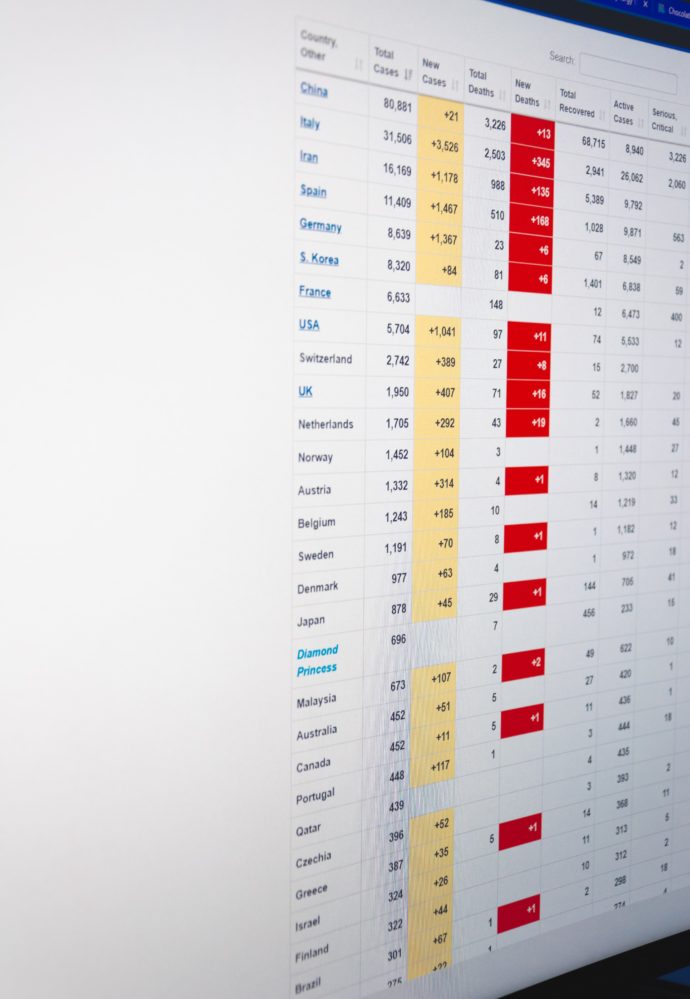
The number of COVID-19 cases continues to grow along with the COVID-19 death rate (number of deaths over number of cases per the CDC). The FEHBlog’s statistics are drawn from the CDC’s now daily Cases in United States Summary.

Cause3/203/274/3
Travel2907121388
Person to Person31013264325
Uncategorized984283318233,566
Total Cases10,44285,356239,279
Total Deaths 15012465442
Death Rate1.44%1.46%2.27%

For context, the CDC’s latest Fluview “estimates that so far this season there have been at least 39 million flu illnesses, 400,000 hospitalizations and 24,000 deaths from flu.” That represents a death rate of less than one tenth of one percent (0.06%). Fortunately this flu season appears to be subsiding. The CDC additionally “estimates that influenza has resulted in between 9 million – 45 million illnesses, between 140,000 – 810,000 hospitalizations and between 12,000 – 61,000 deaths annually since 2010.”

The FEHBlog has wondered where is the light at the end of the COVID-19 tunnel. He now appreciates the fact that we haven’t made it half way through the tunnel. Hang in there.

Not surprisingly but regrettably Govexec.com reports that thousands of federal employees have contracted COVID-19 and attempts to provide a numerical breakdown by agency.

In more upbeat news, MedCity News informs us that

The Food and Drug Administration has given an emergency use authorization to a test for Covid-19 that detects whether a person is infected through the use of antibodies. The FDA granted the authorization to Research Triangle Park, North Carolina-based Cellex, for the qSARS-CoV-2 IgG/IgM Rapid Test, according to a letter from FDA chief scientist Denise Hinton, sent Wednesday to Cellex CEO James Li. The test is designed to produce results in 15-20 minutes.

The advantage of antibody tests is that they not only are less likely to produce false-negative results, but can also be used to detect past infections, meaning that they can be used to determine if a patient without symptoms has previously had Covid-19 and could thus be immune to it. It could also be used to indicate stage of infection and estimate time since exposure. Nevertheless, according to the primer, a limitation to antibody testing is that the body’s immune response to SARS-CoV-2 is slow.

The Labor Department continues to add to its list of now 78 FAQs on the FFCRA’s COVID-19 paid sick leave law which took effect on April 1 while the U.S. Supreme Court cancelled its April oral arguments which would have occurred at the end of this month.

Thursday Thoughts

Fedweek reports that

The largest FEHB carrier, Blue Cross-Blue Shield, has loosened several policies, for those diagnosed with COVID-19, the respiratory condition caused by the COVID-19 virus including waiving:

prior authorization requirements for diagnostic tests and for covered services that are “medically necessary and consistent with CDC guidance”;

any copays or deductibles for diagnostic tests or treatment under that same standard;

early medication refill limits on 30-day prescription maintenance medications and cost sharing for prescriptions for up to a 14-day supply; and

copays for telehealth services related to COVID-19.

The FEHBlog was pleased to see that FEP is waiving telehealth cost sharing related to COVID-19. OPM’s carrier letter mentioned in yesterday’s post overlooked telehealth which is an important tool to mitigate the spread of COVID-19. If your plan offers a telehealth benefit, it is important to pre-register for that benefit before you need to use it. The FEHBlog found his plan’s pre-registration program to be quite efficient.

You will find that FEHBP plans prominently have links to their special COVID-19 coverage features on their websites.

The Wall Street Journal has put its helpful COVID-19 update website outside its general website paywall.

In other news,

  • The Centers for Medicare and Medicaid Services announced earlier this week “the Part D Senior Savings Model, a voluntary model that enables participating Part D enhanced plans to lower Medicare beneficiaries’ out-of-pocket costs for insulin to a maximum $35 copay per thirty-day supply throughout the benefit year. Beneficiaries who take insulin and enroll in a plan participating in the model should save an average of $446 in annual out-of-pocket costs for insulin, or over 66 percent, relative to their average cost-sharing for insulin today.” This program will launch next year. Time will tell whether the prescription benefit plan can extend this discount to FEHBP and other commercial health plans.
  • The National Cancer Institute released the Annual Report to the Nation on the Status of Cancer. The report presents good news
    • Overall cancer incidence rates are leveling off among males and increasing slightly among females.These trends reflect population changes in cancer risk factors, screening test use, diagnostic practices, and treatment advances. 
    • This year’s Special Section focused on progress toward select Healthy People 2020 objectives related to four common cancers (lung, colorectal, female breast, and prostate). The Healthy People 2020 target death rate (161.4 deaths per 100,000 persons) for all cancers combined was met overall and in most sociodemographic groups.
    • During 2007-2017, cancer death rates decreased 15% overall, and the percent improvement target (-10%) was met in many sociodemographic groups.
    • Many of the Healthy People 2020 objectives for death rates, cancer screening, and major risk factors related to lung, colorectal, female breast, and prostate cancer were met.
  • Becker’s Hospital Review provides an overview of seven key dates of the HHS interoperability rule released earlier this week.
  • Healthcare Dive discusses the five additional healthcare apps that CVS/caremark has added to its curated app “formulary” for the benefit of plan sponsors. “Livongo Health, Hinge Health, Hello Heart, Torchlight and Whil are now available for CVS’ PBM clients to use, in addition to Sleepio, a personalized digital sleep program and the first participating program when the service launched in 2019.”

TGIF

OPM now has a prominent page on its website that gathers together the agency’s COVID 19 guidance. Just in time for a group of Democrat Senators to criticize that guidance as Govexec reports. In salient point the Senators state that

OPM work with health insurance providers to ensure that federal employees can affordably access the preventive care and treatment they may need as a result of COVID 19.

Here are today’s COVID 19 statistics for our country from the Centers for Disease Control

Travel-related36
Person-to-person spread18
Under Investigation110
Total cases164

Here’s a link to the CDC’s latest statistics for another coronavirus, the flu.

  • Pneumonia and influenza mortality has been low [this flu season], but 136 influenza-associated deaths in children have been reported so far this season. This number is higher for the same time period than in every season since reporting began in 2004-05, except for the 2009 pandemic.
  • CDC estimates that so far this season there have been at least 34 million flu illnesses, 350,000 hospitalizations and 20,000 deaths from flu.

Modern Healthcare discusses an interesting Humana social determinants of health program in the Medicare Advantage program. The program kicked off this month with Oschner Health in New Orleans. The FEHB Act and the Internal Revenue Code don’t allow FEHBP plans to copy this program but they can take steps to emulate it, in the FEHBlog’s view.

The Boston Globe’s StatNews provides an interesting overview of the state of the biosimilar drug market in our country. Biosimilars are the specialty drug equivalent of generic drugs. Congress opened the door to biosimilar development in the Affordable Care Act. Biosimilars are poised to create a substantial amount of drug cost savings over the next five years according to the article.

Midweek update

The Wall Street Journal recently published a story titled “How the Drug Lobby Lost its Mojo in Washington.” The story also is available on the Journal’s listener friendly podcast. The upshot of the story is that the bipartisan effort to enact a drug pricing law may have legs as they say on Capitol Hill.

“In the past PhRMA had a reputation for rolling the tanks against every proposal irrespective of industry impact,” says PhRMA Chief Executive Officer Stephen Ubl. “We are now taking a more proactive approach of coming to the table to offer policy makers solutions that would address patient affordability challenges.”

PhRMA’s Mr. Ubl says the drug industry could be open to a deal that combines elements of bills from Mr. Grassley, Mrs. Pelosi and House Republicans, saying there “are provisions in all three bills that have bipartisan support and could meaningfully improve affordability for patients without including price controls.” 

In the no good deed goes unpunished department, the Pharmacy Times reports that

Four FDA-approved products that face no competition may increase health care spending by as much as $20.25 billion, according to a new analysis by Vizient Inc.1

The report focused on the Unapproved Drug Initiative (UDI) and its unintended effects on the market. The UDI was an FDA mandate enacted in 2006 that required unapproved drugs in use prior to FDA review of safety and efficacy to be either approved or removed from the market. Once a previously unapproved drug receives FDA approval, the manufacturers of other unapproved versions are asked to remove their products from the market.1

Although the goal of the UDI was to remove potentially dangerous medications from the market, the report authors noted that most of the products are chemically well-defined, reuqire no research and development, and are widely used in health care settings.1

The researchers used the wholesale acquisition cost (WAC) for all calculations and then estimated and used IQVIA data for all US health care product units purchased.1

According to the authors, the UDI has resulted in $2.66 billion in increased costs already incurred, $8.75 billion in estimated cossts awaiting the UDI decision, and $17.59 billion in remaining exclusivity estimated costs.1

Hokey smokes, that’s a big bowl of wrong.

The FEHBlog who is not much of a world traveler was aware of the State Department’s international travel advisories. Today he learned about the Center for Disease Control’s travel health notices. It’s important to check both lists if you plan to travel internationally.

In the healthcare provider competition department, Fierce Healthcare reports that

The Urgent Care Association released its 2019 benchmarking report that showed the total number of centers had reached 9,616 as of November 2019, a 9.6% jump from the previous year.

The number of centers has increased steadily each year from 2013, when the total number of urgent care centers was 6,100. Both urgent care centers and retail clinics have continued to grow across the U.S. as patients look for convenience and affordability, creating competition with traditional hospital and physician practice services.

In the FEHBlog’s view, convenient access to care is great as long as the primary care provider is kept in the loop.

In the good public health news department, the Department of Health and Human Services announced today that

The Health Resources and Services Administration (HRSA) [has] awarded approximately $117 million to expand access to HIV care, treatment, medication, and prevention services. This investment is a critical component of the Administration’s Ending the HIV Epidemic: A Plan for America (EHE) initiative, which aims to reduce the number of new HIV infections in the United States by 90 percent by 2030.

The EHE initiative and today’s awards focus on 48 counties, Washington, D.C., and San Juan, Puerto Rico, geographic areas where more than 50 percent of new HIV diagnoses occurred in 2016 and 2017, as well as the seven states with a substantial rural HIV burden.

Finally, as she is the most influential healthcare policymaker in the U.S. per Modern Healthcare, take a gander at CMS Administrator Seema Verma’s speech to the annual CMS quality conference.

Weekend update

Congress is back at work on Capitol Hill this week. The FEHBlog did find an easy to read list of upcoming Congressional hearings on Congress.gov. The FEHBlog did not find any hearing relevant to the FEHBP coming up.

The FEHBlog is following news about the COVID-19 epidemic. The Wall Street Journal reports that the number of cases outside China is growing particularly in South Korea (602 cases) and Italy (155 cases). There are 34 cases in the U.S. In a Centers for Disease Control conference with the press last Friday, Dr. Nancy Messonnier explained that

We are making our case counts in two tables.  One only tracks people who were repatriated by the state department, and the second tracks all other cases picked up through U.S. public health network.  CDC will continue to update these numbers every Monday, Wednesday, and Friday.  We are keeping track of cases resulting from repatriation efforts separately because we don’t believe those numbers accurately represent the picture of what is happening in the community in the united states at this time.  As of this morning, when you break things up this way, we have 13 U.S. cases versus 21 cases among people who were repatriated [here].  The repatriated cases include 18 passengers from the “diamond princess” and three from the Wuhan [China] repatriation flights

The Wall Street Journal confirms the growing trend of large health insurers to offer their own primary care delivery services to their health plan members [previously documented by the FEHBlog].

“It’s very worrisome for hospitals,” said Chas Roades, a health-care consultant. “Suddenly, the plan you’re relying on for payment is also competing with you at the front end of the delivery system.”

Hospitals’ biggest concern may be the power that primary-care doctors have over where their patients go for care such as imaging scans and specialist procedures. Hospitals rely on doctors to direct patients to them for such services—one reason they have bought up physician practices. Insurer-owned clinics might refer patients away from certain hospital systems, cutting off important revenue. 

The FEHBlog in contrast is delighted with this trend which will hold down costs while improving health care quality. Competition itself is healthy. “’Health care has got to be more seamless and more integrated,” said Rob Falkenberg, chief executive of UnitedHealthcare’s California operation.” Agreed.

Fierce Healthcare reports that Oscar Health has creating a $3 per prescription formulary of about 100 popular prescription drugs and insulin. The formulary went into effect on January 1, 2020 for about half of Oscar’s health plan members. The other half if covered by Medicare or live in certain states like New York which have not approved the formulary. The article explains that

Oscar was able to price the drugs so low through plan design.“The price we pay to acquire the drug for our members has not changed,” [Oscar spokesperson Jackie] Kahn said. “Instead, we chose to have our members pay $3 and we are covering the rest.”

Tuesday Tidbits

The Office of Personnel Management released today its 2019 report on the outcome of Health Care Quality, Customer Service, and Resource Utilization measures (“QCR”) applied to the FEHB plan carriers. The good news is that “A significant number of FEHB carriers demonstrated improvement across a number of QCR measures showing that efforts to improve care and customer service are producing positive results.” The FEHBlog can tell you that carriers put a lot of effort into boosting these scores.

The chart from this report that most impressed the FEHBlog is the chart on page 5 showing steady improvement in the diabetes type 2 control measure. In the FEHBlog’s view, credit for that improvement principally belongs to the plan members who confront this disease by following their doctor’s advice and health plan input.

The FEHBlog also wants to readers to know that yesterday’s FEHBlog tirade was directed at the CMS civil monetary penalty proposal and not at the FEHB plans members with primary Medicare A and B coverage. Those members go along way toward controlling everyone’s FEHBP premiums by picking up Part B. Coordination of benefits with Medicare is a major and necessary part of the carrier’s workload and in the FEHBlog’s experience they pay close attention to it just like the QCR scores.

Express Scripts has issued its annual 2019 Drug Trend report. Fierce Healthcare reports that “[Cigna’s] pharmacy benefit manager found that medications for inflammatory conditions such as psoriasis and rheumatoid arthritis drove 43.7% of spending, by far the highest among the different classes.” This report always is interesting reading.

It’s also worth calling readers’ attention to HHS’s Agency for Healthcare Research and Quality’s (“AHRQ”) TAKEheart Initiative which was launched in the Spring of 2019.

Currently, only 1 in 5 of eligible patients with serious cardiac conditions enroll in cardiac rehabilitation (CR), which has been shown to improve health and prevent hospital readmissions. TAKEheart takes aim at these missed opportunities by spreading two evidence-based practices shown to boost rates of CR referral of eligible patients. These strategies involve automatically referring patients to CR through electronic health record prompts and ensuring that a staff member or lay navigator helps coordinate the patient’s referral process.

Recently, TAKEheart reached an important milestone. We’ve recruited the first of two waves of 50 hospitals and have begun the training and support needed for implementing automatic electronic referral to CR as well as care coordination.

That good news to hear in American Health Health MonthP.

Weekend update

Congress remains in session this coming week on Capitol Hill. Tomorrow the President will deliver his proposed FY 2021 budget to Congress. The Wall Street Journal reports that the

$4.8 trillion budget [proposal] charts a path for the start of a potential second term, proposing steep reductions in social-safety-net programs and foreign aid and higher outlays for defense and veterans.

[The safety net program savings include] $130 billion from changes to Medicare prescription-drug pricing.

Federal News Network advises that

Signs indicate the Trump administration is still pursuing the merger of the Office of Personnel Management with the General Services Administration, despite recent congressional language prohibiting the transfer of OPM statutory functions to other agencies.

The administration will, for example, issue a joint budget request for OPM and GSA for 2021 [just like the FY 2020 budget], Federal News Network has learned

Of course, rather than prohibiting the transfer, Congress more accurately put the merger on hold pending an independent study of the transfer by the National Academy for Public Administration. The report on the study is expected to be submitted in June 2020.

OPM released additional guidance on the Wuhan or novel coronavirus to Chief Human Capitol Officers on Friday February 7. Here’s a link to the Centers for Disease Control’s website about reports of the disease in our country.

Healthcare Dive reports that

Telehealth and remote monitoring are becoming significant forces in healthcare delivery, according to a new survey of 1,300 primary care and specialty physicians released Thursday by the American Medical Association.

The number of physicians who use telehealth for visiting with patients has doubled between 2016 and 2019, although the overall number remains relatively low with 28% of surveyed physicians reporting they have adopted telehealth technology. Remote patient monitoring has also grown, from just 13% of physicians using it in 2016 to 22% in 2019.

That’s encouraging news.

TGIF

Today, the Department of Health and Human Services released the proposed 2021 Affordable Care Act notice of benefit and payment parameters. The Department issued a fact sheet on the 245 page notice. The notice is of principal relevance to qualified health plans in the ACA marketplaces. Two items in the notice are relevant to the FEHBP generally:

  • “The proposed 2021 maximum annual limitation on cost sharing is $8,550 for self-only coverage and $17,100 for other than self-only coverage. This represents an approximately 4.9 percent increase above the 2020 parameters of $8,150 for self-only coverage and $16,300 for other than self-only coverage.”
  • We propose changes to the policy regarding how drug manufacturer coupons accrue towards the annual limitation on cost sharing i n response to stakeholder feedback indicating confusion about the current regulatory requirement. We propose to revise the regulation finalized in the 2020 Payment Notice to provide that issuers would be permitted, but not required, to count toward the annual limitation on cost sharing amounts paid toward reducing out-of-pocket costs using any form of direct support offered by drug manufacturers to enrollees for specific prescription drugs. 

Of interest to insured FEHB plans,

We propose to amend current [medical loss ratio] MLR regulations to require issuers to deduct from incurred claims the prescription drug rebates and other price concessions attributable to the issuer’s enrollees and received and retained by an entity providing pharmacy benefit management services to the issuer. We further propose to clarify more generally that issuers must report expenses for services outsourced to or provided by other entities in the same manner as issuers’ expenses for non-outsourced services. These changes would help lower premiums by helping ensure that consumers’ premiums reflect the full benefit of prescription drug rebates and are not artificially inflated by outsourcing expenses. We also propose to clarify that expenditures related to certain wellness incentives in the individual market qualify as quality improvement activity expenses in the MLR calculation.

The Department is allowing thirty days for public comment. The final notice should be issued well before the 2021 FEHB benefit and rate proposal must be submitted on May 31, 2020.

In other news

  • HHS Secretary Alex Azar announced that the Wuhan coronavirus represents a public health emergency in our country. This declaration, among other things, makes special funding available to state, tribal, and local health departments as the government collectively works to keep the risk of the disease low.
  • Healthcare Dive reports that in their public comments health insurers and employers reacted negatively to the Administration’s cost sharing transparency proposed rule.
  • The Hill reports that the Food and Drug Adminstration has approved the first prescription drug to treat peanut allergies. “Aimmune Therapeutics is behind the drug, called Palforzia, which exposes patients to small amounts of peanuts and helps build up their resistance. “
  • The Wall Street Journal reported earlier this week that

Screening for lung cancer reduces deaths among current and former heavy smokers, according to a new study published Wednesday that adds to the evidence supporting wider testing.

The study, conducted by researchers in the Netherlands and Belgium and published online by the New England Journal of Medicine, found that scanning the lungs of heavy smokers reduced lung-cancer deaths by 24% in men and 33% in women over the course of a decade.

Have a great Super Bowl weekend.