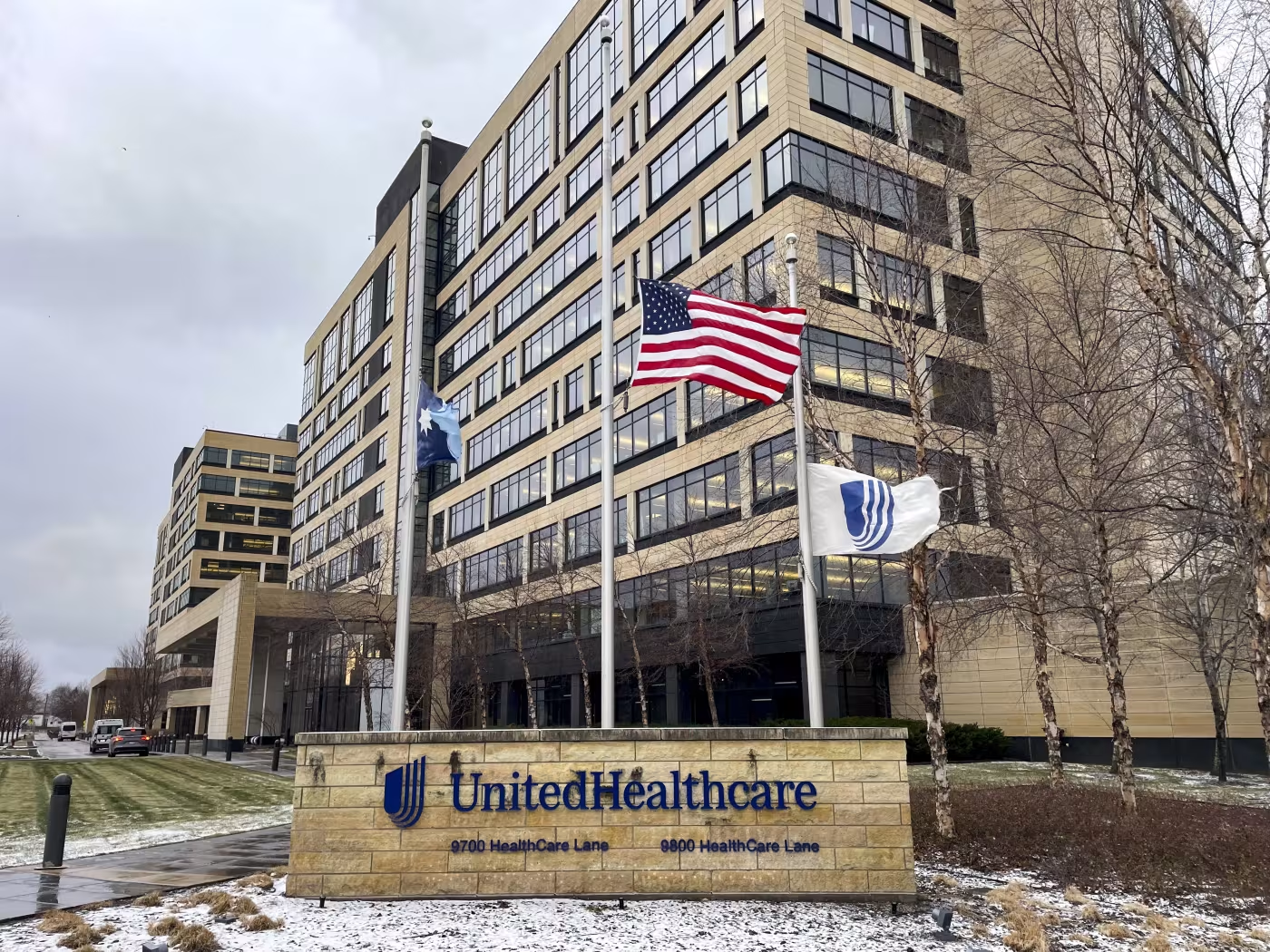
Friday Factoids

Friday Factoids

From Washington, DC,

  • Govexec tells us,
    • “President Biden formalized his plan to provide civilian federal workers with an average pay increase of 2% next year, in a letter to congressional leaders Friday.
    • “Last March, Biden first announced the pay raise plan as part of his fiscal 2025 budget proposal, marking a significant decrease from previous pay raises of 5.2% in 2024 and 4.7% in 2023. Friday’s announcement confirms that, if implemented, federal employees will see an across-the-board boost of 1.7% to basic pay and an average 0.3% increase to locality pay, a slight departure from the traditional 0.5% of the overall raise figure being set aside for locality adjustments.”
  • and
    • “In accordance with a 2021 Biden administration executive order promoting voting access, OPM in 2022 began requiring agencies to provide federal employees up to four hours of administrative leave to vote in federal, state, local, tribal and territorial elections, which can be used both on Election Day and during early voting. Additionally, agencies must provide an additional four hours of paid leave to employees who serve as election judges or observers.
    • “In a memo to agency heads Thursday, acting OPM Director Rob Shriver reminded agencies of the new voting leave rules.”
  • The Washington Post reports,
    • “Tens of thousands of D.C. residents on Friday will begin receiving letters with good news. That medical debt weighing them down? Poof, it’s gone.
    • “D.C. has deals in place to cancel $42 million in medical debt for 62,000 residents, through a partnership with a nonprofit that has helped cities and states across the country purchase the debt for pennies on the dollar, city officials said.
    • “The program is one way, they say, to ease a financial burden that can have ramifications for jobs, housing and physical and mental health, and disproportionately impacts people of color.
    • “In the District, about 60 percent of the total debt relief will benefit 36,000 residents making $25,000 or less, and 80 percent of residents receiving the relief live in D.C. Zip codes that are majority Black or Latino, city officials said.”

From the public health and medical research front,

  • The Centers for Disease Control and Prevention lets us know,
    • “Seasonal influenza and RSV activity are low nationally, but COVID-19 activity is elevated in most areas.”
    • “COVID-19
      • “COVID-19 activity is elevated nationally, with continued increases in many areas and early signs of decline in others. COVID-19 test positivity, emergency department visits, and rates of COVID-19–associated hospitalizations remain elevated, particularly among adults 65+ and children under 2 years. Surges like this are known to occur throughout the year, including during the summer months. There are many effective tools to prevent spreading COVID-19 or becoming seriously ill.
    • “Influenza
    • “RSV
      • “Nationally, RSV activity remains low.
    • “Vaccination
      • “National vaccination coverage for COVID-19, influenza, and RSV vaccines was low for children and adults for the 2023-24 respiratory illness season. RSV, influenza, and COVID-19 vaccines are available to provide protection during the 2024-25 respiratory illness season.”
  • The University of Minnesota’s CIDRAP adds,
    • Wastewater SARS-CoV-2 detections are still at the very high level and are highest in the South. Though levels are dropping in the West, they are rising in the South, Midwest, and Northeast, the CDC said.
    • “Meanwhile, wastewater tracking from WastewaterSCAN shows that detections nationally are still at the high level, with no clear trend up or down over the past 3 weeks. The group, however, noted an upward trend in the Midwest.”
  • and
    • “The US Food and Drug Administration (FDA) today announced that it has granted emergency use authorization for Novavax’s updated COVID-19 vaccine. 
    • “Approval of the protein-based vaccine comes about a week after the FDA green-lighted the two updated mRNA vaccines—made by Moderna and Pfizer-BioNTech—which target the KP.2 variant. The Novavax vaccine targets JN.1, the parent of KP.2.
    • “Novavax’s updated vaccine is authorized for people ages 12 and older.” 
  • The New York Times reports,
    • “Wegovy, the popular obesity drug, may have yet another surprising benefit. In a large clinical trial, people taking the drug during the pandemic were less likely to die of Covid-19, researchers reported on Friday.
    • “People on Wegovy still got Covid, and at the same rate as people randomly assigned to take a placebo. But their chances of dying from the infection plunged by 33 percent, the study found. And the protective effect occurred immediately — before participants had lost significant amounts of weight.
    • “In addition, the death rate from all causes was lower among subjects taking Wegovy, a very rare finding in clinical trials of new treatments. The result suggests that lower life expectancy among people with obesity is actually caused by the disease itself, and that it can be improved by treating obesity.
    • “Stunning,” Dr. Jeremy Faust, an emergency room physician at Brigham and Women’s Hospital who wrote an editorial accompanying the study, said of the data. The study was published in The Journal of the American College of Cardiology.”
  • What’s more, STAT News informs us,
    • “Novo Nordisk’s obesity drug Wegovy cut the risk of severe complications in patients with a common form of heart failure, according to a new analysis that could boost the company’s efforts to expand the label for the blockbuster treatment.
    • “Researchers combined data on nearly 4,000 patients across four trials who had heart failure with reduced ejection fraction (or HFpEF) and found that 5.4% of those treated with Wegovy experienced cardiovascular-related death or heart failure events, compared with 7.5% of those who received placebo. This translated to a 31% risk reduction.
    • “On heart failure events, defined as hospitalizations or urgent care visits, Wegovy cut the risk by 41%. On cardiovascular-related deaths, it reduced the rate by 18%, but this result was not statistically significant, according to the data, presented Friday at the annual meeting of the European Society of Cardiology and published in the Lancet.”
  • and
    • “An experimental drug from Alnylam Pharmaceuticals substantially cut the risk of death and serious cardiovascular complications among patients with an increasingly diagnosed heart disease, likely teeing up the medicine to be a new option for patients, but one that will face competition from another treatment [from Bridge Bio] also nearing potential approval. 
    • “The full results from the Phase 3 HELIOS-B study, presented here Friday at the European Society of Cardiology’s annual meeting, bolstered the case that the drug, vutrisiran, can offer added benefits for patients with the progressive disease, known as ATTR-CM. Top-line data were released in June.
  • Per FiercePharma,
    • “As a new deadly strain of mpox continues its global spread, Emergent BioSoultion’s smallpox vaccine ACAM2000 has officially joined the ranks of FDA-approved defense measures against the virus.
    • ‘The FDA signed off on the vaccine’s use as an mpox disease preventive in those deemed to be at a high risk for infection.” * * *
    • “Emergent last week linked up with the U.S. government and the World Health Organization (WHO) to donate 50,000 doses of ACAM2000 to the impacted countries the Democratic Republic of Congo, Burundi, Kenya, Rwanda and Uganda through relief organization Direct Relief.” 
  • Here’s food for weekend thought. NBC News reports,
    • “For adults who struggle to get the recommended amount of quality sleep, new research suggests “catching up” those lost hours on the weekends may significantly decrease the risk of heart disease. 
    • “Many people build up “sleep debt” during the week, hoping to make up for it by getting extra hours over the weekend. Sleep debt is the difference between how much quality sleep we need — at least seven hours each night — and how much we actually get, according to the Cleveland Clinic.
    • “In a new analysis being presented Sunday at the European Society of Cardiology Congress in London, cardiovascular researchers based in China found that people who got the most sleep on the weekend were 19% less likely to develop heart disease, compared with a group who slept the fewest extra hours those two days.  
    • Previous research has shown that not getting enough sleep is associated with poor health. However, there has been little research into how getting extra sleep on the weekend affects the heart.

From the U.S. healthcare business front,

  • Healthcare Dive points out,
    • “U.S. hospitals reported strong operating margins on growing patient volumes in July, according to new data from analytic solutions firm Strata.
    • “Hospitals’ median year-to-date operating margin climbed from 4.9% in June to 6.5% in July amid increasing demand for both inpatient and outpatient services, according to the report.
    • “Still, expense increases were “sizable” in July, Strata said. Non-labor expenses, including for drugs and supplies, grew at a quicker clip than labor costs year over year.”
  • and
    • “Steward Health Care has signed definitive agreements to sell four Massachusetts hospitals and is close to finalizing agreements to transition two other facilities to new operators, according to documents filed in U.S. federal bankruptcy court Thursday.
    • “Rhode Island-based Lifespan Health System will pay $175 million for the operating licenses, buildings and land associated with St. Anne’s Hospital in Fall River and Morton Hospital in Taunton, according to the purchase agreement. Massachusetts-based Lawrence General Hospital plans to take over both Holy Family Hospital campuses in Methuen and Haverhill for approximately $28 million.
    • “Steward is “continuing to work to finalize” deals to sell St. Elizabeth’s Medical Center and Good Samaritan Medical Center to Boston Medical Center, according to a press release Thursday.”
  • Beckers Hospital Review identifies five major health system mergers yet to close.
  • Per Fierce Healthcare,
    • “Pennsylvania-based insurer and care delivery network Highmark Health recorded $7.4 billion in revenue and $223 million in net income during the second quarter.
    • “Combined with first-quarter results, Highmark’s revenue is 8% higher year over year compared to the first half of 2023.
    • “Executives credited Highmark Health Plans, United Concordia Dental and HM Insurance Group for the robust results.
    • “Highmark Health continues to be financially strong and stable, positioning our organization to adapt and succeed as the healthcare landscape continues to evolve,” said Carl Daley, chief financial officer and treasurer of Highmark Health, in a news release.
    • “After entering southeastern Pennsylvania, with plans to launch Medicare Advantage products in 2025, the health plan’s segment said membership was stronger than anticipated. 
    • “Still, high pharmaceutical costs, utilization trends and Medicaid redeterminations are headwinds to the business.”

Thursday Miscellany

From Washington, DC,

  • AARP tells us,
    • “By 2029, more than 4 million people with a Medicare drug plan who do not receive the program’s low-income subsidy will hit the annual [$2000 out of pocket cost] ceiling and see savings when they go to fill their prescriptions, according to a new report published by AARP. * * * [The new cap takes effect January 1, 2025.] * * *
    • “The amount of money each person will save under the new law [the Inflation Reduction Act (IRA)}will vary depending on the medications a person takes and how much they have to pay for them. An estimated 1.4 million adults with a Medicare prescription drug plan who reach the new out-of-pocket cap between 2025 and 2029 are expected to see an average annual savings of $1,000 or more, the AARP report shows. More than 420,000 Medicare Part D enrollees will save $3,000-plus.”
    • This is one on many reasons why FEHB annuitants with Part A or B coverage should consider enrolling in an FEHB Part D EGWP plan or Medicare Advantage with Prescription Drugs (MAPD) plan for 2025. Of course, under OPM’s proposed rule, PSHB annuitants would lose their PSHB drug coverage if they opt out of participating in a Part D EGWP plan or an MAPD for 2025. The FEHBlog does not understand why OPM finds it necessary to create an opt out penalty in view of the generous Part D benefits available next year.
  • Fierce Pharma points out a report finding that the IRA’s provisions intended to juice the sales of biosimilar drugs to hospitals has had limited impact so far.
  • Per a Congressional press release,
    • “House Committee on Oversight and Accountability Chairman James Comer (R-Ky.) today [August 28] is calling on the CEOs of three major Pharmacy Benefit Managers (PBMs)—CVS Caremark, Express Scripts, and Optum Rx—to correct the record for statements made during their appearance before the House Oversight Committee at a hearing titled, “The Role of Pharmacy Benefit Managers in Prescription Drug Markets Part III: Transparency and Accountability.”
    • “‘At the House Oversight Committee’s hearing, the PBM chief executives made statements that contradict the Committee’s and the Federal Trade Commission’s findings about the PBMs’ self-benefitting practices that jeopardize patient care, undermine local pharmacies, and raise prescription drug prices. The chief executives for CVS Caremark, Express Scripts, and Optum Rx claimed they do not steer patients to PBM-owned pharmacies. The executives also made claims contradicting the Committee’s and FTC’s findings regarding contract negotiations, contract opt outs, and payments to pharmacies.”
    • The PBM replies are due by September 11, 2024. 
  • Tammy Flanagan, writing in Govexec, fills us in on Social Security survivor benefits.
  • Per a HRSA press release,
    • “Today, the Health Resources and Services Administration (HRSA) announces that for the first time in the 40-year history of the Organ Procurement and Transplantation Network (OPTN), the OPTN Board of Directors—the governing board that develops national organ allocation policy—is now separately incorporated and independent from the Board of long-time OPTN contractor, the United Network for Organ Sharing (UNOS). HRSA has awarded an OPTN Board Support contract to American Institutes for Research to support the newly incorporated OPTN Board of Directors. 
    • “These critical actions to better serve patients by breaking up the monopoly that ran the nation’s organ allocation system are part of the OPTN modernization plan announced by HRSA in March 2023. Prior to these steps, the national body responsible for developing organ allocation policy for the country—the OPTN—and the corporate entity contracted to implement the policy—UNOS—shared the exact same Board of Directors. The new board support contractor will be accountable to HRSA and will organize a special election for a new OPTN Board of Directors with a focus on eliminating conflicts of interest and ensuring that data, evidence, and the voices of clinical leaders, scientific experts, patients, and donor families are driving action and accountability. Moving forward, no member of the OPTN Board can sit on an OPTN vendor’s board of directors.”
  • Per an FDA press release,
    • “Today, the U.S. Food and Drug Administration announced a final rule that raises the minimum age for certain restrictions on tobacco product sales. These requirements are in line with legislation signed in December 2019 that immediately raised the federal minimum age of sale of tobacco products in the United States from 18 to 21 years of age. Once implemented, the requirements are expected to help decrease underage tobacco sales.  
    • “Beginning Sept. 30, retailers must verify with photo identification the age of anyone under the age of 30 who is trying to purchase tobacco products, including e-cigarettes. Previously, this requirement applied to anyone under the age of 27. It’s important for retailers to request and examine photo IDs to verify age from anyone under 30, regardless of appearance, as research has shown that it is difficult for retailers to accurately determine the age of a customer from appearance alone. 
    • “Additionally, starting Sept. 30, retailers may not sell tobacco products via vending machine in facilities where individuals under 21 are present or permitted to enter at any time. Previously, this prohibition applied to facilities where individuals under 18 were present or permitted to enter at any time. These, and the other changes made by the final rule, aim to maximize the public health impact of the original December 2019 legislation.”
  • The American Hospital Association lets us know,
    • “The U.S. Department of Health and Human Services will not appeal its loss in American Hospital Association v. Becerra. The AHA, joined by the Texas Hospital Association, Texas Health Resources, and United Regional Health Care System, last November sued HHS to bar enforcement of a new rule adopted in guidance by the Office for Civil Rights titled “Use of Online Tracking Technologies by HIPAA Covered Entities and Business Associates,” which prevented hospitals and health systems from using standard third-party web technologies that capture IP addresses on key portions of their public-facing webpages. A federal district court in the Northern District of Texas June 20 held that the OCR bulletin’s new rule “was promulgated in clear excess of HHS’s authority under HIPAA.” HHS Aug. 29 officially withdrew its notice of appeal, finalizing the AHA’s victory in this case.”

From the public health and medical research front,

  • The New York Times reports,
    • “The death toll of people who consumed products tainted with listeria that have been linked to Boar’s Head deli meats has risen to nine over the last three weeks, the Centers for Disease Control and Prevention said on Wednesday.
    • “In total, 57 people have been hospitalized because of the bacteria in the outbreak that started in May, the C.D.C. said. 
    • “As a result of the outbreak, the company has recalled millions of pounds of meat. The recall includes about 70 products — including those made from ham, beef and poultry — that were manufactured at its plant in Jarratt, Va. The recall mostly affects products that are sliced at the deli counter, the company said in a statement on its website.
    • “The six new deaths are one person from Florida, one person from Tennessee, one from New York, one from New Mexico and two people from South Carolina, according to health officials.”
    • “The C.D.C. is warning people not to eat the recalled deli meats. Health officials are telling consumers to check their fridges for any recalled Boar’s Head products. (The C.D.C. is telling people to look for “EST. 12612” or “P-12612” inside the USDA mark of inspection on the product labels. Some of the products have sell-by dates that last until October 2024.)”
  • The Wall Street Journal informs us,
    • “Shingles, also called herpes zoster, is a viral infection caused by the reactivation of the virus that also causes chickenpox. The virus remains dormant in the body of anyone who’s ever had chickenpox, and can reactivate at any time.
    • “Most of us think shingles is an old person’s disease and don’t even think about it until our 60s or 70s, especially since the vaccine was long recommended for people aged 60 and over. But the reality is, it can strike at any time, triggered by stress—physical or psychological—and it is often very painful. The good news is it’s often milder at younger ages.
    • “Starting in 1998, shingles rates increased across all ages for nearly two decades, including for those in their 40s, according to Centers for Disease Control and Prevention data. Rates have stabilized somewhat recently but remain higher than the 1990s.” * * *
    • “The CDC doesn’t advise getting the shingles vaccine until you’re 50 or older, at which time people typically have no out-of-pocket cost.
    • “Typically younger people experience milder cases of shingles and are less likely to develop postherpetic neuralgia, or neuropathic pain in the area where you had shingles, which can last months.
    • “But people under 50 who are immunocompromised are more at risk of developing shingles, and the CDC recommends vaccination for those people, provided they are age 18 or over.
    • “It’s unclear how long the shingles vaccine protects against infection. Doctors say it seems to offer good protection for at least up to a decade. Currently the CDC doesn’t recommend getting a booster after the initial two-shot regimen.”  
  • The National Institutes of Health Director writes in her blog,
    • “When someone receives an inactive sugar pill for their pain, the expectation of benefit often leads them to experience some level of pain relief. Researchers have long known that this placebo effect is a very real phenomenon. However, the brain mechanisms underlying the placebo effect for pain have been difficult for researchers to understand.
    • “Now, findings from an intriguing NIH-supported study in mice published in Nature offer insight into how this powerful demonstration of the mind-body connection works in the brain. Furthermore, the researchers identified a previously unknown neural pathway for pain control and suggest that specifically activating this pathway in the brain by other means could one day offer a promising alternative for treating pain more safely and effectively than with current methods, including opioids.” * * *
    • “While the experience of pain is exceedingly complex, and this research is in mice, the researchers expect that these findings will have relevance to people. The next step is to explore the role of activity in this newly discovered pain pathway in humans’ experience of the placebo effect. The hope is that with continued study it may one day be possible to target this brain area using small molecules or neural stimulation as a potentially more effective and safer means to ease pain compared to current methods.”
  • The National Cancer Institute posted its most recent cancer information highlights.
  • Cardiovascular Business points out,
    • Artificial intelligence (AI) is being used more and more to perform opportunistic screening of computed tomography (CT) scans for a variety of diseases. This is believed to be one way care teams can potentially change the course of preventive care in the near future, and it has been a growing topic at radiology and cardiology conferences in recent years. 
    • “One study study presented at the Society of Cardiovascular CT (SCCT) 2024 meeting led by Brittany Nicole Weber, MD, PhD, director of the Cardio-Rheumatology Clinic at Brigham and Women’s Hospital, is shedding light on the potential of using opportunistic screening in CT scans to detect cardiovascular disease (CVD). This study explored the use of the HealthCCSng AI algorithm developed by Nanox, which was cleared by the FDA in 2021 to identify coronary artery calcium (CAC) in CT scans originally performed for noncardiac reasons. Weber said this strategy could significantly improve early detection and intervention in patients at risk for cardiovascular events. Coronary calcium is a marker of coronary disease on imaging and can be seen in any types of CT scans of the chest. The software can identify and quantify the calcium burden to risk stratify a patient without human intervention.
    • “Patients with autoimmune disorders are at a significantly higher risk for cardiovascular disease, largely due to systemic inflammation. However, many of these patients are not receiving the preventive therapies they need,” Weber explained in an interview with Cardiovascular Business.” 

From the U.S. healthcare business front,

  • Kauffman Hall reports,
    • “Kaufman Hall’s National Hospital Flash Report showed another month of solid performance through the first half of 2024 with a 4.1% operating margin year to date, continuing a trend of stronger performance that began in late 2023. It’s as if a light bulb turned on and has stayed on, setting up 2024 to be a better year than 2023.
    • “Before we declare victory, there are few noteworthy caveats.
      • “First, not all margins are created equally. While the month-over-month median shows improvement, the median change in margin is down, suggesting an uneven distribution of the improvement. About two-thirds of hospitals in the data through 2023 showed no change in operating margin compared to 2019. Many hospitals are running hard but running in place. This means that the improvement in the margin rests on the herculean shoulders of the remaining one third that are doing well—really well, in fact—to drive the national median up.
      • “Second, the Flash report typically reflects only a hospital’s acute care operations. If one were to add in physician enterprises and other similar non-acute care operations that negatively impact performance, margins would decline by about 200 basis points. This would bring our Calendar Year 2023 median of 2.7% in line with FY 2023 rating agency medians, which reported breakeven results.
    • “Notwithstanding these caveats, performance through the first half of 2024 suggests much improved results for full 2024. 
  • Per the Wall Street Journal,
    • “Luxury hotels such as the Waldorf Astoria, renowned for offering impeccable service to clientele, are now catering to an unexpected cadre of VIPs: newborns and their parents.
    • “Postnatal-wellness centers, modeled after ones in Taiwan and Korea, are popping up in American cities, quietly ensconced within tony hotels. For up to $1,500 per night, families leave the hospital and head to a retreat or check in for R & R later. They indulge in recovery, coaching in newborn care and pampering.
    • “Perhaps the most coveted service, however, is the 24-7 nursery staff, affording new parents that elusive treasure: sleep.”
  • Beckers Payer Issues provides seven payer executive answers to the question — what are the most dangerous trends facing payers? For example,
    • “Jen Truscott. Senior Vice President of Aetna Clinical Solutions (Hartford, Conn.):  According to the National Council on Aging, 80% of adults aged 65 and older have two or more chronic conditions. Many older adult patients seek care for health complications long after they have arisen. Care management can improve outcomes for health plan members when these programs are proactive and personalized, yet coordinated care is not utilized to its full extent across the U.S. To combat this, health plans should increase their emphasis on holistic care, effective care management programs and the power of value-based care. Our data show that four in 10 Aetna members changed their behavior — including reducing avoidable emergency room visits, improving medication adherence and choosing more cost-effective sites of care — due to our care management programs proactive outreach.”
  • HR Dive relates,
    • “Three in five U.S. workers reported living paycheck to paycheck, according to PNC Bank’s second annual Financial Wellness in the Workplace Report. And 31% of the more than 1,000 workers surveyed said they would like early access to their paycheck. 
    • “Meanwhile, 78% of the more than 500 U.S. employers surveyed said their workers were financially stressed, up from 71% in 2023. But access to financial planning benefits doubled from the previous year, jumping from 14% to 28%. 
    • “Three out of 10 workers of any generation and 4 out of 10 Generation Z workers with student loan debt report being “at a standstill” while they pay it off.”

Midweek Update

Photo by Manasvita S on Unsplash

From Washington, DC,

  • Per an HHS press release,
    • “Today, United States Surgeon General Dr. Vivek Murthy released a Surgeon General’s Advisory on the Mental Health and Well-Being of Parents, highlighting the urgent need to better support parents, caregivers, and families to help our communities thrive.
    • “Over the last decade, parents have been consistently more likely to report experiencing high levels of stress compared to other adults. 33% of parents reporting high levels of stress in the past month compared to 20% of other adults. When stress is severe or prolonged, it can have a harmful effect on the mental health of parents and caregivers, which in turn also affects the well- being of the children they raise. Children of parents with mental health conditions may face heightened risks for symptoms of depression and anxiety and for earlier onset, recurrence, and prolonged functional impairment from mental health conditions.” * * *
    • “The work of parenting is essential not only for the health of children but also for the health and future of society. Better supporting parents will require policy changes and expanded community programs that will help ensure parents and caregivers can get paid time off to be with a sick child, secure affordable childcare, access reliable mental health care, and benefit from places and initiatives that support social connection and community.” * * *
    • “You can read the full Advisory here.”
  • Fedweek recounts OPM sub regulatory guidance to carriers who are adding a Postal Service Health Benefits plan to their offerings for 2025.
    • “For the purposes of this [guidance], FEHB plan HRAs, Personal Care Accounts or similar medical funds for qualified medical expenses provided as part of the medical plan, will be referred collectively as OPM HRAs.
    • “OPM is instructing Carriers offering FEHB HDHPs and CDHPs to carry over any OPM HRA credits remaining as of December 31, 2024, for eligible Postal Service enrollees from FEHB plans to PSHB plans as detailed below. This policy is only applicable when an eligible Postal Service enrollee is enrolled in or is automatically enrolled in a PSHB HDHP or CDHP with an OPM HRA offered by the same Carrier as their 2024 FEHB plan. Those FEHB Carriers not offering a PSHB HDHP or CDHP with an OPM HRA will need to inform their Postal Service enrollees that their HRA credits will be forfeited.”

From the public health and medical research front,

  • The CDC’s Advisory Committee on Immunization Practices released recommendations for 2024-25 flu season vaccines today. Here is a link to a summary of those recommendations.
  • Beckers Hospital Review tells us,
    • “GLP-1s reduced mortality and complications from cardiovascular events, according to a study published Aug. 22 in Diabetes, Obesity and Metabolism: A Journal of Pharmacology and Therapeutics.” * * * 
    • “Jeffrey Wessler, MD, a cardiologist with New Hyde Park, N.Y.-based Northwell Health, shared his perspective on GLP-1s and patient adherence with Becker’s earlier in August. 
    • “There are certainly some downstream issues with GLP-1s,” he said. “But for adherence, which is a prime issue for many cardiac medications that work really well in a clinical trial setting, that is not really an issue. People want to take it. It is really transforming how I think about managing an early stage cardiometabolic patient.”
  • BioPharma Dive lets us know, “After an FDA rejection, here’s what’s next in the psychedelics pipeline. By rejecting the first MDMA therapy this month, the FDA signaled to the psychedelic drug field that the road to approval isn’t easy.”

From the U.S. healthcare business front,

  • Modern Healthcare reports,
    • “Kaiser Permanente’s Risant Health plans to pour well over $1 billion in capital into Cone Health after its acquisition.
    • “The nonprofit pledged a minimum of $1 billion in capital funds to Cone for five years once the deal has closed to support investments in facilities, health equity initiatives and other capital projects, according to financial documents published Tuesday.” * * *
    • “The Cone transaction is expected to close in early 2025, subject to regulatory approval. Cone would operate independently but draw resources and support from Risant. 
    • “Cone reported $164 million in net income in the first nine months of its fiscal 2024, which ends Sept. 30, compared with $104 million in the year-ago period.”
  • STAT News shares the downside of Lilly’s GLP-1 drug announcement yesterday.
    •  “[A] deeper look at the announcement suggests the new offering may not expand access as much as the company indicates. 
    • “Doctors noted that the price of the vials [of Zepbound] will still be out of reach for many patients, and only the starter doses will be offered in the vials, not the higher doses that many patients need to achieve significant weight loss. Additionally, not all patients will be able to pick up vials; they will only be available to patients who are paying for their own medication without insurance and who exclusively order through Lilly’s online portal.
    • “On the same day Lilly launched the vials, it also quietly increased costs for other patients. Before, people who have commercial insurance but don’t have coverage for Zepbound could apply for a savings coupon to get the pens, at whichever dose, for $550 a month, but on Tuesday Lilly raised that price to $650 a month — a move that wasn’t mentioned in the press release.”
  • Per MedTech Dive,
    • “Illumina said Tuesday the Food and Drug Administration has approved its TruSight Oncology (TSO) Comprehensive test.
    • ‘The test uses Illumina’s Nextseq 550Dx sequencing instrument to detect variants in 517 genes using nucleic acids extracted from solid tumor tissue samples.
    • “Illumina also received two companion diagnostic indications for the test, positioning physicians to use TSO Comprehensive to identify people eligible for treatment with Bayer’s Vitrakvi and Eli Lilly’s Retevmo cancer drugs.”
  • Financial Advisor IQ informs us,
    • “The expected cost of future health care and medical expenses for a 65-year-old retiring this year has reached an average of $165,000, which is 5% more than in 2023 and more than double what it was in 2002, Fidelity Investments says in a new report.
    • “Fidelity estimates that about 10% of the total outlay will go toward out-of-pocket prescription drug costs, 43% toward Medicare Plan B and Part D premiums, and the remaining 47% to “other medical expenses,” such as co-payments and deductibles. 
    • “The study suggests that many Americans may be unprepared to manage their health in retirement: The average American estimates the total health care costs in retirement to be much less — about $75,000 — Fidelity said it found in a separate report published last year.”

Tuesday’s Tidbits

Photo by Patrick Fore on Unsplash

From Washington, DC,

  • Fedweek lets us know,
    • “Another report to Congress has estimated an annual $1 billion cost to the FEHB program from ineligible persons being covered as family members, a cost that is passed on to both enrollees and the government in the form of higher premiums.
    • “The Congressional Budget Office estimate—agreeing with one last year from the GAO—was done in an analysis of S-4035, which is pending a vote in the full Senate after Congress reconvenes September 9. A counterpart bill, HR-7868, has cleared the House committee level, as well.
    • “The bills would require agencies to verify the eligibility of dependents enrolled in the FEHB when the employee or annuitant starts or changes a dependent’s enrollment; require OPM to audit dependents’ enrollment in the program; and expand fraud risk assessments of the program to include information on ineligible enrollees. * * *
    • “CBO expects that implementing the bill would cause enrollment to decline by about 100,000 people, on average, in each year over the 2025-2034 period. Verifications of eligibility during open season would cause a decline of about 10,000 people, on average, in each year over the same period,” it says.
    • However, that estimate “is subject to significant uncertainty because no similar verification audit of the FEHB program has been undertaken,” it added.
  • FEHBlog sermonette — About ten years ago, OPM added a provision to the FEHB standards contracts providing that the carriers would foot the bill for any family member eligibility audits. OPM never has performed a verification audit due to the FEHB program’s size. However, audits are based on sampling, and surely a sample-based audit of various geographic regions where federal and postal employees live (e.g., Washington, DC and nearby counties, Texas, Florida, etc.) would have told OPM whether or not it has a family member eligibility problem.
  • OPM does have a more glaring enrollment problem because OPM separately reports enrollment and premiums to carriers. Consequently, carriers, which carry the insurance risk, do not have the opportunity to confirm that enrollees in their records (based on OPM’s data) are paying the proper premiums for selected self only or other than self only coverage. What is the sense of nailing down family member coverage when no one knows whether the enrollee is paying the proper or any premium?
  • For close to twenty years, CMS, which implements HIPAA’s electronic standards, has made available an electronic enrollment roster transaction known as the HIPAA 820, which would allow FEHB carriers to reconcile enrollment and premiums at the individual level using computer systems. That’s a massive gap in internal controls that needs to be corrected without further delay, in the FEHBlog’s humble opinion. All that OPM has to do is tell the payroll offices to use the HIPAA 820. End of sermonette.
  • Per a company press release,
    • Maximus has been awarded a $20 million contract from the Office of Personnel Management (OPM) to serve as the Contact Center Services Provider for the agency’s new Postal Service Health Benefits Program. This program will provide health insurance to eligible Postal Service employees, annuitants, and their eligible family members starting in 2025.
    • Maximus will be leading the customer support effort to answer calls and emails for OPM’s new, enhanced customer service platform dedicated to assisting eligible individuals access health insurance benefits. Maximus will leverage offerings from its Total Experience Management (TXM) solution, including state-of-the-art telephony, customer relationship management, and call quality reporting tools to provide best-in-class customer service.
    • “The Postal Service Health Benefits Program is an invaluable benefit for the U.S. Postal Service workforce, and Maximus is uniquely positioned to develop this new contact center and Customer Experience (CX) approach based on more than 30 years of experience working with OPM,” said Larry Reagan, Senior Managing Director, Federal Civilian Market, Maximus. “Our senior team has vast experience standing up new customer service programs at scale for federal agencies to deliver a range of services, including disaster recovery, education, and health benefit services.”
  • Healthcare Dive tells us,
    • “An expensive drug for weight loss could become one of Medicare’s costliest medications, even if the majority of patients are ineligible for coverage, according to a study published on Monday in the Annals of Internal Medicine.
    • “The analysis found 3.6 million people are highly likely to be eligible for semaglutide like Wegovy, a GLP-1 that’s effective at treating obesity. More liberal definitions of eligibility could increase that number to 15.2 million patients.
    • “If all newly eligible patients received semaglutide, spending in Medicare’s Part D prescription drug benefit could increase by $34 billion to $145 billion each year, according to the study. Even if the government narrowly defined eligibility, federal spending on the medicine could still exceed $10 billion annually.”
  • Medscape adds,
    • “Now that the U.S. government has negotiated prices for some Medicare program drugs effective in 2026, Wall Street analysts are betting on a 2027 list that will include Novo Nordisk’s blockbuster Ozempic for diabetes and have a limited impact on Big Pharma. [FEHBlog note — Wegovy is the weight loss version of Ozempic. Medicare by statute does not cover weight loss drugs.]
    • “Other possible 2027 candidates include Pfizer’s cancer drugs Ibrance and Xtandi, GSK’s asthma and chronic obstructive pulmonary disease (COPD) treatment Trelegy Ellipta, Teva’s Huntington’s disease treatment Austedo and Abbvie’s irritable bowel syndrome drug Linzess, according to five analysts as well as researchers and company executives.”
  • Per an HHS press release,
    • “Today, the U.S. Department of Health and Human Services (HHS) announced more than $558 million in funding to improve maternal health, building on the Biden-Harris Administration’s commitment to reducing the nation’s high maternal mortality rate through the White House Blueprint for Addressing the Maternal Health Crisis. The Health Resources and Services Administration (HRSA), an agency of HHS, is awarding more than $440 million in funding to expand voluntary, evidence-based maternal, infant, and early childhood home visiting services for eligible families across the country. In addition, the Centers for Disease Control and Prevention (CDC) announced a new investment of $118.5 million, over five years, to 46 states, six territories, and freely associated states to continue building the public health infrastructure to better identify and prevent pregnancy-related deaths.” * * *
    • “For a complete list of Maternal, Infant, and Early Childhood Home Visiting Program awardees, visit https://mchb.hrsa.gov/programs-impact/programs/home-visiting/maternal-infant-early-childhood-home-visiting-miechv-program/fy24-awards.”
  • A Federal News Network Data Dive tells us, “USPS improves on-time delivery in delay ‘hotspots’, but faces year-end challenges. Postal experts say USPS improvements to on-time delivery are needed, and must continue, for Congress to allow these plans to keep moving forward.”

From the public health and medical research front,

  • Beckers Hospital Review reports on an August 23, 2024, press conference that leaders of the CDC, HHS and FDA held to discuss the upcoming respiratory virus season.
  • The American Medical Association informs us about what doctors wish their patients knew about lung cancer screening.
    • “Lung cancer causes about 160,000 U.S. deaths a year, which is greater than the toll of the next three most common cancers—colon, breast and prostate—combined. Yet only about 30% of lung cancer cases are diagnosed early. Most patients are diagnosed at a far less treatable, later stage of the disease. And with about 20% of lung cancer deaths preventable, evidence-based screening recommendations for high-risk patients offers the best hope to catch the disease early and provide the best chance for effective treatment.”
  • Medscape looks into how old is too old to undergo a screening colonoscopy.
  • The National Institutes of Health (NIH) issued a medical research report this afternoon.
  • Per an NIH press release,
    • “So-called low-intensity blood stem cell transplants, which use milder conditioning agents than standard stem cell transplants, do not appear to damage the lungs and may help improve lung function in some patients with sickle cell disease (SCD), according to a three-year study of adults who underwent the procedure at the National Institutes of Health (NIH).
    • “Damage to lung tissue and worsened lung function is a major complication and leading cause of death in people with sickle cell disease, a debilitating blood disorder. The new study, published today in the Annals of the American Thoracic Society, helps answer whether less intensive types of transplants, which tend to be better tolerated by many adults, by themselves either cause or promote further harm to the lungs.
    • “By using a low-intensity blood stem cell transplant for sickle cell disease, we may be able to stop the cycle of lung injury and prevent continued damage,” said study lead Parker Ruhl, M.D., an associate research physician and pulmonologist at NIH. “Without the ongoing injury, it’s possible that healing of lung tissue might occur, and this finding should help reassure adults living with sickle cell disease who are considering whether to have a low-intensity stem cell transplant procedure that their lung health will not be compromised by the transplant.”
  • Per Fierce Healthcare,
    • “UnitedHealth Group’s philanthropic arm has released a new deep dive into maternal and infant health, underscoring socioeconomic disparities in women’s health.
    • “The study found that American Indian/Alaska Native, Black and Hawaiian/Pacific Islander women had maternal mortality rates that were between 2.5 and 4.5 times higher than other ethnic groups. Severe maternal morbidity was, in 2020, two times higher among Black mothers than white mothers, and 1.5 times higher among Black mothers compared to Hispanic mothers.
    • “There were also racial disparities identified in low-birth weight, according to the study. Low birth weight rates were 2.1 times higher among babies born to Black mothers compared to infants born to white mothers.
    • “There were some bright spots in the data, however. Between 2008 and 2011 and 2018 to 2021, there were improvements to infant mortality rates among some racial groups. The study found improvements of 15% among infants born to white mothers, 12% among babies born to Black mothers and 9% for babies born to Hispanic mothers.
    • “Lisa Saul, M.D., national medical director of maternal child health at UnitedHealthcare, said in a press release that analyses like this are critical to developing targeted solutions to key challenges.”
  • Beckers Hospital Review informs us,
    • “After about 18 months since the FDA greenlit preventive COVID-19 medication Pemgarda for emergency use, the agency has tweaked its decision. 
    • “The agency has narrowed the medicine’s emergency use authorization. It is now OK to use when “the combined national frequencies of variants with substantially reduced susceptibility to Pemgarda is less than or equal to 90%,” the FDA said in an Aug. 26 letter to the drug’s maker, Invivyd. 
    • “Pemgarda (pemivibart) is authorized for the pre-exposure prophylaxis of COVID-19 in some adults and children older than 12. Eligible patients are those who have a moderate-to-severe immune compromise and are unlikely to have an adequate response to a COVID-19 vaccine.
    • “Early data indicate that COVID-19 variant KP.3.1.1 may have substantially reduced susceptibility to Pemgarda. As of Aug. 17, the variant accounted for 36.8% of COVID-19 infections, according to CDC data. If this percentage surpasses 90%, Pemgarda’s emergency use authorization could be revoked.”
  • Per MedTech Dive,
    • “Insulet received U.S. clearance Monday for its Omnipod 5 system for Type 2 diabetes management — a first for the industry — making automated insulin delivery to control blood sugar available to millions of additional people living with diabetes.
    • “The system’s tubeless pump automatically adjusts insulin levels based on data from a continuous glucose monitor (CGM), replacing manual dosing. Since its approval for Type 1 patients in 2022, Omnipod 5 has become the most prescribed insulin pump in the U.S. and has more than 250,000 users globally, Insulet Chief Medical Officer Trang Ly said in an interview with MedTech Dive.
    • “Ly discussed the product’s launch for Type 2 diabetes patients, partnerships with other device makers and how the company is working to win over doctors reluctant to prescribe insulin pump therapy.”
    • Check out the interview.

From the U.S. healthcare business front,

  • BioPharma Dive tells us,
    • Eli Lilly is now distributing a single-dose vial form of its popular weight loss medicine Zepbound that it says people with a valid prescription can obtain for a cash price that’s 50% less than the current cost of other GLP-1 drugs for obesity.
    • The single-dose vials are available through Lilly’s online service LillyDirect as a self-pay option, which could appeal to people without employer insurance coverage or those who don’t qualify for the company’s savings card program, Lilly said.
    • A four-week supply of Zepbound single-dose vials at a 2.5 milligram dose will cost $399, while the 5 milligram dose will cost $549. While those prices are well below the $1,060 monthly list price of Zepbound’s injector pen formulation, they’re not far from the drug’s estimated net price after accounting for rebates and discounts to insurers, according to a client note from Evercore ISI analyst Umer Raffat.
  • Per Healthcare Dive,
    • “Pfizer on Tuesday launched a direct-to-consumer service it claims will help people schedule telehealth appointments, fill prescriptions and access savings programs for the company’s migraine, COVID-19 or influenza medicines.
    • “Dubbed PfizerForAll, the online service will provide resources for people looking to obtain treatment for migraine, COVID or the flu, or to schedule vaccinations for diseases like pneumococcal pneumonia and respiratory syncytial virus.
    • “The platform aims to “streamline the path for those seeking better health,” Aamir Malik, Pfizer’s chief U.S. commercial officer, said in a statement. The company said it is working with partners UpScriptHealth, Alto Pharmacy and Instacart.”
  • MedCity News notes,
    • “Waltz Health, a digital health company focused on prescription drugs, launched Waltz Connect on Monday. The new solution aims to reduce the cost of specialty medications.
    • “Chicago-based Waltz Health was founded in 2021 and serves payers and pharmacies. It has a product called Marketplace Search, which allows users to search for any prescription and see the range of prices available at their pharmacy. It also works with health plans to bring its marketplace solutions into their pharmacy benefit.
    • “The company’s Waltz Connect product supports payers and focuses on specialty medications. When a specialty prescription is submitted for a member, Waltz Connect redirects it to the most suitable pharmacy, regardless of the pharmacy’s network status with the payer. This routing is based on the member’s benefit design and several factors, including price, turnaround time, fulfillment accuracy, member experience and adherence rates. These factors can be customized by drug class or specific drugs. Health plans also receive information on the member’s condition, prescription onboarding, the selected pharmacy’s contact information, expected fulfillment turnaround time and the number of refills.”
  • and discusses the pros and cons of artificial intelligence for health insurers. “With so much hinging on technology that is the subject of so much hype, it is important to understand where AI actually helps at present — and where it most definitely does not.”
  • Beckers Hospital Review points out,
    • “Boston-based Mass General Brigham’s Home Hospital program has expanded to 70 beds, making it the largest home hospital in the country, according to a news release shared with Becker’s.
    • “The capacity increase was accompanied by expanded clinical care teams and the creation of dedicated roles within Home Hospital created. The system has also incorporated medical assistants into the care model and expanded the ambulance services to meet growing demand.
    • “Since its launch in January 2022, the program has had more than 4,000 patient admissions and saved more than 20,000 acute care hospital-based bed days. The average patient stays in a Home Hospital bed is 5 days.”
  • and
    • Where Steward’s 31 hospitals stand
      • From seeking Chapter 11 protection on May 6 to sharing plans to close four of its hospitals across Massachusetts and Ohio that would result in a combined 2,187 layoffs, Dallas-based Steward Health Care has experienced a great deal of turbulence over the last year.
      • As the for-profit health system continues to push back bid deadlines and sale hearings for many of its hospitals, the status of each facility remains in question, leaving community members, healthcare workers and state and local lawmakers concerned.
      • Below, Becker’s has provided a list of Steward’s 31 hospitals by state, per the health system’s website, and the most recent information regarding each facility. [FEHBlog note — Beckers plans to keep this list updated.]
  • Per Fierce Healthcare,
    • “Aetna will cover intrauterine insemination as a medical benefit for eligible plans, a move the insurer called a “landmark policy change.” 
    • “Intrauterine insemination, or IUI, is usually only covered if employers offer a separate fertility benefit plan, according to an Aug. 26 news release from Aetna. 
    • “The change will apply to fully insured Aetna commercial plans. * * *
    • “Expanding IUI coverage is yet another demonstration of Aetna’s commitment to women’s health across all communities, including LGBTQ+ and unpartnered people,” Cathy Moffitt, MD, Aetna’s chief medical officer, said in the news release. “This industry-leading policy change is a stake in the ground, reflecting Aetna’s support of all who need to use this benefit as a preliminary step in building their family.”
  • Medscape adds,
    • “In a move that acknowledges the gauntlet the US health system poses for people facing serious and fatal illnesses, Medicare will pay for a new class of workers to help patients manage treatments for conditions like cancer and heart failure.
    • “The 2024 Medicare physician fee schedule includes new billing codes, including G0023, to pay for 60 minutes a month of care coordination by certified or trained auxiliary personnel working under the direction of a clinician.
    • :A diagnosis of cancer or another serious illness takes a toll beyond the physical effects of the disease. Patients often scramble to make adjustments in family and work schedules to manage treatment, said Samyukta Mullangi, MD, MBA, medical director of oncology at Thyme Care, a Nashville, Tennessee-based firm that provides navigation and coordination services to oncology practices and insurers.”

Friday Factoids

From Washington, DC

  • Fedweek posted an August update on implementation of the Postal Service Health Benefits Program (“PSHBP”).
    • “At least one major insurance carrier, FEP Blue Cross Blue Shield, has already sent letters to current participants letting them know that a plan similar to their current plan has been conditionally approved and stating that they’ll share more details on the PSHB benefits and premiums “later this year, in time for Open Season”
    • “The USPS reports new plan details will be available as of September 15, and will be sent out via hard mail in the weeks that follow.
    • “The USPS says that participants will receive a “crosswalk letter” in late October showing the new plan into which the USPS intends to enroll them. If you agree, there’s nothing to do: you’ll be enrolled in that plan.”
  • The FEHB enrollees who may be in for a surprise are those who currently participate in an FEHB plan that is not participating in the PSHBP. In October, OPM will enroll those folks in the lowest cost nationwide plan option that is not a high deductible plan or charge associate member dues. Those folks will have an opportunity to change plans during the regular federal benefits open season. The FEHBlog expects that the PSHBP navigators will be lending a helping hand to those folks, particularly those eligible for Medicare.
  • The Postal Times reminds us,
    • “If you were an annuitant entitled to Medicare Part A (typically at age 65) as of Jan. 1, 2024, and did not enroll in Medicare Part B, you and your covered eligible family members may be able to participate in a one-time PSHB Special Enrollment Period (SEP) for Medicare Part B from April 1 through Sept. 30, 2024. Those who choose to enroll during the SEP will have the late enrollment penalty paid for by the Postal Service. Eligibility letters were sent to annuitants and eligible family members in March 2024. If you have misplaced the notification letter mailed to you or believe that you are eligible to participate in the PSHB SEP and did not receive a notification letter, call the PSHB Navigator toll-free help line at 833-712-PSHB (7742) or email retirementbenefits@usps.gov.”
  • Speaking of the Postal Service, Federal News Network lets us know,
    • “The Postal Service is planning to roll out several changes next year to drive down its operating costs and ensure more reliable service to most of its customers.
    • “USPS says the next step of its network modernization plan, which will happen next year, is to get mail and packages to their destination in fewer trips between mail processing plants and post offices.
    • “The agency expects these adjustments will not only help it squeeze $3 billion of annual overhead costs out of its operations, but enable faster delivery of mail and packages to customers within 50 miles of the agency’s largest regional mail processing plants.
    • “For customers outside that 50-mile radius, however, USPS, anticipates ”some mail and packages will experience a longer service standard,”  according to a filing submitted to its regulator on Thursday. 
    • “In those cases, mail and packages in those more rural areas will remain in transit for about a day longer before reaching their final destination.
    • “USPS, however, told the Postal Regulatory Commission that these changes will have a “net positive impact” on service for first-class mail, packages and marketing mail, and will be delivered “at the same level of service or faster,” for most customers.”
  • The American Hospital News expresses distress because
    • Johnson & Johnson announced Aug. 23 that it would be fundamentally changing the way it makes 340B pricing available for two of its most popular products, Stelara and Xarelto. Starting Oct. 15, J&J will require all disproportionate share hospitals participating in the 340B Drug Pricing Program to purchase these drugs at full price and submit data to J&J. Upon verification of the drug’s 340B status, DSHs would receive a rebate for the discounted 340B price.
    • Last week, the AHA contacted the Health Resources and Services Administration for more information as soon as it was made aware that J&J was considering these actions. HRSA notified the AHA today that it has informed J&J that its rebate model is inconsistent with the 340B statute and that this model has not been approved by the Secretary of the Department of Health and Human Services. HRSA further informed the AHA that it has told J&J that HRSA will take appropriate action as warranted.

From the public health and medical research front,

  • The Centers for Disease Control and Prevention (“CDC”) announced today,
    • “Seasonal influenza and RSV activity are low nationally, but COVID-19 activity is elevated in many areas. * * * “Nationally, the wastewater viral activity level for COVID-19 is currently very high.
    • “COVID-19
      • Many areas of the country are continuing to experience increases in COVID-19 activity, though other areas are experiencing declines in COVID-19 activity following increases this summer. COVID-19 test positivity, emergency department visits, and rates of COVID-19–associated hospitalizations remain elevated, particularly among adults 65+ and children under 2 years. Surges like this are known to occur throughout the year, including during the summer months. There are many effective tools to prevent spreading COVID-19 or becoming seriously ill.
    • “Influenza
    • RSV
      • “Nationally, RSV activity remains low.
    • Vaccination
  • The University of Minnesota’s CIDRAP adds,
    • “High-dose (HD) and adjuvanted influenza vaccines offered the best protection for people aged 65 years and older against symptoms and hospitalization during the 2022-23 flu season, concludes a real-world study published this week in Clinical Infectious Diseases.
    • “High-dose flu vaccines contain four times the standard dose (SD), while adjuvanted vaccines contain an extra immune-boosting ingredient. In 2022, the US Centers for Disease Control and Prevention’s Advisory Committee on Immunization Practices recommended high-dose, adjuvanted, or recombinant (cell-based) vaccines over SD vaccines for older adults, who are at elevated risk for severe disease and flu-related hospitalization and death.”
  • The New York Times reports,
    • “After a years long lull thanks to Covid-19 precautions like isolation and distancing, whooping cough cases are now climbing back to levels seen before the pandemic, according to data from the Centers for Disease Control and Prevention.
    • “So far this year, there have been 10,865 cases of whooping cough, or pertussis, nationwide. That’s more than triple the number of cases documented by this time last year, and is also higher than what was seen at this time in 2019. Doctors say these estimates are most likely an undercount, as many people may not realize they have whooping cough and therefore are never tested.
    • “The pandemic delayed routine childhood vaccinations, including those that protect against whooping cough, and led to fewer pregnant women getting vaccinated. Those factors have likely contributed to the current uptick in cases, said Dr. William Schaffner, an infectious disease specialist at Vanderbilt University Medical Center. Pertussis cases tend to peak in the summer and fall, he said, and so it’s particularly critical to be aware of the disease now, as children head back to school and respiratory illnesses pick up.”
  • Bloomberg tells us,
    • “US teenagers aren’t getting vaccinated against HPV at the same pace as before the Covid pandemic, a trend that could imperil efforts to control a common cause of cervical and other cancers.
    • “Immunization rates have stagnated for kids aged 13 to 17 for the past two years, according to data that the Centers for Disease Control and Prevention published Thursday. Meanwhile, routine shots for diseases like tetanus and meningitis have returned to pre-pandemic levels, according to the CDC survey, which analyzed results from nearly 17,000 teenagers.
    • “The trend could cause alarm among public health officials. Each year, human papillomavirus causes more than 21,000 cases of cancer in women and about 16,000 in men. * * *
    • “This is the only vaccine I know of that prevents cancer,” said Sunil Sood, a pediatrician who specializes in infectious disease at Northwell Health in New York. “Putting it like that has been known to make a difference” to parents who might be resistant to having their children vaccinated, he said.”
  • Per MedCity News, “Side Effects are Limiting GLP-1 Drug Efficacy: How Can Personalization Offer a Solution? By integrating digitization and machine learning, there is an opportunity to deliver personalized care to all patients and scale precision dosing with minimal physician involvement, maximizing the effectiveness and accessibility of these drugs.”
    • “There is a clear and unique opportunity to apply dose optimization to GLP-1s to improve real-world persistence and adherence, supporting patients to continue treatment long enough to experience the full benefits, such as positive cardiovascular outcomes. We know clinicians are seeing the need for this and are already making necessary interventions but struggling still to find a scalable solution. Pairing drugs with proven digital solutions, within a single label, can facilitate personalization across the GLP-1 market, improving the effectiveness of these drugs and diminishing side effects. Not only can pharma leverage this approach to deliver best-in-class clinical and commercial outcomes, but it also promises to revolutionize disease management, enhancing patient safety and outcomes by tailoring treatment to individual needs, truly bringing precision care to all.”
  • Pulmonary Advisor notes, “About two-thirds of adults who smoked wanted to quit in 2022, although fewer than 10% were successful, according to study findings published in the Morbidity and Mortality Weekly Report.

From the U.S. healthcare business front,

  • EBRI offers an Issues Brief concerning “Trends in Self Insured Health Coverage; ERISA at 50.”
  • Per MedTech Dive,
    • “Stryker said Thursday it has agreed to acquire Vertos Medical, an Aliso Viejo, California-based company whose minimally invasive technology treats chronic lower back pain, for an undisclosed sum.
    • “The Vertos procedure, which can be performed in an outpatient setting, is designed to provide pain relief for patients with lumbar spinal stenosis by restoring space in the spinal canal and reducing nerve compression.
    • “This acquisition strengthens our minimally invasive pain management portfolio with differentiated treatments and expands our reach across ambulatory surgery centers,” Andy Pierce, head of Stryker’s medical and surgical equipment and neurotechnology business, said in a statement.”

Thursday Miscellany

Photo by Josh Mills on Unsplash

From Washington, DC,

  • Govexec reports,
    • “Republican leaders on the House Homeland Security Committee want to know what the Biden administration is doing about Havana syndrome, mysterious brain injuries that became public in 2016 after State Department officials in Cuba’s capital city were affected. 
    • “We are deeply alarmed that these incidents continue to take place here and abroad, and that there has been little to no explanation from the administration as to who or what has caused these phenomena,” wrote full committee Chairman Mark E. Green, R-Tenn., and Counterterrorism, Law Enforcement and Intelligence Subcommittee Chairman August Pfluger, R-Texas, in a letter to National Security Advisor Jake Sullivan Tuesday. 
    • “The brain injuries, referred to as anomalous health incidents, include symptoms of headaches, pain, nausea, disequilibrium and hearing loss. Additional reports of similar symptoms later emerged from federal employees in other countries such as China, Russia, Vietnam, Colombia and various parts of Europe.
    • “Green and Pfluger, who have held numerous hearings and briefings on this matter, requested a committee briefing from the National Security Council. They also urged the administration to prioritize expending unused funds allocated to provide care for AHI victims and to fully implement the HAVANA Act, a 2021 law that authorizes payments to impacted intelligence, diplomatic and other governmental personnel.”  
  • Reuters informs us,
    • “The U.S. Navy has received more than 546,500 claims for compensation from people impacted by decades of contaminated water at Marine Corps Base Camp Lejeune in North Carolina, a new court filing shows, putting it squarely among the largest injury cases of all time.
    • “That number may fluctuate up or down by a few thousand, the government said in the filing, opens new tab. The U.S. Navy is reviewing additional claims received up to the Aug. 10 deadline and removing claims that are found to be duplicates.
    • “The number of administrative claims filed with the U.S. Navy – a step claimants must have taken by the Aug. 10 deadline to receive compensation for injuries they attribute to the water – surpasses the nearly 400,000 lawsuits filed over 3M Co’s military-issue earplugs, which is regarded as the largest multidistrict litigation in history.”
  • The Chair and Ranking Member of the House Education and Labor Committee sent a letter to the Assistant Secretary of Labor who handles ERISA matters. The letter asks the Assistant Secretary about the Department’s efforts to “address troubling practices of certain group health plan service providers.”
  • Federal News Network interviews Colleen Heller-Stein, the first career fed to lead the CHCO Council.

From the public health and medical research front,

  • Per a Food and Drug Administration press release,
    • “Today, the U.S. Food and Drug Administration approved and granted emergency use authorization (EUA) for updated mRNA COVID-19 vaccines (2024-2025 formula) to include a monovalent (single) component that corresponds to the Omicron variant KP.2 strain of SARS-CoV-2. The mRNA COVID-19 vaccines have been updated with this formula to more closely target currently circulating variants and provide better protection against serious consequences of COVID-19, including hospitalization and death. Today’s actions relate to updated mRNA COVID-19 vaccines manufactured by ModernaTX Inc. and Pfizer Inc.”
  • Beckers Hospital Review offers three notes on the FDA action.
  • The Wall Street Journal adds,
    • “The two shots [Pfizer and Moderna] will be available to anyone over 6 months of age, a move that comes as Covid hospitalizations continue to climb and remain higher than they were at this time last year, according to data from the Centers for Disease Control and Prevention. 
    • “Doctors say everyone who is eligible should get a shot. But older people who have skipped other recent vaccine updates should especially consider it. 
    • “I saw a lot of people in the hospital who got a lot of shots in the beginning of the pandemic and then didn’t get any shots for a year or two years,” said Dr. Peter Chin-Hong, a professor of medicine at University of California-San Francisco and an infectious-disease specialist. * * *
    • “Unless you’re very concerned about acquiring Covid right now, my recommendation would be to get it in September or October,” said Dr. William Schaffner, a professor of preventive medicine at the Vanderbilt University School of Medicine. “That will provide the best protection throughout the winter season.” 
    • “The CDC recommends people get one of the new vaccines by the end of October. Both will be available at local clinics and pharmacies.” 
  • The American Hospital Association News lets us know,
    • “The Food and Drug Administration Aug. 22 granted emergency use authorization for two new combined COVID-19 and influenza tests. The Nano-Check Influenza-COVID-19 Dual Test is authorized for use by laboratories to detect and differentiate influenza A and B and SARS-CoV-2 in nasal swab specimens. The Flowflex Plus COVID-19 and Flu A/B Home Test is authorized for home use for people aged two and older.” 
  • The American Medical Association lets us know what doctors wish their patients knew about pre-eclampsia.
  • MedPage Today suggests that “Europe Offers Clues for Solving America’s Maternal Mortality Crisis.”
  • The Brown and Brown consulting group makes an urgent call for employers worldwide to become more aware of the risk of suicide among their employees and engage in suicide prevention efforts.
  • Beckers Hospital Review shares patient safety goals at top rated U.S. hospitals.
  • Per HealthDay, “The overdose-reversing drug naloxone can help save the lives of people whose hearts have stopped due to an opioid OD, a new study shows.”
  • The Institute for Clinical and Economic Review’s “independent appraisal committee voted that current evidence is not adequate to demonstrate net health benefits for imetelstat added to best supportive care when compared to best supportive care alone; treatment [for the treatment of anemia in patients with low-to-intermediate risk myelodysplastic syndrome] would meet common thresholds of cost effectiveness if priced between $94,800 to $113,000 per year, therapy currently priced at approximately $365,000 per year.”

From the U.S. healthcare business front,

  • Modern Healthcare tells us,
    • A federal judge’s ruling this week that blocked the Federal Trade Commission’s near-total ban on noncompete clauses in employment contracts is creating more uncertainty for healthcare employers as they await the agency’s next move.
    • Federal regulators have cracked down on what they view as anticompetitive behavior in recent years, particularly in healthcare. The FTC’s nationwide noncompete ban will no longer take effect Sept. 4, but that doesn’t mean the issue is resolved.
    • Noncompete agreements are common in the healthcare industry. Many organizations, including hospitals, health systems, physician groups, insurance companies and pharmacy benefit managers, use the agreements in employment contracts to protect business interests and ensure competitors don’t obtain proprietary information.” * * *
    • “The FTC has said Tuesday’s ruling does not remove its authority to challenge noncompete bans on a case-by-case basis.”
    • “There’s not going to be any certainty on this for a while,” said Jason Weber, an employment attorney at law firm Polsinelli.” * * *
    • “Polsinelli’s Weber said companies should try to reduce confusion by educating employees on the ruling and emphasizing that noncompete obligations remain in effect.
    • Weber said employers also have a good opportunity to assess their existing agreements and reevaluate whether noncompete clauses are essential to protecting their businesses. For example, employers could use less-restrictive options such as non-solicitation covenants, he said.” 
  • Beckers Payer Issues lists,
    • “Several insurers [that] landed on Forbes’ annual ranking of the “Best Employers by State.” 
    • “The 2024 ranking, published Aug. 20, sorts 1,294 top employers in the U.S. by state. Forbes surveyed more than 160,000 employees at companies with more than 500 people. Respondents evaluated their current employers, employers they’d worked with in the past two years and organizations they knew through their industry. 
    • “Insurers appeared among the top employers in most states, except for Alaska, Delaware, Washington, D.C., Idaho, Maine, Mississippi, Montana, Oklahoma, Rhode Island, Vermont and Wyoming.” 
  • Medscape relates,
    • “Most physicians oppose the way standardized relative value units (RVUs) are used to determine performance and compensation, according to Medscape’s 2024 Physicians and RVUs Report. About 6 in 10 survey respondents were unhappy with how RVUs affected them financially, while 7 in “10 said RVUs were poor measures of productivity.
    • The report analyzed 2024 survey data from 1005 practicing physicians who earn RVUs.” * * *
    • “[O]ver half of clinicians said alternatives to the RVU system would be more effective, and 77% suggested including qualitative data.” 
  • Per Fierce Healthcare,
    • “A Thursday afternoon [bankruptcy] sale hearing scheduled for several Steward Health Care hospitals was shelved in favor of an amended bankruptcy court itinerary hashing out multiple disputes related to the company’s pending deals for hospitals in Florida and Pennsylvania.”  ***
    • “Though not the focus on Thursday’s hearing, Steward’s counsel also opened the hearing with quick updates on developments in Massachusetts and Ohio.
    • “For the former, Candace Arthur, who represents Steward, said that the company’s estate is “very close to the finish line and still fully engaged in mediation” regarding the deal announced last week.
    • “As for Ohio, where closure notices were issued yesterday for two Steward hospitals, Arthur described those filings as “a deadline thing.”

Midweek Update

Photo by Manasvita S on Unsplash

From Washington, DC,

  • Beckers Payer Issues explains how members of Congress receive their health benefit coverage. Of course, since 2014, the answer has been and remains the DC Affordable Care Act exchange. However, retired members of Congress often are eligible for federal pension which includes FEHB coverage with the full government contribution.
  • Federal News Network lets us know,
    • “The Office of Personnel Management is starting to see the light at the end of the tunnel on its never-ending journey to modernize its retirement systems.
    • “A pilot to test out a new online retirement application platform is showing promise with several federal payroll providers.
    • “Guy Cavallo, OPM’s chief information officer, said the pilot includes the Agriculture Department’s National Finance Center and several others to reduce both the amount of paper needed and the error rate in processing retirement applications.
      Guy Cavallo is the CIO at the Office of Personnel Management.
    • “We believe doing the online checking will help really reduce that back and forth that often is needed. We’re also rebuilding the way calculations are done, and we’re implementing a digital file system so that we can stop dealing with millions and millions of pages of paper to be part of retirement,” Cavallo said in an interview with Federal News Network. “It’s going to take many years for us to do this, but by taking the heart of that, we’re improving the way somebody starts to retirement. We’re making sure the calculation service is correct, and then we’re working to get rid of paper versions and move to digital. Those are our first three building blocks.
    • “Cavallo said the goal of the test is to test out the technology and the process changes and continually improve them. He said there is no specific time frame for how long the pilot will last.”
  • Per Beckers Hospital Review,
    • “The FDA is building a post-market surveillance program for medical devices.
    • “The agency will look for medical device-related safety issues reported in EHRs, billing claims and pharmacy data, according to a U.S. Government Accountability Office report released Aug. 15.
    • “The program will begin surveillance of two medical devices by December, with plans to increase the number of devices under investigation each year over the next five years. 
    • “There were more than 1.7 million injuries, and 83,000 deaths linked to medical device safety issues over a 10-year period, according to FDA data from 2018, the report said.”

From the public health and medical research front,

  • The Wall Street Journal reports
    • “The average age of hip- and knee-replacement patients is getting younger.” * * *
    • “For patients ages 45 to 64, there was a 211% increase in inpatient hip replacements and a 240% increase in inpatient knee replacements between 2000 and 2017, according to data from the U.S. Department of Health and Human Services’ Agency for Healthcare Research and Quality. (Records after 2017 are less accurate due to changes in Medicare coding.)
    • “There was also an increase in joint replacements for patients ages 65 to 84, but the rise wasn’t as steep.
    • “This tracking doesn’t include the growing share of replacements that are outpatient surgeries, which allow patients to go home the same day as their procedure. More than a million hip and knee replacement surgeries are performed in the U.S. every year.”
  • The New York Time warns us,
    • “Without a sharp pivot in state and federal policies, the bird flu virus that has bedeviled American farms is likely to find a firm foothold among dairy cattle, scientists are warning.
    • “And that means bird flu may soon pose a permanent threat to other animals and to people.
    • “So far, this virus, H5N1, does not easily infect humans, and the risk to the public remains low. But the longer the virus circulates in cattle, the more chances it gains to acquire the mutations necessary to set off an influenza pandemic.
    • “I think the window is closing on our ability to contain the outbreak,” said Dr. Krutika Kuppalli, an infectious-disease physician who worked at the World Health Organization until April.”
  • Here’s a link to the CDC’s website on the disease.
  • STAT News tells us,
    • “Lack of research into miscarriage in the U.S. — its prevalence, its causes, and how best to treat people who’ve experienced pregnancy loss — has helped to reinforce what has long been a culture of silence and shame around miscarriage. That knowledge gap means that people who miscarry, and miscarry repeatedly, like Hanson, aren’t given the emotional support they need at a time when they are most vulnerable. Equally important, they aren’t given the medical treatment, screening, and support from the health care system that might help them avert future miscarriages. And research into the possible reasons for recurrent pregnancy loss has been limited and siloed, several experts told STAT.”  * * *
    • “When Carol Gilbert, an assistant professor at the University of Nebraska Medical Center College of Public Health, examined CDC data for her 2021 Ph.D. dissertation on perinatal periods of risk, she realized that she needed more complete data for losses before 20 weeks. For public health researchers like Gilbert, incomplete data prevents them from making accurate comparisons between states.When she examined the data, she understood why the CDC doesn’t publish statistics on fetal losses before 20 weeks of gestation. 
    • The individual case data on pregnancy losses are collected by hospitals, assembled by states, and then forwarded to the CDC. But a trifecta of quality problems may explain why the CDC does not publish what data it does receive on losses before 20 weeks of gestation. First, laws regarding the gestational age at which fetal losses need to be reported vary across states. The second problem Gilbert found was that states were inconsistent in their reporting, failing to follow their own laws. This was especially true for fetal deaths between 20 and 24 weeks. 
    • “The third problem was that not all states fill forms completely, leaving out data elements like birthweight and basic maternal characteristics. Some of this is inevitable because it is difficult to weigh fetal tissue in the early stage of pregnancy loss. A CDC spokesperson told STAT that “information regarding early pregnancy losses before 20 weeks’ gestation, including ectopic pregnancies and miscarriages, is challenging to obtain as these outcomes are not routinely reported to CDC.”
  • and
    • “Rachel Gross wants to clear up misconceptions about children and Covid-19. A pediatrician and population health researcher, she recalls a time four years ago when people didn’t think children could even contract the disease. Then, after accepting kids’ vulnerability to the virus, it was thought only adults could suffer from the myriad symptoms that persist or crop up post-infection, collectively known as long Covid.
    • “Now that it’s clear kids can also develop long Covid, Gross wants to correct assumptions that the condition looks the same in adults as in children, no matter their age. In new research published Wednesday in JAMA, Gross and the RECOVER-Pediatrics Consortium report that school-age children and adolescents experience similar long Covid symptoms across multiple organ systems, but those symptoms cluster in ways that vary depending on their age while diverging to some degree from the pattern seen in adults.” * * *
    • “Gross told STAT the study’s purpose was to learn how to identify children experiencing long Covid and how these symptoms change over time. “Then we will be able to better understand the question we really want to know: Why is this happening?”
  • Medscape adds, “Severe COVID-19 was associated with elevated risks for depression and serious mental illness months after infection, especially among unvaccinated people, a cohort study involving more than 18 million individuals in the U.K. found.”

From the U.S. healthcare business front,

  • Per Beckers Hospital Review,
    • “Renton, Wash.-based Providence posted an operating loss of $123 million in the second quarter of 2024, a $79 million improvement from the $202 million loss the 51-hospital system posted during the same period last year.
    • “Operating revenues increased by 6% compared to the same period last year, according to an Aug. 21 Providence news release shared with Becker’s. Operating expenses increased 5% for the three months ended June 30. 
    • “Providence saw higher volumes in the second quarter of 2024, according to the release. Inpatient admissions and case mix adjusted admissions were both up 5% compared to the same period last year. 
    • “Despite ongoing headwinds, our strategies for renewal and recovery are driving positive results, and we remain focused on continued improvement in 2024,” Providence CFO Greg Hoffman said in the release.” 
  • and
    • “Dallas-based Steward Health Care plans to close Trumbull Regional Medical Center and Hillside Rehabilitation Hospital, both in Warren, Ohio, on or around Sept. 20 after the facilities failed to attract qualified buyers, the health system said in an Aug. 21 statement shared with Becker’s.
    • “Steward, which sought Chapter 11 protection May 6, shared that the “regrettable but unavoidable situation” has occurred due to its “significant cash constraints.”
    • “We remain hopeful we can find an alternative solution that would keep the hospitals open and preserve the jobs of our dedicated team members,” the statement said. “We want to help save this hospital and will continue to work with qualified bidders during this process.”

Weekend Update

From Washington, DC,

  • The House of Representatives and the Senate remain on their August recess until September 9.
  • Roll Call reported on August 14,
    • “New Jersey Democratic Gov. Phil Murphy intends to appoint his former chief of staff, George Helmy, to fill the Senate seat that Sen. Bob Menendez will vacate next week, multiple New Jersey media outlets reported Wednesday evening, citing sources.
    • “Helmy, who has most recently worked as executive vice president and head of external affairs for RWJBarnabas Health, will serve until the end of the 118th Congress. The seat for the full term starting in January will be filled by the winner of the November election between Rep. Andy Kim, the Democratic nominee, and Republican Curtis Bashaw.”
  • On August 16, the Congressional Budget Office released to the House Oversight and Accountability Committee a report on H.R. 7868, the FEHB Protection Act.
    • The problematic aspect of the bill is that it focuses on tightening up oversight of family member eligibility when OPM does not give FEHB plans the information to confirm that plan enrollees are paying the proper premium or any premium for their coverage, which creates a yawning gap in internal controls. OPM can cure this problem by implementing the HIPAA 820 enrollment roster transaction.

From the public health and medical research front,

  • Fortune Well identifies where COVID has been spiking in the U.S. this summer.
    • “In the four-week period ended Aug. 10, the national test positivity rate was 15.6%. During that time, five states in the South-Central U.S. saw the highest test positivity, 21%. These states collectively make up the CDC’s Region 6:
      • Arkansas
      • Louisiana
      • New Mexico
      • Oklahoma
      • Texas
    • “States in Region 9—Arizona, California, Hawaii, and Nevada—had the next-highest four-week positivity rate, 18.8%. Ten other states across two Midwestern regions were also above the national average. No state—as well as the District of Columbia, Puerto Rico, and the Virgin Islands—had a positivity rate below 10%.”
  • The Washington Post lets us know,
    • “The Centers for Disease Control and Prevention is warning clinicians to be on the lookout for a viral disease that is spread by small flies and some types of mosquitoes and that causes sudden fever, severe headaches and chills.
    • “Cases of Oropouche virus disease have been climbing in South America and the Caribbean in the past two years and turned deadly for the first time this year.
    • “The CDC advisory issued Friday recommends that pregnant people reconsider nonessential travel to Cuba, which reported its first confirmed case in June.”
  • and
    • “Though appendectomies have been the gold standard of care since before the turn of the 20th century, doctors have been treating appendicitis with antibiotics since the 1950s, as soon as they became available — a “dark secret” in the surgery world, says David R. Flum, professor of surgery and director of the Surgical Outcomes Research Center at the University of Washington. A 1959 paper detailed the use of antibiotics to treat nearly 500 people (a mix of adults and children) with appendicitis. They were — and still are — often used in people whose appendicitis is so advanced that surgery risks spreading the infection further. The military relied on antibiotics for service members who got appendicitis while in inaccessible locations, like submarines.
    • “But the treatment didn’t get wider attention until the late 1990s and early 2000s, Flum says, when researchers began to collect data on how often antibiotics don’t work and found that failure was not as common as they thought.
    • “Then came two large, randomized trials in adults. In the first, published in 2015, 257 adults received an antibiotic treatment. Seventy of those patients, or 27 percent, had to have an appendectomy within one year. But the rest were fine.
    • “A second, larger study of 1,552 adults had similar results: Twenty-nine percent of the 776 people who received antibiotics underwent surgery within 90 days; 4 percent of people in the antibiotics group had serious adverse events, compared with 3 percent in the appendectomy group. The New England Journal of Medicine published the results in 2020. The same year, the American College of Surgeons added nonoperative management as an option in its guidelines for treating appendicitis.
    • “It wasn’t a slam dunk, but the studies showed that antibiotics could be a good choice.”
  • The New York Times discusses “The Painkiller Used for Just About Anything. In huge numbers, older people are taking gabapentin for a variety of conditions, including itching, alcohol dependence and sciatica.”
    • “It’s crazy how many [off label] indications it’s used for,” said Dr. Michael Steinman, a geriatrician at the University of California, San Francisco, and a co-director of the U.S. Deprescribing Research Network. “It’s become a we-don’t-know-what-else-to-do drug.”
    • “What has fueled this multipurpose popularity? “The history of gabapentin is really a history of uses getting ahead of the evidence,” said Dr. Joseph Ross, an internist and health policy researcher at Yale School of Medicine.” * * *
    • Dr. Steinman called it a “sticky” drug. He was an author of a 2022 study on older adults who were prescribed gabapentin after surgery, most commonly hip and knee replacements. One in five refilled the prescription more than three months later, when “presumably their surgical pain has long since resolved,” he said.
    • As older patients seek to find relief from chronic pain, “we don’t have a lot of great options,” Dr. Steinman said of health care providers. Prescribers try to avoid opioids, and nonsteroidal anti-inflammatories like ibuprofen are recommended only for short-term use.
    • Some find relief from medical cannabis, topical medications like creams and patches, and non-pharmacological approaches such as acupuncture, therapeutic massage and exercise.
    • “Often the single best thing I can do for patients with pain is to get them to physical therapy,” Dr. Steinman added.

From the U.S. healthcare business front,

  • Per Fierce Healthcare,
    • “Orlando Health has offered to buy Steward Health Care’s three “Space Coast” Florida properties, including three hospitals and a medical practice, for $439 million, according to a court document filed Wednesday.
    • “Bankrupt Steward Health Care and Orlando Health have entered into a binding asset purchase agreement to sell Rockledge Regional Medical Center, Melbourne Regional Medical Center, Sebastian River Medical Center. The proposed deal also includes Steward Medical Group Practices in East Central Florida.
    • “According to the court document, filed in U.S. bankruptcy court in the southern district of Texas, Steward designated Orlando Health a “stalking horse bidder,” which is the first to negotiate a purchase agreement with a debtor in bankruptcy. The bidder sets a minimum price and protects the debtor from low bids.
    • “The purchase agreement for Steward’s northern Florida assets is for $439.42 million in cash, according to the court document.
    • “Orlando Health’s bid will be subject to higher or better-qualified bids received by August 26, at which time a bankruptcy court-approved auction may occur, according to a press release from Steward Health Care.”
  • The Wall Street Journal adds
    • “Steward Health Care System was in such dire straits before its bankruptcy that its hospital administrators scrounged each week to find cash and supplies to keep their facilities running. 
    • “While it was losing hundreds of millions of dollars a year, Steward paid at least $250 million to its chief executive officer, Dr. Ralph de la Torre, and to his other companies during the four years he was the hospital chain’s majority owner.
    • “Steward filed for bankruptcy in May, becoming one of the biggest hospital failures in decades.” * * *
    • “The Senate Committee on Health, Education, Labor and Pensions in a bipartisan vote authorized an investigation and subpoenaed de la Torre to testify at a Sept. 12 hearing.”

Thursday Miscellany

Photo by Josh Mills on Unsplash

From Washington, DC

  • The American Hospital Association News informs us,
    • “The Centers for Medicare & Medicaid Aug. 15 announced it negotiated lower prices with drug makers for 10 high-cost, sole-source drugs, with the new prices becoming effective in 2026 for individuals with Medicare Part D coverage. The drugs treat conditions such as heart disease, diabetes and cancer, and about nine million Medicare beneficiaries use at least one of the 10 drugs selected for negotiation. The new prices are estimated to save $1.5 billion in out-of-pocket costs for individuals with coverage. A CMS fact sheet includes more information about the newly negotiated prices. The agency last year announced the first list of 10 Medicare Part D drugs subject to price negotiations.”
  • STAT News cautions,
    • “The White House is touting just how much its new Medicare negotiation process cut drug prices. The problem is the numbers it’s using don’t actually mean much.”
    • “In a striking side-by-side comparison, President Biden tweeted out a graphic showing newly negotiated prices that Medicare will pay for 10 drugs including blood thinners, cancer treatments, and diabetes medications, among others. The table compares the new prices to the list price of the medicines last year, showing discounts ranging from hundreds to thousands of dollars. 
    • “However, Medicare generally doesn’t pay list prices for medications. Currently, prescription drug plans negotiate discounts off of the list prices at a smaller scale than the new program — but those prices are secret, even in a public program.
    • “The White House did release more meaningful overall numbers tied to the amount Medicare actually pays for drugs that show discounts of roughly 22% on the 10 drugs collectively, compared to what the program paid last year. That’s more modest than the exaggerated discounts based on list prices that show price reductions of up to 79%.”
  • In any case, why didn’t Congress align the effective dates for the enormous consumer improvements in Part D, discussed yesterday, with the “negotiated prices”?
  • Govexec tells us,
    • “The Biden administration on Wednesday announced a new initiative aimed at improving the hiring process for federal job applicants, hiring managers and other agency HR officials alike, as the White House continues to search for ways to speed up the process and better compete for top talent.
    • “Strategic human capital management has been on the Government Accountability Office’s famed High-Risk List, a biennial report highlighting issues that present potential liabilities of at least $1 billion for the federal government, for more than two decades. In 2021, GAO found that the government had actually regressed in its effort to address difficulties in hiring new federal workers during the final two years of the Trump administration.
    • “The Office of Personnel Management and Office of Management and Budget worked jointly on the effort, announced Wednesday in a memo to agency heads entitled “Improving the Federal Hiring Experience.” The document encompasses plans to improve strategic workforce planning, making it easier for potential job applicants to find jobs they are interested in and making the hiring process both faster and more transparent for jobseekers, as well as making hiring less agonizing for the hiring managers and other human resources personnel.”
  • The Food and Drug Administration announced,
    • “Today, the U.S. Food and Drug Administration marked a milestone building on Phase I of its voluntary sodium reduction targets and issued draft guidance for Phase II in a data-driven, stepwise approach to help sodium reduction across the food supply. Prior to 2021, consumer intake was approximately 3,400 milligrams per day on average, far higher than the limit recommended by the Dietary Guidelines for Americans of 2,300 milligrams per day for those 14 years and older. If finalized, the new set of voluntary targets would support reducing average individual sodium intake to about 2,750 milligrams per day. This reduction is approximately 20% lower than consumer intake levels prior to 2021. 
    • “The Phase II voluntary sodium reduction targets follow an initial set of targets issued in October 2021. The initial set of targets encouraged the food industry to reduce sodium levels in a wide variety of processed, packaged, and prepared foods. Preliminary data from 2022 show about 40% of the initial Phase I targets are very close to or have already been reached indicating early success of this effort.”
  • FedWeek explains the uncommon exceptions to the FEHB Program’s five-year rule which governs whether a federal employee can continue FEHB coverage into a civil service retirement with the full government contribution.

From the public health and medical research front,

  • CNN reports,
    • “Americans, and especially those under age 35, are changing their tune on alcohol use, with a growing share endorsing the view that moderate drinking is bad for health — and a new study backs them up.
    • “According to a Gallup poll released Tuesday, almost half of Americans, 45%, say that having one or two alcoholic drinks a day is bad for a person’s health. That’s the highest percentage yet recorded by the survey, which has been conducted 10 times since 2001.”
  • The National Institutes of Health (NIH) Director, writing in her blog, discusses “Mapping Psilocybin’s Brain Effects to Explore Potential for Treating Mental Health Disorders.”
    • Psilocybin is a natural ingredient found in “magic mushrooms.” A single dose of this psychedelic can distort a person’s perception of time and space, as well as their sense of self, for hours. It can also trigger strong emotions, ranging from euphoria to fear. While psilocybin comes with health risks and isn’t recommended for recreational use, there’s growing evidence that—under the right conditions—its effects on the brain might be harnessed in the future to help treat substance use disorders or mental illnesses.
    • “To explore this potential, it will be important to understand how psilocybin exerts its effects on the human brain. Now, a study in Nature supported in part by NIH has taken a step in this direction, using functional brain mapping in healthy adults before, during, and after taking psilocybin to visualize its impact. While earlier studies in animals suggested that psilocybin makes key brain areas more adaptable or “plastic,” this new research aims to clarify changes in the function of larger brain networks and their connection to the experiences people have with this psychedelic drug.”
    • The blog explains the latest research.
  • Per an NIH press release,
    • “The National Institutes of Health (NIH) has launched a program that will support Native American communities to lead public health research to address overdose, substance use, and pain, including related factors such as mental health and wellness. Despite the inherent strengths in Tribal communities, and driven in part by social determinants of health, Native American communities face unique health disparities related to the opioid crisis. For instance, in recent years, overdose death rates have been highest among American Indian and Alaska Native people. Research prioritized by Native communities is essential for enhancing effective, culturally grounded public health interventions and promoting positive health outcomes.”
  • The New York Times reports that “In an experiment that surpassed expectations, implants in an ALS patient’s brain were able to recognize words he tried to speak, and A.I. helped produce sounds that came close to matching his true voice.” Truly amazing.
  • Per Healio,
    • “Women with vs. without cognitive impairment had more intense menopause symptoms.
    • ‘Lower BMI, sexual activity, exercise, hormone therapy use, and higher education were tied to lower cognitive impairment odds.”

From the U.S. healthcare business front,

  • Modern Healthcare reports,
    • “Employer-sponsored health plan costs are expected to rise 9% in 2025, totaling more than $16,000 per employee before cost-saving measures, according to professional services and consulting company Aon.
    • “Aon predicts that demand for prescription drugs such as glucagon-like peptide-1 agonists and growth in medical claims for high-cost treatments such as gene and cell therapies are among the main drivers of rising costs for employers.
    • Janet Faircloth, senior vice president of innovation and integrated solutions for Aon, said employers are expected to apply cost-saving strategies used in previous years, including raising out-of-pocket costs for employees and bidding between insurers for the best price.
    • For 2024, Aon predicted health plan costs would increase by 8.5%, but the firm projects employer cost-saving efforts are likely to hold the increase to 6.4% overall.
    • “We generally see a 1% to 2% reduction from the initial trend expectation after employers make their changes,” Faircloth said.
    • The International Foundation of Employee Benefit Plans released a similar report Thursday, estimating employer-sponsored health plan costs would rise 8% in 2025 due to the same factors Aon cited.
  • Per Healthcare Dive,
    • “Health insurers have invested heavily in building out their Medicare and Medicaid businesses in recent years, tempted by the prospect of healthy margins and growing membership in the government-run insurance programs.
    • “But privately run Medicare Advantage and safety-net Medicaid plans are seeing their profitability shrink amid ongoing operational pressures, creating a sharp reversal in expected fortunes — much to health insurance executives’ chagrin.
    • “For much of the past year, insurers bemoaned the headwinds in MA as seniors using more medical care caused spending to snowball. But in the second quarter, many payers suggested Medicaid has become a bigger problem, as states remove ineligible beneficiaries from the safety-net coverage, sickening insurers’ risk pools and saddling them with higher costs.”
  • Beckers Payer Issues illustrates the fact that “The CEOs of the six largest for-profit insurers have different perspectives on Medicare Advantage.” 
  • Per a Health Care Cost Institute announcement,
    • “Technological medical advancements have shifted an array of procedures previously rendered in inpatient hospitals to ambulatory surgical centers (ASCs). For example, same-day procedures (e.g., cataracts surgery) that do not require an overnight hospital stay and musculoskeletal procedures, such as arthroscopy, are commonly performed at ASCs. 
    • “Because they operate independently of brick-and-mortar hospital facilities, ASCs are considered “off site.” Compared to procedures rendered in hospital outpatient departments, ASC’s receive lower reimbursement. For low-risk procedures, ASCs may be a cost-efficient site of care. Recent market analysis found that procedures at ASCs have grown over time and now account for half of all outpatient surgeries. 
    • “In this brief, we compare employer-sponsored insurance (ESI) ASC reimbursement amounts for a subset of procedures to Medicare fee-for-service (FFS) payment for the same procedures. We find that, on average, ESI pays two times more than Medicare FFS for procedures provided at ASCs. If ESI reimbursed at Medicare average rates, spending would have been nearly $9 billion lower in 2021.”
  • Per Beckers Hospital Review,
    • “Cleveland Clinic saw an operating income of $45.3 million at a 1.2% margin in the second quarter of 2024 for the three months ended June 30, a 312% increase from a $21.4 million operating loss (-0.6% margin) during the second quarter of 2023, according to its Aug. 16 financial report.
    • “Total revenue for the system was $3.9 billion in the second quarter of 2024, up from $3.6 billion during the same period last year. 
    • “Net income for the health system was $187.8 million for the three months ended June 30, 2024, up from $145.2 million during the second quarter of 2023.
    • “Expenses increased 8% to $3.7 billion, with salaries, wages and benefits also increasing 8% to $2.3 billion. Cleveland Clinics outstanding and long term debt was $5.4 billion, the report said.” 
  • Per MedTech Dive,
    • “Neuronetics said Monday it has agreed to merge with Greenbrook TMS to acquire treatment centers that use its mental health devices.
    • “Greenbrook provides transcranial magnetic stimulation (TMS) and other mood treatments from 130 sites. Neuronetics sells a TMS device to treat major depressive disorder (MDD).
    • “William Blair analysts said in a note to investors that the merger changes Neuronetics’ profile “from device-centric to a device-service business operating brick-and-mortar facilities.”
  • Per Reuters,
    • “Eli Lilly (LLY.N) has sent cease-and-desist letters to U.S. healthcare providers in recent days to stop the promotion of the compounded versions of its drugs for weight loss and diabetes, as their supply increases, the company said on Wednesday.
    • “The letters were sent to telehealth companies, wellness centers and medical spas selling compounded versions of the drugmaker’s popular treatments Zepbound and Mounjaro, a spokesperson told Reuters.”

Midweek Update

Photo by Manasvita S on Unsplash

From Washington, DC,

  • Kevin Moss, writing in Govexec, explains the pros and cons of Medicare Part D coverage for FEHB annuitants over age 65. The key point is that for 2025 the Medicare Part D out of pocket maximum is $2000. Also, Part D members with higher Part D cost sharing can spread out the Part D cost sharing over the plan / calendar year using Medicare Part D’s new Medicare Prescription Payment Plan (MPPP). The MPPP savings coupled with the $2000 out of pocket max could make Part D valuable for folks who otherwise would use manufacturer coupons.  
  • Although not discussed in the Govexec article, Postal Service Health Benefit (PSHB) annuitants over age 65 generally will be required to use the PSHB plan’s Part D EGWP. Those who opt out are ineligible for the PSHB plan’s regular Rx benefits, and there’s no concomitant premium reduction. We are waiting for OPM’s final supplemental PSHB rule which will include the Part D opt out penalty details.
  • Politico discusses a Biden Harris administration initiative to subsidize standalone Part D plans with a a $15 per Part D member payment to stabilize Part D premiums in consideration of these significant Part D improvements. The article observes,
    • “The Part D market has two types of plans. One is a standalone plan that only offers drug coverage, and the other is coverage included in a privately run Medicare Advantage plan that covers other health services.
    • “Medicare Advantage plans can absorb higher costs better than a standalone option, according to a 2023 analysis from the consulting firm Avalere Health.
    • “Since a Medicare Advantage plan offers a wide array of both medical and drug benefits, it can spread out the cost impact. Standalone plans do not have such flexibility, and the law is causing some to exit the market.”
  • It’s worth noting that Part D EGWPs absorb the basic Part D premium typically charged to the Medicare beneficiary. Part D EGWPs do not absorb the extra IRMAA tax on high income Medicare beneficiaries.
  • Last week, the Centers for Medicare and Medicaid Services released 2025 enrollment and disenrollment guidance for Medicare Advantage and Part D plans.
  • KFF adds,
    • “Among the 167 million people with employer-sponsored insurance in 2022, 3.4 million used at least one of the first 10 drugs identified for Medicare price negotiations, according to a new KFF analysis. Medicare is expected to release the negotiated drug prices, which will go into effect in 2026, by no later than September 1, 2024.
    • “The most used drug for people with employer-sponsored health insurance was Jardiance, a drug used to treat diabetes and heart failure, which was taken by more than 911,000 enrollees.
    • In the future, the Medicare program will negotiate prices for additional drugs, which millions more people with employer coverage could also be taking. As the policy currently stands, lowering drug prices in Medicare has no direct effect on private insurance plans, and the indirect effects are still unclear. Some argue lower negotiated prices in Medicare will result in higher prices in private insurance plans, while others suggest Medicare prices could serve as a benchmark and lead to savings.
    • “The full analysis and other data on health costs are available on the Peterson-KFF Health System Tracker, an online information hub dedicated to monitoring and assessing the performance of the U.S. health system.”
  • Per HHS press releases,
    • “This week, the Africa Centres for Disease Control and Prevention (Africa CDC) declared the mpox clade I outbreak a Public Health Emergency of Continental Security, and the World Health Organization (WHO) declared this outbreak a Public Health Emergency of International Concern. The United States government supports those declarations. The United States will continue to work closely with African governments, Africa CDC and WHO to ensure an effective response to the current outbreak and to protect the health and lives of people of the region.” * * *
    • “The risk to the general public in the United States from clade I mpox circulating in the DRC is very low, and there are no known cases in the United States at this time. Due to efforts over the last nine months, the United States is well prepared to rapidly detect, contain, and manage clade I cases should they be identified domestically. The United States has a robust surveillance system in place, including through clinical testing and wastewater analysis. We continue to encourage those at high risk to get vaccinated with the JYNNEOS mpox vaccine, which has been demonstrated to be safe and highly effective at preventing severe disease from mpox. Those who have already had clade II mpox or are fully vaccinated against mpox are expected to be protected against severe illness from clade I mpox.
    • “CDC has issued an updated Health Alert Network advisory urging clinicians to consider clade I mpox in people who have been in DRC or neighboring countries in the previous 21 days; clinicians are also asked to submit specimens for clade-specific testing for these patients if they have symptoms consistent with mpox. Given the geographic spread of clade I mpox, the U.S. CDC issued an updated Travel Health Notice on Aug. 7, 2024, recommending travelers to DRC and neighboring countries practice enhanced precautions.”
  • and
    • “The federal interagency National Integrated Heat Health Information System (NIHHIS) today released a National Heat Strategy for 2024-2030. The strategy aims to promote proactive coordination related to heat planning, response, and resilience. * * *
    • “For more information on the National Heat Strategy, please click here – PDF. To learn more about HHS’ climate change-related efforts, please visit HHS’ Office of Climate Change and Health Equity. To find more information about the federal government’s heat-related initiatives and resources, please visit heat.gov.”
  • STAT News informs us,
    • “The Food and Drug Administration on Wednesday approved a new treatment for primary biliary cholangitis, an autoimmune liver disease mainly affecting women that causes decreased liver function, debilitating itching, and fatigue.
    • “The drug, called Livdelzi, will be sold by Gilead Sciences, following the $4.3 billion acquisition of CymaBay Therapeutics, its developer, earlier this year.
    • “Regulators cleared Livdelzi for patients with primary biliary cholangitis, or PBC, that doesn’t respond adequately to initial treatment with a commonly used medicine. Gilead estimates there are approximately 130,000 people in the U.S. who are impacted by PBC, of which about 30,000 to 40,000 don’t respond to first-line therapy.
    • “Competition will come primarily from two drugs: Ipsen’s Iqirvo, which won FDA approval in June; and an older medicine called Ocaliva, developed by Intercept Pharma and recently acquired by Alfasigma, an Italian pharmaceutical firm.
    • “There’s still a real need out there for patients with PBC today, despite all the new arrivals. We believe Livdelzi can make a real difference for these people,” said Gilead Chief Commercial Officer Johanna Mercier.”

From the public health and medical research front,

  • The American Hospital Association News lets us know,
    • “The Centers for Disease Control and Prevention Aug. 13 issued an advisory alerting of an uptick of cases of parvovirus B19 across the U.S. Parvovirus B19 is a seasonal respiratory virus spread by respiratory droplets through symptomatic or asymptomatic individuals. Many people are asymptomatic, but immunocompetent children and adults with symptomatic disease typically develop a biphasic illness, CDC said. The first phase lasts approximately five days and includes symptoms of fever, myalgia and malaise, which develop about a week after infection. During the second phase, children often develop a facial rash which may be followed by reticulated body rash or joint pain one to four days later. For immunocompetent adults, the most common symptoms of parvovirus B19 disease typically occur during the second phase and include a reticular rash on the trunk and joint pain. Parvovirus B19 infection could also lead to adverse health outcomes among people without pre-existing immunity who are pregnant, immunocompromised or have chronic hemolytic disorders.”
  • Here is a link to the National Cancer Institute’s latest cancer information highlights.
  • Per National Institutes of Health press releases,
    • “Two National Institutes of Health (NIH)-supported trials of an experimental malaria vaccine in healthy Malian adults found that all three tested regimens were safe. One of the trials enrolled 300 healthy women ages 18 to 38 years who anticipated becoming pregnant soon after immunization. That trial began with drug treatment to remove malaria parasites, followed by three injections spaced over a month of either saline placebo or the investigational vaccine at one of two dosages. Both dosages of the vaccine candidate conferred a significant degree of protection from parasite infection and clinical malaria that was sustained over a span of two years without the need for a booster dose—a first for any malaria vaccine. In an exploratory analysis of women who conceived during the study, the vaccine significantly protected them from malaria in pregnancy. If confirmed through additional clinical trials, the approach modeled in this study could open improved ways to prevent malaria in pregnancy.
    • “Spread by Anopheles mosquitoes, malaria parasites, including those of the species Plasmodium falciparum (Pf), can cause illness in people of any age. However, pregnant women, infants and very young children are especially vulnerable to life-threatening disease. Malarial parasitemia in pregnancy is estimated to cause up to 50,000 maternal deaths and 200,000 stillbirths in Africa each year.  
  • and
    • “National Institutes of Health (NIH) researchers discover that while artificial intelligence (AI) tools can make accurate diagnoses from textbook-like descriptions of genetic diseases, the tools are significantly less accurate when analyzing summaries written by patients about their own health. These findings, reported in the American Journal of Human Genetics, demonstrate the need to improve these AI tools before they can be applied in health care settings to help make diagnoses and answer patient question.” * * *
    • “For these models to be clinically useful in the future, we need more data, and those data need to reflect the diversity of patients,” said Dr. Ben Solomon [,the study’s senior author]. “Not only do we need to represent all known medical conditions, but also variation in age, race, gender, cultural background and so on, so that the data capture the diversity of patient experiences. Then these models can learn how different people may talk about their conditions.”
    • “Beyond demonstrating areas of improvement, this study highlights the current limitations of large language models and the continued need for human oversight when AI is applied in health care.
    • “These technologies are already rolling out in clinical settings,” Dr. Solomon added. “The biggest questions are no longer about whether clinicians will use AI, but where and how clinicians should use AI, and where should we not use AI to take the best possible care of our patients.”
  • The Washington Post reports,
    • For many, middle age is associated with midlife crises and internal tumult. According to new research, it is also when the human body undergoes two dramatic bouts of rapid physical transformation on a molecular level.
    • In a new study, scientists at Stanford University tracked age-related changes in over 135,000 types of molecules and microbes, sampled from over 100 adults. They discovered that shifts in their abundance — either increasing or decreasing in number — did not occur gradually over time, but clustered around two ages.
    • “Obviously you change throughout your entire life. But there are two major periods when there are lots of changes: One is when people hit their mid-40s, and one is they hit their 60s,” said Michael Snyder, a geneticist at Stanford University who co-wrote the study, in a phone interview. On average, the changes clustered around the ages of 44 and 60.” * * *
    • “The exact reason these molecular changes cluster at the mid-40s and 60s is unclear. But the study’s authors say their findings show that from your 40s, people stand to gain particular benefits from taking care of their health. This includes getting regular medical check ups — at least twice a year once you hit your 40s, Shen suggested — as well as making lifestyle adjustments.”
  • Reuters tells us,
    • “The U.S. Department of Agriculture said on Tuesday it will expand bird-flu testing of beef entering the food supply as part of its response to the ongoing outbreak among dairy cattle, adding that U.S. beef and dairy products remain safe to consume.
    • ‘USDA officials, in a call with reporters along with staff from other U.S. health agencies, said the tests will begin in mid-September and urged livestock workers to remain vigilant.”

From the U.S. healthcare business front,

  • Per Healthcare Dive,
    • “Elevance and its private equity partner have officially introduced their care delivery platform, called Mosaic Health, after teasing the joint venture earlier this spring.
    • “Mosaic is comprised of two of Clayton, Dubilier and Rice’s primary care portfolio companies — Apree Health and Millennium Physician Group — along with the care delivery and enablement assets of Elevance’s health services division Carelon.
    • “However, Mosaic is launching without Carelon’s advanced primary care platform, according to the announcement on Wednesday. Carelon’s assets will join Mosaic subject to ongoing regulatory approvals. An Elevance spokesperson did not respond to a request for comment on the timeline of approvals.”
  • Per MedTech Dive,
    • “Otsuka’s digital health subsidiary has launched its first product, an app-based treatment for major depressive disorder. 
    • “The app, called Rejoyn, is available only by prescription and is intended to be used in addition to medications. It consists of a six-week program with cognitive behavioral therapy-based video lessons and exercises for identifying emotions. Otsuka announced the launch on Tuesday.
    • “Sanket Shah, president of the Japanese pharmaceutical company’s new Otsuka Precision Health subsidiary, said the treatment was priced at $50 on a cash-pay basis, with the goal of making it accessible. “This is, to be honest, not going to make money,” Shah said in an interview. “We have to put the investment into this to build this out because we do believe in the [digital therapeutics] model and digital solutions and using technology to really help patients.” 
  • Per Fierce Healthcare,
    • “Startup Abridge has notched its largest partnership to date as Kaiser Permanente is making the company’s AI-powered medical note-taking app available to more than 24,000 doctors across its system.
    • “The integrated nonprofit is rolling out Abridge’s technology at 40 hospitals and more than 600 medical offices in eight states and Washington, D.C., the organization announced Wednesday. The health system’s clinical staff includes 24,600 physicians and 73,600 nurses.
    • “Kaiser Permanente’s venture arm also is one of Abridge’s investors. The company, founded in 2018, has raised $212.5 million to date, including a $150 million series C funding round in February.
    • “The health system has worked with Abridge over the past year to implement the AI-based medical documentation technology. Desiree Gandrup-Dupre, senior vice president of care delivery technology services at Kaiser Permanente, said it was the largest implementation to date of ambient listening technology.
    • “At Kaiser Permanente, we have a long history of successfully deploying proven technologies on a broad scale, as we continue to provide health care and services when, how, and where our patients need it,” Gandrup-Dupre said in a statement.
    • “The goal is to help doctors reduce time spent on administrative tasks, allowing them to be more present with patients during medical visits, Kaiser Permanente executives said.”
  • Morningstar points out,
    • “The Social Security cost-of-living adjustment for 2025 could shrink in 2025 from this year’s 3.2% increase as inflation cools. 
    • “COLA could be 2.6% in 2025, according to Mary Johnson, an independent Social Security and Medicare analyst and former analyst with the Senior Citizens League. The new forecast compares to her forecast in July that called for a 2.7% increase. 
    • “The 2.6% increase would be the lowest COLA since 2021, but average for the past 20 years, Johnson said.”