Thursday Report

Thursday Report

Healthcare Dive shares observations and news about yesterday’s murder of United Healthcare’s CEO Brian Thompson.

Yahoo News delves into the investigation of Mr. Thompson murder by the New York City Police Department. The FEHBlog has the utmost confidence that this investigation will end with at least one arrest.

From Washington, DC

  • Federal News Network informs us,
    • “Enrollees in the new Postal Service Health Benefits program will have a few extra days of Open Season to review their plan options and make changes to their benefits for plan year 2025.
    • “The Office of Personnel Management officially extended Open Season for PSHB participants until Dec. 13, Federal News Network has learned. Participants in the Federal Employees Health Benefits program and other federal benefits programs will still see Open Season end on the original Dec. 9 deadline.
    • “OPM said the transition to the new PSHB program is “a big change” for enrollees, and it’s extending Open Season by four days to give Postal employees, annuitants and their family members additional time to look at plans and make changes as they see fit.
    • “We feel it is important to extend Open Season for customers of the PSHB program to give them ample time to shop for plans and change their elections if they want to,” OPM said.
  • Tammy Flanagan, writing in Govexec, discusses Open Season and tax savings.
  • Politico reports,
    • “The House is losing several health policy leaders after this Congress, and they’ll likely want to make their mark in their last two months on Capitol Hill.
    • “While Congress negotiates its end-of-year legislative package, some key departing lawmakers are rallying to pass projects before their terms end — although expectations for a health care package are low. Historically, Congress has sometimes shown a willingness to give outgoing lawmakers a win.”
    • Politico shares the legacy goals of the retiring House members.
  • Among the bills for possible inclusion in the lame duck health care package is S. 1339, Pharmacy Benefit Manager Reform Act. The Congressional Budget Office issued a report on this bill today.
  • The Washington Post informs us,
    • “A bipartisan group of senators grilled Food and Drug Administration officials Thursday on the agency’s failure to more tightly regulate ultra-processed foods and food dyes, highlighting a key part of the health agenda promoted by Robert F. Kennedy Jr.
    • “Kennedy, President-elect Donald Trump’s controversial pick to lead the sprawling Department of Health and Human Services, which oversees the FDA, has blamed the nation’s surge of chronic disease and declining life expectancy on ultra-processed foods — a position that aligns with Sen. Bernie Sanders (I-Vermont), who convened the hearing as chairman of the Senate health committee.
    • “Congress and the FDA have allowed large corporations to make huge profits by enticing children and adults to consume ultra-processed food and beverages loaded up with sugar, salt and saturated fat,” Sanders said Thursday, pointing to the billions of dollars the food-and-beverage industry spends on advertising.”
  • Govexec notes,
    • “The leaders of President-elect Trump’s new advisory panel aiming to slash government spending, Elon Musk and Vivek Ramaswamy, met with Republican lawmakers at the Capitol on Thursday in what leaders pitched as an informational session to share ideas. 
    • “Congressional Republicans and a handful of Democrats have embraced Trump’s Department of Government Efficiency, which will function as a non-governmental commission, and on Thursday were eager to share their ideas for identifying areas for cuts. Some Republicans cautioned, however, that the advisory panel must work through the appropriate channels and win congressional support for their initiatives. 
    • “Nearly every House and Senate member that emerged from the various meetings called them productive and suggested a unifying idea supported by both lawmakers and Trump’s designated efficiency czars: recalling teleworking employees back to the office.”  
  • Per Department of Health and Human Services press releases,
  • and
    • “Today, the U.S. Department of Health & Human Services (HHS), Office for Civil Rights (OCR), issued a “Dear Colleague” letter – PDF to help federally funded health care providers, plan grantees, and others better understand their civil rights obligations under the new final rule on Section 1557 of the Affordable Care Act (“Section 1557”).  
    • “Section 1557 provides nondiscrimination protections by requiring covered entities (e.g., recipients of Federal financial assistance, programs administered by HHS, and entities established under Title I of the Affordable Care Act (ACA)) to provide language assistance to individuals with limited English proficiency (LEP) or disability.”
  • Modern Healthcare reports,
    • “Hospitals have expanded their legal push for the federal government to boost Medicare reimbursement.
    • “More than 500 hospitals last week sued the Health and Human Services Department for allegedly miscalculating a 40-year-old Inpatient Prospective Payment System base reimbursement rate that providers say has lowered years of subsequent Medicare payments to hospitals. The lawsuit is the latest in a series of similar complaints that allege the Health and Human Services Department must increase Medicare inpatient pay.
    • “Each lawsuit challenges different batches of denied requests to amend reimbursement rates, but the arguments are largely the same. Hundreds of millions of dollars are at stake, providers allege. If the federal government changes the inpatient base pay rate, hospitals stand to not only recoup money from prior fiscal years but also increase future reimbursement rates.”
  • The American Hospital Association News tells us,
    • “A $2.8 billion settlement from Blue Cross Blue Shield to health care providers resolving a 12-year antitrust lawsuit received preliminary approval yesterday from the U.S. District Court for the Northern District of Alabama. The settlement will also “significantly improve how Providers will interact with the Blues, bringing more transparency and efficiency to their dealings, and increase Blue Plan accountability,” according to the court filing. 
    • “The lawsuit alleged that BCBS member companies violated antitrust laws by agreeing to allocate markets via exclusive service areas and fixing prices paid to health care providers through the organization’s BlueCard Program.”
  • and
    • “Approximately 988,000 consumers who currently do not have health insurance coverage through the individual marketplace have signed up for a 2025 health plan through the federally facilitated Health Insurance Marketplace, the Centers for Medicare & Medicaid Services announced yesterday. Nearly 4.4 million returning consumers have selected 2025 plans. The open enrollment period began Nov. 1 and continues through Jan. 15.”
    • The deadline for January 1, 2025, enrollments is December 15, 2024. Later enrollments will begin on February 1, 2025.
  • and
    • “The Food and Drug Administration yesterday released recommendations for streamlining the approval process for medical devices that use artificial intelligence. The guidance recommends information to include in a predetermined change control plan as part of a marketing submission for a medical device using AI. The PCCP should include a description of the device’s planned modifications; methods to develop, validate and implement the modifications; and an assessment of the modification’s impacts. FDA will then review the PCCP within the submission to ensure the device’s safety and effectiveness without needing additional marketing submissions for each modification.” 

From the public health and medical research front,

  • The Washington Post reports,
    • “Scientists from the Scripps Research Institute are reporting that it would take just a single mutation in the version of bird flu that has swept through U.S. dairy herds to produce a virus adept at latching on to human cells, a much simpler step than previously imagined.
    • “To date, there have been no documented cases of one human passing avian influenza to another, the Scripps scientists wrote in their paper, which was published Thursday in the journal Science. The mutation they identified would allow the virus to attach to our cells by hitching itself to a protein on their surface, known as the receptor.
    • “William Schaffner, a professor of infectious diseases at Vanderbilt University Medical Center who did not participate in the study, called the research “sobering,” adding, “I had not known it would take just one mutation in the virus for it to attach itself to the receptors on human cells.
    • “However, he stressed that the H5N1 virus has been active for 20 years and “has multiplied billions upon billions upon billions of times and the spontaneous mutation that the authors describe,” has not been found, despite intense surveillance.
    • “Yoshihiro Kawaoka, a professor of virology at the University of Wisconsin, who was not involved in the latest research but has studied bird flu extensively, said that statistically, the mutation probably already exists in H5N1-infected cows and humans, given that 1 in 10,000 infectious particles of the influenza virus is a mutant.
    • “James C. Paulson, one of the paper’s authors, and several other top scientists agreed that it is statistically likely the mutation has occurred in the H5N1 virus but stressed that it has yet to be detected, and other barriers remain before the virus could be transmitted from one person to another. Paulson is a professor in the Department of Molecular Medicine at Scripps.”
  • The National Institutes of Health Director, Dr. Monica Bertagnolli, writes in her blog,
    • “Your memories of life experiences are encoded in collections of neurons in the brain that were active at the time the event took place. Later, those same patterns of neural activity are replayed in your mind to help stabilize your memories of past events. But new research suggests those memories aren’t fixed. An NIH-supported study in male mice reveals how an older memory can be “refreshed” and altered by association with newer events.
    • “The findings, reported in Nature , show that a memory of a recent negative event can become linked to the memory of a neutral event that took place days earlier, changing the way it’s remembered. This provides important insight into what we know about how the brain updates and reorganizes memories based on new information. These findings could also have implications for our understanding of neurobiological processes that might occur in the brain in memory-related mental health conditions like post-traumatic stress disorder (PTSD), when people feel stress or fear even in situations that present no danger.” *. * *
    • “Although these findings were obtained in a mouse model, according to the researchers, the study results suggest that our brains may integrate memories to form a cohesive understanding of real-world experiences in ways that offer stability and flexibility. These insights suggest that memories of the past are constantly updated and refreshed by new experiences in ways that may help us function in a world marked by constant change.
    • “The findings also suggest that negative experiences can lead us to fear seemingly unrelated places or events in ways that are detrimental. This may help to explain why for people with PTSD, exposure therapy—in which people work to overcome fears through gradual exposures to them in a safe environment—can stop being effective. The hope is that findings like these might shed light on potential new ways to treat PTSD and related disorders.”
  • Per an NIH press release,
    • “Improvements in cancer prevention and screening have averted more deaths from five cancer types combined over the past 45 years than treatment advances, according to a modeling study led by researchers at the National Institutes of Health (NIH). The study, published Dec. 5, 2024, in JAMA Oncology, looked at deaths from breast, cervical, colorectal, lung, and prostate cancer that were averted by the combination of prevention, screening, and treatment advances. The researchers focused on these five cancers because they are among the most common causes of cancer deaths and strategies exist for their prevention, early detection, and/or treatment. In recent years, these five cancers have made up nearly half of all new cancer diagnoses and deaths.
    • “Although many people may believe that treatment advances are the major driver of reductions in mortality from these five cancers combined, the surprise here is how much prevention and screening contribute to reductions in mortality,” said co-lead investigator Katrina A. B. Goddard, Ph.D., director of NCI’s Division of Cancer Control and Population Sciences. “Eight out of 10 deaths from these five cancers that were averted over the past 45 years were due to advances in prevention and screening.”
    • “A single prevention intervention, smoking cessation, contributed the lion’s share of the deaths averted: 3.45 million from lung cancer alone. When considering each cancer site individually, prevention and screening accounted for most deaths averted for cervical, colorectal, lung, and prostate cancer, whereas treatment advances accounted for most deaths averted from breast cancer.
    • “To reduce cancer death rates, it’s critical that we combine effective strategies in prevention and screening with advances in treatment,” said W. Kimryn Rathmell, M.D., Ph.D., director of NCI. “This study will help us understand which strategies have been most effective in reducing cancer deaths so that we can continue building on this momentum and hopefully increase the use of these strategies across the United States.”
  • The AP adds,
    • “Many moms-to-be opt for blood tests during pregnancy to check for fetal disorders such as Down syndrome. In rare instances, these tests can reveal something unexpected — hints of a hidden cancer in the woman.
    • “In a study of 107 pregnant women whose test results were unusual, 52 were ultimately diagnosed with cancer. Most of them were treated and are now in remission, although seven with advanced cancers died.
    • “They looked like healthy, young women and they reported themselves as being healthy,” said Dr. Diana Bianchi, the senior author of the government study published Wednesday in the New England Journal of Medicine.
    • “Of the discovered cancers, lymphoma blood cancers were the most common, followed by colon and breast cancers.
    • “The blood test is called cell-free DNA sequencing. It looks for fetal problems in DNA fragments shed from the placenta into the mother’s bloodstream. It also can pick up DNA fragments shed by cancer cells.”
  • NBC News relates,
    • “Prescription fills for blockbuster weight loss medications in the U.S. more than doubled in 2024, even with limited insurance coverage and high out-of-pocket costs for the treatments.
    • “That’s according to new data from drug savings company GoodRx, which examined fill trends and spending patterns for weight loss drugs such as Novo Nordisk’s Wegovy and Eli Lilly’s Zepbound.
    • “It offers more evidence of the insatiable demand for a buzzy class of medications called GLP-1 and GIP agonists, which have hefty list prices of roughly $1,000 per month before insurance or savings cards.”
  • More on prevention from Physicians’ Weekly,
    • “People with type 2 diabetes mellitus (T2DM) face a high risk of cardiovascular disease (CVD), but the timing of this elevated risk before diagnosis is not well understood.  
    • “Researchers conducted a retrospective study to examine CVD occurrence up to 30 years before and 5 years after a diagnosis of type 2 diabetes.  
    • ‘They included individuals diagnosed with type 2 diabetes in Denmark (2010 and 2015) n=127,092 and matched comparisons n=381,023. Conditional logistic regression was used to compute ORs for the prevalence of CVD in the 30 years before diagnosis, and Cox proportional hazards regression models to calculate HRs for 5-year CVD incidence after diagnosis.  
    • ‘The results showed that, in the 30 years before diagnosis, 14,179 (11.2%) individuals with type 2 diabetes and 17,871 (4.7%) comparisons experienced CVD. The odds of CVD were higher for individuals with type 2 diabetes, ranging from 2.18 (95% CI: 1.91-2.48) in the earliest period (25-30 years before diagnosis) to 2.96 (95% CI: 2.85-3.08) in the latest period (less than 5 years before diagnosis). After diagnosis, the 5-year CVD incidence was higher for individuals with type 2 diabetes (HR: 2.20; 95% CI: 2.12-2.27).  
    • “They concluded that individuals with type 2 diabetes experienced twice the number of CVD events compared to matched controls, starting up to 30 years before diagnosis, suggesting that early preventive strategies may be necessary.”  

From the U.S. healthcare business front,

  • The Wall Street Journal reports,
    • Eli Lilly said it would invest $3 billion to expand a recently acquired manufacturing facility to meet growing demand for its diabetes and weight-loss medicines.
    • “The drugmaker said the Kenosha County, Wis., plant expansion would extend the reach of its injectable-product manufacturing and add 750 jobs. The facility already employs around 100 people.
    • “Overall, the expanded facility would focus on manufacturing injectable medicines, device assembly and packaging for medicines across multiple therapeutic areas, the Indianapolis company said.
    • “The decision comes months after Lilly resolved shortages for its weight-loss and diabetes drugs, Zepbound and Mounjaro. Lilly’s rival, Novo Nordisk, has been expanding its production capacity to resolve shortages.”
  • Per Fierce Healthcare,
    • “Amazon has added digital musculoskeletal care company Hinge Health to its health conditions program, a service it rolled out in January to help connect customers with virtual care benefits.
    • “Hinge Health is the first digital musclosketal platform to join Amazon Health Services’ offering that aims to help people discover and enroll in digital health programs available through their employer or health plan at no additional cost.
    • “It marks the fourth company to join Amazon Health Services’ digital health benefits program, following Omada Health, as its first launch partner, Talkspace and behavioral health company Rula Health.”
  • Per Fierce Pharma,
    • “AstraZeneca has picked off another label expansion for its cancer blockbuster Imfinzi (durvalumab) as the FDA has blessed the PD-L1 inhibitor for limited-stage small cell lung cancer (LS-SCLC) patients who have not had disease progression after concurrent chemotherapy and radiation treatments.
    • “With the nod, Imfinzi becomes the first immunotherapy for LS-SCLC, an aggressive form of the disorder with a survival rate between 15% and 30% after diagnosis. The subtype includes roughly 30% of all SCLC cases. It often recurs and progresses rapidly despite initial response to standard-of-care chemo and radiation treatment.
    • “The approval is backed by results from the ADRIATIC trial which showed that, compared to placebo, Imfinzi extended patients’ lives by 27% among those who had not progressed following chemoradiotherapy. The estimated median overall survival was 55.9 months for Imfinzi versus 33.4 months for placebo.”
  • BioPharma Dive points out,
    • “Inside every human cell are thousands of snippets of genetic code that serve as the directions for creating proteins. And over the past four years, a small biotechnology company has been trying to prove that, by looking closely enough at this assembly of instructions, it can find new ways to treat diseases like Alzheimer’s, Parkinson’s and multiple sclerosis.
    • “The company, Muna Therapeutics, now has a nod of confidence from one of the world’s largest drugmakers, as it announced on Thursday a collaboration with GSK that could ultimately be worth hundreds of millions of dollars.
    • “Per deal terms, Muna will analyze brain tissue samples from a variety of sources, from healthy individuals to Alzheimer’s patients to centenarians with and without cognitive impairment. The company will then use different technologies to determine where protein instructions are (or aren’t) in those tissues, with the goal being to identify and validate new targets for Alzheimer’s drugs.”
  • RAND Healthcare shares its key findings on telehealth policy.

Midweek Update

The UnitedHealthcare headquarters in Minnetonka, Minn., lowered its flags to half-staff on Wednesday in honor of its CEO. 
PHOTO: KEREM YÜCEL/ASSOCIATED PRESS
  • The Wall Street Journal reports,
    • “UnitedHealth Group’s annual investor day began much like any other corporate event. There was breakfast and then around 8 a.m. Wednesday the collection of investors, executives and Wall Street analysts filed into a capacious third-floor ballroom at the Hilton Hotel in Midtown Manhattan to hear upbeat presentations about the company’s future.
    • “Unbeknown to them, one of the company’s top executives had been killed earlier that morning on the street below in what police say was a targeted attack.
    • “Brian Thompson, chief executive of UnitedHealthcare, the largest U.S. health insurer, had been steps from the Hilton’s entrance at 6:44 a.m. when an assassin wearing a dark hoodie and gray backpack stepped from behind a parked car in the predawn darkness, calmly pursued him for a few steps, and then shot him with a 9-millimeter pistol.
    • “Thompson staggered, appeared to turn toward his pursuer, and then collapsed. The killer fled down an alley and then escaped on a bike, according to police.”
  • The FEHBlog believes the Journal’s description of the killer as an “assassin” is accurate because the press and the medical community have portrayed large health insurers and PBMs as villains. (The term “assassination” usually refers to a politically motivated murder.) This erroneous portrayal stems from the decades long feud between the medical and health insurance communities that the FEHBlog has documented. It is high time for the feud to be resolved. RIP Mr. Thomson.

From Washington, DC,

  • The AP tells us that all of the House of Representatives elections have been called, and the final 2025 split is 220 Republicans and 215 Democrats.
  • STAT News reports,
    • “Negotiations over a large health care policy package are heating up this week as Congress hurtles toward a government funding deadline at the end of the month.
    • “Congressional Republicans on Tuesday made an offer to Democrats that included a three-year extension of pandemic-era telehealth flexibilities in Medicare, some reforms in how pharmacy middlemen operate, a Medicare pay bump for doctors, funding for community health centers, and extensions of public health programs in Medicare and Medicaid, according to a copy obtained by STAT. 
    • “However, Republicans proposed paying for the policies with a full repeal of the Biden administration’s controversial nursing home staffing rule, which sets minimum staffing requirements. Repealing the rule would have saved the federal government $22 billion. Democrats are unwilling to repeal their own administration’s policy, so the offer is a no-go, five sources familiar with the talks told STAT. 
    • “Negotiations are ongoing.” 
  • and
    • “In an unexpected move, the U.S. Patent & Trademark Office has withdrawn a controversial proposal that was designed to prevent pharmaceutical companies from abusing the patent system.
    • “Specifically, the proposed rule was crafted to stem the use of so-called patent thickets, which are wielded by drug companies to delay the arrival of lower-cost generic medicines in the marketplace. Essentially, thickets are collections of numerous patents that critics contend add only incremental changes to a drug and, therefore, produce little to no additional benefit to patients.
  • The American Hospital Association News informs us,
    • “The Centers for Medicare & Medicaid Services Dec. 4 announced that drug manufacturers bluebird bio, inc. (manufacturer of Lyfgenia) and Vertex Pharmaceuticals (manufacturer of Casgevy) will participate in its Cell and Gene Therapy Access Model. [Both of the drugs are “Food and Drug Administration-approved gene therapies for sickle cell disease.]
    • “The voluntary model will test whether a CMS-led approach to developing and administering outcomes-based agreements for cell and gene therapies improves Medicaid beneficiaries’ health outcomes, broadens access to innovative treatment and reduces health care expenditures. The CGT Access Model launches in January, and states can choose to begin participation anytime between then and January 2026. The state application portal will also go live this month and remain open through Feb. 28, 2025. In addition, states may apply for optional model funding by Feb. 28, 2025, through the notice of funding opportunity.”
  • Kevin Moss, writing in Govexec, offers last minute advice for Federal Employee Benefits Open Season which ends December 9.

From the public health and medical research front,

  • During the Covid pandemic the FEHBlog’s go to columnist was David Leonhardt from the New York Times. This morning, Mr. Leonhardt wrote about the bird flu.
    • Caitlin “Rivers, the Johns Hopkins epidemiologist, recently published a book on preventing outbreaks called “Crisis Averted.” In it, she argues that one of the most effective public health strategies is honesty: Experts should level with people, rather than telling selective truths intended to shape behavior in paternalistic ways (as happened during Covid).
    • “When I spoke with Rivers this week, I asked for some truth telling about bird flu. “As an epidemiologist, I’m worried,” she said. “I’m not worried as a mom or a member of my community. It’s not a threat that is imminent.”
    • “But H5N1 bears watching. It is changing and spreading in uncertain ways, and it already presents a threat to many animals and to people who work closely with them.”
  • Well put.
  • BioPharma Dive informs us,
    • “Zepbound, an in-demand weight loss drug from Eli Lilly, helped people in a large clinical trial lose significantly more weight over 18 months than Novo Nordisk’s rival treatment Wegovy, results released by Lilly Wednesday show.
    • “The head-to-head results are a key finding that may help Lilly wrest greater share of a pharmaceutical drug market that’s forecast to eventually exceed $100 billion in annual sales. For that reason, Lilly’s study, called SURMOUNT-5, has long been circled by investors and analysts on Wall Street as one of the year’s most important drug studies.
    • “Lilly only disclosed summary data in its Wednesday statement, indicating it will share fuller findings at a medical meeting next year. According to the results Lilly made available, trial volunteers with obesity or who were overweight with related health problems lost an average of 20.2% of their bodyweight from taking Zepbound, significantly more than those who received Wegovy, who lost 13.7% on average. That translated to an average of 50 pounds lost among Zepbound-treated participants, versus 33 pounds for those on Wegovy.
    • “Nearly one-third of people given Zepbound experienced weight loss of 25% or more, compared to 16% in the Wegovy group, Lilly said.
    • “For both drugs, the most common side effects were gastrointestinal and, according to Lilly, generally mild to moderate in severity. Side effects are being closely watched, as commercial use of Zepbound and Wegovy has shown many people taking them later discontinue treatment.”
  • Gallup lets us know,
    • “Fifty-one percent of working women in the U.S. report feeling stressed a lot of the day yesterday (vs. 39% of men). Additionally, 42% of working women say their job has had a somewhat or extremely negative impact on their mental health over the last six months (vs. 37% of men). The consequential ripples of women’s wellbeing affect organizations as declines in wellbeing are associated with lower engagement, higher burnout and increased participation in job-seeking behaviors.” * * *
    • “Programs and managers alone cannot make progress if employees do not feel that their organization has a strong culture of wellbeing. If employees doubt leadership’s commitment to wellbeing initiatives or worry about negative repercussions for accessing them, they may avoid engaging with these offerings. This avoidance can lead to resources being overlooked and employee needs remaining unmet, ultimately affecting the company’s bottom line. Building a culture of wellbeing starts with leaders demonstrating desired behaviors, fostering open communication about the importance of wellbeing, actively highlighting available resources, and making the employee experience a central focus of their organizational strategy.”
  • The Washington Post relates,
    • “Splash pads found in public parks across the United States are linked to thousands of cases of waterborne diseases that leave a calling card of diarrhea, fever and vomiting, the Centers for Disease Control and Prevention reported this week.
    • “More than 10,000 children became ill from 1997 to 2022 after using splash pads, and most of those outbreaks were attributed to cryptosporidium, a parasite that causes diarrhea and spreads through contaminated water.
    • “No deaths were blamed on the infections, but the CDC said families need to be more vigilant about the proper use of splash pads. The agency also encouraged parents to avoid using public aquatic centers if their children have diarrhea.”
  • Per MedPage Today,
    • “Blocking blood flow to the site of knee arthritis can reduce pain and potentially prevent the need for knee replacement surgery, a new study says.
    • “The procedure, called genicular artery embolization (GAE), improved patients’ quality of life by 87% and their pain by 71% at a one-year follow-up, researchers report.
    • “Our study found that GAE can effectively reduce knee pain and improve quality of life early after the treatment, with these benefits being maintained over the long term, especially for people who haven’t had success with other treatments like physical therapy or pain medications,” said lead researcher Dr. Florian Nima Fleckenstein, an interventional radiologist at Charité – University Hospital Berlin in Germany.”
  • and
    • “Traces of nine essential metals and non-essential metals in urine were linked with lower cognitive performance and the risk of future dementia, a large prospective study showed.
    • “The study assessed concentrations of the essential metals cobalt, copper, manganese, and zinc, and the non-essential metals arsenic, cadmium, lead, tungsten, and uranium.
    • “Comparing the top and bottom percentiles of exposure to all nine metals, the hazard ratio of dementia was 1.71 (95% CI 1.24-3.89), reported Arce Domingo-Relloso, PhD, of the Columbia University Mailman School of Public Health in New York City, in JAMA Network Open.” * * *
    • “Identifying modifiable risk factors and groups at higher risk for Alzheimer’s and dementia is crucial, Domingo-Relloso observed.
    • “This study not only shows that exposure to metals is associated with cognitive decline, but more importantly, carrying at least one copy of the APOE4 allele could modify this association, which opens the door to the creation of early risk assessment tools based on individuals’ genetic and environmental exposure profiles,” she told MedPage Today.

From the U.S. healthcare business front,

  • The New York Times reports
    • “Over 500 hospitals have closed their labor and delivery departments since 2010, according to a large new study, leaving most rural hospitals and more than a third of urban hospitals without obstetric care.
    • “Those closures, the study found, were slightly offset by the opening of new units in about 130 hospitals. Even so, the share of hospitals without maternity wards increased every year, according to the study, published on Wednesday in JAMA, a prominent medical journal. Maternal deaths remained persistently high over that period, spiking during the pandemic.”
  • Modern Healthcare lets us know,
    • “The largest pharmacy benefit managers are heralding an era of transparency, and the demand for these new models may suggest their traditional spread pricing approach will fade.
    • “Amid growing complaints and evolving market dynamics, CVS Health subsidiary CVS Caremark, UnitedHealth Group unit OptumRx and Cigna division Express Scripts — which together control nearly 60% of the market, according to the American Medical Association — are pitching customers “transparent” PBM services that promise more flexible designs, more predictable pricing and, potentially, lower costs.
    • “It’s our responsibility to continue to drive and reshape the way drug pricing is in this country. Make it more transparent to make it easier to understand,” said Prem Shah, group president of CVS Health who oversees its pharmacy and PBM divisions. “This is our step and our movement to do exactly that.”
    • “These transparent PBM alternatives emerged as clients demand greater insight into how their money is spent. At the same time, lawmakers have grilled PBM executives and regulators continue investigating their business practices.”
  • Per Fierce Healthcare,
    • “CVS Health has announced further leadership appointments as the healthcare giant navigates choppy financial waters.
    • “Len Shankman will step into the role of president for pharmacy and consumer wellness, CVS announced. Shankman, who has risen up the ranks of CVS’ pharmacy division since 2002, will lead strategy for the company’s retail pharmacies and stores. * * *
    • “In addition to Shankman’s appointment, CVS revealed that Lucille Accetta has been tapped as its chief pharmacy officer. In this position, she’ll lead the charge in advocating for the role of the pharmacist and in finding ways to leverage their expertise across CVS’ enterprise.”
  • The AP relates,
    • “Nearly three out of 10 U.S. drugstores that were open during the previous decade had closed by 2021, new research shows.
    • “Black and Latino neighborhoods were most vulnerable to the retail pharmacy closures, which can chip away at already-limited care options in those communities, researchers said in a study published Tuesday in Health Affairs.
    • “The trend has potentially gained momentum since the study’s timeframe, because many drugstores are still struggling. In the last three years, the major chains Walgreens and CVS have closed hundreds of additional stores, and Rite Aid shrank as it went through a bankruptcy reorganization.
    • “Drugstores have been dealing with shrinking reimbursement for prescriptions, rising costs and changing customer shopping habits. The chains have been closing money-losing stores and transferring prescription files to more profitable locations.” * * *
    • “The study found that more than 29% of the nearly 89,000 retail U.S. pharmacies that operated between 2010 and 2020 had closed by 2021. That amounts to more than 26,000 stores.
    • “Researchers using data from the National Council for Prescription Drug Programs found that the number of U.S. pharmacies had actually increased from 2010 to 2017 because of store openings, but the pace of closings picked up starting in 2018.”

Tuesday Tidbits

Photo by Patrick Fore on Unsplash

From Washington, DC,

  • Govexec let us know,
    • “The top House Republicans for veterans’ issues are pushing a new measure to codify and expand privatized health care on the taxpayer dime, reigniting a controversial issue that is likely to come back to the fore under President-elect Trump. 
    • “The Complete the Mission Act would serve as a followup to the 2018 Mission Act that Trump signed into law, which streamlined and expanded veterans’ access to private sector care paid for by the Veterans Affairs Department. Congress passed the Mission Act on a bipartisan basis to follow a 2014 law with similar goals, but lawmakers have since disagreed over its implementation. 
    • “The new bill, introduced by House Veterans Affairs Committee Chairman Mike Bost, R-Ill., would ensure existing access standards for private sector “community care” are codified in law. Those rules allow veterans living more than a 30-minute drive on average from the nearest VA facility to access the community care network for services such as primary care, mental health and some extended care. For specialized care, veterans must live more than a one-hour drive from the nearest VA facility. They can also access private care when a close VA facility does not provide the service they are seeking, or when their VA doctor recommends it. 
    • “Bost’s measure would expand extended care options in the private sector and bar VA from considering telehealth availability when calculating community care eligibility. It would also require VA to consider veterans’ preference of where to seek treatment. The bill would create a three-year pilot in which patients could enroll in non-VA outpatient mental health or substance use treatment without requiring.”
  • Federal News Network informs us,
    • “Agency leaders in charge of combatting fraud are highlighting the importance of workforce training and data sharing, as the White House touts a deep decline in the governmentwide rate of improper payments.
    • “The Office of Management and Budget last week reported the governmentwide rate improper payment rate had fallen to 3.97%, the lowest since 2014. The rate has dropped by nearly 50% since fiscal 2021, when improper payments and fraud soared amid emergency COVID relief spending.
    • “The total amount of improper and unknown payments in fiscal 2024 was $161.5 billion, compared to just under $236 billion in fiscal 2023, according to data posted on PaymentAccuracy.gov.
    • “The White House said the past year’s progress was driven by “a government-wide approach focused on improving up-front controls, prioritizing fraud prevention, and driving increased collaboration between agencies and their inspectors general.”
  • The Internal Revenue Service announced that “The applicable dollar amount that must be used to calculate the [PCORI] fee imposed by sections 4375 and 4376 for policy years and plan years that end on or after October 1, 2024, and before October 1, 2025, is $3.47.
  • The Office of Personnel Management’s Inspector General released her latest semi-annual report to Congress.
  • Adam Fein, writing in his Drug Channels blog, shares four revelations about Minnesota’s first 340B program transparency report.

From the public health and medical research front,

  • STAT News reports,
    • “At the annual meeting of the Menopause Society earlier this fall, researchers presented new evidence that hormone therapy can be beneficial to menopausal women’s heart health, reducing insulin resistance and other cardiovascular biomarkers. It was the latest in a long line of research showing the benefits of hormone therapy for women in menopause, which also includes alleviating symptoms like hot flashes, sleep disturbances, vaginal dryness, and pain during sex.
    • “But despite this evidence, hormone therapy’s use has plummeted over the past few decades. In 1999, almost 27% of menopausal women in the U.S. used estrogen. By 2020, less than 5% did. 
    • “So why aren’t more women in menopause taking advantage of treatments known to be effective? Misconceptions about the risks of hormone therapy are one reason, according to experts. So is the lingering cultural taboo around discussing menopause, which has created “a perfect storm for under-treatment,” said Theodoros Kapetanakis, an OB-GYN at Mount Auburn Hospital’s Endometriosis Center in Waltham, Mass.” 
  • Healio tells us.
    • “The beneficial impact of physical activity on mortality risk remained consistent across the adult lifespan, even growing stronger later in life, according to study results published in JAMA Open Network.
    • “In contrast, other modifiable health factors saw their effects on the risk for mortality decrease with increasing age.
  • RAND offers a report titled “Improving the Detection of Cognitive Impairment and the Pathway to Treatment.”‘
    • “Low cognitive ability, functional limitations, and poor physical health are strong predictors of dementia as many as 20 years before its onset. Lifestyle factors, such as never drinking alcohol or drinking excessively, never exercising, and low engagement in hobbies, are associated with cognitive impairment and dementia.
    • “Early detection of cognitive impairment helps people take mitigating actions to prepare for future loss of their financial and physical independence.
    • “Older adults’ take-up of cognitive testing is low, and many who do get tested exit the clinical care pathway before being diagnosed and receiving treatment. Take-up of cognitive tests would increase if tests were free and readily accessible. Treatments would be more palatable if they had fewer side effects and helped patients maintain independence longer.
    • “More engagement of primary care practitioners and team-based care in the clinical care pathway and the use of new technologies, such as blood-based biomarkers, could ease health care system capacity constraints on dementia specialists and reduce wait times for patients.”
  • McKinsey & Company offers ideas about “How to address healthcare inequities for people with disabilities.”
    • “Globally, people with disabilities have a mortality rate that is 2.24 times higher than those without disabilities. And although people with disabilities often have greater healthcare needs, they also experience more and higher barriers to care. McKinsey’s Dr. Mona Hammami and coauthors write that in the patient care pathway, people with disabilities are more likely to report:
      • “skipping or delaying care because of cost
      • “having difficulty securing transportation to a health facility
      • “encountering inaccessible facilities
      • “meeting workers with inadequate skills or flexibility to provide quality care
    • “This International Day of Persons with Disabilities (IDPD), examine inequities in the patient care pathway, potential interventions to overcome them, and a three-step approach to reducing inequities across communicable and non-communicable disease types.”
  • The New York Times reports
    • “Health officials have closed their investigations into an E. coli outbreak linked to raw onions on McDonald’s Quarter Pounder hamburgers that sickened more than a hundred people, the Food and Drug Administration (FDA) announced Tuesday.
    • “In total, 104 people from 14 states were sickened from the contaminated food and 34 were hospitalized. One older person in Colorado died.
    • “Officials said there did not appear to be a “continued food safety concern,” because McDonald’s had not served slivered onions — which investigators determined to be the “likely source of contamination”— on the Quarter Pounders for more than a month. The onions were recalled. And in many states, Quarter Pounders were removed from the menu altogether for several weeks.
    • “There have not been any new illnesses since McDonald’s decided to remove the onions from its menu on Oct. 22, according to the Centers for Disease Control and Prevention.”
  • Per an FDA announcement,
    • “On Monday, the FDA updated the outbreak advisory for Salmonella Typhimurium infections linked to cucumbers. As of November 26, 2024, a total of 68 people infected with the outbreak strain of Salmonella have been reported from 19 states. Of the 50 people for whom information is available, 18 have been hospitalized. No deaths have been reported. Of the 33 people interviewed, 27 (82%) reported eating cucumbers.
    • “On November 27, 2024, SunFed Produce, LLC initiated a voluntary recall of all sizes of American/slicer cucumbers that were grown by Agrotato, S.A. de C.V. in Sonora, Mexico. On November 29, 2024, Baloian Farms of Arizona Co., Inc. initiated a voluntary recall of all sizes of American/slicer cucumbers that were grown by Agrotato, S.A. de C.V. On December 1, 2024, Russ Davis Wholesale initiated a voluntary recall of American/slicer cucumbers and multiple products containing recalled cucumbers.
    • “The FDA is working with the recalling firms and their direct customers to determine if additional downstream customer recalls are necessary. The FDA’s investigation is ongoing.”

From the U.S. healthcare business front,

  • Modern Healthcare relates,
    • “Kaiser Permanente-backed Risant Health acquired Cone Health on Sunday, making it the second health system to join Risant in less than a year.
    • “Cone is following in the footsteps of Geisinger Health, which was folded into the newly-formed Risant in March. Kaiser created Washington, D.C.-based Risant earlier this year as a nonprofit entity to buy systems and form a national network for value-based care.” * * *
    • “Having two of these close in one year has made for a pretty busy year,” said Dr. Jaewon Ryu, CEO at Risant. “It’s great to get on the other side of the regulatory approvals and finalize welcoming [Cone] into Risant Health.”
  • Beckers Hospital Review notes,
    • “California was CommonSpirit’s top-performing market in terms of margins in the first quarter of fiscal year 2025 (the three months ending Sept. 30) but the Chicago-based system’s South region, which includes Texas and Kentucky, “remains challenged,” Benjie Loanzon, senior vice president and corporate controller, said during the company’s Dec. 2 earnings call. 
    • “We are taking a range of actions in this region, focusing on our ambulatory strategy,” Mr. Loanzon said. “We are encouraged by recent performance improvements, though a significant amount of work will be needed to reach an acceptable level [of] performance.”
    • “CFO Dan Morissette said the health system continues to look at ways to improve the South region’s performance. Key focus areas include contracting, efficiency, growth and cost containment. 
    • “Although Texas didn’t perform well in Q1, we are encouraged by other achievements in terms of the volume and cost containment,” Mr. Loanzon said. “Kentucky is the most improved market in terms of the financial performance. In terms of the volume and cost containment, it has a positive EBIDTA compared to the past.”
  • Per BioPharma Dive,
    • “Shares of Janux Therapeutics surged to record highs following the release of study results for a drug that, if ultimately successful in testing, would represent a new type of therapy for prostate cancer. 
    • “The findings come from an early-stage study testing the biotechnology company’s therapy, dubbed JANX007, in 16 people with a form of advanced prostate cancer. Data Janux first disclosed earlier this year vaulted the company’s market value past $2 billion. While early and from a small clinical trial, the new results announced Monday afternoon pushed Janux’s shares nearly 75% higher, changing hands Tuesday morning at more than $70 apiece.”‘
  • Beckers Payer Issues tells us how much health plans are paying for GLP-1 drugs.
    • The prices for some GLP-1s have dropped significantly in recent years for individuals covered by Medicare and commercial insurance, according to a new report from HHS,
    • In 2024, the U.S. list prices for a one-month supply for most GLP-1s are stable or increasing, but after payer negotiations and rebates, net prices for many GLP-1s have decreased since 2022. Net prices for GLP-1s are between 24% and 73% lower than list prices, indicating that most insurers are paying less than the manufacturer’s list price.
    • “In the net prices, we see evidence of the impact of competition as new drugs in the class enter the market,” HHS wrote. “While list prices are consistently stable or increasing, for many of these drugs, including Ozempic, Rybelsus, Saxenda, and Victoza, net prices fell.”
  • Healthcare Dive explains “Healthcare organizations must carefully vet AI tools, address patient concerns and keep an eye on standards and regulation, according to industry experts who spoke at a Healthcare Dive virtual event.”

Monday Roundup

Photo by Sven Read on Unsplash

From Washington, DC,

  • CMS issued a World AIDS HIV Day Fact Sheet today.
    • “Approximately 1.2 million people in the United States are living with HIV, which disproportionately affects men and underserved communities. While it was once a deadly diagnosis, HIV is now a health condition that people can manage through their lifetimes with access to safe, appropriate, high-quality treatment and support services. Thanks to the advancement of science, U=U, or undetectable equals untransmittable, means that people with HIV with an undetectable viral load cannot sexually transmit the virus to others, transforming lives and reducing stigma.
    • “The Centers for Medicare & Medicaid Services (CMS) is proud to celebrate World AIDS Day 2024 with the theme “Collective Action: Sustain and Accelerate HIV Progress” through our continuous focus to provide affordable, accessible, high-quality care to all individuals enrolled in our programs, including people with HIV/AIDS. CMS is helping to drive progress across each of its strategic pillars and its commitment to advance equity, expand access, engage partners, drive innovation, protect programs, and foster excellence.”
  • Per a House of Representatives press release,
    • “Today, the Select Subcommittee on the Coronavirus Pandemic concluded its two-year investigation into the COVID-19 pandemic and released a final report titled “After Action Review of the COVID-19 Pandemic: The Lessons Learned and a Path Forward.” * * *
    • “On Wednesday, December 4, 2024, at 10:30am, the Select Subcommittee will hold a markup of the final report and officially submit the report to the Congressional record. Ahead of the markup, the Select Subcommittee will also release additional supporting materials and recommendations.
    • “The full, 520-page final report can be found here.”
    • The Committee’s summary of the final report can be found in the press release.
  • My Federal Retirement discusses the health reimbursement account tools found in consumer driven FEHB and PSHB plans.
  • Modern Healthcare reports,
    • “UnitedHealthcare and Centene have received higher Medicare Advantage star ratings for the 2025 plan year after the Centers for Medicare and Medicaid Services revised their scores.
    • “On Monday, CMS published updated Medicare Advantage Star Ratings program data that reveal the agency increased the quality ratings for 12 UnitedHealthcare contracts and seven Centene contracts, each of which comprise multiple Medicare Advantage plans. CMS issued 2025-star ratings for all Medicare Advantage insurers in October.” * * *
    • “Centene gained its sole four-star contract under the recalculations CMS disclosed Monday. Two UnitedHealthcare contracts were upgraded to five stars and three to four stars, giving the UnitedHealth Group subsidiary 37 contracts rated at least four stars.
    • “The U.S. District Court for the Eastern District of Texas ordered CMS to redo UnitedHealthcare’s scores last month in a case involving how the agency evaluated the company’s call center services. Centene initiated a similar lawsuit in October, which is still on the docket, as is a complaint from Humana. Elevance Health and Blue Cross and Blue Shield of Louisiana sued over their scores on different grounds.”

From the public health and medical research fronts,

  • STAT News explores “Why have U.S. bird flu cases been so mild?” Here are the hypotheses considered in the article:
    • “Hypothesis: The way in which the virus is being transmitted — along with the amount of virus exposure — is limiting the severity of disease
    • “Hypothesis: The version of H5N1 circulating in the U.S., the 2.3.4.4b clade, is inherently less dangerous to people.”
    • “Hypothesis: People are less susceptible to severe infection from H5N1 than we used to be.”
    • “Hypothesis: Public health officials were previously unaware of a significant number of mild H5N1 cases in humans, leading to a dramatic overestimation of H5’s feared case fatality rate. Only now are we getting a true picture of the spectrum of infection.”
  • Per BioPharma Dive,
    • “The American Diabetes Association, a high-profile advocacy group, is warning against widespread use of compounded versions of popular weight loss and diabetes drugs like Wegovy and Zepbound.
    • “The group on Monday released an official guidance statement that recommends doctors avoid prescribing unapproved, off-brand versions of the medicines, which have been so in demand their manufacturers, Novo Nordisk and Eli Lilly, have had difficulty keeping up supply.
    • “We urge health care professionals to consider this guidance statement due to concerns around the safety, quality, and effectiveness of compounded versions of these products,” said Joshua Neumiller, the ADA’s president-elect and a co-author of the statement.”
  • The New York Times proposes five questions to ask your doctor when deciding whether to undergo a hysterectomy.
  • Medscape tells us,
    • “Novocure said on Monday its experimental therapy extended the lives of patients with a form of advanced pancreatic cancer when combined with chemotherapy, achieving the primary goal in a late-stage trial.
    • “The therapy uses Tumor Treating Fields, or electric fields, to kill cancer cells while sparing most nearby healthy cells, using a portable device placed on the skin near the tumor.
    • ‘In the study, TTFields therapy concomitant with chemotherapy helped patients live for an average of 16.20 months, compared to 14.16 months in patients treated with chemotherapy alone, Novocure said.
    • ‘The treatment’s safety was consistent with prior clinical studies, the company said.
    • “The therapy also helped improve survival rates over time, according to Novocure. The rate of overall survival, or the length of time a patient lives from the start of treatment, improved by 13% at 12 months and by 33% at 24 months, the company said.”
  • and
    • “Individuals with normal body mass index (BMI) measurements may still face an increased risk for colorectal cancer (CRC) if they have central obesity, characterized by excess fat around the abdomen.”
  • Consumer Reports, writing in the Washington Post, points out “tools to help you remember when to take pills. Poor medication adherence results in an estimated 125,000 deaths each year.

From the U.S. healthcare business front,

  • Fierce Healthcare honors ten women of influence in healthcare. Kudos to them.
  • Modern Healthcare reports,
    • “GE HealthCare will take on full ownership of the drug company Nihon Medi-Physics in a transaction with Sumitomo Chemical that is expected to close in early 2025, the company announced Monday.
    • “Nihon Medi-Physics’ portfolio includes radiopharmaceuticals for neurology, cardiology and oncology that are used in clinical imaging to help diagnose Alzheimer’s disease, Parkinson’s disease, dementia with Lewy bodies and coronary artery disease. The GE HealthCare-Sumitomo Chemical is subject to regulatory review and the companies did not disclose the terms of the deal.
    • “GE HealthCare has owned half of Nihon Medi-Physics since 2004, when former parent company General Electric obtained the stake as part of its acquisition of drugmaker Amersham.”
  • and
    • “Community Health Systems’ Northwest Healthcare acquired 10 urgent care centers in Arizona from Carbon Health.
    • “The transaction grows Northwest’s network across the Tucson, Arizona, area to more than 80 care sites, according to a Monday news release. One of the 10 centers was not in operation when the deal closed and is awaiting a certificate of occupancy from the state of Arizona, a CHS spokesperson said.
    • “Financial details of the deal were not disclosed.”
  • Beckers Hospital Review informs us,
    • “Pittsburgh-based UPMC reported an operating loss of $57.6 million (-0.7% margin) in the third quarter ended Sept. 30, 2024, up from a $191 million operating loss (-2.8% margin) reported during the same time period in 2023, according to the system’s most recent financial report.”
  •  and
    • “Despite an end to the recent IV fluid shortage being in sight, hospital administrators may continue to adjust standard practices, KFF Health News reported Nov. 27.”  * * *
    • “Falls Church, Va.-based Inova Health System’s chief of research stewardship, Sam Elgawly, MD, told KFF Health News that the system has dropped its IV fluid usage by 55% since early October.
    • “There has been increasing literature over the last 10 to 20 years that indicates maybe you don’t need to use as much,” Dr Elgawly told KFF Health News. “[The shortage] accelerated our sort of innovation and testing of that idea.”
    • “Read the full KFF Health News report here.”
  • Per BioPharma Dive,
    • “Novartis could pay close to $3 billion for brain drugs developed by PTC Therapeutics, per a deal announced Monday.
    • “At the center of the deal is an experimental medicine, PTC518, which is currently being tested as a potential treatment for Huntington’s disease in a roughly 250-person clinical trial. The main portion of that study should complete early next year. But ahead of those results, PTC has entered into an exclusive licensing agreement that gives Novartis rights to the medicine as well as related molecules.
    • “The deal is set to close before the end of March, according to the companies. If it does, PTC will get $1 billion upfront. The New Jersey-based drugmaker could receive milestone payments worth up to $1.9 billion, in addition to royalties on any PTC518 sales outside the U.S.”
  • and
    • “Swiss pharmaceutical giant Roche is spending around $1 billion to acquire a San Diego-based biotechnology company that’s trying to treat certain cancers and rare diseases with a slate of cell therapies and genetic medicines.
    • “The deal, announced Tuesday, has Roche paying $9 per share of Poseida Therapeutics. Poseida investors may additionally receive as much as $4 per share more via a so-called contingent value right if the biotech’s drug programs hit specific research and commercial milestones. The acquisition is expected to close sometime between January and the end of March.
    • “The two companies were already working together through a licensing agreement inked in 2022. Terms of the new deal suggest Roche sees even more promise in Poseida’s gene editing technologies, which are being used to create allogeneic, or “off-the-shelf,” cell therapies that don’t rely on a patient’s own donor cells. Roche’s offer is 215% above Poseida’s closing share price on Monday — representing one of the largest premiums paid in a big-ticket biopharma acquisition over the past several years.”

Weekend Update

From Washington, DC,

  • The deadline for Congress to take action on Fiscal Year 2025 appropriations is Friday December 20.
  • FedWeek lets us know,
    • “Rep. James Comer, R-Ky., is due to remain chairman of the Oversight and Accountability Committee for the 2025-2026 Congress.” * * *
    • “On the Senate side, another Kentucky Republican, Sen. Rand Paul, is set to become chairman of the Homeland Security and Governmental Affairs when the GOP takes control of that chamber.” * * *
    • “There has been no indication of a nominee for OPM director, but one potential candidate would be Michael Rigas, who was deputy director late in the first term and then acting director from March 2020 when the second of the directors confirmed in that administration resigned after disputes over the White House’s intent to move OPM’s policy functions directly under OMB. Rigas was not then nominated to become director, however.”
  • The Medicare open enrollment period ends this Saturday December 7, while the Federal Employees Benefits Open Season is scheduled to end the following Monday, December 9. It remains to be seen whether OPM will extend the first open season for the Postal Service Health Benefits Program as some have urged.
  • The FEHBlog urges OPM and PSHBP carriers to share with Postal Service annuitants over age 65 the substance of this Washington Post article about “How to take advantage of Medicare’s expanded drug benefit in 2025. “It will be easier to spread out Part D drug costs over the year, while the total annual cost of medicines will be capped at $2,000.” The new Medicare Part D features make Part D a viable alternative to folks who currently rely on manufacturer coupons.
  • The U.S. Attorney’s Office for the Southern District of Texas announced last Wednesday,
    • “A 53-year-old Sugar Land [Texas] man has agreed to pay $2,095,946 to resolve allegations he submitted false claims for the placement of electro-acupuncture devices, announced U.S. Attorney Alamdar S. Hamdani.
    • “Dr. Rajesh Bindal used the entity Texas Spine & Neurosurgery Center P.A. to conduct his medical practice. From March 16, 2021, to April 22, 2022, Bindal billed Medicare and the Federal Employees Health Benefits Program (FEHBP) for the surgical implantation of neurostimulator electrodes. 
    • “These are invasive procedures usually requiring use of an operating room. As a result, Medicare and the FEHBP pay thousands of dollars per procedure. 
    • “However, neither Bindal nor his staff performed these surgical procedures, according to the allegations. 
    • “Instead, patients allegedly received devices used for electro-acupuncture, which only involved inserting monofilament wire a few millimeters into patients’ ears and taping the device behind the ear with an adhesive. In some instances, a device sales representative or a physician assistant allegedly performed these placements, which were then billed as surgeries. All device placements took place in Bindal’s clinic, not a hospital or surgical center, and no incision was made on a patient. Most patients claimed the adhesive came loose and the device fell off on its own accord within a few days.”

From the U.S. healthcare business front,

  • The Wall Street Journal reports,
    • “Many of the manufacturing jobs that are being moved overseas, replaced by automation or phased out of the American economy were mostly filled by men. As a result, other occupations traditionally dominated by women are now gaining a larger share of men, including elementary and middle-school teachers and customer-service representatives. 
    • “Still, nursing is a relative outperformer in the proportion of men joining what has long been considered a “pink collar” sector. The number of male registered nurses has increased from about 140,000 in 2000 to about 400,000 in 2023. This means that about 14% of nurses are now men, up from about 9% roughly two decades ago. 
    • “Economists at the Washington Center for Equitable Growth found that men who were becoming registered nurses tended to do so in their late 20s or early 30s rather than as their first job.”
  • and
    • “The obesity duopoly has been pierced as Amgen positions itself to have a drug on the market in a few years. While this adds competition to a market currently controlled by Eli Lilly and Novo Nordisk, it also reinforces the dominance of the makers of Wegovy and Zepbound.
    • Amgen reported on Tuesday that its highly anticipated obesity-drug candidate, MariTide, helped patients shed around 20% of their body weight, though side effects such as nausea and vomiting were common. The company didn’t disclose detailed data, which is expected at a medical conference next year. If all goes well in a larger late-stage study, Amgen could have a drug on the market within a few years. 
    • “But what we already know suggests that Lilly and Novo Nordisk’s market leadership isn’t about to be upended. Not only did MariTide fail to outperform Lilly’s Zepbound, but both Lilly and Novo also have next-generation medications under development, with promising data showing even more impressive weight loss results.”
  • HR Dive tells us
    • “What employers should know now that the 2024 [Fair Labor Standards Act] overtime rule is vacated.
    • “One attorney cautioned against dropping workers’ recently changed nonexempt status too quickly or without careful consideration.”

Weekend Update

From Washington, DC,

  • The House of Representatives and the Senate are on District / State work breaks from Capitol Hill this week due to the Thanksgiving holiday.
  • The Hill offers backgrounds on the Food and Drug Administration commissioner, Centers for Disease Control director, and Surgeon General nominees that President-elect Trump announced Friday evening.
  • STAT News reports
    • “A conservative federal judge in Texas has ruled in favor of UnitedHealth Group, saying the federal government unlawfully factored in a “disputed” phone call to lower UnitedHealth’s Medicare Advantage ratings. 
    • “The Centers for Medicare and Medicaid Services will now have to revise UnitedHealth’s 2025 Medicare Advantage ratings by taking out the call center metric, and “immediately publish the recalculated star ratings in the Medicare Plan Finder,” Judge Jeremy Kernodle wrote in his ruling.”
    • Congrats UHG.
    • “Four other large Medicare Advantage insurers — Humana, Elevance Health, Centene, and Blue Cross Blue Shield of Louisiana — have also sued Medicare for downgrading their 2025-star ratings. The lawsuits from Humana and Centene similarly involve the government’s evaluation of their call centers.”
  • Federal News Network tells us,
    • “The Office of Personnel Management has a new leader to focus specifically on federal employees working in HR. Jeff Bardwell will be the first-ever senior executive to serve as the advisor for human resources workforce programs at OPM. In the new position, Bardwell will be tasked with developing and managing the direction of the HR workforce governmentwide. His work will likely include defining HR career paths and improving HR training and professional development opportunities. Bardwell previously spent 15 years working at the Department of Homeland Security.”

From the public health and medical research front,

  • The New York Times discusses how healthcare can unnecessarily take time away from senior citizens.
    • “[S]lowing the health care treadmill — an approach Dr. Montori has called “minimally disruptive medicine” — is possible.
    • “If doctors and clinics and health care systems paid attention to ways to lessen the burden, we’d all be better off,” Dr. Ganguli said. “And some are fairly simple.”
    • “One strategy: reducing what experts call “low-value care.” Her research has confirmed what critics have pointed out for years: Older people receive too many services of dubious worth, including prostate cancer screening in men over 70 and unneeded tests before surgery.”
  • Fortune Well shares “Tips and habits for getting a good night’s rest and boosting your health.”
  • The Wall Street Journal offers an obituary for “Janelle Goetcheus, the ‘Mother Teresa of Washington, D.C.,’ dies at 84. She felt a pull to practice medicine and a call to serve God—the two were always intertwined.
    • “Goetcheus [and her husband, a Methodist minister] spent the [last] half-century treating the unhoused in Washington, D.C. She helped open clinics, organizations and warm buildings to support and care for them. She also visited patients on park benches and in the street—treating people where they are was central to her mission.
    • “Sometimes called the “Mother Teresa of Washington, D.C.,” Goetcheus was best known for co-founding Christ House with a group that included her husband, the Rev. Allen Goetcheus. A “medical respite,” Christ House is a place where men who are no longer sick enough to be in a hospital, but don’t have an appropriate place to convalesce, can live while they recover. It was also the home where the couple raised their three children and where she died, Oct. 26, at the age of 84.” * * *
    • “We wanted to learn to be with people and not just to do for people,” Goetcheus said in the oral-history interview.”
    • RIP Dr. Goetcheus.

From the U.S. healthcare business front,

  • The Washington Post reports,
    • “A growing number of companies have begun to offer employees access to menopause-related benefits in their health insurance, including paid time off, access to health providers knowledgeable about menopause, coverage of medication for menopause symptoms, and even altered work schedules and relaxed dress code options. These benefits are meant to help employees cope with symptoms such as hot flashes, depression and other physical discomforts.
    • “The benefits are designed to meet the needs of people dealing with menopause and of their employers, who are adding such coverage to help retain employees, many who have decades of experience, are in management and senior leadership positions or are in line for those posts.
    • “Among the companies offering a variety of menopause-related benefits are Microsoft, Genentech, Adobe and insurer Healthfirst.”
  • BioPharma Dive reports,
    • “The Food and Drug Administration has approved a new medicine for a deadly genetic heart condition, boosting its developer, BridgeBio Pharma, and teeing up a battle for control of a lucrative market targeted by several drugmakers.
    • “The agency on Friday cleared Attruby, known scientifically as acoramidis, for people with a cardiac form of transthyretin amyloidosis, a progressive disease that leads to heart failure and death.
    • “In testing, Attruby helped keep people alive and out of the hospital longer than those who’d received a placebo. Treatment was also associated with improvements in quality of life as well as markers of heart health.
    • “Notably, the drug is approved to prevent hospitalization or death resulting from heart complications of transthyretin amyloidosis with cardiomyopathy. Investors had been skeptical BridgeBio would earn such a distinction from regulators, leading to doubts about Attruby’scommercial prospects. 
    • “BridgeBio priced Attruby at just under $19,000 for a 28-day supply, translating to an annual list cost of about $244,000.”
  • McKinsey & Company considers what’s next for AI and healthcare.
    • In healthcare—with patient well-being and lives at stake—the advancement of AI seems particularly momentous. In an industry battling staffing shortages and increasing costs, health system leaders need to consider all possible solutions, including AI technologies. “Organizations are eager to use generative AI to help enhance how healthcare stakeholders work and operate,” write McKinsey’s Jessica Lamb and coauthors, “but some are still adopting a wait-and-see approach.” Where do you stand? Explore these insights to get up to date on AI and healthcare topics including: 
      • Adding artificial intelligence to nurses’ toolbox
      • Making coverage and cost information more understandable
      • AI impact on the payment integrity (PI) value chain
      • AI use cases in claims processing, enrollment, and underwriting.
  • HR Dive provides “a roundup of numbers from the last week of HR news — including the percentage of employers covering GLP-1s for obesity treatment [44%].”

Midweek Update

Photo by Tomasz Filipek on Unsplash

From Washington, DC

  • This afternoon the FEHBlog was listening to an OPM meeting about the PSHBP when someone mentioned a benefit administration letter. The FEHBlog realized that he was overdue in posting the 2025 FEHB and PSHBP Significant Plan Changes notices which appear under on OPM’s benefit administration letters page.
  • Kevin Moss, writing in Govexec, pitches the many advantages available to annuitants over age 65 who enroll in an FEHB or PSHB plan’s Medicare Part D EGWP for 2025. Mr. Moss warns readers about the income adjusted Part D premiums (IRMAA) and the Medicare bar against using manufacturer coupons. In the FEHBlog’s opinion, the combination of the Medicare Part D’s new features for 2025 — a $2000 out of pocket maximum and the Medicare Prescription Payment Plan — outclass manufacturer coupons and diminish the impact of IRMAA which in any case is much lower for Part D compared to Part B.
  • HUB International reminds us,
    • “Back in 2020, the Coronavirus Aid, Relief, and Economic Security (CARES) Act first allowed HDHPs to cover telehealth and other remote care services on a first dollar basis through the end of 2021. This was initially designed to make medical care accessible during the COVID-19 pandemic, when it may not have been for many in need.
    • “Congress first resurrected this relief in April 2022 after a three-month hiatus. This relief was scheduled to end on December 31, 2022, until Congress extended it once again. This second extension is now coming to an end for plan years beginning on or after January 1, 2025.”
  • The lame duck session of Congress could pass a law extending this benefit beyond 2024.
  • The U.S. Preventive Services Taskforce presented its 14th annual report to Congress on “High-Priority Evidence Gaps Across the Lifespan, in All Communities” today.

From the public health and medical research front,

  • MedPage Today tells us,
    • “Among adults with outpatient respiratory syncytial virus (RSV) infections across six RSV seasons, roughly one in 20 were hospitalized within 28 days, according to a large cohort study that used data from three health record databases.
    • “In the cohort of over 67,000 patients with outpatient medically attended RSV infections, hospitalization rates were 4.5% to 6.2%, and 6.5% to 8.5% in a high-risk subgroup, across the three databases, reported Joshua T. Swan, PharmD, MPH, of Pfizer in New York City, and colleagues in JAMA Network Open.
    • “High-risk features included age 65 and older, asthma, chronic obstructive pulmonary disease (COPD), and congestive heart failure (CHF). Across the patients in the three databases, comorbidity prevalence were 20% to 30.5% for COPD, 14.6% to 24.4% for CHF, 14.6% to 24.4% for asthma, and 14% to 54.5% for age 65 and over.
    • “Infection rates for RSV have been underestimated, partly due to underutilization of testing for the viruses, Swan and team noted. Although there are three available vaccines against RSV, there are few approved treatments for it.”
  • and
    • “Diagnoses of postpartum depression (PPD) increased significantly across all racial and ethnic groups and prepregnancy body mass index (BMI) categories over the past decade, according to a California-based cross-sectional study.
    • “An analysis of more than 400,000 pregnancies found that prevalence of PPD doubled from 2010 to 2021 (9.4% vs 19%), according to Darios Getahun, MD, PhD, MPH, of Kaiser Permanente Southern California in Pasadena, and co-authors.
    • “While rates increased across all groups, the largest increases were seen in those who identified as Asian and Pacific Islander (280% increase) and non-Hispanic Black (140% increase), they reported in JAMA Network Open.”
  • The National Cancer Institute released cancer information highlights about “B-Cell Lymphoma | Advanced Cancer | Skin Cancer and Darker Skin.”
  • Per Fierce Pharma,
    • “It was only last October that UCB’s up-and-coming immunology powerhouse Bimzelx first crossed the FDA finish line in psoriasis after an initial delay. Now with a new nod in hidradenitis suppurativa (HS), the drug seems to be carving the path to blockbuster land with five approved indications.
    • “Bimzelx, which is the first to selectively inhibit IL-17F as well as IL-17A, was cleared to treat adults with moderate to severe forms of the disease after proving it could help patients significantly reduce signs and symptoms of the condition. HS is characterized by chronic and recurring painful nodules, abscesses and pus-discharging fistulas that can have a major impact on quality of life.
    • “UCB is “thrilled” with the milestone, head of patient impact and chief commercial officer Emmanuel Caeymaex said in a company press release.”

From the U.S. healthcare business front,

  • Fierce Healthcare informs us,
    • “More than half of health system and health plan executives say AI is an immediate priority, and 73% are increasing their investments in the technology, a new C-suite survey finds.
    • “Many healthcare organizations are moving past early pilot successes to enterprise scaled solutions, but are balancing AI enthusiasm against pragmatism, according to the survey from Define Ventures of C-suite and senior executive leaders from more than 60 providers and payers.
    • “Define Ventures, a venture capital firm focused on early-stage health tech companies, conducted surveys and meetings with executives from 10 of the top 20 providers and three of the top 10 payers to check the industry’s pulse on AI adoption and investment. The survey took place from August through early November.”
  • Per BioPharma Dive,
    • “Pfizer on Wednesday said it will promote Chris Boshoff to chief scientific officer and president of research and development as the giant drugmaker struggles to win back the faith of investors.
    • “Boshoff will assume his new post on Jan. 1, succeeding Mikael Dolsten, who oversaw research at Pfizer for 15 years. The company announced Dolsten’s departure in July.
    • “Boshoff currently serves as chief oncology officer and is credited with delivering 24 approved new medicines and biosimilars during his 11-year tenure at the company. Boshoff has also worked as Pfizer’s head of development in Japan and as chief development officer for oncology and rare disease.”
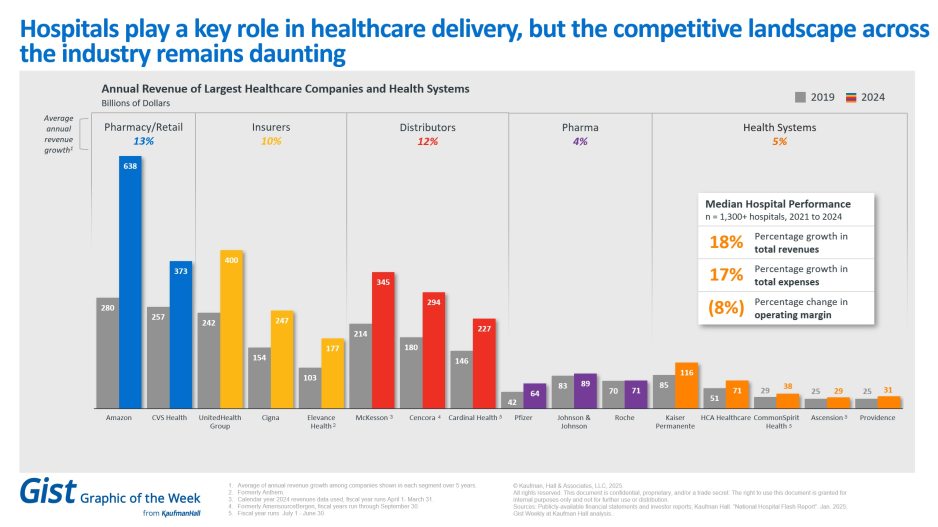
  • Kauffman Hall discusses the misadventures of primary care.
  • Modern Healthcare reports,
    • “Three lawsuits filed against data analytics firm MultiPlan alleging antitrust law violations for reducing pay for out-of-network providers have been consolidated into one suit seeking class action status.
    • “The American Medical Association and the Illinois State Medical Society filed suit against the company in October in federal court in Illinois. Advanced Orthopedic Center, a medical practice in Poway, California filed its suit in June in federal court in New York. Orthopedic provider Dr. Curtis Robinson filed his suit in federal court in California.
    • “The complaints, all now in the U.S. District Court for the Northern District of Illinois, allege MultiPlan has contracts with 700 large insurers, which allows them to have unfair control of market rates for provider pay.” * * *
    • “A spokesperson for MultiPlan said the company intends to fight the allegations.

Weekend Update

From Washington, DC

  • Decision Desk puts 2024 House election results at 220 Republicans to 213 Democrats while the AP count is 2018 Republicans to 212 Democrats. The total number of Representatives is 435, and a majority is 218 members.
  • Per Modern Healthcare,
    • “The Drug Enforcement Administration is set to once again extend a COVID-19 era rule that allows clinicians to remotely prescribe controlled medications, such as Adderall and Vicodin. 
    • “The DEA is set to publish a rule on Tuesday with the Health and Human Services Department that will temporarily extend providers’ ability to remotely prescribe Schedule II-V controlled medications via telemedicine to new and existing patients through Dec. 31, 2025. Current flexibilities were set to expire at the end of this year.”
    • “On Friday, an unpublished version of the rule was released on the Federal Register.” 
  • The Wall Street Journal offers an informative report on the federal civilian workforce.
    • “There are 2.3 million Americans working for the federal government in civilian jobs, a tally that has steadily climbed as control of the White House has shifted between parties and presidents. 
    • “They constitute less than 2% of the total U.S. workforce. They work as everything from nurses in Veterans Affairs hospitals and park rangers in Yellowstone to guards in federal prisons and the 19 employees of the Nuclear Waste Technical Review Board. About 80% of them work outside of the Washington, D.C., region.” * * *
    • “Roughly 70% of the civilian roles are in military- or security-related agencies. Veterans Affairs has the most civilian workers, mainly because it operates hundreds of hospitals and clinics. Homeland Security, created in 2002, is now the third largest. The Education Department, with 4,425 workers, is the smallest.”
  • Stars and Stripes updates us on the pilot program to improve access to healthcare for federal employees living and working in Japan. There are 11,000 federal employees living and working in Japan. The FEHBlog understands that the access problem occurs outside the Tokyo metropolitan area.
  • Per Legal Dive,
    • [Martine] Cicconi, a former special counsel in the Office of the White House Counsel, expects a “dynamic” regulatory environment over the next year. Following Trump’s election, she said the primary question she hears from corporate clients regards the fate of regulatory rules under Biden that remain in various stages of implementation.
    • These regulations tend to fall into four categories, Cicconi said.
      • Rules under consideration, not yet finalized. These will probably be subject to a regulatory pause by the incoming administration on Jan. 20.
      • Rules that are passed before Biden’s term ends, and within the past 60 days will be subject to the Congressional Review Act, Cicconi said. The next Congress, under Republican control in January, is likely to enjoin Biden rules with a joint resolution Trump would sign. 
      • Finalized agency rules that are still wending their way through litigation, including some that have been enjoined. The Trump administration is likely to stop defending many of the Biden rules, which would effectively end them. However, “in many of those challenges there are intervenors with authority to defend the rule going forward,” Cicconi noted.
      • That means rules that have survived court challenges and avoided being enjoined “will stay at least on the books” pending further administration action, she said.

From the public health and medical research front,

  • The New York Times reports,
    • “A person in California has tested positive for a form of mpox causing a widespread epidemic in Africa, the state’s Department of Public Health reported on Saturday. It is the first known case in the United States.
    • “The individual, who was not identified, had recently returned from East Africa. The patient was diagnosed in San Mateo County, just south of San Francisco, and was isolating at home.
    • “Officials at the California Department of Public Health and at the Centers for Disease Control and Prevention are reaching out to potential contacts of the patient for further testing.
    • “There is no evidence that this version of the mpox virus, called Clade Ib, is circulating in communities in the United States, C.D.C. officials said.”
  • and
    • “One person has died and 39 people have become ill in an E. coli outbreak linked to organic carrots, federal regulators said on Sunday.
    • “The infections were tied to multiple brands of recalled organic whole bagged carrots and baby carrots sold by Grimmway Farms, the U.S. Centers for Disease Control and Prevention said. Fifteen people have been hospitalized, according to the agency.
    • “Carrots currently on store shelves are unlikely to be affected by the recall but those in consumers’ refrigerators or freezers may be, the authorities said.
    • “If you have any recalled carrots in your home, throw them out or return them to the store,” the C.D.C. said.” * * *
    • “The carrots were sold under multiple brand names and at several retailers, including Trader Joe’s and Wegmans.
    • “The states with the most outbreaks were Minnesota, New York and Washington, according to the Food and Drug Administration.”
  • The Washington Post lets us know,
    • “Up to 10,000 lives could be saved each year by improving access to blood in the field, a group of surgeons said in a news conference last month.
    • “The event, which took place at an American College of Surgeons clinical conference in San Francisco, emphasized how faster access to blood could improve survival during emergencies.
    • “Despite evidence that carrying blood in the field can reduce deaths by preventing patients from bleeding to death, the surgeons said, blood is rarely available to emergency responders.
    • “The bad news is that only about 1 percent of [emergency medical services] vehicles, whether it’s ground or air, carry blood in the United States,” said John B. Holcomb, a trauma surgeon and professor at the University of Alabama at Birmingham. “About 10,000 lives a year could be saved if every ambulance in the United States had blood.”
  • NPR Shots informs us,
    • “A study of cells from 84 cadaver brains suggests that Alzheimer’s has two distinct phases, and that one type of neuron is especially vulnerable.
    • “There’s an early phase where there’s a very slow increase in the amount of pathology,” says Ed Lein, a senior investigator at the Allen Institute for Brain Science in Seattle, “then a more exponential phase where suddenly things get really bad.”
    • “The study also found evidence that a small subset of neurons known as somatostatin inhibitory neurons begin to die off during the early phase of Alzheimer’s, Lein and a team of nearly 100 other scientists report in the journal Nature Neuroscience.
    • “That was quite a surprise,” Lein says, because these neurons have received relatively little attention from Alzheimer’s researchers.
    • “The findings suggest that Alzheimer’s treatments are most likely to help early in the disease, and that one strategy might be to protect vulnerable inhibitory neurons.
    • “The results also show how scientists’ understanding of Alzheimer’s is being changed by new tools and techniques that can reveal detailed information about millions of individual brain cells.
    • “They’ve produced a picture of what’s going on that no one could have anticipated just a few years ago,” says Dr. Richard Hodes, who directs the National Institute on Aging, which played a key role in funding the research.”
  • Per Fortune Well,
    • “Everyone has a different relationship with exercise. You might be a fitness junkie, hitting the gym five days a week or training for a marathon to push your body’s limits. But for most Americans, physical activity takes a backseat to everything else going on in life. 
    • “Only 26% of men, 19% of women, and 20% of adolescents get enough activity to meet aerobic and muscle-strengthening guidelines, according to the Department of Health and Human Services
    • “If you’re one of the many people currently not hitting the minimum exercise recommendations—150 to 300 minutes of moderate-intensity physical activity a week—then you might be missing out on substantial gains in longevity and healthspan, according to a new study published in the British Journal of Sports Medicine.”

From the U.S. healthcare business front,

  • HR Dive tells us,
    • “A Texas federal judge on Friday struck down the U.S. Department of Labor’s recently expanded overtime rule nationwide, stripping overtime eligibility from an estimated 1 million workers, according to a court filing
    • “U.S. District Court Judge Sean Jordan ruled that “the 2024 Rule exceeds the Department’s authority and is unlawful.” The ruling vacates DOL’s overtime rule that changed the threshold at which workers qualified for overtime from $35,568 to $43,888 effective July 1 and would have raised it to $58,656 on Jan. 1, 2025, according to Littler attorneys.
    • “Jordan previously granted a preliminary injunction to the Texas state government days before the rule was to go into effect.”
  • Per Yahoo Finance, Optum has launched a website to present its defense against a federal antitrust lawsuit challenging an acquisition of Amedisys, a large home healthcare company. “The website notes that the home healthcare industry remains highly fragmented despite the growing market.”
  • The Wall Street Journal reports that “Makers of Ozempic, Zepbound fight to stop compounded copies of their drugs {when it is} unclear whether pharmaceutical companies can increase production enough.

Midweek Update

From Washington, DC,

  • Roll Call reports,
    • “Sen. John Thune [R SD] on Wednesday was elected the next Senate majority leader, as Republicans are set to take over the chamber in January — and with a demanding President-elect Donald Trump poised to return to power.
    • “Having defeated Texas Sen. John Cornyn and Florida Sen. Rick Scott, the fourth-term South Dakotan will replace Mitch McConnell of Kentucky in January as the chamber’s top Republican. McConnell had held the top GOP spot since taking his party’s leadership reins in early 2007, making him minority leader in six Congresses and majority leader in three Congresses.
    • “Thune defeated Cornyn 29-24 on the day’s second ballot, with Scott eliminated from contention after the first ballot, according to a source inside the Capitol’s Old Senate Chamber, where Republicans chose their next leader.
    • “Senate Republicans also selected Sens. James Lankford, R-Okla., as Republican Conference vice chair; Shelley Moore Capito, R-W.Va., as Republican Policy Committee chair; John Barrasso, R-Wyo., as assistant majority leader; Tim Scott, R-S.C., as National Republican Senatorial Committee chair; and Tom Cotton, R-Ark., as Republican Conference chair.”
  • Tuesday night, the AP results for control of the House now stand at 218 Republicans vs. 208 Democrats with 218 seats constituting a majority. Decision Desk HQ already had awarded control of the House to the Republicans, 219 Republicans vs. 211 Democrats.
  • Federal News Network lets us know,
    • “The House passed the Social Security Fairness Act Tuesday evening in a vote of 327 to 75, bringing the removal of the Windfall Elimination Provision and the Government Pension Offset closer than ever to reality.
    • “Social Security’s WEP and GPO have been around for decades. The two provisions reduce and, in some cases, fully cancel out Social Security benefits for Civil Service Retirement System annuitants and other public sector employees who have worked in state and local government, as well as their spouses, widows and widowers.
    • “The House’s vote came after Reps. Abigail Spanberger (D-Va.) and Garret Graves (R-Pa.), the original cosponsors of the reintroduced Social Security Fairness Act, filed a discharge petition in September to try to push the bill toward a vote. About one week later, the petition reached the 218-signature threshold needed to force the bill to the House floor.” * * *
  • OPM yesterday released a fact sheet titled OPM Highlights its Key Actions under Biden Administration’s AI Executive Order.
  • Govexec tells us,
    • “The Office of Personnel Management reported a slight increase in the backlog of pending federal employee retirement claims in October, though still a marked improvement from the same period last year.
    • “OPM received 6,872 new retirement requests from departing federal workers last month, an increase of around 1,250 more claims than in September. Though OPM cleared 6,458 claims—itself an increase of around 150 claims from the previous month—the backlog ticked up by around 400 cases to 14,908. OPM’s goal is a “steady state” of 13,000 pending retirement claims.
    • “Despite that, the average time it takes to process a retirement claim fell from 63 to 62 days, as measured on a monthly basis.” * * *
    • Now the legislation faces its next hurdle: passage in the Senate. The Senate’s companion to the Social Security Fairness Act currently has 62 cosponsors. * * *
    • “Unlike the House, the Senate does not have a discharge petition procedure — the strategy that Spanberger and Graves used to force the floor vote in the House.
    • “In the Senate, we have the votes to defeat a filibuster, but it has to be brought to a vote,” John Hatton, NARFE’s staff vice president of policy and programs, told The Federal Drive with Tom Temin. “But somebody may object to proceeding, which could cause a two-week or so delay in getting it through.”
  • Per a government press release,
    • “The Substance Abuse and Mental Health Services Administration (SAMHSA), an agency within the U.S. Department of Health and Human Services (HHS), announced today the launch of the Behavioral Health Workforce Career Navigator, designed to help current and aspiring behavioral health professionals identify state requirements for a range of behavioral health careers. The navigator supports President Biden and Vice President Harris’ commitment to expanding America’s behavioral health workforce, a key element of the Administration’s Unity Agenda for the Nation.”

From the public health and medical research front,

  • National Institutes of Health Director Dr. Monica Bertagnolli writes in her blog, about “Advancing a Whole-Person Approach to Women’s Health Research.”
    • “NIH has committed $200 million in fiscal year 2025 to supporting cross-cutting research focused on the health needs of women. We also issued a Notice of Special Interest to highlight our interest in receiving project applications on diseases and conditions that impact women differently, disproportionately, and uniquely across nearly all NIH Institutes and Centers. We are already considering close to 300 new applications for women’s health research projects.
    • “The whole-person approach to women’s health allows researchers and clinicians to address unique needs throughout a woman’s lifetime and to provide a more complete picture of women’s health. It also must be integrated into all stages of the research process—from identifying innovative research questions, to producing impactful scientific and clinical results, to developing ways to equitably adopt new treatments. It begins with science that convenes researchers and clinicians from different disciplines to accelerate progress through combined efforts and knowledge. The White House Initiative on Women’s Health Research calls for this comprehensive approach, renewing NIH’s commitment to research that addresses the needs of women everywhere. It demands that we approach this work with urgency, putting women and their lived experiences at its center of a focus on translating insights from biology and society into better health.
    • Links:
  • The Washington Post reports,
    • “A Canadian teenager infected with bird flu — that country’s first case involving a locally acquired infection — is in critical condition and experiencing difficulty breathing, health officials said Tuesday.
    • “The previously healthy British Columbia teen went to a hospital emergency room Nov. 2 with initial symptoms of pink eye, fever and cough, conditions common to many respiratory illnesses, Bonnie Henry, provincial health officer, said during a news conference. The teen was sent home.
    • “But after the patient’s condition deteriorated, the teen was admitted to BC Children’s Hospital in Vancouver late Friday.
    • “So far, no one who came into contact with the teen has fallen ill.” * * *
    • “On Wednesday, the Public Health Agency of Canada confirmed the H5N1 diagnosis in the teen and said genomic sequencing indicates the virus is related to the bird flu viruses from the ongoing outbreak in poultry in British Columbia, which is related to wild birds.”
  • STAT News informs us,
    • “U.S. drug overdose deaths are plummeting, putting the country on pace for its first year with fewer than 100,000 overdose deaths since 2020 — a powerful, if bleak, symbolic milestone.
    • “Reported drug deaths fell nearly 17% during the 12-month period ending in June, to 93,087, according to new statistics released this week by the Centers for Disease Control and Prevention. 
    • “The epidemic’s toll remains immense but is substantially lower than the 111,615 lives lost to overdose during the 12 months ending in June 2023. Fentanyl, the potent illicit opioid that now dominates the U.S. illicit drug supply, contributed to a large majority.” 
  • Per Health Day,
    • “Even as the pressures of the pandemic began to ebb, Americans’ growing dependence on alcohol did not, a troubling new study shows.
    • “Two years into the globe-altering health crisis, the percentage of Americans who consumed alcohol — which had already spiked between 2018 and 2020 — inched even further up in 2021 and 2022. Not only that, but more folks reported heavy or binge drinking, the findings published Tuesday in the Annals of Internal Medicine revealed.
    • “Our results provide national data to draw further attention to the potential alcohol-related public health effects that may remain from the pandemic,” the researchers wrote in their research. “Potential causes of this sustained increase include normalization of and adaptation to increased drinking due to stress from the pandemic and disrupted access to medical services.” 
  • Per MedTech Dive,
    • “Livanova said Monday a trial of its obstructive sleep apnea (OSA) implant met its primary safety and efficacy endpoints, positioning the company to seek approval once the analysis is complete.  
    • “The randomized trial linked Livanova’s aura6000 to improvements on measures of OSA severity and blood oxygen after six months of treatment with the hypoglossal nerve stimulator. The hypoglossal nerve controls the tongue muscles.
    • “Leerink Partners analysts said the results were largely in line with outcomes seen in a trial of Inspire Medical Systems’ rival device. The analysts see ways that Livanova could differentiate its device but said the company “may have a difficult time breaking into the sleep apnea market.”
  • Fierce Pharma points out,
    • “Following an impressive data drop this summer highlighting the potential for Eli Lilly’s tirzepatide to stave off progression to Type 2 diabetes in prediabetic patients, the Indianapolis-based drugmaker is laying out full results from its longest completed study of the dual GIP/GLP-1 receptor agonist to date.
    • “In the three-year SURMOUNT-1 trial, tirzepatide curbed the risk of disease progression to Type 2 diabetes by 94% versus placebo in adult prediabetes patients who were obese or overweight, Lilly said in a release Wednesday. The number represents a pooled result from three tirzepatide doses (5 mg, 10 mg and 15 mg) studied in the trial.
    • “Putting those results into perspective, one new case of diabetes could be prevented for every nine patients treated with tirzepatide, which is marketed in the U.S. as Mounjaro for Type 2 diabetes and as Zepbound for obesity, Lilly said.
    • “Overall, nearly 99% of patients on tirzepatide remained diabetes-free at the end of the trial’s 176-week treatment period, the company added. 
    • ‘Further, at the 193-week mark, which followed a 17-week off-treatment follow-up period, only 2.4% of patients on Lilly’s drug were diagnosed with Type 2 diabetes compared to 13.7% of patients in the study’s placebo cohort.
  • Beckers Hospital Review identifies “nine new drug shortages to know, according to databases compiled by the FDA and the American Society of Health-System Pharmacists.” 

From the U.S. healthcare business front,

  • Healthcare Dive reports,
    • “Self-funded employer clients of Aetna have access to SimplePay Health, a new healthcare plan design that provides employees and other plan members with essentially an interest-free line of credit to pay for care and requires no out-of-pocket costs due at the time of service, Aetna said in a Oct. 15 press release.
    • “The plan requires only copays for medical services and prescription drugs up to the plan member’s out-of-pocket maximum, with no deductibles or coinsurance costs. Each plan member is mailed a monthly statement — which Aetna compared to a credit card statement — that summarizes all medical and pharmacy claims from the prior 30 days.
    • “Payment terms are generally chosen by the plan sponsor, Amie Benedict, president, diversified commercial solutions at Aetna, said in an email to HR Dive, but payment plans are generally between 12 to 18 months long. “SimplePay will work with members requiring longer payment periods,” Benedict said.” * * *
    • “Aside from SimplePay, UnitedHealthcare company Surest also offers a plan model to self-funded employers without coinsurance or deductibles.
    • “Jim Winkler, chief strategy officer at the Business Group on Health, said in an interview that SimplePay, Surest and similar products are designed to curate a set of preferred healthcare providers and encourage plan members to use these providers by keeping down out-of-pocket costs.
    • “This is especially the case for “shoppable” care, or care that is neither urgent nor emergency in nature and for which employees can select from a variety of providers, Winkler said. “In these shoppable moments, these programs are designed to ensure that the right choice is the easy choice.”
  • Fierce Healthcare fills us in on the first day of its Fierce Health Payer Summit here in beautiful Austin Texas.
  • Corporate Synergies exposes “The Myths Preventing Employees from Embracing HSA-Qualified Plans.”
  • Per BioPharma Dive,
    • “BioNTech is buying into one of the hottest areas of oncology, agreeing to pay $800 million to acquire China-based Biotheus and, with it, a type of drug some analysts think could rival Merck & Co.’s dominant immunotherapy Keytruda.
    • “The deal will hand BioNTech full global rights to a dual-targeting drug that’s designed to block two proteins: the PD-L1 “checkpoint” targeted by Keytruda and another called VEGF that’s coopted by tumors to fuel their growth.
    • “This specific type of “bispecific antibody” is newly on drugmakers’ radar screens after Summit Therapeutics wowed the cancer field with data showing its drug ivonescimab outperformed Keytruda in a head-to-head lung cancer trial.”

Tuesday Tidbits

Photo by Patrick Fore on Unsplash

From Washington, DC,

  • The Washington Post reports,
    • “Republican lawmakers returned to Capitol Hill on Tuesday with some spring in their step.
    • After winning the presidency and the Senate majority, the party is on the cusp of regaining the House majority — and with it, a powerful governing trifecta in Washington.
    • “Though control of the House may not be called for days, GOP lawmakers will this week work on the assumption they’ve clinched it, pushing ahead with House leadership elections and shaping plans to reverse or overhaul much of the Biden administration’s domestic and foreign policy.
    • “Though control of the House may not be called for days, GOP lawmakers will this week work on the assumption they’ve clinched it, pushing ahead with House leadership elections and shaping plans to reverse or overhaul much of the Biden administration’s domestic and foreign policy.”
  • The Post must be tracking the AP results (214 – 206) because Decision Desk HQ has decided that the Republicans do have a majority of seats in the House (219 – 210, 218 being a majority).
  • The Wall Street Journal reports,
    • “President-elect Donald Trump picked Tesla CEO Elon Musk and biotech company founder Vivek Ramaswamy, a former Republican presidential candidate, to lead an effort to cut spending, eliminate regulations and restructure federal agencies.
    • “Trump said in a statement Tuesday night that Ramaswamy and Musk—the wealthiest person in the world, who oversees six companies including Tesla—would lead what the president-elect called the Department of Government Efficiency, or DOGE. The department’s mandate is to streamline government bureaucracy, the president-elect said.
    • “DOGE will operate outside of the federal government, Trump said, and will work with the White House Office of Management and Budget to implement its recommendations.” 
  • The American Hospital Association News lets us know,
    • “In comments Nov. 12 to majority and minority leaders of the House and Senate, the AHA requested that Congress act on key priorities for hospitals and health systems before the end of 2024. AHA urged Congress to continue providing relief from Medicaid Disproportionate Share Hospital Payment cuts; continue the Medicare-dependent Hospitals and Low-volume Adjustment programs that expire Dec. 31; reject site-neutral payment proposals; and pass the Improving Seniors’ Timely Access to Care Act (H.R. 8702/ S. 4532), legislation that would reduce the wide variation in prior authorization methods in the Medicare Advantage program.” * * * 
    • “AHA also urged Congress to extend the hospital-at-home waiver for five years through 2029; mitigate scheduled physician reimbursement cuts for 2025; and pass the Safety from Violence for Healthcare Employees Act (H.R. 2584/S. 2768), legislation that would provide federal protections from workplace violence for hospital workers, similar to protections for airport and airline workers.”
  • and
    • “The Centers for Medicare & Medicaid Services Nov. 12 released a report evaluating past and present approaches to rural health. It shares how previous CMS Innovation Center models focusing on rural health have been applied to recent model development. 
    • “The report also shares themes, concepts and next steps gathered from its rural health “Hackathon,” a series of events across the U.S. that brought experts together to brainstorm solutions to rural health challenges. The top themes highlighted a need for training, regulatory changes and collaboration to help improve access to care and support transformation. The report also outlines possible considerations for future Accountable Care Organization-focused and other models.
    • “CMS’ next intention is to issue a request for application to fill the 10 open spaces for its Rural Community Hospital Demonstration. The program was directed by Congress and requires a test of cost-based payment for Medicare inpatient services for rural hospitals with fewer than 51 beds that are ineligible for critical access hospital status.”
  • OPM issued a press release today about the ongoing Open Season while Govexec informs us,
    • “Retired and active federal employees find selecting a health care plan to be more confusing than creating a will, reading Shakespeare, learning a new language or navigating a divorce, according to a new survey from the National Active and Retired Federal Employees Association. 
    • “While the process may be complex, NARFE is urging current and former federal and postal employees to look at their options for health care insurance carriers and coverage plans during this year’s open season, which lasts from Nov. 11 through Dec. 9, especially in light of premium price increases next year that will be the largest in recent memory. 
    • “John Hatton, NARFE’s staff vice president of policy and programs, told Government Executive that enrollees could be missing out on thousands of dollars in savings. 
    • “We always recommend people to take a look at their options during open season to make sure they have the coverage that they need so they’re not paying more in out-of-pocket expenses later, but also to pay less in premiums if they don’t need the coverage that they currently have,” he said. 
    • “More than half of active federal employees (57%) and retired ones (55%) in NARFE’s survey annually review their health insurance options. For this year’s open season, 60% of current feds responded that they are planning on participating compared to 47% of retirees.” 
  • RAND shares survey results about U.S. veterans’ families, which should be of interest to FEHB carriers as the federal government wisely hire a lot of veterans.
  • Meanwhile, AHIP fact checks a Wall Street Journal article criticizing the Medicare Advantage program.
  • The New York Times reports,
    • “The Justice Department and four Democratic state attorneys general on Tuesday filed an antitrust lawsuit against the giant UnitedHealth Group in an attempt to block its $3.3 billion deal to take over Amedisys, a large home health company.
    • “Unless this $3.3 billion transaction is stopped, UnitedHealth Group will further extend its grip to home health and hospice care, threatening seniors, their families and nurses,” Jonathan Kanter, the assistant attorney general who heads the department’s antitrust division, said in a statement on Tuesday.
  • The Wall Street Journal adds,
    • Johnson & Johnson launched a legal challenge against a federal health agency blocking the company’s quest to tighten the way it provides lucrative drug discounts to hospitals.
    • “J&J filed a lawsuit in federal court in Washington on Tuesday against the heads of the U.S. Department of Health and Human Services and one of its agencies, seeking a court ruling that says J&J’s plan is legal and to prevent the agency from rejecting it.
    • “The lawsuit escalates the pharmaceutical industry’s fight to rein in the federal drug-discount program known as 340B. The program, created in 1992, requires drugmakers to provide steep discounts on outpatient drugs to hospitals and clinics that serve uninsured and low-income patients. 
    • “The pharmaceutical industry has argued that the 340B program has strayed from its original purpose of helping safety-net hospitals. Manufacturers say they sell medicines to covered hospitals at steep discounts, but some large hospitals mark up the prices charged to both uninsured patients and insurers.”

From the public health and medical research front,

  • The New York Times reports,
    • “After decades of unrelenting increases, rates of sexually transmitted infections in the United States are showing hints of a downturn.
    • “Diagnoses of gonorrhea dipped in nearly all age groups last year, compared with 2022, and new cases of syphilis and chlamydia remained about the same, according to data released on Tuesday by the Centers for Disease Control and Prevention.
    • “The results are not yet cause for celebration.
    • “Overall, more than 2.4 million new S.T.I.s were diagnosed last year, about a million more than the figure 20 years ago. Nearly 4,000 babies were diagnosed with congenital syphilis last year, and 279 of them were stillborn or died soon after.
    • “Still, experts said they were cautiously optimistic that a resurgent tide of infections was beginning to turn.”
  • Per a National Institutes of Health press release,
    • “Researchers at the National Institutes of Health (NIH) and their collaborators have discovered a new way in which RAS genes, which are commonly mutated in cancer, may drive tumor growth beyond their well-known role in signaling at the cell surface. Mutant RAS, they found, helps to kick off a series of events involving the transport of specific nuclear proteins that lead to uncontrolled tumor growth, according to a study published Nov. 11, 2024, in Nature Cancer.
    • RAS genes are the second most frequently mutated genes in cancer, and mutant RAS proteins are key drivers of some of the deadliest cancers, including nearly all pancreatic cancers, half of colorectal cancers, and one-third of lung cancers. Decades of research have shown that mutant RAS proteins promote the development and growth of tumors by activating specific proteins at the cell surface, creating a constant stream of signals telling cells to grow.” * * *
    • “The study also found evidence that mutant RAS proteins perform this same function in other cancer types, suggesting that this mechanism may be a general feature of cancers with mutated RAS genes.
    • “The researchers believe their finding may have potential applications for the treatment of RAS-fueled cancers. They have started to look at how this function for RAS works in pancreatic cancer in particular because there are so few effective treatments for this type of cancer.
    • “New treatment combinations could one day be developed that take this new role for RAS into consideration,” Dr. [Douglas] Lowy said.”
  • Health Day tells us,
    • “Lives lost to obesity-related heart disease have nearly tripled over the past twenty years, a new study reports.
    • Heart disease deaths linked to obesity increased 2.8-fold between 1999 and 2020, according to findings presented today at the American Heart Association’s annual meeting in Chicago.
    • “The increase occurred especially among middle-aged men, Black adults, Midwesterners and rural residents, researchers found.
    • “Obesity is a serious risk factor for ischemic heart disease, and this risk is going up at an alarming rate along with the increasing prevalence of obesity,” lead researcher Dr. Aleenah Mohsin, a post-doctoral research fellow at Brown University in Providence, R.I., said in a news release.” * * *
    • “The National Institute of Health has more on the health risks of obesity.”

From the U.S. healthcare business front,

  • Fierce Healthcare surveys the major payors’ third quarter financial results as the curtain falls on the third quarter announcement season.
  • Kaufmann Hall relates,
    • “Though most indicators were down, hospital performance remained relatively stable overall, according to September data. Both inpatient revenue and average lengths of stay increased.
    • “The recent issue of the National Hospital Flash Report covers these and other key performance metrics.”
  • and
    • “In the third quarter of this year, the median investment/subsidy per physician was $304,312—rising above $300,000 for the first time. Other expense metrics such as the total direct expense per provider FTE and labor as a percentage of total expenses increased.
    • “The Physician Flash Report features the most up-to-date industry trends drawn from the same data physician groups use to track their finances and operations.”
  • Per Modern Healthcare,
    • “Ochsner Health may expand its hospital-at-home program throughout the entire health system after successfully piloting a program in New Orleans, the nonprofit healthcare provider said Tuesday.
    • “Ochsner Health said in a news release the pilot, launched in March at Ochsner Medical Center-New Orleans, prevented either initial hospitalizations or 15-day hospital readmissions for 92% of the patients referred to the program through its emergency department and observation unit.
    • “The New Orleans-based health system offered the service through a partnership with myLaurel, a New York-based company that provides transitional and acute care to frail, elderly patients at home instead of a hospital. Patients received virtual and in-home visits from clinicians, along with lab work, medications, education about treatment plans and other services.”
  • and
    • “Cardinal Health has entered definitive agreements to acquire a majority stake in GI Alliance, a gastroenterology management services organization, and the entirety of Advanced Diabetes Supply Group, a diabetes medical equipment supplier. 
    • “Cardinal expects to acquire Advanced Diabetes Supply for an estimated $1.1 billion and 71% ownership of GI Alliance for an estimated $2.8 billion. Both deals are expected to close by early 2025, pending regulatory approvals.” 
  • STAT News relates
    • “23andMe, the genetics startup that has repeatedly captured the public imagination and then faced nearly fatal business challenges, announced Monday that it would halt its efforts to develop new medicines and lay off 40% of its workforce, focusing instead on selling genetic tests to consumers and using the resulting data for research.
    • “In closing its therapeutics division and laying off 200 people, 23andMe ended an audacious bet it made nearly a decade ago — that it could use the genetic data it had collected not only to assist drug companies but to become one itself.”
  • Per Healthcare Dive,
    • “General Catalyst released new details on its planned acquisition of Akron, Ohio-based Summa Health on Thursday, roughly one year after the venture capital firm said it was looking to buy a health system. 
    • “General Catalyst’s Health Assurance Transformation business, or HATCo, has signed a definitive agreement to purchase Summa for $485 million. The deal, alongside the health system’s current cash on hand, allows Summa to eliminate $850 million in debt — nearly all the debt the health system currently holds, according to Summa’s most recent financial results.
    • “HATCo is also pledging to spend $350 million over the first five years of its ownership to support routine operations and technology investments, plus another $200 million over seven years for “strategic and transformative” initiatives.” 
  • Per MedTech Dive,
    • “Johnson & Johnson said Tuesday it received an investigational device exemption (IDE) from the Food and Drug Administration to start a U.S. clinical trial for its Ottava surgical robot.
    • “The company said it will now prepare U.S. sites to receive Ottava systems, enroll patients and begin surgical cases as it focuses on training clinical trial investigators. J&J’s soft tissue robot will compete with Intuitive Surgical’s da Vinci system, which currently leads the market.
    • “The Ottava platform will incorporate J&J Ethicon surgical instruments designed for the robotic platform, the company said. Ottava will also have a digital system called Polyphonic that will connect surgical technologies, robotics and software, ultimately adding data and insights to support clinical decision making.”
  • and
    • “GE Healthcare has struck a deal to combine its Senographe Pristina mammography system with Radnet’s artificial intelligence-based Smartmammo workflow, the companies said Monday.
    • “The alliance positions GE to distribute Radnet software designed to help mammography centers view images, prioritize cases and support other steps in the workflow. The integration is the first part of a broader collaboration focused on imaging AI.
    • “Radnet CEO Howard Berger told analysts on an earnings call Monday that the mammogram systems “simply need a power source and a connection to the internet,” creating opportunities to image patients in “Walmart and mall locations.”