FEHBlog

Holiday weekend update

Happy King Day! Here is a link to the NPR website that includes a video and a transcript of his “I Have a Dream” speech given August 28, 1963. Dr. King proves that you don’t have to be President to lead the country. He accomplished so much in his tragically shortened life for which we all should be grateful.

From the Congress front, the House of Representatives remains in session this week for Committee business and floor voting while the Senate is on State work period. Govexec lets us know that last Thursday

Lawmakers sounded a rare note of optimism about reaching a spending agreement for the remainder of fiscal 2022 as they look to avoid yet another stopgap measure.  Leaders in both parties called a bicameral, bipartisan meeting “constructive,” saying they shared the goal of setting full-year appropriations by their Feb. 18 deadline. 

From the Omicron front, STAT News informs us that

As the coronavirus continues to wreak havoc, an expert panel at the World Economic Forum delivered a mix of good news and bad news on Monday: More variants will emerge, but vaccine production is accelerating and research is progressing toward a combined shot that may be able to attack these different variants.

On one hand, the world needs to prepare for newer strains that could be more vexing, or the “worst case scenario,” said Annelies Wilder-Smith, a professor of emerging infectious diseases at the London School of Hygiene and Tropical Medicine. “Omicron will not be the last variant. There’s a high probability we will have another variant coming up. The question is when and will it be less dangerous?”

Wall Street Journal columnist Alyssia Finley offers a column on the benefits of natural immunity created by Omicron breakthrough infections.

A study last month by the Oregon Health and Science University found that vaccinated people who experienced breakthrough infections produced higher levels of antibodies that were up to 1,000% more effective than those generated two weeks after a second dose of the Pfizer vaccine. The researchers described this as superimmunity. 

“I think this speaks to an eventual end game,” said co-author Marcel Curlin. “It doesn’t mean we’re at the end of the pandemic, but it points to where we’re likely to land: Once you’re vaccinated and then exposed to the virus, you’re probably going to be reasonably well-protected from future variants.” Dr. Curlin added: “Our study implies that the long-term outcome is going to be a tapering off of the severity of the worldwide epidemic.” * * *

All of this suggests that infection with Omicron is likely to stimulate potent and durable protection against Covid-19—and potentially other coronaviruses—even if it mutates to become more virulent. As Omicron rapidly spreads, people who have been vaccinated or previously infected will develop superimmunity. Covid-19 will become a virus that causes cold- and sometimes flulike symptoms—annoying but rarely deadly or disruptive.

One caveat is that older people generate weaker T-cell responses and memories to infections and vaccines. They’re likely to need annual booster shots. Omicron will end the pandemic by making Covid-19 endemic.

The Journal also offers masking advice which help the FEHBlog finally understand the difference between N-95 and KN-95 masks. “If you can’t get an N95 [which is certified in the US], doctors suggest KN95, KF94 and FFP2 masks, which are certified in China, South Korea and Europe, respectively.”

The Journal also reports that

One year into her tenure as director of the Centers for Disease Control and Prevention, Rochelle Walensky acknowledges that she should have communicated certain things better to the American public.

She says the pandemic threw curveballs that she should have anticipated. She thinks she should have made it clearer to the public that new rules and guidelines were subject to change if the nature of the fight against Covid-19 shifted again.

“I think what I have not conveyed is the uncertainty in a lot of these situations,” Dr. Walensky said in an interview with The Wall Street Journal.

Dr. Walensky deserves credit for making these remarks.

From the FEHB and TRICARE fronts, benefits consultant Tammy Flanagan discusses the merits of enrolling in Medicare Part B when you retire from federal employment at or over age 65.

From the healthcare business front, Revcycle Intelligence calls to our attention the fact that “2021 did not set any records for the number of hospital mergers and acquisitions, but data shows a shift to larger deals between well-established organizations”

The report identified eight “mega-mergers” in which the seller or smaller partner by revenue had over $1 billion in annual revenue. Out of all the announced transactions, that is the largest percentage of announced mega-mergers in the last six years at 16.3 percent. It was also nearly double the percentage of mega-mergers announced in 2020.

The average size of the smaller party in hospital merger and acquisition deals was also up significantly compared to previous years, according to the report. The average size by annual receive increased to $619 million from $388 million in 2020.

The data may point to a new trend in healthcare consolidation.

From the benefit design front, Health Payer Intelligence reports that

Although acupuncture utilization has grown in recent years, only half of acupuncture visits had any form of coverage in 2019, according to a research letter published in JAMA Network Open.

The researchers analyzed acupuncturist visits in Medical Expenditure Panel Survey (MEPS) data from 2010 to 2019. Their aim was to uncover the total cost of the visit, the annual out-of-pocket healthcare spending for these visits, the portion of these visits that were covered under the patients’ insurance plans, and the percent of out-of-pocket costs.

The majority of the participants were female and nearly six in ten were White individuals.

Finally MedPage Today gives us a community-oriented story written by “a physician [Avik Chatterjee, MD, MPH] in a shelter-based clinic in Boston, near the intersection of Massachusetts Avenue and Melnea Cass Boulevard, where a large encampment of people experiencing homelessness has emerged. Injection drug use in this area has picked up recently, and overdoses are not uncommon. When people need help, outreach workers and shelter staff run in and call for us.” And clinic doctors and nurses respond to the calls.” His story concludes as follows:

The skills, knowledge, and compassion necessary to address the overdose crisis exist in the community of people who use drugs. Historically, this group of people has been particularly marginalized by healthcare institutions. But people who use drugs are finally starting to demand a seat at the table where decisions are made around research and treatment of substance use disorders. Researchers, clinicians, and policymakers need to come up with creative ways to partner with this community to meaningfully incorporate lived and living experience in designing research and clinical programs.

In the face of one of the biggest health crises of our generation, it’s time to realize that “we’re all family here.”

And the post comes full circle.

Cybersecurity Saturday

The headline news of the week is brought to us by the Wall Street Journal

The Russian government on Friday [January 14] said it had arrested members of the prolific criminal ransomware group known as REvil that has been blamed for major attacks against U.S. business and critical infrastructure, disrupting its operations at the request of U.S. authorities.

Russia’s security service, the FSB, said in an online press release that it had halted REvil’s “illegal activities” and seized funds belonging to the group from more than two dozen residences in Moscow, St. Petersburg and elsewhere. REvil members were arrested in relation to money-laundering charges, the FSB said. It didn’t provide names of any of the suspects.

The arrests included “the individual responsible for the attack on Colonial Pipeline last spring,” a particularly devastating ransomware offensive that led to the main conduit of fuel on the U.S. East Coast being shut down for days, a senior Biden administration official said. A different Russian ransomware gang had previously been linked to the Colonial hack, but security experts and officials have said they are not neatly defined and that individual hackers often overlap.

“We welcome reports the Kremlin is taking law enforcement steps to address ransomware within its borders,” the official said.

Needless to say this development also is the focus of Bleeping Computer’s The Week in Ransomware.

From the log4j front, Healthcare Dive tells us that

— Jen Easterly, director of the Cybersecurity and Infrastructure Security Agency, said the agency has not yet seen the Log4j vulnerability used for significant intrusions but cautioned that sophisticated threat actors may be lying in wait for cybersecurity defenders to be caught off guard during a lower level of awareness.

— Threat actors have used the vulnerability to install and sell cryptomining software on victims’ computers and to potentially launch future botnet attacks. CISA cannot independently confirm research showing nation-state threat actors developing attacks based on Log4Shell, Easterly said during a presser Monday. 

— Microsoft security researchers identified a China-based threat actor, tracked as DEV-0401, exploiting the Log4j vulnerability in systems using VMware Horizon to deploy NightSky ransomware, researchers said in an updated blog.

Federal News Network interviewed about this infamous yulnerability. Gordon Bitko, former FBI chief information officer, now the senior vice president of policy at the Information Technology Industry Council.

Gordon Bitko: Tom, where there’s a difference from SolarWinds. Log4j wasn’t a coordinated — as far as we know — attack by an adversary. It was a vulnerability that was identified, and so the people who are exploiting it now seem more like cybercriminals who were using it as a way to implant ransomware, things of that nature.

Tom Temin: Alright, so you can never rest on your laurels.

Gordon Bitko: That is 100% the case. It is important for everybody doing cybersecurity and their management to understand it’s a race on a treadmill. You can never stop.

Last Wednesday Cyberscoop reported that

Tech giants and federal agencies will meet at the White House on Thursday to discuss open-source software security, a response to the widespread Log4j vulnerability that’s worrying industry and cyber leaders.

Among the attendees are companies like Apple, Facebook and Google, as well as the Apache Software Foundation, which builds Log4j, a ubiquitous open-source logging framework for websites.

“Building on the Log4j incident, the objective of this meeting is to facilitate an important discussion to improve the security of open source software — and to brainstorm how new collaboration could rapidly drive improvements,” a senior administration official said in advance of the meeting.

Here’s the White House readout from that meeting. According to that document, the discussion focused on three topics:

Preventing security defects and vulnerabilities in code and open source packages, improving the process for finding defects and fixing them, and shortening the response time for distributing and implementing fixes. In the first category, participants discussed ideas to make it easier for developers to write secure code by integrating security features into development tools and securing the infrastructure used to build, warehouse and distribute code, like using techniques such as code signing and stronger digital identities.

In the second category, participants discussed how to prioritize the most important open source projects and put in place sustainable mechanisms to maintain them.

In the final category, participants discussed ways to accelerate and improve the use of Software Bills of Material, as required in the President’s Executive Order, to make it easier to know what is in the software we purchase and use. 

For a government meeting open to you, dear readers:

The Cybersecurity and Infrastructure Security Agency (CISA) is holding virtual mini-Industry Day events throughout this year. These events will allow CISA and industry to have meaningful discussions about cybersecurity capabilities, challenges, top priorities, requirements, and technologies as well as future business opportunities.

The first Virtual Mini-Industry Day will be Wednesday, January 26, at 10 a.m. (EST). This event will provide insight into current and future challenges as well as provide presentations regarding IT  FY22 information technology focus areas, FY23-25 foundational work, engineering, information assurance, information technology operations, and records management/governance. To attend, please register by Tuesday, January 18, at 5 pm ET

Finally ZDnet offers its recommendations on

Friday Stats and More

Based on the Centers for Disease Control’s COVID Data Tracker and using Thursday as the first day of the week here is FEHBlog’s weekly chart of new COVID cases from the 27th week of 2021 through the second week of this year:

Four million new cases of COVID in a week. Wow. The Delta surge is the long hill that starts at the left of the chart. Omicron is Mount Everest by comparison.

Here’s the FEHBlog’s weekly chart of new COVID deaths for the same time span.

Weekly COVID deaths haven’t crossed 10,000 since the Delta surge peaked. Of course deaths are a lagging indicator.

The FEHBlog does think based on his reading that we are close to turning another corner but it’s not showing in these charts yet. We remain in the soup.

Here’s the FEHBlog’s chart of weekly Covid vaccinations distributed and administered since COVID shots were made available to the public in December 2020.

For the first time since before the holidays the number of administered vaccines, including boosters, exceeded 10 million last week. We are closing on 75% of the U.S. population aged 18 and older being fully vaccinated and over 65% of the U.S. population aged 65 and older being boostered.

Here are links the the CDC’s interpretation of its recent Covid and Flu statistics. The American Hospital Association informs us that

As urged by the AHA, the Department of Health and Human Services today renewed the COVID-19 public health emergency declaration for another 90 days effective Jan. 16. The extension will help hospitals and health systems combat COVID-19 in their communities.

In the wake of the Supreme Court lifting the stay on the CMS healthcare worker stay mandate, the American Hospital Association explains

The Centers for Medicare & Medicaid Services today released updated interpretive guidance on its Omnibus COVID-19 Health Care Staff Vaccination Interim Final Rule for states affected by yesterday’s Supreme Court’s decision  on the rule. The guidance does not apply to Texas, where the Interim Final Rule is still subject to a preliminary injunction in a separate legal action that was not before the Supreme Court. Under the guidance, the first dose compliance date for those states is Feb. 14, 2022, with full compliance expected from providers by March 15, 2022. For states not impacted by the Supreme Court decision, the previously announced compliance dates of Jan. 28 and Feb. 27 remain in effect. For both groups, the underlying interpretive guidance released on Dec. 28 applies and all members can still refer to the previously released Frequently Asked Questions for additional information. 

Tomorrow is the implementation date for the President’s mandate that health plans cover over-the-counter COVID tests. It’s worth noting that health plans generally don’t cover any products sold over-the-counter so needless to say plans needed many more than the four days that federal govenment gave them to implement. The New York Times delves into the details.

The Wall Street Journal reports that

The U.S. public can begin ordering free at-home rapid Covid-19 tests through a new government website on Jan. 19, senior Biden administration officials said.

Initially, orders will be limited to four tests per residential address. Tests will ship via mail within 7-12 days of ordering, the officials said. The administration expects that timeline to shorten as the program ramps up, one of the officials said.

The public will be able to order tests at covidtests.gov. Those without access to the internet can place orders via phone, and the administration will work with community groups to help people request tests, the officials said. The government will give priority to orders from areas that have been hard-hit by the pandemic and low-income parts of the country.

Here’s a link to the White House’s fact sheet on these programs. Govexec discusses the Postal Service’s important role in distributing the tests ordered over the government website.

From the masking front, STAT News reports that

U.S. health officials on Friday encouraged more Americans to wear the kind of N95 or KN95 masks used by health-care workers to slow the spread of the coronavirus.

Those kinds of masks are considered better at filtering the air. But they were in short supply previously, and Centers for Disease Control and Prevention officials had said they should be prioritized for health care workers.Related: Comparing the Covid-19 vaccines developed by Pfizer, Moderna, and Johnson & Johnson

In updated guidance posted late Friday afternoon, CDC officials removed concerns related to supply shortages and more clearly said that properly fitted N95 and KN95 masks offer the most protection.

However, agency officials noted some masks are harder to tolerate than others, and urged people to choose good-fitting masks that they will wear consistently.

“Our main message continues to be that any mask is better than no mask,” Kristen Nordlund, a CDC spokeswoman, said in a statement.

In other news —

  • Regulatory News informs us that “The Senate Health, Education, Labor and Pensions (HELP) Committee on Thursday voted 13-8 to advance the nomination of Robert Califf for a second stint as commissioner of the US Food and Drug Administration (FDA).”

Researchers at Weill Cornell Medicine and the University of Oxford announced on January 10, 2022, their new study shows that common vaccines could help reduce the health burden of the COVID-19 pandemic. 

A peer-reviewed study published in the Proceedings of the National Academy of Sciences crystallizes decades of evidence suggesting that the generalized immune-boosting properties of many vaccines can cross-protect people against multiple pathogens.

While these researchers did not specify particular vaccines, they chose values for cross-protection consistent with data from earlier studies on measles, influenza, tuberculosis, and other immunizations.

  • Fierce Healthcare tells us that “A top Medicare advisory board [MEDPAC] did not recommend any new payment hikes for acute care hospitals or doctors for 2023, stating that targeted relief funding has helped blunt the impact of the COVID-19 pandemic.” We shall see.

Thursday Miscellany

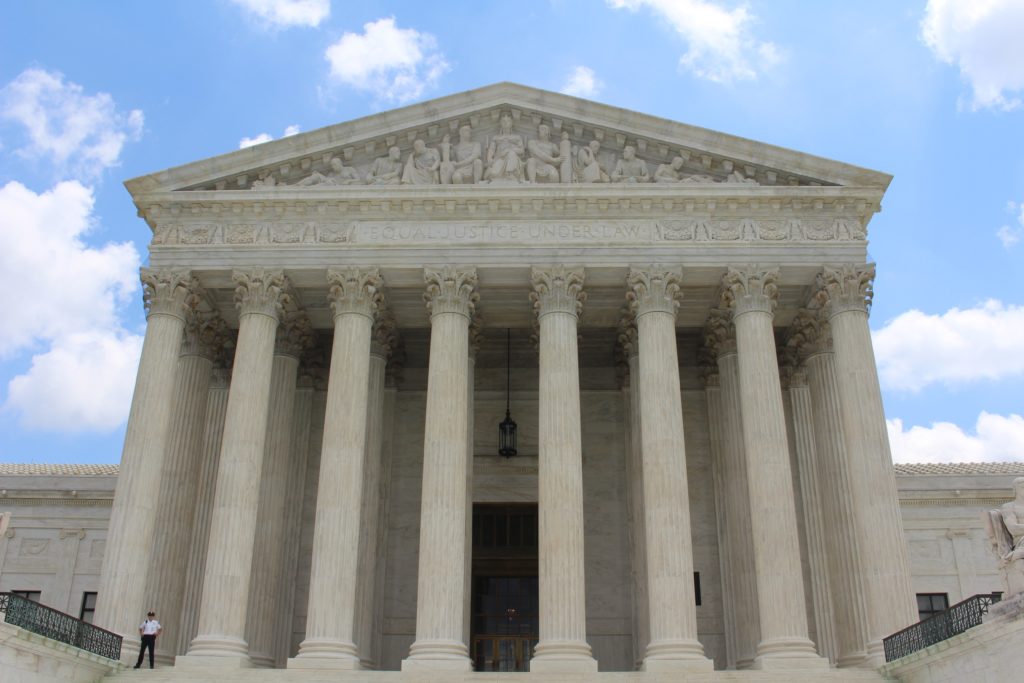
In yesterday’s post, the FEHBlog accurately predicted that the Supreme Court would decide today whether to stay the OSHA ETS vaccination screening program and end the partial stay on the CMS healthcare worker vaccination mandate.

This afternoon, the Supreme Court issued its decision reinstating the nationwide stay of the OSHA ETS and its companion decision ending all stays on the CMS mandate. The decisions came down as many, many pundits predicted.

The Secretary of Labor who oversees OSHA commented that

“We urge all employers to require workers to get vaccinated or tested weekly to most effectively fight this deadly virus in the workplace. Employers are responsible for the safety of their workers on the job, and OSHA has comprehensive COVID-19 guidance to help them uphold their obligation. 

“Regardless of the ultimate outcome of these proceedings, OSHA will do everything in its existing authority to hold businesses accountable for protecting workers, including under the Covid-19 National Emphasis Program and General Duty Clause.”

In the OSHA ETS decision, the Supreme Court expressed the key point of administrative law on which the two cases turned:

Administrative agencies are creatures of statute. They accordingly possess only the authority that Congress has provided.

The Court reasoned that Congress had granted CMS the necessary authority to issue its broad mandate but had not granted OSHA the same level of authority.

The cases now return to the courts of appeal for a decision on the merits — 6th Circuit for the OSHA ETS case and 5th Circuit for the CMS mandate case. In the meantime the Court’s decisions on the stays will remain in place.

Given how the Court handled these stay decisions, we have a pretty good idea where the Supreme Court will land should either of those merits decisions return to the Court.Such a return likely only will happen if either appellate court disagrees with the Court’s administrative law conclusion on the merits.

In that regard, Bloomberg Law reports that

The Justice Department will appeal a Louisiana federal court’s ruling that blocked President Joe Biden‘s order for government-contractor workers to get the Covid-19 vaccine. 

The U.S. Court of Appeals for the Fifth Circuit will be the third federal appeals court to consider a challenge to the measure. A coalition of three states—Louisiana, Mississippi, and Indiana—sought to block the mandate for companies that do business with the federal government. U.S. District Court Judge Dee Drell of the Western District of Louisiana granted a preliminary injunction in December. 

The federal contractor mandate—which won’t be enforced while litigation proceeds—would apply to roughly a quarter of the U.S. workforce, and affect businesses including Lockheed Martin Corp., Microsoft Corp., Alphabet Inc.‘s Google, and General Motors Co.

Appeals are ongoing in the Eleventh and Sixth circuits, respectively, over a nationwide injunction against the measure from a Georgia federal court and a narrower one from a Kentucky federal judge for a coalition that includes Ohio and Tennessee. A Missouri federal court also blocked the executive order, but that ruling has yet to be appealed.

From the Omicron front, David Leonhardt writing in today’s New York Times cautiously senses that the Omicron surge is cresting in our country following Europe’s and South Africa’s leads. “To be clear, the current emergency is not on the verge of ending. Cases appear to be peaking only in places where Omicron arrived early, mostly in the Northeast. In much of the country, cases are still soaring.”

From the Covid vaccine front, the AP reports that

Distrust, misinformation and delays because of the holidays and bad weather have combined to produce what authorities say are alarmingly low COVID-19 vaccination rates in U.S. children ages 5 to 11.

As of Tuesday, just over 17% were fully vaccinated, more than two months after shots became available to the age group. While Vermont is at 48%, California is just shy of 19% and Mississippi is at only 5%.

Vaccinations among the elementary school set surged after the shots were introduced in the fall, but the numbers have crept up slowly since then, and omicron’s explosive spread appears to have had little effect.

The low rates are “very disturbing,” said Dr. Robert Murphy, executive director for the Institute for Global Health at Northwestern University’s Feinberg School of Medicine. “It’s just amazing.”

Parents who hesitate “are taking an enormous risk and continuing to fuel the pandemic,” Murphy said.

From the telehealth front, STAT News informs us that

A handful of virtual care companies are inking new types of contracts that reward them for keeping patients’ cost low and penalize them for overspending — a model known as risk-sharing. It’s a departure from the traditional “fee-for-service” billing process, and a move  companies hope could help them get paid for the services they offer in addition to virtual doctors’ appointments, like in-app messaging, medication reminders, and digital health coaching. They’re also betting that embracing risk could endear them to the health plans and employers they depend on for contracts.

Execs from companies like Heartbeat Health and Teladoc say they’re in the very early stages of cementing these contracts. While there’s no clear roadmap for how to structure them, whether they take hold could clarify how virtual care will fit into the brick-and-mortar healthcare system and incentivize those companies to work with traditional providers on prevention, said Jennifer Goldsack, CEO of the Digital Medicine Society. “There is an opportunity to reimagine what health care looks like when it is around the patient,” she told Mohana. Read the full story. 

From the healthcare cost front, STAT News tells us that

— Medical cost growth trailed that of other industries in 2021, though rising pressure from the omicron variant could fuel future increases in healthcare costs.

— Prices for goods and services skyrocketed at the fastest pace in four decades, rising 7% between December 2020 and December 2021, according to new data released Wednesday from the Bureau of Labor Statistics.

— By comparison, prices for healthcare services rose roughly 2.5% last year, while the cost of medical care goods rose just 0.4%. However, that slow rate of growth could accelerate as COVID-19 cases persist in 2022 and beyond.

From the miscellany department —

  • The Agency for Healthcare Quality and Research’s Acting Director Dr. David Meyers looks back at 2021.
  • Biopharma Dive considers five questions facing gene therapy in 2022.
  • Fierce Healthcare notes that

As the healthcare system faces significant labor challenges, a new report suggests pharmacists are well positioned to fill some of the critical gaps.

The analysis, conducted by Express Scripts and the Columbia University Mailman School of Public Health, found that a majority of pharmacists see their roles transitioning to more direct patient care responsibilities over the next decade.

  • AARP’s Public Policy Institute examines the importance of medication literacy in the medication decision-making of older adults.

While health literacy is widely understood as a quality measure of health care decision making, another related measure calls for increased attention, particularly regarding older adults: medication literacy. Medication literacy is the degree to which individuals can obtain, comprehend, communicate, calculate, and process patient-specific information about their medications to make informed medication and health decisions in order to safely and effectively use their medications, regardless of the mode by which the content by which the content is delivered (i.e., written, oral, or visual).

  • Money offers a comprehensive update on the President’s mandate that health plans cover over the counter COVID tests effective on Saturday January 15.

Midweek update

From the Omicron front, Roll Call reports that

The White House COVID-19 Response Team stopped short of announcing major changes to anticipated guidance surrounding masks and instead focused on changes to testing strategy on Wednesday.

Experts have been calling for the Centers for Disease Control and Prevention to update its mask guidance to recommend high-filtration masks such as N95s and KN95s in light of the surge of the omicron variant. * * *

CDC Director Rochelle Walensky also echoed that an update to the CDC’s mask guidance was coming to “best reflect the options that are available to people, as you note, and the different levels of protection different masks provide.”

But she also doubled down on refusing to endorse a certain type of mask, instead repeating that the “best” masks are those that individuals will wear continuously in indoor settings.

“We are updating information on our mask website to provide information to the public,” she said. “We will provide information on improved filtration that occurs with other masks, such as N95s, and information that the public needs about how to make a choice of which mask is the right one for them. But most importantly, we want to highlight the best mask for you is the one that you can wear comfortably.”

For context, Bloomberg tells us that

The omicron variant represents about 98% of cases, Centers for Disease Control and Prevention Director Rochelle Walensky said Tuesday. That number is based on data for the week ending Jan. 8 and is a significant increase from just two weeks prior, when omicron accounted for 71.3% of cases. 

Omicron’s heightened transmissibility coupled with the immunity some have built to combat the delta through vaccination and exposure, have made conditions favor the “more mild” variant, said David Wohl, a professor at the Institute of Global Health and Infectious Diseases at the University of North Carolina-Chapel Hill. But experts warn that for those who remain unvaccinated or who suffer from other health concerns, infection from any Covid-19 variant is a major concern. 

For even additional context, Bloomberg informs us that

Switzerland joined Spain and the U.K. in suggesting that the coronavirus pandemic may be shifting to an endemic phase. 

From the COVID vaccine front, Bloomberg reports that

Almost all teenagers who needed intensive care for Covid-19 were unvaccinated, according to a study published by the New England Journal of Medicine, bolstering the case for using the Pfizer-BioNTech shot in youths.

The vaccine prevented 98% of ICU visits and 94% of Covid-related hospitalizations in the real-world study of more than 1,000 adolescents ages 12 to 18 in 23 states. The research from the Centers for Disease Control and Prevention and a network of 31 hospitals is one is one of the most detailed yet showing that vaccines can prevent severe Covid complications in teenagers.

Following up on yesterday’s proposed national Medicare coverage determination on Aduhelm, Healthcare Finance News provides stakeholder perspectives on that decision. STAT News points out that because the CMS decision, if finalized would apply to all drugs under development to treat Alzheimers Disease that fall into the same drug class as Aduhelm — monoclonal antibody, the proposed decision is bad news for several of Biogen’s competitors too.

Both Eli Lilly and Roche have such treatments in the works, and Biogen has still two more, developed in partnership with Eisai, as well. All of those drug makers now have a big incentive to pressure Medicare to loosen the restrictions in the final version of its policy, which is due out this April.

“While so much of the focus has been on what this means for [the Biogen drug], this recommendation impacts an entire class of drug and is likely to result in a more aligned effort by stakeholders as they try to influence the final version,” said a consultant for different drug makers, including Biogen.

“All of the other companies have to start over,” said George Vradenburg, the founder of the advocacy group UsAgainstAlzheimer’s. “This now applies to three drugs that, in fact, might be better.”

In other healthcare news —

  • Fierce Healthcare reports on the third day of the JPMorgan Healthcare Conference.
  • Health Affairs discusses how to create a stronger Medicare.
  • The director of NIH’s Heal Inititiative which focuses on substance use disorders / overdose deaths offers her ideas on the new year.
  • Forbes reports that “Walgreens Boots Alliance will have more than 160 of its doctor-staffed Village Medical clinics open next to drugstores by the end of this year.”

In Postal Service news, Govexec reports that

The U.S. Postal Service on Wednesday elected a new Republican chairman of its governing board, elevating one of President Trump’s appointees over President Biden’s picks.  

Roman Martinez, who joined the USPS board of governors in 2019, will serve as the panel’s 25th chairman. Anton Hajjar, a former American Postal Workers Union official nominated to his post by Biden, will serve as vice chairman. The board members voted unanimously for the leadership positions at a meeting on Wednesday. * * *

The new chairman has been an ally of Postmaster General Louis DeJoy, defending his controversial decisions, endorsing his 10-year plan to improve postal finances through, among other things, service cuts and price hikes, and calling him the right leader for the Postal Service. Hajjar, meanwhile, has voiced a lukewarm response to DeJoy’s tenure. The new vice chairman has said, however, that there was “a lot to like” in DeJoy’s plan, despite having reservations over some provisions.  * * *

DeJoy said on Wednesday he has “benefited from Martinez’s broad experience and wise counsel throughout my tenure as postmaster general and especially during the development of the Delivering for America plan.”

Keeping DeJoy in charge and one of his allies in charge of the board raises the prospect for sweeping postal reform legislation to make its way through Congress, with a House bill so far earning only tepid Republican support. 

It’s worth noting too that at 10 am ET tomorrow the U.S. Supreme Court will release decisions in pending cases which could include a stay of the OSHA ETS as OSHA began the enforcement clock on that measure last Monday.

Tuesday’s Tidbits

Photo by Patrick Fore on Unsplash

The Centers for Medicare and Medicaid Services (CMS) announced its proposed national coverage decision for Biogen’s Alzheimers Disease FDA-approved treatment, Aduhelm, today.

The proposed National Coverage Determination would cover Food and Drug Administration (FDA) approved monoclonal antibodies that target amyloid for the treatment of Alzheimer’s disease through coverage with evidence development (CED) – which means that FDA-approved drugs in this class would be covered for people with Medicare only if they are enrolled in qualifying clinical trials. The proposed National Coverage Determination is open to public comment for 30 days.

STAT News sums it up as follows:

Normally, Medicare covers drugs if the FDA approves them. Aduhelm has been different because the agency approved the treatment without a guarantee that patients actually will see slower cognitive decline. The process that led to the drug’s approval is the subject of multiple investigations, following STAT’s reporting that Biogen had an extensive back-channel relationship with the FDA. * * *

Medicare officials don’t require participation in clinical studies for beneficiaries very often — there are only about two dozen other health care products with a similar designation, called a Coverage with Evidence Development (CED), listed on Medicare’s website. Most are for medical devices or diagnostic imaging, and are less restrictive than the policy Medicare announced Tuesday. * * *

Sean Tunis, a principal at Rubix Health who helped develop the CED process during his tenure at the Centers for Medicare and Medicaid Services, said the proposal is almost as restrictive as if Medicare had decided not to cover the drug at all. Medicare, he estimated, would pay for drug costs for perhaps a few thousand patients that enroll in randomized trials over the next three to five years.

The CMS national coverage decision if finalized would help the FEHB Program dodge a bullet because it has many annuitant enrollees without Medicare Part B and for whom the FEHB plan would be the primary Aduhelm payer.

Following up on yesterday’s post about Affordable Care Act FAQ 51 implementing the President’s mandate on health plans to cover over the counter COVID tests, the FEHBlog noticed the fourth FAQ in this section of FAQ 51 which reads as follows:

Q4: When providing coverage of OTC COVID-19 tests, are plans and issuers permitted to address suspected fraud and abuse?

Yes. As stated in FAQs Part 44, Q2, although the FFCRA prohibits medical management of coverage of COVID-19 diagnostic testing, plans and issuers may act to prevent, detect, and address fraud and abuse. Examples of permissible activities include the following:

  • A plan or issuer may take reasonable steps to ensure that an OTC COVID-19 test for which a covered individual seeks coverage under the plan or coverage was purchased for the individual’s own personal use (or use by another participant, beneficiary, or enrollee who is covered under the plan or coverage as a member of the individual’s family), provided that such steps do not create significant barriers for participants, beneficiaries, and enrollees to obtain these tests. For example, a plan or issuer could require an attestation, such as a signature on a brief attestation document, that the OTC COVID-19 test was purchased by the participant, beneficiary, or enrollee for personal use, not for employment purposes, has not been (and will not be) reimbursed by another source, and is not for resale. In contrast, the Departments are of the view that fraud and abuse programs that require an individual to submit multiple documents or involve numerous steps that unduly delay a participant’s, beneficiary’s, or enrollee’s access to, or reimbursement for, OTC COVID-19 tests are not reasonable.
  • A plan or issuer may require reasonable documentation of proof of purchase with a claim for reimbursement for the cost of an OTC COVID-19 test. Examples of such documentation could include the UPC code for the OTC COVID-19 test to verify that the item is one for which coverage is required under section 6001 of FFCRA, and/or a receipt from the seller of the test, documenting the date of purchase and the price of the OTC COVID-19 test.

It occurred to the FEHBlog that FSAFeds the flexible spending account program for federal employees must be reimbursing participants for OTC Covid test kits. In fact the FSAFeds does offer reimbursement for OTC test kits on the condition that the participant furnishes a detailed receipt. For OTC products, FSAFeds generally requires a receipt including Vendor name, Date of purchase, Product name, and Cost. This should be a reasonable documentation standard for FEHB plans to adopt.

Also from the testing front, the Wall Street Journal looks into the reliability of rapid antigen COVID tests sold OTC.

Rapid antigen tests are a useful tool if we are smart about how we use them.

Because the data suggest that rapid tests may be yielding more false negatives at the beginning of an Omicron infection, you’ll have a better chance of getting an accurate result if you wait a day or two after developing symptoms to test, says Katelyn Jetelina, assistant professor of epidemiology at the University of Texas Health Science Center at Houston. If your test is negative, take a second test a day or two later, or get a PCR test if you can. (Easier said than done these days.)

Understand the limitations of rapid tests if you’re considering using them to screen people before gatherings. Rapid tests before a wedding or other large indoor gathering could miss early infections that could be contagious, Dr. [Blythe] Adamson says.

If you have a positive rapid test, you almost definitely have Covid-19, Dr. [Gigi] Gronvall says. False positives are rare, especially when case rates are as high as they are now. You likely don’t need to confirm a positive rapid-test result with a follow-up PCR test, unless an employer or other institution requires it.

In other Omicron news —

  • The Journal also tells us that “U.S. officials on Tuesday ordered 600,000 doses of Covid-19 treatment sotrovimab, the only monoclonal antibody therapy thought to work against the Omicron variant, as a record number of cases puts hospitals under increasing pressure in parts of the U.S. and Europe.  Sotrovimab, made by GlaxoSmithKline PLC and Vir Biotechnology Inc., is now the only Covid-19 monoclonal antibody available for patients in the U.S.”

ACA FAQ 51 also includes reminders to health plans about the wide scope of the ACA’s contraceptive mandate.

From the federal employee COVID vaccination front Federal News Network reports that

The first update by the Safer Federal Workforce task force in more than a month is addressing the challenge of testing employees and contractors who work on-site or with the public on a regular basis for COVID-19, the types of tests that are permitted and who is responsible for paying for said tests.

The crux of the updated and new frequently ask questions is agencies have until Feb. 15 to set up a testing program “for employees who are not fully vaccinated, including due to a pending or approved request for exception or extension from the COVID-19 vaccination requirement for federal employees.”

The task force said the testing program is only for employees who work on-site or interact with the public like safety inspectors, and not for those who work remotely.

Fedweek adds that “A period of waiting is continuing on two major federal workplace issues on which action was expected around now—enforcement of the Coronavirus vaccine mandate and the “reentry” from telework to regular worksites by more employees and for more often.”

From the preventive services department, the Department of Health and Human Services announced today that

Today, the U.S. Department of Health & Human Services (HHS) announced that the Health Resources and Services Administration (HRSA) has updated comprehensive preventive care and screening guidelines for women and for infants, children, and adolescents. Under the Affordable Care Act (ACA), certain group health plans and insurance issuers must provide coverage with no out-of-pocket cost for preventive health services within these HRSA-supported comprehensive guidelines. Among a number of updates, for the first time the guidelines will require such group health plans and insurance plans to provide coverage without a co-pay or deductible for double electric breast pumps.

Fierce Healthcare reports news from the second day of the JPMorgan Healthcare Conference.

From the tidbits department —

  • Last week, the Office of National Coordinator for Health Information Technology announced “the release of the Project US@ (“Project USA”) Technical Specification Final Version 1.0 and thereby completed our one year goal to coordinate the creation of a health care specification that could be used across the industry for representing patient addresses (mailing, physical, billing, etc.). This new “tech spec” will advance the health care industry’s proficiency in recording and managing accurate and consistently formatted patient addresses and support more efficient patient matching and record linkage. As a reminder, among the many data elements that are used in patient matching, research has shown patient address to be one of the most sensitive to standardization and therefore impactful on patient matching, especially at scale. However, patient addresses change frequently, are often entered incorrectly or imprecisely.”

Monday Roundup

Photo by Sven Read on Unsplash

From the Omicron front, the Labor Department’s Employee Benefit Security Administration has released guidance for health plans and the Centers for Medicare and Medicaid Services has released guidance for consumers on the President’s mandate that health plans cover over the counter COVID tests for their members.

Basically, under this mandate guidance, if a health plan offers its members an online program to obtain the OTC Covid tests at no cost (for the test or shipping), then the plan can limit out of network reimbursement of OTC Covid tests to the lesser of the actual price or $12 per test. (Binax and Quickvue include two tests in a package. Consequently the maximum reimbursement for one package would be $24.)  

If a health plan plan does not offer such an online program, then it must reimburse member claims in full. (There is an section in the EBSA guidance on FWA issues.)

The guidance also allows the health plan to limit coverage of OTC Covid tests to eight tests per member / belly button per month.

The mandate takes effect this coming Saturday January 15. That’s not a lot of time for implementation. Also, in this regard, ECRI has issued a report on the usability of COVID at home antigen test kits.

On the COVID vaccine front, Medscape informs us that

The FDA on Friday shortened the time that people who received Moderna’s COVID-19 vaccine need to wait for a booster — from 6 months to 5 months.

That means Americans 18 years old and older who received their second shot of the two-dose Moderna vaccine at least 5 months ago can now get a third dose.

“The country is in the middle of a wave of the highly contagious Omicron variant, which spreads more rapidly than the original SARS-CoV-2 virus and other variants that have emerged,” Peter Marks, MD, director of the FDA’s Center for Biologics Evaluation and Research, said in a statement. * * *

On Friday afternoon, Rochelle Walensky, MD, the director of the CDC, said she also approved of shortening the timeline for the Moderna booster dose, according to CNN. The CDC’s vaccine advisory committee recommended the FDA’s decision, and she signed off on it.

Last Wednesday, the government authorities approved the same six to five month reduction for the Pfizer vaccine.

Medscape adds that

Some Americans with a weakened immune system who face high risks for severe COVID-19 become eligible this week to receive a fourth dose of a coronavirus vaccine.

The CDC endorsed a third dose of the Pfizer or Moderna vaccines for moderately and severely immunocompromised people on Aug. 13, which is considered part of their first immunization series rather than a booster shot.

In October, the CDC said moderately and severely immunocompromised people could receive a booster shot, or a fourth dose of the vaccine, 6 months after their third dose.

But the CDC last week shortened the timeline to 5 months for a booster shot of the Pfizer or Moderna vaccines. That means immunocompromised people could begin signing up for a fourth shot later this week,  The New York Times reported.   

Bloomberg reports that

Pfizer Inc. is developing a hybrid vaccine that combines its original shot with a formulation that shields against the highly transmissible omicron variant, the drug giant’s top executive said. 

While research continues, Pfizer will evaluate the new hybrid formulation against an omicron-specific shot, and determine which is best suited to move forward by March, Chief Executive Officer Albert Bourla said at the JPMorgan Healthcare Conference on Monday. Pfizer will be ready in March to approach U.S. regulators for clearance of the modified vaccine and bring it to market, and it has already begun production, Bourla said.

Speaking of the JPMorgan Healthcare conference, being held this week, Fierce Healthcare offers a full report on other news from that event from earlier today.

Also, the FEHBlog suggests that his readers check out this week’s episode of Econtalk in which host Russ Roberts chats with Wall Street Journal reporter Greg Zuckerman about his recent book on the development of the COVID vaccines.

From the COVID treatment front, Bloomberg reports that

U.S. regulators may decide within a week or two whether to approve a shorter course of Gilead Sciences Inc.’s Covid-19 drug remdesivir that could be used for patients outside the hospital, Chief Executive Officer Daniel O’Day said in an interview.

A five-day course of the infused drug is already a mainstay for hospitalized Covid patients. Gilead has applied for U.S. clearance of a three-day course that could be used in the outpatient setting, after a big trial last year showed it could sharply reduce hospitalizations in at-risk patients. * * * Officials at the U.S. Food and Drug Administration “are working really collaboratively with us, quickly with us,” O’Day said in the interview. “Everything is moving really fast.” * * *

An an infused drug, remdesivir is more complicated to administer than the Pfizer Inc. Covid pill Paxlovid. But Gilead has an abundance of supply on hand, O’Day said in the interview. By contrast, supplies of Pfizer’s drug are limited in the short term as the company ramps up supply. * * *

Meanwhile, O’Day said that Gilead is working hard to develop a chemical cousin of remdesivir that could be given as a pill. That oral drug is about to begin human trials. If it works, it could be combined with other drugs to treat Covid, he said.

In interesting Medicare news, Healthcare Dive explains that

HHS Secretary Xavier Becerra has instructed CMS to reassess its recommendation for Medicare premiums this year after Biogen cut the price for its controversial Alzheimer’s drug Aduhelm in half.

CMS in November published a historic 14.5% hike in monthly premiums for outpatient care in 2022 — the program’s largest premium increase ever. One of the factors regulators cited for the increase was uncertainty over the cost of Aduhelm, a new and pricey drug that has raised eyebrows for unclear effectiveness.

It’s an unusual step for HHS, given the plan year has already begun, and comes just days before a CMS deadline to issue a draft decision that will shape Aduhelm coverage nationwide.

Given Medicare’s shaky financial position, one wonders why the HHS Secretary is interested in turning away additional revenue.

STAT News adds

Biogen cut the price of Aduhelm nearly in half from $56,000 a year to $28,200 in December following disappointing sales, a price some still maintain is higher than necessary. Despite the pharma giant’s high hopes for the drug, other healthcare operators have proved less certain of its efficacy.

A number of health systems have said they wouldn’t prescribe the drug to patients. Meanwhile, most major payers are waiting on CMS to issue a national coverage determination before deciding whether to cover the expensive drug.

CMS is currently hammering out a single, nationwide policy for all amyloid-targeting treatments for Alzheimer’s, which purport to slow dementia by reducing clumps of plaque in the brain. * * *

Another major variable is which patients will be eligible to receive Aduhelm, which is still unknown. Medicare is scheduled to release a draft coverage decision that could make or break the drug’s future by Wednesday. Officials are not supposed to consider a drug’s cost in deciding whether to cover it for Medicare beneficiaries.

The final coverage decision, which is scheduled to be released by April 12, could cause significant changes in how much Aduhelm could cost the Medicare program, depending on how much patient access is restricted by diagnostic test results, which physicians could prescribe the drug or other limitations.

Weekend update

The House of Representatives convenes tomorrow for its second session of the 117th Congress. Both House and the Senate expect to engage in Committee business and floor votes this week.

The Wall Street Journal reports that the President has accepted the House Speaker’s invitation to give his State of the Union address on March 1. The date of the address was push back to March to avoid conflicting with the 2022 Winter Olympics, which will be held from February 4 to 24. Roll Call adds that the Administration plans to release the President’s Fiscal Year 2023 budget proposal following the State of the Union address.

From the Omicron front, NPR informs us that

Scientists at Case Western Reserve University have preliminary evidence that the risk of being admitted to the hospital or the intensive care unit during the omicron surge in the U.S. is about half of the risk observed during the delta surge. And this reflects what doctors across the country are now seeing firsthand with their patients. * * *

[A]s with any variant of SARS-CoV-2, your absolute risk depends on many factors, including whether you’re vaccinated and boosted, your age, your overall health and your economic situation.

“In the older age group, it’s still a nasty disease, even if it’s less [nasty] than the delta variant,” says Dr. Pamela Davis, who’s a pulmonologist at Case Western Reserve University and a senior author on the new study. “You don’t get off scot-free just because you happen to be infected in the time of omicron.”

As with previous variants, the vast majority of people infected with omicron have a mix of symptoms that resolve relatively quickly and don’t require hospital care. * * *

And doctors are finding many of these cases tend to look like an ordinary upper respiratory infection. In other words, what you think of as the common cold.

“It’s mostly that runny nose, sore throat and nasal congestion,” says Dr. John Vanchiere, the associate director of the Center for Emerging Viral Threats at LSU Health Shreveport. “The cough is milder [than previous variants], if there’s any cough at all, and fever seems to be a little less common.”

The New York Times discusses an increase in Omicron-related hospitalizations of children aged 4 and younger.

The number of hospitalized young children infected with the coronavirus rose precipitously last week to the highest levels since the beginning of the pandemic, according to data released on Friday by the Centers for Disease Control and Prevention.

The increase was observed in children who were 4 and younger, who are not eligible for vaccination, and the data included children who were admitted to hospitals for reasons other than Covid.

The rise may be partly explained by the surge of Omicron cases, which affects all populations, and the spread of other respiratory infections.

But the data do not show a similar steep rise in coronavirus infections among hospitalized children of other ages, and federal health officials were considering the possibility that Omicron may not be as mild in young children as it is older children.

According to the article the youngest among us are most at risk for upper respiratory infections such as Omicron.

“They’re smaller, their airways are smaller,” Dr. Kristin Oliver, a pediatrician at Mount Sinai Hospital in New York, said of young children.

“It does seem reasonable in a disease that if it looks like it’s affecting the upper airway more, that they would be more impacted,” she added. “They are more at risk for that — for longer, prolonged cases, as well as the hospitalization that can come along with a more severe case.”

That may explain why more hospitalized children aged 4 and younger have tested positive for the coronavirus throughout the pandemic than those 5 and older. It’s also why young children are more vulnerable to other pathogens, like respiratory syncytial virus, and to having the seal-like cough associated with croup.

Healthline summarizes the situation as follows:

A record number of children have recently been hospitalized with COVID-19. Still, health officials say many of these kids are not in the hospital because of COVID-19 but instead incidentally tested positive when admitted for other health issues. Still, due to the sheer volume of pediatric COVID-19 cases right now, children’s hospitals across the country are seeing an increase in kids being hospitalized for COVID-19. Severe illness in kids remains rare, and even hospitalized kids tend to recover well. Still, others require intravenous fluids, steroids, and antivirals. Doctors recommend that families mask up, avoid crowded spaces, and get all eligible kids vaccinated.

From the COVID testing front, PBS reports that

Starting Jan. 15, private insurers will be required to cover the cost of at-home testing, the same way they cover the cost of PCR lab tests. People will have the option of buying tests at a store or online, then seeking reimbursement from their health insurance provider. Those with public health insurance through Medicare or Medicaid, or without insurance, will be directed to the forthcoming website to order tests or to community health centers in their area offering free testing.

However, the FEHBlog sees this program as making a change to current testing coverage rules. According to ACA FAQ 44, a healthcare provider acting within the scope of his or her license must provide an individualized clinical assessment regarding COVID-19 diagnostic testing in order to obtain health plan coverage. The provision of such assessment can be demonstrated by the provider conducting the PCR test or referring the patient to a testing facility.

That individualized clinical assessment does not occur when a consumer decides on his or her own initiative to purchase a rapid at home antigen test kit. Indeed in ACA FAQ 44, the regulators stated that

Plans and issuers are not required to provide coverage of testing such as for public health surveillance or employment purposes. But there is also no prohibition or limitation on plans and issuers providing coverage for such tests.

Thus the new at home test coverage guidance expected this week may involve a material change to the current COVID testing coverage rule. In that event, you can expect a lawsuit challenging the mandate.

The FEHBlog also expected the guidance by January 15, not implementation by that date. The regulators have to allow an opportunity for insurer feedback and then implementing this new program. We shall see.

Cybersecurity Saturday

Health IT Security reports

As a new year begins, threat actors are continuing to overwhelm providers and patients with healthcare data breaches. Some experts predict that ransomware actors will favor data exfiltration over encryption this year and that they will shift their focus to APIs and other attack vectors in order to throw off victims.

Florida-based health system Broward Health recently suffered a protected health information (PHI) breach that impacted 1.3 million individuals. Meanwhile, other healthcare organizations are still recovering from a ransomware attack on HR management solutions vendor Kronos.

Many healthcare organizations are also focused on mitigating threats associated with the recently discovered Apache Log4j vulnerability, which could have catastrophic security implications for multiple sectors if exploited.

HHS urged healthcare organizations to implement the Log4j patch and ramp up incident response functions. Healthcare organizations should also remain wary of ransomware, phishing, and other prominent cyber threats that continue to impact organizations across all sectors.

The more things change, etc.

Cyberscoop adds that

The Federal Trade Commission Tuesday warned companies that if they fail to take action to remedy a major recent software vulnerability in open-source software tool Log4j, there could be legal repercussions.

“When vulnerabilities are discovered and exploited, it risks a loss or breach of personal information, financial loss, and other irreversible harms,” the agency warned. “It is critical that companies and their vendors relying on Log4j act now, in order to reduce the likelihood of harm to consumers, and to avoid FTC legal action.”

Log4j is ubiquitous in software used throughout the technology industry, and is found in products built by companies including Amazon, Google and Microsoft. The widespread use of such technology has made it difficult to identify potential victims. At the same time, the popularity has made it an easy target for a range of cybercriminals to exploit.

Cybersecurity Dive concludes

As U.S. industries and government agencies restart operations after the winter holiday break, security researchers are warning the impacts of the Log4j vulnerability will continue to leave organizations open to potential threats in the coming weeks and months. 

“Exploitation attempts and scanning remained high during the last weeks of December,” Microsoft said in an updated blog post. Attackers have added exploits to existing malware kits and tactics, ranging from coin miners to hands-on-keyboard attacks. 

The Apache Software Foundation released version 2.17.1 of Log4j last week, the latest in a series of updates since the vulnerability was disclosed in December. The newly released fix addresses the risk of remote code execution when an attacker with certain permissions can create a malicious configuration using a JDBC Appender, according to Apache. 

And it wouldn’t be a Cybersecurity Saturday post without offering a link to Bleeping Computer’s The Week in Ransomware.

Friday Stats and More

Based on the Centers for Disease Control’s COVID Data Tracker and using Thursday as the first day of the week, here is the FEHBlog chart of weekly new COVID cases for the end of June 2021 through the first week of 2022:

Omicron has produced a staggering number of new COVID cases while the number of weekly new COVID deaths has remained with a stable range for several months.

The Wall Street Journal offers an lab test based explanation for Omicron’s mild nature:

The threat posed by the Omicron variant has now come into sharper focus, with recent clinical data and laboratory studies lending support to early reports suggesting that it is milder but more transmissible than other variants of the new coronavirus.

“It spreads very, very fast, but it doesn’t appear to have the virulence or machismo to really pack as much of a wallop as the Alpha or Delta variants,” James Musser, chairman of Houston Methodist Hospital’s pathology and genomic medicine department and the leader of a new study of Omicron infections, said of the variant.

Recent laboratory studies suggest that Omicron’s lower virulence may reflect its apparent tendency to thrive in cells in the upper respiratory tract rather than in the lungs, where Covid-19 infections can cause potentially fatal breathing problems.

That’s a reassuring tidbit.

Here’s the FEHBlog’s weekly chart of COVID vaccinations from the 51st week of 2020 through the 1st week of 2022:

Throughout the holiday period the number of administered vaccinations averaged six million which is impressive. Nearly two thirds of Americans aged five years and older are fully vaccinated and half of Americans aged 50 and older also have received a booster.

Here are a link to the CDC’s interpretation of its COVID statistics and a link to the CDC’s Fluview.

From the Supreme Court front, the Wall Street Journal reports that

A majority of Supreme Court justices expressed skepticism Friday of the Biden administration’s Covid-19 vaccine-or-testing plan for large employers but somewhat less concern about a vaccination mandate for healthcare workers, in a special [four hour long] session that examined the scope of the federal government’s powers during a fast-moving pandemic.

The Court focused its attention whether the issuing agency has necessary authority to issue its broad mandate. The Court should issue a decision within a month. The Wall Street Journal adds

The Supreme Court took up the vaccine lawsuits with alacrity, acting shortly before Christmas to add a rare Friday argument to its docket, ahead of the year’s first scheduled cases. Some parts of the OSHA rules begin to take effect next week, though the agency is waiting until next month to enforce Covid-19 testing requirements. Several justices signaled the court would seek to rule quickly—and potentially could put the requirements for private employers on hold temporarily for at least a few days to give themselves time to digest the case.

From the Medicare front, the Centers for Medicare and Medicaid Services released a proposed rule with 2023 updates to the Medicare Advantage and Medicare Part D programs. Here are links to the CMS fact sheet and a Fierce Healthcare article on this development. Of note, Fierce Healthcare tells us that

The proposal takes a major aim at price concessions that Part D plans extract from drug makers, but does not affect rebates negotiated between drug makers and insurers. Under the concessions, the plan pays less money to a pharmacy if it doesn’t meet several metrics. CMS is concerned, however, that the end-user doesn’t know about the arrangement and the lower prices are not passed on at the point-of-sale.

The proposed rule also said that the negotiated prices “typically do not reflect any performance-based pharmacy price concessions that lower the price a sponsor ultimately pays for the drug.”

The proposed rule wants to require all Part D plans to apply the concessions at the pharmacy counter.

Fierce Healthcare also calls attention to the November 2020 Kaufmann Hall report on hospital service utilization.

Hospital volumes softened in November overall as operating margins remain depressed, signaling that once again consumers could be delaying or avoiding care due to the pandemic, a new report from consulting firm Kaufman Hall found.

The firm released Tuesday its latest hospital flash report detailing revenues and volumes for November before the omicron-fueled surge of COVID-19 took hold. The report found hospitals are still facing major pressures from rising expenses and labor shortages. * * *

Kaufman found that hospital volumes softened in November, with discharges dropping nearly 5% and adjusted discharges by 3.9% compared to the month before. Discharges were also down 6.1% compared with pre-pandemic levels.

Meanwhile, the average length of stay at hospitals increased by 0.8% compared to October and 8.6% compared with November 2019.

The report estimates consumers could be postponing non-COVID-19 care.  

“The potential impact of the omicron variant in future months may influence this trend further,” Kaufman’s analysis said.