TGIF

TGIF

The FEHBlog hopes that all of readers are enjoying Christmas week. The President signed the budget deal into law yesterday which means that FEHB plans will offer self only, self plus one and self and family coverage options for 2015.

The FEHBlog has read Federal News Radio and Washington Times articles about this development which seem to miss the point. For years creating a self plus option in the FEHBP was meaningless because the average family size was close to two people. In other words there would have been very little difference between the self plus one and the self and family premiums. Then along comes the Affordable Care Act which blew up the average family size by upping the child coverage age limit from 22 to 26 and removing all financial dependency requirements for child coverage under that new age limit. More adult children, more stepchildren, larger family size. So now that there is a meaningful gap between a self plus one and a self and family rate, Congress came along and implemented it.

Annuitants will be the major beneficiaries of the self plus one option. (Couples without children also could benefit but in those families both spouses often have their own employer sponsored coverage.)  Annuitant coverage is on budget which explains why Congress made this move as part of the budget deal. Federal employees who need family coverage will pay more but that’s the way our economy tends to work.

I did pick up from reading the Washington Times article that the Congressional Research Service had released a report on health benefits options available under the FEHBP. Here’s a link to that November 2013 report. The report reminds me that we recently observed the 10th anniversary of the Medicare Modernization Act of 2003 which created the high deductible plan with health savings account option that is available in the FEHBP.

The FEHBlog also ran across this Unitedhealth Foundation funded annual report on America’s Health Rankings. The report provides a state by state snapshot of U.S. healthcare. The report, for example, ranks each state based on obesity, diabetes, smoking and physical inactivity. The report includes a special section on seniors Very cool.

Finally, the Federal Times confirms that “Most federal employees are now officially assured of their first
across-the-board pay raise in four years following an executive order by
President Obama to implement the 1 percent increase next month.” Here’s a link to the Executive Order.

Monday Musings

The FEHBlog missed the weekend update because yesterday was the FEHBlog’s birthday. Yesterday, he received the following birthday message from ESPN — may your favorite team not suffer a humiliating defeat today. And the Redskins just lost — it wasn’t a humiliating defeat like the loss to the Kansas City Chiefs a couple of week ago. In any event, the FEHBlog had a nice weekend.

Congress is in recess for the rest of the year after the Senate passed and sent to the President a national defense authorization act for the current fiscal year. The Federal Times reports that the new law includes “prohibitions against any fee increases for Tricare or new user fees for the military health program by more than 1.7 percent next October.”

The Centers for Disease Control and Prevention (“CDC”) listed their top five 2013 accomplishments and their top fve 2014 concerns. The CDCs credits its Tips from Former Smokers Campaign for exceeding the agency’s goals for reducing tobacco use. The CDC also touted its Million Hearts campaign. OPM encourages FEHBP carriers to support these initiatives.

Finally, Kaiser Health News reports that the Centers for Medicare and Medicaid Services (“CMS”) has started publishing how well patients fared after hip and knee replacement surgeries. CMS identified 95 stars and 97 laggards.

TGIF

Well, we really are hurtling toward the holidays now. Congress has completed its work for this year, according to the Hill’s Floor Action blog. The Hill also reports that yesterday the Treasury Secretary sent a letter to Congress warning that extraordinary measures to extend the debt ceiling will be exhausted only a month or so after the current suspension of the debt ceiling ends on February 7, 2014.

Speaking of finances, OPM has posted its audited financial statements for the fiscal year ended September 30, 2013.  This report also includes OPM’s discussion of its strategic goals. its annual improper payments report, and the Inspector General’s recommendations to management. In a spot of good news, the Inspector General notes in his portion of the report (p. 106) that  “The rate of improper payments in the FEHBP [which the FEHBlog notes already was low] trended down in FY 2013.”

Federal News Radio reports that the new OPM Director Katherine Archuleta has been making appointments at her agency.  Of interest from an FEHBP perspective,

Chuck Grimes, the former COO, will shift to the Healthcare and Insurance
operation, where he’ll serve as deputy director, a role that was previously
vacant. In addition, OPM has hired Donna Seymour, former deputy chief human capital officer for the Defense Department, to serve as the agency’s chief information officer.  Kamala Vasagam, who previously served as special assistant to the president for
presidential personnel, takes over as OPM’s general counsel. The Senate confirmed
Elaine Kaplan, the agency’s former chief lawyer, to a spot on the U.S .Court of
Federal Claims last month. 

The Government Accountability Office released a report on OPM’s oversight of FEHBP plan carrier anti-fraud and abuse programs. Carriers have plenty of incentive to maintain sound programs because they hold the insurance risk. In any event, GAO had no recommendations on how to improve OPM’s processes which are described in the report.

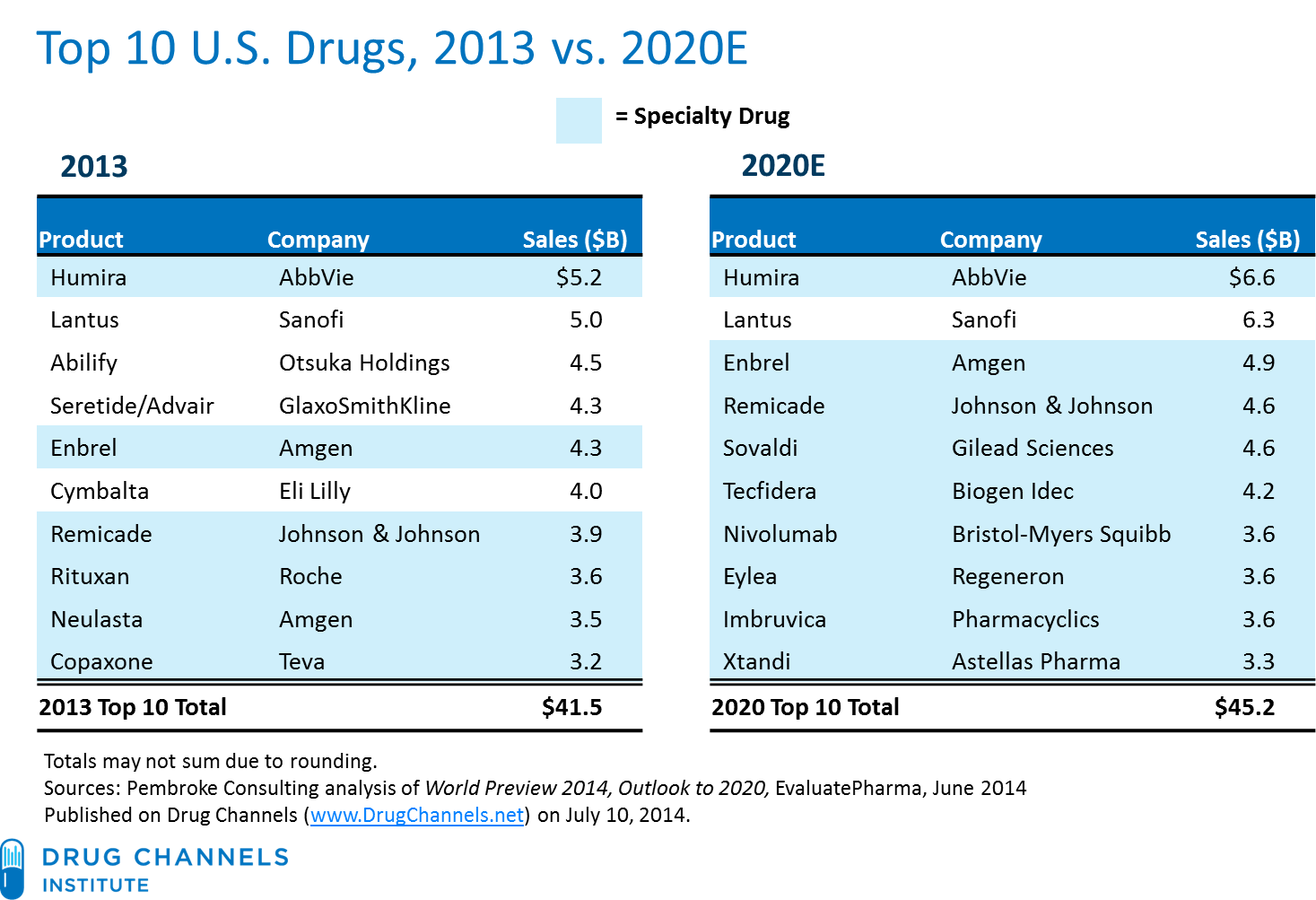
The Drug Channels blog  pointed the FEHBlog to the Pharmacy Benefit Management Institutes’s 2013-14 Prescription Drug Cosr and Plan Design Report, which is available here by registering for access.  Dug Channels explains that

the PBMI report offers the only public benchmarking data on manufacturer rebates to pharmacy benefit managers (PBMs). A few highlights:
    Employers use a wide variety of rebate structures, including per-prescription guarantees and percentage shares. Nearly one-third of smaller employers get no rebates.
    Rebates average $17 per 30-day brand-name retail prescriptions. Surprisingly, rebates were comparable for both large and small employers.

OPM requires that PBMs credit all such manufacturers rebates to experienced rated FEHB plans.

Mid-week update

The Federal Times and Govexec.com report on the Federal Workplace Survey which places NASA as the top ranked federal government employer. Govexec.com reports that

The study found that just one-quarter of agencies improved or held steady on their scores from 2012, while an overwhelming 75 percent declined. Last year, only two-thirds of agencies dipped from their 2011 scores. A major driver of the falling ratings was traced back to decreasing pay satisfaction, the study found. 

The Senate is still working on approving the budget deal. Mike Causey has a column criticizing the budget’s deal’s provision to add a self plus one option to the FEHBP. As the FEHBlog pointed out a week or so ago, there will be a price difference between self and one and self and family because the ACA’s increase in the age limit for covered children from 22 to 26 increased the FEHBP’s average family size. CBO expects that the self and one rate will benefit annuitants and the annuitant costs are on budget. The change will increase costs for active employees with the larger families whose costs are in general appropriations. It works for FEDVIP, and it should not work for the FEHBP.

Government HIT reports that the WEDI trade association is concerned that

approximately 80 percent of participants will not even have
completed their business changes or begun [ICD-10] testing prior to 2014. Whereas
only 40 percent of payers, formerly seen as the first movers of ICD-10,
have yet to conduct an impact assessment. And about half of providers
have completed that impact assessment, among the initial steps on
recommended timelines.

The ICD-10 compliance date is just less than 10 months away. The FEHBlog bought a copy of the ICD-10 recently and certainly agrees with the American Medical Association that switching from the ICD-9 to the ICD-10 with it ginormous increase in diagnosis codes is nuts, but it’s just another impending ACA train wreck.  The transaction and code set requirements of HIPAA should be repealed in favor of letting the industry handle it. But that’s not going to happen before October 1, 2014.

Weekend update

The Federal Benefits Open Season has been over for almost a week, and the House has gone into recess until the new year. The Hill’s Floor Action blog reports that this coming week the Senate will take up the budget deal bill and the defense authorization bill, both of which have been approved by the House. The holidays are drawing near.

Santa finally came through for federal employees.  The Federal Times reports that federal employees (except for blue collar workers) will receive a 1% increase in base pay but not locality pay for 2014 after three years of pay freezes.

Modern Healthcare reports — contrary to the FEHBlog’s optimism — that the lame duck session bound to occur next year may be the most likely time that Congress repeals and replaces Medicare Part B’s sustainable rate of growth formula (discussed in Thursday’s post).

Finally, here are a couple of bits of potpourri. Buck Consultants released a survey finding the consumer driven plans do produce better healthcare consumers.

HSA members are responsible for a greater portion of their health costs, so they expect tools to help them make informed, rational decisions. When ranking important HSA product features, 44 percent of respondents ranked the ability to view claims on the HSA site as most important. They ranked paying medical claims on the HSA member portal second at 35 percent.

The second place finisher is unexpected. That feature must please the providers too. And AHIP published another report on the efforts to health insurers to improve healthcare literacy which is a key part of the process of creating better healthcare consumers.  

Big News!

(The FEHBlog wrote this on Wednesday but it for some reason did not get onto the blog until Thursday.) The budget deal that House and Senate leadership reached yesterday will authorize OPM, when enacted into law probably next week, to create a self plus one coverage option for the FEHBP.  See the last line in this House Budget Committee summary. The change is made by Section 706 of the proposed legislation (p. 74).

Historically, OPM held the view that self plus one coverage would cost virtually the same as self and family coverage because of the relatively average small family size that the FEHBP experienced before Congress increased the dependent child eligibility age limit to 26 as part of the ACA.

OPM recently reevaluated this issue and proposed that Congress add a self plus one option to the FEHBP last Spring. The Congressional Budget Office finds that this change will create savings for the government. In a report issued today, CBO explains that

Section 706 would add a two-person “self plus one” coverage option for federal
employees and retirees under the Federal Employees Health Benefits (FEHB)
program. CBO estimates that option would be priced below the “self plus family”
option currently available. However, the “self plus family” option would become
more costly than under current law because the average number of people covered
by policies of that type would rise. CBO expects that federal retirees would be more
likely than active federal employees to switch to “self plus one” policies. As a
result, the average cost of FEHB policies for federal retirees would be lower than
under current law, and the average cost of FEHB policies for active federal
employees would be higher than under current law.

The provision would reduce direct spending because the government contribution
for health benefits for federal retirees is classified as direct spending. On the other
hand, implementing the provision would increase spending subject to appropriation,
assuming appropriation of the necessary funds, because the government
contribution for health benefits for active federal employees is classified as
discretionary spending

As it’s quite likely that this bill will become law, the change will go into effect for 2015.

Thursday Update

The budget resolution bill remains on track for passage. According to California Healthline, the bill in addition to adding a self plus option to the FEHBP as discussed in yesterday’s post also would give Congress three more months to replace the defective statutory sustainable rate of growth formula used to set Medicare Part B reimbursement rates for doctors. That’s a relief for FEHBP carriers who have to coordinate benefits with Medicare Part B for thousands of enrollees and also use the Medicare Part B reimbursement schedule to pay doctors for annuitants without Medicare Part B (5 USC § 8904(b)).  LifeHealth Pro reports that both the Senate Finance Committee and the House Ways and Means Committee met today about the SRG replacement bill now under discussion (HR 2810).

Last Sunday, the FEHBlog noted a Washington Post article about Genentech manipulation of FDA labelling rules to boost profits. It is illegal for drug manufacturers to promote the off label uses of their drugs. (According to the Post, Genentech refuses to seek a labelling change for a cheaper drug that serves the same purpose as a much more expensive drug in its portfolio.)  On Monday, according to a Reuters report, the Supreme Court refused to hear a drug manufacturer’s appeals against a health plan which had obtained a federal racketeeting verdict against that manufacturer Pfizer. The health plan used Pfizer’s offlabel marketing of one of its prescription drugs to form the predicate acts for the RICO claim which carries treble damages. Other health insurers are lining up to file similar suits. Good for them.

PwC’s Health Research Institute has released its list of top 10 health industry issues for 2014.  The headline is encouraging –“Consumers tell HRI they do not believe expensive medical treatment means better quality.” To that end, the FEHBlog noticed this interesting Uwe Reihardt column in today’s New York Times on the topic of health care transparency.  The column notes that

a three-day conference [recently was held] in Washington, funded by the Robert Wood Johnson Foundation and a large number of other sponsors, under the theme “Health Care Price, Cost and Quality Transparency.” Slides of most of the many illuminating presentations featured at the conference are available to the public (click on “faculty materials”).

Weekend Update

Well, tomorrow is the last day of this year’s Federal Benefits Open Season, and Monday also begins the last week in which both Houses of Congress are in session for this calendar year. According to the Hill’s floor action blog, Congress has a lot on its plate. including a budget deal and a short term or long term fix to the Medicare sustainable growth rate formula.

The FEHBlog, being an old guy, still likes to read the Sunday newspapers and here are three interesting articles that he noted:

  • From the Washington Post (lead article in fact), a story about how a pharmaceutical manufacturer Genentech and doctors take advantage of the Medicare and Food and Drug laws to charge Medicare an extra billion dollars annually for dispensing a $2000 per injection drug when its $50 per injection cousin (made by the same company) is equally effective. The article also illustrates how off label use can be driven by the drug manufacturers who refuse to seek FDA approval for a particular use because a more expensive drug is already labelled for that use. 
  • The FEHBlog recently wrote about the expansion of concierge medicine to folks who live below the upper 1% income level. The New York Times has an article today about two doctors who are establishing an old school Park Avenue concierge medical practice ($25000 annual retainer — 400 patients). These doctors are willing to hold a patient’s toe during a difficult MRI. I wish that I could make this up. 
  • Finally, the New York Times business section lead with a story about how the British government is putting to effective use a book called Nudge that was written a few year ago by two U.S. academics, Richard Thaler and Cass Sunstein, who was head of OIRA in OMB during the current administration. The article discusses how the British government is using behavioral psychology to successfully encourage people to find jobs and pay their taxes and fines. “In their book, Professor Thaler and Mr. Sunstein defined their approach as steering people toward decisions deemed superior by the government but leaving them free to choose. “Libertarian paternalism,” they called it, and while that term is not used much in Britain, there is broad agreement on the subject among the left and the right.” Health plans try to nudge people; maybe there are more effective ways to do it. 
The FEHBlog noted last week about a government Tiger Team that is discouraging a technological grounds the idea to require electronic health records to generate access reports. The happy bounce of this ball for health plans is that the Tiger Team report may discourage the Health and Human Services Department from finalizing a rather wacky 2011 proposed rule that would have required health plans and providers to keep track of routine uses and disclosures of claims and medical records. HIPAA refers to these uses and disclosures as treatment, payment, and health care operations related. As it stands the law requires that non-routine uses and disclosures be accounted for upon request. That approach has worked for a decade and hopefully the Tiger Team report means that the status quo will prevail. 


TGIF

The Wall Street Journal and the Washington Post report this afternoon that Congressional budget negotiators are working to wrap up a two fiscal year (2014 and 2015) deal that would avoid a government shutdown in January and give us a federal budget for this first time since 2009. The deal would preserve the peace beyond the 2014 mid-term elections next November.

The Washington Post is reporting the Congress is reminding its membership and official staffers that they will retain their FEHBP coverage until January 31, 2013, if they are unable to sign up for DC SHOP program this month. The FEHBlog did not realize that the DC SHOP program’s website (which is separate from healthcare.gov) also has been encountering glitches. Under the ACA, these folks will need to sign up for DC SHOP coverage no later than January 15, 2014, if they want to avoid a break in coverage. Anyone who signs up from January 16 though February 15, 2014, we become eligible for DC SHOP coverage on March 1, 2014.

Govexec.com offered an article about the ACA’s impact on the FEHBP which feature the FEHBlog’s insights. The Federal Times offered an article on the same topic which did not.  

Deloitte consulting issued its 2013 survey of employer attitudes toward the healthcare system. “When asked what is likely to improve the system, the leading response was “increased transparency around the prices of specific medical products, services and procedures (52 percent)” followed by “clear, accessible information about the performance of care provided by doctors (46 percent).” Shocker.

Speaking of price transparency, the New York Times wrote earlier this week about soaring and inscrutable hospital care prices.

In a medical system notorious for opaque finances and inflated bills, nothing is more convoluted than hospital pricing, economists say. Hospital charges represent about a third of the $2.7 trillion annual United States health care bill, the biggest single segment, according to government statistics, and are the largest driver of medical inflation, a new study in The Journal of the American Medical Association found. * * * The main reason for high hospital costs in the United States, economists say, is fiscal, not medical: Hospitals are the most powerful players in a health care system that has little or no price regulation in the private market.

Bear in mind that Medicare pricing on hospital care is set by law which pushes air in the cost balloon over to the private sector (e.g., employer sponsored coverage, FEHBP) side