Monday Musings

Monday Musings

Here’s a musing for you. The FEHBlog expects that everyone is familiar with the spiritual titled “Sometimes I feel like a motherless child.” Well after reviewing lots of news, the FEHBlog to paraphrase this spiritual sometimes feels like the only person in America who believes that the U.S. healthcare system can pull us through this pandemic.

The House and Senate announced today that each body of Congress will be returning to Capitol Hill next Monday May 4. Welcome back.

In a decision sure to delight health insurers that took the initial plunge with the ACA marketplaces back in 2014, the U.S. Supreme Court ruled today in a virtually unanimous opinion that the U.S. owes many of those insurers a total of roughly $12.3 billion for unappropriated yet mandated risk corridor payments. The only dissenter was Justice Alito who agreed that the government owed the money but questioned whether there was a private right of action under the ACA to sue the government for the money. It’s not a crazy thought because the government is generally protected against lawsuits by a doctrine known as sovereign immunity.

The FEHBlog thought that this would be a good opportunity to update readers on the major commercial COVID-19 testing sites:

Castlight offers a COVID 19 testing directory which organizations can link to their own websites.

Verily Health, which is an affiliate of Alphabet/Google, has “launched COVID-19 Pathfinder— a new set of tools that provide on-demand access to COVID-19 information directly from a hospital or health system website.” Cool.

In a bit of good news for HHS, Fierce Healthcare reports that the EPIC, the electronic health record (“EHR”) giant, has switched from “fiercely” opposing to supporting the HHS EHR interoperability rules. “Epic controls more than a quarter of the hospital EHR market, according to KLAS Research, and, among hospitals with 500 or more beds, Epic has a 58% market share.”

Weekend Update

Congress remains on a social distancing work period away from Capitol Hill for another week. Fierce Healthcare reports on the Blue Cross Blue Shield Association’s recommendations for the next COVID-19 relief bill which include COBRA/TCC subsidies (as in the 2009 Great Recession), expand tax credits for ACA marketplace plans and eliminate surprise billing through a national benchmark model. Hopefully this will be an appropriate time to adopt such a surprise billing solution that would not increase costs.

In the wake of President Trump signing the COVID-19 relief act no. 3.5 last Friday, the Centers for Medicare and Medicaid Services announced today that it will be re-evaluating how it spends the expanded pool of relief funding for hospitals and other healthcare providers created by that law.

The FEHBlog looks forward to listening to the NCQA’s virtual Quality Talks 2020 program on Tuesday. He will provide some highlights in Tuesday’s post.

The Government Accountability Office released a report on implementation of the Trump Administration’s June 2018 federal agency reorganization plan. GAO reports favorably on the transition of the background search investigations function from OPM to the Defense Department. Late last month, according to Federal News Network, OPM finalized a Congressionally mandated contract with the National Academy of Public Administration. “[NAPA] will provide Congress a report next March [2021] with its findings [on OPM and its mission], as well as its recommendations for addressing OPM’s challenges. OPM has another six months to respond to NAPA’s report to Congress.”

Friday Stats and More

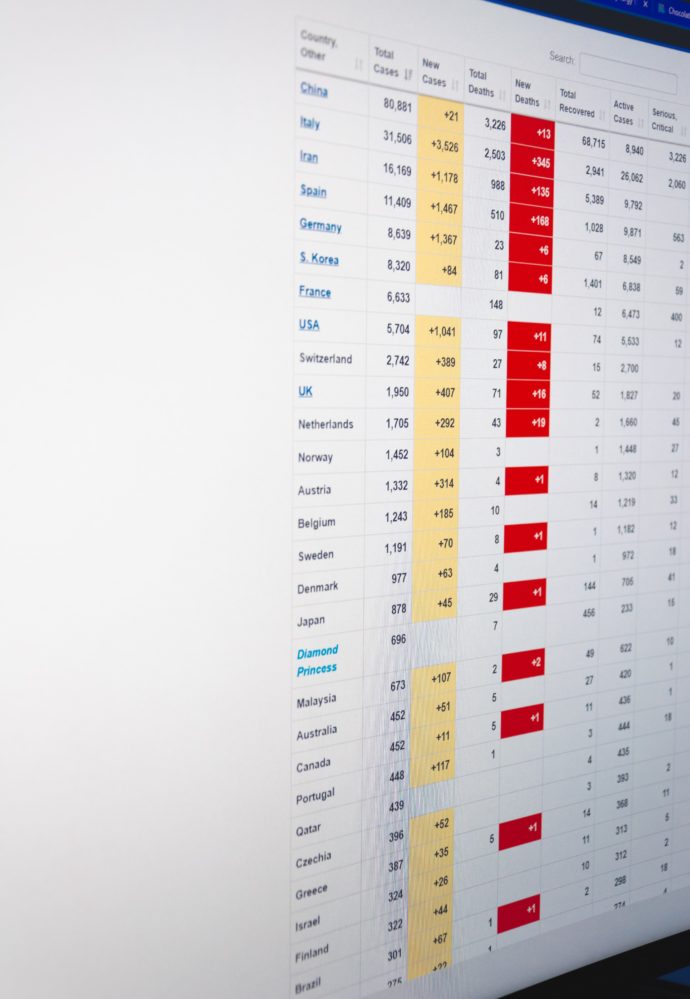
Here are the Centers for Disease Control’s top line COVID-19 statistics for the past four weeks:

4/34/104/174/24
Confirmed Cases239,279459,165661,712862,648
Confirmed Deaths5,44216,57028,82343,451
Deaths over Cases2.27%3.61%4.36%5.04%

Don’t forget to check out the CDC’s weekly COVIDView which comes out on Fridays. The COVIDView is more encouraging reading than the bare statistics.

A new study in Health Affairs estimates “that a single symptomatic COVID-19 infection would cost a median of $3,045 in direct medical costs.”

Fierce Healthcare reports that CIGNA studied “care utilization among their commercial group and individual plan members between January and March across seven [serious] conditions and found decreases in hospitalizations across the board.”

[The lead researcher] said the team was surprised by the size of these decreases and that they were found across all seven conditions, because going without treatment for these conditions can have serious consequences.

[A research team physician] added that providers can help encourage patients to seek care in these situations by developing a care plan with those at high risk for certain conditions and having open conversations that affirm they should seek care in an emergency situation even if they should stay home otherwise.

It’s a crazy time.

Thursday Miscellany

The House of Representatives passed COVID-19 relief bill no. 3.5 (H.R. 266) by a vote of 388-5 this afternoon. The bill restores funding for the Small Business Administration’s relief programs and provides $100 billion in funding for healthcare providers.

OPM issued a new COVID-19 letter to FEHBP carriers today. The FEHBlog was pleased to see that OPM is allowing FEHB high deductible plans with health savings accounts to cover telehealth before the “high deductible” as permitted by the CARES Act (COVID-19 relief bill no. 3).

OPM also announced today that “the Combined Federal Campaign (CFC) will conduct a nationwide special solicitation to support charities serving and affected by COVID-19. This special solicitation will run through June 30.” Good call. Here’s the link to the campaign.

Also over the past two days, OPM has issued FAQs on resuming normal workforce operations at federal facilities and the Families First Coronavirus Response Act’s (COVID-19 relief bill no. 2) paid sick leave program. Meanwhile the U.S. Department of Labor is up to nearly 90 FAQs on that program which also applies to private sector employers with under 500 employees.

Midweek Update

Recycle Intelligence reports that House of Representatives members are returning to Capitol Hill to vote on the fourth (3.5?) COVID-19 relief bill (H.R. 266) tomorrow morning.

Today, the Health and Human Services Department (“HHS”)announced how it plans to divvy up the remaining $70 billion in funding allocated to hospitals and other healthcare providers in the third relief law known as the CARES Act. The last paragraph of the announcement states that

as a condition to receiving general funds, providers must agree not to seek collection of out-of-pocket payments from a presumptive or actual COVID-19 patient that are greater than what the patient would have otherwise been required to pay if the care had been provided by an in-network provider.

If the FEHBlog’s recollection serves him correctly, the earlier version of this statement flatly prohibited surprise billing. This version permits the provider to collect in-network cost sharing from the patient. How will the provider know the amount of in-network cost sharing?, and how will the member and the patient be made aware that the provider is subject to this obligation? In any event, the government has to provide much more guidance on this well meaning initiative.

Speaking of guidance, the Centers for Medicare and Medicaid Services did provide guidance to health plans yesterday concerning limits on medical management of COVID-19 testing coverage mandated by the Families First Coronavirus Response Act as amended by the CARES Act. Check it out.

In an interesting development, the day after HHS delayed enforcement of its new electronic health record interoperability rule, the HHS Office of Inspector General proposed a rule to apply civil monetary penalties to electronic health information blocking violations.

Tuesday Tidbits

Today the Senate passed a bill expanding funding for the Small Business Administration’s COVID-19 relief programs ($370 billion), healthcare providers ($75 billion) and COVID-19 testing ($25 billion). The Wall Street Journal further reports that “the bill now goes to the House, which is expected to vote on it Thursday.” The President has tweeted that he will sign it when both Houses of Congress pass it..

Speaking of COVID-19 testing, Labcorp announced today that “it has received an Emergency Use Authorization (EUA) from the U.S. Food and Drug Administration (FDA). The EUA permits nasal swab specimens to be collected at home using the Pixel by LabCorp™ COVID-19 test home collection kit if recommended by a healthcare provider after completing a COVID-19 questionnaire.” Furthermore, CVS Health announced today that it has opened another large scale drive up COVID testing site in Dearborn Michigan.

As anticipated the Department of Health and Human Services informed the public today about

a policy of enforcement discretion to allow compliance flexibilities regarding the implementation of the interoperability final rules announced on March 9th in response to the coronavirus disease (COVID-19) public health emergency. ONC, CMS, and OIG will continue to monitor the implementation landscape to determine if further action is needed.

Absent this new policy, the rules would have been fully enforceable on January 1, 2021.

Finally the FEHBlog ran across today this long, handy AHIP prepared list of benefit improvements and related actions that its health plan members have made in response to the COVID-19 emergency. Bravo.

Monday Musings

The White House and Congressional leaders continue to negotiate over the bill that would expand funding for the Small Business Administration relief programs and provide more grants for health care providers and testing. According to the Wall Street Journal, the parties are close to a deal, and a Senate vote is expected tomorrow.

Healthcare Dive explains the precarious financial position in which many primary care practices find themselves as the great hunkering drags on.

Most providers have turned to telehealth in a bid to recoup patient volume, but reimbursement for virtual care is often lower than an in-office visit — if it’s reimbursed at all. A majority [of 2600 primary care providers surveyed by the Primary Care Collaborative (“PCC”)] are unsure whether they’ll be reimbursed for telehealth services, and full-scale use of virtual care is slight — 34% of practices rely mostly on video to conduct appointments, 15% on e-visits and 19% on a patient portal, compared to 48% of doctors conducting the majority of visits by phone, PCC found.

The article adds that “65% of clinicians in the PCC survey reporting they have patients who can’t use telehealth because they don’t have a computer or internet access. Congress allocated $200 million in CARES funding to the Federal Communications Commission ​to support providers’ telehealth infrastructure. FCC rolled out the first wave of grants on Friday.” Health plans can’t do much about the FCC issue, but they can provide temporary improvements on the telehealth payment issue.

Fierce Healthcare reports that the Centers for Medicare and Medicare Services announced late Sunday new guidelines on resuming “non-essential” surgical procedures such as joint replacements. “The lack of revenue from such surgeries, in addition to low patient volume overall, has sparked a cash crisis for U.S. hospitals. Some major healthcare systems such as Tenet, Trinity Health and Detroit Medical Center have had to furlough workers due to the lack of cash.” The aforementioned Healthcare Dive article indicates that resumption of non-essential surgeries will aid medical practices too. But the ramp up understandably will be slow.

Weekend Update

Congress remains on a District / State work period at least until May 4. In the meantime, Congress can enact legislation by unanimous consent / voice vote and the Wall Street Journal reports this evening that White House and Congressional negotiators are close to agreement on a law that would expand funding for underfunded small business programs and provide $75 billion in hospital funding and $25 billion in COVID-19 testing funding, among other things.

Speaking of testing, CVS Health, Walgreen’s and Verily Health all have expanded the scope of their drive in COVID-19 testing programs. Verily Health, a subsidiary fo Alphabet / Google, is now operating its testing service outside California:

GoodRx helpfully offers a more complete list of drive up COVID testing sites here.

In the Wall Street Journal, Dr. Scott Gottlieb, the former FDA commissioner, and Dr. Stephen Ostroff offer suggestions for businesses on how to prepare for reopening following the great hunkering.

NPR Shots discusses the Administration’s efforts to put a stop on surprise billing for patients receiving COVID-19 care.

Last week, as HHS released an initial draft of its terms and conditions for the emergency funds allocated by Congress in the CARES Act, the Trump administration startled many in health care by declaring that providers would have to agree not to send surprise bills to COVID-19 patients for treatment. A White House spokesperson declined to comment. HHS did not immediately comment.

But the blanket assertion by health officials that “every patient” is considered a COVID-19 patient, offered without further clarification, seems to go beyond the administration’s announcement and open the door to lawsuits over whether HHS intended to ban balance billing entirely.

The FEHBlog expects further guidance from HHS.

Friday Stats and More

Here are the latest four weeks from the CDC’s COVID-19 Cases in the U.S. website:

Covid-193-274-34-104-17
Cases85,356239,279459,165661,712
Deaths12465,44216,57028,823
Cases / Deaths1.46%2.27%3.61%4.36%

This week the CDC began to include deaths probably caused by COVID-19 in its death count. The FEHBlog will stick with confirmed COVID-19 deaths. The probable COVID-19 death count today was 4,226. The CDC’s number close out at 4 pm on the day before the report.

Today the CDC added demographic data to its Cases in U.S. website. The FEHBlog was surprised to find that in almost 75% of the COVID-19 cases, race/ethnicity was not specified. The majority of cases are found in the 18 to 64 age range. The CDC’s statistics do not provide a gender breakdown.

The CDC also released its weekly COVIDView report. 680,000 COVID-19 lab tests were conducted in the week ended April 11. (The CDC’s weekly summaries customarily are a week behind the release date.)

Here’s a link to the President’s three phase guidelines on reopening our country that were issued yesterday. According to the Fierce Healthcare report, Dr. Deborah Birx from the CDC explains that before entering phase one, states and cities “must see data that shows a sustained decline in influenza-like illness, as well as positive COVID-19 cases with persistent testing, for a minimum of 14-days.”

Interesting Ideas

Health Payer Intelligence reports that CIGNA and SCAN Health Plan are teaming up to reach out to Medicare Advantage members in an effort to help them with senior loneliness during the great hunkering. SCAN’s “employees are calling on seniors, starting with the most at-risk and isolated. During their birthday and welcome calls, SCAN’s Senior Advocates—individuals who are both members and SCAN Health Plan employees—listen for potential social determinants of health needs.” What a great approach for FEHB plans to follow.

STATNews discusses the value of using chest CT scans to reliably reliably supplement other forms of COVID-19 testing in our country.

STATNews also has developed a new electronic dashboard to gauge the readiness of rural counties in the U.S. to deal with the COVID-19 emergency or other pandemics. The developers are seeking public comment on the dashboard. This dashboard should have benefits beyond the current emergency.

Healthcare Dive reports that

The Centers for Disease Control and Prevention is working to automate generation and transmission of COVID-19 case reports to deliver data put in provider EHRs directly to public health agencies.

For providers that don’t have EHRs with the ability to electronically send case reports, CDC is creating a FHIR-based app [called eCR Now] to connect COVID-19 electronic case reporting (eCR) to existing health IT infrastructure to confirm cases and route the data to appropriate end users. The goal is to give public health officials a more accurate, timely picture of the pandemic.

The FEHBlog is quite a fan of the FHIR API.

This is the time of the year when the Drug Enforcement Administration (DEA) hold events that allow citizens to safely dispose of unused prescription drugs. Obviously these events are not being held this April. The DEA has creates a website on safe householder disposal of unused prescription drugs. It’s good information for health plans to share with members.