The Senate and the House of Representatives are holding a State / District work period this week. Insurance News Net adds that the House Oversight and Reform Committee has “requested information regarding insurers’ and PBMs’ compliance with the ACA and CMS guidance [on contraceptive coverage] by June 8, 2022.
Pfizer’s antiviral drug, called Paxlovid, totaled more than 412,000 prescriptions through May 6, compared with about 110,000 prescriptions of molnupiravir, an antiviral from Merck & Co. and Ridgeback Biotherapeutics LP [called Lagevrio], according to drug-data firm Iqvia Holdings Inc. * * *
“Now that Paxlovid has become much easier to obtain, by and large relative to where it was before, Paxlovid is mine and the majority of my colleagues’ first choice,” said Ali Khan, chief medical officer of value-based strategy at Oak Street Health Inc., which has more than 140 primary-care clinics in 20 states across the U.S. * * *
“Doctors have become more comfortable with Paxlovid and more regularly prescribing the more effective drug,” said Zenobia Brown, medical director of health solutions at Northwell Health, a major New York healthcare provider.
Paxlovid, like Lagevrio, has been shown through lab studies to remain effective against Omicron and its subvariants. That has allowed doctors to prescribe it and reserve antibody treatments for other people who can’t take Paxlovid because of the potentially harmful drug interactions.
The White House earlier this month announced that households can now order a third round of free COVID-19 rapid tests on COVIDTest.gov.
Households can now receive eight new tests, double what households could order in the previous two rounds. USPS has delivered at least 380 million free tests through the program so far.
Bravo, USPS.
From the unusual viruses front —
STAT News updates us on monkeypox. “The ongoing monkeypox outbreak currently poses a moderate risk to global public health, the World Health Organization said Sunday in a statement that nevertheless raised the specter of the virus becoming entrenched as a pathogen that spreads from person to person. * * * To date most of the [257 confirmed] cases have been diagnosed in Europe and North America. The United States had detected 12 cases as of Friday. “Currently, the overall public health risk at [a] global level is assessed as moderate considering this is the first time that monkeyp ox cases and clusters are reported concurrently in widely disparate WHO geographical areas,” the global health agency said.”
The World Health Organization updates us on “Six hundred and fifty probable cases of acute hepatitis of unknown aetiology in children [that] have been reported to WHO from 33 countries in five WHO Regions between 5 April and 26 May 2022. The majority of reported cases (n=374; 58%) are from the WHO European Region (22 countries), with 222 (34%) cases from the United Kingdom of Great Britiain and Northern Ireland alone. Probable cases and cases pending classification have also been reported from the Region of the Americas (n=240, including 216 cases in the United States of America) * * *.
From the miscellany department
The American Medical Association offers an article about what doctors wish their patients knew about living with migraines.
MedPage Today informs us “Using artificial intelligence (AI) during screening colonoscopy could be a cost-savings strategy that also could boost the prevention of colorectal cancer (CRC) incidence and mortality, a researcher reported.”
MedPage also tells us “Physical therapy-based rehabilitation frequently leads to better outcomes using fewer resources for patients with MSK pain when compared to operative procedures. But physical therapy must be a part of the treatment conversation early on, while surgery should be positioned as a last resort with the patient made well aware of surgery’s risks and complications. This is currently not the case in many patient-provider interactions.”
The US Senate Committee on Health, Education, Labor, and Pensions (HELP) held a full committee hearing on May 18 to discuss the need for an increased focus on education and healthcare cybersecurity.
“Attacks on healthcare are increasing in volume, variety, and impact—with consequences that now include the loss of life,” Joshua Corman, founder of I Am the Cavalry, said in his testimony.
“While directionally correct steps have been taken, we’re getting worse faster than we’re getting better. Bold actions and assistance will be required to change this trajectory, address these market failures, lack of incentives, and historical under-investments.”
* Internal actors continue to pose a sticky cybersecurity problem for healthcare companies despite not causing a majority of data breaches, according to a new data breach report from Verizon.
* Employees were responsible for 39% of healthcare breaches last year. That’s compared to just 18% across all industries, Verizon found.
* The makeup of the insider breach has shifted from generally malicious misuse incidents to miscellaneous errors, with employees being more than 2.5 times more likely to make an error than purposefully misuse their access. Data misdelivery — like sending an email to the wrong person — along with device or document loss are the most common employee errors in healthcare, according to the report.
CISA offers its assistance:
Cyber actors routinely exploit poor security configurations (either misconfigured or left unsecured), weak controls, and other poor cyber hygiene practices to gain initial access or as part of other tactics to compromise a victim’s system. This joint Cybersecurity Advisory identifies commonly exploited controls and practices and includes best practices to mitigate the issues. This advisory was coauthored by the cybersecurity authorities of the United States, Canada, New Zealand, the Netherlands,and the United Kingdom.
Also from the vulnerability front, Cybersecurity Dive reports
Recurring critical vulnerabilities for VMware products this year indicate a worrying trend for customers that suggests the virtualization leader is taking a more reactive approach to security.
The company’s VMware Horizon product got hit hard by the Log4j vulnerability, and earlier this month VMware found itself entangled in an emergency directive from the Cybersecurity and Infrastructure Security Agency (CISA) that impacts up to 10 VMware products.
It was the 10th emergency directive issued by CISA since the agency was founded in late 2018.
Virtualization software is ubiquitous and managing the technology is further complicated by its many parts, ExtraHop CISO Jeff Costlow wrote in an email. Threat actors target vulnerabilities across these disaggregated systems before patches are released or deployed by impacted organizations.
VMware’s reputation in this regard has also taken a hit.
Perhaps that’s what lead to this Wall Street Journal reports
Broadcom Inc. Chief Executive Hock Tan’s $61 billion deal to buy VMware Inc. marks the biggest bet yet that the boom in enterprise software demand will endure despite the economic tumult—and that bundling disparate offerings of low-profile products can yield outsize returns.
Mr. Tan built Broadcom into a microchip powerhouse by acquiring makers of a host of unsexy-but-essential components, then cutting costs and leveraging the company’s growing pricing power. He is now banking that the same model will work in corporate software.
The deal to buy VMware, announced Thursday after The Wall Street Journal reported on details of the talks earlier in the week, would push Broadcom deeper into a software world populated by incumbents such as International Business Machines Corp. and Oracle Corp. as well as independent companies that specialize in niche applications.
CISA added 20 known exploited vulnerabilities to its catalog this past week.
Bleeping Computer’s the Week in Ransomware was not published this week. Have a good Memorial Day Weekend.
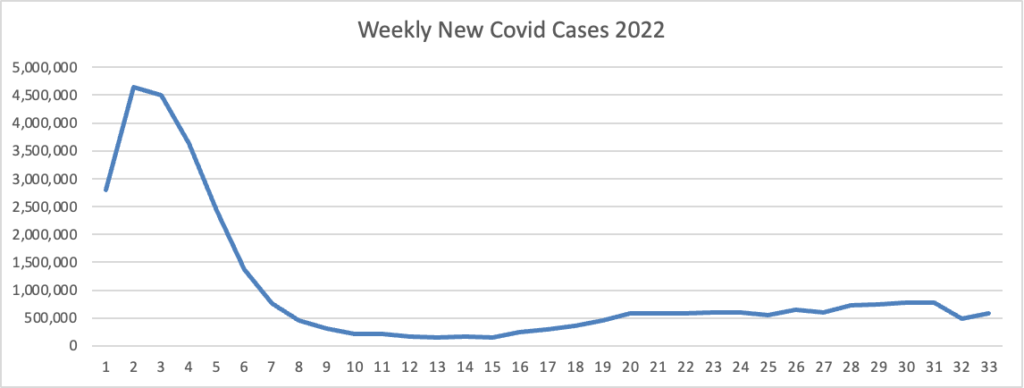
Based on the CDC’s Covid Data Tracker, and using Thursday as the first day of the week, here is the FEHBlog’s weekly chart of new Covid cases from the 27th week of 2021 through the 21st week of 2022:
Reliable estimates of case counts are particularly relevant with the U.S. in the midst of yet another Covid-19 wave. By official case counts, it is a modest wave, at roughly 110,000 infections a day, according to the CDC. That is smaller than the 165,000 daily cases reported during the Delta wave, or the 250,000 a day during the 2020-21 winter.
But estimates of the true number of infections, correcting for undercounting, suggest the U.S. might be experiencing the second-largest wave of Covid-19 infections since the pandemic began.
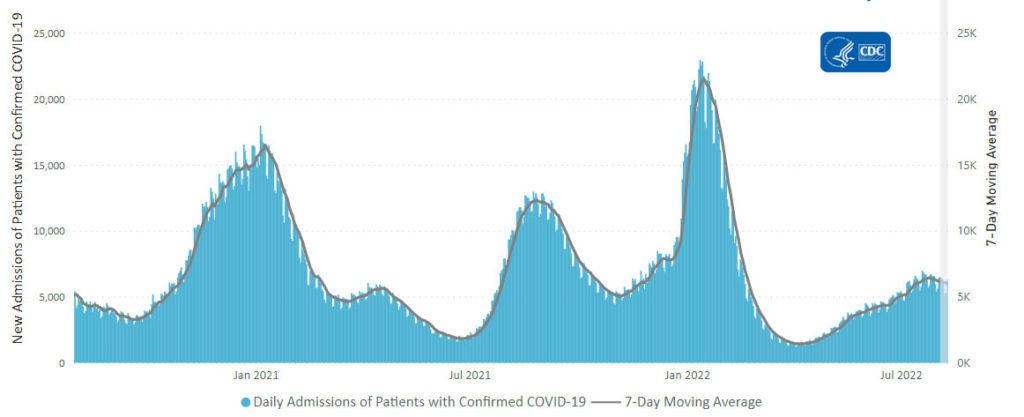
Here’s the CDC’s weekly chart of new Covid hospitalizations.
Hospitalization numbers also aren’t a perfect gauge. Someone can break a leg and test positive in the emergency room for a mild case of Covid-19. That case becomes a confirmed coronavirus hospitalization—and a strain on the hospital’s bed counts and personal-protective-equipment supplies—but not necessarily a severe case.
In Massachusetts, hospitals have begun reporting whether Covid-19 is the primary reason someone is in the hospital—and in January about 50% of cases were. It is hard to pinpoint how similar Massachusetts would be to other states, but it offers a further example of how better counting could improve assessment of the pandemic.
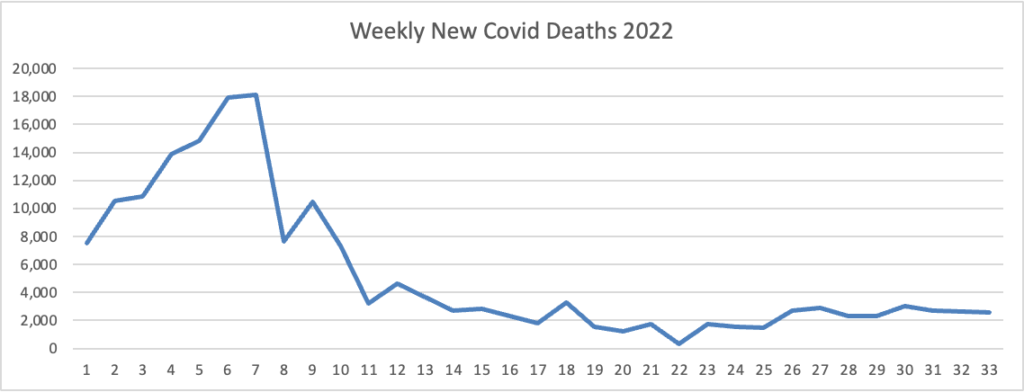
Here’s the FEHBlog weekly chart of new Covid deaths again from the 27th week of 2021 through the 21st week of 2022:
Covid-19 deaths in the U.S. are hovering near the lowest levels since the pandemic hit, showing how a population with built-up immune protection is less at risk of severe outcomes even as another wave of infections flows through the country.
The nearly 300 deaths reported daily are again more concentrated among older people, underscoring hazards for the more vulnerable while the overall population appears less at risk.
Particularly vulnerable people, such as those who are older and immunocompromised, will likely always have some risk of death from a Covid-19 infection, doctors and public-health experts said. Increasing booster rates and access to treatments, in addition to taking certain precautions, can help lower the threat presented by the virus, they said.
White House officials said on Thursday that they were introducing new models for distributing Paxlovid, the Covid-19 oral medication made by Pfizer, in an effort to get the treatment to more people and keep coronavirus death rates relatively low even as cases increase.
The federal government will start reimbursing a clinic in Providence, R.I., for evaluating patients who test positive and immediately prescribing Paxlovid to those eligible for it — the first of what the White House said would be a series of federally supported sites, with others set to open in New York and Illinois. Federal workers are also being sent to state-run testing sites in Minnesota, transforming them into “test-to-treat” locations, the White House said.
“Fundamentally, what we’re trying to do is get to a point where Covid deaths are largely preventable, and I think we’re pretty close to there,” Dr. Ashish K. Jha, the White House Covid-19 response coordinator, said in an interview Wednesday evening. “Deaths from this disease really should become increasingly rare.”
STAT News offers an interesting look into how scientists assess the level of Covid resistance to Paxlovid.
Resistance is the hobgoblin of antiviral medicine, even with antivirals as effective as Paxlovid. After doctors deployed nearly every new virus-killing infusion or pill in history, strains popped up — either immediately or eventually — with machinery warped in just the right way to evade the threat.
Exactly how much of a problem resistance will be for Paxlovid is complicated. In some patients, the coronavirus will inevitably find ways to evade the pill, as it did prior Covid-19 drugs.
“If there is anything we know about viruses and antiviral drugs is that eventually we will see some sort of resistance,” Andrew Pavia, chief of pediatric infectious diseases at University of Utah Health, said in an email.
What’s less clear, Pavia and other experts say, is whether any resistant variants will spread widely. The coronavirus may have particular difficulty getting around Paxlovid compared to other drugs because patients take it for only five days and because it targets a protein the virus can’t easily change. Any mutation or modification the virus makes may impair its ability to replicate or survive.
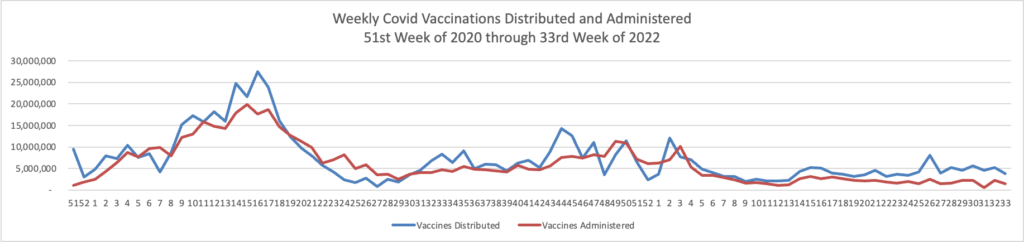
Here’s the FEHBlog weekly chart of Covid vaccinations distributed and administered
The CDC’s weekly review of its Covid statistic tells us
People who are up to date on vaccines have much lower risk of serious illness and death from COVID-19 compared with people who are unvaccinated. CDC’s COVID Data Tracker shows that in March 2022, adults ages 18 years and older who were unvaccinated were about 5 times more likely to be hospitalized with COVID-19 than those who were up to date. In the same month, people ages 12 years and older and unvaccinated were 17 timesmore likely to die of COVID-19 than those who were up to date.
COVID-19 vaccines available in the United States are effective at protecting people from getting seriously ill, being hospitalized, and even dying—especially people who are boosted. As with other diseases, you are protected best from COVID-19 when you stay up to date with recommended vaccines. Find a vaccine provider near you.
As of May 19, 2022, there are 301 (9.35%) counties, districts, or territories with a high COVID-19 Community Level, 477 (14.81%) counties with a medium Community Level, and 2,442 (75.84%) counties with a low Community Level. This represents a moderate (+5.10 percentage points) increase in the number of high-level counties, a slight (−0.74 percentage points) decrease in the number of medium-level counties, and a corresponding (−5.84 percentage points) decrease in the number of low-level counties. Five (9.62%) of 52 jurisdictions had no high- or medium-level counties this week.
the Centers for Medicare & Medicaid Services (CMS) released a report that recommends cost savings from lower-than-expected Medicare Part B spending be passed along to people with Medicare Part B coverage in the calculation of the 2023 Part B premium. Earlier this year, Department of Health and Human Services (HHS) Secretary Xavier Becerra instructed CMS to reassess the 2022 Part B premium amount in response to a price reduction for Aduhelm™, a monoclonal antibody directed against amyloid for use in treating Alzheimer’s disease. Given the information available today, it is expected that the 2023 premium will be lower than 2022. The final determination will be made later this fall.
This CMS decision is quite sensible, in the FEHBlog’s view.
On a related FEHB note, FedSmith discusses the pros and cons of enrolling in Medicare Part B when you are a federal or Postal annuitant with FEHB coverage in retirement as well.
From the telehealth front, mHealth Intelligence reports
Called CVS Health Virtual Primary Care, the digital care platform will provide healthcare consumers with an array of care services, including primary care, on-demand care, chronic condition management, and mental health services. Consumers will also be able to choose their healthcare setting from various retail, community-based, virtual, and at-home care options.
“We’re meeting people where they are on their healthcare journey and providing care that is more convenient and easier to access,” said Creagh Milford, DO, vice president, enterprise virtual care at CVS Health, in the news release.
The new benefit will launch on January 1, 2023.
From the Rx coverage front, Formulary Watch reveals that
The Institute for Clinical and Economic Review (ICER) has released the protocol for its second annual review of insurance company policies to assess fair access to prescription drugs. ICER will evaluate whether 15 large U.S. commercial payers, the two largest state health exchange plans, and the Department of Veterans Affairs have formularies and procedures that provide appropriate access to the prescription drugs reviewed by ICER in 2020. These drugs include those that treat patients with cystic fibrosis, hemophilia A, migraine, sickle cell disease, and ulcerative colitis.
The analysis is expected to be completed in November 2022.
From the studies front, the Centers for Disease Control issued its 2021 Diabetes Report Card this week. Here are the highlights
* After almost 2 decades of continual increases, the incidence of newly diagnosed cases of diabetes in the United States decreased from 9.3 per 1,000 adults in 2009 to 5.9 per 1,000 adults in 2019.
* Prevalence of prediabetes among US adults remained steady from 2005–2008 to 2017–2020. However, notification of prediabetes status nearly tripled (from 6.5% to 17.4%).
* American Indian or Alaska Native, non-Hispanic Black, Hispanic, and non-Hispanic Asian people are more likely to be diagnosed with diabetes than non-Hispanic White people (14.5%, 12.1%, 11.8%, 9.5%, and 7.4%, respectively).
* During the COVID-19 pandemic, diabetes emerged as an underlying condition that increases the chance of severe illness. Nearly 4 in 10 adults who died from COVID-19 in the United States also had diabetes.
Lawmakers are facing increased pressure to pass a comprehensive mental health and substance use package but are unlikely to make an initial goal of advancing legislation before the implementation of a three-digit suicide hotline in July.
At least four congressional committees have committed to advancing a swath of bipartisan mental health bills under their jurisdiction, but lawmakers have not yet unlocked the puzzle of how to incorporate a growing laundry list of programs to authorize and establish existing and new programs dedicated to treatment, prevention, education, crisis care, drug interdiction and the workforce.
One of those four committees is the Senate Finance Committee which announced today
Senate Finance Committee Chair Ron Wyden (D-Ore.), Ranking Member Mike Crapo (R-Idaho), Senator Ben Cardin (D-Md.) and Senator John Thune (R-S.D.) today released a discussion draft for telehealth policies as a part of the committee’s ongoing work to improve mental health care across the nation, which has included a public call for comments and three hearings to help develop these initiatives. * * *
The discussion draft includes policies that would:
* Remove Medicare’s in-person visit requirement for tele-mental health services.
* Establish benefit transparency for mental health care services delivered via telehealth to inform Americans with Medicare how and when they can access telehealth.
* Preserve access to audio-only mental health coverage in Medicare when necessary and appropriate.
* Direct Medicare and Medicaid to promote and support provider use of telehealth.
* Incentivize states to use their CHIP programs to establish local solutions to serve behavioral health needs in schools, including through telehealth.
A highly contagious sublineage of the BA.2 omicron subvariant is now the nation’s dominant strain, according to the CDC’s latest variant proportion estimates.
The sublineage, BA.2.12.1, accounted for 57.9 percent of all U.S. COVID-19 cases in the week ending May 21, CDC data shows. BA.2, which became the nation’s dominant strain in mid-March, now accounts for an estimated 39.1 percent of all cases.
BA.2.12.1 is estimated to have a 25 percent growth advantage over BA.2, which is already more transmissible than the original omicron strain. The newer omicron sublineage has been gaining traction in the U.S. over the last month. In the week ending April 23, BA.2.12.1 accounted for just 24.1 percent of U.S. COVID-19 cases.
Health officials are also monitoring another omicron subvariant — BA.1.1.529 — which currently accounts for an estimated 2.8 percent of cases.
“Epidemiologically, it doesn’t appear as if we’re seeing more severe disease in places that are having more cases,” CDC Director Rochelle Walensky said of the sublineages during an April 26 news conference. “So we are not anticipating more severe disease from some of these subvariants, but we are actively studying it.”
As many as one in four seniors and one in five adults under 65 experienced “long COVID” or “post-COVID” symptoms after surviving a coronavirus infection, a new study from the Centers for Disease Control and Prevention reported Tuesday.
The study — published in the CDC’s Morbidity and Mortality Weekly Report — is the latest to try and quantify how many of the millions of Americans who have now tested positive for the virus are facing long-term issues caused by their infection.
By comparing electronic health records in a large national database of patients, the study’s authors found 38.2% of COVID-19 survivors “experienced at least one incident condition” — a list that includes heart, lung, kidney and gastrointestinal problems, pain, fatigue, loss of smell or taste, mental health issues, and more — in the months after their infection. By contrast, just 16% of other people were diagnosed with such conditions.
Vaccination reduces your risk of developing long Covid, but not by much on average, new research suggests.
A Veterans Affairs study out Wednesday found that vaccinated people with breakthrough Covid-19 infections had a 15% reduction in experiencing persistent or new symptoms and health conditions up tosix months after infection compared with those who were unvaccinated and got Covid.
Most of the vaccinated people had received two doses of the Pfizer or Moderna vaccine, while 8% received one dose of the Johnson & Johnson vaccine.The study didn’t look at people who had received boosters.
Bloomberg discusses the risks of contracting Covid while pregnant.
Canada’s first dual specialist in infectious diseases and obstetrics/gynecology, Deborah Money, MD comments “For the most part, women in communities even with Covid circulating do well,” she says. “The majority of babies are fine.”
But that’s just part of the story. Their analysis of data from 6,012 people in six Canadian provinces who tested positive for the virus during their pregnancy found a substantial increase in hospitalizations and ICU admissions compared with reproductive-age, non-pregnant females infected with the coronavirus. Their study in the May 2 issue of the JAMA medical journal also found that 11.1% of Covid–affected pregnancies resulted in preterm birth, compared with 6.8% among all unaffected Canadian pregnancies. * * *
Money says it underscores the need for obstetricians to carefully monitor their pregnant patients who become infected with SARS-CoV-2, and for expecting moms to get vaccinated and boosted.
“That’s the biggest thing they can do,” she says. “It really does look like vaccine is preventative for the serious outcomes.”
From the studies front —
The Medical Group Management Association informs us “Despite multiple waves of disruption in 2021, medical practices navigated through the “new normal” of COVID-19 to restore a sense of normalcy in productivity and compensation last year.”
Milliman released its 2022 Medical Index (MMI). “In 2022, the cost of healthcare for a hypothetical American family of four covered by an average employer sponsored PPO plan is $30,260,” 4.6% above 2021.
HR Dive tells us “[a] 2019 IRS notice expanded the list of medications and health services Health Savings Account-eligible health plans may cover prior to meeting a patient’s deductible. Employers that take advantage of the expansion could cover these treatments with little to no increases in patient premiums, according to an Employee Benefits Research Institute report published May 19.”
Commercial insurance members’ satisfaction with their plans stayed flat between 2021 and 2022, according to a new survey from J.D. Power.
Satisfaction was on a steady climb over the past five years, the survey found, but plateaued in the past year amid declines in how well members’ expectations for customer service were met and dissatisfaction with their plan designs and network providers.
Health plans that were perceived by members as responsive enjoyed higher scores than those that were not, J.D. Power found. The Kaiser Foundation Health Plan and regional Blues insurers were consistently ranked as the highest scoring in the study’s 22 geographic regions.
From the mental healthcare front, the International Foundation of Employee Benefit Plans notes
The U.S. Department of Labor (DOL) published new guidance on obtaining job protected leave under the Family and Medical Leave Act (FMLA) for workers seeking mental health support. The guidance clarifies that eligible employees are able to take FMLA leave for their own serious health condition or to care for a spouse, child or parent because of their serious health condition, and that a serious health condition can include a mental health condition.
From the federal employee benefits front, benefits consultant Tammy Flanagan writes in Govexec about Federal Employee Group Life Insurance Program options for federal and postal annuitants. What’s more, Fedweek explains how FEHBP fills Medicare coverage gaps for those fine folks.
COVID-19 might be easing into a new status as a widely circulating and somewhat harsher version of the common cold, experts say — a virus that folks could contract repeatedly, even if they were recently infected.
“[SARS-CoV-2] is destined to join four of its family members and become an endemic coronavirus that will repeatedly infect individuals throughout their lifetimes,” said Dr. Amesh Adalja, of Johns Hopkins Center for Health Security, referring to the four circulating coronaviruses that cause the common cold.
“It will become one of several respiratory viruses that people contend with, and will become increasingly less disruptive and more manageable with medical countermeasures and the population’s risk acclimatization,” he added.
The FEHBlog recently has pointed out unusual disease cases involving childhood hepatitis , monkeypox, a flu spike, etc. STAT News seeks to put these unusual cases in perspective.
These viruses are not different than they were before, but we are. For one thing, because of Covid restrictions, we have far less recently acquired immunity; as a group, more of us are vulnerable right now. And that increase in susceptibility, experts suggest, means we may experience some … wonkiness as we work toward a new post-pandemic equilibrium with the bugs that infect us. * * *
Marion Koopmans, head of the department of viroscience at Erasmus Medical Center in Rotterdam, the Netherlands, said she believes we may be facing a period when it will difficult to know what to expect from the diseases that we thought we understood.
“I do think that’s possible,” Koopmans said.
This phenomenon, the disruption of normal patterns of infections, may be particularly pronounced for diseases where children play an important role in the dissemination of the bugs, she suggested.
Ruh roh.
From the Rx coverage front, Fierce Healthcare reports
Prime Therapeutics cut per member per month drug costs by 26% in one year through its MedDrive program, which leverages biosimilars to help drive down expenses.
The program uses advanced analytics to flag ways that health plans can cut down drug spend, with a particular focus on the potential of biosimilars. Pharmacy benefit managers are betting on biosimilar products to introduce new competition to popular branded products and drive down costs.
Prime, which serves 33 million members across 23 Blue Cross Blue Shield plans, first launched MedDrive in May 2021 and in its first year the program drove savings by focusing on just three biosimilar categories, the PBM said. Cancer drugs led the way for savings.
The International Foundation of Employee Benefits Plans adds
The U.S. Department of Health and Human Services (HHS) and the Food and Drug Administration (FDA) announced the availability of a final guidance for industry entitled “Importation of Prescription Drugs Final Rule Questions and Answers.” The guidance is intended to help small entities comply with the final rule entitled “Importation of Prescription Drugs.” The final rule was issued to implement a provision of the Federal Food, Drug, and Cosmetic Act (FD&C Act) to allow importation of certain prescription drugs from Canada.
In OPM news, OPM announced a group of new staff appointees at the agency today including a new General Counsel and a new Deputy General Counsel.
From the miscellany department —
Rebecca G. Baker, Ph.D., the director of the NIH HEAL Initiative, shares insights gained from the Third Annual HEAL Investigators Meeting. HEAL is an NIH branch that focus on creating solutions to the opioid epidemic.
EHR Intelligence discusses how a National Patient Identifier could boost population health. It is mystifying that Congress has not released funds for this important initiative.
The Medical Group Management Association identifies four ways medical groups can remove barriers to mammography compliance.
Health Payer Intelligence outlines 2022 actions today by the U.S. Preventive Services Task Force.
Despite rising availability in online transparency tools, consumers remain unsure about costs and avoid care as a result, a new survey has found.
The annual consumer sentiment survey was conducted in January 2022 by Healthsparq, a health tech company, and reached more than 1,000 insured Americans. Transparency tools were defined as those provided by payers such as in-network provider search, cost estimates and information on treatment.
The majority (70%) of respondents knew that their health plan offered these, up from 49% last year, and most had used them in the past year. They also said this access helps them better understand their coverage and manage costs. Yet nearly half reported avoiding care due to unclear costs, up from a quarter last year. Care avoidance was even more pronounced among those under the age of 34, at 63%.
Mark Menton, Healthsparq’s general manager, told Fierce Healthcare he suspects that is because the tools exist, but consumers do not know how to access the information.
“I think that’s a hurdle we as an industry need to overcome,” Menton said. “They don’t know where to find this information.”
New bipartisan legislation introduced in the Senate aims to empower the Federal Trade Commission (FTC) to crack down on pharmacy benefit manager practices such as spread pricing.
The legislation, introduced Tuesday, comes as the PBM industry faces other areas of reform, including a proposed rule to get rid of clawback fees PBMs can charge pharmacies after the drug is dispensed.
Lawmakers said federal agencies need more power, though, to rein in PBM practices.
From the No Surprises Act (“NSA”) front, AHIP and the Blue Cross Association inform us
A recent survey and analysis conducted by AHIP and the Blue Cross Blue Shield Association (BCBSA) found that in the first two months of 2022, the NSA prevented more than 2,000,000 potential surprise medical bills across all commercially insured patients. If only a fraction of these claims are ultimately disputed through IDR, it would still far exceed the government’s estimate. Should the trend hold, more than 12,000,000 surprise bills will be avoided in 2022 due to the NSA.
The law is working to protect millions of consumers from costly surprise bills and yet several hospital and provider organizations have filed lawsuits challenging the NSA regulations and legislation in order to increase their own profits at patients’ expense. Recent polling conducted by Morning Consult on behalf of the Coalition Against Surprise Medical Billing found that 8 in 10 voters, after learning about the NSA, are concerned that lawsuits from physician and hospital organizations could delay or overturn the patient protections in the Act.
The findings of the AHIP-BCBSA survey are important to demonstrate how many consumers have already benefitted from the NSA and to underscore the extent of total claims that could be impacted if the IDR process is not a predictable process with payment amounts that trend towards market rates.
That’s great news.
In public health news, the American Hospital Association tells us ‘
U.S. births rose 1% in 2021 to about 3.7 million, the first increase since 2014, according to preliminary data released today by the Centers for Disease Control and Prevention. Birth rates declined for women aged 15-24 and rose for women aged 25-49. The cesarean delivery rate rose 0.3 percentage point to 32.1%, while the preterm birth rate rose 4% to 10.48%, the highest rate since 2007, CDC said.
From the Omicron and siblings front
Reuters reports “The U.S. Food and Drug Administration set June 14-15 as the new meeting date to review Moderna Inc’s emergency authorization request for its COVID-19 vaccine for children aged 6 months to 5 years and Pfizer Inc’s vaccine for those aged 6 months through 4 years.”
Precision Vaccines tells us “The U.S. Centers for Disease Control and Prevention (CDC) issued today Health Alert Network Health Advisory CDCHAN-00467 to update healthcare providers, public health departments, and the public on the potential for recurrence of COVID-19 or “COVID-19 Rebound.” COVID-19 Rebound cases have been reported to occur between two and 8 days after initial recovery. They are characterized by a recurrence of COVID-19 symptoms or a new positive viral test after testing negative. A brief return of symptoms may be part of the natural history of SARS-CoV-2 (the beta coronavirus that causes COVID-19) infection in some persons, independent of treatment with Paxlovid and regardless of vaccination status.” STAT News offers a more detailed article on this topic for those interested.
Officials for the Centers for Disease Control and Prevention (CDC) on Monday said the agency is releasing doses of a smallpox vaccine in response to the few recent cases of monkeypox that have been detected in the U.S. Jennifer McQuiston, the deputy director for the CDC’s Division of High Consequence Pathogens and Pathology, said during a press briefing that more than a thousand doses of the Jynneos smallpox vaccine are currently available in the U.S., with more doses expected to become available as production ramps up. * * * The vaccines will be designated for people who are most likely to benefit from them, McQuiston said, including those who are known to have had close contact with monkeypox patients, health care workers and people who would be at high risk of developing a severe case of the disease.
From the healthcare business front, Beckers Hospital News identifies Walmart’s 18 Centers of Excellence in the U.S.
Fortune reports “The U.S. is experiencing a sixth wave of COVID, with over 90,000 confirmed new cases a day and a 20% increase in hospitalizations over the past two weeks. The actual number of new cases per day likely sits at a half-million or more, “far greater than any of the U.S. prior waves, except Omicron,” writes Dr. Eric Topol, the executive vice president of Scripps Research and a professor of molecular medicine, in a recent blog post on the maps.” It’s hard to argue against this point.
Bloomberg Prognosis offers a useful Q&A on when you can back to life after a case of Omicron. Here is a link to the CDC’s guidelines on isolation and quarantine due to Omicron.
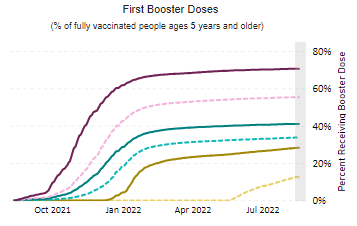
The FEHBlog noticed that 75% of the American population age 12 and older is fully vaccinated against Covid.
The American Medical Association discusses how Covid telemonitoring sets the model for other acute conditions.
From the Aduhelm front, the Wall Street Journal reports
The commercial failure of Biogen Inc.’s drug Aduhelm is putting new focus on the state of research into the causes of Alzheimer’s disease.
“If you cut the brain open and amyloid plaque is absent, Alzheimer’s was not the cause of disease,” said Jeffrey Cummings, director of the Chambers-Grundy Center for Transformative Neuroscience at the University of Nevada, Las Vegas.
But research into the benefits of targeting amyloid in Alzheimer’s patients has been mixed. There are more questions than answers about the role amyloid plays in the development of the disease, neurologists say.
“Alzheimer’s is a complex disease. It’s unlikely that a single mechanism is contributing to it,” said Maria Carillo, the Alzheimer’s Association’s chief science officer. * * *
More than 140 drugs are in the pipeline as potential Alzheimer’s treatments, including drugs that target tau and microglia function, according to a survey of registered clinical trials in the U.S. Three other amyloid-targeting monoclonal antibodies, which are in the same class as Aduhelm, are in development. One, called lecanemab, was submitted this month by co-developers Biogen and Japan-based Eisai Co. to the Food and Drug Administration for potential approval.
Time will tell.
From the preventive care wellness front —
Medscape reports an “alarming increase in esophageal cancers in middle-aged adults. The study’s author, Bashar Qumseya, MD, MPH, recommends that people with multiple risk factors for these cancers, i.e., obesity, diet, and gastroesophageal reflux disease, should undergo an endoscopy at the time of their first colonoscopy at age 45.
The American Medical Association identifies steps that patients can follow to reverse pre-diabetes.
The FEHBlog just discovered that the Weekend Update did not go out on Monday morning. So here are Monday’s items that normally would have been posted in the Monday Roundup —
Three doses of Pfizer and BioNTech’s COVID-19 vaccine met the Food and Drug Administration’s bar for success in a trial studying the shot in children younger than 5 years old, the companies said Monday. The FDA has tentatively scheduled a meeting of outside advisers to review the data in three weeks.
The agency delayed review of the vaccine in the youngest children earlier this year after a December review of data indicated a two-shot series didn’t spur an immune response that was likely to protect against disease. When Pfizer and BioNTech disclosed that data, they announced plans to test immune response and efficacy after three shots.
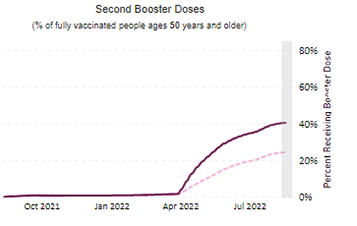
The announcement comes days after U.S. officials warned of a new surge of COVID-19 cases as mask mandates have been lifted and while immunity from vaccination and previous infections wanes. The FDA has granted emergency use authorization for as many as four shots of Pfizer and BioNTech’s vaccine — an initial two-dose series followed by two periodic boosters — for adults at least 50 years old.
Reuters adds U.S. “Health officials are considering extending the eligibility for a second COVID-19 vaccine booster dose to people under 50 amid a steady rise in cases, with the United States seeing a threefold increase over the past month.”
Bloomberg Prognosis recommends carrying around a portable carbon dioxide monitor to help prevent Covid or at least remind you to mask up and / or move along:
Carbon-dioxide monitors can assess how Covid-risky a space is because they help tell you whether you’re breathing in clean air. They measure the concentration of carbon dioxide, which people exhale when they breathe, along with other things like, potentially, virus particles. The more well-ventilated a space, the lower the reading on my monitor’s screen — meaning not only less carbon dioxide but also less of the stuff like Covid that might make people sick.
One place I didn’t expect this to be an issue was airplanes, because you hear so much about their top-of-the-line air quality systems. But in fact, some of the highest carbon dioxide readings on my travels were taken on flights, specifically during the boarding process.
It turns out that during boarding and deplaning, air systems aren’t typically running. Those periods are risky because people are mingling more than they do during a flight, says Joe Allen, an associate professor at the Harvard T.H. Chan School of Public Health who carries around his own CO2 monitor.
“We’ve been warning about this,” Allen says.
Fresh air is important for our health in ways that go well beyond Covid, but it’s also largely invisible. Carbon-dioxide monitors can change that.
What will they think of next?
The FEHBlog confesses that he took his eye off the flu virus this year. Beckers Hospital Review informs us “The CDC estimates there have been at least 6.7 million flu illnesses, 69,000 hospitalizations and 4,200 flu-related deaths so far this season.”
In other virus news, Reuters reports “Infection with adenovirus, a common childhood virus, is the leading hypothesis for recent cases of severe hepatitis of unknown origin in children that have led to at least six deaths, U.S. health officials said on Friday [May 20]. Furthermore,
The Centers for Disease Control and Prevention (CDC) said it is continuing to investigate whether 180 cases identified in 36 states and territories since last October represent an increase in the rate of pediatric hepatitis or whether an existing pattern has been revealed though improved detection.
From the mental healthcare front, Fierce Healthcare tells us
Mental health concerns are on the rise among teens, and the impact on parents and families is an unmet need employers could address, new data from Cigna’s Evernorth show.
The pandemic has significantly worsened mental health among teens and young adults, with 25% experiencing depressive symptoms and 20% experiencing anxiety symptoms, a JAMA study shows. About 80% of the 1,000 parents included in Cigna’s survey said their children are struggling with their mental health.
Nearly one-fifth (18%) of parents say their child’s needs are negatively impacting their job performance and productivity, according to the survey. In addition, 55% said they do not have enough support from their employer, and 1 in 7 said they were forced to leave or stay out of the workforce to manage their teenager’s needs.
“I think there’s going to be a long tail for these kids and also their family members,” Stuart Lustig, M.D., national medical executive for behavioral health at Evernorth, told Fierce Healthcare. “I think we’re in this for the long haul.”
The bill updates the House Homeland Security Act to direct the Department of Homeland Security to improve information sharing and coordination with state, local and tribal governments—all of which face growing risks of cyberattack. The legislation requires federal cybersecurity officials to share cybersecurity threat, vulnerability and breach data with states and localities, and provide some recovery resources when attacks occur.
Agencies have until Monday [May 23] to mitigate vulnerabilities in five products from VMware that permit attackers to have deep access without the need to authenticate.
The Cybersecurity and Infrastructure Security Agency issued a new emergency directive today saying the vulnerabilities in VMware Workspace ONE Access (Access), VMware Identity Manager (vIDM), VMware vRealize Automation (vRA), VMware Cloud Foundation, and vRealize Suite Lifecycle Manager put federal networks and systems at immediate risk.
“These vulnerabilities pose an unacceptable risk to federal network security,” said CISA Director Jen Easterly in a release. “CISA has issued this Emergency Directive to ensure that federal civilian agencies take urgent action to protect their networks. We also strongly urge every organization — large and small — to follow the federal government’s lead and take similar steps to safeguard their networks.”
Here’s a link to the CISA website on this emergency directive.
CISA also released an analysis of Fiscal Year 2021 Risk and Vulnerability Assessments.
[This] analysis and infographic details the findings from the 112 Risk and Vulnerability Assessments (RVAs) conducted across multiple sectors in Fiscal Year 2021 (FY21).
The analysis details a sample attack path comprising 11 successive tactics, or steps, a cyber threat actor could take to compromise an organization with weaknesses that are representative of those CISA observed in FY21 RVAs. The infographic highlights the three most successful techniques for each tactic that the RVAs documented. Both the analysis and the infographic map threat actor behavior to the MITRE ATT&CK® framework.
CISA also added two known exploited vulnerabilities to its catalog last week.
Most executives have and are willing to pay ransoms in the event of an attack, despite broad and consistent advice to the contrary.
Nearly four in five organizations impacted by ransomware attacks have paid the ransom to regain access to corporate data, according to a survey conducted last month by Kaspersky.
The findings, while not surprising, highlight the extent to which a widely acknowledged best practice is rarely followed. Cybersecurity professionals, including Kaspersky, consistently advise businesses hit by ransomware to never pay the ransom.
The federal government has made strides in deterring ransomware over the past year, but still has a number of milestones to reach, according to a new paper from the Institute for Security and Technology’s Ransomware Task Force. * * *
Of the 48 specific recommendations the Ransomware Task Force made in its initial report, 12 have seen tangible progress in the year since. Some initial steps have been taken on 29 recommendations, while seven recommendations have seen no action.
The United States has made the most progress in addressing the RTF’s recommendations for deterring ransomware, according to Friday’s update. In addition to the Department of Homeland Security launching a hiring “sprint” to combat cyber crime, the Justice Department last year created its own ransomware task force. And at the event Friday, Cybersecurity and Infrastructure Security Agency Director Jen Easterly said the DHS unit is creating another task force to collaborate with the FBI and other agencies that fight cybercrime.
The Healthcare Cybersecurity Coordination Center released a PowerPoint on major cyber organizations of the Russian Intelligence Services.
The notorious Conti ransomware gang has officially shut down their operation, with infrastructure taken offline and team leaders told that the brand is no more.
This news comes from Advanced Intel’s Yelisey Boguslavskiy, who tweeted [last Thursday] afternoon that the gang’s internal infrastructure was turned off. * * *
While it may seem strange for Conti to shut down in the middle of their information war with Costa Rica, Boguslavskiy tells us that Conti conducted this very public attack to create a facade of a live operation while the Conti members slowly migrated to other, smaller ransomware operations.
Of course, here is a link to the Bleeping Computer’s Week in Ransomware
The Justice Department on Thursday [May 19] urged prosecutors to narrow their enforcement of the nation’s main anti-hacking law in a bid to protect legitimate researchers who probe technology for security flaws.
The policy change is a victory for the many cyber professionals and academics who have criticized the Computer Fraud and Abuse Act for potentially criminalizing research that security experts see as key to protecting computer systems from cyberattacks.
Health Data Management discusses seven key steps for avoiding cyberattacks.
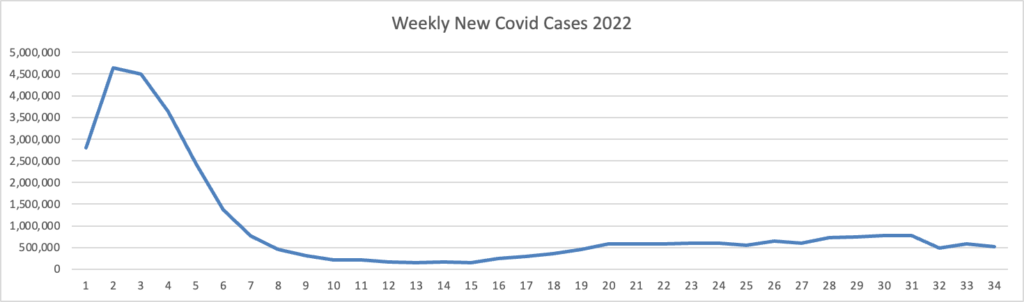
Based on the CDC’s Covid Data Tracker and using Thursday as the first day of the week, here is the FEHBlog’s weekly chart of new Covid cases from the 27th week of 2021 through the 20th week of 2022:
The CDC’s weekly review of its COVID statistics notes
As of May 18, 2022, the current 7-day moving average of daily new cases (101,130) increased by 18.8% compared with the previous 7-day moving average (85,143). A total of 82,820,565 COVID-19 cases have been reported in the United States as of May 18, 2022.
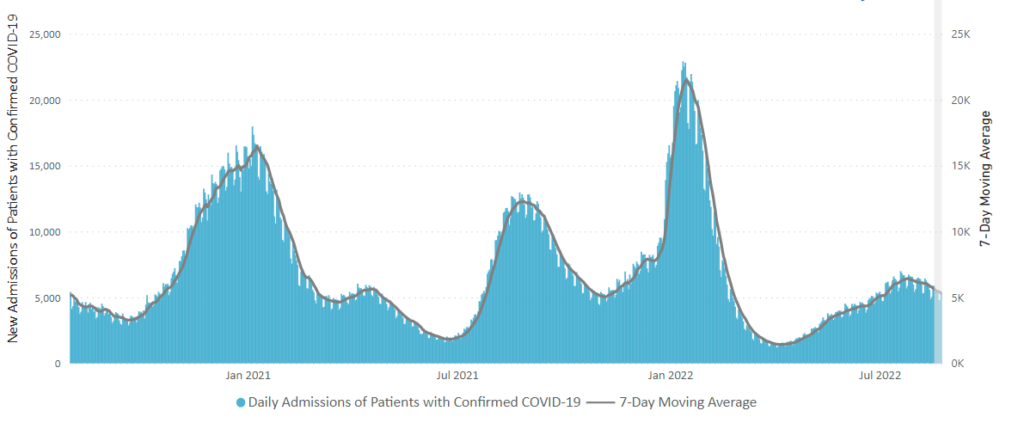
Here is the CDC’s chart seven-day movings averages of new Covid hospital admissions:
The CDC’s weekly review notes “The current 7-day daily average [of new hospital admissions for Covid] for May 11–17, 2022, was 3,250. This is a 24.2% increase from the prior 7-day average (2,617) from May 4–10, 2022.
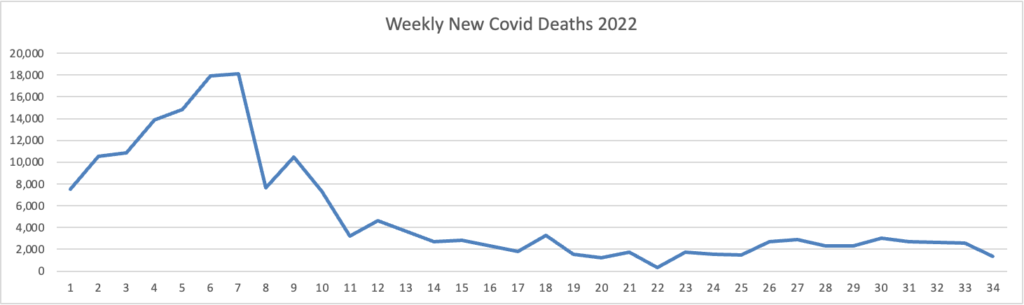
Here’s the FEHBlog’s weekly chart of new Covid deaths over the same period as the new weekly cases chart:
The CDC’s weekly review notes:
The current 7-day moving average of new deaths (280) has decreased 1.2% compared with the previous 7-day moving average (284). As of May 18, 2022, a total of 998,512 COVID-19 deaths have been reported in the United States.
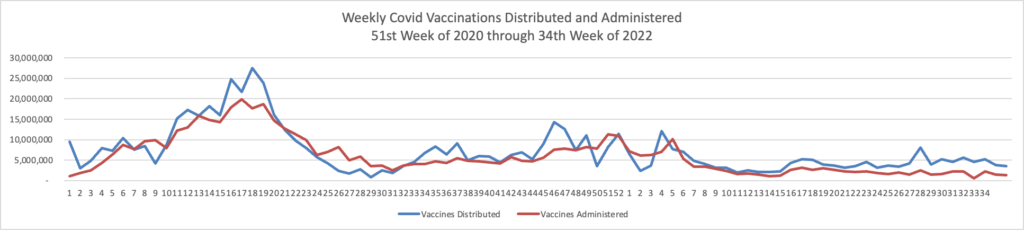
Here’s the FEHBlog’s weekly chart of Covid vaccinations distributed and administered from the beginning of the Covid vaccination program in December 2020 through the 20th week of 2022.
The CDC’s weekly review notes “As of May 18, 2022, the 7-day average number of administered vaccine doses reported (by date of CDC report) to CDC per day was 388,308, a 0.5% decrease from the previous week.”
To sum it up, the CDC’s weekly review points out,
As of May 19, 2022, there are 301 (9.35%) counties, districts, or territories with a high COVID-19 Community Level, 477 (14.81%) counties with a medium Community Level, and 2,442 (75.84%) counties with a low Community Level. This represents a moderate (+5.10 percentage points) increase in the number of high-level counties, a slight (−0.74 percentage points) decrease in the number of medium-level counties, and a corresponding (−5.84 percentage points) decrease in the number of low-level counties. Five (9.62%) of 52 jurisdictions had no high- or medium-level counties this week.
Federal News Network suggests “Federal employees [and annuitants] can use these next few months between now and open season, which begins Nov. 14, to do something that most feds rarely do — research and planning [for Open Season]. The article suggests how to conduct this research, and the FEHBlog thinks that Federal News Network is on the right track.
A growing number of Senate Democrats say they’re ready to take a tough vote on an amendment to keep the Title 42 health order in place at the U.S.-Mexico border if that’s what’s needed to move a stalled COVID-19 relief package.
Senate Majority Leader Charles Schumer (D-N.Y.) has held the bill from the floor because Republicans are insisting on voting on a bipartisan amendment to overrule the Biden administration’s decision to lift Title 42, a pandemic order that has stopped thousands of immigrants from entering the country on asylum claims. * * *
Without giving in to the Republicans’ demand for a vote on the hot-button issue of securing the border, COVID-19 relief could be stalled until after the November election.
The amendment is expected to fail but it’s a tough vote for vulnerable Senate Democrats.
More likely, in the FEHBlog’s view, the Majority Leader is waiting until the Title 42 health order is lifted later this month to see what happens.
Following the recommendation Thursday, many of the nation’s doctors, pharmacies and other vaccination sites are expected to begin offering the extra doses to the 28 million U.S. children in the age group.
The shots are to be given five months after the second dose. The extra dose is one-third the amount that those 12 years old and above receive.
Also Thursday, the CDC said it was strengthening its recommendation that people 12 years and older who are immunocompromised, or who are 50 and older, should receive a second booster dose at least four months after their first.
This means that health plans must start covering the booster with no member cost-sharing pursuant to ACA FAQ 50.
“We are ready from a manufacturing standpoint,” Moderna Chief Executive Stéphane Bancel said during a virtual appearance Thursday at The Wall Street Journal’s Future of Everything Festival.
The FDA/CDC decision is expected next month.
In other virus news, STAT News interviewed a top CDC expert on monkeypox. From the FEHBlog’s standpoint, the key takeaway is that monkeypox is not Covid.
I think we can take away a lot from what we know about monkeypox in Congo Basin and in West Africa. Even if human-to-human transmission is documented, it is generally documented among very close contacts. So family members, people taking care of ill patients. Or health care providers.
In funding news, the Department of Health and Human Services announced today a $1.5 billion funding opportunity under the State Opioid Response
SOR grant program provides formula funding to states and territories for increasing access to FDA-approved medications for the treatment of Opioid Use Disorder (OUD), and for supporting prevention, harm reduction, treatment, and recovery support services for OUD and other concurrent substance use disorders (SUD). The SOR program also supports care for stimulant misuse and use disorders, including for cocaine and methamphetamine. The SOR program helps reduce overdose deaths and close the gap in treatment needs across America by giving states and territories flexibility in funding evidence-based practices and supports across different settings to meet local community needs.
From the miscellany department
Today “the U.S. Office of Personnel Management (OPM) released guidance regarding the implementation of EO 13932; Modernizing and Reforming the Assessment and Hiring of Federal Job Candidates. OPM’s guidance represents a major step towards the federal government’s adoption of skills-based hiring practices and is an important innovation in federal hiring, which has historically relied on education and candidate self-assessments as a proxy for a candidate’s ability to perform in a job. This new approach helps hiring managers recognize and value skills regardless of where they were acquired, whether in a formal degree program, on the job, or on one’s own.”
Employee Benefit News identifies the ten most popular mental health and wellness apps.
Benefits consultant Tammy Flanagan discusses federal employee life insurance benefits in Govexec.
Health Payer Intelligence reports that CMS has updated the Medicare.gov website “to include new features such as highlighting pages that answer popular questions and spotlighting key steps that consumers should take related to Medicare coverage.”
We use cookies on our website to give you the most relevant experience by remembering your preferences and repeat visits. By clicking “Accept”, you consent to the use of ALL the cookies.
This website uses cookies to improve your experience while you navigate through the website. Out of these, the cookies that are categorized as necessary are stored on your browser as they are essential for the working of basic functionalities of the website. We also use third-party cookies that help us analyze and understand how you use this website. These cookies will be stored in your browser only with your consent. You also have the option to opt-out of these cookies. But opting out of some of these cookies may affect your browsing experience.
Necessary cookies are absolutely essential for the website to function properly. These cookies ensure basic functionalities and security features of the website, anonymously.
Cookie
Duration
Description
cookielawinfo-checbox-analytics
11 months
This cookie is set by GDPR Cookie Consent plugin. The cookie is used to store the user consent for the cookies in the category "Analytics".
cookielawinfo-checbox-functional
11 months
The cookie is set by GDPR cookie consent to record the user consent for the cookies in the category "Functional".
cookielawinfo-checbox-others
11 months
This cookie is set by GDPR Cookie Consent plugin. The cookie is used to store the user consent for the cookies in the category "Other.
cookielawinfo-checkbox-necessary
11 months
This cookie is set by GDPR Cookie Consent plugin. The cookies is used to store the user consent for the cookies in the category "Necessary".
cookielawinfo-checkbox-performance
11 months
This cookie is set by GDPR Cookie Consent plugin. The cookie is used to store the user consent for the cookies in the category "Performance".
viewed_cookie_policy
11 months
The cookie is set by the GDPR Cookie Consent plugin and is used to store whether or not user has consented to the use of cookies. It does not store any personal data.
Functional cookies help to perform certain functionalities like sharing the content of the website on social media platforms, collect feedbacks, and other third-party features.
Performance cookies are used to understand and analyze the key performance indexes of the website which helps in delivering a better user experience for the visitors.
Analytical cookies are used to understand how visitors interact with the website. These cookies help provide information on metrics the number of visitors, bounce rate, traffic source, etc.
Advertisement cookies are used to provide visitors with relevant ads and marketing campaigns. These cookies track visitors across websites and collect information to provide customized ads.