
Weekend Update

Weekend Update

The FEHBlog is in Connecticut for a series of meetings in the Nutmeg State over the next two days. Congress is back in DC. The House of Representatives delayed a vote on a FY 2015 continuing resolution due to the President’s request for funding to train Syrian rebels. Hopefully both bodies of Congress will pass a continuing resolution this week. The Hill’s update is here.

The Mercer consulting firm last week issued an employer survey (1700 employers) estimating that employer health plan costs will increase 3.9% in 2015 if employers aggressively seek to hold down costs with, e.g., high deductible plans. With no proactive changes, costs are expected to increase 2% more to 5.9%. That shows a lot of confidence in health plan cost control measures, including wellness programs.

The Wall Street Journal reported on a lively debate among medical experts over whether or not cancer is overdiagnosed.  In a sidebar, the Journal explained that this debate is leading oncologists to engage in shared decision making with patients, e.g., explain benefits and risks of screenings and other procedures and allow the patient to make the preventive care decision.

“We in our health-care conversations have not adequately explained both sides,” says Otis Brawley, chief medical officer of the American Cancer Society. For example, he says, mammograms do save lives, but not as many as most people think. For women in their 60s, regular screenings reduce the risk of dying of breast cancer by about 30%. “But 70% of women who were going to die of breast cancer will still die of it,” Dr. Brawley says.

Patients often overestimate the lifetime risk of dying of cancer, he says. For prostate cancer and for breast cancer, it’s about 2.7%. Put another way, for every 10,000 women in their 60s screened annually for 10 years, between five and 49 breast-cancer deaths will be averted; about 90 women will die of breast cancer anyway and 64 to 194 will be treated unnecessarily, according to a recent analysis in JAMA. An additional 940 will have biopsies that find no cancer.

For some patients, lowering even a small risk of dying of cancer is worth undergoing frequent screening and aggressively treating even low-risk cancers. Many cancer survivors say they are glad their cancer was found early, and don’t second-guess if it needed to be caught at all. Some say they’d rather know they have even a low-risk cancer than stop looking and be left to wonder.

Financial considerations would not play a role in this shared decision making as the ACA generally requires non-grandfathered health plans to cover these preventive services without enrollee cost sharing in network. This recent change could be militating in favor of this movement.

Finally, last week, the Food and Drug Administration approved for marketing a new drug to treat obesity. According to this NPR report,

[The new drug] Contrave [developed by Orexigen Therapeutics], for better or worse, is a combination of two [currently generic] drugs that have been around for a long time. One is bupropion, an antidepressant sold as Wellbutrin, that’s also been used to help people stop smoking. The other is naltrexone, a medicine that’s prescribed to help people stay off drugs and alcohol.  Contrave is intended for people who are obese or who are overweight and have other weight-related health problems, such as high blood pressure and type 2 diabetes.

The drug will be available this fall. The article also discusses the drug’s potential side effects.
TGIF

Here’s a link to this weeks Congressional actions from the Week in Congress.com.  Govexec.com offers a detailed report on the thorny issue of postal reform. The Govexec reporter does not expect Postal reform legislation to get through Congress this year, even with a lame duck session.

Business Insurance reports that a survey of more than 2,000 employers by the Kaiser Family Foundation and the Health Research and Educational Trust found that family coverage premiums rose an average of 3% in 2014. FEHBP premiums (both self only and self and family) rose 3.7% for this year or above the average. As the FEHBlog has noted the FEHBP’s demographics feature an average enrollee age around 60 years old because there are equal numbers of active employees and annuitants. We should learn 2015 premium information from OPM soon.

The Wall Street Journal included an op-ed from a Washington DC doctor / professor of medicine complaining about the practice of medicine in the age of Obamacare. The doctor complains about the burden of electronic health records and the imposition of government and insurer bureaucracies. The FEHBlog is sympathetic with the doctor. However, the Affordable Care Act or Obamacare places many more burdens on insurers than it does on health care providers. It’s a mutual problem.

Continuing to look at the other side of the fence, Fierce Healthcare has an interesting article about the steps that healthcare providers are taking to control the risk of human error in medical procedures.

Finally, the WSJ’s Pharmalot blog reports on price spikes in a “old,” non-prescription drug insulin that health plans typically cover. It’s another case of increased demand with little manufacturer competition in the market.

Enjoy the weekend.

Midweek Update

Federal News Radio reports that the House is poised to pass tomorrow a continuing resolution that would fund the Federal Government at current levels from October 1, 2014, through December 11, 2014. This would allow the lame duck session of Congress to enact an omnibus appropriations bill following the early November midterm elections.

The FEHBlog received good news from OPM yesterday that OPM Senior Health Actuary Ron Gresch will be receiving the Robert J. Myers Public Service Award from the American Academy of Actuaries later this year. Ron deserves a lot of credit for the FEHBP’s continuing success.

On the technology front, Clinical Innovation and Technology reports on a Mayo Clinic survey finding that a majority of patients are receptive to video visits with their doctors / telehealth. However, U,S. News and World Report notes a survey finding that doctors are concerned about the time lost adding information to the electronic health record systems that the federal government has funded to the tune of $24 billion to date. Throwing money at a problem generally is an ineffective solution. Hopefully these kinks (if they are kinks) will work themselves out over time. .

MedCity News reports that the Food and Drug Administration has issued a Purple Book on bio-similar drugs to complement its Orange Book on small molecule generic drugs. These books are “the go-to list for physicians, regulatory agents and generics makers, as [each] is a list of all FDA-approved drugs. It indicates which med can be interchanged for which – and lists out important patent exclusivity information.”  Progress.  On a related note, take a gander at this Drug Channels post analyzing last week’s CMS Actuary Report on U.S. Healthcare Expenditures from a prescription drug angle.

Weekend Update

The FEHBlog had a great trip to Denver and he is happy to be back in DC with access to a PC.

Congress returns to DC this week. The top item on its agenda (besides getting out of town to campaign) is a short term continuing resolution to fund the federal government past September 30 when Fiscal Year 2015 begins. Happily, the Hill’s Floor Action blog has resumed its practice of providing a schedule of the coming week’s activities in the legislative chambers.

Govexec reports that the federal workforce has grown steadily since last April following a series of steady sequestration drops. According to the article the federal government ended August with about 2.72 million employees.

The Federal Times reports that OPM has decided to allow federal employees participating in the health care flexible spending account programs to carry over up to $500 of any unused balance beginning next year, rather than lose it. “The ability to carry money from one year to the next will replace the current system, in which employees have a grace period of up to two and a half months to use any remaining money” OPM also is reducing the minimum contribution from $500 to $100.

CMS’s actiary released a national heathcare spending report last week. Cost curve up.

The CDC released a state by state map of obesity prevalence based on on 2013 data. A federal health care task force of which the FEHBlog has been unaware the Community Preventive Services Task Force issued recommendations for pre-diabetic folks — increase physical activity and better dietary habits — A/K/A common sense. .

CAQH CORE announced that its helpful coordination of benefits database program has been rolled out nationwide. “A CAQH SolutionTM, COB Smart determines when an individual is covered by more than one insurer and also indicates which insurer should pay first. The solution streamlines coordination of benefits (COB) activities so that healthcare claims can be processed correctly the first time.” Very cool.

Happy Birthday ERISA

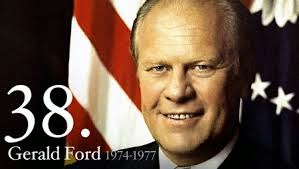
40 years ago today, President Gerald R. Ford signed the Employee Retirement Security Income Act of 1974 into law. ERISA’s principal focus was on pension plan regulation, but the law’s scope also encompassed private sector health and other so-called employee welfare benefit plans. Business Insurance provides a nice retrospective on ERISA, which was enacted 15 years after our beloved Federal Employee Health Benefits Act of 1959.  Both laws have become much more complicated since then which always is good news for lawyers.

Happy Labor Day

Labor Day means that we are close to the end of the August Congressional recess (on September 8) and OPM’s release of 2015 FEHBP premium information (sometime later this month). The Wall Street Journal reports that “Almost a year since the last partial government shutdown began, many House Republicans say they have little desire to start another.” Because Congress is only expected to be holding sessions for around 20 days before adjourning for the election season, we can expect Congress to pass a continuing resolution to take us into the new federal federal fiscal year that starts on October 1. The continuing resolution will likely last at least three months.

Last Friday, according to Govexec.com, the President issued an alternative pay plan which will result in a 1% across the board pay raise for federal employees beginning January 1. 2015.

Last week, the FEHBlog noted that Community Health Systems, a hospital chain, had lost 4.5 million patient records to computer hackers. Healthcare Dive reports that according to a Forbes report, the theft could cost the hospital chain $75 to $100 million due to litigation (which already have been filed), government investigations, etc. The National Law Review notes that

Hospitals should be accustomed to protecting data against privacy breaches as part of their HIPAA obligations, but outright cybertheft is a threat that many providers have not likely considered. The FBI, which is now investigating the Community incident, said in April that health care providers typically do not use the same high levels of security technology as companies in other industries (such as banking or retail). This makes providers an easy target for hackers. If a leading hospital system like Community can be breached, then hospitals of every size are at risk.

Health plans should be on guard too. In this day and age, it also is essential for HIPAA covered entities and business associates to carry cyber-liability insurance.

The FEHBlog also noted last week that the IRS has issued draft forms and instructions that health plans and large employers will use to comply with the Affordable Care Act’s onerous IRC §§ 6055 and 6056 reporting requirements that kick in for the 2015 reporting year. LifeHealth Pro notes that the forms are filled with ACA gobbledygook which is hardly surprising. It will be incumbent on health plans and large employers to educate recipients about these forms. Otherwise they will be flooded with customer service calls in early 2016 (which could happen despite best efforts).

Finally the New York Times reported yesterday that according to clinical trial results Novartis is on track to release a prescription drug that will vastly improve treat of chronic heart failure.

The drug [LCZ696] reduced both the risk of dying from cardiovascular causes and the risk of being hospitalized for worsening heart failure by about 20 percent in a large clinical trial.

Of course, there’s no such thing as a free lunch. Five to six million people in the U.S. suffer from this serious disease.

Some Wall Street analysts predict the drug, a tablet taken twice a day, will achieve billions of dollars in annual sales. Seamus Fernandez, an analyst at Leerink Partners, said on Saturday that the results were “near best case” and “could result in faster uptake, higher penetration and more robust branded pricing.”
As a proprietary drug, LCZ696 is likely to be expensive. Tim Anderson, an analyst at Sanford C. Bernstein & Company, estimates that it might cost $7 a day in the United States, or about $2,500 a year. Existing drugs are generic, costing as little as $4 a month, so insurers might balk at paying for the new drug.

The FEHBlog is happy about such research results. The manufacturers should recognize that they could not charge astronomical prices without the price supports provided by health insurance. Moderation is a good thing. It appears that Novartis may understand this concept while Gilead Sciences does not in the FEHBlog’s view.

TGIF

A reader of Wednesday’s FEHBlog inquired how Modern Healthcare picks the most influential people in healthcare. The answer is right here.

Govexec and FedSmith take note of the fact that yesterday was the deadline for public comment on OPM’s proposed rule extending FEHBP coverage with the full government contribution to temporary, seasonal, and intermittent employees who work on average at least 130 hours per month for at least 90 days. According to regulations.gov, OPM received 85 public comments. OPM proposed this rule in compliance with the ACA’s employer shared responsibility mandate. It is expected to be finalized effective January 1, 2015.

The U.S. Preventive Services Task Force is at it again.  According to Government Health IT, the Task Force has given a “B” recommendation to “coverage of behavioral counseling interventions for overweight and obese individuals with at least one other cardiovascular disease risk factor.” This recommendation will require FEHB plans to offer this coverage in-netowrk with no enrollee cost sharing beginning January 1, 2016.  The article discusses certain insurer pilot projects that currently are underway.

Finally, yesterday, the IRS released draft instructions for the forms (1095-B and 1095-C) that health plans (1095-B) and large employers (1095-C) will use to make ACA required reports beginning in January 2016 in accordance with Internal Revenue Code sections 6055 and 6056. The IRS is accepting public comments on those documents for the next sixty days or so.  

Mid-week update

Modern Healthcare released its list of  top 100 most influential people in healthcare, and the FEHBlog’s not on it.  The top ten (in order) are President Obama, the Kaiser Permanente CEO, HHS Secretary Burwell, the United Healthcare CEO, CMS Administrator Tavenner, HCA’s CEO (hospitals), PhRMA’s CEO (top lobbyist!), Aetna’s CEO, Ascension Healthcare’s CEO (Catholic health system), and DaVita Healthcare’s CEO (dialysis centers).  The FEHBlog is surprised that the Labor Secretary, the Treasury Secretary, the OMB Director, and the OPM Director are not on the list.  The VA Secretary is 47.  Fun reading.

The FEHBlog noticed two articles advocating healthcare price transparency — one from the provider perspective and one from the payer perspective. It is encouraging that doctors are being asked to take cost effectiveness into account.

On the flip / discouraging side is this article from NorthJersey.com with a chilling discussion of how investors have been converting struggling non-profit hospitals to for-profit hospitals in order to take advantage of a loophole in New Jersey law that allows emergency rooms to gouge insurers.

Bayonne Medical Center wasn’t just bragging about efficiency when it posted a big digital clock on a highway billboard a few years ago to show the real-time waits in its emergency room. It wanted patients to come to its ER. Lots of patients.
It didn’t matter if the hospital was in the patient’s insurance network. On the contrary, to the businessmen who had recently purchased the medical center, those “out-of-network” patients held the key to reversing Bayonne’s fortunes.
These owners, who bought the hospital in bankruptcy, had found an unintended — and very profitable — consequence to a state regulation that was designed to protect patients with urgent medical needs. While the regulation required insurance companies to pay for emergency treatment at hospitals where their coverage wasn’t normally accepted, it did nothing to control the size of the bills the hospitals could submit to those insurers.
And that loophole enabled Bayonne, which had ended its contracts with some of the state’s largest insurers, to charge those higher out-of-network rates. The result was striking: The strategy contributed to a $17 million operational profit within two years of its 2008 takeover.

Fortunately for FEHB plans, the FEHB Act preempts such state laws and regulators, but cost curve up. In this regard, the Wall Street Journal reports on 2013 and 2014 hospital earnings here.

Kaiser Health News reports on an interesting case management service called Vital Decisions that some insurers offer seriously ill members. The program seeks to get these members more actively involved in managing their own health care.

Finally the Drug Channels blog discusses seven trends for specialty pharmacy’s bright future.

Weekend Update

Congress remains out until after Labor Day. The FEHBlog has enjoyed a very pleasant weekend with his family in Chicago.

Fedsmith has a blog entry on the upcoming Federal Benefits Open Season. Fedsmith suggests that FEHBP premium increases for 2015 will be in line with 2013 (3.4%) and this year (3.7%) because federal employees are not directly impacted by the Affordable Care Act. Au contraire, the FEHBlog is afraid. FEHB plans do have a relatively stable but aging risk pool in contrast to the new ACA plans on the exchanges. Nevertheless, the FEHBP are subject to all of the same ACA mandates as private sector health plans and the insured FEHBP plans must struggle with the ACA’s onerous health insurer fee just like the plans on exchanges. It’s a mixed bag, but on the whole, cost curve up.

The FEHBlog has been writing about rapid increases in prescription drug costs, even generics. The FEHBlog nevertheless was surprised to read in the Wall Street Journal that Walgreen’s chief financial officer has lost his job because “Walgreen hadn’t factored in, among other things, a spike in the price of some generic drugs that it sells as part of annual [Medicare Part D] contracts” and lost $1 billion in revenue forecasted for 2016. In view of the cloudy crystal ball, perhaps the FEHBlog’s hunch that Gilead Sciences’ Solvaldi pricing decision embolden the generic drug manufacturers to jack up their prices is correct. Bad precedent.

Reuters reports that the FBI has issued a warning to healthcare companies the hackers are targeting them for their protected health information.  The FBI did so in the wake of a successful attack on Community Health Systems’ network that resulted in the disclosure of millions of patient records. CHS is a Fortune 500 company that operates acute care hospitals. CHS’s breach notice states the company’s belief that

the attacker was an “Advanced Persistent Threat” group originating from China, which used highly sophisticated malware technology to attack CHSPSC’s systems.  The intruder was able to bypass the company’s security measures and successfully copy and transfer some data existing on CHSPSC’s systems. 

The FEHBlog hopes that HHS Office for Civil Rights does not hammer CHS with a multi million dollar HIPAA civil penalty as the company is cooperating with the government and even the federal government’s own systems have been hacked by these Chinese groups. Ihealthbeat discusses legislator reactions to the CHS breach.

Finally, it’s worth noting that the Bipartisan Policy Institute last week issued an interesting white paper on transitioning healthcare from volume to quality. Good luck with that.


Mid-week update

The FEHBlog regrets the one day delay in the mid-week update but he was on medical leave yesterday.

The 2015 government contribution for FEHBP coverage will be announced next month. Yesterday the actuarial consulting firm Towers Watson reported that U.S employers expect heath care costs to rise 4% in 2015. Bear in mind that most large employer coverage in the U.S. is self funded by the employer and therefore not subject to the ACA’s onerous health insurer fee. That fee does apply to FEHBP plans that are carried by insurance companies or HMOs and will jack the premium up a couple of extra points. Cost curve up.

In a bit of good news AIS reports that  

Although the FDA has yet to approve a product through the 351(k) biosimilar pathway, multiple follow-on drugs are working their way through the pipeline, noted Kate Keeping, senior director of biosimilars research for BioTrends Research Group at a June 30 webinar sponsored by the company.
“The United States is the only developed market to have no biosimilars, but development is ramping up,” Keeping said. As of June, 23 biosimilar products were in U.S. clinical trials, and as of April, 42 biosimilars were in development-phase meetings. According to Keeping, “Several Phase III biosimilar trials started this quarter,” including two for Herceptin (trastuzumab) biosimilars for early breast cancer, two for Humira (adalimumab) biosimilars for rheumatoid arthritis and one for Enbrel (etanercept) for RA and psoriasis.

Interestingly, the Wall Street Journal opinion page (with which the FEHBlog generally agrees) objects on free market grounds to AHIP’s and other’s criticism of Gilead Science’s $84,000 per treatment pricing decision for its biologic drug Sovaldi that cures most cases of Hepatitis C. The FEHBlog applauds this innovation. He does think that the price, which sits on top of another require drug priced at $55,000 per treatment, is just too damn high. What’s more health care is not a free market because there are government price controls to benefit DoD, the VA, Medicaid, etc. and health insurance including the FEHBP acts a a price support. Gilead never could charge $84,000 without the availability of health insurance. So it shouldn’t require more government price controls to force Gilead to haul down the pirate flag. A conscience / desire to avoid killing the golden goose would suffice. 
An interesting ACA trend has been the development of narrow networks for the ACA exchange or market place plans. The FEHBlog thought these narrow networks would never fly with people who were used to having health insurance but could work for the people without insurance for whom the exchanges were created.. Plus the narrow networks would help control costs. However, the consumer groups have hammered on the exchange plans with narrow networks. The FEHBlog noticed this LA Times article about a California lawsuit brought against Anthem over its use of narrow networks in the California exchange.  No good deed goes unpunished.