Monday Roundup

Monday Roundup

The Wall Street Journal reports tonight that the Democratic House leadership and the White House are cautiously optimistic about achieving a compromise COVID-19 relief bill this week. The negotiations continue tomorrow.

The FEHBlog listened to the oral argument this afternoon over the Whitman-Walker Clinic’s motion for a preliminary injunction to stay the upcoming effective date of the newly revised HHS rule implementing the ACA’s individual non-discrimination clause, Section 1557. The Court focused the parties’ attention on the Constitutionally required standing of the Clinic and its co-plaintiffs to bring the case and the justiciability of the issue. The Court allowed the government defendants to submit a brief responding to the new case law support that the plaintiffs raised at the oral argument. That brief is due on August 10 a week before the rule takes effect on August 18. Associational standing is a complicated issue.

The President today signed a wide ranging executive order on improving rural health and telehealth access. Speaking of executive orders, Health Payer Intelligence reports that America’s Health Insurance Plan’s recently criticized the President’s recent executive order against pharmacy rebating practices because “Nothing in the proposed rule would require Big Pharma to lower their prices,” the payer organization stated, referring to the rebate rule. “Instead, it undermines competitive negotiations – a misguided approach that makes the problem of out-of-control drug prices worse.” That is indeed the rub.

On the COVID-19 front,

  • Fierce Biotech reports that “Eli Lilly has started a phase 3 trial to evaluate whether its antibody LY-CoV555 stops the residents of nursing homes from developing COVID-19. Lilly has created customized mobile research units to run the clinical trial at nursing homes as the long-term care facilities lack experience running studies.”
  • The FEHBlog’s dogs requested that after all of his compliments to the monkey community last week he should point out that a German study has found that specially trained dogs may be able smell the COVID-19 virus in saliva or other human bodily discharges.

In other healthcare news —

  • Healthcare Finance reports that the second House appropriations minibus appropriations bill passed last Friday includes a provision that would permit the government to fund work on the develop and promulgation of the HIPAA patient identifier rule.
  • Forbes reports that

Health insurer Humana said [last Wednesday July 29] it is investing $100 million in the in-home primary care company, Heal, to bring in-person physician “house calls and one-touch medicine” to seniors in its Medicare Advantage plans. Heal is a fast-growing startup company that offers primary care house calls on-demand and has delivered more than 200,000 home visits in the company’s first five years in eight U.S. markets. Heal’s services also include telemedicine, telepsychology and related digital monitoring services, which Humana says will be key for its elderly health plan subscribers.

  • Health Payer Intelligence informs us today that in reaction to CMS’s decision to open Medicare Advantage to Medicare beneficiaries under age 65 suffering from end stage renal (kidney) disease “Humana will be partnering with a chronic kidney disease management and awareness organization to provide home healthcare and care coordination to Medicare Advantage members. * * * The payer is partnering with REACH Kidney Care, a nonprofit affiliate of Dialysis Clinic, Inc., in order to provide better kidney care services in Alabama, North Carolina, South Carolina, and Tennessee.”


Tuesday Tidbits

Following up on last Friday’s and Sunday’s posts on the President’s executive orders on drug pricing, here for greater perspective is a link to a Fierce Healthcare article offering the positions of the health insurance and PBM industry trade associations’ positions on the orders. Essential Hospitals lets us know that the text of the fourth international pricing index executive order has not yet been made public.

The Wall Street Journal reports that “Eastman Kodak Co. has won a $765 million government loan under the Defense Production Act, the first of its kind. The purpose: to help expedite domestic production of drugs that can treat a variety of medical conditions and loosen the U.S. reliance on foreign sources. * * * Kodak’s loan has terms similar to a commercial loan and must be repaid over 25 years, [Kodak CEO Jim] Continenza said. He said Kodak will produce “starter materials” and “active pharmaceutical ingredients” used to produce generic medicines. “We have a long, long history in chemical and advanced materials—well over 100 years,” Mr. Continenza said. He added that Kodak’s existing infrastructure allows the company “to get up and running quickly.”

On the COVID-19 front —

  • Federal News Network informs us that

About 4,000 federal employees have filed workers’ compensation claims with the Labor Department due to COVID-19. 60 people have filed death claims. Labor projects COVID-19 claims among federal employees may reach 6,000 in the coming weeks. The department’s inspector general says the division that handles federal employee claims is anticipating a strain in resources due to demand and social distancing mandates. It has alternative staffing plans if COVID-19 compensation claims continue to surge. Labor says it’s accepted over 1,600 federal employees claims so far. Over 2,300 are unadjudicated.

  • The Society for Human Resource Management brings us up to date on the Senate majority’s new $1 trillion COVID-19 relief bill, the HEALS Act.
  • The Center for Medicare and Medicaid Services released “an early snapshot of the impact of the coronavirus disease 2019 (COVID-19) pandemic on the Medicare population. The data shows that older Americans and those with chronic health conditions are at the highest risk for COVID-19 and confirms long-understood disparities in health outcomes for racial and ethnic minority groups and among low-income populations.” A large cadre of the Medicare population of course is also enrolled in the FEHBP so this data is worth a gander.
  • The National Institutes of Health announced the successful results of a double blind study of the Moderna / NIAID COVID-19 vaccine on non-human primates / rhesus macaques. As noted yesterday that vaccine entered phase 3 human trials this week.

In other news —

  • Becker’s Hospital Review identifies the highest ranking hospital in each State as found in U.S. News and World Report.
  • NPR discusses two new studies suggesting that the risk of Alzheimer’s disease can be reduced by taking flu and pneumonia vaccines.
  • HHS’s Office for Civil Rights (“OCR”) which enforces the HIPAA Privacy and Security Rules announced that “Lifespan Health System Affiliated Covered Entity, a non-profit health system based in Rhode Island, has agreed to pay $1,040,000 to the OCR and to implement a corrective action plan to settle potential violations of the Health Insurance Portability and Accountability Act (HIPAA) Privacy and Security Rules related to the theft of an unencrypted laptop [thereby evidently allowing access to protected health information on over 20,000 patients in 2017].

Monday Roundup

The Wall Street Journal reports that

Two of the most advanced experimental coronavirus vaccines entered the pivotal phase of their studies on Monday, with the first subjects receiving doses of vaccines developed by Moderna Inc. and Pfizer Inc.

Researchers evaluating the vaccines plan to enroll 30,000 people in separate last-stage, or phase 3 trials, results of which will determine whether the vaccines protect against symptomatic Covid-19, and whether they should be cleared for widespread use.

Let’s go.

Also on the vaccine front, Healio informs us that the “Influenza vaccination was significantly associated with reduced risks for all-cause death, cardiovascular death, and death from acute myocardial infarction or stroke among adults with diabetes, according to an analysis of registry data.”

The FEHBlog recommends that you listen to, or read the transcript of, this week’s Econtalk podcast in which the host economist Russ Roberts discussed the COVID-19 emergency with Nissam Nicholas Taleb, who is a noted author on the topic of probability. Enlightening.

The American Hospital Association reminds us the July is Minority Mental Health Awareness month by offering a website full of resources. The FEHBlog attended an NCQA Digital Quality Summit breakout session track on racial and ethnic disparities in healthcare last week. Some of the health plan participants spoke up about the difficulty of identifying the racial and ethnic characteristics of their members. That is an important prerequisite to conducting investigations that will lead to solutions. It occurred to the FEHBlog that racial and ethnic characteristics could be added to the ICD-10 code set which would allow coders to spread this information via healthcare claims.

MedPage Today offers a variety of telehealth updates such as the following:

A program that integrated a dedicated team of 24/7 telemedicine clinicians with automated text message check-ins was able to monitor COVID-19 patients at home and quickly support those whose symptoms grew worse, a case study in NEJM Catalyst showed.

Outcomes from the first 3,000 patients invited to participate in the University of Pennsylvania Health System COVID Watch program showed that 83% of confirmed or suspected COVID-19 patients were managed by the automated program; only 17% escalated to needing clinical care, reported Anna Morgan, MD, MSc, of the Perelman School of Medicine at the University of Pennsylvania, and colleagues.

Finally, the Society for Human Resource Management summarizes recent U.S. Labor Department workplace guidance on COVID-19 issues.

Weekend Update

Congress remains in session this week on Capitol Hill for legislative and committee business. The House passed its first appropriations minibus (HR 7608) last week. The FEHBlog expects the House to pass the next minibus (HR 7617) including FEHBP appropriations this coming week. Meanwhile, both Houses continue to work on another COVID-19 relief bill.

On Friday, the federal government filed its opposition to the Whitman-Walker Clinic’s motion for a preliminary injunction to stay the mid August effective date for the Trump Administration’s revised ACA Section 1557 rule. While the FEHBlog expected the government to pull back the rule in order to adjust it for the Supreme Court’s Bostock County decision, the government took the hang out route. The plaintiffs’ reply is due Wednesday July 29 and the oral argument on the motion will be held on Monday August 3 at 2 pm in the U.S. District Court for the District of Columbia. According to Katie Keith’s article on ACA litigation, posted last week, there are several other legal challenges pending against this rule.

The FEHBlog did virtually attend NCQA’s Digital Quality Summit last week. The FEHBlog was probably the only lawyer attending this conference, but the FEHBlog finds health care quality measurement fascinating (just like OPM). However, the FEHBlog just took a look at the speaker’s list and found out that one of the general session speakers is a sister at the bar. What do you know? The FEHBlog remains a firm believer in the FHIR API to facilitate health quality measurement. The FEAHBlog likes the lead in this FHIR website “Integrations don’t need to be complicated.”

In other news

Proponents of alternative payment models hope the pandemic will drive adoption of value-based arrangements down the line, as the financial pressures facing fee-for-service primary care practices have highlighted the shortcomings of paying for volume. There’s a dichotomy between fee-for-service practices, which have been staring at potential financial ruin since March, and those in alternative payment models, [e.g. direct primary care practices“}whose finances are in some ways insulated from the worst of the pandemic’s economic repercussions.

  • Health Payer Intelligence reports that

More than six in ten employers said that they would be partnering with their healthcare payer in the workplace transition back to the office, an Optum survey found. The survey revealed that only 16 percent of employers had achieved a full transition to the worksite. “Although almost all organizations appear committed to completing their transitions by early September, there will be a need for sustained employee well-being support well beyond the 90-day window,” the survey reminded.

  • Here’s a Forbes’s assessment of the President’s four executive orders issued on Friday in an effort to lower prescription drug prices. The international price index executive order is still not found on whitehouse.gov. What’s more, here is Avik Roy’s take on the executive orders.

Friday Stats and More

This chart is based on the Centers for Disease Control’s Cases in the U.S. website for the week ending May 20th through the week ending July 23, which was a doozy in terms of new cases.

Here’s the CDC’s COVID-19 Hospitalizations Chart, which has been fairly stable since May:

The Wall Street Journal reports that

President Trump signed executive orders Friday aimed at reducing drug prices. The moves revived a signature part of his health-policy agenda before the 2020 election after his earlier efforts to combat rising prescription costs stalled.

One of the executive orders focuses on pegging the cost of drugs in the U.S. to lower drug prices overseas, and another concerns speeding imports of drugs from Canada. The pharmaceutical industry and some Republicans have criticized the first order, saying it amounts to price controls, while opponents of the second initiative say it raises questions about product safety.

Another would require community health centers to pass on negotiated discounts on insulin and epinephrine-injector devices to consumers. And a fourth would attempt to undercut “middlemen” whom Mr. Trump described as profiting from deals with drugmakers and don’t pass along discounts to consumers.

The moves are unlikely to result in immediate changes. The White House said they represent the administration’s policy and begin a rule-making process. That process can be arduous and face legal challenges.

The links inside the quote are to the Executive Orders themselves (The text of the first referenced Order on the use of international price indexing is not on whitehouse.gov yet).

Health Payer Intelligence informs us that “Over half of the public rate filings from payers on the individual and small group health insurance market are proposing 2021 premium rates changes between a two percent decrease and a six percent increase, according to Kaiser Family Foundation.” For more details, check out the KFF report.

Thursday Miscellany

Modern Healthcare reports this evening that Health and Human Services (“HHS”) Secretary Alex Azar has signed a 90 day extension of the COVID-19 national health emergency. The current emergency period was otherwise set to expire on Saturday July 25. Modern Healthcare explains that

The renewal gives the healthcare industry certainty through the fall on several key policies to assist with the COVID-19 response. Some notable policies tied to the public health emergency are the 20% Medicare inpatient add-on payment for COVID-19 patients, increased federal Medicaid matching funds for states, a mandate that insurers cover medically necessary COVID-19 tests without cost-sharing, relaxed telehealth restrictions, and Section 1135 waivers that give providers additional flexibility to respond to COVID-19.

In other news,

  • Aetna is rolling out two new benefit design offerings for employer sponsored health plans per Fierce Healthcare.

The new designs, called Upfront Advantage and Flexible Five, offer members coverage for some preventive services before they meet their deductibles. In Upfront Advantage, members will have access to services worth up to $500 for an individual and $1,000 for a family for free before their deductible is met. In Flexible Five, members will instead be offered five coupons per person for these services; a family of four, for example, would receive 20 coupons that can be applied to services such as primary care visits, behavioral health visits, urgent care, lab tests or x-rays conducted during those visits and generic drugs.

  • Health Payer Intelligence informs us that Humana “has committed to mail out over a million preventive care packages that members can use in their homes. The in-home preventive care packages are designed to support chronic disease prevention for members with diabetes or colon cancer. Members can take the test in their homes to detect diabetes or colon cancer developments as early as possible.” That’s quite an investment.
  • HHS’s Office for Civil Rights announced a HIPAA Privacy Rule breach settlement with a North Carolina based healthcare provider today. It’s noteworthy that the settlement resolved issues that were touched off by a data breach in 2011.

Tuesday Tidbits

My heavens it’s raining hard here in Bethesda Maryland.

Last week the House Appropriations Committee cleared the FY 2021 Financial Services and General Government Appropriations Bill by a vote of 30-22. This is the bill that funds the OPM and the FEHBP. FedWeek calls attention to the fact that the Committee’s report on the bill makes the following FEHBP recommendation:

The Committee recognizes the importance of medical foods, as defined in the Orphan Drug Act (21 U.S.C. 360ee(b)(3)), which often serve as firstline therapies to treat a number of conditions. The Committee is concerned about the lack of coverage of medical foods in FEHBP insurance plans. The Committee encourages OPM to encourage FEHBP plans to explore options for including coverage of medical foods within their plans.

Here’s a link to a Food and Drug Administration set of frequently asked questions about medical foods.

The House Appropriations Committee announced today the Financial Services Appropriations bill is one of seven such bills to be packaged as a minibus (H.R. 7617) and submitted to the House of Representatives for a vote next week.

Last week, the FEHBlog noted a Centers for Disease Control report noting an uptick in drug overdose death last year. Today the American Medical Association released a 2020 progress report from its opioid task force. Fierce Healthcare explains that report finds “a nearly 40% decline in opioid prescriptions in the last five years, but overdose deaths have continued to increase thanks to spiraling use of illicit drugs such as synthetic fentanyl.” Moreover, “[i]n the report, the AMA pressed for changes to remove barriers, such as prior authorization, to addicts gaining access to medical treatments.”

On the Affordable Care Act front —

  • Georgetown Law Professor Katie Keith provides a lengthy and informative update on ACA related litigation if this is your cup of tea. The FEHBlog cannot remember another federal statute that has lead to so much litigation over the validity of government actions thereunder.
  • The Internal Revenue Service released Rev. Proc. 2020-36. To comply with the ACA’s employer mandate, a large employer must offer its employees at least one coverage option that has at least 60% actuarial value and has an employee contribution that does not exceed a certain percentage of salary / wages. Every year the IRS announces the new percentage and the applicable percentage is 9.83% for plan years beginning on or after January 1, 2021.

Finally, FedSmith offers guidance to federal employees who are starting to consider civil service retirement. Of note, “you have to be enrolled in FEHB and FEGLI for at least five years before retiring to be eligible to continue these programs after you retire. Having access to FEHB in retirement can save you thousands and thousands of dollars and should not be taken lightly.” How true that is.

Monday Roundup

In federal personnel news —

  • Politico reports that earlier today the Senate confirmed acting Office of Management and Budget Director Russell Vought to be permanent OMB Director.
  • Federal News Radio reports that the President intends to nominate John Gibbs to be permanent Director of the Office of Personnel Management. Mr. Gibbs “currently serves as the acting assistant secretary for community planning and development at the U.S. Department of Housing and Urban Development.

It’s worth noting that the Presidential inauguration will occur six months from today.

On the COVID-19 front —

  • The Wall Street Journal reports that “The prospects of successfully developing a coronavirus vaccine as soon as this year were buoyed Monday when three of the world’s leading candidates reported positive early trial data. Vaccines being developed by University of Oxford researchers and AstraZeneca PLC; PfizerInc. and German partner BioNTech BNTX 3.46% SE; and China’s CanSino Biologics all reported fresh updates showing their shots generated immune responses and were safe to use.
  • Fierce Biotech reports that a double blind human patient study of U.K. manufacturer Synairgen’s inhaled COVID-19 treatment against a placebo produced encouraging results. “The [preliminary] data showed those who were given SNG001 [a nebulizer interferon beta protein] had a 79% lower risk of developing severe disease compared to placebo * * * with patients who got that drug also more than twice as likely to recover from COVID-19 than those on a dummy med.” Synairgen’s press release advises that “‘Further analysis will be conducted over the coming weeks and reported in due course.”

Fingers remain crossed for the vaccines and the new treatment.

Health IT Analytics discusses how “geographic data has helped leaders better understand where to allocate population health resources during the COVID-19 pandemic.” Given the mantra that all healthcare is local, it only makes sense that geographic data should be helpful for this purpose. For example,

To better understand where to direct resources, researchers at NYU Grossman School of Medicine recently developed a city-oriented COVID Local Risk Index. The tool calculates COVID-19 risk down to the hyperlocal, neighborhood level by relying on key health, economic, and social data at the census tract level. The index also allows for comparison of COVID-19 risk across other cities and between neighborhoods.

Well done.

Weekend update

The House and the Senate will be in session on Capitol Hill for the next two weeks. The House will begin a district work break at the end of July while the Senate will continue in session until August 5. Congress will be out of session for the remainder of August for the political conventions. It will be interesting to see whether another COVID-19 relief bill emerges over the next three week legislative period.

Speaking of COVID-19, Govexec.com estimates that 19,000 federal employees and 20,000 members of the U.S. military have tested positive for COVID-19. That’s roughly 1% of the total number of federal employees and military members and 1% of the total number of COVID-19 cases in the U.S. That’s encouraging given the fact that many federal employees, e.g., the Postal Service, law enforcement, as well as military members have not been hunkered down during the emergency. Thanks to all of you for your service.

The FEHBlog subscribes to the Washington Post’s Optimist email and today’s lead article caught his attention — “Need some good news about covid-19? Here are six reasons for optimism.” The writer who directs the Health Buildings Program at Harvard’s public health schools discusses six trends that the FEHBlog has been following to one extent of another. It’s helpful to read them summarized here.

The FEHBlog looks forward to virtually attending the National Committee for Quality Assurance’s Digital Quality Summit this coming Wednesday and Thursday. The FEHBlog will share a few tidbits with his readership.

In last Friday’s post, the FEHBlog mentioned the key roles that hospitals and other healthcare providers including “pharma” and the prescription benefit managers plus the government play in responding to the COVID-19 emergency. It occurred to the FEHBlog over the weekend that his readers may wonder where health plans fit into this mix.

Health plans need to keep on keeping on, as they have done, by paying claims and helping members navigate the healthcare system, among other things. That’s an important responsibility. In my experience, FEHB plans have not missed a beat during the emergency, and the FEHBlog is proud to serve many of them.

Friday Stats and More

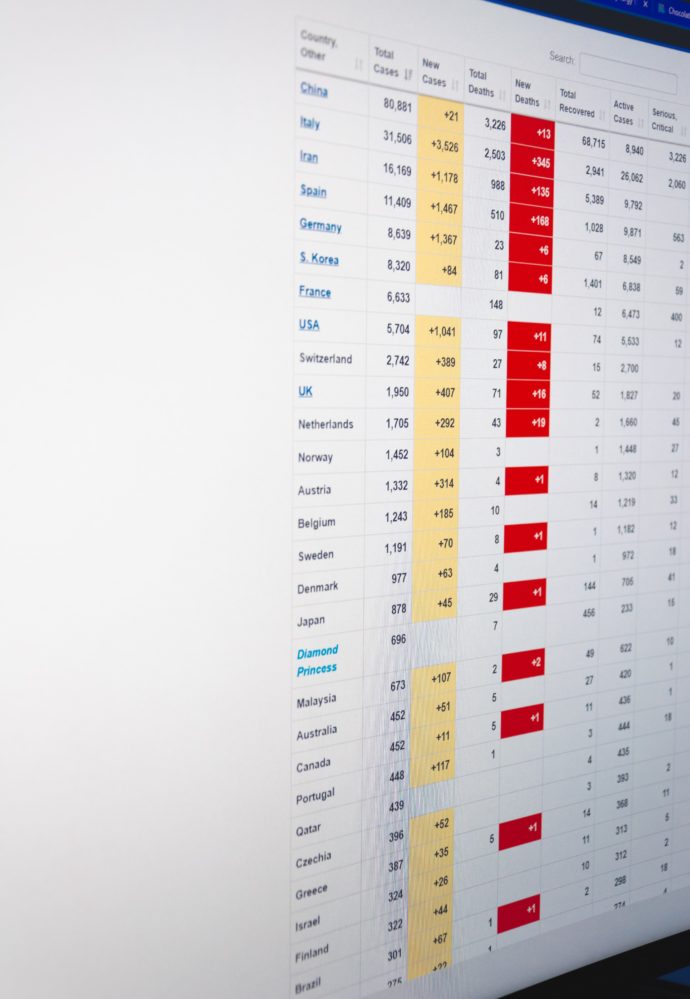
For the third week in a row, new COVID-19 cases have topped 300,000 (nearly 1 million in total) while the number of new deaths remains relatively low and stable (12,000 in sum over the past three weeks) according to the CDC’s cases in the U.S. website which the FEHBlog tracks.

Axios echos the FEHBlog’s sentiment that the medical profession to its credit has learned how to treat COVID-19. That is what you would expect in 2020. Hopefully the government is doing a good job providing healthcare resources to hot spot areas in order to facilitate treatment. In that regard, HHS announced today that “it will begin distributing $10 billion in a second round of high impact COVID-19 area funding to hospitals starting next week.”

In our FEHBP world —

  • Federal News Network reports that OPM has issued new proposed rules to address enrollment problems that arose during the long government shutdown in the winter of 2018-19. Hopefully we won’t encounter another one of those unfortunate events again, but it is better to be safe than sorry. Several of the new flexibilities are already law thanks to a law that Congress passed in 2019.
  • OPM also released today a revised SF 2809 FEHB enrollment form. The form is a handy reference for FEHB enrollment rules. It’s not used as often as it was pre-internet and smart phones.

Finally, the Trump Administration enjoyed two victories in the U.S. Court of Appeals for the D.C. Circuit today. As Healthcare Dive reports

  • The Court of Appeals affirmed a lower court decision upholding the Administration’s short term duration health plan rule. The FEHBlog sees no harm in giving consumers greater choice of health care coverage after Congress zeroed out the individual mandate.
  • The Court of Appeals reversed a lower court decision and thereby upheld the Administration’s Medicare “site neutrality” rule that “reduced some payments to off-campus hospital outpatient departments to make them consistent with other outpatient payments.” The court reasoned that

“Reducing the payment rate for a particular OPPS service readily qualifies, in common parlance, as a ‘method for controlling unnecessary increases in the volume’ of that service,” according to the opinion. “The lower the reimbursement rate for a service, the less the incentive to provide it, all else being equal. Reducing the reimbursement rate thus is naturally suited to addressing unnecessary increases in the overall volume of a service provided by hospitals.”

Makes perfect sense to the FEHBlog.