Thursday Miscellany

Thursday Miscellany

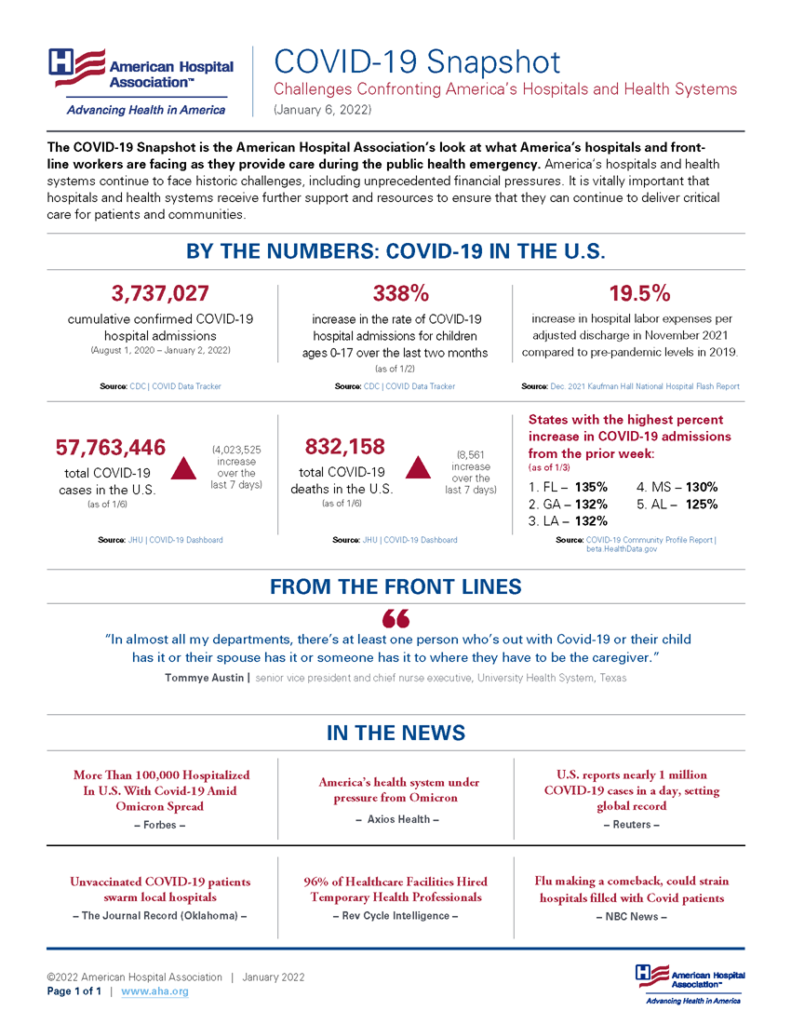
From the Omicron front, the American Hospital Association offers its January 2022 monthly COVID snapshot. “The COVID-19 Snapshot is the American Hospital Association’s look at what America’s hospitals and frontline workers are facing as they provide care during the public health emergency.”

From the COVID testing front, the FEHBlog commends this 20 minute long Wall Street Journal podcast on why at home COVID tests are so hard to find.

In that regard STAT News offers a report on a

new study raises significant doubts about whether at-home rapid antigen tests can detect the Omicron variant before infected people can transmit the virus to others.

The study looks at 30 people from settings including Broadway theaters and offices in New York and San Francisco where some workers were not only being tested daily but were, because of rules at their workplaces, receiving both the antigen tests and a daily test that used the polymerase chain reaction, or PCR, which is believed to be more reliable.

On days 0 and 1 following a positive PCR test, all of the antigen tests used produced false-negative results, even though in 28 of the 30 cases, levels of virus detected by the PCR test were high enough to infect other people. In four cases, researchers were able to confirm that infected people transmitted the virus to others during the period before they had a positive result on the rapid antigen test.

This study suggests to the FEHBlog that one rapid at home tests are still useful to help decide whether to end an isolation or quartine period at five days or once available whether or not a COVID pill should be taken. However, one use of a rapid at home test may not be so reliable to help decide whether or not to enter a gathering. In fairness to Abott and Quickvue, both manufacturers include two tests in each kit so that the test can be repeated a couple days later. If you are using these at home tests follow the manufacturers’ instructions.

From the COVID vaccine mandate front, the U.S. Court of Appeals for the Sixth Circuit on January 5 upheld by a 2-1 vote a regional stay on the Biden Administration’s government contractor mandate. As you know the U.S. Court of Appeals for the 11th Circuit is considering a nationwide stay on that mandate after deciding the stay may remain in place pending the Court’s final decision on that matter.

On Friday morning the U.S. Supreme Court will consider whether or not to maintain stays on the Biden Administation’s healthcare worker vaccination mandate and its OHSA ETS vaccinate or test program for employers with 100 or more employees. The Supreme Court allows the public to listen to the oral argument or read the transcript. The proceedings will begin at 10 am ET. The FEHBlog expects a decision from the Court in this accelerated proceeding next month.

On the private sector initiated vaccine front, the Society for Human Resource Management (SHRM) adds that

​Employers are on safer legal footing terminating employees for violating mandatory vaccination policies than imposing lesser punishments, legal experts advise. They say employers should not opt, for example, to withhold pay raises, make only vaccinated workers eligible to apply for internal positions or promote only vaccinated employees.

Many lower courts have upheld employers’ mandatory vaccination policies, which, unlike the Occupational Safety and Health Administration’s emergency temporary standard, aren’t yet before the Supreme Court, though the court may address them in passing.

On the human resources front —

  • SHRM offers 2022 guidance and reminders for benefit and compensation managers.
  • Govexec digs into the details of the President’s recent executive order adjusting federal employee compensation for 2022.

From the healthcare business front —

Healthcare Dive tells us that

Value-based primary care provider Vera Whole Health has announced plans to acquire health data and navigation company Castlight in a deal valued at approximately $370 million.

The transaction, which will bring a value-based care model to the employer healthcare market by integrating Castlight’stechnology with Vera’s clinical network and medical workers, is structured as an all-cash tender offer under which Vera will acquire all of Castlight’s outstanding shares.

Vera’s majority equity holder, Clayton, Dubilier & Rice, has committed to invest up to $338 million in the combination, while major health insurer Anthem (a long-time Castlight customer) has also pledged to make an investment, the size of which has yet to be disclosed.

Fierce Healthcare reports that

Magellan Healthcare has partnered with NeuroFlow to launch a digital emotional well-being program accessible to all Magellan members. 

The program went live at the start of the new year and aims to be a self-help tool, enabling members to take charge of their own mental health and build confidence and stress-management skills. NeuroFlow supplies the technology via a member-facing platform, which can be accessed either via an iOS or Android app or web browser. 

Members who use the platform can access exercises that are meant to keep them engaged and can receive recommendations for resources based on their needs. Activities include evidence-based videos, behavioral trackers and digital cognitive behavioral therapy programs developed by Magellan. The program can also refer members to a care manager or therapist.


Tuesday’s Tidbits

Photo by Patrick Fore on Unsplash

Lots of updates from the Centers for Disease Control (“CDC”) today

  • “Today, CDC is updating our recommendation for when many people can receive a booster shot, shortening the interval from 6 months to 5 months for people who received the Pfizer-BioNTech COVID-19 Vaccine.  This means that people can now receive an mRNA booster shot 5 months after completing their Pfizer-BioNTech primary series.  The booster interval recommendation for people who received the J&J vaccine (2 months) or the Moderna vaccine (6 months), has not changed.”
  • The CDC released a study of over 40,000 COVID- vaccinated pregnant women.

In a retrospective cohort of >40,000 pregnant women, COVID-19 vaccination during pregnancy was not associated with preterm birth or small-for-gestational-age at birth overall, stratified by trimester of vaccination, or number of vaccine doses received during pregnancy, compared with unvaccinated pregnant women.

These data support the safety of COVID-19 vaccination during pregnancy. CDC recommends COVID-19 vaccination for women who are pregnant, recently pregnant, who are trying to become pregnant now, or who might become pregnant in the future.

  • As expected, the CDC revised and lengthened its revised COVID quarantine and isolation policy by, e.g., adding “at home testing when available,” right at the time that at home COVID test are hard to purchase. What’s more, the Wall Street Journal reports the prices for those tests are jumping at Walmart and Kroger because the White House curiously let a price support program lapse. Govexex informs about how government agencies had been struggling to implement this CDC guidance even before today’s changes.

Also from the Omicron front, Medscape tells us about a British study finding that

Protection against hospitalization from COVID-19 vaccines is “good” against the Omicron variant of SARS-CoV-2, an analysis has found.

The risk for adults of being admitted to hospital with Omicron was approximately one third (Hazard Ratio 0.33, 95% CI 0.30 to 0.37) of that for the Delta variant, the UK Health Security Agency (UKHSA) said in a technical briefing.

The analysis also found that the risk of presentation to emergency care, or being admitted to hospital, with Omicron – whether testing for symptomatic or asymptomatic infection – was approximately half of that for Delta (Hazard Ratio 0.53, 95% CI 0.50 to 0.57).

From the Affordable Care Act front – –

  • The International Foundation of Employee Benefit Plans announced that “The Centers for Medicare and Medicaid Services (CMS) issued the proposed 2023 actuarial value (AV) calculator and methodology.” This should be useful when preparing FEHB 2023 benefit and rate proposals.
  • The Labor Department’s Employee Benefit Security Administration announced that it is seeking speakers to talk at an ACA listening session about the ACA’s provider non-discrimination provision, known as Section 2706. In Division BB of the Consolidated Appropriations Act of 2021, Congress tasked the ACA regulators with adopting a rule interpreting Section 2706. The listening session bears on that effort.

From the healthcare business front

  • Fierce Healthcare tells us that “Centene Corporation has completed its acquisition of Magellan Health, the insurer announced Tuesday. The $2.2 billion deal closes exactly one year after its announcement on Jan. 4, 2021. The combination will create one of the country’s largest behavioral health platforms, including 41 million unique members. * * * In addition to its behavioral health platform, Magellan will add 5.5 million members to Centene’s government program, 16 million pharmacy members and 2 million pharmacy benefit management members.”
  • Healthcare Dive reports that “HCA Healthcare has purchased the largest urgent care chain in Florida, MD Now Urgent Care, the health system said Tuesday. The deal closed at the end of 2021 for an undisclosed sum. The deal gives HCA 59 urgent care centers in a state where it already has a significant presence, with 47 hospitals.” 

From the tidbits department

  • STAT News interviews Dr. Peter Marks, director of the FDA’s Center for Biologics Evaluation and Research. “[2022] will have to be a year where we transition to working alongside the pandemic, as opposed to being dominated by the pandemic,” Dr. Marks told STAT in a wide-ranging interview. Let’s hope so.
  • Medpage Today brings us up to date on Biogen’s Aduhelm saga and considers 2022 biggest hurdles for heathcare in the U.S.
  • The new acting National Institutes of Health director Dr. Larry Tabak is continuing the tradition of writing a weekly director’s blog. This week’s issue concerns science’s 2021 breakthroughs, e.g., the COVID pills.

Midweek update

From the Omicron front, the Washington Post reports that breakthrough Omicron cases are becoming the new normal in the U.S.

Long-anticipated holiday plans fell apart as people — young and old, vaccinated and unvaccinated — tested positive right and left. Those with negative tests worried it was only a matter of time.

They are likely right, according to Robert Frenck, professor of pediatrics and director of the Vaccine Research Center at the Cincinnati Children’s Hospital. “You know what? You’re probably going to get covid,” he said, but if you have been vaccinated you are unlikely to become seriously ill.

Oddly, in the FEHBlog’s view, the article does not mention the additional natural immunity gained from a mild case of Omicron.

STAT News raises three “big” questions about the Biden administration’s Covid response in 2022 —

1. Will the government broaden its focus beyond vaccines? STAT News explains that

Even before there were Covid-19 vaccines, there were commonsense tools used to prevent the disease from spreading: Wearing masks, and avoiding indoor gatherings with large numbers of other people.

But two years into the pandemic, the U.S. is still laser-focused on vaccines, and has largely ignored other factors. In particular, federal regulators haven’t done much to incentivize Americans to wear higher-quality face coverings, or to maintain better filtration and cleaner air in indoor spaces.

On the bright side, the FDA approved two new rapid over the counter COVID tests today on an emergency use basis. The more the merrier.

2. Will people who feel sick have better options for tests and treatments? STAT News explains rapid COVID tests are short in supply and pricey and the Biden Administration’s government solutions won’t be implemented for weeks. Similarly we have two exciting COVID pills which won’t be widely available for months.

3. Forget a third vaccine dose — will Americans need a fourth, too? To the FEHBlog that seems like a foregone conclusion.

From our other epidemic front, MedPage Today reports that

The volume of opioids dispensed from retail pharmacies fell by about 21% from 2008-2009 to 2017-2018, but cuts were not uniform, national prescription records showed.

Changes in opioid prescribing varied substantially by county, patient, and prescriber, reported Bradley Stein, MD, PhD, of the RAND Corporation in Pittsburgh, and co-authors in Annals of Internal Medicine. * * *

Per-capita morphine milligram equivalents (MMEs) fell by 22.6% in metropolitan counties and by 34.6% in counties with the highest rates of fatal opioid overdoses, the researchers found. In multiple counties, opioid prescribing increased over time. Some states had counties with both increases and substantial decreases, and these counties often were next to each other.

People 18 to 25 years old experienced the sharpest decrease in prescription opioids (66.6%) per capita, followed by those 26 to 35 (57%). Patients 56 to 65 had essentially no change (0.1% decline), while those 66 and older had a 12% drop.

People covered by commercial insurance had a 41.5% decline per capita. Those with Medicaid had a 27.7% reduction, and those with Medicare had a 17.5% drop.

MMEs plummeted by 70.5% among emergency physicians, even though these doctors are likely to prescribe opioids predominantly to people with acute pain, the researchers noted. The top two opioid prescribers, primary care physicians and pain specialists, also saw reductions in MMEs of 40% and 15.4%, respectively. MMEs fell by 49.3% among surgeons and by 59.5% among oncologists.

From the COVID vaccine mandate front, the Eleventh Circuit U.S. Court of Appeals which is hearing a challenge to a nationwide stay of the government contractor mandate (Case No.  21-14269), decided yesterday not to hear the case before the entire court rather than a three judge panel and today to decline the government’s request to accelerate the briefing and argument calendar. Consequently the stay will remain in effect at least through January 2022.

From the Federal Register front, the Department of Health and Human Services finalized its rescission of the Trump Administration’s most favored nation drug pricing rule. Smart move.

Tuesday Tidbits

Photo by Josh Mills on Unsplash

From the Omicron front, the Wall Street Journal reports that

The Centers for Disease Control and Prevention added to research suggesting the Omicron variant can lead to reinfections that are often accompanied by mild Covid-19 symptoms, as new cases soared across the U.S.

States reported 512,553 cases on Monday—the most for a single day since the start of the pandemic—as states caught up after pausing for the Christmas holiday, according to a Wall Street Journal analysis of data from Johns Hopkins University. The tally lifted the seven-day average of reported cases to 237,061, 15,000 less than the pandemic high recorded about a year ago.

The report for Monday didn’t include North Carolina, South Carolina and Rhode Island, which remained on pause. That gap and more blackouts in reporting during the New Year weekend are expected to muddy the tracking of the full extent of the pandemic’s trajectory until January, when reporting catches up. 

Covid-19 testing was also less prevalent earlier in the pandemic, complicating case-rate comparisons from one surge to another. As with earlier variants, tracking Omicron’s spread in the U.S. has been a challenge for public-health officials. The CDC on Tuesday estimated that Omicron was responsible for 59% of new infections for the week through Dec. 25 and 23% for the week through Dec. 18. Last week, the CDC had estimated Omicron drove some 73% of infections in the week through Dec. 18. The CDC said Tuesday that the latest figures fell within the bounds of its statistical model and that the trend of Omicron’s increasing prevalence among U.S. cases is clear. 

Bloomberg adds

The omicron-fueled U.S. surge in Covid-19 cases appears to be triggering a lower rate of hospitalizations than earlier waves, more evidence that the highly transmissible variant leads to milder symptoms than other strains. 

The seven-day average of new cases hit 206,577 on Sunday, roughly 18% lower than the all-time high recorded on Jan. 11, according to data from the Centers for Disease Control and Prevention. Meanwhile, hospitalizations rose to a seven-day average of 8,964, only half their earlier peak recorded in January. * * *

Even when patients do end up in the hospital with omicron, they appear to spend less time there. However, the increasing numbers of breakthrough infections among vaccinated people may skew hospitalization data, said Jeffrey Morris, professor and director of the biostatistics division at the University of Pennsylvania’s Perelman School of Medicine.

“It appears there is less risk of hospitalized disease across the board, but we have to be a little bit careful about interpreting that,” he said in a phone interview. The rate of hospitalizations and deaths may appear artificially lower because breakthrough cases tend often turn out to be mild, Morris said.

From the Affordable Care Act front, the Department of Health and Human Services issued the first round of 2023 Benefit and Payment Parameter rules today. Here’s a link to the CMS fact sheet which describes big, disruptive proposed changes to the federal and state marketplaces. For example

CMS proposes to require issuers in the FFMs and State-based Marketplaces on the Federal Platform (SBM-FPs) to offer standardized plan options at every product network type, metal level, and throughout every service area that they offer non-standardized options in plan year (PY) 2023. For example, if an issuer offers a non-standardized gold plan in a particular service area, that issuer must also offer a standardized gold plan in that same service area. CMS is not proposing to require issuers to offer standardized plan options at product network types, metal levels, and throughout services areas in which they do not offer non-standardized options. CMS has designed two sets of standardized plan options at each of the bronze, expanded bronze, silver, silver cost-sharing reduction (CSR) variations, gold, and platinum metal levels of coverage, with each set being tailored to the unique cost-sharing laws in different sets of states. CMS also proposes to display these standardized options differentially on HealthCare.gov and to resume enforcement of the existing standardized plan option differential display requirements for web brokers and QHP issuers utilizing a Classic Direct Enrollment or Enhanced Direct Enrollment pathway.

The key aspect of these rules applicable to the FEHB Program is the disclosure of the 2023 limits on in-network cost sharing. The fact sheet explains that

CMS will issue the 2023 benefit year premium adjustment percentage, the maximum annual limitation on cost sharing, reduced maximum annual limitation on cost sharing, and the required contribution percentage (payment parameters) in guidance by January 2022, consistent with policy finalized in the 2022 Payment Notice (86 FR 24140). 

These rules also routine tweak the medical loss ratio rules under which FEHB community rated plans generally operate.

From the No Surprises Act front, the Internal Revenue Service released Rev. Proc. 2022-11. This Rev. Proc. explains that

For an item or service furnished during 2022, the group health plan or group or individual health insurance issuer must calculate the qualifying payment amount by increasing the median contracted rate (as determined in accordance with § 54.9816-6T(b), 29 CFR 2590.716-6(b), and 45 CFR 149.140(b))8 for the same or similar item or service under such plan or coverage, on January 31, 2019, by the combined percentage increase as published by the Department of the Treasury (Treasury Department) and the Internal Revenue Service (IRS) to reflect the percentage increase in the consumer price index for all urban consumers (U.S. city average) (CPI-U) over 2019, such percentage increase over 2020, and such percentage increase over 2021. * * *

This Rev. Proc. provides that combined (2019-2021) CPI-U adjustment for next year which of course begins on Saturday:

For items and services provided on or after January 1, 2022, and before January 1, 2023, the combined percentage increase to adjust the median contracted rate is 1.0648523983.10 Pursuant to this revenue procedure, group health plans and group and individual health insurance issuers may round any resulting qualifying payment amount to the nearest dollar.

Example. A group health plan sponsor calculates a median contracted rate for a service with service code X; the service is not an anesthesia service or air ambulance service. The median contracted rate for service code X is $12,480 as of January 31, 2019. For a service with service code X furnished during 2022, increasing the median contracted rate by the combined percentage increase of 1.0648523983 results in $13,289.36; rounding to the nearest dollar results in a qualifying payment amount of $13,289.

From the upcoming new year department —

  • Fedweek offers advice to federal employees on paycheck changes to expect / confirm in the first paycheck of 2022 which, “[d]epending on the payroll provider, employees typically receive a pay distribution late in the week following the end of a pay period [here January 15] or early in the week subsequent to that.”
  • STAT News again peers into its crystal ball and predicts / discusses three challenges facing hospitals next year: Staffing, federal assistance, and patient capacity. On that last challenge

The bright spot is that the health care system could have another tool in its arsenal to fight Covid-19 in 2022 — antivirals that could reduce hospitalizations even if people become infected. There are some logistical challenges around deploying the pills, as they have to be taken early in the course of the Covid-19 infection. If the United States can capitalize on their potential, the treatments have the potential to relieve the worst of the pressure that 2022 could bring to bear on weary hospitals.

Holiday Weekend Update

The FEHBlog trusts that his readers had a Merry Christmas.

Congress is on a break until next week when the second session of the 117th Congress kicks off.

On Saturday, January 1, 2022, the surprise billing protections of the federal No Surprises Act take effect.

From the Omicron front, Bloomberg’s Prognosis informs us that

The coronavirus that causes Covid-19 can spread within days from the airways to the heart, brain and almost every organ system in the body, where it may persist for months, a study found.

In what they describe as the most comprehensive analysis to date of the SARS-CoV-2 virus’s distribution and persistence in the body and brain, scientists at the U.S. National Institutes of Health said they found the pathogen is capable of replicating in human cells well beyond the respiratory tract.

The results, released online Saturday in a manuscript under review for publication in the journal Nature, point to delayed viral clearance as a potential contributor to the persistent symptoms wracking so-called long Covid sufferers. Understanding the mechanisms by which the virus persists, along with the body’s response to any viral reservoir, promises to help improve care for those afflicted, the authors said.

An opinion piece in STAT News discusses a trend in COVID weekly new death statistics in the U.S. that the FEHBlog noticed in last Thursday’s post:

Several colleagues and I [Duane Schulthess] at Vital Transformation began closely following the data on Covid-19 early in the pandemic.

Since that time, we’ve kept a keen eye on the relationship between cases and deaths, particularly during the recent waves, which have been influenced by improved treatments and vaccines, as well as by new variants. There are legitimate concerns about the trajectory of the newest variant, Omicron, and public health experts are paying close attention to the exponentially mounting cases, particularly in the United Kingdom, which in the past has functioned as a canary in the Covid-19 coal mine for the U.S.

While early reports from South Africa suggested that Omicron might cause less-severe Covid-19, the rapidly mounting case numbers and overall transmissibility have been alarming, particularly in the U.K. According to a Dec. 10 government technical briefing(see page 17), Omicron cases were expanding by 35% per day.

But there’s something else different this time around, at least in the U.K.: the statistical relationship between Covid-19 cases and deaths appears to have broken down with Omicron.

Looking at daily death rates in the U.K. from May 15 — essentially from the point at which the Delta wave began — to Sept. 15, there is a highly statistically significant relationship between daily new cases and deaths. In short, case rates accurately predict death rates. But beginning the analysis on Sept. 15, coinciding with flattening of the Delta curve and the onset of Omicron, shows no statistical relationship between Covid-19 case rates and deaths. * * *

It’s still, of course, early days. While it is possible that death rates due to Omicron may rise later, at the moment in the U.K., Covid-19 daily cases no longer meaningfully link to deaths. So, according to the math, Omicron cases rising no longer automatically means impending doom and gloom

In healthcare M&A news, Healthcare Dive tells us that

— Tenet and its subsidiary USPI completed a $1.1 billion acquisition of SurgCenter Development, giving the ambulatory surgery unit an ownership stake in 86 more surgery centers and related support services.

— Tenet said it’s willing to buy additional interests of up to $250 million from physician owners. This process is expected to continue over the coming months, Tenet said Wednesday.

— As part of the deal, USPI will have exclusivity on developing new centers — at minimum 50 — with SCD during a five-year period.

Fierce Healthcare peers into its crystal ball to let us know about

From the FDA new drug approval front, MedCity News reports that

The FDA has approved a new cholesterol-lowering drug from Novartis that addresses the same target as two commercialized medicines from Amgen and Regeneron, but with a different approach and a key dosing advantage—just two injections per year.

The drug, inclisiran, is part of a relatively new class of genetic medicines that work by stopping production of a problem protein. In the case of the Novartis drug, which will be marketed under the name Leqvio, the target is PCSK9, a liver protein that in high amounts, impedes the body’s ability to clear low-density lipoprotein cholesterol, the “bad” form of cholesterol. Leqvio is comprised of small-interfering RNA that harnesses a cellular mechanism called RNA interference to stop a gene from producing PCSK9.

The way that Leqvio and other RNAi drugs work is sometimes referred to as gene silencing. It’s a different approach than PCSK9 inhibitors, antibody drugs that bind to this protein to block it. The FDA approved two of these drugs, Amgen’s  Repatha and Regeneron’s Praluent, in 2015. They’re both given as subcutaneous injections every two weeks or monthly. However, their high price tags made them a tough sell to payers, and revenue fell short of initial expectations. In 2018, Amgen slashed Repatha’s price by nearly 60%, making the drug available at list price of $5,850 per year. Months later, Regeneron matched the pricing move for its PCSK9-blocking drug.

The benefits of competition do apply to prescription drug development.

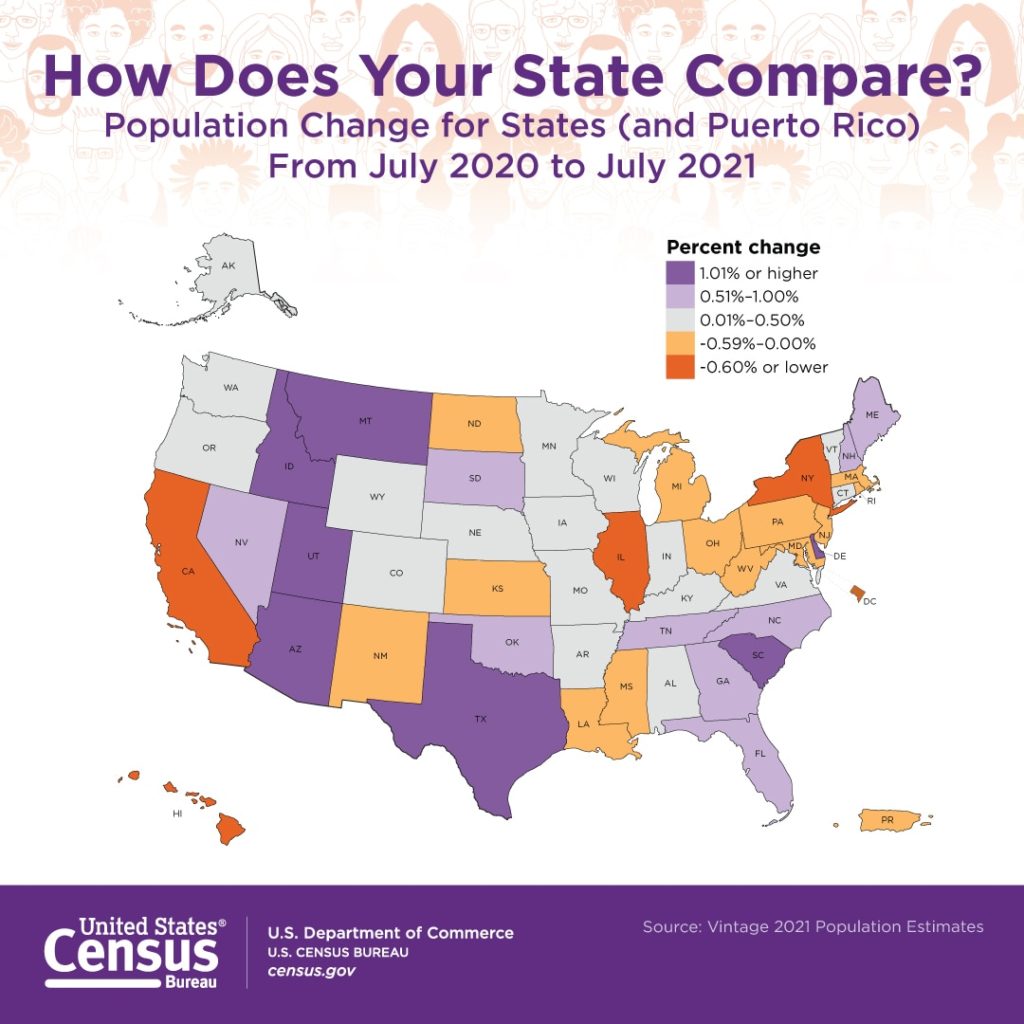
Last week, the U.S. Census Bureau released its “Vintage 2021 national and state population estimates and components of change.” In sum,

Since April 1, 2020 (Census Day), the nation’s population increased from 331,449,281 to 331,893,745, a gain of 444,464, or 0.13%.

Between July 1, 2020, and July 1, 2021, the nation’s growth was due to natural increase (148,043), which is the number of excess births over deaths, and net international migration (244,622). This is the first time that net international migration (the difference between the number of people moving into the country and out of the country) has exceeded natural increase for a given year.

The voting-age resident population, adults age 18 and over, grew to 258.3 million, comprising 77.8% of the population in 2021.

The South, with a population of 127,225,329, was the most populous of the four regions (encompassing 38.3% of the total national population) and was the only region that had positive net domestic migration of 657,682 (the movement of people from one area to another within the United States) between 2020 and 2021. The Northeast region, the least populous of the four regions with a population of 57,159,838 in 2021, experienced a population decrease of -365,795 residents due to natural decrease (-31,052) and negative net domestic migration (-389,638).

The West saw a gain in population (35,868) despite losing residents via negative net domestic migration (-144,941). Growth in the West was due to natural increase (143,082) and positive net international migration (38,347).

Midweek Update / At Last a COVID Pill!

From the Omicron front, STAT News reports that

The Food and Drug Administration on Wednesday authorized Paxlovid, a pill developed and made by Pfizer, as a treatment for Covid-19, a significant step in the battle against the SARS-CoV-2 virus.

The drug was authorized for use in people as young as 12 so long as they weigh at least 88 pounds.

The authorization of an oral antiviral to beat back Covid has been eagerly anticipated because such a medicine could reach large numbers of people infected with the virus and prevent them from becoming seriously ill or hospitalized. Existing medicines, such as monoclonal antibodies, must be given intravenously or as injections.

Still, initial supplies of Paxlovid will be limited. Pfizer has said it expects to produce more than 180,000 courses of the treatment this year. The company said Wednesday it now expects to provide 120 million courses by the end of 2022, up from 80 million previously, thanks in part to new contract manufacturers. Pfizer has contracted with the U.S. government to provide 10 million courses by the end of 2022 at a cost of $5.29 billion.

Once readily available, Paxlovid will be the answer to a positive COVID test, rather than 10 days of quarantine or hospitalization. Jingle bells, indeed.

Speaking of the FDA, MedPage Today informs us that

The FDA approved the first monotherapy for bipolar-related depressive episodes, Intra-Cellular Therapies announced Monday.

The atypical antipsychotic lumateperone (Caplyta) gained an indication for the treatment of depressive episodes associated with bipolar I or II disorder in adults, as monotherapy and as adjunctive therapy with lithium or valproate. It was first approved for adults with schizophrenia in December 2019. * * *

“The efficacy, and favorable safety and tolerability profile, make Caplyta an important treatment option for the millions of patients living with bipolar I or II depression and represents a major development for these patients,” said Roger McIntyre, MD, of the University of Toronto, in a statement released by the manufacturer. “Caplyta is approved for a broad range of adult patients including those patients with bipolar II depression who have been underserved with limited treatment options.”

Switching back to the Omicron front, the Wall Street Journal reports that

New data from Scotland and South Africa suggest people infected with the Omicron variant of coronavirus are at markedly lower risk of hospitalization than those who contracted earlier versions of the virus, promising signs that immunity as a result of vaccination or prior infection remains effective at warding off severe illness with the fast-spreading strain.

The findings begin to fill in unknowns around the severity of the disease caused by Omicron, a major variable critical to health authorities around the world as they gauge how to react to the new variant.

Scientists are still unsure how the positive findings around hospitalizations will stack up against another major variable: Omicron’s much increased transmissibility. Both variables are likely to change depending on local conditions, such as the proportion of the population that has been vaccinated against Covid-19.

“This is a qualified good news story,” said Jim McMenamin, incident director for Covid-19 at Public Health Scotland, and one of the authors of the Scottish study, at a briefing. “It’s important we don’t get ahead of ourselves. A smaller proportion of a much greater number of cases can still mean a substantial number of people that might experience severe Covid infections that could lead to hospitalization.”

From the COVID vaccine mandate challenge front, the Journal also tells us that

The Supreme Court on Wednesday said it would hold fast-track oral arguments early next month to consider whether the Biden administration can enforce Covid-19 vaccine-or-testing rules for large private employers, as well as vaccine requirements for many healthcare workers.

The cases, set for argument on Jan. 7, could go a long way to determining how much latitude the administration has to combat the coronavirus pandemic in the workplace.

The high court issued a pair of short, written orders to schedule the arguments, in response to a growing pile of emergency appeals asking the justices to intervene.

The cases haven’t yet been fully litigated in the lower courts; the Supreme Court will be deciding whether the Biden administration rules can be implemented for now. But practically speaking, the court’s decision is likely to determine whether the requirements survive. 

Curiously, it does not appear that the stay of the government contractor mandate will be presented to the Supreme Court. Instead the parties have agreed to expedite briefing and the oral arguments on the merits of the case.

From the OSHA ETS front, the Society for Human Resource Management reports that


Now that a federal appeals court has revived the Occupational Safety and Health Administration’s (OSHA’s) emergency temporary standard (ETS), covered employers will need to prepare a written COVID-19 vaccination-or-testing policy by Jan. 10.

Under the ETS, employers may choose to require vaccination or allow covered employees who are unvaccinated to wear a mask and provide proof of a negative COVID-19 test on a weekly basis. The start date for the testing requirement has been extended to Feb. 9, but many other components of the ETS take effect on Jan. 10, such as the requirement for employers to determine the vaccination status of each employee and develop a written policy.

“Keep it simple,” recommended Eric Hobbs, an attorney with Ogletree Deakins in Milwaukee. “Do not include anything in the plan that you can’t follow through on.”

The Supreme Court is unlikely to rule on the OSHA ETS mandate stay before January 10, 2022.

From the Federal employee compensation front, Federal News Network reports that

President Joe Biden on Wednesday signed an executive order making federal pay raises official for many civilian employees in 2022.

As expected, General Schedule employees will receive an across-the-board federal pay raise of 2.2% in 2022, plus an additional 0.5% locality pay adjustment, to total a 2.7% average increase.

An Office of Personnel Management official confirmed the 2.7% federal pay raise to Federal News Network Wednesday evening. The agency hasn’t yet posted detailed pay tables describing pay rates for each locality pay area.

The raises take effect Jan. 1, or more specifically during the first pay period in January.

Under OPM’s regulations, Open Season changes take place on January 1 for annuitants and on the first day of the first pay period in the new year for employees. GSA’s federal employee calendar for 2022 shows that January 2 is the first day of the first pay period for next year.

From the Affordable Care Act front, the FEHBlog apologizes that he left a sentence off yesterday’s post about the current federal fiscal year’s PCORI fee. To close the unintended loop, IRS Notice 2022-04 states that “The applicable dollar amount that must be used to calculate the [PCORI] fee imposed by sections 4375 and 4376 for policy years and plan years that end on or after October 1, 2021, and before October 1, 2022, is $2.79” per bellybutton.

Winter is here!

Photo by Clarisse Meyer on Unsplash

The Wall Street Journal reports that “The 2021 winter solstice [took] place on Tuesday, Dec. 21, at 3:59 p.m. Coordinated Universal Time (UTC), the international standard time used by astronomers. That is 7:59 a.m. Pacific Time and 10:59 a.m. Eastern Time. * * * On the winter solstice, our planet’s [23.5 degree] tilt brings the South Pole closest to the sun—and the Antarctic Circle gets 24 hours of daylight. The North Pole is tilted away from the sun, and the Arctic Circle is shrouded in darkness for nearly a full day. * * * The winter solstice in the Northern Hemisphere marks the point at which the season’s short days start to lengthen—continuing until the summer solstice in June, when there is the longest period of daylight and the shortest period of darkness there.”

Winter solstice 2019 was pre-pandemic. Winter solstice 2020 conincided with the introduction of the mRNA vaccines in the U.S. and this winter solstice is expected to coincide with the introduction of the early onset COVID pills from Pfizer and Merck.

Bloomberg informs us that

The U.S. Food and Drug Administration is poised to authorize a pair of pills from Pfizer Inc. and Merck & Co. to treat Covid-19 as soon as this week, according to people familiar with the matter — a milestone in the fight against the pandemic that will soon expand therapies for the ill.

An announcement may come as early as Wednesday, according to three of the people. They asked not to be identified ahead of the authorization and cautioned that the plan could change. 

Pfizer’s pill, Paxlovid, and Merck’s molnupiravir are intended for higher-risk people who test positive for the coronavirus. The treatments, in which patients take a series of pills at home over several days, could ease the burden on stretched hospitals with infections poised to soar through the winter in the U.S. 

This is similar to the roll out of the mRNA vaccines which initially administered to higher-risk people as well as first responders. FiercePharma tells us that “Pfizer expects to make 80 million courses of COVID drug Paxlovid by the end of 2022.” Bloomberg adds that “’It’s the biggest thing to happen in the pandemic after vaccines,’” said Eric Topol, director of the Scripps Research Translational Institute.” For what it’s worth, the FEHBlog shares this sentiment.

In other COVID treatment news, Medscape reports that

A “definitive study” from Johns Hopkins University researchers and others shows that convalescent plasma can cut hospital admissions for COVID-19 by 54% if therapy is administered within 8 days of symptom onset.

In the study of 1181 adults randomly assigned to high-titer convalescent plasma or placebo, 2.9% of people receiving the therapy were hospitalized compared to 6.3% who received placebo control plasma.

This translates to a 54% risk reduction for hospitalization with convalescent plasma. * * *

Whereas many convalescent plasma studies were done in hospitalized patients, this is one of only a handful performed in outpatients, the researchers note.

There is a regulatory catch. The FDA restricted emergency use authorization (EUA) for convalescent plasma in February 2021 to include only high-dose titer plasma and to limit the therapy to hospitalized patients with early disease or for immunocompromised people who cannot mount an adequate antibody response.

[Dr. David] Sullivan and colleagues hope their findings will prompt the FDA to expand the EUA to include outpatients.

From the White House front, the President spoke this afternoon about an enhanced federal government response to Omicron, including federal government run testing and vaccination sites and federally funded home delivery of rapid COVID tests.

Govexec explains that

The administration will launch federal testing sites around the country, standing up the first in New York City before Christmas. It will establish subsequent sites in states and communities where capacity is constrained, a senior administration official who spoke to reporters on the condition of anonymity said on Monday, with those going up in January and February. The government will once again deploy hundreds of federal personnel to boost vaccination capacity around the country, with the goal of boosting capacity by thousands of shots per week. The Federal Emergency Management Agency will oversee pop-up vaccination sites operated by the federal government, with the first ones going to Washington and New Mexico.  * * *

The White House also announced it was purchasing 500 million tests and will soon set up a website for any Americans to order one for free. The tests will be available in January and delivered by mail for free, though the White House is still finalizing how many each individual will be entitled to order. The administration pledged to boost its use of the Defense Production Act to boost the supply of at-home, rapid tests.

It’s not yet clear whether this initiative replaces the earlier proposal to have health plans reimburse their members for these over the counter tests.

The San Franciso Chronicle seeks to put the transmissibility of Omicron in perspective

The reproductive number known as R0, pronounced “R naught,” measures a disease’s transmissibility at the beginning of a pandemic with no preexisting immunity, said Warner Greene, a virologist and senior investigator at the Gladstone Institutes in San Francisco. It represents how many people one sick person will infect.

According to a study released in October, the original COVID-19 strain that emerged from Wuhan has an R0 value of 2.79. The delta variant has a value of between 5 to 6 — about twice as contagious as the original strain.

Chicken pox has an R0 value of 9-10. The R0 value of measles is estimated at 12 to 18.

Greene said to really know the true R0 value of omicron, more information is needed. He cited an estimate from Martin Hibberd, a professor of emerging infectious diseases at the London School Of Hygiene & Tropical Medicine, that omicron could have an R0 of 10.

Chin-Hong said “a lot more fully vaccinated people will get breakthrough infections, but will not likely get very ill and are very unlikely to die.”

For unvaccinated people, the situation is much more serious.

“It will be very difficult to avoid getting infected with omicron,” Swartzberg said. “You may have been lucky with the other variants and the ancestral strain. It’s unlikely you will be with omicron. The unvaccinated will be the biggest spreaders of omicron and they will be the ones most likely hospitalized from it.”

No joke.

From the National Institutes of Health front —

  • “Yesterday the U.S. Food and Drug Administration announced its first approval of a long-acting HIV prevention medication. Developed by ViiV Healthcare, the medicine is long-acting cabotegravir injected once every two months. FDA has approved the medicine for use by adults and adolescents weighing at least 35 kilograms who are at risk of sexually acquiring HIV. This milestone marks a vital expansion of biomedical HIV prevention options available to people in the United States.”
  • “Despite important advances in the understanding and treatment of oral diseases and conditions, many people in the U.S. still have chronic oral health problems and lack of access to care, according to a report by the National Institutes of Health. Oral Health in America: Advances and Challenges, is a follow-up to the seminal 2000 Oral Health in America: A Report of the Surgeon General.” * * * “The authors make several recommendations to improve oral health in America, which include the need for health care professionals to work together to provide integrated oral, medical, and behavioral health care in schools, community health centers, nursing homes, and medical care settings, as well as dental clinics. They also identify the need to improve access to care by developing a more diverse oral health care workforce, addressing the rising cost of dental education, expanding insurance coverage, and improving the overall affordability of care.”

From the Affordable Care Act front, the Internal Revenue Service announced today that the applicable dollar amount that health plans must use to calculate the [PCORI] fee imposed by sections 4375 and 4376 for policy years and plan years that end on or after October 1, 2021, and before October 1, 2022, is $2.79″ per bellybutton. The immediately preceding years fee was $2.66 per bellybutton.

Monday Roundup

Photo by Sven Read on Unsplash

From the Omicron front, STAT News reports that

The Omicron variant now accounts for 73% of Covid-19 infections being diagnosed in the United States, and in some parts of the country 90% of infections are caused by viruses from the Omicron strain, the Centers for Disease Control and Prevention said late Monday.

Though it’s been clear from Omicron’s astonishing spread elsewhere that it would rapidly take over from Delta as the dominant variant in this country, the speed is nevertheless startling to witness.

“What we are watching unfold is microbial evolution. This is remarkable,” said Michael Osterholm, director of the University of Minnesota’s Center for Infectious Diseases Research and Policy. “But this is what these viruses can do.”

The Centers for Disease Control updated its Omicron website today.

This Wall Street Journal article indicates the obtaining an mRNA booster (Moderna or Pfizer) will provide protection against Omicron as well as Delta.

The Centers for Medicare and Medicare Services today updated their “vaccine toolkit designed for issuers of group and individual health insurance and Medicare Advantage health plans.”

From the COVID vaccine mandate litigation front, the American Hospital Association reports that

Over the weekend, and as of this writing, eight groups of challengers to the OSHA vaccine mandate filed emergency applications with the U.S. Supreme Court asking the high court to once again stay the mandate following the Sixth Circuit’s Dec. 17 decision to lift the Fifth Circuit’s previously entered stay.
 
Today, the Supreme Court asked the federal government for a response to the challengers’ applications by Dec. 30 by 4 p.m. If that sounds familiar, it is because Dec. 30 at 4 p.m. is also the date and time the challengers to the CMS vaccine mandate will be filing their responses to the federal government’s Supreme Court application asking the court to stay the Missouri and Louisiana preliminary injunctions enjoining the CMS mandate. Both sets of applications will be briefed at the same time and the Supreme Court will have the opportunity to rule on the fate of both the CMS and OSHA vaccine mandates at the same time, if it so chooses.

The FEHBlog can find no word about whether the government has appealed to the Supreme Court the 11th Circuit’s decision last Friday to maintain in force the stay on the federal government contractor COVID vaccine mandate. The FEHBlog will keep looking.

From the healthcare business front —

  • Fierce Healthcare informs us that “Amazon has consolidated its healthcare efforts under one central organization and tapped a former Prime executive to run the businesses. The tech giant elevated Neil Lindsay to the new role of senior vice president of health and brand within Amazon’s worldwide consumer business, an Amazon spokesperson confirmed to Fierce Healthcare.”
  • mHealth Intelligence reports that “Supermarket retailer Hy-Vee, Inc. has launched a telehealth platform that allows individuals to receive treatments and prescriptions through the mail. The new service, RedBox Rx, offers virtual health consultations through a partnership with Reliant Immune Diagnostics’ telehealth platform MDbox.”
  • Healthcare Dive tells us that

Software giant Oracle is acquiring EHR vendor Cerner for $28.3 billion, the two companies announced Monday. The deal is expected to close sometime next year.

It will be Oracle’s largest acquisition to date, with the next highest being the 2005 purchase of PeopleSoft Inc. for $10 billion. The deal further pushes Oracle into the healthcare market, where its presence is mostly in data use efficiency for payers and providers. Oracle’s areas of focus include database software and cloud systems.

Cerner will be a dedicated business unit within Oracle, according to the Monday press release. Voice-enabled user interfaces will be a key focus with a goal to “deliver zero unplanned downtime in the medical environment.”

From the too little too late front, STAT News tells us that

Biogen said Monday that it has reduced the price of its Alzheimer’s drug Aduhelm by half and is planning a series of cost-cutting measures across the company next year that aim to save $500 million.

The moves follow a disappointing commercial launch of Aduhelm, as well as anger over the drug’s high price. 

The new, lower price for Aduhelm is $28,200, or roughly half what the drug cost when it launched in June. Insurance companies balked at its original list price, averaging $56,000 a year per patient, while physicians have fervently questioned whether Biogen’s supporting evidence merited the drug’s approval by the Food and Drug Administration, let alone widespread use. * * *

Biogen is announcing the Aduhelm price cut less than one month before Medicare is expected to make an all-important decision on whether and how widely to pay for the drug. A draft ruling is expected in January, followed by a final decision in the spring.

But with Aduhelm delivering paltry revenue, Biogen is also being forced to downsize the company. On Monday, Biogen said it would implement a series of cost-cutting measures in 2022 that are expected to total approximately $500 million. Details will be announced in the first quarter. 

Weekend update

Photo by Jessica Delp on Unsplash

Congress has lowered the curtain on the first session of the current two year long Congress, the 117th in our Nation’s history.

Roll Call reports that

Sen. Joe Manchin III said on Sunday that he can’t support the sweeping social safety net and climate change package that President Joe Biden and Democratic leaders have made their top legislative priority.

The West Virginia Democrat’s opposition is likely the final nail in the massive $2 trillion-plus “Build Back Better” legislation given the Senate’s 50-50 split, unless extensive changes are made that would result in key provisions being scuttled.

“I can’t vote for it and I cannot vote to continue with this piece of legislation,” Manchin told “Fox News Sunday.” “I just can’t. I’ve tried everything humanly possible.  I can’t get there … This is a ‘no.’ “

Of course, the legislative struggle over the BBB bill is not over but at least we should enjoy a peaceful holiday period.

From the Omicron front, Bloomberg reports that

Lockdowns in the U.S. will likely not be necessary even as Covid-19 cases increase, according to President Joe Biden’s top medical adviser, Anthony Fauci. Even so, many hospitals may be strained as the omicron variant spreads, especially in regions with lower levels of vaccination, he said. 

New York City Mayor Bill de Blasio called on the federal government to step up supplies of tests and treatments to the city amid a spike in infections caused by the omicron variant. New York state broke a record for new infections for the third consecutive day.

From the COVID mandate challenge front —

Since last Wednesday

  • The Fifth Circuit U.S. Court of Appeals lifted the nationwide stay on the CMS healthcare provider COVID vaccine mandate, but left the stay in place for 24 states which had obtained their own stays. The federal government has asked the U.S. Supreme Court to lift the stays applicable to those 24 states. The Supreme Court has allowed the respondent states until December 30, 2021, to respond to the federal government’s motion.
  • The American Hospital Association (“AHA”) reports in the wake of the Court action that “CMS’s website states that CMS “has suspended activities related to the implementation and enforcement of [the mandate] pending future developments in the litigation.” AHA has confirmed with CMS that this statement applies nationwide and remains accurate even after the Fifth Circuit’s order staying the nationwide effect of the Louisiana district court’s preliminary injunction. 
  • The Sixth Circuit U.S. Court of Appeals lifted the nationwide stay on the OSHA ETS COVID vaccination screening program. The State of Georgia has asked the U.S. Supreme Court to reinstate the stay.
  • The American Hospital Association reports again in the wake of the Court action that “OSHA has announced that it is ‘exercising enforcement discretion with respect to the compliance dates of the’ mandate. OSHA states that ‘it will not issue citations for noncompliance with any requirements of the [mandate] before January 10 and will not issue citations for noncompliance with the [mandate’s] testing requirements before February 9, so long as an employer is exercising reasonable, good faith efforts to come into compliance with the standard.’ OSHA has also promised to ‘work closely with the regulated community to provide compliance assistance.’”
  • The Eleventh Circuit U.S. Court of Appeals upheld the nationwide stay on the government contractor mandate. The federal government is expected to ask the Supreme Court to lift this stay tomorrow.
  • It certainly appears that all three mandate issues will be presented to the Supreme Court simultaneously. 

In Affordable Care Act news, CMS announced on Friday that

Health insurers have provided approximately $2 billion in rebates for the 2020 reporting year to an estimated 9.8 million consumers, the Centers for Medicare & Medicaid Services (CMS) is announcing today. Insurers were generally required to provide such rebates and notice of any rebates owed to consumers no later than September 30, 2021. Rebate payments can be provided in the form of a premium credit, lump-sum check, or, if a consumer paid the premium using a credit card or direct debit, by lump-sum reimbursement to the account used to pay the premium.

CMS released a list today of all insurers owing Medical Ratio Loss (MLR) rebates for the 2020 reporting year, with total amounts by state and market. The CMS market breakdown estimate includes approximately 4.8 million consumers in the individual market and 5 million employees in the group market (this represents 2.6 million employees in the small group market, and 2.4 million employees in the large group market). 

Today’s release also includes the Public Use Files (PUFs) containing the data from all health insurers’ final MLR filings for the 2020 reporting year. 

For more information visit: https://www.cms.gov/CCIIO/Programs-and-Initiatives/Health-Insurance-Market-Reforms/Medical-Loss-Ratio

Link to PUFs here: https://www.cms.gov/CCIIO/Resources/Data-Resources/mlr

If federal employee compensation news, Govexec tells us that

[Last] week, the President’s Pay Agent, which is made up of Labor Secretary Marty Walsh, Acting Office of Management and Budget Director Shalanda Young and Office of Personnel Management Director Kiran Ahuja, issued its annual report ahead of President Biden’s executive order finalizing an average 2.7% pay raise in 2022. The pay agent declined to issue waivers based on a locality’s number of authorized positions, but approved Carroll County’s addition to the Davenport, Iowa, locality pay area due to the fact that it recently has met the 2,500 employee threshold.

Friday Stats and More

Using the CDC’s COVID Data Tracker and Thursday as the first day of the week, here is the FEHBlog’s weekly chart of new COVID cases for 2021:

Here is a link to the CDC’s weekly chart of new COVID admissions which also continues to trend up.

Here is the FEHBlog’s weekly chart of new COVID deaths for 2021.

Here is the FEHBlog’s weekly chart of new COVID vaccinations administered and delivered from the 51st week of 2020 through the 50th week of the 2021. For the second week in a row, administered vaccines including boosters has exceeded 10 million for the week.

Here’s a link to the CDC’s weekly interpretation of its COVID statistics. The CDC weekly review will not be published again until January 7. Hopefully by then the FDA will have granted emergency use authorization to the Pfizer early onset COVID pill. That would be a great holiday gift for America.

The CDC’s Fluview reports that “Seasonal influenza activity in the United States is increasing, including indicators that track hospitalizations. The amount of activity varies by region.”

From the COVID vaccine front, the Wall Street Journal informs us that

Pfizer Inc. and partner BioNTech SE  have pushed back plans to request authorization of their Covid-19 vaccine in children ages 2 to 5, after the shot generated a weaker than expected immune response in a key study. 

The companies said Friday they would begin testing the addition of a third dose in the children, and if successful, would ask U.S. health regulators to authorize use sometime during the first half of 2022.

STAT News tells us that CDC Director Rochelle Walensky has approved her Advisory Committee on Immunization Practice’s unananimous “preferential recommendation to the Covid vaccines based on messenger RNA technology on Thursday — a decision aimed at steering people away from the Johnson & Johnson Covid-19 vaccine because of concerns about a rare but serious side effect.” STAT dives into more detail in an accompanying article titled “The Tragedy of Johnson & Johnson’s COVID vaccine.

In COVID vaccine mandate news the Wall Street Journal reports this evening that

A federal appeals court Friday reinstated Biden administration rules that require many employers to ensure that their workers are vaccinated or tested weekly for Covid-19.

A divided panel of the Sixth U.S. Circuit Court of Appeals dissolved a stay issued by another court that had blocked the rules. The majority, in a 2-t,o-1 ruling, said legal challenges to the administration’s vaccination-and-testing requirements were likely to fail.

This decision was made in the consolidated challenge to the OSHA action. The Sixth Circuit reversed a Fifth Circuit stay of the OSHA action. The plaintiffs are likely to ask all of the 6th Circuit’s active judges to consider this issue, e.g., a motion for rehearing en banc

In other judicial news, STAT News reports that

A federal court judge has reversed the hotly contested Purdue Pharma bankruptcy plan after deciding a bankruptcy judge did not have authority to grant immunity to the Sackler family members who control the controversial drug maker. * * *

One legal expert explained the decision is significant. “The decision is an important recognition of the arguments made (by the U.S. Trustee and the eight states) and the concerns they had. That is an important value for a justice system,” Melissa Jacoby, a professor at the University of North Carolina who specializes in bankruptcy law, wrote us.

So what happens next?

“…It is too soon to know what the effect will be. It is possible the Sacklers will increase their monetary offer to avoid further litigation to try to make the releases fully consensual, even though I can imagine grounds on which the 2nd circuit (appeals court) would reverse the district court,” she continued. “Presumably, they are examining those options right now.”

In M&A news, Healthcare Dive informs us that

— Intermountain Healthcare and Colorado-based SCL Health signed a definitive agreement Wednesday to move forward with merger plans to create an $11 billion health system spanning six states.

— The deal is expected to close next April. Financial terms were not disclosed.

— Intermountain CEO Marc Harrison will serve as the leader of the combined organization.