Midweek update

Midweek update

Happy Groundhog Day! The Pittsburgh Post Gazette informs us that “There will be six more weeks of winter, Punxsutawney Phil predicted as he emerged from his burrow Wednesday morning to perform his Groundhog Day duties.”

From the White House, we have the President’s fact sheet on his Cancer Moonshot initiative. Federal Times also has a report on today’s announcement.

A STAT News article on cancer markers suggests that the President’s timing may be right

Back in 2000, when President Clinton called a tie in the race to map the human genome, scientists forecasted a medicinal revolution, one in which scientists could ferret out the genetic roots of every known cancer and match patients with personalized treatments.

That did not happen, for reasons of biological complexity, technological immaturity, and perhaps a little scientific hubris. But after two decades of mapping the kaleidoscopic details of human DNA, researchers believe they finally have the tools and techniques to live up to those lofty promises.

“It’s almost like back to the future,” said Anna Barker, an oncologist who serves as chief strategy officer at the Ellison Institute for Transformative Medicine of USC. “Where we would like to have been 21 years ago is where we are now.” * * *

But many cancers don’t fit neatly into the field’s existing paradigm, said Suzanne Topalian, professor of surgery and oncology at Johns Hopkins University School of Medicine. Improving outcomes for those tumors will rely on multidimensional biomarkers, measurements that can take a systematic look at how cancer evolves rather than providing a snapshot.

To Barker, the field’s next major challenge is to find better biomarkers for “the big killers,” diseases including pancreatic cancer and glioblastoma.

“These are the cancers that — what are the unknown unknowns here? What are we missing?” she said. “We can’t seem to detect them early enough to stop them.”

From the opioid epidemic front, the National Institutes of Health informs us that

A new study of intentional drug overdose deaths, or suicides by an overdose of a medication or drug, found an overall decline in recent years in the United States, but an increase in young people aged 15-24, older people aged 75-84, and non-Hispanic Black women. The study also found that women were consistently more likely than men to die from intentional drug overdoses, with the highest rates observed in women ages 45 to 64. In addition, factors such as time of year, length of day, and day of the week appeared to be associated with intentional overdose death rates. The study published today in the American Journal of Psychiatry and was led by investigators at the National Institute on Drug Abuse (NIDA), part of the National Institutes of Health.

Nearly 92,000 people died from drug overdoses overall in the U.S. in 2020. This represents the largest increase ever recorded in a calendar year and reflects a nearly five-fold increase in the rate of overdose deaths since 1999. About 5% to 7% of these overdose deaths are recorded as intentional. Because it can be difficult to determine whether overdose deaths are intentional, the actual numbers are likely even higher. Many people who have a substance use disorder also develop other mental illnesses, such as mood and anxiety disorders, which are independently associated with increased suicide risk. In addition, many people who are diagnosed with other mental illnesses are often diagnosed with a substance use disorder, emphasizing the need to address co-occurring mental health conditions holistically. 

“The distinction between accidental and intentional overdose has important clinical implications, as we must implement strategies for preventing both,” said Nora Volkow, M.D., senior author on the study and director of NIDA. “To do so requires that we screen for suicidality among individuals who use opioids or other drugs, and that we provide treatment and support for those who need it, both for mental illnesses and for substance use disorders.”

From the antibiotic resistance (“AR”) front, we learn that the CDC has updated its AR investment map.

“Highlights of this year’s AR Investment Map release include:

  • An interactive map showcasing CDC’s antibiotic resistance funding to support activities in every U.S. health department and across hundreds of public health partners
  • An updated fact sheet featuring CDC’s global investments with partners in more than 50 countries to improve detection, prevention, and response to AR threats internationally
  • An updated fact sheet showing how CDC’s COVID-19 efforts have also worked to address antibiotic resistance, including investments in infection prevention and control, training, surveillance, and public health personnel.”

Obviously, this is an important government initiative.

From the healthcare business front —

Anthem is betting on a different strategy than some of its competitors as it looks to transition to value-based care.

The payer is partnering with many value-based clinical platforms like Privia and CareMax to bring physicians into alternative payment models aiming to reimburse for the quality of care delivered, as opposed to pure volume. That’s a different tack on value-based primary care than its peers like UnitedHealth and Humana, which have mostly acquired and built their own clinical networks.

But Anthem is betting its capital-light strategy is more sustainable and flexible as the payer looks to push deeper into capitation to really bend the cost curve.

  • Health Payer Intelligence tells us that

Walmart has partnered with a healthcare machine intelligence company to offer a personalized provider recommendation tool to associates who receive healthcare coverage through the retail giant’s health plan.

The company, Health at Scale, will provide the technology that Walmart intends to integrate into its health plan administrator’s search engine and virtual care referrals, according to the press release.

Associates and their families who are enrolled in Walmart’s health plan and work at select locations will have access to the resource, which aims to facilitate the process of finding a healthcare provider that fits a member’s health needs.

From the Rx coverage front, the always thought provoking Drug Channels opines that

The boffins at the Centers for Medicare & Medicaid Services (CMS) recently dropped the latest National Health Expenditure (NHE) data, which measures all U.S. spending on healthcare. (See links below.) These data provide our first official look at how the pandemic has affected U.S. healthcare spending.

Today, I examine the key insights from these latest figures.

As you will see, outpatient drug spending remains a small—and shrinking—share of the $4.1 trillion spent on U.S. healthcare. What’s more, drug spending again grew more slowly than overall healthcare spending.

Meanwhile, consumers shoulder a much higher portion of this spending compared with their share of hospital spending.

Speaking of CMS that agency today released “the Calendar Year (CY) 2023 Advance Notice of Methodological Changes for Medicare Advantage (MA) Capitation Rates and Part C and Part D Payment Policies (the Advance Notice). CMS will accept comments on the CY 2023 Advance Notice through Friday, March 4, 2022, before publishing the final Rate Announcement by April 4, 2022.” Here’s a link to the CMS fact sheet.

The FEHBlog wishes that OPM would release a draft call letter for carrier comment before finalizing it. In fairness OPM does solicit carrier input before it draft the call letter. Nevertheless, it would be more collaborative for OPM to seek carrier comment before drafting and then on the first draft.

From the HR front, Federal News Network reports that

A new memo from the Office of Personnel Management released today, offers them performance management tips for a hybrid workplace.

“Effective performance management requires engagement and commitment from individuals at all
levels of an agency,” the memo says. “As such, these performance management tips have been uniquely tailored to assist Non-supervisory Employees, Supervisors, and Leadership throughout the various phases of the performance management cycle.”

And now with agencies expected to begin returning employees to the office in the coming months, OPM wants to make sure managers are “equipped to manage employee performance equitably and effectively—regardless of whether the employees are in the office or not.”

Tuesday’s Tidbits

Photo by Patrick Fore on Unsplash

The FEHBlog nearly fell off his office chair when he noticed a Govexec headline this afternoon reading “The House finally plans to vote on Postal reform [HR 3706] next week. The long sought after bill could make it to the President’s desk by the end of the month.” This Postal reform saga has been going on for over a decade.

The Postal reform act (HR 3706) would relieve the Postal Service of the obligation to prefund the cost of FEHB coverage in retirement for its employees. The bill also would create a Postal Service Health Benefits Program (“PSHBP”) within the FEHB Program. The PSHBP would tightly integrate Medicare annuitant coverage with primary Medicare A, B, and D. Medicare Part A (hospital care) is premium free while Medicare Part B (medical care) and Part D (prescription drugs) charge premiums.

OPM encourages Medicare age annuitants to pick up Part B but it prohibits FEHB carriers from using integrated Part D arrangements knowsn as EGWPs even though every other U.S. employer that provides drug coverage to its retirees uses a Part D EGWP or takes the retiree drug subsidy. What’s more Congress in the Medicare Modernization Act of 2003 expressly authorized FEHB plans to use Medicare EGWPs. Go figure.

In any event, all enrollee costs are included in FEHB risk pools which is an important feature of the FEHB Plan and its constituent PSHBP. The cost of Medicare Prime annuitants in the PSHBP will be much lower than those in legacy FEHB, and Medicare Prime annuitants are a signficant cadre of enrollment, PSHBP premiums will be noticeably lower than legacy FEHB premiums.

The CBO has projected that 3/5s of the Medicare integration savings for the PSHBP will come from the Part D EGWPs. The FEHBlog looks forward to the day later this decade when OPM finally permits legacy FEHB carriers to offer Medicare Part D EGWPs.

From the Covid vaccine front —

  • Pfizer and BioNTech have a submitted an emergency use authorization request for an mRNA Covid vaccine for little children aged six months through four years. The FDA and CDC are likely to approve the application by the end of February according to Medscape.

Novavax announced Monday that it has formally submitted a request to the FDA for emergency use authorization of its COVID-19 vaccine for ages 18 and older.

The request includes results from two large clinical trials that showed an overall efficacy of about 90% and a “reassuring safety profile,” the company said.

“We believe our vaccine offers a differentiated option built on a well-understood protein-based vaccine platform that can be an alternative to the portfolio of available vaccines to help fight the COVID-19 pandemic,” Stanley Erck, the president and CEO of Novavax, said in the statement.

From the COVID treatment front, the Wall Street Journal reports that providers are having difficulty obtaining the drugs need to treat Omicron because the treatments typically are available under emergency use authorizations and each State makes its own decison on how to distribute EUA treatments. On the brighter side,

Antiviral-pill manufacturers are ramping up production to meet demand. Supplies of Pfizer Inc.’s Paxlovid are expected to increase in the spring, according to Pfizer and state officials. Merck & Co., which manufactures molnupiravir with partner Ridgeback Biotherapeutics LP, said it has delivered two million courses to the U.S. and will deliver the rest of the 3.1 million courses under its contract by the end of this week.

From the healthcare cost front, Healthcare Dive reports that

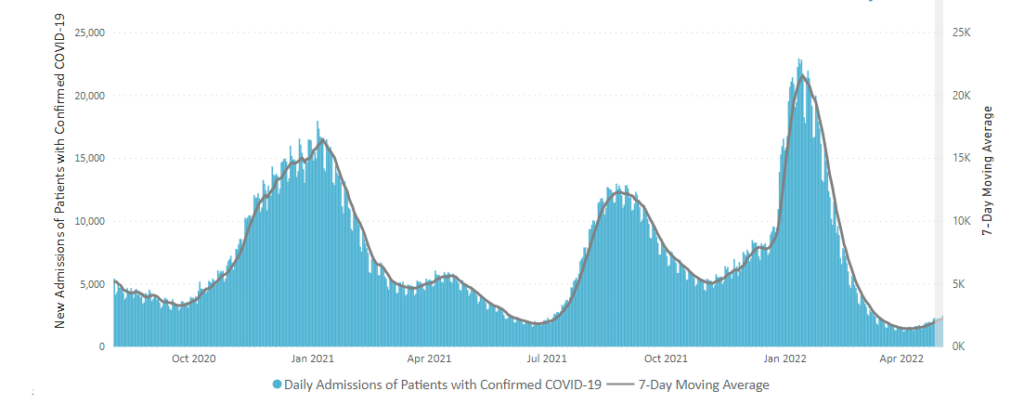
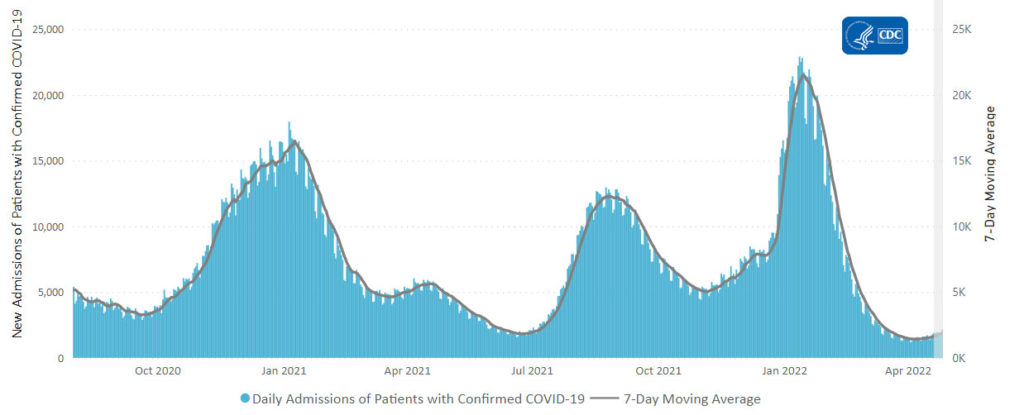
The omicron variant walloped hospitals in the final month of 2021, driving up both adjusted patient volumes and expenses as the number of COVID-19 cases surged to new highs for the pandemic, according to Kaufman Hall’s latest flash report.

Patient days rose nearly 4% in December compared to November, while emergency department visits jumped more than 7% as patients came in with COVID-19 symptoms. Omicron’s rapid spread drove a 98% jump in COVID-19 hospitalizations over the course of the month, Kaufman Hall said, citing Centers for Disease Control and Prevention data.

The second full year of the pandemic was marked by an increase in severely ill patients requiring longer hospital stays compared to the first year, the report also found.

From the No Surprises Act front, Healthcare Dive examines healthcare provider association legal challenges to the federal regulators’ use as the qualifying payment amount in NSA arbitrations. The FEHBlog has described those cases now pending in federal district courts in Texas and Washington DC as exercises in futility. For example,

Since the qualifying payment amount represents the median in-network rate, it by definition means that half of providers are below the QPA and half are above, according to Chris Garmon, a professor at University of Missouri – Kansas City, who has studied surprise billing. Not all providers are set to see payments decline and some may even see them increase if the QPA is used, he said.

The good professor overlooks the fact that in 2021 out of network doctors caring for patient at in-network facilities were reimbursed at out-of-network rates typically two or perhaps three times the Medicare RBRVS reimbursement. For that reason, the FEHBlog expects that in most cases the QPA will be noticeably higher than pre-NSA reimbursements. Time will tell, but the regulators’ approach is reasonable, and patient advocacy groups have been supporting the regulators in these cases.

From the mental health parity front, Health Payer Intelligence compares provider and payer reactions to the government’s recent report to Congress on payer compliance with complex federal health parity act rules.

From the healthcare business front, Fierce Healthcare tells us that

GuideWell, the parent company of Blue Cross and Blue Shield of Florida, has closed its acquisition of Triple-S Management Corporation, a Puerto Rico-based health services company.

The deal was first announced in September.

GuideWell acquired all shares of Triple-S at $36 per share in cash, according to an announcement from the company. Triple-S will now operate under its existing branding as a wholly owned subsidiary of GuideWell.

From the FDA front, check out this FDA news roundup.

From Capitol Hill, Govexec reports on OMB acting director’s Shalonda Young’s confirmation hearings to be the Presidentially nominated OMB director. Ms. Young appears on her way to confirmation.

Monday Roundup

It has been quite a day in COVID vaccine news. This morning, the New York Times reported that

The C.D.C. has begun to publish data on Covid outcomes among people who have received booster shots, and the numbers are striking:

As you can see, vaccination without a booster provides a lot of protection. But a booster takes somebody to a different level.

This data underscores both the power of the Covid vaccines and their biggest weakness — namely, their gradual fading of effectiveness over time, as is also the case with many other vaccines. If you received two Moderna or Pfizer vaccine shots early last year, the official statistics still count you as “fully vaccinated.” In truth, you are only partially vaccinated.

Once you get a booster, your risk of getting severely ill from Covid is tiny. It is quite small even if you are older or have health problems.

The average weekly chance that a boosted person died of Covid was about one in a million during October and November (the most recent available C.D.C. data). Since then, the chances have no doubt been higher, because of the Omicron surge. But they will probably be even lower in coming weeks, because the surge is receding and Omicron is milder than earlier versions of the virus. For now, one in a million per week seems like a reasonable estimate.

Later in the day, AHIP informed us that

Today, the U.S. Food and Drug Administration (FDA) approved a second COVID-19 vaccine.  The Moderna COVID-19 vaccine has been approved for the prevention of COVID-19 in individuals 18 years of age and older.  The vaccine will be marketed as Spikevax.

Spikevax meets the FDA’s standards for safety, effectiveness, and manufacturing quality required for approval.  Spikevax has the same formulation as the Moderna COVID-19 Vaccine which held emergency use authorization (EUA) and is administered as a primary series of two doses, administered one month apart.  Spikevax can be used interchangeably with the EUA Moderna COVID-19 Vaccine to provide the COVID-19 vaccination series.

The Moderna vaccine has been available under EUA for individuals 18 years of age and older since December 18, 2020.  The Moderna COVID-19 Vaccine remains available under EUA as a two-dose primary series for individuals 18 years of age and older, as a third primary series dose for individuals 18 years of age and older who have been determined to have certain kinds of immunocompromise, and as a single booster dose for individuals 18 years of age and older at least five months after completing a primary series of the vaccine. It is also authorized for use as a heterologous (or “mix and match”) single booster dose for individuals 18 years of age and older following completion of primary vaccination with a different available COVID-19 vaccine.

Please send any comments or questions to Chris Regal (cregal@ahip.org).

Now both the Pfizer and Moderna mRNA vaccines have FDA marketing approval which allows for wider distribution.

Notwithstanding these advances, the Wall Street Journal calls to our attention the unfortunate fact that

Two years into the Covid-19 pandemic, America’s death toll is closing in on one million. 

Federal authorities estimate that 987,456 more people have died since early 2020 than would have otherwise been expected, based on long-term trends. People killed by coronavirus infections account for the overwhelming majority of cases. Thousands more died from derivative causes, like disruptions in their healthcare and a spike in overdoses.

Covid-19 has left the same proportion of the population dead—about 0.3%—as did World War II, and in less time.

Unlike the 1918 flu pandemic or major wars, which hit younger people, Covid-19 has been particularly hard on vulnerable seniors. It has also killed thousands of front-line workers and disproportionately affected minority populations. 

It robbed society of grandparents, parents, spouses, sons and daughters, best friends, mentors, loyal employees and bosses. Those lost include a 55-year-old Rhode Island correctional officer; a 46-year-old Texas dental-office receptionist who helped care for her granddaughter; a 30-year-old Iowan who fatally overdosed; and an active 72-year-old and grandmother of 15 who was Nashville’s first female city bus driver.

“It’s catastrophic,” said Steven Woolf, director emeritus at the Center on Society and Health at Virginia Commonwealth University. “This is an enormous loss of life.”

Unquestionably so.

From the Covid vaccine mandate front, Govexec.com reminds us that the federal District Court’s nationwide stay of the President’s September 2021 executive order does not apply to agency mandates that were implemented before the President’s executive order. For example,

The Veterans Affairs Department * * * is keeping its vaccine mandate in place for the vast majority of its workers. All employees of the Veterans Health Administration—about 380,000 workers—will still be subject to a vaccine requirement. VA issued its own mandate for those employees in July, prior to Biden’s executive order for the rest of the federal workforce. * * *

While 98% of the VA workforce was already in compliance with Biden’s order prior to the pandemic, only 89% had been vaccinated—one of the lowest rates of any large federal agency. McDonough had warned in certain medical settings the department would reject exemption requests, meaning those employees would have to get their shots or face discipline. VA is still sorting through those requests for Veterans Health Administration personnel.

In healthcare business news, Healthcare Dive tells us that

The Cleveland Clinic had its strongest financial performance ever in 2021, as the pandemic drove record levels of clinical activity — and subsequent revenue.

The Ohio-based academic medical giant’s total operating revenue reached $12.4 billion last year, up 17% from 2020’s topline. Operating income was $746 million, more than three times 2020’s operating income of $232 million. Both metrics, released last week by CEO Tom Mihaljevic in an annual address, were also notably higher than the system’s pre-pandemic performance in 2019.

Cleveland Clinic conducted 10.4 million outpatient visits — the nonprofit’s first time exceeding 10 million patient visits in a year — and had more than 22,800 COVID-19 admissions.

From the benefit design front, Axios reports that

“Employers are beefing up benefits packages to lure workers in a tight labor market, and many are adding pricey fertility benefits — such as in-vitro fertilization and egg freezing — to their offerings.

Why it matters: Benefits around fertility and family-building have long been overlooked by employer health care plans, but that’s rapidly changing.

  • “You see couples today that are living child-free, and a lot of times that’s their decision, but a lot of times it’s not,” says Gina Bartasi, founder and CEO of the fertility clinic Kindbody.
  • Employers can play a vital role in helping people find alternative options to grow their families, she says.

What’s happening: “Earlier in my career, it was so rare for companies to offer this,” says Alice Vichaita, head of global benefits at Pinterest, which covers fertility services for its global workforce. “More and more companies are becoming aware that this is really an inadequacy in our health care system.”

  • In the past, many companies have avoided offering fertility benefits due to concerns about the cost, according to a Mercer report. But the rise in the number of fertility clinics — and growing demand for their services — is driving down the price, Bartasi says.
  • 97% of employers who provide this coverage say it has not resulted in a significant increase in medical plan costs, per a Mercer survey.”

From the Rx coverage front, Fierce Healthcare lets us know that

While much of the energy in the drug pipeline has centered on orphan drugs, novel therapies in more crowded markets have also been marching toward approval, according to a new report from Optum.

Analysts at OptumRx released the pharmacy benefit manager’s quarterly drug pipeline report, which highlights therapies in the pipeline insurers should be keeping an eye on. All three drugs mentioned in this quarter’s report would enter hot markets should they be approved.

“Even in these competitive landscapes, we do see novel therapies approved,” Arash Sadeghi, clinical pharmacist at OptumRx, told Fierce Healthcare.

The report includes three drugs: tezepelumab—which was approved in December under the brand Tezspire [an asthma treatment] —cabotegravir [an injectable for pre-exposure prophylaxis (PrEP) to reduce the risk of sexually acquired HIV] and vadadustat [a pill to treat anemia in adults with chronic kidney disease].

Tuesday’s Tidbits

Photo by Patrick Fore on Unsplash

From the Omicron front, the Wall Street Journal reports that

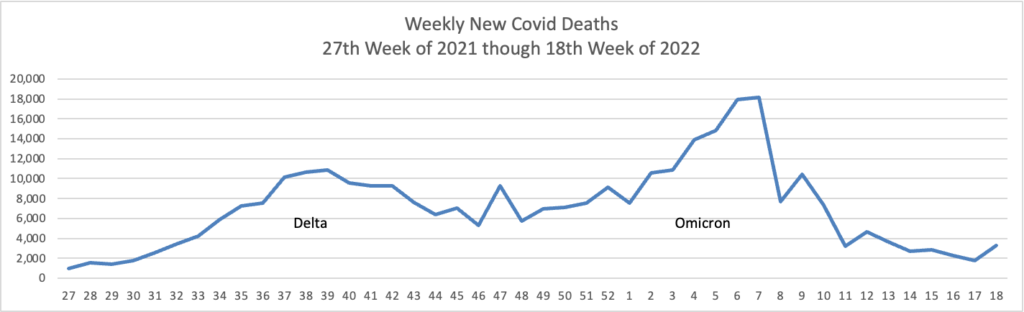
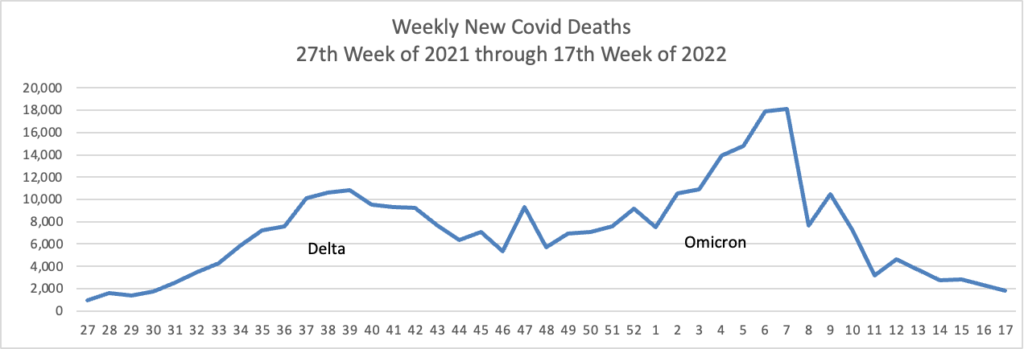
Covid-19 deaths in the U.S. have reached the highest level since early last year, eclipsing daily averages from the recent Delta-fueled surge, after the newer Omicron variant spread wildly through the country and caused record-shattering case counts.

The seven-day average for newly reported Covid-19 deaths reached 2,191 a day by Monday, up about 1,000 from daily death counts two months ago, before Omicron was first detected, data from Johns Hopkins University show. While emerging evidence shows Omicron is less likely to kill the people it infects, because the variant spreads with unmatched speed the avalanche of cases can overwhelm any mitigating factors, epidemiologists say.

“You can have a disease that is for any particular person less deadly than another, like Omicron, but if it is more infectious and reaches more people, then you’re more likely to have a lot of deaths,” said Robert Anderson, chief of the mortality-statistics branch at the National Center for Health Statistics, which is part of the Centers for Disease Control and Prevention.

Bloomberg adds that

Covid-19’s deadly effects manifest long after some patients leave the hospital, according to a new study that points to the pandemic’s grave aftermath. 

Hospitalized patients who survived at least a week after being discharged were more than twice as likely to die or be admitted again within months, scientists from the London School of Hygiene and Tropical Medicine and the University of Oxford found. The Covid survivors also had an almost five times greater risk of dying in the following 10 months than a sample taken from the general population.

The findings, published Tuesday in the journal PLOS Medicine, add to evidence that the pandemic’s effects on health and wellbeing extend well beyond an initial infection. A Dutch study on Monday showed that three-quarters of Covid patients treated in intensive care were still suffering fatigue, impaired fitness and other physical symptoms a year later, and one in four reported anxiety and other mental symptoms.

“Covid-19 isn’t just an acute respiratory viral illness — like a cold or some other inconsequential infection — that goes away in a few days or a few weeks,” said Ziyad Al-Aly, director of the clinical epidemiology center at the Veterans Affairs St. Louis Health Care System in Missouri, who has led similar studies in the U.S. “It carries serious long-term consequences, including higher risk of death.” * * *

Needless to stay these articles illustrate the importance of being vaccinated with a booster against Covid.

From the free COVID tests front, MedCity News reports that

In the days since the Biden Administration announced on January 15 that insurers would be required to cover eight over-the-counter Covid-19 tests per month for members, digital health company Truepill has been busy developing a platform to help health plans meet that mandate.

In May, the San Mateo, California-based startup, which provides pharmacy fulfillment and telehealth services for brands like Hims, Nurx and Lemonaid, added home testing. Co-founder and President Sid Viswanathan said in an earlier interview that the company had planned to also offer diagnostics from the beginning.

The Covid-19 test coverage platform will give clients a behind-the-scenes partner who can assist with everything from checking member eligibility for coverage of tests to delivering those tests to their homes and providing shipping updates en route.

“We found a lot of plans are having to react to this on very short timelines, and so we’re building out a white-labeled, e-commerce experience that a plan can utilize,” said Varun Boriah, senior vice president of diagnostics at Truepill, in a phone interview. “We can put any plan’s logo on that asset and manage their patient experience for them.”

Cool.

From the OSHA vaccinate or test mandate front, the Society for Human Resource Management informs us

The Occupational Safety and Health Administration (OSHA) is withdrawing its emergency temporary standard (ETS) that would have required by Feb. 9 that large businesses ensure employees are vaccinated against the coronavirus or undergo weekly COVID-19 testing. Nonetheless, the agency is moving forward with its proposal to make the temporary directive a permanent standard. 

On Jan. 13, the U.S. Supreme Court halted the ETS while the 6th U.S. Circuit Court of Appeals considered the merits of the challenge against the vaccination-or-testing directive. OSHA announced on Jan. 25 that it will no longer seek to enforce the ETS, which will end the lawsuit, but the temporary directive served a dual purpose. The ETS also acts as a proposal for a permanent standard, which is separate from the litigation. “OSHA is not withdrawing the ETS to the extent that it serves as a proposed rule,” according to the agency.  * * *

OSHA said in a statement that it is prioritizing a proposal for a permanent COVID-19 safety standard for health care workers. 

“Notwithstanding the withdrawal of the [ETS], OSHA continues to strongly encourage the vaccination of workers against the continuing dangers posed by COVID-19 in the workplace,” the agency said.

The FEHBlog noticed that the Justice Department has asked the U.S. Court of Appeals for the Sixth Circuit to dismiss the consolidated challenge to the OSHA ETS as moot citing this OSHA action.

From the mental health parity front, the Department of Health and Human Services announced the release of the government’s

2022 Report to Congress on the Paul Wellstone and Pete Domenici Mental Health Parity and Addiction Equity Act of 2008 – PDF. The report includes information that suggests health plans and health insurance issuers are failing to deliver parity for mental health and substance-use disorder benefits to those they cover. The report also highlights the departments’ recent emphasis on greater MHPAEA enforcement in addition to guidance to correct those failures, and makes recommendations to strengthen MHPAEA’s consumer protections and enhance the departments’ enforcement abilities.

The FEHBlog is not surprised at allegations on non-compliance because this is a very complicated. The law requires carriers to build walls between physical and mental health benefits and then ensure parity in quantitative and nonquantitative treatment limits. Why not break down the wall and define general coverage rules to embrace mental and substance use disorder care? Simply put, establish one set of rules for both types of care.

From the healthcare business front, Bloomberg reports that

Change Healthcare Inc. is considering selling some assets to clear the way for its $8 billion acquisition by UnitedHealth Group Inc., according to people with knowledge of the matter. 

The company is working with advisers on a possible divestiture of its payment integrity business, ClaimsXten, said the people, who asked not to be identified because the information is private. ClaimsXten could fetch a value of more than $1 billion, the people said. The business generates $130 million to $150 million in annual earnings before interest, taxes, depreciation and amortization, they said.

There’s no certainty a deal for ClaimsXten will be reached or that it will be enough to satisfy regulators, the people said.

A representative for Change Healthcare didn’t immediately respond to requests for comment. A spokesperson for UnitedHealth declined to comment.

UnitedHealth and Change Healthcare have been caught in a regulatory limbo over their proposed merger since the U.S. Justice Department opened an investigation into the deal in March, two months after it was announced.

Can’t blame Change for trying.

From the benefit design front, Govexec offers a helpful article about the advantage of enrolling in a high deductible plan which permits funding a health savings account. Contributions to an HSA are tax deductible when contributed; grow tax free, and tax exempt when withdrawn for healthcare purposes. You can’t beat that.

Drug Channels offers a January news roundup featuring an Insulin G2N Update; OptumRx “Data,” HDHPs, 340B Projections, and Fun with the CDC. What’s not to like?

Weekend Update

Both Houses of Congress will be engaged in Committee business and floor voting this week as we are now less than one month away from the expiration of the current continuing resolution funding the federal government. That resolution runs through February 18.

From the Omnicron front, the New York Times reports that ‘

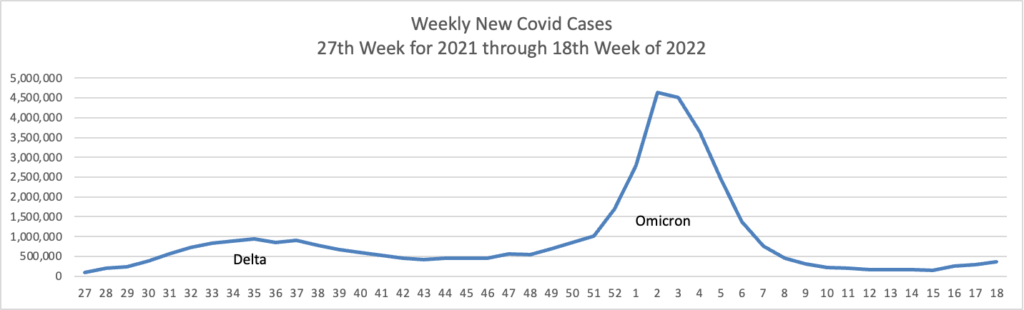
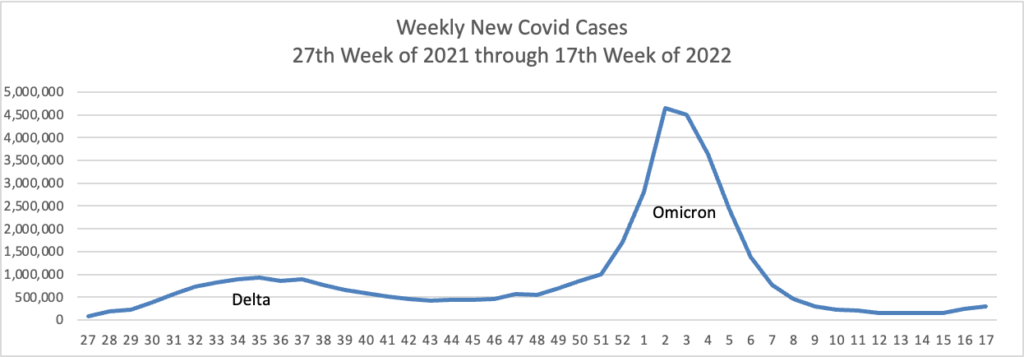
New coronavirus cases have started to fall nationally, signaling that the Omicron-fueled spike that has infected tens of millions of Americans, packed hospitals and shattered records has finally begun to relent.

More and more states have passed a peak in new cases in recent days, as glimmers of progress have spread from a handful of eastern cities to much of the country. Through Friday, the country was averaging about 720,000 new cases a day, down from about 807,000 last week. New coronavirus hospital admissions have leveled off.

Even as hopeful data points emerge, the threat has by no means passed. The United States continues to identify far more infections a day than in any prior surge, and some states in the West, South and Great Plains are still seeing sharp increases. Many hospitals are full. And deaths continue to mount, with more than 2,100 announced most days.

But following a month of extraordinary rates of case growth, blocklong lines at testing centers and military deployments to bolster understaffed I.C.U.s, the declining new-case tallies offered a sense of relief to virus-weary Americans, especially in the Northeast and parts of the Upper Midwest, where the trends were most encouraging. After another round of masking up or hunkering down, some were considering what life might look like if conditions continued to improve. 

Bloomberg adds

The omicron variant spreads so rapidly that sometimes it feels as if resistance is futile. It’s disheartening to hear of omicron infecting people who are up-to-date on their shots and wear an N95 mask every time they leave home. Even some well-known public-health experts are getting infected. But that doesn’t mean everyone is going to get it. 

What it does mean is that life is profoundly unfair. In some of us, the Covid-19 vaccines work quite robustly, even against omicron. In others, the vaccines’ effect is weaker. Chalk this up to the spectacular diversity of the human immune system, which is partly regulated by some of the most varied genes in the human body. 

A recent study led by Harvard and MIT showed that about 20% of people get much poorer protection from their vaccines against omicron. They’re still better off than completely unvaccinated people, but this variability could account for some of the fully vaccinated people who’ve been hospitalized in the omicron wave.

According to the American Medical Association (AMA), here’s what physicians want their patients to know about Omicron. “The AMA has developed frequently-asked-questions documents on COVID-19 vaccination covering safety, allocation and distribution, administration and more. There are two FAQs, one designed to answer patients’ questions (PDF), and another to address physicians’ COVID-19 vaccine questions (PDF).”

From the Rx coverage front, the New York Times offers an interview with CVS Health’s CEO Karen Lynch. For example,

What do you see as the most effective ways that we could reduce health care costs for everyday Americans? And what’s your company’s role in doing that?

There’s a couple of things. One is there’s the site of care. Our role is offering an alternative site of care, either in our retail locations, or in the home with virtual connections. We’re entering into the primary care space because we believe that primary care has real significant influence over the cost of health care.

And I’m pretty passionate about the fact that the head is attached to the body, and most people experience behavioral health issues when they are experiencing physical health issues. We only deal with the physical health. We don’t deal with the behavioral health part, and I think there’s more we can do.

Healthcare Dive provides us with industry perspective on last week’s launch of TEFCA which is intended to vastly improve interoperability by linking together regional health information exchanges.

The goal of TEFCA is to get rid of individual legal agreements between health information networks, health plans, providers and other entities by instituting one common agreement that qualified networks and their participants sign onto, paring back on administrative burden. The framework standardizes the operational side of data exchange, while raising the privacy and security bar for entities that want to be certified as qualified health information networks (QHINs), groups of organizations that agree to the same data-sharing infrastructure. * * *

Getting a nationwide network of groups of organizations that agree to the same data-sharing infrastructure could significantly streamline patient care across different geographies.

For example, if a patient from Virginia takes a vacation to California and ends up in an emergency room, doctors currently do the best they can to treat them without their medical record, which can contain valuable information about preexisting conditions, allergies and other health factors. But with a nationwide QHIN infrastructure, clinicians can query all participating networks for that patient’s data and use it to inform their clinical choices, Barrett said.

That budding future all centers on buy-in. * * *

Many, including ONC, are optimistic on TEFCA adoption, citing the competitive disadvantages to nonparticipation.

The hope is that the more networks use it, the more its value proposition will be proved. Patients will inquire why their provider doesn’t have their data from other facilities, and the provider will then wonder why the exchanges it’s a participant in aren’t qualified to work with other networks, Lee Barrett, CEO of EHR standards development organization EHNAC said.

Thursday Miscellany

The American Hospital Association released its latest COVID Snapshot today.

Bloomberg adds that

The U.S. hospital-staffing shortage exacerbated by the latest Covid-19 wave is showing signs of easing, but many West Coast and rural states are still seeing the worst of it.

Over the past seven days, about 16.7% of U.S. hospitals have reported critical staffing shortages, down from a recent peak of 18.7% on Jan. 9, according to data from the Department of Health and Human Services. Fewer facilities are reporting shortages in populous New York, Florida and Illinois. 

The numbers are still concerning to state leaders, but are at least returning to the levels seen in October and November, before the omicron spike.

From the Covid treatment front —

The niftiest COVID news that the FEHBlog ran across today is this GoodRx website that provides “Live Updates on How to Find Paxlovid and Molnupiravir,” respectively the Pfizer and Merck Covid pills. Bookmark it.

From the COVID testing front —

SHRM brings us up to date on the unnecessarily rushed rollout of the federal government mandate that health plans cover over the counter Covid tests. Most plans did not have time to create in-network coverage because health plans do not cover OTC drugstor items except when mandated to do so.

From the COVID vaccine mandate front, FedWeek reports that

The impact of the Coronavirus vaccine mandate in terms of turnover in the federal workforce—either voluntary or not—remains largely anecdotal, although the largest agency, DoD has said there have been “no terminations yet.”

“We are still finalizing the guidance to the civilian force in that regard,” a Pentagon spokesman said late last week in a comment that seems to characterize the state of affairs in general.

From the Rx coverage front —

  • Drug Store News reports that

CVS Health is embarking on a collaboration with Uber Health, Uber’s healthcare arm, to provide critical transportation support at no cost to people who need it most when seeking access to medical care, work or educational programs.

The relationship is part of Health Zones, CVS Health’s new initiative that provides concentrated local investments designed to reduce health disparities and advance health equity in high-risk communities across the country. Health Zones is an integrated approach to addressing six key social determinants of health: housing, education, access to food, labor, transportation, and health care access. 

The Health Zones initiative is now active in five markets nationwide: Atlanta, Ga.; Columbus, Ohio; Fresno, Calif.; Hartford, Conn.; and Phoenix, Ariz. with plans to expand into more cities later this year. Working with trusted national and local partners, CVS Health is addressing community health care needs, ensuring at-risk communities have access to resources and opportunities that can help them thrive.

  • Fierce Healthcare tells us that

Mark Cuban Cost Plus Drug Company (MCCPDC) has launched its online pharmacy as part of an ongoing effort to provide consumers with low drug prices. 

The pharmacy claims to offer significant savings, with several prescription drugs reportedly at more than half the cost of the next most affordable option. For instance, leukemia treatment imatinib has a retail price of $9,657 a month, according to MCCPDC, compared to $120 with a common voucher. Its price through the new company, however, is just $47 per month.

The pharmacy’s initial inventory launch consists of 100 generic drugs. 

From the No Suprises Act front, Health Payer Intelligence discusses how the new law is likely to spur collaboration between providers and payers to improve the accuracy of provider directories. The FEHBlog has always thought the providers should post the a notice about the networks in which they participate at their offices and on their websites.

Midweek update

Photo by JOSHUA COLEMAN on Unsplash

In this morning’s New York Times, columnist David Leonhardt writes

Omicron appears to be in retreat, even if the official national data doesn’t yet reflect that reality. Omicron also appears to be mild in a vast majority of cases, especially for the vaccinated. This combination means that the U.S. may be only a few weeks away from the most encouraging Covid situation since early last summer, before the Delta variant emerged.

If that happens — and there is no guarantee it will, as Katherine Wu of The Atlantic explains — it will be time to ask how society can move back toward normalcy and reduce the harsh toll that pandemic isolation has inflicted, particularly on children and disproportionately on low-income children.

When should schools resume all activities? When should offices reopen? When should masks come off? When should asymptomatic people stop interrupting their lives because of a Covid exposure? Above all, when does Covid prevention do more harm — to physical and mental health — than good?

These are tricky questions, and they could often sound inappropriate during the Omicron surge. Now, though, the surge is receding.

Yes, indeed. Helen Branswell, writing in STAT News, offers an array of expert opinions on what could be next on the COVID front.

John Moore, a virologist at Weill Cornell Medical College, said a post-Omicron decrease in transmission “is certainly a plausible scenario,” suggesting it might take until late February or early March for most of the country to get there. But equally possible, he suggested, is that another variant will emerge, with the transmissibility of Omicron but without its reticence to replicate in the deep lungs [like Alpha and Delta did].

“This is where it’s all so freaking difficult. There are scenarios. You don’t know what the future’s going to hold. All these people who say ‘This is what’s going to happen.’ Well, this is what they think might happen, if they’re being honest,” he said.

While the situation remains unsettling, the FEHBlog thinks that Mr. Leonhardt’s thinking is on the right track.

From the masking front, the Wall Street Journal reports that

The Biden administration on Wednesday announced plans to make 400 million N95 masks available for free at pharmacies and community health centers across the country.

The move comes as President Biden has stepped up the federal government’s response to a nationwide surge in Covid-19 cases triggered by the highly transmissible Omicron variant. Some scientists and doctors have said popular single-layer cloth masks may not be sufficient to protect against Omicron and called on the administration to expand access to high-filtration masks such as N95s.

The nonsurgical N95 masks will start to be available at pharmacies and community health centers late next week and the program will be fully up and running by early February, the White House official said. The masks will be sourced from the Strategic National Stockpile, the nation’s safety net of medical-equipment supplies. * * *

Three masks will be available per person, the official said, to ensure broad access. Most of the pharmacies that are part of the federal pharmacy vaccine program will distribute the masks, the official said.

Following up on yesterday’s post on distribution of the Pfizer and Merck Covid pills, the New York Times offers a reporter’s saga of tracking down the Pfizer treatment for her ailing mother.

The fact that the process was so hard for a journalist whose job it is to understand how Paxlovid gets delivered is not encouraging. I worry that many patients or their family would give up when told “no” as many times as I was.

I was also reminded that even a “free” treatment can come with significant costs.

The federal government has bought enough Paxlovid for 20 million Americans, at a cost of about $530 per person, to be distributed free of charge. But I spent $256.54 getting the pills for my mother. I paid $39 for the telemedicine visit with the provider who told my mother that she would need to visit in person. The rest was the Uber fare and tip. Many patients and their families can’t afford that.

President Biden recently called the Pfizer pills a “game changer.” My experience suggests it won’t be quite so simple.

FEHB and other health plans hopefully are looking into helping their members navigate this complicate process.

From the COVID vaccine mandate front, Fierce Healthcare reports

All 50 states are now subject to the Centers for Medicare & Medicaid Services’ (CMS’) healthcare workforce mandate after a federal court tossed Texas’ lawsuit and preliminary injunction contesting the requirement.

Today’s dismissal comes less than a week after the Supreme Court removed a stay of the federal government’s industry-wide vaccine requirement in 24 states that opposed the policy. The Biden administration filed an appeal of Texas’ injunction the following day.

Although CMS’ requirement may now be enforced across the country, the agency has set varying compliance deadlines reflecting whether its initial interim final rule was enjoined in a particular state.

Healthcare Dive adds

Healthcare workers in the 24 states that legally challenged the requirement will now be on a different vaccine deadline than the rest of the nation. For these states, healthcare workers must be fully inoculated by March 15, CMS confirmed with Healthcare Dive.        

But for the healthcare workers in the other 25 states and D.C., which were not a part of the litigation, workers will need to be fully vaccinated by Feb. 28, per CMS.         

From the healthcare business front —

Healthcare Dive tells us that

UnitedHealth reiterated its 2022 enrollment targets for Medicare Advantage on Wednesday, easing recent concerns that rising competition could hamstring future growth in the fruitful market.

The forecast was released along with its fourth-quarter and full-year 2021 results. The Minnetonka, Minnesota-based healthcare behemoth also reported no serious change in utilization trends despite skyrocketing COVID-19 case counts due to the highly infectious omicron variant.

UnitedHealth beat Wall Street expectations on both earnings and revenue in the fourth quarter, with revenue of $73.7 billion, up 13% year over year, thanks in part to the outsized growth of its health services business Optum. Net earnings of $4.2 billion were almost double the $2.4 billion in profit brought in at the same time last year.

Healthcare Dive adds that

Antitrust regulators said Tuesday they are looking to modernize merger guidelines in an effort to crack down on tie-ups amid a flood of merger filings that has more than doubled in the past year.

Leaders of the Federal Trade Commission and Department of Justice are launching a review of the current guidelines that are used to detect and analyze potentially unlawful mergers. Those policing guidelines have not been updated in 12 years, potentially excluding realities of a modern economy, leaders said.

To bring the guidelines up to date, the FTC and DOJ are calling on the public to submit information and new evidence, about the potential effects of mergers so the agencies can ultimately beef up tools to block anticompetitive deals.

From the Rx coverage front —

  • Drug Channels offers five takeaways from the Big Three PBM’s exclusion lists.
  • The Congressional Budget Office released a report titled “Prescription Drugs: Spending, Use, and Prices.”

In general healthcare news —

  • The American Medical Association discusses what drives Black maternal health inquities in the U.S.

Researchers at the University of Wisconsin-Madison have spent years making sure that their meditation app, called the Healthy Minds Program, passes clinical muster and delivers positive outcomes. Designing studies to test the app’s efficacy led Simon Goldberg, an assistant professor at UW, to confront the mountain of thousands of studies of different mobile mental health tools, including apps, text-message based support, and other interventions.

Researchers had taken the time to synthesize some of the studies, but it was hard, even for someone steeped in the science like Goldberg, to draw definitive conclusions about what works and what doesn’t. So Goldberg teamed up with a few other researchers and took a step back to see if they could put order to the work collected in these meta-analyses — a kind of deep meditation on the existing research inspired by UW’s meditation app.

The meta-review, published on Tuesday in PLOS Digital Health, examined 14 meta-analyses that focused specifically on randomized control trials for mental health interventions, including treatments for depression, anxiety, and smoking cessation. In total, the review included 145 trials that enrolled nearly 50,000 patients. The review found universal shortcomings in study design, leading the researchers to write that they “failed to find convincing evidence in support of any mobile phone-based intervention on any outcome.”

Ruh roh.

Thursday Miscellany

In yesterday’s post, the FEHBlog accurately predicted that the Supreme Court would decide today whether to stay the OSHA ETS vaccination screening program and end the partial stay on the CMS healthcare worker vaccination mandate.

This afternoon, the Supreme Court issued its decision reinstating the nationwide stay of the OSHA ETS and its companion decision ending all stays on the CMS mandate. The decisions came down as many, many pundits predicted.

The Secretary of Labor who oversees OSHA commented that

“We urge all employers to require workers to get vaccinated or tested weekly to most effectively fight this deadly virus in the workplace. Employers are responsible for the safety of their workers on the job, and OSHA has comprehensive COVID-19 guidance to help them uphold their obligation. 

“Regardless of the ultimate outcome of these proceedings, OSHA will do everything in its existing authority to hold businesses accountable for protecting workers, including under the Covid-19 National Emphasis Program and General Duty Clause.”

In the OSHA ETS decision, the Supreme Court expressed the key point of administrative law on which the two cases turned:

Administrative agencies are creatures of statute. They accordingly possess only the authority that Congress has provided.

The Court reasoned that Congress had granted CMS the necessary authority to issue its broad mandate but had not granted OSHA the same level of authority.

The cases now return to the courts of appeal for a decision on the merits — 6th Circuit for the OSHA ETS case and 5th Circuit for the CMS mandate case. In the meantime the Court’s decisions on the stays will remain in place.

Given how the Court handled these stay decisions, we have a pretty good idea where the Supreme Court will land should either of those merits decisions return to the Court.Such a return likely only will happen if either appellate court disagrees with the Court’s administrative law conclusion on the merits.

In that regard, Bloomberg Law reports that

The Justice Department will appeal a Louisiana federal court’s ruling that blocked President Joe Biden‘s order for government-contractor workers to get the Covid-19 vaccine. 

The U.S. Court of Appeals for the Fifth Circuit will be the third federal appeals court to consider a challenge to the measure. A coalition of three states—Louisiana, Mississippi, and Indiana—sought to block the mandate for companies that do business with the federal government. U.S. District Court Judge Dee Drell of the Western District of Louisiana granted a preliminary injunction in December. 

The federal contractor mandate—which won’t be enforced while litigation proceeds—would apply to roughly a quarter of the U.S. workforce, and affect businesses including Lockheed Martin Corp., Microsoft Corp., Alphabet Inc.‘s Google, and General Motors Co.

Appeals are ongoing in the Eleventh and Sixth circuits, respectively, over a nationwide injunction against the measure from a Georgia federal court and a narrower one from a Kentucky federal judge for a coalition that includes Ohio and Tennessee. A Missouri federal court also blocked the executive order, but that ruling has yet to be appealed.

From the Omicron front, David Leonhardt writing in today’s New York Times cautiously senses that the Omicron surge is cresting in our country following Europe’s and South Africa’s leads. “To be clear, the current emergency is not on the verge of ending. Cases appear to be peaking only in places where Omicron arrived early, mostly in the Northeast. In much of the country, cases are still soaring.”

From the Covid vaccine front, the AP reports that

Distrust, misinformation and delays because of the holidays and bad weather have combined to produce what authorities say are alarmingly low COVID-19 vaccination rates in U.S. children ages 5 to 11.

As of Tuesday, just over 17% were fully vaccinated, more than two months after shots became available to the age group. While Vermont is at 48%, California is just shy of 19% and Mississippi is at only 5%.

Vaccinations among the elementary school set surged after the shots were introduced in the fall, but the numbers have crept up slowly since then, and omicron’s explosive spread appears to have had little effect.

The low rates are “very disturbing,” said Dr. Robert Murphy, executive director for the Institute for Global Health at Northwestern University’s Feinberg School of Medicine. “It’s just amazing.”

Parents who hesitate “are taking an enormous risk and continuing to fuel the pandemic,” Murphy said.

From the telehealth front, STAT News informs us that

A handful of virtual care companies are inking new types of contracts that reward them for keeping patients’ cost low and penalize them for overspending — a model known as risk-sharing. It’s a departure from the traditional “fee-for-service” billing process, and a move  companies hope could help them get paid for the services they offer in addition to virtual doctors’ appointments, like in-app messaging, medication reminders, and digital health coaching. They’re also betting that embracing risk could endear them to the health plans and employers they depend on for contracts.

Execs from companies like Heartbeat Health and Teladoc say they’re in the very early stages of cementing these contracts. While there’s no clear roadmap for how to structure them, whether they take hold could clarify how virtual care will fit into the brick-and-mortar healthcare system and incentivize those companies to work with traditional providers on prevention, said Jennifer Goldsack, CEO of the Digital Medicine Society. “There is an opportunity to reimagine what health care looks like when it is around the patient,” she told Mohana. Read the full story

From the healthcare cost front, STAT News tells us that

— Medical cost growth trailed that of other industries in 2021, though rising pressure from the omicron variant could fuel future increases in healthcare costs.

— Prices for goods and services skyrocketed at the fastest pace in four decades, rising 7% between December 2020 and December 2021, according to new data released Wednesday from the Bureau of Labor Statistics.

— By comparison, prices for healthcare services rose roughly 2.5% last year, while the cost of medical care goods rose just 0.4%. However, that slow rate of growth could accelerate as COVID-19 cases persist in 2022 and beyond.

From the miscellany department —

  • The Agency for Healthcare Quality and Research’s Acting Director Dr. David Meyers looks back at 2021.
  • Biopharma Dive considers five questions facing gene therapy in 2022.
  • Fierce Healthcare notes that

As the healthcare system faces significant labor challenges, a new report suggests pharmacists are well positioned to fill some of the critical gaps.

The analysis, conducted by Express Scripts and the Columbia University Mailman School of Public Health, found that a majority of pharmacists see their roles transitioning to more direct patient care responsibilities over the next decade.

  • AARP’s Public Policy Institute examines the importance of medication literacy in the medication decision-making of older adults.

While health literacy is widely understood as a quality measure of health care decision making, another related measure calls for increased attention, particularly regarding older adults: medication literacy. Medication literacy is the degree to which individuals can obtain, comprehend, communicate, calculate, and process patient-specific information about their medications to make informed medication and health decisions in order to safely and effectively use their medications, regardless of the mode by which the content by which the content is delivered (i.e., written, oral, or visual).

  • Money offers a comprehensive update on the President’s mandate that health plans cover over the counter COVID tests effective on Saturday January 15.

Midweek update

From the Omicron front, Roll Call reports that

The White House COVID-19 Response Team stopped short of announcing major changes to anticipated guidance surrounding masks and instead focused on changes to testing strategy on Wednesday.

Experts have been calling for the Centers for Disease Control and Prevention to update its mask guidance to recommend high-filtration masks such as N95s and KN95s in light of the surge of the omicron variant. * * *

CDC Director Rochelle Walensky also echoed that an update to the CDC’s mask guidance was coming to “best reflect the options that are available to people, as you note, and the different levels of protection different masks provide.”

But she also doubled down on refusing to endorse a certain type of mask, instead repeating that the “best” masks are those that individuals will wear continuously in indoor settings.

“We are updating information on our mask website to provide information to the public,” she said. “We will provide information on improved filtration that occurs with other masks, such as N95s, and information that the public needs about how to make a choice of which mask is the right one for them. But most importantly, we want to highlight the best mask for you is the one that you can wear comfortably.”

For context, Bloomberg tells us that

The omicron variant represents about 98% of cases, Centers for Disease Control and Prevention Director Rochelle Walensky said Tuesday. That number is based on data for the week ending Jan. 8 and is a significant increase from just two weeks prior, when omicron accounted for 71.3% of cases. 

Omicron’s heightened transmissibility coupled with the immunity some have built to combat the delta through vaccination and exposure, have made conditions favor the “more mild” variant, said David Wohl, a professor at the Institute of Global Health and Infectious Diseases at the University of North Carolina-Chapel Hill. But experts warn that for those who remain unvaccinated or who suffer from other health concerns, infection from any Covid-19 variant is a major concern. 

For even additional context, Bloomberg informs us that

Switzerland joined Spain and the U.K. in suggesting that the coronavirus pandemic may be shifting to an endemic phase. 

From the COVID vaccine front, Bloomberg reports that

Almost all teenagers who needed intensive care for Covid-19 were unvaccinated, according to a study published by the New England Journal of Medicine, bolstering the case for using the Pfizer-BioNTech shot in youths.

The vaccine prevented 98% of ICU visits and 94% of Covid-related hospitalizations in the real-world study of more than 1,000 adolescents ages 12 to 18 in 23 states. The research from the Centers for Disease Control and Prevention and a network of 31 hospitals is one is one of the most detailed yet showing that vaccines can prevent severe Covid complications in teenagers.

Following up on yesterday’s proposed national Medicare coverage determination on Aduhelm, Healthcare Finance News provides stakeholder perspectives on that decision. STAT News points out that because the CMS decision, if finalized would apply to all drugs under development to treat Alzheimers Disease that fall into the same drug class as Aduhelm — monoclonal antibody, the proposed decision is bad news for several of Biogen’s competitors too.

Both Eli Lilly and Roche have such treatments in the works, and Biogen has still two more, developed in partnership with Eisai, as well. All of those drug makers now have a big incentive to pressure Medicare to loosen the restrictions in the final version of its policy, which is due out this April.

“While so much of the focus has been on what this means for [the Biogen drug], this recommendation impacts an entire class of drug and is likely to result in a more aligned effort by stakeholders as they try to influence the final version,” said a consultant for different drug makers, including Biogen.

“All of the other companies have to start over,” said George Vradenburg, the founder of the advocacy group UsAgainstAlzheimer’s. “This now applies to three drugs that, in fact, might be better.”

In other healthcare news —

  • Fierce Healthcare reports on the third day of the JPMorgan Healthcare Conference.
  • Health Affairs discusses how to create a stronger Medicare.
  • The director of NIH’s Heal Inititiative which focuses on substance use disorders / overdose deaths offers her ideas on the new year.
  • Forbes reports that “Walgreens Boots Alliance will have more than 160 of its doctor-staffed Village Medical clinics open next to drugstores by the end of this year.”

In Postal Service news, Govexec reports that

The U.S. Postal Service on Wednesday elected a new Republican chairman of its governing board, elevating one of President Trump’s appointees over President Biden’s picks.  

Roman Martinez, who joined the USPS board of governors in 2019, will serve as the panel’s 25th chairman. Anton Hajjar, a former American Postal Workers Union official nominated to his post by Biden, will serve as vice chairman. The board members voted unanimously for the leadership positions at a meeting on Wednesday. * * *

The new chairman has been an ally of Postmaster General Louis DeJoy, defending his controversial decisions, endorsing his 10-year plan to improve postal finances through, among other things, service cuts and price hikes, and calling him the right leader for the Postal Service. Hajjar, meanwhile, has voiced a lukewarm response to DeJoy’s tenure. The new vice chairman has said, however, that there was “a lot to like” in DeJoy’s plan, despite having reservations over some provisions.  * * *

DeJoy said on Wednesday he has “benefited from Martinez’s broad experience and wise counsel throughout my tenure as postmaster general and especially during the development of the Delivering for America plan.”

Keeping DeJoy in charge and one of his allies in charge of the board raises the prospect for sweeping postal reform legislation to make its way through Congress, with a House bill so far earning only tepid Republican support. 

It’s worth noting too that at 10 am ET tomorrow the U.S. Supreme Court will release decisions in pending cases which could include a stay of the OSHA ETS as OSHA began the enforcement clock on that measure last Monday.

Tuesday’s Tidbits

Photo by Patrick Fore on Unsplash

The Centers for Medicare and Medicaid Services (CMS) announced its proposed national coverage decision for Biogen’s Alzheimers Disease FDA-approved treatment, Aduhelm, today.

The proposed National Coverage Determination would cover Food and Drug Administration (FDA) approved monoclonal antibodies that target amyloid for the treatment of Alzheimer’s disease through coverage with evidence development (CED) – which means that FDA-approved drugs in this class would be covered for people with Medicare only if they are enrolled in qualifying clinical trials. The proposed National Coverage Determination is open to public comment for 30 days.

STAT News sums it up as follows:

Normally, Medicare covers drugs if the FDA approves them. Aduhelm has been different because the agency approved the treatment without a guarantee that patients actually will see slower cognitive decline. The process that led to the drug’s approval is the subject of multiple investigations, following STAT’s reporting that Biogen had an extensive back-channel relationship with the FDA. * * *

Medicare officials don’t require participation in clinical studies for beneficiaries very often — there are only about two dozen other health care products with a similar designation, called a Coverage with Evidence Development (CED), listed on Medicare’s website. Most are for medical devices or diagnostic imaging, and are less restrictive than the policy Medicare announced Tuesday. * * *

Sean Tunis, a principal at Rubix Health who helped develop the CED process during his tenure at the Centers for Medicare and Medicaid Services, said the proposal is almost as restrictive as if Medicare had decided not to cover the drug at all. Medicare, he estimated, would pay for drug costs for perhaps a few thousand patients that enroll in randomized trials over the next three to five years.

The CMS national coverage decision if finalized would help the FEHB Program dodge a bullet because it has many annuitant enrollees without Medicare Part B and for whom the FEHB plan would be the primary Aduhelm payer.

Following up on yesterday’s post about Affordable Care Act FAQ 51 implementing the President’s mandate on health plans to cover over the counter COVID tests, the FEHBlog noticed the fourth FAQ in this section of FAQ 51 which reads as follows:

Q4: When providing coverage of OTC COVID-19 tests, are plans and issuers permitted to address suspected fraud and abuse?

Yes. As stated in FAQs Part 44, Q2, although the FFCRA prohibits medical management of coverage of COVID-19 diagnostic testing, plans and issuers may act to prevent, detect, and address fraud and abuse. Examples of permissible activities include the following:

  • A plan or issuer may take reasonable steps to ensure that an OTC COVID-19 test for which a covered individual seeks coverage under the plan or coverage was purchased for the individual’s own personal use (or use by another participant, beneficiary, or enrollee who is covered under the plan or coverage as a member of the individual’s family), provided that such steps do not create significant barriers for participants, beneficiaries, and enrollees to obtain these tests. For example, a plan or issuer could require an attestation, such as a signature on a brief attestation document, that the OTC COVID-19 test was purchased by the participant, beneficiary, or enrollee for personal use, not for employment purposes, has not been (and will not be) reimbursed by another source, and is not for resale. In contrast, the Departments are of the view that fraud and abuse programs that require an individual to submit multiple documents or involve numerous steps that unduly delay a participant’s, beneficiary’s, or enrollee’s access to, or reimbursement for, OTC COVID-19 tests are not reasonable.
  • A plan or issuer may require reasonable documentation of proof of purchase with a claim for reimbursement for the cost of an OTC COVID-19 test. Examples of such documentation could include the UPC code for the OTC COVID-19 test to verify that the item is one for which coverage is required under section 6001 of FFCRA, and/or a receipt from the seller of the test, documenting the date of purchase and the price of the OTC COVID-19 test.

It occurred to the FEHBlog that FSAFeds the flexible spending account program for federal employees must be reimbursing participants for OTC Covid test kits. In fact the FSAFeds does offer reimbursement for OTC test kits on the condition that the participant furnishes a detailed receipt. For OTC products, FSAFeds generally requires a receipt including Vendor name, Date of purchase, Product name, and Cost. This should be a reasonable documentation standard for FEHB plans to adopt.

Also from the testing front, the Wall Street Journal looks into the reliability of rapid antigen COVID tests sold OTC.

Rapid antigen tests are a useful tool if we are smart about how we use them.

Because the data suggest that rapid tests may be yielding more false negatives at the beginning of an Omicron infection, you’ll have a better chance of getting an accurate result if you wait a day or two after developing symptoms to test, says Katelyn Jetelina, assistant professor of epidemiology at the University of Texas Health Science Center at Houston. If your test is negative, take a second test a day or two later, or get a PCR test if you can. (Easier said than done these days.)

Understand the limitations of rapid tests if you’re considering using them to screen people before gatherings. Rapid tests before a wedding or other large indoor gathering could miss early infections that could be contagious, Dr. [Blythe] Adamson says.

If you have a positive rapid test, you almost definitely have Covid-19, Dr. [Gigi] Gronvall says. False positives are rare, especially when case rates are as high as they are now. You likely don’t need to confirm a positive rapid-test result with a follow-up PCR test, unless an employer or other institution requires it.

In other Omicron news —

  • The Journal also tells us that “U.S. officials on Tuesday ordered 600,000 doses of Covid-19 treatment sotrovimab, the only monoclonal antibody therapy thought to work against the Omicron variant, as a record number of cases puts hospitals under increasing pressure in parts of the U.S. and Europe.  Sotrovimab, made by GlaxoSmithKline PLC and Vir Biotechnology Inc., is now the only Covid-19 monoclonal antibody available for patients in the U.S.”

ACA FAQ 51 also includes reminders to health plans about the wide scope of the ACA’s contraceptive mandate.

From the federal employee COVID vaccination front Federal News Network reports that

The first update by the Safer Federal Workforce task force in more than a month is addressing the challenge of testing employees and contractors who work on-site or with the public on a regular basis for COVID-19, the types of tests that are permitted and who is responsible for paying for said tests.

The crux of the updated and new frequently ask questions is agencies have until Feb. 15 to set up a testing program “for employees who are not fully vaccinated, including due to a pending or approved request for exception or extension from the COVID-19 vaccination requirement for federal employees.”

The task force said the testing program is only for employees who work on-site or interact with the public like safety inspectors, and not for those who work remotely.

Fedweek adds that “A period of waiting is continuing on two major federal workplace issues on which action was expected around now—enforcement of the Coronavirus vaccine mandate and the “reentry” from telework to regular worksites by more employees and for more often.”

From the preventive services department, the Department of Health and Human Services announced today that

Today, the U.S. Department of Health & Human Services (HHS) announced that the Health Resources and Services Administration (HRSA) has updated comprehensive preventive care and screening guidelines for women and for infants, children, and adolescents. Under the Affordable Care Act (ACA), certain group health plans and insurance issuers must provide coverage with no out-of-pocket cost for preventive health services within these HRSA-supported comprehensive guidelines. Among a number of updates, for the first time the guidelines will require such group health plans and insurance plans to provide coverage without a co-pay or deductible for double electric breast pumps.

Fierce Healthcare reports news from the second day of the JPMorgan Healthcare Conference.

From the tidbits department —

  • Last week, the Office of National Coordinator for Health Information Technology announced “the release of the Project US@ (“Project USA”) Technical Specification Final Version 1.0 and thereby completed our one year goal to coordinate the creation of a health care specification that could be used across the industry for representing patient addresses (mailing, physical, billing, etc.). This new “tech spec” will advance the health care industry’s proficiency in recording and managing accurate and consistently formatted patient addresses and support more efficient patient matching and record linkage. As a reminder, among the many data elements that are used in patient matching, research has shown patient address to be one of the most sensitive to standardization and therefore impactful on patient matching, especially at scale. However, patient addresses change frequently, are often entered incorrectly or imprecisely.”