Thursday Report

Thursday Report

Photo by Josh Mills on Unsplash

From Washington, DC

  • Govexec tells us,
    • “Senate Majority Leader Chuck Schumer told unions and federal employee groups Wednesday that he will schedule a vote on the Senate floor on legislation to repeal two controversial tax provisions that reduce some public servants’ retirement benefits just weeks before the end of the congressional session and Democrats’ control of the chamber.
    • “Schumer’s remarks came at a rain-soaked rally, organized by lawmakers and organized labor on Capitol Hill in support of the Social Security Fairness Act (H.R. 82), which passed the House by a 327-75 vote last month.” * * *
    • “If enacted, the legislation would repeal Social Security’s windfall elimination provision and government pension offset. The windfall elimination provision reduces the Social Security benefits of retired federal employees who spent a portion of their careers in the private sector in addition to a federal, state or local government job where Social Security is not intended as an element of their retirement income, such as the Civil Service Retirement System. And the government pension offset reduces spousal and survivor Social Security benefits in families with retired government workers.”
  • FedSmith adds,
    • “The OPM retirement backlog has dropped to levels not seen since 2016. As of the end of November 2024, the total outstanding retirement claims at the Office of Personnel Management is 13,844. The last time it was at or below that level was June 2016 when it was 13,529.
    • “OPM received 6,808 new retirement claims in November and processed 7,872. It took an average of 55 days to process claims.
    • “So far in 2024, the average level of the OPM retirement backlog is 16,083. The average number of retirement claims submitted by federal employees to OPM each month has been 7,558, and the average number processed each month is 7,599.
    • “The end of a year is the peak time for federal employees to retire, so it’s good news for federal employees who plan to retire soon that the number of pending retirement claims at OPM has fallen as the end of 2024 approaches.
    • “However, even though most federal employees retire at the end of a calendar year, the impact on the processing doesn’t hit until January. The peak time at OPM for processing retirement claims is January through March, and January is typically the month with the largest spike in the retirement backlog based on past data. For example, the OPM retirement backlog grew by 46% last January.”
  • BioPharma Dive lets us know,
    • “When the Food and Drug Administration took Eli Lilly’s Zepbound and Mounjaro off of its drug shortage list in October, companies making cheap “compounded” versions found themselves in a bind.
    • “By ending compounders’ ability to manufacture and sell their off-brand versions in bulk, the FDA’s decision also left some patients wondering how they would be able to access the popular obesity and diabetes drugs at an affordable price. About 12% of American adults have taken a GLP-1 medication, according to a May poll from KFF Health. And compounded versions may account for as much as 20% of all GLP-1 prescriptions, CNN reported.
    • “But when the FDA backed down, letting compound pharmacies resume their activities for the time being, the industry was left in something of a limbo. * * *
    • “The FDA said it will issue another update Dec. 19, although it’s possible it will be another extension of the review. The agency said in a late November joint status update to a court hearing the compounders’ challenge that it had not yet made a determination, according to Beaver.
    • “In the interim period, FDA has indicated it does not intend to take enforcement action against the continued compounding of tirzepatide,” Beaver said.
    • “With a new presidential administration set to take over next month, the FDA may simply wait.”
  • STAT News adds,
    • “Eli Lilly, which has been directing patients to various telehealth sites as it sells its blockbuster obesity medication Zepbound, is broadening its reach, announcing a partnership Wednesday with major telehealth platform Ro.
    • “Under the new agreement, Ro patients who are prescribed Zepbound will be able to get vials of the drug through its app. Previously, Lilly had only made these vials, which are priced lower than its injectable pens, available to patients who filled prescriptions through an online portal created by Lilly, called LillyDirect.”
  • MedTech Dive offers “four takeaways from the FDA’s first digital health advisory committee. Industry and patient representatives debated how the FDA should regulate generative AI in medical devices and address new challenges with the technology.”

From the judicial front,

  • Reuters informs us,
    • “The U.S. Department of Health and Human Services overstepped its authority when it boosted Medicare reimbursements to hospitals in low-wage areas to help them recruit and retain staff, a divided federal appeals court ruled on Wednesday.
    • “A 2-1 panel of the San Francisco-based 9th U.S. Circuit Court of Appeals found that HHS’s 2020 policy shift ran afoul of the law governing Medicare, the federal health insurance program for seniors and some people with disabilities.
    • “The decision was a victory for a group of 53 California hospitals that sued HHS in 2020 in Los Angeles federal court, saying their Medicare reimbursements were cut by a total of about $3.8 million to make up for the increased payments to hospitals in low-wage areas.
    • “HHS said earlier this year that it would not continue the policy in 2025, meaning that Wednesday’s decision will affect only reimbursements for past years going back to 2020.”

From the public health and medical research front,

  • The Wall Street Journal reports,
    • “When a woman learns she has breast cancer, her reaction is often: take it out. Now doctors say that might not always be necessary.
    • “Some women with the earliest stages of breast cancer could be carefully monitored, undergoing surgery and radiation only if the disease advances, new data suggests.
    • “The strategy is akin to one already used in early prostate cancer, as doctors are increasingly looking at whether they can pull back on some cancer therapies, to spare patients side effects and costs.
    • “This is really the first study to confirm our suspicions that there’s a subset of low-risk patients that could do just as well without surgery,” said Dr. Nancy Chan, a breast-cancer specialist at NYU Langone’s Perlmutter Cancer Center, who wasn’t involved in the study“It’s really encouraging.” * * *
    • “It was a data-free zone because we already treated it like a cancer,” said Dr. E. Shelley Hwang, a breast-cancer surgeon at Duke Cancer Institute, who led the trial. “We didn’t know what we could dial back on.”
    • Hwang and her colleagues recruited some 950 women ages 40 and older with a type of low-risk DCIS that is sensitive to hormones. The women were split into two groups: One was recommended standard care—surgery with or without radiation—while the other was recommended mammograms every six months. The monitoring group could opt for surgery at any time and had to get surgery if the disease progressed.
    • Most women in both groups took hormone therapy to help keep cancer growth in check. Some 17% of women in the monitoring group ended up getting surgery, and some assigned to the treatment group declined to get an operation.
    • Two years later, the rates of women who developed invasive breast cancer were similar between the groups, less than 10%, the researchers found. The women also reported comparable rates of anxiety, a concern when doctors are considering dialing-back treatment.
    • Women who got standard care reported more arm problems and breast pain, but that resolved over time. The results were published in the academic journals JAMA and JAMA Oncology and presented at the San Antonio Breast Cancer Symposium on Thursday.
  • STAT News points out,
    • “Pfizer said Thursday its drug Ibrance showed efficacy in a group of breast cancer patients who do not currently have access to the medicine, potentially expanding its use.
    • “Ibrance, which generates annual sales of $4.3 billion, is currently used for patients whose tumors are positive for the estrogen receptor (ER) and negative for a second biomarker, called HER2. That population represents 70% of women with breast cancer. But the new results are in patients whose tumors test positive for both the estrogen receptor and HER2, a population that represents 10% of breast cancer patients.”
  • The New York Times relates,
    • “Over the last 20 years, clinicians have increasingly recognized that A.D.H.D. symptoms, which begin in childhood, can linger into adulthood, and that some groups — like women and people of color— are more likely to be underdiagnosed early in life. Now, with the rise of telemedicine, increased awareness of A.D.H.D. and changing attitudes about mental health treatment, new A.D.H.D. diagnoses are surging among older Americans.
    • An analysis by Truveta, a health care data and analytics company, shows that the rate of first-time A.D.H.D. diagnoses has been on the rise since 2021, but the increase has occurred only among people 30 and older. From January 2021 to October 2024, the rate of first-time diagnoses rose about 61 percent among those ages 30 to 44 and 64 percent among those ages 45 to 64.
    • “As a result, about 31 percent of first-time diagnoses are now among people ages 30 to 44, the largest proportion of any age group. (In 2018, younger adults took the top spot.)
    • “The analysis, which was done at the request of The New York Times, drew on Truveta’s database of 30 health systems, which included more than one million people who had received first-time A.D.H.D. diagnoses.”
  • The National Institutes of Health Director, Dr. Monica Bertagnolli, writes,
    • “In people with brain tumors known as diffuse gliomas, cancerous cells often spread and invade nearby tissue to mix with healthy cells. As a result, it can be challenging for neurosurgeons to differentiate cancerous from healthy tissue during surgery as is required to safely remove as much of the cancer as possible. Many patients with glioma are found to have residual tumor after surgery, which can mean additional surgeries, earlier recurrence, and decreased survival. But research is showing that artificial intelligence (AI) tools could enable doctors to not only predict if a cancer will respond to treatment, but also to differentiate cancerous from healthy tissue rapidly enough to guide more brain surgeries in real time.
    • “In one promising example of this, an NIH-supported study in Nature  recently reported the development of an open-source, AI-based diagnostic system that can determine in just 10 seconds if part of a cancerous brain tumor that could be removed still remains. The new system, called FastGlioma, combines rapid, user-friendly, optical microscopy with AI models trained on diverse data, including over 11,000 surgical specimens and 4 million microscopy images, to give surgeons needed answers very quickly.
    • “Today, neurosurgical teams locate residual tumor during surgery guided by MRI or fluorescent imaging. The research team for this study—led by Todd Hollon , University of Michigan Health, Ann Arbor, and Shawn Hervey-Jumper , University of California, San Francisco—reports that the new system significantly outperforms current methods for identifying tumor remains, working faster and more accurately.” * * *
    • “The presence of residual tumor tissue following surgery is a significant and costly public health problem in the U.S. and around the world, for brain cancers and other solid cancers alike. The research team reports that FastGlioma can already accurately detect residual tumor in many other brain cancer types, including both adult and childhood brain cancers, suggesting it has potential to one day serve as a general-purpose tool for guiding brain tumor surgeries. The researchers also plan to explore the system’s application to other cancers, including lung, prostate, breast, and head and neck cancers. Through this kind of work, the researchers hope this tool and others like it can help unlock the potential of AI for improving cancer care in the years ahead.”
  • Per MedPage Today,
    • “Postmarketing data on obeticholic acid (Ocaliva) identified a risk for serious liver injury in primary biliary cholangitis (PBC) patients without cirrhosis, the FDA said in a safety communication on Thursday.
    • “The agency’s review of a mandated clinical trial “found that some cases of liver injury in patients without cirrhosis resulted in liver transplant. This risk was notably higher for patients taking Ocaliva compared with a placebo,” the FDA said.”
  • Per Beckers Hospital Review,
    • “The FDA has placed a hold on all clinical studies of vaccines for respiratory syncytial virus in infants due to safety concerns following a trial involving two mRNA-based vaccine candidates from Moderna. 
    • “A briefing document released by the FDA ahead of the Vaccine and Related Biological Products Advisory Committee revealed that a phase 1 trial evaluating two RSV vaccines in infants aged 5 to 8 months was paused in July after five severe cases of RSV-related illness were reported among infants receiving the vaccine candidates.” * * *
    • “VRBPAC will review the safety data and discuss implications for the future development of RSV vaccines for infants Dec. 12.” 

From the U.S. healthcare business front,

  • Per a press release,
    • The Institute for Clinical and Economic Review (ICER) today published its latest report on Unsupported Price Increases (UPI) of prescription drugs in the United States, highlighting the top 10 drugs with substantial net price increases in 2023. ICER determined that five of those drugs lacked adequate evidence to support any price increase, which resulted in a total of $815 million incremental added costs to US payers in 2023. The five drugs with unsupported price increases are Biktarvy, Darzalex, Entresto, Cabometyx, and Xeljanz.
    • Downloads: Final Report
    • “We continue to see list price increases that are far above the rate of inflation for many of the costliest drugs,” stated Foluso Agboola, MBBS, MPH, ICER’s Vice President of Research. “These price hikes resulted in over $800 million in excess costs to the US health care system in just one year alone. This impacts everyone in the country, especially patients and their families. Over the past few years, ICER has played a role in highlighting substantial price increases. Since launching this report in 2019, we have noticed a decrease in the number of drugs that have significant price hikes without any new clinical evidence. In this report, half of the drugs we assessed had price increases in the setting of new evidence of additional benefits or reduced harm, while the other half lacked such evidence to support their higher price tag.”
  • STAT News discusses “AI versus AI: The emerging arms race over health insurance denials. New startups are harnessing artificial intelligence to appeal denials by health insurers.
    • “Like many Americans, Holden Karau said she was fed up with health insurance. * * *
    • Karau’s company, FightHealthInsurance.com, is one of many upstart businesses seeking to harness the power of artificial intelligence to combat denials by health insurers that block access to medical services.
    • “There’s a lot of technology on the insurance side to automate denials,” Karau said. “I think it’s time to build the tools for patients and providers.”
    • “Her company, and its companions in the market, are just getting off the ground. But they promise to help automate appeals for providers and patients, making it much faster and easier to contest denials that often go unchallenged.”
  • Beckers Hospital Review shares weight loss drug fills by states.
    • “Alaska recorded the highest percentage of medication fills for weight loss drugs this year, according to data from GoodRx. 
    • “To assess state-level trends, GoodRx examined fill rates for all medications, excluding vaccines, from a nationally representative sample between Jan. 1 and Oct. 31. The figures below reflect the percentage of total medication fills for GIP and GLP-1 drugs prescribed for either diabetes or weight loss indications. Medications for Type 2 diabetes included Ozempic, Mounjaro, Victoza and liraglutide, while medications prescribed for weight loss included Wegovy, Zepbound, Saxenda, Qsymia and phentermine.
    • “Regionally, states in the South had higher fill rates for medications prescribed for diabetes while states in the Northeast had the highest fill rates for medications prescribed for weight loss.” 
  • and points out “US News’ 118 maternity care access hospitals.”
    • “On Dec. 10, U.S. News & World Report released its annual Best Hospitals for Maternity Care ratings, which also recognize hospitals providing services to underserved communities.
    • U.S. News identified 118 hospitals as Maternity Care Access Hospitals for providing maternity services in areas that would otherwise lack access to such care.
    • “To qualify, these hospitals met specific geographic and quality criteria. They were eligible if they were the only hospital providing maternity care within their county, and the county had fewer than 60 obstetric providers per 10,000 births. Alternatively, hospitals qualified if they were the only facility within a 15-mile radius and were located in a county with fewer than 128 obstetric providers per 10,000 births.”
  • Per Fierce Healthcare,
    • “Centene released its earnings guidance for 2025 as a part of its investor day on Thursday.
    • “The health insurer expects to bring in between $166.5 billion and $169.5 billion in revenue for the year, including between $154 billion and $156 billion in premium and service revenue, according to the announcement. It also estimates earnings per share of at least $7.25 in 2025.
    • “The company is bracing for elevated utilization trends to continue as well, according to the announcement. It projects a medical loss ratio of between 88.4% and 89%.”

Monday Report

  • The Wall Street Journal reports,
    • “The all-out pursuit of the criminal suspect who gripped the public’s imagination for nearly a week ended on Monday at a McDonald’s in central Pennsylvania, about a half mile from the Greyhound bus station in a nondescript part of this town.
    • “A worker there noticed something familiar about a lone customer on Monday morning and called the local police. Soon 26-year-old Luigi Mangione, the subject of a massive manhunt and the man police suspect murdered UnitedHealthcare Chief Executive Brian Thompson in Manhattan last week in a targeted killing, was in custody.
    • ‘When, at last, he was unmasked—and unhooded—the mystery man at the heart of the brazen and apparently carefully plotted attack was even more of a riddle than expected. Held up as folk hero by some for striking a blow against America’s health insurers, he turned out to be a high-achieving product of elite schools, an affluent Ivy Leaguer who harbored anti-capitalist leanings that may have played a role.
    • “A review of his reading diet suggested that, at some point, his ideas about activism had crossed into an interest in violence. In January he wrote a chilling review on the Goodreads book-review site of Theodore John Kaczynski’s “Industrial Society and Its Future,” also known as “The Unabomber Manifesto.” He gave it four stars. 
    • “In Mangione’s review, he wrote: “A take I found online that I think is interesting”:
    • “Had the balls to recognize that peaceful protest has gotten us absolutely nowhere and at the end of the day, he’s probably right…. When all other forms of communication fail, violence is necessary to survive. You may not like his methods, but to see things from his perspective, it’s not terrorism, it’s war and revolution.”
  • The New York Times adds,
    • “Luigi Mangione will most likely be transferred to a Pennsylvania state correctional facility this evening, according to Gov. Josh Shapiro. Mangione faces two felony charges related to a firearm and false ID, and three misdemeanors — two relating to possession and use of a false ID and one relating to possession of an instrument of a crime.”
  • Per Beckers Hospital Review, United Health Group CEO Andrew Witty, whom Modern Healthcare named as the most influential person on U.S. healthcare, remarked to employees last Friday:
    • “I’m sure everybody has been disturbed by the negative and in many cases vitriolic media and commentary that has been produced over the last few days, particularly in the social media environment,” Mr. Witty said. “There are very few people in the history of the U.S. healthcare industry who had a bigger positive effect on American healthcare than Brian.”
    • “Our role is a critical role, and we make sure that care is safe, appropriate and is delivered when people need it,” he said. “We guard against the pressures that exist for unsafe care or for unnecessary care to be delivered in a way which makes the whole system too complex and ultimately unsustainable.”
  • Healthcare Dive reminds us that “Hospitals seek to prevent, mitigate attacks on clinical staff. After attacks on healthcare workers soared during the COVID-19 pandemic, providers have scrambled to address heightened violence in their workplaces.”

From Washington, DC,

  • STAT News reports,
    • “Legislation to restrict U.S. drugmakers from using key Chinese contract manufacturers was dealt a major blow when senators left it out of a must-pass defense budget bill this weekend.
    • “The BIOSECURE Act would prohibit pharmaceutical and biotechnology companies from using services or equipment from Chinese “companies of concern,” including WuXi AppTec and WuXi Biologics, in work that is contracted or funded by the U.S. federal government. Industry has come to rely heavily on those companies for contract manufacturing and other important services. Without the WuXi companies, costs for those services would go up.”  
  • Politico adds,
    • “It’s crunch time for Democrats and Republicans to come to a deal on a health care package to attach to government funding.
    • “The soft deadline for releasing bill text for a stopgap funding patch is usually the Sunday before the deadline. That means it would have to be out by Dec. 15 ahead of the Dec. 20 deadline. House Speaker Mike Johnson has targeted this week to release the legislation, leaving little time for lawmakers to agree on a health care package.
    • “Several other issues must still be resolved, including disaster-aid spending, which could complicate efforts on health care provisions.
    • The state of play: Republicans and Democrats exchanged offers last week on a health care package. They aren’t far apart on some issues that might be easier to resolve — extending telehealth and hospital-at-home care rules and averting doctor pay cuts — but have significant differences to reconcile, including how to pay for it.
    • “Democrats propose regulations for pharmacy benefit managers — companies that negotiate drug prices for insurers or employers — that go beyond Republicans’ offer. Republicans propose repealing a Biden-era rule to increase nursing home staffing, a move they had already planned for next year. Democrats are also pushing to extend enhanced Affordable Care Act plan subsidies, but it’s not necessarily a line in the sand.
    • “Other issues being discussed include a potential compromise on legislation aimed at cracking down on Chinese biotechs. That didn’t hitch a ride on a negotiated version of a must-pass defense policy bill, the National Defense Authorization Act, released Saturday.
    • “If both sides agree to negotiate in good faith, a deal shouldn’t be that far away — in theory, at least. Republicans could have incentive to walk away when they will gain full control of Washington in weeks, while Democrats could force Republicans to come to a deal with a slim House majority next Congress.”
  • The American Hospital Association News tells us,
    • The AHA Dec. 9 said it supports a potential Medicare $2 Drug List Model, where people enrolled in a Part D plan would have access to certain prescription drugs for a low, fixed copayment no higher than $2 for a month’s supply per drug.  
    • “Providing low, fixed copayments for common generic drugs, as CMS proposed, could help increase medication adherence and improve health outcomes,” AHA wrote. “This model would standardize cost sharing for certain drugs for beneficiaries with Medicare Part D enrolled in a participating plan and their health care providers.” 
    • The AHA provided recommendations for how to account for shortages in the approved drug list and for public rulemaking to update the drug list annually, as well as feedback on potential quality measures for the model. Additional details on the request for information can be found on the M2DL webpage.

From the public health and medical research front,

  • The American Medical Association lets us know “what doctors wish patients knew about endometriosis.”
  • BioPharma Dive adds in a Deep Dive, “Endometriosis drug research, long underfunded, confronts familiar problems in women’s health. Up to 10% of women globally have endometriosis, yet the often-misunderstood disease largely remains off of drugmakers’ radar screens.”
  • Consumer Reports, writing in the Washington Post, reflects, “Meds like Wegovy are all over the news. But are they right for you, especially if you’re older than the average user?”
  • Per a press release,
    • “The Institute for Clinical and Economic Review (ICER) today released a Draft Evidence Report assessing the comparative clinical effectiveness and value of suzetrigine (Vertex Pharmaceuticals) for the treatment of acute pain. 
    • “This preliminary draft marks the midpoint of ICER’s eight-month process of assessing this treatment, and the findings within this document should not be interpreted to be ICER’s final conclusions.” * * *
    • “The Evidence Report will be the subject of a virtual public meeting of the Midwest CEPAC on February 28, 2025. During the meeting, the independent council will vote on key questions raised in the report. Registration for the virtual public meeting is now open.
  • The Wall Street Journal relates,
    • GSK’s blood-cancer drug Blenrep showed positive overall survival data in a late-stage trial, increasing the likelihood for the treatment to return to market next year.
    • “The data showed that Blenrep, in combination with other drugs, reduced the risk of death by 42% in patients with multiple myeloma whose first treatment didn’t work or who had severe side effects, compared with Johnson & Johnson’s Darzalex, the British pharma giant said Monday.
    • “This represents a survival improvement of nearly three years compared with Darzalex combinations, supporting the potential for Blenrep combinations to become the new standard of care, GSK said.
    • “The U.S. Food and Drug Administration’s approval of Blenrep is expected on July 23, marking a comeback for the treatment in the U.S. In November 2022, the company withdrew the treatment after a trial revealed that Blenrep, then used alone, didn’t outperform an existing treatment.”
  • STAT News reports from the American Society of Hematology’s conference being held in San Diego
    • From STAT’s Andrew Joseph: AbbVie said this morning that its drug tavapadon succeeded in another Phase 3 study in Parkinson’s disease, helping improve patients’ symptoms and quality of life.
    • “The TEMPO-2 trial tested flexible doses of tavapadon, ranging from 5 to 15 milligrams a day, in patients with early Parkinson’s. The study met its primary endpoint, with patients on the drug showing a greater improvement after 26 weeks on a scale that measures symptoms and quality of life versus those on placebo. Specifically, patients on the study drug had an improvement of 10.3 points on the scale, known as MDS-UPDRS, while those on placebo saw a 1.2-point worsening, a statistically significant difference.
    • “Tavapadon, a daily pill, works by partially activating the D1 and D5 dopamine receptors. In addition to the new flexible-dosing trial, the drug has also had positive Phase 3 trials when tested only at a high dose and when tested in combination with common dopamine therapy.
    • “AbbVie plans to submit tavapadon to the FDA next year. It acquired the drug through its purchase of Cerevel Therapeutics, a deal whose centerpiece was an experimental schizophrenia drug called emraclidine. Last month, however, AbbVie reported that emraclidine failed in two studies.”
  • and
    • “Johnson & Johnson and Genmab’s multiple myeloma drug Darzalex reduced the risk of disease progression by 51% among people with the pre-symptomatic, or “smoldering,” form of the disease, when compared with those who were only actively monitored for progression, according to new data presented at ASH on Monday.
    • “There are no approved treatments for smoldering multiple myeloma; patients are typically checked regularly through blood tests and other assessments. In a trial called AQUILA, J&J enrolled 390 people with smoldering myeloma at high risk of progression and randomized about half to receive Darzalex, with the others only monitored for progression. Patients were then evaluated for a median of nearly five and a half years.
    • “After five years, 63% of trial participants treated with Darzalex were alive and hadn’t progressed, compared to 41% of those who were actively monitored. Of those receiving Darzalex, 93% were still alive after five years, versus 87% of those in the control group. J&J has already asked regulators in the U.S. and Europe to approve Darzalex for smoldering multiple myeloma.
  • and
    • “Patients from disadvantaged neighborhoods were 33% less likely to receive a lifesaving bone marrow transplant, and faced a higher risk of death without one, new research from Fred Hutchinson Cancer Center that was presented at ASH shows. That said, survival rates post-transplant were consistent across socioeconomic groups.
    • “It really drills down on some of these social determinants of health as being access barriers for patients,” Jeff Auletta, the health equity chief at the National Marrow Donor Program, who was not involved in the study, told STAT.”
  • BioPharma Dive informs us,
    • “One year on from the landmark U.S. approval of two powerfully effective gene therapies for sickle cell disease, the treatments have been barely used, a sluggish start that reflects the myriad challenges of launching them.
    • “While some five-dozen people with the blood disorder have begun the treatment process for one or the other therapy, only two had actually received an infusion through mid-November, according to the therapies’ developers, Vertex Pharmaceuticals and Bluebird bio. That’s because the process typically lasts at least several months, involving a precise choreography of medical consultations, preparatory treatments and bespoke manufacturing of the two personalized therapies, called Casgevy and Lyfgenia.” * * *
    • “Some 100,000 people in the U.S. are estimated to have sickle cell. Vertex and Bluebird believe somewhere between one-sixth and one-fifth of that total population may be eligible for Casgevy and Lyfgenia, but only a slice will likely seek them out in the first few years.
    • “[Dr. Martin] Steinberg, [a hematologist] at Boston Medical Center, believes the current gene therapies will remain something of a niche product for the time being. “As we get more skillful at getting patients through the process, that won’t be as much of a stumbling block. Maybe we will be able to do one a month or so [at Boston Medical Center],” he said. “But it’s still too early for us to know if this is going to be realistic.”

From the U.S. healthcare business front,

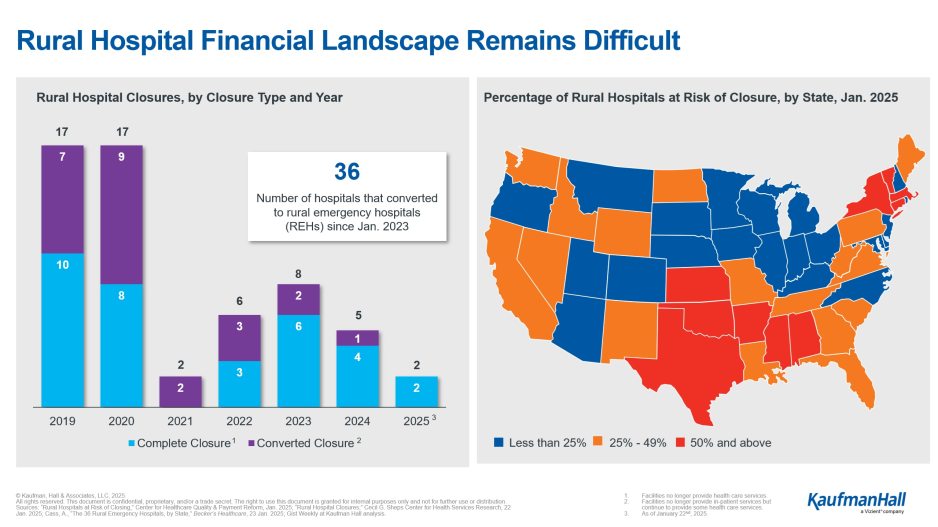
  • Kaufmann Hall released its October 2024 National Hospital Flash Report. Here are the key takeaways:
    • “Overall, October data show continued stability. Revenue, average length of stay, and other indicators show stable performance.
    • “Outpatient revenue continues to grow. Revenue growth has been steady over the past few years, indicating a shift in how patients seek care.
    • “Discharges per calendar day increased compared to the previous month. This has led to a decrease in overall expenses on a volume adjusted basis, though supplies and drug expenses continue to grow.”
  • Beckers Hospital Review points out “ten health systems that recently had their outlooks upgraded by Fitch Ratings or Moody’s Investors Service.”
  • ALM Think Advisor explains why “Drug Cost Planning Is About More Than Choosing Plans.”
    • “Smart clients who want good benefits likely are paying higher premiums.
    • “One subtle short-term threat: skimpier coverage.
    • “A long-term concern: the fate of the new $2,000 annual out-of-pocket spending cap.”
  • MedTech Dive tells us,
    • “ECRI placed artificial intelligence-enabled applications at the top of its list of health technology hazards in 2025.
    • “ECRI, which released the list last week, said biases in the AI training data “can lead to disparate health outcomes or inappropriate responses,” adding that the technology can provide false or misleading outputs. The issues led the patient safety group to warn that putting too much trust in AI can result in inappropriate care decisions. 
    • “Other top health technology hazards for 2025 include the unmet technology support needs of home care patients, cybersecurity threats and substandard or fraudulent medical devices.”

Friday Report

  • Healthcare Dive lets us know,
    • “Major health insurers are deleting images of their top leadership from corporate websites or removing executive pages entirely following the brazen killing of UnitedHealthcare CEO Brian Thompson earlier this week.
    • “Thompson, 50, was shot multiple times in midtown Manhattan on Wednesday in what appeared to be a targeted attack. Though many of Thompson’s peers expressed grief, the killing set off a morbidly gleeful celebration on social media, where posters on sites like X and Reddit applauded and joked about the crime to vent frustration and anger with health insurers.
    • “The shooting and subsequent reaction has spurred healthcare companies to increase security around their executives, according to reports. Such measures appear to be extending online, as major insurers scrub identifying details of top personnel from their sites.”
  • The New York Times reports,
    • “Jessica Tisch, commissioner of the New York Police Department, said in an interview with CNN that investigators have “reason to believe” that the person they seek in the killing of Brian Thompson has left New York City. Joseph Kenny, the chief of detectives, said the police have video of him entering a bus terminal the day of the attack. “We don’t have any video of him exiting, so we believe he may have gotten on a bus,” he told CNN.” * * *
    • “The Atlanta Police Department is working with the New York police on the investigation into the killing of Brian Thompson. The Atlanta department said in a statement that it “will now be providing assistance as needed. The N.Y.P.D. is the lead agency.” The Greyhound bus that took the suspect to New York originated in Atlanta, law enforcement officials have said.”
  • Modern Healthcare adds,
    • “The New York Police Department is waiting on DNA test results that could help in the hunt for the killer of insurance chief Brian Thompson, who was fatally shot outside the New York Hilton Midtown Hotel on early Wednesday morning. 
    • “Investigators pulled DNA from an Ethos water bottle that was found in the alleyway of the building that used to house the Ziegfeld Theater, according to a person with knowledge of the matter. It was the same spot where the shooter is believed to have pre-positioned an e-bike used for his getaway and where he dropped a Motorola burner phone, the person said. Police also tested DNA from a Starbucks cup the suspect dropped in a garbage can before he gunned Thompson down.
    • “The items were sent for testing on Wednesday with results expected within three days, potentially bolstering an investigation that is centered on identifying a male suspect who checked into a hostel on Manhattan’s Upper West Side. Police and New York’s Mayor Eric Adams are appealing to the public for help in identifying the suspect, offering $10,000 for tips.”

From Washington, DC,

  • The Washington Post lets us know,
    • “Congressional Democrats have privately proposed a deal to Republicans that would extend expiring Affordable Care Act subsidies by one year, with lawmakers worried by new estimates that 2.2 million people will otherwise lose health coverage, according to five people who spoke on the condition of anonymity to discuss the proposal.
    • “The move accompanied a broader package of health-care proposals submitted to Republicans on Thursday night ahead of year-end spending negotiations.
    • “Lawmakers are fiercely hammering out a bill to fund the government, and health-care leaders are pushing to add priorities to one of the final pieces of legislation this Congress. Negotiations are also occurring on other measures, such as more funding for community health centers, proposals to address bipartisan frustrations about pharmacy benefit managers and other extensions of ongoing health-care programs, four of the people said.
    • “A one-year deal to extend the expiring ACA subsidies would avoid what was expected to be a bruising battle for both parties. Democrats, who crafted the subsidies and have fought to defend them, are set to lose control of the Senate and the White House next year, complicating their ability to make policy. Republicans, who are set to gain control of Washington, are wary of being punished by voters for any perception that they are rolling back health-care coverage, with the backlash to their ACA repeal efforts still fresh in many lawmakers’ minds.”
  • Govexec tells us,
    • “A Republican senator told the head of the U.S. Postal Service on Thursday that he would do everything he could to prevent the agency leader from instituting one of his key reforms, setting up a key divide between Congress and USPS. 
    • “Postmaster General Louis DeJoy faced bipartisan pushback from members of the Senate Homeland Security and Governmental Affairs, with multiple exchanges turning testy. DeJoy vehemently defended his efforts and said the senators standing in his way would bring about the end of the Postal Service. 
    • “Sen. Josh Hawley, R-Mo., became angry with DeJoy when discussing his plan to slow down delivery for some mail, which is expected to disproportionately impact rural areas.
    • “I hate this plan and I’m going to do everything I can to kill it,” Hawley said.”
  • Fierce Healthcare explains “How Trump could roll back Biden-era healthcare regulations.”
  • BioSpace relates,
    • “An appeals court on Wednesday ruled against Novartis in its bid to block the entry of MSN Pharmaceuticals’ generic competitor to the blockbuster heart failure drug Entresto (sacubitril/valsartan), according to Reuters and other outlets.
    • “First approved in 2015, Entresto is an oral drug indicated for the treatment of heart failure in adults. It combines the neprilysin blocker sacubitril with the angiotensin receptor inhibitor valsartan to lower blood pressure and vascular resistance. Since hitting the market, Entresto has become Novartis’ top-selling asset, raking in more than $6 billion in net sales globally last year.
    • “In its decision on Wednesday, the U.S. Court of Appeals for the Federal Circuit agreed with a lower court’s verdict that Novartis had not sufficiently proven that it could win a patent suit against MSN. The appellate judges saw “no clear error in the district court’s analysis,” as reported by Reuters.”

From the public health and medical research front,

  • The Centers for Disease Control and Prevention announced today,
    • “COVID-19 activity remains low in most areas but is expected to increase in the coming weeks. Seasonal influenza activity remains low nationally but continues to increase slowly. RSV activity is moderate and continues to increase in most areas of the United States, particularly in young children. Respiratory infections caused by the bacterium Mycoplasma pneumoniae remain elevated among young children in the United States.
    • “COVID-19
      • “Wastewater levels, laboratory percent positivity, emergency department visits, and hospitalizations are stable or decreasing nationally while deaths remain at very low levels. However, based on CDC modeled estimates of epidemic growth, we predict COVID-19 illness to increase in the coming weeks as it usually does in the winter.
      • “There is still time to benefit from getting your recommended immunizations to reduce your risk of illness this season, especially severe illness and hospitalization.
      • “CDC expects the 2024-2025 COVID-19 vaccine to work well for currently. There are many effective tools to prevent spreading COVID-19 or becoming seriously ill.
    • “Influenza
    • “RSV
      • “RSV activity is moderate nationally and continues to increase in most areas of the United States, particularly in young children. Emergency department visits and hospitalizations are increasing in children and hospitalizations are increasing among older adults in some areas.
    • “Vaccination
      • “Vaccination coverage with influenza and COVID-19 vaccines are low among U.S. adults and children. Vaccination coverage with RSV vaccines remains low among U.S. adults. Many children and adults lack protection from respiratory virus infections afforded by vaccines.
  • The Wall Street Journal reports,
    • “The Agriculture Department said it would launch national testing of cow’s milk for the presence of bird flu to help regulators monitor U.S. dairy processors.
    • “The USDA’s Animal and Plant Health Inspection Service said Friday that its “National Milk Testing Strategy” is designed to quickly find the presence of the disease in cow’s milk or in the cows themselves, by compiling random samples from different processing plants and testing them for the highly pathogenic H5N1 strain of avian influenza.
    • “The virus is widespread among bird flocks, having been detected in over 110 million poultry birds, as well as more wild birds. The disease spread to U.S. cattle herds and has been transmitted to humans, according to the federal Centers for Disease Control and Prevention. The CDC reported nearly 60 human cases, mostly among dairy and poultry workers.
    • “The testing regime is expected to provide more comprehensive data on the proliferation of the disease into cows, the USDA said. The first round of testing is scheduled to begin the week of Dec. 16.”
  • Cardiovascular Business tells us,
    • “Depression is associated with a heightened risk of cardiovascular disease (CVD) among women, according to new data published in Circulation: Genomic and Precision Medicine.[1] The same trend is not seen in men.
    • “The study’s authors focused on three different major psychiatric disorders: major depression (MD), bipolar disorder (BD) and schizophrenia. 
    • “Few studies have investigated the sex differences in the cardiovascular comorbidity of schizophrenia and BD, and observational studies have presented inconsistent findings on the sex-specific association between depression and CVD outcomes,” wrote first author Jiayue-Clara Jiang, PhD, with the Institute for Molecular Bioscience at the University of Queensland in Australia, and colleagues.
    • “Jiang et al. examined U.K. Biobank data from more than 345,000 patients, focused on MD, BD and schizophrenia may impact a patient’s long-term risk of developing atrial fibrillation (AFib), coronary artery disease or heart failure.” 

From the U.S. healthcare business front,

  • Modern Healthcare relates,
    • “The vast majority of people in the U.S. are dissatisfied with the cost of healthcare, according to researchers. Meanwhile, the percentage of those who would rate the quality of U.S. healthcare as excellent or good has hit its lowest point in more than two decades.
    • “Research and polling firm Gallup’s annual Health and Healthcare poll, released Friday, found that 11% of Americans said healthcare quality was excellent and 33% said it was good. Additionally, nearly 80% of respondents said they were dissatisfied with the cost of healthcare.
    • The survey was conducted through telephone interviews between Nov. 6 and Nov. 20 among a random sample of 1,001 adults across all 50 states.” * * *
    • “When asked about what they saw as the most urgent health problem facing the country, survey participants’ number one response was cost, followed by access and obesity.” 
  • Medical Economics adds,
    • “The Business Group on Health has identified health care costs as a major trend employers will need to navigate in 2025. With the cost of care growing at historic rates, businesses are preparing for a year of challenging decisions to manage expenses while maintaining quality care for their employees. Many of these changes could affect primary care physicians and their patients.
    • “A multitude of factors shape these 2025 trends, including the economy, technology, innovation, the political environment, and the evolving role of employers in the broader health and well-being landscape,” said Ellen Kelsay, president and CEO of the Business Group on Health, in a statement. “As employers head into the new year, they face formidable challenges stemming from climbing health care costs, which are putting pressure on how employers manage their overall health and well-being programs.”
    • “The 2025 Trends to Watch, outlined by the largest non-profit organization representing employer interests in health and workforce strategies, highlight the complexities businesses will encounter in addressing cost growth, mental health challenges, and an evolving relationship with vendors and health care partners.”
  • Per Kaufmann Hall,
    • “Following the release of Q3 financial reports, this week’s graphic takes stock of large health insurance companies’ recent financial performances. Nearly all the major payers reported higher medical loss ratios (MLRs) in Q3 2024 compared to Q4 2022. The MLR refers to the percentage of premium dollars spent on medical claims and quality improvements and is an important metric payers use to evaluate their operations. This upward trend has affected some payers more than others, with CVS’s MLR rising by more than 9% compared to UnitedHealth Group’s (UHG) 2.4% increase in this time frame. The only payer to report a decreased MLR was Cigna, which appears to be benefitting from its continued pullback from the Medicare Advantage (MA) market.
    • Notably, payers have often cited higher utilization among MA patients­­­­—their previous blueprint for growth—as the leading reason for these rising costs. Additionally, relying on the profitability of other business segments to fuel future strategic investments may not be a sustainable plan for the two largest vertically integrated payers. 
    • Despite directing substantial resources into their non-insurance segments, nearly all these companies’ other business units have also been less profitable through Q3 2024, compared to the same period last year. After riding high for several years, the payers are showing signs that, despite their size, they are running into many of the same challenges as providers: rising drug costsan aging population, and higher labor costs.
  • Per Beckers Hospital Review,
    • “Blue Shield of California is set to launch a drug benefit initiative in January, partnering with Amazon Pharmacy and pharmacy benefit manager Abarca, Forbes reported Dec. 5. 
    • “The collaboration, called the Pharmacy Care Reimagined Initiative, aims to reduce prescription drug costs and improve transparency for the insurer’s 5 million health plan members.” 
    • This initiative was first announced in August 2023.

Midweek Update

The UnitedHealthcare headquarters in Minnetonka, Minn., lowered its flags to half-staff on Wednesday in honor of its CEO. 
PHOTO: KEREM YÜCEL/ASSOCIATED PRESS
  • The Wall Street Journal reports,
    • “UnitedHealth Group’s annual investor day began much like any other corporate event. There was breakfast and then around 8 a.m. Wednesday the collection of investors, executives and Wall Street analysts filed into a capacious third-floor ballroom at the Hilton Hotel in Midtown Manhattan to hear upbeat presentations about the company’s future.
    • “Unbeknown to them, one of the company’s top executives had been killed earlier that morning on the street below in what police say was a targeted attack.
    • “Brian Thompson, chief executive of UnitedHealthcare, the largest U.S. health insurer, had been steps from the Hilton’s entrance at 6:44 a.m. when an assassin wearing a dark hoodie and gray backpack stepped from behind a parked car in the predawn darkness, calmly pursued him for a few steps, and then shot him with a 9-millimeter pistol.
    • “Thompson staggered, appeared to turn toward his pursuer, and then collapsed. The killer fled down an alley and then escaped on a bike, according to police.”
  • The FEHBlog believes the Journal’s description of the killer as an “assassin” is accurate because the press and the medical community have portrayed large health insurers and PBMs as villains. (The term “assassination” usually refers to a politically motivated murder.) This erroneous portrayal stems from the decades long feud between the medical and health insurance communities that the FEHBlog has documented. It is high time for the feud to be resolved. RIP Mr. Thomson.

From Washington, DC,

  • The AP tells us that all of the House of Representatives elections have been called, and the final 2025 split is 220 Republicans and 215 Democrats.
  • STAT News reports,
    • “Negotiations over a large health care policy package are heating up this week as Congress hurtles toward a government funding deadline at the end of the month.
    • “Congressional Republicans on Tuesday made an offer to Democrats that included a three-year extension of pandemic-era telehealth flexibilities in Medicare, some reforms in how pharmacy middlemen operate, a Medicare pay bump for doctors, funding for community health centers, and extensions of public health programs in Medicare and Medicaid, according to a copy obtained by STAT. 
    • “However, Republicans proposed paying for the policies with a full repeal of the Biden administration’s controversial nursing home staffing rule, which sets minimum staffing requirements. Repealing the rule would have saved the federal government $22 billion. Democrats are unwilling to repeal their own administration’s policy, so the offer is a no-go, five sources familiar with the talks told STAT. 
    • “Negotiations are ongoing.” 
  • and
    • “In an unexpected move, the U.S. Patent & Trademark Office has withdrawn a controversial proposal that was designed to prevent pharmaceutical companies from abusing the patent system.
    • “Specifically, the proposed rule was crafted to stem the use of so-called patent thickets, which are wielded by drug companies to delay the arrival of lower-cost generic medicines in the marketplace. Essentially, thickets are collections of numerous patents that critics contend add only incremental changes to a drug and, therefore, produce little to no additional benefit to patients.
  • The American Hospital Association News informs us,
    • “The Centers for Medicare & Medicaid Services Dec. 4 announced that drug manufacturers bluebird bio, inc. (manufacturer of Lyfgenia) and Vertex Pharmaceuticals (manufacturer of Casgevy) will participate in its Cell and Gene Therapy Access Model. [Both of the drugs are “Food and Drug Administration-approved gene therapies for sickle cell disease.]
    • “The voluntary model will test whether a CMS-led approach to developing and administering outcomes-based agreements for cell and gene therapies improves Medicaid beneficiaries’ health outcomes, broadens access to innovative treatment and reduces health care expenditures. The CGT Access Model launches in January, and states can choose to begin participation anytime between then and January 2026. The state application portal will also go live this month and remain open through Feb. 28, 2025. In addition, states may apply for optional model funding by Feb. 28, 2025, through the notice of funding opportunity.”
  • Kevin Moss, writing in Govexec, offers last minute advice for Federal Employee Benefits Open Season which ends December 9.

From the public health and medical research front,

  • During the Covid pandemic the FEHBlog’s go to columnist was David Leonhardt from the New York Times. This morning, Mr. Leonhardt wrote about the bird flu.
    • Caitlin “Rivers, the Johns Hopkins epidemiologist, recently published a book on preventing outbreaks called “Crisis Averted.” In it, she argues that one of the most effective public health strategies is honesty: Experts should level with people, rather than telling selective truths intended to shape behavior in paternalistic ways (as happened during Covid).
    • “When I spoke with Rivers this week, I asked for some truth telling about bird flu. “As an epidemiologist, I’m worried,” she said. “I’m not worried as a mom or a member of my community. It’s not a threat that is imminent.”
    • “But H5N1 bears watching. It is changing and spreading in uncertain ways, and it already presents a threat to many animals and to people who work closely with them.”
  • Well put.
  • BioPharma Dive informs us,
    • “Zepbound, an in-demand weight loss drug from Eli Lilly, helped people in a large clinical trial lose significantly more weight over 18 months than Novo Nordisk’s rival treatment Wegovy, results released by Lilly Wednesday show.
    • “The head-to-head results are a key finding that may help Lilly wrest greater share of a pharmaceutical drug market that’s forecast to eventually exceed $100 billion in annual sales. For that reason, Lilly’s study, called SURMOUNT-5, has long been circled by investors and analysts on Wall Street as one of the year’s most important drug studies.
    • “Lilly only disclosed summary data in its Wednesday statement, indicating it will share fuller findings at a medical meeting next year. According to the results Lilly made available, trial volunteers with obesity or who were overweight with related health problems lost an average of 20.2% of their bodyweight from taking Zepbound, significantly more than those who received Wegovy, who lost 13.7% on average. That translated to an average of 50 pounds lost among Zepbound-treated participants, versus 33 pounds for those on Wegovy.
    • “Nearly one-third of people given Zepbound experienced weight loss of 25% or more, compared to 16% in the Wegovy group, Lilly said.
    • “For both drugs, the most common side effects were gastrointestinal and, according to Lilly, generally mild to moderate in severity. Side effects are being closely watched, as commercial use of Zepbound and Wegovy has shown many people taking them later discontinue treatment.”
  • Gallup lets us know,
    • “Fifty-one percent of working women in the U.S. report feeling stressed a lot of the day yesterday (vs. 39% of men). Additionally, 42% of working women say their job has had a somewhat or extremely negative impact on their mental health over the last six months (vs. 37% of men). The consequential ripples of women’s wellbeing affect organizations as declines in wellbeing are associated with lower engagement, higher burnout and increased participation in job-seeking behaviors.” * * *
    • “Programs and managers alone cannot make progress if employees do not feel that their organization has a strong culture of wellbeing. If employees doubt leadership’s commitment to wellbeing initiatives or worry about negative repercussions for accessing them, they may avoid engaging with these offerings. This avoidance can lead to resources being overlooked and employee needs remaining unmet, ultimately affecting the company’s bottom line. Building a culture of wellbeing starts with leaders demonstrating desired behaviors, fostering open communication about the importance of wellbeing, actively highlighting available resources, and making the employee experience a central focus of their organizational strategy.”
  • The Washington Post relates,
    • “Splash pads found in public parks across the United States are linked to thousands of cases of waterborne diseases that leave a calling card of diarrhea, fever and vomiting, the Centers for Disease Control and Prevention reported this week.
    • “More than 10,000 children became ill from 1997 to 2022 after using splash pads, and most of those outbreaks were attributed to cryptosporidium, a parasite that causes diarrhea and spreads through contaminated water.
    • “No deaths were blamed on the infections, but the CDC said families need to be more vigilant about the proper use of splash pads. The agency also encouraged parents to avoid using public aquatic centers if their children have diarrhea.”
  • Per MedPage Today,
    • “Blocking blood flow to the site of knee arthritis can reduce pain and potentially prevent the need for knee replacement surgery, a new study says.
    • “The procedure, called genicular artery embolization (GAE), improved patients’ quality of life by 87% and their pain by 71% at a one-year follow-up, researchers report.
    • “Our study found that GAE can effectively reduce knee pain and improve quality of life early after the treatment, with these benefits being maintained over the long term, especially for people who haven’t had success with other treatments like physical therapy or pain medications,” said lead researcher Dr. Florian Nima Fleckenstein, an interventional radiologist at Charité – University Hospital Berlin in Germany.”
  • and
    • “Traces of nine essential metals and non-essential metals in urine were linked with lower cognitive performance and the risk of future dementia, a large prospective study showed.
    • “The study assessed concentrations of the essential metals cobalt, copper, manganese, and zinc, and the non-essential metals arsenic, cadmium, lead, tungsten, and uranium.
    • “Comparing the top and bottom percentiles of exposure to all nine metals, the hazard ratio of dementia was 1.71 (95% CI 1.24-3.89), reported Arce Domingo-Relloso, PhD, of the Columbia University Mailman School of Public Health in New York City, in JAMA Network Open.” * * *
    • “Identifying modifiable risk factors and groups at higher risk for Alzheimer’s and dementia is crucial, Domingo-Relloso observed.
    • “This study not only shows that exposure to metals is associated with cognitive decline, but more importantly, carrying at least one copy of the APOE4 allele could modify this association, which opens the door to the creation of early risk assessment tools based on individuals’ genetic and environmental exposure profiles,” she told MedPage Today.

From the U.S. healthcare business front,

  • The New York Times reports
    • “Over 500 hospitals have closed their labor and delivery departments since 2010, according to a large new study, leaving most rural hospitals and more than a third of urban hospitals without obstetric care.
    • “Those closures, the study found, were slightly offset by the opening of new units in about 130 hospitals. Even so, the share of hospitals without maternity wards increased every year, according to the study, published on Wednesday in JAMA, a prominent medical journal. Maternal deaths remained persistently high over that period, spiking during the pandemic.”
  • Modern Healthcare lets us know,
    • “The largest pharmacy benefit managers are heralding an era of transparency, and the demand for these new models may suggest their traditional spread pricing approach will fade.
    • “Amid growing complaints and evolving market dynamics, CVS Health subsidiary CVS Caremark, UnitedHealth Group unit OptumRx and Cigna division Express Scripts — which together control nearly 60% of the market, according to the American Medical Association — are pitching customers “transparent” PBM services that promise more flexible designs, more predictable pricing and, potentially, lower costs.
    • “It’s our responsibility to continue to drive and reshape the way drug pricing is in this country. Make it more transparent to make it easier to understand,” said Prem Shah, group president of CVS Health who oversees its pharmacy and PBM divisions. “This is our step and our movement to do exactly that.”
    • “These transparent PBM alternatives emerged as clients demand greater insight into how their money is spent. At the same time, lawmakers have grilled PBM executives and regulators continue investigating their business practices.”
  • Per Fierce Healthcare,
    • “CVS Health has announced further leadership appointments as the healthcare giant navigates choppy financial waters.
    • “Len Shankman will step into the role of president for pharmacy and consumer wellness, CVS announced. Shankman, who has risen up the ranks of CVS’ pharmacy division since 2002, will lead strategy for the company’s retail pharmacies and stores. * * *
    • “In addition to Shankman’s appointment, CVS revealed that Lucille Accetta has been tapped as its chief pharmacy officer. In this position, she’ll lead the charge in advocating for the role of the pharmacist and in finding ways to leverage their expertise across CVS’ enterprise.”
  • The AP relates,
    • “Nearly three out of 10 U.S. drugstores that were open during the previous decade had closed by 2021, new research shows.
    • “Black and Latino neighborhoods were most vulnerable to the retail pharmacy closures, which can chip away at already-limited care options in those communities, researchers said in a study published Tuesday in Health Affairs.
    • “The trend has potentially gained momentum since the study’s timeframe, because many drugstores are still struggling. In the last three years, the major chains Walgreens and CVS have closed hundreds of additional stores, and Rite Aid shrank as it went through a bankruptcy reorganization.
    • “Drugstores have been dealing with shrinking reimbursement for prescriptions, rising costs and changing customer shopping habits. The chains have been closing money-losing stores and transferring prescription files to more profitable locations.” * * *
    • “The study found that more than 29% of the nearly 89,000 retail U.S. pharmacies that operated between 2010 and 2020 had closed by 2021. That amounts to more than 26,000 stores.
    • “Researchers using data from the National Council for Prescription Drug Programs found that the number of U.S. pharmacies had actually increased from 2010 to 2017 because of store openings, but the pace of closings picked up starting in 2018.”

Tuesday Tidbits

Photo by Patrick Fore on Unsplash

From Washington, DC,

  • Govexec let us know,
    • “The top House Republicans for veterans’ issues are pushing a new measure to codify and expand privatized health care on the taxpayer dime, reigniting a controversial issue that is likely to come back to the fore under President-elect Trump. 
    • “The Complete the Mission Act would serve as a followup to the 2018 Mission Act that Trump signed into law, which streamlined and expanded veterans’ access to private sector care paid for by the Veterans Affairs Department. Congress passed the Mission Act on a bipartisan basis to follow a 2014 law with similar goals, but lawmakers have since disagreed over its implementation. 
    • “The new bill, introduced by House Veterans Affairs Committee Chairman Mike Bost, R-Ill., would ensure existing access standards for private sector “community care” are codified in law. Those rules allow veterans living more than a 30-minute drive on average from the nearest VA facility to access the community care network for services such as primary care, mental health and some extended care. For specialized care, veterans must live more than a one-hour drive from the nearest VA facility. They can also access private care when a close VA facility does not provide the service they are seeking, or when their VA doctor recommends it. 
    • “Bost’s measure would expand extended care options in the private sector and bar VA from considering telehealth availability when calculating community care eligibility. It would also require VA to consider veterans’ preference of where to seek treatment. The bill would create a three-year pilot in which patients could enroll in non-VA outpatient mental health or substance use treatment without requiring.”
  • Federal News Network informs us,
    • “Agency leaders in charge of combatting fraud are highlighting the importance of workforce training and data sharing, as the White House touts a deep decline in the governmentwide rate of improper payments.
    • “The Office of Management and Budget last week reported the governmentwide rate improper payment rate had fallen to 3.97%, the lowest since 2014. The rate has dropped by nearly 50% since fiscal 2021, when improper payments and fraud soared amid emergency COVID relief spending.
    • “The total amount of improper and unknown payments in fiscal 2024 was $161.5 billion, compared to just under $236 billion in fiscal 2023, according to data posted on PaymentAccuracy.gov.
    • “The White House said the past year’s progress was driven by “a government-wide approach focused on improving up-front controls, prioritizing fraud prevention, and driving increased collaboration between agencies and their inspectors general.”
  • The Internal Revenue Service announced that “The applicable dollar amount that must be used to calculate the [PCORI] fee imposed by sections 4375 and 4376 for policy years and plan years that end on or after October 1, 2024, and before October 1, 2025, is $3.47.
  • The Office of Personnel Management’s Inspector General released her latest semi-annual report to Congress.
  • Adam Fein, writing in his Drug Channels blog, shares four revelations about Minnesota’s first 340B program transparency report.

From the public health and medical research front,

  • STAT News reports,
    • “At the annual meeting of the Menopause Society earlier this fall, researchers presented new evidence that hormone therapy can be beneficial to menopausal women’s heart health, reducing insulin resistance and other cardiovascular biomarkers. It was the latest in a long line of research showing the benefits of hormone therapy for women in menopause, which also includes alleviating symptoms like hot flashes, sleep disturbances, vaginal dryness, and pain during sex.
    • “But despite this evidence, hormone therapy’s use has plummeted over the past few decades. In 1999, almost 27% of menopausal women in the U.S. used estrogen. By 2020, less than 5% did. 
    • “So why aren’t more women in menopause taking advantage of treatments known to be effective? Misconceptions about the risks of hormone therapy are one reason, according to experts. So is the lingering cultural taboo around discussing menopause, which has created “a perfect storm for under-treatment,” said Theodoros Kapetanakis, an OB-GYN at Mount Auburn Hospital’s Endometriosis Center in Waltham, Mass.” 
  • Healio tells us.
    • “The beneficial impact of physical activity on mortality risk remained consistent across the adult lifespan, even growing stronger later in life, according to study results published in JAMA Open Network.
    • “In contrast, other modifiable health factors saw their effects on the risk for mortality decrease with increasing age.
  • RAND offers a report titled “Improving the Detection of Cognitive Impairment and the Pathway to Treatment.”‘
    • “Low cognitive ability, functional limitations, and poor physical health are strong predictors of dementia as many as 20 years before its onset. Lifestyle factors, such as never drinking alcohol or drinking excessively, never exercising, and low engagement in hobbies, are associated with cognitive impairment and dementia.
    • “Early detection of cognitive impairment helps people take mitigating actions to prepare for future loss of their financial and physical independence.
    • “Older adults’ take-up of cognitive testing is low, and many who do get tested exit the clinical care pathway before being diagnosed and receiving treatment. Take-up of cognitive tests would increase if tests were free and readily accessible. Treatments would be more palatable if they had fewer side effects and helped patients maintain independence longer.
    • “More engagement of primary care practitioners and team-based care in the clinical care pathway and the use of new technologies, such as blood-based biomarkers, could ease health care system capacity constraints on dementia specialists and reduce wait times for patients.”
  • McKinsey & Company offers ideas about “How to address healthcare inequities for people with disabilities.”
    • “Globally, people with disabilities have a mortality rate that is 2.24 times higher than those without disabilities. And although people with disabilities often have greater healthcare needs, they also experience more and higher barriers to care. McKinsey’s Dr. Mona Hammami and coauthors write that in the patient care pathway, people with disabilities are more likely to report:
      • “skipping or delaying care because of cost
      • “having difficulty securing transportation to a health facility
      • “encountering inaccessible facilities
      • “meeting workers with inadequate skills or flexibility to provide quality care
    • “This International Day of Persons with Disabilities (IDPD), examine inequities in the patient care pathway, potential interventions to overcome them, and a three-step approach to reducing inequities across communicable and non-communicable disease types.”
  • The New York Times reports
    • “Health officials have closed their investigations into an E. coli outbreak linked to raw onions on McDonald’s Quarter Pounder hamburgers that sickened more than a hundred people, the Food and Drug Administration (FDA) announced Tuesday.
    • “In total, 104 people from 14 states were sickened from the contaminated food and 34 were hospitalized. One older person in Colorado died.
    • “Officials said there did not appear to be a “continued food safety concern,” because McDonald’s had not served slivered onions — which investigators determined to be the “likely source of contamination”— on the Quarter Pounders for more than a month. The onions were recalled. And in many states, Quarter Pounders were removed from the menu altogether for several weeks.
    • “There have not been any new illnesses since McDonald’s decided to remove the onions from its menu on Oct. 22, according to the Centers for Disease Control and Prevention.”
  • Per an FDA announcement,
    • “On Monday, the FDA updated the outbreak advisory for Salmonella Typhimurium infections linked to cucumbers. As of November 26, 2024, a total of 68 people infected with the outbreak strain of Salmonella have been reported from 19 states. Of the 50 people for whom information is available, 18 have been hospitalized. No deaths have been reported. Of the 33 people interviewed, 27 (82%) reported eating cucumbers.
    • “On November 27, 2024, SunFed Produce, LLC initiated a voluntary recall of all sizes of American/slicer cucumbers that were grown by Agrotato, S.A. de C.V. in Sonora, Mexico. On November 29, 2024, Baloian Farms of Arizona Co., Inc. initiated a voluntary recall of all sizes of American/slicer cucumbers that were grown by Agrotato, S.A. de C.V. On December 1, 2024, Russ Davis Wholesale initiated a voluntary recall of American/slicer cucumbers and multiple products containing recalled cucumbers.
    • “The FDA is working with the recalling firms and their direct customers to determine if additional downstream customer recalls are necessary. The FDA’s investigation is ongoing.”

From the U.S. healthcare business front,

  • Modern Healthcare relates,
    • “Kaiser Permanente-backed Risant Health acquired Cone Health on Sunday, making it the second health system to join Risant in less than a year.
    • “Cone is following in the footsteps of Geisinger Health, which was folded into the newly-formed Risant in March. Kaiser created Washington, D.C.-based Risant earlier this year as a nonprofit entity to buy systems and form a national network for value-based care.” * * *
    • “Having two of these close in one year has made for a pretty busy year,” said Dr. Jaewon Ryu, CEO at Risant. “It’s great to get on the other side of the regulatory approvals and finalize welcoming [Cone] into Risant Health.”
  • Beckers Hospital Review notes,
    • “California was CommonSpirit’s top-performing market in terms of margins in the first quarter of fiscal year 2025 (the three months ending Sept. 30) but the Chicago-based system’s South region, which includes Texas and Kentucky, “remains challenged,” Benjie Loanzon, senior vice president and corporate controller, said during the company’s Dec. 2 earnings call. 
    • “We are taking a range of actions in this region, focusing on our ambulatory strategy,” Mr. Loanzon said. “We are encouraged by recent performance improvements, though a significant amount of work will be needed to reach an acceptable level [of] performance.”
    • “CFO Dan Morissette said the health system continues to look at ways to improve the South region’s performance. Key focus areas include contracting, efficiency, growth and cost containment. 
    • “Although Texas didn’t perform well in Q1, we are encouraged by other achievements in terms of the volume and cost containment,” Mr. Loanzon said. “Kentucky is the most improved market in terms of the financial performance. In terms of the volume and cost containment, it has a positive EBIDTA compared to the past.”
  • Per BioPharma Dive,
    • “Shares of Janux Therapeutics surged to record highs following the release of study results for a drug that, if ultimately successful in testing, would represent a new type of therapy for prostate cancer. 
    • “The findings come from an early-stage study testing the biotechnology company’s therapy, dubbed JANX007, in 16 people with a form of advanced prostate cancer. Data Janux first disclosed earlier this year vaulted the company’s market value past $2 billion. While early and from a small clinical trial, the new results announced Monday afternoon pushed Janux’s shares nearly 75% higher, changing hands Tuesday morning at more than $70 apiece.”‘
  • Beckers Payer Issues tells us how much health plans are paying for GLP-1 drugs.
    • The prices for some GLP-1s have dropped significantly in recent years for individuals covered by Medicare and commercial insurance, according to a new report from HHS,
    • In 2024, the U.S. list prices for a one-month supply for most GLP-1s are stable or increasing, but after payer negotiations and rebates, net prices for many GLP-1s have decreased since 2022. Net prices for GLP-1s are between 24% and 73% lower than list prices, indicating that most insurers are paying less than the manufacturer’s list price.
    • “In the net prices, we see evidence of the impact of competition as new drugs in the class enter the market,” HHS wrote. “While list prices are consistently stable or increasing, for many of these drugs, including Ozempic, Rybelsus, Saxenda, and Victoza, net prices fell.”
  • Healthcare Dive explains “Healthcare organizations must carefully vet AI tools, address patient concerns and keep an eye on standards and regulation, according to industry experts who spoke at a Healthcare Dive virtual event.”

Monday Roundup

Photo by Sven Read on Unsplash

From Washington, DC,

  • CMS issued a World AIDS HIV Day Fact Sheet today.
    • “Approximately 1.2 million people in the United States are living with HIV, which disproportionately affects men and underserved communities. While it was once a deadly diagnosis, HIV is now a health condition that people can manage through their lifetimes with access to safe, appropriate, high-quality treatment and support services. Thanks to the advancement of science, U=U, or undetectable equals untransmittable, means that people with HIV with an undetectable viral load cannot sexually transmit the virus to others, transforming lives and reducing stigma.
    • “The Centers for Medicare & Medicaid Services (CMS) is proud to celebrate World AIDS Day 2024 with the theme “Collective Action: Sustain and Accelerate HIV Progress” through our continuous focus to provide affordable, accessible, high-quality care to all individuals enrolled in our programs, including people with HIV/AIDS. CMS is helping to drive progress across each of its strategic pillars and its commitment to advance equity, expand access, engage partners, drive innovation, protect programs, and foster excellence.”
  • Per a House of Representatives press release,
    • “Today, the Select Subcommittee on the Coronavirus Pandemic concluded its two-year investigation into the COVID-19 pandemic and released a final report titled “After Action Review of the COVID-19 Pandemic: The Lessons Learned and a Path Forward.” * * *
    • “On Wednesday, December 4, 2024, at 10:30am, the Select Subcommittee will hold a markup of the final report and officially submit the report to the Congressional record. Ahead of the markup, the Select Subcommittee will also release additional supporting materials and recommendations.
    • “The full, 520-page final report can be found here.”
    • The Committee’s summary of the final report can be found in the press release.
  • My Federal Retirement discusses the health reimbursement account tools found in consumer driven FEHB and PSHB plans.
  • Modern Healthcare reports,
    • “UnitedHealthcare and Centene have received higher Medicare Advantage star ratings for the 2025 plan year after the Centers for Medicare and Medicaid Services revised their scores.
    • “On Monday, CMS published updated Medicare Advantage Star Ratings program data that reveal the agency increased the quality ratings for 12 UnitedHealthcare contracts and seven Centene contracts, each of which comprise multiple Medicare Advantage plans. CMS issued 2025-star ratings for all Medicare Advantage insurers in October.” * * *
    • “Centene gained its sole four-star contract under the recalculations CMS disclosed Monday. Two UnitedHealthcare contracts were upgraded to five stars and three to four stars, giving the UnitedHealth Group subsidiary 37 contracts rated at least four stars.
    • “The U.S. District Court for the Eastern District of Texas ordered CMS to redo UnitedHealthcare’s scores last month in a case involving how the agency evaluated the company’s call center services. Centene initiated a similar lawsuit in October, which is still on the docket, as is a complaint from Humana. Elevance Health and Blue Cross and Blue Shield of Louisiana sued over their scores on different grounds.”

From the public health and medical research fronts,

  • STAT News explores “Why have U.S. bird flu cases been so mild?” Here are the hypotheses considered in the article:
    • “Hypothesis: The way in which the virus is being transmitted — along with the amount of virus exposure — is limiting the severity of disease
    • “Hypothesis: The version of H5N1 circulating in the U.S., the 2.3.4.4b clade, is inherently less dangerous to people.”
    • “Hypothesis: People are less susceptible to severe infection from H5N1 than we used to be.”
    • “Hypothesis: Public health officials were previously unaware of a significant number of mild H5N1 cases in humans, leading to a dramatic overestimation of H5’s feared case fatality rate. Only now are we getting a true picture of the spectrum of infection.”
  • Per BioPharma Dive,
    • “The American Diabetes Association, a high-profile advocacy group, is warning against widespread use of compounded versions of popular weight loss and diabetes drugs like Wegovy and Zepbound.
    • “The group on Monday released an official guidance statement that recommends doctors avoid prescribing unapproved, off-brand versions of the medicines, which have been so in demand their manufacturers, Novo Nordisk and Eli Lilly, have had difficulty keeping up supply.
    • “We urge health care professionals to consider this guidance statement due to concerns around the safety, quality, and effectiveness of compounded versions of these products,” said Joshua Neumiller, the ADA’s president-elect and a co-author of the statement.”
  • The New York Times proposes five questions to ask your doctor when deciding whether to undergo a hysterectomy.
  • Medscape tells us,
    • “Novocure said on Monday its experimental therapy extended the lives of patients with a form of advanced pancreatic cancer when combined with chemotherapy, achieving the primary goal in a late-stage trial.
    • “The therapy uses Tumor Treating Fields, or electric fields, to kill cancer cells while sparing most nearby healthy cells, using a portable device placed on the skin near the tumor.
    • ‘In the study, TTFields therapy concomitant with chemotherapy helped patients live for an average of 16.20 months, compared to 14.16 months in patients treated with chemotherapy alone, Novocure said.
    • ‘The treatment’s safety was consistent with prior clinical studies, the company said.
    • “The therapy also helped improve survival rates over time, according to Novocure. The rate of overall survival, or the length of time a patient lives from the start of treatment, improved by 13% at 12 months and by 33% at 24 months, the company said.”
  • and
    • “Individuals with normal body mass index (BMI) measurements may still face an increased risk for colorectal cancer (CRC) if they have central obesity, characterized by excess fat around the abdomen.”
  • Consumer Reports, writing in the Washington Post, points out “tools to help you remember when to take pills. Poor medication adherence results in an estimated 125,000 deaths each year.

From the U.S. healthcare business front,

  • Fierce Healthcare honors ten women of influence in healthcare. Kudos to them.
  • Modern Healthcare reports,
    • “GE HealthCare will take on full ownership of the drug company Nihon Medi-Physics in a transaction with Sumitomo Chemical that is expected to close in early 2025, the company announced Monday.
    • “Nihon Medi-Physics’ portfolio includes radiopharmaceuticals for neurology, cardiology and oncology that are used in clinical imaging to help diagnose Alzheimer’s disease, Parkinson’s disease, dementia with Lewy bodies and coronary artery disease. The GE HealthCare-Sumitomo Chemical is subject to regulatory review and the companies did not disclose the terms of the deal.
    • “GE HealthCare has owned half of Nihon Medi-Physics since 2004, when former parent company General Electric obtained the stake as part of its acquisition of drugmaker Amersham.”
  • and
    • “Community Health Systems’ Northwest Healthcare acquired 10 urgent care centers in Arizona from Carbon Health.
    • “The transaction grows Northwest’s network across the Tucson, Arizona, area to more than 80 care sites, according to a Monday news release. One of the 10 centers was not in operation when the deal closed and is awaiting a certificate of occupancy from the state of Arizona, a CHS spokesperson said.
    • “Financial details of the deal were not disclosed.”
  • Beckers Hospital Review informs us,
    • “Pittsburgh-based UPMC reported an operating loss of $57.6 million (-0.7% margin) in the third quarter ended Sept. 30, 2024, up from a $191 million operating loss (-2.8% margin) reported during the same time period in 2023, according to the system’s most recent financial report.”
  •  and
    • “Despite an end to the recent IV fluid shortage being in sight, hospital administrators may continue to adjust standard practices, KFF Health News reported Nov. 27.”  * * *
    • “Falls Church, Va.-based Inova Health System’s chief of research stewardship, Sam Elgawly, MD, told KFF Health News that the system has dropped its IV fluid usage by 55% since early October.
    • “There has been increasing literature over the last 10 to 20 years that indicates maybe you don’t need to use as much,” Dr Elgawly told KFF Health News. “[The shortage] accelerated our sort of innovation and testing of that idea.”
    • “Read the full KFF Health News report here.”
  • Per BioPharma Dive,
    • “Novartis could pay close to $3 billion for brain drugs developed by PTC Therapeutics, per a deal announced Monday.
    • “At the center of the deal is an experimental medicine, PTC518, which is currently being tested as a potential treatment for Huntington’s disease in a roughly 250-person clinical trial. The main portion of that study should complete early next year. But ahead of those results, PTC has entered into an exclusive licensing agreement that gives Novartis rights to the medicine as well as related molecules.
    • “The deal is set to close before the end of March, according to the companies. If it does, PTC will get $1 billion upfront. The New Jersey-based drugmaker could receive milestone payments worth up to $1.9 billion, in addition to royalties on any PTC518 sales outside the U.S.”
  • and
    • “Swiss pharmaceutical giant Roche is spending around $1 billion to acquire a San Diego-based biotechnology company that’s trying to treat certain cancers and rare diseases with a slate of cell therapies and genetic medicines.
    • “The deal, announced Tuesday, has Roche paying $9 per share of Poseida Therapeutics. Poseida investors may additionally receive as much as $4 per share more via a so-called contingent value right if the biotech’s drug programs hit specific research and commercial milestones. The acquisition is expected to close sometime between January and the end of March.
    • “The two companies were already working together through a licensing agreement inked in 2022. Terms of the new deal suggest Roche sees even more promise in Poseida’s gene editing technologies, which are being used to create allogeneic, or “off-the-shelf,” cell therapies that don’t rely on a patient’s own donor cells. Roche’s offer is 215% above Poseida’s closing share price on Monday — representing one of the largest premiums paid in a big-ticket biopharma acquisition over the past several years.”

Tuesday Tidbits

Photo by Patrick Fore on Unsplash

From Washington, DC,

  • Healthcare Dive lets us know,
    • “President-elect Donald Trump has nominated Dr. Mehmet Oz, a physician, TV personality and former Republican candidate for Senate, to run Medicare and Medicaid as administrator for the CMS.
    • “America is facing a Healthcare Crisis, and there may be no Physician more qualified and capable than Dr. Oz to Make America Healthy Again,” Trump said in his announcement on social media platform Truth Social.
    • “The CMS oversees the healthcare coverage of more than 160 million Americans, or around half the U.S. population, through Medicare, Medicaid, the Children’s Health Insurance Program and Affordable Care Act plans.”
  • Per an HHS press release,
    • “Today, the Surgeon General released a new report on health disparities related to tobacco use, which finds that despite the nation’s substantial progress in reducing cigarette smoking and secondhand smoke exposure in the overall U.S. population, that progress has not been equal for all population groups. Disparities in tobacco use persist by race and ethnicity, income, education, sexual orientation and gender identity, occupation, geography, behavioral health status, and other factors. Additionally, cigarette smoking and secondhand smoke exposure continue to cause nearly half a million deaths a year in the United States—nearly one in five of all deaths.
    • “This report expands upon the 1998 Surgeon General’s report on tobacco use among U.S. racial and ethnic groups to include data and trends by additional demographic factors and their intersection. This report also summarizes research on factors that influence tobacco-related disparities, and outlines actions everyone can take to eliminate these disparities and advance health equity in the United States.” * * *
    • “For Surgeon General’s report information and resources, including the full report, a report executive summary, a consumer guide, and fact sheets, visit www.SurgeonGeneral.gov
      or www.CDC.gov/EndTobaccoDisparities
  • FedManager offers its take on the ongoing Federal Employee Benefits Open Season while Serving Those Who Serve delves into Medicare Part D EGWPs participating in the FEHB and PSHB Programs.
  • HealthITBuzz reflects on a “Year of Movement in Pharmacy Interoperabiilty.” The more electronic health record interoperability, the better, after all.
  • The American Hospital Association News tells us,
    • Data released Nov. 18 by the University of Pennsylvania found that 15% of U.S. adults are familiar with the 988 Suicide and Crisis Lifeline, a 1% increase from last year. Those individuals from the survey reported that they knew the number and correctly stated it when asked in an open-ended format. One percent of respondents inaccurately reported the number was 911, an improvement from 4% in 2023. The 988 hotline launched in July 2022.”
    • The FEHBlog wonders if 911 operators transfer appropriate calls to 988 operators.
  • Per an HHS press release,
    • “Today, the U.S. Department of Health and Human Services (HHS), Office for Civil Rights (OCR), announced a $100,000 civil monetary penalty against Rio Hondo Community Mental Health Center (“Rio Hondo”) in California. The penalty resolves an investigation into Rio Hondo over a failure to provide a patient with timely access to their medical records. The Health Insurance Portability and Accountability Act of 1996 (HIPAA) Privacy Rule’s right of access provisions require that individuals or their personal representatives have timely access to their health information (within 30 days, with the possibility of one 30-day extension) and for a reasonable, cost-based fee. OCR enforces the HIPAA Privacy Rule, which establishes national standards to protect individuals’ medical records; sets limits and conditions on the uses and disclosures of protected health information; and gives individuals certain rights, including the right to timely access and to obtain a copy of their health records.” * * *
    • “The Notice of Final Determination may be found at: https://www.hhs.gov/hipaa/for-professionals/compliance-enforcement/agreements/rio-hondo/notice-final-determination/index.html

From the public health and medical research front,

  • The New York Times reports,
    • “If I drew you a graph that showed the death rate among American kids, you would see a backward check mark: Fewer kids died over the last several decades, thanks to everything from leukemia drugs to bicycle helmets. Then, suddenly, came a reversal.
    • “I first noticed this in 2021 while poking around in mortality data from the virus-ridden year before. It looked bad. I knew that kids who contracted Covid tended to fare better than older people, but was the virus killing them, too?
    • “Nope. It wasn’t the virus. It was injuries — mostly from guns and drugs. From 2019 to 2021, the child death rate rose more steeply than it had in at least half a century. It stayed high after that. Despite all of the medical advances and public health gains, there are enough injuries [from firearms, traffic, drugs and drowning] to have changed the direction of the chart.”
  • Consumer Reports, writing in the Washington Post, informs us about “microplastics, phthalates, BPA and PFAS. We encounter these potentially toxic materials in everyday life. Here’s the difference among them.”
  • BioPharma Dive let us know,
    • “An experimental under-the-skin injection of Merck & Co.’s cancer immunotherapy Keytruda showed similar characteristics as the current intravenous formulation in a Phase 3 clinical trial, the company said Tuesday.
    • “The drugmaker plans to discuss data from the trial, which it didn’t disclose in full, with the Food and Drug Administration and other regulators. The intravenous form of Keytruda is expected to lose U.S. patent protection in 2028, which would open the door to biosimilar competitors.
    • “Rival Roche has already gained FDA approval for a subcutaneous version of its competing immunotherapy Tecentriq, while Bristol Myers Squibb is awaiting an FDA decision on an under-the-skin injection of Opdivo. Merck could be as much as a year or more away from approval of subcutaneous Keytruda.”
  • and
    • “An experimental pill developed by Johnson & Johnson and Protagonist Therapeutics significantly cleared skin in most people with moderate-to-severe plaque psoriasis who enrolled in a Phase 3 trial run by J&J.
    • “Treatment with the drug, called icotrokinra, led to clear or almost clear skin in about two-thirds of participants after four months of testing. Just under half experienced a 90% or greater reduction in their scores on another measure of psoriasis plaque coverage and severity. Only 8% and 4%, respectively, of study participants on placebo hit those same marks.
    • “Responses to icotrokinra improved further through six months and, according to a Monday statement from J&J, a similar percentage of participants in both trial groups experienced side effects. The company plans to present detailed results at an upcoming medical meeting.”
  • The National Institutes of Health offers information about “Weight-loss surgery in teens | Sugar intake and chronic disease risk | Mapping cancer formation and spread.”
  • Per an NIH press release,
    • “Experts convened by the National Institutes of Health (NIH) have identified five elements of a brain-based condition that has emerged as a leading cause of vision impairment starting in childhood in the United States and other industrialized nations. Known as cerebral (or cortical) visual impairment (CVI), some estimates suggest that at least 3% of primary school children exhibit CVI-related visual problems, which vary, but may include difficulty visually searching for an object or person or understanding a scene involving complex motion. Their report, based on evidence and expert opinion, was published today in Ophthalmology.
    • “Lack of awareness about CVI is a large factor leading to it to be misdiagnosed or undiagnosed, which can mean years of frustration for children and parents who are unaware of an underlying vision issue and don’t receive help for it,” said report co-author, Lotfi B. Merabet, O.D., Ph.D., associate professor of ophthalmology, Massachusetts Eye and Ear and Harvard Medical School, Boston.
    • “Clarifying the factors for suspecting CVI should help build awareness and help eye care providers identify children for further assessment so they can benefit from rehabilitation and accommodation strategies as early as possible,” said report co-author, Melinda Y. Chang, M.D., assistant professor of clinical ophthalmology at the University of Southern California, Los Angeles.”
  • The Institute for Clinical and Economic Review (ICER) announced,
    • ICER will assess the comparative clinical effectiveness and value of tolebrutinib (Sanofi) for the treatment of secondary progressive multiple sclerosis (SPMS).
    • The assessment will be publicly discussed during a meeting of the CTAF in June 2025, where the independent evidence review panel will deliberate and vote on evidence presented in ICER’s report.
    • ICER’s website provides timelines of key posting dates and public comment periods for this assessment.
  • The U.S. Preventive Services Task Force opened a public comment period of its Grade A recommendation that all pregnant women undergo early screening for syphilis infection. This recommendation confirms an earlier decision made in 2018. The public comment period ends on December 23, 2024.

From the U.S. healthcare business front,

  • Modern Healthcare reports,
    • “UnitedHealth Group’s Optum Rx, CVS Health’s Caremark and Cigna’s Express Scripts have sued the Federal Trade Commission alleging the agency’s in-house case over insulin prices is unconstitutional.
    • “The companies, the three largest pharmacy benefit managers by market share, are suing to block the administrative proceedings, according to a complaint filed Tuesday in the U.S. District Court for the Eastern District of Missouri. The PBMs’ associated group purchasing organizations Emisar Pharma Services, Zinc Health Services and Ascent Health Services, respectively, are also plaintiffs in the case.” * * *
    • “The PBMs allege the FTC’s claims — which they deny — involve private rights that should be heard in a federal court and allege the administrative proceeding violates their due process rights under the Fifth Amendment.”
  • and
    • “Change Healthcare’s vital clearinghouse platform has been restored after a cyberattack on the UnitedHealth Group subsidiary caused unprecedented billing and payment disruptions for providers nationwide, the company announced on its status webpage.
    • “This is a big step for the technology company after its systems were taken offline following a February ransomware attack that caused widespread disruptions throughout the healthcare system. Change Healthcare operates as the largest clearinghouse for billing and payments in the U.S., processing 15 billion transactions annually and managing about one-third of patient records.” 
  • and
    • “CVS Health is the first company to earn a Health Equity Accreditation from URAC.
    • “The independent nonprofit accrediting organization said CVS was the first to apply to the program, which started in 2023.” * * *
    • “CVS’ social determinants of health dashboard — aimed at helping identify individuals who are at risk of poor outcomes and refer them to community-based programs and screening options — contributed to its accreditation, URAC said. The company’s work in addressing health-related cost and access barriers played a role too, according to URAC.”
  • Fierce Healthcare adds,
    • “Mike Pykosz, the former CEO of Oak Street Health, will leave CVS Health as part of the company’s latest leadership shake-up.
    • “CVS announced Tuesday that Sree Chaguturu, M.D., will step into the role of president for healthcare delivery alongside his existing title as chief medical officer. In the announcement, CEO David Joyner said that Pykosz let the company’s top brass know “earlier in the year that he planned to move on from the company and we appreciate him helping to lead a smooth transition.”
    • “As CMO, Chaguturu oversees CVS’ medical affairs organization and is responsible for clinical quality, patient outcomes, addressing access gaps and managing health costs across the enterprise. He was also previously the chief medical officer at CVS’ Caremark pharmacy benefit manager.”
  • Fierce Pharma identifies the 2024’s Fiercest Women in Life Sciences. Kudos to them!
  • KFF brings us up to date on the national IV fluid shortage created by Hurricane Helene.
    • “[H]ospitals are facing seasonal strains on their already limited IV fluid resources, said Sam Elgawly, chief of resource stewardship at Inova, a health system in the Washington, D.C., area.
    • “We’ve been very aggressive in our conservation measures,” Elgawly said, stressing that he does not believe patient care has been compromised. He told KFF Health News that across the system IV fluid usage has dropped 55% since early October.
    • “Elgawly called the shortage a crisis that he expects to have to continue managing for some time. “We are going to operate under the assumption that this is going to be the way it is through the end of 2024 and have adopted our demand/conservation measures accordingly,” he said.”
  • MedTech Dive tells us,
    • “The Food and Drug Administration alerted healthcare providers Friday about the safety and supply of Getinge/Maquet vessel harvesting devices.
    • “The letter to providers describes issues with Getinge/Maquet VasoView Hemopro Endoscopic Vessel Harvesting (EVH) Systems. Getinge recalled the devices in September after receiving 18 complaints about Hemopro 1.5 devices in four months, including reports of 17 serious injuries.
    • “The FDA letter addresses the injury reports and warns the removal of Hemopro 1.5 may interrupt the supply of EVH devices. The devices are now on the FDA’s device shortage list.”

Thursday Miscellany

Photo by Josh Mills on Unsplash

From Washington, DC,

  • The Wall Street Journal reports,
    • “President-elect Donald Trump said he would nominate environmental lawyer and vaccine skeptic Robert F. Kennedy Jr. to serve as health and human services secretary, putting a noted critic of U.S. public policy atop the country’s vast health bureaucracy. 
    • “Kennedy has promised sweeping changes to food-and-drug regulation and government-funded scientific research, in recent days saying the Food and Drug Administration’s nutrition department needed to be eliminated and warning the agency’s employees to “pack your bags.”
    • “Kennedy, 70 years old, abandoned his independent presidential bid in August and endorsed Trump, promising that he and the Republican would work to “make America healthy again.”
    • “Kennedy said on social media after his nomination that “we have a generational opportunity to bring together the greatest minds in science, medicine, industry, and government to put an end to the chronic disease epidemic.”
  • Per an HHS press release,
    • “Today, the Health Resources and Services Administration (HRSA), an agency of the U.S. Department of Health and Human Services (HHS), announced a new nationwide campaign to raise public awareness of the National Maternal Mental Health Hotline (1-833-TLC-MAMA). The National Maternal Mental Health Hotline is a cornerstone of the Biden-Harris Administration’s broader efforts to improve maternal health and supports HRSA’s ongoing initiative to reduce maternal mortality and health disparities. While mental health conditions are the leading cause of pregnancy-related deaths, more than 80 percent of pregnancy-related deaths are preventable according to the Centers for Disease Control and Prevention (CDC).
    • “As part of the campaign, HHS will collaborate with companies and organizations such as retailers, grocers, pharmacies, and health and community associations to publicize mental health resources for moms and pregnant women in everyday locations. The first six Maternal Mental Health Champions announced today have thousands of locations and a broad presence in all 50 states, Washington, D.C., Puerto Rico, and the U.S. Virgin Islands. HRSA Deputy Administrator Jordan Grossman announced this campaign in conjunction with HRSA’s latest state Enhancing Maternal Health Initiative convening in Portland, Oregon.” * * *
    • “The National Maternal Mental Health Hotline is a safe space for pregnant women and new moms to get the emotional and mental health support they need, and we want to continue to reach even more pregnant women, new moms, and their loved ones with this vital support,” said HRSA Administrator Carole Johnson. “That’s why we are excited to partner with grocery stores, pharmacies, and other organizations to help get the word out about this important resource for in communities across the country.” * * *
    • “For more information on the National Maternal Mental Health Hotline and to download new promotional materials, visit: https://mchb.hrsa.gov/national-maternal-mental-health-hotline.”
  • Healthcare Dive lets us know,
    • “The Biden administration is moving to lessen the importance of a controversial metric used to calculate valuable Medicare Advantage star ratings that’s been at the center of recent lawsuits.
    • “UnitedHealthcare, Centene and Humana have all sued the government this fall for downgrading their quality scores based on assessments of their customer support centers. Payers argued the measure had an outsized impact on final star ratings, and it now seems regulators might agree.
    • “We have already put in place that [the call center metric] is going to have a smaller weighting on star ratings moving forward,” CMS Medicare Director Meena Seshamani said Wednesday at the Milken Institute’s Future of Health Summit in Washington, D.C.”
  • Federal News Network interviews OPM Director Rob Shriver about the Federal Employee Benefits Open Season.
  • Tammy Flanagan, writing in Govexec, identifies federal and postal employee “retirement decisions that require careful consideration since they cannot be changed.”
  • Federal News Network tells us,
    • “The Postal Service is reporting a deeper financial loss than it’s seen in recent years and is calling on Congress and the incoming Trump administration to address rising costs that are beyond its control.  
    • “USPS reported a $9.5 billion net loss for fiscal 2024, despite year-over-year growth in revenue and a reduction in its controllable expenses. The agency saw a $6.5 billion loss in FY 2023. 
    • “USPS officials said 80% of the agency’s losses come from fixed costs — including pension contributions for its retirees and workers’ compensation claims for employees injured on the job.  
    • “The agency will not seek to raise mail prices in January 2025, but it plans to keep setting higher prices each July and January after that, through the end of 2027.
    • “USPS projections show the agency will end FY 2025 with a $6.9 billion net loss for FY 2025 and is falling short of its “break-even” goal under a 10-year reform plan.” 

From the public health and medical research front,

  • STAT News reports,
    • “A Canadian teenager who is in critical condition after contracting H5N1 bird flu was infected with a version of the virus that is different from the one circulating in dairy cattle in the United States, Canadian authorities announced Wednesday.
    • “The National Microbiology Laboratory in Winnipeg confirmed the infection was indeed caused by the H5N1 virus. But genetic sequencing showed that it is of a genotype that has been found in wild birds, not the version that has been circulating in dairy cattle in the U.S. 
    • “Canada has been doing surveillance in dairy cows looking for the virus, but to date has not detected it in any herds.
    • “Bonnie Henry, British Columbia’s provincial health officer, told STAT in an interview that she’d been expecting these genetic sequencing results. “That’s what we’ve been seeing consistently,” she said.”
  • HCPLive informs us,
    • “Initiation of population-wide screening for chronic kidney disease (CKD) followed by treatment with conventional CKD therapy combined with sodium-glucose cotransporter-2 (SGLT2) inhibitors would be cost-effective for US adults when initiated at 55 years of age, according to findings from a recent study.
    • “Results showed screening every 5 years combined with SGLT2 inhibitors from 55-75 years of age would cost $128,400 per quality-adjusted life year (QALY) gained. While initiation of screening at 35 or 45 years of age produced larger population health benefits, these strategies incurred additional costs totaling> $200,000 per QALY gained.
    • “In the absence of effective CKD treatment options at the time, in 2012, the US Preventive Services Task Force found insufficient evidence to show screening and early detection of CKD improved clinical outcomes. However, the recent emergence of SGLT2 inhibitors as a practice-changing therapy for CKD has prompted clinical guideline organizations to update standard of care recommendations for CKD to include these medications.”
  • Per BioPharma Dive,
    • “PTC Therapeutics on Wednesday won Food and Drug Administration approval for Kebilidi, the first gene therapy cleared in the U.S. for direct administration to the brain.
    • “The treatment is designed for patients with aromatic L-amino acid decarboxylase, or AADC, deficiency, a condition that affects the way neurons transmit information to other cells. The potentially fatal disorder typically manifests in the first six months after babies are born and affects all aspects of their lives, both physical and mental.
    • “Kebilidi is designed to deliver a functioning DDC gene into the body, correcting the genetic defect that causes the disorder. It’s administered by a neurosurgeon in four infusions in one session.”
  • Healthcare Dive relates,
    • “Increased telehealth utilization wasn’t linked to more low-value services at primary care clinics, according to a study published this week in JAMA Network Open.
    • “The research found no association between practices that used high levels of telehealth and most types of low-value care, or services that have no clinical benefit for patients and rack up costs.
    • “The findings could reassure policymakers who have raised concerns that virtual care could increase unnecessary or wasteful services and drive-up healthcare spending, the study’s authors wrote.” 
  • The Wall Street Journal reports,
    • “Intermittent fasting probably isn’t the health hack you hoped it would be.
    • “More studies suggest the tactic can help you lose weight, but likely isn’t a silver bullet for other health improvements like lowering your inflammation levels or lengthening your lifespan. And some evidence suggests fasting can make it harder to build and retain muscle.
    • “People were hoping it was this magical thing that did amazing things for them,” says Krista Varady, a professor of nutrition at the University of Illinois Chicago who has been studying intermittent fasting for 20 years. “All it does is help people eat less.”

From the U.S. healthcare business front,

  • AHIP lets us know,
    • “With more than half of Americans – approximately 180 million people – receiving health care coverage through work, a new nationwide poll finds that a strong majority are satisfied with their current employer-provided plans (75%) and prefer to get their coverage through an employer rather than through the federal or state government (74%).
    • “The poll found that Americans’ satisfaction with employer-provided coverage is driven by the comprehensive coverage (49%), affordability (48%) and choice of providers (45%) their plans provide.” * * *
    • “The national survey of 1,000 people with employer-provided coverage was conducted online from July 10-19, 2024, with a margin of error of +/- 3%. 
      • “Click here to view the infographic.
      • “Click here to view the survey results.
      • “Click here to view a slide presentation of the survey results.”
  • Fierce Healthcare reports about the second day of its Fierce Health Payer Summit.
  • The FEHBlog took sometime today listening to the HCPLAN Summit, which was held in Baltimore. At the Summit, HCPLAN released the 2024 results of its Alternative Payment Models survey.
  • Adam Fein, writing in his Drug Channels blog, points out,
    • “Uh oh. As I predicted, the stand-alone Medicare Part D prescription drug plans (PDP) market is vanishing.
    • “For 2025, DCI’s exclusive analysis of Center for Medicare & Medicaid Services’ (CMS) data reveals that the number of PDPs will drop to a historic low. What’s more, the share of plans with a preferred cost sharing pharmacy network will fall to its lowest rate in more than 10 years. Check out the distressing charts below and our review of the remaining national players (Aetna, Cigna, Humana, UnitedHealthcare, and WellCare). 
    • “The destruction of the Part D market marks yet another unintended consequence of the Inflation Reduction Act of 2022 (IRA). The IRA makes PDPs less economically viable and will drive even more seniors into Medicare Advantage Prescription Drug (MA-PD) plans—despite the challenges facing those plans. The 2025 decline will occur even after CMS gifted $7 billion to PDPs to prevent a complete collapse of the 2025 market. 
    • “Legislate in haste. Repent in leisure.”
  • STAT News reports,
    • “In a move to safeguard the company’s dominant position in cancer, Merck said Thursday it will license a new cancer drug from LaNova Medicines, a Shanghai-based firm, for $588 million upfront and as much as $2.7 billion in potential milestone payments.
    • “The cancer immunotherapy Keytruda, Merck’s most important product and the best-selling drug in the world with $23 billion in annual sales, is set to lose patent protection and face competition from generic drugmakers as early as 2028, and investors are already fretting about what will happen at Merck when revenues from the medicine begin to decline.”
  • Healthcare Dive lets us know,
    • “A group of health systems, led by Boston-based Mass General Brigham, is hoping to solve that problem. 
    • “On Wednesday, the academic medical center launched the Healthcare AI Challenge Collaborative, which will allow participating clinicians to test the latest AI offerings in simulated clinical settings. Clinicians will pit models against each other in head-to-head competition and produce public rankings of the commercial tools by the end of the year.
    • “Participating health systems say that the chance to directly compare AI products is overdue.”
  • Per Fierce Healthcare,
    • “Blue Cross Blue Shield of Massachusetts members will benefit from an expanded partnership with Maven Clinic, a new doula pilot program and more caregiving support in collaboration with Cleo, the company announced Nov. 13.
    • “Its doula program, called Accompany Doula Care, connects “racially and ethnically diverse” members with a trained doula. The pilot will collect data to assess whether the program is adequately reaching members through the birthing timeline, including prenatal visits, in-person support during childbirth and postpartum visits.
    • “Black women experience higher levels of maternal morbidity, Blue Cross’ health equity report found.
    • “Eligible Blues members will also have access to Maven Clinic’s Menopause and Midlife Health program. This program can be utilized as a buy-up for self-insured accounts, a news release explains.”
  • and
    • “Amazon One Medical is rolling out a new service to provide Prime members access to clinical treatments for common health and lifestyle conditions like men’s hair loss and anti-aging skin care.
    • “The new service builds on Amazon One Medical’s existing Pay-per-visit telehealth service that offers healthcare for more than 30 common conditions.
    • “The new service offers a subscription plan with low, upfront monthly pricing for a clinical visit, treatment plan, and free medication delivery. The service initially focuses on five conditions: anti-aging skin care treatment, men’s hair loss, erectile dysfunction, eyelash growth, and motion sickness.
    • “Through this service, Prime members can get anti-aging skin care treatment from $10/month; men’s hair loss solutions from $16/month; ED treatment from $19/month; eyelash growth solutions from $43/month; and treatment for motion sickness from $2/use—using Prime Rx at checkout, the company said in a blog post Thursday.”

Happy Veterans Day!

Photo by Megan Lee on Unsplash

Thanks to all those who served our great country.

From Washington, DC,

  • The Washington Post reports,
    • “With Republicans on the cusp of unified control of Washington, Congress appears primed to extend the deadline for a government shutdown well past President-elect Donald Trump’s inauguration.
    • “Lawmakers are discussing a temporary measure that would fund the government into March, according to two people briefed on the discussions, who spoke on the condition of anonymity because they were not authorized to speak publicly.
    • “That would give the Senate plenty of time to begin confirming Trump’s Cabinet nominees, and the House time to plot out maneuvers on tax legislation, without the threat of an imminent government shutdown. Without new legislation, financing for federal agencies will expire Dec. 20.”
  • Modern Health informs us,
    • “A Centers for Disease Control and Prevention report released Friday shows 7.6% of Americans, or 25.3 million people, lacked health insurance during the time of data collection from April to June. Although the rate represents a 0.4 percentage point increase from the year-ago period, it is consistent with 2023’s full-year uninsured rate — a historic annual low.
    • “More people have health insurance coverage than ever before — and the peace of mind that comes with it,” Health and Human Services Department Secretary Xavier Becerra said in a statement Sunday. “That is all thanks to the Affordable Care Act’s expansion of Medicaid and creation of the Marketplace.”
  • The American Hospital Association News tells us,
    • In comments Nov. 11 to the Centers for Medicare & Services on its Notice of Benefit and Payment Parameters for 2026, the AHA expressed support for navigators and other assistance personnel as CMS explores how to expand their responsibilities. Navigators and non-navigator assistance personnel work with hospitals and health systems to help connect consumers to financial assistance resources. 
    • “Navigators are already trusted community resources for navigating health insurance coverage and would be a great asset in helping to reach patients who are otherwise not accessing available financial assistance,” the AHA wrote. “We also encourage navigators and assisters to expand their enrollment counseling to help patients enroll in plans with affordable deductible and cost-sharing requirements based on the patient’s financial resources.”
  • The FEHBlog wishes he knew the objectives of the PSHB navigators and the level of their success in achieving those objectives.

From the public health and medical research front,

  • The Washington Post lets us know,
    • “About 41 percent of U.S. adults with hypertension are unaware they have it, according to a report from the National Center for Health Statistics. Left untreated, high blood pressure can increase the risk for heart disease and stroke.
    • “The American College of Cardiology defines hypertension as having systolic blood pressure of 130 mm Hg or above, or diastolic blood pressure of 80 mm Hg or above.
    • The NCHS data is drawn from a two-year survey, from August 2021 to August 2023, of the U.S. population. The survey sample “is selected through a complex, multistage design,” the NCHS report says. The survey information was collected in stages, including interviews conducted in subjects’ homes and a standardized health examination in a mobile exam site. An average of up to three blood pressure readings were taken.
    • “In adults over age 18, 48 percent of the survey’s 6,084 subjects were found to have hypertension — 60 percent of whom were aware that they had high blood pressure.” 
  • HR Dive relates,
    • “Women’s use of health benefits can influence workplace outcomes such as attendance, retention and productivity, according to a Nov. 6 report from the Integrated Benefit Institute.
    • “For instance, 89% of employed U.S. women said employer benefits positively influence overall workplace satisfaction, and 85% said benefits play a crucial role in attracting and retaining talent.
    • “In particular, benefit use was associated with fewer missed workdays, with the greatest effects seen from mental health benefits, reproductive health services and maternity care.
  • The American Medical Association points out what doctors wish their patients knew about ultra processed foods.
  • Per Healio
    • “Low-level lead poisoning remains prevalent across the United States and globally, warranting screening and identification of those at highest risk, according to a recently published review.
    • “Such poisonings are especially dangerous in children because of their adverse links to cognitive and behavioral development, the researchers pointed out in The New England Journal of Medicine.
  • Per MedPage Today
    • “Healthy lifestyle choices in midlife may offset genetic risks for dementia, stroke, and late-life depression.
    • Brain Care Scores measure modifiable risk factors for age-related brain diseases.
    • “Compared with lower Brain Care Scores, higher scores were tied to reduced risk of brain disease in people with genetic predisposition to such diseases.”

From the U.S. healthcare business front,

  • Beckers Payer Issues lets us know,
    • Cigna directly confirmed that it is not pursuing a merger with Humana. 
    • “The Cigna Group remains committed to its established M&A criteria and would only consider acquisitions that are strategically aligned, financially attractive, and have a high probability to close,” the company said in a Nov. 11 news release
  • Beckers Hospital Review relates,
    • “Oakland, Calif.-based Kaiser Permanente posted a $608 million operating loss (-2.1% operating margin) in the third quarter of 2024, down from an operating income of $156 million (0.6% operating margin) in the same quarter last year, according to its Nov. 8 financial report.  
    • “Kaiser posted an operating revenue of $29 billion in the three months ended Sept. 30, up from $24.9 billion over the same period in 2023. The system reported operating expenses of $29.6 billion in the third quarter, up from $24.7 billion over the same period last year. 
    • “The system said that it continues to experience “increased medical expenses due to higher-than-expected utilization of services, patient acuity and pharmacy costs.” Kaiser also said that its third-quarter performance also included the “impact of Medicaid and other true-ups of annual contracts that normally occur earlier in the year.”
  • STAT News reports,
    • “AbbVie said Monday that its experimental treatment for schizophrenia failed to significantly help patients in two trials, a blow to the company, which got the drug through its recent $9 billion acquisition of Cerevel Therapeutics.
    • “In Phase 2 studies, patients on different doses of the drug, called emraclidine, did not experience significant improvements on a test called the Positive and Negative Syndrome Scale (PANSS) compared with the placebo group.
    • “While we are disappointed with the results, we are continuing to analyze the data to determine next steps,” Roopal Thakkar, AbbVie’s chief scientific officer, said in a statement.”
  • Per Beckers Payer Issues,
    • “A mobile app offered to individuals covered by Centene’s Medicaid plan in Arizona improved medication adherence, and reduced healthcare visits and costs, according to a study published Oct. 21 in The American Journal of Managed Care.
    • “The study found that using the Wellth app helped Medicaid patients with chronic conditions stick to their medications more consistently and reduced unnecessary healthcare visits, ultimately leading to cost savings. The Wellth app uses financial incentives to encourage people to take their medications as prescribed.
    • “Managed care decision makers should consider these findings when deciding what types of behavioral interventions and supports to offer insurance plan members, particularly those managing chronic conditions, to reduce avoidable healthcare expenses,” the researchers wrote.”

Thursday Miscellany

Photo by Josh Mills on Unsplash

From Washington, DC,

  • The Wall Street Journal reports,
    • “Susie Wiles, who led Donald Trump’s presidential run, will become his White House chief of staff when he retakes the presidency next year, the campaign said Thursday, making her the first woman to hold that role in U.S. history. * * *”
    • “Those who have worked with her say she is unflappable behind her trademark mirrored sunglasses, avoids the limelight and is quick to give her team credit for her stack of victories.
    • “Every campaign she’s been involved with, she’s been a calming presence,” longtime Florida lobbyist and Wiles ally Brian Ballard told the Journal. “He saw in her the DNA of a winner.”
  • Federal News Network interviews principal Thiago Glieger, a principal of RMG Advisors about getting organized for the Federal Employee Benefits Open Season, which starts next Monday.
  • The Wall Street Journal reports,
    • “U.S. health officials proposed banning an ingredient used in popular oral decongestants, a step toward removing dozens of cold medicines from store shelves. 
    • “The Food and Drug Administration on Thursday proposed removing the ingredient, known as oral phenylephrine, from its list of approved over-the-counter ingredients after determining the drug doesn’t work at relieving stuffy noses.
    • “The agency took action after The Wall Street Journal had reported that some recent studies found oral phenylephrine in certain medicines was ineffective at relieving nasal congestion. CVS Health had already said it would pull some decongestants containing phenylephrine and no longer sell them. 
    • “After taking public comment, the FDA could issue a final decision that would end sales of medicines containing the ingredient, including certain versions of Benadryl, Mucinex and Tylenol. The agency said it would give drugmakers time to remove the products from the market or reformulate them. 
    • “The earliest a potential ban would take effect is 2026.
    • “Instead of taking pills that contain phenylephrine to clear congestion, people can take pills made from pseudoephedrine, antihistamines or nasal sprays, including those with phenylephrine. Physicians and pharmacists say the alternatives are effective.”
  • Beckers Hospital Review adds,
    • “The FDA has updated the labels for all GLP-1 receptor agonists, including popular medications Ozempic, Wegovy, Saxenda and Mounjaro, to include a new warning about the risk of pulmonary aspiration during general anesthesia or deep sedation, Medscape reported Nov. 6. 
    • “The updated warning, issued Nov. 5, stems from rare postmarketing reports of patients who experienced pulmonary aspiration, when food or liquid enters the lungs, while undergoing elective surgeries or procedures requiring anesthesia despite following fasting guidelines prior to surgery.”
  • Per an HHS press release,
    • “Today, the U.S. Department of Health and Human Services (HHS) released the 2021–2023 Progress Report – PDF for the Sexually Transmitted Infections National Strategic Plan for the United States: 2021–2025. The progress report provides a high-level overview of progress on select federal agency programs, policies, research, and other activities during fiscal years 2021–2023.”
    • “The progress report features an at-a-glance table of the status of seven core indicators and seven disparities indicators, which were identified in the national plan as a quantitative approach to measuring progress on STI prevention and care in the United States. The most recently available data reveal that seven of the indicators have met or are moving toward annual targets and that seven have not met or are moving away from annual targets. Of this latter group, six indicators relate to syphilis, which is the focus of the National Syphilis and Congenital Syphilis Syndemic Federal Task Force led by HHS Assistant Secretary for Health, Admiral Rachel Levine, M.D.”

From the public health and medical research front,

  • Health Day tells us,
    • “Nearly 16% of American adults — that’s close to 1 in 6 — now has diabetes, according to the latest data from the U.S. Centers for Disease Control and Prevention.
    • “Increasing age and widening waistlines greatly increase the odds for the disease, which happens when the body doesn’t use insulin properly, resulting in high blood sugar levels. If left unchecked, diabetes can be disabling and even life-threatening.
    • “The vast majority (95%) of diabetes cases are type 2 diabetes, which occurs when the body’s cells no longer respond to insulin as they should. Insulin regulates levels of sugar in the blood. Type 2 diabetes is strongly connected to excessive weight. 
    • “The new data, collected from mid-2021 through mid-2023, found a big rise in diabetes rates since 1999-2000, when 9.7% of adult Americans had the disease.
    • ‘There was a significant gender gap in diabetes rates in 2023: Nearly 1 in 5 men (18%) have the illness, compared to 13.7% of women, according to researchers at the CDC’s National Center for Health Statistics (NCHS).”
  • and
    • “A simple nasal swab might help doctors predict the severity of a person’s COVID infection, a new study suggests.
    • “More than 70% of people with mild or moderate COVID develop certain antibodies in their nasal cavities that are linked to fewer symptoms, better immune response and faster recovery, researchers reported Nov. 6 in the journal Science Translational Medicine. * * *
    • “Researchers are working on a nasal swab test that could be used to predict how bad a person’s COVID infection will prove to be.
    • “Right now, we’re either looking at infection risk before it happens or analyzing the infection course well after recovery,” said researcher Ben Babcock, a doctoral candidate at Emory. “Imagine if we could capture the immune response in real time, right in the clinic. A just-in-time test could give physicians and patients the real-time information they need to make faster, smarter treatment decisions.”
  • STAT News informs us,
    • “For months, as human cases of H5N1 bird flu associated with an outbreak of the virus in U.S. dairy cattle have mounted, one question has loomed larger than others: how many human infections are getting missed?
    • “Farmworkers face some of the most intense exposure to the bird flu virus, but resistance from farmers and a lack of health insurance and paid sick leave in the industry have limited the amount of testing of workers and hampered public health officials’ ability to track where the virus might be spreading. Now, long-awaited results from blood testing conducted by the Centers for Disease Control and Prevention are starting to fill in the picture.
    • The findings, published Thursday, suggest that a small but not insignificant number of H5N1 infections are going undetected among people who work with dairy cows. Blood samples taken from 115 farm workers in Michigan and Colorado over the summer found evidence of a recent infection in eight individuals — half of whom recalled being ill around the same time the cows were sick. The other half could not recall having any symptoms.
    • “Known as serological surveys, the studies involve fishing out antibodies in the blood — molecules made by the immune system in response to a pathogen’s attack that persist long after an infection is over. Finding them is a signal of past contact with a particular virus and helps scientists understand how widely it has spread. 
    • “While the new results suggest that current public health efforts are missing cases, they do not indicate that the strain of H5N1 associated with the dairy cattle outbreak has gained the ability to spread from person to person.”  
  • NBC News reports,
    • “Brie and camembert that may potentially be contaminated with listeria are being recalled, the latest in a series of food incidents in the U.S. in recent months.
    • “Savencia Cheese USA is recalling select soft ripened cheeses after routine testing found the processing equipment at the company’s Lena, Illinois, manufacturing facility may have been contaminated with the bacteria.
    • “Aldi and Market Basket, a supermarket chain in New England, are among stores that sell the cheeses, but the recalled products only had “limited regional distribution” in the U.S., according to the U.S. Food and Drug Administration
    • “The “few retailers” that received them have been informed of the possible contamination and are removing products from shelves, the FDA added.
    • “There are no confirmed reports of anyone getting sick so far, the agency noted.”
  • NIH Director Dr. Monica Bertagnolli writes in her blog,
    • “Digestion involves much more than just your stomach. The digestive process that fuels your body begins in your mouth each time you take a bite of food and chew. An enzyme in your saliva, called amylase, then starts to break down complex carbohydrates—or starches found in many fruits, vegetables, and grains—into simpler sugars to give you their sweet flavor followed by a burst of energy.
    • “Amylase is the reason we’re so good at turning starch into calories, but it isn’t the same for everyone. There’s plenty of genetic variation in the number of salivary amylase genes (AMY1) our cells carry and, therefore, in how much of this essential starch-busting enzyme people have. Studies have suggested a link between changes in amylase gene copy numbers over time and both the rise of agriculture and starch-heavy diets. Now a study in Science , supported in part by NIH, suggests that extra copies of AMY1 are not only connected to our ability to effectively digest carbs, but also may be more ancient than previously known, arising even before modern humans split from Neanderthals and long before the advent of farming.” * * *
    • ‘The researchers compared the modern-day amylase genes to publicly available DNA sequences from 68 ancient human samples obtained from preserved remains. This revealed that ancient hunter-gatherers already had six to eight AMY1 copies long before people started growing crops and eating high amounts of starch. In fact, genetic variation underlying the production of this enzyme had already spread across Eurasia as far back as 45,000 years ago. However, the new analyses do show an increase in amylase gene copy numbers in the last 4,000 years, as people took up farming.
    • “The study team went on to uncover evidence that the expansion of amylase genes apparently has a longer history than anyone had suspected. Intriguingly, they found three copies of AMY1 in the DNA of three of six Neanderthals and one Denisovan. Neanderthals and Denisovans are both extinct relatives of early humans. The findings suggest that an extra copy of the amylase gene may have arisen as long as 800,000 years ago. The researchers also described how those first extra AMY1 copies could lead to their continued duplications or deletions to produce the wide variation in amylase gene copy numbers seen among modern humans.
    • “This variation in amylase genes would have afforded our ancestors dietary flexibility, allowing them to adapt as diets changed over time. But these discoveries aren’t only fascinating from an evolutionary or historical point of view. They may also lead to new understandings of genetic differences among people today, with potentially important implications for our metabolisms, nutrition, and health.”
  • The Washington Post reports,
    • “Regular practice of yoga can reduce lower-back pain, improve sleep and lessen reliance on pain medication, according to a study conducted by Cleveland Clinic researchers.
    • “The randomized clinical trial studied 140 Cleveland Clinic employees who had disclosed moderate amounts of pain for at least three months. Participants who engaged in a 12-week virtual yoga program reported feeling less pain and better sleep when compared with those who did not have access to the program.”

From the U.S. healthcare business front,

  • Modern Healthcare lets us know,
    • “Private equity firms are shifting their focus from providers to healthcare information technology and pharmaceutical services.
    • State and federal regulatory scrutiny has deterred private equity investment in healthcare providers, PitchBook analysts said in the company’s latest healthcare services report. But regulatory oversight of healthcare-related private equity deals has slightly cooled as certain state bills stalled in the 2024 legislative session, and the report says analysts expect more private equity activity through the rest of the year.”
  • The American Hospital Association News relates,
    • “Baxter expects to restart a second IV solutions manufacturing line within the next week, the company announced Nov. 7. Along with the first line that resumed production last week, the two lines comprise approximately 50% of the North Cove, N.C., site’s total pre-Hurricane Helene production of IV solutions and about 85% of one-liter solutions production. Hospitals in clinics most commonly use the one-liter solutions. The earliest the facility could begin shipments is late this month.
    • “The company said they expect their peritoneal dialysis and irrigation solutions lines to be the next to resume production and would begin by early December. Baxter expects all lines to restart by the end of the year but does not have a timeline on when total production will return to pre-hurricane levels. The company also said today that it has evaluated and approved more than 200 allocation exception requests to support the neonatal and pediatric patient needs.
    • “In addition, Baxter announced that a second temporary bridge has been installed at the plant and is in use. The bridge will allow traffic for additional trucks and equipment. The first bridge so far has allowed transport of more than 1,000 truckloads of products, Baxter said. Prior to the hurricane, the plant had manufactured approximately 60% — or 1.5 million bags or 95 truckloads — of IV solution used every day in the U.S.”
  • Beckers Payer Issues ranks the largest payers by 3rd quarter profits.
  • Per Fierce Healthcare,
    • “CerpassRx, an independent pharmacy benefit manager, is teaming up with Waltz Health to launch a new AI-powered tool that aims to better manage specialty drug spending.
    • “Called Intelligent Specialty Engine, the tool leans on Waltz’s capabilities to offer clients real-time data analytics and management options that are designed to drive down spending, create greater transparency and improve the experience for both the patient and the plan sponsor.
    • “The PBM said that the platform is a “unique deployment” of Waltz Health’s Waltz Connect platform, which connects users to a network of both national and regional pharmacies that compete on price. It uses AI to help steer patients to “the most cost-effective and clinically appropriate pharmacies.”
  • Per BioPharma Dive,
    • “Sarepta Therapeutics is giving up on an experimental drug for Duchenne muscular dystrophy as sales rocket for its approved gene therapy for the disease.
    • “The decision to discontinue SRP-5051 was based on several factors, company executives told analysts on a conference call Wednesday. Safety concerns, feedback from the Food and Drug Administration and the “evolving landscape of Duchenne” with the approval of Sarepta’s gene therapy Elevidys all played a role, Chief Scientific Officer Louise Rodino-Klapac told analysts and investors.
    • “Elevidys revenue climbed to $181 million in the third quarter from $122 million in the second quarter, beating analyst estimates of about $160 million. Sarepta also pulled in $9.5 million in royalties from Roche, which sells the gene therapy outside the U.S.
  • Per Fierce Pharma,
    • “Despite a mission to become a dominant cancer drug player, Gilead Sciences has as of late been locked in on its bread-and-butter antiviral franchise with an eye on the potential of its long-acting HIV med lenacapavir. 
    • “But with its cell therapy unit stalling and antibody-drug conjugate Trodelvy facing challenges, the company’s oncology ambitions were brought back under the spotlight during its third-quarter earnings report.
    • “Gilead’s once fast-growing cell therapy products have hit a wall as of late with relatively flat sales all year. Over the third quarter, lymphoma treatment Yescarta saw revenue dip 1% to $387 million compared to last year’s third quarter, while its Tecartus counterpart similarly remained flat with 2% growth to $98 million.
    • “Gilead attributed the Yescarta challenges to “increased in- and out-of-class competition” in the U.S., slightly offset by increased demand in relapsed or refractory large B-cell lymphoma (LBCL) in other regions. In terms of the outside competition, one notable rival includes Bristol Myers Squibb’s rival CD19 CAR-T Breyanzi.”
  • Per MedTech Dive,
    • “Johnson & Johnson received Food and Drug Administration approvalfor its Varipulse pulsed field ablation (PFA) system, joining Boston Scientific and Medtronic in the U.S. market for the fast-growing atrial fibrillation (AFib) treatment.
    • “Varipulse is approved to treat patients with drug-resistant, recurrent paroxysmal AFib, a common form of abnormal rhythm in the heart’s upper chambers, the company said Thursday. The platform is integrated with J&J’s Carto 3 mapping system in a single device that enables electrophysiologists to view inside the heart to position the catheter. 
    • “We are confident that this eagerly awaited platform will be a valuable tool for physicians in performing safe, effective and efficient AFib procedures with an intuitive and reproducible workflow,” Jasmina Brooks, president of electrophysiology at J&J Medtech, said in a statement.”