Midweek update

Midweek update

From the FEHB front, the Office of Personnel Management released the 2023 call letter for benefit and rate proposals and the related technical guidance letter.

OPM is to be congratulated for releasing the two letters simultaneously. Historically, OPM has released the call letter weeks or months before the technical guidance letter. As a result, carriers cannot start preparing their benefit and rate proposals, due May 31, until they receive both letters.

From the Omicron (and sibling) front, the American Medical Association informs us

The New York Times (3/15, Mandavilli) reports about “17 million Americans received the Johnson & Johnson Covid vaccine, only to be told later that it was the least protective of the options available in the United States.” However, “new data suggest that the vaccine is now preventing infections, hospitalizations and deaths at least as well as the Pfizer-BioNTech and Moderna vaccines.” The reasons are unclear, “and not all experts are convinced that the vaccine has vindicated itself.” Still, “the accumulating data nonetheless offer considerable reassurance to recipients of the vaccine and, if confirmed, have broad implications for its deployment in parts of the world.”

From the mental health care front, the American Hospital Association tells us

The Substance Abuse and Mental Health Services Administration yesterday released a toolkit to help health care providers and others prepare for the July 16 launch of 988, the new phone number for anyone experiencing suicidal thoughts or a mental health or substance use crisis to speak, text or chat with a trained crisis counselor. Authorized by the National Suicide Hotline Designation Act of 2020, the three-digit number will operate through the National Suicide Prevention Lifeline’s network of over 200 crisis centers.

“In the longer term, our vision is to build a robust crisis care response system across the country that links callers to community-based providers who can deliver a full range of crisis care services, if needed (like mobile crisis teams or stabilization centers),” SAMHSA notes.

To access the toolkit and other suicide prevention resources, visit SAMHSA’s new 988 website. 

From the U.S. healthcare front, Healthcare Dive reports

The long-term shift from hospital-based care toward more treatment delivered in the home and ambulatory centers picked up pace during the COVID-19 pandemic and is expected to continue to gain momentum, pressuring revenue growth and margins in the hospital sector, according to new research from Moody’s Investors Service.

Reimbursement changes, risk-sharing, investment in outpatient services including ambulatory surgery centers, advances in drugs and medical devices and greater use of at-home acute care services are among the forces driving the movement away from more expensive hospital inpatient care.

Medicare telehealth visits increased 63-fold during 2020, Moody’s said, citing HHS data. Although hospitals are reporting that telehealth use is receding as more patients return to in-person physician visits, it will likely remain above pre-COVID levels, the ratings agency said.

Kaiser Health News looks at the No Surprises Act from the patient’s perspective. It’s an important article because health plans should help their members keep the new law’s billing protections in perspective.

From the provider of the future front, mHealth Intelligence reports

Though a majority (63 percent) of clinicians worldwide expect most of their consultations to be remote within the next decade, 51 percent believe that telehealth will negatively impact their ability to demonstrate empathy with their patients, a new report revealed.

Developed by Elsevier Health and Ipsos, the Clinician of the Future report includes a quantitative survey, qualitative interviews, and roundtable discussions with nearly 3,000 practicing physicians and nurses worldwide. Of the total number of respondents, 434 were from the US. * * *

Empathy from physicians is becoming increasingly important for patients. A vast majority of clinicians (82 percent) surveyed said that soft skills like listening and displaying empathy have become more critical in the last decade. In the US, 76 percent of clinicians agreed with this statement.

Though the importance of soft skills has grown, the report notes that technical skills will be key in the future.

From the HIMSS Conference in Orlando, Florida, Healthcare Dive holds an interview concerning the FEHBlog leading interoperability innovation of 2022, TEFCA:

Healthcare Dive caught up with Mariann Yeager to talk TEFCA at the HIMSS annual healthcare conference in Orlando on Monday. Yeager is CEO of the Sequoia Project, a nonprofit that was selected in 2019 to serve as the recognized coordinating entity (RCE) charged with developing, updating and maintaining the common agreement and overseeing QHINs.

Yeager shared more details on the timeline of TEFCA implementation, why organizations should join the voluntary framework and how the Sequoia Project and the Office of the National Coordinator for Health IT are at the beginning of a long process of monitoring and modernizing a living document that, given uptake, could shape the future of health data exchange for decades into the future.

“We’re really proud of the work that we’ve done,” Yeager said.

Check out the full interview.
Friday Stats and More

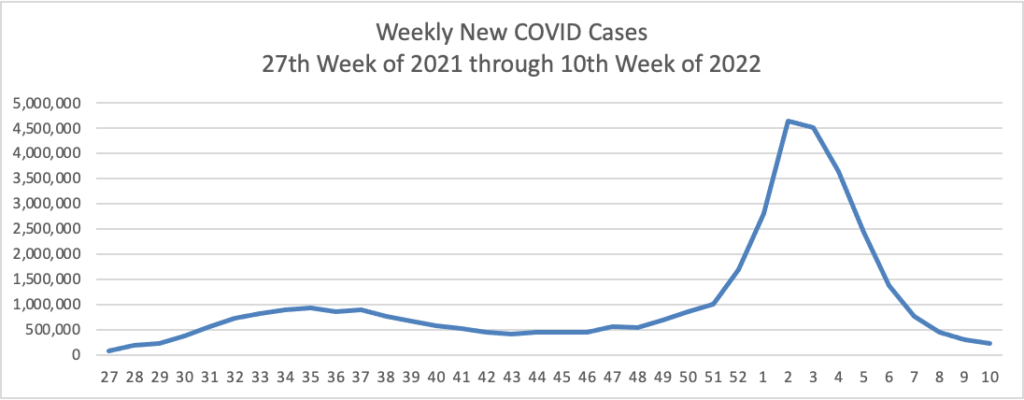
Based on the Centers for Disease Control’s Covid Data Tracker and using Thursday as the first day of the week, here is the FEHBlog’s updated weekly chart of new Covid cases:

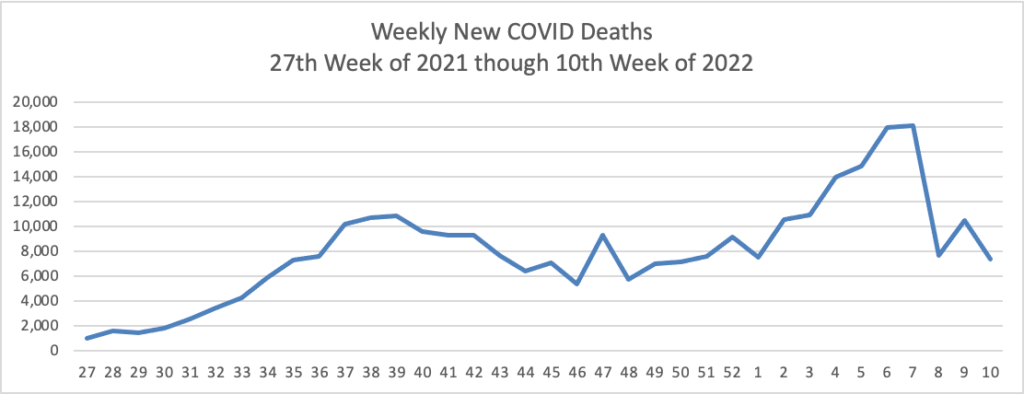
Not quite as low as we were in early July but very much moving in the right direction. So is the FEHBlog’s updated weekly chart of new Covid deaths, which is considered a lagging indicator.

The epidemiologists have a keen eye out for new worrisome variants. For example, for other troubling variants, Becker’s Hospital News tells us about a relatively new combination of Delta and Omicron known as Deltacron.

The recombinant variant appears unlikely to spread as easily as delta or omicron, William Lee, PhD, vice president of science at Helix, told USA Today. “We have not seen any change in the epidemiology with this recombinant,” WHO COVID-19 technical lead Maria Van Kerkhove, PhD, said of deltacron during a March 9 media briefing. “We haven’t seen any change in severity. But there are many studies that are underway.” 

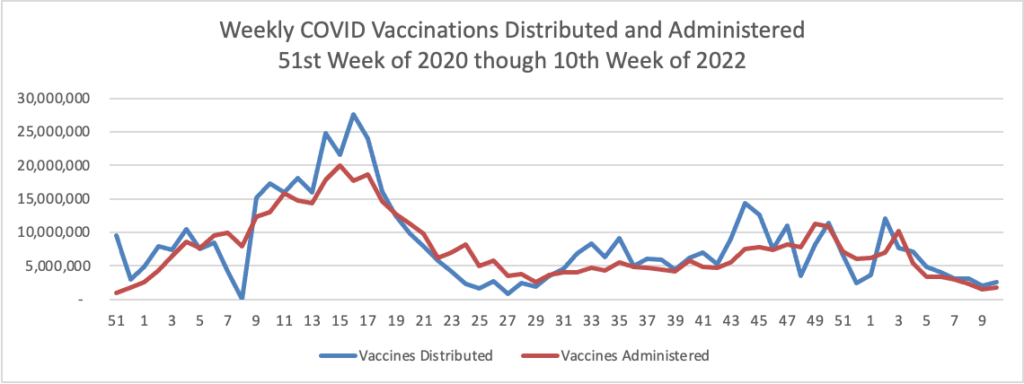
Here’s the FEHBlog’s weekly chart of Covid vaccinations distributed and administered from the start of the Covid vaccination era in late 2020 until the week ended this past Wednesday.

It is noteworthy that this week, the percentage of Americans aged 18 and older who are fully vaccinated (two doses of mRNA vaccine) cracked 75%. The same cadre is closing in on being 50% boostered. The most at risk, over age 65 cadre is 89% fully vaccinated and 66.7% boostered.

The American Hospital Association adds

In a study of 1,364 children aged 5-15, two doses of the Pfizer COVID-19 vaccine reduced the risk of omicron infection by 31% in those under 12 and 59% in older children, the Centers for Disease Control and Prevention reported today. CDC said the study reinforces the importance of vaccination to keep children and teens protected from severe disease, noting that another recent study found the vaccine 92%-94% effective against COVID-19 hospitalization in adolescents during the delta surge and 74% effective against hospitalization in younger children during omicron.

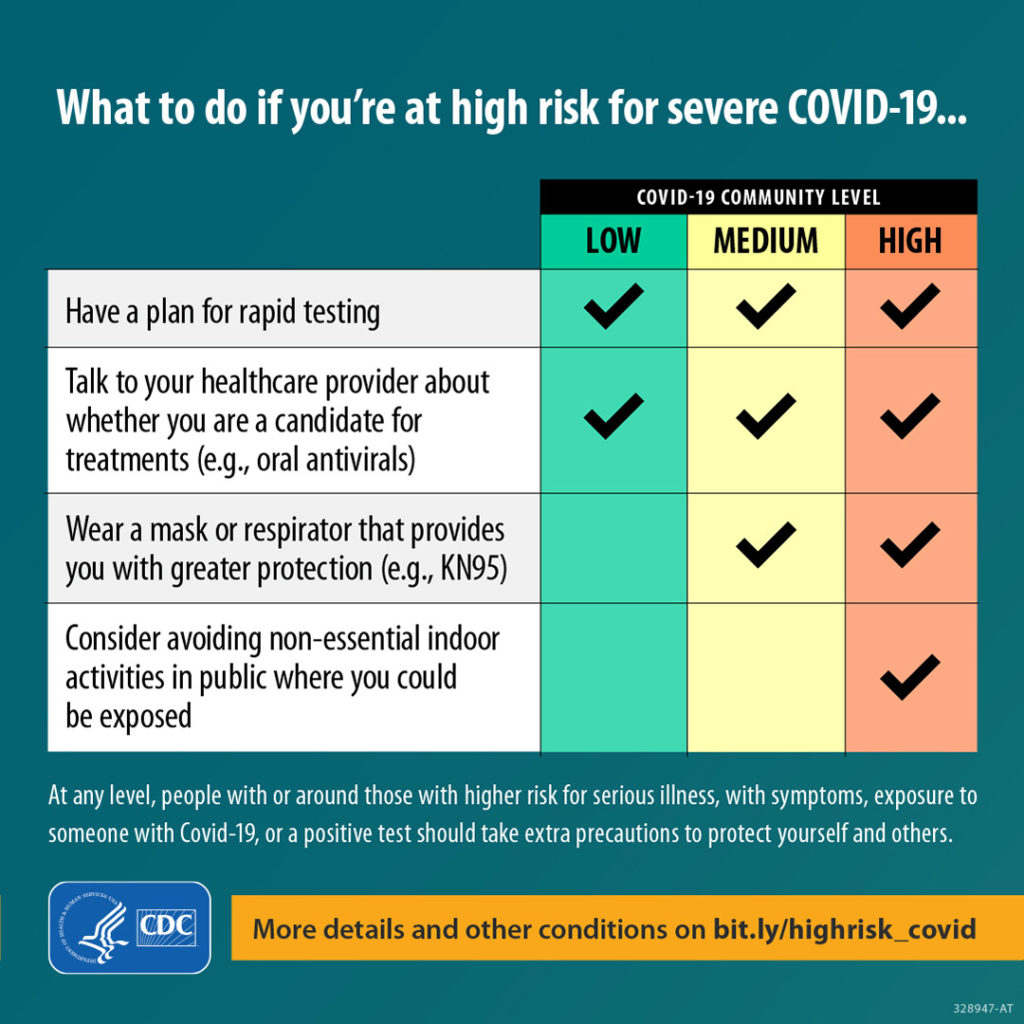
Here’s a link to the CDC’s weekly review of its Covid statistics. This week’s issue focuses on protecting folks at high risk for Covid, such as the immunocompromised.

Who is most likely to become very sick or die from COVID-19?  Your chances increase with age and underlying medical conditions like cancer, diabetes, heart conditions, dementia, and obesity, particularly if you’re not up to date on vaccinations. People with weakened immune systems,* some disabilities, some mental health conditions, and some chronic diseases are also at higher risk. A lot of people might not know they’re at risk for severe illness—review the list to find out if you could be.

Here’s a link to the CDC’s weekly Fluview report, which states that flu activity is increasing in “most of the country.” In this regard, the American Medical Association inform us

Healio (3/10, Downey, Gallagher) reports “interim estimates published Thursday in” the CDC’s Morbidity and Mortality Weekly Report “indicate that this season’s influenza vaccine has not been effective.” Based on the data “from more than 3,600 children and adults,” researchers “estimated that the vaccine has been 16% effective against mild or moderate influenza caused by the predominant circulating virus, influenza A(H3N2), with a 95% confidence interval…that suggests vaccination ‘did not significantly reduce the risk of outpatient medically attended illness’ caused by H3N2.”

From Capitol Hill and closing the loop on Thursday’s post, the Senate did pass the fiscal year 2022 omnibus appropriations act Thursday night. Roll Call reports

On a 68-31 vote, the Senate passed the 2,700-page, $1.5 trillion omnibus containing all 12 fiscal 2022 spending bills, $13.6 billion in supplemental appropriations to address the crisis in Ukraine and a lengthy list of unrelated measures fortunate enough to ride on the must-pass vehicle. 

From the No Surprises Act front, the FEHBlog had been concerned that the federal regulators were giving up on using the Qualified Payment Amount as a rebuttable presumption in NSA arbitrations which would help tremendously to control out of network benefit and plan legal costs. The FEHBlog therefore was encouraged to find that the federal government has filed a brief with the federal district court for the District of Columbia defending that position in a case raising the same issue. An oral argument on this issue will be heard by District Judge Richard Leon on March 21, 2022, at 3 pm. The FEHBlog will keep an eye on this and the other federal cases raising this issue.

From the electronic health record front, MedCity News interviews the CEO of Epic Systems at the Vive conference. The interview covers interoperability, artificial intelligence and other timely topics.

From the opioid epidemic front, STAT News reports

It was in the mid-2010s, the researchers heard, when “tranq dope” — opioids that contained the veterinary tranquilizer xylazine — took off in Philadelphia. But now, in some places across the U.S., it was appearing in 1 in 5 overdose deaths. A recent study also found the powerful synthetic opioid fentanyl in nearly every xylazine-involved death as well, indicating it wasn’t just the tranquilizer causing these overdoses. Experts are still trying to understand the risks of xylazine, but they’re worried because the drug is not an opioid but acts as a sedative, which can increase the risk of a fatal overdose. It might also make it harder to reverse those overdoses with naloxone, which is designed to work on opioids. STAT’s Andrew Joseph has more on how adulterated — and in turn, increasingly dangerous — the U.S. drug supply has become.

Rur roh.

Monday Roundup

Photo by Sven Read on Unsplash

To the FEHBlog’s dismay, the Labor Department’s Employee Benefits Security Administration announced this evening that the federal government is accepting, at least for the time being, Judge Kernodle’s interpretation of the No Surprises Act discussed in yesterday’s Weekend Update post.

The Departments [/ the ACA regulators] are reviewing the court’s decision and considering next steps. This announcement serves as a notification to health care providers, emergency facilities, providers of air ambulance services, group health plans, health insurance issuers, Federal Employees Health Benefits (FEHB) Carriers (“Disputing Parties”), and certified IDR entities of steps the Departments are taking to conform to the court’s order. Specifically, the Departments will:

— Effective immediately, withdraw guidance documents that are based on, or that refer to, the portions of the Rule that the court invalidated. Once these documents have been updated to conform with the court’s order, we will promptly repost the updated documents

— Provide training on the revised guidance for certified IDR entities and Disputing Parties. This training will be offered through webinars and roundtable discussions, and will occur after the above-referenced documents are updated.

— Open the IDR process for submissions through the IDR Portal. For disputes for which the open negotiation period has expired, the Departments will permit submission of a notice of initiation of the IDR process within 15 business days following the opening of the IDR Portal.

The Departments had the option of filing a notice of appeal and asking the court to stay the case pending the appeal’s outcome. The Departments thought this favorable outcome is unlikely. But, in the timeless words of Kenny Rogers, you have to know when to hold them and when to fold them.

The Senate Press Gallery reports this evening the Senate voted 74-20 to invoke cloture on the Postal Reform Act of 2022, H.R. 3076, which means that the bill will be called up on the Senate floor later this week for a final vote. That vote requires a simple majority for passage.

Earlier in the day, the Congressional Budget Office released a supplemental letter on HR 3076 in which

CBO addresses the following questions concerning the agency’s assessment of the budgetary effects of H.R. 3076, the Postal Service Reform Act of 2022, which CBO transmitted on February 4, 2022.

— What are the budgetary effects and costs to the Medicare program of H.R. 3076 over the next 20 years?

— What is the effect of the legislation on the Medicare Hospital Insurance Trust Fund?

— What is the effect on Medicare premiums in Part B and Part D?

In health equity news, Kaiser Permanente announced

Colorectal cancer disparities between Black and white adults were eliminated among Kaiser Permanente members in Northern California after the health care organization instituted a regionwide, structured colorectal cancer screening program, new research shows.

“Our study found that organized screening works to improve colorectal cancer outcomes for all of our members,” said the study’s senior author Theodore R. Levin, MD, a research scientist at the Kaiser Permanente Division of Research and a gastroenterologist with The Permanente Medical Group. “I knew our program had helped to reduce disparities, but I was surprised by the magnitude and the rate of improvement. It exceeded my expectations.”

The article provides details on a structured program. Bravo KP.

From the telehealth front, Healthcare IT News reports

Teladoc Health announced this week that it was partnering with Amazon to launch voice-activated virtual care on Alexa-supported Echo devices.  

According to the companies, U.S. customers around the country can connect with a Teladoc provider via audio at any time for general medical needs.  

“By introducing and integrating our virtual-first care experience with Echo devices, we are providing an innovative and convenient way for users to connect with a doctor,” Donna Boyer, chief product officer at Teladoc Health, said in a statement.

“We are meeting consumers where they are, to continue to deliver value and high-quality care to members,” Boyer said.   

From the looking forward department, ICD 10 Monitor tells us

On Feb. 11, the World Health Organization (WHO) released ICD-11 2022. This is the official version of the 11th revision of the International Classification of Diseases (ICD) coding set that WHO member countries will be implementing worldwide. In fact, according to the WHO release announcement, 35 countries are already using ICD-11.

In addressing implementation timeframes, the WHO anticipates that * * * countries with highly sophisticated information systems, where earlier versions of ICD are already in use [such as the U.S.], may require 4 -5 years to transition to ICD-11. * * *

So, when will the U.S. replace ICD-10-CM and begin using a version of ICD-11 for reporting on healthcare claims? Well, we don’t know yet. But this release of the official ICD-11 is sure to spur activity in this respect.

In September 2021, the National Committee on Vital and Health Statistics (NCVHS) issued recommendations to the Secretary of the U.S. Department of Health and Human Services (HHS) advising on a research agenda to evaluate the use of ICD-11 in the U.S. This release of the official ICD-11 2022 version from the WHO is sure to increase research activity.

So, while the timeline for a U.S. transition to ICD-11 is still uncertain, it’s clear that planning for the transition to ICD-11 is underway.

The FEHBlog, whose crystal ball is not the clearest, predicts 2029 as the over/under year for ICD-11 implementation.

Weekend Update

Congress is back in session this week for Committee business and floor voting. The Senate calendar notes the cloture motion on the Postal Reform Act of 2022 ripens tomorrow February 28 at 5:30 pm. This means that the Senate can hold a cloture vote on the bill later that evening or the following business day. A cloture vote requires 60 votes in favor.

We are eleven days away from the end of the current continuing resolution funding the federal government. That deadline will grab Congress’s attention.

The President will give his State of the Union address on Tuesday, March 1.

From the No Surprises Act (NSA) front, Prof. Katie Keith breaks down the Texas Medical Association decision rendered last Wednesday in the federal district court for the Eastern District of Texas. At stake were the provisions in the second interim final rule implementing the NSA that the independent dispute resolution entity acting as the arbitrator to resolve payment disputes between health plans and certain out-of-network provider accept the plan’s statutory payment known as the Qualifying Payment Amount “unless a party submits credible information that clearly demonstrates that the QPA is materially different from the appropriate out-of-network rate.”

On February 23, Judge Kernodle * * * issued a decision and final judgment vacating provisions of the interim final rule related to the “rebuttable presumption.” He held that the plaintiffs had standing to challenge the rule, that the rule is inconsistent with the NSA, that the federal agencies should not have bypassed notice and comment procedures, and that the challenged provisions should be vacated and remanded to the agencies for revisions. The vacated provisions, listed here, are:

— The requirement that the IDR entity select the offer closest to the QPA unless there is credible information to demonstrate that this is not the appropriate rate;

— The requirement that “additional information” clearly demonstrate that the QPA is materially different from the out-of-network rate;

— The definition of “material difference;”

— All four examples on how IDR entities should choose between competing offers; and

— The requirement that the IDR entity explain why it chose an offer not closest to the QPA.

As you can see, this is a relatively surgical approach; these are the only provisions in the rule that have been invalidated. But these are important provisions designed to ensure a well-functioning, predictable IDR process and help hold down health care costs and premiums.

Professor Keith adds

Judge Kernodle rejected [the federal government’s] requests for limited relief. Instead, he vacated the challenged provisions on a nationwide basis with a sweeping assertion that “there is nothing the Departments can do on remand to rehabilitate or justify the challenged portions of the Rule as written. * * *

From here, DOJ will presumably appeal Judge Kernodle’s decision to the Fifth Circuit and perhaps request a stay while the case is on appeal. If a stay is not granted, the court’s decision remains in effect, meaning the IDR provisions noted above are unlawful and set aside. The IDR process will still be available and is expected to begin in earnest in March 2022. But the ruling increases the risk that some providers will try to leverage the federal IDR process to obtain higher rates than are warranted, potentially leading to higher health care costs and premiums. 

What’s more,

Federal officials have already indicated that they will issue a final IDR rule by May 2022 and will likely be reviewing Judge Kernodle’s decision with an eye towards whether the final rule can include provisions that are similar to those in the interim final rule—as well as whether to rescind or replace the challenged provisions. The final rule will likely affect the timeline of current litigation and perhaps trigger future lawsuits.

It’s not a pretty picture for health plans at this point.

From the Omicron front, the Wall Street Journal discusses the steps that government agencies and public health organizations are taking to make rapid at home Covid tests available and understandable to the most vulnerable of us, “including low-income areas, rural parts of the country and some communities of color.”

From the behavior health care front, Health Payer Intelligence tells us

AHIP called on providers and policymakers to join payers in their efforts to integrate behavioral healthcare and physical healthcare in an issue brief on the subject.

The payer organization laid out three critical strategies for integrating behavioral healthcare. 

The collaborative care model (CoCM) uses care management to facilitate patient-centered care, and many of its services are recognized and reimbursed by CMS. 

The expanded and integrated care management model uses care management to support individuals with chronic conditions, specifically behavioral healthcare conditions. The model leans on screening tools in the primary care environment to identify conditions earlier.

Finally, the value-based purchasing and alternative payment models incentivize whole-person care financially. However, outcomes-based payment is challenging to measure in behavioral healthcare.

This is straight path to federal mental health parity compliance. Thanks AHIP.

From the OPM front —

  • Fedscoop lists the important links on the OPM website for federal and Postal employees considering retirement or about to retire.
  • Govexec discusses a recent GAO report on an OPM information technology project to overhauls it financial system for managing the government’s fringe benefit programs, including the FEHB.

From the good works department, Fierce Healthcare reports

Health Care Service Corporation [a Blue Cross licensee] is teaming up with the National Fitness Campaign to open outdoor fitness centers in Illinois and Texas.

The insurer will invest $850,000 to open 35 Fitness Courts across both states, according to an announcement. Construction is set to begin this summer, with the goal of opening the first locations in the fall. 

Thursday Miscellany

U.S. Supreme Court building

Let’s start today with news from the litigation front —

The Wall Street Journal reports that in advance of the February 27 deadline,

The Justice Department filed an antitrust lawsuit Thursday challenging UnitedHealth Group Inc.’s $13 billion acquisition of health-technology firm Change Healthcare Inc., arguing the tie-up would unlawfully reduce competition in markets for commercial insurance and the processing of claims.

The deal, announced in January 2021, sought to bring a major provider of healthcare clinical and financial services, including the handling of claims, under UnitedHealth’s Optum health-services arm.

The Justice Department filed its lawsuit in federal court in Washington, saying Change provided key industry technologies that are relied upon by UnitedHealth’s health-insurance rivals, making it a hub for competitively sensitive information. If the deal were allowed, UnitedHealth would have access to data that it could potentially use for its own benefit, at the expense of other insurers, the department alleged. The department also argued the deal would reduce head-to-head competition in the businesses of insurance claims transmission and review, because UnitedHealth competes with Change in those areas.

Healthcare Dive reports

A federal judge in Texas struck down a narrow part of the surprise billing rule that outlines how to resolve payment disputes between payers and providers over out-of-network claims. Wednesday’s ruling is a win for providers who were opposed to the dispute resolution process spelled out by CMS in an interim rule, arguing it favored insurers.

The judge’s ruling essentially tosses out a part of the dispute resolution process that instructs arbiters to begin with the presumption that the qualifying payment amount, or median in-network rate, is the appropriate payment amount for providers.

This is not the final word because the decision, which resulted in a final judgment is appealable to the U.S. Court of Appeals for the Fifth Circuit. A case raising the same issue is currently pending oral argument in the U.S. District Court for the District of Columbia.

The Hill adds

Katie Keith, a health law expert at Georgetown University, said the ruling is evidence of how hard doctors groups will fight even relatively modest efforts by Congress to cut health care costs.  

The surprise billing action was “one of the few things Congress has tried to do on cost containment,” she said.   

Amen to that.

From the Omicron front, Medpage Today provides background on a Centers for Disease Control decision permitting

Extended dosing intervals for Pfizer or Moderna vaccines * * * for certain individuals ages 12 to 64 years, not only to lower the risk of vaccine-associated myocarditis, but to potentially improve vaccine effectiveness, CDC staff said on Thursday.

According to the agency’s new interim guidance, young people ages 12 to 39 may especially benefit from a second mRNA dose 8 weeks after their first dose.

However, the regular 3-week interval for Pfizer and 4-week interval for Moderna is appropriate for patients who are moderately to severely immunocompromised, adults ages 65 and up, those who need rapid protection (such as “during high levels of community transmission”), and children ages 5 to 11.

From the social determinants of health front, HR Dive tells us

Though employers have invested increasingly in a variety of healthcare and healthcare-adjacent benefits, few of these efforts effectively address social determinants of health that can negatively affect patient outcomes, according to a report published this month by the Northeast Business Group on Health.

Social determinants of health include factors such as education access and quality; healthcare access and quality; economic stability; neighborhood and built environment; and social and community factors. Differences in these areas lead to disparities not only in terms of health outcomes, but also in cost management and general employee health and well-being, NEBGH said.

Employers can start addressing social determinants by collecting survey data on employees’ needs and risk factors, per the report. From there, NEBGH recommended that benefits design focus on equitable benefits access, such as evaluating what percentage of pay their health plans comprise at different pay levels. Other strategies cited include improving health literacy, taking advantage of partnerships and improving organizational culture around health and well-being, among others.

From the Rx coverage front, Fierce Healthcare discusses CVS Health’s annual Drug Trend Report.

CVS Caremark kept overall drug trend for clients to 2.4% over the first three quarters of 2021, marking multiple years of single-digit trend in drug price growth.

The pharmacy benefit management arm of CVS Health also kept its specialty drug trend to single digits through the third quarter, at an industry-low 5.8%, according to the company’s annual Drug Trend Report released Thursday. Caremark found that 35.9% of its clients saw negative specialty trend in 2021.

In addition, 65.3% saw specialty trend under 10%, according to the report.

The article explains how CVS Health accomplished this feat.

From the Medicare front, CMS announced a redesign of its Accountable Care Organization model

that better reflects the agency’s vision of creating a health system that achieves equitable outcomes through high quality, affordable, person-centered care. The ACO Realizing Equity, Access, and Community Health (REACH) Model, a redesign of the Global and Professional Direct Contracting (GPDC) Model, addresses stakeholder feedback, participant experience, and Administration priorities, including CMS’ commitment to advancing health equity. 

In addition to transitioning the GPDC Model to the ACO REACH Model, CMS is canceling the Geographic Direct Contracting Model (also known as the “Geo Model”) effective immediately. The Geographic Direct Contracting Model, which was announced in December 2020, was paused in March 2021 in response to stakeholder concerns.

Good luck, CMS, with this new model.

Happy Washington’s Birthday

The

The National Archives informs us

George Washington was born in Virginia on February 11, 1731, according to the then-used Julian calendar. In 1752, however, Britain and all its colonies adopted the Gregorian calendar which moved Washington’s birthday a year and 11 days to February 22, 1732.

Americans celebrated Washington’s Birthday long before Congress declared it a federal holiday. The centennial of his birth prompted festivities nationally and Congress established a Joint Committee to arrange for the occasion.

Washington’s Birthday was celebrated [as a federal holiday] on February 22nd [from 1879] until well into the 20th Century. However, in 1968 Congress passed the Monday Holiday Law to “provide uniform annual observances of certain legal public holidays on Mondays.” By creating more 3-day weekends, Congress hoped to “bring substantial benefits to both the spiritual and economic life of the Nation.”

One of the provisions of this act changed the observance of Washington’s Birthday from February 22nd to the third Monday in February. Ironically, this guaranteed that the holiday would never be celebrated on Washington’s actual birthday, as the third Monday in February cannot fall any later than February 21.

Contrary to popular belief, neither Congress nor the President has ever stipulated that the name of the holiday observed as Washington’s Birthday be changed to “President’s Day.”

From the Omicron front, Medscape reports

Average daily COVID-19 cases and hospitalizations are continuing to fall in the U.S., providing a signal that the Omicron variant is receding across the country.

* * *

Deaths are also beginning to decline, with an average of about 2,100 daily, according to the data tracker from The New York Times. More than 2,500 daily deaths were being reported in early February.

Medpage Today adds

The Omicron sublineage BA.2, which raised alarms because of its transmission advantage, accounts for just 4% of cases in the U.S., and experts suggested it’s not likely to reverse the current downward trend of cases overall.

BA.2 has certainly increased in prevalence, but its been a slow trajectory, according to CDC data. BA.1.1, another Omicron sublineage, actually became the dominant strain in the U.S. in mid-January, the agency reported, with the original lineage, B.1.1.529, currently accounting for about 23% of U.S. cases.

“The BA.2 Omicron variant is increasing in prevalence slowly in both CDC and private data,” tweeted Scott Gottlieb, MD, former FDA commissioner and current Pfizer board member. “While it may become a dominant strain in time, it appears increasingly unlikely that it will cause a significant change in the downward trajectory of the current epidemic wave.”

That has certainly been the case for South Africa, where BA.2 accounts for nearly 100% of cases, according to Tulio de Oliveira, PhD, of the Centre for Epidemic Response & Innovation in Stellenbosch.

“This comes on a background of decreasing infections,” de Oliveira tweeted. The country now has a 7-day average of about 2,500 daily infections, down from a peak of about 23,000 in mid-December.

“At present, the Omicron BA.2 is not of great concern in South Africa,” he tweeted. “But our network is following very close and is alerted to its emergence.”

From the Covid vaccination mandate front, the Society for Human Resource Management reports that the U.S. Court of Appeals for the Fifth Circuit ordered the lower court to reconsider whether United Airlines vaccination mandate offered sufficient protection under Tittle VII to religious objectors.

From the No Surprises Act front, the American Hospital Association tells us

The Centers for Medicare & Medicaid Services will host a conference call for health care providers Feb. 23 at 2 p.m. ET on the No Surprises Act’s continuity of care, provider directory and public disclosure requirements. To participate in the Special Open Door Forum, dial 888-455-1397 and reference passcode 5109694. Slides for the call are available here. Participants may email questions in advance to Provider_Enforcement@cms.hhs.gov. A recording will be available after the call through Feb. 25 by dialing 866-373-4993.

The slide deck is quite detailed.

Healthcare Dive adds

The cost of being transported by ground ambulance has increased steadily over the past five years, according to a new report from nonprofit Fair Health, threatening patients with few protections from balance billing in disputes between insurers and ambulance providers.

More ambulance trips are billing payers for advanced life support ( ALS), denoting a higher level of care (and reimbursement) than basic life support (BLS) services. Private insurers’ average payments for those trips increased 56% between 2017 and 2020, from $486 to $758, according to the analysis. Before accounting for discounts negotiated with payers, the rate that ambulance operators charged for trips jumped 23% in the same time period and now average almost $1,300.

However, the average reimbursement for advanced life support ambulance rides climbed by 5% for patients covered by Medicare, from $441 to $463, suggesting the government program is keeping a lid on rising costs.

Although at this point only air ambulance charges are subject to the No Surprises Act, this type of report could lead Congress to expand the law to include ground ambulance charges.

From the medical research front, Biopharma Dive informs us

Eli Lilly is again upping its investment in genetic medicine, announcing Tuesday plans to establish a Boston research center that will use RNA- and DNA-based technologies to develop new drugs.

The Lilly Institute for Genetic Medicine will take up 334,000 square feet in Boston’s Seaport neighborhood, with occupancy slated to begin in 2024. Lilly, which has earmarked around $700 million for the project, expects the institute to grow from 120 employees to 250 within five years. Roles will include data scientists, chemists and research biologists with expertise in genetic medicine.

Alongside drug development, the institute will take a page from another Lilly venture — Lilly Gateway Labs — and offer shared lab and office space to support biotechnology startups in the area. Use of the shared space, Lilly said, could create as many as 150 additional new jobs once it’s fully occupied.

The National Institutes of Health announced

Women who had ever experienced sexual violence in their lifetime — including sexual assault and workplace sexual harassment — were more likely to develop high blood pressure over a seven-year follow-up period, according to findings from a large, longitudinal study of women in the United States. The research, funded by the National Institutes of Health and published in the Journal of the American Heart Association, indicated that sexual violence was a common experience, affecting more than 20% of the women in the sample.

“Our results showed that women who reported experiencing both sexual assault and workplace sexual harassment had the highest risk of hypertension, suggesting potential compounding effects of multiple sexual violence exposures on women’s cardiovascular health,” said Rebecca B. Lawn, Ph.D.(link is external), of the Harvard T. H. Chan School of Public Health, Boston, lead author on the study.

From the healthcare initiative front, the Centers for Disease Control detailed its Million Hearts 2027 initiative.

From the virtual care front, Healthcare IT News tells us

The American Medical Association, in conjunction with Manatt Health, published a report this week exploring the ways that virtual care and other digital tools can accelerate the adoption of the integrated delivery of behavioral and physical healthcare.  

In the report, the organizations note that behavioral health integration is essential for solving the country’s dire need for access to services.  

“The demand for behavioral health services is significant and rising, but so is the potential for digital technology to support the integrated delivery of physical and behavioral health services,” said AMA President Dr. Gerald Harmon in a statement.  

Moreover, in Health Affairs, the National Coordinator for Health Information Technology Micky Tripathi discusses delivering on the promise of health information technology in 2022.

From the healthcare business front, Healthcare Finance reports

The Department of Justice has until Saturday, February 27 to block the merger between UnitedHealth Group and Change Healthcare, according to a Securities and Exchange Commission filing on February 17.

The filing, by Change, was done in accordance with a timing agreement made with the DOJ. In November 2021, the two companies agreed not to consummate their merger before February 22. 

The timing agreement provides the DOJ with 10 days’ notice to sue to block the deal. 

“Effective February 17, 2022, UnitedHealth Group and the Company provided such notice to the DOJ,” Change said in the filing. “Accordingly, the DOJ now has until February 27, 2022 to initiate litigation to block the consummation of the merger.”

The DOJ is preparing the lawsuit to block UnitedHealth from purchasing Change, according to Seeking Alpha.

From the awards front

  • STAT News released its inaugural STATUS List which “recongizes standout individuals in health, medicine, and science. And although there are countless contenders to choose from, we’ve selected just 46 — an homage to the number of chromosomes in human DNA.”
  • OPM “announced a call for nominations for the 2022 Presidential Rank Awards (PRAs). A Presidential Rank Award is one of the most prestigious awards in the federal career civil service, and these awards are critical to recognizing the hard work and important contributions of dedicated civil servants in the American federal workforce. The awards – which recognize exceptional performance by members of the career Senior Executive Service (SES) and Senior Career Employees – reflect the Biden-Harris Administration’s commitment to supporting the federal workforce and recognizing federal employees who serve with distinction.” The nomination deadline is March 25, 2022.  

Thrsday Miscellany

Photo by Juliane Liebermann on Unsplash

From the Postal Reform front, health benefits expert Robert Moffitt, whose work the FEHBlog admires, wrote a column titled “It’s a bad idea to use the Medicare to bail out the Postal Service.” On this occasion, the FEHBlog finds himself in disagreement with Mr. Moffitt.

  1. Medicare is not bailing out the Postal Service. Since 1984, the Postal Service and its employees has paid and continues to pay Medicare taxes for its employees until they retire. At that point, Medicare becomes primary to FEHB and other group health coverage by law.
  2. Every other business in America that provides health benefits coverage to its retirees essentially follows the same approach as the Postal Service will be authorized to do by this bill.
  3. The Postal reform bill is unique in that it creates a special Part B enrollment period for current annuitants as of January 1, 2024, who have Part A but declined to enroll for Part B, an option which OPM encourages. Under the bill that that House passed this week, the Postal Service will bear the cost of the late enrollment penalties associated with this special enrollment period.
  4. Mr. Moffitt suggests that Postal Service Health Benefit Program (PSHBP) Medicare annuitants may find it necessary to purchase Medicare supplement insurance. However, we know from experience that PSHBP plans will follow the practice of existing FEHB plans and wrap their benefits around Medicare to fill those Medicare gaps. The PSHBP coverage is the Medicare supplemental coverage available to Medicare annuitants in FEHB and the PSHBP, and more tightly integrating PSHBP and Medicare coverage will result in lower premiums for all PSHBP enrollees.

Bear in mind that studies have shown the group health plans subsidize Medicare by making payments to healthcare providers that substantially exceed Medicare’s low reimbursements.

From the No Surprises Act (“NSA”) front —

  • CMS issued more FAQs on the federal independent dispute resolution (“IDR”) process today.
  • Consumer Reports identifies five healthcare scenarios which fall outside the scope of the No Surprises Act.
  • Fierce Healthcare brings us up to date on the healthcare provider association lawsuits challenging the federal government’s decision to treat the NSA’s qualifying payment amount as the lodestar in federal IDR arbitrations.

From the Omicron front, Medscape reports that “The U.S. government is planning to roll out COVID-19 shots for children under the age of 5 as soon as Feb. 21, according to a document from the U.S. Centers for Disease Control and Prevention. * * * Young children [beginning at six months] will receive a lower dose of the vaccine, if it is authorized. Pfizer/BioNTech tested a 3-microgram dose of the vaccine in the age group, compared with a 10-microgram dose in 5- to 11-year-olds and 30 micrograms for people aged 12 and older.”

Also, the Department of Health and Human Services announced that “the federal government has purchased 600,000 treatment courses of a new monoclonal antibody treatment that data shows works against the Omicron variant. The new monoclonal antibody treatment, bebtelovimab, is manufactured by Eli Lilly and Company, and if it receives emergency use authorization (EUA) by the U.S. Food and Drug Administration (FDA), HHS will make the treatment available to states free of charge.”

From the COVID vaccine mandate front, Govexec tells us

A federal appeals court has denied the Biden administration’s request to undo the pause on its COVID-19 vaccine mandate for federal employees, leaving in place a ban on agencies enforcing the requirement. The U.S. Court of Appeals for the Fifth Circuit opted not to weigh in on the Justice Department’s petition for immediate relief, meaning the mandate will likely remain enjoined for at least several months. The only path for quicker resolution would be for the administration to appeal further tNBo the Supreme Court, an option it has not yet said it will explore. A Justice spokeswoman declined to comment. 

From the miscellany department

  • NIH News discusses advances in breast cancer screening and treatment.

The clipboard of paper forms that for decades has been a standard part of Americans’ doctor visits may soon be a thing of the past. 

Federal authorities who oversee health technology have set a deadline for December for the health care industry to support smartphone apps, like Apple Health, that store records electronically. 

Their goal is to have patients use their phones to electronically share records with a doctor’s office or hospital — without a pen and paper, if they choose. 

“Patients ought to be able to use the app of their choice,” said Micky Tripathi, who’s helping to put the federal rules in place as the Biden administration’s national coordinator for health information technology. 

“Every patient has the deep frustration of going to a hospital and they give you a clipboard and you have to fill out all the information, and then you go to another part of the same hospital and they give you the clipboard again,” Tripathi said. 

The FEHBlog has been reading articles about the demise of the clipboard throughout this century. However, he thinks that this worthy idea may soon come to fruition.

Thursday Miscellany

Photo by Juliane Liebermann on Unsplash

From Capitol Hill, Roll Call reports that Congress is not making much progress toward replacing the current continuing resolution funding the federal government with an omnibus bill resolving FY 2022 appropriations. The deadline for Congressional action is February 18. It is starting to look like Congress is headed toward passing another short-term continuing resolution according to the article. Time will tell.

From the Covid testing front, the Biden administration announced today that Medicare will begin direct coverage of over-the-counter Covid tests in the early Spring of this year.

Health Payer Intelligence informs us that America’s Health Insurance Plans wrote a statement to Congress describing the numerous administrative problems created by the “free” Covid test coverage mandates that started nearly two years ago with the CARES Act.

MedPage Today tells us about a human challenge study of the Covid incubation period conducted in London which found that the Covid incubation is only two rather than five days after exposure. Instead the symptoms tend to peak at five days and the virus remains detectable 10 days after exposure.

The Institute for Clinical and Economical Review released a draft assessment of outpatient treatments for Covid including the Pfizer and Merck pills, an intravenously administered recombinant monoclonal antibody (Sotrovimab), and an off-label use of an obsessive-compulsive SSRI drug (Fluvoxamine) for which researchers are seeking an emergency use authorization for Covid. The draft conclusion is that

Our analyses suggest that each outpatient intervention produces improved clinical outcomes. At their current prices, each intervention is estimated to meet standard cost-effectiveness levels in the US health care system, even under a scenario with a lower hospitalization risk that may reflect the current Omicron wave. The cost-effectiveness findings are primarily driven by a treatment’s ability to reduce hospitalization and the baseline probability of hospitalization.

From the No Surprises Act front, the Labor Department helpfully released a transcript of the January 19, 2022, listening session regarding provider nondiscrimination under Section 2706(a) of the Public Health Service Act. The NSA requires the ACA regulators to issue implementing rules for this law which has been in force since 2014.

Also, Kaiser Health News discusses mental health therapist concerns about the good faith pricing estimate for healthcare services that the NSA applies across the board. The law also requires health plans to issue advance explanations of benefits in response to a good faith estimate from a provider. The FEHBlog will never understand why Congress failed to direct HHS to create HIPAA standard transactions for the GFE and the AEOB. In any event, providers and health plans await implementing rules from the ACA regulators.

From the Rx coverage front, Biopharma Dive provide us with two insights

  1. “Biogen recorded $1 million in revenue from its new treatment for Alzheimer’s disease in the last quarter of 2021, offering the latest evidence that the drug, which came to market with multi-billion dollar sales expectations, continues to struggle commercially.”
  2. “AbbVie may soon face competition for its top-selling eye drug Restasis after the Food and Drug Administration on Wednesday approved a generic version.”

From the healthcare business front, Fierce Healthcare fills us in on Cigna’s fourth quarter 2021 financial report.

Tuesday’s Tidbits

Photo by Patrick Fore on Unsplash

The FEHBlog nearly fell off his office chair when he noticed a Govexec headline this afternoon reading “The House finally plans to vote on Postal reform [HR 3706] next week. The long sought after bill could make it to the President’s desk by the end of the month.” This Postal reform saga has been going on for over a decade.

The Postal reform act (HR 3706) would relieve the Postal Service of the obligation to prefund the cost of FEHB coverage in retirement for its employees. The bill also would create a Postal Service Health Benefits Program (“PSHBP”) within the FEHB Program. The PSHBP would tightly integrate Medicare annuitant coverage with primary Medicare A, B, and D. Medicare Part A (hospital care) is premium free while Medicare Part B (medical care) and Part D (prescription drugs) charge premiums.

OPM encourages Medicare age annuitants to pick up Part B but it prohibits FEHB carriers from using integrated Part D arrangements knowsn as EGWPs even though every other U.S. employer that provides drug coverage to its retirees uses a Part D EGWP or takes the retiree drug subsidy. What’s more Congress in the Medicare Modernization Act of 2003 expressly authorized FEHB plans to use Medicare EGWPs. Go figure.

In any event, all enrollee costs are included in FEHB risk pools which is an important feature of the FEHB Plan and its constituent PSHBP. The cost of Medicare Prime annuitants in the PSHBP will be much lower than those in legacy FEHB, and Medicare Prime annuitants are a signficant cadre of enrollment, PSHBP premiums will be noticeably lower than legacy FEHB premiums.

The CBO has projected that 3/5s of the Medicare integration savings for the PSHBP will come from the Part D EGWPs. The FEHBlog looks forward to the day later this decade when OPM finally permits legacy FEHB carriers to offer Medicare Part D EGWPs.

From the Covid vaccine front —

  • Pfizer and BioNTech have a submitted an emergency use authorization request for an mRNA Covid vaccine for little children aged six months through four years. The FDA and CDC are likely to approve the application by the end of February according to Medscape.

Novavax announced Monday that it has formally submitted a request to the FDA for emergency use authorization of its COVID-19 vaccine for ages 18 and older.

The request includes results from two large clinical trials that showed an overall efficacy of about 90% and a “reassuring safety profile,” the company said.

“We believe our vaccine offers a differentiated option built on a well-understood protein-based vaccine platform that can be an alternative to the portfolio of available vaccines to help fight the COVID-19 pandemic,” Stanley Erck, the president and CEO of Novavax, said in the statement.

From the COVID treatment front, the Wall Street Journal reports that providers are having difficulty obtaining the drugs need to treat Omicron because the treatments typically are available under emergency use authorizations and each State makes its own decison on how to distribute EUA treatments. On the brighter side,

Antiviral-pill manufacturers are ramping up production to meet demand. Supplies of Pfizer Inc.’s Paxlovid are expected to increase in the spring, according to Pfizer and state officials. Merck & Co., which manufactures molnupiravir with partner Ridgeback Biotherapeutics LP, said it has delivered two million courses to the U.S. and will deliver the rest of the 3.1 million courses under its contract by the end of this week.

From the healthcare cost front, Healthcare Dive reports that

The omicron variant walloped hospitals in the final month of 2021, driving up both adjusted patient volumes and expenses as the number of COVID-19 cases surged to new highs for the pandemic, according to Kaufman Hall’s latest flash report.

Patient days rose nearly 4% in December compared to November, while emergency department visits jumped more than 7% as patients came in with COVID-19 symptoms. Omicron’s rapid spread drove a 98% jump in COVID-19 hospitalizations over the course of the month, Kaufman Hall said, citing Centers for Disease Control and Prevention data.

The second full year of the pandemic was marked by an increase in severely ill patients requiring longer hospital stays compared to the first year, the report also found.

From the No Surprises Act front, Healthcare Dive examines healthcare provider association legal challenges to the federal regulators’ use as the qualifying payment amount in NSA arbitrations. The FEHBlog has described those cases now pending in federal district courts in Texas and Washington DC as exercises in futility. For example,

Since the qualifying payment amount represents the median in-network rate, it by definition means that half of providers are below the QPA and half are above, according to Chris Garmon, a professor at University of Missouri – Kansas City, who has studied surprise billing. Not all providers are set to see payments decline and some may even see them increase if the QPA is used, he said.

The good professor overlooks the fact that in 2021 out of network doctors caring for patient at in-network facilities were reimbursed at out-of-network rates typically two or perhaps three times the Medicare RBRVS reimbursement. For that reason, the FEHBlog expects that in most cases the QPA will be noticeably higher than pre-NSA reimbursements. Time will tell, but the regulators’ approach is reasonable, and patient advocacy groups have been supporting the regulators in these cases.

From the mental health parity front, Health Payer Intelligence compares provider and payer reactions to the government’s recent report to Congress on payer compliance with complex federal health parity act rules.

From the healthcare business front, Fierce Healthcare tells us that

GuideWell, the parent company of Blue Cross and Blue Shield of Florida, has closed its acquisition of Triple-S Management Corporation, a Puerto Rico-based health services company.

The deal was first announced in September.

GuideWell acquired all shares of Triple-S at $36 per share in cash, according to an announcement from the company. Triple-S will now operate under its existing branding as a wholly owned subsidiary of GuideWell.

From the FDA front, check out this FDA news roundup.

From Capitol Hill, Govexec reports on OMB acting director’s Shalonda Young’s confirmation hearings to be the Presidentially nominated OMB director. Ms. Young appears on her way to confirmation.

Thursday Miscellany

From the Omicron front, MedPage Today reports that

While a large meta-analysis of studies on convalescent plasma use early in the pandemic turned up no survival advantage for the typical patient hospitalized for COVID-19, researchers have mined the dataset to predict who may benefit.

Eva Petkova, PhD, of NYU Grossman School of Medicine in New York City, and colleagues devised a simple and freely available tool called the Convalescent Plasma Benefit Index Calculator that allows doctors to input certain patient criteria to determine if their patient may benefit from convalescent plasma (age, oxygen need, blood type, and history of either diabetes, heart disease, or pulmonary disease).

Note: The FEHBlog has been intrigued by convalescent plasma treatments since reading John Barry’s The Great Influenza in early 2020. The FEHBlog currently is reading Gregory Zuckerman’s A Shot to Save the World which is equally fascinating.

The Wall Street Journal’s personal technology reporter Joanna Stern reviews the latest in at home Covid testing.

It’s Friday and you’ve got a scratchy throat and a mild headache. Time to play “Cold? Covid? Or Just Crazy?”—the only game more popular than Wordle. 

Or you could open up your medicine cabinet and power-on a small white box. Swab your nose with a Lego-like stick, then slide that into the illuminated gadget. About 20 minutes later, your iPhone buzzes: “COVID-19 Positive.”

The future? Nope, it’s already here. For the past few weeks, I’ve been testing the Cue Health Monitoring system and the Detect Covid-19 Test, two systems from health-tech startups that put lab-like molecular testing right on your bathroom counter. No driving to the testing center. No waiting in line. No anticipating the results for days.

* * *

Molecular tests’ biggest benefit: They can spot Covid earlier—anywhere from 6 hours to two days, depending on the variant and other factors. Dr. Mina, who previously served as an adviser to Detect, said they’re good “if you’re really symptomatic and you definitely want to know, ‘Is this Covid?’ ”

However, if you’re using a test to determine whether you can safely go out into the world—back to work, back to school—the cheaper rapid antigen test would be best. “The problem with a molecular test is that it’s so sensitive that it may detect dead fragments and not live virus,” said Peter Chin-Hong, an infectious-disease specialist at the University of California, San Francisco.

Ms. Stern also explains in the article that the molecular test cost singificantly more than the rapid antigen tests.

Bloomberg released its latest Covid resilence ranking for 53 countries around the world.

The Covid Resilience Ranking is a monthly snapshot of where the virus is being handled the most effectively with the least social and economic upheaval. Drawing on 12 data indicators spanning virus containment, quality of healthcare, vaccination coverage, overall mortality and progress toward restarting travel, it captures how the world’s biggest 53 economies are responding to the same once-in-a-generation threat.

The United Arab Emirates and Saudi Arabia rank one and two. The U.S. ranks 23 down 11 ranks since last month. The FEHBlog recalls that last Spring before Delta hit us, the U.S. ranked number 1 in this index. How the mighty have fallen.

From the No Suprises front

  • The Affordable Care Act regulators today released 37 pages of helpful guidance about the No Suprises Act’s new federal independent dispute resolution process.
  • Healthcare Leaders tells us that “The U.S. Department of Health and Human Services (HHS), Office of Inspector General, plans to conduct a nationwide audit to determine whether hospitals that received Provider Relief Funding complied with the billing requirements for COVID patients. This requirement stipulates that those hospitals must not pursue out-of-pocket payments from COVID patients whose bill exceeded “what the patients otherwise would have been required to pay” for in-network care. This audit will be based on the various federal Covid relief acts, not the No Surprises Act

From the Affordable Care Act front, the FEHBlog diligently has been on the lookout for the HHS announcement of 2023 out-of pocket cost-sharing limits for in-network care. The 2023 ACA Notice of Benefit and Payment Parameters released December 28, 2021, advised that the announcement would be released in January. The regulators must have meant that future announcements would be released beginning in January 2024 because the FEHBlog discovered yesterday that the 2023 announcement was released on December 28, 2021.

The announcement reads in pertinent part that

Under 45 CFR 156.130(a)(2), for the 2023 calendar year, cost-sharing for self-only coverage may not exceed the dollar limit for calendar year 2014 increased by an amount equal to the product of that amount and the premium adjustment percentage for 2023. For other than self-only coverage, the limit is twice the dollar limit for self-only coverage. Under § 156.130(d), these amounts must be rounded down to the next lowest multiple of $50. Using the premium adjustment percentage for 2023 of 1.4408219719, and the 2014 maximum annual limitation on cost-sharing of $6,350 for self-only coverage, which was published by the Internal Revenue Service on May 2, 2013, the 2023 maximum annual limitation on cost-sharing is $9,100 for self-only coverage and $18,200 for other than self-only coverage. This represents an approximately 4.6 percent increase above the 2022 parameters of $8,700 for self-only coverage and $17,400 for other than self-only coverage.

And there you are, dear readers.

From the healthcare business front, Healthcare Dive informs us that

— HCA [Healthcare] announced plans to build five new hospitals in Texas in response to the growing population there, executives said Thursday during a call with investors.   

— The hospitals will serve as primary- and secondary-type hospitals with basic inpatient and outpatient services that will refer patients needing higher-acuity services to HCA’s other campuses. These new hospitals will be smaller facilities with about 50 to 75 beds, executives said Thursday.

— The new hospitals will be located in the areas of Dallas Fort-Worth, Houston, San Antonio, and Austin.

Fierce Healthcare adds

Nashville, Tenn.-based HCA Healthcare saw its revenue and profit grow year over year in the fourth quarter of 2021. 

The 182-hospital system reported revenue of $15.1 billion in the fourth quarter of last year, up from $14.3 billion in the same period of 2020. The for-profit hospital operator said same-facility admissions, emergency room visits and outpatient surgeries increased year over year, while inpatient surgeries declined. 

After factoring in expenses and nonoperating items, HCA’s net income in the fourth quarter of 2021 totaled $1.8 billion, up from $1.4 billion in the same quarter a year earlier. 

From the telehealth front, Fierce Healthcare reports that

As telehealth companies increasingly turn to chronic care management, Cigna’s MDLive is launching its own remote patient monitoring program.

The digital-first program will allow patients with chronic conditions to track biometrics like blood pressure and glucose levels, recording daily health information that they can review with MDLive providers during their visits.

* * *

Cigna expanded access to MDLive’s network of virtual primary care providers to all members of the insurer’s employer plans beginning January 2022.

The new patient health monitoring program will be available to all health plan clients of MDLive.