Monday Roundup

Monday Roundup

The FEHBlog has explained that OPM scores FEHB plans principally on certain HEDIS and CAHPS scores measured against where other health plans (generally not just FEHB plans) score. NCQA which manages HEDIS and CAHPS for health plan scoring purposes, released last Wednesday two years of specifications for HEDIS measures (the 2020 and 2021 measurement year “specs.”).

The happy result of this NCQA action is that beginning next year FEHB and other health plans subject to HEDIS will know the rules of the road five months before the measurement year begins rather than six months into the measurement year which has the the case right through this 2020 measurement year. Bravo NCQA.

Meanwhile Health Payer Intelligence reports on an America’s Health Insurance Plans commissioned study finding that “Nearly three-quarters of NCQA HEDIS quality measures will experience a negative impact from the coronavirus pandemic.” Marvelous. The article also suggests some ways that health plans can boost their HEDIS scores in these hard times.

Speaking of these hard times, three major healthcare provider associations (the American Hospital Association, the American Medical Associations, and the American Nurses Association) issued a letter today encouraging the public “to take the simple steps we know will help stop the spread of the virus: wearing a face mask, maintaining physical distancing, and washing hands.” That’s good advice for health plans to spread around too.

RevCycle Intelligence informs that the American Hospital Association and its fellow hospital groups are urging the Department of Health and Human Services to delay the January 1, 2021, effective date for the Administration’s hospital pricing transparency rule at least until the case challenging the rule works it way through the court system. At this point a federal district court has upheld the rule and the American Hospital Association has appealed that decision to the U.S. Court of Appeals for the D.C. Circuit. The article adds that

No response from CMS was available as of July 2. However, lawmakers are looking to make the price transparency rule law. Introduced by Senator Chuck Grassley (R-IA) on June 30th, the PRICE Transparency Act seeks to codify the hospital price transparency rule and a similar rule requiring payers to publicly share cost-sharing and in- and out-of-network provider rates.

In other 2021 news, the Centers for Medicare and Medicaid Services issued a proposed rule for pricing Medicare end stage renal disease coverage next year. “CMS is proposing that certain new and innovative equipment and supplies used for dialysis treatment of patients with ESRD in the home would qualify for an additional Medicare payment. These proposed changes would encourage the development of certain new and innovative home dialysis machines that would give beneficiaries more dialysis treatment options in the home that can improve their quality of life.”

Tuesday Tidbits

At today’s House Energy and Commerce Committee hearing on the COVID-19 emergency, Dr. Fauci, according to the Wall Street Journal, remarked that “he is ‘cautiously optimistic’ that a successful vaccine could be produced around the end of 2020. ‘I believe it will be when and not if,’ he said.” Amen to that. Here’s a link to today’s Senate Health Education Labor and Pension Committee’s hearing on the same topic.

The Labor Department’s Employee Benefit Security Administration issued a wide-ranging set of frequently asked questions on the health plan related provisions of the Families First Coronavirus Response Act and the CARES Act. Check it out.

Reuters reports on a sobering CMS study of the COVID-19 emergency on Medicare beneficiaries. ““The disparities in the data reflect longstanding challenges facing minority communities and low income older adults,” said Seema Verma, administrator of the Centers for Medicare & Medicaid Services (CMS).”

MedCity News informs us that “Clinical development will soon begin for an inhaled version of a [Gilead] antiviral drug {remdesivir} used to treat Covid-19 that is currently available only to hospitalized patients in intravenous form.” That’s a pro move.

Drug Channels offers its annual study of 2019 PBM drug spending reports.

The PBMs’ data highlight key trends about drug spending:
— For 2019, CVS and Express Scripts reported overall changes in drug spending that were in the low single digits. Prime reported mid-single-digit growth in overall drug spending.
— Spending growth on traditional drugs declined by mid-single digits for the third consecutive year. This decline came from deeper commercial rebates on brand-name drugs, ongoing deflation in generic drugs, and a small increase in the generic dispensing rates.
— The results for CVS and Express Scripts were comparable. For CVS Caremark’s commercial clients, net drug prices for traditional drugs declined by -6.3%, while utilization grew by 1.5%. For Express Scripts’ commercial clients, net drug prices for traditional drugs declined by -6.4%, while utilization grew by 1.4%.

In legal news

  • It was no surprise to learn from Politico that LGBTQ advocates already have brought a lawsuit against the Department of Health and Human Services (“HHS”) “over its rollback of LGBTQ patient protections, arguing that last week’s Supreme Court decision extending workplace legal protections to gay and transgender employees invalidates the new rules.” That should be a rollover win for the plaintiffs.
  • It was a pleasant surprise to learn that the U.S. District Court for the District of Columbia today ruled in favor of an HHS rule requiring hospital to disclose real prices, e.g, negotiated prices with health plans, for their services just like retail stores. The FEHBlog expects that this rule will lead to more and better (e.g., quality based) competition among hospitals. But first the decision will need to be affirmed by the Court of Appeals.

Tuesday Tidbits

On the COVID-19 front —

  • The Wall Street Journal reports about the importance of exercising common sense during the COVID-19 emergency:

Six months into the coronavirus crisis, there’s a growing consensus about a central question: How do people become infected?

It’s not common to contract Covid-19 from a contaminated surface, scientists say. And fleeting encounters with people outdoors are unlikely to spread the coronavirus.

Instead, the major culprit is close-up, person-to-person interactions for extended periods. Crowded events, poorly ventilated areas and places where people are talking loudly—or singing, in one famous case—maximize the risk.

  • The Boston Globe reports about a new treatment:

Researchers in England say they have the first evidence that a drug can improve COVID-19 survival: A cheap, widely available steroid called dexamethasone reduced deaths by up to one third in severely ill hospitalized patients.

Results were announced Tuesday and researchers said they would publish them soon. The study is a large, strict test that randomly assigned 2,104 patients to get the drug and compared them with 4,321 patients getting only usual care.

The drug was given either orally or through an IV. After 28 days, it had reduced deaths by 35% in patients who needed treatment with breathing machines and by 20% in those only needing supplemental oxygen. It did not appear to help less ill patients.

  • The Harvard Business Review offers an interesting article concerning the ongoing role of employers and employer sponsored healthcare in addressing the COVID-19 emergency.

In other news

  • The Congressional Budget Office made a presentation on how its factors preventive care savings into federal budget calculations. This could be helpful for health plan actuaries and underwriters.
  • Georgetown University Law Professor Katie Keith discusses the impact of yesterday’s Supreme Court opinion on the Department of Health and Human Service’s revised Section 1557 rule. By the way that rule will be published in the Friday June 19 Federal Register which means that it is currently scheduled to take effect on August 18, 2020. The FEHBlog expects HHS to pull back the final rule for re-evaluation in view of the Supreme Court opinion.
  • Today, the U.S. Court of Appeals for the D.C. Circuit upheld a district court decision striking down a Centers for Medicare and Medicare Services rule that would have required prescription drug manufacturers to disclose the average manufacturer price for their drugs in related television advertisements. The Court held that “the Disclosure Rule’s blunderbuss operation falls beyond any reasonable exercise of the Secretary’s statutorily assigned power.” If you find administrative law interesting, you should read the opinion.

Thursday Miscellany

Today the Centers for Medicare and Medicaid Services posted COVID-19 statistics from 88% of U.S. licensed nursing homes on its nursing home compare website. “These [nursing home] facilities reported over 95,000 confirmed COVID-19 cases and almost 32,000 deaths.” That is an extremely high case fatality rate and indeed the nursing home deaths represent roughly 30% of the total COVID-19 deaths in our country.

This statistic demonstrates the importance of not allowing people, particularly at risk people, to be placed in super spreader situations. The FEHBlog recalls from reading the Great Influenza book that the Spanish flu simply swept through crowded Army barracks and troopships in the fall of 1917 and 2018. The Wall Street Journal reports this evening that

The coronavirus pandemic dealt a crushing blow to nursing homes across the U.S., driving down their occupancy by nearly 100,000 residents between the end of 2019 and late May, according to new federal data. * * * The sharp decline in nursing home occupancy—about 10% of the nursing home population as of Dec. 31—reflects many factors including virus-related deaths, deaths from other causes and a steep drop in new admissions.

The silver lining in this particular COVID-19 cloud may be that the occupancy drop will allow the facilities to better socially distance the patients.

Healthcare Dive discusses how the complications associated with accepting federal grant money is discouraging “some” healthcare providers from accepting the grant money created by the CARES Act.

Of the five experts Healthcare Dive consulted, four said they had some provider clients opting to return the funds due to either a fear or unwillingness to accept the terms and conditions or worries over potential risks that come with accepting the money. “The lack of certainty has been a big pain point,” Mara McDermott, vice president of McDermott + Consulting told Healthcare Dive.

Perhaps a chunk of these opt-out provider pivoted to the Payroll Protection Program or one of the other general CARES Act offerings to small businesses.

Reuters reports that the Trump Administration “

has selected five companies, including Moderna Inc, AstraZeneca Plc and Pfizer Inc, as the most likely candidates to produce a vaccine for the novel coronavirus, the New York Times reported on Wednesday, citing senior officials. The other companies are Johnson & Johnson and Merck & Co Inc, according to the paper here The selected companies will get access to additional government funds, help in running clinical trials, and financial and logistical support, the paper reported.

The official White House announcement is expected later this month. The Wall Street Journal adds that

The U.S. government has reached a $1.2 billion deal with AstraZeneca to secure the supply of a potential coronavirus vaccine that could be ready as early as October. The government will bankroll a 30,000-person vaccine trial in the U.S. starting in the summer, plus the ramp-up of manufacturing capacity to make at least 300 million doses.

Thursday Miscellany

Earlier this month, the National Center for Health Statistics released a report on 2019 births in our country. Here are some notable snippets from that report:

  • The provisional number of births for the United States in 2019 was 3,745,540, down 1% from the number in 2018 (3,791,712). This is the fifth year that the number of births has declined after the increase in 2014, down an average of 1% per year, and the lowest number of births since 1985.
  • The birth rate for teenagers in 2019 was 16.6 births per 1,000 females aged 15–19, down 5% from 2018 (17.4), reaching another record low for this age group. The rate has declined by 60% since 2007 (41.5), the most recent period of continued decline, and 73% since 1991, the most recent peak.
  • The low-risk cesarean delivery rate, or cesarean delivery among nulliparous (first birth), term (37 or more completed weeks based on the obstetric estimate), singleton (one fetus), vertex (head-first) births, also decreased to 25.6% of births in 2019 from 25.9% in 2018.
  • The percentage of infants born preterm (births at less than 37 completed weeks of gestation) fell 8% from 2007 (the most recent year for which national data are available based on the obstetric estimate of gestation) to 2014, but has risen 7% from 2014 (9.57%) to 2019.

Healthcare Dive reports that

The number of Medicare beneficiaries using telehealth skyrocketed in the early weeks of the pandemic as the Trump administration relaxed regulations to virtual care.

The looser regulations are only in place for the extent of the national public health emergency, but myriad groups have called on HHS to permanently relax the barriers. Top administration health officials have said they’re exploring the possibility.

Here’s hoping.

Health IT Security informs us about Verizon’s latest data breach investigations report.

For healthcare, there were 798 security incidents and 521 confirmed data breaches in 2019, compared to 304 incidents in the previous year. While miscellaneous insider errors, privilege misuse, and web applications were the leading causes 2018 healthcare data breaches, external threats outpaced insiders in this year’s report.

In fact, 51 percent of healthcare data breaches were caused by external actors, and insider-related breaches fell to 48 percent. Despite the slight increase in external-related breaches, healthcare does remain the leading industry for internal bad actors.

It’s not always a good thing to be in first place.

Let’s wrap it up with a story about responsible corporate citizenship. Becker’s Hospital CFO Report informs us that

CMS automatically sent out the first slice of federal funding under the Coronavirus Aid, Relief and Economic Security Act based on historical Medicare fee-for-service reimbursement. Now, several companies are returning the relief aid.

[Healthcare companies] Cigna, CVS Health, DaVita, Encompass and Walmart are among the companies sending back federal grants they received under the CARES Act, which are meant to reimburse healthcare providers for expenses or lost revenues tied to the COVID-19 pandemic, according to Business Insider. The companies are returning a total of nearly $574 million.

The common reason for returning these large amounts of money was aptly stated by CVS Health:

“We have made the decision to return the funds and forgo participation in subsequent disbursements,” CVS Health President and CEO Larry Merlo wrote in a May 19 letter to HHS Secretary Alex Azar. “In doing so, we hope to help HHS provide additional support to other providers who are facing significant financial challenges as a result of the pandemic.”

Bravo.

Tuesday Tidbits

While the FEHBlog has been discussing the progress of convalescent plasma to treat COVID-19, its time to turn to the Gilead drug remdesivir Fierce Pharma discusses today a recently released peer reviewed study that shows that the drug works well with patients suffering from moderate severity COVID-19.

The 1,063-patient study showed remdesivir’s benefits appear greatest for hospitalized patients in the middle of the disease-severity spectrum. For those who required oxygen supplementation but were not mechanically ventilated, remdesivir cut the time to recovery by 47% compared with placebo. But remdesivir didn’t much help patients with mild or moderate disease, and outcomes for patients on invasive ventilation or extracorporeal membrane oxygenation were nearly the same in both arms of the study.

According to the article, studies are continuing on the efficacy of the drug for patients with mild severity COVID-19.

The Wall Street Journal reports today that physicians are concerned over fact that anti-anxiety and anti-depression prescriptions have spiked during the great hunkering down. “Many physicians have a low threshold for prescribing them. It’s very problematic,” says Bruce J. Schwartz, deputy chair and professor of psychiatry and behavioral sciences at Montefiore Medical Center in New York. “Many people do develop a dependency on these medications.” The article offers alternate approaches, and FEHB plans now usually offer coaching services to help with the problems.

Speaking of healthcare coaching programs, CNBC reports that the great hunkering down has been good for companies that provide coaching or telehealth / digital health programs.

The Centers for Medicare and Medicaid Services announced that their 2021 pilot program to lower insulin costs for Medicare beneficiaries is bearing fruit.

Based on CMS’s estimates, beneficiaries who use insulin and join a plan participating in the model could see average out-of-pocket savings of $446, or 66 percent, for their insulins, funded in part by manufacturers paying an estimated additional $250 million of discounts over the five years of the model. With a robust voluntary response from Part D sponsors, CMS anticipates beneficiaries will have Part D plan options in all 50 states, the District of Columbia, and Puerto Rico, through either a standalone prescription drug plan (PDP) or a Medicare Advantage plan with prescription drug coverage. Beneficiaries will be able to enroll during Medicare open enrollment, which is from October 15, 2020 through December 7, 2020, for Part D coverage that begins on January 1, 2021.

Well done. Hopefully the Medicare approach will be translatable to employer sponsored coverage like the FEHBP.

Friday Stats and More

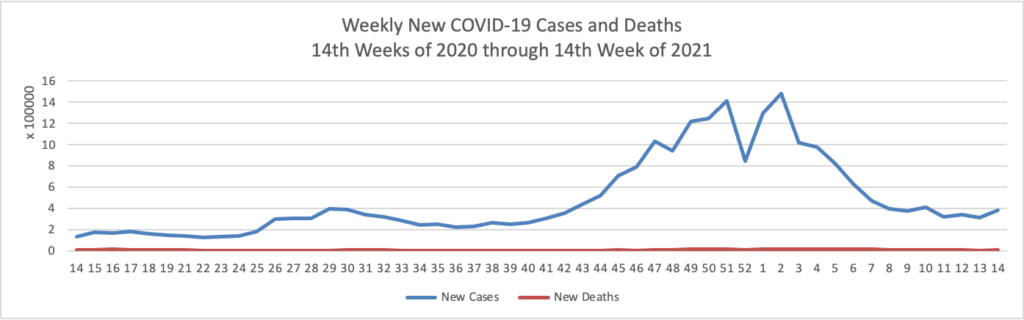
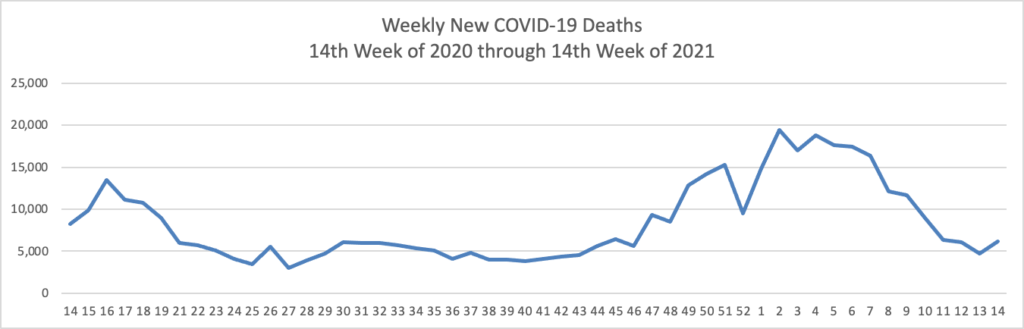
The CDC’s COVID-19 cases in the U.S. website, which the FEHBlog tracks, added age demographic information this week. The basic infection mortality rate stabilized then dropped slightly then stabilized again over the past two weeks. That has to be good news. The CDC’s weekly COVIDview supports the FEHBlog’s layman analysis.

MedPage Today offers an interesting story about the downswing of the illness from the perspective of New York City clinicians who have been on the front line.

The Centers for Medicare and Medicaid Services finalized today a subset of proposed Medicare Advantage and Part D changes that the agency proposed earlier this year. CMS is releasing the final rule in two installments so that Medicare Advantage and Part D plans are not overwhelmed. That’s considerate.

OPM released additional COVID-19 guidance for federal agencies today. The guidance concerns the Families First Coronavirus Response Act’s paid leave program for employees affected by COVID-19.

Monday Mishmash

Today, the Centers for Medicare and Medicare Services released its proposed rule describing changes to its Medicare Part A prospective payment system (“PPS”) changes for the federal fiscal year beginning October 1, 2020. This PPS applies to acute and long term inpatient care. Fierce Healthcare explains that the changes represent “an approximately 1.6% increase to inpatient hospital stay payments” that will add about $2.1 billion to Medicare spending next fiscal year.

A friend of the FEHBlog recommended a book called “Together: The Healing Power of Connection in a Sometimes Lonely World” written by former U.S. Surgeon General Vivek Murthy. It seems like a perfect read for the great hunkering down. The FEHBlog will let you know.

In other news:

  • Fierce Healthcare also discusses how CVS Health has adapted its specialty pharmacy to the COVID-19 emergency. According to the article, CVS Specialty is making greater use of digital tools, e.g., “a 30% increase in March alone in encounter volume through CVS Specialty’s secure messaging tool, which allows [their] pharmacists to text members directly to discuss their medications.”
  • The Wall Street Journal reports that “Atul Gawande is in advanced discussions to step down as chief executive and take on a less operational role as chairman of Haven, the health-care venture backed by Amazon.com Inc., Berkshire Hathaway Inc., and JPMorgan Chase JPM , according to people with knowledge of the matter.” Haven was the big new thing is 2018 when Dr. Gawande came aboard.
  • The HHS Office of Inspector General announced the availability of two “toolkits and the accompanying code can be used to analyze claims data for prescription drugs and identify patients who may be misusing or abusing prescription opioids and may be in need of additional case management or other followup. These toolkits and accompanying code can also be used to answer research questions about opioid utilization.”

Tuesday Tidbits

Theme for Cinco de Mayo — Ball of confusion that’s what the world is today. The Temptations (1970)

The American Hospital Association reported today that hospitals are losing $50.7 billion monthly from March through June due of course to the COVID-19 emergency. That’s a lot more than the $175 billion that Congress has appropriated so far for grants to hospitals and other healthcare providers. The FEHBlog doubts that most hospitals have strong balance sheets. No wonder health plans are stepping up to offer support as noted on Sunday.

Healthcare Dive discusses a study that reminds us about the large extent to which private payers including FEHB plans subsidize hospitals and other providers due to the insufficient payments from Medicare. “It’s unlikely Washington would take concrete measures to shrink hospitals’ toplines during the pandemic.”

Fierce Healthcare informs us that after reaching out to 500,000 Medicare Advantage members Humana has decided to waive Medicare Advantage member cost sharing for primary and behavioral healthcare this year whether the care is delivered in office or virtually. “William Shrank, M.D., chief medical officer at Humana, told FierceHealthcare that the insurer is tracking member behavior in this area and has gathered plenty of anecdotal evidence that patients are deferring potentially necessary care due to the pandemic.”

Catalyst for Health Reform has created a new state by state report card on healthcare price transparency laws. “Sixteen states [including the FEHBlog’s home state of Maryland] received passing grades this year, up from only seven when CPR last graded states in 2017.”

Person using a laptop

Thursday Miscellany

The Centers for Medicare and Medicaid Services today announced wide ranging Medicare changes to make healthcare more accessible during the COVID-19 emergency. For example,

For the duration of the COVID-19 emergency, CMS is waiving limitations on the types of clinical practitioners that can furnish Medicare telehealth services. Prior to this change, only doctors, nurse practitioners, physician assistants, and certain others could deliver telehealth services. Now, other practitioners are able to provide telehealth services, including physical therapists, occupational therapists, and speech language pathologists.

CMS previously announced that Medicare would pay for certain services conducted by audio-only telephone between beneficiaries and their doctors and other clinicians. Now, CMS is broadening that list to include many behavioral health and patient education services. CMS is also increasing payments for these telephone visits to match payments for similar office and outpatient visits. This would increase payments for these services from a range of about $14-$41 to about $46-$110. The payments are retroactive to March 1, 2020.

It will be interesting to see whether commercial plans adopt these changes (perhaps they already have). Check out the lengthy list. Hopefully many of these changes will be made permanent following the COVID-19 emergency.

As the FEHBlog has listed major COVID-19 testing locations. It occurred that he should also link to the COVID-19 sites for the major actuarial consulting firms, all of which provide useful information for health plans:

These sites are a valuable public service in the FEHBlog’s view.

HHS’s Office for Civil Rights today provided a helpful COVID-19 cyber threat resources. While the FEHBlog could not find a link to the list, he was able to upload the email to Dropbox.