Friday Stats and More

Friday Stats and More

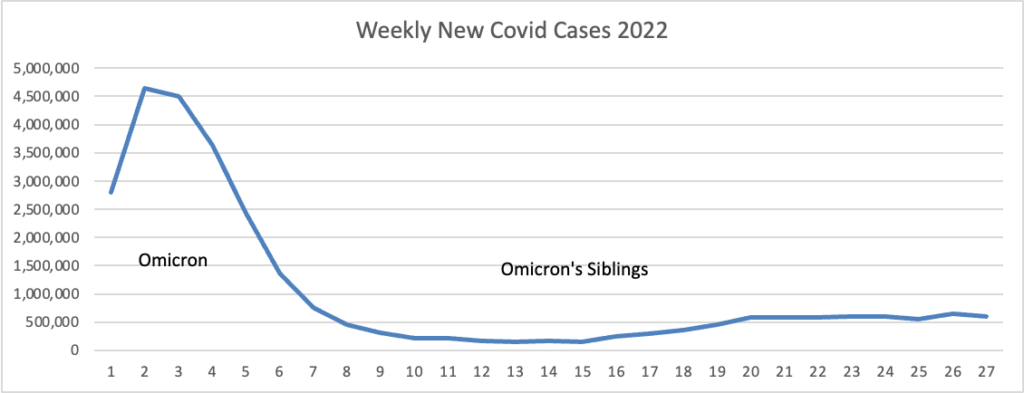
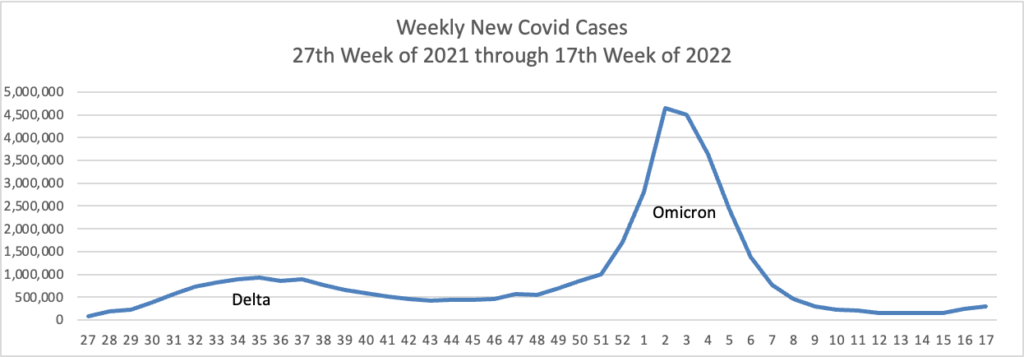
Based on the Centers for Disease Control’s COVID-19 Data Tracker website, here is the FEHBlog’s chart of new weekly COVID-19 cases and deaths over the 14th week of 2020 through 30th week of this year (beginning April 2, 2020, and ending July 28, 2021; using Thursday as the first day of the week in order to facilitate this weekly update):

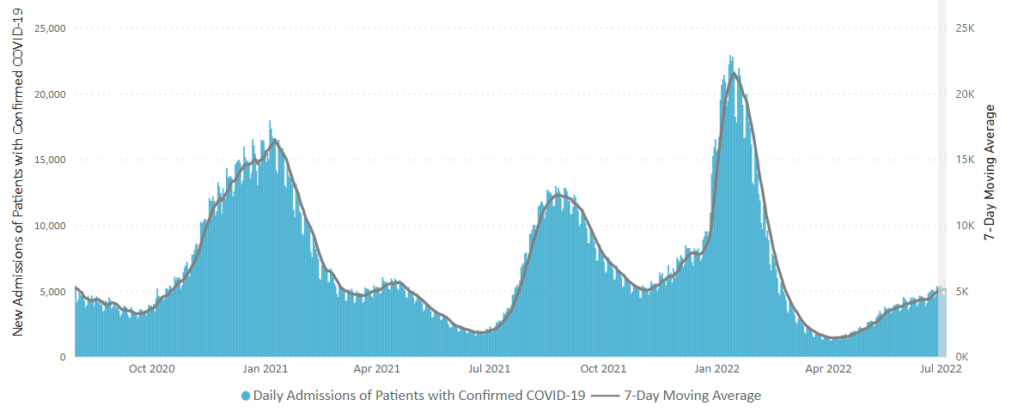
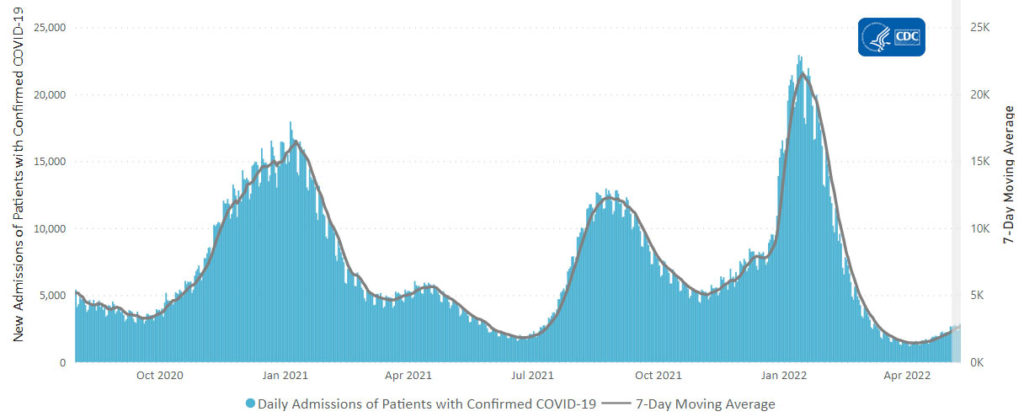
and here is the CDC’s latest overall weekly hospitalization rate chart for COVID-19:

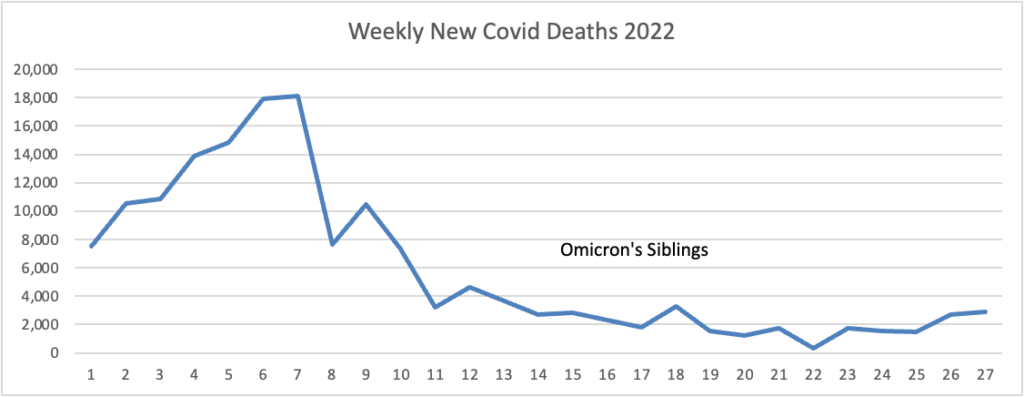
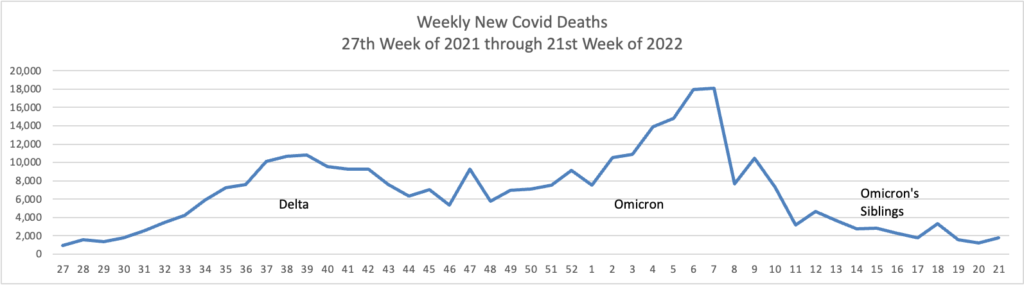
The FEHBlog has noticed that the new cases and deaths chart shows a flat line for new weekly deaths  because new cases significantly exceed new deaths. Accordingly here is a chart of new COVID-19 deaths over the period (April 2, 2020, through July 28, 2021):

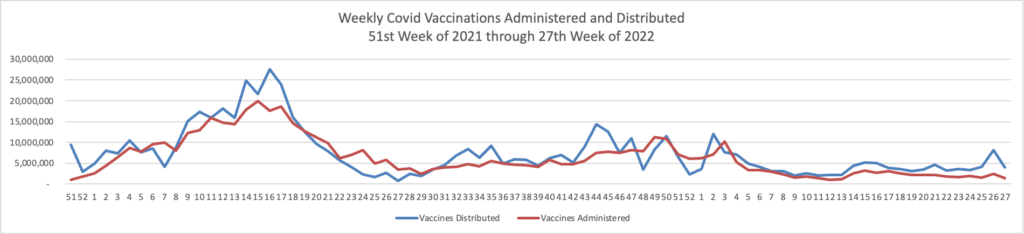
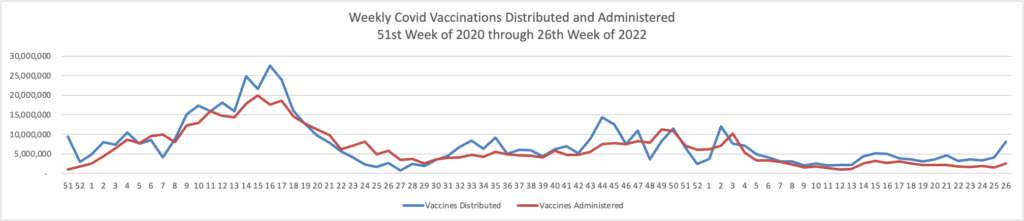
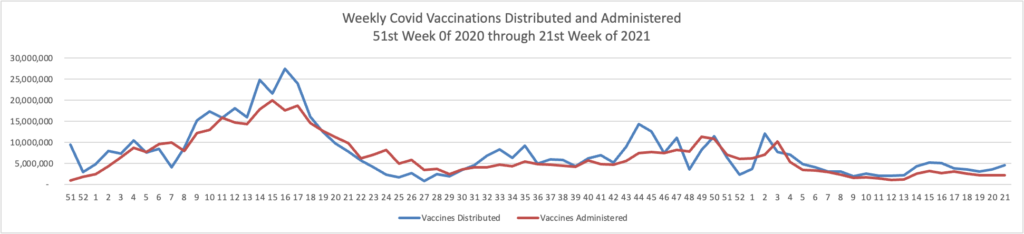
Finally here is a COVID-19 vaccinations chart over the period December 17, 2020, through July 28, 2021, which also uses Thursday as the first day of the week:

Due to the Delta variant, new cases and hospitalizations are trending up while new deaths have remained low for two months.

Happily COVID-19 vaccinations are trending up again. As of today according to the CDC, 60% of the U.S. population over age 18 and 80% of those over age 65 are fully vaccinated. GEHA, the largest employee organization plan in the FEHB, announced that it has extended its COVID-19 vaccine incentive program to Labor Day, September 6.

The CDC defended its new masking policy for the vaccinated population by pointing to a case in which as reported by the Wall Street Journal

127 vaccinated people infected with the Delta variant during the outbreak appeared to carry as much virus as 84 unvaccinated or partially vaccinated people who became infected. The report referred to an outbreak in Barnstable County, Mass. Local officials there have said that at least 430 confirmed Covid-19 cases have been linked to one cluster following festivities over the July 4 weekend in Provincetown, on the tip of Cape Cod.

Among the 469 cases linked to the Barnstable outbreak in the CDC report, nearly 75% were fully vaccinated. For people with breakthrough infections, almost 80% had symptoms of cough, headache, sore throat or fever. Four were hospitalized and no deaths were reported, the CDC said. Infected people reported attending densely packed indoor events and outdoor events at bars, restaurants and houses.

Toward the conclusion of the article the journalist speaks with Dr. Ashish Jha, dean of the public-health school at Brown University.

Dr. Jha said he thinks this week’s guidance recommending masking in high-risk areas of the U.S. was reasonable, but also risked suggesting that vaccines aren’t effective against the Delta variant, which could discourage unvaccinated people from getting shots. We have the tools to address this variant, and they’re called vaccines,” Dr. Jha said.

The FEHBlog certainly would wear a mask at an indoor or outdoor super spreader event in a high risk area like the one where the FEHBlog is temporarily living, Travis County Texas. It’s worth noting this US Health Weather map which gauges the risk of catching a respiratory infection like COVID-19 or the flu in a particular US county. Ironically, my county of permanent residence, Montgomery County, Maryland, is low risk.

STAT News adds that the Food and Drug Administration is accelerating the process of reviewing Pfizer-Biotech’s application for full marketing approval of their COVID-19 vaccine. (Moderna also has made this filing.)

A typical review of an application like Pfizer’s takes 10 months. The agency granted Pfizer a “priority review” for its vaccine earlier this month, which signifies that staff will strive to finish the review of the application within six months. At the same time, he FDA has said it does not expect the process to take that long — a view echoed even by President Biden.

“My expectation …  is that sometime, maybe in the beginning of the school year, at the end of August, beginning of September, October, they’ll get a final approval” Biden said last week when asked when the FDA would formally approve the Covid-19 vaccines, including the one developed by Pfizer and its partner BioNTech.

Jesse Goodman, who led the FDA’s biologics center from 2003 to 2009, said that the August-September time frame is “possible … if all goes smoothly.” He said the idea of a sprint is “reasonable,” so long the biologics center follows the normal chain of command for reviewing these applications.

In other news

  • Federal News Network tells us that “The House of Representatives on Thursday cleared a $600 billion package of seven spending bills, a small step forward in boosting civilian agency funding next year.The seven-bill “minibus” cleared the House Thursday afternoon by a 219 to 208 vote. The minibus is silent on federal pay for 2022, a silent endorsement of President Joe Biden’s proposed 2.7% raise for civilian employees. * * * The spending package also includes $42 million for the Office of Personnel Management over current levels and allows the agency to stand up an IT working capital fund.” The House is close to completing approval of the twelve appropriations bills. The Senate has not begun to vote on those bills and new federal fiscal year begins in two months, October 1.
  • The Congressional Budget Office released its financial analysis of the President’s budget proposal for the upcoming new federal fiscal year.
  • The ICD10 Monitor explains that yesterday the Centers for Medicare and Medicaid Services finalized four Medicare Part A payment rules which take effect on October 1 — skilled nursing facilities (SNFs), hospices,
  • inpatient rehabilitation facilities (IRFs), and inpatient psychiatric facilities (IPFs). The Monitor’s article summarizes each final rule.
  • The American Hospital Association offers a useful article on approaches to resolving COVID-19 vaccine hesitancy.
  • Fierce Healthcare informs us about insurer comments on the third 2022 Notice of Benefit and Payment Parameters, which proposed changes to the ACA marketplace.

Tuesday’s Tidbits

Photo by Patrick Fore on Unsplash

From the Delta Variant front —

Federal News Network reports that

The White House is strongly considering requiring federal employees to show proof they’ve been vaccinated against the coronavirus or otherwise submit to regular testing and wear a mask — a potentially major shift in policy that reflects growing concerns about the spread of the more infectious delta variant.https://www.cdc.gov/coronavirus/2019-ncov/vaccines/fully-vaccinated.html

The possible vaccine mandate for federal employees — regardless of the rate of transmission in their area — is one option under consideration by the Biden administration, according to a person familiar with the plans who spoke on condition of anonymity to discuss deliberations that have yet to be made public. The White House is expected to announce its final decision after completing a policy review this week.

Govexec adds that “Federal law does not prohibit public and private entities from mandating coronavirus vaccines, even though those vaccines do not yet have full authorization from the Food and Drug Administration, according to a legal opinion from the Justice Department posted on Monday.”

Other press reports indicate that the President may announce his decision this Thursday, and in the FEHBlog’s view if he approves this action, many private sector employers in and outside of healthcare will follow suit.

The Centers for Disease Control recommended today that “To maximize protection from the Delta variant and prevent possibly spreading it to others, [vaccinated Americans should] wear a mask indoors in public if you are in an area of substantial or high transmission.” It turns out the Washington DC is an area of substantial transmission. Bloomberg adds that “It’s not just Arkansas and Louisiana, where the delta variant has been raging, that are affected by the Centers for Disease Control and Prevention’s new recommendation for vaccinated people to mask indoors in some parts of the country. Most major U.S. urban areas also fall under the scope of the advisory.”

In today’s Tidbits —

  • Beckers Hospital Review informs us that U.S. News and World Report has issued its annual U.S. hospital rankings with the Mayo Clinic claiming the top spot “for the sixth consecutive year.” Becker’s also comments on the new health equity section found in those rankings.
  • The Congressional Research Service has released a report on the No Surprises Act which it describes as an “Overview of Federal Consumer Protections and Payment for Out-of-Network Services.”
  • The HHS Agency for Healthcare Research and Quality has issued a report providing and “Overview of Clinical Conditions With Frequent and Costly Hospital Readmissions by Payer, 2018.”
  • Becker’s Payer Issues discusses a Forbes interview with Liz Fowler, who is director of the Center for Medicare and Medicaid Innovation at HHS. “Here are four conclusions CMMI has drawn over a decade of experimentation, according to Forbes: (1) Voluntary initiatives narrowed participation as only providers who saw financial gain opted in; (2) Separate alternative payment models and multiple bundles for specialty groups leads to fragmentation, taking away from value-based care. (3) Initiatives like per-member per-month payments only temporarily work, but don’t sustain new practices once phased out, and (4) In benchmarking, models need to leverage retrospective benchmarks or prospective ones with guardrails to ensure accuracy and feasibility of approaches.”
  • Medcity News offers an interesting account of how certain hospital got the pricing transparency job done correctly.
  • Fierce Health tells us that Blue Cross licensee “Anthem is investing nearly $90 million in affordable housing across Indiana. The $87.9 million investment will fund 1,139 affordable apartment units, townhomes and single-family homes across 11 communities in the state, Anthem announced on Saturday. The initiative was unveiled at a ribbon-cutting for a recently completed complex in Culver, a six-building, 48-unit complex.” Well done.
  • Healthcare Dive reports that health insurer Centene reported a $353 million dollar loss for the second quarter of 2021 as members returned to the doctors’ offices. “There was a “broad return to the doctor’s office” in March and April, CFO Drew Asher said, but Centene had expected the slight downtick in May utilization to persist. That did not happen. Instead, utilization increased again in June.”
  • 401k Specialist informs us that the President has nominated New York City attorney Lisa M. Gomez to be Assistant Secretary of Labor for Employee Benefits. “The Senate-confirmed position oversees the Labor Department’s Employee Benefits Security Administration (EBSA), tasked with regulation and enforcement of private-sector retirement and health plans.” Ms. Gomez is also an FEHB lawyer and an esteemed colleague of the FEHBlog. She deserves a swift Senate confirmation for this important post.

Weekend update

Photo by Dane Deaner on Unsplash

Both Houses of Congress will be in session this week for Committee business and floor voting. It should be noted that for the next several weeks that FEHBlog will be writing from Austin, TX, way outside the Capital Beltway.

On the COVID-19 front

  • The American Medical Association offers an article on what doctors would like their patients to know about COVID-19 variants.
  • The Wall Street Journal reports on the efforts of Pfizer, Merck and the Japanese drugmaker Shionogi to develop a pill to treat COVID-19. “Drugmakers are looking for a pill that those who get a positive Covid-19 test could take at home while their symptoms are mild. Such medicines already exist for influenza, including Roche Holding AG’s Tamiflu and Shionogi’s Xofluza, although they don’t work for all patients and might be prescribed too late to do much good. Xofluza is marketed in the U.S. by Roche. ‘Our target is a very safe oral compound, like Tamiflu, like Xofluza,’ said Isao Teshirogi, Shionogi’s chief executive officer. He said Shionogi’s Covid-19 pill aims to neutralize the virus five days after a patient takes it.” In contrast to the convenience of pills, existing COVID-19 treatments must be administered by a doctor in a hospital or other healthcare facility.

On the regulatory front

  • The American Hospital Association provides more background on the last week’s proposed Calendar Year 2022 Medicare Part B payment rule. The public comment deadline is September 17.
  • Kaiser Health News reports on Biogen’s rather aggressive response to criticism of its FDA approval Alzheimer’s Disease drug Aduhelm which was rolled out last week.

In other news —

  • AHIP discusses health insurer efforts to address provider burnout stemming from the pandemic.
  • Fierce Healthcare reports that UnitedHealthcare, the largest insurer in the country, will make Peloton’s fitness classes to nearly 4 million fully insured members at no cost through its app, beginning on Sept. 1, the company announced. Eligible members will have access to either a 12-month Peloton digital subscription or a four-month waiver for a Peloton All-Access Membership, the insurer said. All-Access members can take fitness classes through connected devices, such as Peloton’s bikes, and track their metrics, in addition to app access.”
  • Fierce Healthcare also informs us that “Anthem and Humana have signed on for a minority stake in a new joint venture that aims to reshape the claims management experience. DomaniRx, pending regulatory approval, will feature a cloud-native, API-driven claims adjudication platform, according to an announcement. SS&C Technologies, which provides services and software to the financial and healthcare industries, will have a majority stake in the venture. * * * The goal of the venture, according to the announcement, is to arm healthcare organizations with “end-to-end transparency and data analytics” to help them keep up with an ever-changing regulatory environment.”

Thursday Miscellany

Photo by Juliane Liebermann on Unsplash

Fierce Healthcare tells us that “Johnson & Johnson’s COVID-19 vaccine presents greater benefits than it does safety risks, especially amid the quickly spreading Delta variant, a key CDC expert panel [,the Advisory Committee on Immunization Practices] decided [today]. However, the panel said that a ruling over the need for a booster added to all COVID shots will have to start with the FDA.”

Fedweek reports that “Federal employees, their unions and members of Congress continue to watch for details of federal agency ‘reentry’ and ‘post-reentry’ operational plans, with the deadline having passed on Monday (July 19) for agencies to submit those plans to OMB but with changes to telework and other workplace policies likely still weeks or months away.”

According to a press release,

Senators Patrick Leahy (D-Vt.) and Steve Daines (R-Mont.) on Tuesday [July 20] requested updates from both the Federal Trade Commission (FTC) and the Department of Justice (DOJ) on their recent efforts to combat anticompetitive conduct in the health insurance industry.  The two senators recently served as chief cosponsors of the bipartisan Competitive Health Insurance Reform Act (CHIRA), which protects consumers by repealing a long-outdated antitrust exemption for the health insurance industry.  Decades of consolidation by health insurance brokers has primed the industry for abuse, allowing insurers to exert market power in order to raise premiums, restrict competition, and deny consumers choice. 

Since the CHIRA’s passage in January of this year, neither the FTC nor the DOJ has announced major steps to exercise their expanded antitrust enforcement authority under the new law.  In their letter, the senators called on the agencies to provide information on any enforcement actions, guidelines, rulemaking, or other actions taken to extend antitrust enforcement to the health insurance industry since then.

Following up on Mondays’ ACA FAQ 47, HHS today announced “the launch of The HIV Challenge, a national competition to engage communities to reduce HIV-related stigma and increase prevention and treatment among racial and ethnic minority people. Through this challenge, HHS is seeking innovative and effective approaches to increase the use of pre-exposure prophylaxis medication (PrEP) and antiretroviral therapy (ART) among people who are at increased risk for HIV or are people with HIV. The HIV Challenge is open to the public, and HHS will award a total of $760,000 to 15 winners over three phases. Phase 1 submissions are open from July 26, 2021, through September 23, 2021.”

Kaiser Health News explains how the Centers for Medicare and Medicaid Services is reevaluating its wellness program for pre-diabetic Medicare beneficiaries.

Over the past decade, tens of thousands of American adults of all ages have taken these diabetes prevention classes with personalized coaching at YMCAs, hospitals, community health centers and other sites. But out of an estimated 16 million Medicare beneficiaries whose excess weight and risky A1c level make them eligible, only 3,600 have participated since Medicare began covering the two-year Medicare Diabetes Prevention Program (MDPP) in 2018, according to the federal government’s Centers for Medicare & Medicaid Services (CMS).

Researchers and people who run diabetes prevention efforts said participation is low because of the way Medicare has set up the program. It pays program providers too little: a maximum of $704 per participant, and usually much less, for dozens of classes over two years. It also imposes cumbersome billing rules, doesn’t adequately publicize the programs and requires in-person classes with no online options, except during the pandemic emergency period. Most of the private Medicare Advantage plans haven’t promoted the program to their members.

Now, CMS has proposed to address some but not all of those problems in a rule change. It predicted the changes would reduce the incidence of diabetes in the Medicare population and potentially cut federal spending to treat diabetes-related conditions.

STAT News reports that

Leveraging Food and Drug Administration regulations loosened during the pandemic, Happify Health, which is best known for its consumer wellness app, will launch new prescription-only software to treat depression.

Happify, founded in 2012, recently announced it had raised $73 million to bolster its efforts in digital therapeutics, a space that is rapidly growing as well-funded companies make the case to regulators, insurers, and clinicians that software can be used to treat disease.

The new product, called Ensemble, is designed to treat both major depressive disorder and generalized anxiety disorder. The software, accessible on both computers and smartphones, guides patients through 10 weeks of cognitive behavioral therapy, or CBT, and other related techniques aimed at changing behavior patterns and teaching coping skills.

The FEHBlog likes the company’s name.

The American Medical Association wants the Food and Drug Administration to loosen up on its opioid prescribing rules which conflict with patient care. Perhaps the FEHBlog is oversimplifying this issue, but haven’t we been down this road to perdition before?

In closing, Fierce Healthcare notes that

Large tech giants are jumping into a growing interoperability solutions market as new federal regulations spur the healthcare industry to open up and share medical records data.

Google Cloud rolled out a new tool called the healthcare data engine, currently in private preview, that helps healthcare and life sciences organizations harmonize data from multiple sources, including medical records, claims, clinical trials and research data.

It gives organizations a holistic view of patient longitudinal records, and enables advanced analytics and AI in a secure and compliant cloud environment, according to Google Cloud executives.

Monday Roundup

Photo by Sven Read on Unsplash

David Leonhardt in the New York Times offered an encouraging article this morning:

When the Kaiser Family Foundation conducted a poll at the start of the year and asked American adults whether they planned to get vaccinated, 23 percent said no.

But a significant portion of that group — about one quarter of it — has since decided to receive a shot. The Kaiser pollsters recently followed up and asked these converts what led them to change their minds. The answers are important, because they offer insight into how the millions of still unvaccinated Americans might be persuaded to get shots, too.

What helps move people from vaccine skeptical to vaccinated? The Kaiser polls point to three main themes.

(The themes apply to both the 23 percent of people who said they would not get a shot, as well as to the 28 percent who described their attitude in January as “wait and see.” About half of the “wait and see” group has since gotten a shot.)

1. Seeing that millions of other Americans have been safely vaccinated. * * *

2. Hearing pro-vaccine messages from doctors, friends and relatives. * * * and

3. Learning that not being vaccinated will prevent people from doing some things.

That’s helpful information for the many vaccine advocates, among us.

Today was a busy day for regulatory action:

  • The Secretary of Health and Human Services renewed for another 90 day period the COVID-19 public health emergency. Earlier this month, the HHS Secretary issued a similar renewal for the Opioid public health emergency which of course predates the COVID-19 emergency. Here’s a link discussing the actions that the federal government can take in response to a public health emergency declaration.
  • The Affordable Care Act regulators issued implementation guidance FAQs part 47 today. As background, “on June 11, 2019, the U.S. Preventive Services Task Force released a recommendation with an “A” rating that clinicians offer [pre-exposure prophylaxis (PrEP)] with “effective antiretroviral therapy to persons who are at high risk of human immunodeficiency virus (HIV) acquisition.” Accordingly, [as required by the ACA, non-grandfathered] plans and issuers must cover PrEP consistent with the USPSTF recommendation without cost sharing [when provided in-network] for plan years (in the individual market, policy years) beginning on or after one year from the issue date of the recommendation (in this case, plan or policy years beginning on or after June 30, 2020).” The FAQs concern the scope of the requisite no cost sharing coverage for this particular service. Affected plans and issuers are allowed sixty days to implement the guidance.
  • The Centers for Medicare and Medicaid Services “proposed Medicare payment rates for hospital outpatient and Ambulatory Surgical Center (ASC) services. The Calendar Year (CY) 2022 Hospital Outpatient Prospective Payment System (OPPS) and ASC Payment System Proposed Rule is published annually and will have a 60-day comment period, which will end on September 17, 2021.” Here is a link to the fact sheet on the proposal. Consistent with the President’s recent executive order on competition, the CMS rule making “proposes to set a minimum CMP of $300/day that would apply to smaller hospitals with a bed count of 30 or fewer and apply a penalty of $10/bed/day for hospitals with a bed count greater than 30, not to exceed a maximum daily dollar amount of $5,500.  Under this proposed approach, for a full calendar year of noncompliance, the minimum total penalty amount would be $109,500 per hospital, and the maximum total penalty amount would be $2,007,500 per hospital.” That should be attention getting if finalized. Also the rule making proposes to backtrack on Trump Administration CMS rules that would phase out inpatient only Medicare requirements for certain medical procedures. The former administration’s goal was to lower costs, but the current administration finds that the former administration did not follow all of the necessary patient safety procedural requirements when making this change.
  • Govexec reports that today “marks the deadline for agencies to submit their finalized return to office plans to the Office of Management and Budget. These plans, which are not intended to be public, will vary by agency.”

The American Hospital Association informs us that “The Centers for Medicare & Medicaid Services will host a national stakeholders call July 22 at 3:30 p.m. ET on the interim final rule, Surprise Billing Part 1, that implements aspects of the No Surprises Act that bans balance billing in certain out-of-network scenarios. The call-in number is 888-455-1397; the participant passcode is 8758359.” Thanks AHA and CMS.

Thursday Miscellany

The FEHBlog realized today that he had neglected to provide this link to Prof. Katie Keith’s comprehensive Health Affairs Blog article on the first No Surprises Act interim final rule. AIS offers the following expert takes on that rule:

Industry experts’ perspectives:

Loren Adler, an associate director at the USC-Brookings Schaeffer Initiative for Health Policy, says that the QPA formula could lock in high rates for providers in some regions, particularly areas where there is a paucity of certain types of providers. He interprets the QPA calculation in the IFR as “a pretty provider-friendly definition.
Ge Bai, Ph.D., an associate professor at Johns Hopkins University’s Carey Business School and Bloomberg School of Public Health, says that it’s important to remember the larger picture — the No Surprises Act could reduce physicians’ revenue in some cases. She says that it could exacerbate physician shortages in areas that pay lower rates than others as physicians move to more lucrative locations.
Going forward, it’s hard to say whether the law and IFR will have inflationary effects on health care prices overall, Adler says. “The biggest piece of that, the determinant, will be the arbitration process,” he adds. He’s waiting to see what happens when the law actually comes into effect and arbitrations begin to take place.

The FEHBlog hopes that this law will not encourage providers to leave health plan networks.

On the COVID-19 front

  • David Leonhardt in the New York Times informs us about “Hopeful News on Delta. The Delta variant is more contagious. It does not appear to be more severe.” “If a new variant is not actually more severe, it doesn’t present a greater threat to a typical person who contracts Covid. Vaccinated people would remain protected. For children too young to be vaccinated, serious Covid symptoms would still be exceedingly rare — rarer than many other everyday risks, like riding in a car — and still concentrated among children with other health problems.”
  • U.S. Surgeon General Dr. Vivek Murthy issued “the first Surgeon General’s Advisory of this Administration to warn the American public about the urgent threat of health misinformation. Health misinformation, including disinformation, have threatened the U.S. response to COVID-19 and continue to prevent Americans from getting vaccinated, prolonging the pandemic and putting lives at risk, and the advisory encourages technology and social media companies to take more responsibility to stop online spread of health misinformation.

On the Aduhelm front:

  • The Wall Street Journal reports that “A pair of large hospitals are declining to administer Biogen Inc.’s new Alzheimer’s treatment, Aduhelm, the latest rupture to emerge from the Food and Drug Administration’s controversial approval of the drug last month. The Cleveland Clinic and Mount Sinai Health System in New York said they wouldn’t administer Aduhelm, which is also called aducanumab, to patients amid a debate about the drug’s effectiveness and whether the FDA lowered its standards in approving the medicine.”
  • Healthcare Dive informs us that “On a morning call with investors [today], UnitedHealth leadership said they were waiting on more information before making a coverage decision regarding Aduhelm, Biogen’s expensive new drug for Alzheimer’s disease priced at an average cost of $56,000 per year.”
  • STAT News tells us that

Normally, if a drug gets FDA approval, that means it has some benefit to patients. But the FDA decided to greenlight Biogen’s controversial drug Aduhelm without that guarantee.

That decision leaves patients, clinicians, and insurance companies in the dark. Under by far the most pressure is Medicare [and FEHB is a close second because FEHB carriers are on the hook for Medicare eligible annuitants drug coverage (see Wednesday’s post)}, since most patients eligible for the pricey drug have insurance through the taxpayer-funded program. Officials with the program just this week started the process for figuring out how Medicare will cover the drug, which will take months.

Some experts and stakeholders, including the influential Alzheimer’s Association, have called on Medicare to activate a rarely used regulatory tool to get more data about how well the drug works. (The FDA has also said Biogen must study whether Aduhelm slows down patients’ cognitive decline, but the drug maker has said it doesn’t have to report its results for another nine years.)

The tool, called a Coverage with Evidence Development, would mean Medicare would only cover Aduhelm for patients who enroll in clinical studies. The process has the potential to create real-world data that could help patients, physicians, and payers navigate unprecedented and difficult decisions.

In miscellaneous news

  • Healthcare Dive reports that “UnitedHealth Group handily beat Wall Street expectations for earnings and revenue in the second quarter, reporting revenue up 15% year over year to $71.3 billion, leading the Minnesota-based healthcare behemoth to increase its full-year guidance following the results.”
  • The Department of Health and Human Services announced that “more than two million people have signed up for health coverage during the Biden-Harris Administration’s 2021 Special Enrollment Period (SEP), which opened on February 15, 2021 as the country grappled with the pandemic, and will conclude on the extended deadline August 15, 2021.” * * * “The report also shows that of the new and returning consumers who have selected a plan since April 1, 1.2 million consumers (34%) have selected a plan that costs $10 or less per month after the American Rescue Plan’s (ARP) premium reductions.” The President wants Congress to make permanent this two year long premium reduction program.
  • Fierce Healthcare adds that “Senate Democrats announced late Tuesday the framework for a $3.5 trillion infrastructure package that will expand Medicare to offer dental, hearing and vision benefits.”

Tuesday Tidbits

Photo by Patrick Fore on Unsplash

Today, the FEHBlog virtually attended the NCQA Digital Quality Summit. A highlight was a VA healthcare speaker who pointed out the VA’s access to care website which is nifty. The site, for example, includes comprehensive comparisons of VA care versus outside care. The site should be useful to FEHB carriers because the FEHB Program covers a large cadre of veterans.

The Centers for Medicare Services released its proposed calendar year 2022 Medicare Part B physician payment rule. According to the fee schedule fact sheet

With the proposed budget neutrality adjustment to account for changes in RVUs (required by law), and expiration of the 3.75 percent payment increase provided for CY 2021 by the Consolidated Appropriations Act, 2021 (CAA), the proposed CY 2022 PFS conversion factor is $33.58, a decrease of $1.31 from the CY 2021 PFS conversion factor of $34.89. The PFS conversion factor reflects the statutory update of 0.00 percent and the adjustment necessary to account for changes in relative value units and expenditures that would result from our proposed policies.

That would cause a cost shift to commercial carriers.

From the tidbit front —

  • The first interim final rule implementing the No Surprises Act was published in the Federal Register today. It turns out that the public comment deadline is Tuesday, September 7, 2021.
  • The NIH Director Dr. Francis Collins relates that

Many people, including me, have experienced a sense of gratitude and relief after receiving the new COVID-19 mRNA vaccines. But all of us are also wondering how long the vaccines will remain protective against SARS-CoV-2, the coronavirus responsible for COVID-19.

Earlier this year, clinical trials of the Moderna and Pfizer-BioNTech vaccines indicated that both immunizations appeared to protect for at least six months. Now, a study in the journal Nature provides some hopeful news that these mRNA vaccines may be protective even longer [1].

In the new study, researchers monitored key immune cells in the lymph nodes of a group of people who received both doses of the Pfizer-BioNTech mRNA vaccine. The work consistently found hallmarks of a strong, persistent immune response against SARS-CoV-2 that could be protective for years to come.

Though more research is needed, the findings add evidence that people who received mRNA COVID-19 vaccines may not need an additional “booster” shot for quite some time, unless SARS-CoV-2 evolves into new forms, or variants, that can evade this vaccine-induced immunity. That’s why it remains so critical that more Americans get vaccinated not only to protect themselves and their loved ones, but to help stop the virus’s spread in their communities and thereby reduce its ability to mutate.

  • In other NIH news, NIH researchers report a conundrum:

Medications to treat alcohol use disorder, although effective, are only being used to treat 1.6% of people with the disorder, according to a new study.

The findings show that medications for alcohol use disorder are rarely prescribed, even though approved drugs are available.

  • In an article that may be helpful for FEHB plans to share with members, the Centers for Disease Control discusses the causes for type 2 diabetes.
  • Health Payer Intelligence reports that employers are shifting the focus of their wellness programs from physical health to mental health. “Over nine in ten employers said that they were increasing their mental health and wellness programming in 2021, including pediatric mental health programs, according to a survey from Fidelity and Business Group on Health. Almost 75 percent reported that they were extending work-life balance support.and nearly 70 percent were expanding their paid leave policies.”

Tuesday’s Tidbits

Photo by Patrick Fore on Unsplash

From the COVID-19 front

  • The Hill informs us that “President Biden on Tuesday pleaded with Americans to get vaccinated against COVID-19 as the White House signaled a shift toward grassroots tactics to reach those who have yet to get a shot.” Here is a link to the President’s full remarks.
  • NPR Shots offers a daily look at each state’s progress in vaccinating its residents.

From the hospital pricing transparency front —

  • The Wall Street Journal explains how it has been analyzing the pricing data that federal law required hospitals to make publicly available on January 1, 2021. “The Journal reviewed hospital pricing disclosures collected by Turquoise Health Co., a startup that has been gathering the data from hospital websites since the regulations went into effect.” The Turquoise Health website is worth a gander.
  • NPR Shots also analyzed the newly available hospital pricing data. “While it’s still an unanswered question about whether price transparency will lead to overall lower prices, KHN took a dive into the initial trove of data to see what it reveals. Here are five takeaways from the newly public data and tips for how you might be able to use it to your benefit: 1) As expected prices are all over the map; 2. Patients can look up information but the info is incomplete; 3. Third party firms like Turquoise Health are trying to make searching prices simpler and cash in; 4. Consumers can use the data to negotiate with hospitals when paying cash, and 5. Hospitals are not fully on board currently.

In the tidbits department —

  • Today, the Centers for Medicare and Medicaid Services announced Dr. Meena Seshamani, M.D., Ph.D. [formerly with MedStar Health] as Deputy Administrator and Director of Center for Medicare. She started her work today.
  • Fierce Healthcare reports “The United Health Foundation, the philanthropic arm of the UnitedHealth Group, released its America’s Health Rankings Health Disparities Report last week, and the healthcare giant found a number of disparities worsened in the 2017 to 2019 time frame. While the data come from before the pandemic, experts say they offer a baseline that can be used to address critical public health needs. For example, adults who did not graduate high school had a rate of frequent mental distress that was 123% higher than people with a college degree. Females had a 70% higher rate of depression than males, according to the report.”
  • NPR Shots discusses how an “obesity drug’s [Wegovy] promise now hinges on insurance coverage.”

In clinical trials, weekly injections of semaglutide — or Wegovy, as it’s been branded — helped people drop an average of 15% of their body weight. That’s an average of about 34 pounds over 16 months, before their weight plateaued, a far greater weight loss, obesity specialists say, than achieved with other drugs on the market. At least as important, Wegovy raised none of the alarm bells with the FDA or obesity doctors that it might trigger serious side effects of the sort some people experienced by taking fen-phen or other previous medical treatments for obesity.

But with a price tag for Wegovy of $1,000 to $1,500 a month, a big question remains: Will insurers cover its significant cost for the millions who might benefit? * * *

Insurance coverage, it turns out, is a giant question — not just with Wegovy but with obesity drugs in general. Some private insurers do include some prescription obesity drugs in the list of medicines they’ll cover; it’s too early to tell whether Wegovy will make those lists. Many doctors and patients are optimistic, because it is a higher dose of an existing diabetes medication called Ozempic, which insurers often cover.

A few select state Medicaid programs will cover medications that treat obesity in some circumstances. But, significantly, Medicare does not cover obesity drugs — and many private insurers typically follow Medicare’s lead.

Yet the demand for a good treatment is there, says Dr. Fatima Cody Stanford, a leading obesity researcher at Harvard. She was not involved in conducting the Wegovy clinical trial but closely followed it. “I’m excited about it,” she says, because of the dramatic weight loss.

The drug acts on the brain so people eat less and store less of what they eat. That helps address the excess weight as well as helping with related diseases of the liver or heart, for example.

  • The FEHBlog enjoys book recommendations and so he lapped up STAT’s list of “the 36 best books and podcasts on health and science to check out this summer. Among them, this one particularly caught the FEHBlog’s attention as he has enjoyed reading this author’s output and the topic is intriguing: The Code Breaker: Jennifer Doudna, Gene Editing, and the Future of the Human Race By Walter Issacson I recommend it because this captivating book provided clear and accessible explanations of the scientific discovery of CRISPR-Cas9 and its remarkable power as a gene editing tool, interwoven with the complex human stories of Jennifer Doudna and her relationships with the many other accomplished scientists who brought it all together.— Anthony Fauci, director of the National Institute of Allergy and Infectious Diseases

Tuesday’s Tidbits

Photo by Patrick Fore on Unsplash

In today’s Morning Rounds email, the American Medical Association informs us that

The New York Times (6/28, Mandavilli) reports a new study published in Nature has found the COVID-19 vaccines from Pfizer-BioNTech and Moderna “set off a persistent immune reaction in the body that may protect against the coronavirus for years, scientists reported on Monday.” Researchers gathered samples from the lymph nodes of 14 recruits at five different points following the first dose, finding “the number of memory cells that recognized the coronavirus had not declined” 15 weeks later. The Times adds, “The results suggest that a vast majority of vaccinated people will be protected over the long term.”

In a separate article, the New York Times (6/28, Mandavilli, Zimmer, Robbins) says the study adds to other research suggesting that “widely used vaccines will continue to protect people against the coronavirus for long periods, possibly for years, and can be adapted to fortify the immune system still further if needed.”

The Federal Times reports that GEHA, the second largest FEHB plan carrier, has launched a COVID-19 vaccination reward program for its members. Here is a link to GEHA’s website on this program.

As of today just about two thirds of Americans over age 18 have had at least one dose of a COVID-19 vaccination. Most importantly, approaching 90% of Americans over age 65, the cadre that suffered the most COVID-19 fatalities, has received at least one dose of the COVID-19 vaccine and 78% of that cadre are fully vaccinated. However, Bloomberg warns that

The gap between the most vaccinated and least vaccinated places in the U.S. has exploded in the past three months, and continues to widen despite efforts to convince more Americans to get a Covid shot. * * * In the least vaccinated group of counties, many of which are in the South and Central regions of the U.S., less than half as many people have gotten at least one Covid vaccine dose as in the most vaccinated counties in the cities and on the coasts. Those less vaccinated places are not catching up, either. The gap between more- and less-vaccinated counties is expanding, and the trailing counties are far below levels needed to halt future waves of infection

As the FEHBlog has pointed out previously, such herd immunity is built on both natural immunity and vaccination-created immunity. The FEHBlog encourages COVID-19 vaccination which has been miraculous. Nevertheless you cannot predict Delta variant devastation in certain areas of our country without considering natural immunity and the fact that most of elderly cadre is vaccinated. The FEHBlog also has confidence in the federal, state and county authorities as well as the Nation’s physicians to complete the vaccination campaign.

And now for Tuesday’s tidbits

  • The FEHBlog nearly fell off his chair when he read in Healthcare Dive that Nearly 70% of U.S. physicians are now employed by a hospital or a corporate entity, according to the latest report by Avalere for the Physicians Advocacy Institute, a coalition of state doctors’ groups. This is the first time the report included ownership by corporate entities outside of just hospitals. Hospitals and corporate entities, which include insurers or private equity groups, own nearly half of the physician practices in this country, according to the report released Tuesday that examines the two-year period from 2019 through 2020.  This longtime trend [really since the Affordable Care Act became law in 2010] was exacerbated during the COVID-19 pandemic, according to the report, which shows 48,400 physicians left private practice during the study period across all regions of the country.” The FEHBlog does not see this course reversing itself.
  • Buck consultants reminds FEHB plan carriers that the PCORI fee is due on August 2 this year because July 31 falls on a Saturday.
  • Medscape reports that “In the U.S. House [of Representatives], 20 Democrats and 10 Republicans have signed on as co-sponsors to the Protecting Seniors Through Immunization Act of 2021 (HR 1978), introduced in March by Rep. Ann Kuster (D-NH). The companion Senate measure (S 912) has the backing of two Democrats and two Republicans. This legislation would end copays in Medicare Part D plans for vaccines recommended for adults by the CDC’s Advisory Committee on Immunization Practices.” The FEHBlog, who is on Medicare, got hit for $400 in copayments to obtain two doses of the new ACIP recommended Shingles vaccine last year. Why it is taking over a decade for Medicare to align with the ACA on this point is beyond the FEHBlog’s understanding.
  • AHRQ’s Director Dr. David Meyers offers his perspective on getting telehealth properly integrated into our health care system.
  • The showstopper of this week will be the first interim final rule on implementation of the No Surprises Act which has a statutory deadline of Thursday July 1. The rule is expected to principally pertain to calculating the initial payments in the NSA scenarios. Hopefully the rule will provide more guidance than that. The rule has been pending approval from the Office of Management and Budget’s Office of Information and Regulatory Affairs since June 8. Since then OIRA has sponsored seven listening sessions with interested organizations. The last such listening session will be held tomorrow at 1 pm ET. Once the listening session is completed, a list of attendees and the meeting materials are posted on OIRA’s online calendar.

Monday Roundup

Photo by Sven Read on Unsplash

The Food and Drug Administration (“FDA”) announced today that the agency has “approved Aduhelm (aducanumab) for the treatment of Alzheimer’s, a debilitating disease affecting 6.2 million Americans. Aduhelm was approved using the accelerated approval pathway, which can be used for a drug for a serious or life-threatening illness that provides a meaningful therapeutic advantage over existing treatments. Accelerated approval can be based on the drug’s effect on a surrogate endpoint that is reasonably likely to predict a clinical benefit to patients, with a required post-approval trial to verify that the drug provides the expected clinical benefit. 

“Under the accelerated approval provisions, which provide patients suffering from the disease earlier access to the treatment, the FDA is requiring the company, Biogen, to conduct a new randomized, controlled clinical trial to verify the drug’s clinical benefit. If the trial fails to verify clinical benefit, the FDA may initiate proceedings to withdraw approval of the drug.”

The Wall Street Journal adds

Biogen priced the newly approved drug higher than analysts expected. The company said it would charge about $56,000 a year per patient.

A preliminary analysis conducted by the Institute for Clinical and Economic Review, a nonprofit research and advisory group, said the drug could be cost-effective at a per-patient price of $2,500 to $8,300 a year.

Alzheimer’s is a progressive degenerative disease that slowly robs people of their memory and the ability to care for themselves.

About six million people suffer from Alzheimer’s in the U.S. Of those, as many as 1.4 million could be eligible to take Aduhelm, according to estimates by Cigna.

What’s more, according to the Journal,

Cigna will likely cover the drug for people who match the patients studied in Biogen’s clinical trials—those with early-stage Alzheimer’s and amyloid buildup in their brains—said Steve Miller, Cigna’s chief clinical officer.

Most Alzheimer’s patients are covered by Medicare, and their out-of-pocket costs could be significant, depending on their coverage, because of so-called coinsurance payments that require patients to cover a percentage of certain health costs, Dr. Miller said.

“The out-of-pocket testing costs could be a real barrier for those patients who lack the financial means,” said Dr. Miller.

Cigna estimates that patients with traditional Medicare insurance could be on the hook for more than $10,000 a year in coinsurance and copayments for the drug and amyloid testing, Dr. Miller said. Additional costs for people with supplemental Medigap insurance or commercial coverage through Medicare Advantage could reach up to $4,000 annually.

Dr. Miller said patients may be eligible for financial assistance to cover the extra costs through nonprofit foundations, which are often funded by drugmakers.

Healthcare Dive offers a comprehensive article about the new drug that is not behind a paywall.

From the COVID-19 front

  • David Leonhardt in the New York Times reports on his takeaways from Britain’s recent, modest rise in new COVID-19 cases:

One, vaccines are still the most effective way, by far, to defeat this terrible pandemic. Nothing matters more than the speed at which shots go into arms — in Britain, in the U.S. and especially in poorer countries, where vaccination rates are still low.

Two, behavior restrictions can still play a role in the interim. If hospitalizations or deaths in Britain rise over the next two weeks, there will be a strong argument for pushing back the full reopening of activities. And that has obvious implications for the U.S., too. Restricting indoor activities for unvaccinated people is particularly important.

Three, caseloads are no longer as important a measure as they used to be. Before the vaccines were available, more cases inevitably meant more hospitalizations and deaths. Now, the connection is more uncertain. As a recent Times story put it, paraphrasing British scientists, “upticks in new infections are tolerable so long as the vast majority do not lead to serious illness or death.”

  • The Society for Human Resource Management discusses stepped-up employer efforts to encourage COVID-19 vaccinations and reduce employee tensions over COVID-19 masks and vaccination in the workplace.
  • Medscape offers suggestions for healthcare providers and possible health plans on how to target COVID-19 vaccine hesitancy.
  • The Massachusetts Institute of Technology’s Pandemic Technology Project reports on best community practices in closing COVID-19 vaccination gaps.

From the OPM front

  • Govexec informs us that OPM “on Monday moved to finalize new regulations making it easier for federal agencies to bring back former employees at a higher salary than when they left government. Currently, federal agencies have the authority to rehire former federal workers outside the competitive hiring process, but they can only offer them positions at the same pay grade they held before they left federal service. Under a final rule set to be published in the Federal Register Tuesday, effective July 8, agencies will be able to use that process to rehire former federal workers at higher salaries than when they left government, accounting for the experience and skills they gained through education and the private sector.”
  • Federal News Network informs us that “Federal retirement activity slowed across the board last month, from new claims to backlogged cases and even the time it takes to process them. The latest numbers from the Office of Personnel Management showed that 7,684 new claims were filed in May compared to 9,414 in April — an 18.4% decrease month over month but a 15.6% increase from the same time a year ago. The number of claims processed also dropped to 8,451 in May versus 11,396. That’s a 25.8% decline month other month, although April was unusually high for processed claims when compared to historical monthly totals. May’s processed claims were about even year over year. The retirement backlog decreased from 25,386 claims in April to 24,619 claims in May, but that represented a 35.4% increase from May 2020. In January of this year, the backlog, which has not met it’s goal of 13,000 claims for more than a year and a half, peaked at 26,968 claims and has slowly inched back down.” It’s the FEHBlog’s understanding that OPM’s issues stem from an unnecessarily complex federal retirement system that only Congress can fix.

In other news

  • Beckers Hospital Review reports that “Walmart Health’s primary care medical group has filed paperwork to expand virtual care in 16 more states, Insider reported June 7.”
  • Healthcare Dive informs us that even before the new information blocking rule’s effective date, “the majority of hospitals have allowed patients to view and download their health information via their own patient portal [in recent year] . However, hospitals allowing patients to use third-party apps to see their data increased sharply from 2018 to 2019, according to a new report from the federal agency that regulates U.S. health IT.”