Happy New Fiscal Year

Happy New Fiscal Year

Today, October 1, 2020, is the beginning of the new 2021 federal fiscal year and the fourth calendar quarter of 2020. Federal News Network reports that the President signed the compromise continuing resolution into law at 1 am this morning. The federal government is now funded through December 11, 2020.

The Washington Post reminds us that

Most federal employees [became] eligible Thursday [October 1] for paid parental leave, a benefit valued at about $1 billion a year and one of the most significant expansions of their benefits since the creation of unpaid parental leave more than 25 years ago. The new entitlement will allow employees to take paid time off for part or all of 12 weeks over a 12-month period, effective with births, adoptions or foster placements that occur Thursday and after. Previously, employees could take 12 weeks of unpaid time available under the Family and Medical Leave Act.

On the COVID-19 front —

  • The Wall Street Journal provides operational background on the current Phase III COVID-19 vaccine trials.
  • The Department of Health and Human Services announced an agreement with the Rockefeller Foundation “to identify and share effective approaches for using rapid point-of-care (POC) antigen tests to screen for COVID-19 in communities, with a focus on safely reopening K-12 schools. The partnership establishes a pilot program with select cities and states in The Rockefeller Foundation’s Testing Solutions Group (TSG), a network of public officials devoted to rapidly scaling COVID-19 testing, tracing, and tracking in their communities.”
  • STAT News discusses the somber connection between diabetes and COVID-19.

Data from the U.S. Centers for Disease Control and Prevention show more than three-quarters of people who died from Covid-19 had at least one preexisting condition. Overall, diabetes was noted as an underlying condition for approximately 4 in 10 patients. Among people younger than 65 who died from the infection, about half had diabetes.

[Moreover,] Juliana Chan, director of the Hong Kong Institute of Diabetes and Obesity, said the pandemic has intertwined with and exposed two other widespread problems: diabetes and disparities triggered by social determinants of health.

“What we are seeing is nothing new, but it is really just on a massive and global scale,” she said in an interview. “I hope that there is something positive out of this, that people understand that we are hit by three epidemics.”

  • The U.S. Department of Labor issued additional FAQs “regarding the need to report employees’ in-patient hospitalizations and fatalities resulting from work-related cases of the coronavirus.”

Because October is National Cybersecurity Awareness Month, the FEHBlog wishes to point out this Health IT Security report that

From October 2019 to July 2020, Microsoft data shows hackers have rapidly improved the sophistication and increased the frequency of cyberattacks. And when it comes to incident response engagements, ransomware attacks were the most common cause. The report follows reports that the Universal Health Services health system is currently recovering from what appears to be one of the biggest ransomware attacks in recent history. Further, nearly a dozen healthcare entities in the past month have either faced similar incidents or saw their data leaked online by ransomware threat actors.

Weekend update

Photo by Dane Deaner on Unsplash

Greetings from North Beach, NJ. The FEHBlog will be writing from outside the Beltway for the coming week.

Both Houses of Congress are is session for committee and legislative business this coming week. The House Rules Committee will consider the FY 2021 continuing resolution tomorrow.

The FEHBlog noticed that last week the President nominated OPM’s Acting / Deputy Director Michael Rigas to fill permanently fill his other and more important acting position, Deputy Director for Management at the Office of Management and Budget. It’s too bad that Mr. Rigas was not nominated for OPM Director back in 2017. He certainly has impressed people in the Trump Administration.

The Federal News Network reports that

“Due to the ongoing management challenges that the COVID-19 pandemic presents for our workforce, the Government Managers Coalition believes the federal government would benefit from the establishment of a [permanent] emergency leave transfer program (ELTP) both as a management tool and as a means by which to support our workforce,” the organizations said in a recent letter to Michael Rigas, acting director of the Office of Personnel Management. “An ELTP would be a novel solution, especially for employees with caregiving responsibilities affected by school and daycare closures.” Under an emergency leave transfer program, federal employees can donate unused annual leave to their colleagues who are adversely impacted by a major disaster. Employees who are impacted by a national emergency can apply in writing to become recipients of the donated leave.

This is a good idea for other large and even mid-sized employers.

In other news

  • The Wall Street Journal reports that

When enough people become immune such that the whole community is protected, it’s called herd immunity. Herd immunity can sometimes occur naturally from survivors of the disease within a population, but often not without many deaths. Covid-19 has so far killed close to 200,000 people in the U.S. Epidemiologists believe only a small percentage of the nation has been infected and developed some level of immunity. The introduction of a vaccine can be the quickest, safest way of creating herd immunity, since people can develop immunity without getting the disease.

According to the Great Influenza, the world’s population eventually achieved herd immunity from the 1918 influenza, by a mild first wave of the virus and millions upon millions of deaths from the second wave. Of course, there was no vaccine for the great influenza one hundred years ago.

  • Healthcare Dive informs us that “One year after the first Walmart Health location opened in Dallas, Georgia, the retail giant is moving forward with nationwide expansion of its health superstores.” The FEHBlog is intrigued by Walmart’s healthcare actions.
  • Last week, the Centers for Medicare and Medicaid Services announced that “it has finalized the End-Stage Renal Disease (ESRD) Treatment Choices (ETC) Model (fact sheet), to improve or maintain the quality of care and reduce Medicare expenditures for patients with chronic kidney disease. The ETC Model delivers on President Trump’s Advancing Kidney Health Executive Order and encourages an increased use of home dialysis and kidney transplants to help improve the quality of life of Medicare beneficiaries with ESRD. The ETC Model will impact approximately 30 percent of kidney care providers and will be implemented on January 1, 2021 at an estimated savings of $23 million over five and a half years.”

Tuesday Tidbits

The U.S. Office of Personnel Management released its first of four Benefit Administration letters for the upcoming Federal Benefits Open Season which which will run from Monday, November 9, 2020 through Monday, December 14, 2020. Here are links to the BAL, a sample email to employees and a Venn diagram displaying the interlocking aspects of the health, dental, vision, and flexible benefits programs that participate in this Open Season. The FEHBlog expects that COVID-19 public health emergency will tamp down the traditional Open Season health fairs. It will be an interesting experiment to see whether this change impacts the volume of plan changes one way or the other.

In anticipation of FDA approval of COVID-19 vaccine(s), an expert panel formed by the National Academies of Science has issued for public comment draft recommendations for staging an equitable distribution of the vaccines according to a STAT News report. A public hearing on the draft recommendations is scheduled for tomorrow. This report then goes to the Centers for Disease Control which has an Advisory Committee on Immunization Practices. The staging offered in the recommendations makes sense to the FEHBlog, e.g., first responders first etc.

The Wall Street Journal reports that Americans should add strong ventiliation to the Covid-19 prevention toolbox along with mask, social distancing, etc.

After urging steps like handwashing, masking and social distancing, researchers say proper ventilation indoors should join the list of necessary measures. Health scientists and mechanical engineers have started issuing recommendations to schools and businesses that wish to reopen for how often indoor air needs to be replaced, as well as guidelines for the fans, filters and other equipment needed to meet the goals.

There’s a recently renovated office building near the FEHBlog’s offices in downtown DC that has a big outside sign stating that its ventilation services are tops and known to be anti-COVID. The FEHBlog will retry to remember to post a picture of the sign later this week.

Becker’s Health IT discusses a Centers for Medicare and Medicaid Services proposed rule issued yesterday. “The Medicare Coverage of Innovative Technology proposed rule would speed up the FDA approval process for Medicare coverage of new medical technologies. * * * Often referred to as the “valley of death,” for innovative medical tech products, the lag time between the FDA’s approval and Medicare establishing coverage prevents seniors from accessing these new technologies during the coverage determination process.” Ouch.

Speaking of innovation, Econtalk podcast host and economist Russ Roberts speaks this week with author Matt Ridley about his fascinating book titled “How Innovation Works.” Check it out.

In other news

  • EHR Intelligence reports “Following vote in the House of Representatives to remove the bill prohibiting the use of federal funds for the adoption of a national patient identifier (NPI), the Premier Healthcare Alliance and the Patient ID Coalition call on the US Senate to also lift the ban.” Good luck.
  • FYI, here’s a link to Treasury Secretary’s Steven Mnuchin’s testimony before the COVID-19 subcommittee of the House Oversight and Reform Committee. The federal employee press does not suggest that fireworks exploded at the hearing.
  • The Department of Health and Human Services announced today that “The Federal Communications Commission (FCC), HHS, and U.S. Department of Agriculture (USDA) today announced that they have signed a Memorandum of Understanding to work together on the Rural Telehealth Initiative, a joint effort to collaborate and share information to address health disparities, resolve service provider challenges, and promote broadband services and technology to rural areas in America.” Perhaps another silver lining in the COVID-19 cloud.
  • And then another. The HHS Agency for Healthcare Research and Quality explains that

There is evidence that people who receive longer-term treatment with medications for addiction treatment (MAT) have better outcomes. But, keeping people with OUD on MAT is challenging. Now, the COVID-19 pandemic may be making retention of patients in MAT even more difficult.

Fortunately, we can report some good news that should help us fight the opioids epidemic even as we try to maintain safe distance. It appears that people with OUD will stay in treatment when given support remotely as they do in person—a major benefit that appears to be emerging during the COVID pandemic.

Tuesday Tidbits

The U.S. Office of Personnel Management today announced the companies that were awarded FEDVIP contracts for a seven year term beginning January 1, 2021. OPM added two new dental carriers — UnitedHealthCare (nationwide) and HealthPartners (regional) for a total of twelve dental carriers. OPM added one new vision carrier — MetLife (all vision plans are nationwide) — for a total of five vision carriers beginning next year.

The Centers for Medicare and Medicaid Services announced an initiative to “transform rural health.” Healthcare Dive explains

CMS’s new payment model for rural hospitals and accountable care organizations that will use upfront and capitated payments. Participating facilities will be able to waive cost-sharing for Medicare Part B services, provide transportation for beneficiaries and expand telehealth services, among other flexibilities.

The Community Health Access and Rural Transformation model has two tracks, one of which is focused on ACOs. In the other track, $75 million will be provided to lead organizations in 15 rural communities, which will be announced early next year with a planned start of the model next summer.

The lead organizations, which can be state Medicaid agencies, local health departments or academic medical centers, among others, will receive $2 million after being accepted and another $3 million in upfront funding as the model progresses.

Fierce Healthcare discusses Teladoc’s acquisition of Livongo which was announced Wednesday August 5. “The combination of two of the largest publicly-traded virtual care companies announced Wednesday will create a health technology giant just as the demand for virtual care soars.” However,

Both companies’ stock dropped Wednesday after news of the deal broke. Teladoc’s stock was down 15% and Livongo’s stock also fell by 14%. As of Thursday, both companies’ stock was still trading lower.

Analysts say the total deal price of $158.99 per share represents a 10% premium over Livongo stock’s record closing price of $144.53 as of Aug. 5, leading to the market pushback on the high valuation.

The Drug Channels blog offers its useful annual update “on pricing at five of the largest pharmaceutical manufacturers—Eli Lilly, Janssen, Merck, Novartis, and Sanofi.” Drug Channels finds that

Average discounts from [prescription drug manufacturer] list prices have been deepening.Merck’s average discount rate went from -41% in 2016 to -44% in 2019, while Lilly’s rate went from -50% to -57%. We estimate that in 2019, the total value of gross-to-net reductions for brand-name drugs was $175 billion. That figure has doubled over the past six years.

In other encouraging news, STAT News tells us about an experimental drug to treat coronaviruses like COVID-19.

A research team at the University of California, San Francisco, has synthesized a molecule that they say is among the most potent anti-coronavirus compounds tested in a lab to date. Called nanobodies because they are about a quarter of the size of antibodies found in people and most other animals, these molecules can nestle into the nooks and crannies of proteins to block viruses from attaching to and infecting cells.
The lab-made one created by the UCSF team is so stable it can be converted into a dry powder and aerosolized, meaning it would be much easier to administer than Covid-19 treatments being developed using human monoclonal antibodies. While the work is still very preliminary, the goal is to deliver the synthetic nanobody via simple inhaled sprays to the nose or lungs, allowing it to potentially be self-administered and used prophylactically against Covid-19 — if it’s shown safe and effective in both animal tests and clinical trials.

Let’s go. This my friends is the difference between 1918 and 2020. We must have faith in medical research.

Finally the FEHBlog’s favorite podcast EconTalk provided a timely insight into Shakespeare’s Romeo and Juliet in this week’s episode. Journalist and author Ben Cohen talked about his book, The Hot Hand, with EconTalk host Russ Roberts. The Hot Hand concerns streaks. and Shakespeare wrote three of his most popular plays, including Romeo and Juliet, from 1605-1606 when London was suffering from the plague. What’s more,

The reason why Romeo doesn’t know that Juliet has taken this potion and that she is simply sleeping and not actually dead is because this whole harebrained scheme had not been explained to him because he never gets the [explantory] letter [that a messenger was tasked to bring him].

So, if you think about it, it’s really a bonkers plot line. The flyer says, ‘I will–Juliet, take this sleeping potion, it will knock you out. Your family will think you’re dead. When they think you’re dead, Romeo is going to come back and he’s going to sweep you away and take you and live happily ever after.’

Now, this is the stuff that like you wouldn’t even see on a reality show or some terrible soap opera now. And yet, it’s our most famous love story.

And so, why does it fall apart? She takes the sleeping potion, right? She gets knocked out. Her family thinks she’s dead. Romeo comes back and sees her in the open crypt. All of the crazy stuff [Romeo and then Juliet committing suicide] actually turns out–where the whole scheme falls apart–is simply on getting a letter to Romeo. And it falls apart because the plague is sweeping through and the messenger gets stuck in quarantine.

So, all of this is the plague.

Now that’s a 1605 twist that rings true nearly 400 years later.

Weekend update

The House and Senate are on State / district work breaks until after Labor Day which is September 7 this year. On Friday the President issued three executive memoranda on 1) Student loan payment relief, (2) assistance to renters and homeowners, (3) deferring payroll tax obligations and one executive order on additional unemployment assistance. All of the actions are related to the COVID-19 emergency. The Wall Street Journal discusses what’s in and not in these executive actions. Legal beagle details on the actions can be found at the Volokh Conspiracy blog. Congress can change these actions at its discretion by enacting a law.

The Wall Street Journal article explains that

Mr. Trump directed the Treasury Department to defer the 6.2% Social Security tax on wages for employees making less than about $100,000 a year. That suspension would last from Sept. 1 through Dec. 31.  If employers stop withholding those taxes, the move would deliver an increase in take-home pay just as Mr. Trump is running for re-election but also create a looming liability in 2021 because the taxes would still be due eventually. Mr. Trump said he would press Congress to turn the deferral into an actual tax cut.

The FEHBlog was wrong about Congress and the White House reaching a compromise on a new COVID-19 relief bill before the August recess. He was also wrong in expecting the Senate to approve the OPM Inspector General nomination before the August recess. Consequently, at this time, the FEHBlog does not plan to bet real dollars “on the come” against future Congressional action approving the tax cut. Let Congress act first.

It is worth noting that this is the traditional week in which FEHB benefit and rate negotiations conclude. Historically (by which the FEHBlog means a long time ago), OPM would announce the next year’s government contribution change shortly after Labor Day. For the past decade, that announcement has not been made until much later in September. But things are moving along.

Federal News Network offers its perspective on OPM’s interim final paid parental leave regulation. The public comment deadline is September 9, 2020.

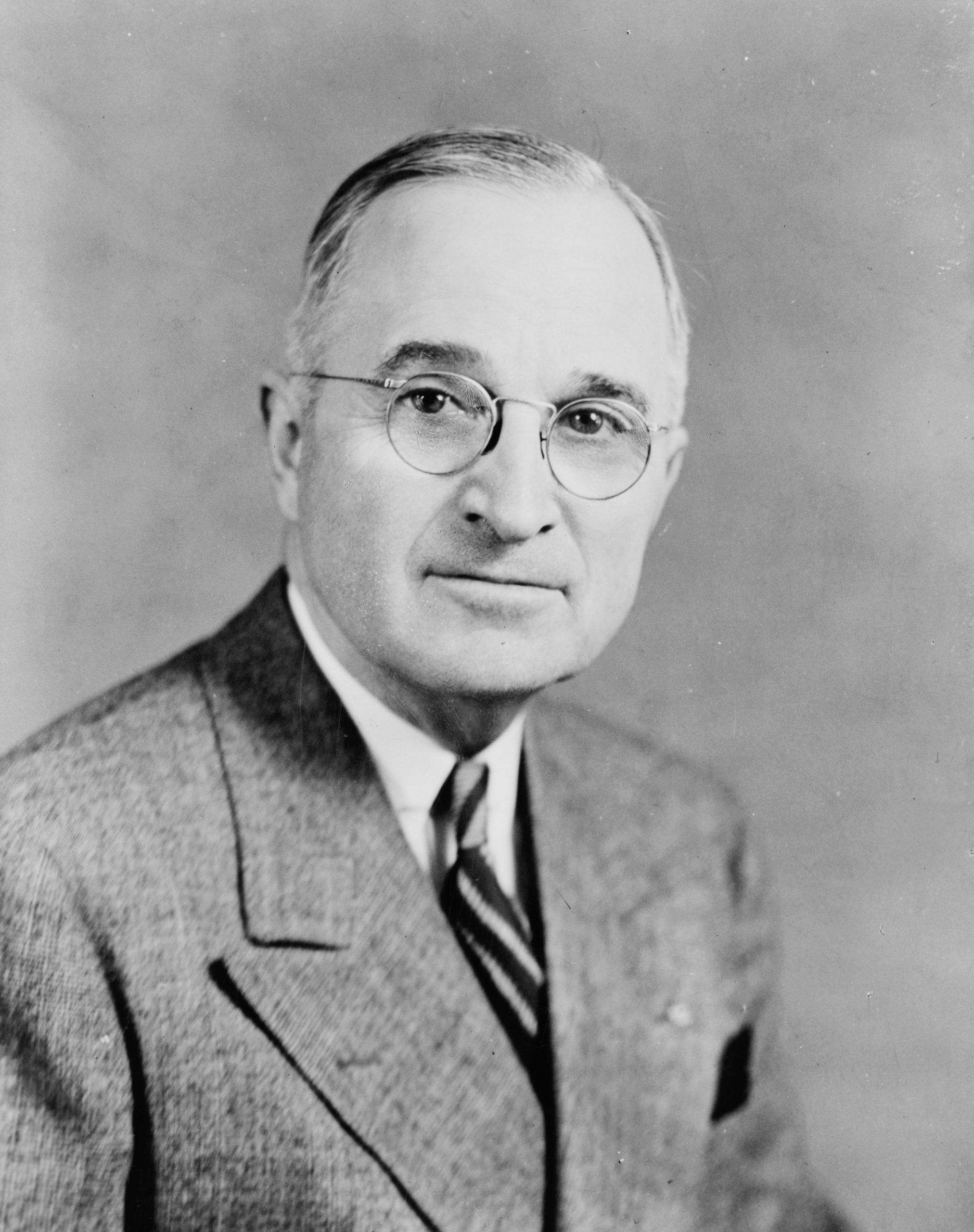
If you have a spare hour, listen to this past week’s EconTalk episode in which “John Kay and Mervyn King talk about their book, Radical Uncertainty, with EconTalk host Russ Roberts. This is a wide-ranging discussion based on the book looking at rationality, decision-making under uncertainty, and the economists’ view of the world.” The three economists have useful perspectives on the application of statistical modeling to the COVID-19 emergency. (If you have a spare 15 minutes you can read the transcript (lower right hand side of the website, and in fairness although I read a lot of the books that are discussed on EconTalk, I won’t read this one because I don’t have a Ph.D in economics. If you want a fascinating book to read check out A.J. Baime’s recent book on the 1948 U.S. Presidential election. The FEHBlog by the way is a big admirer of Harry Truman.)

Thursday Miscellany

The Wall Street Journal reports that

White House chief of staff Mark Meadows and Treasury Secretary Steven Mnuchin said Wednesday that if they don’t reach a deal by Friday with Mrs. Pelosi and Senate Minority Leader Chuck Schumer (D., N.Y.), they saw little point in continuing the daily negotiating sessions they have been conducting for nearly two weeks.

The quartet was expected to meet again early Thursday evening.

Democrats said Thursday that the slow pace of progress in the talks stems from a central clash over how much assistance the federal government should provide.

The President has stated that he plans to issue executive orders providing COVID-19 emergency relief if a compromise is reached.

Today the President signed an executive order directing administrative action to “reduce our dependence on foreign manufacturers for Essential Medicines, Medical Countermeasures, and Critical Inputs to ensure sufficient and reliable long-term domestic production of these products, to minimize potential shortages, and to mobilize our Nation’s Public Health Industrial Base to respond to these threats.” That seems sensible. Here’s a link to a Wall Street Journal article on the executive order. The Journal explains that “The order seeks to reverse the practice in recent decades of moving drug manufacturing outside of the U.S. That shift is partly because of more favorable tax rates, cheaper labor and friendlier environmental regulations, industry officials say.”

On the miscellany front —

  • The Federal Times reports that the U.S. Office of Personnel Management is poised to publish an interim final rule implementing the new paid parental leave program for federal employees. The program takes effect on October 1, 2020, and the interim final rule will be published in the Federal Register on August 10, 2020.

The act enables federal employees to substitute 12 weeks of paid leave for the same amount of time of unpaid leave authorized under the Family and Medical Leave Act of 1993.

But not all of the circumstances covered by unpaid leave apply to the new paid leave provisions.

Federal employees covered by the act may only take paid parental leave after the birth or placement of a child and may only do so within a 12-month window of that birth or placement.

  • Health Payer Intelligence reports on a Blue Cross study discussing payer strategies to improve sagging colorectal cancer screening rates in our country. OPM scores FEHB plans on the NCQA’s HEDIS measure for this preventive care measure. The article explains

“A major barrier to preventative screening is attitudinal – stemming from misperceptions surrounding discomfort, lack of risk awareness, and general fear of negative results,” [BCBSA Vice President Reed] Melton said. “Payers can start by working to change those perceptions and provide accurate, accessible resources to better inform the public.”

Payers can act on the information that this report unveiled by making colorectal cancer information—including screening information and other data—available to members online. This is a strategy that many Blue Cross and Blue Shield companies are already implementing.

  • Last week the FEHBlog called attention to successful COVID-19 vaccine tests performed on monkeys. One group of monkeys was given the experimental vaccine and the other group wasn’t. However, both groups were exposed to COVID-19 which increases the reliability of the testing. A friend of the FEHBlog shared a link to the 1 Day Sooner site. 1 Day Sooner proposes that human volunteers engage in the same type of testing which are known as challenge trials. ” Human challenge trials deliberately expose participants to infection, in order to study diseases and test vaccines or treatments. They have been used for influenza, malaria, typhoid, dengue fever, and cholera. Researchers are exploring whether human challenge trials could speed up the development of a vaccine for COVID-19, saving thousands or even millions of lives.” Who knew? Certainly gutsy. In any event, the FEHBlog shares a monkey’s picture today in gratitude to their efforts to protect fellow primates.

Tuesday Tidbits

Following up on last Friday’s and Sunday’s posts on the President’s executive orders on drug pricing, here for greater perspective is a link to a Fierce Healthcare article offering the positions of the health insurance and PBM industry trade associations’ positions on the orders. Essential Hospitals lets us know that the text of the fourth international pricing index executive order has not yet been made public.

The Wall Street Journal reports that “Eastman Kodak Co. has won a $765 million government loan under the Defense Production Act, the first of its kind. The purpose: to help expedite domestic production of drugs that can treat a variety of medical conditions and loosen the U.S. reliance on foreign sources. * * * Kodak’s loan has terms similar to a commercial loan and must be repaid over 25 years, [Kodak CEO Jim] Continenza said. He said Kodak will produce “starter materials” and “active pharmaceutical ingredients” used to produce generic medicines. “We have a long, long history in chemical and advanced materials—well over 100 years,” Mr. Continenza said. He added that Kodak’s existing infrastructure allows the company “to get up and running quickly.”

On the COVID-19 front —

  • Federal News Network informs us that

About 4,000 federal employees have filed workers’ compensation claims with the Labor Department due to COVID-19. 60 people have filed death claims. Labor projects COVID-19 claims among federal employees may reach 6,000 in the coming weeks. The department’s inspector general says the division that handles federal employee claims is anticipating a strain in resources due to demand and social distancing mandates. It has alternative staffing plans if COVID-19 compensation claims continue to surge. Labor says it’s accepted over 1,600 federal employees claims so far. Over 2,300 are unadjudicated.

  • The Society for Human Resource Management brings us up to date on the Senate majority’s new $1 trillion COVID-19 relief bill, the HEALS Act.
  • The Center for Medicare and Medicaid Services released “an early snapshot of the impact of the coronavirus disease 2019 (COVID-19) pandemic on the Medicare population. The data shows that older Americans and those with chronic health conditions are at the highest risk for COVID-19 and confirms long-understood disparities in health outcomes for racial and ethnic minority groups and among low-income populations.” A large cadre of the Medicare population of course is also enrolled in the FEHBP so this data is worth a gander.
  • The National Institutes of Health announced the successful results of a double blind study of the Moderna / NIAID COVID-19 vaccine on non-human primates / rhesus macaques. As noted yesterday that vaccine entered phase 3 human trials this week.

In other news —

  • Becker’s Hospital Review identifies the highest ranking hospital in each State as found in U.S. News and World Report.
  • NPR discusses two new studies suggesting that the risk of Alzheimer’s disease can be reduced by taking flu and pneumonia vaccines.
  • HHS’s Office for Civil Rights (“OCR”) which enforces the HIPAA Privacy and Security Rules announced that “Lifespan Health System Affiliated Covered Entity, a non-profit health system based in Rhode Island, has agreed to pay $1,040,000 to the OCR and to implement a corrective action plan to settle potential violations of the Health Insurance Portability and Accountability Act (HIPAA) Privacy and Security Rules related to the theft of an unencrypted laptop [thereby evidently allowing access to protected health information on over 20,000 patients in 2017].

Tuesday Tidbits

My heavens it’s raining hard here in Bethesda Maryland.

Last week the House Appropriations Committee cleared the FY 2021 Financial Services and General Government Appropriations Bill by a vote of 30-22. This is the bill that funds the OPM and the FEHBP. FedWeek calls attention to the fact that the Committee’s report on the bill makes the following FEHBP recommendation:

The Committee recognizes the importance of medical foods, as defined in the Orphan Drug Act (21 U.S.C. 360ee(b)(3)), which often serve as firstline therapies to treat a number of conditions. The Committee is concerned about the lack of coverage of medical foods in FEHBP insurance plans. The Committee encourages OPM to encourage FEHBP plans to explore options for including coverage of medical foods within their plans.

Here’s a link to a Food and Drug Administration set of frequently asked questions about medical foods.

The House Appropriations Committee announced today the Financial Services Appropriations bill is one of seven such bills to be packaged as a minibus (H.R. 7617) and submitted to the House of Representatives for a vote next week.

Last week, the FEHBlog noted a Centers for Disease Control report noting an uptick in drug overdose death last year. Today the American Medical Association released a 2020 progress report from its opioid task force. Fierce Healthcare explains that report finds “a nearly 40% decline in opioid prescriptions in the last five years, but overdose deaths have continued to increase thanks to spiraling use of illicit drugs such as synthetic fentanyl.” Moreover, “[i]n the report, the AMA pressed for changes to remove barriers, such as prior authorization, to addicts gaining access to medical treatments.”

On the Affordable Care Act front —

  • Georgetown Law Professor Katie Keith provides a lengthy and informative update on ACA related litigation if this is your cup of tea. The FEHBlog cannot remember another federal statute that has lead to so much litigation over the validity of government actions thereunder.
  • The Internal Revenue Service released Rev. Proc. 2020-36. To comply with the ACA’s employer mandate, a large employer must offer its employees at least one coverage option that has at least 60% actuarial value and has an employee contribution that does not exceed a certain percentage of salary / wages. Every year the IRS announces the new percentage and the applicable percentage is 9.83% for plan years beginning on or after January 1, 2021.

Finally, FedSmith offers guidance to federal employees who are starting to consider civil service retirement. Of note, “you have to be enrolled in FEHB and FEGLI for at least five years before retiring to be eligible to continue these programs after you retire. Having access to FEHB in retirement can save you thousands and thousands of dollars and should not be taken lightly.” How true that is.

Friday Stats and More

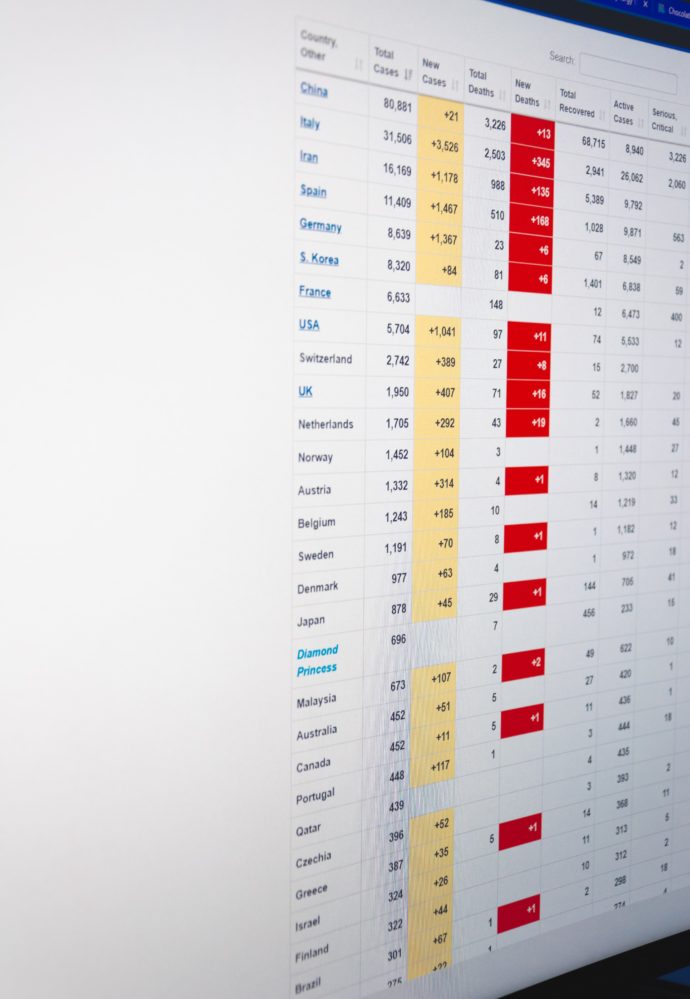
For the third week in a row, new COVID-19 cases have topped 300,000 (nearly 1 million in total) while the number of new deaths remains relatively low and stable (12,000 in sum over the past three weeks) according to the CDC’s cases in the U.S. website which the FEHBlog tracks.

Axios echos the FEHBlog’s sentiment that the medical profession to its credit has learned how to treat COVID-19. That is what you would expect in 2020. Hopefully the government is doing a good job providing healthcare resources to hot spot areas in order to facilitate treatment. In that regard, HHS announced today that “it will begin distributing $10 billion in a second round of high impact COVID-19 area funding to hospitals starting next week.”

In our FEHBP world —

  • Federal News Network reports that OPM has issued new proposed rules to address enrollment problems that arose during the long government shutdown in the winter of 2018-19. Hopefully we won’t encounter another one of those unfortunate events again, but it is better to be safe than sorry. Several of the new flexibilities are already law thanks to a law that Congress passed in 2019.
  • OPM also released today a revised SF 2809 FEHB enrollment form. The form is a handy reference for FEHB enrollment rules. It’s not used as often as it was pre-internet and smart phones.

Finally, the Trump Administration enjoyed two victories in the U.S. Court of Appeals for the D.C. Circuit today. As Healthcare Dive reports

  • The Court of Appeals affirmed a lower court decision upholding the Administration’s short term duration health plan rule. The FEHBlog sees no harm in giving consumers greater choice of health care coverage after Congress zeroed out the individual mandate.
  • The Court of Appeals reversed a lower court decision and thereby upheld the Administration’s Medicare “site neutrality” rule that “reduced some payments to off-campus hospital outpatient departments to make them consistent with other outpatient payments.” The court reasoned that

“Reducing the payment rate for a particular OPPS service readily qualifies, in common parlance, as a ‘method for controlling unnecessary increases in the volume’ of that service,” according to the opinion. “The lower the reimbursement rate for a service, the less the incentive to provide it, all else being equal. Reducing the reimbursement rate thus is naturally suited to addressing unnecessary increases in the overall volume of a service provided by hospitals.”

Makes perfect sense to the FEHBlog.

Thursday Miscellany

The Supreme Court wrapped up its October 2019 term today. Because it relates to the Affordable Care Act, the FEHBlog calls attention to the ever reliable and prodigious Katie Keith’s Health Affair’s blog post about yesterday’s Little Sisters of the Poor v. Pennsylvania decision. As Ms. Keith explains, this decision “was the third time in six years that the Supreme Court has ruled on the scope of the contraceptive mandate. This post recounts the history of the litigation, summarizes the decision, and discusses the impact of the ruling.” This decision has no impact on the FEHBP coverage of contraceptives. Enjoy your time off, Justices.

Also on the ACA front, Fierce Healthcare reports that

The Affordable Care Act’s insurance exchanges could add more than 1 million new members because of the COVID-19 pandemic.

The analysis released Thursday by Avalere attributes the spike to special enrollment due to massive job losses caused by COVID-19. The boost in customers could cause more insurers to return to a market they have left after financial losses over the past few years.

“With unemployment rates at or near 10% in almost all states, many consumers have been separated from their previous employer-sponsored plans,” the analysis said. “The economics of Medicaid eligibility in many states and the recent boost to unemployment assistance indicate that many are turning to the exchanges for coverage.”

On the COVID-19 vaccine development front,

At Fortune Brainstorm Health this week, there was lots of talk about the 200-plus efforts to find a COVID vaccine, and the extraordinary collaboration among companies and governments to get vaccines tested, manufactured and distributed—far faster than ever before. “We are taking what normally takes five to seven years, and doing it in five to seven months,” said Johnson & Johnson CEO Alex Gorsky. But Gorsky—whose company is one of the leaders in the vaccine race—also issued a strong warning to the group not to think of a vaccine as a silver bullet.

However, an effective vaccine certainly would be better than a poke in the eye with a sharp stick. Must everyone feel the need to dampen expectations?

  • In the same vein, Fierce Pharma discusses an internal CDC debate over what would be an effective COVID-19 vaccine.

One of public health’s greatest accomplishments was eradicating smallpox back in 1979. To eradicate SARS-CoV-2, the virus that causes COVID-19 illness, we’ll need a vaccine that’s 70% effective—and 70% of the population will need to receive it, an FDA vaccine official said Wednesday.

That’s a higher bar than the FDA set last week. To pass muster at the agency, a COVID-19 vaccine will need to be at least 50% more effective than placebo, according to new FDA guidelines.

  • It’s worth noting that the smallpox eradication effort began in the 1790s and that pharma is on course for more than one vaccine concoction for COVID-19 which should lead to broader efficacy, right?

On the OPM front,

  • Federal News Network informs us OPM will be proposing to anoint greater Des Moine, IA as the latest metropolitan area in which federal employees will receive locality pay. Congrats Hawkeyes. “OPM will also propose an expansion of the existing Los Angeles/Long Beach, California, locality pay area to include Imperial County, California.” The changes if (when?) finalized would be effective January 1, 2021, and
  • Fedweek reports on a recent OPM Inspector General report on OPM’s federal employee retirement services. The Inspector General compliments OPM for its process improvements.