Tuesday’s Tidbits

Tuesday’s Tidbits

Photo by Patrick Fore on Unsplash

Happy National Employee Benefits Day, an occasion created by the International Foundation of Employee Benefit Plans.

From the Capitol Hill front, Roll Call reports

The week is still young. But prospects for getting a bipartisan supplemental aid package for pandemic response efforts to President Joe Biden’s desk before a two-week recess seem increasingly remote.

Without a deal on amendments Republicans want to offer, the Senate on Tuesday rejected a procedural motion needed to begin debate on the bill, which would provide $10 billion for the Department of Health and Human Services to buy more therapeutics, vaccines and testing supplies and prepare for future virus variants.

Utah Sen. Mitt Romney, the lead GOP negotiator, said the underlying bill will have enough bipartisan support to pass if leaders can agree on an amendment process, but it’s an open question whether it will get done before the recess.

From the Omicron and siblings front, the Wall Street Journal reports

The Omicron BA.2 variant is increasing its share of U.S. cases and putting particular pressure on parts of the Northeast, where wastewater readings and Covid-19 cases have ticked upward again from low levels.

Recorded Covid-19 cases remain low nationally and hospitals are treating the smallest number of Covid-19 patients after any surge. Places where cases are rising, including New York, are reporting relatively small increases from recent troughs. The mixed signals are prompting officials to warn that BA.2 will likely lead to more viral transmission, but also hope among public-health experts that warming weather and built-up immunity in the population are muting the variant’s impact.

“There are certainly some big factors that are in our favor right now compared to the situation back in November and December,” said Bruce Y. Lee, professor of health policy and management at the City University of New York School of Public Health.

From the White House, the Administration announced

  • A “whole of government” effort to prevent, detect, and treat long Covid. Long Covid is a topic at the OPM AHIP FEHB carrier conference to be held virtually on April 27 and 28, 2022.
  • A regulatory fix to the so-called family glitch in the Affordable Care Act. The family glitch that this fix addresses stems from the fact that the ACA does not require employers to make contributions to family member coverage. “Should today’s proposed rule be finalized, family members of workers who are offered affordable self-only coverage but unaffordable family coverage may qualify for premium tax credits to buy ACA coverage.” In the FEHBlog’s personal experience, the unaddressed family glitch is that that small employers (generally under 50 employees) must pay for each family member’s coverage on an age rated basis instead of the plus one or plus and family rates that large employers are permitted to use. Pre-ACA, all employers could use the bucket approach to family member rating. The proposed regulation won’t fix that problem.

agencies (as described in section 3502(1) of title 44, United States Code, except for the agencies described in section 3502(5) of title 44, United States Code) with responsibilities related to Americans’ access to health coverage shall review agency actions to identify ways to continue to expand the availability of affordable health coverage, to improve the quality of coverage, to strengthen benefits, and to help more Americans enroll in quality health coverage.  As part of this review, the heads of such agencies shall examine the following:

(a)  policies or practices that make it easier for all consumers to enroll in and retain coverage, understand their coverage options, and select appropriate coverage;

(b)  policies or practices that strengthen benefits and improve access to healthcare providers;

(c)  policies or practices that improve the comprehensiveness of coverage and protect consumers from low-quality coverage;

(d)  policies or practices that expand eligibility and lower costs for coverage in the ACA Marketplaces, Medicaid, Medicare, and other programs;

(e)  policies or practices that help improve linkages between the healthcare system and other stakeholders to address health-related needs; and

(f)  policies or practices that help reduce the burden of medical debt on households.

These are interesting objectives, but FEHB typically is not considered to be a employee benefit program and not a government health program.

From the healthcare business front

  • Beckers Hospital Review tells us “Walmart Health will open five new clinics in Florida, according to an April 5 press release.” Healthcare Dive offers a deep dive into Walmart’s healthcare efforts in the Sunshine State.

UnitedHealth Group’s Optum and Change Healthcare have further extended their merger agreement to Dec. 31. The extension comes ahead of a two-week trial to determine the deal’s fate.

The Department of Justice sued to block the merger in late February, alleging that the combination could allow UnitedHealth to get a leg up on its competitors in the insurance space. The deal was first announced in January 2021 and is valued at $8 billion in cash and $5 billion in debt.

The trial is set to begin on Aug. 1.

“The extended agreement reflects our firm belief in the potential of our combination to improve healthcare and in our commitment to contesting the meritless legal challenge to this merger,” the companies said in a joint statement Tuesday.

From the tidbits department

  • Shatterproof offers alcohol awareness resources in recognition of April being Alcohol Awareness Month.
  • Per Health Day, “Significantly higher average body mass index (BMI) and obesity prevalence rates were seen among U.S. adults during the COVID-19 pandemic, according to a study published online April 4 in the American Journal of Preventive Medicine.” The complete journal article is available here.
  • The same preventive medicine journal also offers an article on mortality rates of childbearing aged women in our country. “Given the high correlation between pregnancy-related mortality and all-cause mortality at the state level, addressing the structural factors that shape mortality risks may have the greatest likelihood of improving women’s health outcomes across the life course.”
  • The HHS Inspector General has created a website on telehealth.

The Office of Personnel Management last week offered guidance to agencies on how they should implement the recently enacted benefit providing federal workers with up to two weeks of paid bereavement leave following the death of a child.

The new leave was adopted as part of the 2022 National Defense Authorization Act, signed by President Biden last December.

In a memo to agency heads, OPM Director Kiran Ahuja wrote that although each agency is responsible for its own implementation of the new benefit, her agency wants to ensure that it is provided to employees across government “in an equitable and uniform way.”

Monday Roundup

Photo by Sven Read on Unsplash

From Capitol Hill, Roll Call reports

Senate negotiators have reached agreement on a $10 billion pandemic relief package that includes funding for domestic needs but not international aid, according to two Senate aides who were not authorized to speak publicly.

The deal crystallizes an informal “agreement in principle” the parties reached last week to provide $10 billion for near-term pandemic needs by repurposing unspent funds from prior relief laws.

The Wall Street Journal adds

The White House backed the deal and urged Congress to pass the bill promptly, while noting it was less than the $22.5 billion the administration had requested for vaccines, boosters, treatments and testing.

“We will continue to work with Congress to fund our remaining domestic needs,” said Press Secretary Jen Psaki in a statement. She added that the White House would continue to press for funding global vaccination efforts.

The FEHBlog noticed that the Senate Homeland Security and Governmental Affairs Committee held a business meeting last Wednesday. The Committee favorably reported the President’s nomination of Kristin Boyd to be OPM Inspector General by voice vote (with Sen. Hawley (R Mo.) voting no). The next step for Ms. Boyd’s nomination is the Senate floor.

Last week, the House of Representatives passed a Secure 2.0 bill applicable to private sector defined contribution plans. The Senate is likely to approve the bill too. The Society for Human Resource Management has reviewed the bill’s provisions.

From the Omicron and siblings front —

  • Becker’s Hospital Review informs us “The World Health Organization is monitoring a new omicron variant — dubbed XE — that’s a hybrid of BA.1, the original omicron strain, and BA.2, a highly transmissible subvariant.” The hybrid is estimated to be 10% more contagious that BA.2.
  • American Hospital Association tells us “Beginning today through the end of the public health emergency, Medicare Part B beneficiaries may obtain up to eight free over-the-counter COVID-19 tests per month through eligible health care providers and pharmacies, the Centers for Medicare & Medicaid Services announced.” Medicare Part B beneficiaries can obtain the free tests by showing their Medicare identification card.
  • The American Medical Association discusses “How we will know when COVID-19 has become endemic.” The FEHBlog tends to think that we are there.
  • The Centers for Disease Control announced

The new nationwide Test to Treat initiative provides quick access to free treatment for COVID-19. Through this program, people can get tested and – if they are positive and treatments are appropriate for them – receive a prescription from a health care provider, and have their prescription filled all at one location. 
These “One-Stop Test to Treat” sites are available at hundreds of locations nationwide, including pharmacy-based clinics, federally qualified health centers, and long-term care facilities. 
People can continue to be tested and treated by their own health care providers who can appropriately prescribe these oral antivirals at locations where the medicines are distributed. 
A call center 1-800-232-0233 is available every day from 8:00 am to midnight ET to get help in more than 150 other languages.
The Disability Information and Access Line is available to help people with disabilities access services. Call 1-888-677-1199, Monday-Friday from 9:00 am to 8:00 pm ET or email DIAL@usaginganddisability.org.

From the CMS front, the agency announced that “the updated MMSEA Section 111 GHP User Guide version 6.5 has been posted to the GHP User Guide page on CMS.gov. Refer to Chapter 1 for a summary of updates.” Section 111 is a system that has been in place for about 12 years. Section 111 helps CMS keep tabs on Medicare beneficiaries and beneficiaries using data group health plans, including FEHB plans, automobile and liability insurers, and attorneys for injured Medicare beneficiaries.

CMS also released “the Announcement of Calendar Year (CY) 2023 Medicare Advantage (MA) Capitation Rates and Part C and Part D Payment Policies (the Rate Announcement).”

From the healthcare conference front, Fierce Healthcare tells us about the 2022 Health Datapalooza and National Health Policy Conference being held today and tomorrow in Arlington, VA.

From the federal employment front, Govexec reports

Federal employees can hold elected partisan office while also working at their agencies, a key panel found in a ruling setting a new precedent for civil servants. 

Rodney Cowan did not have to give up his role as a county commissioner in Tennessee or be removed from his job with the U.S. Postal Service, the recently reconstituted central body of the Merit Systems Protection Board said in a decision last week. It was one of the first decisions of MSPB’s central board as it addresses its backlog of more than 3,500 cases that have piled up during its five years without a quorum. 

The FEHBlog doubts that we have heard the last word on this issue.

Thursday Miscellany

Photo by Josh Mills on Unsplash

From Capitol Hill

Roll Call tells us

Senators negotiating a COVID-19 supplemental funding package have an “agreement in principle” to provide roughly $10 billion for the Department of Health and Human Services to stock up on waning domestic supplies for combating the virus, according to Sen. Roy Blunt, R-Mo.

Blunt, the top Republican on the Senate Labor-HHS-Education Appropriations Subcommittee, said both parties have tentatively agreed to offsets for the $10 billion that would repurpose unspent funds from prior pandemic relief laws.

The offsets negotiators agreed to include $2.2 billion from unused grant funds for venues like zoos and theaters and $2 billion in untapped assistance to the aviation and manufacturing industry, Blunt said. His comments to reporters came after a Republican Conference lunch in which lead GOP negotiator Sen. Mitt Romney of Utah briefed his colleagues on the agreement in principle. 

Fierce Healthcare informs us

The House [of Representatives] passed a bill on Thursday that caps the out-of-pocket cost of insulin at $35 a month for beneficiaries in Medicare Part D and for certain group and individual plans.

The Affordable Insulin Now Act, which passed the House via a 232 to 193 vote, comes as work in the Senate continues on a bipartisan alternative that could bring additional changes. * * *

Private plans would also be required to offer first-dollar coverage of insulin without any deductible, according to an analysis from the Congressional Budget Office. 

The cap on cost-sharing for private insurance plans would implement in 2023.

The Hill offers a related article explaining why insulin prices are so “troubling” high.

HR Dive reports

Among the provisions of this month’s $1.5 trillion omnibus spending bill, Congress included a revival of an exemption that allowed high-deductible health plans to cover telehealth before individuals meet their deductible.

The provision was originally created by the Coronavirus Aid, Relief, and Economic Security Act, which sunset at the end of 2021. The provision will resume April 1 but will again sunset at the end of this year.

From the Omicron and siblings front, the Wall Street Journal discusses the state of Covid treatments and offers its advice on who should seek out a second Covid booster besides the immunocompromised.

From the OPM front, Govexec projects OPM’s actions over the next 18 months based on the FY 2022 to FY 2026 strategic plan released last Monday. In short, “Hire, Hire, Hire.”

Govexec also discusses efforts underway by OPM, the Social Security Administration and the Thrift Savings Plan to improve the customer service experience of federal employees and retirees. Good luck with that.

From the research front the National Institutes of Health announced

Scientists have published the first complete, gapless sequence of a human genome, two decades after the Human Genome Project produced the first draft human genome sequence. According to researchers, having a complete, gap-free sequence of the roughly 3 billion bases (or “letters”) in our DNA is critical for understanding the full spectrum of human genomic variation and for understanding the genetic contributions to certain diseases. The work was done by the Telomere to Telomere (T2T) consortium, which included leadership from researchers at the National Human Genome Research Institute (NHGRI), part of the National Institutes of Health; University of California, Santa Cruz; and University of Washington, Seattle. NHGRI was the primary funder of the study.

Analyses of the complete genome sequence will significantly add to our knowledge of chromosomes, including more accurate maps for five chromosome arms, which opens new lines of research. This helps answer basic biology questions about how chromosomes properly segregate and divide. The T2T consortium used the now-complete genome sequence as a reference to discover more than 2 million additional variants in the human genome. These studies provide more accurate information about the genomic variants within 622 medically relevant genes. * * *

The now-complete human genome sequence will be particularly valuable for studies that aim to establish comprehensive views of human genomic variation, or how people’s DNA differs. Such insights are vital for understanding the genetic contributions to certain diseases and for using genome sequence as a routine part of clinical care in the future. Many research groups have already started using a pre-release version of the complete human genome sequence for their research.  

From the mental healthcare front, the American Hospital Association calls our attention to a new GAO report.

Consumers with health coverage experience challenges finding in-network mental health providers, who may not be accepting new patients or have long wait times to see them, according to a new report from the Government Accountability Office. Factors contributing to these challenges include low reimbursement rates for mental health services and inaccurate or out-of-date information on provider networks, GAO said. The report also looks at ongoing and planned federal efforts to address these challenges, for example by increasing the mental health workforce, mental health system capacity and oversight of health plan compliance with mental health parity laws.

This squib caused the FEHBlog to recall a comment that he heard at a conference — Four out of five doctors are in-network but only one out of five mental health providers are in-network with the notable exception of hub and spoke telemental services.

Yesterday the FEHBlog suggested that in return for three free primary care visits and three behavioral health visits, plan members should name and use their in-network primary care provider and primary mental health provider. The FEHBlog is sticking with this idea for the in-network primary care provider but he recognizes the idea may be premature for the in-network primary mental health provider. Of course, creating a looser standard for free mental health care compared to primary care is compliant with the federal health parity rule. The reverse would violate the often fuzzy non-quantitative treatment limitations created by the law.

From the miscellany department —

  • STAT News tells us “With Medicare expected to cover a projected 80 million people by 2030,He entrepreneurs and investors are cashing in on what analysts see as an inevitable shift in health care away from the hospital and into the homes of aging patients.” The publication identifies five related technology trends.
  • Fierce Healthcare reports “Virtual care startup Hims & Hers is teaming up with Carbon Health to offer patients in California with direct access to providers for in-person medical appointments at clinics. The collaboration will provide easy and comprehensive access to a broader range of care options through the Hims & Hers platform, company executives said.”
  • Health Payer Intelligence informs us “Large employers are investing more in their wellness program design in 2022 and their programs revolve around hybrid work environments, job satisfaction, and equity, the Business Group on Health found in a survey.”

Midweek update

Photo by Manasvita S on Unsplash

From the OPM front —

Here is a link to OPM’s 2023 Congressional Budget Justification for Fiscal Year 2023, which confirms on page 36

Beginning in plan year 2023, this proposal would require all plans and issuers, including FEHB carriers, to cover three primary care visits and three behavioral health visits each year without charging a copayment, coinsurance, or deductible-related fee. For High Deductible Health Plans, these services would be considered pre-deductible for meeting Health Savings Account requirements. This proposal would increase FEHB premiums by approximately 0.8 percent.

In the FEHBlog’s opinion, OPM should condition these “free” visits on requiring the plan member to identify and use an in-network primary care provider or in-network primary behavioral care provider. Members who develop relationships with their healthcare providers in this manner are more likely to undergo preventive care and otherwise follow medical advice. That’s common sense. It’s worth adding that the Affordable Care Act typically limits reduced cost-sharing to claims involving in-network care.

Meanwhile, Meritalk discusses OPM’s perspective on the President’s proposed budget, and Federal News Network explains why diversity goals are crucial to the success of OPM’s FY 2022 to FY 2026 strategic plan.

FedSmith.com discusses the impact of retirement on federal employee benefits.

From the Omicron (and siblings) front, the Wall Street Journal reports

President Biden on Wednesday said the nation was in a new phase of the Covid-19 pandemic as he marked the launch of a new federal website where Americans can identify virus risks in their areas and recommendations for mitigating the threat.

The website, COVID.gov, aims to be a one-stop shop to help people get information on measures that could help protect them from the virus, such as local guidance for mask wearing and where to find free masks, vaccines and clinics that offer tests and oral antiviral treatments, Mr. Biden said.

“We’re now in a new moment in this pandemic,” Mr. Biden said. “It does not mean that Covid-19 is over. It means that Covid-19 no longer controls our lives.”

The FEHBlog is pleased to see that the new site includes a link that allows you to find a test to treat program near you.

From the Rx coverage front, BioPharma Dive informs us

By a slim margin, advisers to the Food and Drug Administration have concluded that the agency should hold off approving a closely watched, experimental medicine for ALS until researchers generate more evidence that it works.

Composed of neuroscience and drug development experts, the 10-person advisory committee on Wednesday voted 6 to 4 against the medicine, named AMX0035 and developed by the Cambridge, Massachusetts-based biotechnology company Amylyx Pharmaceuticals. In a study of about 140 volunteers, AMX0035 appeared to show modest benefits on survival and day-to-day function for patients with rapidly progressing ALS, better known to some as amyotrophic lateral sclerosis or Lou Gehrig’s disease. * * *

The FDA isn’t required to follow its advisers’ recommendations. But it usually does, making approval of AMX0035 now more of a long shot. A final decision is expected by late June.

In other news —

RAC Monitor notes that the Consolidated Appropriations Act 2022 continues to prohibit federal funding for the national patient identifier otherwise required by HIPAA. That’s unfortunate for the country.

Healthcare Economist discusses its views on high deductible plans that are a prerequisite to funding health savings accounts.

Tuesday’s Tidbits

Photo by Patrick Fore on Unsplash

From Capitol Hill, Congress.gov informs us that Congress has sent the Postal Reform Act of 2022 (HR 3076) to the President for his signature.

MedPage Today discusses a Congressional hearing on Medicare for All held today. Democrats (for) and Republicans (against) remain split.

The FEHBlog finds the President’s budget proposal useful for identifying new Administration FEHB priorities, several of which were identified in yesterday’s post. What’s more, FedWeek tells us

[T]he FEHB program would be among programs affected by a broader proposal regarding mental health service coverage in health insurance. It would require coverage of three primary visits and three behavior health visits without cost-sharing.

In the FEHBlog’s opinion, this idea would drive up premiums for no reason because federal and postal employees already are offered employee assistance programs that offer free counseling sessions. OPM needs to do a better job coordinating its various benefit programs.

Fierce Healthcare identifies four other healthcare items from the President’s budget proposal that should be watched.

From the Omicron (and siblings) front —

The Wall Street Journal reports

The Omicron BA.2 variant represents more than half of new Covid-19 cases in the U.S., the latest federal estimates show, as signs suggest infections are edging higher again in parts of the Northeast.

The region has the highest BA.2 concentrations, including more than 70% in an area including New York and New Jersey, according to estimates the Centers for Disease Control and Prevention released Tuesday. BA.2 has been moving steadily higher for more than a month and represents an estimated 55% of national cases in the week ended March 26, the CDC said. * * *

“Predictions are hard, but I am expecting that the U.S. will have a surge in at least some locations,” said Aubree Gordon, an associate professor of epidemiology at the University of Michigan School of Public Health.

AHIP tells us

Today the Food and Drug Administration (FDA) authorized a second single Pfizer-BioNTech or Moderna COVID-19 vaccine booster dose for persons aged 50 and older at least 4 months after receipt of a first booster dose of any authorized or approved COVID-19 vaccine. A second booster dose of the Pfizer-BioNTech COVID-19 vaccine or Moderna COVID-19 vaccine may also be administered to certain immunocompromised individuals, for those 12 years of age and older or 18 years of age and older, respectively, at least 4 months after receipt of a first booster dose of any authorized or approved COVID-19 vaccine.

The FDA previously authorized a single booster dose for certain immunocompromised individuals following completion of a three-dose primary vaccination series. This action will now make a second booster dose of these vaccines available, for a total of five vaccine doses authorized for populations at higher risk for severe disease, hospitalization and death. Emerging evidence suggests that a second booster dose of an mRNA COVID-19 vaccine improves protection against severe COVID-19 and is not associated with new safety concerns. * * *

This authorization still requires the Centers for Disease Control and Prevention (CDC) Advisory Committee on Immunization Practices (ACIP) to formally recommend the vaccine for the specific populations.  No date for an ACIP meeting has yet been announced.

Health plans are not required to reimburse these authorized vaccines until ACIP makes its decision.

From the healthcare business front —

Healthcare Dive reports

Hospitals’ operating margins were negative in February for the second consecutive month even as cases of the omicron variant waned, according to Kaufman Hall’s National Hospital Flash report. Negative margins in January were the first seen in 11 months.

The median Kaufman Hall Operating Margin Index was -3.45%, up from -4.25% in January but still well below levels hospitals can sustain, the report said.

Volumes for inpatient services fell while outpatient volumes staggered with revenues in those categories falling 19.3% and 5%, respectively, from January, according to the report.

Healthcare Finance News reports

UnitedHealth Group subsidiary Optum will combine with in-home healthcare service provider LHC Group, with UHG purchasing the latter for about $5.4 billion.

LHC provides healthcare services in the home for a demographic of mostly older patients dealing with chronic illnesses and injuries. It will be melded with Optum, which manages drug benefits and offers data analytics services and works with more than 100 health plans.

From the tidbits department —

  • The CDC has posted a new, improved anti-biotic resistance website. The CDC explains that the site is “refreshed to better engage and share information on antibiotic resistance (AR) in the United States and around the world. We all have a role to play—from travelers, animal owners, and care givers to patients and healthcare providers—to fight this deadly threat and now you can quickly access CDC’s latest resources.”
  • MedPage Today reports “Prediabetes prevalence nearly doubled among U.S. youth from 1999 to 2018, national data indicated. According to National Health and Nutrition Examination Survey (NHANES) data on over 6,500 youth, the prevalence of prediabetes increased from 11.6% in 1999-2002 to 28.2% in 2015-2018, Junxiu Liu, PhD, of Icahn School of Medicine at Mount Sinai in New York City, and colleagues reported in JAMA Pediatrics.” Obesity is a common thread.
  • The Endocrinology Network informs us “Participation in a tele-mentoring program led by Robert Wood Johnson Medical School was associated with a 44% decrease in inpatient admissions and a more than 60% decrease in inpatient spending among Medicaid patients with diabetes.” Bravo.
  • The International Foundation of Employee Benefit Plans discusses evaluating high cost gene therapy financing programs.

Thursday Miscellany

Photo by Josh Mills on Unsplash

From the Omicron and siblings front, the Wall Street Journal reports

The recent rise in Covid-19 cases in the U.K. has U.S. health experts watching closely, as the Delta and Omicron variant trends in Europe have tended to presage those in the U.S. * * *

While hospitalizations have risen in the U.K. recently, the number of patients requiring ventilators hasn’t increased at the same pace, according to U.K. health data.

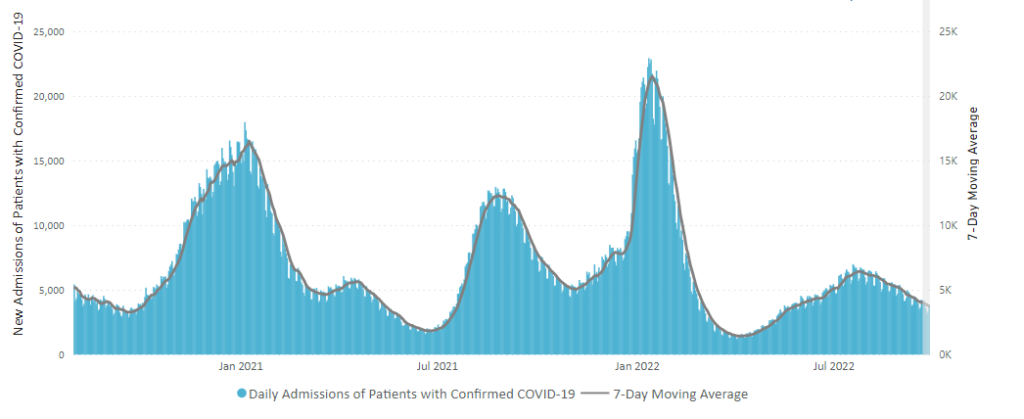
Counts of newly admitted Covid-19 patients in U.S. hospitals are at their lowest recorded level after any prior surge. The seven-day average for newly admitted confirmed cases slid to 1,836 on Wednesday, down from a record that reached 22,000 in January, a Wall Street Journal analysis of federal data shows. The number of hospitalized Covid-19 patients is also nearing a post-surge low.

The American Medical Association informs us

With pregnancy typically comes a whole set of urgent concerns about health, yet despite the widely known threat of COVID-19 pregnant women are among the least likely to be vaccinated to protect against the disease’s most severe outcomes.

The low vaccination rate of pregnant women in the U.S. is concerning because of the increased risk of pregnancy complications due to SARS-CoV-2 infection, which include hospitalization and delivering a pre-term or stillborn infant. Two recent studies highlight the importance of COVID-19 vaccination to protect moms and their babies.

Published in JAMA, the research letter “Durability of Anti-Spike Antibodies in Infants After Maternal COVID-19 Vaccination or Natural Infection” shows that vaccination resulted in significantly greater antibody persistence in infants than in natural infection from SARS-CoV-2. At 6 months old, 57% of infants born to mothers whopu were vaccinated had detectable antibodies, compared with only 8% among infants born to moms infected with SARS-CoV-2.

Additionally, a new study from the Centers for Disease, Control and Prevention (CDC) showed that “infants whose mothers received two doses of an mRNA COVID vaccine during pregnancy are less likely to be admitted to the hospital for COVID in the first six months of their life,” Andrea Garcia, MPH, director of science, medicine and public health at the AMA, said during an episode of the “AMA COVID-19 Update” about supporting vaccination during pregnancy. “Overall, the researchers found that maternal vaccination was 61% effective at preventing infant hospitalization.”

From the federal employees benefits front, Fedweek explains how to perform a cost-benefit analysis of [important] survivor annuity choices facing federal and postal employees.

Also, the Office of Personnel Management announced “federal employees may now receive up to four hours of administrative leave to vote in federal, state, local, tribal, and territorial elections. OPM also announced that federal employees may now use up to four hours of administrative leave per year to serve as non-partisan poll workers or observers.”

From the public health front, the Food and Drug Administration “took additional actions [explained here] as part of the agency’s work to ensure any electronic nicotine delivery system (ENDS) products available for sale have demonstrated that marketing of the products is appropriate for the protection of the public health.”

From the healthcare business front —

Building on earlier search updates that helped users check for in-network providers and languages spoken in office, Google is launching new functionality in the coming weeks that will give users a list of available appointments when searching for a specific provider. 

Google is partnering with CVS’ MinuteClinic as well as online scheduling companies to support the new tool. It will initially roll out nationwide in English, but Jackie DeJesse, product manager at Google, said the project is still in the early stages and will continue to be developed over time. 

  • Becker’s Hospital Review reports

From plans to scale its direct-care delivery service to recruiting new leadership to head its healthcare ecosystem, Amazon continues to strengthen its healthcare presence. Here are six most recent healthcare moves from the company as reported by Becker’s.

1. Amazon Web Services is seeking a physician lead to join its healthcare industry team to engage with key leaders from various healthcare organizations to facilitate their adoption of AWS services for medical imaging, telemedicine and analytics.

2. Aaron Martin, former chief digital officer at Renton, Wash.-based Providence, is leaving the health system March 25 to join Amazon as a vice president of health.

3. Amazon Pharmacy created MedsYourWay, a discount savings card, to help Horizon Blue Cross Blue Shield of New Jersey, Blue Cross Blue Shield of Nebraska, Blue Cross Blue Shield of Alabama, Florida Blue, and Blue Cross and Blue Shield of Kansas members save on prescriptions.

4. Amazon Alexa partnered with Teladoc to get patients connected with physicians via Echo devices.

5. Amazon Web Services will support the effort to donate 50 Medtronic GI Genius intelligent endoscopy modules to facilities that primarily serve communities with low screening rates or where access to this technology is not currently available.

6. Amazon Care rolled out virtual health services nationwide and is preparing to launch in-person services for more than 20 new cities in 2022.

Tuesday’s Tidbits

Photo by Patrick Fore on Unsplash

From the government employment front,

Performance.gov informs us that OPM Director Kiran Ahuja is one of three Leads on implementing Priority One of the President’s Management Agenda — “Strengthen and Empower the Federal Workforce.” Good luck, Director Ahuja.

FedSmith identifies “ten steps federal employees should take at least a decade before retiring to ensure they are prepared to head into their golden years.”

Step 2 of 10 is “Enroll or Stay in FEHB.”

If you plan to continue your federal health benefits in retirement, you must be entitled to retire on an immediate annuity and:

be enrolled for the 5 years immediately before retiring or, during all your federal employment since your first opportunity to enroll if less than 5 years.

Coverage under FEHB, Tricare, or the Civilian Health and Medical Program of Uniformed Services (CHAMPUS) all count toward the 5 year requirement.

In yesterday’s post, the FEHBlog pointed out a Fierce Healthcare interview with the CEO of dialysis heavyweight, Davita. Today, Fierce Healthcare reports

Three big players in kidney care—Fresenius Health Partners, Cricket Health, and InterWell Health—plan to form a new value-based care company focused on services for the earlier stages of kidney disease.

The deal, announced Monday morning, will create a company valued at $2.4 billion, according to the companies.

The merger brings together expertise in value-based kidney care contracting of Fresenius Health Partners, a division of Fresenius Medical Care North America, InterWell Health’s network of more than 1,600 nephrologists and startup Cricket Health’s technology-enabled care model and patient engagement platform. Fresenius Medical Care is the world’s largest operator of dialysis centers.

Healthcare Dive delves into the case for hybrid care models, meaning the marriage of hospital systems and telehealth vendors.

Though the pandemic greatly accelerated the use of telehealth, use of pure-play virtual care has waned as COVID-19 cases drop off across the U.S. But telehealth is increasingly being woven into hospitals’ digital roadmaps, and some are even upping their investments in the modality despite moderating visits, experts said at the annual HIMSS healthcare conference.

That’s giving hope to proponents of hybrid care models, who point to the value of meeting patients where they are to lower costs and improve outcomes.

Intriguing.

Health Payer Intelligence reports

The National Committee for Quality Assurance (NCQA) has awarded [health insurer] Centene the Innovation Award for Health Equity for the company’s Health Equity Improvement model.

“Advancing health equity has a real and positive impact on the health of our members across the country,” said Sarah Bezeredi, senior vice president and chief quality officer for Centene. * * *

At its core, the model uses qualitative and quantitative data to target certain health equity gaps. Centene engaged communities and activated community coalitions in order to empower its strategy. The company’s approach included carefully selecting leaders who would help create and promote the model as well as soliciting community feedback.

In Arizona, Centene sent HbA1c at-home testing kits, which became a common method of chronic disease prevention during the pandemic. The kits were outfitted with a range of delivery modalities to cover the spectrum of members’ needs. Members also received telehealth and telemonitoring tools. The payer incentivized compliance with certain diabetes care measures.

The model tackled patient education in addition to delivering access to care interventions. Centene mailed qualifying members resources about the HbA1c test and comprehensive diabetes care measures.

The payer tracked progress using its Health Equity Dashboard, which leverages HEDIS data and other social determinants of health and demographic data to assess care disparities.

“By using a data-driven process, we are identifying disparity reduction opportunities and tracking performance and success year-over-year,” Bezeredi added. 

Mazaal Tov, Centene.

Weekend Update

Photo by Tomasz Filipek on Unsplash

Today has been the first day of Spring. But, it is the first day of Fall for my youngest son, who is studying medicine at Queensland University in Brisbane, Australia.

The House of Representatives is on a district work break this week. Meanwhile, the Senate will be engaged in committee business and floor voting on Capitol Hill.

Fedweek discusses the highlights of the call letter for 2023 benefit and rate proposal letters that OPM released last week.

OPM has told FEHB carriers to continue with increased levels of telehealth and other services related to the pandemic in the 2023 plan year, while also either ordering or encouraging them to expand benefits for certain other conditions.

While Fedweek gets the facts right, its article overlooks that OPM’s orders diminish FEHB competition which Congress relies upon to control premiums.

From the cost management front, Fierce Healthcare tells us

While prior authorization is a key tool in an insurer’s arsenal as it thinks about managing costs, the process remains a key source of friction with physicians.

Amid a nationwide conversation around addressing physician burnout and stress, plans are seeking ways to grow automated and virtual prior auth technologies to ease those barriers. At eviCore Healthcare, the benefit management arm of Cigna’s Evernorth subsidiary, the team has found one of the keys to success in this endeavor is bringing physicians into the conversation early on.

Eric Gratias, M.D., eviCore’s chief medical officer, told Fierce Healthcare that prior authorization programs are often built by people who, while well-intentioned, lack first-hand knowledge of what a clinical encounter is like.

The company’s own prior authorization technology, intelliPath, is built on collaboration with physicians who are actively practicing, he said.

“That partnership with our provider clients is absolutely critical for our success,” Gratias said.

Good point.

From the Rx coverage front

  • NPR Shots points out significant problems with the distribution of Covid treatments.

[D]ata on COVID treatment utilization, shared with NPR by the U.S. Department of Health and Human Services, indicates that millions of COVID treatments are sitting on shelves unused. 

“We are still in a public health emergency,” said Dr. Derek Eisnor, who leads the government’s distribution of COVID drugs, on a call with national health organizations on March 16. He urged health leaders to try to get the drugs to communities that have a demand for them, rather than let them go to waste. 

“There’s an assumption that there’s not enough of [these drugs] around but it does seem when you look at the numbers that there is a lot around — it’s just not being used,” says Dr. Amesh Adalja, an infectious disease physician and senior scholar at the Johns Hopkins Center for Health Security. “They clearly are not getting to people at high enough rates to have their maximum impact.” * * *

It can be hard to know which pharmacies have the pills in stock or which infusion clinics have appointments available. A patient needs to be able to quickly find a clinician, get a diagnosis and prescription, and be able to access the treatment, all within a few days. 

“It’s multifactorial why these drugs are underutilized,” Adalja says. “It’s likely all of those things are playing some role in the discrepancies between what’s been ordered and and what’s actually been administered.”

The Biden administration launched the Test to Treat initiative this month to address these gaps. “We know the challenges that are involved with patients obtaining therapeutics,” said Dr. Meg Sullivan, acting chief medical officer for HHS’ Office of the Assistant Secretary for Preparedness and Response, in a call with clinicians on March 12. The program aims to improve access to rapid testing and to bolster public and provider awareness of available COVID treatments and how to get them.

Here is a link to the HHS website that offers a U.S map that “displays public locations that have received shipments of U.S. Government-procured COVID-19 therapeutics under U.S. Food and Drug Administration (FDA) Emergency Use Authorization (EUA) authority. The long-acting antibody combination, Evusheld; monoclonal antibody treatments, bebtelovimab and sotrovimab; as well as the oral antiviral therapies, Paxlovid and molnupiravir are products authorized by the FDA for either prevention (Evusheld) or treatment (Paxlovid, sotrovimab, bebtelovimab, and molnupiravir) of COVID-19.   The locations displayed in the locator have reported available courses within the last seven days.”

The test to treat program’s website is not online yet as far as the FEHBlog can tell.

On March 30, the Food and Drug Administration is bringing together outside experts in neurology to review an experimental drug from Amylyx for the treatment of amyotrophic lateral sclerosis, or ALS. The hearing is expected to be closely watched by ALS patients and their advocates, given the significant need for new treatments for the disease.

But the hearing is likely to garner extra attention because it’s the first meeting of the FDA advisory group since it met in November 2020 and voted unanimously against the approval of Aduhelm, Biogen’s drug for Alzheimer’s disease. The FDA later ignored that recommendation and approved the medication, leading to the resignation of three members of the panel and an uproar over whether the agency had compromised its standards.

Sixteen months removed from all the Aduhelm drama, the Peripheral and Central Nervous System (PCNS) Drugs Advisory Committee, restocked with new members, is back to tackle another high-stakes review of a drug targeting a progressive, fatal nervous system disease. The Amylyx treatment — called AMX0035 — isn’t likely to generate the same acrimony as Aduhelm, but it could similarly force the FDA to bend its standards.

Here’s what you need to know about AMX0035, the data from its single clinical trial, and the issues that are likely to take center stage at the FDA advisory panel meeting.

Thursday Miscellany

From Capitol Hill, the Hill reports

The Senate has locked in a deal to quickly pass a massive government funding bill that includes $13.6 billion in Ukraine aid.

The agreement, announced by Senate Majority Leader Charles Schumer (D-N.Y.), puts the funding bill on a glide path to pass on Thursday night, capping off hours of would-they-won’t-they drama. 

Mazaal tov to Congress.

Also on Capitol Hill today, the Senate Homeland Security and Governmental Affairs Committee held a confirmation hearing for Krista Boyd, the President’s nominee to serve as OPM Inspector General. Fedweek notes that “Ms. Boyd is a senior staff member of the House Oversight and Reform Committee with long experience on Capitol Hill in federal workplace matters.”

From the Omicron front, Becker’s Hospital Review informs us “The rate of new COVID-19 cases involving the omicron subvariant BA.2 appears to be slowing in the U.S., according to variant proportion estimates from the CDC.”

Also, the Justice Department announced “Effective immediately, Associate Deputy Attorney General Kevin Chambers will serve as the Director for COVID-19 Fraud Enforcement.”

From the litigation front, Reuters reports “The judge overseeing Purdue Pharma’s bankruptcy on Wednesday approved a $6 billion opioid settlement funded by its Sackler family owners, overruling objections from the Department of Justice and 20 states that opposed the deal.”

From the healthcare business front

Healthcare Dive tells us

Anthem plans to change its name to Elevance Health, if the move is approved by shareholders, the company said Thursday.

The new name is meant to reflect the company’s offerings beyond traditional health insurance. “Elevance Health’s companies will serve people across the entire care journey, connecting them to the care, support, and resources they need to lead healthy lives,” Anthem CEO Gail Boudreaux said in a statement.

Elevance was chosen as a combination of the words “elevate” and “advance.” There will not be any changes to leadership or organizational structure accompanying the new name.

If approved, the Elevance name will start being used at the end of the second quarter of this year. Anthem Blue Cross and Blue Shield plans will still use the Anthem name.

From the telehealth front, Healthcare Dive reports

[Virtual care vendor] Amwell and LG Electronics are teaming up to jointly develop new digital health devices and tools, starting with hospital care in the U.S., the companies announced Wednesday.

South Korea-based LG, which manufactures a wide range of devices from refrigerators to computer monitors, already provides smart TVs for inpatient rooms.

Now, through the partnership, LG will also create devices that can host services from Amwell’s virtual care platform, Converge.

PYMTS.com reports this electronic health records news from the Vive conference being held in Miami

Electronic health records containing some of the most guarded personal data about people are making headlines again as a consortium of players join forces to create a universal single sign-in, allowing patients secure access to unified health data via digital identity.

Coming out of the ViVE health technology conference happening this week in Miami Beach, the effort is led by consumer-directed healthcare advocacy group the CARIN Alliance, working together with the Department of Health and Human Services (HHS) and other stakeholders.

On Tuesday (Mar. 8), Politico reported that HHS “is working with several health systems, insurers and health tech groups to roll out a single way for patients to log in and access their medical records across multiple systems. The launch later this month will set up a test environment for integrating the technology, said Ryan Howells, principal at Leavitt Partners and program manager at the CARIN Alliance, which is spearheading the efforts.”

CARIN is working with the Office of the National Coordinator for Health Information Technology and the Centers for Medicare and Medicaid Services (CMS), which will act as “government observers.”

From the FEHB front, benefits consultant Tammy Flanagan writes in Govexec about the Postal Service Health Benefits Program which will launch in 2025 as part of the Postal Reform Act of 2022. She observes

The version of the postal bill that eventually passed balances the risk pools, and the Office of Personnel Management now estimates premiums should go down for postal and non-postal employees and retirees alike.

The new law keeps all postal workers in FEHB, in their own group. All workers will be able to keep their current plans and avail themselves of the annual open season to choose other options within FEHB. 

Future postal retirees will be required to enroll in Medicare A and B at 65. Retiree health coverage will then become a combination of Medicare and FEHB. 

The question now is whether that requirement will eventually be extended to all federal employees, and what effect that would have on the premiums retirees pay. If that happens, at least federal employees will face one less tough decision at the time of retirement.

The FEHBlog expects that PSHBP premiums will be materially lower than FEHB premiums because PSHBP will accept Medicare funding for prescription drug benefits in the form of Part D EGWPs. Federal law has permitted the FEHB to offer premium-reducing Part D EGWPs for nearly twenty years. Nevertheless, OPM and a string of Administrations from George W. Bush to Joe Biden have refused to implement that law. Implementing that law in 2005 when it first took effect likely would have avoided the balkanization of the FEHB that we will soon experience with the PSHBP.

The FEHBlog does not expect the FEHB to adopt the mandatory Part B approach being taken by the PSHBP. Fewer retiring federal employees are picking up Part B because of the income-adjusted Part B premiums. As basic and income-adjusted Part B premiums continue to climb and climb, the FEHBlog expects that the PSHBP will liberalize, and then do away with, mandatory Part B. Meanwhile, the PSHBP’s undoubtedly favorable experience with Medicare funding of prescription drugs will lead OPM to allow FEHB the same opportunity.

With both branches of the Program using Part D EGWPs and integrated Medicare Advantage plans, everyone will enjoy reasonable premiums for high-quality healthcare. That in turn could lead to a reunion of the two branches. Hopefully, the PSHBP will be a relatively brief experiment that leaves the FEHB Program stronger.

The saving grace of the FEHB Program is that everyone in a plan option pays the same premium and the premiums are pooled to cover all plan option enrollees. That’s the bedrock principle of group health insurance that the FEHB Program has shown to work.

Thursday Miscellany

From Capitol Hill, Govexec reports that “The Senate on Thursday cleared 65-27 a three-week stopgap bill to avoid a government shutdown, sending the measure to President Biden with just one day before the deadline.”

From the Omicron front, the American Hospital Association provides us with its most recent Covid snapshot

From the Covid treatment front, The American Medical Association reports

Efforts to boost production of [Covid] therapeutics are underway, a Food and Drug Administration (FDA) official said during an episode of the AMA-sponsored webinar series, “COVID-19: What Physicians Need to Know.” 

Recommended usage in therapeutics is an important step in counseling patients and providing the most timely and relevant information about defeating this virus, said AMA President Gerald E. Harmon, MD, who moderated the webinar. Physicians facing supply issues of hard-to-get antivirals such as Paxlovid (PDF) also want to know about the timeline of any new antivirals or antibody treatments, he said.

For doctors and other health professionals, “it’s been a very difficult winter and it’s not over yet,” acknowledged John Farley, MD, MPH, director of FDA’s Office of Infectious Diseases in the Center for Drug Evaluation and Research’s Office of New Drugs. Monitoring the situation with these drugs is a complex process that involves FDA, the Centers for Disease Control and Prevention and several branches of government, he added.

Distribution of therapeutics should improve over time. However, at least for the combination of antiviral nirmatrelvir and ritonavir tablets marketed as Paxlovid, “we have a period of continued short supply ahead,” said Dr. Farley, who joined two other FDA experts to discuss the efficacy of the treatments.

In the FEHBlog’s view, Pfizer’s Paxlovid appears to offer the best opportunity for lowering Covid hospital admissions which have been a major cost for health plans over the past year which has seen three major Covid surges.

Speaking of innovations, Cleveland.com tells us

The next generation of mRNA vaccines, as well as treatments for type 2 diabetes and postpartum depression are among the innovations that earned spots on the Cleveland Clinic’s Top 10 Medical Innovations for 2022.

The list of breakthrough technologies, chosen by a committee of Clinic experts, was announced Wednesday.

These medical advancements have the potential to transform healthcare in the coming year, the Clinic said. The committee considered technologies developed by the Clinic as well as other research centers.

From the Federal Trade Commission front, Healthcare Dive reports

The Federal Trade Commission will not launch a study into pharmacy benefit managers’ pricing and contractual practices after a 2-2 vote at a Thursday meeting. The measure needed a simple majority to commence the investigation, which would have compelled large PBMs to turn over information and documents to the agency.

The two commissioners appointed by former President Donald Trump, Noah Phillips and Christine Wilson, voted against the study after raising concerns about its design and whether the current draft asks the proper questions for the answers the agency is seeking. Phillips also complained about receiving a “substantially revised” draft from staff “just hours” before the meeting.

FTC Chair Lina Khan said she was disappointed with Thursday’s vote, and said this is an area the agency has “a real moral imperative” to act upon.

From the Rx coverage front, Fierce Healthcare informs us

Optum has launched a new solution for specialty drugs that aims to lower costs and improve care management for people with complex conditions.

Specialty Fusion arms payers and providers with real-time insights into which specialty therapies are the most effective for the patient at the lowest cost. The platform leads to quicker treatment approvals for patients as well as a similar experience for providers at the point of care, Optum said in an announcement.

Internal analysis of the solution suggests it can drive cost savings of 17%.

From the healthcare business front, Healthcare Dive notes

Pharmacy giant Walgreens and value-based medical network VillageMD are on pace to open more than 200 co-branded primary care practices by the end of the year.

On Wednesday, the companies opened their first clinic in a new Florida market, Jacksonville, bringing their total markets in the state up to three, including Orlando and Tampa. Walgreens and VillageMD plan to open five new Village Medical at Walgreens primary care practices in total in the Jacksonville area through this summer.

With the Jacksonville openings, Walgreens and VillageMD have now opened more than 80 primary care practices across 12 markets in Arizona, Florida, Texas, Kentucky and Indiana.

Last but not least FedWeek explains how to guard against losing FEHB coverage in retirement.