Friday Stats and More

Friday Stats and More

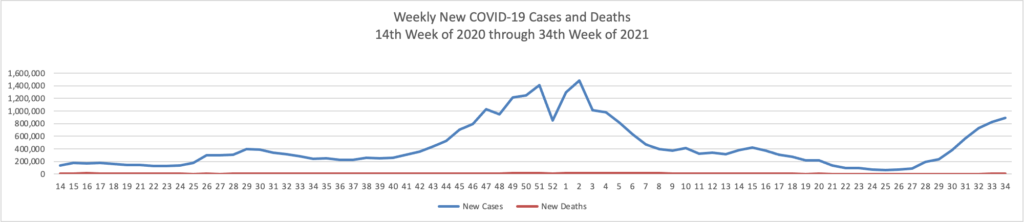
Based on the Centers for Disease Control’s COVID-19 Data Tracker website, here is the FEHBlog’s chart of new weekly COVID-19 cases and deaths over the 14th week of 2020 through 31st week of this year (beginning April 2, 2020, and ending August 4, 2021; using Thursday as the first day of the week in order to facilitate this weekly update):

and here is the CDC’s latest overall weekly hospitalization rate chart for COVID-19:

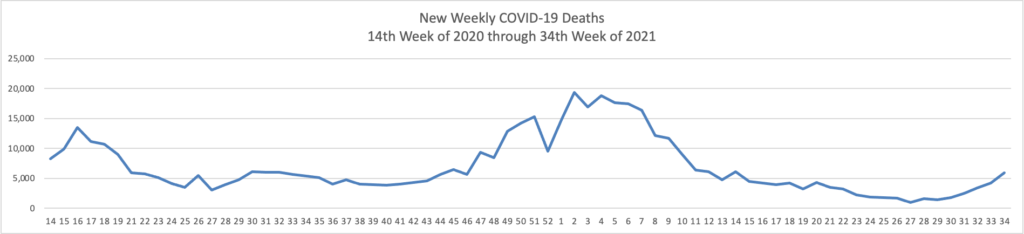
The FEHBlog has noticed that the new cases and deaths chart shows a flat line for new weekly deaths  because new cases significantly exceed new deaths. Accordingly here is a chart of new COVID-19 deaths over the period (April 2, 2020, through August 4, 2021):

Finally here is a COVID-19 vaccinations chart over the period December 17, 2020, through August 24, 2021, which also uses Thursday as the first day of the week:

While COVID-19 cases are soaring, the number of deaths remains stable thanks to the high vaccination rates for Americans over age 65. It is also encouraging that the number of administered vaccinations also is increasing.

In other Delta variant news:

  • Surprisingly, according to STAT News, “with nearly 20% of all U.S. Covid cases last week recorded in children, the American Academy of Pediatrics and 11 other organizations put out a consensus statement this week calling on providers conducting sports physicals to ask about children’s Covid vaccination status and to use it as an opportunity to administer a vaccine, if possible.”
  • Fierce Pharma tells us that “In a trial of nearly 480,000 healthcare workers in South Africa, Johnson & Johnson‘s one-dose vaccine helped prevent severe disease from the Delta variant, Bloomberg reports. The trial is the first piece of large-scale evidence that shows the shot works against the variant, the news service stated. In fact, Glenda Gray, one of the leaders of the work, said the vaccine may provide better protection against Delta than the Beta variant.”
  • MedPage Today reports that “Unvaccinated adults who were previously infected with COVID-19 were twice as likely to be reinfected as those previously infected but also fully vaccinated, researchers found. A case-control study in Kentucky found a more than two times higher risk of COVID-19 cases among unvaccinated adults with prior infection compared with their fully vaccinated counterparts (OR 2.34, 95% CI 1.58-3.47), reported Alyson Cavanaugh, PhD, of the CDC, and colleagues, writing in an early edition of the Morbidity and Mortality Weekly Report.
  • In related news Precision Vaccines tells us that “The World Health Organization (WHO) issued Influenza Update N° 399 on August 2, 2021, saying, ‘Globally, despite continued or even increased testing for influenza in some countries, influenza activity remained at lower levels than expected for this time of the year.'”

From the No Surprises Act (“NSA”) front, the FEHBlog discovered today that last Tuesday the tri-agencies and OPM submitted their second NSA interim final rule, which concerns the independent dispute resolution process, to OMB’s Office of Information and Regulatory Affairs for final review. OIRA already has two listening sessions concerning this rule making on its calendar. This indicates that the second interim final rule will be made public in early September, rather than on its October 1, 2021, due date.

From the federal employee front

  • Govexec brings us up to date on the development of the President’s mandatory vaccination program for federal employees. “The Safer Federal Workforce Task Force—a group President Biden created by executive order that is led by the White House, General Services Administration and Office of Management and Budget—confirmed in new guidance agencies would not initially ask for proof of vaccination, but they could follow up for documentation if they receive “a good faith allegation that strongly suggests” an employee lied on their attestation form. Those “certification of vaccination” forms will soon go out via email to all federal employees, with an Office of Management and Budget official saying that process will begin next week.  While agencies will initially rely on the honor system as it begins asking employees for their vaccination status, the administration made clear there could be consequences for lying.”
  • Govexec also discusses how Medicare Advantage plans are being integrated into FEHB plans. The trend started with HMOs and the APWU Health Plan picked it up for this year. Expect more plans to follow suit for 2022.  

In more news

  • Earlier this week, the FEHBlog noted a Reuters report that the Justice Department is preparing to file suit to block Optum’s acquisition of Change Healthcare. Fierce Healthcare reports today au contraire that “Change Healthcare President and CEO Neil de Crescenzo said Thursday he’s pleased with the company’s progress on regulatory review of its pending deal with Optum and is moving forward with plans for a successful integration. ‘We look forward to continuing to work diligently in coordination with UHG (UnitedHealth Group) to provide the necessary information requested by the DOJ (Department of Justice) and completing the transaction.'” Time will tell.
  • Medcity News informs us that “GoodRx struck a partnership with medication data giant Surescripts that would let healthcare providers access cash price information on medications. Arlington, Virginia-based Surescripts dominates the e-prescribing market, offering technology that routes clinicians’ electronic prescriptions directly to pharmacies. It’s owned by CVS Health and Express Scripts, and nearly 2 billion prescriptions were delivered through its software last year.”
  • mHealth Intelligence tells us that “While the pandemic prompted an unprecedented surge in telehealth to address healthcare needs, it also highlighted the gap between those who can access care and those who can’t. Now health systems, community health organizations, non-profits and philanthropic groups are moving to address those gaps with programs that use telehealth to extend care to those who can’t access or afford it. They’re fueling a surge in connected health charities and projects targeting the social determinants of health. Among those groups is Beam Up, an organization launched by telehealth company Beam Healthcare to address gaps in access to health food, quality education and healthcare services. Executives see a need for these services not only in other countries – a partnership with Tyto Care is equipping a handful of orphanages in Mexico with telemedicine technology – but in cities and rural regions across the United States.

Midweek Update

It turns out that OPM Director Kiran Ahuja held her first virtual press conference this morning.

  • The Federal Times discusses her conversation with reporters about implementing the President’s vaccination mandate and piloting an online retirement application for federal employees.
  • Federal News Network and FCW paint with broader brushes about Ms. Ahuja’s goals and challenges.

The FEHBlog noticed today that the OPM senior staff bios on its website provide a good picture of Director Ahuja’s team.

On the Delta variant front

  • Kaiser Health News makes a convincing economic agreement for receiving a COVID-19 vaccination.
  • The New York Times reports that “With a new surge of coronavirus infections ripping through much of the United States, the Food and Drug Administration has accelerated its timetable to fully approve Pfizer-BioNTech’s coronavirus vaccine, aiming to complete the process by the start of next month, people familiar with the effort said. President Biden said last week that he expected a fully approved vaccine in early fall. But the F.D.A.’s unofficial deadline is Labor Day or sooner, according to multiple people familiar with the plan. The agency said in a statement that its leaders recognized that approval might inspire more public confidence and had “taken an all-hands-on-deck approach” to the work.”

On the 2nd quarter financial reports front, Healthcare Dive reports that

Returning utilization of health services and higher-than-expected COVID-19 care costs drove CVS Health’s net income in the second quarter down 7% year over year to $2.8 billion, the healthcare behemoth reported Wednesday.

The payer business, which includes Aetna, reported a medical loss ratio of 84.1%, up significantly from 70.3% the same time last year. The hike in MLR, which was higher than both internal and analyst forecasts, is especially acute compared to the second quarter of 2020, which saw a severe dip in utilization as COVID-19 lockdowns and elective procedure restrictions kicked into gear.

However, CVS beat Wall Street expectations for both earnings and revenue, with topline of $72.6 billion, up 11% year over year, driven mostly by growth in government products. The Woonsocket, Rhode Island-based company raised its full-year guidance following the results.

In legal news, Business Insurance informs us that “The U.S. Department of Justice is weighing a possible lawsuit to block UnitedHealth Group’s (UNH.N) nearly $8 billion deal to acquire health care analytics and technology vendor Change Healthcare (CHNG.O), the Information reported on Tuesday.”

From the federal employee benefits front, Reg Jones tells us in FedWeek that “One valuable feature of the Federal Long Term Care Insurance Program is its more generous rules regarding coverage in retirement, as compared with the FEHB health insurance and FEGLI life insurance programs.” Of course, the greater flexibility may be explained by the facts that FEHB and FEGLI coverage are government funded while FLTCIP is fully member funded. Still it’s useful information.

In other mid-week news

  • The Center for Medicare and Medicaid Innovation released its 2020 report to Congress today.
  • STAT News tells us that “For all the explosive controversy over the approval of the first treatment for Alzheimer’s disease in nearly 20 years, hardly any patients have actually gotten it yet. The drug’s eye-popping, $56,000 annual price and questionable benefit to patients have been a shock to the bureaucracy that makes the health care system run — and that’s having a clear effect on uptake. Some analysts estimated last month that fewer than 100 patients were dosed in the first weeks after the therapy was approved, though availability will likely ramp up over the coming months.”
  • Health Payer Intelligence discusses “five ways payers have tackled mental, hehavioral Healthcare in 2021. As the coronavirus pandemic becomes more manageable and vaccination rates increase nationwide, payers are channeling funds into mental and behavioral healthcare programs.” That’s a sound focus of attention.

Tuesday’s Tidbits

Photo by Patrick Fore on Unsplash

From the Delta Variant front —

Federal News Network reports that

The White House is strongly considering requiring federal employees to show proof they’ve been vaccinated against the coronavirus or otherwise submit to regular testing and wear a mask — a potentially major shift in policy that reflects growing concerns about the spread of the more infectious delta variant.https://www.cdc.gov/coronavirus/2019-ncov/vaccines/fully-vaccinated.html

The possible vaccine mandate for federal employees — regardless of the rate of transmission in their area — is one option under consideration by the Biden administration, according to a person familiar with the plans who spoke on condition of anonymity to discuss deliberations that have yet to be made public. The White House is expected to announce its final decision after completing a policy review this week.

Govexec adds that “Federal law does not prohibit public and private entities from mandating coronavirus vaccines, even though those vaccines do not yet have full authorization from the Food and Drug Administration, according to a legal opinion from the Justice Department posted on Monday.”

Other press reports indicate that the President may announce his decision this Thursday, and in the FEHBlog’s view if he approves this action, many private sector employers in and outside of healthcare will follow suit.

The Centers for Disease Control recommended today that “To maximize protection from the Delta variant and prevent possibly spreading it to others, [vaccinated Americans should] wear a mask indoors in public if you are in an area of substantial or high transmission.” It turns out the Washington DC is an area of substantial transmission. Bloomberg adds that “It’s not just Arkansas and Louisiana, where the delta variant has been raging, that are affected by the Centers for Disease Control and Prevention’s new recommendation for vaccinated people to mask indoors in some parts of the country. Most major U.S. urban areas also fall under the scope of the advisory.”

In today’s Tidbits —

  • Beckers Hospital Review informs us that U.S. News and World Report has issued its annual U.S. hospital rankings with the Mayo Clinic claiming the top spot “for the sixth consecutive year.” Becker’s also comments on the new health equity section found in those rankings.
  • The Congressional Research Service has released a report on the No Surprises Act which it describes as an “Overview of Federal Consumer Protections and Payment for Out-of-Network Services.”
  • The HHS Agency for Healthcare Research and Quality has issued a report providing and “Overview of Clinical Conditions With Frequent and Costly Hospital Readmissions by Payer, 2018.”
  • Becker’s Payer Issues discusses a Forbes interview with Liz Fowler, who is director of the Center for Medicare and Medicaid Innovation at HHS. “Here are four conclusions CMMI has drawn over a decade of experimentation, according to Forbes: (1) Voluntary initiatives narrowed participation as only providers who saw financial gain opted in; (2) Separate alternative payment models and multiple bundles for specialty groups leads to fragmentation, taking away from value-based care. (3) Initiatives like per-member per-month payments only temporarily work, but don’t sustain new practices once phased out, and (4) In benchmarking, models need to leverage retrospective benchmarks or prospective ones with guardrails to ensure accuracy and feasibility of approaches.”
  • Medcity News offers an interesting account of how certain hospital got the pricing transparency job done correctly.
  • Fierce Health tells us that Blue Cross licensee “Anthem is investing nearly $90 million in affordable housing across Indiana. The $87.9 million investment will fund 1,139 affordable apartment units, townhomes and single-family homes across 11 communities in the state, Anthem announced on Saturday. The initiative was unveiled at a ribbon-cutting for a recently completed complex in Culver, a six-building, 48-unit complex.” Well done.
  • Healthcare Dive reports that health insurer Centene reported a $353 million dollar loss for the second quarter of 2021 as members returned to the doctors’ offices. “There was a “broad return to the doctor’s office” in March and April, CFO Drew Asher said, but Centene had expected the slight downtick in May utilization to persist. That did not happen. Instead, utilization increased again in June.”
  • 401k Specialist informs us that the President has nominated New York City attorney Lisa M. Gomez to be Assistant Secretary of Labor for Employee Benefits. “The Senate-confirmed position oversees the Labor Department’s Employee Benefits Security Administration (EBSA), tasked with regulation and enforcement of private-sector retirement and health plans.” Ms. Gomez is also an FEHB lawyer and an esteemed colleague of the FEHBlog. She deserves a swift Senate confirmation for this important post.

Midweek update

At the top of FEHB news today is the release of the Congressional Budget Office’s report on the Postal Service Health Benefit (“PSHB”) Program provisions of the Postal Reform bill.

CBO expects that PSHB premiums would be lower than those for FEHB plans because Medicare would cover most of the health care costs for Medicare-eligible enrollees in PSHB plans. CBO estimates that USPS spending on health insurance premiums for active workers and their dependents would decrease by roughly $2.5 billion over the 2021-2031 period; those amounts are recorded as off-budget. CBO also estimates that federal spending for health insurance premiums for USPS annuitants and their dependents would decrease by $2.5 billion over that same period; those amounts are recorded as on-budget. * * *

FEHB premiums would rise slightly after those enrollees moved to the PSHB program, CBO expects. Over time, as USPS workers and annuitants enroll in a PSHB plan rather than in an FEHB plan, CBO expects that FEHB premiums would decrease because non-USPS enrollees in FEHB would have lower expected health care costs, on average, than enrollees joining the PSHB program. The federal government’s share of payments for health insurance premiums for non-USPS annuitants is recorded as on-budget direct spending. CBO estimates that spending for such annuitants would decrease by $61 million over the 2021-2031 period.

CBO also explains that the PSHB savings results from a cost shift to Medicare. Because FEHB and PSHB premiums are calculated for a combined risk pool of plan members, the Medicare savings will redound to the benefit of the Postal Service and all of the PSHB members. The lower premiums will encourage enrollment in the PSHB.

If OPM simply allowed all FEHB plans to integrate their prescription drug benefits with Medicare Part D (known as Part D EGWPs), then FEHB plan members and federal and postal employers, all of whom pay Medicare taxes, will receive lower premiums, thereby avoiding the unnecessary balkanization of the FEHB. The decision is OPM’s to make as Congress in 2003 expressly permitted FEHB plans to adopt Part D EGWPs.

In related new, CalPERS Board of Administration, which manages the the California state employees health benefit program, “approved health plan premiums for calendar year 2022, at an overall premium increase of 4.86%.” This suggests that we are in store for a sizable FEHB premium increase for 2022.

As the FEHBlog mentioned yesterday, he has been attending the NCQA’s virtual Digital Quality Summit which has been focusing on health equity, a worthy goal. During last year’s virtual DQS, the FEHBlog came up with the idea of adding the Census Bureau’s racial and ethnic identifiers to the ICD-10 code set which would allow health care providers to readily share that important data with health plans. Today the FEHBlog pushed the idea forward with the patient centered track. Time will tell.

Similarly, Govexec informs us that “Top diversity officials at four major agencies said on Tuesday that obtaining and using better data will be crucial to advancing diversity, equity, inclusion and accessibility in the federal workforce.”

In sad news, the Washington Post reports that

Deaths from drug overdoses soared to more than 93,000 last year, a staggering record that reflects the coronavirus pandemic’s toll on efforts to quell the crisis and the continued spread of the synthetic opioid fentanyl in the illegal narcotic supply, the government reported Wednesday. The death toll jumped by more than 21,000, or nearly 30 percent, from 2019, according to provisional data released by the National Center for Health Statistics, eclipsing the record set that year.

The Post adds

There are some signs that the Biden administration and Congress are preparing to renew efforts to address what was the nation’s most serious public health crisis before the pandemic. President Biden on Tuesday nominated former West Virginia public health official Rahul Gupta to be his drug czar. Gupta has cited the shift from in-person care during the pandemic as one of the contributors to increased addiction-related public health problems.

In prescription drug news

  • The Drug Channels blog discusses 2020 PBM drug trend reports. Top line: “[D]rug spending continues to grow more slowly than every other part of the U.S. healthcare system. Spending growth at CVS and Express Scripts was somewhat higher in 2020 compared to the 2019 figures, due primarily to faster utilization growth.”
  • The Boston Globe reports that “At least half-a-dozen private health insurers in some of the nation’s largest states are balking at covering Biogen’s controversial drug for Alzheimer’s disease, saying it is an experimental and unproven treatment despite being approved by the federal government one month ago. Six affiliates of Blue Cross and Blue Shield in Florida, New York, Michigan, North Carolina, and Pennsylvania indicated in policies posted online they will not cover the Cambridge biotech’s drug, Aduhelm, because they consider it ‘investigational’ or ‘experimental’ or because “a clinical benefit has not been established.” Aduhelm, which is priced at $56,000 a year, is intended to slow cognitive decline in patients with early Alzheimer’s symptoms, regardless of their age. * * * James Chambers, an associate professor of medicine at the Tufts Medical Center Institute for Clinical Research and Health Policy Studies, said that insurers have occasionally opted not to cover expensive specialty medicines for rare diseases, but that he’s never seen firms refuse to pay for an approved drug that could be prescribed to millions of people. ‘This is unprecedented,’ said Chambers, who has spent seven years studying how private insurers decide which drugs to cover. ‘Maybe it’s not entirely surprising given the controversy surrounding the drug’s approval, but it’s not something I’ve seen before.’” The FEHBlog expects that this is a prudent shot across the manufacturer’s bow. The FEHBlog is amazed that Biogen has not yet backed off on the $56,000 price annually per patient. In a STAT News interview, the acting FDA Commissioner Janet Woodcock remarked “The accelerated approval was based on very solid grounds,” she said. “I do believe that will play out over time, as people see that was a very appropriate use of that authority and the right thing to do for patients.”
  • Bloomberg reports on a recent Senate hearing on drug prices. Topics included patent reform and pay for delay deals.

In other news

  • The federal government’s principal healthcare fraud and abuse report for the last federal fiscal year was released. “During Fiscal Year (FY) 2020, the Federal Government won or negotiated more than $1.8 billion in health care fraud judgments and settlements,2 in addition to other health care administrative impositions. Because of these efforts, as well as those of preceding years, almost $3.1 billion was returned to the Federal Government or paid to private persons in FY 2020. * * * In FY 2020, the Department of Justice (DOJ) opened 1,148 new criminal health care fraud investigations. Federal prosecutors filed criminal charges in 412 cases involving 679 defendants. A total of 440 defendants were convicted of health care fraud related crimes during the year. Also, in FY 2020, DOJ opened 1,079 new civil health care fraud investigations and had 1,498 civil health care fraud matters pending at the end of the fiscal year. Federal Bureau of Investigation (FBI) investigative efforts resulted in over 407 operational disruptions of criminal fraud organizations and the dismantlement of the criminal hierarchy of more than 101 health care fraud criminal enterprises.”
  • Becker’s Hospital Review tells us about the telehealth provisions of the CMS proposed 2022 Medicare Part B physician payment rule which would preserve the status quo through 2023.

Weekend update

The Senate has left town for a two week long State work break while the House of Representatives will continue Committee business and floor voting through Thursday July 1. The House Appropriations Committee will mark up that fiscal year 2022 financial services and general government appropriations bill on Tuesday morning, June 29. The Federal Times reports on that process here.

The U.S. Supreme Court is expected to wrap up its October 2020 term this week.

Last Friday, President Biden issued an executive order on “Diversity, Equity, Inclusion, and Accessibility in the Federal Workforce.” Here’s a link to the accompanying fact sheet. The new OPM Director will play a key role in implementing this executive order which makes one specific mention of the FEHB Program:

Sec. 11 (c) To ensure that LGBTQ+ employees (including their beneficiaries and their eligible dependents), as well as LGBTQ+ beneficiaries and LGBTQ+ eligible dependents of all Federal employees, have equitable access to healthcare and health insurance coverage:
(i) the Director of OPM shall take actions to promote equitable healthcare coverage and services for enrolled LGBTQ+ employees (including their beneficiaries and their eligible dependents), LGBTQ+ beneficiaries, and LGBTQ+ eligible dependents, including coverage of comprehensive gender-affirming care, through the Federal Employees Health Benefits Program; * * *

The 2022 OPM technical guidance for benefit and rate proposals clearly anticipated this directive.

On the COVID-19 front

  • The Hill informs us that public health experts are wondering when the Food and Drug Administration will give full approval to the mRNA COVID-19 vaccines, given the fact that a sizable cadre of unvaccinated folks have expressed concern about emergency use authorization status of those vaccine.
  • The Wall Street Journal reports that “In the coronavirus pandemic, a wave of mental-health crises has grown into a tsunami, flooding an already taxed system of care. As the country appears to be emerging from the worst of the Covid-19 crisis, emergency departments say they are overwhelmed by patients who deferred or couldn’t access outpatient treatment, or whose symptoms intensified or went undiagnosed during the lockdowns.”

On the new Alzheimer’s drug / Aduhelm front, STAT News offers

  • a calculator to estimate the cost of Aduhelm to Medicare depending upon utilization. “Estimates of how many seniors on Medicare will actually take Aduhelm, which has a list price of $56,000 [annually], vary wildly. Some experts have guessed at relatively low patient interest, around 500,000 people. Biogen, the company behind the drug, has put its target population far higher, around 1 million to 2 million people. But technically, since the FDA approved the drug for every Alzheimer’s patient, not just those with early-onset disease, the number could skyrocket toward 5.8 million, the number of adults over 65 with Alzheimer’s.”
  • a report that “The top House Democrats on two powerful committees on Friday announced an investigation into the approval and pricing of Biogen’s controversial Alzheimer’s drug, Aduhelm. Both Biogen and the Food and Drug Administration will be under the microscope, House Committee on Oversight and Reform Chair Carolyn Maloney (D-N.Y.) and Energy and Commerce Chair Frank Pallone (D-N.J.) said. “We have serious concerns about the steep price of Biogen’s new Alzheimer’s drug Aduhelm and the process that led to its approval despite questions about the drug’s clinical benefit,” the chairs said in a joint statement.

Welcome Director Ahuja

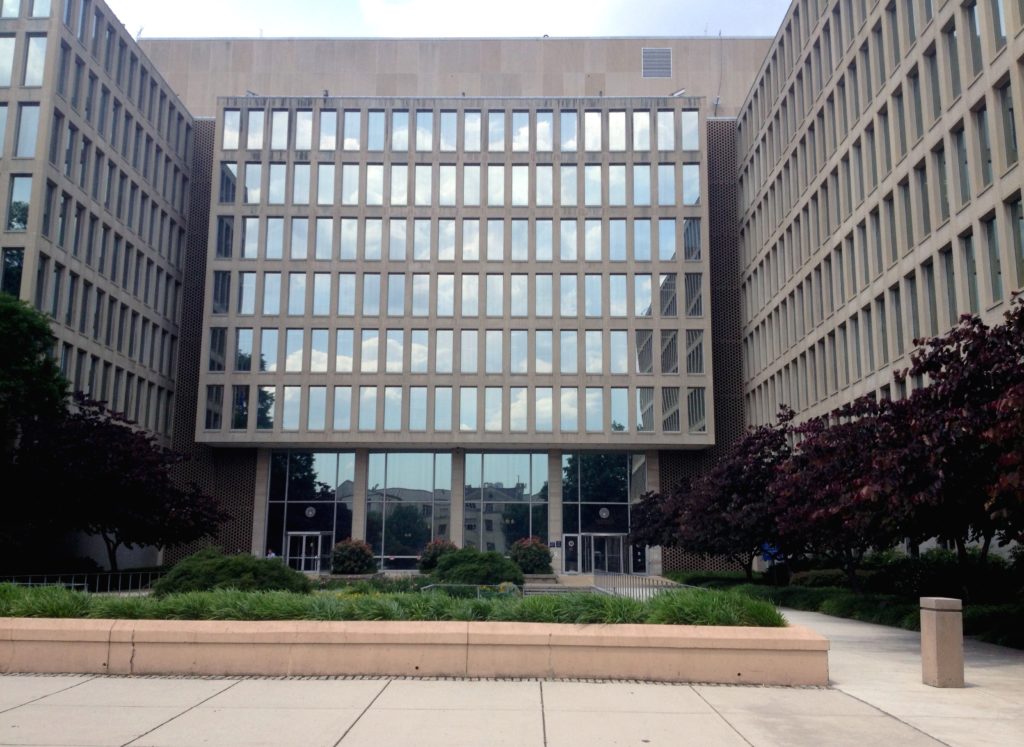
OPM Headquarters a/k/a the Theodore Roosevelt Building

OPM’s new Director Kiran Ahuja was sworn in today. Here is a link to the OPM press release on the festivities.

Health Payer Intelligence informs us that “The Alliance of Community Health Plans (ACHP) has proposed a number of recommendations to improve the Federal Employees Health Benefits (FEHB) program’s plan comparison tool in order to boost quality and enrollment, according to a recent issue brief.” ACHP’s action is timely because OPM has been focusing attention on the plan comparison tool in consultation with interested carriers and presumably other stakeholders.

According to a Committee press release, “The House Appropriations Subcommittee on Financial Services and General Government today approved by voice vote its fiscal year 2022 bill. [This is the bill that funds OPM and the FEHB.] For fiscal year 2022, the draft bill includes $29.1 billion in funding, an increase of $4.8 billion over 2021.” 

Sen. Chuck Grassley (R Iowa) announced

Sen. Chuck Grassley (R-Iowa) today joined Senate Majority Whip Dick Durbin (D-Ill.) Sen. Angus King (I-Maine) to introduce the Drug-price Transparency for Competition (DTC) Act, a bill that would require price disclosures on advertisements for prescription drugs, in order to empower patients and reduce spending on medications. Last week, the Government Accountability Office (GAO) released a report – requested by Durbin and Grassley – which found direct-to-consumer (DTC) advertisements of prescription drugs contribute to an enormous amount of Medicare costs. Specifically, the DTC Act would require DTC advertisements for prescription drugs and biological products to include a disclosure of the list price, so that patients can make informed choices when inundated with drug commercials. 

Speaking of drug prices, let’s take a look at recent news on the new Alzheimer’s Disease drug, Aduhelm.

  • Yesterday, Biogen issued a bulleted defense of its pricing, which is $56,000 annually per patient. STAT News points out “For families and physicians grappling with the historic approval this month of the controversial Alzheimer’s drug Aduhelm, there’s no shortage of unanswered questions. But a critical one has largely been overlooked: Once patients start taking the medication, how will they know when it’s time to stop? “We don’t have any guidance on how long to give this medication to someone who doesn’t experience adverse events,” said William Mantyh, a behavioral neurologist at M Health Fairview University of Minnesota Medical Center. “With a drug like aducanumab where the upfront demonstrated efficacy is up in the air, it really makes it hard for a clinician to figure out when to stop the drug based on a patient’s clinical symptoms.”
  • Axios interviewed AHIP CEO Matt Eyles on Aduhelm pricing. In response to an Axios question on acceptable pricing, Mr. Eyles responded that “The best information we have is what [the Institute for Clinical and Economic Review] puts out.” ICER stated on June 7 that “At the ICER public meeting on aducanumab on July 15, 2021, we will tackle important questions [about Aduhem] with all stakeholders at the table. We will also address the question of fair pricing for a drug that now seems likely to become one of the top selling drugs in the history of the United States. ICER’s preliminary draft report calculated a fair annual price to lie between $2,500-$8,300. Even in our most optimistic cost-effectiveness scenario — which ignores the contradictions within the two pivotal trials and presumes that only the positive trial captures the true benefits of treatment — aducanumab’s health gains would support an annual price between $11,100-$23,100. The list price of $56,000 per year announced today by the drug maker far exceeds even this optimistic scenario. Our report notes that only a hypothetical drug that halts dementia entirely would merit this pricing level. The evidence on aducanumab suggests that, at best, the drug is not nearly this effective. Nonetheless, even at the lower range of the estimated number of eligible patients, at this price the drug maker would stand to receive well in excess of $50 billion per year even while waiting for evidence to confirm that patients receive actual benefits from treatment.
  • The Wall Street Journal reports that “Eli Lilly & Co. plans to submit its Alzheimer’s drug for market clearance under an expedited review this year, in a sign that regulators are encouraging development of treatments for the disease after a recent approval. Lilly said Thursday that the U.S. Food and Drug Administration had designated the company’s experimental Alzheimer’s drug, called donanemab, for the agency’s accelerated approval process. The FDA decision comes after the agency cleared Biogen Inc.’s Aduhelm, the first Alzheimer’s therapy to receive approval in nearly two decades but one that has drawn criticism from doctors and researchers skeptical the drug works. * * * Donanemab performed better in a trial than Biogen’s drug did in its trials, and health insurers and patients would probably prefer it over Aduhelm, J.P. Morgan analyst Chris Schott said in a note to investors.“Donanemab’s approval would be a major blow to Aduhelm’s commercial prospects,” Brian Skorney, a Robert W. Baird & Co. analyst, said in a research note. “We think it would make zero sense for FDA to approve Aduhelm, but not donanemab.” Ah, competition.

In other drug pricing news, Fierce Healthcare tells us that

Cigna is launching a new program that aims to incentivize eligible members to switch to biosimilar drugs.

Under the new Shared Savings Program, members will be offered a one-time $500 debit card for healthcare services or medications if they make the decision to switch to a biosimilar, according to an announcement provided first to Fierce Healthcare.

The program will be made available first to [approximately 7,000] eligible patients taking Remicade, a brand-name biologic that treats a number of inflammatory conditions such as Crohn’s disease and psoriasis. Remicade infusion costs can vary, but Cigna claims data suggest the average regimen costs $30,000 per year, with expenses growing depending on the site of administration.

Two biosimilars for the drug, Avsola and Inflectra, will be moved to the insurer’s preferred tier in July. Eligible customers and their providers will be notified by Cigna about their eligibility to participate in the Shared Savings Program in the coming weeks, the insurer said.

In COVID-19 news —

  • Fierce Biotech reports that “The FDA green-lit its first antibody test that doesn’t use blood samples to check for evidence of a COVID-19 infection and instead relies on simple, painless mouth swabs. Developed by Diabetomics, the rapid, lateral-flow diagnostic received an agency emergency authorization allowing it to be used at the point of care for adults and children. Designed to deliver a result within 15 minutes, the CovAb test also does not require any additional hardware or instruments. When administered at least 15 days after the onset of symptoms, when the body’s antibody response reaches higher levels, the test demonstrated a false-negative rate of less than 3% and a false-positive rate of nearly 1%, according to the company.” 
  • The New York Times reports that the Baltimore Maryland factory that had been producing the single dose Johnson & Johnson COVID-19 vaccine remains shuttered which Congress investigates its owner Emergent Biosolutions.
  • The NIH Director’s blog informs us about new NIH research on how Immunity generated from COVID-19 vaccines differs from an Infection. “The good news so far is that, unlike the situation for the common cold, we have now developed multiple COVID-19 vaccines. The evidence continues to suggest that acquired immunity from vaccines still offers substantial protection against the new variants now circulating around the globe. The hope is that acquired immunity from the vaccines will indeed produce long-lasting protection against SARS-CoV-2 and bring an end to the pandemic. These new findings point encouragingly in that direction. They also serve as an important reminder to roll up your sleeve for the vaccine if you haven’t already done so, whether or not you’ve had COVID-19. Our best hope of winning this contest with the virus is to get as many people immunized now as possible. That will save lives, and reduce the likelihood of even more variants appearing that might evade protection from the current vaccines.” Amen to that.

In a bit of Thursday miscellany

  • Patient Engagement reports that “Optum is bringing healthcare right into Utah’s backyard, rolling out a new Optum Mobile Health Clinic to improve care access for individuals in Optum Care Network Utah. The mobile health clinic, a 45-foot-long vehicle with two private exam rooms, a waiting room, and an imaging lab, is set to address the leading care access barriers experienced by Utahns.” Well done.
  • A friend of the FEHBlog called his attention to the NIH report on an engaging study suggesting scientists may need to rethink which genes control aging.

Thursday Miscellany

U.S. Supreme Court building, Wash. DC

At long last, the U.S. Supreme Court issued its opinion today in the third case reaching the Court on the issue of the constitutionality of the Affordable Care Act (“ACA”). In an opinion written by Justice Breyer and joined by the Chief Justice and four other Justices, the Court ruled in short as follows:

As originally enacted in 2010, the Patient Protection and Affordable Care Act required most Americans to obtain minimum essential health insurance coverage. The Act also imposed a monetary penalty, scaled according to in- come, upon individuals who failed to do so. In 2017, Con- gress effectively nullified the penalty by setting its amount at $0. See Tax Cuts and Jobs Act of 2017, Pub. L. 115–97, §11081, 131 Stat. 2092 (codified in 26 U. S. C. §5000A(c)).

Texas and 17 other States brought this lawsuit against the United States and federal officials. They were later joined by two individuals (Neill Hurley and John Nantz). The plaintiffs claim that without the penalty the Act’s minimum essential coverage requirement is unconstitutional. Specifically, they say neither the Commerce Clause nor the  Tax Clause (nor any other enumerated power) grants Congress the power to enact it. See U. S. Const., Art. I, §8. They also argue that the minimum essential coverage re- quirement is not severable from the rest of the Act. Hence, they believe the Act as a whole is invalid. * * *

[W]e conclude that the plaintiffs in this suit failed to show a concrete, particularized injury fairly traceable to the defendants’ conduct in enforcing the specific statutory provision they attack as unconstitutional. They have failed to show that they have standing to attack as unconstitutional the Act’s minimum essential coverage provision. Therefore, we reverse the Fifth Circuit’s judgment in respect to standing, vacate the judgment, and remand the case with instructions to dismiss.

Justice Thomas filed a concurring opinion, and Justice Alito, joined by Justice Gorsuch, filed a dissenting opinion. The FEHBlog confidently can state that he predicted this favorable outcome for the ACA. It always has been clear to the FEHBlog that the Supreme Court took the case to kill the lawsuit, not the law.

The Senate will take up Kiran Ahuja’s nomination to be OPM Director when it resumes floor business on Monday June 21. If Ms. Ahuja’s nomination is not confirmed next week, the Senate will be away from our Nation’s capital for two weeks for the Independence Day holiday.

Reg Jones’ latest column in FedWeek concerns federal employee survivor benefits in the case of a post-retirement marriage.

In federal employment news, Federal News Network reports that President Joe Biden signed the Juneteenth National Independence Day Act this afternoon, establishing June 19 as a federal holiday. Most federal employees will have tomorrow, June 18 off for observance as June 19 falls on a Saturday this year, the Office of Personnel Management said. * * * Nearly every state already recognizes Juneteenth as a holiday, but it now becomes the first federal holiday created since Martin Luther King Jr. Day was established in 1983.”

In COVID-19 news and this should come as no surprise, Medscape informs us that “More than half of unvaccinated Americans would prefer to get a COVID-19 vaccination at their doctors’ office, according to the results of a new national survey. * * * The preference to be vaccinated in a medical office was three to five times higher among unvaccinated Americans than were other strategies such as vaccinations at retail pharmacies or drug stores, community health centers, public health clinics, drive-up clinics, and large public vaccination sites.” As of today, 65% of Americans over age 18, and 87% of Americans over age 65, have had at least one dose of a COVID-19 vaccination.

In a burst of closing miscellany —

  • Kaiser Health News tells us that ” The pandemic-caused recession and a federal requirement that states keep Medicaid beneficiaries enrolled until the national emergency ends swelled the pool of people in the program by more than 9 million over the past year, according to a report released Thursday. The latest figures show Medicaid enrollment grew from 71.3 million in February 2020, when the pandemic was beginning in the U.S., to 80.5 million in January, according to a KFF analysis of federal data.”
  • Health Payer Intelligence informs us that “Medicare Advantage plans may better address racial care disparities than fee-for-service Medicare, according to the second in a series of reports that ATI Advisory has prepared for Better Medicare Alliance (BMA) in 2021. “With over 26.5 million beneficiaries enrolled in Medicare Advantage today, this report shows that minority beneficiaries are a driving force behind these enrollment gains; turning to Medicare Advantage to meet their health and social needs. When policymakers stand up for Medicare Advantage, they stand up for these seniors, too,” Allyson Y. Schwartz, president and chief executive officer of the Better Medicare Alliance, said in the press release. Around half of all Black Medicare beneficiaries and 53 percent of Latinx Medicare beneficiaries are in a Medicare Advantage plan, the report found. In contrast, only 34 percent of White beneficiaries and 31 percent of those who identified as “Other” races were enrolled in a Medicare Advantage plan.”
  • STAT News reports that “ovarian cancer, which kills about 15,000 Americans every year, has historically been one of the thornier cancers to treat. Only in the last few years has a new class of potent drugs, called PARP inhibitors, started to change that. But even with these promising new treatments, too often, tenacious tumors come roaring back. So there’s a need for yet newer drugs that can overcome any resistance the cancer evolves. According to research published Thursday, scientists might have found one. And it’s not actually a new drug at all. In fact, it’s been sitting, retired, in a drug library for decades. “While evaluating mechanisms of PARP inhibitor resistance over the last few years we came across this drug, novobiocin, which curiously enough, is an antibiotic,” said Alan D’Andrea, director of the Susan F. Smith Center for Women’s Cancers at the Dana-Farber Cancer Institute and co-author of the new study.” Encouraging.
  • “The U.S. Food and Drug Administration today approved a nasal antihistamine for nonprescription use through a process called a partial prescription to nonprescription switch. The FDA approved Astepro (azelastine hydrochloride nasal spray, 0.15%) for seasonal and perennial allergic rhinitis—commonly known as allergies—for adults and children six years of age and older.  ‘Seasonal and perennial allergies affect millions of Americans every year, causing them to experience symptoms of nasal congestion, runny nose, sneezing and more,” said Theresa M. Michele, M.D., director of the office of nonprescription drugs in the FDA’s Center for Drug Evaluation and Research. “Today’s approval provides individuals an option for a safe and effective nasal antihistamine without requiring the assistance of a healthcare provider.’”

Tuesday’s Tidbits

Photo by Patrick Fore on Unsplash

The Senate Press Gallery informs us from today’s proceedings

12:22 p.m. Majority Leader Schumer announced that due to Senators Booker and Peters having family illnesses the cloture vote on the Ahuja nomination [to be OPM director] is delayed; and moved the Senate to a period of morning business.

It looks like the Majority Leader is concerned about a close vote. The FEHBlog will continue tracking and best wishes to the Booker and Peters families for speedy recoveries.

Federal Times reports that “Federal employees can enroll, re-enroll or change their flexible spending account coverage during the month of June, as the Office of Personnel Management announced June 14 that it authorized a special enrollment period as part of provisions outlined in the Consolidated Appropriations Act and the American Rescue Plan.”

The Federal Times adds

Because the Consolidated Appropriations Act authorized unlimited carryover of FSA funds for 2020 and 2021, feds that didn’t re-enroll in an FSA plan for 2021 but had remaining money left in their accounts in 2020 may wish to use the special enrollment period to reopen their accounts and gain access to those carried over funds.

The new flexibilities for the 2020 and 2021 plan years also allow enrollees with dependents who would have normally aged out of the program to continue to use those funds until the child is 14, rather than 13, and the government approved hand sanitizer and masks as FSA medical expenses.

In the tidbits department

  • STAT News informs us that “Amazon has made its FDA-cleared Covid-19 test available to consumers online, alongside a consumer diagnostics website where people can view their results. The consumer diagnostics website, AmazonDx.com, was previously only available to Amazon employees. As of Tuesday, however, it appears any customer can sign into the site using the same login information they use to access the shopping portion of the tech giant’s website.  Amazon received FDA authorization for the at-home test kit in May.”
  • Fierce Healthcare tells us that “A JAMA Internal Medicine study is the latest in a string of analyses revealing hospitals’ frequent noncompliance with a new federal mandate requiring them to post prices for medical services. Published Monday, the study found that, as of early March, 83 out of 100 randomly sampled hospitals were noncompliant with at least one of the major requirements of a new rule from the Centers for Medicare & Medicaid Services (CMS). This decreased slightly to 75 in a parallel review of the country’s 100 highest-revenue hospitals.
  • Healthcare Dive reports that “Humana is acquiring home-based services provider One Homecare Solutions from a private equity firm to beef up its at-home care offerings, as a growing number of payers foray into direct medical delivery. The acquisition of Miramar, Florida-based One Homecare, which does business as Onehome, follows Humana’s decision to snap up home health giant Kindred at Home for $5.7 billion and is meant to boost the insurer’s value-based home health strategy. Financial terms of the deal, expected to close in the second quarter of this year, were not disclosed.”
  • Healthcare Dive also reports that About half of physicians and even more patients said the U.S. healthcare system discriminates against people a great deal, a good amount or somewhat, according to a survey out Tuesday from the nonpartisan research group NORC at the University of Chicago. Patients’ trust in their primary doctor rises with age and income, though 12% of respondents said they have been discriminated against by a healthcare facility, and Black patients were twice as likely to report being discriminated against than White patients, the report found. But 81% of physicians gave their employers either an A or B grade for their efforts to address health equity, and said they’re optimistic their system will improve diversity and equity in the next five years.
  • Health Payer Intelligence discusses “six expectations employers have for provider care coordination Employers are looking for greater price transparency, reduced overtreatment, and improved patient experience, and overall better care coordination from their provider partners.”
  • The Wall Street Journal reports that “A national charity will for the first time buy medical debt, totaling $278 million, directly from hospitals, a push to speed financial relief to patients, many of whom shouldn’t have been billed at all under the hospitals’ financial-aid policies. RIP Medical Debt, which uses donations to wipe out unpaid medical bills, has reached a deal with nonprofit Ballad Health, a dominant hospital system in Tennessee and Virginia, to buy debt owed by 82,000 low-income patients. Many likely qualified for free care under Ballad’s policy but didn’t get it, executives at Ballad involved in the agreement said. The patients lacked applications, they said. RIP Medical Debt will abolish the total amount and is expected to notify households of the debt relief this month. Some bills are 10 years old.” Bravo.

In the OPM rule making agenda department, here are three more found in last Friday’s semi-annual regulatory agenda.

  • OPM is engaged in joint rule making with HHS to implement a provision of Consolidated Appropriations Act Division BB that Congress did not apply to the FEHB. “This joint rule with HHS would implement the prescription drug reporting requirements that apply to group health plans and health insurance issuers offering coverage in the group and individual markets under section 204 of the No Surprises Act.” OPM already has created aggregated pharmacy data reporting requirements for FEHB carriers.
  • OPM is engaged in joint rule making with HHS on the provider non-discrimination provision of the ACA Section 2706. While this law does apply to the FEHB, it’s unusual that OPM is teaming up with HHS to craft the rule.
  • OPM is engaged in a joint rule making with HHS on reporting requirements related to air ambulance and agent and broker services and HHS enforcement provisions under Division BB of the CAA 2021. OPM does need to create rules on air ambulance reporting related to the No Surprises Act.

Midweek Update

Mark Gongloff in Bloomberg opinion lays out the global COVID-19 situation quite clearly

Former FDA chief Scott Gottlieb, a sensible observer throughout this disaster, tells Michael R. Strain he sees Covid-19 becoming like the flu, both in its seasonality and fatality rate. He figures Americans will be fully back to work and school by the fall and then face a new Covid wave in the winter. But with widespread vaccinations, it shouldn’t be worse than a bad flu season. Sounds kind of nice. 

But in the developing world, vaccinations are lagging badly, giving the disease too many chances to evolve. The scariness of India’s “delta” variant may be overhyped, but it seems both more transmissible and severe than others, writes Sam Fazeli. Vaccines are effective against it. But it could make Covid more tiger-like again for unvaccinated Americans and Brits, including young people.

So developed countries must get far more serious about vaccinating the rest of the world to stem further deaths, mutations and economic damage. President Joe Biden promising to give the world 500 million Pfizer doses is a great start, but it’s only a start. 

Former U.K. Prime Minister Gordon Brown writes this Friday’s G-7 meeting is a chance for countries to commit to more such concrete action and spending. The world’s biggest countries must pony up to the best of their ability, as they have with other emergencies. 

Also from the COVID-19 front

  • The Centers for Medicare and Medicaid Services announced today that

While many Medicare beneficiaries can receive a COVID-19 vaccine at a retail pharmacy, their physician’s office, or a mass vaccination site, some beneficiaries have great difficulty leaving their homes or face a taxing effort getting around their communities easily to access vaccination in these settings. To better serve this group, Medicare is incentivizing providers and will pay an additional $35 per dose for COVID-19 vaccine administration in a beneficiary’s home, increasing the total payment amount for at-home vaccination from approximately $40 to approximately $75 per vaccine dose. For a two-dose vaccine, this results in a total payment of approximately $150 for the administration of both doses, or approximately $70 more than the current rate.

  • The Department of Health and Human Services announced that

The U.S. government will procure approximately 1.7 million courses of an investigational antiviral treatment, molnupiravir (MK-4482), for COVID-19 from Merck, pending emergency use authorization (EUA) or approval from the U.S. Food and Drug Administration (FDA).

Molnupiravir (MK-4482) is designed to induce viral genome copying errors to prevent the virus from replicating in the human body, and evidence to date from clinical trials in patients with COVID-19 suggests that molnupiravir may reduce replication of the SAR-CoV-2 virus.

This treatment is being evaluated in an ongoing Phase 3 trial for its potential to reduce the risk of hospitalization or death in non-hospitalized patients who have symptoms for five days or less and are at high risk for severe illness. The trial plans to enroll a total of 1,850 patients globally with final data expected in the fall of 2021.

  • FedSmith offers more details on Blue Cross Federal Employee Program (FEP)’s announcement that it will offer a $50 wellness incentive to FEP members over age 18 who are fully vaccinated against COVID-19. Notably, “FedSmith has been advised that eligible members who have already been vaccinated for COVID-19 can also take advantage of this program and receive the $50 on their MyBlue Wellness Card. These individuals will also have to submit evidence of their COVID-19 vaccination record.”

From the general healthcare front

  • PriceWaterhouseCoopers (PwC) released its Health Research Institute’s 2022 projection of medical cost trend.

PwC’s Health Research Institute (HRI) is projecting a 6.5% medical cost trend in 2022, slightly lower than the 7% medical cost trend in 2021 and slightly higher than it was between 2016 and 2020. Healthcare spending is expected to return to pre-pandemic baselines with some adjustments to account for the pandemic’s persistent effects.

HRI defines medical cost trend as the projected percentage increase in the cost to treat patients from one year to the next, assuming benefits remain the same. Typically, spending data from the prior year is used as an input in the projection. For 2021 and 2022, the medical cost trend is the projected percentage increase over the prior year’s spending, with the effects of the pandemic removed from the prior year’s spending.

  • Not surprisingly, the American Hospital Association sent a letter to UnitedHealthcare stating in pertinent part that

America’s hospitals and health systems are deeply concerned by UnitedHealthcare’s (UHC) recent policy announcement [recently mentioned in the FEHBlog] to allow for the retroactive denial of coverage for emergency-level care in facilities. This policy would put patients’ health and wellbeing in jeopardy, and we urge you to reverse the policy immediately.

The AHA contends that UHC’s policy violates the Affordable Care Act’s requirement that heath plans adjudicate emergency care claims using a prudent layperson standards. The FEHBlog expects that UHC has taken this legal requirement into account. The FEHBlog will continue to follow this matter.

  • mHealth Intelligence reports that “New research out of the University of California Davis finds that telehealth treatments for people with non-urgent mental health needs can be delivered via an asynchronous (store-and-forward) platform just as well as through an audio-visual platform.” This approach could make the delivery of mental healthcare more efficient.
  • According to a company press release, “Datavant, the leader in helping healthcare organizations securely connect their data, and Ciox Health, the leader in clinical data exchange, today announced that they have signed a definitive agreement to merge the two companies in a transaction valued at $7.0 billion. The combined entity, to be named Datavant, will be the nation’s largest health data ecosystem, enabling patients, providers, payers, health data analytics companies, patient-facing applications, government agencies, and life science companies to securely exchange their patient-level data. “The fragmentation of health data is one of the single greatest challenges facing the healthcare system today,” said Pete McCabe, CEO of Ciox Health. “Each of us has many dozens of interactions with the healthcare system over the course of our lives, and that information is retained in siloed databases across disparate institutions. Every informed patient decision and every major analytical question in healthcare requires the ability to pull that information from across the health data ecosystem while protecting patient privacy. We are thrilled to join forces with the Datavant team to connect health data to improve patient outcomes. Together we are well positioned to navigate the technical, operational, legal, and regulatory challenges to doing so, and are committed to acting as a neutral connectivity solution for our many customers and partners.”
  • The National Committee for Quality Assurance answers questions about the use of electronic clinical data in HEDIS reporting. For example,

Q: How does administrative reporting relate to ECDS reporting?

A: Administrative claims are considered a key data source for ECDS reporting if the data can also be made available to a member’s care team. It is one of the four major data categories for ECDS reporting. The ECDS reporting method expands the types of data permitted for HEDIS® reporting by allowing the use of structured data from electronic health records, health information exchanges and clinical registries, and case management systems in addition to administrative claims.

Q: Is NCQA going to phase out the hybrid method of data collection from HEDIS?

A: NCQA is actively assessing the appropriateness of removing the hybrid reporting method from select HEDIS measures as other data sources improve.

Tuesday’s Tidbits

Photo by Patrick Fore on Unsplash

The Blue Cross Blue Shield Association announced today that

the Blue Cross and Blue Shield (BCBS) Government-wide Service Benefit Plan, also known as the Federal Employee Program® (FEP®) announced it will launch a COVID-19 Vaccination Incentive Program starting Friday, June 11, 2021, to encourage members to get vaccinated against COVID-19 and help meet President Biden’s goal of having at least 70% of the U.S. adult population receive one or more vaccinations for COVID-19 by July 4, 2021.

Eligible members – those over the age of 18 with an FEP MyBlue® account – will receive $50 on their MyBlue Wellness Card when they provide official documentation of their COVID-19 vaccination record. Members can use these incentive funds to purchase qualified medical expenses. FEP is the first Federal Employees Health Benefit program to offer a vaccination incentive like this to its members.

In other COVID-19 news —

  • The Wall Street Journal reports that

Pfizer and partner BioNTech SE said Tuesday that they have begun testing their vaccine in children under 12 years old in a pivotal study. If the results prove positive, Pfizer said it would ask U.S. health regulators in September to expand use to some of the younger children.

Meantime, Moderna Chief Executive Stephane Bancel said results of testing Moderna’s vaccine in children as young as five years could become available by the fall, which if positive could lead to regulatory authorization of its use in the younger age group.

  • Dr. Marty Makary writes in a Journal op-ed that “The news about the U.S. Covid pandemic is even better than you’ve heard. Some 80% to 85% of American adults are immune to the virus: More than 64% have received at least one vaccine dose and, of those who haven’t, roughly half have natural immunity from prior infection. There’s ample scientific evidence that natural immunity is effective and durable, and public-health leaders should pay it heed.”

Hospitals, state health departments and the federal government are racing to decide how to use up millions of Johnson & Johnson’s vaccine doses that are set to expire this month.

The prospect of so many doses going to waste in the U.S. when developing nations are desperate for shots would add pressure on the Biden administration to share stockpiled vaccines. But there are few practical solutions to administering them quickly in the U.S. or distributing them in time to foreign countries, according to those involved in the vaccination drive.

The stockpile is, in part, an unintended consequence of the U.S.’s decision in April to temporarily suspend administration of J&J doses to assess a rare blood-clot risk. The pause forced states and providers to cancel large blocks of appointmentsthat were never rescheduled, leaving a surplus of supply, and in some areas increasing hesitancy over the J&J vaccine’s safety, according to industry officials. * * *

The issue of expiring doses is the latest setback for J&J’s Covid-19 vaccine effort. An accident at a contract manufacturer’s plant led to the contamination of material that could have yielded up to 15 million doses and led to a halt in production of the J&J vaccine there.

This serious Johnson & Johnson one dose COVID-19 vaccine distribution problem impairs efforts to vaccinate people like the unhoused who are unlikely to return for a second dose of the mRNA vaccine.

Following up on yesterday’s news about Food and Drug Administration of an Alzheimer’s Disease drug, the Wall Street Journal offers a medical specialist’s observations on this terrible disease. Also Fierce Healthcare informs us that Biogen has “unveiled collaborations with CVS Health, Cigna to boost access to its Alzheimer’s drug.”

The Washington Post informs us that

Senate Republicans are blocking a quick confirmation for President Biden’s nominee to lead the federal personnel agency, targeting her past emphasis on the concept of systemic racism known as “critical race theory” that has become a lightning rod for conservatives.

Republicans also are pushing back on Kiran Ahuja’s support for abortion rights at a time when a long-standing ban on federal funding for the procedure — known as the Hyde Amendment — has emerged as a renewed flash point for the right because of Biden’s support for overturning it.

The delay on Ahuja’s nomination is being led by Sen. Josh Hawley (R-Mo.), although several Republicans objected to a quick confirmation vote for her, according to senior Democratic and GOP officials. The move will force Senate Majority Leader Charles E. Schumer (D-N.Y.) to go through procedural hurdles on the Senate floor, rather than move quickly with a pro forma vote that is more common for nominees to lower-profile posts.

In the tidbits department —

The majority of the average healthcare premium dollar goes toward prescription drugs and outpatient and inpatient hospital costs, according to AHIP’s most recent research.

AHIP looked at 30 commercial health insurance providers’ financial statements between 2016 and 2018 to get the breakdown of how payers were spending members’ premiums. The data included spending by employer-provided coverage and coverage that individuals can purchase on the healthcare market.

The biggest chunk of the healthcare dollar went towards prescription drugs, with 21.5 cents dedicated to payments for outpatient prescription medications and prescription medications administered in a physician’s office or clinic.

Prescription drugs are closely followed by spending on outpatient hospital and inpatient hospital services, both around 19 cents while medical services come in at 12 cents.

  • Healthcare Dive informs us that yesterday “Apple unveiled new health features aimed at patient-doctor data exchange.” Moreover, “Apple is launching new mobility capabilities for its iPhone. Using information from its motion sensors, the phone can now collect data on someone’s balance, stability and coordination by measuring stride length and timing, and warn them they might be at risk for a harmful fall if they’re walking unsteadily. Usually, fall risk is assessed by a provider using a questionnaire and in-person exam.” The new features will be available on Apple devices in the fall of this year.
  • According to a Department of Health and Human Services press release, “The White House, the U.S. Department of Health and Human Services (HHS) Office of the Assistant Secretary for Preparedness and Response (ASPR) and the U.S. Food and Drug Administration (FDA) today released a series of policy recommendations to address the vulnerabilities in U.S. pharmaceutical supply chains. Led by FDA and ASPR, the White House report – PDF and its recommendations have been accepted by President Biden.”

“To secure the supply chain, the report’s recommendations center on four pillars:

  1. Boosting local production and fostering international cooperation;
  2. Promoting research and development that establishes innovative manufacturing processes and production technologies to strengthen supply chain resilience;
  3. Creating robust quality management maturity to ensure consistent and reliable drug manufacturing and quality performance, and
  4. Leveraging data to improve supply chain resilience.”