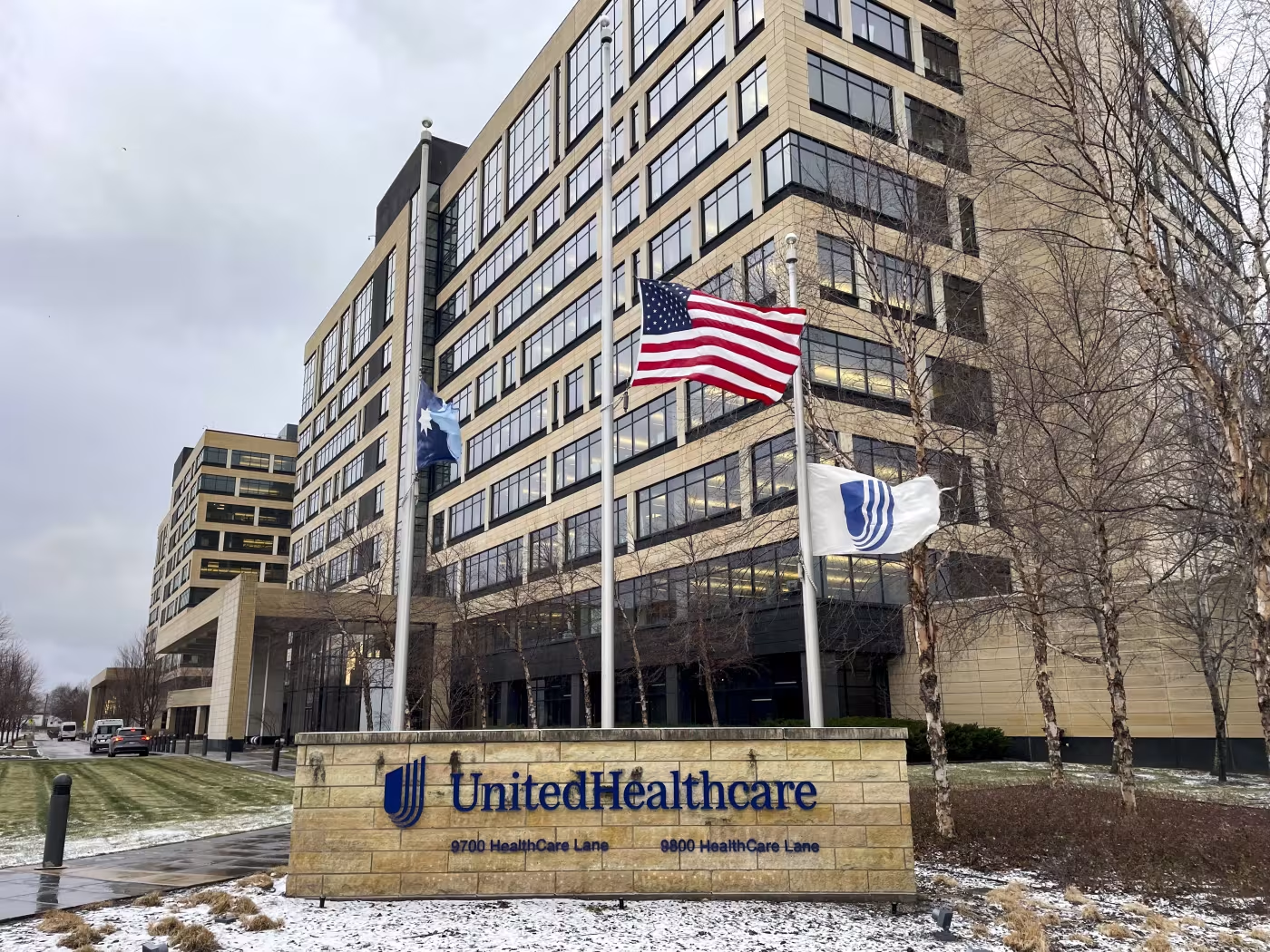
Thursday Miscellany

Thursday Miscellany

Photo by Josh Mills on Unsplash

From Washington, DC,

  • The Wall Street Journal reports,
    • “Susie Wiles, who led Donald Trump’s presidential run, will become his White House chief of staff when he retakes the presidency next year, the campaign said Thursday, making her the first woman to hold that role in U.S. history. * * *”
    • “Those who have worked with her say she is unflappable behind her trademark mirrored sunglasses, avoids the limelight and is quick to give her team credit for her stack of victories.
    • “Every campaign she’s been involved with, she’s been a calming presence,” longtime Florida lobbyist and Wiles ally Brian Ballard told the Journal. “He saw in her the DNA of a winner.”
  • Federal News Network interviews principal Thiago Glieger, a principal of RMG Advisors about getting organized for the Federal Employee Benefits Open Season, which starts next Monday.
  • The Wall Street Journal reports,
    • “U.S. health officials proposed banning an ingredient used in popular oral decongestants, a step toward removing dozens of cold medicines from store shelves. 
    • “The Food and Drug Administration on Thursday proposed removing the ingredient, known as oral phenylephrine, from its list of approved over-the-counter ingredients after determining the drug doesn’t work at relieving stuffy noses.
    • “The agency took action after The Wall Street Journal had reported that some recent studies found oral phenylephrine in certain medicines was ineffective at relieving nasal congestion. CVS Health had already said it would pull some decongestants containing phenylephrine and no longer sell them. 
    • “After taking public comment, the FDA could issue a final decision that would end sales of medicines containing the ingredient, including certain versions of Benadryl, Mucinex and Tylenol. The agency said it would give drugmakers time to remove the products from the market or reformulate them. 
    • “The earliest a potential ban would take effect is 2026.
    • “Instead of taking pills that contain phenylephrine to clear congestion, people can take pills made from pseudoephedrine, antihistamines or nasal sprays, including those with phenylephrine. Physicians and pharmacists say the alternatives are effective.”
  • Beckers Hospital Review adds,
    • “The FDA has updated the labels for all GLP-1 receptor agonists, including popular medications Ozempic, Wegovy, Saxenda and Mounjaro, to include a new warning about the risk of pulmonary aspiration during general anesthesia or deep sedation, Medscape reported Nov. 6. 
    • “The updated warning, issued Nov. 5, stems from rare postmarketing reports of patients who experienced pulmonary aspiration, when food or liquid enters the lungs, while undergoing elective surgeries or procedures requiring anesthesia despite following fasting guidelines prior to surgery.”
  • Per an HHS press release,
    • “Today, the U.S. Department of Health and Human Services (HHS) released the 2021–2023 Progress Report – PDF for the Sexually Transmitted Infections National Strategic Plan for the United States: 2021–2025. The progress report provides a high-level overview of progress on select federal agency programs, policies, research, and other activities during fiscal years 2021–2023.”
    • “The progress report features an at-a-glance table of the status of seven core indicators and seven disparities indicators, which were identified in the national plan as a quantitative approach to measuring progress on STI prevention and care in the United States. The most recently available data reveal that seven of the indicators have met or are moving toward annual targets and that seven have not met or are moving away from annual targets. Of this latter group, six indicators relate to syphilis, which is the focus of the National Syphilis and Congenital Syphilis Syndemic Federal Task Force led by HHS Assistant Secretary for Health, Admiral Rachel Levine, M.D.”

From the public health and medical research front,

  • Health Day tells us,
    • “Nearly 16% of American adults — that’s close to 1 in 6 — now has diabetes, according to the latest data from the U.S. Centers for Disease Control and Prevention.
    • “Increasing age and widening waistlines greatly increase the odds for the disease, which happens when the body doesn’t use insulin properly, resulting in high blood sugar levels. If left unchecked, diabetes can be disabling and even life-threatening.
    • “The vast majority (95%) of diabetes cases are type 2 diabetes, which occurs when the body’s cells no longer respond to insulin as they should. Insulin regulates levels of sugar in the blood. Type 2 diabetes is strongly connected to excessive weight. 
    • “The new data, collected from mid-2021 through mid-2023, found a big rise in diabetes rates since 1999-2000, when 9.7% of adult Americans had the disease.
    • ‘There was a significant gender gap in diabetes rates in 2023: Nearly 1 in 5 men (18%) have the illness, compared to 13.7% of women, according to researchers at the CDC’s National Center for Health Statistics (NCHS).”
  • and
    • “A simple nasal swab might help doctors predict the severity of a person’s COVID infection, a new study suggests.
    • “More than 70% of people with mild or moderate COVID develop certain antibodies in their nasal cavities that are linked to fewer symptoms, better immune response and faster recovery, researchers reported Nov. 6 in the journal Science Translational Medicine. * * *
    • “Researchers are working on a nasal swab test that could be used to predict how bad a person’s COVID infection will prove to be.
    • “Right now, we’re either looking at infection risk before it happens or analyzing the infection course well after recovery,” said researcher Ben Babcock, a doctoral candidate at Emory. “Imagine if we could capture the immune response in real time, right in the clinic. A just-in-time test could give physicians and patients the real-time information they need to make faster, smarter treatment decisions.”
  • STAT News informs us,
    • “For months, as human cases of H5N1 bird flu associated with an outbreak of the virus in U.S. dairy cattle have mounted, one question has loomed larger than others: how many human infections are getting missed?
    • “Farmworkers face some of the most intense exposure to the bird flu virus, but resistance from farmers and a lack of health insurance and paid sick leave in the industry have limited the amount of testing of workers and hampered public health officials’ ability to track where the virus might be spreading. Now, long-awaited results from blood testing conducted by the Centers for Disease Control and Prevention are starting to fill in the picture.
    • The findings, published Thursday, suggest that a small but not insignificant number of H5N1 infections are going undetected among people who work with dairy cows. Blood samples taken from 115 farm workers in Michigan and Colorado over the summer found evidence of a recent infection in eight individuals — half of whom recalled being ill around the same time the cows were sick. The other half could not recall having any symptoms.
    • “Known as serological surveys, the studies involve fishing out antibodies in the blood — molecules made by the immune system in response to a pathogen’s attack that persist long after an infection is over. Finding them is a signal of past contact with a particular virus and helps scientists understand how widely it has spread. 
    • “While the new results suggest that current public health efforts are missing cases, they do not indicate that the strain of H5N1 associated with the dairy cattle outbreak has gained the ability to spread from person to person.”  
  • NBC News reports,
    • “Brie and camembert that may potentially be contaminated with listeria are being recalled, the latest in a series of food incidents in the U.S. in recent months.
    • “Savencia Cheese USA is recalling select soft ripened cheeses after routine testing found the processing equipment at the company’s Lena, Illinois, manufacturing facility may have been contaminated with the bacteria.
    • “Aldi and Market Basket, a supermarket chain in New England, are among stores that sell the cheeses, but the recalled products only had “limited regional distribution” in the U.S., according to the U.S. Food and Drug Administration
    • “The “few retailers” that received them have been informed of the possible contamination and are removing products from shelves, the FDA added.
    • “There are no confirmed reports of anyone getting sick so far, the agency noted.”
  • NIH Director Dr. Monica Bertagnolli writes in her blog,
    • “Digestion involves much more than just your stomach. The digestive process that fuels your body begins in your mouth each time you take a bite of food and chew. An enzyme in your saliva, called amylase, then starts to break down complex carbohydrates—or starches found in many fruits, vegetables, and grains—into simpler sugars to give you their sweet flavor followed by a burst of energy.
    • “Amylase is the reason we’re so good at turning starch into calories, but it isn’t the same for everyone. There’s plenty of genetic variation in the number of salivary amylase genes (AMY1) our cells carry and, therefore, in how much of this essential starch-busting enzyme people have. Studies have suggested a link between changes in amylase gene copy numbers over time and both the rise of agriculture and starch-heavy diets. Now a study in Science , supported in part by NIH, suggests that extra copies of AMY1 are not only connected to our ability to effectively digest carbs, but also may be more ancient than previously known, arising even before modern humans split from Neanderthals and long before the advent of farming.” * * *
    • ‘The researchers compared the modern-day amylase genes to publicly available DNA sequences from 68 ancient human samples obtained from preserved remains. This revealed that ancient hunter-gatherers already had six to eight AMY1 copies long before people started growing crops and eating high amounts of starch. In fact, genetic variation underlying the production of this enzyme had already spread across Eurasia as far back as 45,000 years ago. However, the new analyses do show an increase in amylase gene copy numbers in the last 4,000 years, as people took up farming.
    • “The study team went on to uncover evidence that the expansion of amylase genes apparently has a longer history than anyone had suspected. Intriguingly, they found three copies of AMY1 in the DNA of three of six Neanderthals and one Denisovan. Neanderthals and Denisovans are both extinct relatives of early humans. The findings suggest that an extra copy of the amylase gene may have arisen as long as 800,000 years ago. The researchers also described how those first extra AMY1 copies could lead to their continued duplications or deletions to produce the wide variation in amylase gene copy numbers seen among modern humans.
    • “This variation in amylase genes would have afforded our ancestors dietary flexibility, allowing them to adapt as diets changed over time. But these discoveries aren’t only fascinating from an evolutionary or historical point of view. They may also lead to new understandings of genetic differences among people today, with potentially important implications for our metabolisms, nutrition, and health.”
  • The Washington Post reports,
    • “Regular practice of yoga can reduce lower-back pain, improve sleep and lessen reliance on pain medication, according to a study conducted by Cleveland Clinic researchers.
    • “The randomized clinical trial studied 140 Cleveland Clinic employees who had disclosed moderate amounts of pain for at least three months. Participants who engaged in a 12-week virtual yoga program reported feeling less pain and better sleep when compared with those who did not have access to the program.”

From the U.S. healthcare business front,

  • Modern Healthcare lets us know,
    • “Private equity firms are shifting their focus from providers to healthcare information technology and pharmaceutical services.
    • State and federal regulatory scrutiny has deterred private equity investment in healthcare providers, PitchBook analysts said in the company’s latest healthcare services report. But regulatory oversight of healthcare-related private equity deals has slightly cooled as certain state bills stalled in the 2024 legislative session, and the report says analysts expect more private equity activity through the rest of the year.”
  • The American Hospital Association News relates,
    • “Baxter expects to restart a second IV solutions manufacturing line within the next week, the company announced Nov. 7. Along with the first line that resumed production last week, the two lines comprise approximately 50% of the North Cove, N.C., site’s total pre-Hurricane Helene production of IV solutions and about 85% of one-liter solutions production. Hospitals in clinics most commonly use the one-liter solutions. The earliest the facility could begin shipments is late this month.
    • “The company said they expect their peritoneal dialysis and irrigation solutions lines to be the next to resume production and would begin by early December. Baxter expects all lines to restart by the end of the year but does not have a timeline on when total production will return to pre-hurricane levels. The company also said today that it has evaluated and approved more than 200 allocation exception requests to support the neonatal and pediatric patient needs.
    • “In addition, Baxter announced that a second temporary bridge has been installed at the plant and is in use. The bridge will allow traffic for additional trucks and equipment. The first bridge so far has allowed transport of more than 1,000 truckloads of products, Baxter said. Prior to the hurricane, the plant had manufactured approximately 60% — or 1.5 million bags or 95 truckloads — of IV solution used every day in the U.S.”
  • Beckers Payer Issues ranks the largest payers by 3rd quarter profits.
  • Per Fierce Healthcare,
    • “CerpassRx, an independent pharmacy benefit manager, is teaming up with Waltz Health to launch a new AI-powered tool that aims to better manage specialty drug spending.
    • “Called Intelligent Specialty Engine, the tool leans on Waltz’s capabilities to offer clients real-time data analytics and management options that are designed to drive down spending, create greater transparency and improve the experience for both the patient and the plan sponsor.
    • “The PBM said that the platform is a “unique deployment” of Waltz Health’s Waltz Connect platform, which connects users to a network of both national and regional pharmacies that compete on price. It uses AI to help steer patients to “the most cost-effective and clinically appropriate pharmacies.”
  • Per BioPharma Dive,
    • “Sarepta Therapeutics is giving up on an experimental drug for Duchenne muscular dystrophy as sales rocket for its approved gene therapy for the disease.
    • “The decision to discontinue SRP-5051 was based on several factors, company executives told analysts on a conference call Wednesday. Safety concerns, feedback from the Food and Drug Administration and the “evolving landscape of Duchenne” with the approval of Sarepta’s gene therapy Elevidys all played a role, Chief Scientific Officer Louise Rodino-Klapac told analysts and investors.
    • “Elevidys revenue climbed to $181 million in the third quarter from $122 million in the second quarter, beating analyst estimates of about $160 million. Sarepta also pulled in $9.5 million in royalties from Roche, which sells the gene therapy outside the U.S.
  • Per Fierce Pharma,
    • “Despite a mission to become a dominant cancer drug player, Gilead Sciences has as of late been locked in on its bread-and-butter antiviral franchise with an eye on the potential of its long-acting HIV med lenacapavir. 
    • “But with its cell therapy unit stalling and antibody-drug conjugate Trodelvy facing challenges, the company’s oncology ambitions were brought back under the spotlight during its third-quarter earnings report.
    • “Gilead’s once fast-growing cell therapy products have hit a wall as of late with relatively flat sales all year. Over the third quarter, lymphoma treatment Yescarta saw revenue dip 1% to $387 million compared to last year’s third quarter, while its Tecartus counterpart similarly remained flat with 2% growth to $98 million.
    • “Gilead attributed the Yescarta challenges to “increased in- and out-of-class competition” in the U.S., slightly offset by increased demand in relapsed or refractory large B-cell lymphoma (LBCL) in other regions. In terms of the outside competition, one notable rival includes Bristol Myers Squibb’s rival CD19 CAR-T Breyanzi.”
  • Per MedTech Dive,
    • “Johnson & Johnson received Food and Drug Administration approvalfor its Varipulse pulsed field ablation (PFA) system, joining Boston Scientific and Medtronic in the U.S. market for the fast-growing atrial fibrillation (AFib) treatment.
    • “Varipulse is approved to treat patients with drug-resistant, recurrent paroxysmal AFib, a common form of abnormal rhythm in the heart’s upper chambers, the company said Thursday. The platform is integrated with J&J’s Carto 3 mapping system in a single device that enables electrophysiologists to view inside the heart to position the catheter. 
    • “We are confident that this eagerly awaited platform will be a valuable tool for physicians in performing safe, effective and efficient AFib procedures with an intuitive and reproducible workflow,” Jasmina Brooks, president of electrophysiology at J&J Medtech, said in a statement.”

Midweek Update

President Grover Cleveland Photo by Library of Congress on Unsplash

From Washington, DC

  • President Donald Trump was reelected following an intervening term by another President in the fashion originated in the late 1800s by President Grover Cleveland, who was a Democrat.
  • NBC News adds this afternoon,
    • “Republicans will win control of the Senate for the next two years, NBC News projects, though control of the House is still up for grabs.
    • “Senate Republicans ousted Democrats in red states to secure the majority, flipping seats in West Virginia, Montana and Ohio, states that have swung heavily to the GOP. And they held their ground in friendly states like Texas and Florida, assuring them at least 51 seats when the new Congress is sworn in next January.” * * *
    • “The GOP senators are expected to elect a new leader next week as longtime Republican leader Mitch McConnell, R-Ky., is stepping down from the role after a record 18 years. His current deputy, Sen. John Thune, R-S.D., and former deputy, Sen. John Cornyn, R-Texas, are battling to take the job when the new Congress begins.”
  • Congress’s lame duck session begins next Tuesday November 12, and it will be a busy time for the legislators. You will recall that on September 26, President Biden signed into law,
    • “H.R. 9747, the “Continuing Appropriations and Extensions Act, 2025,” which provides fiscal year 2025 appropriations to Federal agencies through December 20, 2024, for continuing projects and activities of the Federal Government.” 
  • Govexec discusses FEHB plan fertility benefit offerings for 2025.
  • WTW Consulting shares advice on how to effectively use healthcare and dependent care FSAs.
  • Per MedTech Dive,
    • “Advamed has asked for Medicare to cover supplemental imaging of patients with heterogeneously and extremely dense breast tissue.
    • “In a letter sent to the Centers for Medicare & Medicaid Services Friday, the medtech industry group said many individuals with dense breasts currently have to pay out of pocket or forgo potentially life-saving additional testing.
    • “Advamed made the request two months after the Food and Drug Administration began requiring mammographers to notify patients when they have dense breast tissue. Traditional mammography is less sensitive than other imaging technologies in dense breasts, which increases the risks of imaging to miss cancer.”

From the public health and medical research front,

  • The American Hospital Association News lets us know,
    • “The Centers for Disease Control and Prevention Nov. 6 released its annual progress report on health care-associated infections, which showed continued decreases in hospitalizations last year. There was a 16% decrease in hospital-onset methicillin-resistant Staphylococcus aureus, or MRSA; a 15% decrease in central line-associated bloodstream infections, or CLABSI; a 13% decrease in hospital-onset Clostridioides difficile (C. difficile) infection; an 11% decrease in catheter-associated urinary tract infections; and a 5% decrease in ventilator-associated events. The declines align more closely with progress made prior to the COVID-19 pandemic in 2020, the CDC said. 
    • “For inpatient rehabilitation facilities, there was a 14% decrease in hospital-onset C. difficile infection and an 8% increase in CAUTI in 2023, but no significant changes in CLABSI and hospital-onset MRSA standardized infection ratios compared with 2022. Among long-term care hospitals, there was a 13% decrease in hospital-onset C. difficile infections but no significant changes in 2023 SIRs compared with 2022. 
    • “The report recommends facilities continue reinforcing prevention practices and review HAI surveillance data to identify areas for improvement.”
  • MedPage Today tells us,
    • The FDA announced marketing authorization of a form of light therapy as the first-ever treatment for dry age-related macular degeneration (AMD).
    • LumiThera’s Valeda Light Delivery System generates light at different wavelengths to stimulate and improve the function of retinal mitochondria. The photobiomodulation (PBM) system is the first treatment shown to improve vision loss associated with dry AMD.
    • “Patients will now be able to try a non-invasive treatment that can help improve their vision earlier in the disease process,” said David Boyer, MD, of Retina Vitreous Associates Medical Group in Beverly Hills, California, in a company statement. “This is an exciting option for patients, and something doctors and patients have been waiting for.”
  • The National Cancer Institute informs us,
    • “Every year, almost 90,000 of these adolescents and young adults (AYAs)—generally defined as people between the ages of 15 and 39—receive a cancer diagnosis. And this group of patients often needs extra help navigating the complexities of cancer care.
    • “A new study has shown that a program in place for a decade at the University of North Carolina (UNC) Lineberger Comprehensive Cancer Center substantially increased its assistance to AYAs with cancer being treated at the center. For example, there were large increases in the number of AYAs who underwent fertility counseling, a particularly important consideration for this age group. The program also substantially boosted AYA enrollment in clinical trials and helped more AYAs get other care recommended by national guidelines. 
    • “The UNC team is now working to standardize many components of the program so it can be adapted by other cancer centers, explained Jacob Stein, M.D., M.P.H., who presented the findings from an evaluation of the program in September at the American Society of Clinical Oncology’s Quality Care Symposium.
    • “A lot of [centers] are now reaching out and asking: ‘How do we do this?’” said Dr. Stein. And the timing is right for the wider availability of programs to help AYAs with cancer, he added.
    • “Studies are showing that cancer is on the rise in younger adults,” he said. “That’s a concerning trend, but there are a lot of folks now engaged and talking about cancer in AYAs in a way that we weren’t 5 or 10 years ago.”
  • and
    • “[H]ow well does telehealth perform when it comes to delivering palliative care for people with cancer, which can rely on a deeper level of connection between patients and providers than may be possible with a virtual visit?
    • “A study of 1,250 people with advanced lung cancer has now provided some insights into that question. The study found that virtual and in-person palliative care were similarly effective in improving patients’ quality of life and other important measures of well-being, according to findings published September 11 in JAMA. It also found benefits for caregivers. 
    • “The results show that “we can successfully deliver … high-quality [palliative] care in person and virtually,” said Joseph A. Greer, Ph.D., of Massachusetts General Hospital, who led the study.
    • “The study results also have implications for the accessibility of palliative care, Dr. Greer noted. Telehealth provides a way for people with cancer who live in rural areas where there may not be many palliative care providers or who don’t have reliable transportation to receive palliative care. 
    • “Many of us see the potential that telehealth can have, and studies like this go a long way to help provide the evidence” needed to demonstrate that it can be used effectively as part of something as complex as palliative care, said Roxanne Jensen, Ph.D., of NCI’s Healthcare Delivery Research Program, who was not involved in the study.” 
  • Per Healio,
    • “Respiratory syncytial virus vaccines proved highly effective at preventing hospitalization and ED visits in older adults, even in those with immunocompromising conditions, results from an observational analysis showed.
    • “The findings, published in The Lancet, are consistent with previously reported data on respiratory syncytial virus (RSV) vaccine effectiveness.”
  • Per Medscape,
    • “Nilotinib, a drug approved by the US Food and Drug Administration (FDA) to treat chronic myeloid leukemia, improved biomarkers and cognitive outcomes in patients with dementia with Lewy bodies (DLB) in a phase 2 randomized, double-blind, placebo-controlled trial. 
    • “The findings align with an earlier study that showed possible disease-modifying effects of nilotinib in patients with mild cognitive impairment or Alzheimer’s disease, as previously reported by Medscape Medical News
    • “We’re looking at repositioning or repurposing tyrosine kinase inhibitors for neurodegenerative diseases,” said study investigator Raymond Scott Turner, MD, PhD, of Georgetown University School of Medicine in Washington, DC.”

From the U.S. healthcare business front,

  • Healthcare Dive reports,
    • “CVS reported mixed third-quarter results shadowed by heightened medical costs on Wednesday, in the massive healthcare enterprise’s first earnings report with new CEO David Joyner at the helm.
    • “The Woonsocket, Rhode Island-based company beat Wall Street expectations on revenue of $95.4 billion, up more than 6% year over year. However, CVS’ net income fell to $71 million, down from almost $2.3 billion same time last year, as its Aetna insurance arm continued to struggle with higher spending.
    • “CVS appointed Steve Nelson, previously the CEO of value-based primary care company ChenMed, as president of Aetna. Nelson also ran UnitedHealthcare, the largest private insurer in the U.S., from 2016 to 2019.”
  • Health Affairs Scholar concludes,
    • “The No Surprises Act banned surprise billing and established a final-offer arbitration system, independent dispute resolution (IDR), to resolve disagreements between health plans and providers. One factor that arbiters must consider in the IDR process is the qualifying payment amount (QPA), the median contracted rate for the same or similar service in the same market as computed by health plans. We analyzed public IDR data from 2023 for the most common disputed professional service: evaluation and management of a moderate to severe emergency medicine visit. Providers won 86% of cases, with mean decisions 2.7 times the QPA. Private equity-backed providers won more often and higher monetary awards than other providers. The mean QPA was 2.4 times Medicare payments. Disputes were dominated by a small group of health plans and providers, so payments may not reflect the overall market for emergency services.”
  • Per Fierce Pharma,
    • “As other biopharma giants have divested their generics units to focus on the development and commercialization of innovative drugs, Teva has relied on its copycat business to help trigger its rebound under CEO Richard Francis.
    • “Wednesday, Teva revealed booming third-quarter sales for its generics and biosimilars. In the U.S., revenue from the knockoffs came in at $1.1 billion, which was a 30% increase year over year, or 7% sequentially. Sales of generics and biosimilars also were up 10% year over year in Europe.
    • “The figures contributed heavily to Teva’s overall success in the quarter. Its revenue of $4.3 billion topped analysts’ consensus of $4.14 billion and was a 13% gain year over year. With the result, Teva tweaked its annual guidance up by $100 million at both ends to a window of $16.1 billion to $16.5 billion.”
  • MedCity News notes,
    • “While employers are prioritizing mental and physical wellbeing programs, employees report that what they really want is financial wellbeing support, according to a new survey.
    • “The survey was released last week by WTW, a global advisory, broking and solutions company. It included responses from 535 employees at medium and large private sector employers.
    • “The organization found that 73% of employers prioritize mental wellbeing and 50% prioritize physical wellbeing. However, 66% of employees say that financial wellbeing is their biggest concern. For employers, only 23% of respondents listed this as a priority. This comes as just 41% of employees feel financially secure, according to the survey.”

Weekend Update

From Washington, DC,

  • As we all know, the national election is Tuesday. The current Congress will return to Capitol Hill the following Tuesday November 12, to begin its lame duck session. The new Congress will begin on January 3, 2025.
  • In anticipation of the Federal Employee Benefits Open Season that begins on November 11, OPM has posted 2025 FEHBP and FEDVIP plan comparison tools on its website.
  • Modern Healthcare reports,
    • “Elevance Health is the latest Medicare Advantage insurer to dispute its star ratings quality scores in court.
    • “The health insurance company filed suit against the federal government in the U.S. District Court for the Northern District of Texas on Thursday. According to Elevance Health, the Centers for Medicare and Medicaid Services improperly assessed its quality performance, costing the insurer $375 million in bonus payments. The company won a case regarding its 2024-star ratings on different grounds, which led the agency to recalculate scores across the program.
    • “Elevance Health wants the court to order CMS to redo its ratings and to provide insurers with the data to “validate the 2025-star ratings calculations and future star ratings calculations,” according to its lawsuit. The insurer also seeks reimbursement the court deems appropriate.”

From the public health and medical research front,

  • CBS News asks and answers “Do I have COVID, the flu or something else? 2024 symptoms and testing to know.”
  • The New York Times lets us know,
    • “More than 80 percent of emergency departments in United States hospitals are not fully prepared for pediatric cases, a new study finds, despite the fact that children make up about 20 percent of visits each year.
    • “The new analysis, published Friday in the journal JAMA Network Open, estimated that if every emergency department in the United States had the core features of “pediatric readiness,” more than a quarter of the child deaths that follow E.R. visits could be prevented, a figure that equates to thousands of young lives each year.
    • “Even in the most ill-prepared states, the cost to ready every emergency room would be less than $12 per child living there, the researchers found.
    • “You can now find your state and see: How many children who would otherwise die could we expect to save if we implemented universal pediatric readiness at a high level?” said Dr. Craig Newgard, who was the lead author on the paper, and is the director of the Center for Policy and Research in Emergency Medicine at Oregon Health & Science University.”
  • The Washington Post informs us,
    • “Migraine is a surprisingly common problem, affecting an estimated 15 percent of the global population. Scientists don’t know how triggers lead to attacks but have made some progress in treatment: The latest drugs, inhibitors of a body signaling molecule called CGRP first approved for use in 2018, have been a blessing for many. For others, not so much. And it’s not clear why.”
    • * * * “Despite some failures, CGRP’s successes show that there’s hope for new medicines. CGRP has really paved the way,” says Andrew Russo, a neuroscientist at the University of Iowa in Iowa City who described CGRP as a new migraine target for the Annual Review of Pharmacology and Toxicology in 2015. “It’s a very exciting time for the field.”
  • Fortune Well informs us,
    • “Binge drinking is prevalent across generations, but the dangerous habit is growing among one age group in particular. 
    • “Long associated with college students, binge drinking, defined as having four or more drinks within two hours at least five times per month for women (five drinks for men) is on the rise among older adults. According to The National Survey on Drug Use and Health, 20% of adults aged 60 to 64, reported binge drinking in the last month. For those older than 65, the prevalence of binge drinking is 12%—a rate that has been increasing over the last decade, while binge drinking rates among young adults 18 to 25 have been going down.” * * *
    • “For more education on how to assess your—or a family member’s—drinking habits, visit the NIAAA Healthcare Professional’s Core Resource on Alcohol.”

From the U.S. healthcare business front,

  • Per Legal Dive,
    • “Pennsylvania’s attorney general sued Prospect Medical Holdings and its former parent company, alleging mismanagement by the hospital chain caused two hospital closures and widespread disruptions to patient care.
    • “The lawsuit Tuesday argues Prospect broke the terms of its 2016 purchase agreement of four-hospital system Crozer Health, which required Prospect to keep all acute care hospitals open for at least 10 years.
    • ‘In the suit, Attorney General Michelle Henry asks for a preliminary injunction barring Prospect from closing more hospitals and requests an official receiver step in and manage Crozer Health.”
  • Modern Healthcare tells us,
    • “Zoom, a company that rose to prominence during the COVID-19 pandemic, is looking to expand its presence in healthcare through artificial intelligence. 
    • “The company recently announced plans to incorporate ambient AI documentation technology from digital health company Suki in its clinical platform. Zoom plans to use the ambient AI technology, which turns a recording of a doctor-patient conversation into usable clinical notes in the electronic health record, for virtual and in-person visits. 
    • “It’s the latest move in healthcare from the video teleconferencing company, which has offered telehealth services since 2018.”
  • Per HR Dive,
    • “While the median salary increase stayed at 4% in 2024, average increases dropped from 4.3% to 3.9%, according to survey results collected by Salary.com from more than 1,000 HR professionals in the U.S. and Canada.
    • “The drop is due to fewer companies doling out higher raises, Salary.com found; only 14% of companies gave out raises between 5% and 6.9%, compared with 25% of companies in the previous survey. Additionally, more companies — 38% in 2024, compared to 25% in 2023 — returned to “typical” salary increases in the 3% to 3.9% range.
    • “Last year, we noted that salary increases might be at a peak, even with 4 percent becoming the norm,” Andy Miller, vice president of compensation consulting at Salary.com, said in an Oct. 29 news release. “While 4 percent remained the median in 2024, further analysis suggests a shift is happening.”

Friday Factoids

From Washington, DC,

  • Lots of CMS announcements today.
    • Calendar Year (CY) 2025 Medicare Physician Fee Schedule Final Rule (Fact Sheet)
      • “By factors specified in law, average payment rates under the PFS will be reduced by 2.93% in CY 2025, compared to the average amount these services were paid for most of CY 2024. The change to the PFS conversion factor incorporates the 0% overall update required by statute, the expiration of the temporary 2.93% increase in payment for CY 2024 required by statute, and a relatively small estimated 0.02% adjustment necessary to account for changes in work relative value units (RVUs) for some services. This amounts to an estimated CY 2025 PFS conversion factor of $32.35, a decrease of $0.94 (or 2.83%) from the current CY 2024 conversion factor of $33.29.”
    • CY 2025 Medicare Hospital Outpatient Prospective Payment System and Ambulatory Surgical Center Payment System Final Rule (Fact Sheet)
      • “In accordance with Medicare law, CMS is finalizing an update to OPPS payment rates of 2.9% for hospitals that meet applicable quality reporting requirements. This update is based on the projected hospital market basket percentage increase of 3.4% reduced by a 0.5 percentage point productivity adjustment.
      • “In the CY 2019 OPPS/ASC final rule with comment period, CMS finalized a proposal to apply the hospital market basket update to ASC payment system rates for an interim period of five years (CY 2019 through CY 2023). The CY 2024 OPPS/ASC final rule with comment period extended the interim period for an additional two years (through CY 2024 and CY 2025).
      • “Accordingly, using the hospital market basket update, CMS is finalizing an update factor to the ASC payment rates for CY 2025 of 2.9%. The update applies to ASCs meeting relevant quality reporting requirements. This update is based on the projected hospital market basket percentage increase of 3.4% reduced by a 0.5 percentage point productivity adjustment.”
    • Calendar Year 2025 End-Stage Renal Disease (ESRD) Prospective Payment System (PPS) Final Rule (Fact Sheet)
      • “For CY 2025, CMS is increasing the ESRD PPS base rate to $273.82, which CMS expects will increase total payments to all ESRD facilities, both freestanding and hospital-based, by approximately 2.7%. The CY 2025 ESRD PPS final rule also includes changes to the methodology for calculating the ESRD facility wage index, changes to the Low-Volume Payment Adjustment (LVPA) methodology, and several changes to the ESRD outlier policy.”
  • Per an October 30, 2024, CMS press release.
    • CMS updated the ‘Birthing-Friendly’ designation icons on Care Compare for the first time since rolling out the initiative in October 2023. Hospitals that attested to the Maternal Morbidity Structural measure in the Hospital Inpatient Quality Reporting Program received the designation. The icons will be refreshed using updated data from CY 2023. CMS created the designation to identify hospitals and health systems that participate in a statewide or national perinatal quality improvement collaborative program and that implement evidence-based care to improve maternal health. Eighty percent of pregnancy-related deaths are preventable, and Black, American Indian and Alaska Native, and Native Hawaiian and Pacific Islander people have the highest rates of pregnancy-related death. The ‘Birthing- Friendly’ designation is a step towards ensuring that all pregnant and post-partum people can find high-quality maternity care. 
  • Bloomberg adds,
    • The [Medicare physician fee schedule] rule quickly elicited calls for Congress to overhaul the way Medicare sets payment rates. Federal law requires that any payment increases be offset by equal cuts elsewhere in the program.
    • “To put it bluntly, Medicare plans to pay us less while costs go up. You don’t have to be an economist to know that is an unsustainable trend, though one that has been going on for decades,” said a statement from Bruce A. Scott, president of the American Medical Association. 
    • “For physician practices operating on small margins already, this means it is harder to acquire new equipment, harder to retain staff, harder to take on new Medicare patients, and harder to keep the doors open, particularly in rural and underserved areas,” Scott said.
  • and
    • “Overall Medicare payments to home health agencies will increase by 0.5%, or $85 million, next year under a final rule released Friday.
    • “The total amount reflects a 2025 payment increase of 2.7%, or $445 million, according to the rule (RIN 0938-AV28) from the Centers for Medicare & Medicaid Services. But that amount would be offset by an estimated 1.8% payment cut of $295 million as part of a “permanent behavior adjustment” based on the assumption that home health agencies altered their billing and coding activity to maximize reimbursements in previous years.
    • “The payment offsets are part of a CMS plan to use future rulemaking to recover billions of dollars in apparent overpayments.”
  • The American Hospital Association reminds us,
    • “Beginning Nov. 1 through Jan. 15, individuals and families can enroll in or change their health coverage options through the Health Insurance Marketplace. The Centers for Medicare & Medicaid Services expects that 97% of the website’s customers will have access to three or more insurance issuers and four in five can find coverage for $10 or less per month after subsidies. AHA’s #GetCovered page offers resources to help people choose the best coverage for themselves and their families.”  
       
  • Govexec reports that “Most TSP funds took a tumble in October. Only two portfolios in the federal government’s 401(k)-style retirement savings program ended last month in the black, ending a three-month run of gains.”
  • STAT News relates,
    • “The hospital industry has pushed back against Medicare payment reforms for years, arguing that the policies would financially hurt rural hospitals. 
    • “Two key senators on Friday released a plan to get around that issue by reinvesting some of the money saved from payment reforms to help rural and safety-net hospitals. Hospitals that keep providing services like trauma centers, labor and delivery units, and burn units would get financial bonuses, too. 
    • “The reforms, called “site-neutral” payments, would equalize Medicare payments for some services provided at hospital outpatient departments with what the program pays physician offices for the same services. The hospital industry at large has opposed the policy because it argues hospitals should get paid more because they have to provide round-the-clock care and have higher overhead costs. 
    • “Sen. Maggie Hassan (D-N.H.), who has led efforts on the issue, partnered on the policy proposals with Sen. Bill Cassidy (R-La.), who’s in line to lead the Senate’s health committee if Republicans take control of the chamber next year and sits on the committee that regulates Medicare payments. Hassan’s current GOP partner on a stalled site-neutral bill, Sen. Mike Braun (R-Ind.), is leaving the Senate at the end of this year.”

From the public health and medical research front,

  • The Centers for Disease Control and Prevention announced today,
    • COVID-19 activity is declining in most areas. Minimal seasonal influenza activity is occurring nationally. Signs of increased RSV activity have been detected in the southern and southeastern United States, particularly in young children. Respiratory infections caused by the bacterium Mycoplasma pneumoniae have increased in the United States, especially in young children.
    • COVID-19
      • Nationally, COVID-19 activity has continued declining in most areas. Wastewater levels, laboratory percent positivity, emergency department visits, and hospitalizations are continuing to decrease nationally while deaths remain at low levels. National trends in growth of COVID-19 infections are uncertain overall. Decreases are predicted in some states, and slow growth is predicted from a low level in others.
      • The XEC variant is estimated to comprise 14-22% of circulating viruses as of October 26, 2024. Because XEC is recombined from two JN.1 lineage viruses, the 2024-2025 COVID-19 vaccines that already include JN.1 strains are still expected to provide protection. Similarly, there are no impacts currently expected on tests, treatments, or symptoms at this time. For additional information, please see CDC COVID Data Tracker: Variant Proportions. There are many effective tools to prevent spreading COVID-19 or becoming seriously ill.
    • Influenza
    • RSV
      • Nationally, RSV activity remains low. However, continuing signs of increased RSV activity have been detected in the southern and southeastern United States, particularly in young children. Emergency department visits and hospitalization rates are increasing in young children in some areas.
    • Vaccination
  • ABC News tells us,
    • “The total number of dengue fever cases in the U.S. is now more than double the number recorded all of last year, federal data shows.
    • “More than 6,800 cases of dengue have been reported nationally so far this year, according to data from the Centers for Disease Control and Prevention (CDC). Of those cases, more than 4,400 were locally acquired and more than 2,300 are travel associated.
    • “Locally acquired cases mean that those infected have no history of traveling to an area where dengue normally spreads, including tropical and subtropical areas of the world.
    • “The 6,800 figure is more than double the 3,352 dengue cases reported during all of 2023, CDC data shows.
    • “Currently, Puerto Rico makes up the bulk of cases this year with more than 4,200 reported there, according to CDC data. Earlier this year, the territory declared a public health emergency amid a rise in dengue case.”
  • The American Journal of Managed Care lets us know,
    • “Early smoking cessation post-cancer diagnosis significantly improves survival, with optimal benefits seen when quitting within 6 months.
    • “The Tobacco Research and Treatment Program at MD Anderson offers free, evidence-based cessation interventions, including counseling and pharmacotherapies.
    • “The study highlights a reduced mortality risk for patients who quit smoking by 3-, 6-, and 9-months post-treatment.
    • ‘Limitations include potential bias from self-reported abstinence and lack of data on noncancer health conditions.”
  • The University of Minnesota’s CIDRAP informs us,
    • “A multistate study of publicly insured children diagnosed as having pneumonia found that one in five did not receive antibiotics, researchers reported yesterday in JAMA Network Open.
    • “But while children who didn’t receive antibiotics had slightly higher rates of treatment failure than those who did, severe outcomes were rare regardless of antibiotic treatment, the researchers found.
    • “The study authors say their findings suggest future research should aim to identify children with pneumonia who can be safely managed without antibiotics.” 
  • STAT News reports,
    • “Novo Nordisk’s weight loss drug Wegovy helped people with a fatty liver disease called MASH experience improvements in liver scarring and achieve symptom resolution, results the company sees as supporting regulatory approval.
    • “After 72 weeks in a Phase 3 trial, 37% of patients on Wegovy experienced an improvement in liver scarring, or fibrosis, with no worsening of their disease. That compared with 23% of those on placebo, according to topline results Novo announced Friday.
    • “Additionally, 63% of people on Wegovy achieved resolution of their symptoms with no worsening of fibrosis, compared with 34% of participants on placebo.
    • “Novo said the results were statistically significant.
    • “GLP-1 drugs like Wegovy are increasingly being tested in a range of conditions beyond obesity, including diseases that affect the heart, kidneys, and liver. Wegovy is already approved to prevent cardiovascular complications, and for Novo, proving that the drug helps with even more complications may help it gain broader and more streamlined insurance coverage.”

From the U.S. healthcare business front,

  • Per Healthcare Dive,
    • “Tenet Healthcare posted $5.1 billion in revenue for the third quarter, exceeding analysts’ expectations as the provider’s hospital and ambulatory segments fielded higher-than-expected patient volumes.
    • “Business in Tenet’s ambulatory care service line was particularly strong, executives said during a Tuesday morning call with investors. Adjusted earnings before interest, taxes, depreciation and amortization for Tenet’s ambulatory surgery centers and surgical hospitals sat nearly 19% higher than this time last year at $439 million.
    • “Still, the company lowered the upper end of its 2024 revenue guidance to $20.6 billion to $20.8 billion, compared to prior guidance of $20.6 billion to $21 billion. Analysts from Leerink Partners said the revision was likely due to the performance of Tenet’s hospital portfolio and the timing of several hospital divestitures.”
  • Beckers Hospital Review points out,
    • “The University of Alabama at Birmingham Health System Authority has acquired Ascension St. Vincent’s Health System, effective Nov. 1. 
    • “Under the agreement, UAB Health System assumed ownership of all Ascension St. Vincent’s care sites, including the hospitals at Birmingham, Blount, Chilton, East and St. Clair, as well as the Trussville Freestanding Emergency Department, imaging centers and other clinics that are part of Ascension Medical Group. 
    • “The transaction was valued at $450 million.” 
  • Kaufmann Hall offers an infographic “reassessing retail health disruptors” one year later.

Tuesday Tidbits

Photo by Patrick Fore on Unsplash

From Washington, DC,

  • Federal News Network reports on the Postal Service Health Benefits Program supplemental rule creating a Medicare Part D EGWP mandate for Postal annuitants over 65, other than those living abroad.
  • While the FEHBlog thinks that the new, improved 2025 version of Medicare Part D is a good deal for FEHB and PSHB annuitants over age 65, even for those with the IRMAA tax or manufacturer coupons, the FEHBlog objects to the OPM mandate because it penalizes annuitants who opt out of the Plan’s Part D EGWP by barring them from the Plan’s prescription drug benefits without any premium reduction. Although FEHB plans do include penalties for failing to use hospital pre-certification, for example, those penalties top out at $500. Prescription drugs represent 24 cents out of every healthcare dollar according to AHIP. If Congress had intended that OPM impose such a hefty penalty, it would have said so in the Postal Reform Act. The law, however, is silent.
  • FedSmith offers advice on the upcoming Open Season while FedWeek explains the pros and cons about FEHB / PSHP high deductible plans with health savings accounts.
  • Per a CMS press release,
    • “The Centers for Medicare & Medicaid Services (CMS) announced today that the Medicare Shared Savings Program (Shared Savings Program) continues to save Medicare money while supporting high-quality care. The Shared Savings Program yielded more than $2.1 billion in net savings in 2023 — the largest savings in the Shared Savings Program’s history. In addition, Shared Savings Program Accountable Care Organizations (ACOs) are providing higher-quality care and supporting policies CMS has adopted to enhance primary care, expand access to accountable care to underserved communities, and prioritize quality care for common chronic conditions.
    • “In 2023, ACOs in the Shared Savings Program earned shared savings payments (also known as performance payments) totaling $3.1 billion, the highest since the program’s inception more than 10 years ago.  In addition, ACOs scored better on many quality measures than other types of physician groups and continued to demonstrate quality improvement. ACOs led by primary care clinicians had significantly higher net per capita savings than ACOs with a smaller proportion of primary care clinicians. These results continue to underscore how important primary care is to the success of the Shared Savings Program.”
  • Healthcare Dive tells us,
    • “Oracle Health will apply to become a Qualified Health Information Network under the federal government’s health data exchange framework, the technology giant said Monday. 
    • “TEFCA, or the Trusted Exchange Framework and Common Agreement, uses QHINs — which can represent dozens or hundreds of health systems, public health agencies, payers and health IT vendors — to support health information sharing, according to the HHS’ Assistant Secretary for Technology Policy/Office of the National Coordinator for Health IT.
    • “To get official designation, QHINs have to complete technology and security testing and agree to the data sharing rules before being onboarded. TEFCA went live in December with five QHINs, and two more organizations were approved early this year.”

From the public health and medical research front,

  • Fierce Pharma informs us,
    • “A small tweak in the dosing regimen of Eli Lilly’s Alzheimer’s disease drug Kisunla has reduced brain swelling of patients in a trial, the company said Tuesday.
    • “In the phase 3 study, 14% of patients who were on the altered dosing plan experienced brain swelling (ARIA-E) events at Week 24 versus 24% of those who received the standard dosing of Kisunla, which was approved by the FDA in July.
    • ‘The difference adds up to a 41% reduction in ARIA-E and could lead to a label change and help convince doctors to prescribe the anti-amyloid therapy, which is competing with another Alzheimer’s drug in its class, Eisai and Biogen’s Leqembi.”
  • Per MedTech Dive,
    • “Edwards Lifesciences’ Early TAVR trial results showed asymptomatic patients with severe aortic stenosis had better outcomes after transcatheter aortic valve replacement than under routine clinical surveillance.
    • “Analysts said the positive data could help Edwards reaccelerate growth in its TAVR business, where sales have slowed in recent quarters. The data were presented Monday at the Cardiovascular Research Foundation’s Transcatheter Cardiovascular Therapeutics (TCT) scientific symposium and published simultaneously in The New England Journal of Medicine.
    • “The study is the first randomized, controlled trial to look at early intervention with TAVR as a strategy in patients with asymptomatic severe aortic stenosis, according to Edwards. The study was funded by Edwards.”
  • Per a company press release,
    • “Shionogi & Co., Ltd. (Head Office: Osaka, Japan; Chief Executive Officer: Isao Teshirogi, Ph.D.; hereafter “Shionogi”) today announced that its double-blind, randomized, placebo-controlled global Phase 3 study, Stopping COVID-19 pRogression with early Protease InhibitOr treatment – Post Exposure Prophylaxis (SCORPIO-PEP), met its primary endpoint. Once-daily ensitrelvir (Generic name: ensitrelvir fumaric acid, Code No.: S-217622, hereafter “ensitrelvir”) demonstrated a statistically significant reduction in the proportion of participants with symptomatic SARS-CoV-2 infection after exposure to household contacts with COVID-19 when compared to placebo. Specifically, the primary endpoint assessed COVID-19 symptoms onset through Day 10. Ensitrelvir was well tolerated by study participants and no new safety concerns were identified.
    • “Ensitrelvir is an investigational oral antiviral that suppresses the replication of SARS-CoV-2 by selectively inhibiting the viral 3CL protease. Ensitrelvir was granted Fast Track designation by the U.S. Food and Drug Administration in 2023 for the treatment of COVID-19. In Japan, ensitrelvir, known as Xocova®, received emergency regulatory approval in 2022 and full approval in March 2024 for the treatment of COVID-19. Ensitrelvir was also made available in Singapore based on the Special Access Route application in 2023. It remains an investigational drug outside of Japan and Singapore.
    • “COVID-19 remains an important public health priority, yet there are currently no oral antiviral medications approved for post-exposure prophylactic use. There is a need for convenient, preventive approaches to protect ourselves and those close to us from contracting SARS-CoV-2,” said Simon Portsmouth, MD, FRCP, Senior Vice President, Head of Clinical Development. “These data demonstrate a new potential for post exposure prophylactic use of ensitrelvir, expanding on the breadth of clinical and real-world evidence that establish its activity in those infected with SARS-CoV-2.”
  • AHRQ’s Medical Expenditures Panel Survey lets us know,
    • Among adults who reported ever having COVID-19, 13.7 percent reported ever having long COVID.
    • Women were more likely than men to report ever having long COVID (16.5% vs. 10.5%).
    • Adults aged 18-34 were less likely than all other age groups to report ever having long COVID (9.8% vs. 13.5%-17.9%).
    • Adults living in high-income households were less likely to report ever having long COVID (11.0%) than those living in middle-income households (15.6%), low-income or near poor households (17.4%), and those living in poor households (17.2%).
    • Adults living in a metropolitan statistical area reported lower rates of ever having long COVID than those living outside of a metropolitan statistical area (12.7% vs. 19.7%).
  • MedPage Today points out,
    • “Elevated body mass index (BMI) in children and young adults was associated with an increased risk of post-acute sequelae of SARS-CoV-2 infection (PASC), or long COVID, a large retrospective cohort study suggested.
    • “Those with obesity had a 25.4% increased risk of long COVID (relative risk [RR] 1.25, 95% CI 1.06-1.48) and those with severe obesity had a 42.1% increased risk (RR 1.42, 95% CI 1.25-1.61) compared with children and young adults who had healthy weight, reported Yong Chen, PhD, of the University of Pennsylvania in Philadelphia, and colleagues.
    • “Similarly, there was an increased likelihood of encountering any manifestation of potential long COVID symptoms and conditions among those with obesity (RR 1.11, 95% CI 1.06-1.15) and severe obesity (RR 1.17, 95% CI 1.14-1.21), they said in JAMA Network Openopens in a new tab or window.
    • “To our knowledge, this retrospective cohort study is the first and the largest to explore the association of BMI status with PASC among the pediatric population,” Chen and co-authors wrote. “The findings suggest that PASC may lead to poorer long-term quality of life, affecting physical health, educational achievement, and social development; this underscores the importance of early identification, prevention, and targeted interventions to mitigate these risks.”
  • The U.S. Preventive Services Task Force (USPSTF) has opened for a public comment the following recommendations:
    • Population: Pregnant or postpartum persons and women of reproductive age
    • Recommendation: The USPSTF recommends that clinicians screen for intimate partner violence (IPV) in pregnant and postpartum persons and women of reproductive age. See the “Practice Considerations” section for information on evidence-based multicomponent interventions and for information on IPV in men.
    • Grade: B
      Population: Older or vulnerable adults
      Recommendation The USPSTF concludes that the current evidence is insufficient to assess the balance of benefits and harms of screening for caregiver abuse and neglect in older or vulnerable adults. See the “Practice Considerations” section for additional information.
      Grade: I (inconclusive)
    • “In 2018, the USPSTF recommended that clinicians screen for IPV in women of reproductive age and provide or refer women who screen positive to ongoing support services. The USPSTF also concluded that the evidence was insufficient to assess the balance of benefits and harms of screening for abuse and neglect in all older or vulnerable adults. The current draft recommendation statement is consistent with the 2018 recommendation. To highlight that the evidence base focused on pregnant and postpartum persons, the USPSTF emphasized this population in this draft recommendation statement. For abuse of older or vulnerable adults, the term “caregiver” was added before abuse or neglect when appropriate to clarify when the focus was on screening for abuse or neglect perpetrated by a caregiver or someone they trust.”
    • The public comment deadline is November 25, 2024.
  • Healio relates that “A modified screening with additional questions about suicidal ideation was better at predicting suicide attempts among adolescents than the standard questionnaire, according to findings published in JAMA Network Open.
  • The Wall Street Journal notes,
    • “In Appalachia, in the heart of one of the earliest and deadliest waves of the opioid crisis, doctors at West Virginia University’s Rockefeller Neuroscience Institute are conducting a radical experiment. Using focused ultrasound waves, they are resetting cells inside the brain’s reward center, the nucleus accumbens. They hope the procedure can treat addictions ranging from drugs like opioids and methamphetamine to gambling and eating. 
    • “While neuroscientists have long defined addiction as a brain disease, tools to fight the U.S. drug crisis that is behind 100,000 overdose deaths a year have changed little in decades. Most treatment involves medications like methadone and buprenorphine to replace other opioids, or naltrexone to block the part of the brain that feels pleasure from alcohol or opioids. For many addictions, counseling and abstinence-based 12-step programs remain the go-to treatment. 
    • “At RNI’s 30-patient residential-treatment program, more than two-thirds of patients relapse within the first few weeks. Many illicit drugs, including meth and cannabis, don’t have any prescription medications to treat the addiction.
    • “Now, the institute’s trial using ultrasound is a peek at a future that treats the physical brain, rather than using medication or behavioral approaches to alter outcomes. “We need to inject technology into this,” said Dr. Ali Rezai, a neurosurgeon and executive chair at the institute.
    • “The RNI team is also studying a pill that monitors vital signs and releases overdose-reversal medication automatically in people who overdose. In another trial, they are monitoring the heart rates, emotions, sleep and cravings of thousands of drug users who are helping to train artificial intelligence to predict a relapse before it occurs, so that recovery coaches can intervene.”   

From the U.S. healthcare business front,

  • The Wall Street Journal reports,
    • Pfizer PFE punched back against activist investor Starboard Value on Tuesday, delivering positive quarterly results.
    • “The pharmaceutical company raised its revenue outlook for the year to between $61 billion to $64 billion, up from $59.5 billion to $62.5 billion previously. It also raised its guidance on adjusted annual earnings per share to a range of $2.75 to $2.95, up from $2.45 to $2.65. 
    • “The encouraging third quarter comes as Pfizer faces pressure from activist investor Starboard, which says poor investments in research and dealmaking have helped destroy billions of dollars in market capitalization. The latest earnings highlight Pfizer’s third consecutive quarter with positive results—a bright spot that could bolster the drugmaker, and Chief Executive Albert Bourla’s efforts to revamp the company. 
    • ‘Pfizer also beat Wall Street’s expectations on quarterly sales and earnings. The company reported sales totaling $17.7 billion, driven by Covid-19 products and cancer medicines, up from the $14.9 billion forecast by analysts surveyed by FactSet. The Covid-19 antiviral Paxlovid generated $2.7 billion in quarterly sales, while its Covid-19 vaccine Comirnaty sold $1.4 billion, both topping analyst forecasts.”
  • Modern Healthcare informs us,
    • “CVS Health’s MinuteClinic is becoming an in-network primary care provider for select Aetna plan members.
    • “Aetna commercial, individual and family health plan members in San Antonio, Houston, Atlanta and south Florida have the option to use MinuteClinic as an in-network primary care provider, with members in North Carolina becoming eligible in the coming weeks, said Dr. Creagh Milford, retail health president at CVS Health.
    • “CVS has been investing in staffing, technology and training at its MinuteClinic sites for months to expand primary care services in certain markets chosen based on patient density, demographics and existing services in those areas, Milford said.
    • “We’re seeing a lot of growth in the model,” Milford said. “Our ambition is to move the patient perception and the payer perception from one of an episodic, acute care model toward a longitudal, relationship-based primary care model.”
    • “CVS is in talks with other health plans to grow the MinuteClinic primary care approach, he said.”
  • STAT News tells us,
    • “More than a year has passed since Dana-Farber Cancer Institute dumped Mass General Brigham for a rival hospital chain, but the state’s biggest health care system is making a push now to say when it comes to cancer care, MGB’s still got it.
    • “Beginning in 2028, Dana-Farber will end its long and nationally acclaimed adult oncology partnership with Brigham and Women’s Hospital. Instead, it will team up with Beth Israel Deaconess Medical Center to open a new freestanding 300-bed, $1.68 billion cancer hospital in the Longwood Medical Area.
    • “Dana-Farber’s announcement of the divorce in September 2023 stunned executives at the Brigham and rocked the hyper-competitive hospital industry. But now MGB is fighting back by creating what it calls the Mass General Brigham Cancer Institute, which the health system is trumpeting in an intensive marketing campaign.
    • “The institute won’t be a freestanding hospital. But it will, for the first time, combine the expertise and resources of MGB’s two flagship hospitals, Massachusetts General Hospital and the Brigham, whose cancer operations were previously separated by a firewall because of the latter’s partnership with Dana-Farber.
    • “What really started as a disruptive event a year ago, saying that Dana-Farber will be exiting after a few years, has now become a new opportunity for us to rethink how we deliver care,” O’Neil Britton, chief integration officer for MGB, said Monday at a round-table discussion at Massachusetts General Hospital with reporters.”
  • Per Fierce Pharma,
    • “Exactly three years after an initial FDA green light for the third-line treatment of leukemia, Novartis’ Scemblix has won an accelerated approval to treat newly diagnosed patients.
    • “Tuesday, the FDA cleared Scemblix to treat patients with newly diagnosed Philadelphia chromosome-positive (Ph+) chronic myeloid leukemia (CML) in the chronic phase. The first-line nod marks an important step for the Gleevec follow-up on its way toward reaching the company’s peak sales projection of $3 billion. 
    • “Only about 15% of Ph+ CML patients reach the third-line treatment setting, Victor Bulto, Novartis’ U.S. president, noted in an interview with Fierce Pharma. 
    • “The Swiss drugmaker has its work cut out in this use. While Scemblix has quickly become the standard of care in third-line Ph+ CML because of a lack of alternative treatments, the first-line market will feature a couple hurdles for the new entrant.”
  • Per BioPharma Dive,
    • “Paragon Therapeutics, a biotechnology company creator with a web of spinouts, is taking a new startup public to develop an emerging type of cancer immunotherapy.
    • “The startup, Crescent Biopharma, on Tuesday announced a reverse merger with GlycoMimetics, a struggling, publicly traded developer of oncology and inflammatory disease drugs. In support of the deal, the combined company has raised $200 million in financing from 17 major investment firms — among them Fairmount and Venrock Healthcare Capital Partners — and expects that money to keep it operating through 2027.
    • “The new company will take the Crescent name, be about 97% owned by Crescent stockholders, and be led by the startup’s interim CEO and Fairmount venture partner Jonathan Violin. Its chief goal will be to advance a group of cancer medicines led by a dual-pronged immunotherapy that simultaneously targets the proteins PD-1 and VEGF.
    • “Study results in September showed that approach could improve upon standard immunotherapy treatments, like Merck & Co.’s Keytruda. Drugs targeting PD-1 and VEGF have since drawn the interest of an array of biotech companies, of which Crescent is the latest to emerge.”
  • and
    • “GSK will pay $300 million to acquire a bispecific antibody from Shanghai-based Chimagen Biosciences that it believes has the potential to treat autoimmune diseases like lupus.
    • “The drug, which is currently in Phase 1 testing for cancer in the U.S. and China, is what’s known as a “T cell engager.” It binds to two cell surface proteins called CD19 and CD20, which GSK notes could help deplete malfunctioning B cells.
    • “In a Tuesday statement, GSK said it plans to begin a Phase 1 trial of Chimagen’s drug sometime next year, assuming the proposed licensing deal clears customary regulatory review.”

Monday Roundup

Photo by Sven Read on Unsplash

From Washington, DC,

  • Govexec offers a commentary on why federal and postal employees should consider a high deductible plan with a health savings account in the upcoming Open Season.
    • The FEHBP misses his CareFirst HDHP/HSA when Medicare became his primary health insurer at the end of 2019. The FEHBlog likes Medicare. He wonders whether the November 5 election is causing CMS to delay announcing Medicare premiums and cost sharing for 2025. Congress should pass a law requiring CMS to release this information before the beginning of the annual Medicare Open Enrollment on October 15.
  • Beckers Hospital Review lets us know,
    • Baxter has received FDA approval to extend the shelf life of more than 50 intravenous and irrigation products by up to 12 months, now allowing for a 24-month expiry from products made before September 2024, according to an Oct. 28 news release from the company. 
    • Here are four other IV shortage updates: 
      • A completed temporary bridge has already moved more than 825 truckloads of finished products from Baxter’s North Cove, N.C. facility. A second bridge is set to open in early November. 
      • Baxter anticipates restarting its primary IV solutions line the week of Oct. 28, aiming to begin distribution of new products by mid- to late November, the release said. 
      • Nine Baxter plants are supplementing North Cove’s output to stabilize supply levels in the U.S. 
      • Conservation efforts for IV and peritoneal dialysis solutions remain crucial, with Baxter’s supporting healthcare systems on product management strategies, according to the release. 
  • Federal News Network tells us,
    • “Agencies with higher employee satisfaction scores are also getting top marks on their performance.
    • Research from the Partnership for Public Service finds agencies that received the highest internal customer experience scores also ranked high on the Federal Employee Viewpoint Survey.
    • “Brandon Lardy, the Partnership’s senior manager for data science and Strategy, said the study is part of its ongoing work to produce customer experience metrics on par with FEVS data or its Best Places to Work in the Federal Government ranking.”
  • The Wall Street Journal reports,
    • “The Biden administration took steps to alleviate shortages of cancer drugs for children, part of a final push for one of the president’s domestic priorities: reducing the nation’s cancer burden.
    • “The federal government is testing a new way to prevent treatment disruptions for seven pediatric cancer drugs by improving communication between hospitals, nonprofits and wholesalers. Shortages of cancer medicines regularly plague hospitals and patients, sometimes forcing them to delay or change care. 
    • “No one in this country should struggle for access to the treatment they need, but kids and families facing cancer in particular,” said Danielle Carnival, an adviser to Biden who leads his “Cancer Moonshot” effort.” 

From the public health and medical research front,

  • STAT News reports,
    • “If one can point to anything good about the H5N1 bird flu outbreak in dairy cattle — to be honest, there’s nothing good about this situation — it’s the timing. Transmission of the virus through U.S. dairy herds took off when last winter’s flu season was effectively over, making the job of looking for people infected with H5N1 an easier task in theory, though there have been plenty of human hurdles impeding those efforts.
    • “But in the months since the outbreak was first detected, the spread of the virus in cows has not been contained, with infections reported in 380 herds in 14 states so far. Now, with cold and flu season looming, it is likely to become significantly more difficult for the country’s public health departments to track the virus. 
    • “If one can point to anything good about the H5N1 bird flu outbreak in dairy cattle — to be honest, there’s nothing good about this situation — it’s the timing. Transmission of the virus through U.S. dairy herds took off when last winter’s flu season was effectively over, making the job of looking for people infected with H5N1 an easier task in theory, though there have been plenty of human hurdles impeding those efforts.
    • “But in the months since the outbreak was first detected, the spread of the virus in cows has not been contained, with infections reported in 380 herds in 14 states so far. Now, with cold and flu season looming, it is likely to become significantly more difficult for the country’s public health departments to track the virus.”
  • Beckers Hospital Review names the ten most health and the ten least health cities in our country.
    • “Detroit leads the list of cities with the least healthy populations, while San Jose, Calif., has the healthiest residents, according to a new ranking published Oct. 28 by Forbes Advisor, a financial services and personal finance website affiliated with Forbes.
    • “In making its determination, Forbes Advisor compared the 46 most populated U.S. cities with available data across eight metrics. Metrics ranged from the number of heart disease deaths per 100,000 residents to the percentage of adults who report physical inactivity.
    • “Data for the analysis comes from the City Health Dashboard and the Census Bureau. Read more about the methodology here.”
    • Austin, Texas, where the FEHBlog lives, is listed as the city with the second healthiest population, following San Jose, California.
  • Consumer Reports, writing in the Washington Post, discuss “seven winning dietary supplements for sleep, bone health and more. As for which brands, the key is choosing products that have been verified to be free of contaminants and to contain what their labels claim.”
  • Per National Institutes of Health press releases,
    • “A study from researchers at National Institutes of Health (NIH) and their collaborators revealed a significant genetic risk factor for kidney disease in people from Ghana and Nigeria. Their study demonstrated that having just one risk variant in a gene known as APOL1 can significantly increase the risk of developing kidney disease. APOL1 is important for the immune system and variants of the gene are linked to increased risk of chronic kidney disease. The study is published in the New England Journal of Medicine and was conducted by researchers from the Human Heredity and Health in Africa (H3Africa) Kidney Disease Research Network.
    • “Previous research established that genomic variants in APOL1 increase the risk of developing chronic kidney disease among African Americans. However, not much is known about how these genomic variants affect people from West African countries, where many African Americans derive genetic ancestry. Studying how these genomic variants contribute to chronic kidney disease in West Africans and people with West African ancestry can also help inform the risk of kidney disease in many Americans.”
  • and
    • “A highly pathogenic avian influenza (HPAI) H5N1 virus, isolated from the eye of a farm worker who became infected through contact with dairy cows, was lethal in mice and ferrets infected in a high-containment laboratory environment, according to a new study in Nature. The study investigators also found that the virus isolated from the worker, who experienced mild inflammation of the cornea (conjunctivitis), could be transmitted through the air between separated ferrets and might be capable of binding to and replicating in human respiratory tract cells.
    • “The virus isolated from the worker is called huTX37-H5N1 and has a mutation (PB2-E627K) frequently seen in avian influenza viruses that replicate in mammals, typically making virus replication more efficient. These mutations underscore the need for continued monitoring and evaluation of viruses from the current H5N1 outbreak.
    • “The study also showed that a bovine H5N1 virus is susceptible to the antiviral drugs favipiravir and baloxavir marboxil (brand name Xofluza) of the polymerase inhibitor class, as well as the neuraminidase inhibitor zanamivir. The virus is less sensitive to oseltamivir (Tamiflu), another neuraminidase inhibitor.” * * *
    • “In summary, this study characterizes the huTX37-H5N1 isolate, finding that it may be capable of replicating in cells of the respiratory tract in humans, that it is pathogenic in mice and ferrets, and that it is capable of being transmitted by the respiratory route in ferrets. The authors note that “based in these observations, every effort should be made to contain HPAI H5N1 outbreaks in dairy cattle to limit the possibility of further human infections.”
  • From the U.S. healthcare business front,
  • AHIP shows us where our healthcare dollar goes.
  • For experience rated FEHB plans, which serve the vast majority of subscribers, the profit is less than one cent of each dollar. Other FEHB plans can enjoy the 2.4 cents profit.
  • Beckers Hospital Review points out “50 things to know about hospital consolidation and what consolidation means for the future of healthcare.
  • Per Fierce Healthcare
    • “Leaders at UnitedHealth Group and Amedisys are set to meet with the Department of Justice this week in hopes of avoiding a potential attempt to block their $3.3 billion merger deal, according to media reports.
    • “Bloomberg reported that the “last rites” meeting is generally the last step before regulators decide to intervene in a deal or not. It’s possible that the antitrust enforcers will allow the two companies to move forward with the deal with some changes that address competition concerns, according to the article.
    • “People familiar with the matter told Bloomberg there has been no definitive decision to challenge the deal. The DOJ will need to make a choice by the end of the month, based on an arrangement with UHG and Amedisys, according to the article.”
  • and
    • “Elevance Health plans to acquire home health company CareBridge in a deal that’s reportedly worth $2.7 billion.
    • “Elevance CEO Gail Boudreaux told investors on the company’s earnings call earlier this month that the company’s Carelon division “recently” entered into a deal to acquire CareBridge. 
    • “Further details on the transaction have not yet been disclosed. The Nashville Business Journal, where CareBridge is based, reported that Elevance Health would pay $2.7 billion for the home health company. The article called CareBridge the “fastest growing” company in the Tennessee city.
    • “On the call, Boudreaux said that CareBridge will “serve as the foundation for Carelon’s home health business, and we’re excited to continue to serve all its customers and members.” CareBridge provides value-based care in the home and community for people with complex and chronic conditions.”
  • and
    • “Universal Health Services (UHS) beat analysts’ estimates for third-quarter revenue as its top line grew 11% from 3.963 billion to reach $3.96 billion thanks to solid growth by its acute care hospitals and behavioral health care services.
    • “A year ago, UHS brought in $3.56 billion in revenue in the third quarter of 2023.
    • “The King of Prussia, Pennsylvania-based for-profit health system reported that adjusted admissions rose 1.5% from a year ago. Meanwhile, the total number of days patients stayed increased by 2% as compared to the same period in 2023.” * *
    • “The company also saw net revenue per adjusted admission rise by 7% while net revenue per adjusted patient day increased by 6.5% as compared to the third quarter of 2023. Net revenue from hospital services rose by 9.2% during the third quarter of 2024.
    • “UHS has approximately 96,700 employees and, through its subsidiaries, operates 27 inpatient acute care hospitals and 333 inpatient behavioral health facilities as well 40-plus outpatient facilities and ambulatory care access points. UHS also has an insurance offering and a physician network.”
  • Per Healthcare Dive,
    • Providence is expanding its presence in the home care market after the nonprofit health system agreed to launch a joint venture this week with home care provider Compassus.
    • “The JV, which will be called Providence at Home with Compassus, will offer home health, hospice, community-based palliative care and private duty caregiving services. 
    • “Compassus will manage operations, according to a press release. The JV will operate 24 home health locations in Alaska, California, Oregon and Washington, and 17 hospice and palliative care locations in Alaska, California, Oregon, Texas and Washington. There’s no timeline yet on when the parties might finalize the proposed JV, and the deal is still pending regulatory review in Oregon.”
  • The Wall Street Journal reports,
    • AbbVie has agreed to buy Aliada Therapeutics, a biotechnology company backed by Johnson & Johnson, for $1.4 billion in cash in a deal that adds a potential therapy for Alzheimer’s disease to AbbVie’s neuroscience pipeline.
    • “AbbVie on Monday said Aliada’s lead investigational asset, ALIA-1758, is an anti-pyroglutamate amyloid beta antibody that uses a novel blood-brain barrier-crossing technology and is in development for the treatment of the memory-robbing disease.” * * *
    • “The deal is slated to close by the end of the year.”

Friday Factoids

From Washington, DC

  • NBC 10 Buffalo NY reports
    • Capital District Physicians’ Health Plan (CDPHP) will no longer be offering its plan for Federal Government employees. A spokesperson for CDPHP said this affects about 6,000 members.
    • “At the beginning of 2024, due to compounding regulations and rising administrative costs, CDPHP made the difficult decision to exit the Federal plan at the end of this plan year,” said the spokesperson. “Federal plan employees will need to select a new plan/carrier during this year’s Open Season.”
    • The FEHBlog remembers an OPM FEHB carrier conference which featured a CDPHP speaker due to the quality of the Plan’s services.
    • OPM does pile benefit and administrative costs on FEHB carriers. The straw that may have broken the camel’s back was OPM’s January 2023 mandate to cover GLP-1 drugs for obesity. That unexpected cost still reverberates in FEHB premiums today.
    • The FEHBlog is not saying that OPM should not have mandated GLP-1 drugs for obesity. The FEHBlog is saying that OPM should have put that mandate in a call letter for benefit and rate proposals so that plans could build the cost into their premiums as federal procurement law requires.
  • The OPM Inspector General weighed in again on the Postal Service Health Benefits Program implementation process.
  • The Miller and Chevalier law firm lets us know,
    • “On October 17, 2024, the Internal Revenue Service (IRS) issued Notice 2024-75 to expand preventive care benefits permitted by a high deductible health plan (HDHP) under section 223(c)(2)(C) of the Internal Revenue Code. The guidance states that over-the-counter (OTC) contraceptives and male condoms, types of breast cancer screenings beyond mammography, and certain types of diabetes care all qualify as preventive care.” * * *
    • “Notice 2024-75 is generally effective for plan years that begin on or after December 30, 2022.”
    • “In related concurrent guidance, the IRS issued Notice 2024-71, which provides a safe harbor for amounts paid for condoms by use by the taxpayer, spouse, or dependent under section 213(d) of the Code. “
  • The American Hospital Association tells us,
    • “The Centers for Medicare & Medicaid Services Oct. 25 launched a preview of health coverage options available through the Open Enrollment Period for the HealthCare.gov marketplaces, set to open on Nov. 1. The Administration also announced Deferred Action for Childhood Arrivals recipients will be eligible to enroll in a marketplace plan and may be eligible for other benefits to lower health insurance out of pocket costs. As part of this year’s open enrollment, CMS updated the HealthCare.gov webpage and made it mobile-friendly to ease the enrollment process. The ACA marketplace open enrollment runs from Nov. 1 to Jan. 15.”
  • Here is a link to the related CMS fact sheet.
  • Per JD Supra,
    • “On October 15, Maryland Attorney General Anthony G. Brown announced that his office reached a $27 million settlement with Precision Toxicology to resolve allegations that it submitted false claims to government health programs for medically unnecessary urine drug tests and provided illegal kickbacks to physicians.
    • “Precision Toxicology, headquartered in San Diego, CA, is one of the nation’s largest urine drug testing laboratories. According to the fact recitation in the settlement documents, Precision allegedly submitted false claims for drug tests to Medicare, Medicaid, TRICARE, the Federal Employees Health Benefits Program (FEHBP), and the Department of Veterans Affairs (VA) for a period of approximately 10 years. The drug test claims submitted to the programs were allegedly medically unreasonable and unnecessary. Specifically, Precision allegedly utilized nonallowable blanket orders for urine drug tests without physician authorization and offered free point-of-care drug test cups to physicians in exchange for referrals, in violation of the Anti-Kickback Statute.”

From the public health and medical research front,

  • The Centers for Disease Control and Prevention announced today,
    • “COVID-19 activity is declining in most areas. Minimal seasonal influenza activity is occurring nationally. Signs of increased RSV activity have been detected in the southeastern United States, particularly in young children. Respiratory infections caused by the bacterium Mycoplasma pneumoniae have increased in the United States, especially in young children.
    • “COVID-19
      • “Nationally, COVID-19 activity has continued declining in most areas. Wastewater levels, laboratory percent positivity, emergency department visits, and hospitalizations are continuing to decrease nationally while deaths remain at low levels. Nationally, COVID-19 infections are predicted to be growing slowly from a low level.
      • “The XEC variant is predicted to increase to 14-22% among circulating viruses as of October 26, 2024. Because XEC is recombined from two JN.1 lineage viruses, the 2024-2025 COVID-19 vaccines that already include JN.1 strains are still expected to provide protection. Similarly, there are no impacts currently expected on tests, treatments, or symptoms at this time. For additional information, please see CDC COVID Data Tracker: Variant Proportions. There are many effective tools to prevent spreading COVID-19 or becoming seriously ill.
    • “Influenza
    • “RSV
      • “Nationally, RSV activity is low. However, signs of increased RSV activity have been detected in the southeastern U.S., particularly in young children.
    • “Vaccination
  • The University of Minnesota’s CIDRAP adds,
    • Wastewater detections [of the COVID virus] remain at low levels nationally, but detections tracking a bit higher in the West and Midwest compared to other regions, according to CDC data. Similarly, WastewaterSCAN, a national wastewater monitoring system based at Stanford University in partnership with Emory University, said its monitoring has the nation at the medium level, with a downward trend over the past 3 weeks. It said the South and West are now in the low category.
  • The Food and Drug Administration informs us,
    • “Today, the FDA updated the advisory for the outbreak of E. coli O157:H7. A specific ingredient has not yet been confirmed as the source of the outbreak, but most sick people report eating McDonald’s Quarter Pounder burgers. Investigators are working to determine if the slivered onions or beef patties on Quarter Pounder burgers are the likely source of contamination. McDonald’s has temporarily stopped using Quarter Pounder slivered onions and beef patties in affected states. Diced onions and other types of beef patties used at McDonald’s have not been implicated in this outbreak. Additionally, Taylor Farms has initiated a voluntary recall of some onions sent to food service customers. Customers who are impacted have been contacted directly. As of Oct. 24, 75 people infected with the outbreak strain of E. coli O157:H7 have been reported from 13 states. Illnesses started on dates ranging from Sept. 27, 2024, to Oct. 10, 2024. Of 61 people with information available, 22 have been hospitalized and two people developed hemolytic uremic syndrome, a serious condition that can cause kidney failure. One death has been reported from an older adult in Colorado. Of the 42 people interviewed, all 42 (100%) report eating at McDonald’s and 39 people report eating a beef hamburger. Consumers who have already eaten at McDonald’s and have symptoms of E. coli infection should contact their health care provider to report their symptoms and receive care immediately. The FDA is working closely with the U.S. Department of Agriculture, the Food Safety and Inspection Service, the Centers for Disease Control and Prevention and state partners to determine if the slivered onions or beef patties on Quarter Pounder burgers are the likely source of contamination. Additional information will be published in the advisory as it becomes available.” 
  • The American Medical Association offers “top health tips that pediatricians want parents to know.”
  • Per Fierce Pharma,
    • “Despite recent concerns from the FDA about potential off-label use and antimicrobial resistance, Dublin-based Iterum Therapeutics has scored a green light for its oral antibiotic sulopenem.
    • “Sulopenem, which will now go by the commercial moniker Orlynvah, was approved by the FDA Friday to treat uncomplicated urinary tract infections (uUTIs) caused by E. coli, Klebsiella pneumoniae or Proteus mirabilis in adult women who have limited or no alternative antibacterial treatment options.
    • “The FDA nod—Iterum’s first—marks the second approval this year for a uUTI medicine after two decades of stagnation in the field. It also represents the first U.S. approval for an oral penem—a class of antibiotics.
    • “Back in April, the FDA approved Utility Therapeutics’ Pivya (pivmecillinam). The penicillin antibiotic underpinning Utility’s drug had never before been cleared in the U.S., despite being approved in Europe for more than 40 years.”
  • Medscape tells us,
    • “The incidence of atrial fibrillation (AF) is on the rise, and recent joint guidelines from the American College of Cardiology and American Heart Association (ACC/AHA) stress the role of primary care clinicians in prevention and management.
    • One in three White and one in five Black Americans will develop AF in their lifetime, and the projected number of individuals diagnosed with AF in the United States is expected to double by 2050.
    • Cardiologists who spoke to Medscape Medical News said primary care clinicians can help control AF by focusing on diabetes and hypertension, along with lifestyle factors such as diet, exercise, and alcohol intake.
    • “It’s not just a rhythm abnormality, but a complex disease that needs to be addressed in a multidisciplinary, holistic way,” said Jose Joglar, MD, a professor in the Department of Internal Medicine at the UT Southwestern Medical Center in Dallas and lead author of the guidelines.
    • Joglar said primary care clinicians can play an important role in counseling on lifestyle changes for patients with the most common etiologies such as poorly controlled hypertension, diabetes, and obesity.”
  • STAT News lets us know,
    • “For people with obesity, surgeries that shrink, reshape, or otherwise alter the anatomy of the stomach have long reigned supreme as the surest way to weight loss. But in the last few years, with the approval of GLP-1 drugs like Wegovy and Zepbound, more and more people are opting for obesity medicines over gold-standard surgical treatments. 
    • “On a population level, among a subset of commercially insured individuals, that is the tradeoff that is happening” said Thomas Tsai, the lead author of a new study that looked at health records of 17 million privately insured Americans with obesity. It found that between 2022 and 2023, as prescriptions for GLP-1 drugs more than doubled, rates of bariatric surgery fell by 25.6%.
    • The findings, published Wednesday in JAMA Network Open, mark a sharp turnaround from trends over the last decade, and spell an uncertain future for hospitals and clinics that derive a significant portion of their revenues from such procedures.”

From the U.S. healthcare business front

  • Beckers Payer Issues relates,
    • “Centene reported $713 million in net income in the third quarter, per its earnings report published Oct. 25.
    • “Total revenues in the third quarter were $42 billion, up 10.5% year over year.
    • “Total net earnings in the third quarter were $713 million, up 52% since the same period last year.
    • “The company reaffirmed its year-end adjusted EPS guidance of greater than $6.80.
    • ‘The company’s medical loss ratio was 89.2% in the third quarter and 87% during the same period last year.”
  • Per Healthcare Dive,
    • “Medicaid payment rates have yet to catch up with rising costs in the safety-net insurance program. However, conservative planning — along with business growth — yielded a surprisingly positive third quarter for health insurer Molina, according to analysts.
    • “Molina beat Wall Street expectations for earnings and revenue with a topline of $10.3 billion in the quarter, up 21% year over year, thanks in part to higher premiums. Profit of $326 million was up 33% year over year.
    • “Molina appears to be “beating the odds again” in Medicaid, Jefferies analyst David Windley said in a note on the payer’s results.”
  • Beckers Hospital Review points out that “Nashville, Tenn.-based HCA Healthcare posted an operating income of $1.9 billion (10.9% operating margin) in the third quarter of 2024, up from an operating income of $1.6 billion (10.1% margin) over the same period last year, according to its Oct. 25 financial report.”
  • Per MedTech Dive,
    • “Baxter plans to restart its highest throughput manufacturing line for IV solutions within the next week, “barring any unanticipated developments,” the company said on Thursday.
    • “Baxter is working to restore production at a North Carolina plant that makes about 60% of the U.S. supply of IV fluids, and is an important supplier of peritoneal dialysis solutions, according to the American Hospital Association.
    • “The company still has not shared a timeline for restoring full production at the facility after it was flooded by Hurricane Helene in early October. Baxter’s goal is to begin resuming production in phases by the end of the year.”
  • The Washington Post offers an interview with JC Scott, president and CEO of the Pharmaceutical Care Management Association (PCMA), the PBM trade association.
  • Beckers Payers Issues shares executive opinions on “opportunities payers can seize next year.”
  • Per Healthcare Dive,
    • “Cost management company MultiPlan is facing yet another lawsuit for allegedly conspiring to underpay providers — this time, from the largest physician association in the United States.
    • The American Medical Association’s complaint, filed Thursday in an Illinois district court, accuses MultiPlan of colluding with major health insurers to set artificially low reimbursement rates for out-of-network care, forcing providers to accept payments that often don’t cover their operating costs.
    • “The litigation, which asks the judge for an injunction requiring MultiPlan to halt the illegal practices, is the latest in a long string of suits against the company. Congress is also scrutinizing MultiPlan, which denies the allegations.”

Midweek Update

OPM Headquarters a/k/a the Theodore Roosevelt Building

From Washington, DC

  • On Wednesday morning, OPM’s supplemental Postal Service Health Benefits Program final rule was posted on the Federal Register’s Public Inspection List. The Federal Register version of the rule is being published on Thursday October 24, a week or so earlier than expected.
  • The final rule maintains OPM’s proposed exclusion of Part D eligible Postal annuitants from their PSHB plan’s prescription drug benefits in the event that they opt out of their Plan’s Part D EGWP benefits. A Part D EGWP integrates the Plan’s benefits with Medicare Part D benefits.
  • A Part D EGWP member subjected to the Part D EGWP penalty continues to pay the full employee / annuitant premium for FEHB coverage.
  • On the brighter side, the final rule does prohibit PSHB plans from auto enrolling Part D eligible annuitants who live overseas because they cannot receive Medicare Part D coverage. OPM also created an opportunity for Postal annuitants to reverse course and join the Part D EGWP if they realize that opting out was a mistake. See 89 Fed. Reg. 85012, 85022.
  • MedPage Today reports,
    • “The CDC’s Advisory Committee on Immunization Practices (ACIP) on Wednesday endorsed additional doses of COVID vaccine for high-risk groups and recommended lowering the age for adult pneumococcal vaccination from 65 to 50 years.
    • “In an update to recommendations from June in three unanimous votes, ACIP recommended a second dose of the 2024-2025 COVID vaccine for adults ages 65 and older, as well as people ages 6 months to 64 years who are moderately or severely immunocompromised, and additional (three or more) doses for people ages 6 months and older who are moderately or severely immunocompromised under shared clinical decision making.
    • “The advisors also voted 14-1 to recommend a pneumococcal conjugate vaccine (PCV) for all PCV-naive adults ages 50 and older.
    • “Shortly after the ACIP meeting, CDC Director Mandy Cohen, MD, MPH, endorsed the new COVID vaccine and pneumococcal vaccine recommendations.”
  • BioPharma Dive adds,
    • “The Food and Drug Administration on Tuesday expanded the approval of Pfizer’s RSV vaccine Abrysvo to include adults aged 18 to 59 years who are at an increased risk of disease from respiratory syncytial virus.
    • “The vaccine was previously cleared in adults aged 60 years and older, as well as in pregnant women who are between 32- and 36-weeks’ gestation. With the latest expansion granted by the FDA, Pfizer claims its vaccine now holds the “broadest” indication for adults.
    • “In June, the Centers for Disease Control and Prevention tightened its guidance for RSV vaccination in older adults and delayed making recommendations for adults younger than 60. Advisers to the CDC are set to discuss RSV vaccine data this week but aren’t scheduled to vote on guidance for younger adults.”
  • Healthcare Dive lets us know,
    • “Centene is suing the federal government over its 2025 Medicare Advantage star ratings, the latest in a string of lawsuits from health insurers looking to protect their scores — and the valuable revenue they represent.
    • The lawsuit filed Tuesday in a Missouri district court accuses the HHS of mishandling a “secret shopper” call meant to assess the quality of Centene’s customer call center, and unfairly including that call in the insurer’s ratings.
    • “Several of Centene’s plans received lower scores as a result, which could cost the insurer $73 million in revenue and cause enrollees to leave the plans — “staggering consequences” from a single call, according to the suit. Centene is requesting the judge order the CMS to recalculate its ratings without including the disputed call.”

From the public health front,

  • NBC News’ Today Show offers updated details on the McDonald’s E. coli outbreak.
  • NBC News reports,
    • Not having — or losing — your sense of smell may be linked to changes in breathing that could lead to depression, social isolation or other mental and physical health problems, a new study suggests. It’s more evidence of how important this often neglected olfactory sense is. 
    • A new analysis of breathing data from 52 volunteers over a 24-hour period revealed that people with a normal sense of smell had little spikes, or “sniffs,” during each breath that were not seen in those with no sense of smell, according to the report published in Nature Communications on Tuesday.” * * *
    • “The main takeaway from the study is better insight into some of the mental issues that some Covid patients who have lost their sense of smell experience, said the study’s lead author, Lior Gorodisky, a Ph.D. candidate in the brain sciences department at the Weizmann Institute of Science in Rehovot, Israel.” * * *   
    • “The little inhalations during a breath, known as the “sniff response,” are something that most of us experience unconsciously every day, Gorodisky said. Those little sniffs tell our brains about good and bad smells. “When you go to a bakery or a flower field, once your brain has sensed the good smell of a pastry or a flower, you immediately take a deeper breath,” Gorodisky said.”
        
  • The National Cancer Institute’s latest Cancer Information Highlights concern “Easing Money Troubles | Cachexia | Nutrition.”
  • Per an NIH press release,
    • “The National Institutes of Health (NIH) has launched a proof-of-concept precision medicine clinical trial to test new treatment combinations targeting specific genetic changes in the cancer cells of people with acute myeloid leukemia (AML) and myelodysplastic syndromes (MDS). The trial, funded by NIH’s National Cancer Institute (NCI), aims to accelerate the discovery of more tailored treatments for these aggressive cancers of the blood and bone marrow.
    • “NCI is uniquely positioned to conduct this type of study, which is one of a series of NCI precision medicine trials that are helping pave the way for more personalized treatment of cancer,” said W. Kimryn Rathmell, M.D., Ph.D., director of NCI. “By making these trials available to patients in communities around the country, we bring cutting edge science to people where they live and ensure that what we learn from our study participants can benefit patients like them in the future.”  * * *
    • Learn more about myeloMATCH and the sub-studies that are currently open.”

From the U.S. healthcare business front,

  • Beckers Hospital Review identifies Healthgrades’ 50 top hospitals for surgical care, by state. 
  • Fierce Healthcare tells us,
    • “Sanford Health and Marshfield Clinic Health System have signed a merger agreement, the health systems announced on Wednesday, after first revealing their intent to combine in July.
    • “The systems said the combining would enable them to significantly improve the quality of care available to people living in the rural Midwest. Should the merger complete, the combined health system’s revenue would be about $10 billion.
    • “Sanford is the largest rural health system in the United States, including 45 hospitals, 211 clinics and more than 160 senior living centers. The Sioux Falls, South Dakota-based provider employs 2,900 physicians and advanced practice providers.
    • “Marshfield, meanwhile, has 60 clinics, 11 hospitals and a children’s hospital. It employs more than 1,700 providers, according to the announcement.
    • “Each also operates a health plan, and combined membership would top 425,000, the health systems said. * * *
    • “The deal is expected to close by the end of the year.”
  • Healthcare Dive informs us about “Executives from Amazon, Walgreens, Blue Shield of California and PhRMA [who] weighed in on how to fix the much-scrutinized pharmacy benefit manager model during HLTH 2024.”

Thursday Miscellany

Photo by Josh Mills on Unsplash

From Washington, DC,

  • The Office of Personnel Management tells us,
    • “OPM today released the 2024 OPM Federal Employee Viewpoint Survey (FEVS) results, the largest worldwide survey of government employees that annually tracks how employees view workforce management, policies, and new initiatives. This year’s results show steady improvement in nearly all areas and the highest-ever Employee Engagement Index (EEI) score since OPM began tracking the metric in 2010. The EEI assesses the critical aspects of an engaged workforce including perception of leadership, supervisors, and intrinsic work experience.” * * *
    • “For the full collection of data, see the OPM FEVS dashboard. This tool provides the public with a dynamic way to access and visualize governmentwide and agency-size survey results and trends of the past five years. New content in the 2024 dashboard release features inclusion of results by Federal Executive Board region and will enhance each Board’s ability to address specific challenges within their geographical area.   
    • “For more information on OPM FEVS methods, see the OPM FEVS Technical Report.”   
  • Federal News Network adds,
    • Many federal human capital experts have said receiving the results of FEVS each year is only the first step for long-term workforce planning. To actually make improvements for their employees, experts say agency leaders have to then analyze the FEVS results and make adjustments as necessary. Later this fall, the Chief Human Capital Officers (CHCO) Council plans to publish a FEVS “toolkit” including recommendations for how leaders can make changes based on FEVS, as well as strategies for action planning and better communication with employees.”
  • Tammy Flanagan, writing in Govexec, points out ten important facts about Medicare that folks approach age 65 need to know.
  • Federal News Network is offering a Federal Benefits Open Season feature
  • The American Hospital Association News lets us know,
    • “A report released Oct. 17 by the Senate Homeland Security Committee’s investigative subcommittee scrutinizes some of the nation’s largest Medicare Advantage insurers for their use of prior authorization and high rates of denials for certain types of care. The subcommittee sought documents and information from the three largest MA insurance companies — UnitedHealthcare, Humana and CVS — and investigated their practice of “intentionally using prior authorization to boost profits by targeting costly yet critical stays in post-acute care facilities.”  
    • “The report found that between 2019 and 2022, UHC, Humana and CVS denied prior authorization requests for post-acute care at far higher rates than other types of care. In 2022, UHC and CVS denied prior authorization requests for post-acute care at approximately three times higher than the companies’ overall denial rates, while Humana’s prior authorization denial rate for post-acute care was more than 16 times higher than its overall denial rate. The report also found increases in post-acute care service requests subjected to prior authorization and denial rates for long-term acute care hospitals, among other findings.”
  • In the past, such practices were praised as cost containment, a now forgotten policy.
  • Thompson Reuters delves into “HHS FAQs [that] elaborate on HIPAA Administrative Simplification Enforcement and Compliance.”

From the public health and medical research front,

  • The Washington Post reports the latest news about the ongoing massive meat recall over a Listeria concern.
    • The recalled products include about 11,765,285 pounds of ready-to-eat meat and poultry items [prepared by BrucePac] that have been sold at stores across the country, including Walmart, Target, Aldi, Trader Joe’s, Kroger, Publix, Wegmans and more.
    • Initially, the [USDA Food Safety and Inspection Service] FSIS said the recalled goods have the establishment numbers 51205 or P-51205 inside or under the USDA mark of inspection on their labels, but it cautioned later that some recalled products could bear a different number “due to further distribution and processing by other establishments.”
    • The FSIS is encouraging consumers to review a more than 340-page list of labels and products included in the recall. The list has images of labels with 7-Eleven, Amazon Kitchen, Boston Market, Dole, Taylor Farms, Giant Eagle and ReadyMeals branding, among several other name brands.
    • Among the recalled items are chicken-based salad bowls, wraps, sandwiches, burritos and pastas.
    • In an Oct. 15 update, the FSIS said that the recalled foods had been distributed to schools, in addition to restaurants and institutions, but that a school distribution list was not yet available. “These products should be thrown away or returned to the place of purchase,” it said.
  • The NIH Director Dr. Monica Bertagnolli writes in her blog,
    • “Proteins are vital to our bodies. They serve as structural building blocks for our tissues and organs and are responsible for their functioning in both health and disease. Genes, like recipes, contain instructions for making proteins. Usually, each essential protein is produced from a single gene. Now, new research shows that some bacteria can actually produce two or more proteins from a single gene by “flipping” underlying stretches of DNA.
    • “While scientists have long known that DNA inversions can occur in bacteria, this study is the first to describe these inversions, or “invertons,” within individual genes. What’s more, the findings, from research supported by NIH and reported in the journal Nature , suggest that this flipping happens more often than scientists suspected.
    • “The findings, from Ami S. Bhatt at Stanford Medical School in Stanford, CA, and her colleagues, may have important implications, not only for bacteria, but also for human health. For example, bacteria’s ability to flip genes and alter proteins on their surfaces may restrict the ability of our immune systems to recognize and effectively respond to infectious microbes. Invertons also likely play roles in how our microbiomes, the communities of microorganisms that live in and on us, develop and change within our bodies. Our microbiomes influence our metabolisms, immune responses, and more. * * *
    • “The researchers now want to investigate the mechanisms causing inversions. They expect that these findings are just the tip of the iceberg for understanding the role of invertons in bacteria’s ability to adapt and thrive. They also suggest that, as we learn more about links between this process in bacteria and human diseases, we might find ways to harness it for improving human health.”
  • The Wall Street Journal reports,
    • “Feel like it takes longer to recover from everything these days—whether it’s an injury or poor sleep? That’s the reality of what time is doing to our bodies.
    • “Researchers call our ability to bounce back from health stress “biological resilience.” Evidence suggests that it declines with age, driven by biological and other factors, including parenting, work stress, changes in exercise habits and menopause.
    • “Often, these stresses pile up from early life and can reach a tipping point in our 30s and 40s. 
    • “There are these moments where the whole system seems to undergo like a vibe shift,” says Dr. Heather Whitson, a geriatrician and clinical investigator who directs the Duke University Aging Center.
    • “These midlife declines in resilience parallel emerging science suggesting that aging itself doesn’t happen in a linear way, doctors and researchers say. A small study out of Stanford that looked at biomolecular shifts in the body found two aging “waves” appear to occur around ages 44 and 60
    • “While the Stanford study’s findings are difficult to generalize to the broader adult population, family-medicine doctors report seeing similar age-related changes in their patients. The first shift often happens for patients in their late 30s and early 40s, says Dr. Benjamin Missick, family medicine doctor at Novant Health in North Carolina.”
  • and
    • “Drugs such as Novo Nordisk’s blockbuster Ozempic can cut drug and alcohol abuse by up to 50% according to a new study, adding to mounting evidence that the drugs yield health benefits beyond diabetes and weight loss.
    • “In a study published Thursday in scientific journal Addiction, around 500,000 people with a history of opioid use disorder were analyzed, of which just more than 8,000 were taking either GLP-1 drugs such as Ozempic or the similar GIP class of drugs that Eli Lilly’s Mounjaro belongs to.
    • “GLP-1 drugs work by mimicking a gut hormone to control blood sugar and suppress appetite while GIP medications take a dual-target approach by mimicking both the GLP-1 hormone and a second gut hormone that is believed to enhance the drug’s effectiveness.
    • “The study found that those taking the drugs had a 40% lower rate of opioid overdose compared with those who didn’t.
    • “Similarly, an analysis of more than 5,600 people with a history of alcohol use disorder and who took the drugs showed they had a 50% lower rate of intoxication compared with those who didn’t take them.
    • “Our study… reveals the possibilities of a novel therapeutic pathway in substance use treatment,” the study’s lead researcher Fares Qeadan and co-authors of the research report Ashlie McCunn and Benjamin Tingey said.
  • Per BioPharma Dive,
    • “People with advanced Parkinson’s disease have a new treatment option, as the Food and Drug Administration on Thursday approved a combination therapy from AbbVie that’s designed to provide longer-lasting movement control.
    • “Parkinson’s is hallmarked by unintentional muscle movements like shaking or stiffness — the result of nerve cells progressively breaking down and dying. Two drugs, carbidopa and levodopa, have become mainstay treatments for the motor symptoms associated with the disease. AbbVie’s now-approved Vyalev pairs these medications together, but in a unique way.
    • “Vyalev uses “prodrug” versions of carbidopa and levodopa, meaning their therapeutic effects aren’t felt until they’re metabolized. Additionally, Vyalev is the first and only levodopa-based therapy given as a 24-hour infusion, similar to an insulin pump. That could be particularly useful for people with advanced Parkinson’s, who often have trouble swallowing pills because of their impaired motor function.”
  • HCP Live relates,
    • Low-dose oral food challenges in infants with allergies are safe, with skin symptoms as the most common reaction, and no cases of anaphylaxis reported.
    • The study supports early introduction of allergenic foods to build tolerance, aligning with guidelines for early peanut introduction.
  • Beckers Clinical Research notes,
    • “University of Pennsylvania and Children’s Hospital of Philadelphia researchers have developed the first mRNA Clostridioides difficile vaccine — and it’s shown promising results in animal models.
    • “The mRNA vaccine was found to protect against first-time C. diff infections and relapsing infections, promote clearance of existing C. diff bacteria in the gut and overcome deficits in host immunity to protect animals from infection, according to an Oct. 17 system news release. The study was published in Science and could pave the way for clinical trials.
    • “Researchers used the mRNA-LNP vaccine platform — the same that provided the COVID-19 vaccines — to create the C. diff vaccine.” 

From the U.S. healthcare business front,

  • Per Healthcare Dive,
    • “Elevance Health lowered its profit guidance for 2024 on Thursday as the insurer manages “unprecedented challenges” in its Medicaid business.
    • “The company expects net income per diluted share to be approximately $26.50, down from at least $34.05 it projected last quarter. 
    • “But CEO Gail Boudreaux said the increased costs pressuring its Medicaid segment would alleviate as states updated their payment rates to better match member acuity. “We remain confident in the long-term earnings potential of our diverse businesses as we navigate a dynamic operating environment and unprecedented challenges in the Medicaid business,” she said in a statement.” 
  • Modern Healthcare adds
    • “Elevance Health took a hit on its Medicare Advantage star ratings for 2025 and plans to do something about it, President and CEO Gail Boudreaux told investor analysts Thursday.
    • “The for-profit Blue Cross and Blue Shield licensee is the latest Medicare Advantage insurer to push back on the lower quality scores the Centers for Medicare and Medicaid Services announced last week. UnitedHealthcare parent company UnitedHealth Group already sued the agency and Humana is appealing to CMS before taking other actions.
    • “We have challenged our initial score with CMS and are considering all of our options,” Boudreaux said when announcing the company’s third-quarter financial results.”
  • Fierce Healthcare tells us,
    • “Evernorth has tapped Transcarent to power its Oncology Benefit Services offering, which aims to offer end-to-end support for cancer patients for the course of their care journey.
    • “The companies announced Thursday that the program is built on a digital platform that unites key cancer services across the patients’ medical and pharmacy benefits and connects them to a dedicated care team for personalized support and outreach.
    • “This digital platform makes it easier for employers to offer a “streamlined” experience to workers, according to the announcement. Through it, members can reach dedicated oncology nurse navigators who have an American Cancer Society Leadership in Oncology Navigation (ACS LION) certification, find and schedule appointments with cancer centers of excellence, connect to virtual care or have key drug consultations.
    • “Nurse navigators are also trained to provide support to the patients’ caregivers. They’re able to provide educational materials, assistance in appointment scheduling and answers to key questions.”
  • Beckers Hospital Review points out,
    • “Changing consumer trends and market dynamics are leading to hundreds of pharmacy store closures in the U.S.
    • “Brick-and-mortar locations are losing to mail-order and digital options, according to a J.D. Power study of pharmacy customers. Between 2023 and 2024, overall customer satisfaction in physical drug stores declined 10 points on a 1,000-point scale, and satisfaction scores for mail-order pharmacies increased six points.” 
  • “Deloitte research indicates that by ensuring virtual health offerings prioritize convenience and address consumer preferences, health systems could gain a competitive advantage.”
  • Per MedTech Dive,
    • “CMR Surgical won Food and Drug Administration authorization for its Versius robot with an initial indication for gallbladder removal surgery. CMR will partner with select hospitals as the first part of a multistage strategic plan to introduce the robot in the U.S.
    • “The authorization is the first granted through the FDA’s de novo pathway for a multiport, soft tissue general surgical robot, CMR said in a Monday announcement. The de novo process brings new medical devices to market that may serve as predicates for other 510(k) submissions.
    • “The company announced the milestone less than a week after it named Massimiliano Colella as interim CEO, replacing Supratim Bose, who stepped down for personal reasons after less than two years in the job.” 

Midweek Update

From Washington, DC

  • CBS News lets us know,
    • “The Biden administration says it has invoked the wartime powers of the Defense Production Act to speed rebuilding of a major American factory of intravenous fluids that was wrecked by Hurricane Helene last month. Damage to the plant in North Carolina has worsened a nationwide shortage of IV fluids, and hospitals say they are still postponing some surgeries and other procedures as a result. 
    • “Some 60% of the nation’s IV supplies had relied on production from the plant, run by medical supplier Baxter, before it was damaged by the storm.”
  • CMS released its “Final 2026 Actuarial Value Calculator Methodology.”
  • CMS announced,
    • “Today, the U.S. Department of Health and Human Services (HHS), through the Centers for Medicare & Medicaid Services (CMS), approved section 1115 demonstration amendments that allow, for the first time ever, Medicaid and Children’s Health Insurance Program (CHIP) coverage of traditional health care practices provided by Indian Health Service (IHS) facilities, Tribal facilities, and urban Indian organizations (UIO). Today’s action is expected to improve access to culturally appropriate health care and improve the quality of care and health outcomes for tribal communities in Arizona, California, New Mexico, and Oregon, and will support IHS, Tribal, and UIO facilities in serving their patients. 
    • “Traditional health care practices have been a way of life in many communities. And they are extremely important for American Indian and Alaska Native populations,” said HHS Secretary Xavier Becerra. “But, too often, health insurance does not cover them. With Medicaid and CHIP’s inclusion of traditional health care practices at certain IHS facilities, we are extending access to culturally appropriate, quality health care in Tribal communities.”
  • The Wall Street Journal reports,
    • Novavax said federal regulators put a clinical hold on its application for a combination Covid-19 and influenza vaccine and stand-alone flu inoculation, sending shares down sharply.
    • “The vaccine maker on Wednesday said the Food and Drug Administration placed the hold because of a report of a “serious adverse event” of motor neuropathy in one clinical-trial participant outside the U.S., who received the vaccine in January of 2023.
    • “This participant was part of a Phase 2 trial for the combination vaccine that was completed in July 2023 and reported the adverse event in September of this year, the Gaithersburg, Md., company said.
    • “While we do not believe causality has been established for this serious adverse event, we are committed to working expeditiously to fulfill requests for more information from the FDA,” Novavax Chief Medical Officer Robert Walker said. “Our goal is to successfully resolve this matter and to start our Phase 3 trial as soon as possible.”
  • Reg Jones, writing in FedWeek, explains how court orders can impact federal retirement benefits.

From the public health and medical research front,

  • The Wall Street Journal tells us
    • “Frozen shoulder, a painful condition that immobilizes the shoulder joint, tends to strike midlife women.
    • “Treatments for frozen shoulder include steroid injections and physical therapy.
    • “Preliminary data suggests that hormone therapy might help prevent frozen shoulder in midlife women.”
  • and
    • “Scientists hope body tissues grown in labs will become a familiar sight in medicine. 
    • “Researchers around the world are working to grow heart valves, lungs and more from human cells. They have succeeded in bringing some to market such as knee cartilage and skin grafts, but advances for more complicated anatomy have been slow-going for years. 
    • “Now scientists are gaining ground in tissue engineering that could help a host of people who deal with circulatory-system problems.”
  • The American Medical Association offers “four steps to care for patients with prolonged symptoms of Lyme disease.”
  • BioPharma Dive notes,
    • “The Food and Drug Administration on Tuesday approved a new device to treat non-small cell lung cancer, Novocure’s Optune Lua, which creates electric fields that its manufacturer says disrupts malignant cell division. The FDA cleared the device for use with immunotherapy or chemotherapy in people whose cancer has spread and progressed following chemo.
    • “Approval was based on results from “Lunar,” a Phase 3 trial in which people who used the device with standard therapies had a 26% reduced risk of death over a median follow up of around 10 months. The results were controversial, however, because the trial included concurrent care with immunotherapies, which are typically used as a first-line treatment, as well as chemo.”
  • Per MedPage Today,
    • The long-term risk of distant recurrence for women with early breast cancer has declined significantly, a decades-long analysis of clinical trial data showed, largely a result of patients enrolling with lower-risk disease along with improved adjuvant therapy.
  • KFF discusses how “More Mobile Clinics Are Bringing Long-Acting Birth Control to Rural Areas.”
  • Per Health Day,
    • “Most Americans 50 and older don’t place much trust in health advice generated by artificial intelligence, a new survey finds.
    • “About 74% of middle-aged and senior Americans would have very little to no trust in health info generated by AI, the University of Michigan poll found.
    • “At the same time, these older adults have a lot of confidence in their ability to suss out bad info about health matters.
    • “Only 20% said they had little to no confidence they could spot misinformation about a health topic if they came across it.
    • “Among all older adults who’d scanned the web recently for health info, only 32% said it’s very easy to find accurate advice.
    • “Amid this lack of trust, our findings also highlight the key role that health care providers and pharmacists play as trusted health messengers in older adults’ lives, and even the role that friends or family with medical backgrounds can play,” said poll director Dr. Jeffrey Kullgren, an associate professor of internal medicine at the University of Michigan.”

From the U.S. healthcare business front,

  • Fierce Healthcare alerts us that U.S. News and World Report has released its Medicare Advantage and Part D plan ratings.
  • Beckers Hospital Review reports,
    • “UnitedHealth Group is seeing “unusually aggressive and high unit cost asks” from hospitals, CEO Andrew Witty said. 
    • “On an Oct. 15 call with investors, Mr. Witty said UnitedHealth wants to find a “new way of working with hospitals.” 
    • “We want to see less abrasion in the marketplace,” Mr. Witty said. “We believe that ought to come with more competitive rates in the marketplace.” 
    • “UnitedHealth reported its third-quarter earnings Oct. 15. CFO John Rex said medical costs rose in the third quarter, driven by increased pharmacy costs, Medicaid rates and an increase in coding intensity by hospitals.” * * *
    • “Mr. Witty told investors UnitedHealth wants to collaborate with hospitals to drive better value for the healthcare system. The company’s newly launched gold card program, which relaxes prior authorization requirements for some providers, is one example of this collaboration, Mr. Witty said. 
    • “The company is also seeking out partnerships with drug manufacturers to bring down prescription spending, Mr. Witty said. 
    • “Whether that be with drug companies that are interested in new ways of working to bring down costs, or whether that’s with hospital systems who want to work with us to reimagine what the patient experience, what the doctor experience is — [that’s] all part of bringing down the unit cost. Those are areas that are super important for the long run,” Mr. Witty said.” 
  • Per Fierce Pharma,
    • “With Gilead Sciences sprinting to a likely approval next year for its long-acting pre-exposure prophylaxis (PrEP) drug for HIV, the California company has a chance to one-up GSK. While the British company’s long-acting Apretude is injected every two months, Gilead’s answer is dosed just twice a year.
    • “Later this decade, GSK hopes to launch PrEP options that have four and six months of staying power. But, until then, it will do battle with Apretude (cabotegravir long-acting), which has just excelled in several real-world studies.
    • “In two real-world evidence studies of nearly 1,300 people, Apretude has shown better than 99% effectiveness in preventing HIV infections. GSK’s ViiV Healthcare unit also presented findings from the PILLAR implementation study, which show reductions in stigma and anxiety among users of the treatment. The new results are being presented Wednesday through Saturday in Los Angeles during IDWeek 2024.
    • “The results add to the positive momentum for Apretude, which was approved in December 2021 as the first long-acting PrEP option for HIV. The drug offers an alternative to daily pills such as Gilead’s Truvada and its follow-on Descovy.”
  • Investing.com relates,
    • “Aetna, a CVS Health company (NYSE: NYSE:CVS), has introduced a new health plan option called SimplePay Health, aimed at self-insured customers to potentially lower health care costs, enhance health outcomes, and streamline the health care experience. This plan offers a unique payment approach and tools for selecting high-quality health care providers.
    • “SimplePay Health, which is part of Aetna’s expanding portfolio, is designed to offer price certainty and simplicity for members. It features a copay-only structure with no deductibles or coinsurance, providing members with clear cost information for services prior to visits or treatments. The copay encompasses all aspects of a service, such as hospital visits or specialty services like labs.
    • “The plan claims to have resulted in a 60 percent increase in the use of top-quality providers and a 12 percent reduction in total care costs for employers and members. Members are equipped with an app to find providers based on cost and outcome quality, and they receive a single monthly statement summarizing all medical and pharmacy claims, similar to a credit card statement but with no interest and no payment due at the time of service.
    • “Aetna asserts that SimplePay Health enhances the overall health care experience by offering transparent cost insights and quality information to aid members in making informed decisions. Additionally, the plan includes a 0% interest rate line of credit benefit for paying balances, which is integrated into the medical plan.”