Thursday Miscellany

Thursday Miscellany

Photo by Josh Mills on Unsplash

The Hill reports

White House COVID-19 coordinator Dr. Ashish Jha issued a dire warning Thursday that the U.S. will be increasingly vulnerable to the coronavirus this fall and winter if Congress doesn’t swiftly approve new funding for more vaccines and treatments.

In an Associated Press interview, Jha said Americans’ immune protection from the virus is waning, the virus is adapting to be more contagious and booster doses for most people will be necessary — with the potential for enhanced protection from a new generation of shots.

STAT News offers this ray of sunshine

Epidemiologist David Dowdy of Johns Hopkins’ Bloomberg School of Public Health said that, despite the case increases, hospitalization and death rates overall remain relatively low compared with earlier periods in the pandemic — a reflection of how much immunity there is in the population.

“In some ways, this is encouraging, in that we’re starting to see a divergence between the number of cases and the number of hospitalizations and deaths,” Dowdy said. “But it’s also a little bit discouraging that we’ve been through all this and we’re still seeing a flat line and an uptick in the number of people getting admitted to the hospital and in people dying.”

In the FEHBlog’s view, the coordinator should stop fighting the Delta pandemic by focusing attention on better government distribution of Pfizer’s Paxlovid, which can cure the Omicron if taken timely. Kaiser Health News discusses this continuing and vexing distribution problem.

Unquestionably a need to focus attention on vaccinations and boosters remains essential. Govexec and Kaiser Health News ask why one-third of Americans over 65 have not received the first booster. Nearly all Americans over 65 are fully vaccinated. The article explains

People 65 and older account for about 75% of U.S. covid deaths. And some risk persists, even for seniors who have completed an initial two-dose series of the Moderna or Pfizer vaccine or gotten one dose of the Johnson & Johnson vaccine. Among older people who died of covid in January, 31% had completed a first vaccination round but had not been boosted, according to a KFF analysis of CDC data

FEHB plans are well-positioned to help with this effort, given their demographics.

In other virus news, the American Hospital Association tells us

The Centers for Disease Control and Prevention yesterday updated its testing guidance for clinicians treating children with hepatitis of unknown cause. The agency is investigating 109 potential hepatitis cases of unknown cause in U.S. children since last October, including five deaths. More than 90% of the patients were hospitalized, 14% received liver transplants and more than half had a confirmed adenovirus infection, but officials still don’t know the actual cause of their hepatitis and cautioned that it may take time to assess the evidence and learn more. Potential cases also have been reported in the United Kingdom and other countries. 

Following up on last night’s hospital system merger news, Healthcare Dive reports

The Advocate Aurora Health and Atrium Health merger is likely to get a close review from the Federal Trade Commission as the Biden administration has taken a tougher stance on healthcare consolidation, antitrust and legal experts say. * * *

“I don’t think anything of this size in a healthcare transaction today is going to get rubber stamped,” said Bill Horton, a partner at Jones Walker who focuses on healthcare transactions. * * *

“Historically, the FTC concern in hospital and healthcare institution mergers has been the geographic overlap,” Horton said.

Advocate Aurora and Atrium do not have any geographic market overlap. The systems span six separate states through the Midwest and South.

“It doesn’t raise the same red flags, but it doesn’t mean that it gets waved through,” said Leemore Dafny, a Harvard Business School professor and former deputy director of healthcare and antitrust at the FTC.

The FTC is likely to examine whether the two systems negotiate with the same insurers even if they’re in different geographic locations, Dafny said.

From the interoperability front, Health Data Management offers an interesting take on government efforts to meet lofty public health goals for Data Modernization Initiative.

From the mental health care front, and to end on a high note, Health Payer Intelligence informs us

Consumers reported having positive experiences with their employer-sponsored mental and behavioral healthcare coverage during the coronavirus pandemic, a survey conducted on behalf of AHIP discovered.

“Health insurance providers are working every day to support Americans by helping them find the mental health support and counseling they need at a price they can afford,” Matt Eyles, president and chief executive officer of AHIP, said in a press release.

Midweek update

Thanks to Alexandr Hovhannisyan for sharing their work on Unsplash.

From Capitol Hill, Roll Call reports

Third time’s a charm. Or so Democrats hope as they attempt to negotiate a third COVID-19 funding deal after their previous two bipartisan agreements — one for $15.6 billion in domestic and international aid, and a second for $10 billion in only domestic funds — stalled out. 

The House is taking the lead on the latest iteration. But it’s not yet clear whether they’ll hold out for a bipartisan, bicameral agreement or attempt to move a Democrat-led version that would provide more funding, closer to President Joe Biden’s original $22.5 billion request. 

“All the options are on the table,” House Majority Leader Steny H. Hoyer, D-Md., said Wednesday. “But it’s critical to get it done. And the fastest way to get it done is have an agreement on the four corners.” 

From the No Surprises Act front, the U.S. Court of Appeals for the Fifth Circuit has granted the federal government/appellant’s “unopposed motion to stay further proceedings in this court pending ongoing rulemaking proceedings involving provisions of the No Surprises Act, with a status report due every sixty (60) days.” It’s worth noting that the final independent dispute resolution rule has not yet appeared on the OMB’s Office of Regulatory Affairs reginfo.gov site.

From the Omicron and siblings front, Fierce Healthcare tells us

Reported cases of COVID-19 and hospitalizations for the disease are on the rise across most of the U.S., with the Centers for Disease Control and Prevention (CDC) recently shifting many counties in the Northeast to medium or high levels of community risk. * * *

COVID-19 hospitalizations—which have become the CDC and other public health experts’ preferred metric for decisionmaking—have similarly begun to tick upward over the past month.

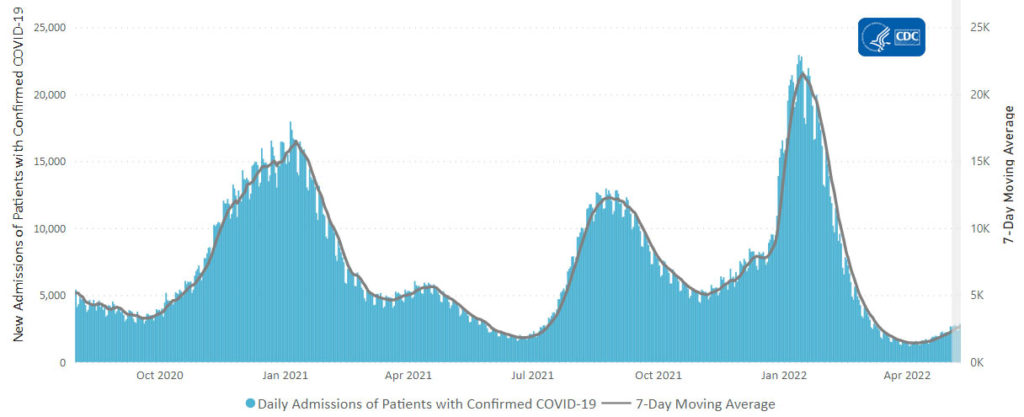
After reaching a seven-day average low of 1,426 daily admissions in early April, national admissions have continually increased and exceeded the seven-day average of 2,400 daily hospitalizations late last week. These new admissions represented an 11% increase over the previous week’s seven-day average, according to the agency, but were still nearly 90% below the January peak of more than 21,500 average daily admissions.

From the opioid epidemic front, the Wall Street Journal reports

Drug-overdose deaths in 2021 topped 100,000 for the first time in a calendar year, federal data showed, a record high fueled by the spread of illicit forms of fentanyl throughout the country.

More than 107,000 people in the U.S. died from drug overdoses last year, preliminary Centers for Disease Control and Prevention data released Wednesday showed, roughly a 15% increase from 2020. The proliferation of the potent synthetic opioid fentanyl has been compounded by the destabilizing effects of the Covid-19 pandemic on users and people in recovery, according to health authorities and treatment providers. 

The U.S. has recorded more than one million overdose deaths since 2000, and more than half of those came in the past seven years. 

“We’ve never seen anything like this,” said Robert Anderson, chief of the mortality-statistics branch at the CDC’s National Center for Health Statistics, regarding fentanyl’s impact on the numbers.

From the telehealth front, Healthcare Dive informs us

Telehealth visits for COVID-19 diagnoses fell in February, mirroring the sharp decline in new cases of the virus reported to the Centers for Disease Control and Prevention after January’s omicron-driven peak, according to Fair Health’s monthly telehealth claims tracker.

Overall telehealth use also slowed, falling 9.3% in February across the country. Virtual visits were 4.9% of all medical claim lines, down from 5.4% in the prior month.

With declining COVID-19 cases generating fewer telehealth sessions, mental health conditions accounted for a greater share of all diagnoses conducted via virtual platforms, according to the Fair Health data released Monday. Mental health diagnoses rose to about 64% of telehealth claims, up from 60% in January.

The FEHBlog is happy that people are using telehealth for mental healthcare,e which strikes the FEHBlog as a good, productive fit.

From the healthcare business front, Healthcare Dive reports

Advocate Aurora Health and Atrium Health said Wednesday they plan to merge, creating one of the nation’s largest nonprofit health systems with $27 billion in combined revenues and 67 hospitals across six states.

Board members from both systems unanimously approved the agreement, which is subject to regulatory review. The combined entity will be led by both CEOs for the first 18 months, at which time Advocate’s CEO Jim Skogsbergh will retire, leaving Atrium’s CEO Eugene Woods as sole leader.

Advocate and Atrium will have an equal number of board seats. Atrium’s board chair Edward Brown will first serve as chair until the end of 2023, followed by a two-year term for Advocate’s chair Michele Richardson.

The health systems’ joint press release adds

The new organization will have a combined footprint across Illinois, Wisconsin, North Carolina, South Carolina, Georgia and Alabama. It will serve 5.5 million patients, operate more than 1,000 sites of care and 67 hospitals, employ more than 7,600 physicians and nearly 150,000 teammates, and have combined annual revenues of more than $27 billion.

That’s an interesting combination.

Health Payer Intelligence calls attention to

Six technology vendors [who] were highlighted for their abilities to address one of the six main points of friction between payers and providers that leading healthcare organizations strive to address, according to a KLAS report that is part of the KLAS Payer/Provider Initiative.

KLAS launched the Payer/Provider Initiative to identify points of friction between payers and providers and to highlight strong collaboration case studies.

The six payer-provider challenges that leading healthcare organizations tackled were prior authorization, value-based care, payer-provider interoperability, denials, credentialing, and patient billing.

From the OPM front, Federal News Network tells us

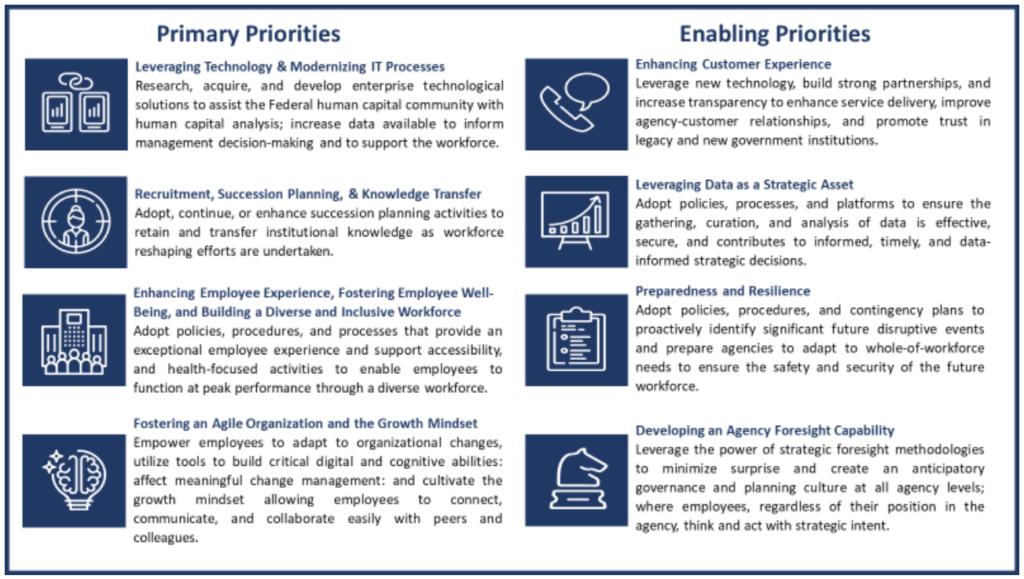
Agencies have to choose two out of four new focus areas to help improve their workforce over the next four years.

Deciding which options are most impactful gives agencies flexibility in how they approach new workforce objectives from the Office of Personnel Management.

Although OPM’s federal workforce priorities report, released on May 10, asks agencies to focus on only two of the four focus areas, implementing all four can help agencies resolve bigger workforce issues.

Among four primary priorities and four enabling priorities, OPM hopes agencies can implement proactive approaches to common issues, such as recruitment challenges.

From OPM’s federal workforce priorities report via Federal News Network

Tuesday’s Tidbits

Photo by Patrick Fore on Unsplash

From the Omicron and siblings front

  • The Wall Street Journal has updated its article on Covid boosters.
  • The Institute for Clinical and Economic Review (ICER) today released “a Final Evidence Report assessing the comparative clinical effectiveness and value of [specific] outpatient treatments for COVID-19 [, principally Pfizer’s pill Paxlovid and Merck’s pill molnupiravir ].

A majority (11-2) found current evidence is not adequate to demonstrate a net health benefit when molnupiravir is compared to symptomatic care alone.

All panelists (13-0) found that current evidence is adequate to demonstrate a net health benefit when Paxlovid is compared to symptomatic care alone.

Due to uncertainty in the net health benefit for molnupiravir, a majority of panelists voted that it represents “low-to-intermediate” long-term value for money.

A majority of panelists found that Paxlovid represents “high” long-term value for money.

  • ICER presented at the OPM/AHIP carrier conference last month. ICER “is an independent non-profit research institute that produces reports analyzing the evidence on the effectiveness and value of drugs and other medical services. ICER’s reports include evidence-based calculations of prices for new drugs that accurately reflect the degree of improvement expected in long-term patient outcomes, while also highlighting price levels that might contribute to unaffordable short-term cost growth for the overall health care system.”
  • Speaking of the Covid pills, STAT News discusses the use of telehealth services to prescribe them. The upshot, as the FEHBlog understands it, is while using telehealth for this purpose is convenient for patients, experts are unsure whether the telehealth service provides adequate follow-up care to the patient.

Also, from the Rx coverage front, the Food and Drug Administration issued a news roundup today.

From the healthcare business front, BioPharma Dive reports

Pfizer has agreed to acquire Biohaven Pharmaceuticals for $11.6 billion in a deal that turns an existing alliance on a fast-selling migraine drug into a big bet on its future growth.

Pfizer will pay $148.50 per share in cash for each Biohaven share it doesn’t already own, representing a roughly 79% premium to the company’s Monday closing price and a 33% premium to its average share price of $111.70 over the last three months. The deal, which is expected to close early next year, is by far the biggest biotech buyout of 2022, according to data compiled by Biopharma Dive.

Announced Tuesday, the acquisition hands Pfizer full rights to Nurtec ODT, a pill that’s approved in the U.S. and other countries for the treatment and prevention of migraines. Biohaven’s pipeline also includes an experimental nasal spray for migraines, zavepegant, that’s been submitted to U.S. regulators, as well as five additional, preclinical treatments that block the same protein target.

From the mental health parity front, the Labor Department’s Employee Benefits Security Administration announced that the agency will be holding a mental health parity compliance assistance webcast on May 24 from 2-3 pm ET. Here is a link to the announcement which explains how to register for the webcast.

From the patient safety front, the Leapfrog Group “released the spring 2022 Leapfrog Hospital Safety Grade, which assigns a letter grade to nearly 3,000 U.S. general hospitals based on over 30 measures of patient safety.”

At HospitalSafetyGrade.org, the public can find detailed information about a hospital’s performance on patient experience and other safety measures used to grade hospitals.

Across all states, highlights of findings from the spring 2022 Leapfrog Hospital Safety Grade include:

Thirty‐three percent of hospitals received an “A,” 24% received a “B,” 36% received a “C,” 7% received a “D,” and less than 1% received an “F.”

Five states with the highest percentages of “A” hospitals are North Carolina, Virginia, Utah, Colorado, and Michigan.

There were no “A” hospitals in Wyoming, West Virginia, the District of Columbia, or North Dakota.

From the medical research department, Medscape informs us

Eight modifiable risk factors were linked to more than one in three cases of Alzheimer’s disease and related dementia in the U.S., a cross-sectional analysis showed.

The eight risk factors — midlife obesity, midlife hypertension, physical inactivity, depression, smoking, low education, diabetes, and hearing loss — were associated with 36.9% (95% CI 36.5-37.3) of Alzheimer’s and dementia cases, reported Roch Nianogo, MD, PhD, of the University of California Los Angeles, and Deborah Barnes, PhD, MPH, of the University of California San Francisco, and co-authors.

The factors most prominently associated with Alzheimer’s and dementia were midlife obesity, at 17.7% (95% [Confidence Interval] CI 17.5-18.0); physical inactivity, at 11.8% (95% CI 11.7-11.9); and low educational attainment, at 11.7% (95% CI 11.5-12.0).

“We published a similar study a little more than 10 years ago, and the most important risk factors then were physical inactivity, depression, and smoking,” Barnes told MedPage Today.

“Today, the top three risk factors are midlife obesity, physical inactivity, and low education,” she observed. “This is important because it suggests that the growing number of people who are obese in the U.S. could have a major long-term impact on dementia rates.”

From the clarification front, the FEHBlog often reminds folks that federal employees who retired under the Civil Service Retirement System before 1984 are not eligible for free Medicare Part A. The FEHBlog dug into this issue today, and he discovered this 2013 Reg Jones Q&A on this topic that the Federal Times published.

Q. I retired in 2009 under CSRS. I am close to 65, and the answer to one of the questions asked states that people in CSRS are not eligible for Medicare because they didn’t pay into Social Security.

I was in CSRS before the change to FERS and stayed with CSRS. I had Medicare deductions taken from my pay from 1983-84 till I retired in 2009.

Do the Medicare funds I paid since 1983 make me eligible for Medicare or just part of it?

So which is right? I need to know so I can do what needs to be done — enroll or not. I’m currently insured under federal BCBS.

A. CSRS employees who retired before Dec. 31, 1983, aren’t eligible for Medicare Part A. Nor are CSRS employees who retired after that date but before having Medicare deductions taken from their pay for 10 years.

On the other hand, they are eligible to enroll in Medicare Part B, which is open to everyone 65 or older.

Consequently, the cadre of 65 and older federal annuitants without Medicare A is larger than the FEHBlog understood. This cadre is relevant to the Postal Reform Act because that law keeps Postal annuitants over aged 65 without Medicare Part in the legacy FEHBP.

Monday Roundup

Photo by Sven Read on Unsplash

From the Capitol Hill front, Roll Call reports

President Joe Biden and top Democrats have agreed to a GOP demand to disentangle a stalled COVID-19 response package from a separate supplemental request for military and humanitarian aid to Ukraine so the latter can move more quickly.  * * *

Senate Minority Leader Mitch McConnell didn’t reject the outlines of the Democrats’ offer in brief remarks Monday. “It may adjust some in the process, but we need to do it quickly,” McConnell told Punchbowl, while adding he was pleased that COVID-19 funds and an immigration-related dispute that tangled up the pandemic relief bill would be handled separately.

A separate, bipartisan $10 billion aid package for the ongoing pandemic response effort has been held up for a month due to a dispute over the so-called Title 42 program that allows migrants to be turned away at the border to prevent the spread of COVID-19. Biden has proposed to end the Trump-era program as of May 23, which Republicans and several Senate Democrats have said they oppose without alternatives in place to stem the expected surge of migrants.

From the Omicron and siblings front, the Centers for Disease Control has updated its long Covid website. The CDC explains

What You Need to Know

Post-COVID conditions can include a wide range of ongoing health problems; these conditions can last weeks, months, or years.

Post-COVID conditions are found more often in people who had severe COVID-19 illness, but anyone who has been infected with the virus that causes COVID-19 can experience post-COVID conditions, even people who had mild illness or no symptoms from COVID-19.

People who are not vaccinated against COVID-19 and become infected may also be at higher risk of developing post-COVID conditions compared to people who were vaccinated and had breakthrough infections.

There is no single test for post-COVID conditions. While most people with post-COVID conditions have evidence of infection or COVID-19 illness, in some cases, a person with post-COVID conditions may not have tested positive for the virus or known they were infected.

CDC and partners are working to understand more about who experiences post-COVID conditions and why, including whether groups disproportionately impacted by COVID-19 are at higher risk.

From the SDOH front, STAT News tells us

Widely used physician guidelines that ignore patients’ race and ethnicity could be doing more harm than good when it comes to catching diabetes in people of color. New research, published in the Annals of Internal Medicine on Monday, suggests that people from certain racial and ethnic groups should be screened for diabetes at lower body mass index than non-Hispanic white people — a recommendation that contradicts recent guidelines from the United States Preventive Services Task Force.

It’s an admittedly tricky proposition, to reaffirm the role of race and ethnicity at a time when medicine is trying to rid itself of race-based tools — such as an algorithm used to assess kidney function — that have contributed to the large health disparities in the United States. The paper’s authors recognized as much in interviews with STAT.

They argue, however, that using a one-size-fits-all approach to screening, when diabetes is two to four times more prevalent and more deadly in Black, Hispanic, and Asian Americans, is likely to result in underdiagnosis of the disease, and widen health gaps.

From the healthcare business front, Fierce Healthcare informs us

Telehealth giant Amwell saw telehealth visits grow to 1.8 million in the first quarter of 2022, up 16% compared to the tail end of 2021 and up about 11% from 1.6 million virtual care visits during the same time last year.

The total number of active providers using its virtual care platform grew to around 102,000 during the quarter, up 25% compared to 81,000 a year ago. * * *

Amwell has been making significant investments in its new virtual care platform, Converge. Announced in April, Converge makes all of Amwell’s products and programs, plus third-party applications, available in one place. * * *

The company is in the process of migrating its customers over to the new platform. About 10% of the company’s virtual visits occurred through Converge in the first quarter, up 40% compared to the fourth quarter, said Ido Schoenberg, chief executive officer. The first wave of upgrades will focus on hospital systems and then move to health plans, executives said. 

“The market increasingly appreciates that automation is a compelling new element of digital healthcare and they require a trusted partner to provide integrated automation into their care delivery workflows,” he told analysts during the company’s first-quarter earnings call Monday.

Healthcare Dive meanwhile looks back at large health insurers’ reports on first-quarter 2022 earnings.

FedWeek compares annuitant eligibility rules for FEHB vs. FEDVIP and concludes that FEDVIP has more flexible rules. Why not?, considering that FEHB provides a government contribution while FEDVIP is enrollee pay-all. It’s still worth knowing the differences.

Weekend update

Photo of Texas Bluebonnets by Ryan Riggins on Unsplash

From the Capitol Hill front, the House of Representatives and the Senate will be holding Committee business and floor voting this week.

From the Omicron and siblings front, the Wall Street Journal reports

New Omicron subvariants are proliferating even in the face of significant protection from vaccinations and prior infection, as policy makers consider measures including open-ended vaccination drives to keep the evolving virus at bay.

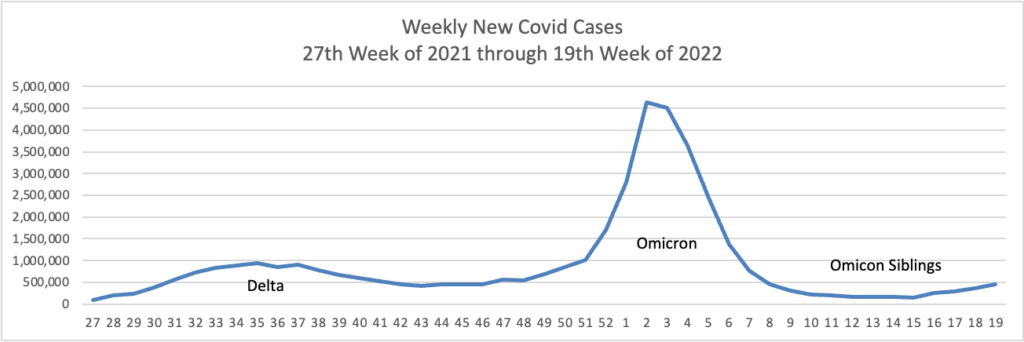
Much of the U.S. population already had some level of antibodies to the virus when Omicron hit late last year, the Centers for Disease Control and Prevention estimates. That likely shielded many from more-severe disease, but the variant still fueled a record case surge and the second-highest peak in Covid-19 deaths. Immune defenses bolstered by the massive wave appear to be muting the impact of the yet-more-infectious Omicron variants even as cases and hospitalizations increase once again. 

These recurring run-ins with a changing virus demonstrate the challenge of maintaining long-lasting defenses, even as Covid-19 vaccines and exposures build up protection against the virus’s worst outcomes. * * *

“To decrease the [variant] changes, it’s about decreasing the space the virus can actually play in and limiting that space to evolve,” said Ali Ellebedy, an immunologist at Washington University School of Medicine in St. Louis.

From the healthcare business front —

The Wall Street Journal informs us

Some hospitals grappling with rising nurse salaries are seeking to raise prices by up to 15%, touching off contract fights with health insurers and businesses and threatening higher premiums.

HCA Healthcare Inc. and Universal Health Services Inc. are among the hospitals asking health plans to pay them more for care to offset mounting nurse costs.

Neither of the chains would specify the price increases they are requesting, but people familiar with negotiations say some hospitals are asking to increase their prices by 7.5% to 15%.

The requests are more than the 4% to 6% price increases that hospitals typically seek, according to employers and insurers. The hospitals usually won an average 3% price increase in recent years, according to Altarum, a nonprofit that does healthcare research.

If hospitals win heftier price increases they are seeking this year, that would likely result in higher premiums for employers and workers.

But insurer and employer groups, which push for lower-cost contracts or negotiate them on behalf of coalitions of businesses, are rejecting the requests. The groups say the priciest hospitals can absorb higher labor costs without raising their rates.

“Most of the employers have been unable to increase the wages of their workers for years primarily because of the increasing cost of healthcare,” said Karen van Caulil, chief executive of employer coalition Florida Alliance for Healthcare Value.

STAT News offers its perspective on these developments here.

From the OPM call letter front, OPM has encouraged plans to offer discounted infertility treatment benefits. The FEHBlog discovered Progyny which offers fertility testing and a network of infertility specialists. Fierce Healthcare reports on Progny’s favorable first quarter 2022 financial results. The article adds

The first fertility benefits management company to ever go public, Progyny has grown its client base to more than 265 large self-insured employers, up from 179 clients a year ago. Those clients represent about 3.9 million covered lives.

The company brought on 85 new self-insured employers in the first quarter, representing 1.2 million covered lives, [CEO Pete] Anevski told Fierce Healthcare. * * *

The company says it offers a “purpose-built, data-driven and disruptive platform” that delivers “superior clinical outcomes in a cost-efficient manner.” Progyny’s benefits solution empowers patients with education and guidance from a dedicated Patient Care Advocate and provides access to a premier network of fertility specialists using the latest science and technologies.

Company executives tout Progyny’s industry-leading clinical outcomes, noting that for the sixth straight year, the company significantly outperformed as compared to the national averages for fertility outcomes released by the Centers for Disease Prevention and Control and Prevention. 

Progyny’s pregnancy rate improved to 17% better than the national average, while its live birth rate, which had been 25% better than the national average a year ago, is now 27% better, Anevski said.

“To give you a sense for just how impactful this is, our higher live birth rate means that Progyny clients need to fund on average significantly fewer rounds of treatment than they otherwise would, had they be using either a carrier program or one of the venture capital-backed startups,” he said. “This once again reveals that Progyny’s uniquely helping people to get pregnant faster, have healthier pregnancies and deliver healthy babies.”

Worth a look.

From the telehealth front, Fierce Healthcare informs us

Cerebral is among a handful of virtual care startups that prescribe controlled substances without patients seeing a doctor in-person. * * *

Last week, Insider reported that the Drug Enforcement Agency (DEA) is investigating the company. U.S. DEA agents interviewed former Cerebral employees about issues with clinician licensing and about allegations that some patients had set up multiple accounts to obtain more drugs, Insider reported, citing sources.

According to Insider’s most recent story, the grand jury subpoena demands documents such as Cerebral’s policies and procedures regarding controlled substances and documents related to Cerebral’s relationship with the online pharmacy Truepill.

Earlier this week, Truepill, which is reportedly Cerebral’s preferred pharmacy, said it was temporarily halting prescriptions for Adderall and other controlled substances used to treat attention-deficit/hyperactivity disorder (ADHD).

Out of an abundance of caution, Truepill is temporarily pausing all fulfillment of schedule 2 substances while we evaluate appropriate next steps,” the company said in a statement to Fierce Healthcare.

The Wall Street Journal was the first to disclose these shenanigans.

Friday Stats and More

Based on the CDC’s Covid Data Tracker and using Thursday as the first day of the week, here’s the FEHBlog’s weekly chart of new Covid cases displayed from the 27th week of 2021 through the 18th week of 2022.

The CDC reports in its latest weekly review that “The current 7-day daily average of new Covid hospital admissions for April 27–May 3, 2022, was 2,219. This is a 16.6% increase from the prior 7-day average (1,903) from April 20–26, 2022.

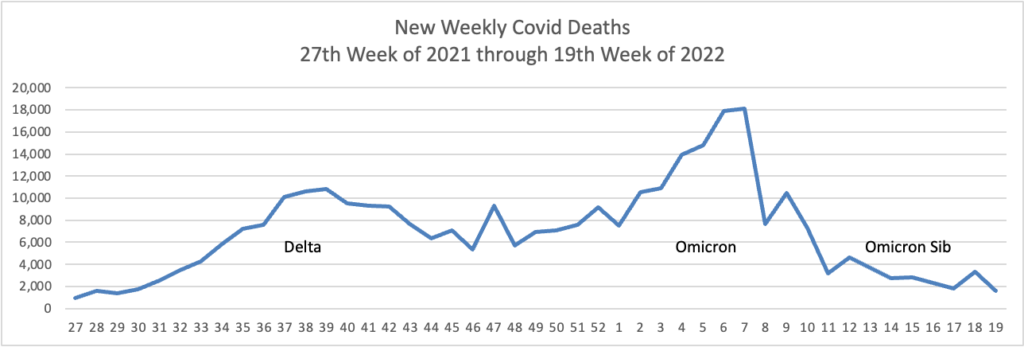
Here’s the FEHBlog’s latest weekly chart of new Covid deaths display from the 27th week of 2021 through the 18th week of 2022.

The CDC’s weekly review sums it up as follows:

COVID-19 cases and hospitalizations are on the rise in the United States. Although deaths continue to decrease, the United States is expected to reach 1 million deaths soon. * * *

As of May 5, 2022, there are 78 (2.42%) counties, districts, or territories with a high COVID-19 Community Level, 316 (9.81%) counties with a medium Community Level, and 2,826 (87.76%) counties with a low Community Level. This represents a slight (0.75 percentage points) increase in the number of high-level counties, a small (+1.86 percentage points) increase in the number of medium-level counties, and a corresponding (−2.61 percentage points) decrease in the number of low-level counties. Sixteen (28.57%) of 56 jurisdictions had no high- or medium-level counties this week.

To check your COVID-19 community level, visit COVID Data Tracker.

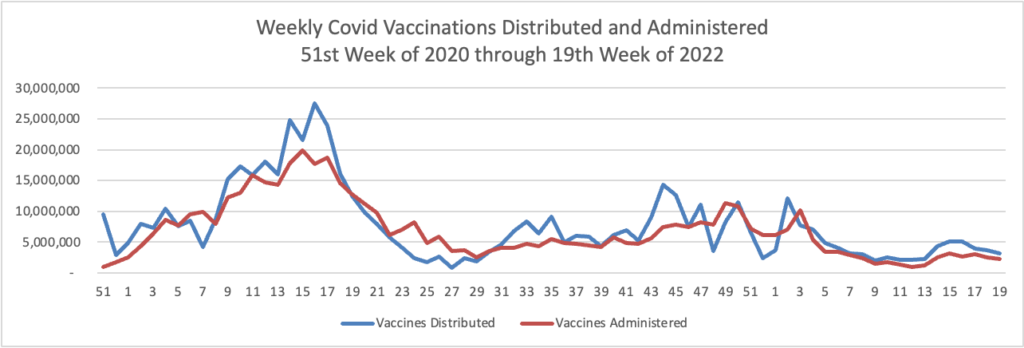
Here’s the FEHBlog’s weekly chart of Covid vaccinations distributed and administered from the inception of the vaccination program until this 18th week of 2021.

Nearly 75% of the U.S. population aged 12 and older are fully vaccinated and nearly 50% of the U.S. population aged 18 and older have received a booster.

STAT News reports

The White House could run out of Covid-19 vaccines if it moves forward with plans to encourage all adults to get a second Covid-19 vaccine booster dose by roughly Sept. 1, according to a tranche of budget documents sent to Congress that have not previously been made public.

In other CDC news, the American Hospital Association informs us

The Centers for Disease Control and Prevention is investigating 109 potential hepatitis cases of unknown cause in U.S. children since last October, including five deaths. More than 90% of the patients were hospitalized, 14% received liver transplants and more than half had a confirmed adenovirus infection, but officials still don’t know the actual cause of their hepatitis and cautioned that it may take time to assess the evidence and learn more. CDC alerted clinicians to the first cases last month.

To date, 25 states and territories have reported potential cases: Alabama, Arizona, California, Colorado, Delaware, Florida, Georgia, Idaho, Illinois, Indiana, Louisiana, Michigan, Minnesota, Missouri, North Carolina, North Dakota, Nebraska, New York, Ohio, Pennsylvania, Puerto Rico, Tennessee, Texas, Washington and Wisconsin.

Potential cases also have been reported in the United Kingdom and other countries

From the Rx coverage front, Medscape tells us

The US Food and Drug Administration (FDA) has cleared the first in vitro diagnostic to aid in the early detection of Alzheimer’s disease (AD).

The Lumipulse G β-Amyloid Ratio 1-42/1-40 (Fujirebio Diagnostics) test detects amyloid plaques associated with AD in adults age 55 or older who are under investigation for AD and other causes of cognitive decline.

“The availability of an in vitro diagnostic test that can potentially eliminate the need for time-consuming and expensive [positron emission tomography (PET)] scans is great news for individuals and families concerned with the possibility of an Alzheimer’s disease diagnosis,” Jeff Shuren, MD, JD, director of the FDA’s Center for Devices and Radiological Health, said in a statement.

“With the Lumipulse test, there is a new option that can typically be completed the same day and can give doctors the same information regarding brain amyloid status, without the radiation risk, to help determine if a patient’s cognitive impairment is due to Alzheimer’s disease,” he added.

From the healthcare business front, Beckers Payer Issues informs us

Cigna reported over $44 billion in total revenues in the first quarter, with the strongest growth in the company’s Evernorth business. Projected revenues at year end stand at $177 billion, according to the company’s earnings report released May 6.

“We’ve had a strong start to the year as we advance our growth strategy and support the health and well-being of our clients and customers,” Chair and CEO David Cordani said. “We’re taking decisive steps forward with innovation, new partnerships and re-investing in our company so we can achieve greater impact for the customers and communities we’re privileged to serve.”

Also, Becker’s Hospital CFO Report tells us

Driven mainly by nonoperating losses, Oakland, Calif.-based Kaiser Permanente recorded a net loss of $961 million in the first quarter of 2022, down from a net income of $2 billion in the same quarter in 2021, according to financial data released May 6. 

For the quarter ending March 31, Kaiser reported total operating revenue of $24.2 billion, up from $23.2 billion the year prior. Tom Meier, corporate treasurer of Kaiser Permanente, said the revenue increase was attributed to several factors, including growth of its health plan. 

Kaiser also saw its expenses increase significantly in the first quarter of 2022 to $24.3 billion, up 9.5 percent from the same quarter last year. Mr. Meier said the health system incurred about $1.4 billion in costs from COVID-19, including $900 million for the cost of care, $550 million for testing and $50 million for vaccinations. 

In related news, Govexec reports

USPS saw a net loss of $639 million in the period between Jan. 1 and March 31, up from $82 million in the same period last year. The Postal Service Reform Act was not enshrined into law until after the second quarter of fiscal 2022, meaning the relief it will provide by eliminating the requirement that the Postal Service prefund health care costs for future retirees was not reflected in the financial results. USPS grew revenue in the quarter by about $900 million, a 5% increase from the same period in 2021. Volume grew by about 3%. 

Federal News Network adds

Postmaster General Louis DeJoy expects the Postal Service will need to keep raising prices on its monopoly mail products for the foreseeable future, as part of a 10-year reform plan to improve its long-term financial health.

DeJoy said Thursday said the mailing industry needs to be prepared for USPS to raise prices on its market-dominant products “at an uncomfortable rate,” until it reaches a point where the agency is on track to be self-sustaining in the long term.

As we approach Mothers’ Day this weekend, the American Hospital Association tells us

The Health Resources and Services Administration will launch May 8 a toll-free hotline for expecting and new mothers experiencing mental health challenges, where trained counselors will provide brief interventions and referrals to community-based and telehealth providers as needed. Callers also will receive evidence-based information and referrals to support groups and other community resources.

“Today, we are creating a safe space for expecting and new moms who are experiencing maternal depression, anxiety or other mental health concerns to have confidential conversations and get the support they need,” said HRSA Administrator Carole Johnson. “Moms can call or text 1-833-9-HELP4MOMS and connect with a counselor at no charge. We are going to continue to grow our investments in this resource, as we know it’s what women need.”

Nothing is too good for our Moms.

Thursday Miscellany

Photo by Josh Mills on Unsplash

From Capitol Hill, Fierce Healthcare reports

Several bipartisan senators are clamoring for more transparency into how pharmacy benefit managers conduct their business, potentially foreshadowing action on legislation to require new disclosures for the industry.

A subcommittee of the Senate Commerce Committee held a hearing Thursday on PBMs and their role in the pharmaceutical marketplace. Senators claimed there is an absence of competition in the industry and potential conflicts of interest.

“PBMs are not the only cause of drug price inflation and excessive pricing, but they are integral to this system,” said Sen. Richard Blumenthal, D-Connecticut, the subcommittee’s chairman. “They are part of an increasingly integrated, uncompetitive system involving PBMs owned or owning insurers and constraining pharmacies in the amount of information that they give to consumers. That is one slice of a broken system.”

Healthcare Dive informs us

Members of the healthcare industry are once again pressuring Congress to remove what they say is a major pain point in their operations and in the delivery of patient care: the ban on a nationwide unique patient identifier.

Almost 120 health IT groups, EHR vendors, hospitals, physicians and health insurers sent letters on Wednesday to House and Senate appropriators urging them to remove decades-old rider language in a 2023 appropriations bill that prevents the HHS from spending federal dollars to create or adopt a UPI standard.

Signees, including payer lobby AHIP, software companies Cerner and Epic, and health systems Banner Health and Intermountain, called the ban “archaic” in the letters. However, regulators have noted a UPI is unlikely to be a silver bullet against the nation’s patient matching problem.

The patient identifier strikes the FEHBlog as a key to interoperability as well as improving patient safety. Fund it, Congress!

From the Omicron and siblings front, Medpage Today reports

Use of Johnson and Johnson’s (J&J) COVID-19 vaccine should only be limited to certain adults, the FDA said on Thursday.

Due to an updated analysis of the rare cases of thrombosis with thrombocytopenia syndrome (TTS), which typically occur 1 to 2 weeks after vaccination, use of the J&J vaccine should be restricted to those for whom mRNA vaccines are “not accessible or clinically appropriate,” or who would not get vaccinated if not for the J&J vaccine, the agency said.

It’s unfortunate that the only one-shot vaccine, which helped public health authorities reach underserved communities, is now knocked down for the mandatory eight count.

From the healthcare innovations front, Fierce Healthcare informs us

UnitedHealthcare has partnered with Kaia Health on a new virtual physical therapy program.

The program aims to offer 24/7, on-demand exercise feedback to eligible members with musculoskeletal conditions, the health insurance giant said. Members who are recovering from surgery or an injury will be asked to complete an assessment of current issues and will be referred to the program based on that assessment.

Eligible members will then be able to download Kaia’s app to access its physical therapy tools, which use artificial intelligence to support patients through physical therapy exercise and monitor progress.

and

Cigna is launching a new provider consult service that aims to improve outcomes for patients with cancer.

The program, backed by the capabilities of the insurer’s Evernorth subsidiary, allows community oncologists to connect with cancer subspecialty experts at centers designated by the National Cancer Institute (NCI). These connections will allow patients to benefit from the latest innovations in cancer care while also keeping their care close to home, Cigna said.

In a pilot, community oncologists had their treatment plans reviewed by experts and in 40% of cases reviewed, patients were recommended alternative tests or treatment based on new advancements in research.

Also a ZDNet reporter discusses his experience of wearing a continuous glucose monitor for 40 days.

I learned a lot about my body and how it reacts, and that’s information I can and do still use on a daily basis even if I don’t have an app yelling at me. Since I stopped wearing the Signos and getting insight, I’ve stuck to a healthier diet and routine exercise.

Good read.

From the healthcare business front, Healthcare Dive tells us

Centene said Thursday it has inked separate agreements to sell two of its pharmacy businesses in deals totaling $2.8 billion.

The payer plans to sell Magellan Rx to Prime Therapeutics and Pantherx to The Vistria Group, General Atlantic and Nautic Partners.

The deals are subject to regulatory approval. Magellan Rx is expected to close in the fourth quarter while Pantherx is anticipated to close in the next two to four months.

Thursday’s news builds on Centene’s plan to sell off non-core assets as it looks to sharpen its focus on its main [health insurance] business.

From the federal employment front, Govexec identifies the agencies who scored best and worst on the key employee morale questions of the recently released OPM 2021 Federal Employee Viewpoint Survey.

The National Science Foundation, Federal Energy Regulatory Commission, General Services Administration and the Pension Benefit Guaranty Corporation each landed in the top five on questions related to employees’ job satisfaction, senior leaders’ ability to motivate the workforce, and whether employees believe their agency will use Federal Employee Viewpoint Survey results to improve the workplace.

On the other hand, four agencies found themselves consistently near the bottom on these same questions. The Homeland Security Department, Social Security Administration, as well as the Justice and State departments all found themselves in the bottom five of at least two of these three questions.

Midweek update

Photo by Thought Catalog on Unsplash

From the Omicron and siblings front

The American Hospital Association informs us

COVID-19 vaccinations prevented an estimated 107,000 Medicare hospitalizations between January and May 2021, resulting in $2.6 billion in savings for Medicare and Medicare Advantage plans, according to a new report by the Department of Health and Human Services. The report estimates the impact of COVID-19 vaccination during a five-month period shortly after the first vaccine was authorized and recommended for health care workers and elderly people in long-term care facilities. Future analyses will examine hospitalizations prevented by vaccination during the delta and omicron waves, HHS said.

Bloomberg Prognosis tells us

Pfizer Inc. executives said patients who suffer a relapse in Covid-19 symptoms after taking a full course of Paxlovid should take more of the treatment, though current U.S. guidelines limit use to five consecutive days.

“Paxlovid does what it has to do: it reduces the viral load,” Chief Executive Officer Albert Bourla said in an interview. “Then your body is supposed to do the job.” But for unknown reasons, the CEO said, some patients aren’t able to clear the virus with the first course of treatment.

In cases where virus levels do rebound, Bourla said, “then you give a second course, like you do with antibiotics, and that’s it.”

As noted in the article, the fly in the ointment is that the FDA emergency use authorization does not expressly approve a second course of the medication.

From the Rx coverage front

MedCity News reports on Bristol Myers Squibb’s (BMS) NEX-T program to improve CAR-T treatments.

The company has described NEX-T as changes to manufacturing driven by the translational insights it has gleaned from treating thousands of patients with its CAR T therapies. In addition to a faster turnaround time, the strategy is intended to reduce the costs of the overall process.

One of the key goals for the next-generation of cell therapies is treating solid tumors.

Another strategy that BMS is pursuing is going after two targets with a single therapy, reducing the risk that a tumor escapes from the treatment

Looking at the flip side of this coin, Forbes reports

Health plans and pharmacy benefit managers (PBMs) that manage drug costs speaking at this year’s Asembia Specialty Pharmacy Summit in Las Vegas say specialty drugs now account for 50% or greater of the total prescription spending they manage. In some cases, employer clients are seeing specialty costs account for 60% or even greater of their total drug spending.

“It really is frightening for our clients,” Lucille Accetta, senior vice president of pharmacy benefit management and specialty product development at CVS Health told hundreds of attendees at the Asembia event, which runs through Thursday and drew more than 5,000 people from the healthcare industry. “We have to be the best purchaser for our clients.” * * *

To reign in the costs of prescription drugs while maintaining access to life-saving treatments, health plans and pharmacies say they are more closely monitoring patients as soon as they are on the drug, said Rina Shah, group vice president of pharmacy operations and services at Walgreens.

The Forbes article adds

Abarca Health [is] an independent PBM that manages more than $5 billion in drug costs annually for more than four million Americans has executives at this week’s Asembia meeting talking up its efforts to better manage specialty pharmacy costs.

The company’s Assura solution launched earlier this year “guarantees the net cost of drugs, including specialty medications, by offering an annual fixed per script cost for a health plan’s entire population,” Abarca said in announcing the new pricing solution earlier this year. The guarantee, Abarca CEO Jason Borschow says, is adjusted each year based on drug benefit coverage changes.

From the healthcare business front

Healthcare Dive informs us

Even as COVID-19’s benefit waned, new plan members across multiple product lines helped drive CVS to $2.3 billion in profit in the first quarter, slightly higher than the $2.2 billion brought in at the same time last year.

In results published Wednesday, the company beat Wall Street expectations on earnings and revenue, with a topline of $76.8 billion, up 11% year over year.

Fierce Healthcare explains how CVS has shifted from a retail to a digital marketing focus.

The Wall Street Journal reports

Moderna Inc. MRNA 5.81% said that its first-quarter revenue and profit tripled from a year earlier on higher sales of its Covid-19 vaccine and that a fall booster-shot campaign could drive continued sales gains.

The biotechnology company’s revenue topped $6 billion in the period ended March 31, beating analyst expectations and rising from $1.94 billion a year earlier, driven almost entirely by sales of its messenger RN

Moderna Inc. MRNA 5.81% said that its first-quarter revenue and profit tripled from a year earlier on higher sales of its Covid-19 vaccine and that a fall booster-shot campaign could drive continued sales gains.

The biotechnology company’s revenue topped $6 billion in the period ended March 31, beating analyst expectations and rising from $1.94 billion a year earlier, driven almost entirely by sales of its messenger RNA-based vaccine, branded as Spikevax. * * *

Moderna is the latest drugmaker to show surging sales due to demand for Covid-19 vaccines and treatments, following recent reports fromEli Lilly & Co., Merck & Co. and Pfizer Inc.

From the health risks front, MedPage Today explains that

Seven risk factors, some modifiable and some not, accounted for the vast majority of risk for first-time acute myocardial infarction (MI) in young adults, according to a case-control study.

The seven factors — diabetes, depression, hypertension, smoking, family history of premature MI, low household income, and hypercholesterolemia — were responsible for 83.9% of the total acute MI risk in young women and 85.1% of the risk in young men, reported Harlan Krumholz, MD, SM, of Yale New Haven Hospital in New Haven, Connecticut, and colleagues.

The UPI reports

Older adults who obtain a flu shot are less likely to suffer a heart attack or stroke and are at lower risk for death from heart-related health events in the year after getting vaccinated, an analysis published Friday found.

Just under 4% of older adults vaccinated against the seasonal virus experienced a “cardiovascular event” within the next year compared to just over 5% of those who did not receive the shot, data published Friday by JAMA Network Open showed.

From the meetings department,

  • HHS provides a readout of a high-level meeting among Labor Department, health insurance and business executives “to discuss compliance with the Mental Health Parity and Addiction Equity Act, adequacy of in-network providers and mental health and substance use disorder treatment during the pandemic, as the nation observes Mental Health Awareness Month.”
  • The National Committee for Quality Assurance reviews the presentations at last week’s Quality Talks conference.

From the federal employee benefits front, FedWeek discusses OPM’s planned improvement to processing retirement applications as unveiled in the Fiscal Year 2023 budget document. Processing federal retirement benefits will be a heavy lift for OPM until Congress simplifies the pension calculation.

Tuesday’s Tidbits

Photo by Patrick Fore on Unsplash

From the Omicron and siblings front, Fortune Well explores earlier pandemics for similarities to our current one.

As U.S. COVID czar Dr. Anthony Fauci and colleagues pointed out in a 2009 New England Journal of Medicine article, “It is not generally appreciated that descendants of the H1N1 influenza A virus that caused the catastrophic and historic pandemic of 1918–1919 have persisted in humans for more than 90 [now 100] years and have continued to contribute their genes to new viruses, causing new pandemics,” including the 2009 H1N1 “swine flu.”

“We are living in a pandemic era that began around 1918,” they wrote 13 years ago—long before the advent of COVID-19.

Harald Brüssow, editor of Microbial Biotechnology, agrees with Fauci and his colleagues that “viruses do not simply disappear.”

“They change and hopefully they adapt and behave,” Brüssow said. “But there are still some escapes, and we might see a return with higher virulence. Vigilance is indicated.”

From the healthcare business front —

The Wall Street Journal reports

Pfizer Inc. expects demand for its Covid-19 antiviral drug to increase as governments return to replenish their supplies and seek to thwart surges as the pandemic virus continues to evolve.

The treatment, a pill called Paxlovid, brought in $1.5 billion in sales during Pfizer’s first quarter, while its vaccine totaled $13.2 billion, reflecting the need for tools to combat the virus despite a slowdown in cases and a growing sense of life trying to return to normal.

The company said Tuesday it is on track to deliver between $98 billion and $102 billion in revenue for the year, with $32 billion coming from its Covid-19 vaccine Comirnaty and $22 billion from Paxlovid. 

“We remain bullish on Paxlovid” said Chief Financial Officer Frank D’Amelio on a call discussing earnings with analysts. “The rhythm of that product looks very good.”

STAT New informs us

Biogen is replacing CEO Michel Vounatsos, the company said Tuesday, ending a five-year tenure in which he presided over the disastrous approval and rollout of its Alzheimer’s treatment, Aduhelm.

The company also said it is “substantially eliminating” all spending on Aduhelm just 10 months after securing U.S. approval — a concession from the struggling biotech that the drug had become a financial liability following a Medicare decision to restrict patient access and payment.

From the Affordable Care Act front, Health Affairs Forefront features the third and final part of Katie Keith’s series on the final 2023 notice of benefit and payment parameters. The third part discusses changes to the ACA marketplace’s risk adjustment program.

From the No Surprises Act, the FEHBlog had understood that the NSA regulators planned to release a final rule on the NSA’s arbitration process, replacing the interim final rule, this month. However, a Justice Department filing with the U.S. Court of Appeals for the Fifth Circuit submitted late last week states, “the Departments expect to issue a final rule early this summer that will supersede the portions of the interim final rule that Plaintiffs [in the Texas Medical Association case] challenged.” No wonder then that the final rule has not been presented yet to OMB’s Office of Information and Regulatory Affairs for its required review before publication in the Federal Register.

From the tidbits department —

  • Here is a link to the new CMS Strategic Plan.
  • Federal News Network tells us,

Agencies’ hiring efforts for the Bipartisan Infrastructure Law (IIJA) are “foot to the pedal,” OPM Director Kiran Ahuja said in an exclusive interview with Federal News Network.

The surge includes filling 3,000 of those new positions over the first six months after President Joe Biden signed the bill into law.

Ahuja has frequently spoken about her goals to attract more early-career workers to federal service. The BIL gives OPM another chance to do just that.

  • FedSmith identifies four personal budget factors Federal retirees must anticipate. One of those factors is our beloved FEHBP.
  • The CDC offers ten tips for coping with diabetes distress.

Monday Roundup

Photo by Sven Read on Unsplash

The President has declared May 1 through May 7 to be Public Service Recognition Week. OPM explains

Celebrated annually during the first week of May since 1985, Public Service Recognition Week (PSRW) (external link) is time set aside to honor the men and women who serve our nation as federal, state, county and local government employees. 

Throughout the country, mayors, governors, agency leaders, communities and public service organizations participate in PSRW by issuing proclamations; hosting award ceremonies and special tribute events; and delivering messages about the value of public service.

To that end, Govexec reports the President took the time today to virtually award Presidential Rank Awards to 230 senior federal employees from 37 agencies.

Speaking directly to the career civil service, Biden said: “Over the last 15 months you’ve helped us deliver so much to the American people,” such as the getting Americans vaccinated against COVID-19, delivering economic relief checks, caring for veterans, implementing the infrastructure package and working to restore the public’s faith in government and democracy. He gave a big “thank you” to them as well as their families. 

The FEHBlog heartily agrees.

From the Omicron and siblings front, WebMd informs us

The FDA’s independent panel of advisors will meet in June to discuss the Pfizer and Moderna COVID-19 vaccines for children under age 5, as well as the Novavax vaccine for adults, according to an FDA announcement released Friday.

On June 7, the FDA’s vaccine committee will review the Novavax shot, which could become the first new COVID-19 vaccine to hit the U.S. market in more than a year. The shot is already authorized in more than three dozen countries, including across Europe.

The FDA has also selected three possible dates — June 8, 21, and 22 — to discuss the shots for kids under age 5. The dates are tentative because the companies haven’t completed their submissions, the agency said.

The FEHBlog is pleased to read about these developments because the Novovax shot which uses a traditional vaccination approach may be acceptable to the vaccine inquisitive and the country needs a vaccine for younger children.

STAT News adds

Pfizer released news late Friday that Paxlovid, the antiviral currently subject to a big push from the U.S. government, failed to prevent people living with Covid patients from catching the infection.

The news is one of several bad headlines for the new Covid pill, but one experts say doesn’t affect the medicine’s primary use: treating people who are already sick.

Paul Sax, clinical director of the division of infectious diseases at Brigham and Women’s Hospital, said he would “absolutely” prescribe Paxlovid to people at high risk of severe disease who have Covid. “Without hesitation,” he said. “Because the net benefit in the high risk study was extremely high.”

From the Affordable Care Act front, Health Affairs Forefront has posted the second part of Katie Keith’s three-part series on last week’s HHS final 2023 notice of ACA benefit and payment parameters. The second part concerns changes specific to the ACA marketplace or exchange plans.

From the Rx coverage front, Health Affairs informs us

UnitedHealthcare is restricting insurance coverage of Aduhelm across all of its health plans, saying the drug “is unproven and not medically necessary for the treatment of Alzheimer’s disease due to insufficient evidence of efficacy,” according to the company’s new policies.

Physicians who plan on giving Aduhelm to UnitedHealthcare patients will need to obtain prior approval from the insurance company, effective June 1. Patients also need to be in an approved clinical trial.

UnitedHealthcare’s decision follows Medicare, which said last month it would only pay for the costly infusion drug for patients who participate in a clinical trial. UnitedHealthcare is the largest Medicare Advantage insurer in the country, covering 8 million people older than 65 and people with disabilities, making this policy particularly important for older Americans on those private plans.

The FEHBlog expects UHC’s announcement to be the tip of the eventual iceberg of similar Aduhelm coverage decisions.

Following up on previous stories mentioned in the FEHBlog, the Wall Street Journal reports

Online pharmacy company Truepill Inc. said it is temporarily halting prescriptions for Adderall and other controlled substances used to treat attention-deficit hyperactivity disorder, and partner Cerebral Inc. told its clinicians to direct those orders to patients’ local pharmacies.

Cerebral, an online mental-health company based in San Francisco that describes Truepill as its preferred pharmacy, informed its clinicians of Truepill’s decision in a Friday email viewed by The Wall Street Journal. The email said Truepill would no longer support mailing Schedule 2 controlled substances, including Adderall and Vyvanse, “to any of their customers.”

Truepill said that, “out of an abundance of caution,” it is temporarily pausing all fulfillment of Schedule 2 substances while it evaluates appropriate next steps. It said Schedule 2 substances such as Adderall make up less than 1% of its total prescription volume. Truepill didn’t provide a list of other partners affected by its decision.

Some of the nation’s largest pharmacies have blocked or delayed prescriptions over the past year from clinicians working for telehealth startups that have sprung up to treat ADHD, according to pharmacies and people familiar with the issue.

The Journal reported last week that pharmacies including Walmart Inc., CVS Health Corp. and Walgreens Boots Alliance Inc. have blocked or delayed prescriptions for companies treating ADHD online or have blocked individual prescribers, according to people familiar with the issue.

That was the right outcome as far as the FEHBlog is concerned.

In U.S. Supreme Court news, Business Insurance reports “Private plaintiffs cannot be reimbursed for emotional distress damages under the 1973 Rehabilitation Act and the Patient Protection and Affordable Care Act, the U.S. Supreme Court ruled” last Thursday in the linked opinion. The Affordable Care Act provision at issue is the ACA’s convoluted individual non-discrimination provision, Section 1557.

From the healthcare business front, Fierce Healthcare tells us

Outpatient volumes and revenue for hospitals and health systems showed a robust rebound in March as expenses eased due to fewer extremely sick patients, a new report said. 

Consulting firm Kaufman Hall released its latest hospital flash report Monday (PDF) detailing the impact of system finances for the month of March. A key takeaway from the report is that while actual hospital margins were negative for the third month in a row, outpatient revenues had a massive bump.

“While the road to recovery remains long for many hospitals, these trends indicate some pressures of the pandemic may be lifting,” said Erik Swanson, senior vice president of data and analytics with Kaufman Hall, in a statement. 

From the mental healthcare front,

Fierce Healthcare reports

Mental health concerns are on the rise across the board, and especially among Blacks, seniors, young adults and LGBTQIA people, a new survey finds.

CVS Health and Morning Consult polled more than 2,200 adults in early April and found that 59% of respondents have experienced challenges with their mental health or that of a friend or family member. That is a 9% increase over 2020 survey data.

More than half (57%) of people surveyed who identify as LGBTQIA expressed concern about their own mental health, 20 percentage points higher than other groups included in the study. Nearly three-quarters (74%) of those aged 18 to 34 said they experienced such concerns either themselves or for a friend or family member, up 12 percentage points from 2020.

The survey also found an 11 percentage point increase in mental health concerns among Black respondents compared to pre-COVID levels. A double-digit increase was also found among people over age 65; about 40% reported mental health concerns for themselves or family and friends, up 10 percentage points from 2020.

AHIP describes ten ways that people can get the mental healthcare services that they need.