Monday Musings

Monday Musings

Today is the tenth anniversary of President Obama signing the Patient Protection and Affordable Care Act into law. The FEHBlog is tempted to muse on the law but since he has been writing in this space since 2006, he concluded no need exists for another such musing.

Be sure to check out at least the transcript for this week’s Econtalk interview with Dr. Azra Raza, a veteran oncologist who wrote a book on the human cost of cancer treatment. She explained that the benefit of early detection of cancer lies in the fact that at that point the body has fewer cancer cells that must be killed. She also touted tobacco cessation. She further explained that the new fangled CAR-T drug therapy has a weakness. CAR-T activates the body’s T cells which wind up killing healthy and cancerous tissue in a particular organ. Consequently CAR-T therapy is not used for example on liver cancer because the cure would kill the liver. Cancer is a very complicated disease.

On the COVID-19 front —

  • The Hill reports on continuing Senate negotiations over the third COVID-19 emergency relief bill. The American Hospital Association helpfully lists the healthcare provisions in the draft legislation which includes adjustments to the Families First relief bill’s COVID-19 testing coverage mandate and allow high deductible health plans with health savings accounts to waive their deductible for telehealth services.
  • “Today the U.S. Treasury Department, Internal Revenue Service and the U.S. Department of Labor announced that small and midsize employers [under 500 employees] can begin taking advantage of two new refundable payroll tax credits, designed to immediately and fully reimburse them, dollar-for-dollar, for the cost of providing Coronavirus-related leave to their employees.”
  • The Wall Street Journal offers an illuminating story about its investigation into the COVID-19 deaths at a Washington State nursing home. On February 26 the nursing home order closure of its dining rooms and an institutional scrub down due to a high number of respiratory illnesses among patients. Nevertheless the staff went ahead with a schedule party for patients, their family members and staff and ka-boom. This is why the social distancing guidance is so important right.

Weekend Update

The House and the Senate will be in session this coming week working on a third COVID-19 relief bill. The House returns from a district work week on Tuesday while the Senate cancelled its state work week which had been scheduled for this week.

On the COVID-19 front —

  • OPM posted more COVID-19 emergency related guidance for federal agencies on Friday.
  • The Wall Street Journal explains the current lockdown rules in New York, California, Illinois, and several other states. The California rule cross references to this Department of Homeland Security guidance on essential critical infrastructure workforce. While the guidance is advisory, the FEHBlog finds it significant that the list of “workers who conduct a range of operations and services that are essential to continued critical infrastructure viability” includes “Workers that manage health plans, billing, and health information, who practically work remotely” and “Workers performing cybersecurity functions at healthcare and public health facilities, who cannot practically work remotely.”
  • On Saturday, the Food and Drug Administration issued the first emergency use authorization for a point-of-care COVID-19 diagnostic for the Cepheid Xpert Xpress SARS-CoV-2 test. ” “The test we’re authorizing today will be able to provide Americans with results within hours, rather than days like the existing tests, and the company plans to roll it out by March 30 [a week from today],” explained HHS Secretary Alex Azar. The COVID-19 diagnosis rate will increase more rapidly now that we continue to expand the availability of COVID-19 testing. The Vice President noted on Saturday that 195,000 Americans have been tested so far.
  • The Wall Street Journal informs us about how to avoid COVID-19 misinformation. It’s worth reading.

Friday’s Stats and more

COVID-19 CasesMarch 6March 13March 20
Travel36138290
Person to Person18239310
Cause of Infection
Under Investigation
1103629,842
Total Cases164162910,442
Total Deaths150

These statistics are drawn from Centers for Disease Control’s COVID-19 Situation Summary in the U.S. website. The CDC indicates that there statistics may be understated. The FEHBlog is using the CDC’s website in the interest of consistency and reliability.

The COVID-19 virus is present in all 50 states with the highest concentration of case in New York State, California, and Washington State.

From the CDC’s latest Fluline (March 14),

  • Nationally, the percent of specimens testing positive for influenza at clinical laboratories continued to decrease while ILI activity increased for the second week in a row after declining for three weeks. Due to the ongoing COVID-19 pandemic, more people may be seeking care for respiratory illness than usual at this time.
  • Laboratory confirmed influenza-associated hospitalization rates for the U.S. population overall remain moderate compared to recent seasons, but rates for children 0-4 years and adults 18-49 years are now the highest CDC has on record for these age groups, surpassing rates reported during the 2009 H1N1 pandemic. Hospitalization rates for school-aged children (5-17 years) are higher than any recent regular season but remain lower than rates experienced by this age group during the pandemic.
  • Pneumonia and influenza mortality levels have been low, but 149 influenza-associated deaths in children have been reported so far this season. This number is higher than recorded at the same time in every season since reporting began in 2004-05, except for the 2009 pandemic.
  • CDC estimates that so far this season there have been at least 38 million flu illnesses, 390,000 hospitalizations and 23,000 deaths from flu.

In other news,

  • SHRM offers more details on the Family and Medical Leave Act and new COVID-19 related paid leave created by this week’s Families First Coronavirus Response Act.
  • Govexec.com reports on OPM’s latest guidance regarding COVID-19 related telework for federal employees. “OPM on Thursday wrote that agencies can more quickly implement mass telework by formally evacuating employees’ worksites in connection with a pandemic. By using evacuation pay authority, agencies can mandate that federal employees use telework, regardless of whether they already have a telework agreement.”
  • FCW informs us about an interview with OMB Deputy Director Margaret Weichert about the government’s COVID-19 communications strategy for its agencies and workforce.
  • The IRS has moved this year’s tax day from April 15 to July 15 due to the COVID-19 emergency. Check with your tax advisor generally and on whether your state is following the IRS’s lead.
  • Healthcare Dive reports that telehealth companies are scrambling to add doctors to their platforms. That’s a good sign. Mhealthintelligence.com adds that “The national network of 36 independent BCBS companies announced Thursday that it would boost connected health coverage for the next 90 days, in response to the Coronavirus (COVID-19) pandemic. This will include waiving cost-sharing for telehealth services for fully-insured members, and it applies to all in-network providers and clinically appropriate services.”

Thursday Miscellany

On the COVID-19 front —

  • The President signed the Families First Coronavirus Response bill (H.R. 6021) into law last night. The Society for Human Resource Management discusses the HR aspects of the new law.
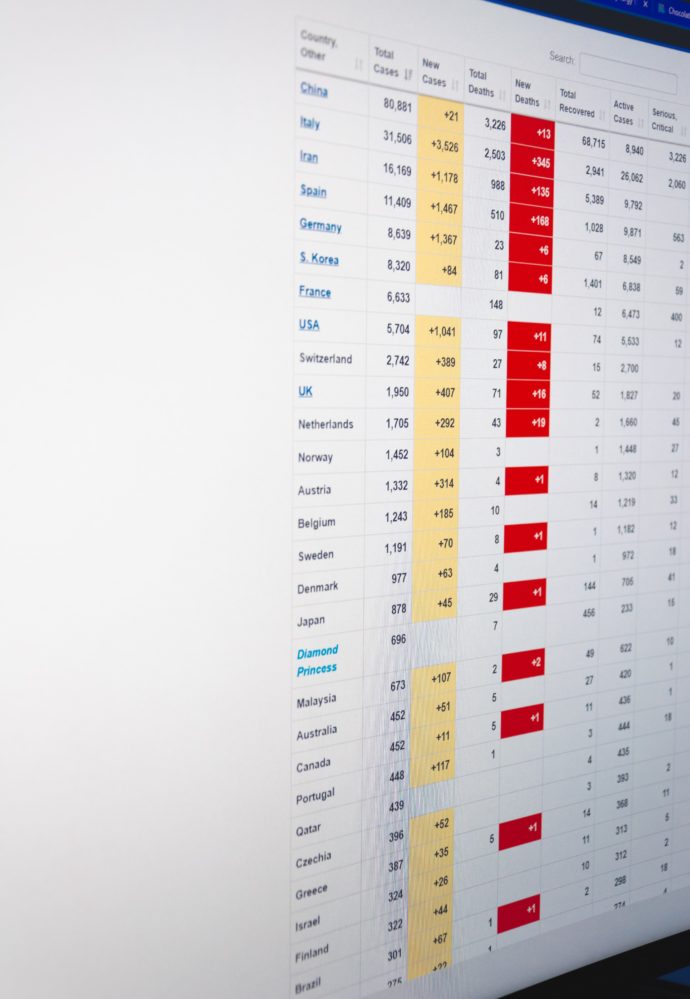
  • The FEHBlog ran across this Worldometer COVID-19 monitor. The FEHBlog finds it easier to decipher than the Johns Hopkins dashboard.
  • A company called Everlywell will start selling an at home COVID-19 tests on Monday. The testing floodgates finally may be opening.
  • Currently telehealth doctors must be licensed in the state where the patient resides. MHealthIntelligence reports that the federal government is about to override this state law requirement. That action would give quite a boost to telehealth and would help staffing hospitals in cities with adjoining states like New York City and Washington DC.

Finally, here’s a link to the Politico article that broke the story about Dale Cabaniss’s resignation as OPM Director on Tuesday. The FEHBlog is disturbed that a federal agency director would resign over personal differences with White House officials in the midst of a national emergency. Can’t we all get along?

Midweek update

On the COVID-19 front —

  • The Senate this afternoon approved H.R. 6021, the Families First Coronavirus Response bill. HR Dive explains the paid leave revisions that the House made to the bill first passed last Saturday before sending the bill to the Senate. Three attempts in the Senate to further amend the bill were rejected. The President has indicated that he will sign the bill.
  • H.R 6021 will mandate all types of health plans, including FEHB plans, cover FDA approved COVID-19 testing without cost sharing or medical management by the health plan. OPM already has required this for FEHB plans. However, the no cost sharing aspect of this coverage does not extend to treatment of the COVID-19 disease. A recent survey “of nearly 600 individual and family health insurance enrollees released today by eHealth, Inc. more than two thirds (69%) feel they lack a basic understanding of how testing and treatment of coronavirus (COVID-19) would be covered by their health insurance plan.” A word to the wise, etc.
  • Federal News Network reports “Federal agencies have 48 hours [until tomorrow] to review, modify and start implementing policies and procedures that will realign critical resources to slow the spread of the coronavirus. This includes offering “maximum telework flexibilities” for the federal workforce and may even include mandatory telework orders, the Office of Management and Budget said Tuesday night.”
  • The Wall Street Journal’s Journal podcast offers an interesting 20 minute long take on the race for a cure to the COVID-19 disease. One of the drugs discussed on the podcast is a Regeneron arthritis drug Kevazara that acts to calm the body’s immune system. Severe cases of COVID-19 cause lung inflammation. The FEHBlog read in the Great Influenza that the flu pandemic caused a spike in the death rate for healthy young adults. This flu struck deep in the lungs where the alveoli tissues transfer oxygen to the blood stream. The body’s immune system took great umbrage with this type of attack and threw everything at the disease. The body’s immune system attack often was the cause of death in young adults who have the strongest immune systems. The modern treatment is to try to calm the immune system and use a ventilator, options that didn’t exist in 1918.
  • Verily Health, the Google / Alphabet affiliate, issued an update on its development of a COVID-19 testing platform for patients. The Washington Post reports on COVID-19 testing sites in the DC metropolitan area.
  • Medicare has expanded the availability of telehealth for traditional Medicare beneficiaries during the COVID-19 emergency. HHS has issued guidance to health care providers on how to maintain HIPAA Privacy and Security rule compliance in the brave new world of telehealth.

In other news–

  • The Labor Department’s Employee Benefits Security Administration has released its latest report to Congress on improving health plan compliance with the federal mental health parity law and its report and an appendix on EBSA enforcement of that law in 2019.
  • Healthcare Dive reports that “The Trump administration is considering pushing back the timeline for payers, providers and health IT vendors to come into compliance with its two sweeping rules to promote interoperability as the healthcare system struggles with the novel coronavirus outbreak.” It would make sense to slow down the effort to ensure that it is done correctly, in the FEHBlog’s opinion.
  • AHRQ wisely points out the need to rethink the role of primary care in reducing hospital readmissions. Check it out.
  • Fierce Healthcare reports that

Aetna is linking Unite Us, a social care coordination platform, with its Guardian Angel program for members who have suffered an opioid overdose. The insurer, owned by CVS Health, will roll out the joint effort first in North Carolina, it announced this week. Using the Unite Us platform, care managers will be able to more effectively link members with social supports and other nonclinical options to aid in recovery, such as housing and healthy food.

Bravo.

Monday Musings

The FEHBlog was pleased to learn about the President’s initiatives to expand COVID-19 testing discussed in last Friday’s post. The President explained that Google would offer a website that allows concerned persons to find out if they need to be COVID-19 tested and if so arrange for a drive thru appointed. The Wall Street Journal reports that Google/ Alphabet ‘s Verily Health subsidiary launched a pilot platform in northern California. The pilot platform was “overwhelmed” by requests. Here’s a Verily Health link to more information on the platform. It’s good to see that Verily already is engaged in a trial and error pilot process and hopefully the platform will be ready for prime time soon because testing for disease also is important.

Speaking of diseases, here are some highlights from the Centers for Disease Control’s latest Fluline report:

  • Laboratory confirmed influenza associated hospitalization rates for the overall U.S. population remain moderate compared to recent seasons, but rates for children 0-4 years and adults 18-49 years are now the highest CDC has on record for these age groups, surpassing rates reported during the 2009 H1N1 pandemic. Hospitalization rates for school-aged children (5-17 years) are higher than any recent regular season but remain lower than rates experienced by this age group during the pandemic.
  • Pneumonia and influenza mortality has been low, but 144 influenza-associated deaths in children have been reported so far this season. This number is higher for the same time period than in every season since reporting began in 2004-05, except for the 2009 pandemic.
  • CDC estimates that so far this season there have been at least 36 million flu illnesses, 370,000 hospitalizations and 22,000 deaths from flu.

The Health Affairs blog discusses one of the FEHBlog’s favorite topics — opportunities for providers, payers and governments in the U.S. to expand telehealth use in response to the COVID-19 emergency. FEHBP plans generally offer telehealth benefits and there’s no time like the present to promote them.

Weekend update

Congress had been scheduled to be on State / district work breaks this coming week. However, after the House passed a bipartisan COVID-19 relief bill (H.R. 6201) on Friday, the Senate leadership decided to consider H.R. 6201 week. According to the Wall Street Journal, the President is ready to sign the bill into law.

The Congressional bill summary explains

This bill responds to the coronavirus outbreak by providing paid sick leave (Divisions D, E, and F) and free coronavirus testing [Division G, a new mandate on all types of health plans], expanding food assistance and unemployment benefits, and requiring employers to provide additional protections for health care workers. 

The Hill reports that

Dr. Anthony Fauci, the head of the National Institute of Allergy and Infectious Diseases, said Sunday that it is possible it will take “a few months” before life goes “back to normal” amid the coronavirus outbreak.

“Can you try to help us understand, when will life get back to normal?” ABC’s Jonathan Karl asked Fauci on “This Week.”

“It’s going to be a matter of several weeks to a few months, for sure,” Fauci responded.

The FEHBBlog’s current read, the Great Influenza, has made him a strong believer in the social distancing principle that Dr. Fauci and many others are advocating in the face of the COVID-19 outbreak.

COVID-19 Picture

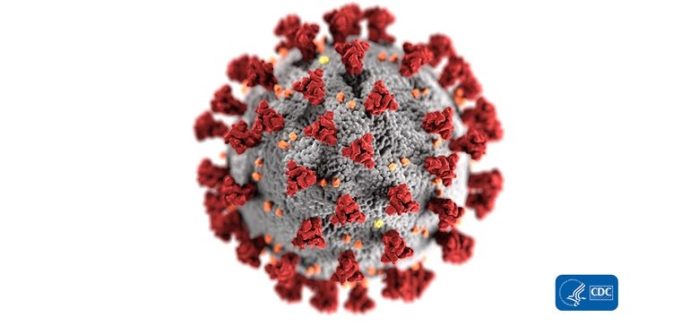
The FEHBlog’s featured image for certain recent posts has been a CDC picture of the COVID-19 virus. The Great Influenza book that the FEHBlog has been reading includes this explanation of the picture:

The virus itself is nothing more than a membrane—a sort of envelope—that contains the genome, the genes that define what the virus is. It is usually spherical (it can take other shapes), about 1/10,000 of a millimeter in diameter, and it looks something like a dandelion with a forest of two different-shaped protuberances—one roughly like a spike, the other roughly like a tree—jutting out from its surface. These protuberances provide the virus with its actual mechanism of attack [as viruses invade the body’s cells]. That attack, and the defensive war the body wages, is typical of how shape and form determine outcomes.

Barry, John M.. The Great Influenza (p. 103). Penguin Publishing Group. Kindle Edition.

TGIF

The President declared COVID-19 to be a national emergency this afternoon. The Wall Street Journal reports that the President announced that efforts are well underway to greatly expand COVID-19 testing, including drive thru testing. Furthermore,

A new, high-speed coronavirus test was earlier granted emergency clearance by the Food and Drug Administration. Developed by Roche Holding AG, the test is designed to run on the company’s automated machines, which are already installed in more than 100 laboratories across the U.S. It will be available immediately.

The FEHBlog understand that these high speed tests can turn around results in 24 hours, rather than a few days.

The FEHBlog compared the Centers for Disease Control’s COVID-19 U.S. case statistics from last Friday compared to today.

CDC COVID-19 stats
6-Mar13-Mar
Travel-related36138
Person-to-person spread18129
Under Investigation1101362
Total cases1641629

That’s quite a jump. CMS and Healthcare Dive also have offered their perspectives on the import of the emergency declaration.

In other news

  • Healthcare Dive reports on a Rand study on the value of out of network cost controls.
  • On this last day of AHRQ’s Patient Safety Week, the agency called public attention to its “Guide to Patient and Family Engagement in Hospital Quality and Safety.” The FEHBlog thinks its important for health plans to help families to support their hospitalized family members.

This Guide reminded me of a related human nature anecdote that I heard on the Econtalk blog which I can share

Russ Roberts: I was talking to this nurse about the challenges of doing a good job because it can be a very boring job, and then all of a sudden it’s unbelievably intense. And at one point he said to me–and at this point, my brother and sister, our mom had all been in the room for hours over a course of three or four days.

He said, he conceded, that–he said, ‘It really helps to have family here with the patient.’

And I thought he was going to say, you know, ‘Because it helps them sustain their morale.’

He said, ‘I think it makes us do a better job.’

And I thought, of course, of Adam Smith’s impartial spectator. It’s like we’re the actual spectator, watching him, and he said–this was a great thing–he said, ‘It shouldn’t be that way.’ And he’s right, of course. It should be that you’re equally motivated whether no one’s watching. But as human beings we sometimes fall short. He said, ‘It shouldn’t be that way, but sometimes it is.’

Russ Roberts is a University of Chicago trained economist who has written on Adam Smith.

Thursday Thoughts

Fedweek reports that

The largest FEHB carrier, Blue Cross-Blue Shield, has loosened several policies, for those diagnosed with COVID-19, the respiratory condition caused by the COVID-19 virus including waiving:

prior authorization requirements for diagnostic tests and for covered services that are “medically necessary and consistent with CDC guidance”;

any copays or deductibles for diagnostic tests or treatment under that same standard;

early medication refill limits on 30-day prescription maintenance medications and cost sharing for prescriptions for up to a 14-day supply; and

copays for telehealth services related to COVID-19.

The FEHBlog was pleased to see that FEP is waiving telehealth cost sharing related to COVID-19. OPM’s carrier letter mentioned in yesterday’s post overlooked telehealth which is an important tool to mitigate the spread of COVID-19. If your plan offers a telehealth benefit, it is important to pre-register for that benefit before you need to use it. The FEHBlog found his plan’s pre-registration program to be quite efficient.

You will find that FEHBP plans prominently have links to their special COVID-19 coverage features on their websites.

The Wall Street Journal has put its helpful COVID-19 update website outside its general website paywall.

In other news,

  • The Centers for Medicare and Medicaid Services announced earlier this week “the Part D Senior Savings Model, a voluntary model that enables participating Part D enhanced plans to lower Medicare beneficiaries’ out-of-pocket costs for insulin to a maximum $35 copay per thirty-day supply throughout the benefit year. Beneficiaries who take insulin and enroll in a plan participating in the model should save an average of $446 in annual out-of-pocket costs for insulin, or over 66 percent, relative to their average cost-sharing for insulin today.” This program will launch next year. Time will tell whether the prescription benefit plan can extend this discount to FEHBP and other commercial health plans.
  • The National Cancer Institute released the Annual Report to the Nation on the Status of Cancer. The report presents good news
    • Overall cancer incidence rates are leveling off among males and increasing slightly among females.These trends reflect population changes in cancer risk factors, screening test use, diagnostic practices, and treatment advances. 
    • This year’s Special Section focused on progress toward select Healthy People 2020 objectives related to four common cancers (lung, colorectal, female breast, and prostate). The Healthy People 2020 target death rate (161.4 deaths per 100,000 persons) for all cancers combined was met overall and in most sociodemographic groups.
    • During 2007-2017, cancer death rates decreased 15% overall, and the percent improvement target (-10%) was met in many sociodemographic groups.
    • Many of the Healthy People 2020 objectives for death rates, cancer screening, and major risk factors related to lung, colorectal, female breast, and prostate cancer were met.
  • Becker’s Hospital Review provides an overview of seven key dates of the HHS interoperability rule released earlier this week.
  • Healthcare Dive discusses the five additional healthcare apps that CVS/caremark has added to its curated app “formulary” for the benefit of plan sponsors. “Livongo Health, Hinge Health, Hello Heart, Torchlight and Whil are now available for CVS’ PBM clients to use, in addition to Sleepio, a personalized digital sleep program and the first participating program when the service launched in 2019.”