New CDC Guidance

New CDC Guidance

NPR reports that

President Trump said Friday the Centers for Disease Control and Prevention now recommends that people wear cloth or fabric face coverings, which can be made at home, when entering public spaces such as grocery stores and public transit stations. It is mainly to prevent those people who have the virus — and might not know it — from spreading the infection to others.

The guidelines do not give many details about coverings beyond: “cloth face coverings fashioned from household items or made at home from common materials at low cost can be used as an additional, voluntary public health measure.” * * * And the mask need not be professional-grade to offer some benefit. In fact, officials say it probably shouldn’t be: The CDC recommends constructing your own cloth mask.

The New York Times provides guidance on how to make your own mask. The FEHBlog can’t think of a more fun activity for the weekend.

Friday Stats and More

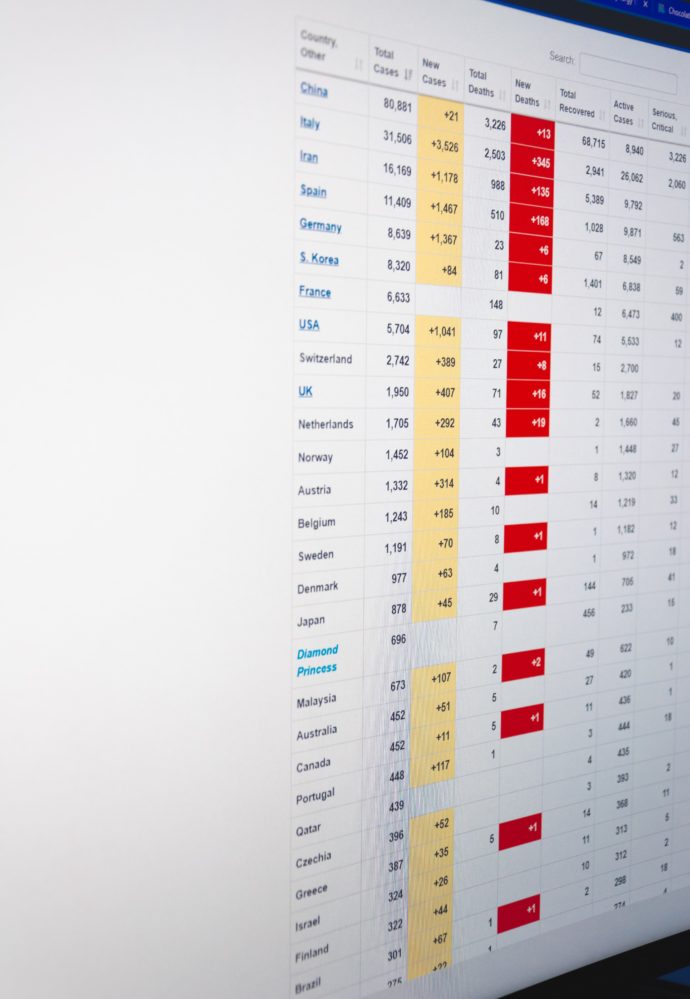
The number of COVID-19 cases continues to grow along with the COVID-19 death rate (number of deaths over number of cases per the CDC). The FEHBlog’s statistics are drawn from the CDC’s now daily Cases in United States Summary.

Cause3/203/274/3
Travel2907121388
Person to Person31013264325
Uncategorized984283318233,566
Total Cases10,44285,356239,279
Total Deaths 15012465442
Death Rate1.44%1.46%2.27%

For context, the CDC’s latest Fluview “estimates that so far this season there have been at least 39 million flu illnesses, 400,000 hospitalizations and 24,000 deaths from flu.” That represents a death rate of less than one tenth of one percent (0.06%). Fortunately this flu season appears to be subsiding. The CDC additionally “estimates that influenza has resulted in between 9 million – 45 million illnesses, between 140,000 – 810,000 hospitalizations and between 12,000 – 61,000 deaths annually since 2010.”

The FEHBlog has wondered where is the light at the end of the COVID-19 tunnel. He now appreciates the fact that we haven’t made it half way through the tunnel. Hang in there.

Not surprisingly but regrettably Govexec.com reports that thousands of federal employees have contracted COVID-19 and attempts to provide a numerical breakdown by agency.

In more upbeat news, MedCity News informs us that

The Food and Drug Administration has given an emergency use authorization to a test for Covid-19 that detects whether a person is infected through the use of antibodies. The FDA granted the authorization to Research Triangle Park, North Carolina-based Cellex, for the qSARS-CoV-2 IgG/IgM Rapid Test, according to a letter from FDA chief scientist Denise Hinton, sent Wednesday to Cellex CEO James Li. The test is designed to produce results in 15-20 minutes.

The advantage of antibody tests is that they not only are less likely to produce false-negative results, but can also be used to detect past infections, meaning that they can be used to determine if a patient without symptoms has previously had Covid-19 and could thus be immune to it. It could also be used to indicate stage of infection and estimate time since exposure. Nevertheless, according to the primer, a limitation to antibody testing is that the body’s immune response to SARS-CoV-2 is slow.

The Labor Department continues to add to its list of now 78 FAQs on the FFCRA’s COVID-19 paid sick leave law which took effect on April 1 while the U.S. Supreme Court cancelled its April oral arguments which would have occurred at the end of this month.

Thursday Miscellany

Healthcare Dive helpfully reviews the benefit improvements that large health insurers have made in response to the COVID-19 emergency.

Hospitals say that’s not enough, and are calling on the biggest payers to follow actions taken by Congress and CMS to help resolve cash flow issues, by accelerating payments or opting into releasing interim periodic payments. The American Hospital Association also is urging payers to eliminate administrative burdens such as prior authorizations.

The more things change, the more they stay the same.

Beckers Hospital Review reports that “Peak demand for hospital resources due to COVID-19 is expected by mid-April in the U.S., according to an analysis from the University of Washington’s Institute for Health Metrics and Evaluation in Seattle.” The report provides an expect peak demand date for each State in the Union and DC.

The HHS Office for Civil Rights which enforces the HIPAA Privacy and Security Rules loosened another Privacy Act provision for the duration of the COVID-19 emergency —

As a matter of enforcement discretion, effective immediately, the HHS Office for Civil Rights (OCR) will exercise its enforcement discretion and will not impose potential penalties for violations of certain provisions of the HIPAA Privacy Rule against covered health care providers or their business associates for uses and disclosures of protected health information by business associates for public health and health oversight activities during the COVID-19 nationwide public health emergency.

Although this is really inside the Beltway, the FEHBlog, as a lawyer, finds it noteworthy to relate that, according to Govexec.com, the Office of Management and Budget “is not directing agencies to extend the amount of time alloted for public feedback on regulation changes during the coronavirus outbreak, despite calls from [House Democrat] lawmakers to do so.”

Finally, the FEHBlog notes that according to the Boston Globe’s Stat News, rumblings about masking the American public continue.


In a draft document obtained by STAT, the CDC recommended that the public use homemade face coverings when in public, reserving higher-grade protective equipment like N95 masks for hospitals and health care workers, who have faced severe shortages in personal protective equipment as the coronavirus pandemic has accelerated through the United States.

Such face coverings, according to the draft guidance, would not be intended to protect the wearer, but rather prevent the wearer from unknowingly spreading the disease when in public. Individuals should wear face coverings in public settings like grocery stores, the guidance said. Children under the age of 2 and people experiencing trouble breathing would be excluded from the mask guidelines.

Midweek update

Today, the FFCRA Paid COVID-19 Sick Leave Benefit took effect generally for private employers with under 500 employees. The Labor Department which enforces this law published temporary rules on mandated benefit. The informal guidance accompanying the rules explains that

Most employees of the federal government are covered by Title II of the Family and Medical Leave Act, which was not amended by this Act, and are therefore not covered by the expanded family and medical leave provisions of the FFCRA. However, federal employees covered by Title II of the Family and Medical Leave Act are covered by the paid sick leave provision.

Federal News Network discusses the complex impact of COVID-19 on the U.S. Postal Service. The article begins as follows:

With the Postal Service now tracking the deaths of its employees from the coronavirus pandemic, in addition to a growing list of those who have tested positive for the virus, the agency is doing everything it can to continue normal operations — even in the most extraordinary circumstances.

The USPS Board of Governors held a moment of silence Wednesday for postal employees who have died of complications from COVID-19, the illness caused by the current strain of the virus.

Those include Rakkhon Kim, a 50-year old letter carrier in New York City, who died of complications from the virus last week.

Terribly sad.

It’s worth linking to this Wall Street Journal article on nurses working on the COVID-19 front line in the Bronx, New York. The Boston Globe’s STAT discusses how the COVID-19 spreads and creates additional hot spots.

Healthcare Dive reports on a FAIR Health study of consumer use of telehealth and retail clinics relying on data gathered before the current COVID-19 emergency. “Consumer use of telehealth and retail clinics spiked from 2017 to 2018, while use of urgent care centers, ambulatory surgery centers and emergency rooms dropped as consumers increasingly turn to cheaper sites of care for low-acuity medical needs.”

As the article notes, telehealth use has become a necessity in the past month. HIMSS provides a patient guide on how to get the most out of telehealth visits. This may be useful for health plans to share with members.

Tuesday’s Tidbits

The Wall Street Journal reports today that “U.S. public-health authorities are reviewing recommendations for wearing face masks and a wave of European governments have ordered citizens to use them outside the home, signaling a shift among Western governments on a contentious issue in the coronavirus pandemic.” The social distancing requirement is intended to serve the same purpose as masking. The FEHBlog does not know where this change would lead.

FiercePharma discusses the ongoing COVID-19 vaccine studies. “In all, about 50 vaccines are in early development across the biopharma landscape, and researchers are exploring about 10 different vaccine approaches, said Jim Mayne, vice president of science and regulatory advocacy at PhRMA.” The FEHBlog is pleased to read that there are a lot of irons in this critically important fire.

The FEHBlog ran across this interesting U.S. Health Weather Map created by Kinsa and Oregon State University.

The U.S. Health Weather Map is a visualization of seasonal illness linked to fever – specifically influenza-like illness. The aggregate, anonymized data visualized here is a product of Kinsa’s network of Smart Thermometers and accompanying mobile applications, and Kinsa is providing this map and associated charts as a public service.

This appears to be the type of health surveillance tool that public health experts are encouraging.

Happy National Doctors’ Day

Today is National Doctors’ Day, and the FEHBlog can think of no better time to thank the medical and para-medical professions for their dedicated and brave service to America and the world.

The FEHBlog learned from reading the Great Influenza that the horrific influenza pandemic in 1918-19 eventually subsided due to a combination of people who survived the disease (and there was a mild wave of the influenza in early 1918) and the enormous number of deaths. As a result, person to person transfer stopped. (Social distancing helped reduce the spread of that illness, e.g., St. Louis, but the FEHBlog is writing about how the pandemic ended.)

NBC News reports that experts believe that people who gain COVID-19 antibodies (though infection) will have immunity for some (at present) unknown period. However, it strikes the FEHBlog, who certainly is not an expert, that a combination of immunized and vaccinated people eventually should defeat the COVID-19 pandemic. The Wall Street Journal reports today that three prescription drug manufacturers are actively seeking to develop a COVID-19 vaccine.

Johnson & Johnson is one of many companies at work on a vaccine for the disease, which has become a global health crisis. Moderna Inc. has begun human trials for a vaccine using a novel approach that relies on the virus’s messenger RNA, a type of genetic material. Sanofi, a French biotech company, has begun work on a similar approach.

Healthcare Dive and Health Payer Intelligence report on additional steps that commercial payers are taking to reduce cost sharing burdens on patients receiving COVID-19 care.

The FEHBlog is confident that due to vastly improved medical care over the past century, Government and private sector support, and public respect for social distancing (which happened in the breach in 1918-19 due in large part to World War 1), the medical and para-medical professions will be able to handle the still rising number of COVID-19 cases while vaccination development continues.

Weekend update

Congress is on a State / district work period this week. The Health Affairs blog discusses the health coverage provisions in the CARES ACT. In addition to broadening coverage of COVID-19 testing [Section 3201] and any future FDA-approved vaccine [Section 3203] , the new law permits high deductible health plans with health savings account to pay for telehealth care before the deductible [Section 3701] and repeals the Affordable Care Act provision requiring a doctor’s prescription for over the counter medicines as a prerequisite to reimbursement from a health savings account or a healthcare flexible spending account [Section 3702].

The high deductible health plan telehealth provision took effect last Friday and the over the counter drug coverage change was made retroactively effective January 1, 2020.

Health Affairs blog adds that

Under [Section 3202 of] the CARES Act, all comprehensive private health insurance plans would reimburse a test provider based on the rate negotiated between the plan and the provider (i.e., the in-network rate) that was put in place prior to this emergency. If there is no negotiated rate between the plan and provider (i.e., the provider is out-of-network), the plan would fully reimburse the provider based on the provider’s own “cash price” (or a lower price if the plan can negotiate one). This “cash price” must be publicly available (listed on a public website) while there is a declared public health emergency. Providers that fail to make their price public could face a civil monetary penalty of up to $300/day. This provision essentially allows out-of-network labs to set their own price and expect full reimbursement from the plan, potentially leading to dramatic price increases for testing.

Fierce Healthcare reports that that healthcare actuarial consulting firm TowersWillisWatson has released a projection of healthcare spending associated with the COVID-19 emergency.

On the low end of the spectrum, should the outbreak infect just 10% of the population and prove to have low morbidity, costs will increase by under 1%. However, if the virus infected 50% of the population with high morbidity, costs could increase by 6.8%, the study found. The scenario with the highest cost increases is if the virus 30% of people with high morbidity—a combination that could lead to 7.2% in cost increases, Willis Towers Watson found.

A major federal agency and two other health plan accrediting bodies have centralized their COVID-19 emergency guidance:

Apple in partnership with the Centers for Disease Control has posted a COVID-19 screening tool for consumers.

Friday Stats and More

Here are the week by week COVID-19 case statistics for this month from the Centers for Disease Control:

3-6-203-13-203-20-203-27-20
Travel36138290712
Person to Person181293101326
Cause under invest.1101362984283,318
Total Cases164162910,44285,356
Total Deaths1501246
Deaths over cases1.44%1.46%

Quite a spike. In the FEHBlog’s view, it will be interesting to see whether there is any leveling off in the case count increase.

The CDC’s latest Fluline reports “that [according to CDC estimates] so far this season there have been at least 39 million flu illnesses, 400,000 hospitalizations and 24,000 deaths from flu.” That represents a deaths over cases percentage of .06%.

With regard to COVID related guidance from that is relevant to FEHBP carriers and others

  • The Department of Health and Human Services Office for Human Rights has gathered together all of its COVID-19 emergency guidance on the HIPAA Privacy and Security Rules in one website.
  • The Department of Labor and the IRS have issued additional guidance on the Families First Coronavirus Response Act’s paid sick leave mandate and expanded FMLA leave.
  • The National Committee for Quality Assurance has assembled its COVID-19 emergency guidance here.

As previously mentioned the Office of Personnel Management has taken the same consolidated approach with its online COVID-19 emergency guidance which generally is directed at federal agencies.

CARES Act Passes Congress

The FEHBlog just watched on C-SPAN the House of Representatives join the Senate in adopting the CARES Act (H.R. 748) so the $2 trillion COVID-19 emergency relief bill heads to the President for his expected signature later today.