Friday Stats and More

Friday Stats and More

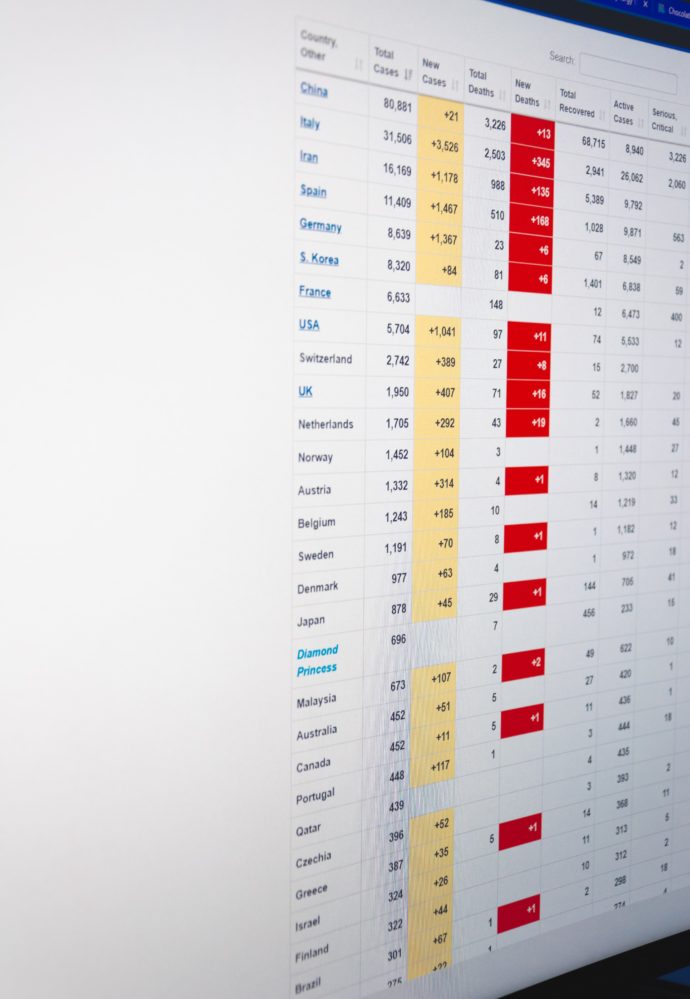
So the FEHBlog was wrong in promoting the fact that the COVID-19 death rate was stable for two days this week. After the period of stability the death rate rose from 3.23% to 3.61%. In other words, the plateau has not yet been reached. Here are the CDC Cases in U.S. Stats for the four Fridays:

COVID-193/203/274/34/10
Cases10,44285,356239,279459,165
Deaths15012465,44216,570
Deaths over Cases1.44%1.46%2.37%3.61%

Please note that the CDC numbers close at 4 pm on the previous day. The much loved John Hancock COVID-19 site is simply too much for the FEHBlog to handle.

Today, the CDC released its latest COVIDView and its final FluView for the 2019-20 flu season. Thanks heavens for small miracles.

The FEHBlog was overjoyed by a sentence from the following HHS press release that the FEHBlog has placed in bold print:

The Trump Administration is committed to ensuring that Americans are protected against financial obstacles that might prevent them from getting the testing and treatment they need from COVID-19.As announced in early April, a portion of the $100 billion Provider Relief Fund will be used to reimburse healthcare providers, at Medicare rates, for COVID-related treatment of the uninsured.
As a condition, providers are obligated to abstain from “balance billing” any patient for COVID-related treatment.
The Families First Coronavirus Response Act requires private insurers to cover an insurance plan member’s cost-sharing payments for COVID-19 testing. President Trump has also secured commitments from private insurers, including Humana, Cigna, UnitedHealth Group, and the Blue Cross Blue Shield system to waive cost-sharing payments for treatment related to COVID-19 for plan members.

Here’s the rub. How will health plans know that a particular provider is barred from balance billing for COVID-19 care?

It is admirable that UnitedHealthGroup is helping HHS promptly distribute this CARES Act funding to providers.


Person using a laptop

Thursday Miscellany

As the FEHBlog discussed COVID-19 death rates yesterday, it’s only meet and right to post STAT’s story which seeks to put COVID-19 death projections into perspective.

On the flip side, STAT reports on Pfizer’s decision to accelerate by three months human testing on a potential treatment for COVID-19 and local WTOP news reports on COVID-19 vaccine development efforts by a company in the Maryland suburbs of D.C., Novovax. Best of luck.

Healthleaders Media discusses a Guidehouse study finding

A major factor hampering the financial situation for rural providers is the migration of patients to care options outside of the community, with over 75% of patients bypassing local hospitals to receive care elsewhere. These levels are much higher compared to the outmigration patterns of suburban and urban patients.

More than 350 rural hospitals [one in four], accounting for $8.3 billion in total patient revenue, are at the greatest financial risk of closure, according to Guidehouse. The five states most likely to be impacted by hospital closures include Tennessee, Oklahoma, Mississippi, Alabama, and Kansas, according to the analysis.

Guidehouse adds that “Of these hospitals, 81%, or 287 hospitals, are considered highly essential to the health and economic well-being of their communities.” What is really troubling about this study is that it was conducted before the COVID-19 emergency which must be exacerbating these financial problems.

The Centers for Medicare and Medicaid Services today issued additional guidance loosening the regulatory reins on healthcare providers so that “so that hospitals, clinics, and other healthcare facilities can boost their frontline medical staffs” necessary to treat COVID-19 patients and others. Among other steps,

Doctors can now directly care for patients at rural hospitals, across state lines if necessary, via phone, radio, or online communication, without having to be physically present. Remotely located physicians, coordinating with nurse practitioners at rural facilities, will provide staffs at such facilities additional flexibility to meet the needs of their patients.

Similarly, the HHS Office for Civil Rights which enforces the HIPAA Privacy and Security Rules promised not to impose HIPAA penalties on good faith rule violations that occur at COVID-19 testing sites.

Drug Channels offers an interesting take on the CMS actuary’s recent healthcare spending projections for the U.S. Adam Fein observes that ” The coronavirus is upending our healthcare system and putting enormous pressure on hospitals. Despite increased costs of treatment, I expect that spending [that CMS estimated before the COVID-19 emergency] will be lower than the CMS projections.”

On the technology front, the federal government’s cybersecurity authorities released a detailed alert on a variety of cyberscams that have arisen during the COVID-19 emergency.

Midweek update

As you know, the FEHBlog tracks the daily COVID-19 cases in the U.S. posted by the Centers for Disease Control. Here are the statistics for this week so far:

COVID 19 Statistics4/54/64/74/8
Cases304,826330,891374,329395,011
Deaths7,6168,91012,06412,754
Deaths over Cases2.50%2.69%3.22%3.23%

We tragically have experienced more COVID-19 deaths so far this week than the approximately 3,000 Americans who died at Pearl Harbor (or on September 11). However, the relatively high death rate (particularly compared to the flu) was flat for the past two days. We will see on Friday whether this encouraging trend continues.

The flattening occurred because the number of deaths stopped increasing proportionally faster than the number of cases. The more rapidly increasing number of COVID-19 cases must be due at least in part to the expansion of COVID-19 testing as discussed in this Healthcare Dive article and this HHS announcement that licensed pharmacists now are authorized to order COVID-19 tests.

Fierce Healthcare reports on the development of a new COVID-19 portal called “The National Response Portal that will provide vital information to healthcare providers, policymakers and the general public as a ‘one-stop-shop’ for all health data related to COVID-19, which is caused by the novel coronavirus, according to the organizations.” The new portal is gathering information now and is expected to go live next week.

It’s World Health Day

The World Health Organization has declared today World Health Day appropriately honoring nurses and midwives. U.S. HHS Secretary Alex Azar commented

“This year’s theme for World Health Day, ‘Celebrating Nurses and Midwives,’ is also an important reminder of the work being done by frontline healthcare workers every day, around the world, to save lives. Preparing for and responding to outbreaks that can cross borders is one of the most important contributions we can make to support our healthcare workers, and we applaud the heroic work they have been doing to battle the global pandemic

The FEHBlog heartily agrees. Now, how about some Tuesday Tidbits?

  • Yesterday, as Health Payer Intelligence reports, the Centers for Medicare and Medicaid Services “finalized its Medicare Advantage and Part D rates, including finalizing the disputed Medicare Advantage end-stage renal disease (ESRD) payment rule without changes.” HPI adds that CMS anticipates a slight uptick (1.66 percent) in revenue as a result of the new rate announcement, based on its changes to the reimbursement methodologies for Medicare Advantage organizations, PACE organizations, and Part D sponsors. The uptick does not account for the adjustments related to the underlying coding trend, which CMS anticipates will bump most risk scores by around 3.56 percent.” In the FEHBlog’s view, the extension of Medicare Advantage coverage to beneficiaries under age 65 with end stage renal disease could be disruptive to Medicare Advantage rates.
  • The Centers for Disease Control released yesterday a report on “Coronavirus Disease 2019 in Children — United States, February 12–April 2, 2020.” Here’s the summary

What is already known about this topic?

Data from China suggest that pediatric coronavirus disease 2019 (COVID-19) cases might be less severe than cases in adults and that children (persons aged <18 years) might experience different symptoms than adults.

What is added by this report?

In this preliminary description of pediatric U.S. COVID-19 cases, relatively few children with COVID-19 are hospitalized, and fewer children than adults experience fever, cough, or shortness of breath. Severe outcomes have been reported in children, including three deaths.

What are the implications for public health practice?

Pediatric COVID-19 patients might not have fever or cough. Social distancing and everyday preventive behaviors remain important for all age groups because patients with less serious illness and those without symptoms likely play an important role in disease transmission.

  • TechCrunch brings us up to date another potential COVID-19 vaccine is entering phase 1 human trials with Food and Drug Administration approval. This vaccine is being developed by Inovio Pharmaceuticals with financial backing from the Bill and Melinda Gates Foundation. Best of luck to Inovio and the other developers.
  • A friend of the FEHBlog found this online edited transcript of NYC pulmonologist David Price’s chat and Q&A on COVID-19 discussed in yesterday’s FEHBlog. Check it out.

Pulmonologist video

Yesterday a friend called the FEHBlog’s attention this 56 minute long video of pulmonologist “Dr. David Price of Weill Cornell Medical Center in New York City sharing information in a Mar. 22 Zoom call with family and friends on empowering and protecting families during the COVID-19 pandemic.” The FEHBlog watched the video this morning. Dr. Price engages in a monologue for the first 30 minutes. In the monologue he beautifully ties together all of the government’s current guidance on how to deal with COVID-19. Dr. Price answers questions in the last 26 minutes. It’s worth watching if you haven’t already seen it.

For example, Dr. Price explains that the likeliest path to catching COVID-19 is to touch an infected person or object and then touch your face. That’s why it’s important to clean your hands frequently and not touch your face. Dr. Price explained that the COVID-19 virus is a wimp that virtually all disinfectants can kill. He said a drop of Purell would do the trick. He explained that the principal purpose of a cloth face mask is to protect your face from unprotected touching by your own hands, which makes sense.

Weekend update

Congress remains on a State / district work period this week with the exception of one Senate Armed Services Committee hearing. The Wall Street Journal reports that

The [coming] week will be “the hardest and saddest week of most Americans’ lives,” Surgeon General Jerome Adams said on Fox News Sunday, drawing comparisons with the 1941 attack on Pearl Harbor and the Sept. 11, 2001, terrorist attacks.

Officials again urged Americans to stay home. “This is the moment to not be going to the grocery store, not going to the pharmacy, but doing everything you can to keep your family and your friends safe,” coronavirus response coordinator Deborah Birx said at a White House news briefing over the weekend.

HHS’s Office for Civil Rights, which enforces the HIPAA Privacy and Security Rules, called attention today to the Federal Bureau of Investigation’s guidance “on defending against video-teleconferencing (VTC) hijacking (referred to as ‘Zoom-bombing’ when attacks are to the Zoom VTC platform). Many organizations and individuals are increasingly dependent on VTC platforms, such as Zoom and Microsoft Teams, to stay connected during the Coronavirus Disease 2019 (COVID-19) pandemic.” This guidance is applicable to both business and personal users of these virtual meeting platforms.

And as this is the FEHBlog, not the COVIDblog, the FEHBlog wants to call attention to this FEDSmith article on how federal employees and annuitants can extend their FEHBP coverage post-mortem to their surviving spouses and children (under age 26 except in the case of total disability.) This unique federal employment benefit should be a top consideration in estate planning for federal employees and annuitants. Here is a link to the OPM website’s discussion of continued FEHB coverage for survivor annuitants. Here are OPM’s survivor annuity websites for the federal government’s legacy retirement system CSRS and its current retirement system, FERS.

Hang in there, my friends.

CDC COVIDView

The Centers for Disease Control has started to issue weekly COVIDView reports similar to the FluView reports that the agency issues during flu season.

This CDC report provides a weekly summary and interpretation of key indicators being adapted to track the COVID-19 pandemic in the United States. This includes information related to COVID-19 outpatient visits, emergency department visits, hospitalizations and deaths, as well as laboratory data.

These reports are as of one week behind the issuance date so the first COVIDView is as for the week of March 28, 2020.

COVIDView helpfully supplements the CDC’s Summary of Cases in the U.S. website which is updated daily, including weekends.

New CDC Guidance

NPR reports that

President Trump said Friday the Centers for Disease Control and Prevention now recommends that people wear cloth or fabric face coverings, which can be made at home, when entering public spaces such as grocery stores and public transit stations. It is mainly to prevent those people who have the virus — and might not know it — from spreading the infection to others.

The guidelines do not give many details about coverings beyond: “cloth face coverings fashioned from household items or made at home from common materials at low cost can be used as an additional, voluntary public health measure.” * * * And the mask need not be professional-grade to offer some benefit. In fact, officials say it probably shouldn’t be: The CDC recommends constructing your own cloth mask.

The New York Times provides guidance on how to make your own mask. The FEHBlog can’t think of a more fun activity for the weekend.

Friday Stats and More

The number of COVID-19 cases continues to grow along with the COVID-19 death rate (number of deaths over number of cases per the CDC). The FEHBlog’s statistics are drawn from the CDC’s now daily Cases in United States Summary.

Cause3/203/274/3
Travel2907121388
Person to Person31013264325
Uncategorized984283318233,566
Total Cases10,44285,356239,279
Total Deaths 15012465442
Death Rate1.44%1.46%2.27%

For context, the CDC’s latest Fluview “estimates that so far this season there have been at least 39 million flu illnesses, 400,000 hospitalizations and 24,000 deaths from flu.” That represents a death rate of less than one tenth of one percent (0.06%). Fortunately this flu season appears to be subsiding. The CDC additionally “estimates that influenza has resulted in between 9 million – 45 million illnesses, between 140,000 – 810,000 hospitalizations and between 12,000 – 61,000 deaths annually since 2010.”

The FEHBlog has wondered where is the light at the end of the COVID-19 tunnel. He now appreciates the fact that we haven’t made it half way through the tunnel. Hang in there.

Not surprisingly but regrettably Govexec.com reports that thousands of federal employees have contracted COVID-19 and attempts to provide a numerical breakdown by agency.

In more upbeat news, MedCity News informs us that

The Food and Drug Administration has given an emergency use authorization to a test for Covid-19 that detects whether a person is infected through the use of antibodies. The FDA granted the authorization to Research Triangle Park, North Carolina-based Cellex, for the qSARS-CoV-2 IgG/IgM Rapid Test, according to a letter from FDA chief scientist Denise Hinton, sent Wednesday to Cellex CEO James Li. The test is designed to produce results in 15-20 minutes.

The advantage of antibody tests is that they not only are less likely to produce false-negative results, but can also be used to detect past infections, meaning that they can be used to determine if a patient without symptoms has previously had Covid-19 and could thus be immune to it. It could also be used to indicate stage of infection and estimate time since exposure. Nevertheless, according to the primer, a limitation to antibody testing is that the body’s immune response to SARS-CoV-2 is slow.

The Labor Department continues to add to its list of now 78 FAQs on the FFCRA’s COVID-19 paid sick leave law which took effect on April 1 while the U.S. Supreme Court cancelled its April oral arguments which would have occurred at the end of this month.

Thursday Miscellany

Healthcare Dive helpfully reviews the benefit improvements that large health insurers have made in response to the COVID-19 emergency.

Hospitals say that’s not enough, and are calling on the biggest payers to follow actions taken by Congress and CMS to help resolve cash flow issues, by accelerating payments or opting into releasing interim periodic payments. The American Hospital Association also is urging payers to eliminate administrative burdens such as prior authorizations.

The more things change, the more they stay the same.

Beckers Hospital Review reports that “Peak demand for hospital resources due to COVID-19 is expected by mid-April in the U.S., according to an analysis from the University of Washington’s Institute for Health Metrics and Evaluation in Seattle.” The report provides an expect peak demand date for each State in the Union and DC.

The HHS Office for Civil Rights which enforces the HIPAA Privacy and Security Rules loosened another Privacy Act provision for the duration of the COVID-19 emergency —

As a matter of enforcement discretion, effective immediately, the HHS Office for Civil Rights (OCR) will exercise its enforcement discretion and will not impose potential penalties for violations of certain provisions of the HIPAA Privacy Rule against covered health care providers or their business associates for uses and disclosures of protected health information by business associates for public health and health oversight activities during the COVID-19 nationwide public health emergency.

Although this is really inside the Beltway, the FEHBlog, as a lawyer, finds it noteworthy to relate that, according to Govexec.com, the Office of Management and Budget “is not directing agencies to extend the amount of time alloted for public feedback on regulation changes during the coronavirus outbreak, despite calls from [House Democrat] lawmakers to do so.”

Finally, the FEHBlog notes that according to the Boston Globe’s Stat News, rumblings about masking the American public continue.


In a draft document obtained by STAT, the CDC recommended that the public use homemade face coverings when in public, reserving higher-grade protective equipment like N95 masks for hospitals and health care workers, who have faced severe shortages in personal protective equipment as the coronavirus pandemic has accelerated through the United States.

Such face coverings, according to the draft guidance, would not be intended to protect the wearer, but rather prevent the wearer from unknowingly spreading the disease when in public. Individuals should wear face coverings in public settings like grocery stores, the guidance said. Children under the age of 2 and people experiencing trouble breathing would be excluded from the mask guidelines.