Monday Roundup

Monday Roundup

Photo by Sven Read on Unsplash

From Capitol Hill, Roll Call reports

Senate negotiators have reached agreement on a $10 billion pandemic relief package that includes funding for domestic needs but not international aid, according to two Senate aides who were not authorized to speak publicly.

The deal crystallizes an informal “agreement in principle” the parties reached last week to provide $10 billion for near-term pandemic needs by repurposing unspent funds from prior relief laws.

The Wall Street Journal adds

The White House backed the deal and urged Congress to pass the bill promptly, while noting it was less than the $22.5 billion the administration had requested for vaccines, boosters, treatments and testing.

“We will continue to work with Congress to fund our remaining domestic needs,” said Press Secretary Jen Psaki in a statement. She added that the White House would continue to press for funding global vaccination efforts.

The FEHBlog noticed that the Senate Homeland Security and Governmental Affairs Committee held a business meeting last Wednesday. The Committee favorably reported the President’s nomination of Kristin Boyd to be OPM Inspector General by voice vote (with Sen. Hawley (R Mo.) voting no). The next step for Ms. Boyd’s nomination is the Senate floor.

Last week, the House of Representatives passed a Secure 2.0 bill applicable to private sector defined contribution plans. The Senate is likely to approve the bill too. The Society for Human Resource Management has reviewed the bill’s provisions.

From the Omicron and siblings front —

  • Becker’s Hospital Review informs us “The World Health Organization is monitoring a new omicron variant — dubbed XE — that’s a hybrid of BA.1, the original omicron strain, and BA.2, a highly transmissible subvariant.” The hybrid is estimated to be 10% more contagious that BA.2.
  • American Hospital Association tells us “Beginning today through the end of the public health emergency, Medicare Part B beneficiaries may obtain up to eight free over-the-counter COVID-19 tests per month through eligible health care providers and pharmacies, the Centers for Medicare & Medicaid Services announced.” Medicare Part B beneficiaries can obtain the free tests by showing their Medicare identification card.
  • The American Medical Association discusses “How we will know when COVID-19 has become endemic.” The FEHBlog tends to think that we are there.
  • The Centers for Disease Control announced

The new nationwide Test to Treat initiative provides quick access to free treatment for COVID-19. Through this program, people can get tested and – if they are positive and treatments are appropriate for them – receive a prescription from a health care provider, and have their prescription filled all at one location. 
These “One-Stop Test to Treat” sites are available at hundreds of locations nationwide, including pharmacy-based clinics, federally qualified health centers, and long-term care facilities. 
People can continue to be tested and treated by their own health care providers who can appropriately prescribe these oral antivirals at locations where the medicines are distributed. 
A call center 1-800-232-0233 is available every day from 8:00 am to midnight ET to get help in more than 150 other languages.
The Disability Information and Access Line is available to help people with disabilities access services. Call 1-888-677-1199, Monday-Friday from 9:00 am to 8:00 pm ET or email DIAL@usaginganddisability.org.

From the CMS front, the agency announced that “the updated MMSEA Section 111 GHP User Guide version 6.5 has been posted to the GHP User Guide page on CMS.gov. Refer to Chapter 1 for a summary of updates.” Section 111 is a system that has been in place for about 12 years. Section 111 helps CMS keep tabs on Medicare beneficiaries and beneficiaries using data group health plans, including FEHB plans, automobile and liability insurers, and attorneys for injured Medicare beneficiaries.

CMS also released “the Announcement of Calendar Year (CY) 2023 Medicare Advantage (MA) Capitation Rates and Part C and Part D Payment Policies (the Rate Announcement).”

From the healthcare conference front, Fierce Healthcare tells us about the 2022 Health Datapalooza and National Health Policy Conference being held today and tomorrow in Arlington, VA.

From the federal employment front, Govexec reports

Federal employees can hold elected partisan office while also working at their agencies, a key panel found in a ruling setting a new precedent for civil servants. 

Rodney Cowan did not have to give up his role as a county commissioner in Tennessee or be removed from his job with the U.S. Postal Service, the recently reconstituted central body of the Merit Systems Protection Board said in a decision last week. It was one of the first decisions of MSPB’s central board as it addresses its backlog of more than 3,500 cases that have piled up during its five years without a quorum. 

The FEHBlog doubts that we have heard the last word on this issue.

Thursday Miscellany

Photo by Josh Mills on Unsplash

From Capitol Hill

Roll Call tells us

Senators negotiating a COVID-19 supplemental funding package have an “agreement in principle” to provide roughly $10 billion for the Department of Health and Human Services to stock up on waning domestic supplies for combating the virus, according to Sen. Roy Blunt, R-Mo.

Blunt, the top Republican on the Senate Labor-HHS-Education Appropriations Subcommittee, said both parties have tentatively agreed to offsets for the $10 billion that would repurpose unspent funds from prior pandemic relief laws.

The offsets negotiators agreed to include $2.2 billion from unused grant funds for venues like zoos and theaters and $2 billion in untapped assistance to the aviation and manufacturing industry, Blunt said. His comments to reporters came after a Republican Conference lunch in which lead GOP negotiator Sen. Mitt Romney of Utah briefed his colleagues on the agreement in principle. 

Fierce Healthcare informs us

The House [of Representatives] passed a bill on Thursday that caps the out-of-pocket cost of insulin at $35 a month for beneficiaries in Medicare Part D and for certain group and individual plans.

The Affordable Insulin Now Act, which passed the House via a 232 to 193 vote, comes as work in the Senate continues on a bipartisan alternative that could bring additional changes. * * *

Private plans would also be required to offer first-dollar coverage of insulin without any deductible, according to an analysis from the Congressional Budget Office. 

The cap on cost-sharing for private insurance plans would implement in 2023.

The Hill offers a related article explaining why insulin prices are so “troubling” high.

HR Dive reports

Among the provisions of this month’s $1.5 trillion omnibus spending bill, Congress included a revival of an exemption that allowed high-deductible health plans to cover telehealth before individuals meet their deductible.

The provision was originally created by the Coronavirus Aid, Relief, and Economic Security Act, which sunset at the end of 2021. The provision will resume April 1 but will again sunset at the end of this year.

From the Omicron and siblings front, the Wall Street Journal discusses the state of Covid treatments and offers its advice on who should seek out a second Covid booster besides the immunocompromised.

From the OPM front, Govexec projects OPM’s actions over the next 18 months based on the FY 2022 to FY 2026 strategic plan released last Monday. In short, “Hire, Hire, Hire.”

Govexec also discusses efforts underway by OPM, the Social Security Administration and the Thrift Savings Plan to improve the customer service experience of federal employees and retirees. Good luck with that.

From the research front the National Institutes of Health announced

Scientists have published the first complete, gapless sequence of a human genome, two decades after the Human Genome Project produced the first draft human genome sequence. According to researchers, having a complete, gap-free sequence of the roughly 3 billion bases (or “letters”) in our DNA is critical for understanding the full spectrum of human genomic variation and for understanding the genetic contributions to certain diseases. The work was done by the Telomere to Telomere (T2T) consortium, which included leadership from researchers at the National Human Genome Research Institute (NHGRI), part of the National Institutes of Health; University of California, Santa Cruz; and University of Washington, Seattle. NHGRI was the primary funder of the study.

Analyses of the complete genome sequence will significantly add to our knowledge of chromosomes, including more accurate maps for five chromosome arms, which opens new lines of research. This helps answer basic biology questions about how chromosomes properly segregate and divide. The T2T consortium used the now-complete genome sequence as a reference to discover more than 2 million additional variants in the human genome. These studies provide more accurate information about the genomic variants within 622 medically relevant genes. * * *

The now-complete human genome sequence will be particularly valuable for studies that aim to establish comprehensive views of human genomic variation, or how people’s DNA differs. Such insights are vital for understanding the genetic contributions to certain diseases and for using genome sequence as a routine part of clinical care in the future. Many research groups have already started using a pre-release version of the complete human genome sequence for their research.  

From the mental healthcare front, the American Hospital Association calls our attention to a new GAO report.

Consumers with health coverage experience challenges finding in-network mental health providers, who may not be accepting new patients or have long wait times to see them, according to a new report from the Government Accountability Office. Factors contributing to these challenges include low reimbursement rates for mental health services and inaccurate or out-of-date information on provider networks, GAO said. The report also looks at ongoing and planned federal efforts to address these challenges, for example by increasing the mental health workforce, mental health system capacity and oversight of health plan compliance with mental health parity laws.

This squib caused the FEHBlog to recall a comment that he heard at a conference — Four out of five doctors are in-network but only one out of five mental health providers are in-network with the notable exception of hub and spoke telemental services.

Yesterday the FEHBlog suggested that in return for three free primary care visits and three behavioral health visits, plan members should name and use their in-network primary care provider and primary mental health provider. The FEHBlog is sticking with this idea for the in-network primary care provider but he recognizes the idea may be premature for the in-network primary mental health provider. Of course, creating a looser standard for free mental health care compared to primary care is compliant with the federal health parity rule. The reverse would violate the often fuzzy non-quantitative treatment limitations created by the law.

From the miscellany department —

  • STAT News tells us “With Medicare expected to cover a projected 80 million people by 2030,He entrepreneurs and investors are cashing in on what analysts see as an inevitable shift in health care away from the hospital and into the homes of aging patients.” The publication identifies five related technology trends.
  • Fierce Healthcare reports “Virtual care startup Hims & Hers is teaming up with Carbon Health to offer patients in California with direct access to providers for in-person medical appointments at clinics. The collaboration will provide easy and comprehensive access to a broader range of care options through the Hims & Hers platform, company executives said.”
  • Health Payer Intelligence informs us “Large employers are investing more in their wellness program design in 2022 and their programs revolve around hybrid work environments, job satisfaction, and equity, the Business Group on Health found in a survey.”

Monday Roundup

Photo by Sven Read on Unsplash

The President released his Administration’s fiscal year 2023 proposed budget today. Here are links to OMB’s budget website and a Roll Call overview of the proposal.

Here is OPM’s budget wishlist (Budget at 130):

  • Amend administration of tribal FEHB enrollment system
  • Expand family member eligibility under FEDVIP (presumably increasing the age limit for eligible children from 22 to 26)
  • Expand FEDVIP to tribal employees
  • Expand FEHB to tribal colleges and universities.

OPM also released the agency’s FY 2022 to FY 2026 strategic plan today. Here is a link to OPM’s lookbook on that plan. The lookbook (p. 9) identifies one current agency priority goal related to the FEHBP (out of six in total)

Improve customer experience by making it easier for Federal employees, annuitants, and other eligible persons to make more informed health insurance plan selection. By September 30, 2023, complete user-centered design and develop a minimum viable product for a new, state-of-the-art FEHBP Decision Support Tool that will give eligible individuals the necessary information to compare plan benefits, provider networks, prescription costs, and other health information important to them and their families.

In other government reports, the Centers for Medicare and Medicaid Services issued

the 2021-2030 National Health Expenditure (NHE) report, prepared by the CMS Office of the Actuary, that presents health spending and enrollment projections for the coming decade. The report notably shows that despite the increased demand for patient care in 2021, the growth in national health spending is estimated to have slowed to 4.2%, from 9.7% in 2020, as supplemental funding for public health activity and other federal programs, specifically those associated with the COVID-19 pandemic, declined significantly.

From the Omicron and siblings front —

  • The Centers for Disease Control posted a new “Quarantine and Isolation Calculator — A tool to help determine how long you need to isolate, quarantine, or take other steps to prevent spreading COVID-19.”
  • The Institute for Clinicial and Economic Review issued an evidence report on four Covid outpatient treatments, including the Pfizer and Merck Covid pills.

This Evidence Report will be reviewed at a virtual public meeting of the Midwest CEPAC (Midwest England CEPAC) on April 12, 2022. The Midwest England CEPAC is one of ICER’s three independent evidence appraisal committees comprising medical evidence experts, practicing clinicians, methodologists, and leaders in patient engagement and advocacy.
Register here to watch the live webcast of the virtual meeting.

ICER’s evidence ratings for the treatments reviewed include:

Sotrovimab delivers at least a small net health benefit when compared to no active treatment, with the possibility of a substantial net health benefit (“B+”).

[Merck’s] Molnupiravir is at least comparable to no active treatment, with the potential of a small net health benefit (“C+”).

[Pfizer’s] Paxlovid delivers at least a small net health benefit when compared to no active treatment, with the possibility of a substantial net health benefit (“B+”).

Fluvoxamine is at least comparable to no active treatment, with the potential of a small net health benefit (“C+”).

From the health equity front, Health Leaders Media reports

Despite willingness to address social drivers of health, two-thirds of physicians report inadequate time or ability to act, according to a new survey report.

KEY TAKEAWAYS

Nearly all physicians reported that at least one social driver of health affected the health outcomes of all or some their patients.

Financial instability (34% of patients) and transportation problems (24% of patients) were the top two social drivers of health experienced by physicians’ patients.

A solid majority of physicians (80%) reported that addressing social drivers of health is essential to improve health outcomes and decrease healthcare costs.

From the Rx coverage front, the FEHBlog noticed today that GoodRx has added a telehealth option to its website.

Monday Roundup

Photo by Sven Read on Unsplash

Readers — The FEHBlog wrote the Weekend Update post yesterday, but the publish button didn’t do the job. As a result, the Weekend update post was not emailed out yesterday but you can read it on our firm’s website.

From Capitol Hill, Roll Call updates us on Administration efforts to obtain additional Covid funding.

House Majority Leader Steny H. Hoyer, D-Md, said last week that lawmakers were looking at other previously appropriated pandemic funding that could be reallocated to pay for the $15.6 billion package lawmakers had agreed on.

The White House is urging Congress to pass the supplemental package [totallling $22.5 billion] without offsets, as it did with bipartisan support early in the pandemic.

But Republicans are unlikely to back any COVID aid package without sufficient offsets.

From the Omicron and siblings front —

  • The Wall Street Journal seeks to inform its readers about available Covid treatments.
  • Medscape explains why doctors are finding hurdles to use Covid pills to treat the disease. “Doctors hailed the pills as a huge advance in the fight against COVID-19 partly because of their convenience compared to other treatments that require infusions or injections. But patients can miss the pills’ short window if they dismiss symptoms like a headache or sniffles and wait [more than five days after symptoms present] to see if they go away before seeking help.” This appear to be where the test to treatment program can help, but where is promised website?

In other healthcare news —

  • Healthcare Dive considers what is holding up the widespread adoption of hospital at home programs.
  • Fierce Healthcare offers an interview with Javier Rodriguez, the CEO of the leading dialysis company DaVita.
  • Health Payer Intelligence discusses AHIP’s views on the advantages of applying value based care approaches to maternity services.

From the upcoming events front

  • AHIP informs us

The Office of Intergovernmental and External Affairs will host a virtual event on Tuesday, March 22nd – 3:30pm-4:30pm to hear from Josh Peck, Deputy Assistant Secretary for Public Engagement, about communications resources to encourage those who are eligible to get their COVID- 19 booster.

Deputy Assistant Secretary Peck will share background and information on how to access resources to support your efforts. Following the presentation there will be time for Q & A.

PEC Brief: Payers

Tuesday, March 22nd | 3:30 – 4:30 PM EDT

Zoom Meeting Link | Passcode: 591497 Meeting ID: 160 756 9170

Dial by your location

+1 669 254 5252 US (San Jose) +1 646 828 7666 US (New York) +1 551 285 1373 US

  • The Centers for Disease Control tells us

Tuesday, March 22nd is Diabetes Alert Day—an annual wake-up call to inform the public about the seriousness of diabetes. Did you know:

  • More than 37 million people in the United States have diabetes, and 1 in 5 of them don’t know they have it.
  • 96 million US adults have prediabetes, but more than 8 in 10 of them don’t know they do.
  • In the last 20 years, the number of adults diagnosed with diabetes has more than doubled as the American population has aged and obesity has increased.

If you have diabetes, you’re not alone! Join us on social media this Diabetes Alert Day to share your tips on living well with diabetes and learn what others are doing too.

WHO: We’ll be talking to our followers (that means YOU too) to hear their tips and strategies on managing diabetes, diabetes-friendly food hacks, and more!

WHEN: Tuesday, March 22nd from 9:30 AM to 5 PM ET.

WHERE: You can find us on Twitter or Facebook when you use or search for #TipsForDiabetes.

WHY: To spread awareness and connect with others who are living with diabetes.

Friday Stats and More

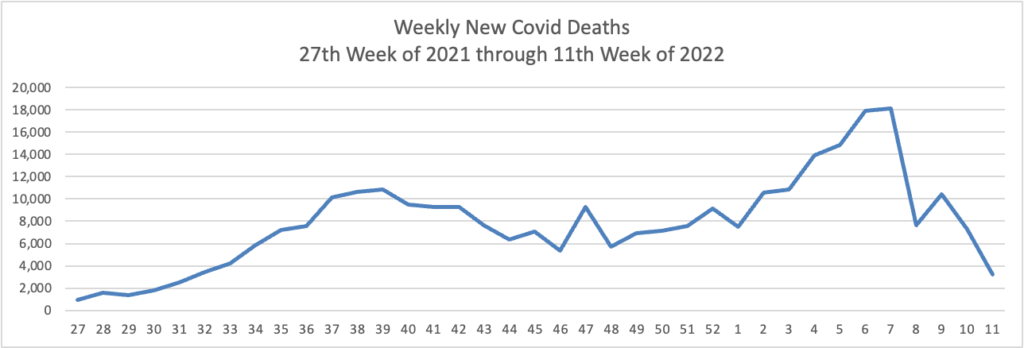
Based on the Centers for Disease Control’s Covid Data Tracker and using Thursday as the first day of the week, here is the FEHBlog’s latest weekly charts of new Covid cases and deaths (a lagging indicator):

The CDC observes in its weekly review of its Covid statistics

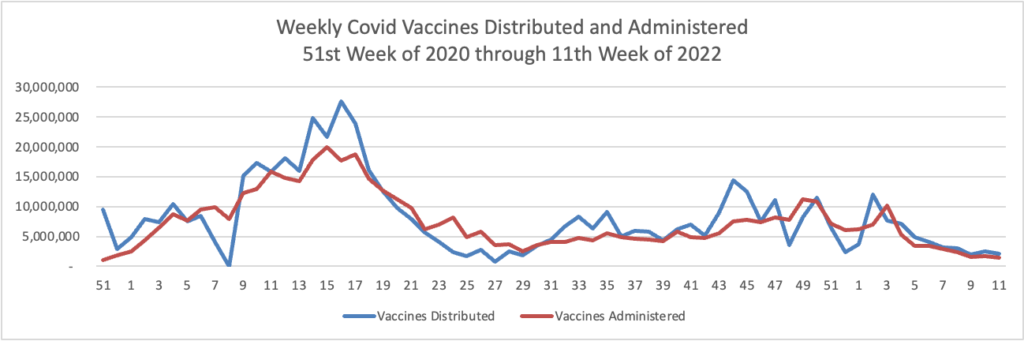
COVID-19 caseshospitalizations, and deaths all continue to decrease in the United States. According to CDC’s COVID Data Tracker, as of March 16, 2022, 76.7% of the total U.S. population has received at least one dose of a COVID-19 vaccine, and 65.3% has completed their primary series. However, only about half of the booster-eligible population has received a booster dose and is considered up to date on their COVID-19 vaccines.

Two new studies show the effectiveness of COVID-19 vaccines and boosters across periods of three variants of concern (Alpha, Delta, and Omicron). CDC released a study today showing that, among adults hospitalized with COVID-19 during the Delta and Omicron waves, those who received two or three doses of the Pfizer-BioNTech or Moderna vaccine had 90–95% less risk of dying or needing a ventilator compared with adults who were not vaccinated. Protection was highest in adults who received a third COVID-19 vaccine dose. A study published in the British Medical Journalexternal icon found that vaccines gave a high level of protection against hospitalization for all variants, but not as much for Omicron among adults who received only a primary series. However, boosters increased protection against Omicron. The study also showed that hospital patients who were vaccinated had much lower disease severity than patients who were not vaccinated.

These studies emphasize the importance of staying up to date with vaccinations—they are our best protection against severe COVID-19 illness. Vaccination is also the safest way to reduce the chance that new variants will emerge. Find a vaccine provider and get your booster dose as soon as you can.

In that regard, here is the FEHBlog weekly chart of Covid vaccinations distributed and administered from the beginning of the vaccination era in late 2020:

Here’s a link to the Food and Drug Administration’s March 18 round of its Covid related activities.

While the bulk of Covid care spending goes to hospitals, Becker’s Hospital Review reports that a “sizable minority” have a significant amount out-of-pocket spending for this care, according to a study published in the American Journal of Managed Care March 16.”

It’s worth adding that the Wall Street Journal reports that

The biggest credit-reporting firms will strip tens of billions of dollars in medical debt from consumers’ credit reports, erasing a black mark that makes it harder for millions of Americans to borrow.

Equifax Inc.,  Experian  PLC and TransUnion are making broad changes to how they report medical debt beginning this summer. The changes, which have been in the works for several months, will remove nearly 70% of medical debt in collections accounts from credit reports.

Beginning in July, the companies will remove medical debt that was paid after it was sent to collections. These debts can stick around on a consumer’s credit report for up to seven years, even if they are paid off. New unpaid medical debts won’t get added to credit reports for a full year after being sent to collections.

The firms are also planning to remove unpaid medical debts of less than $500 in the first half of next year. That threshold could rise, according to people familiar with the matter.

From the compliance front —

  • The Internal Revenue Services issued a notice on how to calculate the No Surprises Act’s Qualified Payment Amount when the health plan does not have enough data to calculate a January 2019 median.
  • The Department of Labor is offering a webinar on March 30 at 11 am that “will help employers, service providers, and benefit professionals understand how the provisions of [the federal mental health partity act] apply to employer-sponsored group health plans and provide information on how to avoid common problems. The webinar runs about 45 minutes to an hour and is limited to 200 participants.

From this week’s healthcare conferences front

  • Fierce Healthcare discusses the electronic medical records interoperability theme of the HIMSS conference.
  • Fierce Healthcare also offers a wrap report on “the most interesting innovations at SXSW 2022: From holograms to the future of psychedelics.”

From the telehealth front

  • Becker’s Payer Issues reports that most consumer driven plans have taken advantage of the IRS offered flexibility to cover telehealth before the “high” annnual deductible.
  • Forbes informs us “Telehealth Accounts For One In Three Mental Health Visits Two Years Into Pandemic.” Whoopee.

From the good works department, the American Medical Association tells us about a North Carolina physician who is talking the diabetes problem.

Dr. [Brian] Klausner is the medical director of WakeMed’s Community Population Health program in Raleigh. He also is a physician champion for DiabetesFreeNC. That is the statewide initiative where AMA partnered with the North Carolina Medical Society and others to support collaborative efforts to end type 2 diabetes in the Tar Heel State.  

Rather than think of the pandemic as having “derailed” diabetes prevention or other population health efforts, Dr. Klausner said that “COVID-19 expedited new perspective in how we can do a better job addressing historic roadblocks to community health initiatives, including those related to diabetes and prevention.”

Tuesday Tidbits

Photo by Patrick Fore on Unsplash

Happy Ides of March. The President signed the Consolidated Appropriations Act 2022 into law today. The Postal Reform Act of 2022 continues to await the President’s signature.

From the Omicron front, David Leonhardt reports on COVID surges in China and Europe. He concludes

Even if [Covid] cases rise [in the U.S. again], as seems likely, there are good reasons not to panic. Vaccination tends to turn Covid into a mild illness, especially for people who have received a booster. For the unvaccinated and unboosted, BA.2 is another reason to get a shot.

It’s also a reason for the federal government and states to expand access to both Evusheld — a drug that can help protect the immunocompromised — and Paxlovid — a post-infection treatment. Finding either is often difficult today. (If you’re looking for one of them, click on this link for Evusheld and this one for Paxlovid.)

The bottom line: Covid isn’t going away, but vaccination and other treatments can keep future increases manageable. The biggest problem remains the millions of people who remain unvaccinated, many of them by choice. That’s the case in the U.S., in Hong Kong and across much of EuropeAfrica and the rest of the world.

Inducing more people to get shots — through persuasion or mandates — would probably save more lives than any other Covid policy.

What is the FDA’s hold up in reviewing the standard Covid vaccines for which emergency use authorizations have been filed? As previously noted, the traditional vaccines may be appealing to those resistant to the state-of-the-art mRNA vaccines.

The Wall Street Journal reports

Pfizer Inc. and partner BioNTech SE have asked U.S. health regulators to authorize a second booster dose of its Covid-19 vaccine for people 65 years and older.

The companies said Tuesday that they had filed the application. The Food and Drug Administration is expected to make a decision in time for the Biden administration to begin a potential fall vaccine campaign.

The FDA has been reviewing data and looking at potentially authorizing a fourth dose of the shot for use in the fall, The Wall Street Journal reported last month.

From the Rx coverage front —

STAT News informs us

The prices pharmacy benefit managers and insurers pay for Sanofi medicines have decreased for a sixth consecutive year, yet patient out-of-pocket costs are rising. Once again, there is further evidence that focusing solely on lowering the list price of medicines doesn’t guarantee lower costs for patients. Sanofi pulls back the curtain on the impact of list and net prices and more in its annual pricing report.

and

Back in 2019, when the Senate Finance Committee called seven drug industry CEOs to testify, it seemed like proof that Washington was within striking distance of actually reining in the industry’s high prices. “It’s past time to get beyond the excuses and make prescription drugs affordable,” Sen. Ron Wyden, the top Democrat on the committee, told drugmakers that day. Tomorrow, almost exactly three years later, Wyden will chair another hearing on prescription drug pricing. He’s billing the hearing as “an opportunity for members to discuss how high drug prices have impacted seniors and families in their states and identify solutions” — even though lawmakers have had more than a dozen such hearings to “discuss” high drug prices over the past three years. STAT’s Nicholas Florko tallies what’s at stake in STAT+.

In FDA News, the agency reports approving today “the first generic of Symbicort (budesonide and formoterol fumarate dihydrate) Inhalation Aerosol for the treatment of two common pulmonary health conditions: asthma in patients six years of age and older; and the maintenance treatment of airflow obstruction and reducing exacerbations for patients with chronic obstructive pulmonary disease (COPD), including chronic bronchitis and/or emphysema. This complex generic drug-device combination product, which is a metered-dose inhaler, should not be used to treat acute asthma attacks.”

From the opioid epidemic front, “the Department of Health and Human Services (HHS), through the Substance Abuse and Mental Health Services Administration (SAMHSA), announced two grant programs totaling $25.6 million that will expand access to medication-assisted treatment for opioid use disorder and prevent the misuse of prescription drugs. By reducing barriers to accessing the most effective, evidence-based treatments, this funding reflects the priorities of HHS’ Overdose Prevention Strategy, as well as its new initiative to strengthen the nation’s mental health and crisis care systems.”

From the patient front, HHS’s Agency for Healthcare Research and Quality announced the agency’s

Support for Patient Safety Awareness Week. Ongoing investments in safety research, the development of safety toolkits and training resources, and a growing emphasis on improving diagnostic safety are all part of a mission to make healthcare safe for all Americans. Access more information about AHRQ’s support of Patient Safety Awareness Week, including a special introductory video from Jeff Brady, M.D., director of the Center for Quality Improvement and Patient Safety; information about how to get involved in Patient Safety Awareness Week activities; and recent patient and diagnostic safety resources, including:

Diagnostic Safety Supplemental Items for the Surveys on Patient Safety Culture (SOPS) Medical Office Survey

Safer Together: A National Action Plan to Advance Patient Safety

Making Healthcare Safer III: A Critical Analysis of Existing and Emerging Patient Safety Practices

— AHRQ QuestionBuilder App (also available in Spanish

From the HIMSS conference in Orlando, Healthcare Dive tells us

The Biden administration has been working on additional rulemaking to address issues with the payer-to-payer data exchange requirements set out in sweeping interoperability rules finalized in early 2020, and “we look forward to sharing this rule with you soon,” CMS administrator Chiquita Brooks-LaSure told attendees at the HIMSS annual conference in Orlando on Tuesday.

CMS decided not to enforce those provisions when they kicked in this year, after health insurers raised concerns about operational challenges and risks to data quality given a lack of specificity in the rule.

The new rule will incorporate extensive public comment to try to address stakeholder concerns, and will standardize how payers exchange data through application programming interfaces, Brooks-LaSure said.

and

An online tool that allows patients in markets across the country to compare prices for hundreds of hospital services before getting treatment has launched in its beta development stage.

Turquoise Health’s platform uses cost data from machine-readable files made public by hospitals as part of compliance with a federal price transparency rule that went into effect in January 2021.

The San Diego-based startup’s platform includes a scorecard that lets users assess price transparency compliance with the CMS requirements for nearly 6,000 hospitals, Turquoise Health said Monday. Hospitals receive a score based on an algorithm-driven five-star rating system.

Fierce Healthcare reports from the SXSW Conference in Austin, TX.

Samsung and Best Buy executives shared why they place big bets on tech to help elderly Americans age at home.

Experts are laying out the business case to invest in care for underserved communities.

Leaders in women’s health say empowering female patients is key to addressing gender biases in healthcare.

Monday Roundup

Photo by Sven Read on Unsplash

From the Omicron front

Medpage Today offers an interesting discussion of the test to treat program.

The Wall Street Journal informs us

A new Covid-19 pill from Merck & Co. and Ridgeback Biotherapeutics LP has been more widely used than expected since rolling out late last year, though regulators and many doctors consider it a last resort. 

Many doctors and health officials anticipated a rival pill, Pfizer Inc.’s Paxlovid, would be the Covid-19 drug of choice. Paxlovid was found to be far more effective than Merck-Ridgeback’s molnupiravir in clinical trials, and regulators and guidelines recommended using Paxlovid if possible.

Prescriptions for the two antivirals have been running about equal since their authorization in December, however. The larger-than-expected use is a sign of the high demand for easy-to-use coronavirus treatments that can be taken at home, especially during surges like the recent Omicron wave.

Govexec tells us

Federal agencies are not restricted on the size of events they host, unless under certain conditions, according to new guidelines. 

The Biden administration’s Safer Federal Workforce Task Force issued updated and new guidance on March 11, most of which reflects the Centers for Disease Control and Prevention’s new framework released in late February. That framework “moves beyond just looking at cases and test positivity to evaluate factors that reflect the severity of disease, including hospitalizations and hospital capacity, and helps to determine whether the level of COVID-19 and severe disease are low, medium, or high in a community,” as CDC Director Dr. Rochelle Walensky said on a briefing call. 

There are no “restrictions on the size of agency-hosted in-person meetings, events, or conferences,” said one of the new “frequently asked question” prompts. “Should an agency intend to host a meeting, conference, or event that will be attended in-person by more than 50 participants at a facility in a county where the COVID-19 Community Level is HIGH, the agency should first seek the approval of its agency head or official to which this responsibility has been delegated, in consultation with the agency’s COVID-19 coordination team.” 

From the Rx coverage front –

BioPharma Dive reports good news

The Food and Drug Administration has approved AstraZeneca and Merck & Co.’s drug Lynparza for people with a genetic form of early breast cancer, a decision that could spur greater use of DNA testing in diagnosing and treating the disease.

Lynparza is already used to treat metastatic breast cancer in patients with so-called BRCA gene mutations. The new approval makes Lynparza available earlier in their disease, after surgery to remove a tumor and standard drugs like chemotherapy and radiation. People with cancers that are “HER2-negative” and at a high risk of relapsing are eligible for treatment.

The decision is based on the results of a large study published last year in The New England Journal of Medicine last year. In it, Lynparza reduced the risk of disease progression or death by 42% versus placebo after a median of 2.5 years of follow-up. Updated results show the drug cut the risk of death by about a third, a finding the companies will detail at a medical meeting on Wednesday.

The National Institutes of Health announced launching “a Phase 1 clinical trial evaluating three experimental HIV vaccines based on a messenger RNA (mRNA) platform—a technology used in several approved COVID-19 vaccines.” mRNA developers were working on HIV vaccines before the pandemic struck. Fingers crossed.

Healthcare Dive reports from Capitol Hill

Sen. Chuck Grassley (R Iowa) is urging the Federal Trade Commission to “find consensus” and vote again to launch a study into the business practices of pharmacy benefit managers, according to a letter he sent to FTC Chairwoman Lina Khan dated March 9.

“PBMs operate with little to no transparency, making it very difficult if not impossible to understand the flow of money in the prescription drug marketplace,” the Republican senator from Iowa said in his letter, nodding to the bipartisan consensus for such an examination.

Grassley urged the commissioners to come up with a more targeted focus for the study and suggested narrowing a review to the impact on consumers and their out of pocket costs.

From the patient safety front, Beckers Hospital Review explains

Staffing shortages are the top threat to patient safety in 2022, according an annual report on patient safety concerns from ECRI, an organization that conducts independent medical device evaluations, published March 14. 

Researchers identified the top threats to patient safety by analyzing a wide range of data, including scientific literature, patient safety events or concerns reported to or investigated by ECRI. 

Ten top patient safety concerns this year: 

1. Staffing shortages

2. COVID-19 effects on healthcare workers’ mental health

3. Bias and racism in addressing patient safety 

4. Vaccine coverage gaps and errors

5. Cognitive biases and diagnostic error

6. Nonventilator healthcare-associated pneumonia 

7. Human factors in operationalizing telehealth

8. International supply chain disruptions

9. Products subject to emergency use authorization

10. Telemetry monitoring 

From the mental healthcare front, the Department of Health and Human Services announced

A new U.S. Department of Health and Human Services (HHS) study published in the American Medical Association’s journal JAMA Pediatrics  reports significant increases in the number of children diagnosed with mental health conditions. The study, conducted by the Health Resources and Services Administration (HRSA), finds that between 2016 and 2020, the number of children ages 3-17 years diagnosed with anxiety grew by 29 percent and those with depression by 27 percent. The findings also suggest concerning changes in child and family well-being after the onset of the COVID-19 pandemic.

No bueno.

Senate passes the Postal Reform Act of 2022

Photo by Michele Orallo on Unsplash

From Capitol Hill, Federal News Network reports

A long-awaited reform bill that would save the Postal Service more than $100 billion (H.R. 3076) is headed to President Joe Biden’s desk.

The Senate on Tuesday passed the Postal Service Reform Act, which would, among other things, eliminate a 2006 mandate from Congress to pre-fund retiree health benefits.

Postmaster General Louis DeJoy supports the bill, as do postal unions and associations, who say it will address USPS’s long-term financial challenges.

The bill will create a Postal Service Health Benefits Program (PSHBP) within the FEHBP effective January 1, 2025. A recently added feature of the bill creates a transitional Open Season in the fall of 2024. Any Postal employee or annuitant who fails to switch to a PSHBP plan will be added to the rolls of their current carrier’s PSHBP plan. However, the non-selecting Postal employees and annuitants whose current carrier is not participating in the PSHBP will wind up on the rolls of the PSHBP option with the lowest premium that is not a high deductible health plan and does not charge membership dues.

Another new feature of the bill requires the Postal Service to create a Health Benefits Education Program in mid-2023. That HBEP will include ACA navigators. It will be interesting to see, for example, whether the ACA Navigators can hold down the number of non-selecting Postal employees and annuitants in the transitional Open Season.

P.S. For fun, the FEHBlog reviewed the summary of H.R. 3076’s earliest antecedent which was S. 1789 from the 112th Congress titled the 21st Century Postal Service Act of 2012. According to the bill’s summary, this first shot also called for an HBEP. The 2022 twist is the ACA navigator feature in H.R. 3076. More accurately, the FEHBlog should describe these folks as ACA-like navigators.

For perspective on this clarification, NPR Shots discusses the good works of patient navigators in the State of Delaware. These folks have been improving the rates of cancer screenings in underserved communities which in turn has lower cancer mortality rates.

Also from Capitol Hill, Roll Call informs us

Congressional leaders spent Tuesday afternoon negotiating potential late add-ons to the fiscal 2022 omnibus spending bill, including cybersecurity legislation and a bipartisan deal to revive lapsed Violence Against Women Act authorities, with an eye on releasing final text later that day. 

“Republicans and Democrats are very, very close to finalizing the agreement,” Senate Majority Leader Charles E. Schumer, D-N.Y., told reporters Tuesday after Democrats’ early afternoon caucus lunch. “I expect there will be text released in a few hours. And we’re working very hard on a few last-minute issues: cyber and VAWA.”

The schedule leaders are eying would have the House vote on the omnibus Wednesday morning and the Senate clear the measure before stopgap funding expires at midnight Friday. GOP objections to a unanimous consent agreement to speed consideration in the Senate could delay final passage into the weekend, lawmakers warned, but both sides expect the process to be complete in time to avoid a partial government shutdown when federal agencies open Monday.

The Hill adds

Lawmakers say they are close to an agreement to provide billions in new coronavirus relief, set to be tied to a massive government funding bill [which step would improve its chances of passage]. 

Congress is expected to include at least $15 billion in response to the Biden administration’s request for new funding for COVID-19 vaccines, treatments and testing.

Also from Capitol Hill, Congressional Research Service released a report on Health Reimbursement Arrangements, a tool which the Internal Revenue Service created in the early 2000s shortly before Congress added high deductible plans with health savings account to the toolbox in the Medicare Modernization Act of 2003. Nevertheless, HRAs remain handy tools for designing employer sponsored health plans such as those in the FEHBP.

From the Omicron front, the Department of Health and Human Services released a fact sheet about the Administration’s new test to treat program which is launching on a limited basis this week. Here’s a link to the fact sheet. It is evident that these sites will not be using a health department standing order to dispense the Covid medication. Instead

Are pharmacists themselves able to prescribe the oral antiviral pills (Paxlovid and Molnupiravir)?

No. The Test to Treat initiative includes sites that have health care providers available to provide timely and thorough assessment and discussion relevant to oral antiviral treatment option(s) , consistent with FDA requirements regarding these drugs. The Test to Treat initiative does not change existing requirements for a qualified health care provider to write the prescription.

NPR Shots offers more information on the program here.

Biden administration officials say [in the fact sheet] they’ll be launching a “one-stop shop” website later this month, where people will be able to find test-to-treat locations, along with sites where they can get free masks, tests and vaccines.

The test to treat program comes at a time when coronavirus cases are falling steeply in the U.S., and the supply of Pfizer’s Paxlovid pill is ramping up. These are good trends, but it’s not a time to be complacent, says Dr. James Hildreth, president and CEO of Meharry Medical College: “The virus is not done with us yet, right? And, if we do have another surge, having a system like this in place could have a huge impact on controlling it.” 

Hildreth says the program holds a lot of promise — so long as it expands its outreach to rural communities, indigenous groups, and other marginalized high-risk people that need it the most.

The National Institutes of Health discusses an NIH funded research finding that the immune response from Covid vaccines improves for months after vaccination.

Govexec tells us “A federal appeals court on Tuesday appeared open to reinstating President Biden’s COVID-19 vaccine mandate, suggesting a lower court’s pause may have been overly broad.” Govexec based its view on the oral argument held before a panel of judges from the U.S. Court of Appeals for the Fifth Circuit in case calling into question the nationwide scope of the injunction created by the district court. The panel should issue its decision later this month.

Fierce Healthcare reports from the inaugural Vive conference being held this week in Miami, Florida. For example

Two key topics have dominated the industry conversation amid the COVID-19 pandemic: health equity and the role of technology.

But these are not distinct entities, insurance executives said Monday at the inaugural ViVE Conference in Miami, and it’s necessary to find the intersection, or “techquity.” It’s critical, they argued, that technology be viewed through an equity lens to ensure that access is fair and that the tools on offer are working for a diverse array of patients.

The national conversation about disparities, however, has helped enshrine equity as a key part of the technology conversation, said U. Michael Currie, senior vice president and chief health equity officer at Optum and UnitedHealth Group, on a panel at the conference.

and

Health tech veteran Jennifer Schneider, M.D., helped build up chronic condition management startup Livongo, then helped lead the company through a massive IPO and the industry’s largest merger with Teladoc.

Schneider and other Livongo veterans are reuniting and taking on their next challenge—improving rural healthcare.

The executive team, including Amar Kendale, former chief product officer at Livongo, and Bimal Shah, M.D., former chief medical officer at Livongo, announced Monday the launch of Homeward, a startup focused on improving access to high-quality, affordable primary and specialty care in rural communities.

Weekend Update

Thanks to ACK15 for sharing their work on Unsplash.

From Capitol Hill, the House of Representatives and the Senate will be in session this week for Committee business and floor voting. Of note, the Senate will continue its voting process on the Postal Reform Act of 2022 (H.R. 3076) at 5:30 pm ET tomorrow. The continuing resolution funding the the federal government expires after 11:59 pm on Friday March 11.

The Wall Street Journal notes “House Democrats set to be in Philadelphia starting Wednesday for a long-planned retreat, negotiators need to make progress quickly.” The Journal’s article adds “Some aides and lawmakers of both parties said that the chances of passing an omnibus spending measure this week had increased, in part because a fiscal 2022 measure would include financing for Ukraine and Eastern European allies and give the military flexibility for any related needs.”

From the Omicron front —

  • The New York Times reports on the difficulties encountered in the distributing the Evusheld antibiotic treatment that shields immunocompromised Americans who cannot receive a Covid vaccination. According to the article, immunocompromised Americans represent 3% of the population.
  • The Wall Street Journal informs us

Novavax Inc.’s long-awaited Covid-19 vaccine is moving toward U.S. authorization after the company said it resolved manufacturing problems that had held up its application. 

Clearance in the U.S. isn’t imminent because the Food and Drug Administration must sort through a large amount of study data from several countries, a person familiar with the matter said. A decision is getting closer, however, since Novavax formally submitted an authorization request in late January.

If the shot is rolled out in the U.S., it could boost vaccination efforts that have flagged among the hesitant, according to Novavax and doctors.

  • The Journal also tells us

Vaccination campaigns have lagged behind in much of the developing world, as many countries struggle to distribute shots outside major urban areas. In Asia, countries like India, Indonesia and the Philippines have fully vaccinated half their populations. That is higher than the 13% of people living in Africa who are vaccinated, with 4% immunized in Nigeria, the continent’s most populous country. Latin America has done better. Many countries, including Brazil and Peru, have vaccinated more than 70% of their people.

Natural immunity, which refers to antibodies acquired through infection, was widespread in Indonesia when Omicron arrived. One study from October to December of roughly 20,000 Indonesians found that 74% of unvaccinated Indonesians had protective antibodies, according to Pandu Riono, a University of Indonesia epidemiologist who worked with government researchers on the study.

Based in part on the results, Mr. Riono and his colleagues estimate that 70% of Indonesians had been infected with Covid-19 as of December, far higher than the 34% of Americans who had been infected by then, according to a survey by the U.S. Centers for Disease Control and Prevention.

From the federal employment front, Federal News Network offers a transcript of an interview between Federal News Network reporter Tom Temin and American University professor Bob Tobias about the demographic characteristics of federal employees. For example, “74% of the workforce, federal workforce is 40 or older, versus 54% in the private sector.” Unquestionably, the experience of the federal employee population benefits all of us, but older workforce also impacts FEHB premiums.

From the telehealth front, Fierce Healthcare reports

Striking the balance between virtual and in-person care is a key trend to watch heading into the rest of 2022, according to a new survey from Evernorth.

Ipsos surveyed 3,000 consumers, 575 human resources professionals and 58 health plan leaders on behalf on the Cigna subsidiary. The report underscores patients’ growing comfort with virtual care and telemedicine in the wake of COVID-19, with 75% saying they agree more care will be provided virtually; 57% of those surveyed said they used virtual care over the last year.

However, consumers are not enthusiastic about virtual options in all settings, according to the survey. While 35% of those surveyed said they were satisfied with their experience in virtual primary care, just 11% said the same about behavioral health care. Nineteen percent said they were satisfied with virtual care for specialty services, while 5% said the same for physical therapy and 6% for nutrition and diet services.

While satisfaction with virtual behavioral health care was mixed in the survey, a growing number of people are seeking behavioral health services in virtual settings.

Boom!

From the strategery front, Becker’s ASC News discusses the 2022 growth strategies of Optum’s three business divisions:

  • Optum Health, the healthcare provider division which includes physician groups and ambulatory surgery centers
  • Optum Insight, which houses the data analytics platforms designed to connect clinical, administrative and financial data, and
  • Optum Rx, a pharmacy benefits and care services business.

Thursday Miscellany

Photo by Josh Mills on Unsplash

From Capitol Hill, the Senate has adjourned until Monday March 7 after setting another cloture vote on the Postal Reform Act of 2022 (HR 3076) for Monday at 5:30 pm. While the FEHBlog is not a Senate procedure expert, it appears that another cloture vote is required because a minor Senate amendment was filed after the first cloture vote. Postal reform must be getting real because the Wall Street Journal posted an account of the decade-long effort to pass this legislation today.

From the Omicron front, the FEHBlog’s favorite part of the President’s new strategy was explained by the White House Covid czar yesterday:

Pfizer’s pill {Paxlovid] is a gamechanger — 90 percent effective at keeping people out of the hospital.

We collaborated with Pfizer to accelerate development of the pill.  And we’ve ordered 20 million courses.

As the President announced last night, Pfizer worked overtime to further accelerate delivery.  This month alone — the month of March — we’ll have 1 million of these treatment courses available.  And in April, that number will more than double.

To ensure these lifesaving treatments are easily accessible, the President’s Plan launches a new “Test to Treat” initiative to provide individuals access to testing and treatment for free, all in one stop. 

Hundreds of one-stop sites will open across the country this month, located at local pharmacy clinics, community health centers, long-term care facilities, and veterans’ health centers.

Marketwatch adds today that “CVS Health Corp., the Walgreens Boots Alliance Inc., and Walmart Inc. said they will participate in the test-to-treat initiative, a new program that allows someone who has tested positive for the virus to get antiviral pills during the same visit at no cost.”

Covid treatment costs were astronomical because care principally was given in hospitals and other healthcare facilities, creating a major burden on the healthcare system. Facilitating the use of Flonase for Covid will avoid the vast majority of those hospitalizations, thereby lowering healthcare costs.

Speaking of testing, the Wall Street Journal reports that

Manufacturers are developing new types of at-home tests, including for flu and strep throat, aimed at consumers who are increasingly monitoring and managing their own health through fitness apps and smartwatches.

Boulder, Colo.-based fertility company MFB Fertility Inc. received clearance from the U.S. Food and Drug Administration in February 2020 for its Proov test, designed to help women measure their hormone levels and to know when in a given month they are most likely to become pregnant. A typical kit includes 20 testing strips, allowing a woman to test daily, which the company said would be tough to achieve through visits to a doctor’s office.

Amy Beckley, the company’s chief executive, said the rise of at-home Covid-19 tests over the past year has made it much easier for people to understand her product.

“All of a sudden, home diagnostics and home testing became a thing,” she said.

Mobihealth News reported last June

The U.S. Air Force has inked a $1.3 million deal with MFB Fertility in order to provide military members and their partners the former’s home fertility tests.

The Air Force’s AFWERX office will invest in Proov, an at-home ovulation test with FDA clearance. The test works by measuring Pregnanediol Glucuronide (PdG), the urine metabolite of progesterone, which is released by the ovary after ovulation. High levels of PdG over multiple days can confirm that successful ovulation took place.

The contract will provide free Proov kits to Air Force couples upon request and connect them to fertility specialists.

Two cool innovations.

From the healthcare policy front —

  • The White House released a fact sheet on steps underway to address the Nation’s opioid epidemic.
  • The Associated Press reports on the President’s mental healthcare policy proposals made in Tuesday’s State of the Union address. For example, under the President’s plan, “Health insurance plans would have to cover three mental health visits a year at no added cost to patients.” I suggest that the Administration consider the fact that most employers offer employee assistance plans that already offer two or three free mental health therapy visits. The overcomplicated federal mental health parity law fails to look at the big picture.

From the diabetes front —

  • The AMA offers six tips for screening patients for pre-diabetes. Many of the tips also could be applied by health plan case managers and coaches.
  • The American Diabetes Association delves into the relationship between diabetes and kidney disease.

From the litigation front, Reuters reports

The Sackler family owners of Purdue Pharma LP reached a deal with a group of attorneys general to pay up to $6 billion in cash to resolve widespread litigation alleging that they fueled the U.S. opioid epidemic, bringing the OxyContin maker closer to exiting bankruptcy.

The attorneys general for eight states and the District of Columbia, who had blocked a previous settlement that included a $4.3 billion cash payment, announced the deal after weeks of mediation with the Sacklers.

The family agreed to pay at least $5.5 billion in cash, which will be used for abating a crisis that has led to nearly 500,000 U.S. opioid overdose deaths over two decades.

The value of the deal could grow as the family members sell additional assets.

U.S. Bankruptcy Judge Robert Drain must approve the deal, which protects the Sacklers from civil lawsuits. Purdue requested a March 9 hearing for Drain to review the agreement.

From the Rx coverage front, Biopharma Dive reports

Civica is making plans to offer three versions of insulin that can be sold at dramatically lower prices than today’s alternatives, targeting a need highlighted by President Joe Biden during this week’s State of the Union Address.

The nonprofit company, created by hospital systems and philanthropies to address drug shortages, said Wednesday it will recommend pricing of no more than $30 for the vials it produces. Name-brand versions can currently cost 10 times that amount at cash prices.

Civica announced an ambitious timeline, projecting that the first product — designed to be interchangeable with Sanofi’s Lantus — would be available as soon as early 2024. The company also aims to manufacture cheaper versions of Eli Lilly’s Humalog and Novo Nordisk’s Novolog, in both vials and pre-filled pens.

Also the Institute for Clinical and Economic Review (“ICER”) announced

it will assess the comparative clinical effectiveness and value of subcutaneous semaglutide (Wegovy, Novo Nordisk), phentermine / topiramate (Qsymia, Vivus Pharmaceuticals), liraglutide (Saxenda, Novo Nordisk), and naltrexone/bupropion (Contrave, Currax Pharma) for the treatment of obesity. 

The assessment will be publicly discussed during a meeting of the New England Comparative Effectiveness Public Advisory Council (New England CEPAC) in September 2022, where the independent evidence review panel will deliberate and vote on evidence presented in ICER’s report.

ICER’s website provides timelines of key posting dates and public comment periods for this assessment.