Midweek update

Midweek update

Photo by Michele Orallo on Unsplash

From Capitol Hill, Medtech Dive reports

The Senate Committee on Health, Education, Labor and Pensions voted Tuesday to send a bill to the Senate that would reauthorize the Food and Drug Administration to collect user fees from device- and drug-makers for the next five years. 

A provision would require the FDA to finalize guidance that would create a category of over-the-counter hearing aids within a month of the bill’s passage. The FDA last issued a proposed guidance in October.

Committee Ranking Member Sen. Richard Burr, R-N.C., questioned on Tuesday whether the FDA should have that expanded authority, despite co-sponsoring legislation that would change how diagnostic tests are regulated, including laboratory-developed tests.

Fierce Healthcare adds

The American Hospital Association (AHA) penned a last-ditch letter to congressional leaders pleading for Medicare sequester cuts slated to take effect July 1 to be halted in light of the financial strain many of the nation’s hospitals are expected to face throughout 2022.

Congress had initially paused the 2% payment cut as part of the CARES Act when the COVID-19 pandemic began to threaten providers’ bottom lines. Sequestration cuts were continually punted downfield until last December, when a bill was signed to resume a 1% cut in April and the full 2% in July.

With half a month to go, AHA Executive Vice President Stacey Hughes warned majority and minority leaders Tuesday that financial relief from the pending cut is necessary for hospitals “to maintain access to care for the patients and communities they serve.”

From the Supreme Court, the American Hospital Association gleefully informs us

The U.S. Supreme Court today ruled unanimously in favor of the AHA and others, reversing a 2020 [U.S.] court of appeals decision upholding the authority of the Department of Health and Human Services to significantly cut payments to certain hospitals that participate in the 340B Drug Pricing Program, and thereby threatening access to care for patients.

The Supreme Court held that “HHS’s 2018 and 2019 reimbursement rates for 340B hospitals were contrary to the statute and unlawful.” Noting that “340B hospitals perform valuable services for low-income and rural communities but have to rely on limited federal funding for support,” the Supreme Court observed that “this case has immense economic consequences, about $1.6 billion annually.”

Despite those serious practical impacts, the Supreme Court concluded that “[u]nder the text and structure of the statute,” the case is “straightforward” as a matter of law: “Because HHS did not conduct a survey of hospitals’ acquisition costs, HHS acted unlawfully by reducing the reimbursement rates for 340B hospitals.”

From the Omicron and siblings front —

The Wall Street Journal reports

Health experts advising U.S. health regulators backed giving Covid-19 vaccines from Pfizer Inc. and BioNTech SE and from Moderna Inc. to children as young as 6 months old

The panel voted 21 to 0 in a pair of votes on Wednesday in support of expanding access to the vaccines.

The positive recommendations will likely lead soon to expanding the U.S. Covid-19 vaccination campaign to the 19.6 million children from 6 months to under 5 years of age, one of the last groups of people in the U.S. waiting for shots.

The Food and Drug Administration, which doesn’t have to follow the panel’s recommendations but usually does, is expected to authorize the shots within days. Vaccinations could begin as early as June 21, according to the Biden administration.

and

Moderna Inc. is planning to test its Covid-19 vaccine in babies 3 months to 6 months old, the youngest age group studied to date.

The Cambridge, Mass., company said Wednesday it is in the final stages of planning the study, to be called BabyCove and expected to begin enrolling as many as 700 babies in September.

BabyCove would be the first study of Moderna’s vaccine in infants younger than 6 months.

STAT News adds

Pfizer said Tuesday that a much-watched study of its antiviral Paxlovid in patients who have Covid but don’t have risk factors for severe disease failed to show a benefit in speeding alleviation of Covid symptoms, but did seem to prevent doctor’s visits and hospitalizations.

Additionally, because of the small number of hospitalizations overall in the study, it failed to produce a statistically significant finding on whether patients who had previously been vaccinated against Covid were hospitalized less often if they received Paxlovid.

The data in no way invalidate earlier results that show that Paxlovid prevents hospitalizations and saves lives in patients at high risk of severe Covid. But the results, published in a press release, are likely to take time for experts to digest and understand.

From the unusual viruses front, the American Hospital Association explains

The Centers for Disease Control and Prevention yesterday [June 14] updated its guidance to help clinicians evaluate and test patients with relevant history, signs and symptoms for monkeypox. Over 1,800 monkeypox or orthopoxvirus cases have been reported globally this year, including 72 in the United States. According to CDC, the virus does not spread easily between people without close contact, so the risk to the general population remains low.

The World Health Organization plans to change monkeypox’s name next week.

From the healthcare business front

Anthem will officially become Elevance Health on June 28, and, as part of its corporate rebrand, it’s also launching new brands for two of its subsidiaries.

The insurer will consolidate its healthcare services businesses under one umbrella, called Carelon. Carelon is a combination of the word “care” with the suffix “lon,” which means full or complete, representing the company’s ambition to offer an end-to-end care experience.

Carelon will include Anthem’s in-house pharmacy benefit manager Ingenio Rx as well as recent acquisitions such as Beacon Health Options, a behavioral health provider, and myNEXUS, a home healthcare company. Carelon will serve 1 in 3 people in the U.S., according to the announcement.

and

Humana is moving its pharmacy brands under the CenterWell umbrella.

Humana Pharmacy and Humana Specialty Pharmacy will now operate as CenterWell Pharmacy and CenterWell Specialty Pharmacy, respectively, the insurer announced. Enclara Pharmacia and Humana Pharmacy Solutions, the company’s pharmacy benefit management arm, will maintain their original branding.

“The CenterWell brand symbolizes our ongoing and strong commitment to keeping members, customers and patients at the center of everything we do,” said Scott Greenwell, Humana Pharmacy Solutions president, in a statement.

  • Morning Consult discusses how CVS Health and Walgreens retained “high customer trust” in 2021.

From the benefit design front, Employee Benefits News offers the case for health savings accounts. The FEHBlog is already sold.


Tuesday’s Tidbits

Photo by Patrick Fore on Unsplash

From the Omicron and siblings front, MedPage Today reports

A committee of independent vaccine experts recommended that the FDA grant an emergency use authorization (EUA) for the two-dose Moderna COVID-19 vaccine for kids ages 6 to 17 years.

The Vaccines and Related Biological Products Advisory Committee (VRBPAC) voted 22-0, agreeing unanimously that the benefits of vaccination outweigh the risks in two age groups: kids ages 6 to 11 years and teens ages 12 to 17. They recommended two 50-mcg doses for the younger kids and two 100-mcg doses for teens.

The Wall Street Journal adds

The FDA will consider the vote in making a final decision on whether to clear the vaccine for use in children 6 years and older. * * * An FDA authorization could come within days. It would open the use of Moderna’s vaccine to children for the first time in the U.S., and give anyone still intending to inoculate their children 6 years and older against Covid-19 a second option.

Medpage Today also informs us

Only a very small number of high-risk patients with COVID-19 experienced “rebound symptoms” after being treated with nirmatrelvir/ritonavir (Paxlovid), a retrospective study found.

Among nearly 500 patients, 93% of whom were fully vaccinated, two patients were hospitalized due to symptoms that were not directly related to “rebounding” within a month and required care in the intensive care unit (ICU), and four experienced rebound symptoms at a median of 9 days (interquartile range [IQR] 7-14.5), reported Nischal Ranganath, MD, PhD, of the Mayo Clinic in Rochester, Minnesota, and colleagues.

All rebound symptoms were resolved with symptom-directed treatment, and no deaths were reported in any patients after 30 days following their initial COVID-19 diagnosis, the group noted in Clinical Infectious Diseases.

“We found that rebound phenomenon was uncommon in this group of patients,” said co-author Aditya Shah, MBBS, also of the Mayo Clinic, in a statement. “The four individuals who experienced rebound represent only 0.8% of the group, and all of them recovered quickly without additional COVID-directed therapy.”

That’s certainly good news to read.

From the Rx coverage front, the Drug Channels blog tears apart a recent JAMA study concluding that the pricing of recently launched drugs has skyrocketed in recent years.

[T]he study’s headline conclusion is highly misleading. The authors obscure the real story with mathematical sleight-of-hand that misrepresents the underlying data and overlooks the true nature of today’s pharmaceutical innovations. 

Most notably, the authors discount the fact that the most expensive new drugs treat ultra-rare conditions affecting extraordinarily small patient populations. Their policy recommendations would therefore have a devastating impact on these patients and their hope for treatments and cures. 

As Nobel prize winner Ronald Coase observed: “If you torture the data long enough, it will confess to anything.”

And the Dr. Fein can back up his conclusion.

From general healthcare front, Kaiser Health News offers thought provoking articles about

The first article draws an important distinction between medical care and SDOH. Unfortunately, the second article reminds us that no good deed goes unpunished. If the government simply had relied on personal responsibility (outside of Medicaid), we would not find ourselves in this pickle.

Midweek Update

From Capitol Hill, Roll Call reports that FY 2023 appropriations work is gearing up.

From the Omicron and siblings front

The Wall Street Journal reports the following good news

Moderna Inc. said a modified [mRNA based] Covid-19 booster shot provided a stronger immune response than the company’s original vaccine against the Omicron variant in a new study. 

The Cambridge, Mass., company said Wednesday it will submit preliminary data from the study to U.S. health regulators in the coming weeks with the hope of making the modified booster shot available in late summer.

Researchers found that the levels of neutralizing antibodies against Omicron among people getting the modified shot were 1.75 times higher than in people who received a booster shot of the original vaccine, Moderna said.

and

AstraZeneca PLC said a study found its Covid-19 antibody treatment cut the risk of severe disease when given soon after symptoms develop, paving the way for its broader use.

The development comes at a time when the use of antibody treatments—once a mainstay for patients at high risk of developing severe Covid-19—has been complicated by the rise of the Omicron family of variants, which are less susceptible to some of the treatments. The treatments also face fierce competition from the more-convenient antiviral pills.

AstraZeneca’s antibody drug, called Evusheld, was found in its latest clinical trial to ward off severe disease in people who had already developed symptoms, according to results published late Tuesday in the Lancet Respiratory Medicine. The trial was conducted prior to the rise of the Omicron variant, but AstraZeneca has said that laboratory testing shows the antibody continues to work against the highly infectious strain.

The Food and Drug Administration released a revised checklist for prescribing the Pfizer Covid pill Paxlovid. While the checklist is intended for healthcare provider reference, it could be helpful to patients and health plans as well.

From the unusual virus front, STAT News offers an interesting article on how the hard lessons of the AIDS virus is shaping the U.S. response to monkeypox. The article notes

  • “[T]he monkeypox strain now in circulation is infinitesimally milder than HIV — zero fatalities have been reported out of the more than 1,000 cases so far.”
  • “Monkeypox isn’t transmitted sexually but by close contact with the disease’s hallmark pustules.”

From the Rx coverage front, Medpage Today informs us

The combination GIP and GLP-1 receptor agonist tirzepatide (Mounjaro [manufactured by Eli Lilly]) could soon be the next new treatment option for people with overweight or obesity, researchers reported.

In the 72-week, phase III SURMOUNT-1 clinical trial, people with obesity, but without diabetes, on 15 mg of the once-weekly injectable had a mean percentage change in weight of -20.9% (95% CI -21.8 to -19.9%) versus -3.1% (95% CI -4.3 to -1.9) with placebo, according to Ania M. Jastreboff, MD, PhD, of the Yale University School of Medicine in New Haven, and colleagues.

and

An open-source automated insulin delivery (AID) system — also known as a do-it-yourself system — was both safe and effective for patients with type 1 diabetes, according to the CREATE trial.

Over 24 weeks, users of the AID system spent more time in target glucose range (70 to 180 mg/dL) — an average of 14% longer — than those who were using sensor augmented pump therapy without automation, reported Martin de Bock, PhD, of the University of Otago in Christchurch, New Zealand, during a presentation at the American Diabetes Association (ADA) annual meeting.

The open-source AID system consists of the OpenAPS algorithm from a version of AndroidAPS implemented in a smartphone, paired with the DANA-i insulin pump and Dexcom G6 continuous glucose monitor. The researchers previously published additional information on the ins and outs of the algorithm in the Journal of Diabetes & Metabolic Disorders.

“Open-source AID, despite not being [FDA] regulated … is safe and efficacious in children and adults with type 1 diabetes compared to sensor augmented pump therapy,” de Bock noted. 

The American Diabetes Association offers more details on this significant development here.

From the transparency front, the Wall Street Journal tells us

Two Georgia hospitals on Wednesday were hit with federal financial penalties for failing to disclose their prices, marking the first such enforcement action taken under federal rules that have met with uneven compliance since taking effect in January 2021.

The Centers for Medicare and Medicaid Services (CMS), which is responsible for enforcing the rules, levied fines on Northside Hospital Atlanta and Northside Hospital Cherokee. The two hospitals, which are owned by Northside Hospital, together face penalties totaling roughly $1.1 million.

Perfect timing; right before the enforcement period for the transparency in coverage rule applicable to health plans begins on July 1.

Friday Stats and More

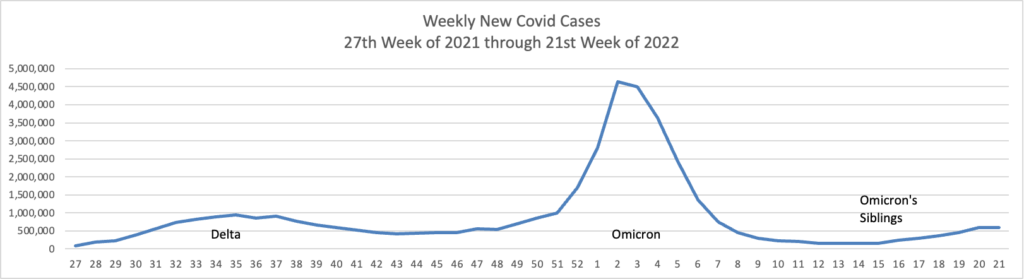
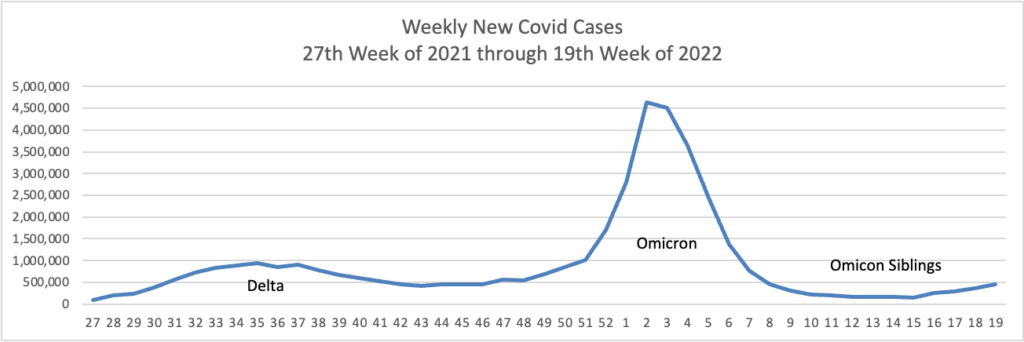
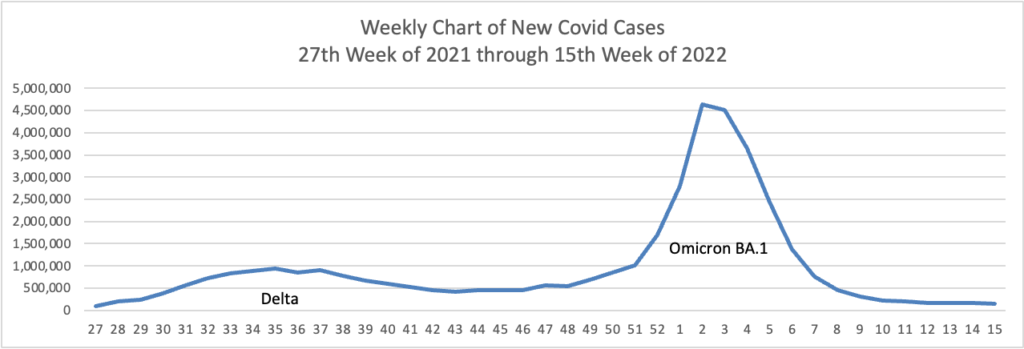
Based on the CDC’s Covid Data Tracker, and using Thursday as the first day of the week, here is the FEHBlog’s weekly chart of new Covid cases from the 27th week of 2021 through the 21st week of 2022:

The Wall Street Journal’s Numbers column observes

Reliable estimates of case counts are particularly relevant with the U.S. in the midst of yet another Covid-19 wave. By official case counts, it is a modest wave, at roughly 110,000 infections a day, according to the CDC. That is smaller than the 165,000 daily cases reported during the Delta wave, or the 250,000 a day during the 2020-21 winter. 

But estimates of the true number of infections, correcting for undercounting, suggest the U.S. might be experiencing the second-largest wave of Covid-19 infections since the pandemic began.

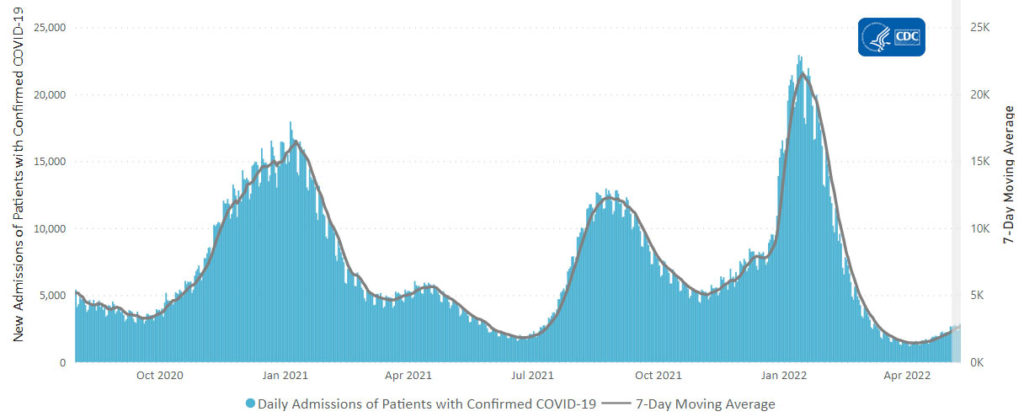
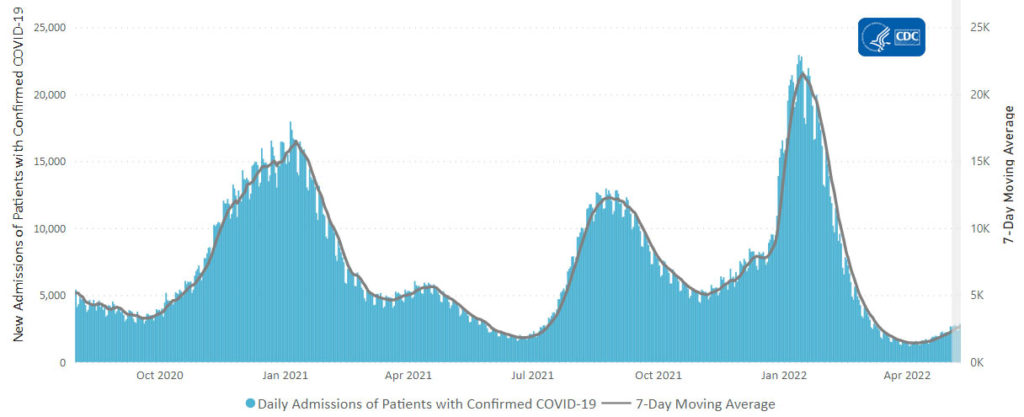
Here’s the CDC’s weekly chart of new Covid hospitalizations.

The Journal’s Numbers column notes

Hospitalization numbers also aren’t a perfect gauge. Someone can break a leg and test positive in the emergency room for a mild case of Covid-19. That case becomes a confirmed coronavirus hospitalization—and a strain on the hospital’s bed counts and personal-protective-equipment supplies—but not necessarily a severe case.

In Massachusetts, hospitals have begun reporting whether Covid-19 is the primary reason someone is in the hospital—and in January about 50% of cases were. It is hard to pinpoint how similar Massachusetts would be to other states, but it offers a further example of how better counting could improve assessment of the pandemic.

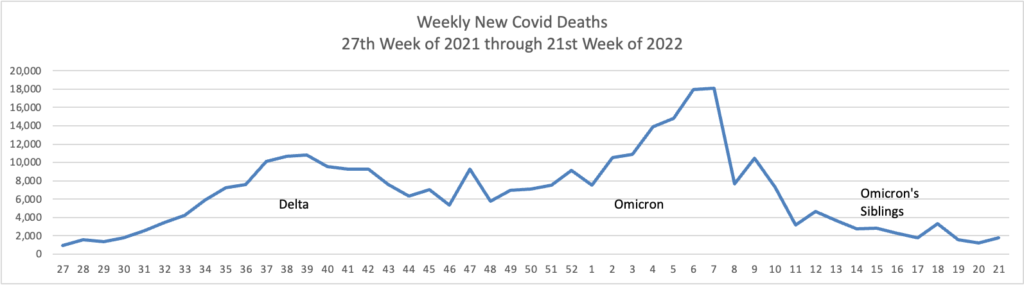
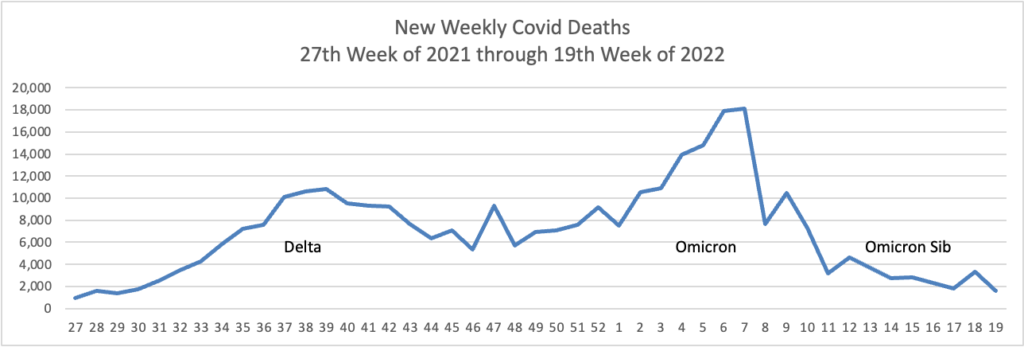
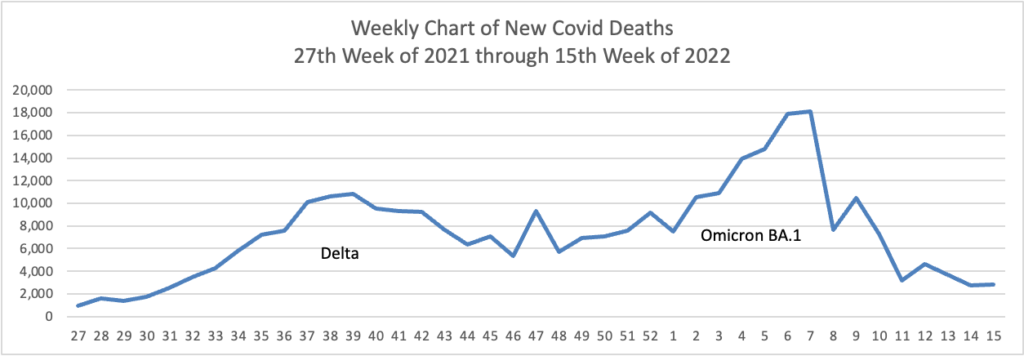
Here’s the FEHBlog weekly chart of new Covid deaths again from the 27th week of 2021 through the 21st week of 2022:

The Wall Street Journal reports

Covid-19 deaths in the U.S. are hovering near the lowest levels since the pandemic hit, showing how a population with built-up immune protection is less at risk of severe outcomes even as another wave of infections flows through the country.

The nearly 300 deaths reported daily are again more concentrated among older people, underscoring hazards for the more vulnerable while the overall population appears less at risk.

Particularly vulnerable people, such as those who are older and immunocompromised, will likely always have some risk of death from a Covid-19 infection, doctors and public-health experts said. Increasing booster rates and access to treatments, in addition to taking certain precautions, can help lower the threat presented by the virus, they said.

The New York Times adds

 White House officials said on Thursday that they were introducing new models for distributing Paxlovid, the Covid-19 oral medication made by Pfizer, in an effort to get the treatment to more people and keep coronavirus death rates relatively low even as cases increase.

The federal government will start reimbursing a clinic in Providence, R.I., for evaluating patients who test positive and immediately prescribing Paxlovid to those eligible for it — the first of what the White House said would be a series of federally supported sites, with others set to open in New York and Illinois. Federal workers are also being sent to state-run testing sites in Minnesota, transforming them into “test-to-treat” locations, the White House said.

“Fundamentally, what we’re trying to do is get to a point where Covid deaths are largely preventable, and I think we’re pretty close to there,” Dr. Ashish K. Jha, the White House Covid-19 response coordinator, said in an interview Wednesday evening. “Deaths from this disease really should become increasingly rare.”

STAT News offers an interesting look into how scientists assess the level of Covid resistance to Paxlovid.

Resistance is the hobgoblin of antiviral medicine, even with antivirals as effective as Paxlovid. After doctors deployed nearly every new virus-killing infusion or pill in history, strains popped up — either immediately or eventually — with machinery warped in just the right way to evade the threat.

Exactly how much of a problem resistance will be for Paxlovid is complicated. In some patients, the coronavirus will inevitably find ways to evade the pill, as it did prior Covid-19 drugs.

“If there is anything we know about viruses and antiviral drugs is that eventually we will see some sort of resistance,” Andrew Pavia, chief of pediatric infectious diseases at University of Utah Health, said in an email.

What’s less clear, Pavia and other experts say, is whether any resistant variants will spread widely. The coronavirus may have particular difficulty getting around Paxlovid compared to other drugs because patients take it for only five days and because it targets a protein the virus can’t easily change. Any mutation or modification the virus makes may impair its ability to replicate or survive.

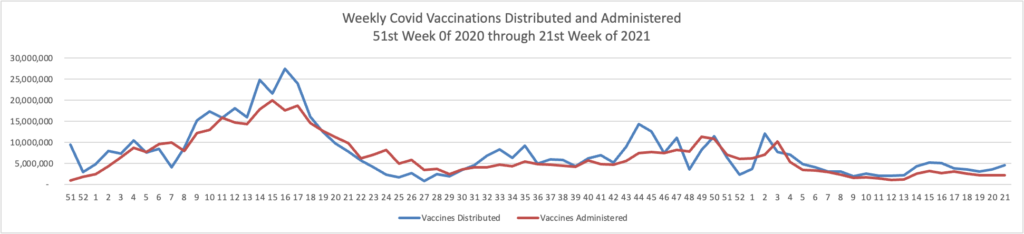
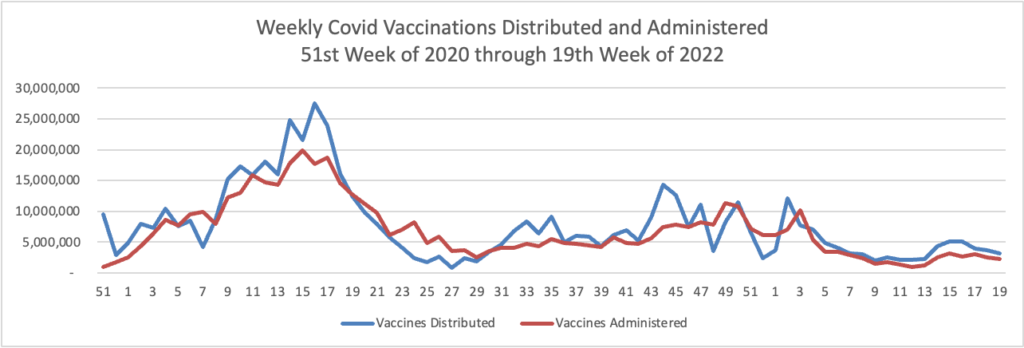
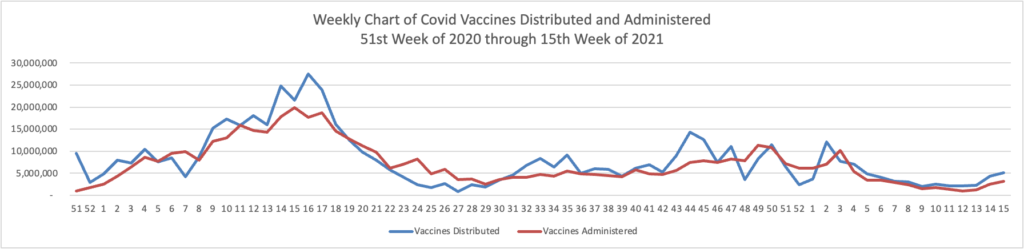
Here’s the FEHBlog weekly chart of Covid vaccinations distributed and administered

The CDC’s weekly review of its Covid statistic tells us

People who are up to date on vaccines have much lower risk of serious illness and death from COVID-19 compared with people who are unvaccinated. CDC’s COVID Data Tracker shows that in March 2022, adults ages 18 years and older who were unvaccinated were about 5 times more likely to be hospitalized with COVID-19 than those who were up to date. In the same month, people ages 12 years and older and unvaccinated were 17 timesmore likely to die of COVID-19 than those who were up to date.

COVID-19 vaccines available in the United States are effective at protecting people from getting seriously ill, being hospitalized, and even dying—especially people who are boosted. As with other diseases, you are protected best from COVID-19 when you stay up to date with recommended vaccines. Find a vaccine provider near you.

The CDC’s weekly review further explains

As of May 19, 2022, there are 301 (9.35%) counties, districts, or territories with a high COVID-19 Community Level, 477 (14.81%) counties with a medium Community Level, and 2,442 (75.84%) counties with a low Community Level. This represents a moderate (+5.10 percentage points) increase in the number of high-level counties, a slight (−0.74 percentage points) decrease in the number of medium-level counties, and a corresponding (−5.84 percentage points) decrease in the number of low-level counties. Five (9.62%) of 52 jurisdictions had no high- or medium-level counties this week.

To check your COVID-19 Community Level, visit COVID Data Tracker.

In big Medicare news

the Centers for Medicare & Medicaid Services (CMS) released a report that recommends cost savings from lower-than-expected Medicare Part B spending be passed along to people with Medicare Part B coverage in the calculation of the 2023 Part B premium. Earlier this year, Department of Health and Human Services (HHS) Secretary Xavier Becerra instructed CMS to reassess the 2022 Part B premium amount in response to a price reduction for Aduhelm™, a monoclonal antibody directed against amyloid for use in treating Alzheimer’s disease. Given the information available today, it is expected that the 2023 premium will be lower than 2022. The final determination will be made later this fall.

This CMS decision is quite sensible, in the FEHBlog’s view.

On a related FEHB note, FedSmith discusses the pros and cons of enrolling in Medicare Part B when you are a federal or Postal annuitant with FEHB coverage in retirement as well.

From the telehealth front, mHealth Intelligence reports

CVS Health has launched a new virtual care solution to create a more coordinated healthcare experience for consumers.

Called CVS Health Virtual Primary Care, the digital care platform will provide healthcare consumers with an array of care services, including primary care, on-demand care, chronic condition management, and mental health services. Consumers will also be able to choose their healthcare setting from various retail, community-based, virtual, and at-home care options.

“We’re meeting people where they are on their healthcare journey and providing care that is more convenient and easier to access,” said Creagh Milford, DO, vice president, enterprise virtual care at CVS Health, in the news release.

The new benefit will launch on January 1, 2023.

From the Rx coverage front, Formulary Watch reveals that

The Institute for Clinical and Economic Review (ICER) has released the protocol for its second annual review of insurance company policies to assess fair access to prescription drugs. ICER will evaluate whether 15 large U.S. commercial payers, the two largest state health exchange plans, and the Department of Veterans Affairs have formularies and procedures that provide appropriate access to the prescription drugs reviewed by ICER in 2020. These drugs include those that treat patients with cystic fibrosishemophilia Amigrainesickle cell disease, and ulcerative colitis.

The analysis is expected to be completed in November 2022.

From the studies front, the Centers for Disease Control issued its 2021 Diabetes Report Card this week. Here are the highlights

* After almost 2 decades of continual increases, the incidence of newly diagnosed cases of diabetes in the United States decreased from 9.3 per 1,000 adults in 2009 to 5.9 per 1,000 adults in 2019.

* Prevalence of prediabetes among US adults remained steady from 2005–2008 to 2017–2020. However, notification of prediabetes status nearly tripled (from 6.5% to 17.4%).

* American Indian or Alaska Native, non-Hispanic Black, Hispanic, and non-Hispanic Asian people are more likely to be diagnosed with diabetes than non-Hispanic White people (14.5%, 12.1%, 11.8%, 9.5%, and 7.4%, respectively).

* During the COVID-19 pandemic, diabetes emerged as an underlying condition that increases the chance of severe illness. Nearly 4 in 10 adults who died from COVID-19 in the United States also had diabetes.

Friday Stats and More

Based on the CDC’s Covid Data Tracker and using Thursday as the first day of the week, here is the FEHBlog’s weekly chart of new Covid cases from the 27th week of 2021 through the 19th week of 2022.

The CDC’s weekly review of its Covid statistics notes

As of May 11, 2022, the current 7-day moving average of daily new cases (84,778) increased 30.7% compared with the previous 7-day moving average (64,863). A total of 82,087,117 COVID-19 cases have been reported in the United States as of May 11, 2022.

Here’s the CDC’s weekly chart of new Covid hospitalizations

The CDC’s weekly review of Covid hospitalization notes, “The current 7-day daily average for May 4–10, 2022, was 2,629. This is a 17.5% increase from the prior 7-day average (2,238) from April 27–May 3, 2022.”

Here’s the FEHBlog’s weekly chart of new Covid deaths from the 27th week of 2021 through the 19th week of 2022:

The CDC’s weekly review notes “The current 7-day moving average of new deaths (273) has decreased 15.4% compared with the previous 7-day moving average (322). As of May 11, 2022, 996,376 COVID-19 deaths have been reported in the United States.”

Finally, here is the FEHBlog’s weekly chart of Covid vaccinations distributed and administered from the beginning of the Covid vaccination era through the 19th week of 2022.

Per the CDC’s weekly review, “As of May 11, 2022, the 7-day average number of administered vaccine doses reported (by date of CDC report) to CDC per day was 390,306, an 11.1% decrease from the previous week.”

76% of the U.S. population aged 18 and older are fully vaccinated against Covid, and 50% of that cadre has received the first booster. Likewise, 90% of the U.S. population aged 65 and older is fully vaccinated, and 70% of that cadre has received the first booster. There is work still to be done but the public health community and the U.S citizenry deserves credit for these accomplishments.

To wrap up this week’s Covid stats, let’s include the CDC’s latest Communities report:

As of May 12, 2022, there are 137 (4.25%) counties, districts, or territories with a high COVID-19 Community Level, 453 (14.07%) counties with a medium Community Level, and 2,630 (81.68%) counties with a low Community Level. This represents a small (+1.77 percentage points) increase in the number of high-level counties, a moderate (+4.10 percentage points) increase in the number of medium-level counties, and a corresponding (−5.87 percentage points) decrease in the number of low-level counties. Eight (15.38%) of 52 jurisdictions had no high- or medium-level counties this week.

To check your COVID-19 Community Level, visit COVID Data Tracker.

NPR Shots offers a valuable article describing three ways to get the Paxlovid pill if diagnosed with Covid. The key takeaway from the FEHBlog’s perspective is the need to have a primary care provider in your life.

For those with health insurance and access to their primary care providers or health care team, you can make an in-person or telehealth appointment to get tested (or share your positive test results), assessed for risks and medications and, if eligible, obtain a prescription for the pills. 

You’d then get the prescription filled at a nearby pharmacy

Having a provider that knows your medical history, as well as the details of your current situation, can be very helpful, says Dr. Ulrika Wigert, a family medicine physician at CentraCare in Sauk Center, Minnesota. “Did you test the first day [of symptoms]? Did you test the second day? How sick were you when you tested?” And, if you’re starting to feel better by the time you get the medication, do the benefits of taking the medication outweigh any risks? “Having a provider help navigate that on the individual patient basis” can help guide you through an appropriate course of care, she says. 

STAT News addresses three burning questions about the future of prescribing drugs using telehealth services (not for a PCP visit).

Research by Lori Uscher-Pines, a senior policy researcher at RAND, suggests that providers are starting to prescribe buprenorphine — a controlled substance used to treat opioid use disorder — without in-person visits. But they’re typically more comfortable continuing the prescriptions virtually for patients they’ve already met, compared to taking on new patients virtually.

Still, “very few studies of medication treatment for opioid use disorder via telehealth have shown safety or diversion concerns,” she said. And she noted that one recent study suggested that relaxed restrictions have improved treatment retention for opioid use disorder patients.

Telehealth prescription could help patients in regions with acute clinician shortages — especially of mental health providers — obtain critical medication.

“A key question going forward is how to strike a balance between increasing access to important medications on the one hand and limiting the potential for misuse on the other,” Uscher-Pines said.

In the past, federal and state regulations have required clinicians to frequently examine patients in-person to guard against misuse, addiction, or fraud. “But are there other ways to accomplish this, perhaps ways that actually leverage telehealth rather than restrict it?” she asked.

A better system might involve hybrid care: In-person exams for certain types of prescriptions blended with virtual follow-ups, for instance. But Schwamm cautioned against over-regulating telehealth prescriptions, given that clinical guidelines evolve faster than federal and state policies typically do.

“Whenever you put these kinds of restrictions in place, you are restricting access to care,” he said. “Do we need to require, and is it good medical practice, to require by regulation that the person come in-person? I would argue that we just don’t know.”

It’s complicated.

Tuesday’s Tidbits

Photo by Patrick Fore on Unsplash

From the Omicron and siblings front

  • The Wall Street Journal has updated its article on Covid boosters.
  • The Institute for Clinical and Economic Review (ICER) today released “a Final Evidence Report assessing the comparative clinical effectiveness and value of [specific] outpatient treatments for COVID-19 [, principally Pfizer’s pill Paxlovid and Merck’s pill molnupiravir ].

A majority (11-2) found current evidence is not adequate to demonstrate a net health benefit when molnupiravir is compared to symptomatic care alone.

All panelists (13-0) found that current evidence is adequate to demonstrate a net health benefit when Paxlovid is compared to symptomatic care alone.

Due to uncertainty in the net health benefit for molnupiravir, a majority of panelists voted that it represents “low-to-intermediate” long-term value for money.

A majority of panelists found that Paxlovid represents “high” long-term value for money.

  • ICER presented at the OPM/AHIP carrier conference last month. ICER “is an independent non-profit research institute that produces reports analyzing the evidence on the effectiveness and value of drugs and other medical services. ICER’s reports include evidence-based calculations of prices for new drugs that accurately reflect the degree of improvement expected in long-term patient outcomes, while also highlighting price levels that might contribute to unaffordable short-term cost growth for the overall health care system.”
  • Speaking of the Covid pills, STAT News discusses the use of telehealth services to prescribe them. The upshot, as the FEHBlog understands it, is while using telehealth for this purpose is convenient for patients, experts are unsure whether the telehealth service provides adequate follow-up care to the patient.

Also, from the Rx coverage front, the Food and Drug Administration issued a news roundup today.

From the healthcare business front, BioPharma Dive reports

Pfizer has agreed to acquire Biohaven Pharmaceuticals for $11.6 billion in a deal that turns an existing alliance on a fast-selling migraine drug into a big bet on its future growth.

Pfizer will pay $148.50 per share in cash for each Biohaven share it doesn’t already own, representing a roughly 79% premium to the company’s Monday closing price and a 33% premium to its average share price of $111.70 over the last three months. The deal, which is expected to close early next year, is by far the biggest biotech buyout of 2022, according to data compiled by Biopharma Dive.

Announced Tuesday, the acquisition hands Pfizer full rights to Nurtec ODT, a pill that’s approved in the U.S. and other countries for the treatment and prevention of migraines. Biohaven’s pipeline also includes an experimental nasal spray for migraines, zavepegant, that’s been submitted to U.S. regulators, as well as five additional, preclinical treatments that block the same protein target.

From the mental health parity front, the Labor Department’s Employee Benefits Security Administration announced that the agency will be holding a mental health parity compliance assistance webcast on May 24 from 2-3 pm ET. Here is a link to the announcement which explains how to register for the webcast.

From the patient safety front, the Leapfrog Group “released the spring 2022 Leapfrog Hospital Safety Grade, which assigns a letter grade to nearly 3,000 U.S. general hospitals based on over 30 measures of patient safety.”

At HospitalSafetyGrade.org, the public can find detailed information about a hospital’s performance on patient experience and other safety measures used to grade hospitals.

Across all states, highlights of findings from the spring 2022 Leapfrog Hospital Safety Grade include:

Thirty‐three percent of hospitals received an “A,” 24% received a “B,” 36% received a “C,” 7% received a “D,” and less than 1% received an “F.”

Five states with the highest percentages of “A” hospitals are North Carolina, Virginia, Utah, Colorado, and Michigan.

There were no “A” hospitals in Wyoming, West Virginia, the District of Columbia, or North Dakota.

From the medical research department, Medscape informs us

Eight modifiable risk factors were linked to more than one in three cases of Alzheimer’s disease and related dementia in the U.S., a cross-sectional analysis showed.

The eight risk factors — midlife obesity, midlife hypertension, physical inactivity, depression, smoking, low education, diabetes, and hearing loss — were associated with 36.9% (95% CI 36.5-37.3) of Alzheimer’s and dementia cases, reported Roch Nianogo, MD, PhD, of the University of California Los Angeles, and Deborah Barnes, PhD, MPH, of the University of California San Francisco, and co-authors.

The factors most prominently associated with Alzheimer’s and dementia were midlife obesity, at 17.7% (95% [Confidence Interval] CI 17.5-18.0); physical inactivity, at 11.8% (95% CI 11.7-11.9); and low educational attainment, at 11.7% (95% CI 11.5-12.0).

“We published a similar study a little more than 10 years ago, and the most important risk factors then were physical inactivity, depression, and smoking,” Barnes told MedPage Today.

“Today, the top three risk factors are midlife obesity, physical inactivity, and low education,” she observed. “This is important because it suggests that the growing number of people who are obese in the U.S. could have a major long-term impact on dementia rates.”

From the clarification front, the FEHBlog often reminds folks that federal employees who retired under the Civil Service Retirement System before 1984 are not eligible for free Medicare Part A. The FEHBlog dug into this issue today, and he discovered this 2013 Reg Jones Q&A on this topic that the Federal Times published.

Q. I retired in 2009 under CSRS. I am close to 65, and the answer to one of the questions asked states that people in CSRS are not eligible for Medicare because they didn’t pay into Social Security.

I was in CSRS before the change to FERS and stayed with CSRS. I had Medicare deductions taken from my pay from 1983-84 till I retired in 2009.

Do the Medicare funds I paid since 1983 make me eligible for Medicare or just part of it?

So which is right? I need to know so I can do what needs to be done — enroll or not. I’m currently insured under federal BCBS.

A. CSRS employees who retired before Dec. 31, 1983, aren’t eligible for Medicare Part A. Nor are CSRS employees who retired after that date but before having Medicare deductions taken from their pay for 10 years.

On the other hand, they are eligible to enroll in Medicare Part B, which is open to everyone 65 or older.

Consequently, the cadre of 65 and older federal annuitants without Medicare A is larger than the FEHBlog understood. This cadre is relevant to the Postal Reform Act because that law keeps Postal annuitants over aged 65 without Medicare Part in the legacy FEHBP.

Monday Roundup

Photo by Sven Read on Unsplash

The President has declared May 1 through May 7 to be Public Service Recognition Week. OPM explains

Celebrated annually during the first week of May since 1985, Public Service Recognition Week (PSRW) (external link) is time set aside to honor the men and women who serve our nation as federal, state, county and local government employees. 

Throughout the country, mayors, governors, agency leaders, communities and public service organizations participate in PSRW by issuing proclamations; hosting award ceremonies and special tribute events; and delivering messages about the value of public service.

To that end, Govexec reports the President took the time today to virtually award Presidential Rank Awards to 230 senior federal employees from 37 agencies.

Speaking directly to the career civil service, Biden said: “Over the last 15 months you’ve helped us deliver so much to the American people,” such as the getting Americans vaccinated against COVID-19, delivering economic relief checks, caring for veterans, implementing the infrastructure package and working to restore the public’s faith in government and democracy. He gave a big “thank you” to them as well as their families. 

The FEHBlog heartily agrees.

From the Omicron and siblings front, WebMd informs us

The FDA’s independent panel of advisors will meet in June to discuss the Pfizer and Moderna COVID-19 vaccines for children under age 5, as well as the Novavax vaccine for adults, according to an FDA announcement released Friday.

On June 7, the FDA’s vaccine committee will review the Novavax shot, which could become the first new COVID-19 vaccine to hit the U.S. market in more than a year. The shot is already authorized in more than three dozen countries, including across Europe.

The FDA has also selected three possible dates — June 8, 21, and 22 — to discuss the shots for kids under age 5. The dates are tentative because the companies haven’t completed their submissions, the agency said.

The FEHBlog is pleased to read about these developments because the Novovax shot which uses a traditional vaccination approach may be acceptable to the vaccine inquisitive and the country needs a vaccine for younger children.

STAT News adds

Pfizer released news late Friday that Paxlovid, the antiviral currently subject to a big push from the U.S. government, failed to prevent people living with Covid patients from catching the infection.

The news is one of several bad headlines for the new Covid pill, but one experts say doesn’t affect the medicine’s primary use: treating people who are already sick.

Paul Sax, clinical director of the division of infectious diseases at Brigham and Women’s Hospital, said he would “absolutely” prescribe Paxlovid to people at high risk of severe disease who have Covid. “Without hesitation,” he said. “Because the net benefit in the high risk study was extremely high.”

From the Affordable Care Act front, Health Affairs Forefront has posted the second part of Katie Keith’s three-part series on last week’s HHS final 2023 notice of ACA benefit and payment parameters. The second part concerns changes specific to the ACA marketplace or exchange plans.

From the Rx coverage front, Health Affairs informs us

UnitedHealthcare is restricting insurance coverage of Aduhelm across all of its health plans, saying the drug “is unproven and not medically necessary for the treatment of Alzheimer’s disease due to insufficient evidence of efficacy,” according to the company’s new policies.

Physicians who plan on giving Aduhelm to UnitedHealthcare patients will need to obtain prior approval from the insurance company, effective June 1. Patients also need to be in an approved clinical trial.

UnitedHealthcare’s decision follows Medicare, which said last month it would only pay for the costly infusion drug for patients who participate in a clinical trial. UnitedHealthcare is the largest Medicare Advantage insurer in the country, covering 8 million people older than 65 and people with disabilities, making this policy particularly important for older Americans on those private plans.

The FEHBlog expects UHC’s announcement to be the tip of the eventual iceberg of similar Aduhelm coverage decisions.

Following up on previous stories mentioned in the FEHBlog, the Wall Street Journal reports

Online pharmacy company Truepill Inc. said it is temporarily halting prescriptions for Adderall and other controlled substances used to treat attention-deficit hyperactivity disorder, and partner Cerebral Inc. told its clinicians to direct those orders to patients’ local pharmacies.

Cerebral, an online mental-health company based in San Francisco that describes Truepill as its preferred pharmacy, informed its clinicians of Truepill’s decision in a Friday email viewed by The Wall Street Journal. The email said Truepill would no longer support mailing Schedule 2 controlled substances, including Adderall and Vyvanse, “to any of their customers.”

Truepill said that, “out of an abundance of caution,” it is temporarily pausing all fulfillment of Schedule 2 substances while it evaluates appropriate next steps. It said Schedule 2 substances such as Adderall make up less than 1% of its total prescription volume. Truepill didn’t provide a list of other partners affected by its decision.

Some of the nation’s largest pharmacies have blocked or delayed prescriptions over the past year from clinicians working for telehealth startups that have sprung up to treat ADHD, according to pharmacies and people familiar with the issue.

The Journal reported last week that pharmacies including Walmart Inc., CVS Health Corp. and Walgreens Boots Alliance Inc. have blocked or delayed prescriptions for companies treating ADHD online or have blocked individual prescribers, according to people familiar with the issue.

That was the right outcome as far as the FEHBlog is concerned.

In U.S. Supreme Court news, Business Insurance reports “Private plaintiffs cannot be reimbursed for emotional distress damages under the 1973 Rehabilitation Act and the Patient Protection and Affordable Care Act, the U.S. Supreme Court ruled” last Thursday in the linked opinion. The Affordable Care Act provision at issue is the ACA’s convoluted individual non-discrimination provision, Section 1557.

From the healthcare business front, Fierce Healthcare tells us

Outpatient volumes and revenue for hospitals and health systems showed a robust rebound in March as expenses eased due to fewer extremely sick patients, a new report said. 

Consulting firm Kaufman Hall released its latest hospital flash report Monday (PDF) detailing the impact of system finances for the month of March. A key takeaway from the report is that while actual hospital margins were negative for the third month in a row, outpatient revenues had a massive bump.

“While the road to recovery remains long for many hospitals, these trends indicate some pressures of the pandemic may be lifting,” said Erik Swanson, senior vice president of data and analytics with Kaufman Hall, in a statement. 

From the mental healthcare front,

Fierce Healthcare reports

Mental health concerns are on the rise across the board, and especially among Blacks, seniors, young adults and LGBTQIA people, a new survey finds.

CVS Health and Morning Consult polled more than 2,200 adults in early April and found that 59% of respondents have experienced challenges with their mental health or that of a friend or family member. That is a 9% increase over 2020 survey data.

More than half (57%) of people surveyed who identify as LGBTQIA expressed concern about their own mental health, 20 percentage points higher than other groups included in the study. Nearly three-quarters (74%) of those aged 18 to 34 said they experienced such concerns either themselves or for a friend or family member, up 12 percentage points from 2020.

The survey also found an 11 percentage point increase in mental health concerns among Black respondents compared to pre-COVID levels. A double-digit increase was also found among people over age 65; about 40% reported mental health concerns for themselves or family and friends, up 10 percentage points from 2020.

AHIP describes ten ways that people can get the mental healthcare services that they need.

Tuesday’s Tidbits

Photo by Patrick Fore on Unsplash

From the Omicron and siblings front —

The American Hospital Association informs us

The share of the U.S. population with antibodies to the SARS-CoV-2 virus in their bloodstream increased from 34% in December 2021 to 58% in February 2022, including 75% of children, according to a study released today by the Centers for Disease Control and Prevention. The study tested blood samples during the COVID-19 omicron period for antibodies produced in response to infection but not in response to COVID-19 vaccines. Children had the highest rates of infection-induced antibodies and adults 65 and older the lowest, with the greatest increases over the period in age groups with the lowest COVID-19 vaccination coverage. 

“Vaccination remains the safest strategy for preventing complications from SARS-CoV-2 infection, including hospitalization among children and adults,” the authors said. 

and

Starting this week, the Administration will allow all pharmacies in the federal pharmacy program to order free oral antiviral treatments directly from the federal government, the White House announced today. The Administration hopes to double the number of participating pharmacies to 40,000 in the coming weeks, and to launch new Test-to-Treat locations that offer the Pfizer and Merck pills, which the Food and Drug Administration authorized in December to treat COVID-19 in patients at risk of progressing to severe disease. Pharmacies also can continue to receive the pills through their state or territorial health department. The Administration said it is working to improve the Test-to-Treat patient experience, including through telehealth options; and to provide more guidance on COVID-19 treatments to prescribers and clinicians.

The New York Times adds more details to this AHA blurb. In short, “experts say that efforts to reach at-risk Americans remain complex and inefficient.”

Medscape adds “Contrary to popular belief, no association appeared between the number of intensive care unit beds and COVID-19 deaths, based on a review of data from all 50 states between March 1, 2020, and June 30, 2021.”

The Wall Street Journal further reports

Pfizer Inc. and partner BioNTech SE asked U.S. health regulators to authorize a booster dose of its Covid-19 vaccine for children 5 to 11 years old.

The request Tuesday to the Food and Drug Administration comes after the companies said earlier this month that a third shot safely generated a strong immune response in the youngsters, including significantly increased antibody levels against the Omicron variant. 

A thumbs-up from the FDA would expand eligibility of boosters to the roughly 28 million children in the U.S. Booster doses are now available for people as young as 12 years old in the U.S., and regulators recently greenlighted second boosters for people who are 50 years old and up or who have weakened immune systems

In FEHB news, OPM issued a paper describing the 2021 highlights of OPM’s FEHB Plan Performance Assessment system. In the FEHBlog’s view, OPM’s PPA system could be improved by (1) seeking plan input on all PPA changes, including, for example, the benchmark change to ALOB and (2) implementing changes for the first measurement year following the change, not the year in which the change is made. Both of these changes are consistent with federal administrative law, in the FEHBlog’s opinion. Also, OPM should use the carrot incentive more than the stick.

In healthcare business news,

Healthcare Dive tells us

Hospitals are experiencing a “massive surge” in expenses for items such as labor, drugs and supplies amid rising inflation, the American Hospital Association said in a report on Monday.

Labor is a particular stressor, making up more than half of hospitals’ total expenses. Overall, hospital labor expenses per patient increased almost 20% from 2019 to 2021, the AHA said. 

The powerful hospital lobby urged Congress to help address these headwinds by adding money to the provider relief fund and creating flexibility on advanced Medicare repayments, among other items.

Medpage Today informs us

Nearly three-fourths of U.S. physicians opted for employment with hospitals, health systems, or other corporate entities, such as private equity firms and health insurers in the pandemic era, according to a new report.

In 2021, 73.9% of physicians were hospital- or corporate-employed, up from 69.3% at the start of 2021, 64.5% at the start of 2020, and 62.2% at the start of 2019, according to the nonprofit Physicians Advocacy Institute (PAI) and consulting firm Avalere. That equates to 484,100 employed physicians, up from 423,800, 391,000, and 375,400 at the start of 2021, 2020, and 2019, respectively.

Perhaps these two trends are related? On the one hand, more physician employees create more hospital expenses. On the other, a hospital receives additional health plan payments for services provided by physician employees. In all likelihood, the revenue exceeds the expense in this case.

From tidbits department,

  • AHRQ reports on “Geographic Variation in Inpatient Stays for Five Leading Mental Disorders, 2016–2018.”

CAQH CORE, the author of national operating rules for the HIPAA-covered administrative transactions, recently released new operating rules to enhance information exchange and healthcare operations related to benefits coverage and supplemental documentation. * * *

The new CAQH CORE Attachments Operating Rule aims to improve the exchange of attachments, a long-standing industry issue. The guidelines will establish key infrastructure and data content requirements, helping providers send electronic health plans documentation to support a claim or prior authorization in a uniform format, the press release stated.

Reassociation or linking the attachment with the original prior authorization request or claim submission is one of the most significant pain points in the attachment workflow, CAQH CORE added.

The new guidelines also offer updates to enhance the exchange of critical eligibility and benefit information related to telemedicine, prior authorization, remaining coverage benefits, procedure-level information, and tiered benefits between health plans and providers.

The second newly released rule, the CAQH CORE Eligibility & Benefits Data Content Rule, intends to enhance provider knowledge regarding their patients’ coverage, leading to more timely care and accurate billing.

Finally, CAQH CORE revised its rules for infrastructure, which now calls for greater health plan system availability and less frequent periods of downtime.

  • Health Payer Intelligence notes “Applying an out-of-pocket spending cap to Medicare Part D could be a tool for promoting health equity, according to an insight from Avalere.”

Monday Roundup

Photo by Sven Read on Unsplash

From the No Surprises Act front, the FEHBlog nearly fell off his chair when he noticed this Healthcare Dive article:

The Department of Justice intends to appeal a federal judge’s ruling that sided with providers over a challenge to the surprise billing rule, according to a Friday filing from the DOJ in the Eastern District of Texas.  

The Texas Medical Association sued the federal government over its interpretation of the No Surprises Act, arguing the rule leans too heavily on one factor arbiters are supposed to consider when resolving payment disputes between payers and providers.      

Federal Judge Jeremy Kernodle’s February ruling said nothing in the bill passed by Congress instructs arbiters to “weigh any one factor … more heavily than the others,” indicating the rule conflicts with the bill.

The Justice Department noticed an appeal to the Fifth Circuit in the referenced Friday, April 22, filing with the District Court. That notice effectuates the appeal. The FEHBlog will keep an eye on the dockets to learn whether the Justice Department will seek a stay of the February ruling while the case is on appeal.

From the Omicron and siblings front —

  • Bloomberg’s Prognosis reviews progress being made in the development of Covid vaccines administered nasally. Nasal vaccines have a better shot at preventing COVID than injected vaccines.
  • The American Hospital Association reports “The Food and Drug Administration today expanded its approval for remdesivir (Veklury) to include pediatric patients under age 12 who test positive for SARS-CoV-2 and are hospitalized or at high risk of progressing to severe COVID-19. The patient must be at least 28 days old and weigh at least 3 kilograms (about 7 pounds). FDA said the approval is supported by a clinical study of 53 pediatric patients as well as trials in adults, given the similar course of disease in adult and pediatric patients.”
  • Medical Dialogues informs us the World Health Organization has recommended Pfizer’s Paxlovid Covid pill over remdesvir, Merck’s pill and monoclonal antibodies for patients with milder forms of Covid and nevertheless at high risk of hospitalization from the disease, e.g. the elderly, the immunocompromised, and the unvaccinated.
  • WebMD News tells us “COVID-19 was the third-leading cause of death in the United States in 2021 for the second straight year, with only heart disease and cancer causing more deaths, the CDC said Friday. * * * The overall number of COVID deaths in 2021 increased around 20% over 2020, when around 384,000 people died from the virus, the CDC said. COVID deaths in 2021 peaked for the weeks ending Jan. 16 and Sept. 11, following holiday periods.”

The WebMD article offers other interesting public health nuggets. For example,

About 693,000 people died of heart disease in 2021, with 605,000 dying of cancer and 415,000 of COVID, the CDC said, citing provisional data that might be updated later.

Unintentional injuries were the fourth-leading cause of death, increasing to 219,000 in 2021 from 201,000 in 2020. Influenza and pneumonia dropped out of the top 10 leading causes of death and suicide moved into 10th place.

Overall, about 3,458,697 deaths were reported in the U.S. last year. The age-adjusted death rate was 841.6 deaths per 100,000 people, an increase of .7% from 2020. The 2021 death rate was the highest since 2003, the CDC said.

From the healthcare business front, Fierce Healthcare reports

Change Healthcare has found a buyer for its payment integrity arm, ClaimsXten, though the sale is contingent on the closure of its merger with UnitedHealth Group.

According to a filing submitted Monday to the Securities and Exchange Commission, ClaimsXten will be sold off to an affiliate of TPG Capital for a base purchase price equal to $2.2 billion in cash. UnitedHealth is listed as the seller.

From the reports department —

  • The National Bureau of Economic Research offers a working paper titled “Pharmacy Benefit Managers and Vertical Relationships in Drug Supply: State of Current Research.”
  • Per HR Morning, “Employer support [of their workforces] is happening in the areas of increased prioritizing employee assistance programs (EAPs), expanded wellness benefits and greater attention to work/life balance. That’s according to Ragan’s 2022 Communications Benchmark Report that surveyed close to 1,000 communicators across industries on opportunities and changes.”
  • Per Health Payer Intelligence, Humana has produced an issue brief that provides “an overview of the policymaking landscape surrounding social determinants of health data collection.”

Friday Stats and More

Based on the Centers for Disease Control’s Covid Data Tracker and using Thursday as the first day of the month, here are the FEHBlog’s weekly charts of new Covid cases and deaths

Here is a link to the CDC’s weekly review of COVID statistics. Among those statistics are the following:

New Hospital Admissions

The current 7-day daily average for April 6–April 12, 2022, was 1,446. This is a 1.3% increase from the prior 7-day average (1,427) from March 29–April 4, 2022.

Here’s the FEHBlog’s weekly chart of Covid vaccinations distributed and administered from the beginning of the Covid vaccination era to the latest week ending last Wednesday, April 13.

For the second week in a row, Covid vaccines distributed and administered have increased materially.

The CDC’s principal point in this week’s Covid statistical review is the following:

Throughout the COVID-19 pandemic, many people have delayed or avoided medical care, including routine, urgent, and emergency care. If it’s something you’ve neglected, it’s time to jump back in—consider putting “get a checkup” on top of your to-do list, especially if you’re at risk for heart disease. Regular checkups provide the opportunity to prevent, screen for, and manage chronic conditions, and to get routine vaccinations.

The FEHBlog agrees that the best step a person can make on the road to a healthy life is to establish a relationship with a primary care doctor.

In other Omicron and siblings news —

MedPage Today informs us

The FDA granted an emergency use authorization (EUA) to the first COVID-19 test that can detect the virus in breath samples, the agency announced on Thursday.

Dubbed the InspectIR COVID-19 Breathalyzer, the test uses gas chromatography-mass spectrometry to rapidly detect volatile organic compounds associated with SARS-CoV-2. Patients breathe into a disposable straw on the device — which is about the size of a piece of carry-on luggage, according to the agency — and results are returned in less than 3 minutes. The test is intended for healthcare settings where samples can be collected and analyzed, such as mobile testing sites, doctor’s offices, and hospitals.

Cool.

Kaiser Health News tells us

The federal “test-to-treat” program, announced in March, is meant to reduce covid hospitalizations and deaths by quickly getting antiviral pills to people who test positive. But even as cases rise again, many Americans don’t have access to the program.

The program allows people with covid symptoms to get tested, be prescribed antiviral pills, and fill the prescription all in one visit. The federal government and many state and local health departments direct residents to an online national map where people can find test-to-treat sites and other pharmacies where they can fill prescriptions.

But large swaths of the country had no test-to-treat pharmacies or health centers listed as of April 14. * * *

Even people who regularly see a doctor may be unable to get a prescription in time, and that’s where the program comes in. Before the pandemic, 28% of Americans didn’t have a regular source of medical care, with rates even higher for Black and Hispanic Americans. 

See above re PCPS and no bueno.

The article adds

Truepill, a company that provides telehealth and pharmacy technology, offers online covid assessments through its website findcovidcare.com * * *. The company has filled more than 10 million prescriptions in the past five years.

The service, available in all 50 states and Washington, D.C., costs $25 to $55. Though insurance isn’t accepted, the cost is comparable to insurance copays for in-person doctor appointments. Prescriptions can be sent to a local pharmacy for no additional charge or shipped to a home overnight via FedEx for a $20 fee.

It’s always good to have a Plan B.

From the FEHB front, OPM issued a final, final rule concerning a Consolidated Appropriations Act 2021 provision extending the opportunity for tribal employers to enroll employees at certain tribal schools to join the FEHB Program.

From the Social Determinants of Health Front, Fierce Healthcare calls to our attention

a Northeast Business Group on Health guide for employers looking to tackle obesity and diabetes through a racial lens. “Obesity, Diabetes and Health Equity: What Employers Can Do” lays out a step-by-step approach. Key among them is embedding health outcomes within other diversity, equity and inclusion efforts. Another big recommendation is to build benefits to address obesity and diabetes that are based in clinical best practices.

In the FEHBlog’s view, OPM’s 2023 call letter asks carriers to address member obesity issues in this manner.

From the Rx coverage front, the Wall Street Journal reports

After Covid-19, vaccine makers’ next big target is a respiratory virus that kills up to 500 children a year nationwide and has been among the leading causes of U.S. hospitalizations for decades.

The respiratory syncytial virus, or RSV, infects nearly everyone at some point, causing mild, cold-like symptoms for most people. But it can lead to serious health problems such as difficulty breathing and pneumonia for infants and older adults.

Now several drugmakers including Pfizer Inc., Johnson & JohnsonModerna Inc. and GlaxoSmithKline PLC are testing shots that infectious-disease specialists say show promise at safely preventing RSV disease. Initial development of most of these vaccines predated the current pandemic, but the rapid success in finding effective Covid-19 vaccines has energized the RSV effort, according to analysts.

Good luck.

From the federal government front

  • Meritalk provides a Who’s Who in implementing the President’s Management Agenda. The article explains “As the Office of Management and Budget’s (OMB) effort to transform the President’s Management Agenda from a list of goals into actionable policy steps gathers steam, OMB is fleshing out its list of Federal agency officials who are taking on leadership roles not only for the three major PMA pushes but for numerous strategic goals within each of them.” The OPM Director Kiran Ajuha is one of three senior federal executives in charge of the PMA’s workforce issues.
  • Federal News Network offers an interview with the Postmaster General Louis Dejoy.