Friday Stats and More

Friday Stats and More

Here are the week by week COVID-19 case statistics for this month from the Centers for Disease Control:

3-6-203-13-203-20-203-27-20
Travel36138290712
Person to Person181293101326
Cause under invest.1101362984283,318
Total Cases164162910,44285,356
Total Deaths1501246
Deaths over cases1.44%1.46%

Quite a spike. In the FEHBlog’s view, it will be interesting to see whether there is any leveling off in the case count increase.

The CDC’s latest Fluline reports “that [according to CDC estimates] so far this season there have been at least 39 million flu illnesses, 400,000 hospitalizations and 24,000 deaths from flu.” That represents a deaths over cases percentage of .06%.

With regard to COVID related guidance from that is relevant to FEHBP carriers and others

  • The Department of Health and Human Services Office for Human Rights has gathered together all of its COVID-19 emergency guidance on the HIPAA Privacy and Security Rules in one website.
  • The Department of Labor and the IRS have issued additional guidance on the Families First Coronavirus Response Act’s paid sick leave mandate and expanded FMLA leave.
  • The National Committee for Quality Assurance has assembled its COVID-19 emergency guidance here.

As previously mentioned the Office of Personnel Management has taken the same consolidated approach with its online COVID-19 emergency guidance which generally is directed at federal agencies.

CARES Act Passes Congress

The FEHBlog just watched on C-SPAN the House of Representatives join the Senate in adopting the CARES Act (H.R. 748) so the $2 trillion COVID-19 emergency relief bill heads to the President for his expected signature later today.

Monday Musings

Today is the tenth anniversary of President Obama signing the Patient Protection and Affordable Care Act into law. The FEHBlog is tempted to muse on the law but since he has been writing in this space since 2006, he concluded no need exists for another such musing.

Be sure to check out at least the transcript for this week’s Econtalk interview with Dr. Azra Raza, a veteran oncologist who wrote a book on the human cost of cancer treatment. She explained that the benefit of early detection of cancer lies in the fact that at that point the body has fewer cancer cells that must be killed. She also touted tobacco cessation. She further explained that the new fangled CAR-T drug therapy has a weakness. CAR-T activates the body’s T cells which wind up killing healthy and cancerous tissue in a particular organ. Consequently CAR-T therapy is not used for example on liver cancer because the cure would kill the liver. Cancer is a very complicated disease.

On the COVID-19 front —

  • The Hill reports on continuing Senate negotiations over the third COVID-19 emergency relief bill. The American Hospital Association helpfully lists the healthcare provisions in the draft legislation which includes adjustments to the Families First relief bill’s COVID-19 testing coverage mandate and allow high deductible health plans with health savings accounts to waive their deductible for telehealth services.
  • “Today the U.S. Treasury Department, Internal Revenue Service and the U.S. Department of Labor announced that small and midsize employers [under 500 employees] can begin taking advantage of two new refundable payroll tax credits, designed to immediately and fully reimburse them, dollar-for-dollar, for the cost of providing Coronavirus-related leave to their employees.”
  • The Wall Street Journal offers an illuminating story about its investigation into the COVID-19 deaths at a Washington State nursing home. On February 26 the nursing home order closure of its dining rooms and an institutional scrub down due to a high number of respiratory illnesses among patients. Nevertheless the staff went ahead with a schedule party for patients, their family members and staff and ka-boom. This is why the social distancing guidance is so important right.

Friday’s Stats and more

COVID-19 CasesMarch 6March 13March 20
Travel36138290
Person to Person18239310
Cause of Infection
Under Investigation
1103629,842
Total Cases164162910,442
Total Deaths150

These statistics are drawn from Centers for Disease Control’s COVID-19 Situation Summary in the U.S. website. The CDC indicates that there statistics may be understated. The FEHBlog is using the CDC’s website in the interest of consistency and reliability.

The COVID-19 virus is present in all 50 states with the highest concentration of case in New York State, California, and Washington State.

From the CDC’s latest Fluline (March 14),

  • Nationally, the percent of specimens testing positive for influenza at clinical laboratories continued to decrease while ILI activity increased for the second week in a row after declining for three weeks. Due to the ongoing COVID-19 pandemic, more people may be seeking care for respiratory illness than usual at this time.
  • Laboratory confirmed influenza-associated hospitalization rates for the U.S. population overall remain moderate compared to recent seasons, but rates for children 0-4 years and adults 18-49 years are now the highest CDC has on record for these age groups, surpassing rates reported during the 2009 H1N1 pandemic. Hospitalization rates for school-aged children (5-17 years) are higher than any recent regular season but remain lower than rates experienced by this age group during the pandemic.
  • Pneumonia and influenza mortality levels have been low, but 149 influenza-associated deaths in children have been reported so far this season. This number is higher than recorded at the same time in every season since reporting began in 2004-05, except for the 2009 pandemic.
  • CDC estimates that so far this season there have been at least 38 million flu illnesses, 390,000 hospitalizations and 23,000 deaths from flu.

In other news,

  • SHRM offers more details on the Family and Medical Leave Act and new COVID-19 related paid leave created by this week’s Families First Coronavirus Response Act.
  • Govexec.com reports on OPM’s latest guidance regarding COVID-19 related telework for federal employees. “OPM on Thursday wrote that agencies can more quickly implement mass telework by formally evacuating employees’ worksites in connection with a pandemic. By using evacuation pay authority, agencies can mandate that federal employees use telework, regardless of whether they already have a telework agreement.”
  • FCW informs us about an interview with OMB Deputy Director Margaret Weichert about the government’s COVID-19 communications strategy for its agencies and workforce.
  • The IRS has moved this year’s tax day from April 15 to July 15 due to the COVID-19 emergency. Check with your tax advisor generally and on whether your state is following the IRS’s lead.
  • Healthcare Dive reports that telehealth companies are scrambling to add doctors to their platforms. That’s a good sign. Mhealthintelligence.com adds that “The national network of 36 independent BCBS companies announced Thursday that it would boost connected health coverage for the next 90 days, in response to the Coronavirus (COVID-19) pandemic. This will include waiving cost-sharing for telehealth services for fully-insured members, and it applies to all in-network providers and clinically appropriate services.”

Thursday Miscellany

On the COVID-19 front —

  • The President signed the Families First Coronavirus Response bill (H.R. 6021) into law last night. The Society for Human Resource Management discusses the HR aspects of the new law.
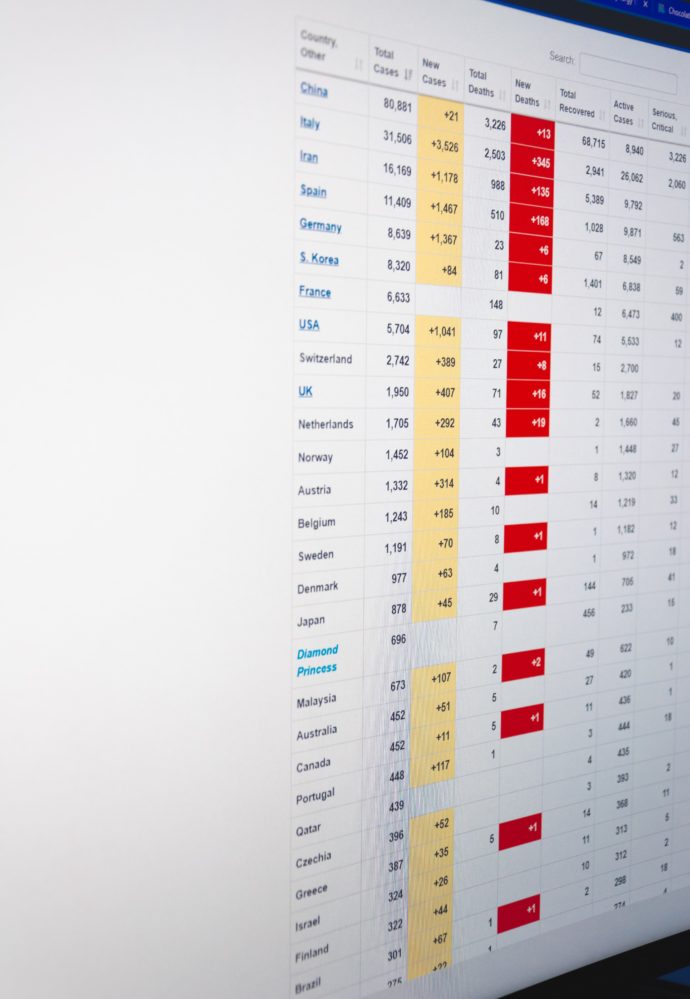
  • The FEHBlog ran across this Worldometer COVID-19 monitor. The FEHBlog finds it easier to decipher than the Johns Hopkins dashboard.
  • A company called Everlywell will start selling an at home COVID-19 tests on Monday. The testing floodgates finally may be opening.
  • Currently telehealth doctors must be licensed in the state where the patient resides. MHealthIntelligence reports that the federal government is about to override this state law requirement. That action would give quite a boost to telehealth and would help staffing hospitals in cities with adjoining states like New York City and Washington DC.

Finally, here’s a link to the Politico article that broke the story about Dale Cabaniss’s resignation as OPM Director on Tuesday. The FEHBlog is disturbed that a federal agency director would resign over personal differences with White House officials in the midst of a national emergency. Can’t we all get along?

Midweek update

On the COVID-19 front —

  • The Senate this afternoon approved H.R. 6021, the Families First Coronavirus Response bill. HR Dive explains the paid leave revisions that the House made to the bill first passed last Saturday before sending the bill to the Senate. Three attempts in the Senate to further amend the bill were rejected. The President has indicated that he will sign the bill.
  • H.R 6021 will mandate all types of health plans, including FEHB plans, cover FDA approved COVID-19 testing without cost sharing or medical management by the health plan. OPM already has required this for FEHB plans. However, the no cost sharing aspect of this coverage does not extend to treatment of the COVID-19 disease. A recent survey “of nearly 600 individual and family health insurance enrollees released today by eHealth, Inc. more than two thirds (69%) feel they lack a basic understanding of how testing and treatment of coronavirus (COVID-19) would be covered by their health insurance plan.” A word to the wise, etc.
  • Federal News Network reports “Federal agencies have 48 hours [until tomorrow] to review, modify and start implementing policies and procedures that will realign critical resources to slow the spread of the coronavirus. This includes offering “maximum telework flexibilities” for the federal workforce and may even include mandatory telework orders, the Office of Management and Budget said Tuesday night.”
  • The Wall Street Journal’s Journal podcast offers an interesting 20 minute long take on the race for a cure to the COVID-19 disease. One of the drugs discussed on the podcast is a Regeneron arthritis drug Kevazara that acts to calm the body’s immune system. Severe cases of COVID-19 cause lung inflammation. The FEHBlog read in the Great Influenza that the flu pandemic caused a spike in the death rate for healthy young adults. This flu struck deep in the lungs where the alveoli tissues transfer oxygen to the blood stream. The body’s immune system took great umbrage with this type of attack and threw everything at the disease. The body’s immune system attack often was the cause of death in young adults who have the strongest immune systems. The modern treatment is to try to calm the immune system and use a ventilator, options that didn’t exist in 1918.
  • Verily Health, the Google / Alphabet affiliate, issued an update on its development of a COVID-19 testing platform for patients. The Washington Post reports on COVID-19 testing sites in the DC metropolitan area.
  • Medicare has expanded the availability of telehealth for traditional Medicare beneficiaries during the COVID-19 emergency. HHS has issued guidance to health care providers on how to maintain HIPAA Privacy and Security rule compliance in the brave new world of telehealth.

In other news–

  • The Labor Department’s Employee Benefits Security Administration has released its latest report to Congress on improving health plan compliance with the federal mental health parity law and its report and an appendix on EBSA enforcement of that law in 2019.
  • Healthcare Dive reports that “The Trump administration is considering pushing back the timeline for payers, providers and health IT vendors to come into compliance with its two sweeping rules to promote interoperability as the healthcare system struggles with the novel coronavirus outbreak.” It would make sense to slow down the effort to ensure that it is done correctly, in the FEHBlog’s opinion.
  • AHRQ wisely points out the need to rethink the role of primary care in reducing hospital readmissions. Check it out.
  • Fierce Healthcare reports that

Aetna is linking Unite Us, a social care coordination platform, with its Guardian Angel program for members who have suffered an opioid overdose. The insurer, owned by CVS Health, will roll out the joint effort first in North Carolina, it announced this week. Using the Unite Us platform, care managers will be able to more effectively link members with social supports and other nonclinical options to aid in recovery, such as housing and healthy food.

Bravo.

Weekend update

Congress had been scheduled to be on State / district work breaks this coming week. However, after the House passed a bipartisan COVID-19 relief bill (H.R. 6201) on Friday, the Senate leadership decided to consider H.R. 6201 week. According to the Wall Street Journal, the President is ready to sign the bill into law.

The Congressional bill summary explains

This bill responds to the coronavirus outbreak by providing paid sick leave (Divisions D, E, and F) and free coronavirus testing [Division G, a new mandate on all types of health plans], expanding food assistance and unemployment benefits, and requiring employers to provide additional protections for health care workers. 

The Hill reports that

Dr. Anthony Fauci, the head of the National Institute of Allergy and Infectious Diseases, said Sunday that it is possible it will take “a few months” before life goes “back to normal” amid the coronavirus outbreak.

“Can you try to help us understand, when will life get back to normal?” ABC’s Jonathan Karl asked Fauci on “This Week.”

“It’s going to be a matter of several weeks to a few months, for sure,” Fauci responded.

The FEHBBlog’s current read, the Great Influenza, has made him a strong believer in the social distancing principle that Dr. Fauci and many others are advocating in the face of the COVID-19 outbreak.

Weekend update

Welcome to Daylight Savings Time! Congress remains in session on Capitol Hill this week. Federal News Network reports that the President signed into law the $8.3 billion COVID 19 funding bill (H.R. 6074) on Friday.

Notwithstanding the cancellation of the HIMSS conference

  • Modern Healthcare reports that the Trump Administration plans to release the final electronic health records interoperability and data blocking rules tomorrow, and.
  • DaVinci, “a private sector initiative that addresses the needs of the Value Based Care Community by leveraging the HL7 FHIR platform,” with the FHIR API, plans to go ahead with virtual HIMSS presentations via an online format. Thanks DaVinci.

Fierce Healthcare reports on an interesting flu vaccine study in the Annals of Internal Medicine.

The researchers said continued vaccination of seniors, particularly with high-dose vaccines, still seems appropriate, as the study results did not preclude modest effectiveness of the flu vaccine against severe outcomes.

“Our findings raise questions, however, about the overall effectiveness of a vaccination strategy that is limited to standard vaccines and focuses too much on elderly persons. Supplementary strategies, such as vaccinating children and others who are most likely to spread influenza, may also be necessary to address the high burden of influenza-related complications among older adults,” the researchers concluded.

The researchers measured hospitalization and mortality rates by month of age. Their data included 170 million episodes of care and 7.6 million deaths. Flu vaccination rates increased sharply at age 65, but there was no matching decrease in hospitalizations or death.

Midweek update

This afternoon, the House of Representatives passed a funding bill for the COVID-19 situation (H.R. 6074) by a 415-2 vote. Fierce Healthcare breaks down the key elements of H.R. 6074 here.

Federal News Network reports on OPM’s latest “preliminary” COVID-19 guidance. The top line is that “OPM advised agencies to incorporate telework in their continuity of operations plans (COOP). Those emergency plans supersede an agency’s previous telework policies, according to OPM.”

CMS also announced agency actions to address the spread of COVID-19. The top lines are that CMS wants “health care providers across the country to ensure they are implementing their infection control procedures, which they are required to maintain at all times. Additionally, CMS is announcing that, effective immediately and, until further notice, State Survey Agencies and Accrediting Organizations will focus their facility inspections exclusively on issues related to infection control and other serious health and safety threats, like allegations of abuse – beginning with nursing homes and hospitals.”

The Journal podcast explains why this second action is quite necessary.

Healthcare Dive reports that

Uber Health is attempting to address provider gripes with its non-emergency medical transportation platform through a handful of new features that began rolling out late last year, the San Francisco-based rideshare company said Wednesday.

Providers can now select specific pickup and drop-off sites at large hospitals, similar to how the app is used in airports, and people can receive details of their ride like driver name, make and model of car and time of arrival over a landline phone, instead of just text messages.

Uber Health has grown 300% year over year since its launch in 2018 and plans to double the size of its team this year.

Lyft has a similar product.

Monday Musings

The FEHBlog got to work this morning around 8:30 am. Before he knew it, it was past 9:30 am, the time at which the Supreme Court releases online its orders from the latest conference of the Justices. He clicked on the Adobe Acrobat PDF link to the Court’s order list — no go. Bad PDF. He tried different browsers — same result. Twitter ho and there it was “blue State victory” the Supreme Court had agreed to review the Texas v. U.S. case holding the ACA’s individual mandate unconstitutional. The political comment did not make sense to the FEHBlog because only four Justices need to approve a petition for certiorari / review and there are four Democrat appointees on the Court. However, you need five Justices for a final victory. In any event by then the FEHBlog was able to open the Court’s order list and he found the following on page 3:

CERTIORARI GRANTED

19-840 CALIFORNIA, ET AL. V. TEXAS, ET AL.

19-1019 TEXAS, ET AL. V. CALIFORNIA, ET AL.
The motion of 33 State Hospital Associations for leave to file a brief as amici curiae in No. 19-840 is granted. The petitions for writs of certiorari are granted. The cases are consolidated, and a total of one hour is allotted for oral argument.

Case No. 19-1019??!! The FEHBlog was aware of the unmentioned Case No. 19-841 which is the House of Representative’s cert. petition. But what is Case No. 19-1019? It turns out that on Valentine’s Day the red states had filed a cross motion for review / cert with the Supreme Court. So it appears that both sides won at the first stage of the Supreme Court proceedings.

The Supreme Court will hear oral argument in the cases early in its next Term which begins on the first Monday in October 2020. There is no way the Court will decide the case before the Presidential election day on November 3. Hopefully, to avoid a political kerfuffle at the oral argument, the Court will schedule the argument for later in November.

Meanwhile the federal district court for the Northern District of Texas will hold off reconsidering the unconstitutional individual mandate’s proper degree of severance from the remainder of the massive law. The Fifth Circuit in its December order vacated the lower court’s initial decision that the remainder of the law was inseparable and therefore equally unconstitutional. The FEHBlog’s guess is that the Supreme Court took the case in order to short circuit that remand. But time will tell.

In another surprise, the FEHBlog learned along with the healthcare world today that President Trump will speak on the issue of electronic health record interoperability at the next Monday’s opening day of the monstrous HIMSS conference in Orlando, Florida. Health IT News reports that while former Presidents Clinton and Bush 43 have spoken at this conference, President Trump’s appearance will be the first by a sitting President.

Trump’s speech will touch on various aspects of interoperability, innovation and digital health. If past HIMSS conferences are any indication, his appearance may also be timed with the long-awaited final rules on information blocking and patient access from the Office of the National Coordinator for Health IT.

Another probable topic of discussion will be an update on the Trump Administration’s ongoing response to the COVID-19 coronavirus outbreak.

Again time will tell.

Medicare provides coverage for Americans under age 65 with end stage renal / kidney disease for Americans. However,

Medicare is the secondary payer to group health plans (GHPs) [including FEHB plan] for individuals entitled to Medicare based on ESRD for a coordination period of 30 months regardless of the number of employees and whether the coverage is based on current employment status.  Medicare is secondary to GHP coverage provided through the Consolidated Omnibus Budget Reconciliation Act (COBRA), or a retirement plan.

Given the FEHBP’s role in the early stages of this serious disease, the FEHBlog wanted to point out this Centers for Disease Control page on understanding chronic kidney disease. End stage renal disease is a later stage of chronic kidney disease. The CDC explains that

The two main causes of CKD are diabetes and high blood pressure. About 1 in 3 adults with diabetes and 1 in 5 adults with high blood pressure have CKD.

People may not feel sick or notice any symptoms until CKD is advanced. The only way people find out if they have CKD is through simple blood and urine tests. The blood test checks for creatinine (a waste product) in the blood to see how well the kidneys work. The urine test checks for protein in the urine (an early sign of kidney damage).

Here’s another reason why annual physical exams are important.