FEHBlog

Midweek update

Photo by Michele Orallo on Unsplash

From Capitol Hill, Medtech Dive reports

The Senate Committee on Health, Education, Labor and Pensions voted Tuesday to send a bill to the Senate that would reauthorize the Food and Drug Administration to collect user fees from device- and drug-makers for the next five years. 

A provision would require the FDA to finalize guidance that would create a category of over-the-counter hearing aids within a month of the bill’s passage. The FDA last issued a proposed guidance in October.

Committee Ranking Member Sen. Richard Burr, R-N.C., questioned on Tuesday whether the FDA should have that expanded authority, despite co-sponsoring legislation that would change how diagnostic tests are regulated, including laboratory-developed tests.

Fierce Healthcare adds

The American Hospital Association (AHA) penned a last-ditch letter to congressional leaders pleading for Medicare sequester cuts slated to take effect July 1 to be halted in light of the financial strain many of the nation’s hospitals are expected to face throughout 2022.

Congress had initially paused the 2% payment cut as part of the CARES Act when the COVID-19 pandemic began to threaten providers’ bottom lines. Sequestration cuts were continually punted downfield until last December, when a bill was signed to resume a 1% cut in April and the full 2% in July.

With half a month to go, AHA Executive Vice President Stacey Hughes warned majority and minority leaders Tuesday that financial relief from the pending cut is necessary for hospitals “to maintain access to care for the patients and communities they serve.”

From the Supreme Court, the American Hospital Association gleefully informs us

The U.S. Supreme Court today ruled unanimously in favor of the AHA and others, reversing a 2020 [U.S.] court of appeals decision upholding the authority of the Department of Health and Human Services to significantly cut payments to certain hospitals that participate in the 340B Drug Pricing Program, and thereby threatening access to care for patients.

The Supreme Court held that “HHS’s 2018 and 2019 reimbursement rates for 340B hospitals were contrary to the statute and unlawful.” Noting that “340B hospitals perform valuable services for low-income and rural communities but have to rely on limited federal funding for support,” the Supreme Court observed that “this case has immense economic consequences, about $1.6 billion annually.”

Despite those serious practical impacts, the Supreme Court concluded that “[u]nder the text and structure of the statute,” the case is “straightforward” as a matter of law: “Because HHS did not conduct a survey of hospitals’ acquisition costs, HHS acted unlawfully by reducing the reimbursement rates for 340B hospitals.”

From the Omicron and siblings front —

The Wall Street Journal reports

Health experts advising U.S. health regulators backed giving Covid-19 vaccines from Pfizer Inc. and BioNTech SE and from Moderna Inc. to children as young as 6 months old

The panel voted 21 to 0 in a pair of votes on Wednesday in support of expanding access to the vaccines.

The positive recommendations will likely lead soon to expanding the U.S. Covid-19 vaccination campaign to the 19.6 million children from 6 months to under 5 years of age, one of the last groups of people in the U.S. waiting for shots.

The Food and Drug Administration, which doesn’t have to follow the panel’s recommendations but usually does, is expected to authorize the shots within days. Vaccinations could begin as early as June 21, according to the Biden administration.

and

Moderna Inc. is planning to test its Covid-19 vaccine in babies 3 months to 6 months old, the youngest age group studied to date.

The Cambridge, Mass., company said Wednesday it is in the final stages of planning the study, to be called BabyCove and expected to begin enrolling as many as 700 babies in September.

BabyCove would be the first study of Moderna’s vaccine in infants younger than 6 months.

STAT News adds

Pfizer said Tuesday that a much-watched study of its antiviral Paxlovid in patients who have Covid but don’t have risk factors for severe disease failed to show a benefit in speeding alleviation of Covid symptoms, but did seem to prevent doctor’s visits and hospitalizations.

Additionally, because of the small number of hospitalizations overall in the study, it failed to produce a statistically significant finding on whether patients who had previously been vaccinated against Covid were hospitalized less often if they received Paxlovid.

The data in no way invalidate earlier results that show that Paxlovid prevents hospitalizations and saves lives in patients at high risk of severe Covid. But the results, published in a press release, are likely to take time for experts to digest and understand.

From the unusual viruses front, the American Hospital Association explains

The Centers for Disease Control and Prevention yesterday [June 14] updated its guidance to help clinicians evaluate and test patients with relevant history, signs and symptoms for monkeypox. Over 1,800 monkeypox or orthopoxvirus cases have been reported globally this year, including 72 in the United States. According to CDC, the virus does not spread easily between people without close contact, so the risk to the general population remains low.

The World Health Organization plans to change monkeypox’s name next week.

From the healthcare business front

Anthem will officially become Elevance Health on June 28, and, as part of its corporate rebrand, it’s also launching new brands for two of its subsidiaries.

The insurer will consolidate its healthcare services businesses under one umbrella, called Carelon. Carelon is a combination of the word “care” with the suffix “lon,” which means full or complete, representing the company’s ambition to offer an end-to-end care experience.

Carelon will include Anthem’s in-house pharmacy benefit manager Ingenio Rx as well as recent acquisitions such as Beacon Health Options, a behavioral health provider, and myNEXUS, a home healthcare company. Carelon will serve 1 in 3 people in the U.S., according to the announcement.

and

Humana is moving its pharmacy brands under the CenterWell umbrella.

Humana Pharmacy and Humana Specialty Pharmacy will now operate as CenterWell Pharmacy and CenterWell Specialty Pharmacy, respectively, the insurer announced. Enclara Pharmacia and Humana Pharmacy Solutions, the company’s pharmacy benefit management arm, will maintain their original branding.

“The CenterWell brand symbolizes our ongoing and strong commitment to keeping members, customers and patients at the center of everything we do,” said Scott Greenwell, Humana Pharmacy Solutions president, in a statement.

  • Morning Consult discusses how CVS Health and Walgreens retained “high customer trust” in 2021.

From the benefit design front, Employee Benefits News offers the case for health savings accounts. The FEHBlog is already sold.

Tuesday’s Tidbits

Photo by Patrick Fore on Unsplash

From the Omicron and siblings front, MedPage Today reports

A committee of independent vaccine experts recommended that the FDA grant an emergency use authorization (EUA) for the two-dose Moderna COVID-19 vaccine for kids ages 6 to 17 years.

The Vaccines and Related Biological Products Advisory Committee (VRBPAC) voted 22-0, agreeing unanimously that the benefits of vaccination outweigh the risks in two age groups: kids ages 6 to 11 years and teens ages 12 to 17. They recommended two 50-mcg doses for the younger kids and two 100-mcg doses for teens.

The Wall Street Journal adds

The FDA will consider the vote in making a final decision on whether to clear the vaccine for use in children 6 years and older. * * * An FDA authorization could come within days. It would open the use of Moderna’s vaccine to children for the first time in the U.S., and give anyone still intending to inoculate their children 6 years and older against Covid-19 a second option.

Medpage Today also informs us

Only a very small number of high-risk patients with COVID-19 experienced “rebound symptoms” after being treated with nirmatrelvir/ritonavir (Paxlovid), a retrospective study found.

Among nearly 500 patients, 93% of whom were fully vaccinated, two patients were hospitalized due to symptoms that were not directly related to “rebounding” within a month and required care in the intensive care unit (ICU), and four experienced rebound symptoms at a median of 9 days (interquartile range [IQR] 7-14.5), reported Nischal Ranganath, MD, PhD, of the Mayo Clinic in Rochester, Minnesota, and colleagues.

All rebound symptoms were resolved with symptom-directed treatment, and no deaths were reported in any patients after 30 days following their initial COVID-19 diagnosis, the group noted in Clinical Infectious Diseases.

“We found that rebound phenomenon was uncommon in this group of patients,” said co-author Aditya Shah, MBBS, also of the Mayo Clinic, in a statement. “The four individuals who experienced rebound represent only 0.8% of the group, and all of them recovered quickly without additional COVID-directed therapy.”

That’s certainly good news to read.

From the Rx coverage front, the Drug Channels blog tears apart a recent JAMA study concluding that the pricing of recently launched drugs has skyrocketed in recent years.

[T]he study’s headline conclusion is highly misleading. The authors obscure the real story with mathematical sleight-of-hand that misrepresents the underlying data and overlooks the true nature of today’s pharmaceutical innovations. 

Most notably, the authors discount the fact that the most expensive new drugs treat ultra-rare conditions affecting extraordinarily small patient populations. Their policy recommendations would therefore have a devastating impact on these patients and their hope for treatments and cures. 

As Nobel prize winner Ronald Coase observed: “If you torture the data long enough, it will confess to anything.”

And the Dr. Fein can back up his conclusion.

From general healthcare front, Kaiser Health News offers thought provoking articles about

The first article draws an important distinction between medical care and SDOH. Unfortunately, the second article reminds us that no good deed goes unpunished. If the government simply had relied on personal responsibility (outside of Medicaid), we would not find ourselves in this pickle.

Monday Roundup

Photo by Sven Read on Unsplash

From the Omicron and siblings front, the Wall Street Journal reports

A Covid-19 vaccine developed by Sanofi SA and GSK PLC to target the Beta strain of the virus produced a stronger antibody response against variants of Omicron when given as a booster compared with certain first-generation shots, two studies have found.

The results are the latest indication that tweaking vaccines can nudge antibody responses in the direction of new variants, possibly helping to shore up immunity as the virus mutates. The study results may also provide an opportunity for Sanofi and GSK, two vaccine giants that were late to develop Covid-19 immunizations, to play a role in providing booster shots.

What’s more, according to the Journal

A panel of advisers to the Food and Drug Administration is set to meet Tuesday [June 14] to consider whether use of Moderna Inc.’s Covid-19 vaccine should be expanded to include children ages 6 through 17.

The advisory committee is expected to vote Tuesday afternoon on whether the benefits of vaccinating children in this age group outweigh the risks. The FDA will consider the vote in making a final decision on whether to clear the vaccine for use in children 6 years and older.

An FDA authorization could come within days. It would open the use of Moderna’s vaccine to children for the first time in the U.S., and give anyone still intending to inoculate their children 6 years and older against Covid-19 a second option.

Moderna’s vaccine has been authorized for use in adults 18 years and older since late 2020, while use of the other leading Covid-19 vaccine, from Pfizer Inc. and BioNTech SE, was expanded to anyone 5 and older last year.

From the FTC investigation front, FierceHealthcare updates us on the recently launched FTC investigation of the six largest PBMs. In other FTC news, Healthcare Dive tells us

** UnitedHealth and LHC Group have been hit by a request for additional information on their acquisition from the Federal Trade Commission, as regulators take an increasingly active role in overseeing healthcare M&A.

** The second request extends the waiting period the FTC has to challenge the deal. UnitedHealth agreed to acquire home health and hospice provider LHC for $5.4 billion in March.

** https://www.healthcaredive.com/news/regulators-unitedhealth-lhc-request-merger/625343/?utm_source=Sailthru&utm_medium=email&utm_campaign=Issue:%202022-06-13%20Healthcare%20Dive%20%5Bissue:42394%5D&utm_term=Healthcare%20DiveIn a filing with the SEC on Friday, the companies said they have been complying with regulators and will continue to do so.

Speaking of home health care, Home Health News discusses Aetna’s interest in the topic.

Aman Gill, Aetna’s director of product strategy and innovation, told Home Health Care News last month that a home health acquisition was “on the table” for the company. 

This past week, at HHCN’s VALUE event, Aetna CMO Dr. Kyu Rhee reiterated the company’s commitment to the home as a setting of care. He also explained how care delivery has changed over the course of the last few years.

“We’ve been committed to home health and virtual care during the pandemic,” Rhee said. “And in our Medicare program, we’ve delivered tens of thousands of healthy at-home visits as well. … So my challenge to us as we think about the opportunity we have now and the next stage of this pandemic is: Are we going to persist in those values and make sure that the system delivers on those values, that hopefully we’ve learned over the last couple of years?”

From the Rx coverage front, the Food and Drug Administration announced

the [agency approved Olumiant (baricitinib) oral tablets to treat adult patients with severe alopecia areata, a disorder that often appears as patchy baldness and affects more than 300,000 people in the U.S. each year. Today’s action marks the first FDA approval of a systemic treatment (i.e. treats the entire body rather than a specific location) for alopecia areata.

“Access to safe and effective treatment options is crucial for the significant number of Americans affected by severe alopecia,” said Kendall Marcus, M.D., director of the Division of Dermatology and Dentistry in the FDA’s Center for Drug Evaluation and Research. “Today’s approval will help fulfill a significant unmet need for patients with severe alopecia areata.”

The drug initially was FDA-approved for the treatment of rheumatoid arthritis in 2018.

From the HIPAA Privacy Rule front, the U.S. Department of Health and Human Services (HHS), through its Office for Civil Rights (OCR), announced

issuing guidance on how covered health care providers and health plans can use remote communication technologies to provide audio-only telehealth services when such communications are conducted in a manner that is consistent with the applicable requirements of the Health Insurance Portability and Accountability Act of 1996 (HIPAA) Privacy, Security, and Breach Notification Rules, including when OCR’s Notification of Enforcement Discretion for Telehealth – PDF is no longer in effect. * * *

The Guidance on How the HIPAA Rules Permit Health Plans and Covered Health Care Providers to Use Remote Communication Technologies for Audio-Only Telehealth may be found at: https://www.hhs.gov/hipaa/for-professionals/privacy/guidance/hipaa-audio-telehealth/index.html.

Weekend update

Mount Rushmore

From the Capitol Hill front, the House of Representatives and the Senate will be in session this week for floor voting and Committee business.

Roll Call reports

A bipartisan group of senators announced an agreement Sunday on significant updates to the nation’s gun laws, and the Senate majority leader said it ​​would be put on the floor once legislative text is ready.

The agreement, announced by 10 Republicans and 10 Democratic caucus members, certainly will not go as far as many Democrats would have hoped, but the scale of the GOP support suggests it could get the all-important 60 votes to overcome the filibuster rule that kept derailing the last bipartisan attempt to change gun laws, in 2013.

The agreement, which is not yet in legislative language, is the product of discussions led by Sens. Christopher S. Murphy, D-Conn., and John Cornyn, R-Texas, in the wake of recent mass shootings, including at an elementary school in Uvalde, Texas.

“Our plan increases needed mental health resources, improves school safety and support for students, and helps ensure dangerous criminals and those who are adjudicated as mentally ill can’t purchase weapons,” the 20 senators said in a statement. “Most importantly, our plan saves lives while also protecting the constitutional rights of law-abiding Americans.”

From the Omicron and siblings front —

MedPage Today discusses the latest Omicron siblings — BA.4 and BA.5. “Generally, BA.4 and BA.5 variants cause mild disease but spread in large numbers potentially because, unlike the Wuhan strain, which settles in the lungs, these newer strains seem to attach to the more benign upper nasal passages.”

Bloomberg Prognosis answers a reader’s question about whether to get a fourth Covid booster now.

Moderna said just this week that a new version of its Covid vaccine led to a better antibody response against omicron compared with its current mRNA shot. It plans to submit data to the US Food and Drug Administration in the coming weeks and hopes the shot will be available as soon as late summer. That shot is what’s called a bivalent vaccine, meaning it contains mRNA coding for the spike protein of both the original strain of the virus and omicron. 

Pfizer should also have updated mRNA vaccines available as soon as the fall, says Monica Gandhi, an infectious disease expert at the University of California, San Francisco. The FDA will hold an advisory committee meeting later this month to address whether fall shots should be modified, and if so what strains they should include.

But while currently available boosters are less effective against omicron, Gandhi points out, they still do offer some protection. So, she says, that answer to whether to get boosted now depends on a few factors. 

”I would advise — depending on case rates in your area and your age— getting the fourth dose now,” she says. “And then deciding what to get in the fall.”

MedPage Today also explains why “the [Novovax Covid] technology is quite innovative and has potential to enhance protection against” the disease.

From the healthcare business front, the Wall Street Journal reports on a

A philanthropic organization founded by the ex-energy trader [John Arnold] and his wife Laura is providing financial backing to three lawsuits against giant hospital systems in Wisconsin, Connecticut and North Carolina, alleging the systems used their market power to squash competition and illegally inflate prices. The systems say the lawsuits from employers and consumers are baseless. * * *

The financing from Arnold Ventures is supporting the work of Fairmark Partners LLP, the law firm behind the lawsuits. Fairmark secured its funding from the philanthropy after filing its first lawsuit, one of the founders said. The firm’s founders say the backing is key to a targeted effort to reshape hospital markets through the courts, and that it received money from other philanthropies it declined to identify. 

While the FEHBlog is not a fan of litigation, this strikes him as a worthy effort.

From the medical research front —

  • Kaiser Health News summarizes recent drug research developments.
  • NPR Shots reports on efforts to connect human nerve systems to prosthetic devices.
  • Fierce Healthcare tells us

Researchers at CVS studied the relationship between total cost of care and the use of National Comprehensive Cancer Network (NCCN) guidelines to direct care and found savings among both breast cancer and colon cancer patients. The studies, released at the American Society of Clinical Oncology’s meeting earlier this month, build on a similar analysis among lung cancer patients.

In both studies, the researchers found that using NCCN guidelines drove significant declines in total cost of care.

“Evidence-based medicine does result in improvement in quality of life,” Shirisha Reddy, M.D., senior medical director at CVS Health and an author on both studies, told Fierce Healthcare. “There’s a lot of external data that supports that.”

The first study included 937 patients with colon cancer. Among Medicare beneficiaries, concordance with NCCN guidelines was linked to a 33% reduction in total cost per care per member per month. The results were less significant among commercially insured patients.

In the second study, the researchers retrospectively looked at 315 patients with breast cancer. They found total cost of care reductions for patients treated in ways consistent with NCCN across multiple insurance types, including 25% among fully insured commercial patients, 28% among self-insured commercial patients and 43% in Medicare.

This included notable decreases in administered chemotherapy spend as well as outpatient care between Jan. 1, 2019, and Dec. 31, 2020.

Cybersecurity Saturday

From the cyberattack front, Federal News Network reports

A D.C. federal judge this week preliminarily approved a $63 million settlement as part of a class action lawsuit brought by victims of the breach into OPM databases. The breach was uncovered in 2015. By then, hackers had stolen the records of nearly 22 million current and former federal employees. The Chinese government is widely thought to be behind the attack. The proposed settlement would only compensate those who can prove they were financially affected by the breach. The court’s order set a Dec. 23 deadline to submit a claim.

Health IT Security adds “Shields Health Care Group reported a healthcare cyberattack to HHS impacting 2 million individuals. The Massachusetts-based healthcare group provides MRI, PET/CT, and ambulatory surgical services to patients across New England at more than 30 locations.”

From the cybervulnerabilities front, Cyberscoop explains

When the Cybersecurity and Infrastructure Security Agency [CISA] debuted its list of known, exploited vulnerabilities in November, it was nearly 300 flaws long and came attached to an order for federal agencies to fix them quickly.

Now, as of this week, the catalog known as “KEV” or the “Must-Patch” list is well on its way to 800 listings, and it’s the “No. 1 topic” that CISA Executive Director for Cybersecurity Eric Goldstein says comes up in his frequent, daily meetings with businesses.

The reason, said Goldstein, is that the private sector has — without any order from his agency — adopted the KEV list as a guide for the vulnerabilities they focus on, rather than relying on the traditional open-source industry standard Common Vulnerability Scoring System for assessing the severity of software weaknesses.

This week, CISA first added 36 and then three more known, exploited vulnerabilities to its catalog.

The HHS Health Sector Cybersecurity Coordination Center posted its May report about vulnerabilities of interest to the health sector.

Cybersecurity Dive updates us on Microsoft’s Follina and Atlassian’s Confluence recent zero-day vulnerabilities.

CISA released a joint federal agency alert on People’s Republic of China-sponsored cyber actors.

From the ransomware front, Security Week reports

It doesn’t pay to pay [ransom]. This advice on ransomware payment is often given, but rarely enumerated. Now it has been. A new study finds that 80% of companies that paid a ransom were hit a second time, with 40% paying again. Seventy percent of these paid a higher amount the second time round.

These figures come from an April 2022 Cybereason study that queried 1,456 cybersecurity professionals from organizations with 700 or more employees. The shocking nature of the statistics, published in Ransomware: The True Cost to Business (PDF) go much deeper. 

It’s not a problem that can be ignored with the vague belief, ‘it won’t happen to me’. Seventy-three percent of organizations have suffered at least one ransomware attack in the past 24 months – up 33% from last year.

Sixty percent of companies admitted ransomware gangs had been in their network from one to six months before they were discovered – a key indicator of a double extortion attack. But paying the double extortion fee doesn’t really help; nearly 200,000 companies never received their data back after paying. And the criminals still have the data regardless. Thirty-five percent of companies suffered C-level ‘resignations’ because of a ransomware attack.

Other key findings of the research include the prevalence of the supply chain as a factor in the attack. Sixty-four percent of companies believe the ransomware gang got into their network via one of their suppliers or business partners.

Health IT Security adds

Healthcare ransomware attacks are not slowing down, prompting an increased demand for reliable cyber insurance policies. But as healthcare cyberattacks skyrocket, cyber insurers are pushing up prices or leaving the market altogether, Sophos stated in its “State of Ransomware in Healthcare 2022” report.

Sophos surveyed 5,600 IT professionals, including 381 in healthcare, to garner insights on how healthcare organizations are navigating the cyber threat landscape.

The report found that 66 percent of surveyed healthcare organizations were hit by ransomware in 2021, up from just 34 percent in 2020. About 61 percent of those attacks resulted in data encryption. Survey results also revealed that healthcare was the most likely sector to pay a ransom. Just over 60 percent of respondents who experienced encryption admitted to paying the ransom, compared to a cross-sector average of 46 percent.

Here is a link to Bleeping Computer’s Week in Ransomware.

From the cyber defense front, here are links to a Wall Street Journal report on personal password management and a CISA article on multi-factor authentication.

Friday Stats and More

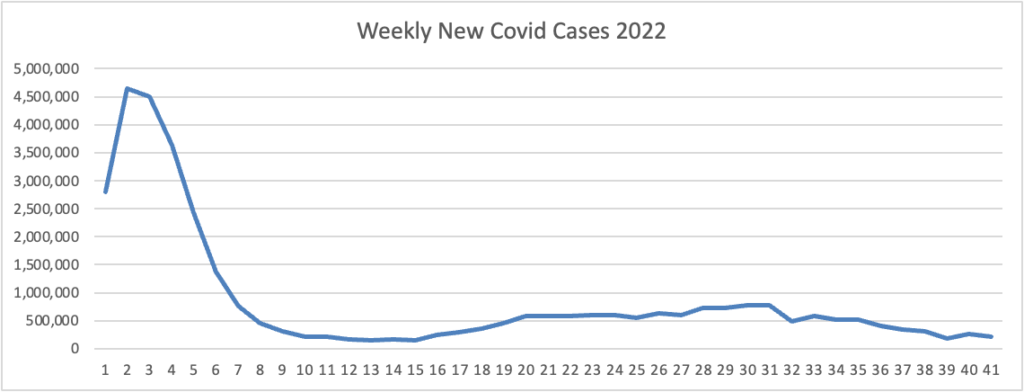
Based on the Centers for Disease Control’s Covid Data Tracker and using Thursday as the first day of the week, here is the FEHBlog’s weekly chart of new Covid cases from the 27th week of 2021 through the 23rd week of 2022.

The CDC’s weekly review of its Covid statistics observes “As of June 8, 2022, the current 7-day moving average of daily new cases (109,032) increased 8.0% compared with the previous 7-day moving average (100,916).”

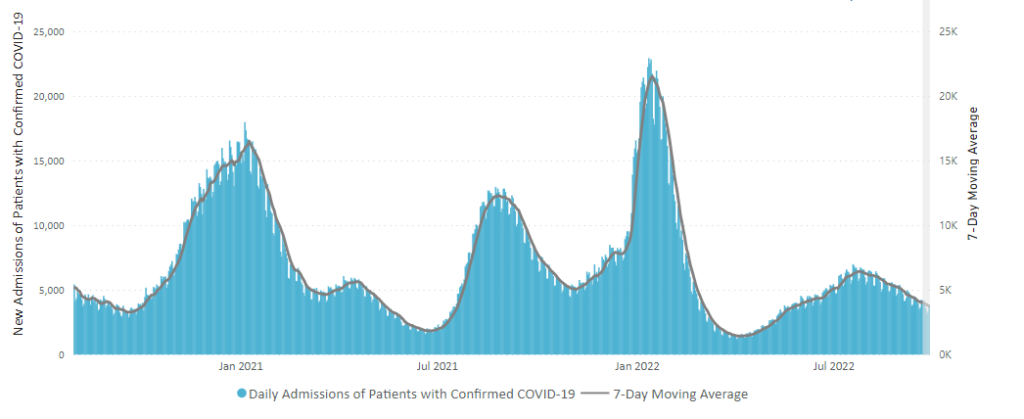
Here’s is the CDC’s latest weekly report of new Covid hospitalizations:

The CDC’s weekly review notes “The current 7-day daily average for June 1–7, 2022, was 4,127. This is an 8.0% increase from the prior 7-day average (3,820) from May 25–31, 2022.”

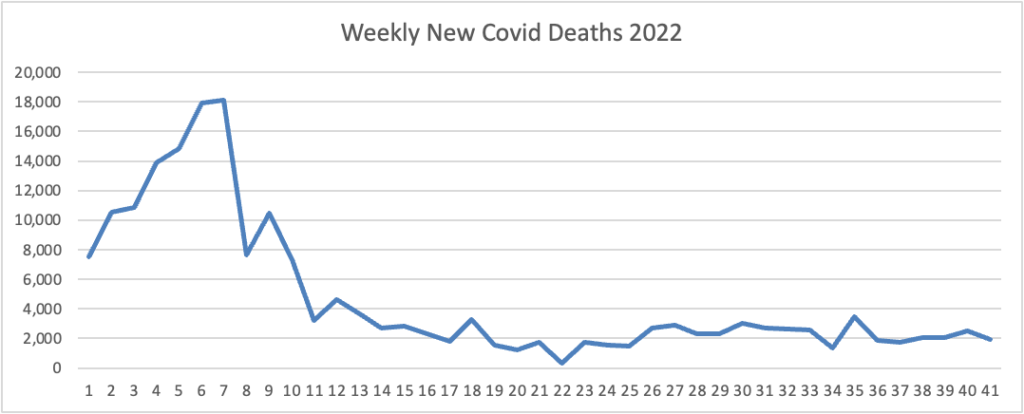
Here’s the FEHBlog’s weekly chart of new Covid deaths over the same period as new cases:

The CDC’s weekly review adds “The current 7-day moving average of new deaths (306) has increased 18.6% compared with the previous 7-day moving average (258).” Over 2/3s of the U.S. population is now fully vaccinated.

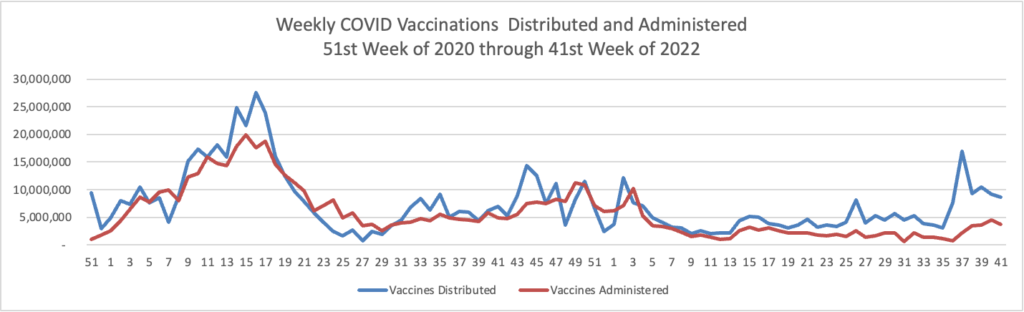
Here’s the FEHBlog weekly chart of Covid vaccinations distributed and administered from the beginning of the vaccination era at the 51st week of 2020 through the 23rd week of 2022:

The CDC’s weekly review states “As of June 8, 2022, the 7-day average number of administered vaccine doses reported (by date of CDC report) to CDC per day was 290,078, a 15.6% decrease from the previous week.”

The American Hospital Administration adds

An initial 10 million doses of COVID-19 vaccine are available for children under age 5 if the Food and Drug Administration authorizes and the Centers for Disease Control and Prevention recommends the Pfizer and Moderna vaccines for children in this age group, Assistant Secretary for Preparedness and Response Dawn O’Connell said yesterday during a White House briefing.

FDA’s vaccine advisory committee will meet June 14-15 and the CDC’s advisory committee June 17-18 to consider whether to authorize and recommend the vaccines for this age group, after which the agencies will issue their respective decisions.

“It will take some time to position these vaccines across the country, and vaccinations can’t begin until CDC has made its decision,” O’Connell said. “But we also know that many parents have been waiting for a long time, so we will be working 24/7 until every dose is shipped and delivered.”

The Administration last week opened pre-ordering of doses for states, tribes, territories and other partners, and estimates that 85% of children under 5 live within 5 miles of a potential vaccination site, she said.

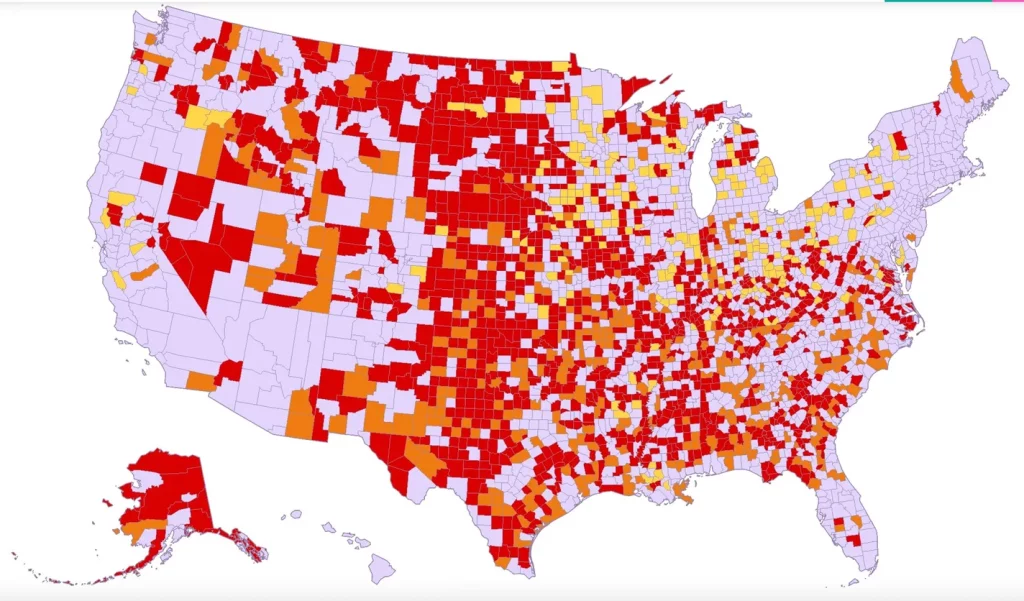
The CDC’s weekly review sums things up as follows:

As of June 9, 2022, there are 314 (9.75%) counties, districts, or territories with a high COVID-19 Community Level, 1,052 (32.67%) counties with a medium Community Level, and 1,854 (57.58%) counties with a low Community Level. This represents a small (+2.20 percentage points) increase in the number of high-level counties, a moderate (+9.57 percentage points) increase in the number of medium-level counties, and a corresponding (−11.77 percentage points) decrease in the number of low-level counties. Fifty-two (100%) of 52 jurisdictions* had high- or medium-level counties this week.

To check your COVID-19 Community Level, visit COVID Data Tracker. To learn which prevention measures are recommended based on your COVID-19 Community Level, visit COVID-19 Community Level and COVID-19 Prevention.

From the unusual viruses front, the American Hospital Association tells us

The Centers for Disease Control and Prevention today reported over 1,300 monkeypox cases globally, including 45 in the United States. While no deaths have been reported and the overall risk to the U.S. public remains low, officials encouraged clinicians to review the CDC’s latest guidance and individuals to talk with their health care provider if they develop symptoms or need to get tested.

According to CDC, monkeypox spreads through direct contact with an infected person’s body fluids, sores or materials that have touched them, such as clothing or linens. It may also spread through respiratory secretions when people have close, face-to-face contact.

Smallpox vaccines are effective at protecting people against monkeypox when given before exposure and may also help prevent the disease or make it less severe. According to CDC, the Strategic National Stockpile currently holds about 72,000 doses of JYNNEOS smallpox vaccine and will soon receive an additional 300,000 doses from the manufacturer. The U.S. also has ordered another 500,000 doses for delivery later this year. In addition, the SNS holds over 100 million doses of an older smallpox vaccine (ACAM2000). 

From the electronic health record front, Beckers Hospital News reports

Oracle’s primary mission is improving the complex healthcare system with technology, according to Larry Ellison.

The chair, co-founder and chief technology officer of Oracle said in a June 9 virtual public presentation the company plans to vastly improve care delivery, outcomes and public health policy while also lowering costs. Oracle acquired Cerner in a $28.4 billion transaction earlier this week and has plans to modernize the platform, taking it from a documentation and billing system to a complete source of information about an individual’s healthcare. The EHR would also have virtual care capabilities, be interoperable and expand clinical trial accessibility.

“Together, Cerner and Oracle have all the technology required to build a revolutionary new health management information system in the cloud,” Mr. Ellison said. “That system will deliver much better information to healthcare professionals. Better information will fundamentally transform healthcare.”

Oracle aims to build a unified database for patient information, similar to the unified financial database with credit information, accessible to healthcare providers and public health officials. The database would have anonymized data from hospitals, clinics and providers across the U.S. and provide up-to-the-minute information about patients’ personal health as well as public health statistics, such as the number of people hospitalized with COVID-19 or available hospital beds in a particular state.

“We’re building a system where the health records, all American citizens’ health records, not only exist at the hospital level, but they are all in a unified national healthcare database,” Mr. Ellison said. “The national database solves the data electronic health record fragmentation problem.”

Aim high. Assuming security and privacy challenges can be addressed, such a database could be a public health game changer.

Thursday Miscellany

Photo by Josh Mills on Unsplash

From our Nation’s capital, the New York Times reports,

White House officials said on Wednesday that they would have to repurpose federal Covid-19 funds meant for coronavirus tests and protective equipment in order to supply more antiviral pills and vaccines, after so far failing to persuade Congress to pass a new pandemic relief package.

Roughly $10 billion from Department of Health and Human Services funds will be rerouted, around half of it to purchase vaccines for Americans ahead of a possible fall or winter wave of virus cases, when an updated shot may be needed, according to one White House official. The other half will go mostly to purchasing 10 million courses of Paxlovid, the antiviral treatment made by Pfizer that has been shown to substantially reduce the severity of Covid-19 in high-risk people, the official said. Around $300 million will be spent on another kind of treatment, monoclonal antibodies.

Also from the Omnicron and siblings front, a friend of the FEHBlog, journalist Theresa Defino, points out

Today and tomorrow NIH’s Advisory Committee to the Director is holding its first of two annual meetings. Today Dr. Fauci gave a presentation on Covid and Dr. Walter Koroshetz, director of the National Institute of Neurological Disorders and Stroke, spoke on recovery from Covid.

The most interesting comments Dr. Fauci made begin on page 45. Dr. Koroshetz’s talk was about NIH’s efforts to understand long COVID. Lots of trials are going on. He also mentioned this website on Covid recovery which is worth a look. 

From the unusual viruses report, Becker’s Hospital Review brings us up to date on roughly 700 cases of acute hepatitis of unknown etiology infecting young children in 34 countries, including our own. “The U.S. has reported 274 probable hepatitis cases in 39 states and jurisdictions as of June 8, according to the CDC.”

From the maternal health front, the American Hospital Association informs us

The Health Resources and Services Administration has released a report evaluating the Rural Maternity and Obstetrics Management Strategies Program, which completed its first year last August. The program uses a network approach to coordinate and improve maternal health care from preconception to postpartum; telehealth services to increase access to care in rural areas; potential aggregation of low-volume rural obstetric services; and payment structures that promote financial sustainability for access to high-quality maternal care. The cohort includes networks in Missouri, New Mexico and Texas that provided prenatal, delivery and postpartum care to 3,101 rural mothers. Participants said hiring patient navigators emerged as an early success strategy. The networks also laid the groundwork for expanding telehealth.

From the Rx coverage front, STAT News offers an interesting article about the drug pricing reform debate ongoing in Congress using an AMA Journal report showing skyrocketing launch prices for newly approved drugs.

Health Payer Intelligence tells us that “AHIP has subscribed to the Institute for Clinical and Economic Review’s (ICER) cloud-based analytics platform, providing [its] health plan members with access to benchmark reports, cost-effectiveness data, and policy recommendations.” Good idea, AHIP.

From the federal employee benefits front, a financial planner discusses how divorce may affect FEHB and FEGLI benefits at the My Federal Retirement website.

From the HIPAA standard transactions front, the CMS National Standards Group has released an updated Compliance Review Program Findings report identifying the most common violations of those standard and operating rules from compliance reviews.

Midweek Update

From Capitol Hill, Roll Call reports that FY 2023 appropriations work is gearing up.

From the Omicron and siblings front

The Wall Street Journal reports the following good news

Moderna Inc. said a modified [mRNA based] Covid-19 booster shot provided a stronger immune response than the company’s original vaccine against the Omicron variant in a new study. 

The Cambridge, Mass., company said Wednesday it will submit preliminary data from the study to U.S. health regulators in the coming weeks with the hope of making the modified booster shot available in late summer.

Researchers found that the levels of neutralizing antibodies against Omicron among people getting the modified shot were 1.75 times higher than in people who received a booster shot of the original vaccine, Moderna said.

and

AstraZeneca PLC said a study found its Covid-19 antibody treatment cut the risk of severe disease when given soon after symptoms develop, paving the way for its broader use.

The development comes at a time when the use of antibody treatments—once a mainstay for patients at high risk of developing severe Covid-19—has been complicated by the rise of the Omicron family of variants, which are less susceptible to some of the treatments. The treatments also face fierce competition from the more-convenient antiviral pills.

AstraZeneca’s antibody drug, called Evusheld, was found in its latest clinical trial to ward off severe disease in people who had already developed symptoms, according to results published late Tuesday in the Lancet Respiratory Medicine. The trial was conducted prior to the rise of the Omicron variant, but AstraZeneca has said that laboratory testing shows the antibody continues to work against the highly infectious strain.

The Food and Drug Administration released a revised checklist for prescribing the Pfizer Covid pill Paxlovid. While the checklist is intended for healthcare provider reference, it could be helpful to patients and health plans as well.

From the unusual virus front, STAT News offers an interesting article on how the hard lessons of the AIDS virus is shaping the U.S. response to monkeypox. The article notes

  • “[T]he monkeypox strain now in circulation is infinitesimally milder than HIV — zero fatalities have been reported out of the more than 1,000 cases so far.”
  • “Monkeypox isn’t transmitted sexually but by close contact with the disease’s hallmark pustules.”

From the Rx coverage front, Medpage Today informs us

The combination GIP and GLP-1 receptor agonist tirzepatide (Mounjaro [manufactured by Eli Lilly]) could soon be the next new treatment option for people with overweight or obesity, researchers reported.

In the 72-week, phase III SURMOUNT-1 clinical trial, people with obesity, but without diabetes, on 15 mg of the once-weekly injectable had a mean percentage change in weight of -20.9% (95% CI -21.8 to -19.9%) versus -3.1% (95% CI -4.3 to -1.9) with placebo, according to Ania M. Jastreboff, MD, PhD, of the Yale University School of Medicine in New Haven, and colleagues.

and

An open-source automated insulin delivery (AID) system — also known as a do-it-yourself system — was both safe and effective for patients with type 1 diabetes, according to the CREATE trial.

Over 24 weeks, users of the AID system spent more time in target glucose range (70 to 180 mg/dL) — an average of 14% longer — than those who were using sensor augmented pump therapy without automation, reported Martin de Bock, PhD, of the University of Otago in Christchurch, New Zealand, during a presentation at the American Diabetes Association (ADA) annual meeting.

The open-source AID system consists of the OpenAPS algorithm from a version of AndroidAPS implemented in a smartphone, paired with the DANA-i insulin pump and Dexcom G6 continuous glucose monitor. The researchers previously published additional information on the ins and outs of the algorithm in the Journal of Diabetes & Metabolic Disorders.

“Open-source AID, despite not being [FDA] regulated … is safe and efficacious in children and adults with type 1 diabetes compared to sensor augmented pump therapy,” de Bock noted. 

The American Diabetes Association offers more details on this significant development here.

From the transparency front, the Wall Street Journal tells us

Two Georgia hospitals on Wednesday were hit with federal financial penalties for failing to disclose their prices, marking the first such enforcement action taken under federal rules that have met with uneven compliance since taking effect in January 2021.

The Centers for Medicare and Medicaid Services (CMS), which is responsible for enforcing the rules, levied fines on Northside Hospital Atlanta and Northside Hospital Cherokee. The two hospitals, which are owned by Northside Hospital, together face penalties totaling roughly $1.1 million.

Perfect timing; right before the enforcement period for the transparency in coverage rule applicable to health plans begins on July 1.

Tuesday’s Tidbits

Photo by Patrick Fore on UnsplashFr

From the Omicron and siblings front, the Wall Street Journal reports

Omicron Covid-19 variants BA.4 and BA.5 are on the rise in the U.S., adding two more highly contagious versions of the virus to the mix that has fueled a springtime surge in cases.

The closely related subvariants represented a combined 13% of U.S. cases for the week ended June 4, according to estimates the Centers for Disease Control and Prevention released on Tuesday. Evidence suggests the variants are yet-more contagious versions of Omicron, public-health experts said, that may be able to evade some of the immune protections people built up from infections triggered by another version of Omicron during the winter.

The spread of the subvariants could at least prolong the time it takes to emerge from the current wave fueled by other versions of Omicron, some health experts said.

The Journal adds

This case wave hasn’t translated to a significant surge in severe illness. Hospitalizations, while up, remain far below earlier peaks, and reported Covid-19 deaths have recently hovered near historically low levels.  * * * Epidemiologists believe built-up immunity from vaccines and prior infections have bolstered defenses against severe illness, even though many people are falling ill from both breakthrough and repeat infections.

AHIP informs us

Today the Food and Drug Administration’s Vaccines and Related Biological Products Advisory Committee (VRBPAC) recommended that the FDA grant emergency use authorization (EUA) for the Novavax COVID-19 vaccine in adults by a vote of 21-0.

The Committee reviewed data from Novavax showing that the benefits of the two-dose primary series outweigh the potential risks. The Committee noted the importance of making a vaccine available that has an alternative method of action, different from the mRNA vaccines currently available in the U.S., in the hope that a more traditional vaccine may appeal to those currently unvaccinated and those who may have an allergy to the components of the mRNA vaccines.

Committee members agreed that the FDA should come to an agreement with Novavax on how the company will identify and evaluate a possible causal link between its vaccine and cases of heart inflammation, though the company has argued there’s not yet enough evidence to establish a definitive link. The FDA is expected to make a decision on granting Novavax an EUA soon, whereby the Centers for Disease Control and Prevention’s Advisory Committee on Immunization Practices (ACIP) will meet to determine when and how the vaccine should be administered.

BioPharma Dive tells us

Pfizer on Monday announced plans to invest $120 million in a drug manufacturing facility located in Kalamazoo, Michigan, which will lead to the creation of over 250 jobs.

The investment is aimed at accelerating production of Pfizer’s COVID-19 pill Paxlovid, demand for which has risen after Pfizer’s initial struggles to make sufficient quantities following the drug’s clearance in December. To date, Pfizer has delivered 12 million courses of the drug across 37 countries, 5 million of which have been shipped to the U.S.

The Kalamazoo plant, one of Pfizer’s largest drugmaking sites, will make the starting materials and active ingredient contained within Paxlovid. The new investment expands the site’s capacity, making it one of the world’s largest producers of pharmaceutical ingredients, according to Pfizer.

From the Rx coverage front, the Federal Trade Commission announced

The Federal Trade Commission announced today that it will launch an inquiry into the prescription drug middleman industry, requiring the six largest pharmacy benefit managers to provide information and records regarding their business practices. The agency’s inquiry will scrutinize the impact of vertically integrated pharmacy benefit managers on the access and affordability of prescription drugs. As part of this inquiry, the FTC will send compulsory orders to CVS Caremark; Express Scripts, Inc.; OptumRx, Inc.; Humana Inc.; Prime Therapeutics LLC; and MedImpact Healthcare Systems, Inc. * * *

The inquiry is aimed at shedding light on several practices that have drawn scrutiny in recent years including:

** fees and clawbacks charged to unaffiliated pharmacies;

** methods to steer patients towards pharmacy benefit manager-owned pharmacies;

** potentially unfair audits of independent pharmacies;

** complicated and opaque methods to determine pharmacy reimbursement;

the prevalence of prior authorizations and other administrative restrictions;

** the use of specialty drug lists and surrounding specialty drug policies;

** the impact of rebates and fees from drug manufacturers on formulary design and the costs of prescription drugs to payers and patients.

The Commisioners voted 5-0 to commence the investigation. Responses from the PBMs to the FTC’s compulsory orders are due in 90 days.

From the Pride Month front, Health Payer Intelligence reports “Members of the LGBTQ+ community reported varying experiences of discrimination in the health insurance industry but indicated that payer health equity may be improving, according to a survey from Healthcare.com.” Survey details are available in the article and the survey.

From the miscellany department

  • The American Medical Association offers expert guidance on understanding blood pressure readings.
  • The Centers for Disease Control explains the connection between diabetes and the brain.

Anthem has partnered with Happify Health to offer a slate of new digital tools for women’s health.

Happify’s platform is based on “sequences,” or digital experiences that it uses to support specific medical conditions. These sequences combine evidence-based digital therapeutics, online communities, coaching and tailored local resources in one unified platform.

Happify’s sequences are able to integrate with existing systems and solutions for ease of navigation, according to the announcement.

Everyone deserves access to mental health support that is effective and affordable. With more Americans than ever seeking help for mental health concerns, AHIP conducted a nationwide survey to understand people’s experience accessing care, whether their treatment was covered by insurance, and if insured patients were satisfied with the results. The findings reveal that nearly all respondents who sought mental health care for themselves or someone within their household over the past 2 years received treatment, and 3 in 4 insured Americans (73%) found it easy to get the care they needed. More than two-thirds of respondents were able to find an appointment with a provider in less than a month. In addition, 9 in 10 reported being satisfied with the mental health support they received, including half who say they were very satisfied.

Monday Roundup

Photo by Sven Read on Unsplash

From Capitol Hill, Medpage Today suggests that prior authorization practices are under Congress’s spotlight.

From the Omicron and siblings front–

  • The Wall Street Journal offers an interesting report on the ups and downs of Omicron and its siblings.
  • Govexec tells us about recent Safer Federal Workforce changes to “its COVID-19 protocols to draw more distinctions between the policies for vaccinated and unvaccinated workers, including those related to travel and paid leave.”

From the federal employment front, the Society for Human Resource Management explains how the federal government is “struggling mightily to recruit, retain and develop the talent it needs to succeed and earn the reputation of being a “model employer.” Agencies and their HR leaders are working to upgrade antiquated systems and processes. The new-hire process currently takes an average of 100 days to complete, double that of the private sector.” Good luck.

From the Rx coverage front, Prime Therapeutics announced last week

Leading pharmacy benefit manager (PBM) Prime Therapeutics LLC (Prime) analyzed its real-world data to assess clinical outcomes and drug waste differences between medically integrated dispensing (MID) and central specialty pharmacy dispensing of oral cancer therapies. This study of a Prime pilot program showed a potential average savings opportunity of $1,800 per medication dose change at a MID pharmacy compared to a central fill specialty pharmacy. Results reinforced Prime’s position of the advantages of the MID model, on which its IntegratedRx™ program is based.

With the MID model, care providers – including doctors and pharmacists – have access to prescribing history, test results and other important patient information in the EMR. This coordination informs the care team earlier than the traditional model. This early look has potential to help lower the number of 30-day prescriptions going to waste.

Prime’s MID pilot program was implemented in early 2021 within three oncology practices and across three Blue Plans’ commercially insured lives to prove the potential care and cost advantages with this distinct model compared to a centralized specialty pharmacy model. Study participants were prescribed oral drugs that did not require dispensing and shipment from a payer-directed specialty pharmacy to the oncologist (aka white bagging).

From the studies department —

  • Health Payer Intelligence informs us “More consumers reported that their health plans are offering transparency tools and overall consumer awareness about the availability of transparency tools has grown, according to a study conducted on behalf of HealthSparq.”
  • MedPage Today discusses a study finding that weight loss, even when achieved by bariatric surgery, will reduce the risk of obesity-related cancer. The FEHBlog wonders if weight loss produced by the current, effective weight loss drugs would have a similar health impact.
  • mHealth Intelligence notes that “To reduce the amount of time spent in a virtual waiting room, researchers from the University of California San Diego conducted a pilot that used text messaging to provide patients with a meeting link when their provider was ready to see them, finding it to be a successful alternative.”
  • The New York Times reports on a GlaxoSmithKline “checkpoint inhibitor” drug trial conducted on eighteen rectal cancer patients. The drug wiped out the cancer in all of those patients. Quite amazing. According to the Times experts indicate that the trial needs to be replicated.
  • BioPharma Dive reports “Twenty-four years ago, a drug called Herceptin changed how doctors treat breast cancer. Its approval in 1998 made it possible to target the aggressive breast tumors tied to a gene called HER2. Other drugs quickly followed Herceptin and, over the years since, have substantially improved survival for people with the disease. A quarter of a century later, another shift in treatment could be on the horizon. At the American Society of Clinical Oncology meeting, AstraZeneca and Daiichi Sankyo are presenting results proving that, for the first time, a targeted medicine can help metastatic breast cancer patients whose tumors express only low levels of HER2. Clinical trial data revealed at ASCO and published in The New England Journal of Medicine Sunday show the drug, Enhertu, halved the risk of cancer progression compared to chemotherapy and reduced the risk of death by 36%.”
  • The Guardian tells us “Taller people have an increased risk of peripheral neuropathy, as well as skin and bone infections, but a lower risk of heart disease, high blood pressure and high cholesterol, according to the world’s largest study of height and disease. A person’s height raises and reduces their risk of a variety of diseases, according to the research led by Sridharan Raghavan of the Rocky Mountain Regional VA Medical Center in the US. The findings are published in the journal PLOS Genetics.”

From the potpourri department, check out this NIH Newsletter for June 2022.