FEHBlog

Thursday Miscellany

Photo by Josh Mills on Unsplash

From our Nation’s capital, the New York Times reports,

White House officials said on Wednesday that they would have to repurpose federal Covid-19 funds meant for coronavirus tests and protective equipment in order to supply more antiviral pills and vaccines, after so far failing to persuade Congress to pass a new pandemic relief package.

Roughly $10 billion from Department of Health and Human Services funds will be rerouted, around half of it to purchase vaccines for Americans ahead of a possible fall or winter wave of virus cases, when an updated shot may be needed, according to one White House official. The other half will go mostly to purchasing 10 million courses of Paxlovid, the antiviral treatment made by Pfizer that has been shown to substantially reduce the severity of Covid-19 in high-risk people, the official said. Around $300 million will be spent on another kind of treatment, monoclonal antibodies.

Also from the Omnicron and siblings front, a friend of the FEHBlog, journalist Theresa Defino, points out

Today and tomorrow NIH’s Advisory Committee to the Director is holding its first of two annual meetings. Today Dr. Fauci gave a presentation on Covid and Dr. Walter Koroshetz, director of the National Institute of Neurological Disorders and Stroke, spoke on recovery from Covid.

The most interesting comments Dr. Fauci made begin on page 45. Dr. Koroshetz’s talk was about NIH’s efforts to understand long COVID. Lots of trials are going on. He also mentioned this website on Covid recovery which is worth a look. 

From the unusual viruses report, Becker’s Hospital Review brings us up to date on roughly 700 cases of acute hepatitis of unknown etiology infecting young children in 34 countries, including our own. “The U.S. has reported 274 probable hepatitis cases in 39 states and jurisdictions as of June 8, according to the CDC.”

From the maternal health front, the American Hospital Association informs us

The Health Resources and Services Administration has released a report evaluating the Rural Maternity and Obstetrics Management Strategies Program, which completed its first year last August. The program uses a network approach to coordinate and improve maternal health care from preconception to postpartum; telehealth services to increase access to care in rural areas; potential aggregation of low-volume rural obstetric services; and payment structures that promote financial sustainability for access to high-quality maternal care. The cohort includes networks in Missouri, New Mexico and Texas that provided prenatal, delivery and postpartum care to 3,101 rural mothers. Participants said hiring patient navigators emerged as an early success strategy. The networks also laid the groundwork for expanding telehealth.

From the Rx coverage front, STAT News offers an interesting article about the drug pricing reform debate ongoing in Congress using an AMA Journal report showing skyrocketing launch prices for newly approved drugs.

Health Payer Intelligence tells us that “AHIP has subscribed to the Institute for Clinical and Economic Review’s (ICER) cloud-based analytics platform, providing [its] health plan members with access to benchmark reports, cost-effectiveness data, and policy recommendations.” Good idea, AHIP.

From the federal employee benefits front, a financial planner discusses how divorce may affect FEHB and FEGLI benefits at the My Federal Retirement website.

From the HIPAA standard transactions front, the CMS National Standards Group has released an updated Compliance Review Program Findings report identifying the most common violations of those standard and operating rules from compliance reviews.

Midweek Update

From Capitol Hill, Roll Call reports that FY 2023 appropriations work is gearing up.

From the Omicron and siblings front

The Wall Street Journal reports the following good news

Moderna Inc. said a modified [mRNA based] Covid-19 booster shot provided a stronger immune response than the company’s original vaccine against the Omicron variant in a new study. 

The Cambridge, Mass., company said Wednesday it will submit preliminary data from the study to U.S. health regulators in the coming weeks with the hope of making the modified booster shot available in late summer.

Researchers found that the levels of neutralizing antibodies against Omicron among people getting the modified shot were 1.75 times higher than in people who received a booster shot of the original vaccine, Moderna said.

and

AstraZeneca PLC said a study found its Covid-19 antibody treatment cut the risk of severe disease when given soon after symptoms develop, paving the way for its broader use.

The development comes at a time when the use of antibody treatments—once a mainstay for patients at high risk of developing severe Covid-19—has been complicated by the rise of the Omicron family of variants, which are less susceptible to some of the treatments. The treatments also face fierce competition from the more-convenient antiviral pills.

AstraZeneca’s antibody drug, called Evusheld, was found in its latest clinical trial to ward off severe disease in people who had already developed symptoms, according to results published late Tuesday in the Lancet Respiratory Medicine. The trial was conducted prior to the rise of the Omicron variant, but AstraZeneca has said that laboratory testing shows the antibody continues to work against the highly infectious strain.

The Food and Drug Administration released a revised checklist for prescribing the Pfizer Covid pill Paxlovid. While the checklist is intended for healthcare provider reference, it could be helpful to patients and health plans as well.

From the unusual virus front, STAT News offers an interesting article on how the hard lessons of the AIDS virus is shaping the U.S. response to monkeypox. The article notes

  • “[T]he monkeypox strain now in circulation is infinitesimally milder than HIV — zero fatalities have been reported out of the more than 1,000 cases so far.”
  • “Monkeypox isn’t transmitted sexually but by close contact with the disease’s hallmark pustules.”

From the Rx coverage front, Medpage Today informs us

The combination GIP and GLP-1 receptor agonist tirzepatide (Mounjaro [manufactured by Eli Lilly]) could soon be the next new treatment option for people with overweight or obesity, researchers reported.

In the 72-week, phase III SURMOUNT-1 clinical trial, people with obesity, but without diabetes, on 15 mg of the once-weekly injectable had a mean percentage change in weight of -20.9% (95% CI -21.8 to -19.9%) versus -3.1% (95% CI -4.3 to -1.9) with placebo, according to Ania M. Jastreboff, MD, PhD, of the Yale University School of Medicine in New Haven, and colleagues.

and

An open-source automated insulin delivery (AID) system — also known as a do-it-yourself system — was both safe and effective for patients with type 1 diabetes, according to the CREATE trial.

Over 24 weeks, users of the AID system spent more time in target glucose range (70 to 180 mg/dL) — an average of 14% longer — than those who were using sensor augmented pump therapy without automation, reported Martin de Bock, PhD, of the University of Otago in Christchurch, New Zealand, during a presentation at the American Diabetes Association (ADA) annual meeting.

The open-source AID system consists of the OpenAPS algorithm from a version of AndroidAPS implemented in a smartphone, paired with the DANA-i insulin pump and Dexcom G6 continuous glucose monitor. The researchers previously published additional information on the ins and outs of the algorithm in the Journal of Diabetes & Metabolic Disorders.

“Open-source AID, despite not being [FDA] regulated … is safe and efficacious in children and adults with type 1 diabetes compared to sensor augmented pump therapy,” de Bock noted. 

The American Diabetes Association offers more details on this significant development here.

From the transparency front, the Wall Street Journal tells us

Two Georgia hospitals on Wednesday were hit with federal financial penalties for failing to disclose their prices, marking the first such enforcement action taken under federal rules that have met with uneven compliance since taking effect in January 2021.

The Centers for Medicare and Medicaid Services (CMS), which is responsible for enforcing the rules, levied fines on Northside Hospital Atlanta and Northside Hospital Cherokee. The two hospitals, which are owned by Northside Hospital, together face penalties totaling roughly $1.1 million.

Perfect timing; right before the enforcement period for the transparency in coverage rule applicable to health plans begins on July 1.

Tuesday’s Tidbits

Photo by Patrick Fore on UnsplashFr

From the Omicron and siblings front, the Wall Street Journal reports

Omicron Covid-19 variants BA.4 and BA.5 are on the rise in the U.S., adding two more highly contagious versions of the virus to the mix that has fueled a springtime surge in cases.

The closely related subvariants represented a combined 13% of U.S. cases for the week ended June 4, according to estimates the Centers for Disease Control and Prevention released on Tuesday. Evidence suggests the variants are yet-more contagious versions of Omicron, public-health experts said, that may be able to evade some of the immune protections people built up from infections triggered by another version of Omicron during the winter.

The spread of the subvariants could at least prolong the time it takes to emerge from the current wave fueled by other versions of Omicron, some health experts said.

The Journal adds

This case wave hasn’t translated to a significant surge in severe illness. Hospitalizations, while up, remain far below earlier peaks, and reported Covid-19 deaths have recently hovered near historically low levels.  * * * Epidemiologists believe built-up immunity from vaccines and prior infections have bolstered defenses against severe illness, even though many people are falling ill from both breakthrough and repeat infections.

AHIP informs us

Today the Food and Drug Administration’s Vaccines and Related Biological Products Advisory Committee (VRBPAC) recommended that the FDA grant emergency use authorization (EUA) for the Novavax COVID-19 vaccine in adults by a vote of 21-0.

The Committee reviewed data from Novavax showing that the benefits of the two-dose primary series outweigh the potential risks. The Committee noted the importance of making a vaccine available that has an alternative method of action, different from the mRNA vaccines currently available in the U.S., in the hope that a more traditional vaccine may appeal to those currently unvaccinated and those who may have an allergy to the components of the mRNA vaccines.

Committee members agreed that the FDA should come to an agreement with Novavax on how the company will identify and evaluate a possible causal link between its vaccine and cases of heart inflammation, though the company has argued there’s not yet enough evidence to establish a definitive link. The FDA is expected to make a decision on granting Novavax an EUA soon, whereby the Centers for Disease Control and Prevention’s Advisory Committee on Immunization Practices (ACIP) will meet to determine when and how the vaccine should be administered.

BioPharma Dive tells us

Pfizer on Monday announced plans to invest $120 million in a drug manufacturing facility located in Kalamazoo, Michigan, which will lead to the creation of over 250 jobs.

The investment is aimed at accelerating production of Pfizer’s COVID-19 pill Paxlovid, demand for which has risen after Pfizer’s initial struggles to make sufficient quantities following the drug’s clearance in December. To date, Pfizer has delivered 12 million courses of the drug across 37 countries, 5 million of which have been shipped to the U.S.

The Kalamazoo plant, one of Pfizer’s largest drugmaking sites, will make the starting materials and active ingredient contained within Paxlovid. The new investment expands the site’s capacity, making it one of the world’s largest producers of pharmaceutical ingredients, according to Pfizer.

From the Rx coverage front, the Federal Trade Commission announced

The Federal Trade Commission announced today that it will launch an inquiry into the prescription drug middleman industry, requiring the six largest pharmacy benefit managers to provide information and records regarding their business practices. The agency’s inquiry will scrutinize the impact of vertically integrated pharmacy benefit managers on the access and affordability of prescription drugs. As part of this inquiry, the FTC will send compulsory orders to CVS Caremark; Express Scripts, Inc.; OptumRx, Inc.; Humana Inc.; Prime Therapeutics LLC; and MedImpact Healthcare Systems, Inc. * * *

The inquiry is aimed at shedding light on several practices that have drawn scrutiny in recent years including:

** fees and clawbacks charged to unaffiliated pharmacies;

** methods to steer patients towards pharmacy benefit manager-owned pharmacies;

** potentially unfair audits of independent pharmacies;

** complicated and opaque methods to determine pharmacy reimbursement;

the prevalence of prior authorizations and other administrative restrictions;

** the use of specialty drug lists and surrounding specialty drug policies;

** the impact of rebates and fees from drug manufacturers on formulary design and the costs of prescription drugs to payers and patients.

The Commisioners voted 5-0 to commence the investigation. Responses from the PBMs to the FTC’s compulsory orders are due in 90 days.

From the Pride Month front, Health Payer Intelligence reports “Members of the LGBTQ+ community reported varying experiences of discrimination in the health insurance industry but indicated that payer health equity may be improving, according to a survey from Healthcare.com.” Survey details are available in the article and the survey.

From the miscellany department

  • The American Medical Association offers expert guidance on understanding blood pressure readings.
  • The Centers for Disease Control explains the connection between diabetes and the brain.

Anthem has partnered with Happify Health to offer a slate of new digital tools for women’s health.

Happify’s platform is based on “sequences,” or digital experiences that it uses to support specific medical conditions. These sequences combine evidence-based digital therapeutics, online communities, coaching and tailored local resources in one unified platform.

Happify’s sequences are able to integrate with existing systems and solutions for ease of navigation, according to the announcement.

Everyone deserves access to mental health support that is effective and affordable. With more Americans than ever seeking help for mental health concerns, AHIP conducted a nationwide survey to understand people’s experience accessing care, whether their treatment was covered by insurance, and if insured patients were satisfied with the results. The findings reveal that nearly all respondents who sought mental health care for themselves or someone within their household over the past 2 years received treatment, and 3 in 4 insured Americans (73%) found it easy to get the care they needed. More than two-thirds of respondents were able to find an appointment with a provider in less than a month. In addition, 9 in 10 reported being satisfied with the mental health support they received, including half who say they were very satisfied.

Monday Roundup

Photo by Sven Read on Unsplash

From Capitol Hill, Medpage Today suggests that prior authorization practices are under Congress’s spotlight.

From the Omicron and siblings front–

  • The Wall Street Journal offers an interesting report on the ups and downs of Omicron and its siblings.
  • Govexec tells us about recent Safer Federal Workforce changes to “its COVID-19 protocols to draw more distinctions between the policies for vaccinated and unvaccinated workers, including those related to travel and paid leave.”

From the federal employment front, the Society for Human Resource Management explains how the federal government is “struggling mightily to recruit, retain and develop the talent it needs to succeed and earn the reputation of being a “model employer.” Agencies and their HR leaders are working to upgrade antiquated systems and processes. The new-hire process currently takes an average of 100 days to complete, double that of the private sector.” Good luck.

From the Rx coverage front, Prime Therapeutics announced last week

Leading pharmacy benefit manager (PBM) Prime Therapeutics LLC (Prime) analyzed its real-world data to assess clinical outcomes and drug waste differences between medically integrated dispensing (MID) and central specialty pharmacy dispensing of oral cancer therapies. This study of a Prime pilot program showed a potential average savings opportunity of $1,800 per medication dose change at a MID pharmacy compared to a central fill specialty pharmacy. Results reinforced Prime’s position of the advantages of the MID model, on which its IntegratedRx™ program is based.

With the MID model, care providers – including doctors and pharmacists – have access to prescribing history, test results and other important patient information in the EMR. This coordination informs the care team earlier than the traditional model. This early look has potential to help lower the number of 30-day prescriptions going to waste.

Prime’s MID pilot program was implemented in early 2021 within three oncology practices and across three Blue Plans’ commercially insured lives to prove the potential care and cost advantages with this distinct model compared to a centralized specialty pharmacy model. Study participants were prescribed oral drugs that did not require dispensing and shipment from a payer-directed specialty pharmacy to the oncologist (aka white bagging).

From the studies department —

  • Health Payer Intelligence informs us “More consumers reported that their health plans are offering transparency tools and overall consumer awareness about the availability of transparency tools has grown, according to a study conducted on behalf of HealthSparq.”
  • MedPage Today discusses a study finding that weight loss, even when achieved by bariatric surgery, will reduce the risk of obesity-related cancer. The FEHBlog wonders if weight loss produced by the current, effective weight loss drugs would have a similar health impact.
  • mHealth Intelligence notes that “To reduce the amount of time spent in a virtual waiting room, researchers from the University of California San Diego conducted a pilot that used text messaging to provide patients with a meeting link when their provider was ready to see them, finding it to be a successful alternative.”
  • The New York Times reports on a GlaxoSmithKline “checkpoint inhibitor” drug trial conducted on eighteen rectal cancer patients. The drug wiped out the cancer in all of those patients. Quite amazing. According to the Times experts indicate that the trial needs to be replicated.
  • BioPharma Dive reports “Twenty-four years ago, a drug called Herceptin changed how doctors treat breast cancer. Its approval in 1998 made it possible to target the aggressive breast tumors tied to a gene called HER2. Other drugs quickly followed Herceptin and, over the years since, have substantially improved survival for people with the disease. A quarter of a century later, another shift in treatment could be on the horizon. At the American Society of Clinical Oncology meeting, AstraZeneca and Daiichi Sankyo are presenting results proving that, for the first time, a targeted medicine can help metastatic breast cancer patients whose tumors express only low levels of HER2. Clinical trial data revealed at ASCO and published in The New England Journal of Medicine Sunday show the drug, Enhertu, halved the risk of cancer progression compared to chemotherapy and reduced the risk of death by 36%.”
  • The Guardian tells us “Taller people have an increased risk of peripheral neuropathy, as well as skin and bone infections, but a lower risk of heart disease, high blood pressure and high cholesterol, according to the world’s largest study of height and disease. A person’s height raises and reduces their risk of a variety of diseases, according to the research led by Sridharan Raghavan of the Rocky Mountain Regional VA Medical Center in the US. The findings are published in the journal PLOS Genetics.”

From the potpourri department, check out this NIH Newsletter for June 2022.

Weekend Update

Congress is back on Capitol Hill this week for floor voting and Committee business. Roll Call notes

Lawmakers return next week for a busy June, with Senate Republicans tested by politically wrought gun talks and President Joe Biden dealing with a spate of crises and headaches.

The Hill identifies the five “looming disputes” out of 33 pending disputes that the Supreme Court is expected to decide this month which typically is the last month of its October 2021 Term. Although not found among the Hill’s cases, here’s a Medicare secondary payer act case that has not been decided yet and could impact FEHBP.

Marietta Memorial Hospital Employee Health Benefit Plan v. DaVita Inc., No. 20-1641 [Arg: 03.1.2022 Trans./Aud.

Issue(s): (1) Whether a group health plan that provides uniform reimbursement of all dialysis treatments observe the prohibition provided by the Medicare Secondary Payer Act that group health plans may not “take into account” the fact that a plan participant with end stage renal disease is eligible for Medicare benefits; (2) whether a plan that provides the same dialysis benefits to all plan participants, and reimburses dialysis providers uniformly regardless of whether the patient has end stage renal disease, observe the prohibition under the Medicare Secondary Payer Act that a group health plan also may not “differentiate” between individuals with end stage renal disease and others “in the benefits it provides”; and (3) whether the Medicare Secondary Payer Act is a coordination-of-benefits measure designed to protect Medicare, not an antidiscrimination law designed to protect certain providers from alleged disparate impact of uniform treatment.

From the Omicron and siblings front —

The Wall Street Journal reports

The latest Covid-19 wave in the U.S. has shifted westward, hitting places like the San Francisco area, while pressure eases in recent Northeast hot spots.

The Western U.S. region, which includes mountain and coastal states, has recently eclipsed the Northeast to have the nation’s highest rate of known cases per 100,000 people, a Wall Street Journal analysis of CDC data shows. Recent increases in parts of the West come amid declines in the Northeast.

NPR Shots provides more background on the Novovax Covid vaccine that the FDA advisory committee will consider for emergency use authorization this Tuesday. NPR Shots adds

The federal government is trying to decide what kind of booster people should get in the fall to try to blunt the severity of a possible new wave of infections next winter. The panel of FDA advisers will meet late this month to consider which strains of the coronavirus should be targeted by updated vaccines.

From the mental health coverage front, the American Hospital Association released a TrendWatch about the pandemic’s adverse impact on mental health. Also, Healthcare Dive informs us that while telehealth use dropped in February and March 2022, according to a Fair Health study,

Teletherapy continued to remain robust, snagging the top procedure spot for telehealth visits in March and representing 26% of virtual claim lines, the report noted. Mental health conditions claimed 65% of diagnoses across all regions. Likewise, social workers remained the most popular specialty in telehealth claims for the second month in a row.

From the value-based care front, Health Payer Intelligence discusses how payers can move providers away from fee-for-service contracts to value-based contracts. It’s worth a read.

Cybersecurity Saturday

From Capitol Hill, Cyberscoop reports

A sweeping federal privacy bill unveiled Friday [June 3] would give Americans unprecedented control over how companies collect and use their data. 

The discussion draft was released by Sen. Roger Wicker, R-Miss., and Reps. Cathy McMorris Rodgers, R-Wa., and Frank Pallone, D-Mass. It represents the results of months of intense negotiations and is a step toward federal privacy protections long-awaited by civil society groups.

The 64-page privacy framework introduces a range of changes designed to give consumers more control over their data. It would require covered companies to limit data collection, allow consumers to turn off targeted advertisements, grant broad protections for Americans against discriminatory uses of their data and rein in third-party data collection.

The bill also carves out special protections regarding biometric data, a growing source of concern for privacy and human rights activists. Under the legislation, companies can only collect and share biometric data under specific instances including responding to a warrant and affirmative consent.

The FEHBlog notes that the data security and protection of covered data section 208 is integrated with the corollary HIPAA and Gramm-Leach-Bliley rules.

From the law enforcement front

Cybersecurity tells us

The FBI managed to detect and mitigate an attack by Iranian state-sponsored hackers against Boston’s Children’s Hospital last summer, FBI Director Christopher Wray revealed on Wednesday.

“Quick actions by everyone involved, especially at the hospital, protected both the network and the sick kids that were dependent on it,” Wray said at the Boston Conference on Cyber Security

Wray called the incident one of the “most despicable cyberattacks” he’s seen, but he noted that the threat was hardly an isolated one. In 2021 the FBI saw ransomware attacks against 14 of the 16 services deemed critical infrastructure by the U.S. government, including hospitals. The FBI issued a warning last November that Iranian hackers were seeking data that could be used to hack U.S. companies.

The agency has been “laser-focused” on potential threats to critical infrastructure resulting from the United States’ support of Ukraine during an ongoing invasion of the nation by Russia. The United States has observed Russia “taking specific preparatory steps towards potential destructive attacks, both here and abroad,” Wray said. And the fallout of those attacks could get worse.

Nextgov informs us

Federal law enforcement agencies have seized several internet domain names in pursuit of an international investigation into websites that permit users to buy stolen personal data and information or hack other networks. 

Announced on Wednesday [June 1], the domain names OVH Booter, WeLeakInfo and IPStress.in have all been procured by the Federal Bureau of Investigation and Department of Justice with a seizure warrant issued by a U.S. District Court for the District of Columbia. 

“Today, the FBI and the department stopped two distressingly common threats: websites trafficking in stolen personal information and sites which attack and disrupt legitimate internet businesses,” said U.S. Attorney Matthew Graves. “Cybercrime often crosses national borders. Using strong working relationships with our international law enforcement partners, we will address crimes like these that threaten privacy, security and commerce around the globe.”

From the vulnerabilities front over the last week

  • CISA has updated Cybersecurity Advisory AA22-138B: Threat Actors Chaining Unpatched VMware Vulnerabilities for Full System Control, originally released May 18, 2022. The advisory has been updated to include additional indicators of compromise and detection signatures, as well as tactics, techniques, and procedures reported by trusted third parties. CISA encourages organizations to review the latest update to AA22-138B and update impacted VMware products to the latest version or remove impacted versions from organizational networks. 
  • Microsoft has released workaround guidance to address a remote code execution (RCE) vulnerability—CVE-2022-30190, known as “Follina”—affecting the Microsoft Support Diagnostic Tool (MSDT) in Windows. A remote, unauthenticated attacker could exploit this vulnerability to take control of an affected system. Microsoft has reported active exploitation of this vulnerability in the wild. CISA urges users and administrators to review Microsoft’s Guidance for CVE-2022-30190 Microsoft Support Diagnostic Tool Vulnerability and apply the necessary workaround.  Bleeping Computer offers more details on Follina, and Wired offers an update on this Follina warning.
  • Atlassian has released new Confluence Server and Data Center versions to address remote code execution vulnerability CVE-2022-26134 affecting these products. An unauthenticated, remote attacker could exploit this vulnerability to execute code remotely. Atlassian reports that there is known exploitation of this vulnerability. CISA strongly urges organizations to review Confluence Security Advisory 2022-06-02 and upgrade Confluence Server and Confluence Data Center.
  • The Healthcare Cybersecurity Coordination Center offered a webinar on the Return of Emotet and the Threat to the Health Sector. Emotet has been called the world’s most dangerous malware.

From the ransomware front over the last week

The Wall Street Journal reports, “Russia-linked ransomware groups are splitting into smaller cells or cycling through different types of malware in attempts to evade a growing array of U.S. sanctions and law-enforcement pressure, cybersecurity experts say.”

CISA issued an alert on the Karakurt Data Extortion Group. “Karakurt victims have not reported encryption of compromised machines or files; rather, Karakurt actors have claimed to steal data and threatened to auction it off or release it to the public unless they receive payment of the demanded ransom. Known ransom demands have ranged from $25,000 to $13,000,000 in Bitcoin, with payment deadlines typically set to expire within a week of first contact with the victim.”

Here is a link to the latest Bleeping Computer’s Week in Ransomware.

From the cyber defense front

  • Cyberscoop offers a video interview with Jim Richberg, Public Sector Field CISO and VP of Information Security at Fortinet concerning “important strategies to counter today’s heightened threat environment.”
  • ZDNet identifies five simple errors that can make your “cloud” an attractive target for hackers.
  • Security Week discusses four tactics to protect email systems.
  • Health IT Security delves into the topic of HIPAA Physical Safeguards.

Friday Stats and More

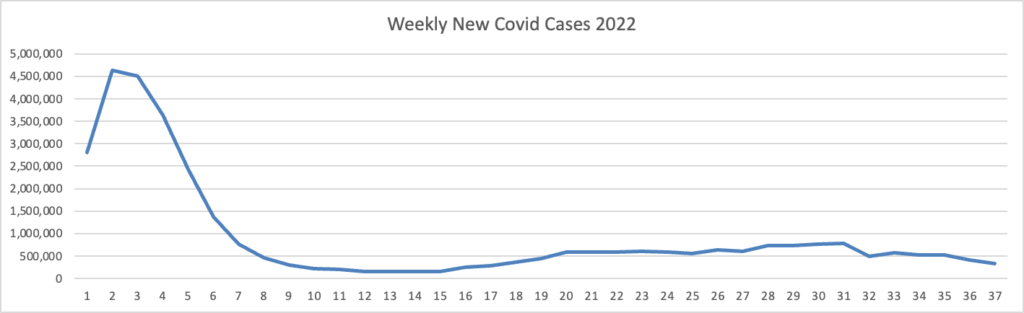
Based on the Centers for Disease Control’s Covid Data Tracker and using Thursday as the first day of the month, here is the FEHBlog’s weekly chart of new Covid cases from the 27th week of 2021 through the 22nd week of 2022:

The CDC’s weekly review of its Covid statistics explains “As of June 1, 2022, the current 7-day moving average of daily new cases (100,684) decreased 8.5% compared with the previous 7-day moving average (110,081).”

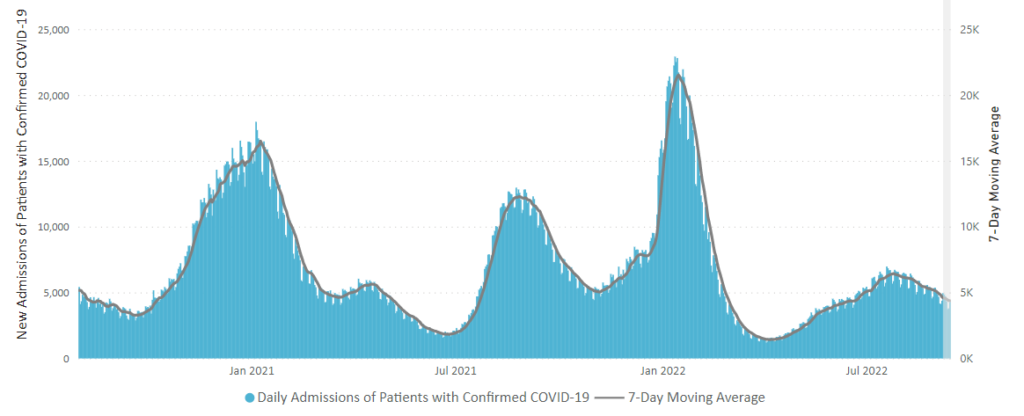
Here’s the CDC’s current chart of new Covid hospitalizations:

The CDC’s weekly statistical review notes that “The current 7-day daily average [of new Covid hospitalizations] for May 25–31, 2022, was 3,789. This is a 4.7% increase from the prior 7-day average (3,619) from May 18–24, 2022.

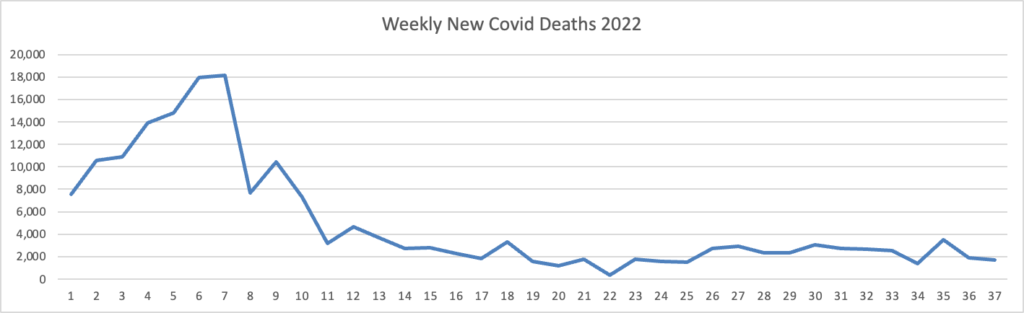
Here’s the FEHBlog’s weekly chart of new Covid deaths from the 27th week of 2021 through the 22nd week of 2022:

The CDC’s weekly statistical review adds “The current 7-day moving average of new deaths (244) has decreased 23.1% compared with the previous 7-day moving average (318).” 

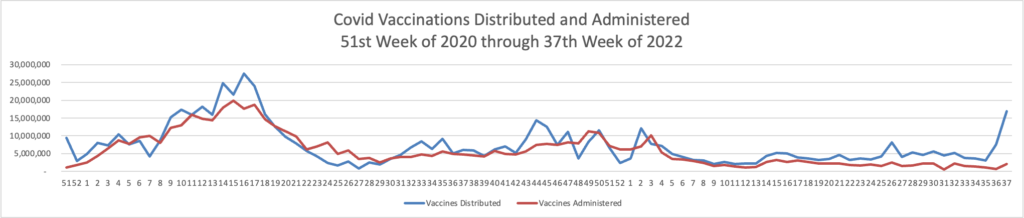
Here’s the FEHBlog’s weekly chart of Covid vaccinations distributed and administered from the beginning of the vaccination era in December 2020 through the 22nd week of 2022.

According to the CDC’s weekly statistical review,

Overall, about 258.7 million people, about 221.4 million people, or 66.7% of the total U.S. population, have been fully vaccinated.* Of those fully vaccinated, about 103.5 million people have received a booster dose,** but 49.0% of the total booster-eligible population has not yet received a booster dose. As of June 1, 2022, the 7-day average number of administered vaccine doses reported (by date of CDC report) to CDC per day was 343,662, a 9.5% decrease from the previous week.

To wrap up the statistic review, the CDC’s weekly statistical review tells us

As of June 2, 2022, there are 240 (7.45%) counties, districts, or territories with a high COVID-19 Community Level, 733 (22.76%) counties with a medium Community Level, and 2,247 (69.78%) counties with a low Community Level. This represents a slight (−0.53 percentage points) decrease in the number of high-level counties, a small (+1.37 percentage points) increase in the number of medium-level counties, and a corresponding (−0.84 percentage points) decrease in the number of low-level counties. Fifty-one (98.1%) of 52 jurisdictions had high- or medium-level counties this week.

To check your COVID-19 Community Level, visit COVID Data Tracker. To learn which prevention measures are recommended based on your COVID-19 Community Level, visit COVID-19 Community Level and COVID-19 Prevention.

In other Covid news

The Wall Street Journal reports

Novavax Inc.’s vaccine was 90% effective at preventing Covid-19 in its pivotal trial, but the performance came before the emergence of the Omicron variant that has eluded vaccines more than earlier strains, U.S. health regulators said.

The Food and Drug Administration also expressed concern Friday that six people developed heart-inflammation conditions known as myocarditis and pericarditis, out of about 40,000 people who had taken Novavax’s vaccine during various studies. 

The agency released its evaluation of Novavax’s Covid-19 vaccine ahead of a meeting of outside advisers who are scheduled to discuss next week whether the agency should recommend authorization of the shot.

The FDA staff’s appraisal suggests the vaccine could face a tough round of questioning from advisers weighing the shot’s uncertain efficacy against Omicron with potential heart risks.

This suggests an unfortunate outcome. The Novovax vaccine was developed using a traditional approach may be acceptable to the vaccine inquisitive.

In healthcare business news

  • Health Leaders Media informs us “Health insurers are not holding up their end of the bargain on mutually accepted prior authorization reforms, according to a new physician survey by the AMA.” The FEHBlog is growing concerned that the AMA is winning the prior authorization war.
  • Fierce Healthcare tells us “Optum has invested heavily in building out its provider enterprise. But executives at UnitedHealth Group say it’s still early days for the endeavor.”
  • Healthcare Dive reports “The Federal Trade Commission is suing to block two separate hospital mergers, the agency said Thursday. The FTC has sued to block HCA Healthcare’s acquisition of Steward Health Care System, alleging that the deal would reduce competition in Utah and ultimately raise prices. In another suit, the FTC is moving to block RWJBarnabas Health from acquiring Saint Peter’s Healthcare in New Jersey, alleging ‘overwhelming evidence’ that the deal would harm patients in the form of less choice and higher prices.”
  • The Healthcare Dive article adds

The FTC has now challenged numerous hospital deals this year following its latest action.

Rhode Island’s two largest health systems abandoned plans to merge in February about a week after the FTC sued to block the deal.

New Jersey’s largest health system, Hackensack Meridian Health, lost its appeal challenging the FTC’s move to prevent a tie-up with Englewood Hospital, one of the last independent hospitals in the area.

Bristol Myers Squibb is buying biotech Turning Point Therapeutics, announcing Friday a $4.1 billion deal that will give the pharmaceutical company an experimental drug that targets mutations found in lung cancer and other solid tumors.

The deal values Turning Point at $76 a share, more than double the $34.16 at which shares closed on Thursday and four times the biotech’s $18 initial public offering price in 2019. Yet the buyout price is well below the company’s peak of $133 a share in February 2021, which gave it a market value of $6.6 billion.

The company’s lead drug, called repotrectinib, has advanced through Phase 2 testing in lung cancer patients whose tumors harbor a mutation called ROS1. Repotrectinib would compete against Roche’s Rozlytrek, if approved. Bristol Myers expects to gain Food and Drug Administration clearance in the second half of 2023.

That’s a lot of money.

From the studies department

Fierce Healthcare points out

As the industry puts a focus on mental health coming out of COVID-19, a new study suggests that loneliness may be a key place to start.

Research from Cigna and Morning Consult finds that more than half (58%) of U.S. adults would be considered lonely. This is on par with pre-pandemic research, which found that 61% of adults are lonely, and made for a seven percentage point increase from 2018.

Loneliness and mental health issues are closely linked, according to the study. Adults with mental health concerns were twice as likely to feel lonely compared to those with strong mental health. The study also found that minorities and younger people were also more likely to be dealing with loneliness.

Three-quarters (75%) of Hispanic adults and 68% of Black adults are classified as lonely, according to the study, figures both substantially higher than the rate of loneliness in the general population. Seventy-nine percent of adults aged 18 to 24 said they feel lonely, compared to 41% of seniors aged 66 and over.

The FEHBlog wishes his readers a weekend full of family and friendship.

Thursday Miscellany

From Washington, D.C., and “Following a meeting of the Social Security and Medicare Boards of Trustees, the U.S. Department of the Treasury—joined by Departments of Health and Human Services and Labor, the Centers for Medicare & Medicaid Services, and the Social Security Administration—released the annual Social Security and Medicare Trustees Reports.” Here is a link to the government’s fact sheet on those reports.

The American Hospital Association explains

The Medicare Hospital Insurance Trust Fund will have sufficient funds to pay full benefits until 2028, according to the latest annual report released today by the Medicare Board of Trustees.

That’s two years later than last year’s report. The HI Fund, known as Medicare Part A, helps pay for inpatient hospital services, hospice care, and skilled nursing facility and home health services following hospital stays.

HI income is projected to be higher than last year’s estimates because both the number of covered workers and average wages are projected to be higher, according to the report. In addition, HI expenditures are projected to be lower than last year’s estimates in the beginning of the short-range period mainly due to the pandemic but are projected to become larger after 2023 due to higher projected provider payment updates.

“There is substantial uncertainty in the economic, demographic, and health care projection factors for HI trust fund expenditures and revenues,” the report notes. “Accordingly, the date of HI trust fund depletion could differ substantially in either direction from the 2028 intermediate estimate.”

From the Omicron and siblings front

Bloomberg Prognosis reports

More than two-thirds of the world’s population probably have significant levels of Covid-19 antibodies, meaning they have either been infected or were vaccinated, the World Health Organization said. 

So-called seroprevalence rates surged to 67% in October from 16% in February of 2021, the WHO said, in a summary of studies from around the globe. Given the emergence of the fast-spreading omicron variant, the figure is probably even higher now.

The National Institutes of Health (NIH) announced

A large randomized, placebo-controlled clinical trial led by the National Institutes of Health shows that treating adults hospitalized with COVID-19 with infliximab or abatacept – drugs widely used to treat certain autoimmune diseases – did not significantly shorten time to recovery but did substantially improve clinical status and reduce deaths.

That’s a good trade-off.

From the federal employee benefits front

  • OPM released a proposed Federal Long Term Care Insurance Program rule today. The rule indicates that OPM is planning a suspension of enrollments in this Program. “For example, it may be appropriate to suspend applications to allow a period of time for revisions to underwriting processes or for premium repricing after a review of actuarial assumptions, in order to ensure that premium rates reasonably and equitably reflect the cost of the benefits provided as required by the statute and to ensure that OPM can provide eligible individuals with the information needed to enable them to fully evaluate the advantages and disadvantages of obtaining LTCI under FLTCIP.” (pp. 4-5). The public comment deadline is expected to be July 2, 2022.
  • Benefits consultant Tammy Flanagan responds in Govexec to reader questions about “about choosing when to retire in order to maximize the impact of both the annual cost-of-living adjustment to retirement benefits and the yearly federal employee pay increase.” Check it out.

From the transparency front

Roll Call discusses the progress of the hospital industry in achieving compliance with the federal government’s pricing transparency rule which became enforceable eighteen months ago.

While most hospitals have been willing to follow parts of the rule — namely, a requirement that they post user-friendly lists or tools to help patients shop for services — they have been less compliant with a requirement that they post “machine readable” files of standard charges — data that experts say would be far more useful in driving down costs.

That’s an intriguing factoid because the federal government’s health plan transparency rule’s similar requirement to post three “machine readable” files of claim payments data becomes enforceable on July 1, 2022.

From the Rx coverage front, Healthcare Dive informs us

* Rite Aid is the latest pharmacy giant to step into clinical care delivery through a new partnership with rural home care startup Homeward.

* Under the deal announced Tuesday, Rite Aid pharmacists will direct eligible customers to Homeward’s clinical services, including annual wellness visits, health screenings, diagnostic testing, virtual visits and in-home care. Homeward will also be able to park its mobile clinician units at Rite Aid’s rural locations, with the goal of allowing senior customers to see a provider and pick up their prescriptions in one visit.

* Homeward will provide in-network services, including specialty care beginning with cardiology, in the third quarter this year for patients covered by Medicare and Medicare Advantage plans. The companies are starting the partnership in Michigan, with the opportunity to expand to Rite Aid’s 700 rural locations across the U.S. over time.

From the telehealth front, Healio tells us

Telemedicine could be as effective as in-person medicine in evaluating pediatric genetic disorders, according to a study published in Pediatrics.

The study is the latest in a string of investigations examining clinicians’ and patients’ experiences in telemedicine following its widespread implementation during the COVID-19 pandemic. Evidence has suggested that telemedicine could significantly reduce costs for certain patients, but also that patients and practitioners may prefer in-person visits.

Midweek update

From Capitol Hill, A bipartisan PBM transparency bill was introduced by Senators Maria Cantwell (D Wash) and Charles Grassley (R Iowa) last week.

Sens. Chuck Grassley (R-Iowa), ranking member of the Judiciary Committee, and Maria Cantwell (D-Wash.), chair of the Committee on Commerce, Science and Transportation, have introduced legislation that would empower the Federal Trade Commission (FTC) to increase drug pricing transparency and hold pharmacy benefit managers (PBMs) accountable for unfair and deceptive practices that drive up the costs of prescription drugs at the expense of consumers.

The Pharmacy Benefit Manager Transparency Act of 2022 would ban deceptive unfair pricing schemes; prohibit arbitrary claw backs of payments made to pharmacies; and require PBMs to report to the FTC how much money they make through spread pricing and pharmacy fees.

Healthcare Dive reports on a recent study supporting the goals of this bill.

From the Omicron and siblings front

Bloomberg Prognosis informs us

Turns out a third dose of messenger RNA vaccine provides a key boost to immunity against Covid regardless of the original shot.

That’s what scientists from the Chinese University of Hong Kong found after scouring 53 studies that contained at least 24 different vaccine regimens. 

Three mRNA doses offered the best protection against infection, the researchers found, though just one of those shots as a booster after other types of Covid-19 vaccines worked almost as well. 

The Wall Street Journal tells us

Pfizer Inc. and partner BioNTech SE asked U.S. health regulators to authorize three doses of their vaccine for children under 5 years.

The request Wednesday to the Food and Drug Administration comes after the companies said last month that three doses of the shot were 80% effective at preventing symptomatic Covid-19 and generated a robust immune response in children ages 6 months to 5 years old.

The Pfizer-BioNTech vaccine was also found to be safe and well-tolerated among the children in studies, according to the companies.

FDA clearance could come before the end of the month. If the Centers for Disease Control and Prevention signs off, the last remaining group of people in the U.S.—roughly 19 million young children—would get access to shots at doctors’ offices, pharmacies and other locations.

The FDA is scheduled to consider the Pfizer and Moderna emergency authorization requests for mRNA Covid vaccinations for children aged six months to five years.

The National Institutes of Health reveals

A National Institutes of Health-funded study has found that people with food allergies are less likely to become infected with SARS-CoV-2, the virus that causes COVID-19, than people without them. In addition, while previous research identified obesity as a risk factor for severe COVID-19, the new study has identified obesity and high body mass index (BMI) as associated with increased risk for SARS-CoV-2 infection. In contrast, the study determined that asthma does not increase risk for SARS-CoV-2 infection.

The Human Epidemiology and Response to SARS-CoV-2 (HEROS) study also found that children ages 12 years or younger are just as likely to become infected with the virus as teenagers and adults, but 75% of infections in children are asymptomatic. In addition, the study confirmed that SARS-CoV-2 transmission within households with children is high. These findings were published today in the Journal of Allergy and Clinical Immunology.

From the healthcare business front

Fierce Healthcare reports

Optum is still on an acquisition hot streak, scooping up Healthcare Associates of Texas, Axios reported Wednesday.

Sources told the news outlet that the purchase from Webster Equity Partners would earn HCAT a $300 million enterprise value and earnings before interest, taxes, depreciation and amortization in the high teens. UnitedHealth Group, Optum’s parent company, has made overtures to purchase HCAT in the past, according to the report.

HCAT has a large footprint in the Dallas-Fort Worth metropolitan area and has also invested heavily in value-based care, both of which make it an attractive buy for Optum.

Webster bought HCAT in 2016. Neither UnitedHealth nor HCAT has verified the veracity of the deal.

N.B. The FEHBlog is in Dallas today!

Fierce Biotech tells us

GSK is betting big to reenergize its fight for a share of the pneumococcal vaccine market, agreeing to pay $2.1 billion upfront to acquire Affinivax for a challenger to Pfizer’s blockbuster Prevnar franchise.

The British Big Pharma already has an approved pneumococcal vaccine, Synflorix, but has failed to turn it into a true rival to Pfizer’s incumbent. Sales of Synflorix fell (PDF) to 357 million pounds sterling ($450 million) last year, while the Prevnar range of vaccines still topped (PDF) $5 billion in the face of COVID-related headwinds and the timing of government purchases. Last year’s approval of Merck & Co.’s Vaxneuvance further intensified competition. 

From the studies department

  • Forbes informs us “The U.S. spends twice as much on cancer care than average for high-income countries but mortality rates are only slightly better than average for these countries, according to a new study.”
  • Fierce Healthcare reports on a Kaiser Family News projection of 2022 insurer rebates required by the Affordable Care Act.

Kaiser’s analysis—which is based on data reported by insurers to state regulators—predicts that individual market insurers will have to pay out $603 million in rebates for 2022, with small group markets sending out $275.5 million and $168.1 million for large group plans. The final rates will be released later this year.

The $603 million for individual market plans, which includes the ACA’s exchanges, is far below the $1.3 billion in rebates for 2021 and $1.7 billion for 2020. 

Tuesday’s Tidbits

Photo by Patrick Fore on Unsplash

From Capitol Hill, STAT News reports

The sweeping FDA funding bill unveiled by senators Friday would direct the FDA to stand up an “intra-agency coordinating council” to oversee its use of the controversial accelerated approval pathway, my colleague Lev Facher writes. The policy seems a clear response to the controversy over the FDA’s approval of Aduhelm — and it’s the latest sign that lawmakers are within striking distance of reforming the controversial pathway, which allows the FDA to greenlight drugs without clear evidence they extend patients’ lives. 

Accelerated approval not your bailiwick? There’s plenty more in the 433-page bill too, including a proposal from Sen. Elizabeth Warren that would force the FDA to finally release regulations meant to lower the cost of hearing aids. Conspicuously missing from the legislation? Any of the House’s proposals on clinical trial diversity. 

For more on the package, check out Lev’s story here

From the Omicron and siblings front

AP tells us

The coronavirus mutant [BA 2.12.1] that is now dominant in the United States is a member of the omicron family but scientists say it spreads faster than its omicron predecessors, is adept at escaping immunity and might possibly cause more serious disease.

Why? Because it combines properties of both omicron and delta, the nation’s dominant variant in the middle of last year. 

A genetic trait that harkens back to the pandemic’s past, known as a “delta mutation,” appears to allow the virus “to escape pre-existing immunity from vaccination and prior infection, especially if you were infected in the omicron wave,” said Dr. Wesley Long, a pathologist at Houston Methodist in Texas. That’s because the original omicron strain that swept the world didn’t have the mutation.

Tricky little devil.

The Wall Street Journal adds that

Most people with Covid-19 will still test positive on a rapid test at five days, and a “fairly large percentage” test positive after 10 days, CDC spokeswoman Jasmine Reed said. Infectiousness drops significantly at eight days, with few people remaining contagious at 10 days, she said. 

The CDC guidance also takes symptoms into account as a factor to gauge contagiousness, she said, noting that people should only leave isolation after five days if their symptoms are improving. The CDC recommends that everyone wear a well-fitted mask and avoid travel and being around high-risk people for 10 days, no matter when the person leaves isolation. * * *

At the beginning of an infection, when a person’s viral load is rising, it might take a few days before tests turn positive. That is why health authorities recommend that people with symptoms and negative rapid-test results wait and retest or get a more sensitive lab-based PCR test.

As a person’s viral load drops, rapid tests are a better indicator of who is no longer infectious, public-health experts said. * * *

Immunocompromised people and those who get severely ill can be contagious even longer than 10 days, studies suggest, and patients who experience rebounding symptoms or who test positive again after taking Pfizer Inc.’s Paxlovid pill should also assume that they are contagious, infectious-disease experts said.

David Leonhardt writes about the benefits of one-way masking in his New York Times column today. “Because masks work and mandates often don’t, people can make their own decisions. Anybody who wants to wear a snug, high-quality mask can do so and will be less likely to contract Covid.” That makes sense to the FEHBlog.

In healthcare business new, the American Hospital Association informs us

According to a report by Kaufman Hall, hospitals faced decreases in both patient volume and revenue in April. Year-to-date hospitals have struggled to rebound from winter surges and new spikes in COVID-19. Median operating margins declined for the fourth straight month with patient volume down 6.5%, revenue down 7%, and expenses continued to climb well above pre-pandemic levels and 9.6% year-to-date higher than 2021.

Healthcare Dive reports

* In its latest earnings report, Change Healthcare highlighted its momentum heading into the next fiscal year, outlining what 2023 could look like for the data analytics company as a standalone business in the event its controversial $13 billion merger with UnitedHealth falls through.

* In previous quarters, Change has not provided formal forward-looking guidance given the pending transaction. But in fourth-quarter results released last week, Change said it expects between 2% to 4% growth in its core Solutions business in 2023, moderately below analysts’ consensus, and roughly flat earnings before interest, taxes, depreciation and amortization margins.

* Change noted the flat margins are due to some wage pressure, lower volume-driven revenues as COVID-19 cases drop and client attrition due to its proposed merger with UnitedHealth’s health services arm, Optum. 

The trial over the Justice Department’s challenge to this merger begins in August.

In public health news Medscape explains

Each day between 2017 and 2019, nearly 2,300 adolescents and young adults became new daily tobacco users — a figure that mirrors statistics from 1989 to 1993.

According to a longitudinal study, the total number of daily vape (or e-cigarette) users under 21 years of age rose to more than 1 million by 2019. Of those, 56.3% used Juul products in particular, reported cancer prevention researcher John Pierce, PhD, of the University of California San Diego in La Jolla, and colleagues in Pediatrics.

“The large increase in daily use among U.S. adolescents could presage future health consequences and needs urgent additional action from the [FDA],” the authors wrote.

From the mental health coverage front, the Society for Human Resources Management discusses how employers are grappling with a surge in employee mental health issues.

Also the Biden Administration marks the end of mental health awareness month by listing its accomplishments and plans, including

In addition to facilitating access to comprehensive telebehavioral health benefits through the Federal Employees Health Benefits Program, the Office of Personnel Management (OPM) is working to reinvigorate Employee Assistance Programs provided by all federal agencies to better meet employees’ behavioral health needs, while disseminating best practices and new ideas for improving federal workplace mental health.

From the medical research front, STAT News reports

Bay Area biotech Ultima Genomics on Tuesday claimed that its technology can sequence a whole human genome for $100, making it a surprise player in the race to read DNA quickly, accurately, and cheaply.

The company didn’t provide specifics or immediately reply to an inquiry from STAT as to how it calculated that cost. But a $100 genome would represent a major drop in price, one that could help researchers unlock sequencing’s potential to unravel the mysteries of undiagnosed diseases, spot early signs of cancer, and better understand human health. That’s because while the cost of reading a full human genome has plummeted from around $95 million in 2001 to about $560 in 2021, according to the National Human Genome Research Institute, sequencing is still too pricey to be routinely used in health care and research.

That’s an intriguing development.