Tuesday Tidbits

Tuesday Tidbits

The FEHBlog is off for the next two nights to watch Washington’s baseball and football teams so he has decided to offer a few Tuesday Tidbits.

  • The FEHBlog belatedly discovered that the IRS issued FAQs on the onerous IRC 6055 and 6056 reporting processes late last month. While these reporting requirements take full effect next year with first reports due in January 2016, health plans needs to start gathering dependent SSN’s for the 6055 reporting now. 
  • A few months ago, the FEHBlog noted how the Food and Drug Administration was questioning the safety of a power tool that surgeons to remove uterine fibroids. The Wall Street Journal reported yesterday on how the FDA’s informal action has created a controversy among surgeons. The point of the article is that the FDA has limited regulatory reach into the practice of medicine. Its statement (couple with fear of the FEHBlog’s profession) has encouraged surgeons to provide their patients with fuller disclosure about the risks of this power tool known as a morcellator. That’s a good thing. 
  • The FEHBlog also has discussed the Choosing Wisely campaign. which highlights medical services that are unnecessary in the view of medical specialty organizations. The Wall Street Journal has reported today about how the Choosing Wisely campaign findings should be implemented. A Delaware hospital chain vastly reduced the number of non-ICU patients receiving cardiac telemetry by creating implementing a Choosing Wisely finding: 

In cardiac telemetry, electrodes are used to monitor the heart for abnormal rhythms. To try to cut inappropriate use of the monitoring at Christiana Care, which operates two hospitals, a group of physicians redesigned the electronic system that doctors use to order tests and other care.

First, they removed the option to order telemetry for conditions not included in the AHA guidelines. Doctors could get around this and order the monitoring, but they had to take an extra step to do so, according to Robert Dressler, who helped lead the study. “We didn’t want to get in the way of the bedside clinician who had a demonstrable concern” and wanted to use telemetry despite contradicting guidelines, he said.

For conditions for which telemetry is AHA-approved, Christiana Care attached a fixed, AHA-recommended time period for telemetry duration in the computer system. If the patient was still in the hospital after that period had elapsed, nurses were instructed to automatically stop the monitoring, unless they believed it to be unsafe, in which case they were required to ask a physician to weigh in.
After the changes, the researchers found the hospital group’s mean daily number of non-ICU patients monitored with telemetry fell by 70%, from 357.5 to 109.1, while the mean daily cost for delivering non-ICU telemetry also fell by 70%, from $18,971 to $5,772. The changes had no negative effect on patient care; mortality rates at the hospitals remained stable, as did the number of “code blue” emergency calls to resuscitate patients.

The Choosing Wisely campaign needs to be implemented by the medical profession (healer heal thyself), not rammed down the profession’s throat by others.

  • Finally, the FEHBlog assumed that ACA marketplace participants would be grateful for coverage and would not object to narrow provider networks. Of course, the consumer advocates and medical groups squawked about the narrow networks. But Modern Healthcare reports that  

Researchers at Georgetown University’s Health Policy Institute studied narrow-network plans sold on the individual-market exchanges last year in six states: Colorado, Maryland, New York, Oregon, Rhode Island and Virginia. Health insurers have said the healthcare reform law is spurring them to offer more narrow networks, which they say save them money and lead to lower monthly premiums in exchange for a smaller number of in-network hospitals and physicians. After speaking with several state officials and insurers that offer exchange plans, researchers found that few consumer complaints have emerged to date about the networks’ offerings. 

That”s good news.  

Weekend Update

As the FEHBlog mentioned on Friday, Congress is out on the campaign trail now, but in addition to passing a continuing resolution, Congress passed a law regulating hospices according to this Washington Post report. The bill requires more frequent federal inspections of hospices which have become a large portion of Medicare spending. 

The New York Times lead business section story today was about the 34 year old CEO of a company called Zenefits which is eating the lunch of health insurance brokers with a smartphone app. The article discloses that one of the authors of the Affordable Care Act, Bob Kocher MD has cashed in by investing in this company. The article explains

The Affordable Care Act also called for the creation of state-run insurance exchanges aimed at small businesses; those have been delayed, but eventually they, too, may streamline the way small businesses buy health care. But because the exchanges will allow firms to use brokers, the Zenefits business would still work under that model.
In the long run, such efficiencies could help keep down the costs of health care. “When you can see all the plans online, people tend to choose narrower-cost ones — and that has the effect of pushing doctors and hospitals to try to get into those lower-cost plans,” Dr. Kocher said.

As the FEHBlog has noted, consumer groups empowered by the ACA have strongly objected to narrow networks. In in ironic twist, the lead article in today’s New York Times is about doctors who fly the pirate flag by slyly proving out of network services as assistant surgeons or surgical consultants. It’s a rather sad story because the patients tried to control their expenses but failed to do so because the doctors did not provide transparent pricing. It’s too bad that the ACA did not hold the primary surgeon or other doctor responsible for the prices charged by the other team members.

Business Insurance reports that a study of more than 1,500 data breaches in 2013 and 2014 by a unit of Beazley P.L.C. reveals that the two most common sources of breaches are misdirected emails and faxes and the physical loss of paper records, mostly by health care providers. The FEHBlog thought that the lead cause was theft of records. Update your risk assessments according.

TGIF

Yesterday as the Federal Times reports, Congress enacted a continuing resolution that funds the federal government through December 11, 2014. A link to the Week in Congress is here. Congress is now back on the campaign trail. There will be a lame duck session following the mid term elections on November 4.

FCW informs us that earlier this week the President nominated retired Navy Rear Admiral Earl L. Gay to fill the vacant OPM deputy director position. “[Admiral] Gay served more than 30 years in the Navy, and commanded that service’s recruiting command from 2011 to 2013. He is currently serving as a senior advisor to OPM Director Katherine Archuleta.” He also was a Navy helicopter pilot. This nomination requires Senate confirmation.

The IRS has announced that the PCORI fee will increase from $2.00 per bellybutton to $2.08 per bellybutton for plan or policy years ending on or before October 1, 2014, and before October 1, 2015. $2.08 will be the fee in effect of the 2014 FEHBP contract year. This fee that the ACA imposes on all health plans but not health care providers funds the Patient Centered Outcomes Research Institute.

CEOs from the Business Roundtable also have offered their views on how to improve the Nation’s healthcare system. Their report (available here) outlines recommendations in three major areas:

  • Pursuing health system performance transparency;
  • Strengthening incentives for consumers and providers to improve value; and
  • Aligning public and private sector efforts.
Fierce Healthcare discusses the roadblocks to transitioning from fee for service to value base based payments — specifically reaching consensus on what is quality care. 

Happy Constitution Day!

Today is the 227th anniversary of the signing of the U.S. Constitution, a quite remarkable governing document, and the FEHBlog has returned to DC from his trip to the Northeast. Also of note, the Washington Nationals clinched the National Division Eastern Division title last night down in Atlanta. Go Nats.

Yesterday, the Wall Street Journal reported that Gilead Sciences struck a deal with  Indian generic drug manufacturers to manufacture their Hepatitis C drug Sovaldi for sale in third world countries like Honduras, Vietnam, and South Africa, for a fraction of the $1,000 per day cost here in the U.S. The FEHBlog applauds Gilead for its philanthropy. However, the article reiterates Gilead’s pricing philosophy for this country —

Sovaldi is on pace to become one of the world’s top-selling drugs, with more than $10 billion in sales this year. In the U.S., a 12-week-supply costs $84,000, which some critics say is too high for a lifesaving drug. Gilead has said the price is comparable to the cost of older, inferior treatments, and will stave off more costly health services like liver transplants.

Because the FEHBlog appreciates that price and cost are independent variables, he recognizes that the price of Solvadi does not have to be based on its cost but under this approach the cost curve will never go down.  

Warning — According to this Medical Marketing and Media article, CVS Health reports that 8% of its customers on Sovaldi unilaterally have stopped taking the drug before the end of treatment. CVS suggests the need for more patient support.

Medical Dive reports on recent CMS findings about accountable care organization performance which it describes as a “mixed bag.”

Let’s wrap things up for today with a couple tidbits:

  • The Physicians’ Foundation released the results of a biennial survey of 20,000 physicians. The survey confirms widespread unhappiness with the electronic medical record systems for which the federal government has shelled out $24 billion. Moreover,

81 percent of physicians describe themselves as either over-extended or at full capacity, while only 19 percent indicate they have time to see more patients. Forty-four percent of physicians surveyed plan to take steps that would reduce patient access to their services, including cutting back on patients seen, retiring, working part-time, closing their practice to new patients or seeking non-clinical jobs, leading to the potential loss of tens of thousands of full-time-equivalents (FTEs). [Rur-roh]

  • The Bipartisan Policy Center has created a CEO Council on Health and Innovation which has its own website. According BenefitsPro

The [new Council’s report urges employers to take three steps immediately that would support their overarching objectives:

  • Both implement and track the outcomes of their health and wellness programs;
  • Collaborate on the implementation of community-based programs;
  • Improve the health care system by supporting the movement toward transparency and payment and delivery models that are based on outcomes rather than volume.

Weekend Update

The FEHBlog is in Connecticut for a series of meetings in the Nutmeg State over the next two days. Congress is back in DC. The House of Representatives delayed a vote on a FY 2015 continuing resolution due to the President’s request for funding to train Syrian rebels. Hopefully both bodies of Congress will pass a continuing resolution this week. The Hill’s update is here.

The Mercer consulting firm last week issued an employer survey (1700 employers) estimating that employer health plan costs will increase 3.9% in 2015 if employers aggressively seek to hold down costs with, e.g., high deductible plans. With no proactive changes, costs are expected to increase 2% more to 5.9%. That shows a lot of confidence in health plan cost control measures, including wellness programs.

The Wall Street Journal reported on a lively debate among medical experts over whether or not cancer is overdiagnosed.  In a sidebar, the Journal explained that this debate is leading oncologists to engage in shared decision making with patients, e.g., explain benefits and risks of screenings and other procedures and allow the patient to make the preventive care decision.

“We in our health-care conversations have not adequately explained both sides,” says Otis Brawley, chief medical officer of the American Cancer Society. For example, he says, mammograms do save lives, but not as many as most people think. For women in their 60s, regular screenings reduce the risk of dying of breast cancer by about 30%. “But 70% of women who were going to die of breast cancer will still die of it,” Dr. Brawley says.

Patients often overestimate the lifetime risk of dying of cancer, he says. For prostate cancer and for breast cancer, it’s about 2.7%. Put another way, for every 10,000 women in their 60s screened annually for 10 years, between five and 49 breast-cancer deaths will be averted; about 90 women will die of breast cancer anyway and 64 to 194 will be treated unnecessarily, according to a recent analysis in JAMA. An additional 940 will have biopsies that find no cancer.

For some patients, lowering even a small risk of dying of cancer is worth undergoing frequent screening and aggressively treating even low-risk cancers. Many cancer survivors say they are glad their cancer was found early, and don’t second-guess if it needed to be caught at all. Some say they’d rather know they have even a low-risk cancer than stop looking and be left to wonder.

Financial considerations would not play a role in this shared decision making as the ACA generally requires non-grandfathered health plans to cover these preventive services without enrollee cost sharing in network. This recent change could be militating in favor of this movement.

Finally, last week, the Food and Drug Administration approved for marketing a new drug to treat obesity. According to this NPR report,

[The new drug] Contrave [developed by Orexigen Therapeutics], for better or worse, is a combination of two [currently generic] drugs that have been around for a long time. One is bupropion, an antidepressant sold as Wellbutrin, that’s also been used to help people stop smoking. The other is naltrexone, a medicine that’s prescribed to help people stay off drugs and alcohol.  Contrave is intended for people who are obese or who are overweight and have other weight-related health problems, such as high blood pressure and type 2 diabetes.

The drug will be available this fall. The article also discusses the drug’s potential side effects.

TGIF

Here’s a link to this weeks Congressional actions from the Week in Congress.com.  Govexec.com offers a detailed report on the thorny issue of postal reform. The Govexec reporter does not expect Postal reform legislation to get through Congress this year, even with a lame duck session.

Business Insurance reports that a survey of more than 2,000 employers by the Kaiser Family Foundation and the Health Research and Educational Trust found that family coverage premiums rose an average of 3% in 2014. FEHBP premiums (both self only and self and family) rose 3.7% for this year or above the average. As the FEHBlog has noted the FEHBP’s demographics feature an average enrollee age around 60 years old because there are equal numbers of active employees and annuitants. We should learn 2015 premium information from OPM soon.

The Wall Street Journal included an op-ed from a Washington DC doctor / professor of medicine complaining about the practice of medicine in the age of Obamacare. The doctor complains about the burden of electronic health records and the imposition of government and insurer bureaucracies. The FEHBlog is sympathetic with the doctor. However, the Affordable Care Act or Obamacare places many more burdens on insurers than it does on health care providers. It’s a mutual problem.

Continuing to look at the other side of the fence, Fierce Healthcare has an interesting article about the steps that healthcare providers are taking to control the risk of human error in medical procedures.

Finally, the WSJ’s Pharmalot blog reports on price spikes in a “old,” non-prescription drug insulin that health plans typically cover. It’s another case of increased demand with little manufacturer competition in the market.

Enjoy the weekend.

Midweek Update

Federal News Radio reports that the House is poised to pass tomorrow a continuing resolution that would fund the Federal Government at current levels from October 1, 2014, through December 11, 2014. This would allow the lame duck session of Congress to enact an omnibus appropriations bill following the early November midterm elections.

The FEHBlog received good news from OPM yesterday that OPM Senior Health Actuary Ron Gresch will be receiving the Robert J. Myers Public Service Award from the American Academy of Actuaries later this year. Ron deserves a lot of credit for the FEHBP’s continuing success.

On the technology front, Clinical Innovation and Technology reports on a Mayo Clinic survey finding that a majority of patients are receptive to video visits with their doctors / telehealth. However, U,S. News and World Report notes a survey finding that doctors are concerned about the time lost adding information to the electronic health record systems that the federal government has funded to the tune of $24 billion to date. Throwing money at a problem generally is an ineffective solution. Hopefully these kinks (if they are kinks) will work themselves out over time. .

MedCity News reports that the Food and Drug Administration has issued a Purple Book on bio-similar drugs to complement its Orange Book on small molecule generic drugs. These books are “the go-to list for physicians, regulatory agents and generics makers, as [each] is a list of all FDA-approved drugs. It indicates which med can be interchanged for which – and lists out important patent exclusivity information.”  Progress.  On a related note, take a gander at this Drug Channels post analyzing last week’s CMS Actuary Report on U.S. Healthcare Expenditures from a prescription drug angle.

Weekend Update

The FEHBlog had a great trip to Denver and he is happy to be back in DC with access to a PC.

Congress returns to DC this week. The top item on its agenda (besides getting out of town to campaign) is a short term continuing resolution to fund the federal government past September 30 when Fiscal Year 2015 begins. Happily, the Hill’s Floor Action blog has resumed its practice of providing a schedule of the coming week’s activities in the legislative chambers.

Govexec reports that the federal workforce has grown steadily since last April following a series of steady sequestration drops. According to the article the federal government ended August with about 2.72 million employees.

The Federal Times reports that OPM has decided to allow federal employees participating in the health care flexible spending account programs to carry over up to $500 of any unused balance beginning next year, rather than lose it. “The ability to carry money from one year to the next will replace the current system, in which employees have a grace period of up to two and a half months to use any remaining money” OPM also is reducing the minimum contribution from $500 to $100.

CMS’s actiary released a national heathcare spending report last week. Cost curve up.

The CDC released a state by state map of obesity prevalence based on on 2013 data. A federal health care task force of which the FEHBlog has been unaware the Community Preventive Services Task Force issued recommendations for pre-diabetic folks — increase physical activity and better dietary habits — A/K/A common sense. .

CAQH CORE announced that its helpful coordination of benefits database program has been rolled out nationwide. “A CAQH SolutionTM, COB Smart determines when an individual is covered by more than one insurer and also indicates which insurer should pay first. The solution streamlines coordination of benefits (COB) activities so that healthcare claims can be processed correctly the first time.” Very cool.

Happy Birthday ERISA

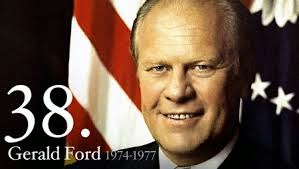
40 years ago today, President Gerald R. Ford signed the Employee Retirement Security Income Act of 1974 into law. ERISA’s principal focus was on pension plan regulation, but the law’s scope also encompassed private sector health and other so-called employee welfare benefit plans. Business Insurance provides a nice retrospective on ERISA, which was enacted 15 years after our beloved Federal Employee Health Benefits Act of 1959.  Both laws have become much more complicated since then which always is good news for lawyers.

Happy Labor Day

Labor Day means that we are close to the end of the August Congressional recess (on September 8) and OPM’s release of 2015 FEHBP premium information (sometime later this month). The Wall Street Journal reports that “Almost a year since the last partial government shutdown began, many House Republicans say they have little desire to start another.” Because Congress is only expected to be holding sessions for around 20 days before adjourning for the election season, we can expect Congress to pass a continuing resolution to take us into the new federal federal fiscal year that starts on October 1. The continuing resolution will likely last at least three months.

Last Friday, according to Govexec.com, the President issued an alternative pay plan which will result in a 1% across the board pay raise for federal employees beginning January 1. 2015.

Last week, the FEHBlog noted that Community Health Systems, a hospital chain, had lost 4.5 million patient records to computer hackers. Healthcare Dive reports that according to a Forbes report, the theft could cost the hospital chain $75 to $100 million due to litigation (which already have been filed), government investigations, etc. The National Law Review notes that

Hospitals should be accustomed to protecting data against privacy breaches as part of their HIPAA obligations, but outright cybertheft is a threat that many providers have not likely considered. The FBI, which is now investigating the Community incident, said in April that health care providers typically do not use the same high levels of security technology as companies in other industries (such as banking or retail). This makes providers an easy target for hackers. If a leading hospital system like Community can be breached, then hospitals of every size are at risk.

Health plans should be on guard too. In this day and age, it also is essential for HIPAA covered entities and business associates to carry cyber-liability insurance.

The FEHBlog also noted last week that the IRS has issued draft forms and instructions that health plans and large employers will use to comply with the Affordable Care Act’s onerous IRC §§ 6055 and 6056 reporting requirements that kick in for the 2015 reporting year. LifeHealth Pro notes that the forms are filled with ACA gobbledygook which is hardly surprising. It will be incumbent on health plans and large employers to educate recipients about these forms. Otherwise they will be flooded with customer service calls in early 2016 (which could happen despite best efforts).

Finally the New York Times reported yesterday that according to clinical trial results Novartis is on track to release a prescription drug that will vastly improve treat of chronic heart failure.

The drug [LCZ696] reduced both the risk of dying from cardiovascular causes and the risk of being hospitalized for worsening heart failure by about 20 percent in a large clinical trial.

Of course, there’s no such thing as a free lunch. Five to six million people in the U.S. suffer from this serious disease.

Some Wall Street analysts predict the drug, a tablet taken twice a day, will achieve billions of dollars in annual sales. Seamus Fernandez, an analyst at Leerink Partners, said on Saturday that the results were “near best case” and “could result in faster uptake, higher penetration and more robust branded pricing.”
As a proprietary drug, LCZ696 is likely to be expensive. Tim Anderson, an analyst at Sanford C. Bernstein & Company, estimates that it might cost $7 a day in the United States, or about $2,500 a year. Existing drugs are generic, costing as little as $4 a month, so insurers might balk at paying for the new drug.

The FEHBlog is happy about such research results. The manufacturers should recognize that they could not charge astronomical prices without the price supports provided by health insurance. Moderation is a good thing. It appears that Novartis may understand this concept while Gilead Sciences does not in the FEHBlog’s view.