Weekend update

Weekend update

Welcome to Daylight Savings Time! Congress remains in session on Capitol Hill this week. Federal News Network reports that the President signed into law the $8.3 billion COVID 19 funding bill (H.R. 6074) on Friday.

Notwithstanding the cancellation of the HIMSS conference

  • Modern Healthcare reports that the Trump Administration plans to release the final electronic health records interoperability and data blocking rules tomorrow, and.
  • DaVinci, “a private sector initiative that addresses the needs of the Value Based Care Community by leveraging the HL7 FHIR platform,” with the FHIR API, plans to go ahead with virtual HIMSS presentations via an online format. Thanks DaVinci.

Fierce Healthcare reports on an interesting flu vaccine study in the Annals of Internal Medicine.

The researchers said continued vaccination of seniors, particularly with high-dose vaccines, still seems appropriate, as the study results did not preclude modest effectiveness of the flu vaccine against severe outcomes.

“Our findings raise questions, however, about the overall effectiveness of a vaccination strategy that is limited to standard vaccines and focuses too much on elderly persons. Supplementary strategies, such as vaccinating children and others who are most likely to spread influenza, may also be necessary to address the high burden of influenza-related complications among older adults,” the researchers concluded.

The researchers measured hospitalization and mortality rates by month of age. Their data included 170 million episodes of care and 7.6 million deaths. Flu vaccination rates increased sharply at age 65, but there was no matching decrease in hospitalizations or death.

TGIF

OPM now has a prominent page on its website that gathers together the agency’s COVID 19 guidance. Just in time for a group of Democrat Senators to criticize that guidance as Govexec reports. In salient point the Senators state that

OPM work with health insurance providers to ensure that federal employees can affordably access the preventive care and treatment they may need as a result of COVID 19.

Here are today’s COVID 19 statistics for our country from the Centers for Disease Control

Travel-related36
Person-to-person spread18
Under Investigation110
Total cases164

Here’s a link to the CDC’s latest statistics for another coronavirus, the flu.

  • Pneumonia and influenza mortality has been low [this flu season], but 136 influenza-associated deaths in children have been reported so far this season. This number is higher for the same time period than in every season since reporting began in 2004-05, except for the 2009 pandemic.
  • CDC estimates that so far this season there have been at least 34 million flu illnesses, 350,000 hospitalizations and 20,000 deaths from flu.

Modern Healthcare discusses an interesting Humana social determinants of health program in the Medicare Advantage program. The program kicked off this month with Oschner Health in New Orleans. The FEHB Act and the Internal Revenue Code don’t allow FEHBP plans to copy this program but they can take steps to emulate it, in the FEHBlog’s view.

The Boston Globe’s StatNews provides an interesting overview of the state of the biosimilar drug market in our country. Biosimilars are the specialty drug equivalent of generic drugs. Congress opened the door to biosimilar development in the Affordable Care Act. Biosimilars are poised to create a substantial amount of drug cost savings over the next five years according to the article.

COVID-19

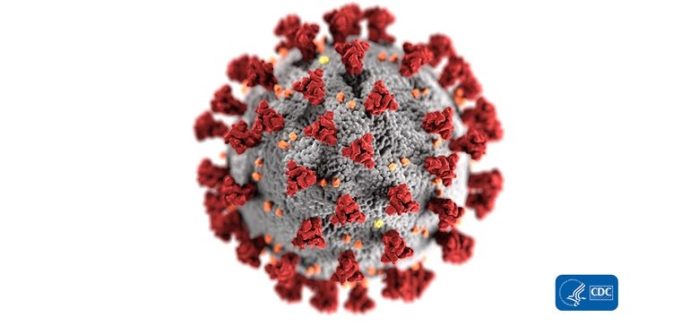
The FEHBlog usually calls the Thursday issue, Thursday miscellany, but today everything is going to be about the COVID-19 situation (picture of the virus above).

The Senate approved the House bill (H.R. 6074) to provide $8.3 billion in funding for the COVID-19 situation by a 96-1 vote.

Healthcare Dive discusses an AHIP policy directive that will lead health plans without delay to cover COVID-19 testing when ordered by a physician with few if any strings attached. Good call.

The Boston Globe’s STATNews discusses potential treatments for COVID-19.

Medical literature published during the Spanish flu pandemic of 1918 includes case reports describing how transfusions of blood products obtained from survivors may have contributed to a 50% reduction in death among severely ill patients. In 1934, a measles outbreak at a Pennsylvania boarding school was halted when serum harvested from the first infected student was used to treat 62 fellow students. Only three of the 62 students developed measles — all mild cases.

More recently, plasma-derived therapy was used to treat patients during outbreaks of Ebola and avian flu. And on Wednesday the Japanese drugmaker Takeda Pharmaceutical Co. said it was developing a new coronavirus drug derived from the blood plasma of people who have recovered from Covid-19. Its approach is based on the idea that antibodies developed by recovered patients might strengthen the immune system of new patients.

That’s hopeful news.

The President will not be speaking at next week’s HIMSS conference after all because HIMSS today announced its decision to cancel the conference due to the COVID-19 situation. The FEHBlog also has had two conferences cancel on him over the past two days.

Here’s a link to a Journal podcast on whether COVID-19 will cause a recession in our country. Wall Street Journal chief economics reporter John Hilsenrath thinks not comparing the current situation to the state of the country after the 9-11 attacks. Check it out — it’s only 20 minutes long.

Midweek update

This afternoon, the House of Representatives passed a funding bill for the COVID-19 situation (H.R. 6074) by a 415-2 vote. Fierce Healthcare breaks down the key elements of H.R. 6074 here.

Federal News Network reports on OPM’s latest “preliminary” COVID-19 guidance. The top line is that “OPM advised agencies to incorporate telework in their continuity of operations plans (COOP). Those emergency plans supersede an agency’s previous telework policies, according to OPM.”

CMS also announced agency actions to address the spread of COVID-19. The top lines are that CMS wants “health care providers across the country to ensure they are implementing their infection control procedures, which they are required to maintain at all times. Additionally, CMS is announcing that, effective immediately and, until further notice, State Survey Agencies and Accrediting Organizations will focus their facility inspections exclusively on issues related to infection control and other serious health and safety threats, like allegations of abuse – beginning with nursing homes and hospitals.”

The Journal podcast explains why this second action is quite necessary.

Healthcare Dive reports that

Uber Health is attempting to address provider gripes with its non-emergency medical transportation platform through a handful of new features that began rolling out late last year, the San Francisco-based rideshare company said Wednesday.

Providers can now select specific pickup and drop-off sites at large hospitals, similar to how the app is used in airports, and people can receive details of their ride like driver name, make and model of car and time of arrival over a landline phone, instead of just text messages.

Uber Health has grown 300% year over year since its launch in 2018 and plans to double the size of its team this year.

Lyft has a similar product.

Tuesday Tidbits

Fierce Healthcare reports on how health insurers are communicating with their members and the public about COVID-19. This is a good idea.

The U.S. Preventive Services Task Force has decided to expand its Hepatitis C screening B level recommendation to all asymptomatic people aged 18 to 79. “This recommendation incorporates new evidence and replaces the 2013 USPSTF recommendation, which recommended screening for HCV infection in persons at high risk for infection and 1-time screening in adults born between 1945 and 1965.” The Task Force took this action because among other factors “Since 2013, the prevalence of HCV infection has increased in younger persons aged 20 to 39 years.” “The USPSTF concluded that broadening the age for HCV screening beyond its previous recommendation will identify infected patients at earlier stages of disease who could greatly benefit from effective treatment before developing complications.” The ACA requires health plans to cover the expansion of this service with no patient cost-sharing when provided in-network beginning January 1, 2022. It occurs to the FEHBlog that there may be practical difficulties distinguishing claims from the original and expanded group members.

Forbes reports that Anthem, a Blue Cross licensee, has closed on its acquisition of behavioral health services provider Beacon Health Options.

Beacon manages mental health, substance abuse and other behavioral health services for more than 36 million people across the U.S. Anthem, which owns Blue Cross and Blue Shield plans in 14 states, didn’t disclose a price it is paying Bain Capital Private Equity and Diamond Castle Holdings for Beacon Health, which is privately held. 

The AP informs us that “The Justice Department said Monday [March 2] that pharmaceutical company Sandoz Inc. will pay a $195 million penalty to resolve criminal charges of conspiring to fix prices and rig bids to stifle competition for generic drugs.” “The price-fixing affected more than $500 million in Sandoz’s generic drug sales, the Justice Department said. It involved drugs used to treat a range of chronic problems and pain conditions including arthritis, hypertension, seizures, various skin conditions and blood clots, according to officials.”

The Department of Health and Human Services announced that its Office for Civl Rights has reached a HIPAA Security Rule settlement with an Ogden Utah medical practice.

“All health care providers, large and small, need to take their HIPAA obligations seriously,” said OCR Director Roger Severino. “The failure to implement basic HIPAA requirements, such as an accurate and thorough risk analysis and risk management plan, continues to be an unacceptable and disturbing trend within the health care industry.” 

Monday Musings

The FEHBlog got to work this morning around 8:30 am. Before he knew it, it was past 9:30 am, the time at which the Supreme Court releases online its orders from the latest conference of the Justices. He clicked on the Adobe Acrobat PDF link to the Court’s order list — no go. Bad PDF. He tried different browsers — same result. Twitter ho and there it was “blue State victory” the Supreme Court had agreed to review the Texas v. U.S. case holding the ACA’s individual mandate unconstitutional. The political comment did not make sense to the FEHBlog because only four Justices need to approve a petition for certiorari / review and there are four Democrat appointees on the Court. However, you need five Justices for a final victory. In any event by then the FEHBlog was able to open the Court’s order list and he found the following on page 3:

CERTIORARI GRANTED

19-840 CALIFORNIA, ET AL. V. TEXAS, ET AL.

19-1019 TEXAS, ET AL. V. CALIFORNIA, ET AL.
The motion of 33 State Hospital Associations for leave to file a brief as amici curiae in No. 19-840 is granted. The petitions for writs of certiorari are granted. The cases are consolidated, and a total of one hour is allotted for oral argument.

Case No. 19-1019??!! The FEHBlog was aware of the unmentioned Case No. 19-841 which is the House of Representative’s cert. petition. But what is Case No. 19-1019? It turns out that on Valentine’s Day the red states had filed a cross motion for review / cert with the Supreme Court. So it appears that both sides won at the first stage of the Supreme Court proceedings.

The Supreme Court will hear oral argument in the cases early in its next Term which begins on the first Monday in October 2020. There is no way the Court will decide the case before the Presidential election day on November 3. Hopefully, to avoid a political kerfuffle at the oral argument, the Court will schedule the argument for later in November.

Meanwhile the federal district court for the Northern District of Texas will hold off reconsidering the unconstitutional individual mandate’s proper degree of severance from the remainder of the massive law. The Fifth Circuit in its December order vacated the lower court’s initial decision that the remainder of the law was inseparable and therefore equally unconstitutional. The FEHBlog’s guess is that the Supreme Court took the case in order to short circuit that remand. But time will tell.

In another surprise, the FEHBlog learned along with the healthcare world today that President Trump will speak on the issue of electronic health record interoperability at the next Monday’s opening day of the monstrous HIMSS conference in Orlando, Florida. Health IT News reports that while former Presidents Clinton and Bush 43 have spoken at this conference, President Trump’s appearance will be the first by a sitting President.

Trump’s speech will touch on various aspects of interoperability, innovation and digital health. If past HIMSS conferences are any indication, his appearance may also be timed with the long-awaited final rules on information blocking and patient access from the Office of the National Coordinator for Health IT.

Another probable topic of discussion will be an update on the Trump Administration’s ongoing response to the COVID-19 coronavirus outbreak.

Again time will tell.

Medicare provides coverage for Americans under age 65 with end stage renal / kidney disease for Americans. However,

Medicare is the secondary payer to group health plans (GHPs) [including FEHB plan] for individuals entitled to Medicare based on ESRD for a coordination period of 30 months regardless of the number of employees and whether the coverage is based on current employment status.  Medicare is secondary to GHP coverage provided through the Consolidated Omnibus Budget Reconciliation Act (COBRA), or a retirement plan.

Given the FEHBP’s role in the early stages of this serious disease, the FEHBlog wanted to point out this Centers for Disease Control page on understanding chronic kidney disease. End stage renal disease is a later stage of chronic kidney disease. The CDC explains that

The two main causes of CKD are diabetes and high blood pressure. About 1 in 3 adults with diabetes and 1 in 5 adults with high blood pressure have CKD.

People may not feel sick or notice any symptoms until CKD is advanced. The only way people find out if they have CKD is through simple blood and urine tests. The blood test checks for creatinine (a waste product) in the blood to see how well the kidneys work. The urine test checks for protein in the urine (an early sign of kidney damage).

Here’s another reason why annual physical exams are important.

Weekend update

The FEHBlog is back inside the Capitol Beltway following a weekend trip. Congress remains in session on Capitol Hill this coming week. Fierce Healthcare reports that “Leaders of the Senate Finance Committee demanded Cigna and Optum produce critical documents over the pricing of insulin, with a subpoena threat looming.”

Here are links for the Centers for Disease Controls’ U.S. situation summaries for influenza and the COVID-19 viruses. Yesterday, Leap Day, the CDC reported regrettably about

three hospitalized patients [in the State of Washington] who have tested presumptive-positive for the virus that causes COVID-19, including one patient who died.

Two of the patients are from a long-term care facility (LTCF) where one is a health care worker. Additional residents and staff of the LTCF who have not yet been tested for COVID-19 are reportedly either ill with respiratory symptoms or hospitalized with pneumonia of unknown cause.

The patient who died, a male in his 50s, was being treated at the same hospital. He was not a resident of the LTCF.

This is the first reported death in the United States from COVID-19, as well as the first reported case in a health care worker and the first possible outbreak in a LTCF. These reports from Washington follow others of community spread in Oregon and two places in California earlier this week. While there is still much to learn about the unfolding situations in California, Oregon and Washington, preliminary information raises the level of concern about the immediate threat for COVID-19 for certain communities in the United States. Most people in the United States will have little immediate risk of exposure to this virus, but some people will be at increased risk depending on their exposures. The greatest risk is to those who have been in close contact with people with COVID-19. People with suspected or confirmed exposure should reach out to their state or local public health department.

ABC News adds today that

Two new cases of coronavirus have been confirmed in Washington state, according to health officials.

The cases include a male in his 60s, who has underlying health conditions but is stable, and another man in 60s with underlying health conditions but is in critical condition.

Both cases are in King County, bringing the total number of confirmed cases in the county to six. One of those cases is a U.S. postal worker, county’s health administration stated.

It appears that this unfortunate Postal worker is the first FEHB member afflicted by the disease. Good luck to all of the COVID-19 and influenza patients. We are lucky to live in a country with excellent healthcare.

TGIF

The FEHBlog is out of town this weekend. He did check the Supreme Court’s order list this afternoon and nothing came out on the U.S. v Texas cases (Nos. 19-840 and 19-841). Next update will be 9:30 am on Monday when all of the orders from today’s conference are posted. We are waiting to learn whether or not the Supreme Court has decided to review the cases at this interim stage.

In other news —

  • PhRMA issued its own list of low value care that doctors should not prescribe / order and health plans should not cover. It’s worth a look.
  • The Employee Benefits Research Institute issued a one page graphic report on 15 years of health savings accountholder behavior.
  • Kaiser Health News posted another level headed story on the COVID-19 virus titled — “Growing Concerns Of Coronavirus Should Spur Plans – Not Panic – In The Workplace.”

Midweek update

The Wall Street Journal recently published a story titled “How the Drug Lobby Lost its Mojo in Washington.” The story also is available on the Journal’s listener friendly podcast. The upshot of the story is that the bipartisan effort to enact a drug pricing law may have legs as they say on Capitol Hill.

“In the past PhRMA had a reputation for rolling the tanks against every proposal irrespective of industry impact,” says PhRMA Chief Executive Officer Stephen Ubl. “We are now taking a more proactive approach of coming to the table to offer policy makers solutions that would address patient affordability challenges.”

PhRMA’s Mr. Ubl says the drug industry could be open to a deal that combines elements of bills from Mr. Grassley, Mrs. Pelosi and House Republicans, saying there “are provisions in all three bills that have bipartisan support and could meaningfully improve affordability for patients without including price controls.” 

In the no good deed goes unpunished department, the Pharmacy Times reports that

Four FDA-approved products that face no competition may increase health care spending by as much as $20.25 billion, according to a new analysis by Vizient Inc.1

The report focused on the Unapproved Drug Initiative (UDI) and its unintended effects on the market. The UDI was an FDA mandate enacted in 2006 that required unapproved drugs in use prior to FDA review of safety and efficacy to be either approved or removed from the market. Once a previously unapproved drug receives FDA approval, the manufacturers of other unapproved versions are asked to remove their products from the market.1

Although the goal of the UDI was to remove potentially dangerous medications from the market, the report authors noted that most of the products are chemically well-defined, reuqire no research and development, and are widely used in health care settings.1

The researchers used the wholesale acquisition cost (WAC) for all calculations and then estimated and used IQVIA data for all US health care product units purchased.1

According to the authors, the UDI has resulted in $2.66 billion in increased costs already incurred, $8.75 billion in estimated cossts awaiting the UDI decision, and $17.59 billion in remaining exclusivity estimated costs.1

Hokey smokes, that’s a big bowl of wrong.

The FEHBlog who is not much of a world traveler was aware of the State Department’s international travel advisories. Today he learned about the Center for Disease Control’s travel health notices. It’s important to check both lists if you plan to travel internationally.

In the healthcare provider competition department, Fierce Healthcare reports that

The Urgent Care Association released its 2019 benchmarking report that showed the total number of centers had reached 9,616 as of November 2019, a 9.6% jump from the previous year.

The number of centers has increased steadily each year from 2013, when the total number of urgent care centers was 6,100. Both urgent care centers and retail clinics have continued to grow across the U.S. as patients look for convenience and affordability, creating competition with traditional hospital and physician practice services.

In the FEHBlog’s view, convenient access to care is great as long as the primary care provider is kept in the loop.

In the good public health news department, the Department of Health and Human Services announced today that

The Health Resources and Services Administration (HRSA) [has] awarded approximately $117 million to expand access to HIV care, treatment, medication, and prevention services. This investment is a critical component of the Administration’s Ending the HIV Epidemic: A Plan for America (EHE) initiative, which aims to reduce the number of new HIV infections in the United States by 90 percent by 2030.

The EHE initiative and today’s awards focus on 48 counties, Washington, D.C., and San Juan, Puerto Rico, geographic areas where more than 50 percent of new HIV diagnoses occurred in 2016 and 2017, as well as the seven states with a substantial rural HIV burden.

Finally, as she is the most influential healthcare policymaker in the U.S. per Modern Healthcare, take a gander at CMS Administrator Seema Verma’s speech to the annual CMS quality conference.

Tuesday Tidbits

Here are takes from the Boston Globe’s StatNews and Fierce Healthcare on today’s Centers for Disease Control (“CDC”) discussion of a U.S. response plan to the COVID-19 disease if worse comes to worse. The StatNews article goes on to state

“Our efforts at containment so far have worked,” said Anne Schuchat, the CDC’s principal deputy director. At the same time, Schuchat said, “we don’t want to delay thinking about these other possibilities.”

Department of Health and Human Services Secretary Alex Azar said the government is committed to “radical transparency” in keeping the public informed about its response and preparedness planning. [Dr. Nancy] Messonnier, he said, was “just previewing for the American people” the strategies that health officials have in their toolbox as additional cases appear.

The CDC also today released their National Diabetes Statistics Report, 2020.

More people are developing type 1 and type 2 diabetes during youth, and racial and ethnic minorities continue to develop type 2 diabetes at higher rates. Likewise, the proportion of older people in our nation is increasing, and older people are more likely to have a chronic disease like diabetes. By addressing diabetes, many other related health problems can be prevented or delayed.

In this regard, Drug Topics reports that

Patient access to portal self-management tools through mobile devices may help significantly improve diabetes care, according to a new study [published in JAMA Network Open].

Patient portals work to enhance communication with the health care team and offer a convenient means to viewing laboratory test results and ordering prescription refills. In chronic conditions such as diabetes, ongoing disease self-management is crucial for optimal patient outcomes, and technology can help further support this.

That’s encouraging.