
Tuesday Tidbits

Tuesday Tidbits

On June 28th, the FEHBlog wrote — “As the FEHBlog and many others expected, the Supreme Court did legalize same sex marriage nationwide last Friday. This decision affects OPM’s rule allowing federal employees residing in the states that were not licensing those marriages to enroll the children of same sex domestic partners in the FEHBP. Children enrolled under this rule will lose their coverage at the end of this year unless their parents marry before then.” Yesterday OPM caught up with the FEHBlog by announcing (as reported in the Washington Post) that effective immediately

agencies and/or retirement systems should no longer add children of same-sex domestic partners to FEHB enrollments as no new children are eligible. Stepchildren that are already covered under an enrollment for plan year 2015, based on a domestic partner certification, remain eligible family members only until the end of the plan year. For plan year 2016 and beyond, couples must be married in order to cover (or continue to cover) stepchildren under their FEHB and FEDVIP enrollment.

So you could have or did read it here first. The Washington Post tries to read more into the announcement but OPM is just enforcing its own rule.

The New York Times reports today that Congressional leaders on both sides of the aisle are trying to fix the Medicare Part B premium mess. To recap, because inflation has been low, most CSRS annuitants will be socked with a big Medicare Part B premium and deductible increase next year simply because their Medicare Part B premiums are withheld from CSRS annuity checks not Social Security checks. (FERS annuitants have their Medicare Part B premiums withheld from their Social Security checks.)  The Times reports that

Medicare actuaries predicted in July that the standard premium for them would rise to $159 a month. The standard premium is now just under $105 a month, the same as in 2013 and 2014.
The actuaries also predicted an increase in the annual deductible — the amount that beneficiaries pay for health care before Medicare begins to pay. They estimated that the deductible would rise to $223 next year, from $147 in 2015.
Seventy national organizations, including AARP, labor unions and trade associations for health insurance companies, sent a letter to congressional leaders last week calling for swift action to “mitigate projected increases in Medicare premiums.”

This is a big bowl of wrong, and the FEHBlog is willing to predict that it will be fixed.  Higher income annuitants will be subjected to higher premiums under a separate federal law that will not be affected by this whirlwind action on Capitol Hill. The Medicare Open Season starts on October 15.

The Wall Street Journal has a fascinating article today on the pricing power of prescription drug manufacturers.

Attention has focused lately on new drugs with eye-popping prices and on a few whose price a new owner abruptly raised several-fold. But what many drug companies rely on for sales growth is a pattern of steady [price] increases, year in and year out, on older medicines [that remain under patent or otherwise lack competition]. Wholesale-price increases for the 30 drugs analyzed by the Journal averaged 76% over the five-year stretch from 2010 through 2014. That was more than eight times general inflation.
For 20 leading global drug companies last year, 80% of growth in net profits stemmed from price increases in the U.S., according to a May report by Credit Suisse.

As the article notes, health benefits coverage helps mask the increases from consumers.
Weekend update

Congress is back at it on Capitol Hill this week, and the Supreme Court joins them as tomorrow is the first Monday in October. 

The FEHBlog forgot to mention on Friday that GEHA has joined Blue Cross FEP in posting its 2016 benefit information.  The FEHBlog expects that other plans will soon be taking the same step.  
The Washington Post reports that a group of 101 economists has written to Congress supporting the 40% excise tax on high cost, employer sponsored coverage.  

The tax on employers isn’t economists’ first choice when thinking about solutions. Many would prefer an individual tax cap on the health insurance exclusion, where the value of health insurance over a certain amount would be taxed as income at the person’s marginal tax rate. But Aaron pointed out how tricky an individual cap would be to design, since health care costs go up as people get older and what people spend on health care can vary by geography. But even though many economists think the Cadillac tax may be a “second-best” solution, they see it as a critical step toward bringing down health care spending.

The excise tax is hideously complicated, and the FEHBlog does not understand how it will control costs. Yes, the excise tax should incent employers to end frill coverage like flexible spending accounts and other benefits not mandated by the ACA, but this is nickel and dime stuff. Although health insurance is mandated by the ACA, health insurance will bear the brunt of the excise tax. The ACA regulators cannot stop themselves from adding new mandates to employer sponsored coverage, like embedding a self only out of pocket limit in other than self and family coverage, which drives up the cost of health insurance closer to the excise tax thresholds.  Congress has to step up to the plate on this one.  The FEHBlog’s suggestion is to tax 1/2 of the premiums on high wage earners – the same rule applicable to small business owners.

The Washington Post included today an interesting interview with the CEO of big pharma manufacturer Novartis.  Take a gander.

TGIF

According to this Wall Street Journal report, the Administration announced this week that the Treasury Department is expected to reach the bottom of its bag of tricks on November 5.  Congress needs to raise the debt limit by that date. Consequently, we have now have two panic dates — November 5 and December 11, which is the date that the current continuing resolution expires. Congress will be back in session next week. Here is a link to The Week in Congress report on this week’s activities on Capitol Hill.

The Wall Street Journal also reports today that momentum is building to repeal the 40% excise tax on high cost, employer sponsored health coverage. In a pleasant surprise, the Hill reports that Congress has passed, and the President will sign, an amendment to the ACA that will limit the small group health insurance pricing rules to groups with no more than 50 employees. Absent that this agreement, the ACA would have boosted the upper threshold to 100 employees. This is a big savings for employers in the 51 to 100 employee group. So there is hope that this crazy excise tax will be repealed.

Following up on yesterday’s post, take a look at this Healthcare Dive article on the disruption that the ICD-10 is likely to cause over time.

Finally and because the FEHBlog is not a Luddite, the FEHBlog was impressed that Walgreens, according to Medcity News, is partnering with MDLive to add a telemedicine feature to its popular app.

Happy New Federal Fiscal Year!

Today is the beginning of the new federal fiscal year 2016. Today also marks the implementation of both the ICD-10 coding set for electronic health plan claims and the latest Medicare reimbursement scheme for hospitals and other facilities.

Modern Healthcare reports all quiet on the ICD-10 front. The FEHBlog expects the crash to occur in a few weeks, but he would be happy if it didn’t. He does not expect any sizable bang for the buck from this sea change.

Also here’s a heads up to the FEHBlog’s readers who are FEHB Program enrollees. OPM is readying a family member eligibility audit for launch. HMS Employer Solutions will be conducting the audit on OPM’s behalf. Here are links to a recent benefit administration letter and Fast Facts on the new program.

Rate charts

Yesterday I received comments that the link on opm.gov to the 2016 fee for service plan / non-postal rate chart was broken so the FEHBlog’s own link to the chart.  The FEHBlog just received similar comments about the other rate charges so here they are

Last year there was a big problem with the Postal rates posted on these charts. The FEHBlog has confirmed with his Postal Service union amigos that the published 2016 Postal rates are accurate.  

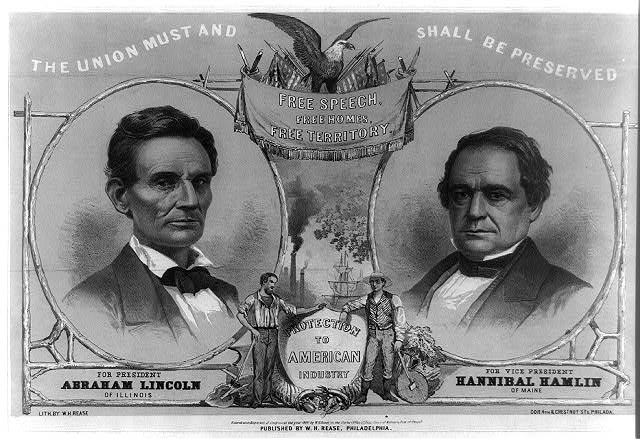
The Union is Preserved

The Washington Post reports that both Houses of Congress have approved a continuing resolution funding the federal government through December 11, 2015.

If you are an FEHB Program enrollee, check your plan’s website for information about 2016 benefit changes. Blue Cross FEP was first out of the box on that front.

The premium announcement

Here are links to the Washington Post, Federal Times, Govexec, and Business Insurance reports  on the OPM announcement of 2016 FEHBP premiums made early this afternoon.

The FEHBlog has received a few comments from readers who are dismayed over the fact that the enrollee contribution for the new self plus one coverage is more than the enrollee contribution for self plus family coverage in certain plans. There is no such thing as a good surprise. The Washington Post advises that

[E]nrollees should check premiums carefully before electing self plus one, officials said. While the total premium costs are capped at the amount for family enrollments, because of the way the premium sharing formula works, in about 5 percent of plans the enrollee share for a self plus one enrollment will be higher than that for a family enrollment.  

The Business Insurance article notes that

Escalating prescription drug costs, as has been the case for many private-sector employers, are a key factor in the sharp rise in premiums.  “One contributing factor to the somewhat higher FEHB premium increase than in the past several years is an uptick in the growth of drug costs. Drug costs are a much larger factor for the FEHB compared to most other employer-sponsored programs because annuitants, for whom drugs are the majority of benefits, are included in the FEHB risk pool. Drugs represent 26.5% of program costs versus 10% for a typical employer,” OPM said in a statement.

FEHBlog readers should know that rising drug costs are a real problem for all health plans inside and outside the FEHBP. The major actuarial consulting firm Milliman reports that “Prescription drug costs spiked significantly, growing by 13.6% from 2014 to 2015.” However, pooling employees and annuitant medical costs together is a saving grace of the FEHBP.  The FEHBP’s percentage of drug benefit costs in relation to total costs would be in line with other employer plans if it weren’t for the fact that Medicare pays the bulk of hospital costs for Medicare eligible FEHBP annuitants.

Non-postal FFS plan rates

OPM’s website must be hiccoughing as the FEHBlog is getting comments from clients and readers that the fee for service plan non-postal rates link does not work on OPM.gov. The FEHBlog was able to download that chart. Here is a better link.