Weekend Update

Weekend Update

Thanks to ACK15 for sharing their work on Unsplash.

From Capitol Hill, the House of Representatives and the Senate will be in session this week for Committee business and floor voting. Of note, the Senate will continue its voting process on the Postal Reform Act of 2022 (H.R. 3076) at 5:30 pm ET tomorrow. The continuing resolution funding the the federal government expires after 11:59 pm on Friday March 11.

The Wall Street Journal notes “House Democrats set to be in Philadelphia starting Wednesday for a long-planned retreat, negotiators need to make progress quickly.” The Journal’s article adds “Some aides and lawmakers of both parties said that the chances of passing an omnibus spending measure this week had increased, in part because a fiscal 2022 measure would include financing for Ukraine and Eastern European allies and give the military flexibility for any related needs.”

From the Omicron front —

  • The New York Times reports on the difficulties encountered in the distributing the Evusheld antibiotic treatment that shields immunocompromised Americans who cannot receive a Covid vaccination. According to the article, immunocompromised Americans represent 3% of the population.
  • The Wall Street Journal informs us

Novavax Inc.’s long-awaited Covid-19 vaccine is moving toward U.S. authorization after the company said it resolved manufacturing problems that had held up its application. 

Clearance in the U.S. isn’t imminent because the Food and Drug Administration must sort through a large amount of study data from several countries, a person familiar with the matter said. A decision is getting closer, however, since Novavax formally submitted an authorization request in late January.

If the shot is rolled out in the U.S., it could boost vaccination efforts that have flagged among the hesitant, according to Novavax and doctors.

  • The Journal also tells us

Vaccination campaigns have lagged behind in much of the developing world, as many countries struggle to distribute shots outside major urban areas. In Asia, countries like India, Indonesia and the Philippines have fully vaccinated half their populations. That is higher than the 13% of people living in Africa who are vaccinated, with 4% immunized in Nigeria, the continent’s most populous country. Latin America has done better. Many countries, including Brazil and Peru, have vaccinated more than 70% of their people.

Natural immunity, which refers to antibodies acquired through infection, was widespread in Indonesia when Omicron arrived. One study from October to December of roughly 20,000 Indonesians found that 74% of unvaccinated Indonesians had protective antibodies, according to Pandu Riono, a University of Indonesia epidemiologist who worked with government researchers on the study.

Based in part on the results, Mr. Riono and his colleagues estimate that 70% of Indonesians had been infected with Covid-19 as of December, far higher than the 34% of Americans who had been infected by then, according to a survey by the U.S. Centers for Disease Control and Prevention.

From the federal employment front, Federal News Network offers a transcript of an interview between Federal News Network reporter Tom Temin and American University professor Bob Tobias about the demographic characteristics of federal employees. For example, “74% of the workforce, federal workforce is 40 or older, versus 54% in the private sector.” Unquestionably, the experience of the federal employee population benefits all of us, but older workforce also impacts FEHB premiums.

From the telehealth front, Fierce Healthcare reports

Striking the balance between virtual and in-person care is a key trend to watch heading into the rest of 2022, according to a new survey from Evernorth.

Ipsos surveyed 3,000 consumers, 575 human resources professionals and 58 health plan leaders on behalf on the Cigna subsidiary. The report underscores patients’ growing comfort with virtual care and telemedicine in the wake of COVID-19, with 75% saying they agree more care will be provided virtually; 57% of those surveyed said they used virtual care over the last year.

However, consumers are not enthusiastic about virtual options in all settings, according to the survey. While 35% of those surveyed said they were satisfied with their experience in virtual primary care, just 11% said the same about behavioral health care. Nineteen percent said they were satisfied with virtual care for specialty services, while 5% said the same for physical therapy and 6% for nutrition and diet services.

While satisfaction with virtual behavioral health care was mixed in the survey, a growing number of people are seeking behavioral health services in virtual settings.

Boom!

From the strategery front, Becker’s ASC News discusses the 2022 growth strategies of Optum’s three business divisions:

  • Optum Health, the healthcare provider division which includes physician groups and ambulatory surgery centers
  • Optum Insight, which houses the data analytics platforms designed to connect clinical, administrative and financial data, and
  • Optum Rx, a pharmacy benefits and care services business.
Friday Stats and More

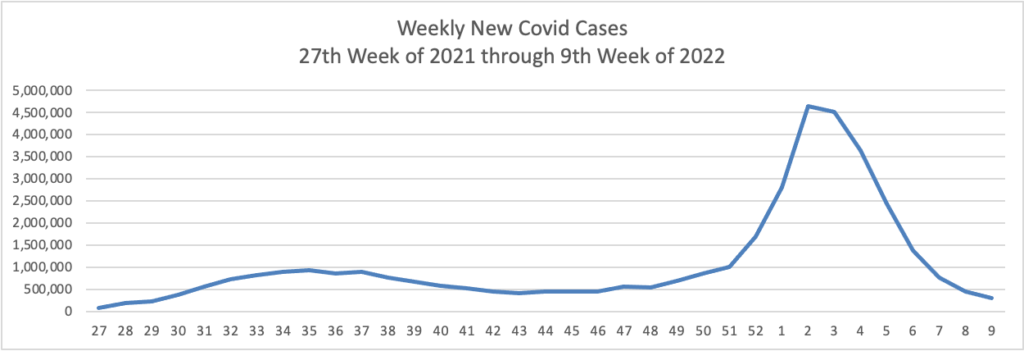
Based on the Centers for Disease Control’s Covid Data Tracker and using Thursday as the first day of the week, here is the FEHBlog’s latest weekly chart of new Covid cases

The American Hospital Association informs us

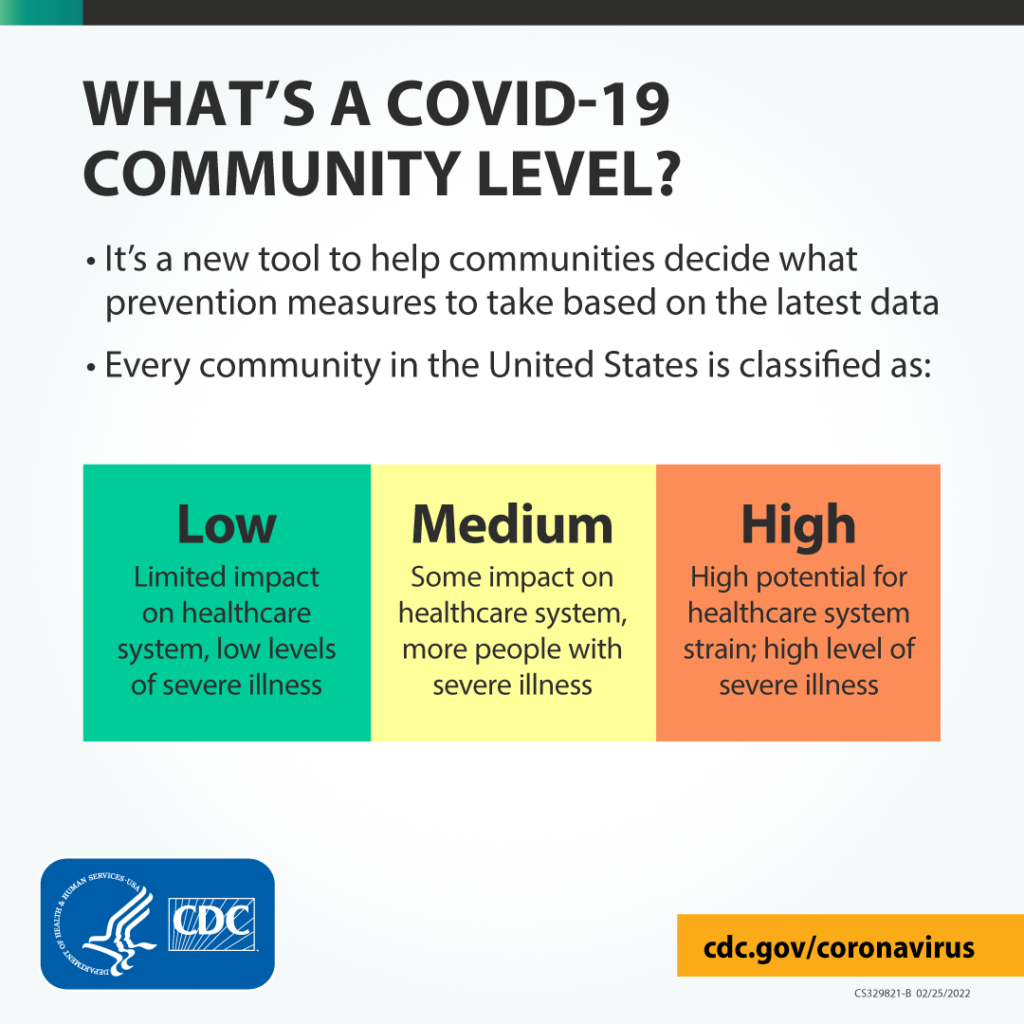
The Centers for Disease Control and Prevention yesterday said more than 90% of the U.S. population now lives in a county with a low or medium COVID-19 Community Level, a new CDC measure for communities considering whether to require face coverings in public indoor settings. The agency plans to update the county data every Thursday going forward.

Becker’s Hospital Review adds

Cases of the highly transmissible omicron subvariant appear to be doubling every week in the U.S., but there isn’t clear evidence BA.2 will cause another major surge, epidemiologist Michael Osterholm, PhD, told Becker’s March 2. * * *

Cases will likely continue to drop over time, Dr. Osterholm said, adding he is hopeful cases will reach or fall below levels not seen since last June, when the nation’s new case average fell below 12,000. 

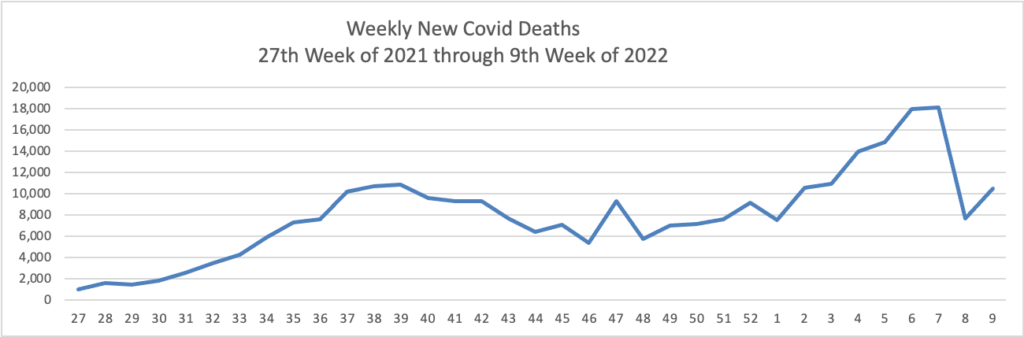
It’s worth noting that the FEHBlog weekly chart of new cases found above begins with the low point Dr. Osterholm references, new cases under 12,000 and new deaths under 1,000.

Here’s the FEHBlog’s weekly chart of new COVID deaths

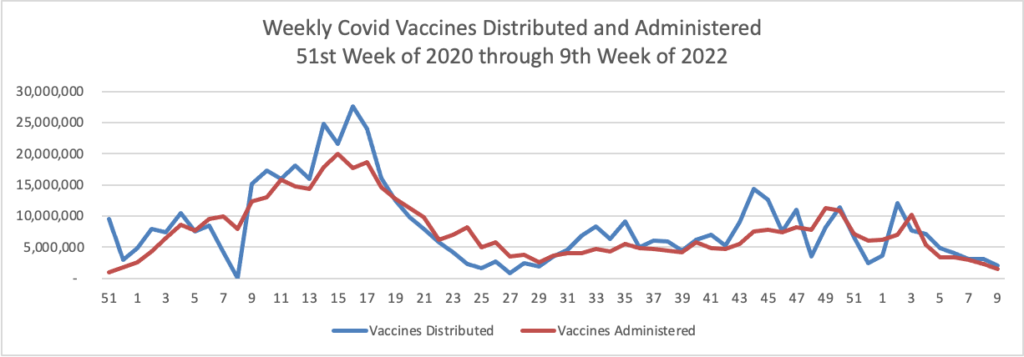
Here’s the FEHBlog’s weekly chart of Covid vaccinations distributed and administered from the 51st week of 2020 through the 9th week of 2022

From the Covid vaccine front, Bloomberg informs us

Parents still hesitating to get their kids vaccinated may be reassured by reporting that shows Covid inoculations protected children and teenagers from severe disease, even after the rise of the immune-evasive omicron variant.

Omicron came to the U.S. late last year armed with some 30 mutations in its spike protein that make it less recognizable to immune antibodies. Afterward, vaccine protection against infection and urgent care visits declined for 5- to 17-year-olds who’d received primary inoculations, according to U.S. Centers for Disease Control and Prevention data released Tuesday. However, vaccinated children and teens were still less likely to get infected than their unvaccinated peers, the agency said in its Morbidity and Mortality Weekly Report.

The CDC released recommendations last week saying that schools in areas of low and moderate risk can drop indoor mask mandates, the first update to its guidance on the topic since July — and the new findings may add confidence in moves to relax social  measures as infections fall across the U.S. But many parents have been slow to get shots for their kids since the vaccine was recommended in November, and vaccinations among kids ages 5 to 11 have fallen to their lowest levels since the shots were first cleared.

While kids generally don’t get as sick as adults from the coronavirus, clearing a vaccine for elementary school-age children marked a major milestone in the pandemic. It provided peace of mind for many concerned parents, allowing kids to resume activities that had been on hold since the virus first began spreading in the U.S.

Pfizer and BioNTech’s is the only shot that has been authorized for use in U.S. children and teens. The CDC looked at vaccine protection against infection, urgent care visits, hospitalization, and death among vaccinated children ages 5 through 11 and adolescents ages 12 through 17 before and during the omicron surge.

That’s solid information for health plans to share with their members.

Here’s a link to the CDC’s Weekly Review of its Covid statistics. Beckers Hospital Review saves you time by breaking down those stats at this link.

The CDC’s weekly FluView tells us “Sporadic influenza activity continues across the country. In some areas, influenza activity is increasing.”

From Capitol Hill, Roll Call informs us

Negotiations over an omnibus spending package remained far from complete Thursday as the late arrival of a White House supplemental funding request threw a wrench in the talks. 

The White House on Thursday formally asked lawmakers to attach to the fiscal 2022 spending package $32.5 billion in emergency funds for government response efforts to the ongoing COVID-19 pandemic and Russian war with Ukraine. 

The long-awaited details from the administration on its justification for the extra spending, on top of the roughly $1.5 trillion expected to be appropriated for the current fiscal year, come barely a week before stopgap funding expires March 11. 

To pass the omnibus before that deadline, Senate Appropriations ranking member Richard C. Shelby, R-Ala., said lawmakers need to get a final deal by Tuesday — and even that may be too late to avoid the need for another short-term continuing resolution. 

“We made good progress this week. But we make progress and we’re stalled,” he said. “And we can’t afford to stall this weekend. If we do, we’re headed for a CR.”

From the SOTU front, AHIP released AHIP President Matt Eyles’s comments on the President’s address.

From the health equity front, Mercer Consulting released a report finding a surprising gender gap in employer-sponsored health benefits continues to exist.

Thursday Miscellany

Photo by Josh Mills on Unsplash

From Capitol Hill, the Senate has adjourned until Monday March 7 after setting another cloture vote on the Postal Reform Act of 2022 (HR 3076) for Monday at 5:30 pm. While the FEHBlog is not a Senate procedure expert, it appears that another cloture vote is required because a minor Senate amendment was filed after the first cloture vote. Postal reform must be getting real because the Wall Street Journal posted an account of the decade-long effort to pass this legislation today.

From the Omicron front, the FEHBlog’s favorite part of the President’s new strategy was explained by the White House Covid czar yesterday:

Pfizer’s pill {Paxlovid] is a gamechanger — 90 percent effective at keeping people out of the hospital.

We collaborated with Pfizer to accelerate development of the pill.  And we’ve ordered 20 million courses.

As the President announced last night, Pfizer worked overtime to further accelerate delivery.  This month alone — the month of March — we’ll have 1 million of these treatment courses available.  And in April, that number will more than double.

To ensure these lifesaving treatments are easily accessible, the President’s Plan launches a new “Test to Treat” initiative to provide individuals access to testing and treatment for free, all in one stop. 

Hundreds of one-stop sites will open across the country this month, located at local pharmacy clinics, community health centers, long-term care facilities, and veterans’ health centers.

Marketwatch adds today that “CVS Health Corp., the Walgreens Boots Alliance Inc., and Walmart Inc. said they will participate in the test-to-treat initiative, a new program that allows someone who has tested positive for the virus to get antiviral pills during the same visit at no cost.”

Covid treatment costs were astronomical because care principally was given in hospitals and other healthcare facilities, creating a major burden on the healthcare system. Facilitating the use of Flonase for Covid will avoid the vast majority of those hospitalizations, thereby lowering healthcare costs.

Speaking of testing, the Wall Street Journal reports that

Manufacturers are developing new types of at-home tests, including for flu and strep throat, aimed at consumers who are increasingly monitoring and managing their own health through fitness apps and smartwatches.

Boulder, Colo.-based fertility company MFB Fertility Inc. received clearance from the U.S. Food and Drug Administration in February 2020 for its Proov test, designed to help women measure their hormone levels and to know when in a given month they are most likely to become pregnant. A typical kit includes 20 testing strips, allowing a woman to test daily, which the company said would be tough to achieve through visits to a doctor’s office.

Amy Beckley, the company’s chief executive, said the rise of at-home Covid-19 tests over the past year has made it much easier for people to understand her product.

“All of a sudden, home diagnostics and home testing became a thing,” she said.

Mobihealth News reported last June

The U.S. Air Force has inked a $1.3 million deal with MFB Fertility in order to provide military members and their partners the former’s home fertility tests.

The Air Force’s AFWERX office will invest in Proov, an at-home ovulation test with FDA clearance. The test works by measuring Pregnanediol Glucuronide (PdG), the urine metabolite of progesterone, which is released by the ovary after ovulation. High levels of PdG over multiple days can confirm that successful ovulation took place.

The contract will provide free Proov kits to Air Force couples upon request and connect them to fertility specialists.

Two cool innovations.

From the healthcare policy front —

  • The White House released a fact sheet on steps underway to address the Nation’s opioid epidemic.
  • The Associated Press reports on the President’s mental healthcare policy proposals made in Tuesday’s State of the Union address. For example, under the President’s plan, “Health insurance plans would have to cover three mental health visits a year at no added cost to patients.” I suggest that the Administration consider the fact that most employers offer employee assistance plans that already offer two or three free mental health therapy visits. The overcomplicated federal mental health parity law fails to look at the big picture.

From the diabetes front —

  • The AMA offers six tips for screening patients for pre-diabetes. Many of the tips also could be applied by health plan case managers and coaches.
  • The American Diabetes Association delves into the relationship between diabetes and kidney disease.

From the litigation front, Reuters reports

The Sackler family owners of Purdue Pharma LP reached a deal with a group of attorneys general to pay up to $6 billion in cash to resolve widespread litigation alleging that they fueled the U.S. opioid epidemic, bringing the OxyContin maker closer to exiting bankruptcy.

The attorneys general for eight states and the District of Columbia, who had blocked a previous settlement that included a $4.3 billion cash payment, announced the deal after weeks of mediation with the Sacklers.

The family agreed to pay at least $5.5 billion in cash, which will be used for abating a crisis that has led to nearly 500,000 U.S. opioid overdose deaths over two decades.

The value of the deal could grow as the family members sell additional assets.

U.S. Bankruptcy Judge Robert Drain must approve the deal, which protects the Sacklers from civil lawsuits. Purdue requested a March 9 hearing for Drain to review the agreement.

From the Rx coverage front, Biopharma Dive reports

Civica is making plans to offer three versions of insulin that can be sold at dramatically lower prices than today’s alternatives, targeting a need highlighted by President Joe Biden during this week’s State of the Union Address.

The nonprofit company, created by hospital systems and philanthropies to address drug shortages, said Wednesday it will recommend pricing of no more than $30 for the vials it produces. Name-brand versions can currently cost 10 times that amount at cash prices.

Civica announced an ambitious timeline, projecting that the first product — designed to be interchangeable with Sanofi’s Lantus — would be available as soon as early 2024. The company also aims to manufacture cheaper versions of Eli Lilly’s Humalog and Novo Nordisk’s Novolog, in both vials and pre-filled pens.

Also the Institute for Clinical and Economic Review (“ICER”) announced

it will assess the comparative clinical effectiveness and value of subcutaneous semaglutide (Wegovy, Novo Nordisk), phentermine / topiramate (Qsymia, Vivus Pharmaceuticals), liraglutide (Saxenda, Novo Nordisk), and naltrexone/bupropion (Contrave, Currax Pharma) for the treatment of obesity. 

The assessment will be publicly discussed during a meeting of the New England Comparative Effectiveness Public Advisory Council (New England CEPAC) in September 2022, where the independent evidence review panel will deliberate and vote on evidence presented in ICER’s report.

ICER’s website provides timelines of key posting dates and public comment periods for this assessment.

Midweek Update

From Capitol Hill, the Senate press gallery informs us “The Senate will convene Thursday at 10:00 am and resume the postal reform bill, which ML Schumer filed cloture on this evening.” It’s worth noting that yesterday “Amendment SA 4955 [was] proposed by Senator Schumer for Senator Peters. (consideration: CR S872; text: CR S872) To modify the deadline for the initial report on the operations and financial condition of the United States Postal Service.” The FEHBlog did not expect any amendments to be offered. Nevertheless, the bill appears on track to passage soon.

From the State of the Union address department

  • Healthcare Dive discusses the President’s healthcare policy proposals.
  • The Society for Human Resources Management discusses the President’s employment policy proposals.

From the Omicron front, the Administration announced a new Covid strategy today. Beckers Hospital Review lists eight highlights from the new strategy. The Wall Street Journal adds

The plan underscores the administration’s shifting focus from responding to the pandemic crisis to a new normal that focuses on managing the disease. But the road map, the result of weeks of work with advisers, state leaders and public health experts, relies heavily on Congress approving billions of dollars in new Covid-19 relief funding.

In other healthcare policy news

  • EHR Intelligence tells us

The Sequoia Project’s Emergency Preparedness Information Workgroup (EPIW) has published a free whitepaper that outlines public health recommendations based on lessons learned from COVID-19 response efforts.

The workgroup of public health, emergency preparedness, and response experts met over several months to create the Pandemic Response Insights and Recommendations whitepaper.

EPIW members created a SWOT (strengths, weaknesses, opportunities, threats) analysis of the COVID-19 response. They then consolidated this data into 17 recommendations to help local, state, and federal stakeholders prepare for a more coordinated national response to the next public health emergency.

  • The Food and Drug Administration issued “three final guidances to industry regarding cancer clinical trials that parallel the goals of President Biden’s recently announced effort to renew and build upon his 2016 Cancer Moonshot initiative to facilitate continued advancement in cancer prevention, detection, research, and patient care.”
  • The HHS Office for Civil Rights published guidance on gender-affirming care, civil rights, and patient privacy. The underlying policy as explained in the guidance is as follows:

The Department of Health & Human Services (HHS) stands with transgender and gender nonconforming youth and their families—and the significant majority of expert medical associations—in unequivocally stating that gender affirming care for minors, when medically appropriate and necessary, improves their physical and mental health. Attempts to restrict, challenge, or falsely characterize this potentially lifesaving care as abuse is dangerous. Such attempts block parents from making critical health care decisions for their children, create a chilling effect on health care providers who are necessary to provide care for these youth, and ultimately negatively impact the health and well-being of transgender and gender nonconforming youth.

On the Rx coverage front, Beckers Hospital Review informs us “Annual spending on pharmaceutical products has skyrocketed since 2010, though out-of-pocket costs have fallen, according to a Feb. 28 report from ValuePenguin.”

From the truth is stranger than fiction department, Govexec reports

The panel tasked with enforcing [federal] civil service protections has regained a governing quorum after the Senate approved two of President Biden’s three nominees on Tuesday, putting an end to five years of dysfunction. 

Both Tristan Leavitt and Raymond Limon won unanimous support in Senate voice votes, giving the Merit Systems Protection Board confirmed members of its central panel for the first time since 2019. The board needs at least two of its three slots filled to have a quorum and hear appeals, which has not occurred since January 2017. Cathy Harris, Biden’s third and final nominee for the board, is still awaiting a vote in the Senate. 

The quasi-judicial agency has a backlog of more than 3,500 cases pending before its central board, which the nominees have pledged to quickly address through an expedited process. Regional administrative judges at MSPB have continued to hear cases of alleged violations of prohibited personnel practices by federal agencies, but agencies or individuals that have sought further appeal to the board’s presidentially appointed, Senate-confirmed central panel have seen their causes languish—in some instances, for years.  

Tuesday’s Tidbits

From Capitol Hill, the Senate approved a motion to proceed to a vote on the Postal Reform Act of 2022 (HR 3076) by a voice vote. This vote suggests to the FEHBlog that the Senate will approve the bill this week.

Roll Call discusses the status of the Consolidated Appropriations Act for Fiscal Year 2022. Congress has a week and half to finish cobbling together this law before it needs a fourth continuing resolution.

From the Omicron vaccine front, the American Hospital Association tells us

The Centers for Disease Control and Prevention today released a study examining the effectiveness of the Pfizer COVID-19 vaccine at preventing emergency department and urgent care visits by children aged 5-11 and 12-17. Among children aged 5-11, effectiveness 14-67 days after dose 2 (the longest interval in this age group) was 46%, significantly lower than overall estimates for adolescents aged 12-17. However, most encounters among children aged 5-11 occurred during omicron predominance, when the vaccine’s effectiveness also significantly declined for adolescents, suggesting that the lower effectiveness for children aged 5-11 was likely driven by the predominant variant rather than differences in effectiveness across age groups, the authors said. During omicron predominance, there was no evidence 2 doses protected adolescents after 150 days; however, a booster dose restored effectiveness to 81% in this age group, the authors said.

Another study released today by the CDC looks at reactions to the Pfizer booster in adolescents aged 12-17, which were generally mild to moderate and transient. Myocarditis was less frequently reported after a booster dose than a second primary dose, the authors said.

From the Omicron masking and testing front —

Federal agencies can relax their mask and testing protocols in the wake of new public health guidance. 

The Centers for Disease Control and Prevention’s released on Friday a “new framework” that “moves beyond just looking at cases and test positivity to evaluate factors that reflect the severity of disease, including hospitalizations and hospital capacity, and helps to determine whether the level of COVID-19 and severe disease are low, medium, or high in a community,” Dr. Rochelle Walensky, the agency’s director, said on a call with reporters. Guidance from the Biden administration’s Safer Federal Workforce Task Force on Monday reflects this new framework. 

“This document provides federal agencies with initial implementation guidance they should follow in utilizing the CDC’s COVID-19 Community Levels to determine the appropriate mask-wearing and screening testing requirements for each federal facility at a given time,” said the guidance. 

Nearly half of the 500 million free COVID-19 tests the Biden administration recently made available to the public still have not been claimed as virus cases plummet and people feel less urgency to test.

Wild demand swings have been a subplot in the pandemic, from vaccines to hand sanitizer, along with tests. On the first day of the White House test giveaway in January, COVIDtests.gov received over 45 million orders. Now officials say fewer than 100,000 orders a day are coming in for the packages of four free rapid tests per household, delivered by the U.S. Postal Service.

It would be a good idea for the federal government to tell health plans to refer their members to the federal site if they are interested in receiving test kits.

To sum it up from the Omicron front, check out the lead article from the NIH Director’s blog titled “How Covid immunity holds up over time.”

From the tidbits department —

  • The CDC discusses the unholy connection between diabetes and chronic kidney disease.
  • Fierce Healthcare discusses telehealth provider Amwell’s fourth quarter results.
  • Beckers Payer Issues notes

UnitedHealth Group is beginning to act on its November promise to shore up its sustainability efforts by halting its mailing paper of prior authorization and clinical decisions to providers, according to a Feb. 25 post on the California Medical Association website. 

The first move — a nationwide shift to digital clinical decision letters — is effective March 4 for most UnitedHealthcare Medicare Advantage and commercial plan members. Instead of receiving a mail appeal decision, providers can view the decisions digitally immediately after they are made. 

President Joe Biden is calling for more federal employees to return to the office, saying “significant progress” fighting the COVID-19 pandemic has made it safer to do so.

Ahead of his State of the Union address, Biden issued a letter Tuesday thanking the federal workforce for its “tireless work this past year” confronting the pandemic and leading economic recovery efforts.

A return to the office, however, doesn’t necessarily mean a return to the pre-pandemic status quo.

Biden urged agencies to “build on the innovations and technologies that we put to work serving the American people throughout the pandemic, making our government more efficient, resilient, and effective.”

Good luck, OPM.

Monday Roundup

Photo by Sven Read on Unsplash

To the FEHBlog’s dismay, the Labor Department’s Employee Benefits Security Administration announced this evening that the federal government is accepting, at least for the time being, Judge Kernodle’s interpretation of the No Surprises Act discussed in yesterday’s Weekend Update post.

The Departments [/ the ACA regulators] are reviewing the court’s decision and considering next steps. This announcement serves as a notification to health care providers, emergency facilities, providers of air ambulance services, group health plans, health insurance issuers, Federal Employees Health Benefits (FEHB) Carriers (“Disputing Parties”), and certified IDR entities of steps the Departments are taking to conform to the court’s order. Specifically, the Departments will:

— Effective immediately, withdraw guidance documents that are based on, or that refer to, the portions of the Rule that the court invalidated. Once these documents have been updated to conform with the court’s order, we will promptly repost the updated documents

— Provide training on the revised guidance for certified IDR entities and Disputing Parties. This training will be offered through webinars and roundtable discussions, and will occur after the above-referenced documents are updated.

— Open the IDR process for submissions through the IDR Portal. For disputes for which the open negotiation period has expired, the Departments will permit submission of a notice of initiation of the IDR process within 15 business days following the opening of the IDR Portal.

The Departments had the option of filing a notice of appeal and asking the court to stay the case pending the appeal’s outcome. The Departments thought this favorable outcome is unlikely. But, in the timeless words of Kenny Rogers, you have to know when to hold them and when to fold them.

The Senate Press Gallery reports this evening the Senate voted 74-20 to invoke cloture on the Postal Reform Act of 2022, H.R. 3076, which means that the bill will be called up on the Senate floor later this week for a final vote. That vote requires a simple majority for passage.

Earlier in the day, the Congressional Budget Office released a supplemental letter on HR 3076 in which

CBO addresses the following questions concerning the agency’s assessment of the budgetary effects of H.R. 3076, the Postal Service Reform Act of 2022, which CBO transmitted on February 4, 2022.

— What are the budgetary effects and costs to the Medicare program of H.R. 3076 over the next 20 years?

— What is the effect of the legislation on the Medicare Hospital Insurance Trust Fund?

— What is the effect on Medicare premiums in Part B and Part D?

In health equity news, Kaiser Permanente announced

Colorectal cancer disparities between Black and white adults were eliminated among Kaiser Permanente members in Northern California after the health care organization instituted a regionwide, structured colorectal cancer screening program, new research shows.

“Our study found that organized screening works to improve colorectal cancer outcomes for all of our members,” said the study’s senior author Theodore R. Levin, MD, a research scientist at the Kaiser Permanente Division of Research and a gastroenterologist with The Permanente Medical Group. “I knew our program had helped to reduce disparities, but I was surprised by the magnitude and the rate of improvement. It exceeded my expectations.”

The article provides details on a structured program. Bravo KP.

From the telehealth front, Healthcare IT News reports

Teladoc Health announced this week that it was partnering with Amazon to launch voice-activated virtual care on Alexa-supported Echo devices.  

According to the companies, U.S. customers around the country can connect with a Teladoc provider via audio at any time for general medical needs.  

“By introducing and integrating our virtual-first care experience with Echo devices, we are providing an innovative and convenient way for users to connect with a doctor,” Donna Boyer, chief product officer at Teladoc Health, said in a statement.

“We are meeting consumers where they are, to continue to deliver value and high-quality care to members,” Boyer said.   

From the looking forward department, ICD 10 Monitor tells us

On Feb. 11, the World Health Organization (WHO) released ICD-11 2022. This is the official version of the 11th revision of the International Classification of Diseases (ICD) coding set that WHO member countries will be implementing worldwide. In fact, according to the WHO release announcement, 35 countries are already using ICD-11.

In addressing implementation timeframes, the WHO anticipates that * * * countries with highly sophisticated information systems, where earlier versions of ICD are already in use [such as the U.S.], may require 4 -5 years to transition to ICD-11. * * *

So, when will the U.S. replace ICD-10-CM and begin using a version of ICD-11 for reporting on healthcare claims? Well, we don’t know yet. But this release of the official ICD-11 is sure to spur activity in this respect.

In September 2021, the National Committee on Vital and Health Statistics (NCVHS) issued recommendations to the Secretary of the U.S. Department of Health and Human Services (HHS) advising on a research agenda to evaluate the use of ICD-11 in the U.S. This release of the official ICD-11 2022 version from the WHO is sure to increase research activity.

So, while the timeline for a U.S. transition to ICD-11 is still uncertain, it’s clear that planning for the transition to ICD-11 is underway.

The FEHBlog, whose crystal ball is not the clearest, predicts 2029 as the over/under year for ICD-11 implementation.

Weekend Update

Congress is back in session this week for Committee business and floor voting. The Senate calendar notes the cloture motion on the Postal Reform Act of 2022 ripens tomorrow February 28 at 5:30 pm. This means that the Senate can hold a cloture vote on the bill later that evening or the following business day. A cloture vote requires 60 votes in favor.

We are eleven days away from the end of the current continuing resolution funding the federal government. That deadline will grab Congress’s attention.

The President will give his State of the Union address on Tuesday, March 1.

From the No Surprises Act (NSA) front, Prof. Katie Keith breaks down the Texas Medical Association decision rendered last Wednesday in the federal district court for the Eastern District of Texas. At stake were the provisions in the second interim final rule implementing the NSA that the independent dispute resolution entity acting as the arbitrator to resolve payment disputes between health plans and certain out-of-network provider accept the plan’s statutory payment known as the Qualifying Payment Amount “unless a party submits credible information that clearly demonstrates that the QPA is materially different from the appropriate out-of-network rate.”

On February 23, Judge Kernodle * * * issued a decision and final judgment vacating provisions of the interim final rule related to the “rebuttable presumption.” He held that the plaintiffs had standing to challenge the rule, that the rule is inconsistent with the NSA, that the federal agencies should not have bypassed notice and comment procedures, and that the challenged provisions should be vacated and remanded to the agencies for revisions. The vacated provisions, listed here, are:

— The requirement that the IDR entity select the offer closest to the QPA unless there is credible information to demonstrate that this is not the appropriate rate;

— The requirement that “additional information” clearly demonstrate that the QPA is materially different from the out-of-network rate;

— The definition of “material difference;”

— All four examples on how IDR entities should choose between competing offers; and

— The requirement that the IDR entity explain why it chose an offer not closest to the QPA.

As you can see, this is a relatively surgical approach; these are the only provisions in the rule that have been invalidated. But these are important provisions designed to ensure a well-functioning, predictable IDR process and help hold down health care costs and premiums.

Professor Keith adds

Judge Kernodle rejected [the federal government’s] requests for limited relief. Instead, he vacated the challenged provisions on a nationwide basis with a sweeping assertion that “there is nothing the Departments can do on remand to rehabilitate or justify the challenged portions of the Rule as written. * * *

From here, DOJ will presumably appeal Judge Kernodle’s decision to the Fifth Circuit and perhaps request a stay while the case is on appeal. If a stay is not granted, the court’s decision remains in effect, meaning the IDR provisions noted above are unlawful and set aside. The IDR process will still be available and is expected to begin in earnest in March 2022. But the ruling increases the risk that some providers will try to leverage the federal IDR process to obtain higher rates than are warranted, potentially leading to higher health care costs and premiums. 

What’s more,

Federal officials have already indicated that they will issue a final IDR rule by May 2022 and will likely be reviewing Judge Kernodle’s decision with an eye towards whether the final rule can include provisions that are similar to those in the interim final rule—as well as whether to rescind or replace the challenged provisions. The final rule will likely affect the timeline of current litigation and perhaps trigger future lawsuits.

It’s not a pretty picture for health plans at this point.

From the Omicron front, the Wall Street Journal discusses the steps that government agencies and public health organizations are taking to make rapid at home Covid tests available and understandable to the most vulnerable of us, “including low-income areas, rural parts of the country and some communities of color.”

From the behavior health care front, Health Payer Intelligence tells us

AHIP called on providers and policymakers to join payers in their efforts to integrate behavioral healthcare and physical healthcare in an issue brief on the subject.

The payer organization laid out three critical strategies for integrating behavioral healthcare. 

The collaborative care model (CoCM) uses care management to facilitate patient-centered care, and many of its services are recognized and reimbursed by CMS. 

The expanded and integrated care management model uses care management to support individuals with chronic conditions, specifically behavioral healthcare conditions. The model leans on screening tools in the primary care environment to identify conditions earlier.

Finally, the value-based purchasing and alternative payment models incentivize whole-person care financially. However, outcomes-based payment is challenging to measure in behavioral healthcare.

This is straight path to federal mental health parity compliance. Thanks AHIP.

From the OPM front —

  • Fedscoop lists the important links on the OPM website for federal and Postal employees considering retirement or about to retire.
  • Govexec discusses a recent GAO report on an OPM information technology project to overhauls it financial system for managing the government’s fringe benefit programs, including the FEHB.

From the good works department, Fierce Healthcare reports

Health Care Service Corporation [a Blue Cross licensee] is teaming up with the National Fitness Campaign to open outdoor fitness centers in Illinois and Texas.

The insurer will invest $850,000 to open 35 Fitness Courts across both states, according to an announcement. Construction is set to begin this summer, with the goal of opening the first locations in the fall. 

Friday Stats and More

Based on the Centers for Disease Control’s (CDC) Covid Data Tracker website and using Thursday as the first day of the week, here are the FEHBlog’s charts of weekly new Covid cases and deaths from the 27th week of 2021 through the 8th week of 2022, both of which are plummeting

Here’s the FEHBlog chart of weekly Covid vaccinations distributed and administered from the 51st week of 2020 through the 8th week of 2022iew

Here are links to the CDC’s weekly review of its Covid statistics and its weekly Fluview. The Covid news is significant

CDC is updating the way it monitors COVID-19’s impact on our communities. Widespread availability of vaccines and testing, advances in treatments, and increasing levels of immunity in the population through vaccination or previous infection have moved the COVID-19 pandemic to a new phase. While we can’t prevent all cases of COVID-19, we can continue to limit the spread and protect those who are most at risk of severe illness.

Given this new phase of the pandemic, CDC is launching a new tool to monitor COVID-19 Community Levels. Each county’s COVID-19 Community Level is ranked as low, medium, or high (find your county’s level). The COVID-19 Community Level map where you can find your county’s level will be updated regularly with new data.

Medscape adds

As of now, most counties in the country fall into either low-risk or medium-risk categories, said Greta Massetti, PhD, of the COVID-19 Response Incident Management Team.

Those counties, “representing 70 percent of Americans, are in low to medium community levels,” she said. “We continue to see indicators improve in many counties.”

A total of 23% of U.S. counties fall into the low-risk group, and 39% are medium-risk, Massetti said.

But, Walensky said, these guidelines could change at any time if numbers begin moving in the wrong direction.

Also, from the policy front

Medscape tells us and as evidenced by the new CDC approach

The White House has begun a sweeping overhaul of its COVID-19 strategy as the U.S. moves out of pandemic crisis mode and into a more manageable phase, according to ABC News.

The new strategy is expected to acknowledge that the coronavirus is becoming a less urgent threat to Americans overall due to access to vaccines, testing, and therapeutics.

Insurance News Net informs us about AHIP’s 2022 priorities as identified by its President Matt Eyles:

  1. Affordable coverage, improved access. Addressing the underlying cost drivers of care. Ending pharma monopolies. Addressing hospital and physician group consolidation. Pushing back on restrictions on medical management.
  2. Improving health equity. Ensuring everyone has an equal opportunity to thrive and achieve their best possible health. Expanding initiatives to provide health care opportunities to underserved areas and populations. Providing COVID-19 vaccine outreach to at-risk older Americans. Providing outreach in a culturally competent manner to various ethnic groups.
  3. Post-pandemic health care. AHIP will develop a post-pandemic road map to improve health care. AHIP is working to maintain coverage for those who were eligible for coverage under Medicaid or the Affordable Care Act during the public health emergency so that they will continue to have coverage when the emergency ends.
  4. Improving competition and choice. Maintain a competitive private health insurance market.

Worthy priorities, indeed.

Fierce Healthcare tells us about the American Medical Association’s President’s speech on the AMA priorities for improving U.S. healthcare and readiness for future pandemics.

From the avoiding low-value care front, Medscape reports

Low-value healthcare services that provide little or no benefit to patients are “common, potentially harmful, and costly,” and there is a critical need to reduce this kind of care, the American Heart Association (AHA) says in a newly released scientific statement.

Each year, nearly half of patients in the United States will receive at least one low-value test or procedure, with the attendant risk of avoidable complications from cascades of care and excess costs to individuals and society, the authors note.

Reducing low-value care is particularly important in cardiology, given the high prevalence and costs of cardiovascular disease in the United States, they note.

The statement was published online February 22 in Circulation: Cardiovascular Quality and Outcomes.

From the mental healthcare front, Health Affairs Forefront discusses how

This July, the US model for responding to individuals experiencing a mental health crisis is scheduled for a much-needed change. The 988 number is a three-digit, national mental health crisis hotline that was mandated by the federal government in October 2020 with an official nationwide start date on July 16, 2022. * * *

The 988 hotline holds incredible promise toward decriminalizing the response to mental health emergencies. Currently, if an individual is experiencing a mental health crisis, they, their caregivers, and bystanders have few options beyond calling 911. As a result, roughly one in 10 individuals with mental health disorders have interacted with law enforcement prior to receiving psychiatric care, and 10 percent of police calls are for mental health emergencies. * * *

Ideally, the new 988 number would activate an entirely different cascade of events. An individual in crisis, their family member, or even a bystander will be able to immediately reach a trained crisis counselor who can provide phone-based triage, support, and local resources. If needed, the counselor can activate a mobile mental health crisis team that will arrive on site to de-escalate; provide brief therapeutic interventions; either refer for close outpatient follow up or transport the individual for further psychiatric evaluation; and even offer food, drink, and hygiene supplies.

That’s an interesting perspective. Health plans should plan to publicize the 988 number this summer.

From the chronic disease front, Health Payer Intelligence uses a recent CMS report on healthcare spending to identify the ten most expenses chronic diseases in our country.

From the Rx coverage front, Healthcare Dive reports

The Federal Trade Commission is calling on the public to submit feedback on how pharmacy benefit managers’ business practices are affecting patients, pharmacies and employers.

The agency is seeking to gather a wide range of information and comments on pharmacy benefit managers, including how they affect drug prices, access, contract terms, rebates, fees, steering methods, conflicts of interest and consolidation, according to the request for information released Thursday.

Members of the public can comment through April 25. The information the FTC collects will enable the agency to “study a wide array of PBM business practices and issues and will help inform the agency’s policy and enforcement work,” the regulator said in a statement.

Finally in litigation news, the Wall Street Journal informs us

Pharmaceutical company Johnson & Johnson and three of the nation’s biggest drug distributors have agreed to move forward with a landmark settlement with a majority of states, bringing thousands of lawsuits over the opioid epidemic closer to the finish line. 

Drug distributors AmerisourceBergen Corp. , Cardinal Health Inc. and McKesson Corp. would pay a total of $19.5 billion to 46 states over 18 years, according to the companies. Johnson & Johnson said it would pay $5 billion to 45 states. 

The global settlement was first announced last summer. It was given final approval by the companies after a threshold number of state and local governments agreed to participate and currently amounts to roughly $25 billion.

The settlement is the largest to date from more than 3,000 lawsuits brought by states, local governments, Native American tribes, hospital groups and others alleging that companies from pharmaceutical manufacturers to distributors and pharmacies flooded areas with pills and created the opioid epidemic, ultimately forcing communities to spend millions of dollars responding to the crisis. 

Let’s hope that the settlement funds are used to end our other national epidemic, substance use disorder.

Thursday Miscellany

U.S. Supreme Court building

Let’s start today with news from the litigation front —

The Wall Street Journal reports that in advance of the February 27 deadline,

The Justice Department filed an antitrust lawsuit Thursday challenging UnitedHealth Group Inc.’s $13 billion acquisition of health-technology firm Change Healthcare Inc., arguing the tie-up would unlawfully reduce competition in markets for commercial insurance and the processing of claims.

The deal, announced in January 2021, sought to bring a major provider of healthcare clinical and financial services, including the handling of claims, under UnitedHealth’s Optum health-services arm.

The Justice Department filed its lawsuit in federal court in Washington, saying Change provided key industry technologies that are relied upon by UnitedHealth’s health-insurance rivals, making it a hub for competitively sensitive information. If the deal were allowed, UnitedHealth would have access to data that it could potentially use for its own benefit, at the expense of other insurers, the department alleged. The department also argued the deal would reduce head-to-head competition in the businesses of insurance claims transmission and review, because UnitedHealth competes with Change in those areas.

Healthcare Dive reports

A federal judge in Texas struck down a narrow part of the surprise billing rule that outlines how to resolve payment disputes between payers and providers over out-of-network claims. Wednesday’s ruling is a win for providers who were opposed to the dispute resolution process spelled out by CMS in an interim rule, arguing it favored insurers.

The judge’s ruling essentially tosses out a part of the dispute resolution process that instructs arbiters to begin with the presumption that the qualifying payment amount, or median in-network rate, is the appropriate payment amount for providers.

This is not the final word because the decision, which resulted in a final judgment is appealable to the U.S. Court of Appeals for the Fifth Circuit. A case raising the same issue is currently pending oral argument in the U.S. District Court for the District of Columbia.

The Hill adds

Katie Keith, a health law expert at Georgetown University, said the ruling is evidence of how hard doctors groups will fight even relatively modest efforts by Congress to cut health care costs.  

The surprise billing action was “one of the few things Congress has tried to do on cost containment,” she said.   

Amen to that.

From the Omicron front, Medpage Today provides background on a Centers for Disease Control decision permitting

Extended dosing intervals for Pfizer or Moderna vaccines * * * for certain individuals ages 12 to 64 years, not only to lower the risk of vaccine-associated myocarditis, but to potentially improve vaccine effectiveness, CDC staff said on Thursday.

According to the agency’s new interim guidance, young people ages 12 to 39 may especially benefit from a second mRNA dose 8 weeks after their first dose.

However, the regular 3-week interval for Pfizer and 4-week interval for Moderna is appropriate for patients who are moderately to severely immunocompromised, adults ages 65 and up, those who need rapid protection (such as “during high levels of community transmission”), and children ages 5 to 11.

From the social determinants of health front, HR Dive tells us

Though employers have invested increasingly in a variety of healthcare and healthcare-adjacent benefits, few of these efforts effectively address social determinants of health that can negatively affect patient outcomes, according to a report published this month by the Northeast Business Group on Health.

Social determinants of health include factors such as education access and quality; healthcare access and quality; economic stability; neighborhood and built environment; and social and community factors. Differences in these areas lead to disparities not only in terms of health outcomes, but also in cost management and general employee health and well-being, NEBGH said.

Employers can start addressing social determinants by collecting survey data on employees’ needs and risk factors, per the report. From there, NEBGH recommended that benefits design focus on equitable benefits access, such as evaluating what percentage of pay their health plans comprise at different pay levels. Other strategies cited include improving health literacy, taking advantage of partnerships and improving organizational culture around health and well-being, among others.

From the Rx coverage front, Fierce Healthcare discusses CVS Health’s annual Drug Trend Report.

CVS Caremark kept overall drug trend for clients to 2.4% over the first three quarters of 2021, marking multiple years of single-digit trend in drug price growth.

The pharmacy benefit management arm of CVS Health also kept its specialty drug trend to single digits through the third quarter, at an industry-low 5.8%, according to the company’s annual Drug Trend Report released Thursday. Caremark found that 35.9% of its clients saw negative specialty trend in 2021.

In addition, 65.3% saw specialty trend under 10%, according to the report.

The article explains how CVS Health accomplished this feat.

From the Medicare front, CMS announced a redesign of its Accountable Care Organization model

that better reflects the agency’s vision of creating a health system that achieves equitable outcomes through high quality, affordable, person-centered care. The ACO Realizing Equity, Access, and Community Health (REACH) Model, a redesign of the Global and Professional Direct Contracting (GPDC) Model, addresses stakeholder feedback, participant experience, and Administration priorities, including CMS’ commitment to advancing health equity. 

In addition to transitioning the GPDC Model to the ACO REACH Model, CMS is canceling the Geographic Direct Contracting Model (also known as the “Geo Model”) effective immediately. The Geographic Direct Contracting Model, which was announced in December 2020, was paused in March 2021 in response to stakeholder concerns.

Good luck, CMS, with this new model.

Midweek update

Photo by Josh Mills on Unsplash

From the Omicron front —

MedCity News reports

Sanofi and GlaxoSmithKline weathered clinical trial delays for their Covid-19 vaccine, but the partners now have data to support filings seeking regulatory authorizations. Key features of the vaccine may be able to persuade the vaccine hesitant; it may also be well-suited for use as a booster. 

This news bears similarities to the reports about the Novavax Covid vaccine already submitted to the Food and Drug Administration for emergency use authorization.

The American Hospital Association informs us

The Food and Drug Administration yesterday listed all over-the-counter COVID-19 diagnostic tests authorized for home use, including links to home use instructions for each test.

Fierce Healthcare adds

Walmart has administered tens of millions of COVID-19 vaccines to date, with 80% delivered in medically underserved communities, the retail giant announced Wednesday.

The company released a report (PDF) looking back at its progress in providing vaccines over the course of 2021. Cheryl Pegus, M.D., executive vice president of health and wellness at Walmart, told Fierce Healthcare the company has focused on connecting with people who may not otherwise have been able to get the shot.

From the health equity front —

The American Hospital Association tells us

The U.S. maternal mortality rate increased to 23.8 deaths per 100,000 live births in 2020 from 20.1 in 2019 as rates for Black and Hispanic women increased, according to data released today by the Centers for Disease Control and Prevention. The maternal mortality rate for Black women was nearly three times the rate for white women. Mortality rates increased with maternal age, with the rate for women aged 40 and over nearly eight times higher than the rate for women under 25.

The AHA’s Better Health for Mothers and Babies initiative offers resources to help hospitals and health systems eliminate maternal mortality and address health disparities for mothers and babies. 

What can be more tragic than a baby losing a mother?

Beckers Payer Issues adds from the mental health perspective

Work-sponsored health plans aren’t addressing the growth of loneliness, which leads to employees missing work and decreased productivity, according to data from Cigna’s Loneliness Index shared with Becker’s

The data, which is slated to be published in the Journal of Organizational Effectiveness: People and Performance, surveyed nearly 6,000 employees between July 16 and Aug. 2, 2019. 

Six insights:

1. The widespread presence of loneliness affected 3 in 5 (62 percent) adults before the COVID-19 pandemic. Feelings of loneliness play key roles both in employee health and work performance, according to the study.

2. On average, preventable, stress-related absences caused lonely employees to miss about five more work days than their counterparts who did not identify as lonely.

3. Employees who reported higher levels of loneliness were almost twice as likely to consider quitting their current job than employees who were less lonely. 

4. The study estimates that absenteeism and productivity losses tied to preventable loneliness cost employers $154 billion each year. 

5. The study said work-based factors like communication, work-life balance and social companionship play key roles in determining employee loneliness. Personal resilience and a feeling of connection outside of the workplace also play a role. 

6. Employers looking to combat employee loneliness should consider actions that hit on these factors, including flexible work hours, email “blackout” periods and forming employee resource groups.

From the Black History Month department, Everywell, an at-home testing service, celebrates ten Black pioneers who improved healthcare in our country. Bravo.

From the U.S. healthcare front, Healthcare Finance News reports

Including federal government support, national health spending grew by 3.4% in 2021, according to new data released by Altarum.

This growth in spending, the analysis found, reflected the fact that support from the federal government was strong in 2020, likely in response to the recession caused by the COVID-19 pandemic, and was lower in 2021.

Taking these support dollars out of both 2020 and 2021 estimates, spending growth from 2020 to 2021 would have been 8.4%, as the economy continued to recover.

From the healthcare business front —

Healthcare Dive informs us

Despite worries that demand for telehealth could fall as the U.S. emerges from the COVID-19 pandemic, virtual care giant Teladoc beat Wall Street expectations with its 2021 financial results, and issued strong future growth projections Tuesday.

The New York-based vendor posted revenue of more than $2 billion in 2021, 86% higher than in 2020. Total visits were up 38% to 15.4 million, and Teladoc closed out the year with 53.6 million U.S. paid members, up just slightly from the year prior.

Beckers Hospital Review identifies 92 U.S. health systems with CMS-approved “hospital at home” programs.

Managed Healthcare Executive tells us

Tired of grappling with the rising costs and poor quality of healthcare, a coalition of major healthcare purchasers is taking things into its own hands, establishing a company that is designing healthcare products to meet its members’ needs. “There’s an incredibly high frustration level among buyers of healthcare,” says Elizabeth Mitchell, president and CEO of the Purchaser Business Group on Health (PBGH) in San Francisco. 

The nonprofit PBGH represents almost 40 large private employers and public entities that together spend $100 billion each year on healthcare services for more than 15 million Americans and their families. PBGH members include Microsoft, Walmart and American Airlines.

The decision to create the company, Emsana Health, was made about two years ago, with the initial focus on “really understanding the needs on a deep level,” Mitchell says. The company officially launched in the fall, and its first venture is setting up a pharmacy benefit manager (PBM), EmsanaRx, which went started operating on Jan. 1.

Finally, in a troubling tidbit, the Wall Street Journal reports

U.S. life insurers, as expected, made a large number of Covid-19 death-benefit payouts last year. More surprisingly, many saw a jump in other death claims, too.

Industry executives and actuaries believe many of these other fatalities are tied to delays in medical care as a result of lockdowns in 2020, and then, later, people’s fears of seeking out treatment and trouble lining up appointments.

Some insurers see continued high levels of these deaths for some time, even if Covid-19 deaths decline this year.