Monday Roundup

Monday Roundup

Photo by Sven Read on Unsplash

From Capitol Hill we are presented with some surprising developments —

Govexec tells us

Sen. Rick Scott, R-Fla., blocked the Senate from moving forward with the bipartisan 2021 Postal Reform Act, which won overwhelming support last week in the House. Lawmakers in both parties have attempted for years to eliminate much of the agency’s debt and restructure some of its operations and the efforts appeared to finally reach a breakthrough with the successful vote in the lower chamber. The bill has the backing of 14 Republican senators, indicating broad support and votes that will ultimately clear the 60-member support threshold with ease. 

When the House sent the bill to the Senate last week, however, it passed along the wrong version that did not include the most up-to-date text. The House on Friday quickly corrected the error by unanimously approving a measure to send over the correct version. Senate Majority Leader Chuck Schumer, D-N.Y., had already started the process of approving the incorrect bill last week and was hoping to move the House-backed technical correction on Monday with unanimous consent, allowing the chamber to resume consideration of the full bill. 

That is when Sen. Rick Scott, R-Fla., objected, sending the process into chaos. The Senate is slated to recess on Friday and will likely not have time to pass the bill until after it returns in March.  * * *

Scott said on the floor he was concerned the measure had not gone through the committee process on the Senate side and about the funding for a potential increase in Medicare costs. The Congressional Budget Office said in a recent score the measure would save the government $1.5 billion over the next 10 years. Lawmakers have estimated it will save the Postal Service $50 billion over the same period.

The Wall Street Journal reports

Sen. Marsha Blackburn (R., Tenn.) said that she will hold up a bill to keep the government funded until the Biden administration responds to her questions about whether a program intended to help people with substance-abuse disorders could be used for pipes to smoke illicit substances.

Her position injects uncertainty into the government’s ability to avoid a partial shutdown later this week. While a single senator can’t stop legislation, he or she can slow down the process by declining to consent to cutting out procedural hurdles.

The Senate is aiming to pass a three-week government funding bill by Feb. 18, when a current funding bill expires, in order to provide breathing room for negotiators to reach a deal funding the full fiscal year. A Senate Democratic aide said that there isn’t enough time to go through each step in the process with the maximum amount of debate time and still avoid a temporary shutdown.

“All we want to know is how much money they are using for safe-smoking kits? What is in the kits? Where is this money going?” Ms. Blackburn said in an interview. “Once I get an answer, I will lift my hold. I’m just waiting for an answer.”

Roll Call informs us

The Biden administration’s nominee to lead the Food and Drug Administration, Robert Califf, survived a Senate procedural vote, 49-45, on Monday evening with the help of five Republicans.

A confirmation vote on the Senate floor is expected to take place Tuesday, and it’ll likely be a close one. Sens. Susan Collins, R-Maine; Lisa Murkowski, R-Alaska; Mitt Romney, R-Utah; Richard M. Burr, R-N.C.; and Roy Blunt, R-Mo., joined Democrats to help shut off debate on Califf’s nomination.

Califf faced controversy throughout his nomination process from both parties. The former FDA commissioner had to cut deals with multiple lawmakers ahead of the floor vote, trading policy promises for votes. Several Senate Democrats opposed Califf’s nomination, due to his past ties to the pharmaceutical industry and handling of the opioid crisis when he led the FDA during the tail end of the Obama administration.

From the Omicron front, STAT News explains why the COVID vaccines are a “freaking miracle.”

Two years into the Covid-19 pandemic, it’s easy to lament all that has come to pass. The devastating losses. The upending of what we regarded as normal ways of life. The sheer relentlessness of it all.

But let’s stop for a moment and consider something else that may have escaped you: You have witnessed — and you are a beneficiary of — a freaking miracle.

That miracle is the development, testing, manufacturing, and global distribution of Covid vaccines.

How freaking true. It’s worth a read.

From the telehealth front, STAT New also delves into what we know and don’t know about whether telehealth can cut costs. This article gives the FEHBlog an opportunity to express his opinion that hub and spoke telehealth services, like Teladoc, can save costs by offering mental healthcare therapy on a long-term basis. Teletherapy is more accessible than in person therapy and all hub and spoke teletherapists are in-network. What’s not to like?

From the consumer driven health care front, Health Payer Intelligence considers the pros and cons of CDHP products in 2022. There are lots of FEHB CDHP offerings.

Midweek Update

From Capitol Hill, Roll Call informs us

House and Senate Appropriations Committee leaders said Wednesday they have a deal on a “framework” that will allow them to start writing compromise spending bills for the fiscal year that began Oct. 1.

Senate Appropriations Chairman Patrick J. Leahy, D-Vt., and House Appropriations Chair Rosa DeLauro, D-Conn., put out statements Wednesday afternoon announcing the pact. A spokeswoman for Senate Appropriations ranking member Richard C. Shelby confirmed Republicans also view what the Alabama senator described earlier in the day as “an understanding” as an official agreement. 

Neither side revealed any details of what the framework entails.

A source familiar with the negotiations said the agreement is to have “parity,” or equal increases for defense and nondefense spending, and to start further negotiations leaving current law policy riders in place. All four committee leaders would have to agree to remove or add any other riders, the source said.

That means the longstanding Hyde amendment barring federal funding for abortion in most cases will likely be in the final package, since Republicans would object to removing it as Democrats have proposed.

From the Omicron front, the Wall Street Journal reports

Hospitalizations continued tracking downward in the U.S., with the seven-day average of patients with confirmed or suspected Covid-19 falling to about 111,000, down 30% from a peak in January, according to data from the Department of Health and Human Services. * * *

U.S. deaths are holding steady, with the seven-day average standing at 2,531 on Monday, according to data from Johns Hopkins University. Though there is growing evidence that the Omicron variant is less likely to cause severe illness than earlier strains of the virus, particularly among people who have been fully vaccinated, the number of infections means that deaths—a lagging indicator—remain high, public-health experts say. Omicron’s rapid spread means it is reaching people with other illnesses, and Covid-19 wasn’t the cause of death in some of these cases.

From the plan design front —

  • Banner Health and Aetna announced that its joint venture

Banner|Aetna [has created] a strategic relationship with type 2 diabetes reversal leader Virta Health. The collaboration brings Virta’s innovative diabetes care approach to the insurer’s eligible members of fully insured and Administrative Services Only groups. Virta’s first-of-its-kind diabetes treatment helps people actually reverse their condition: combining personalized nutrition and virtual care, patients can achieve normal blood sugar without medications.

  • Fierce Healthcare tells us

Anthem will make virtual primary care available to eligible members of its commercial health plans in 11 states, the insurer announced Tuesday.

The expansion will roll out the offering to fully insured plans and select large group administrative services clients in Colorado, Connecticut, Georgia, Indiana, Kentucky, Missouri, Nevada, New York, Ohio, Virginia and Wisconsin, the company said. Eligible members can access a virtual care team that will conduct an initial health check-in and then craft a personalized care plan.

The insurer is expecting a significant number of its administrative services clients to adopt the platform over the course of this year.

From the healthcare business front, Healthcare Dive reports

Lower COVID-19 costs in CVS’s payer business coupled with a sharp increase in vaccine administration from booster shots that benefited its drugstores drove the Rhode Island-based healthcare behemoth to revenue of $76.6 billion in the fourth quarter, up more than 10% year over year. That helped drive CVS, which beat Wall Street expectations on both earnings and revenue in the quarter, to a profit of $1.3 billion, up 33% compared to the fourth quarter of last year.

and

Dallas-based hospital operator Tenet will continue its strategy of acquiring ambulatory surgery centers to drive long-term growth and plans to buy 30 more facilities from SurgCenter Development this year, the company said Tuesday. That’s in addition to 16 it has purchased so far this year, executives said on an earnings call Tuesday. Tenet and its subsidiary United Surgical Partners International last year completed a $1.1 billion acquisition of SCD, giving it an ownership stake in 86 surgery centers and related support services. That deal also gave USPI exclusivity on developing a minimum of 50 new centers with SCD during a five-year period.

From the federal employment front, OPM announced

The White House Task Force on Worker Organizing and Empowerment yesterday publicly released its report detailing nearly 70 recommendations, approved by President Biden, that promote worker organizing and collective bargaining for public and private sector employees. The U.S. Office of Personnel Management is leading several of these recommendations, which focus on improving the ability of federal employees to exercise their right to organize and activate their labor rights.

Tuesday’s Tidbits

Photo by Patrick Fore on Unsplash

From Capitol Hill —

Govexec reports that earlier today the House of Representatives passed the Postal Reform bill (HR 3706) by a bipartisan 342 to 92 vote. The bill now heads over the the Senate. Govexec adds “Sen. Gary Peters, D-Mich., who chairs the Homeland Security and Governmental Affairs Committee and authored the companion legislation in the Senate, sounded an optimistic note for the bill’s fate in his chamber. ”

The bill would create a Postal Service Health Benefits Program within the FEHB Program beginning in 2025. The PSHBP would feature tightly integrated coverage with Medicare for its annuitants over age 65.

Roll Call informs us that

The House passed a stopgap appropriations bill Tuesday evening to extend current federal agency funding rates through March 11 as Democrats and Republicans continue to trade offers on topline spending levels for the fiscal year that began Oct. 1.

Both sides claim they’re “close” to a framework deal on the fiscal 2022 omnibus and predict this latest continuing resolution, the third one this fiscal year, will be the last stopgap. The previous CR is set to expire Feb. 18. 

Senate Majority Leader Charles E. Schumer said in floor remarks Tuesday morning that his chamber will take up the stopgap measure “quickly” after House passage, “in time before the Feb. 18 deadline.” The House vote was 272-162, indicating likely bipartisan support in the Senate as well.

Fierce Healthcare tells us

A bipartisan group of senators is crafting a package that tackles several barriers to mental health access, with a major emphasis on pay parity between behavioral and physical health and furthering telehealth use.

The Senate Finance Committee Chairman Ron Wyden, D-Oregon, announced the contours of the mental health legislative package during a hearing Tuesday on youth mental health. Wyden said the goal is to get together a bipartisan bill by the summer.

The anticipated bill would be a gold mine for lawyers unless Congress also simplifies the existing parity standards.

From the Omicron front —

The Wall Street Journal advises

You’ve been exposed to Covid-19 more times than you can count. And yet somehow you’ve never tested positive. Could all these close encounters with Covid-19 be enhancing your immune response to it? The answer isn’t clear-cut, scientists say.

Your immune system probably benefits only if you get infected, many scientists say, because a near miss probably won’t have put enough virus in your body to meaningfully rev up your defenses. You can benefit from an asymptomatic infection that you didn’t realize you had, or a case that was too low-level to show up on a rapid test.

The only safe way to build immunity is vaccination, as any exposure to Covid-19 comes with a risk of serious illness, hospitalization or death. Avoiding infection is still important, but if you are exposed, there are circumstances where you might benefit if you already have antibodies, some scientists say.

Medscape reports

People who have had COVID-19 have an increased risk for and 12-month burden of cardiovascular disease (CVD) that is substantial and spans an array of cardiovascular disorders, a deep dive into federal data suggests.

“I went into this thinking that this is most likely happening in people to start with who have a higher risk of cardiovascular disorders, smokers, people with high BMI, diabetes, but what we found is something different,” Ziyad Al-Aly, MD, told theheart.org | Medscape Cardiology. “It’s evident in people at high risk, but it was also as clear as the sun even in people who have no cardiovascular risk whatsoever.”

Rates were increased in younger adults, never smokers, White and Black people, males and females, he said. “So the risk confirmed by the SARS-CoV-2 virus seems to spare almost no one.”

Ruh roh.

From the synthetic opioid epidemic front, AP reports

The U.S. needs a nimble, multipronged strategy and Cabinet-level leadership to counter its festering overdose epidemic, a bipartisan congressional commission advises.

With vastly powerful synthetic drugs like fentanyl driving record overdose deaths, the scourge of opioids awaits after the COVID-19 pandemic finally recedes, a shift that public health experts expect in the months ahead.

“This is one of our most pressing national security, law enforcement and public health challenges, and we must do more as a nation and a government to protect our most precious resource — American lives,” the Commission on Combating Synthetic Opioid Trafficking said in a 70-page report released Tuesday.

The report envisions a dynamic strategy. It would rely on law enforcement and diplomacy to shut down sources of chemicals used to make synthetic opioids. It would offer treatment and support for people who become addicted, creating pathways that can lead back to productive lives. And it would invest in research to better understand addiction’s grip on the human brain and to develop treatments for opioid use disorder.

From the telehealth front —

According to mHealth Intelligence

Most [77%] infectious disease (ID) patients were open to using virtual care after they were informed about the toll in-person care took in terms of time, money, and travel, according to a survey conducted by Washington University and published in Open Forum Infectious Diseases.

Although patients are typically accustomed to the setting in which they receive care, information provided about virtual care can change their perspective, the new research shows.

The survey polled patients 18 years old and older who reside 25 or more miles away from their ID clinic. The goal was to acquire information regarding travel distance and time, money spent, and carbon dioxide emissions.

Beckers Hospital Review adds “Amazon Care’s virtual health services are now available nationwide, and its in-person services will be rolled out in more than 20 new cities in 2022, Amazon said Feb. 8 in a post on its website.” Amazon Care also offers in-person care in “Seattle, Baltimore, Boston, Dallas, Los Angeles, Washington, D.C, Austin, Texas, and Arlington, Virginia. This year, the company plans to bring in-person care services to more than 20 additional cities including New York City, Chicago, Miami and San Francisco, according to the post.”

From the healthcare business front

  • Biopharma Dive reports on Pfizer’s zesty 4th quarter 2021 financial report
  • Becker’s Payer Issues reports on health insurer Centene’s positive 4th quarter 2021 results.

From the rankings department, Beckers Hospital Review notes

“Healthgrades has recognized 250 hospitals nationwide for exceptional care via its America’s Best Hospitals awards released Feb. 8. Three lists feature America’s 50, 100 and 250 best hospitals, which represent the top 1 percent, 2 percent and 5 percent of hospitals in the nation, respectively.”

and

Three companies dominate the pharmacy benefit manager market, accounting for 79 percent of all prescription claims in 2020, according to data from Health Industries Research Companies, an independent, non-partisan market research firm. A breakdown of PBM market share, by total adjusted prescription claims managed in 2020:

1. CVS Caremark: 34 percent

2. Express Scripts: 24 percent

3. OptumRx (UnitedHealth): 21 percent

4. Humana Pharmacy Solutions: 8 percent

5. Prime Therapeutics: 6 percent

6. MedImpact Healthcare Systems: 5 percent

7. All other PBMs: 3 percent

Finally, from the good news department, the Wall Street Journal reports

The [CDC’s] new births data, released Monday along with final data for 2020, show the pandemic has had a more muted impact on childbearing than expected. The economists Melissa Kearney and Phillip Levine in December released calculations showing the pandemic led to 60,000 missing births from October 2020 through February 2021. Earlier in the pandemic, they predicted the health crisis and economic uncertainty would lead to 300,000 to a half million fewer births last year.

Thursday Miscellany

From the Omicron front, MedPage Today reports that

While a large meta-analysis of studies on convalescent plasma use early in the pandemic turned up no survival advantage for the typical patient hospitalized for COVID-19, researchers have mined the dataset to predict who may benefit.

Eva Petkova, PhD, of NYU Grossman School of Medicine in New York City, and colleagues devised a simple and freely available tool called the Convalescent Plasma Benefit Index Calculator that allows doctors to input certain patient criteria to determine if their patient may benefit from convalescent plasma (age, oxygen need, blood type, and history of either diabetes, heart disease, or pulmonary disease).

Note: The FEHBlog has been intrigued by convalescent plasma treatments since reading John Barry’s The Great Influenza in early 2020. The FEHBlog currently is reading Gregory Zuckerman’s A Shot to Save the World which is equally fascinating.

The Wall Street Journal’s personal technology reporter Joanna Stern reviews the latest in at home Covid testing.

It’s Friday and you’ve got a scratchy throat and a mild headache. Time to play “Cold? Covid? Or Just Crazy?”—the only game more popular than Wordle

Or you could open up your medicine cabinet and power-on a small white box. Swab your nose with a Lego-like stick, then slide that into the illuminated gadget. About 20 minutes later, your iPhone buzzes: “COVID-19 Positive.”

The future? Nope, it’s already here. For the past few weeks, I’ve been testing the Cue Health Monitoring system and the Detect Covid-19 Test, two systems from health-tech startups that put lab-like molecular testing right on your bathroom counter. No driving to the testing center. No waiting in line. No anticipating the results for days.

* * *

Molecular tests’ biggest benefit: They can spot Covid earlier—anywhere from 6 hours to two days, depending on the variant and other factors. Dr. Mina, who previously served as an adviser to Detect, said they’re good “if you’re really symptomatic and you definitely want to know, ‘Is this Covid?’ ”

However, if you’re using a test to determine whether you can safely go out into the world—back to work, back to school—the cheaper rapid antigen test would be best. “The problem with a molecular test is that it’s so sensitive that it may detect dead fragments and not live virus,” said Peter Chin-Hong, an infectious-disease specialist at the University of California, San Francisco.

Ms. Stern also explains in the article that the molecular test cost singificantly more than the rapid antigen tests.

Bloomberg released its latest Covid resilence ranking for 53 countries around the world.

The Covid Resilience Ranking is a monthly snapshot of where the virus is being handled the most effectively with the least social and economic upheaval. Drawing on 12 data indicators spanning virus containment, quality of healthcare, vaccination coverage, overall mortality and progress toward restarting travel, it captures how the world’s biggest 53 economies are responding to the same once-in-a-generation threat.

The United Arab Emirates and Saudi Arabia rank one and two. The U.S. ranks 23 down 11 ranks since last month. The FEHBlog recalls that last Spring before Delta hit us, the U.S. ranked number 1 in this index. How the mighty have fallen.

From the No Suprises front

  • The Affordable Care Act regulators today released 37 pages of helpful guidance about the No Suprises Act’s new federal independent dispute resolution process.
  • Healthcare Leaders tells us that “The U.S. Department of Health and Human Services (HHS), Office of Inspector General, plans to conduct a nationwide audit to determine whether hospitals that received Provider Relief Funding complied with the billing requirements for COVID patients. This requirement stipulates that those hospitals must not pursue out-of-pocket payments from COVID patients whose bill exceeded “what the patients otherwise would have been required to pay” for in-network care. This audit will be based on the various federal Covid relief acts, not the No Surprises Act

From the Affordable Care Act front, the FEHBlog diligently has been on the lookout for the HHS announcement of 2023 out-of pocket cost-sharing limits for in-network care. The 2023 ACA Notice of Benefit and Payment Parameters released December 28, 2021, advised that the announcement would be released in January. The regulators must have meant that future announcements would be released beginning in January 2024 because the FEHBlog discovered yesterday that the 2023 announcement was released on December 28, 2021.

The announcement reads in pertinent part that

Under 45 CFR 156.130(a)(2), for the 2023 calendar year, cost-sharing for self-only coverage may not exceed the dollar limit for calendar year 2014 increased by an amount equal to the product of that amount and the premium adjustment percentage for 2023. For other than self-only coverage, the limit is twice the dollar limit for self-only coverage. Under § 156.130(d), these amounts must be rounded down to the next lowest multiple of $50. Using the premium adjustment percentage for 2023 of 1.4408219719, and the 2014 maximum annual limitation on cost-sharing of $6,350 for self-only coverage, which was published by the Internal Revenue Service on May 2, 2013, the 2023 maximum annual limitation on cost-sharing is $9,100 for self-only coverage and $18,200 for other than self-only coverage. This represents an approximately 4.6 percent increase above the 2022 parameters of $8,700 for self-only coverage and $17,400 for other than self-only coverage.

And there you are, dear readers.

From the healthcare business front, Healthcare Dive informs us that

— HCA [Healthcare] announced plans to build five new hospitals in Texas in response to the growing population there, executives said Thursday during a call with investors.   

— The hospitals will serve as primary- and secondary-type hospitals with basic inpatient and outpatient services that will refer patients needing higher-acuity services to HCA’s other campuses. These new hospitals will be smaller facilities with about 50 to 75 beds, executives said Thursday.

— The new hospitals will be located in the areas of Dallas Fort-Worth, Houston, San Antonio, and Austin.

Fierce Healthcare adds

Nashville, Tenn.-based HCA Healthcare saw its revenue and profit grow year over year in the fourth quarter of 2021. 

The 182-hospital system reported revenue of $15.1 billion in the fourth quarter of last year, up from $14.3 billion in the same period of 2020. The for-profit hospital operator said same-facility admissions, emergency room visits and outpatient surgeries increased year over year, while inpatient surgeries declined. 

After factoring in expenses and nonoperating items, HCA’s net income in the fourth quarter of 2021 totaled $1.8 billion, up from $1.4 billion in the same quarter a year earlier. 

From the telehealth front, Fierce Healthcare reports that

As telehealth companies increasingly turn to chronic care management, Cigna’s MDLive is launching its own remote patient monitoring program.

The digital-first program will allow patients with chronic conditions to track biometrics like blood pressure and glucose levels, recording daily health information that they can review with MDLive providers during their visits.

* * *

Cigna expanded access to MDLive’s network of virtual primary care providers to all members of the insurer’s employer plans beginning January 2022.

The new patient health monitoring program will be available to all health plan clients of MDLive.

Monday Roundup

Photo by Sven Read on Unsplash

From the COVID vaccination front, the CDC’s COVID Data Tracker indicates that over two-thirds of the U.S. population over five years old in fully vaccinated.

The American Medical Association’s column about “What Doctors Wish Patient Knew” explains

A Kaiser Family Foundation poll found that one-third of parents say they planned to get their children vaccinated right away. Yet other parents are taking a wait-and-see approach to COVID-19 vaccination for kids. But with the Delta-Omicron variant tag team, widespread vaccination is an essential tool for preventing COVID-19 deaths, hospitalizations and illnesses.

To help parents move from that “wait-and-see” mentality and calm their fears, two physicians shared what to know about COVID-19 vaccine safety for children.

Check it out.

From the Omicron treatment front, the Food and Drug Administration announced today that the agency has

revised the authorizations for two monoclonal antibody treatments – bamlanivimab and etesevimab (administered together) and REGEN-COV (casirivimab and imdevimab) [which are made by Eli Lilly & Co. and Regeneron Pharmaceuticals Inc.] – to limit their use to only when the patient is likely to have been infected with or exposed to a variant that is susceptible to these treatments.

Because data show these treatments are highly unlikely to be active against the omicron variant, which is circulating at a very high frequency throughout the United States, these treatments are not authorized for use in any U.S. states, territories, and jurisdictions at this time. In the future, if patients in certain geographic regions are likely to be infected or exposed to a variant that is susceptible to these treatments, then use of these treatments may be authorized in these regions. 

Monoclonal antibodies are laboratory-made proteins that mimic the immune system’s ability to fight off harmful pathogens such as viruses, like SARS-CoV-2. And like other infectious organisms, SARS-CoV-2 can mutate over time, resulting in certain treatments not working against certain variants such as omicron. This is the case with these two treatments for which we’re making changes today. * * *

Importantly, there are several other therapies – Paxlovid, sotrovimab, Veklury (remdesivir), and molnupiravir – that are expected to work against the omicron variant, and that are authorized or approved to treat patients with mild-to-moderate COVID-19 who are at high risk for progression to severe disease, including hospitalization or death. Healthcare providers should consult the NIH panel’s COVID-19 treatment guidelines and assess whether these treatments are right for their patients.

From the COVID vaccination mandate front, Federal News Network reports that

Last week’s court injunction that blocked the Biden Administration’s vaccine requirement for federal employees will put a temporary halt to disciplinary actions in federal agencies. But it won’t be of much help to feds who’d already been disciplined or fired for refusing the vaccine prior to last Friday.

That’s according to new guidance the administration’s Safer Federal Workforce Task Force issued Monday. The four-page document answers some basic questions on exactly how agencies should deal with the federal employee mandate now that a Texas judge has temporarily barred its implementation and enforcement.

Among the nuances: workers who’ve been suspended for failing to comply need to have their suspensions lifted, and new proposals to fire or suspend employees need to be “held in abeyance” for as long as the injunction is in place, the task force said. But agencies don’t need to reverse other disciplinary procedures that have already taken full effect.

From the free OTC tests front, Govexec.com asks

What group is especially vulnerable to the ravages of COVID-19 even if fully vaccinated and boosted? Seniors. And who will have an especially tough time getting free at-home COVID tests under the Biden administration’s plan? Yes, seniors.

As of Jan. 15, private insurers will cover the cost of eight at-home rapid COVID tests each month for their members — for as long as the public health emergency lasts.

Finding the tests will be hard enough, but Medicare beneficiaries face an even bigger hurdle: The administration’s new rule doesn’t apply to them.

It turns out that the laws governing traditional Medicare don’t provide for coverage of self-administered diagnostic tests, which is precisely what the rapid antigen tests are and why they are an important tool for containing the pandemic. * * *

The Medicare program does cover rapid antigen or PCR testing done by a lab without charging beneficiaries, but there’s a hitch: It’s limited to one test per year unless someone has a doctor’s order.

Because the article describes orignal Medicare as exempt, one must assume that Medicare Advantage plans also are offering reimbursement for OTC COVID tests. The original Medicare exemption is a weak cup of tea because no commercial health plans covered OTC testing before the mandate.

From the No Suprises Act front, The American Hospital Association informs us that

The Centers for Medicare & Medicaid Services will host a conference call for health care providers Jan. 26 at 1 p.m. ET on the balance billing provisions of the No Surprises Act. To participate in the Special Open Door Forum, dial 888-455-1397 and reference passcode 5109694. Slides for the call are available here. P

Participants may email questions in advance to Provider_Enforcement@cms.hhs.gov, noting “Questions for 1/26 Open Door Forum” in the subject line. A replay will be available after the call through Jan. 28 by dialing 800-308-7855 and entering the passcode.

The CMS slides are helpful.

From the telehealth front, Fierce Healthcare tells us that

Integrating virtual care can save the healthcare system significant amounts of money, as well as avoid unnecessary visits to the emergency department or urgent care center, according to a new study from Cigna.

The study, conducted alongside its telehealth arm MDLive, found that patients who saw virtual providers also saw 19% fewer visits to the ER or urgent care. In addition, virtual urgent care visits reduced duplication of care by 16% compared to other virtual primary care providers or specialists.

Cigna notes that these reductions in unneeded visits are especially crucial as hospitals face down the current COVID-19 surge, caused by the highly infectious omicron variant. 

Friday Stats and More

Based on the CDC’s Covid Data Tracker and using Thursday as the first day of the week, here is the FEHBlog’s weekly chart of new Covid cases from the 27th week of 2021 through the third week of 2022:

My word, could that be a cresting of the Omicron surge as discussed in this week’s posts?

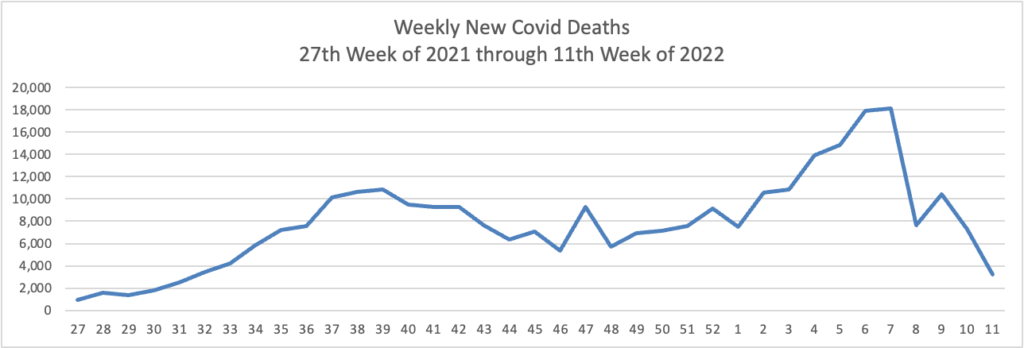
The FEHBlog’s weekly chart of new Covid deaths has bounced up and down after climbing to just over 10,000 weekly deaths during the Delta surge. .

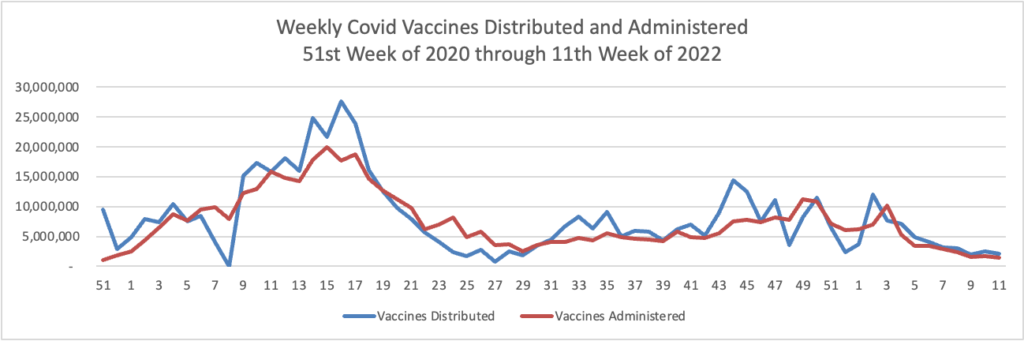
Last but not least here is the FEHBlog’s weekly chart of new Covid vaccinations distributed and administered from the 51st week of 2020 through the third week of 2022.

Here are links to the CDC’s Covid data tracker weekly review and its weekly Fluview.

In other COVID vaccination news —

  • The Wall Street Journal reports that

Vaccines and booster shots offer superior protection from the Delta and Omicron variants, according to three new studies released by the Centers for Disease Control and Prevention.

The data back up earlier findings supporting booster shots and offer the first comprehensive insight into how vaccines fare against the Omicron variant. In one of the studies published Friday, a CDC analysis found that a third dose of either the vaccine from Pfizer Inc.and BioNTech SE or Moderna Inc. was at least 90% effective against preventing hospitalization from Covid-19 during both the Delta and Omicron periods.

The American Hospital Association adds

According to data from 25 state and local health departments, adults who were unvaccinated against COVID-19 as the omicron variant emerged in December had nearly three times higher risk of infection than adults fully vaccinated against COVID-19 and five times higher risk than adults who had received a booster, the Centers for Disease Control and Prevention reported today. The highest impact of COVID-19 booster doses compared with full vaccination was recorded among persons aged 50 and older. Because of reporting lags, the influence of the omicron variant on COVID-19-associated deaths could not be evaluated by vaccination status in December, the authors note.

The FDA could authorize Pfizer’s COVID-19 vaccine for children under age 5 in the next month, Anthony Fauci, MD, director of the National Institute of Allergy and Infectious Diseases, said Wednesday.

“My hope is that it’s going to be within the next month or so and not much later than that, but I can’t guarantee that because I can’t out-guess the FDA,” he said during an interview with Blue Star Families, a nonprofit group that supports military families.

The younger age group will likely need three vaccine doses, he said, since two shots didn’t provide enough of an immune response during Pfizer’s clinical trials for kids ages 2-4.

In Covid vaccine mandate news, Govexec tells us

A federal court in Texas has issued an injunction against President Biden’s COVID-19 vaccine mandate for the federal workforce, pausing implementation of a requirement for more than 2 million civilian servants. 

The Biden administration has already had sweeping success with the mandate, as most agencies have seen virtually their entire workforces come into compliance. Still, federal offices across the country were just beginning to move forward with suspensions—which could eventually result in firings—for those who did not meet the requirements. Biden issued the mandate by executive order in September.    

Judge Jeffrey Brown, appointed by President Trump to the U.S. Court for the Southern District of Texas, said the case was not about whether individuals should be vaccinated or even about federal power generally. 

“It is instead about whether the president can, with the stroke of a pen and without the input of Congress, require millions of federal employees to undergo a medical procedure as a condition of their employment,” Brown wrote. “That, under the current state of the law as just recently expressed by the Supreme Court, is a bridge too far.” 

The Justice Department has appealed the decision to the U.S. Court of Appeals for the Fifth Circuit. The FEHBlog expects that the Fifth Circuit will lift the stay as soon as this weekend. The Society for Human Resource Management offers a helpful article for employers trying to keep track of the vaccine mandate decisions from the courts.

In other COVID vaccine mandate news, the Labor Department’s Wage and Hour Division announced today that

Employees [who are not exempt from the Fair Labor Standards Act] must be paid for time spent going to, waiting for, and receiving medical attention required by the employer or on the employer’s premises during normal working hours. Therefore, if an employer requires an employee to obtain a COVID-19 vaccine dose, undergo a COVID-19 test, or engage in a COVID-19 related health screening or temperature check during the employee’s normal working hours, the time that the employee spends engaged in the activity is compensable. Employees must be paid for such time during normal working hours, regardless of where the activity occurs. This is true regardless of whether the employer is subject to the OSHA Vaccination and Testing ETS.

In Covid treatment news, the Food and Drug Administration announced today that the agency “took two actions to expand the use of the antiviral drug Veklury (remdesivir) to certain non-hospitalized adults and pediatric patients for the treatment of mild-to-moderate COVID-19 disease. This provides another treatment option to reduce the risk of hospitalization in high-risk patients. Previously, the use of Veklury was limited to patients requiring hospitalization.”

From the Covid OTC testing coverage mandate department, the Kaiser Family Foundation has surveyed the coverage approaches of 13 large health insurers. Don’t blame the insurers on this one because health insurers don’t typically cover OTC products and the government only allow four days to implement the mandate.

From the and more department

  • In telehealth news, mHealth Intelligence tells us that

Telehealth utilization peaked in the first half of 2020 and decreased as the year came to a close, with providers predicting that virtual care use would continue to decline in upcoming years, according to the 2021 Medical Group Telehealth Survey.

AMGA Consulting conducted the survey and gathered responses from 56 medical groups representing more than 38,000 healthcare providers.

The majority of the participants (86 percent) were part of multispecialty groups with primary care, while the remaining were either multispecialty without primary care, primary care, or single-specialty groups. * * *

The survey results suggest that although telehealth use skyrocketed during the COVID-19 pandemic, virtual care may see the most success with patients who prefer the modality over in-person care or whose health concerns can be easily addressed virtually.

The FEHBlog remains a strong proponent of hub and spoke telehealth for mental health care because every televisit is in network.

  • The American Hospital Association informs us that “The Department of Health and Human Services’ Office of the National Coordinator for Health Information Technology seeks comments through March 25 to inform potential future rulemaking on how the ONC Health IT Certification Program could incorporate standards, implementation specifications and certification criteria to reduce the burden of prior authorization.”
  • The Congressional Budget Office released a report titled “The Prices That Commercial Health Insurers and Medicare Pay for Hospitals’ and Physicians’ Services.”

CBO examined potential explanations for why the prices paid by commercial insurers are higher and more variable than those paid by Medicare FFS. CBO’s analysis and literature review suggest the following conclusions:

— Greater market power among providers consistently leads to prices for commercial insurers that are higher than Medicare FFS’s prices and that vary more widely, both among and within areas. Hospitals and physicians’ groups may have market power because they have a dominant share of the market in an area or because an insurer sees them as essential to its network of providers.

— Some of the variation in the prices that commercial insurers pay for hospitals’ and physicians’ services is explained by differences in the prices of inputs needed to deliver those services.

— Higher hospital quality is associated with higher prices paid by commercial insurers, although whether there is a causal link between quality and prices, and the direction of any such link, is not clear.

— The share of providers’ patients who are covered by Medicare and Medicaid is not related to higher prices paid by commercial insurers. That finding suggests that providers do not raise the prices they negotiate with commercial insurers to offset lower prices paid by government programs (a concept known as cost-shifting).

IBM is selling the data and analytics assets of its Watson Health business to a private equity firm as it looks to refocus on its core cloud business.

The sale, which is expected to close in the second quarter this year has been anticipated for quite some time, and comes following the limited success of Watson Health, despite a spate of high-profile acquisitions of health information companies to bolster the enterprise.

Financial terms of the deal were not disclosed.

[F]ederal civilian employees in the U.S. will now be paid at least $15 per hour.

OPM issued a memorandum for heads of Executive departments and agencies that provides implementing guidance for how agencies should adjust pay rates for General Schedule (GS) and Federal Wage System (FWS) employees stationed in the U.S., and how to use administrative authority for other pay systems to lift the pay of federal employees who currently make less than $15 per hour. In total, these changes will impact 67,000 out of 2.2 million federal employees. The largest share of these workers, over 56,000 of them, currently work at the Department of Defense. OPM’s guidance directs agencies to implement these changes by January 30, 2022

  • To tide you over the weekend, here is a link to Healthcare Dive’s Deep Dive on four 2022 key trends for providers and payers.

Thursday Miscellany

In yesterday’s post, the FEHBlog accurately predicted that the Supreme Court would decide today whether to stay the OSHA ETS vaccination screening program and end the partial stay on the CMS healthcare worker vaccination mandate.

This afternoon, the Supreme Court issued its decision reinstating the nationwide stay of the OSHA ETS and its companion decision ending all stays on the CMS mandate. The decisions came down as many, many pundits predicted.

The Secretary of Labor who oversees OSHA commented that

“We urge all employers to require workers to get vaccinated or tested weekly to most effectively fight this deadly virus in the workplace. Employers are responsible for the safety of their workers on the job, and OSHA has comprehensive COVID-19 guidance to help them uphold their obligation. 

“Regardless of the ultimate outcome of these proceedings, OSHA will do everything in its existing authority to hold businesses accountable for protecting workers, including under the Covid-19 National Emphasis Program and General Duty Clause.”

In the OSHA ETS decision, the Supreme Court expressed the key point of administrative law on which the two cases turned:

Administrative agencies are creatures of statute. They accordingly possess only the authority that Congress has provided.

The Court reasoned that Congress had granted CMS the necessary authority to issue its broad mandate but had not granted OSHA the same level of authority.

The cases now return to the courts of appeal for a decision on the merits — 6th Circuit for the OSHA ETS case and 5th Circuit for the CMS mandate case. In the meantime the Court’s decisions on the stays will remain in place.

Given how the Court handled these stay decisions, we have a pretty good idea where the Supreme Court will land should either of those merits decisions return to the Court.Such a return likely only will happen if either appellate court disagrees with the Court’s administrative law conclusion on the merits.

In that regard, Bloomberg Law reports that

The Justice Department will appeal a Louisiana federal court’s ruling that blocked President Joe Biden‘s order for government-contractor workers to get the Covid-19 vaccine. 

The U.S. Court of Appeals for the Fifth Circuit will be the third federal appeals court to consider a challenge to the measure. A coalition of three states—Louisiana, Mississippi, and Indiana—sought to block the mandate for companies that do business with the federal government. U.S. District Court Judge Dee Drell of the Western District of Louisiana granted a preliminary injunction in December. 

The federal contractor mandate—which won’t be enforced while litigation proceeds—would apply to roughly a quarter of the U.S. workforce, and affect businesses including Lockheed Martin Corp., Microsoft Corp., Alphabet Inc.‘s Google, and General Motors Co.

Appeals are ongoing in the Eleventh and Sixth circuits, respectively, over a nationwide injunction against the measure from a Georgia federal court and a narrower one from a Kentucky federal judge for a coalition that includes Ohio and Tennessee. A Missouri federal court also blocked the executive order, but that ruling has yet to be appealed.

From the Omicron front, David Leonhardt writing in today’s New York Times cautiously senses that the Omicron surge is cresting in our country following Europe’s and South Africa’s leads. “To be clear, the current emergency is not on the verge of ending. Cases appear to be peaking only in places where Omicron arrived early, mostly in the Northeast. In much of the country, cases are still soaring.”

From the Covid vaccine front, the AP reports that

Distrust, misinformation and delays because of the holidays and bad weather have combined to produce what authorities say are alarmingly low COVID-19 vaccination rates in U.S. children ages 5 to 11.

As of Tuesday, just over 17% were fully vaccinated, more than two months after shots became available to the age group. While Vermont is at 48%, California is just shy of 19% and Mississippi is at only 5%.

Vaccinations among the elementary school set surged after the shots were introduced in the fall, but the numbers have crept up slowly since then, and omicron’s explosive spread appears to have had little effect.

The low rates are “very disturbing,” said Dr. Robert Murphy, executive director for the Institute for Global Health at Northwestern University’s Feinberg School of Medicine. “It’s just amazing.”

Parents who hesitate “are taking an enormous risk and continuing to fuel the pandemic,” Murphy said.

From the telehealth front, STAT News informs us that

A handful of virtual care companies are inking new types of contracts that reward them for keeping patients’ cost low and penalize them for overspending — a model known as risk-sharing. It’s a departure from the traditional “fee-for-service” billing process, and a move  companies hope could help them get paid for the services they offer in addition to virtual doctors’ appointments, like in-app messaging, medication reminders, and digital health coaching. They’re also betting that embracing risk could endear them to the health plans and employers they depend on for contracts.

Execs from companies like Heartbeat Health and Teladoc say they’re in the very early stages of cementing these contracts. While there’s no clear roadmap for how to structure them, whether they take hold could clarify how virtual care will fit into the brick-and-mortar healthcare system and incentivize those companies to work with traditional providers on prevention, said Jennifer Goldsack, CEO of the Digital Medicine Society. “There is an opportunity to reimagine what health care looks like when it is around the patient,” she told Mohana. Read the full story

From the healthcare cost front, STAT News tells us that

— Medical cost growth trailed that of other industries in 2021, though rising pressure from the omicron variant could fuel future increases in healthcare costs.

— Prices for goods and services skyrocketed at the fastest pace in four decades, rising 7% between December 2020 and December 2021, according to new data released Wednesday from the Bureau of Labor Statistics.

— By comparison, prices for healthcare services rose roughly 2.5% last year, while the cost of medical care goods rose just 0.4%. However, that slow rate of growth could accelerate as COVID-19 cases persist in 2022 and beyond.

From the miscellany department —

  • The Agency for Healthcare Quality and Research’s Acting Director Dr. David Meyers looks back at 2021.
  • Biopharma Dive considers five questions facing gene therapy in 2022.
  • Fierce Healthcare notes that

As the healthcare system faces significant labor challenges, a new report suggests pharmacists are well positioned to fill some of the critical gaps.

The analysis, conducted by Express Scripts and the Columbia University Mailman School of Public Health, found that a majority of pharmacists see their roles transitioning to more direct patient care responsibilities over the next decade.

  • AARP’s Public Policy Institute examines the importance of medication literacy in the medication decision-making of older adults.

While health literacy is widely understood as a quality measure of health care decision making, another related measure calls for increased attention, particularly regarding older adults: medication literacy. Medication literacy is the degree to which individuals can obtain, comprehend, communicate, calculate, and process patient-specific information about their medications to make informed medication and health decisions in order to safely and effectively use their medications, regardless of the mode by which the content by which the content is delivered (i.e., written, oral, or visual).

  • Money offers a comprehensive update on the President’s mandate that health plans cover over the counter COVID tests effective on Saturday January 15.

Monday Roundup

Photo by Sven Read on Unsplash

From the Omicron front, STAT News reports that

The Omicron variant now accounts for 73% of Covid-19 infections being diagnosed in the United States, and in some parts of the country 90% of infections are caused by viruses from the Omicron strain, the Centers for Disease Control and Prevention said late Monday.

Though it’s been clear from Omicron’s astonishing spread elsewhere that it would rapidly take over from Delta as the dominant variant in this country, the speed is nevertheless startling to witness.

“What we are watching unfold is microbial evolution. This is remarkable,” said Michael Osterholm, director of the University of Minnesota’s Center for Infectious Diseases Research and Policy. “But this is what these viruses can do.”

The Centers for Disease Control updated its Omicron website today.

This Wall Street Journal article indicates the obtaining an mRNA booster (Moderna or Pfizer) will provide protection against Omicron as well as Delta.

The Centers for Medicare and Medicare Services today updated their “vaccine toolkit designed for issuers of group and individual health insurance and Medicare Advantage health plans.”

From the COVID vaccine mandate litigation front, the American Hospital Association reports that

Over the weekend, and as of this writing, eight groups of challengers to the OSHA vaccine mandate filed emergency applications with the U.S. Supreme Court asking the high court to once again stay the mandate following the Sixth Circuit’s Dec. 17 decision to lift the Fifth Circuit’s previously entered stay.
 
Today, the Supreme Court asked the federal government for a response to the challengers’ applications by Dec. 30 by 4 p.m. If that sounds familiar, it is because Dec. 30 at 4 p.m. is also the date and time the challengers to the CMS vaccine mandate will be filing their responses to the federal government’s Supreme Court application asking the court to stay the Missouri and Louisiana preliminary injunctions enjoining the CMS mandate. Both sets of applications will be briefed at the same time and the Supreme Court will have the opportunity to rule on the fate of both the CMS and OSHA vaccine mandates at the same time, if it so chooses.

The FEHBlog can find no word about whether the government has appealed to the Supreme Court the 11th Circuit’s decision last Friday to maintain in force the stay on the federal government contractor COVID vaccine mandate. The FEHBlog will keep looking.

From the healthcare business front —

  • Fierce Healthcare informs us that “Amazon has consolidated its healthcare efforts under one central organization and tapped a former Prime executive to run the businesses. The tech giant elevated Neil Lindsay to the new role of senior vice president of health and brand within Amazon’s worldwide consumer business, an Amazon spokesperson confirmed to Fierce Healthcare.”
  • mHealth Intelligence reports that “Supermarket retailer Hy-Vee, Inc. has launched a telehealth platform that allows individuals to receive treatments and prescriptions through the mail. The new service, RedBox Rx, offers virtual health consultations through a partnership with Reliant Immune Diagnostics’ telehealth platform MDbox.”
  • Healthcare Dive tells us that

Software giant Oracle is acquiring EHR vendor Cerner for $28.3 billion, the two companies announced Monday. The deal is expected to close sometime next year.

It will be Oracle’s largest acquisition to date, with the next highest being the 2005 purchase of PeopleSoft Inc. for $10 billion. The deal further pushes Oracle into the healthcare market, where its presence is mostly in data use efficiency for payers and providers. Oracle’s areas of focus include database software and cloud systems.

Cerner will be a dedicated business unit within Oracle, according to the Monday press release. Voice-enabled user interfaces will be a key focus with a goal to “deliver zero unplanned downtime in the medical environment.”

From the too little too late front, STAT News tells us that

Biogen said Monday that it has reduced the price of its Alzheimer’s drug Aduhelm by half and is planning a series of cost-cutting measures across the company next year that aim to save $500 million.

The moves follow a disappointing commercial launch of Aduhelm, as well as anger over the drug’s high price. 

The new, lower price for Aduhelm is $28,200, or roughly half what the drug cost when it launched in June. Insurance companies balked at its original list price, averaging $56,000 a year per patient, while physicians have fervently questioned whether Biogen’s supporting evidence merited the drug’s approval by the Food and Drug Administration, let alone widespread use. * * *

Biogen is announcing the Aduhelm price cut less than one month before Medicare is expected to make an all-important decision on whether and how widely to pay for the drug. A draft ruling is expected in January, followed by a final decision in the spring.

But with Aduhelm delivering paltry revenue, Biogen is also being forced to downsize the company. On Monday, Biogen said it would implement a series of cost-cutting measures in 2022 that are expected to total approximately $500 million. Details will be announced in the first quarter. 

Midweek Update

From the Omicron front, and as a public service, the FEHBlog notes this Wall Street Journal A-hed article from yesterday explaining the proper pronunciation of Omicron:

“There isn’t one way of saying Omicron,” said Armand D’Angour, professor of classical languages and literature at the University of Oxford. “First of all, you know, we’re not there, we haven’t recorded it.”

Egbert Bakker, professor of ancient Greek at Yale University, says the letter is pronounced “AWE-mee-kron” in both modern and ancient Greek. But he is open to other forms: “Some people would say ‘oh-MIKE-ron,’ that is the Americanized way. I wouldn’t do it but I don’t think it’s completely unacceptable.”

Isn’t Egbert a perfect name for an Ivy League professor of foreign languages?

Also, the Wall Street Journal reports that

Pfizer Inc. and BioNTech SE  said that a third dose of their Covid-19 vaccine neutralized the Omicron variant in lab tests but that the two-dose regimen was significantly less effective at blocking the virus.

A third dose increased antibodies 25-fold compared with two doses against the Omicron variant, the companies said. Still, two doses may prove effective in preventing severe illness from Covid-19, they said, because immune cells are able to recognize 80% of parts of the spike protein that the vaccine targets.

The results were issued in a press release by the companies, and weren’t peer reviewed and published in a scientific journal.

As of today, just over 200 million Americans are fully vaccinated against COVID according the CDC. Next Tuesday December 14 will mark the first anniversary of COVID vaccinations outside of trials in the U.S.

From the Federal Benefits Open Season front, FedWeek reminds us that

December 13 is the last day of the current open season for electing or changing coverage in FEHB and FEDVIP for the 2022 plan (calendar) year of each program.

If current enrollees make no changes, they will retain the same coverage next year, subject to new premium rates and coverage terms. In practice, only single-digit percentages change plans, levels of coverage within plans that have more than one, or type of enrollment (between family coverage and self plus one, for example).

In contrast to the FEHB and FEDVIP programs, a new enrollment is required each year for those who want a health care flexible spending account, a dependent care account, or both in the following year. The dependent care maximum remains $5,000 while the health care maximum is rising $2,850.

OPM encourages FEHB plan enrollees to use its online FEHB and FEDVIP Plan comparison tools.

From the telehealth front —

Healthcare Dive reports that

— COVID-19 was no longer among the top five telehealth diagnoses nationwide in September, though use of virtual care rose overall, according to new data from nonprofit Fair Health.

— In August, COVID-19 was among the top five diagnoses nationally and in every U.S. census region except the Northeast. In September, the only region where the it ranked in the top five was the Midwest.

— However, national telehealth use (measured as a percentage of all medical claim lines) rose more than 2% in September for the second straight month as the delta variant gained a foothold in the U.S. following a sustained period of decline early this year.

Kaiser Health News discusses the provider push for expanded coverage of audio-telehealth services.

From the benefit design front, Health Payer Intelligence tells us that

UnitedHealthcare has launched a new employer-sponsored health plan for Arizona residents that seeks to prioritize customer support experiences and lower member premiums.

The Doctors Plan of Arizona is the result of a partnership between the payer and the accountable care organization (ACO) Banner Health Network. The plan will serve Maricopa and Pinal County residents who receive employer-sponsored health coverage.

Banner Health Network frequently partners with health plans and providers to increase access to affordable care, the press release noted. The ACO’s network includes primary and specialty care physicians.

Through the Doctors Plan of Arizona, members will gain access to Banner Health’s network of more than 5,000 physicians and 15 medical centers.

Additionally, the plan will offer members a chance to potentially save up to 15 percent on premiums compared to other traditional health plans. The plan will also offer zero-dollar copays for primary care and urgent care visits, around-the-clock access to telehealth visits, and care coordination from the member’s primary care provider.

UnitedHealthcare will work to improve the customer experience with a personalized concierge approach. The payer’s Doctors Plan of Arizona will include a customer service team that has access to patient data from the provider and the health plan, allowing for more streamlined coordination, the press release stated.

The FEHBlog’s love affair with the ACO concept has not abated.

Health Payer Intelligence also discusses nutritional benefits.

Payers face a variety of challenges in expanding nutritional benefits, particularly due to the lack of ability to measure outcomes, but there are ways to navigate this uncertainty, according to a report from McKinsey & Company (McKinsey).

Among American adults who have at least one chronic condition, 60 percent also have poor nutrition, the report noted. This social determinant of health tends to occur hand-in-hand with some of the most expensive conditions in the US such as hypertension, obesity, and diabetes.

Check out the McKinsey report and the article for nutritional benefit tips.

Finally the Internal Revenue Service today released its draft Fringe Benefits Tax Guide for 2022 which may come in handy for 2022 budgeting purposes.

Midweek Update

From Capitol Hill, The Wall Street Journal reports that

Lawmakers worked Wednesday to reach an agreement on a short-term spending patch to avoid a potential partial government shutdown this weekend, with Democrats and Republicans still haggling over the details of the funding extension.

Party leaders had initially hoped to release an agreement earlier this week. Democrats have eyed a spending patch that would last until mid-or-late-January, while Republicans have pushed for a longer extension.

With just days until the government runs out of current funding at 12:01 a.m. on Saturday, Dec. 4, lawmakers will need to act quickly to pass the eventual agreement through the House and Senate. Meeting that tight timeline would require unanimous consent in the Senate to waive some of the chamber’s procedural hurdles, and any individual senator can slow down the process.

The article points out that Congressional leadership from both parties expects a continuing resolution to pass without a government shutdown. Of course we know from past experience that because the funding runs out on a Saturday, Congress has some additional time to complete work on the continuing resolution over the weekend if necessary.

From the Delta variant front the Centers for Disease Control announced today that

The California and San Francisco Departments of Public Health have confirmed that a recent case of COVID-19 among an individual in California was caused by the Omicron variant (B.1.1.529). The individual was a traveler who returned from South Africa on November 22, 2021. The individual had mild symptoms that are improving, is self-quarantining and has been since testing positive. All close contacts have been contacted and have tested negative.

The FEHBlog senses that Delta variant is becoming jealous over the attention that the Omicron varian is receiving.

From the Delta variant vaccine mandate front, the Society for Human Resource Management tells us that

Consultancy Willis Towers Watson conducted a survey of large U.S. companies from Nov. 12-18 and asked if they currently require employees to be vaccinated against COVID-19 or plan to do so; 543 companies responded to the survey. Respondents indicated that they: 

Currently require vaccinations (18 percent).

Will require vaccinations only if OSHA’s ETS takes effect (32 percent).

Plan to mandate vaccinations regardless of the ETS status (7 percent). 

Few employers (3 percent) with vaccination mandates have reported a spike in resignations, although nearly 1 in 3 (31 percent) of those planning mandates were very concerned that this could contribute to employees leaving their organizations. On the other hand, nearly half of employers (48 percent) believe vaccine mandates could help recruit and retain employees.

In addition to vaccine mandates, many large employers have taken or plan to take the following actions to protect employees who are returning to the workplace, saying that they will:

Offer COVID-19 testing (84 percent), most on a weekly basis (80 percent).

Require unvaccinated employees to pay for testing unless prohibited by state law (25 percent).

Require or plan to require masks to be worn indoors (90 percent).

In hospital news, Healthcare Dive reports that

Hospitals saw operating margins continue to erode in October, declining 12% from September under the weight of rising labor costs, according to a national median of more than 900 health systems calculated by Kaufman Hall. It was the second consecutive monthly drop and comes as facilities are preparing for the fast-spreading omicron variant of the coronavirus.

Although expenses remained highly elevated, patient days and average length of stay fell for the first time in months in October, likely reflecting lower hospitalization rates as the pressure of treating large numbers of COVID cases began to ease, Kaufman Hall said in its latest report.

At the same time, operating room minutes rose 6.8% from September, pointing to renewed patient interest in elective procedures.

Fierce Healthcare adds that

Despite the threat of daily fines, hospitals have so far been slow to publish their prices online in accordance with a new federal regulation.

Radiology services look to be no exception, with new study data now suggesting roughly two-thirds of U.S. hospitals have not published commercial negotiated prices for at least one of the 13 radiology services designated as a common shoppable service by the Centers for Medicare & Medicaid Services (CMS). Hospitals are required to publish these prices in compliance with CMS’ Hospital Price Transparency final rule.

Further, the hospitals that did share their radiology service commercial negotiated prices appear to be all over the map, often setting price tags that varied by hundreds or thousands of dollars for certain imaging services.

The analysis—published in Radiology by Michigan State University and Johns Hopkins researchers—found than a mean 2,053 out of 5,700 hospitals (36%) had reported a price for one of these services as of Sept. 6.

From the telehealth front, Healthcare Dive informs us that

When U.S. patients envision their future medical care, the majority see telehealth playing a role. But when presented with the choice between an in-person or video visit for nonemergent care, most prefer a traditional in-office visit, according to new research analyzing consumer telehealth preferences.

The survey conducted by the nonprofit Rand Corporation published in JAMA on Wednesday found those who leaned toward in-person care were more willing to pay for their preferred visit modality, while those who preferred video visits were more sensitive to out-of-pocket costs.

Of the respondents who had used telehealth at least once since last March, only 2.3% said they were unwilling to use telehealth in the future, suggesting the method’s continued importance in hybrid models of care even after the pandemic — though it’s unlikely to be most patients’ first choice, researchers said.

In other news —

  • Drug Channels offers its take on CVS Health’s recent announcement to right size its number of retail pharmacies (a roughly 10% reduction) and add even more healthcare focus to the remaining locations.
  • Today “the Centers for Medicare & Medicaid Services (CMS) issued a Request for Information (RFI) to solicit stakeholder and public feedback that will be used to inform potential changes and future rulemaking to improve the organ transplantation system and seek to enhance the quality of life of those living with organ failure.”
  • Becker’s Hospital Review discusses and provides interesting executive interview on how healthcare providers and health plans are seeking to improve and expand mental healthcare.
  • This week’s Econtalk episode on our sense of hearing is outstanding. Check it out.