Midweek update

Midweek update

Photo by Michele Orallo on Unsplash

From Capitol Hill, Medtech Dive reports

The Senate Committee on Health, Education, Labor and Pensions voted Tuesday to send a bill to the Senate that would reauthorize the Food and Drug Administration to collect user fees from device- and drug-makers for the next five years. 

A provision would require the FDA to finalize guidance that would create a category of over-the-counter hearing aids within a month of the bill’s passage. The FDA last issued a proposed guidance in October.

Committee Ranking Member Sen. Richard Burr, R-N.C., questioned on Tuesday whether the FDA should have that expanded authority, despite co-sponsoring legislation that would change how diagnostic tests are regulated, including laboratory-developed tests.

Fierce Healthcare adds

The American Hospital Association (AHA) penned a last-ditch letter to congressional leaders pleading for Medicare sequester cuts slated to take effect July 1 to be halted in light of the financial strain many of the nation’s hospitals are expected to face throughout 2022.

Congress had initially paused the 2% payment cut as part of the CARES Act when the COVID-19 pandemic began to threaten providers’ bottom lines. Sequestration cuts were continually punted downfield until last December, when a bill was signed to resume a 1% cut in April and the full 2% in July.

With half a month to go, AHA Executive Vice President Stacey Hughes warned majority and minority leaders Tuesday that financial relief from the pending cut is necessary for hospitals “to maintain access to care for the patients and communities they serve.”

From the Supreme Court, the American Hospital Association gleefully informs us

The U.S. Supreme Court today ruled unanimously in favor of the AHA and others, reversing a 2020 [U.S.] court of appeals decision upholding the authority of the Department of Health and Human Services to significantly cut payments to certain hospitals that participate in the 340B Drug Pricing Program, and thereby threatening access to care for patients.

The Supreme Court held that “HHS’s 2018 and 2019 reimbursement rates for 340B hospitals were contrary to the statute and unlawful.” Noting that “340B hospitals perform valuable services for low-income and rural communities but have to rely on limited federal funding for support,” the Supreme Court observed that “this case has immense economic consequences, about $1.6 billion annually.”

Despite those serious practical impacts, the Supreme Court concluded that “[u]nder the text and structure of the statute,” the case is “straightforward” as a matter of law: “Because HHS did not conduct a survey of hospitals’ acquisition costs, HHS acted unlawfully by reducing the reimbursement rates for 340B hospitals.”

From the Omicron and siblings front —

The Wall Street Journal reports

Health experts advising U.S. health regulators backed giving Covid-19 vaccines from Pfizer Inc. and BioNTech SE and from Moderna Inc. to children as young as 6 months old

The panel voted 21 to 0 in a pair of votes on Wednesday in support of expanding access to the vaccines.

The positive recommendations will likely lead soon to expanding the U.S. Covid-19 vaccination campaign to the 19.6 million children from 6 months to under 5 years of age, one of the last groups of people in the U.S. waiting for shots.

The Food and Drug Administration, which doesn’t have to follow the panel’s recommendations but usually does, is expected to authorize the shots within days. Vaccinations could begin as early as June 21, according to the Biden administration.

and

Moderna Inc. is planning to test its Covid-19 vaccine in babies 3 months to 6 months old, the youngest age group studied to date.

The Cambridge, Mass., company said Wednesday it is in the final stages of planning the study, to be called BabyCove and expected to begin enrolling as many as 700 babies in September.

BabyCove would be the first study of Moderna’s vaccine in infants younger than 6 months.

STAT News adds

Pfizer said Tuesday that a much-watched study of its antiviral Paxlovid in patients who have Covid but don’t have risk factors for severe disease failed to show a benefit in speeding alleviation of Covid symptoms, but did seem to prevent doctor’s visits and hospitalizations.

Additionally, because of the small number of hospitalizations overall in the study, it failed to produce a statistically significant finding on whether patients who had previously been vaccinated against Covid were hospitalized less often if they received Paxlovid.

The data in no way invalidate earlier results that show that Paxlovid prevents hospitalizations and saves lives in patients at high risk of severe Covid. But the results, published in a press release, are likely to take time for experts to digest and understand.

From the unusual viruses front, the American Hospital Association explains

The Centers for Disease Control and Prevention yesterday [June 14] updated its guidance to help clinicians evaluate and test patients with relevant history, signs and symptoms for monkeypox. Over 1,800 monkeypox or orthopoxvirus cases have been reported globally this year, including 72 in the United States. According to CDC, the virus does not spread easily between people without close contact, so the risk to the general population remains low.

The World Health Organization plans to change monkeypox’s name next week.

From the healthcare business front

Anthem will officially become Elevance Health on June 28, and, as part of its corporate rebrand, it’s also launching new brands for two of its subsidiaries.

The insurer will consolidate its healthcare services businesses under one umbrella, called Carelon. Carelon is a combination of the word “care” with the suffix “lon,” which means full or complete, representing the company’s ambition to offer an end-to-end care experience.

Carelon will include Anthem’s in-house pharmacy benefit manager Ingenio Rx as well as recent acquisitions such as Beacon Health Options, a behavioral health provider, and myNEXUS, a home healthcare company. Carelon will serve 1 in 3 people in the U.S., according to the announcement.

and

Humana is moving its pharmacy brands under the CenterWell umbrella.

Humana Pharmacy and Humana Specialty Pharmacy will now operate as CenterWell Pharmacy and CenterWell Specialty Pharmacy, respectively, the insurer announced. Enclara Pharmacia and Humana Pharmacy Solutions, the company’s pharmacy benefit management arm, will maintain their original branding.

“The CenterWell brand symbolizes our ongoing and strong commitment to keeping members, customers and patients at the center of everything we do,” said Scott Greenwell, Humana Pharmacy Solutions president, in a statement.

  • Morning Consult discusses how CVS Health and Walgreens retained “high customer trust” in 2021.

From the benefit design front, Employee Benefits News offers the case for health savings accounts. The FEHBlog is already sold.

Weekend Update

Congress is back on Capitol Hill this week for floor voting and Committee business. Roll Call notes

Lawmakers return next week for a busy June, with Senate Republicans tested by politically wrought gun talks and President Joe Biden dealing with a spate of crises and headaches.

The Hill identifies the five “looming disputes” out of 33 pending disputes that the Supreme Court is expected to decide this month which typically is the last month of its October 2021 Term. Although not found among the Hill’s cases, here’s a Medicare secondary payer act case that has not been decided yet and could impact FEHBP.

Marietta Memorial Hospital Employee Health Benefit Plan v. DaVita Inc., No. 20-1641 [Arg: 03.1.2022 Trans./Aud.

Issue(s): (1) Whether a group health plan that provides uniform reimbursement of all dialysis treatments observe the prohibition provided by the Medicare Secondary Payer Act that group health plans may not “take into account” the fact that a plan participant with end stage renal disease is eligible for Medicare benefits; (2) whether a plan that provides the same dialysis benefits to all plan participants, and reimburses dialysis providers uniformly regardless of whether the patient has end stage renal disease, observe the prohibition under the Medicare Secondary Payer Act that a group health plan also may not “differentiate” between individuals with end stage renal disease and others “in the benefits it provides”; and (3) whether the Medicare Secondary Payer Act is a coordination-of-benefits measure designed to protect Medicare, not an antidiscrimination law designed to protect certain providers from alleged disparate impact of uniform treatment.

From the Omicron and siblings front —

The Wall Street Journal reports

The latest Covid-19 wave in the U.S. has shifted westward, hitting places like the San Francisco area, while pressure eases in recent Northeast hot spots.

The Western U.S. region, which includes mountain and coastal states, has recently eclipsed the Northeast to have the nation’s highest rate of known cases per 100,000 people, a Wall Street Journal analysis of CDC data shows. Recent increases in parts of the West come amid declines in the Northeast.

NPR Shots provides more background on the Novovax Covid vaccine that the FDA advisory committee will consider for emergency use authorization this Tuesday. NPR Shots adds

The federal government is trying to decide what kind of booster people should get in the fall to try to blunt the severity of a possible new wave of infections next winter. The panel of FDA advisers will meet late this month to consider which strains of the coronavirus should be targeted by updated vaccines.

From the mental health coverage front, the American Hospital Association released a TrendWatch about the pandemic’s adverse impact on mental health. Also, Healthcare Dive informs us that while telehealth use dropped in February and March 2022, according to a Fair Health study,

Teletherapy continued to remain robust, snagging the top procedure spot for telehealth visits in March and representing 26% of virtual claim lines, the report noted. Mental health conditions claimed 65% of diagnoses across all regions. Likewise, social workers remained the most popular specialty in telehealth claims for the second month in a row.

From the value-based care front, Health Payer Intelligence discusses how payers can move providers away from fee-for-service contracts to value-based contracts. It’s worth a read.

Monday Roundup

Photo by Sven Read on Unsplash

The President has declared May 1 through May 7 to be Public Service Recognition Week. OPM explains

Celebrated annually during the first week of May since 1985, Public Service Recognition Week (PSRW) (external link) is time set aside to honor the men and women who serve our nation as federal, state, county and local government employees. 

Throughout the country, mayors, governors, agency leaders, communities and public service organizations participate in PSRW by issuing proclamations; hosting award ceremonies and special tribute events; and delivering messages about the value of public service.

To that end, Govexec reports the President took the time today to virtually award Presidential Rank Awards to 230 senior federal employees from 37 agencies.

Speaking directly to the career civil service, Biden said: “Over the last 15 months you’ve helped us deliver so much to the American people,” such as the getting Americans vaccinated against COVID-19, delivering economic relief checks, caring for veterans, implementing the infrastructure package and working to restore the public’s faith in government and democracy. He gave a big “thank you” to them as well as their families. 

The FEHBlog heartily agrees.

From the Omicron and siblings front, WebMd informs us

The FDA’s independent panel of advisors will meet in June to discuss the Pfizer and Moderna COVID-19 vaccines for children under age 5, as well as the Novavax vaccine for adults, according to an FDA announcement released Friday.

On June 7, the FDA’s vaccine committee will review the Novavax shot, which could become the first new COVID-19 vaccine to hit the U.S. market in more than a year. The shot is already authorized in more than three dozen countries, including across Europe.

The FDA has also selected three possible dates — June 8, 21, and 22 — to discuss the shots for kids under age 5. The dates are tentative because the companies haven’t completed their submissions, the agency said.

The FEHBlog is pleased to read about these developments because the Novovax shot which uses a traditional vaccination approach may be acceptable to the vaccine inquisitive and the country needs a vaccine for younger children.

STAT News adds

Pfizer released news late Friday that Paxlovid, the antiviral currently subject to a big push from the U.S. government, failed to prevent people living with Covid patients from catching the infection.

The news is one of several bad headlines for the new Covid pill, but one experts say doesn’t affect the medicine’s primary use: treating people who are already sick.

Paul Sax, clinical director of the division of infectious diseases at Brigham and Women’s Hospital, said he would “absolutely” prescribe Paxlovid to people at high risk of severe disease who have Covid. “Without hesitation,” he said. “Because the net benefit in the high risk study was extremely high.”

From the Affordable Care Act front, Health Affairs Forefront has posted the second part of Katie Keith’s three-part series on last week’s HHS final 2023 notice of ACA benefit and payment parameters. The second part concerns changes specific to the ACA marketplace or exchange plans.

From the Rx coverage front, Health Affairs informs us

UnitedHealthcare is restricting insurance coverage of Aduhelm across all of its health plans, saying the drug “is unproven and not medically necessary for the treatment of Alzheimer’s disease due to insufficient evidence of efficacy,” according to the company’s new policies.

Physicians who plan on giving Aduhelm to UnitedHealthcare patients will need to obtain prior approval from the insurance company, effective June 1. Patients also need to be in an approved clinical trial.

UnitedHealthcare’s decision follows Medicare, which said last month it would only pay for the costly infusion drug for patients who participate in a clinical trial. UnitedHealthcare is the largest Medicare Advantage insurer in the country, covering 8 million people older than 65 and people with disabilities, making this policy particularly important for older Americans on those private plans.

The FEHBlog expects UHC’s announcement to be the tip of the eventual iceberg of similar Aduhelm coverage decisions.

Following up on previous stories mentioned in the FEHBlog, the Wall Street Journal reports

Online pharmacy company Truepill Inc. said it is temporarily halting prescriptions for Adderall and other controlled substances used to treat attention-deficit hyperactivity disorder, and partner Cerebral Inc. told its clinicians to direct those orders to patients’ local pharmacies.

Cerebral, an online mental-health company based in San Francisco that describes Truepill as its preferred pharmacy, informed its clinicians of Truepill’s decision in a Friday email viewed by The Wall Street Journal. The email said Truepill would no longer support mailing Schedule 2 controlled substances, including Adderall and Vyvanse, “to any of their customers.”

Truepill said that, “out of an abundance of caution,” it is temporarily pausing all fulfillment of Schedule 2 substances while it evaluates appropriate next steps. It said Schedule 2 substances such as Adderall make up less than 1% of its total prescription volume. Truepill didn’t provide a list of other partners affected by its decision.

Some of the nation’s largest pharmacies have blocked or delayed prescriptions over the past year from clinicians working for telehealth startups that have sprung up to treat ADHD, according to pharmacies and people familiar with the issue.

The Journal reported last week that pharmacies including Walmart Inc., CVS Health Corp. and Walgreens Boots Alliance Inc. have blocked or delayed prescriptions for companies treating ADHD online or have blocked individual prescribers, according to people familiar with the issue.

That was the right outcome as far as the FEHBlog is concerned.

In U.S. Supreme Court news, Business Insurance reports “Private plaintiffs cannot be reimbursed for emotional distress damages under the 1973 Rehabilitation Act and the Patient Protection and Affordable Care Act, the U.S. Supreme Court ruled” last Thursday in the linked opinion. The Affordable Care Act provision at issue is the ACA’s convoluted individual non-discrimination provision, Section 1557.

From the healthcare business front, Fierce Healthcare tells us

Outpatient volumes and revenue for hospitals and health systems showed a robust rebound in March as expenses eased due to fewer extremely sick patients, a new report said. 

Consulting firm Kaufman Hall released its latest hospital flash report Monday (PDF) detailing the impact of system finances for the month of March. A key takeaway from the report is that while actual hospital margins were negative for the third month in a row, outpatient revenues had a massive bump.

“While the road to recovery remains long for many hospitals, these trends indicate some pressures of the pandemic may be lifting,” said Erik Swanson, senior vice president of data and analytics with Kaufman Hall, in a statement. 

From the mental healthcare front,

Fierce Healthcare reports

Mental health concerns are on the rise across the board, and especially among Blacks, seniors, young adults and LGBTQIA people, a new survey finds.

CVS Health and Morning Consult polled more than 2,200 adults in early April and found that 59% of respondents have experienced challenges with their mental health or that of a friend or family member. That is a 9% increase over 2020 survey data.

More than half (57%) of people surveyed who identify as LGBTQIA expressed concern about their own mental health, 20 percentage points higher than other groups included in the study. Nearly three-quarters (74%) of those aged 18 to 34 said they experienced such concerns either themselves or for a friend or family member, up 12 percentage points from 2020.

The survey also found an 11 percentage point increase in mental health concerns among Black respondents compared to pre-COVID levels. A double-digit increase was also found among people over age 65; about 40% reported mental health concerns for themselves or family and friends, up 10 percentage points from 2020.

AHIP describes ten ways that people can get the mental healthcare services that they need.

Tuesday’s Tidbits

From Capitol Hill, the Senate approved a motion to proceed to a vote on the Postal Reform Act of 2022 (HR 3076) by a voice vote. This vote suggests to the FEHBlog that the Senate will approve the bill this week.

Roll Call discusses the status of the Consolidated Appropriations Act for Fiscal Year 2022. Congress has a week and half to finish cobbling together this law before it needs a fourth continuing resolution.

From the Omicron vaccine front, the American Hospital Association tells us

The Centers for Disease Control and Prevention today released a study examining the effectiveness of the Pfizer COVID-19 vaccine at preventing emergency department and urgent care visits by children aged 5-11 and 12-17. Among children aged 5-11, effectiveness 14-67 days after dose 2 (the longest interval in this age group) was 46%, significantly lower than overall estimates for adolescents aged 12-17. However, most encounters among children aged 5-11 occurred during omicron predominance, when the vaccine’s effectiveness also significantly declined for adolescents, suggesting that the lower effectiveness for children aged 5-11 was likely driven by the predominant variant rather than differences in effectiveness across age groups, the authors said. During omicron predominance, there was no evidence 2 doses protected adolescents after 150 days; however, a booster dose restored effectiveness to 81% in this age group, the authors said.

Another study released today by the CDC looks at reactions to the Pfizer booster in adolescents aged 12-17, which were generally mild to moderate and transient. Myocarditis was less frequently reported after a booster dose than a second primary dose, the authors said.

From the Omicron masking and testing front —

Federal agencies can relax their mask and testing protocols in the wake of new public health guidance. 

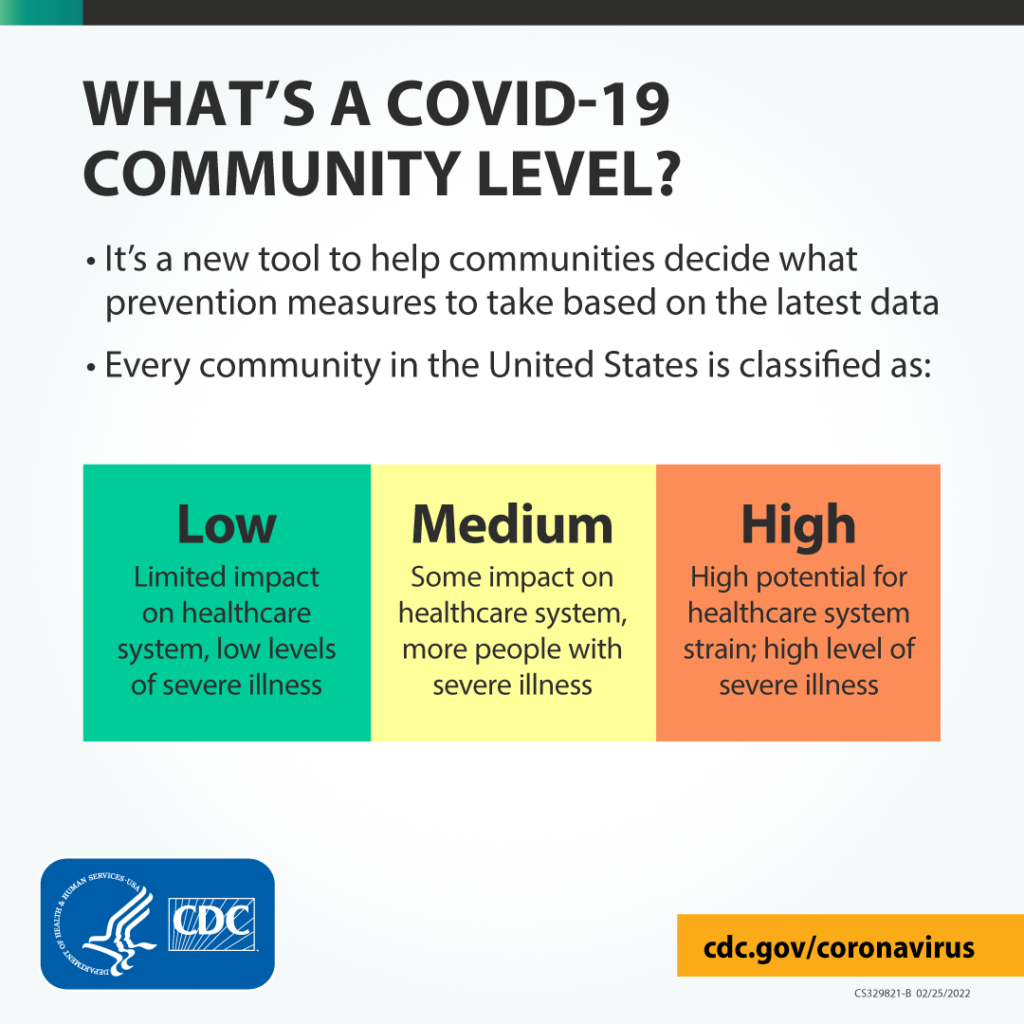
The Centers for Disease Control and Prevention’s released on Friday a “new framework” that “moves beyond just looking at cases and test positivity to evaluate factors that reflect the severity of disease, including hospitalizations and hospital capacity, and helps to determine whether the level of COVID-19 and severe disease are low, medium, or high in a community,” Dr. Rochelle Walensky, the agency’s director, said on a call with reporters. Guidance from the Biden administration’s Safer Federal Workforce Task Force on Monday reflects this new framework. 

“This document provides federal agencies with initial implementation guidance they should follow in utilizing the CDC’s COVID-19 Community Levels to determine the appropriate mask-wearing and screening testing requirements for each federal facility at a given time,” said the guidance. 

Nearly half of the 500 million free COVID-19 tests the Biden administration recently made available to the public still have not been claimed as virus cases plummet and people feel less urgency to test.

Wild demand swings have been a subplot in the pandemic, from vaccines to hand sanitizer, along with tests. On the first day of the White House test giveaway in January, COVIDtests.gov received over 45 million orders. Now officials say fewer than 100,000 orders a day are coming in for the packages of four free rapid tests per household, delivered by the U.S. Postal Service.

It would be a good idea for the federal government to tell health plans to refer their members to the federal site if they are interested in receiving test kits.

To sum it up from the Omicron front, check out the lead article from the NIH Director’s blog titled “How Covid immunity holds up over time.”

From the tidbits department —

  • The CDC discusses the unholy connection between diabetes and chronic kidney disease.
  • Fierce Healthcare discusses telehealth provider Amwell’s fourth quarter results.
  • Beckers Payer Issues notes

UnitedHealth Group is beginning to act on its November promise to shore up its sustainability efforts by halting its mailing paper of prior authorization and clinical decisions to providers, according to a Feb. 25 post on the California Medical Association website. 

The first move — a nationwide shift to digital clinical decision letters — is effective March 4 for most UnitedHealthcare Medicare Advantage and commercial plan members. Instead of receiving a mail appeal decision, providers can view the decisions digitally immediately after they are made. 

President Joe Biden is calling for more federal employees to return to the office, saying “significant progress” fighting the COVID-19 pandemic has made it safer to do so.

Ahead of his State of the Union address, Biden issued a letter Tuesday thanking the federal workforce for its “tireless work this past year” confronting the pandemic and leading economic recovery efforts.

A return to the office, however, doesn’t necessarily mean a return to the pre-pandemic status quo.

Biden urged agencies to “build on the innovations and technologies that we put to work serving the American people throughout the pandemic, making our government more efficient, resilient, and effective.”

Good luck, OPM.

Weekend Update

Photo by JOSHUA COLEMAN on Unsplash

Both the House and the Senate will be in session this week for Committee business and floor voting. The FEHBlog will be keeping an eye on the House Rules Committee hearing on the Postal Reform Act (HR 3706) scheduled for tomorrow at 2 pm ET.

Roll Call reports

The House could take up a three-week stopgap funding extension through March 11 as soon as Tuesday to buy more time for appropriators to write final fiscal 2022 spending bills, according to sources who spoke on condition of anonymity because details haven’t been made public.

The temporary spending bill under discussion would only move to the floor if an agreement on topline funding allocations for defense and nondefense programs is reached first. But there was enough apparent progress behind the scenes to warrant talk of a short-term extension rather than a longer continuing resolution that could delay needed funds for the Pentagon, infrastructure programs and more. * * *

It wasn’t immediately clear whether the Senate would be on board with a three-week extension, and the length was still under discussion, according to sources. During the weekly House floor colloquy on the chamber’s schedule, [House] Majority Whip James E. Clyburn, D-S.C., wouldn’t comment on timing or specifics but said he hopes it will be a “short, short-term CR” if negotiators can’t write an omnibus before Feb. 18.

From the COVID vaccine front, the Wall Street Journal’s excellent Saturday Essay concerns efforts to extend mRNa vaccines beyond Covid. The FEHBlog just finished reading Wall Street Journal reporter Gregory Zuckerman’s book “A Shot to Save the World” which offers an inside look at the development of the various COVID vaccines. Moderna and BioNTech among other drug manufacturers were working on mRNA vaccines for many years before Covid struck. Their preparation led them to rapidly develop mRNA vaccines against Covid. The BioNTech and Moderna mRNA vaccines against Covid were the first mRNA vaccines approved by the Food and Drug Administration. Researchers in those companies and others now are continuing their work on the development of mRNA vaccines for the flu, cancer, HIV, among other diseases. Hope springs eternal.

The Wall Street Journal also provides an overview of the cases in which federal courts are considering the legality of the Biden administration’s Covid vaccination mandates for federal employees and federal government contractor employees in the wake of two recent U.S. Supreme Court rulings on other vaccine mandates.

Sean Marotta, a partner with law firm Hogan Lovells, said the rulings, taken together, send a message about the federal government’s power: “A vaccine mandate that targets problems specific to a federal regulatory program will likely be upheld. A mandate that is simply an attempt to get as many people vaccinated as possible, or is a workaround for the government not having a general power of vaccination, will probably be struck down

Well put, sir.

From the federal employment front, Federal News Network tells us

The Biden administration wants to give federal employees their largest pay raise in 15 years.

Federal News Network has learned that the White House will propose a 4.6% pay increase for federal employees as part of its fiscal 2023 budget request. The budget request is expected to go to Congress after the State of the Union, which is on March 1,  Shalanda Young, the nominee to be director of the Office of Management and Budget, told the Senate Budget Committee on Feb. 1.

Thursday Miscellany

In yesterday’s post, the FEHBlog accurately predicted that the Supreme Court would decide today whether to stay the OSHA ETS vaccination screening program and end the partial stay on the CMS healthcare worker vaccination mandate.

This afternoon, the Supreme Court issued its decision reinstating the nationwide stay of the OSHA ETS and its companion decision ending all stays on the CMS mandate. The decisions came down as many, many pundits predicted.

The Secretary of Labor who oversees OSHA commented that

“We urge all employers to require workers to get vaccinated or tested weekly to most effectively fight this deadly virus in the workplace. Employers are responsible for the safety of their workers on the job, and OSHA has comprehensive COVID-19 guidance to help them uphold their obligation. 

“Regardless of the ultimate outcome of these proceedings, OSHA will do everything in its existing authority to hold businesses accountable for protecting workers, including under the Covid-19 National Emphasis Program and General Duty Clause.”

In the OSHA ETS decision, the Supreme Court expressed the key point of administrative law on which the two cases turned:

Administrative agencies are creatures of statute. They accordingly possess only the authority that Congress has provided.

The Court reasoned that Congress had granted CMS the necessary authority to issue its broad mandate but had not granted OSHA the same level of authority.

The cases now return to the courts of appeal for a decision on the merits — 6th Circuit for the OSHA ETS case and 5th Circuit for the CMS mandate case. In the meantime the Court’s decisions on the stays will remain in place.

Given how the Court handled these stay decisions, we have a pretty good idea where the Supreme Court will land should either of those merits decisions return to the Court.Such a return likely only will happen if either appellate court disagrees with the Court’s administrative law conclusion on the merits.

In that regard, Bloomberg Law reports that

The Justice Department will appeal a Louisiana federal court’s ruling that blocked President Joe Biden‘s order for government-contractor workers to get the Covid-19 vaccine. 

The U.S. Court of Appeals for the Fifth Circuit will be the third federal appeals court to consider a challenge to the measure. A coalition of three states—Louisiana, Mississippi, and Indiana—sought to block the mandate for companies that do business with the federal government. U.S. District Court Judge Dee Drell of the Western District of Louisiana granted a preliminary injunction in December. 

The federal contractor mandate—which won’t be enforced while litigation proceeds—would apply to roughly a quarter of the U.S. workforce, and affect businesses including Lockheed Martin Corp., Microsoft Corp., Alphabet Inc.‘s Google, and General Motors Co.

Appeals are ongoing in the Eleventh and Sixth circuits, respectively, over a nationwide injunction against the measure from a Georgia federal court and a narrower one from a Kentucky federal judge for a coalition that includes Ohio and Tennessee. A Missouri federal court also blocked the executive order, but that ruling has yet to be appealed.

From the Omicron front, David Leonhardt writing in today’s New York Times cautiously senses that the Omicron surge is cresting in our country following Europe’s and South Africa’s leads. “To be clear, the current emergency is not on the verge of ending. Cases appear to be peaking only in places where Omicron arrived early, mostly in the Northeast. In much of the country, cases are still soaring.”

From the Covid vaccine front, the AP reports that

Distrust, misinformation and delays because of the holidays and bad weather have combined to produce what authorities say are alarmingly low COVID-19 vaccination rates in U.S. children ages 5 to 11.

As of Tuesday, just over 17% were fully vaccinated, more than two months after shots became available to the age group. While Vermont is at 48%, California is just shy of 19% and Mississippi is at only 5%.

Vaccinations among the elementary school set surged after the shots were introduced in the fall, but the numbers have crept up slowly since then, and omicron’s explosive spread appears to have had little effect.

The low rates are “very disturbing,” said Dr. Robert Murphy, executive director for the Institute for Global Health at Northwestern University’s Feinberg School of Medicine. “It’s just amazing.”

Parents who hesitate “are taking an enormous risk and continuing to fuel the pandemic,” Murphy said.

From the telehealth front, STAT News informs us that

A handful of virtual care companies are inking new types of contracts that reward them for keeping patients’ cost low and penalize them for overspending — a model known as risk-sharing. It’s a departure from the traditional “fee-for-service” billing process, and a move  companies hope could help them get paid for the services they offer in addition to virtual doctors’ appointments, like in-app messaging, medication reminders, and digital health coaching. They’re also betting that embracing risk could endear them to the health plans and employers they depend on for contracts.

Execs from companies like Heartbeat Health and Teladoc say they’re in the very early stages of cementing these contracts. While there’s no clear roadmap for how to structure them, whether they take hold could clarify how virtual care will fit into the brick-and-mortar healthcare system and incentivize those companies to work with traditional providers on prevention, said Jennifer Goldsack, CEO of the Digital Medicine Society. “There is an opportunity to reimagine what health care looks like when it is around the patient,” she told Mohana. Read the full story

From the healthcare cost front, STAT News tells us that

— Medical cost growth trailed that of other industries in 2021, though rising pressure from the omicron variant could fuel future increases in healthcare costs.

— Prices for goods and services skyrocketed at the fastest pace in four decades, rising 7% between December 2020 and December 2021, according to new data released Wednesday from the Bureau of Labor Statistics.

— By comparison, prices for healthcare services rose roughly 2.5% last year, while the cost of medical care goods rose just 0.4%. However, that slow rate of growth could accelerate as COVID-19 cases persist in 2022 and beyond.

From the miscellany department —

  • The Agency for Healthcare Quality and Research’s Acting Director Dr. David Meyers looks back at 2021.
  • Biopharma Dive considers five questions facing gene therapy in 2022.
  • Fierce Healthcare notes that

As the healthcare system faces significant labor challenges, a new report suggests pharmacists are well positioned to fill some of the critical gaps.

The analysis, conducted by Express Scripts and the Columbia University Mailman School of Public Health, found that a majority of pharmacists see their roles transitioning to more direct patient care responsibilities over the next decade.

  • AARP’s Public Policy Institute examines the importance of medication literacy in the medication decision-making of older adults.

While health literacy is widely understood as a quality measure of health care decision making, another related measure calls for increased attention, particularly regarding older adults: medication literacy. Medication literacy is the degree to which individuals can obtain, comprehend, communicate, calculate, and process patient-specific information about their medications to make informed medication and health decisions in order to safely and effectively use their medications, regardless of the mode by which the content by which the content is delivered (i.e., written, oral, or visual).

  • Money offers a comprehensive update on the President’s mandate that health plans cover over the counter COVID tests effective on Saturday January 15.

Midweek update

From the Omicron front, Roll Call reports that

The White House COVID-19 Response Team stopped short of announcing major changes to anticipated guidance surrounding masks and instead focused on changes to testing strategy on Wednesday.

Experts have been calling for the Centers for Disease Control and Prevention to update its mask guidance to recommend high-filtration masks such as N95s and KN95s in light of the surge of the omicron variant. * * *

CDC Director Rochelle Walensky also echoed that an update to the CDC’s mask guidance was coming to “best reflect the options that are available to people, as you note, and the different levels of protection different masks provide.”

But she also doubled down on refusing to endorse a certain type of mask, instead repeating that the “best” masks are those that individuals will wear continuously in indoor settings.

“We are updating information on our mask website to provide information to the public,” she said. “We will provide information on improved filtration that occurs with other masks, such as N95s, and information that the public needs about how to make a choice of which mask is the right one for them. But most importantly, we want to highlight the best mask for you is the one that you can wear comfortably.”

For context, Bloomberg tells us that

The omicron variant represents about 98% of cases, Centers for Disease Control and Prevention Director Rochelle Walensky said Tuesday. That number is based on data for the week ending Jan. 8 and is a significant increase from just two weeks prior, when omicron accounted for 71.3% of cases. 

Omicron’s heightened transmissibility coupled with the immunity some have built to combat the delta through vaccination and exposure, have made conditions favor the “more mild” variant, said David Wohl, a professor at the Institute of Global Health and Infectious Diseases at the University of North Carolina-Chapel Hill. But experts warn that for those who remain unvaccinated or who suffer from other health concerns, infection from any Covid-19 variant is a major concern. 

For even additional context, Bloomberg informs us that

Switzerland joined Spain and the U.K. in suggesting that the coronavirus pandemic may be shifting to an endemic phase. 

From the COVID vaccine front, Bloomberg reports that

Almost all teenagers who needed intensive care for Covid-19 were unvaccinated, according to a study published by the New England Journal of Medicine, bolstering the case for using the Pfizer-BioNTech shot in youths.

The vaccine prevented 98% of ICU visits and 94% of Covid-related hospitalizations in the real-world study of more than 1,000 adolescents ages 12 to 18 in 23 states. The research from the Centers for Disease Control and Prevention and a network of 31 hospitals is one is one of the most detailed yet showing that vaccines can prevent severe Covid complications in teenagers.

Following up on yesterday’s proposed national Medicare coverage determination on Aduhelm, Healthcare Finance News provides stakeholder perspectives on that decision. STAT News points out that because the CMS decision, if finalized would apply to all drugs under development to treat Alzheimers Disease that fall into the same drug class as Aduhelm — monoclonal antibody, the proposed decision is bad news for several of Biogen’s competitors too.

Both Eli Lilly and Roche have such treatments in the works, and Biogen has still two more, developed in partnership with Eisai, as well. All of those drug makers now have a big incentive to pressure Medicare to loosen the restrictions in the final version of its policy, which is due out this April.

“While so much of the focus has been on what this means for [the Biogen drug], this recommendation impacts an entire class of drug and is likely to result in a more aligned effort by stakeholders as they try to influence the final version,” said a consultant for different drug makers, including Biogen.

“All of the other companies have to start over,” said George Vradenburg, the founder of the advocacy group UsAgainstAlzheimer’s. “This now applies to three drugs that, in fact, might be better.”

In other healthcare news —

  • Fierce Healthcare reports on the third day of the JPMorgan Healthcare Conference.
  • Health Affairs discusses how to create a stronger Medicare.
  • The director of NIH’s Heal Inititiative which focuses on substance use disorders / overdose deaths offers her ideas on the new year.
  • Forbes reports that “Walgreens Boots Alliance will have more than 160 of its doctor-staffed Village Medical clinics open next to drugstores by the end of this year.”

In Postal Service news, Govexec reports that

The U.S. Postal Service on Wednesday elected a new Republican chairman of its governing board, elevating one of President Trump’s appointees over President Biden’s picks.  

Roman Martinez, who joined the USPS board of governors in 2019, will serve as the panel’s 25th chairman. Anton Hajjar, a former American Postal Workers Union official nominated to his post by Biden, will serve as vice chairman. The board members voted unanimously for the leadership positions at a meeting on Wednesday. * * *

The new chairman has been an ally of Postmaster General Louis DeJoy, defending his controversial decisions, endorsing his 10-year plan to improve postal finances through, among other things, service cuts and price hikes, and calling him the right leader for the Postal Service. Hajjar, meanwhile, has voiced a lukewarm response to DeJoy’s tenure. The new vice chairman has said, however, that there was “a lot to like” in DeJoy’s plan, despite having reservations over some provisions.  * * *

DeJoy said on Wednesday he has “benefited from Martinez’s broad experience and wise counsel throughout my tenure as postmaster general and especially during the development of the Delivering for America plan.”

Keeping DeJoy in charge and one of his allies in charge of the board raises the prospect for sweeping postal reform legislation to make its way through Congress, with a House bill so far earning only tepid Republican support. 

It’s worth noting too that at 10 am ET tomorrow the U.S. Supreme Court will release decisions in pending cases which could include a stay of the OSHA ETS as OSHA began the enforcement clock on that measure last Monday.

Friday Stats and More

Based on the Centers for Disease Control’s COVID Data Tracker and using Thursday as the first day of the week, here is the FEHBlog chart of weekly new COVID cases for the end of June 2021 through the first week of 2022:

Omicron has produced a staggering number of new COVID cases while the number of weekly new COVID deaths has remained with a stable range for several months.

The Wall Street Journal offers an lab test based explanation for Omicron’s mild nature:

The threat posed by the Omicron variant has now come into sharper focus, with recent clinical data and laboratory studies lending support to early reports suggesting that it is milder but more transmissible than other variants of the new coronavirus.

“It spreads very, very fast, but it doesn’t appear to have the virulence or machismo to really pack as much of a wallop as the Alpha or Delta variants,” James Musser, chairman of Houston Methodist Hospital’s pathology and genomic medicine department and the leader of a new study of Omicron infections, said of the variant.

Recent laboratory studies suggest that Omicron’s lower virulence may reflect its apparent tendency to thrive in cells in the upper respiratory tract rather than in the lungs, where Covid-19 infections can cause potentially fatal breathing problems.

That’s a reassuring tidbit.

Here’s the FEHBlog’s weekly chart of COVID vaccinations from the 51st week of 2020 through the 1st week of 2022:

Throughout the holiday period the number of administered vaccinations averaged six million which is impressive. Nearly two thirds of Americans aged five years and older are fully vaccinated and half of Americans aged 50 and older also have received a booster.

Here are a link to the CDC’s interpretation of its COVID statistics and a link to the CDC’s Fluview.

From the Supreme Court front, the Wall Street Journal reports that

A majority of Supreme Court justices expressed skepticism Friday of the Biden administration’s Covid-19 vaccine-or-testing plan for large employers but somewhat less concern about a vaccination mandate for healthcare workers, in a special [four hour long] session that examined the scope of the federal government’s powers during a fast-moving pandemic.

The Court focused its attention whether the issuing agency has necessary authority to issue its broad mandate. The Court should issue a decision within a month. The Wall Street Journal adds

The Supreme Court took up the vaccine lawsuits with alacrity, acting shortly before Christmas to add a rare Friday argument to its docket, ahead of the year’s first scheduled cases. Some parts of the OSHA rules begin to take effect next week, though the agency is waiting until next month to enforce Covid-19 testing requirements. Several justices signaled the court would seek to rule quickly—and potentially could put the requirements for private employers on hold temporarily for at least a few days to give themselves time to digest the case.

From the Medicare front, the Centers for Medicare and Medicaid Services released a proposed rule with 2023 updates to the Medicare Advantage and Medicare Part D programs. Here are links to the CMS fact sheet and a Fierce Healthcare article on this development. Of note, Fierce Healthcare tells us that

The proposal takes a major aim at price concessions that Part D plans extract from drug makers, but does not affect rebates negotiated between drug makers and insurers. Under the concessions, the plan pays less money to a pharmacy if it doesn’t meet several metrics. CMS is concerned, however, that the end-user doesn’t know about the arrangement and the lower prices are not passed on at the point-of-sale.

The proposed rule also said that the negotiated prices “typically do not reflect any performance-based pharmacy price concessions that lower the price a sponsor ultimately pays for the drug.”

The proposed rule wants to require all Part D plans to apply the concessions at the pharmacy counter.

Fierce Healthcare also calls attention to the November 2020 Kaufmann Hall report on hospital service utilization.

Hospital volumes softened in November overall as operating margins remain depressed, signaling that once again consumers could be delaying or avoiding care due to the pandemic, a new report from consulting firm Kaufman Hall found.

The firm released Tuesday its latest hospital flash report detailing revenues and volumes for November before the omicron-fueled surge of COVID-19 took hold. The report found hospitals are still facing major pressures from rising expenses and labor shortages. * * *

Kaufman found that hospital volumes softened in November, with discharges dropping nearly 5% and adjusted discharges by 3.9% compared to the month before. Discharges were also down 6.1% compared with pre-pandemic levels.

Meanwhile, the average length of stay at hospitals increased by 0.8% compared to October and 8.6% compared with November 2019.

The report estimates consumers could be postponing non-COVID-19 care.  

“The potential impact of the omicron variant in future months may influence this trend further,” Kaufman’s analysis said.

Thursday Miscellany

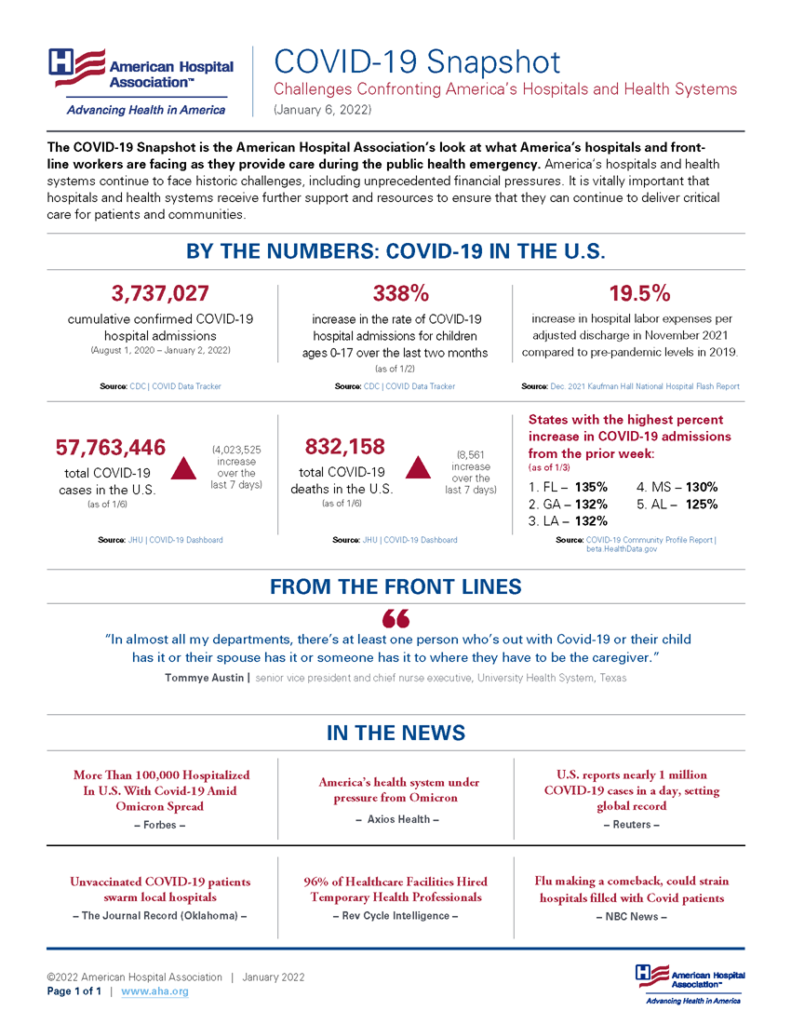
From the Omicron front, the American Hospital Association offers its January 2022 monthly COVID snapshot. “The COVID-19 Snapshot is the American Hospital Association’s look at what America’s hospitals and frontline workers are facing as they provide care during the public health emergency.”

From the COVID testing front, the FEHBlog commends this 20 minute long Wall Street Journal podcast on why at home COVID tests are so hard to find.

In that regard STAT News offers a report on a

new study raises significant doubts about whether at-home rapid antigen tests can detect the Omicron variant before infected people can transmit the virus to others.

The study looks at 30 people from settings including Broadway theaters and offices in New York and San Francisco where some workers were not only being tested daily but were, because of rules at their workplaces, receiving both the antigen tests and a daily test that used the polymerase chain reaction, or PCR, which is believed to be more reliable.

On days 0 and 1 following a positive PCR test, all of the antigen tests used produced false-negative results, even though in 28 of the 30 cases, levels of virus detected by the PCR test were high enough to infect other people. In four cases, researchers were able to confirm that infected people transmitted the virus to others during the period before they had a positive result on the rapid antigen test.

This study suggests to the FEHBlog that one rapid at home tests are still useful to help decide whether to end an isolation or quartine period at five days or once available whether or not a COVID pill should be taken. However, one use of a rapid at home test may not be so reliable to help decide whether or not to enter a gathering. In fairness to Abott and Quickvue, both manufacturers include two tests in each kit so that the test can be repeated a couple days later. If you are using these at home tests follow the manufacturers’ instructions.

From the COVID vaccine mandate front, the U.S. Court of Appeals for the Sixth Circuit on January 5 upheld by a 2-1 vote a regional stay on the Biden Administration’s government contractor mandate. As you know the U.S. Court of Appeals for the 11th Circuit is considering a nationwide stay on that mandate after deciding the stay may remain in place pending the Court’s final decision on that matter.

On Friday morning the U.S. Supreme Court will consider whether or not to maintain stays on the Biden Administation’s healthcare worker vaccination mandate and its OHSA ETS vaccinate or test program for employers with 100 or more employees. The Supreme Court allows the public to listen to the oral argument or read the transcript. The proceedings will begin at 10 am ET. The FEHBlog expects a decision from the Court in this accelerated proceeding next month.

On the private sector initiated vaccine front, the Society for Human Resource Management (SHRM) adds that

​Employers are on safer legal footing terminating employees for violating mandatory vaccination policies than imposing lesser punishments, legal experts advise. They say employers should not opt, for example, to withhold pay raises, make only vaccinated workers eligible to apply for internal positions or promote only vaccinated employees.

Many lower courts have upheld employers’ mandatory vaccination policies, which, unlike the Occupational Safety and Health Administration’s emergency temporary standard, aren’t yet before the Supreme Court, though the court may address them in passing.

On the human resources front —

  • SHRM offers 2022 guidance and reminders for benefit and compensation managers.
  • Govexec digs into the details of the President’s recent executive order adjusting federal employee compensation for 2022.

From the healthcare business front —

Healthcare Dive tells us that

Value-based primary care provider Vera Whole Health has announced plans to acquire health data and navigation company Castlight in a deal valued at approximately $370 million.

The transaction, which will bring a value-based care model to the employer healthcare market by integrating Castlight’stechnology with Vera’s clinical network and medical workers, is structured as an all-cash tender offer under which Vera will acquire all of Castlight’s outstanding shares.

Vera’s majority equity holder, Clayton, Dubilier & Rice, has committed to invest up to $338 million in the combination, while major health insurer Anthem (a long-time Castlight customer) has also pledged to make an investment, the size of which has yet to be disclosed.

Fierce Healthcare reports that

Magellan Healthcare has partnered with NeuroFlow to launch a digital emotional well-being program accessible to all Magellan members. 

The program went live at the start of the new year and aims to be a self-help tool, enabling members to take charge of their own mental health and build confidence and stress-management skills. NeuroFlow supplies the technology via a member-facing platform, which can be accessed either via an iOS or Android app or web browser. 

Members who use the platform can access exercises that are meant to keep them engaged and can receive recommendations for resources based on their needs. Activities include evidence-based videos, behavioral trackers and digital cognitive behavioral therapy programs developed by Magellan. The program can also refer members to a care manager or therapist.

Happy New Year!

Happy New Year 2022 from unsplash.com.

Welcome 2022!!

  • Federal Benefits Open Season changes took effect yesterday for annuitants and today for employees.
  • The Senate reconvenes for the second session of the 117th Congress tomorrow. The Wall Street Journal reminds us that “The Senate returns for a new session on Monday with Democrats focused on trying to change the chamber’s rules to muscle through elections legislation over Republican opposition, as lawmakers also hope to revive President Biden’s stalled economic and climate agenda.” The Senate also will hold some Committee business this week.
  • The House of Representatives reconvenes on January 10, a week from tomorrow.
  • The Supreme Court will hear oral argument on Friday January 7 about whether or not to stay the OSHA ETS creating a COVID vaccination or testing program for business with 100 or more employees and the CMS vaccination mandate for most healthcare workers.
  • From the Omicron front, David Leonhardt writing in the New York Times illustrates with charts why we have reason to hope that the pandemic will become endemic / a part of life rather than gripping our lives in 2022.

[W]hen the current surge begins receding, it will likely have left a couple of silver linings: Omicron is so contagious that it will have infected a meaningful share of the population, increasing the amount of Covid immunity and helping defang the virus. Omicron has also helped focus Americans on the importance of booster shots, further increasing immunity.

As important, the world has more powerful weapons to fight Covid than it did only a few weeks ago: two new post-infection treatments, one from Merck and a more powerful one from Pfizer, that lower the risk of hospitalization and death. With Pfizer’s treatment, the reduction is by almost 90 percent, according to early research trials.

All of which suggests that the U.S. could emerge from the Omicron wave significantly closer to the only plausible long-term future for Covid — one in which it becomes an endemic disease and a more normal part of daily life. It will still cause illness and death; a typical flu season kills more than 30,000 Americans, most of them elderly. For the foreseeable future, battling Covid — through vaccination, treatment and research — will remain important.

The FEHBlog heartily agrees with these sentiments.