
Monday Musings

Monday Musings

Today’s U.S. Supreme Court order list from its February 21 conference made no mention of the Texas v. U.S. cases (Nos. 19-840 and 19-841) concerning the Affordable Care Act’s constitutionality, one way or the other. This means that the Court will take up (or continue consideration of) the cases at a later conference. At this stage the Court is deciding whether to review the Fifth Circuit’s decision now or wait for further proceedings in the lower courts. The Court’s docket sheet states that the cases have been re-distributed for the February 28, 2020, conference.

The Federal Employees Dental and Vision Programs’ (“FEDVIP”) laws requires OPM to bid out all of the FEDVIP contracts every seven years. Currently OPM has contracted for 10 FEDVIP dental plans and four FEDVIP vision plans. Last week, OPM released its request for proposals for the next seven year FEDVIP contract cycle which begins on January 1, 2021. OPM states in the RFP document that it has capped the upper limit of dental plans at 12 and vision plans at 5. The deadline for submission of proposals is March 23, 2020. OPM expects to announce the successful contractors in May.

The Washington Post reports that the focal point of the national drug overdose crisis has shifted to the California and other western states. The drugs causing overdose deaths are principally two illicit drugs — fentanyl and methamphetamine.

In California, fatal drug overdoses over the previous 12 months increased 13.4 percent between July 2018 and July 2019, the last month for which the CDC has compiled provisional data — an additional 728 deaths.

Fentanyl delivers an immediate, powerful high but can also render the user unconscious and unbreathing almost instantly. * * * [San Francisco based harm reduction worker Kristen Marshall] noted that thousands of overdoses have been reversed by peers on the street who were supplied with naloxone as part of harm reduction efforts. For many years, San Francisco saw a growing population of drug users but had a strikingly low rate of fatal overdoses. But that was before fentanyl showed up.

In contrast, Illinois’ fatal drug deaths were down 8 percent, Pennsylvania’s down 10 percent, Michigan’s down 13 percent and Maine’s down 20 percent.

TGIF

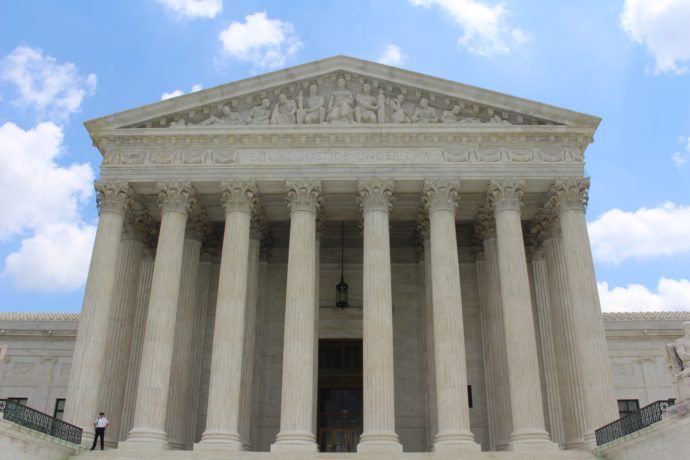
The U.S. Supreme Court was scheduled to consider the cert petition in the Texas v. United States case (Nos. 19-840, 19-841) at today’s conference of the justices. That case of course concerns the constitutionality of the Affordable Care Act. If the Court decides to accept cert / review the lower court decision in a prominent case like this, the order frequently is announced on the same day. The Supreme Court, however, released no orders today. The Court is scheduled to issue orders at 9:30 am. The FEHBlog will be keeping watch.

The FEHBlog drove up to Long Island today to visit with family. On the way, he pondered OPM’s performance measure for its FEHB operations — “Percent of FEHB enrollees in quality affordable plans.” The FY 2017 result was 74.2% and the FY 2018 result was 70.9%. The FY 2020 result will be announced next month. Why the drop from one year to the next? Why doesn’t OPM explain how quality and affordability are measured for this purpose? By the way OPM’s target was 72% for FY 2020 and is 73% for FY 2021.

In other news –

  • The Centers for Medicare and Medicaid Services yesterday “issued a proposed rule in the Federal Register which proposes a three-year extension and changes to the episode definition and pricing in the Comprehensive Care for Joint Replacement (CJR) Model.” “This proposed rule proposes to change certain aspects of the CJR Model, including incorporating outpatient hip and knee replacements into the episode of care definition, the target price calculation, the reconciliation process, the beneficiary notice requirements, gainsharing caps, and the appeals process. Additionally, to allow time to evaluate the proposed changes, the rule proposes to extend the length of the CJR Model for an additional three years, through December 31, 2023, for certain participant hospitals. “
  • Today, the Department of Health and Human Services “released a comprehensive strategy to reduce the regulatory and administrative burden related to the use of health IT, including EHRs.” “”The taxpayers made a massive investment in EHRs with the expectation that it would solve the many issues that plagued paper-bound health records,” said CMS Administrator Seema Verma. “Unfortunately – as this report shows – in all too many cases, the cure has been worse than the disease. Twenty years into the 21st century, it’s unacceptable that the application of Health IT still struggles to provide ready access to medical records – access that might mean the difference between life and death. The report’s recommendations provide valuable guidance on how to minimize EHR burden as we seek to fulfill the promise of an interoperable health system.”

Good luck with those efforts.

Midweek update

OPM and AHIP which co-sponsor the annual FEHBP Carrier Conference have posted the Conference agenda. The FEHBlog welcomes the half day of break out sessions has been added to the agenda. The conference which is held in Arlington Virginia will run from early Wednesday afternoon April 1 through late Friday morning April 3.

Earlier today, the House of Representatives, as expected, passed a bill to repeal the 2006 law obligating the Postal Service to pre-fund healthcare coverage for their annuitants. Businesses generally have to account for this type of cost as a liability, but don’t have to put the money aside as the Postal Service must (although the Postal Service has not been able to fund the cost since 2012).

The FEHBlog expects the Senate to adopt this bill which reflects reality. The FEHBlog wonders whether this action will deflate the long running effort to create a lower cost Postal Service program within the FEHBP. The next edition of a general postal reform bill will be telling on this point.

The Centers for Medicare and Medicaid Services today proposed changes to the Medicare Advantage and Part D prescription drug programs. Health Payer Intelligence explains that the proposals

will increase plans’ revenues by 0.93 percent. The proposed rule would extend Medicare Advantage eligibility to those diagnosed with end-stage renal disease (ESRD), lower cost-sharing on prescription drugs, and enforce greater transparency and comparability of out-of-pocket healthcare spending for different drugs. CMS also introduced measures to promote using generics and biosimilar

CMS explains that the agency “will accept comments on all proposals in the Advance Notice through Friday, March 6, 2020, before publishing the final Rate Announcement by April 6, 2020.”

Speaking of Medicare, Healthcare Dive discusses an intriguing Humana initiative to develop primary care centers for their Medicare Advantage members. “The new venture is likely to double the number of centers [Humana subsidiary} Partners in Primary Care operates. It currently runs 47 locations throughout Kansas, Missouri, North Carolina, South Carolina, Texas and Florida.”

The FEHBlog has been tracking the course of the Texas v. U.S. case through the U.S. Supreme Court (Consolidated Nos. 19-840, 19-841). A group of States and the House of Representatives have petitioned the Supreme Court to review a December 2019 Fifth Circuit opinion holding the ACA’s individual mandate unconstitutional and directing the lower court to reconsider the extent to which the remainder of this massive law is severable from the unconstitutional part.

The parties’ and amici (friends of the Court) briefing on the petition for review will be competed on February 12, 2020. The Court’s docket sheet revealed today that the briefs will be distributed to the Court for the February 21, 2020 conference.

The Court needs four votes to take the case for review. If the Court decides to grant review (or certiorari), the decision would be announced late afternoon on February 12. Otherwise, a decision to decline review would be announced the following Monday February 15. The Court may punt the case to later conference in which event the cases will not be referenced in the February 15 order. All of the briefs are available by searching the Court’s docket for one of the case numbers — 19-840 or 19-841.

Medcity News provides a useful list of prescription drugs that are going off patent in 2020. The list also projects the availability of generic competitors.

Midweek Update

The FEHBlog wishes to remind his loyal readers that you may subscribe to FEHBlog emails which arrive with the full posts the morning after the post goes live. A subscription box prominently appears on the right margin of the FEHBlog page at ermersuter.com

Has any law generated more litigation in a short period of time than the Affordable Care Act??? Katie Keith in the Health Affairs blog provides a lengthy status report on the major ACA cases pending in the U.S. Supreme Court and the U.S. Court of Appeals.

In other judicial news, the U.S. District Court for the District of Columbia ruled yesterday that the Department of Health and Human Services failed to follow the Administrative Procedure Act in certain respects with respect to its 2013 and 2016 rule makings on access to medical records by patients and third parties such as lawyers and insurers. The details are explained in this Health Security IT article. Due to the importance of this issue to HHS, the FEHBlog expects the agency to take remedial administrative action quickly.

In good prescription drug news:

  • Healthcare Dive reports that pharmaceutical manufactures finally are rolling out biosimilar drugs which action will lower the cost of expensive specialty drugs over time.
  • CVS Health announced today “a new solution eliminating member out-of-pocket costs associated with all diabetes prescription medications, including insulin. Offered through the company’s pharmacy benefit manager (PBM), CVS Caremark, RxZERO enables employers and health plan sponsors to leverage formulary and plan design approaches to offer all categories of diabetes medications at zero dollar out of pocket for their members without raising costs for the plan sponsor or increasing premiums or deductibles for all plan members.”

Tuesday Tidbits

This morning without comment, the Supreme Court denied the motion of the petitioners defending the Affordable Care Act to expedite the Court’s review of the Fifth Circuit Court of Appeal’s decision on the ACA’s constitutionality (Nos. 19-840, 841). The FEHBlog has long given up on trying to predict Supreme Court decisions. Now. the respondents seeking to take down the law will have until shortly after the Super Bowl to submit their briefs. The petitioners will have an opportunity to reply, and then the Supreme Court can consider the petitioner in due course, perhaps late March or April. If the Court decides to review the Fifth Circuit opinion, which the FEHBlog assumes is unlikely, the case would be argued next fall. As yet, Federal District Judge Reed O’Connor has not begun the process of reconsidering his vacated decision holding the entire remainder of the ACA inseparable from the unconstitutional ACA individual mandate at least according to the docket sheet available on PACER. The stay order that the Judge Reed entered in December 2018 states in pertinent part that “The parties are directed to notify the Court upon the conclusion of the appeal of the partial judgment within 14 days of any decision.” As the Court is busy, it’s likely that the Judge will tend to other matters until the Supreme Court decides what to do at this stage at least in the FEHBlog’s view.

The Centers for Disease Control (“CDC”) announced today that the agency

is closely monitoring developments around a novel (new) coronavirus first identified in Wuhan, Hubei Province, China. Chinese authorities identified the new coronavirus, which has resulted in close to 300 confirmed cases in China, including cases outside Wuhan City, with additional cases being identified in a growing number of countries internationally. The first case in the United States was announced on January 21, 2020. There are ongoing investigations to learn more.

The Wall Street Journal reported over the weekend that

Nancy Messonnier, the CDC’s director for the National Center for Immunization and Respiratory Diseases, said that as health officials develop diagnostic tests and start testing people with symptoms who have traveled to Wuhan, more cases are likely to be identified around the world, including in the U.S. 

“As we start testing more, I expect that we’re going to see more cases,” she said. 

“I think it’s highly plausible there will be at least a case in the United States.” 

She called the spread a “serious issue,” but added that the CDC has “faced this challenge before.”

“Based on the info CDC has today, we believe the current risk from the virus to the general public is low,” Dr. Messonnier said in a telephonic press conference.

FYI, the Government Accountability Office (GAO) has issued a report on Artificial Intelligence in Healthcare: Benefits and Challenges of Machine Learning in Drug Development. Here’s a link to the GAO’s version of Cliff Notes on the report.

Supreme Court scheduling action

Healthcare Dive reports that “The Supreme Court on Monday set a Friday [January 10] afternoon deadline for challengers of the ACA to respond to the blue state coalition’s motion to expedite the case.” The lead coalition member State of California has requested that the Court calendar to case for oral argument this Spring so that a Supreme Court decision may be issued before the end of the current term in late June / early July. This scheduling order allows the Supreme Court to consider the motion to expedite at its Friday January 17, 2020, conference. Approval of the motion would require the support of at least five justices. If the Court decides the motion on January 17, the decision would be announced that Friday afternoon or the following Tuesday morning. Stay tuned.