Friday Stats and More

Friday Stats and More

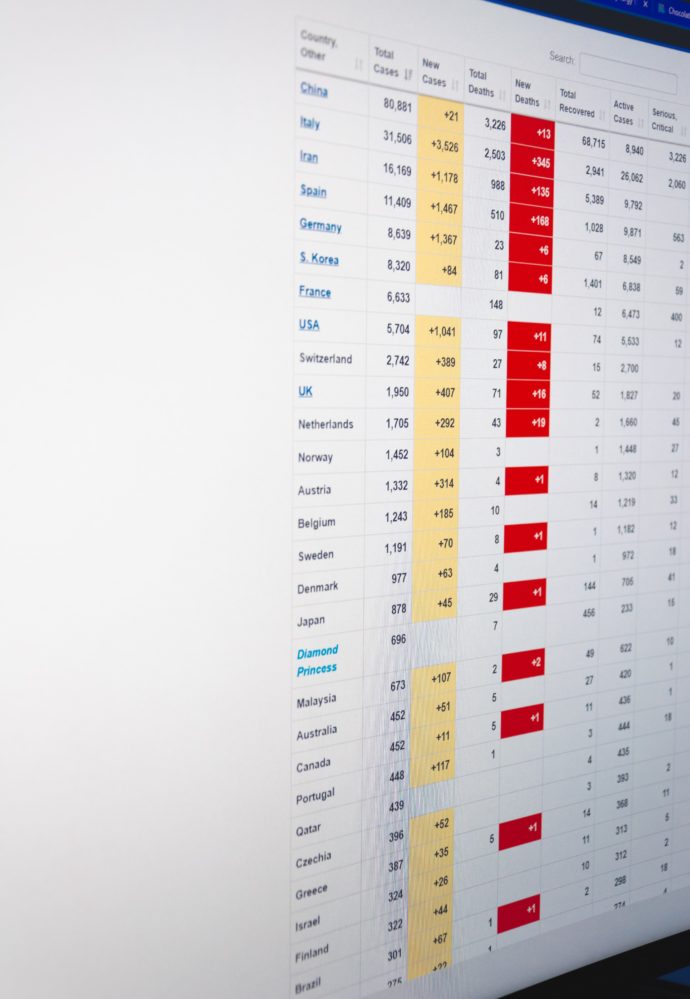
Per the CDC’s COVID-19 Cases in the U.S. that the FEHBlog tracks, the number of COVID-19 cases crossed the 1.2 million mark and the number of COVID-19 deaths exceeded 70,000 this week. The case mortality rate hit 6% on Thursday after being in the 5 to 6% range for 2 1/2 weeks. Before then the case mortality rate was increasing much faster. So we evidently are plateauing. The Wall Street Journal reports that the leading cause of death in our country remains heart disease. For an even better perspective, check out the CDC’s COVIDView which is released on Fridays.

The Wall Street Journal offers a perspective on State reopening here. The FEHBlog got a kick out of listening too this 20 minute long WSJ podcast on office reopenings titled “Welcome Back to the Office. Your Every Move Will Be Watched.”

The Wall Street Journal also has a regularly updated site on COVID-19 testing and treatments.

Health Payer Intelligence brings us up to date on the Texas v. U.S. case over the Affordable Care Act’s constitutionality. The Supreme Court will hear the case next fall.

Weekend Update

The Senate, but not the House of Representatives, returns to Capitol Hill tomorrow. On Wednesday, the Senate Homeland Security and Governmental Affairs Committee is holding a roundtable discussion about how new COVID-19 information should drive policy. On Thursday, the Senate Health Education Labor and Pensions Committee is holding a “Shark Tank” about new tests for COVID-19.

Federal News Network reports that George Nesterczuk who was President Trump’s first nominee to be OPM Director, has become a senior advisor to OPM’s current acting Director Michael Rigas. In 2017, Mr. Nesterczuk asked the President to withdraw the nomination in the face of criticism from federal employee unions.

The Wall Street Journal estimates the revenues that major health insurers will receive at some point due to the Supreme Court’s favorable decision in the Affordable Care Act risk corridor case last Monday. The Supreme Court begins its series of May telephonic oral arguments tomorrow.

The Journal further reports

The promise of new payments comes as the health-insurance industry has seen little financial pressure from the pandemic. In earnings calls over the past few weeks, insurers said they’d seen minimal impact on first-quarter results, and they were benefiting from reduced health-care costs due to the widespread cancellation of elective procedures and patients steering clear of routine care.

But the insurers said they could see costs ramp back up later in the year. Overall, several big companies including UnitedHealth Group Inc., Anthem Inc. and Humana left their financial guidance on earnings for 2020 in place despite the coronavirus impact.

A WSJ article posted today adds that

With fewer claims to pay out, some health insurers are using their improved balance sheets to help struggling providers secure loans, pay claims earlier and, in some cases, underwrite patients’ outstanding bills. And they have good reason to ensure providers survive the pandemic: “There is a risk that there is a smaller provider network after this,” said Brad Ellis, a senior director at Fitch Ratings. “So health insurers are trying to maintain the network.”

Well done.

Tuesday Tidbits

Following up on yesterday’s post on the Supreme Court’s decision in the Affordable Care Act risk corridor case, read Katie Keith’s article in Health Affairs on all of the decision’s reverberations. Fascinating.

The FEHBlog did virtually attend the NCQA Quality Talks 2020 conference today. Two speakers favorably caught the FEHBlog’s attention:

With regard to OPM’s concern about rooting out low value care in the healthcare system, Cardiologist Rita Redberg, MD, has been editing for years a series in the JAMA Internal Medicine Journal titled “Less is More.” Dr. Redberg blasted the medical device industry for promoting artery stents before first obtaining reliable evidence of the device’s safety and efficacy. As it turns out the device is no more effective than a placebo.

The good doctor explained that normally it’s difficult to perform a blinded research study with a new medical device because the research participant usually knows whether or not she received the device (as a opposed to a sugar pill.) In this recent Orbita study, the researchers convinced all of the study participants that they had received a stent. The good doctor also spoke about a friend who unnecessarily received a stent and wound up needing a heart transplant.

The FEHBlog also was quite impressed by Dana Lewis a young go-getter who along with a colleague developed a small closed loop computerized system to control her continuous glucose monitor as she has type 1 diabetes. She then founded an “open source artificial pancreas system movement (#OpenAPS)” to help others. She is not resting on her laurels.

An article in Medical Economics discusses a proposed Labor Department rule intended to protect TRICARE medical networks. However, the rule if finalized would disrupt FEHBP medical networks. The FEHBlog submitted comments to the Labor Department on the proposed rule for the FEHB plan trade association he represents. The comments asked the Labor Department to protect both TRICARE and FEHBP networks. He hopes the Labor Department will pull back the rule given the COVID-19 emergency.

In a bit of good COVID-19 news, the New York Times reported progress being made in two efforts to create a COVID-19 vaccine. Fingers crossed.

Also the Hill reported this afternoon that the House of Representatives has changed its mind about returning to Capitol Hill on May 4. The Senate continues to plan to return to the Capitol next Monday.

Monday Musings

Here’s a musing for you. The FEHBlog expects that everyone is familiar with the spiritual titled “Sometimes I feel like a motherless child.” Well after reviewing lots of news, the FEHBlog to paraphrase this spiritual sometimes feels like the only person in America who believes that the U.S. healthcare system can pull us through this pandemic.

The House and Senate announced today that each body of Congress will be returning to Capitol Hill next Monday May 4. Welcome back.

In a decision sure to delight health insurers that took the initial plunge with the ACA marketplaces back in 2014, the U.S. Supreme Court ruled today in a virtually unanimous opinion that the U.S. owes many of those insurers a total of roughly $12.3 billion for unappropriated yet mandated risk corridor payments. The only dissenter was Justice Alito who agreed that the government owed the money but questioned whether there was a private right of action under the ACA to sue the government for the money. It’s not a crazy thought because the government is generally protected against lawsuits by a doctrine known as sovereign immunity.

The FEHBlog thought that this would be a good opportunity to update readers on the major commercial COVID-19 testing sites:

Castlight offers a COVID 19 testing directory which organizations can link to their own websites.

Verily Health, which is an affiliate of Alphabet/Google, has “launched COVID-19 Pathfinder— a new set of tools that provide on-demand access to COVID-19 information directly from a hospital or health system website.” Cool.

In a bit of good news for HHS, Fierce Healthcare reports that the EPIC, the electronic health record (“EHR”) giant, has switched from “fiercely” opposing to supporting the HHS EHR interoperability rules. “Epic controls more than a quarter of the hospital EHR market, according to KLAS Research, and, among hospitals with 500 or more beds, Epic has a 58% market share.”

Monday Musings

Becker’s Hospital Review provides a helpful update of today’s top seven COVID-19 news items.

Healthleaders Media interviews “Karen Murphy, PhD, RN, executive vice president and chief innovation officer at Geisinger, and founding director of the Steele Institute” for Health Innovation about COVID-19 and lessons for the future.

HL: Is telehealth among the initiatives that should be expanded? What else?

Murphy: Virtual care is one thing that I think will transform the healthcare industry. And, we’re looking at what we need in terms of infection control. How do we change our practices?

Federal News Network reports on legislative ideas coming from the majority leadership of the House Oversight and Reform Committee. With regard to the FEHBP, the leaders

recommended allowing federal employees to change or opt into new insurance plans during a health emergency like the current pandemic.

Currently, FEHB participants have one chance a year, usually a four-week “open season,” to make changes to their health insurance plan.

In addition, the chairmen suggested allowing employees to extend eligibility for their federal health, dental and vision benefits to qualifying dependents for an additional year. Some children, for example, may age out of their family’s current health plans during the coronavirus pandemic, they said.

The FEHBlog recalls that approximately 15% of FEHBP eligible employees decline FEHBP coverage in favor of taking coverage under his or her spouse’s employer sponsored coverage. We the rapid employment loss due to the great hunkering down, it would make sense for OPM to remind federal employees that losing other health coverage is a qualifying life event that allows them to rejoin the FEHBP for themselves and their eligible family members. OPM prominently notes that “Generally, if you choose to make a change to your enrollment, you must make the change within 60 days of the event.”

Today, the U.S. Supreme Court, which had cancelled its March and April oral arguments, rescheduled ten of those cases for telephonic oral argument in May. “The Court anticipates providing a live audio feed of these arguments to news media.” Normally the press desiring live feeds would have listen to the oral argument in person at the Court. Transcripts of the oral argument come later.

Friday Stats and More

The number of COVID-19 cases continues to grow along with the COVID-19 death rate (number of deaths over number of cases per the CDC). The FEHBlog’s statistics are drawn from the CDC’s now daily Cases in United States Summary.

Cause3/203/274/3
Travel2907121388
Person to Person31013264325
Uncategorized984283318233,566
Total Cases10,44285,356239,279
Total Deaths 15012465442
Death Rate1.44%1.46%2.27%

For context, the CDC’s latest Fluview “estimates that so far this season there have been at least 39 million flu illnesses, 400,000 hospitalizations and 24,000 deaths from flu.” That represents a death rate of less than one tenth of one percent (0.06%). Fortunately this flu season appears to be subsiding. The CDC additionally “estimates that influenza has resulted in between 9 million – 45 million illnesses, between 140,000 – 810,000 hospitalizations and between 12,000 – 61,000 deaths annually since 2010.”

The FEHBlog has wondered where is the light at the end of the COVID-19 tunnel. He now appreciates the fact that we haven’t made it half way through the tunnel. Hang in there.

Not surprisingly but regrettably Govexec.com reports that thousands of federal employees have contracted COVID-19 and attempts to provide a numerical breakdown by agency.

In more upbeat news, MedCity News informs us that

The Food and Drug Administration has given an emergency use authorization to a test for Covid-19 that detects whether a person is infected through the use of antibodies. The FDA granted the authorization to Research Triangle Park, North Carolina-based Cellex, for the qSARS-CoV-2 IgG/IgM Rapid Test, according to a letter from FDA chief scientist Denise Hinton, sent Wednesday to Cellex CEO James Li. The test is designed to produce results in 15-20 minutes.

The advantage of antibody tests is that they not only are less likely to produce false-negative results, but can also be used to detect past infections, meaning that they can be used to determine if a patient without symptoms has previously had Covid-19 and could thus be immune to it. It could also be used to indicate stage of infection and estimate time since exposure. Nevertheless, according to the primer, a limitation to antibody testing is that the body’s immune response to SARS-CoV-2 is slow.

The Labor Department continues to add to its list of now 78 FAQs on the FFCRA’s COVID-19 paid sick leave law which took effect on April 1 while the U.S. Supreme Court cancelled its April oral arguments which would have occurred at the end of this month.

Monday Musings

The FEHBlog got to work this morning around 8:30 am. Before he knew it, it was past 9:30 am, the time at which the Supreme Court releases online its orders from the latest conference of the Justices. He clicked on the Adobe Acrobat PDF link to the Court’s order list — no go. Bad PDF. He tried different browsers — same result. Twitter ho and there it was “blue State victory” the Supreme Court had agreed to review the Texas v. U.S. case holding the ACA’s individual mandate unconstitutional. The political comment did not make sense to the FEHBlog because only four Justices need to approve a petition for certiorari / review and there are four Democrat appointees on the Court. However, you need five Justices for a final victory. In any event by then the FEHBlog was able to open the Court’s order list and he found the following on page 3:

CERTIORARI GRANTED

19-840 CALIFORNIA, ET AL. V. TEXAS, ET AL.

19-1019 TEXAS, ET AL. V. CALIFORNIA, ET AL.
The motion of 33 State Hospital Associations for leave to file a brief as amici curiae in No. 19-840 is granted. The petitions for writs of certiorari are granted. The cases are consolidated, and a total of one hour is allotted for oral argument.

Case No. 19-1019??!! The FEHBlog was aware of the unmentioned Case No. 19-841 which is the House of Representative’s cert. petition. But what is Case No. 19-1019? It turns out that on Valentine’s Day the red states had filed a cross motion for review / cert with the Supreme Court. So it appears that both sides won at the first stage of the Supreme Court proceedings.

The Supreme Court will hear oral argument in the cases early in its next Term which begins on the first Monday in October 2020. There is no way the Court will decide the case before the Presidential election day on November 3. Hopefully, to avoid a political kerfuffle at the oral argument, the Court will schedule the argument for later in November.

Meanwhile the federal district court for the Northern District of Texas will hold off reconsidering the unconstitutional individual mandate’s proper degree of severance from the remainder of the massive law. The Fifth Circuit in its December order vacated the lower court’s initial decision that the remainder of the law was inseparable and therefore equally unconstitutional. The FEHBlog’s guess is that the Supreme Court took the case in order to short circuit that remand. But time will tell.

In another surprise, the FEHBlog learned along with the healthcare world today that President Trump will speak on the issue of electronic health record interoperability at the next Monday’s opening day of the monstrous HIMSS conference in Orlando, Florida. Health IT News reports that while former Presidents Clinton and Bush 43 have spoken at this conference, President Trump’s appearance will be the first by a sitting President.

Trump’s speech will touch on various aspects of interoperability, innovation and digital health. If past HIMSS conferences are any indication, his appearance may also be timed with the long-awaited final rules on information blocking and patient access from the Office of the National Coordinator for Health IT.

Another probable topic of discussion will be an update on the Trump Administration’s ongoing response to the COVID-19 coronavirus outbreak.

Again time will tell.

Medicare provides coverage for Americans under age 65 with end stage renal / kidney disease for Americans. However,

Medicare is the secondary payer to group health plans (GHPs) [including FEHB plan] for individuals entitled to Medicare based on ESRD for a coordination period of 30 months regardless of the number of employees and whether the coverage is based on current employment status.  Medicare is secondary to GHP coverage provided through the Consolidated Omnibus Budget Reconciliation Act (COBRA), or a retirement plan.

Given the FEHBP’s role in the early stages of this serious disease, the FEHBlog wanted to point out this Centers for Disease Control page on understanding chronic kidney disease. End stage renal disease is a later stage of chronic kidney disease. The CDC explains that

The two main causes of CKD are diabetes and high blood pressure. About 1 in 3 adults with diabetes and 1 in 5 adults with high blood pressure have CKD.

People may not feel sick or notice any symptoms until CKD is advanced. The only way people find out if they have CKD is through simple blood and urine tests. The blood test checks for creatinine (a waste product) in the blood to see how well the kidneys work. The urine test checks for protein in the urine (an early sign of kidney damage).

Here’s another reason why annual physical exams are important.

TGIF

The FEHBlog is out of town this weekend. He did check the Supreme Court’s order list this afternoon and nothing came out on the U.S. v Texas cases (Nos. 19-840 and 19-841). Next update will be 9:30 am on Monday when all of the orders from today’s conference are posted. We are waiting to learn whether or not the Supreme Court has decided to review the cases at this interim stage.

In other news —

  • PhRMA issued its own list of low value care that doctors should not prescribe / order and health plans should not cover. It’s worth a look.
  • The Employee Benefits Research Institute issued a one page graphic report on 15 years of health savings accountholder behavior.
  • Kaiser Health News posted another level headed story on the COVID-19 virus titled — “Growing Concerns Of Coronavirus Should Spur Plans – Not Panic – In The Workplace.”

Monday Musings

Today’s U.S. Supreme Court order list from its February 21 conference made no mention of the Texas v. U.S. cases (Nos. 19-840 and 19-841) concerning the Affordable Care Act’s constitutionality, one way or the other. This means that the Court will take up (or continue consideration of) the cases at a later conference. At this stage the Court is deciding whether to review the Fifth Circuit’s decision now or wait for further proceedings in the lower courts. The Court’s docket sheet states that the cases have been re-distributed for the February 28, 2020, conference.

The Federal Employees Dental and Vision Programs’ (“FEDVIP”) laws requires OPM to bid out all of the FEDVIP contracts every seven years. Currently OPM has contracted for 10 FEDVIP dental plans and four FEDVIP vision plans. Last week, OPM released its request for proposals for the next seven year FEDVIP contract cycle which begins on January 1, 2021. OPM states in the RFP document that it has capped the upper limit of dental plans at 12 and vision plans at 5. The deadline for submission of proposals is March 23, 2020. OPM expects to announce the successful contractors in May.

The Washington Post reports that the focal point of the national drug overdose crisis has shifted to the California and other western states. The drugs causing overdose deaths are principally two illicit drugs — fentanyl and methamphetamine.

In California, fatal drug overdoses over the previous 12 months increased 13.4 percent between July 2018 and July 2019, the last month for which the CDC has compiled provisional data — an additional 728 deaths.

Fentanyl delivers an immediate, powerful high but can also render the user unconscious and unbreathing almost instantly. * * * [San Francisco based harm reduction worker Kristen Marshall] noted that thousands of overdoses have been reversed by peers on the street who were supplied with naloxone as part of harm reduction efforts. For many years, San Francisco saw a growing population of drug users but had a strikingly low rate of fatal overdoses. But that was before fentanyl showed up.

In contrast, Illinois’ fatal drug deaths were down 8 percent, Pennsylvania’s down 10 percent, Michigan’s down 13 percent and Maine’s down 20 percent.

TGIF

The U.S. Supreme Court was scheduled to consider the cert petition in the Texas v. United States case (Nos. 19-840, 19-841) at today’s conference of the justices. That case of course concerns the constitutionality of the Affordable Care Act. If the Court decides to accept cert / review the lower court decision in a prominent case like this, the order frequently is announced on the same day. The Supreme Court, however, released no orders today. The Court is scheduled to issue orders at 9:30 am. The FEHBlog will be keeping watch.

The FEHBlog drove up to Long Island today to visit with family. On the way, he pondered OPM’s performance measure for its FEHB operations — “Percent of FEHB enrollees in quality affordable plans.” The FY 2017 result was 74.2% and the FY 2018 result was 70.9%. The FY 2020 result will be announced next month. Why the drop from one year to the next? Why doesn’t OPM explain how quality and affordability are measured for this purpose? By the way OPM’s target was 72% for FY 2020 and is 73% for FY 2021.

In other news –

  • The Centers for Medicare and Medicaid Services yesterday “issued a proposed rule in the Federal Register which proposes a three-year extension and changes to the episode definition and pricing in the Comprehensive Care for Joint Replacement (CJR) Model.” “This proposed rule proposes to change certain aspects of the CJR Model, including incorporating outpatient hip and knee replacements into the episode of care definition, the target price calculation, the reconciliation process, the beneficiary notice requirements, gainsharing caps, and the appeals process. Additionally, to allow time to evaluate the proposed changes, the rule proposes to extend the length of the CJR Model for an additional three years, through December 31, 2023, for certain participant hospitals. “
  • Today, the Department of Health and Human Services “released a comprehensive strategy to reduce the regulatory and administrative burden related to the use of health IT, including EHRs.” “”The taxpayers made a massive investment in EHRs with the expectation that it would solve the many issues that plagued paper-bound health records,” said CMS Administrator Seema Verma. “Unfortunately – as this report shows – in all too many cases, the cure has been worse than the disease. Twenty years into the 21st century, it’s unacceptable that the application of Health IT still struggles to provide ready access to medical records – access that might mean the difference between life and death. The report’s recommendations provide valuable guidance on how to minimize EHR burden as we seek to fulfill the promise of an interoperable health system.”

Good luck with those efforts.