Midweek Update

Midweek Update

Photo by Josh Mills on Unsplash

From Capitol Hill, overnight, the FY 2022 onmnibus appropriations bill language was released. The bill is over twenty one hundred pages long. The American Hospital Association has taken the time to summarize the bill’s healthcare provisions. Federal News Network discusses the bill’s federal workforce provisions. The Wall Street Journal notes

Democratic House leaders said they would remove a contentious $15.6 billion Covid-19 aid provision from the omnibus spending bill to try to get it over the finish line, after angry rank-and-file members rejected clawing back states’ unused coronavirus money to fund the proposal.

The decision to drop the Covid-19 aid was a dramatic setback for both House Speaker Nancy Pelosi (D., Calif.), who negotiated the plan, and President Biden, whose administration originally asked for $22.5 billion for Covid-19 aid and now will get nothing from the bill.

The House of Representative currently is considering the bill and a fourth continuing resolution that would last the four days beyond March 11 that the Senate needs to pass the bill. The House is expected to vote on the bill around 9:15 pm ET. Passage of the bill and the brief continuing resolution is expected.

From the Rx coverage front, Fierce Healthcare informs us

Amazon Pharmacy is partnering with Blue Plans in five states and Prime Therapeutics to tackle the affordability of prescription medications.

The online retail giant’s pharmacy arm is rolling out a prescription discount savings card that’s available to some Blue Plans members.

Integrating this discount card pricing into the shopping experience lets eligible customers compare their co-pay or discount price upfront and then apply purchases for eligible medications to the out-of-pocket maximums and deductibles associated with their insurance plan, according to Nworah Ayogu, M.D., chief medical officer for Amazon Pharmacy. * * *

Eligible plans now include Horizon Blue Cross Blue Shield of New Jersey, Blue Cross Blue Shield of Nebraska, Blue Cross Blue Shield of Alabama, Florida Blue and Blue Cross and Blue Shield of Kansas. 

From the miscellany department —

  • The National Committee for Quality Assurance has created a health equity website.
  • America’s Health Insurance Plans celebrated International Womens’ Day yesterday with remarks from healthcare leaders on how health plans can improve healthcare for women.
  • The Centers for Medicare and Medicaid Services issued new guidance for group health plans on submitting a valid documented defense to Medicare overpayment recovery demands.

Thursday Miscellany

Photo by Josh Mills on Unsplash

From Capitol Hill, the Senate has adjourned until Monday March 7 after setting another cloture vote on the Postal Reform Act of 2022 (HR 3076) for Monday at 5:30 pm. While the FEHBlog is not a Senate procedure expert, it appears that another cloture vote is required because a minor Senate amendment was filed after the first cloture vote. Postal reform must be getting real because the Wall Street Journal posted an account of the decade-long effort to pass this legislation today.

From the Omicron front, the FEHBlog’s favorite part of the President’s new strategy was explained by the White House Covid czar yesterday:

Pfizer’s pill {Paxlovid] is a gamechanger — 90 percent effective at keeping people out of the hospital.

We collaborated with Pfizer to accelerate development of the pill.  And we’ve ordered 20 million courses.

As the President announced last night, Pfizer worked overtime to further accelerate delivery.  This month alone — the month of March — we’ll have 1 million of these treatment courses available.  And in April, that number will more than double.

To ensure these lifesaving treatments are easily accessible, the President’s Plan launches a new “Test to Treat” initiative to provide individuals access to testing and treatment for free, all in one stop. 

Hundreds of one-stop sites will open across the country this month, located at local pharmacy clinics, community health centers, long-term care facilities, and veterans’ health centers.

Marketwatch adds today that “CVS Health Corp., the Walgreens Boots Alliance Inc., and Walmart Inc. said they will participate in the test-to-treat initiative, a new program that allows someone who has tested positive for the virus to get antiviral pills during the same visit at no cost.”

Covid treatment costs were astronomical because care principally was given in hospitals and other healthcare facilities, creating a major burden on the healthcare system. Facilitating the use of Flonase for Covid will avoid the vast majority of those hospitalizations, thereby lowering healthcare costs.

Speaking of testing, the Wall Street Journal reports that

Manufacturers are developing new types of at-home tests, including for flu and strep throat, aimed at consumers who are increasingly monitoring and managing their own health through fitness apps and smartwatches.

Boulder, Colo.-based fertility company MFB Fertility Inc. received clearance from the U.S. Food and Drug Administration in February 2020 for its Proov test, designed to help women measure their hormone levels and to know when in a given month they are most likely to become pregnant. A typical kit includes 20 testing strips, allowing a woman to test daily, which the company said would be tough to achieve through visits to a doctor’s office.

Amy Beckley, the company’s chief executive, said the rise of at-home Covid-19 tests over the past year has made it much easier for people to understand her product.

“All of a sudden, home diagnostics and home testing became a thing,” she said.

Mobihealth News reported last June

The U.S. Air Force has inked a $1.3 million deal with MFB Fertility in order to provide military members and their partners the former’s home fertility tests.

The Air Force’s AFWERX office will invest in Proov, an at-home ovulation test with FDA clearance. The test works by measuring Pregnanediol Glucuronide (PdG), the urine metabolite of progesterone, which is released by the ovary after ovulation. High levels of PdG over multiple days can confirm that successful ovulation took place.

The contract will provide free Proov kits to Air Force couples upon request and connect them to fertility specialists.

Two cool innovations.

From the healthcare policy front —

  • The White House released a fact sheet on steps underway to address the Nation’s opioid epidemic.
  • The Associated Press reports on the President’s mental healthcare policy proposals made in Tuesday’s State of the Union address. For example, under the President’s plan, “Health insurance plans would have to cover three mental health visits a year at no added cost to patients.” I suggest that the Administration consider the fact that most employers offer employee assistance plans that already offer two or three free mental health therapy visits. The overcomplicated federal mental health parity law fails to look at the big picture.

From the diabetes front —

  • The AMA offers six tips for screening patients for pre-diabetes. Many of the tips also could be applied by health plan case managers and coaches.
  • The American Diabetes Association delves into the relationship between diabetes and kidney disease.

From the litigation front, Reuters reports

The Sackler family owners of Purdue Pharma LP reached a deal with a group of attorneys general to pay up to $6 billion in cash to resolve widespread litigation alleging that they fueled the U.S. opioid epidemic, bringing the OxyContin maker closer to exiting bankruptcy.

The attorneys general for eight states and the District of Columbia, who had blocked a previous settlement that included a $4.3 billion cash payment, announced the deal after weeks of mediation with the Sacklers.

The family agreed to pay at least $5.5 billion in cash, which will be used for abating a crisis that has led to nearly 500,000 U.S. opioid overdose deaths over two decades.

The value of the deal could grow as the family members sell additional assets.

U.S. Bankruptcy Judge Robert Drain must approve the deal, which protects the Sacklers from civil lawsuits. Purdue requested a March 9 hearing for Drain to review the agreement.

From the Rx coverage front, Biopharma Dive reports

Civica is making plans to offer three versions of insulin that can be sold at dramatically lower prices than today’s alternatives, targeting a need highlighted by President Joe Biden during this week’s State of the Union Address.

The nonprofit company, created by hospital systems and philanthropies to address drug shortages, said Wednesday it will recommend pricing of no more than $30 for the vials it produces. Name-brand versions can currently cost 10 times that amount at cash prices.

Civica announced an ambitious timeline, projecting that the first product — designed to be interchangeable with Sanofi’s Lantus — would be available as soon as early 2024. The company also aims to manufacture cheaper versions of Eli Lilly’s Humalog and Novo Nordisk’s Novolog, in both vials and pre-filled pens.

Also the Institute for Clinical and Economic Review (“ICER”) announced

it will assess the comparative clinical effectiveness and value of subcutaneous semaglutide (Wegovy, Novo Nordisk), phentermine / topiramate (Qsymia, Vivus Pharmaceuticals), liraglutide (Saxenda, Novo Nordisk), and naltrexone/bupropion (Contrave, Currax Pharma) for the treatment of obesity. 

The assessment will be publicly discussed during a meeting of the New England Comparative Effectiveness Public Advisory Council (New England CEPAC) in September 2022, where the independent evidence review panel will deliberate and vote on evidence presented in ICER’s report.

ICER’s website provides timelines of key posting dates and public comment periods for this assessment.

Midweek Update

From Capitol Hill, the Senate press gallery informs us “The Senate will convene Thursday at 10:00 am and resume the postal reform bill, which ML Schumer filed cloture on this evening.” It’s worth noting that yesterday “Amendment SA 4955 [was] proposed by Senator Schumer for Senator Peters. (consideration: CR S872; text: CR S872) To modify the deadline for the initial report on the operations and financial condition of the United States Postal Service.” The FEHBlog did not expect any amendments to be offered. Nevertheless, the bill appears on track to passage soon.

From the State of the Union address department

  • Healthcare Dive discusses the President’s healthcare policy proposals.
  • The Society for Human Resources Management discusses the President’s employment policy proposals.

From the Omicron front, the Administration announced a new Covid strategy today. Beckers Hospital Review lists eight highlights from the new strategy. The Wall Street Journal adds

The plan underscores the administration’s shifting focus from responding to the pandemic crisis to a new normal that focuses on managing the disease. But the road map, the result of weeks of work with advisers, state leaders and public health experts, relies heavily on Congress approving billions of dollars in new Covid-19 relief funding.

In other healthcare policy news

  • EHR Intelligence tells us

The Sequoia Project’s Emergency Preparedness Information Workgroup (EPIW) has published a free whitepaper that outlines public health recommendations based on lessons learned from COVID-19 response efforts.

The workgroup of public health, emergency preparedness, and response experts met over several months to create the Pandemic Response Insights and Recommendations whitepaper.

EPIW members created a SWOT (strengths, weaknesses, opportunities, threats) analysis of the COVID-19 response. They then consolidated this data into 17 recommendations to help local, state, and federal stakeholders prepare for a more coordinated national response to the next public health emergency.

  • The Food and Drug Administration issued “three final guidances to industry regarding cancer clinical trials that parallel the goals of President Biden’s recently announced effort to renew and build upon his 2016 Cancer Moonshot initiative to facilitate continued advancement in cancer prevention, detection, research, and patient care.”
  • The HHS Office for Civil Rights published guidance on gender-affirming care, civil rights, and patient privacy. The underlying policy as explained in the guidance is as follows:

The Department of Health & Human Services (HHS) stands with transgender and gender nonconforming youth and their families—and the significant majority of expert medical associations—in unequivocally stating that gender affirming care for minors, when medically appropriate and necessary, improves their physical and mental health. Attempts to restrict, challenge, or falsely characterize this potentially lifesaving care as abuse is dangerous. Such attempts block parents from making critical health care decisions for their children, create a chilling effect on health care providers who are necessary to provide care for these youth, and ultimately negatively impact the health and well-being of transgender and gender nonconforming youth.

On the Rx coverage front, Beckers Hospital Review informs us “Annual spending on pharmaceutical products has skyrocketed since 2010, though out-of-pocket costs have fallen, according to a Feb. 28 report from ValuePenguin.”

From the truth is stranger than fiction department, Govexec reports

The panel tasked with enforcing [federal] civil service protections has regained a governing quorum after the Senate approved two of President Biden’s three nominees on Tuesday, putting an end to five years of dysfunction. 

Both Tristan Leavitt and Raymond Limon won unanimous support in Senate voice votes, giving the Merit Systems Protection Board confirmed members of its central panel for the first time since 2019. The board needs at least two of its three slots filled to have a quorum and hear appeals, which has not occurred since January 2017. Cathy Harris, Biden’s third and final nominee for the board, is still awaiting a vote in the Senate. 

The quasi-judicial agency has a backlog of more than 3,500 cases pending before its central board, which the nominees have pledged to quickly address through an expedited process. Regional administrative judges at MSPB have continued to hear cases of alleged violations of prohibited personnel practices by federal agencies, but agencies or individuals that have sought further appeal to the board’s presidentially appointed, Senate-confirmed central panel have seen their causes languish—in some instances, for years.  

Friday Stats and More

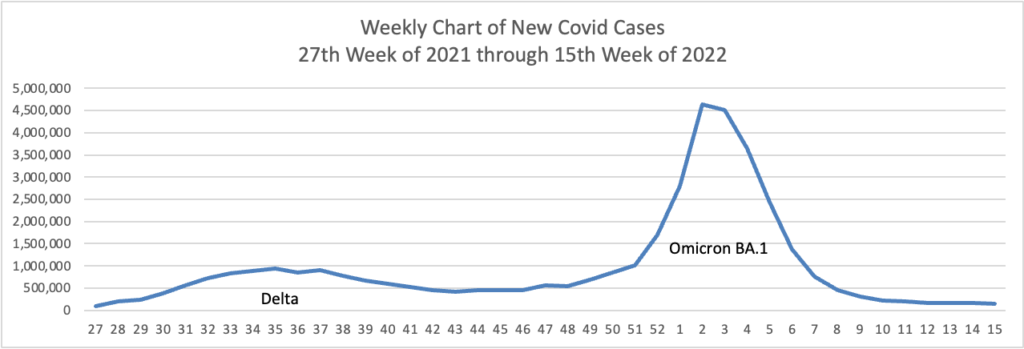
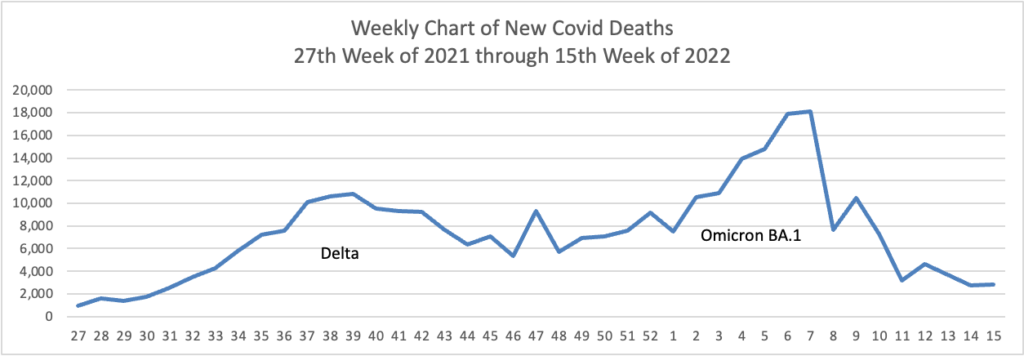
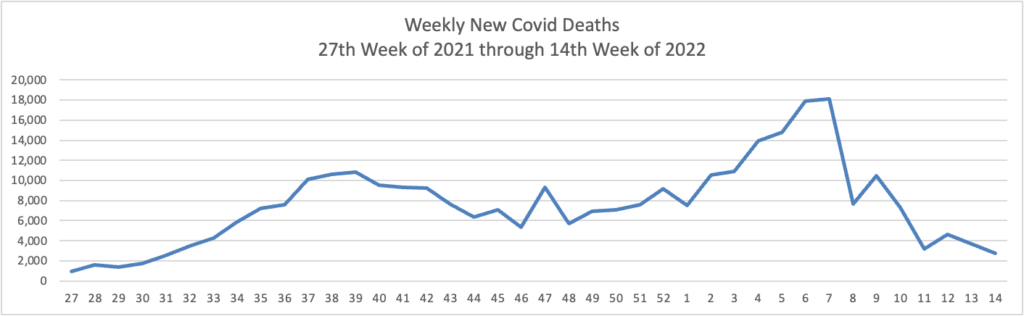
Based on the Centers for Disease Control’s (CDC) Covid Data Tracker website and using Thursday as the first day of the week, here are the FEHBlog’s charts of weekly new Covid cases and deaths from the 27th week of 2021 through the 8th week of 2022, both of which are plummeting

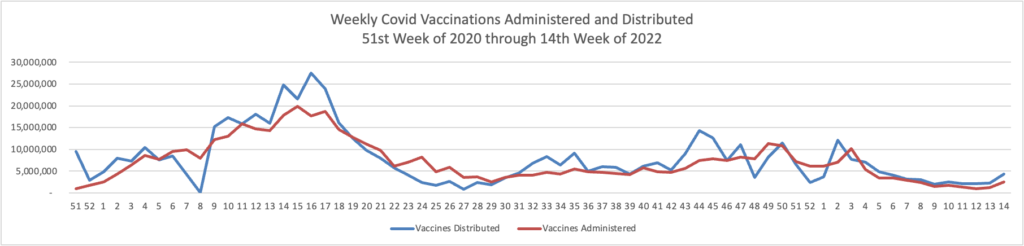
Here’s the FEHBlog chart of weekly Covid vaccinations distributed and administered from the 51st week of 2020 through the 8th week of 2022iew

Here are links to the CDC’s weekly review of its Covid statistics and its weekly Fluview. The Covid news is significant

CDC is updating the way it monitors COVID-19’s impact on our communities. Widespread availability of vaccines and testing, advances in treatments, and increasing levels of immunity in the population through vaccination or previous infection have moved the COVID-19 pandemic to a new phase. While we can’t prevent all cases of COVID-19, we can continue to limit the spread and protect those who are most at risk of severe illness.

Given this new phase of the pandemic, CDC is launching a new tool to monitor COVID-19 Community Levels. Each county’s COVID-19 Community Level is ranked as low, medium, or high (find your county’s level). The COVID-19 Community Level map where you can find your county’s level will be updated regularly with new data.

Medscape adds

As of now, most counties in the country fall into either low-risk or medium-risk categories, said Greta Massetti, PhD, of the COVID-19 Response Incident Management Team.

Those counties, “representing 70 percent of Americans, are in low to medium community levels,” she said. “We continue to see indicators improve in many counties.”

A total of 23% of U.S. counties fall into the low-risk group, and 39% are medium-risk, Massetti said.

But, Walensky said, these guidelines could change at any time if numbers begin moving in the wrong direction.

Also, from the policy front

Medscape tells us and as evidenced by the new CDC approach

The White House has begun a sweeping overhaul of its COVID-19 strategy as the U.S. moves out of pandemic crisis mode and into a more manageable phase, according to ABC News.

The new strategy is expected to acknowledge that the coronavirus is becoming a less urgent threat to Americans overall due to access to vaccines, testing, and therapeutics.

Insurance News Net informs us about AHIP’s 2022 priorities as identified by its President Matt Eyles:

  1. Affordable coverage, improved access. Addressing the underlying cost drivers of care. Ending pharma monopolies. Addressing hospital and physician group consolidation. Pushing back on restrictions on medical management.
  2. Improving health equity. Ensuring everyone has an equal opportunity to thrive and achieve their best possible health. Expanding initiatives to provide health care opportunities to underserved areas and populations. Providing COVID-19 vaccine outreach to at-risk older Americans. Providing outreach in a culturally competent manner to various ethnic groups.
  3. Post-pandemic health care. AHIP will develop a post-pandemic road map to improve health care. AHIP is working to maintain coverage for those who were eligible for coverage under Medicaid or the Affordable Care Act during the public health emergency so that they will continue to have coverage when the emergency ends.
  4. Improving competition and choice. Maintain a competitive private health insurance market.

Worthy priorities, indeed.

Fierce Healthcare tells us about the American Medical Association’s President’s speech on the AMA priorities for improving U.S. healthcare and readiness for future pandemics.

From the avoiding low-value care front, Medscape reports

Low-value healthcare services that provide little or no benefit to patients are “common, potentially harmful, and costly,” and there is a critical need to reduce this kind of care, the American Heart Association (AHA) says in a newly released scientific statement.

Each year, nearly half of patients in the United States will receive at least one low-value test or procedure, with the attendant risk of avoidable complications from cascades of care and excess costs to individuals and society, the authors note.

Reducing low-value care is particularly important in cardiology, given the high prevalence and costs of cardiovascular disease in the United States, they note.

The statement was published online February 22 in Circulation: Cardiovascular Quality and Outcomes.

From the mental healthcare front, Health Affairs Forefront discusses how

This July, the US model for responding to individuals experiencing a mental health crisis is scheduled for a much-needed change. The 988 number is a three-digit, national mental health crisis hotline that was mandated by the federal government in October 2020 with an official nationwide start date on July 16, 2022. * * *

The 988 hotline holds incredible promise toward decriminalizing the response to mental health emergencies. Currently, if an individual is experiencing a mental health crisis, they, their caregivers, and bystanders have few options beyond calling 911. As a result, roughly one in 10 individuals with mental health disorders have interacted with law enforcement prior to receiving psychiatric care, and 10 percent of police calls are for mental health emergencies. * * *

Ideally, the new 988 number would activate an entirely different cascade of events. An individual in crisis, their family member, or even a bystander will be able to immediately reach a trained crisis counselor who can provide phone-based triage, support, and local resources. If needed, the counselor can activate a mobile mental health crisis team that will arrive on site to de-escalate; provide brief therapeutic interventions; either refer for close outpatient follow up or transport the individual for further psychiatric evaluation; and even offer food, drink, and hygiene supplies.

That’s an interesting perspective. Health plans should plan to publicize the 988 number this summer.

From the chronic disease front, Health Payer Intelligence uses a recent CMS report on healthcare spending to identify the ten most expenses chronic diseases in our country.

From the Rx coverage front, Healthcare Dive reports

The Federal Trade Commission is calling on the public to submit feedback on how pharmacy benefit managers’ business practices are affecting patients, pharmacies and employers.

The agency is seeking to gather a wide range of information and comments on pharmacy benefit managers, including how they affect drug prices, access, contract terms, rebates, fees, steering methods, conflicts of interest and consolidation, according to the request for information released Thursday.

Members of the public can comment through April 25. The information the FTC collects will enable the agency to “study a wide array of PBM business practices and issues and will help inform the agency’s policy and enforcement work,” the regulator said in a statement.

Finally in litigation news, the Wall Street Journal informs us

Pharmaceutical company Johnson & Johnson and three of the nation’s biggest drug distributors have agreed to move forward with a landmark settlement with a majority of states, bringing thousands of lawsuits over the opioid epidemic closer to the finish line. 

Drug distributors AmerisourceBergen Corp. , Cardinal Health Inc. and McKesson Corp. would pay a total of $19.5 billion to 46 states over 18 years, according to the companies. Johnson & Johnson said it would pay $5 billion to 45 states. 

The global settlement was first announced last summer. It was given final approval by the companies after a threshold number of state and local governments agreed to participate and currently amounts to roughly $25 billion.

The settlement is the largest to date from more than 3,000 lawsuits brought by states, local governments, Native American tribes, hospital groups and others alleging that companies from pharmaceutical manufacturers to distributors and pharmacies flooded areas with pills and created the opioid epidemic, ultimately forcing communities to spend millions of dollars responding to the crisis. 

Let’s hope that the settlement funds are used to end our other national epidemic, substance use disorder.

Thursday Miscellany

U.S. Supreme Court building

Let’s start today with news from the litigation front —

The Wall Street Journal reports that in advance of the February 27 deadline,

The Justice Department filed an antitrust lawsuit Thursday challenging UnitedHealth Group Inc.’s $13 billion acquisition of health-technology firm Change Healthcare Inc., arguing the tie-up would unlawfully reduce competition in markets for commercial insurance and the processing of claims.

The deal, announced in January 2021, sought to bring a major provider of healthcare clinical and financial services, including the handling of claims, under UnitedHealth’s Optum health-services arm.

The Justice Department filed its lawsuit in federal court in Washington, saying Change provided key industry technologies that are relied upon by UnitedHealth’s health-insurance rivals, making it a hub for competitively sensitive information. If the deal were allowed, UnitedHealth would have access to data that it could potentially use for its own benefit, at the expense of other insurers, the department alleged. The department also argued the deal would reduce head-to-head competition in the businesses of insurance claims transmission and review, because UnitedHealth competes with Change in those areas.

Healthcare Dive reports

A federal judge in Texas struck down a narrow part of the surprise billing rule that outlines how to resolve payment disputes between payers and providers over out-of-network claims. Wednesday’s ruling is a win for providers who were opposed to the dispute resolution process spelled out by CMS in an interim rule, arguing it favored insurers.

The judge’s ruling essentially tosses out a part of the dispute resolution process that instructs arbiters to begin with the presumption that the qualifying payment amount, or median in-network rate, is the appropriate payment amount for providers.

This is not the final word because the decision, which resulted in a final judgment is appealable to the U.S. Court of Appeals for the Fifth Circuit. A case raising the same issue is currently pending oral argument in the U.S. District Court for the District of Columbia.

The Hill adds

Katie Keith, a health law expert at Georgetown University, said the ruling is evidence of how hard doctors groups will fight even relatively modest efforts by Congress to cut health care costs.  

The surprise billing action was “one of the few things Congress has tried to do on cost containment,” she said.   

Amen to that.

From the Omicron front, Medpage Today provides background on a Centers for Disease Control decision permitting

Extended dosing intervals for Pfizer or Moderna vaccines * * * for certain individuals ages 12 to 64 years, not only to lower the risk of vaccine-associated myocarditis, but to potentially improve vaccine effectiveness, CDC staff said on Thursday.

According to the agency’s new interim guidance, young people ages 12 to 39 may especially benefit from a second mRNA dose 8 weeks after their first dose.

However, the regular 3-week interval for Pfizer and 4-week interval for Moderna is appropriate for patients who are moderately to severely immunocompromised, adults ages 65 and up, those who need rapid protection (such as “during high levels of community transmission”), and children ages 5 to 11.

From the social determinants of health front, HR Dive tells us

Though employers have invested increasingly in a variety of healthcare and healthcare-adjacent benefits, few of these efforts effectively address social determinants of health that can negatively affect patient outcomes, according to a report published this month by the Northeast Business Group on Health.

Social determinants of health include factors such as education access and quality; healthcare access and quality; economic stability; neighborhood and built environment; and social and community factors. Differences in these areas lead to disparities not only in terms of health outcomes, but also in cost management and general employee health and well-being, NEBGH said.

Employers can start addressing social determinants by collecting survey data on employees’ needs and risk factors, per the report. From there, NEBGH recommended that benefits design focus on equitable benefits access, such as evaluating what percentage of pay their health plans comprise at different pay levels. Other strategies cited include improving health literacy, taking advantage of partnerships and improving organizational culture around health and well-being, among others.

From the Rx coverage front, Fierce Healthcare discusses CVS Health’s annual Drug Trend Report.

CVS Caremark kept overall drug trend for clients to 2.4% over the first three quarters of 2021, marking multiple years of single-digit trend in drug price growth.

The pharmacy benefit management arm of CVS Health also kept its specialty drug trend to single digits through the third quarter, at an industry-low 5.8%, according to the company’s annual Drug Trend Report released Thursday. Caremark found that 35.9% of its clients saw negative specialty trend in 2021.

In addition, 65.3% saw specialty trend under 10%, according to the report.

The article explains how CVS Health accomplished this feat.

From the Medicare front, CMS announced a redesign of its Accountable Care Organization model

that better reflects the agency’s vision of creating a health system that achieves equitable outcomes through high quality, affordable, person-centered care. The ACO Realizing Equity, Access, and Community Health (REACH) Model, a redesign of the Global and Professional Direct Contracting (GPDC) Model, addresses stakeholder feedback, participant experience, and Administration priorities, including CMS’ commitment to advancing health equity. 

In addition to transitioning the GPDC Model to the ACO REACH Model, CMS is canceling the Geographic Direct Contracting Model (also known as the “Geo Model”) effective immediately. The Geographic Direct Contracting Model, which was announced in December 2020, was paused in March 2021 in response to stakeholder concerns.

Good luck, CMS, with this new model.

Midweek update

Photo by Josh Mills on Unsplash

From the Omicron front —

MedCity News reports

Sanofi and GlaxoSmithKline weathered clinical trial delays for their Covid-19 vaccine, but the partners now have data to support filings seeking regulatory authorizations. Key features of the vaccine may be able to persuade the vaccine hesitant; it may also be well-suited for use as a booster. 

This news bears similarities to the reports about the Novavax Covid vaccine already submitted to the Food and Drug Administration for emergency use authorization.

The American Hospital Association informs us

The Food and Drug Administration yesterday listed all over-the-counter COVID-19 diagnostic tests authorized for home use, including links to home use instructions for each test.

Fierce Healthcare adds

Walmart has administered tens of millions of COVID-19 vaccines to date, with 80% delivered in medically underserved communities, the retail giant announced Wednesday.

The company released a report (PDF) looking back at its progress in providing vaccines over the course of 2021. Cheryl Pegus, M.D., executive vice president of health and wellness at Walmart, told Fierce Healthcare the company has focused on connecting with people who may not otherwise have been able to get the shot.

From the health equity front —

The American Hospital Association tells us

The U.S. maternal mortality rate increased to 23.8 deaths per 100,000 live births in 2020 from 20.1 in 2019 as rates for Black and Hispanic women increased, according to data released today by the Centers for Disease Control and Prevention. The maternal mortality rate for Black women was nearly three times the rate for white women. Mortality rates increased with maternal age, with the rate for women aged 40 and over nearly eight times higher than the rate for women under 25.

The AHA’s Better Health for Mothers and Babies initiative offers resources to help hospitals and health systems eliminate maternal mortality and address health disparities for mothers and babies. 

What can be more tragic than a baby losing a mother?

Beckers Payer Issues adds from the mental health perspective

Work-sponsored health plans aren’t addressing the growth of loneliness, which leads to employees missing work and decreased productivity, according to data from Cigna’s Loneliness Index shared with Becker’s

The data, which is slated to be published in the Journal of Organizational Effectiveness: People and Performance, surveyed nearly 6,000 employees between July 16 and Aug. 2, 2019. 

Six insights:

1. The widespread presence of loneliness affected 3 in 5 (62 percent) adults before the COVID-19 pandemic. Feelings of loneliness play key roles both in employee health and work performance, according to the study.

2. On average, preventable, stress-related absences caused lonely employees to miss about five more work days than their counterparts who did not identify as lonely.

3. Employees who reported higher levels of loneliness were almost twice as likely to consider quitting their current job than employees who were less lonely. 

4. The study estimates that absenteeism and productivity losses tied to preventable loneliness cost employers $154 billion each year. 

5. The study said work-based factors like communication, work-life balance and social companionship play key roles in determining employee loneliness. Personal resilience and a feeling of connection outside of the workplace also play a role. 

6. Employers looking to combat employee loneliness should consider actions that hit on these factors, including flexible work hours, email “blackout” periods and forming employee resource groups.

From the Black History Month department, Everywell, an at-home testing service, celebrates ten Black pioneers who improved healthcare in our country. Bravo.

From the U.S. healthcare front, Healthcare Finance News reports

Including federal government support, national health spending grew by 3.4% in 2021, according to new data released by Altarum.

This growth in spending, the analysis found, reflected the fact that support from the federal government was strong in 2020, likely in response to the recession caused by the COVID-19 pandemic, and was lower in 2021.

Taking these support dollars out of both 2020 and 2021 estimates, spending growth from 2020 to 2021 would have been 8.4%, as the economy continued to recover.

From the healthcare business front —

Healthcare Dive informs us

Despite worries that demand for telehealth could fall as the U.S. emerges from the COVID-19 pandemic, virtual care giant Teladoc beat Wall Street expectations with its 2021 financial results, and issued strong future growth projections Tuesday.

The New York-based vendor posted revenue of more than $2 billion in 2021, 86% higher than in 2020. Total visits were up 38% to 15.4 million, and Teladoc closed out the year with 53.6 million U.S. paid members, up just slightly from the year prior.

Beckers Hospital Review identifies 92 U.S. health systems with CMS-approved “hospital at home” programs.

Managed Healthcare Executive tells us

Tired of grappling with the rising costs and poor quality of healthcare, a coalition of major healthcare purchasers is taking things into its own hands, establishing a company that is designing healthcare products to meet its members’ needs. “There’s an incredibly high frustration level among buyers of healthcare,” says Elizabeth Mitchell, president and CEO of the Purchaser Business Group on Health (PBGH) in San Francisco. 

The nonprofit PBGH represents almost 40 large private employers and public entities that together spend $100 billion each year on healthcare services for more than 15 million Americans and their families. PBGH members include Microsoft, Walmart and American Airlines.

The decision to create the company, Emsana Health, was made about two years ago, with the initial focus on “really understanding the needs on a deep level,” Mitchell says. The company officially launched in the fall, and its first venture is setting up a pharmacy benefit manager (PBM), EmsanaRx, which went started operating on Jan. 1.

Finally, in a troubling tidbit, the Wall Street Journal reports

U.S. life insurers, as expected, made a large number of Covid-19 death-benefit payouts last year. More surprisingly, many saw a jump in other death claims, too.

Industry executives and actuaries believe many of these other fatalities are tied to delays in medical care as a result of lockdowns in 2020, and then, later, people’s fears of seeking out treatment and trouble lining up appointments.

Some insurers see continued high levels of these deaths for some time, even if Covid-19 deaths decline this year.

Friday Stats and More

Based on the CDC’s Covid Data Tracker and using Thursday as the first day of the week, here are the FEHBlog’s weekly charts of new Covid cases and deaths beginning with the 27th week of 2021 and ending with the 7th week of 2022.

At last, both charts are headed down.

Here’s the FEHBlog’s weekly chart of Covid vaccinations distributed and administered beginning with the 51st week of 2020, when the vaccination program launched, and the 7th week of this year.

As of today, nearly 75% of Americans aged 18 and older (74.7%) are fully vaccinated, and 46.5% of Americans in that age group are boostered.

Precision Vaccines reports

More than one year after the first COVID-19 vaccine was administered in the United States, new data from a recent survey conducted online by The Harris Poll show 73% of consumers would like to see additional COVID-19 vaccines become available.

Currently, the World Health Organization has listed ten different COVID-19 vaccines based on various technologies.

But the U.S. FDA has only authorized/approved three COVID-19 vaccines.

Moreover, consumers would like to see COVID-19 vaccines developed from traditional methods, such as technologies used to produce diphtheria, mumps, chickenpox, or polio vaccines.

Novavax’s traditionally developed Covid vaccine is pending Food and Drug Administration emergency use authorization. The FDA’s Vaccines Advisory Committee will consider the EUA application first. That Committee’s next meeting will be held on March 3, 2022. The agenda is not available yet.

In great news, Bloomberg reports

[W]ith [Covid] cases plummeting thanks to the omicron decline, and government orders continuing to roll into pharmacies, doctors and health officials in New York and across the country say the supply is looking plentiful in many areas.

“You have lots of the drug and very few cases — that’s the best place you could possibly be,” says Infectious Diseases Society of America spokesman Aaron E. Glatt. The pills are broadly available, he said, though not at every corner drugstore.

The federal government tracks Paxlovid on a public-facing website that names which pharmacies have it, and a federal website for health-care providers indicates more than 130,000 courses are available.

Dare we hope that the country will be prepared for the next Covid variant if it crops up?

Here are links to the CDC’s Covid Data Tracker weekly review and its FluView. The top line of FluView reads, “Sporadic influenza activity continues across the country. In some areas, influenza activity is increasing.” The current winter continues to mirror the 2020-21 winter, with Omicron edging out the flu.

From the Covid fallout front, Health Payer Intelligence informs us

Senior members might continue to see canceled or delayed care even as coronavirus cases decline, a trend which has had significant impacts on payer revenues and spending in 2020 and 2021, a report from the University of Michigan’s National Poll on Healthy Aging found.

Nearly three out of ten adults over 50 (28 percent) delayed care due to the coronavirus pandemic in 2021.

“Whether they chose to postpone or their provider did, these patients missed opportunities for preventive care and for early detection and effective management of chronic conditions, not to mention operations and procedures to address a pressing health need,” said Jeffrey Kullgren, MD, associate director of the poll and a health care researcher and associate professor of internal medicine at Michigan Medicine in the University of Michigan’s academic medical center.

The National Poll on Healthy Aging surveyed 1,011 adults ages 50 and older in late January 2022. Seniors could complete the survey by phone or online.

Considering the FEHB’s demographics, this report should be relevant to FEHB carriers.

Speaking earlier of the FDA, here is a link to the FDA’s roundup for February 18, 2022. Moreover, Fierce Healthcare reports

Hospitals on average charge double the price for the same drugs compared to those offered by specialty pharmacies, according to a new insurer-funded study released as federal regulators ponder a probe into the pharmacy benefit management industry.

The study (PDF), released Wednesday by insurance lobbying group AHIP, comes as specialty pharmacies have grown in use among PBMs and payers to dispense specialty products. The study was released a day before a scheduled meeting Thursday of the Federal Trade Commission on whether to probe the competitive impact of PBM contracts and how they could disadvantage independent and specialty pharmacies.

“The data are clear, specialty pharmacies lower patient costs by preventing hospitals and physicians from charging patients, families, and employers excessively high prices to buy and store specialty medicines themselves,” said Matt Eyles, president and CEO of AHIP, in a statement.

From the telehealth front, mHealth Intelligence notes

Though patients have previously made their preference for virtual waiting rooms over traditional ones known, new survey results show that a majority of telehealth patients would rather just be notified by a text or call when their doctor is ready to see them.

Doximity, an online networking service and telehealth platform for healthcare professionals, conducted the new survey last November, polling 2,000 US adults, of whom 1,000 identified as having a chronic illness.

As telehealth becomes integrated into care delivery, questions around patient preferences arise. The survey helps shed some light, showing that 79 percent of patients would prefer a call or text letting them know that their doctor is ready to see them versus having to wait in a virtual waiting room. Even among chronic illness patients only, an overwhelming majority (81 percent) would prefer to receive a call or text.

Patients also displayed a strong preference for familiarity with a provider. Overall, 83 percent of patients surveyed said they would wait one to three days to see their current doctor rather than seeing a new physician immediately.

If these statistics float your boat, you will find many more exciting telehealth stats in the article.

Thursday Miscellany

From Capitol Hill, Govexec reports that “The Senate on Thursday cleared 65-27 a three-week stopgap bill to avoid a government shutdown, sending the measure to President Biden with just one day before the deadline.”

From the Omicron front, the American Hospital Association provides us with its most recent Covid snapshot

From the Covid treatment front, The American Medical Association reports

Efforts to boost production of [Covid] therapeutics are underway, a Food and Drug Administration (FDA) official said during an episode of the AMA-sponsored webinar series, “COVID-19: What Physicians Need to Know.” 

Recommended usage in therapeutics is an important step in counseling patients and providing the most timely and relevant information about defeating this virus, said AMA President Gerald E. Harmon, MD, who moderated the webinar. Physicians facing supply issues of hard-to-get antivirals such as Paxlovid (PDF) also want to know about the timeline of any new antivirals or antibody treatments, he said.

For doctors and other health professionals, “it’s been a very difficult winter and it’s not over yet,” acknowledged John Farley, MD, MPH, director of FDA’s Office of Infectious Diseases in the Center for Drug Evaluation and Research’s Office of New Drugs. Monitoring the situation with these drugs is a complex process that involves FDA, the Centers for Disease Control and Prevention and several branches of government, he added.

Distribution of therapeutics should improve over time. However, at least for the combination of antiviral nirmatrelvir and ritonavir tablets marketed as Paxlovid, “we have a period of continued short supply ahead,” said Dr. Farley, who joined two other FDA experts to discuss the efficacy of the treatments.

In the FEHBlog’s view, Pfizer’s Paxlovid appears to offer the best opportunity for lowering Covid hospital admissions which have been a major cost for health plans over the past year which has seen three major Covid surges.

Speaking of innovations, Cleveland.com tells us

The next generation of mRNA vaccines, as well as treatments for type 2 diabetes and postpartum depression are among the innovations that earned spots on the Cleveland Clinic’s Top 10 Medical Innovations for 2022.

The list of breakthrough technologies, chosen by a committee of Clinic experts, was announced Wednesday.

These medical advancements have the potential to transform healthcare in the coming year, the Clinic said. The committee considered technologies developed by the Clinic as well as other research centers.

From the Federal Trade Commission front, Healthcare Dive reports

The Federal Trade Commission will not launch a study into pharmacy benefit managers’ pricing and contractual practices after a 2-2 vote at a Thursday meeting. The measure needed a simple majority to commence the investigation, which would have compelled large PBMs to turn over information and documents to the agency.

The two commissioners appointed by former President Donald Trump, Noah Phillips and Christine Wilson, voted against the study after raising concerns about its design and whether the current draft asks the proper questions for the answers the agency is seeking. Phillips also complained about receiving a “substantially revised” draft from staff “just hours” before the meeting.

FTC Chair Lina Khan said she was disappointed with Thursday’s vote, and said this is an area the agency has “a real moral imperative” to act upon.

From the Rx coverage front, Fierce Healthcare informs us

Optum has launched a new solution for specialty drugs that aims to lower costs and improve care management for people with complex conditions.

Specialty Fusion arms payers and providers with real-time insights into which specialty therapies are the most effective for the patient at the lowest cost. The platform leads to quicker treatment approvals for patients as well as a similar experience for providers at the point of care, Optum said in an announcement.

Internal analysis of the solution suggests it can drive cost savings of 17%.

From the healthcare business front, Healthcare Dive notes

Pharmacy giant Walgreens and value-based medical network VillageMD are on pace to open more than 200 co-branded primary care practices by the end of the year.

On Wednesday, the companies opened their first clinic in a new Florida market, Jacksonville, bringing their total markets in the state up to three, including Orlando and Tampa. Walgreens and VillageMD plan to open five new Village Medical at Walgreens primary care practices in total in the Jacksonville area through this summer.

With the Jacksonville openings, Walgreens and VillageMD have now opened more than 80 primary care practices across 12 markets in Arizona, Florida, Texas, Kentucky and Indiana.

Last but not least FedWeek explains how to guard against losing FEHB coverage in retirement.

Midweek Update

From Capitol Hill —

Today, the Senate invoked cloture on the resolution to continue funding the federal government until March 11 by unanimous consent. Consequently, the new resolution should be approved by Congress tomorrow, which is the day before funding expires under the current resolution.

The House of Representatives has returned the correct version of the Postal Reform Act, H.R. 3076, to the Senate, and the Senate has had the correct version read twice. We will have to wait and see if anything happens with the bill tomorrow.

In the meantime, check out the Congressional Research Service’s February 11, 2022, report on the Postal Reform bill approved by the House, H.R. 3076. In the FEHBlog’s view, a unique feature of the House version compared to earlier versions is that the bill destined to become law creates a transitional Open Season. The Transitional Open Season will auto-enroll those Postal employees and annuitants who failed to transfer over to the PSHBP in the 2024 Open Season for the 2025 plan year. The receiving PSHBP plan will be the lowest premium nationwide PSHBP plan that is not a high deductible plan and does not require dues payments. Also, the House version makes the Postal Service financially responsible for the late Medicare Part B enrollment fees otherwise owed by the Postal annuitants with Part A only who take advantage of a special Part B enrollment period in 2024.

Following up on Robert Califf’s second confirmation as Food and Drug Administrator yesterday, STAT News identified the six major drug approval decisions awaiting him, including Pfizer’s toddler COVID vaccine, the Novovax Covid vaccine, and Alzheimer’s Disease treatments. Good luck, Mr. Califf.

Also among those drug approval decisions awaiting Mr. Califf is a Covid treatment discussed in Bloomberg

After omicron weakened some of the defenses that doctors have against Covid, an experimental treatment being developed by Novartis and a small Swiss biotech partner holds some promise as a new therapy.

Last week, Novartis sought emergency approval from the U.S. Food and Drug Administration for an intravenous drug, called ensovibep, that’s similar in some ways to monoclonal antibody treatments. However, the way it works is significantly different, which might allow it to succeed where antibody therapies fail against omicron.

The compound uses tiny proteins to attack the coronavirus’s spike protein in not just one, but multiple places. That appears to give it a leg up in fighting the virus even as it mutates.

In other federal leadership changes, STAT News adds

President Joe Biden is replacing a top science adviser who resigned under a cloud with two individuals who will split his duties on an interim basis.

Biden is tapping [Alondra Nelson, ]a deputy in the White House science and technology office along with [Dr. Francis Collins] the recently retired director of the National Institutes of Health, according to a personal familiar with the president’s plans.

From the Omicron front, Beckers Hospital Review tells us

The COVID-19 omicron subvariant BA.2, dubbed “stealth omicron,” has spread to at least 74 countries and 47 states across the U.S., according to data from outbreak.info.

Four more updates: 

1. BA.2 is most prevalent in HHS’ region 3, which includes Pennsylvania, West Virginia, Virginia, Delaware and Maryland, according to CDC data.

2. Region 7, which includes Iowa, Kansas, Missouri and Nebraska, had the lowest percentage of BA.2 cases last week, according to CDC data. 

3. BA.2 currently accounts for 3.9 percent of total COVID-19 cases in the U.S., with omicron subvariant BA.1.1 accounting for 73.2 percent of cases, CDC data shows. 

4. A South African study analyzing nearly 100,000 COVID-19 cases found that BA.2 doesn’t cause significantly more severe illness than the original omicron variant, Bloomberg reported Feb. 16.

From the Covid vaccine front, The American Medical Association reports

The New York Times (2/15, Anthes) reports infants born to mothers who “received two doses of an mRNA coronavirus vaccine during pregnancy are less likely to be admitted to the hospital for COVID-19 in the first six months of life, according to a new study from the Centers for Disease Control and Prevention.” The study found that “overall, maternal vaccination was 61% effective at preventing infant hospitalization.”

Reuters (2/15, Mishra, Steenhuysen) reports, “That protection rose to 80% when the mothers were vaccinated 21 weeks through 14 days before delivery.” Meanwhile, the “effectiveness fell to 32% for the babies whose mothers were inoculated earlier during pregnancy.”

The Hill (2/15, Sullivan) reports the study used data “from 20 pediatric hospitals in 17 states, from July 2021 to January 2022.”

From the Covid front, Fierce Healthcare reports

Anthem has launched a new pilot that aims to offer a digital concierge care experience to members recovering from COVID-19.

Through COVID Concierge Care, eligible members can access an app and fill out a questionnaire that tracks their symptoms on a daily basis. They can connect with a clinician via secure, two-way text-based messages in the app or via text or email.

In addition, based on their reported symptoms, members can access evidence-based educational tools and wellness content to help them self-manage their conditions. For example, members can connect with breathing exercise guides to manage stress or health articles about their symptoms.

From the Covid vaccine mandate front, Federal News Network tells us

The Postal Service is laying the groundwork to track the vaccination and testing status of its workforce amid the COVID-19 pandemic, or any future public health emergency.

USPS, however, says it’s only giving notice as it prepares for “potential future contingencies,” and is not, at this time, updating its COVID-19 vaccine or testing requirements, nor is it seeking to collect data on the vaccination status of its workforce.

In healthcare business news, Healthcare Dive informs us

The Department of Justice is preparing a lawsuit to block UnitedHealth from purchasing Change Healthcare, according to a new report, as regulators take a more aggressive stance on checking consolidation in the healthcare industry.

According to Dealreporter, which cited sources familiar with the matter, UnitedHealth and Change are expected to meet with the DOJ soon for a “last rites” meeting on the proposed deal, first announced early last year. Despite UnitedHealth and Change exploring divestitures to assuage antitrust concerns, the DOJ has not found any that would make the deal acceptable, according to Dealreporter’s sourcing.

From the health savings account front, Health Payer Intelligence offers nine best practices for high deductible health plan design based on a recent report from the National Pharmaceutical Council (NPC) and Gallagher.

From the antibiotic overutilization front, AHIP lets us know

A study published in the CDC’s Morbidity and Mortality Weekly Report found 41% of antibiotic prescriptions for Medicare Part D beneficiaries in 2019 were written by just 10% of prescribers. Researchers found nearly half of these high-volume prescribers practiced in southern states, and they had a median antibiotic prescribing rate of 680 per 1,000 beneficiaries, compared with 426 per 1,000 beneficiaries among low-volume prescribers. 

Friday Stats and More

Based on the CDC’s Covid Data Tracker and using Thursday as the first day of the week, here is the FEHBlog’s latest chart of weekly new Covid cases from the 27th week of 2021 through the 6th week of 2022.

The chart shows a steep drop in Covid cases this year. Yet, according to the CDC, the rate of Omicron transmission remains high across our country. The CDC also reports

The current 7-day daily average for February 2–February 8, 2022, was 12,099 [new Covid hospitalizations]. This is a 25.4% decrease from the prior 7-day average (16,212) from January 26–February 1, 2022.

For the reasons explained in this Medscape article, the weekly count of Covid deaths continues to increase.

Finally, here is the FEHBlog’s chart of weekly Covid vaccinations distributed and administered.

New vaccinations, including boosters, have run under four million weekly for the past two weeks.

Here is a link to the CDC’s weekly review of its Covid statistics. The CDC’s critical observation is as follows:

COVID Data Tracker shows that as of February 10, 2022, about 213.4 million people, or 64.3% percent of the total U.S. population, have received a primary series of a COVID-19 vaccine.

However, only about half of those eligible to receive a booster dose have done so. Everyone ages 12 years and older should get a booster shot after they have completed their COVID-19 vaccine primary series. Omicron is extremely contagious, and even though overall severity is lower, the high volume of hospitalizations has strained the healthcare system. Being up to date with vaccination, in coordination with other key prevention strategies, is critical for preventing severe illness from COVID-19 and for reducing the likelihood of new variants from emerging. Find a vaccine provider and get your booster dose as soon as you can.

CDC’s Fluview adds “Sporadic influenza activity continues across the country.” The 2021 and 2002 winters have featured many Covid infections, but not that many flu infections.

The Wall Street Journal reports

U.S. drug regulators authorized the use of a new Covid-19 antibody drug from Eli Lilly & Co. that retains effectiveness against the Omicron variant of the virus, filling a void after authorities stopped distributing some older antibody drugs that lost effectiveness against the strain.

The Food and Drug Administration on Friday cleared the drug, bebtelovimab, for the treatment of mild to moderate Covid-19 in nonhospitalized individuals 12 and older who are at high risk of getting severely sick. The drug is intended for people who can’t get access to alternative Covid-19 treatments, or for whom those treatments aren’t appropriate.

Yesterday, the Biden administration announced the purchase of 600,000 courses of this drug.

From the Covid vaccine front, the Journal further reports that the Food and Drug delayed consideration of granting emergency use authorization to the Pfizer BioNTech Covid vaccine for children ages six months through four years.

The FDA had been considering a request by the companies to clear the use of two doses of the vaccine. The agency was then going to look at expanding the authorization to a third dose, should the study show it works safely.

The new move [to consider all three dose at one time] will delay the rollout of the shot for children younger than 5, the last age group without access to vaccination.

Pfizer and BioNTech said they expect results on whether three doses of the vaccine works safely in early April. Researchers are collecting more data, including from more children in the study who have become infected as more time has passed.

The FEHBlog, who has young grandchildren, honestly does not understand why the government has been pushing so hard to vaccinate this age group.

From the opioid epidemic front, the American Medical Association informs us

The New York Times (2/10, Hoffman) reports that on Thursday, the CDC “proposed new guidelines for prescribing opioid[s]…that remove its previous recommended ceilings on doses for chronic pain patients and instead encourage doctors to use their best judgment.” Although they are “still in draft form, the 12 recommendations…are the first comprehensive revisions of the agency’s opioid prescribing guidelines since 2016,” and “they walk a fine line between embracing the need for doctors to prescribe opioids to alleviate some cases of severe pain while guarding against exposing patients to the well-documented perils of opioids.”

The AP (2/10, Stobbe) reports that the proposed changes are “contained in a 229-page draft update in the Federal Register,” and “the CDC will consider comments before finalizing the updated guidance.”

The Washington Post (2/10, Bernstein) reports that in a statement, AMA Board of Trustees Chair Bobby Mukkamala, M.D., said, “for nearly six years, the AMA has urged the CDC to reconsider its problematic guideline on opioid prescriptions that proved devastating for patients with pain. The CDC’s new draft guideline – if followed by policymakers, health insurance companies and pharmacy chains – provides a path to remove arbitrary prescribing thresholds, restore balance and support comprehensive, compassionate care.”

From the quality metrics front, NCQA released its proposed HEDIS and CAHPS changes for the 2023 measurement year today. NCQA is proposing to retire the CAHPS flu vaccination measure, which currently is included in OPM’s set of QCR measures used in the Plan Performance Assessment program. NCQA’s public comment period on the proposed changes closes on March 11.

From the Rx coverage front, STAT News tells us

In a move hailed by pharmacies, the U.S. Federal Trade Commission plans to vote later this month on whether to examine pharmacy benefits managers and how their controversial practices affect independent and specialty pharmacy operations.

The agency disclosed the planned Feb. 17 vote in a brief notice that specified interest in the “competitive impact of contractual provisions and reimbursement adjustments, and other practices affecting drug prices,” but did not provide any further detail. An FTC spokesperson wrote us that additional information will not be released until the upcoming meeting.

The FEHBlog will keep an eye on this vote.

From the Aduhelm front, Health Payer Intelligence discusses AHIP’s comments supporting CMS’s decision to provide very limited coverage of this drug in Medicare.

From the healthcare business front, Fierce Healthcare reports

Kaiser Permanente [the third largest carrier in the FEHB Program] reported $3 billion in net income for the second quarter of the year as membership in its health plan remains steady.

The health system and insurer posted total operating revenues of $23.7 billion against total operating expenses of $23.3 billion. The revenue was slightly above the $22.1 billion it earned in the second quarter of 2020.

Kaiser noted in its earnings statement Friday that favorable financial market conditions resulted in $3 billion in net income, compared with $4.5 billion for the second quarter of 2020.

“The COVID-19 health threat is not over, and we will continue to focus our resources on providing needed care for our patients and increasing vaccination rates to protect the health and safety of our workforce, members and the communities we serve,” said Kaiser CEO Greg Adams in a statement.

If you have time over the Super Bowl weekend, listen to or read Econtalk host Russ Robert’s discussion with macroeconomist John Taylor about inflation. Mr. Taylor created the Taylor Rule “that prescribes a value for the federal funds rate—the short-term interest rate targeted by the Federal Open Market Committee (FOMC)—based on the values of inflation and economic slack such as the output gap or unemployment gap.”