Tuesday Tidbits

Tuesday Tidbits

Photo by Patrick Fore on Unsplash

From the Omicron and siblings front, Regulatory Focus reports

[Last week,] both Pfizer and Moderna are seeking FDA authorization for their bivalent COVID-19 vaccines containing components of both the prototype virus and Omicron BA.4/5. 

“The FDA is working tirelessly to evaluate the submissions to ensure the data meet FDA’s rigorous standards for safety, effectiveness and manufacturing quality so that these new boosters are available as soon as possible,” Califf tweeted on Thursday, noting that the agency would base its decision on “the totality of available evidence,” including clinical trial data from other bivalent mRNA vaccines, real-world evidence from current vaccines and non-clinical data on the two BA.4/5-containing vaccines.
 
Califf also said that the agency’s Vaccines and Related Biological Products Advisory Committee (VRBPAC) would not be convened to review the submissions. “FDA will not hold a VRBPAC meeting about these submissions, as the agency feels confident in the extensive discussion that was held in June. VRBPAC voted overwhelmingly to include an omicron component in COVID-19 boosters. FDA has no new questions that warrant committee input,” he wrote.

From the monkeypox front, the Wall Street Journal informs us

A person in Texas who was diagnosed with monkeypox and had a weak immune system has died, Texas state health officials said Tuesday, in what could be the first-known fatality from the virus in the U.S.

The Texas Department of State Health Services said this was the first death of a person diagnosed with monkeypox in Texas. Officials are investigating what role monkeypox played in the death. They said the patient, who was an adult and a resident of Harris County, Texas, was “severely immunocompromised” but didn’t offer additional details. 

In a statement, Texas health commissioner Dr. John Hellerstedt said that “monkeypox is a serious disease, particularly for those with weakened immune systems.” He urged those who have been exposed or have symptoms to seek treatment.

Healthcare Dive adds

Concerns over monkeypox vaccine supplies appear to be softening after federal public health agencies initially scrambled to acquire enough doses of the shot.

The Biden administration has been working to boost its supply of vaccines in recent weeks, and so far has made over 1 million vials available to jurisdictions, “which is nearly enough to reach the entire population that’s most at risk,” HHS Secretary Xavier Becerra said during a call with reporters Tuesday.

The HHS also announced on Monday that it will provide about $11 million to support the first U.S.-based productioneffort for manufacturing the Jynneos vaccine at a facility in Grand Rapids, Michigan.

The FDA authorized administering the Jynneos shot intradermally — a method that requires only one-fifth of the usual dose but is just as effective, according to the agency.

However, the vaccine’s developer, Bavarian Nordic, has raised concerns about the method, citing a lack of data and evidence related to its efficacy.

About 75% of jurisdictions that have received the vaccine are administering it intradermally now, Bob Fenton, the White House’s monkeypox response coordinator, said on Tuesday’s call.

From the public health front, CNN Health discloses

CDC Director Dr. Rochelle Walensky has tapped Mary Wakefield — an Obama administration veteran and former nurse — to helm a major revamp of the sprawling agency and its multibillion-dollar budget. Making the changes will require winning over wary career CDC scientists, combative members of Congress, and a general public that in many cases has stopped looking to the agency for guidance.

“If she can’t fix it, she’ll say, ‘It’s not fixable, here’s why, and here’s what needs to be done next,'” said Eileen Sullivan-Marx, dean of the New York University Rory Meyers College of Nursing, who’s known Wakefield professionally for decades.

Also, Specialty Pharmacy Continuum points out

Less than 20% of providers submitted claims using a type of payment code [ICD 10 Z codes] that could help identify and address health disparities that adversely affect patient outcomes, according to a new ICON Market Access report.

The results come amid a growing call for payors and pharmaceutical manufacturers to work together to better address racial and ethnic health inequalities, speakers said during the AMCP 2022 annual meeting.

Such health disparities exist in nearly all U.S. states, said Jessica Cherian, PharmD, RPh, the vice president of content and strategic services for ICON Market Access, citing a 2021 Commonwealth Report, In 2021, her company surveyed 32 payor executives for their perceptions regarding health disparities in racial and ethnic groups, with a targeted focus on medication access and utilization.

Payors typically review data from claims, case manager screenings and more, and use that information to match members to programs that meet their SDOH needs, such as access to care, housing or transportation help, Ms. Fleming said. Payors also track needs through Z codes: additional codes provided in the International Classification of Diseases, Tenth Revision to report nonmedical factors influencing health status. For example, code Z63 would indicate difficulty with a patient’s family/support, such as alcoholism or drug addiction. Approximately 71% of payors in the ICON report used Z codes to monitor SDOH; however, they said less than 20% of submitted claims included these codes.

In payor personnel news, Healthcare Dive informs us

Name: David Brailer

New title: Executive vice president and chief health officer, Cigna

Brailer will assume his new role in early September, and will be Cigna’s first chief health officer.

In his role, he will focus on bringing together Cigna products, technologies and services in new ways in an attempt to drive more value and help improve overall health, according to the release.

He will report to Cigna Chairman and CEO David Cordani and will serve on the company’s enterprise leadership team.

From the healthcare costs front, the HHS Agency for Healthcare Quality and Research released “STATISTICAL BRIEF #543: Trends in Health Insurance at Private Employers, 2008-2021.”

“Highlights

  • “Employment-sponsored health insurance at private-sector employers was characterized by increases in premiums and cost-sharing for covered workers in 2021.
    • In 2021, average health insurance premiums were $7,380 for single coverage, $14,634 for employee-plus-one coverage, and $21,381 for family coverage, representing increases of 3.2, 3.1 and 3.0 percent, respectively, from their 2020 levels.
    • In 2021, the average employee contribution was $1,643 for single coverage, a 7.2 percent increase from the 2020 level. Single premium contributions increased at small (12.3 percent), medium (14.1 percent), and large firms (5.6 percent).
    • From 2020 to 2021, average deductible levels for single coverage increased by 3.0 percent to $2,004, and family coverage deductibles increased 3.9 percent to $3,868.
  • “From 2020 to 2021, there were no statistically significant changes in enrollment rates or offer rates for small, medium, or large firms. 
  • “Overall enrollment and offer rates decreased from 2020 to 2021. These decreases are due to an increase in employment among small employers, and a corresponding decrease in the proportion of employees in medium and large firms, which have higher rates for both measures.
  • “In 2021, overall eligibility and take-up rates were not significantly different from 2020 levels.”

From the Rx coverage front, HealthDay tells us

Cholesterol-lowering statins are proven lifesavers, but they’ve also gained a reputation for causing muscle aches and pains in a good number of patients.

That reputation is undeserved, according to a new large-scale analysis of data from nearly two dozen clinical trials of statins.

There’s a less than 10% chance that muscle symptoms reported by patients are caused by the statin they are taking, researchers report.

“Our analysis showed that over 90% of muscle symptoms were not attributable to the statin, and those cases that were due to statins occurred mainly within the first year of treatment,” said joint lead researcher Colin Baigent, director of the Medical Research Council Population Health Research Unit at the University of Oxford, in England.

Statins have simply gotten a bad rap when it comes to muscle side effects, Baigent said.

In government contract reporting news, the Society for Human Resource Management reports

The Office of Federal Contract Compliance Programs (OFCCP) has issued a revised directive on compensation compliance, addressing concerns federal contractors had about a previous directive issued earlier this year. Some contractors were concerned that the prior version of the directive intruded upon communications protected by attorney-client privilege.

On the same day the revised directive was issued, OFCCP Director Jenny Yang wrote in a blog post that a top priority for the OFCCP is combating agency pay discrimination.

“Contractors therefore should review the directive and ensure they are engaging in compensation analyses as required by the regulations and be prepared to respond to questions regarding those analyses that are detailed in the directive,” said Guy Brenner, an attorney with Proskauer in Washington, D.C.

“Federal regulations require contractors periodically—or OFCCP interprets now as annually—[to] review their compensation systems to determine whether there are gender, race or ethnicity-based disparities in compensation,” said Sheila Willis, an attorney with Fisher Phillips in Columbia, S.C.

Thursday Miscellany

Photo by Josh Mills on Unsplash

From the omicron and siblings front, MedPage Today provides us with good news.

Older patients treated with nirmatrelvir boosted by ritonavir (Paxlovid) for COVID-19 had lower rates of hospitalization and death compared with those not treated with the antiviral during the Omicron wave, according to an observational retrospective cohort study from Israel.

Among patients ages 65 and older, the rate of hospitalization due to COVID was 14.7 cases per 100,000 person-days for the 2,484 patients who received nirmatrelvir compared with 58.9 cases per 100,000 person-days for the 40,337 untreated patients (adjusted HR 0.27, 95% CI 0.15-0.49), reported Ronen Arbel, PhD, of Clalit Health Services in Tel Aviv, and colleagues.

Death occurred in two nirmatrelvir-treated patients and in 158 untreated patients (aHR 0.21, 95% CI 0.05-0.82), they said in the New England Journal of Medicine.

Herd safety, indeed.

From the Rx research and development front, NBC News reports

Two doses of psilocybin pills, along with psychotherapy, helped people with alcohol use disorder reduce drinking for at least eight months after their first treatments, results from the largest clinical trial of its kind show. 

During the eight-month trial, 93 men and women ages 25 to 65 were chosen to receive either two psilocybin doses or antihistamine pills, which the researchers used as a placebo. They all also participated in 12 psychotherapy sessions.

All of the volunteers were averaging seven alcoholic drinks at a time before the trial. 

More than 80% of those who were given the psychedelic treatment had drastically reduced their drinking eight months after the study started, compared to just over 50% in the antihistamine control group, according to results published Wednesday in JAMA Psychiatry. At the end of the trial, half of those who received psilocybin had quit drinking altogether, compared to about one-quarter of those who were given the antihistamine.

STAT News reports

A vaccine Pfizer is developing protected older adults against the respiratory syncytial virus, or RSV, which is a common cause of hospitalization and death in the U.S., the company said Thursday.

The experimental vaccine, known as RSVpreF, is considered a key product in Pfizer’s pipeline of experimental drugs. Right now drug companies are close to launching several different products against RSV, focused on protecting both older adults and infants.

BioPharma Dive tells us

BioMarin, a California-based biotechnology company, said Wednesday that its gene therapy for hemophilia has been cleared for market by European regulators, marking a first-of-its-kind approval.

The therapy, known as Roctavian, was given conditional marketing authorization as a treatment for certain patients with hemophilia A, the more common version of the rare bleeding disorder. Specifically, Roctavian is to be used in adults with “severe” disease — hallmarked by exceedingly low levels of a blood-clotting protein called Factor VIII — who don’t have a history of developing antibodies that attack this protein.

With approval in hand, BioMarin is now working to secure reimbursement across the European Commission’s various member states. Jeff Ajer, the company’s chief commercial officer, said on a conference call Thursday that the plan is to immediately launch Roctavian in Germany, followed by France. The company expects Roctavian’s list price in Europe to be “around” 1.5 million euros, or roughly $1.5 million, net of all discounts, he said. 

Ajer added that BioMarin expects to disclose the specific European list price in October, a number that will be in-line but lower than the comparable net price in the U.S.

From the mental healthcare front —

Fierce Healthcare tells us

Employers view long-term mental health as the key healthcare issue coming out of COVID-19, according to a new survey.

Nearly half (44%) of employers surveyed by the Business Group on Health said they have seen this trend in their workforces, and another 44% expect to see worsening mental health in the future. Most (85%) said they anticipate enhanced mental health benefits launched under the pandemic to continue.

Mental health conditions also ranked sixth on the survey’s list of conditions driving healthcare costs, with 17% of those surveyed saying it was a major driver. This is a marked increase from 9% in 2020 and 14% in 2021.

Brenna Shebel, vice president of the Business Group on Health, said during a briefing with reports Tuesday that many employers are tackling mental health challenges “at all different angles.”

Forbes adds

AHIP, which stands for America’s Health Insurance Plans, issued a statement and “advocacy vision” at a time its member health plans are looking beyond paying and coordinating just medical care but also integrating behavioral health care into benefit plans for their government, commercial and employer clients. * * * Further details of the policy proposals and commitments can be found here.

From the U.S. healthcare business front, we learn about financial results for two health systems involved with the FEHB Program.

Becker’s Hospital Review reports that ” Intermountain Healthcare [based in Utah and serves surrounding states] saw its revenues increase in the first half of this year, and its merger with SCL Health fueled a significant increase in net income, according to recently released financial documents. The financial documents are the first Intermountain has filed since completing a merger with Broomfield, Colo.-based SCL Health in April. 

Beckers Hospital CFO Report tells us, “UPMC reported higher revenue in the first half of this year than in the same period of 2021, but the Pittsburgh-based health system’s operating income declined year over year, according to financial documents released Aug. 23. * * * “Throughout 2022, the continued effect of COVID-19, along with conditions in the labor and supply markets have resulted in cost growth in employment, staffing and other operating expenses in excess of revenue growth,” UPMC management wrote in the financial filing.”

Finally STAT News delves into why so many large healthcare companies are interested in Signify Health. Quite simply,

The bidding war over Signify Health — a health technology business that could fetch multibillion-dollar offers from Amazon, CVS, and UnitedHealth Group — is not about its dazzling software or a blockbuster AI algorithm.

The crush of corporate interest, experts said, stems from something much bigger: the opportunity to move medical services back into the home. In-home care is quickly becoming the biggest battlefield in America’s biggest business, with a huge array of companies seeking to move health care outside the institutional walls that have confined it for much of the last century.

Signify Health is among those at the forefront of the quest. The Texas-based company, founded in 2017 as the result of a merger, has built its business around delivering highly detailed assessments of patients by visiting with them in their bedrooms and living rooms, creating better visibility — and clearer data — about their lives and health status.

Midweek update

From inside the Beltway, Roll Call tells us

Centers for Disease Control and Prevention Director Rochelle Walensky is looking to reorganize the agency in the wake of an external review of the CDC’s COVID-19 response. * * *

“For 75 years, CDC and public health have been preparing for COVID-19,” Walensky said, “and in our big moment, our performance did not reliably meet expectations.” 

The plan aims to achieve a “more cohesive and customer centric structure,” by implementing new programs and procedures to work more quickly and ensure more accountability. Walensky plans to establish an executive council to oversee the CDC’s progress on specific goals, consolidate various points of access for external stakeholders and establish a new equity office.

STAT News adds

Outside experts expressed enthusiasm — though some of it tempered — for the changes Walensky is proposing.

Jay Varma, who spent 20 years at CDC before becoming director of the Cornell Center for Pandemic Prevention and Response at Weill Cornell Medicine, applauded many of the points Walensky stressed, particularly her promise to reform the culture of the agency and build up the capacity of its staff to respond to emergencies. Over the past two decades or so, Varma told STAT, public health agencies like the CDC have become increasingly bureaucratic.

“If your culture is not aligned entirely with what your mission is, it doesn’t matter how good the strategy is. It doesn’t matter what your org charts are. It is all about the workforce culture,” he said.

But Varma warned effecting change in the agency’s culture will be challenging.

Speaking of change, Fierce Healthcare informs us

A dramatic pickup in the pace of change for payers in the last year has created new priorities for health plan leaders, a new survey has found. 

The survey, conducted by payment integrity solution HealthEdge, reached more than 300 health plan leaders. Common themes, per a report of the survey results, included the move to newer systems amid a digital transformation, rising demand for real-time data access and the promise of interoperability. 

Some of the biggest threats facing health plans are new regulations, growing consumer expectations, competition and the transition to value-based payment strategies. The top two challenges are managing costs and driving operational efficiencies, which were lower on the list of priorities just last year. Tied in third place are member satisfaction and alignment of IT and business needs. 

There are several drivers of these hurdles. Post-pandemic, there are notably more claims. Long delays in care have also led to rising costs, and outdated systems have required significant investment to keep up with demand. Having a solid digital baseline can help payers eliminate manual, repetitive processes, the report suggested. Payers also believe increasing interoperability and improving claims accuracy helps alleviate administrative costs. 

From the Rx coverage front, BioPharma Dive reports

The Food and Drug Administration on Wednesday approved a powerful new treatment for people with an inherited blood condition called beta thalassemia, clearing a personalized gene therapy developed by the biotechnology company Bluebird bio. * * *

Its approval is a milestone in a number of other respects, too. Beta thalassemia, a disease that in severe cases requires regular blood transfusions for life, has for years been marked as a target for gene therapy. Bluebird’s treatment, which will be sold as Zynteglo, is the first of several in development to reach market in the U.S., giving patients an option that could free them from those transfusions and their associated side effects.

STAT News adds

Bluebird has set the price of Zynteglo at $2.8 million per patient, making it one of the most expensive medicines ever sold in the U.S. And that price tag doesn’t include the cost of the lengthy hospitalization for patients getting the therapy.

A person with beta thalassemia incurs total health care costs that average $6.5 million over their lifetime, or 23 times higher than the general population, said Obenshain, making the case for Zynteglo’s cost effectiveness. Earlier this year, the Institute for Clinical and Economic Review, an independent drug-pricing analysis group, said Zynteglo would be cost effective up to a price of $3 million.

Bluebird will be asking insurers to pay for Zynteglo entirely up front, but the company will also return up to 80% of the cost if patients need to restart blood transfusions before two years.

“All the commercial insurers we’ve engaged with have expressed a really strong interest in this,” said [Bluebird CEO Andrew] Obenshain, of Bluebird’s outcome-based payment proposal.

From the research and studies front —

  • “Infectious disease expert Dave Wessner reports for Forbes from the 24th International AIDS Conference, where researchers shared ways that Covid vaccine development might help the development of a vaccine for AIDS.”
  • The National Institutes of Health announced “Scientists funded by the National Institutes of Health have developed a same-day test to identify abnormal fetal chromosomes. The Short-read Transpore Rapid Karyotyping (STORK) test can detect extra or missing chromosomes (i.e., aneuploidy) using samples collected from prenatal tests, such as amniocentesis and chorionic villus sampling, as well as tissue obtained from miscarriage and biopsies from pre-implantation embryos produced using in vitro fertilization (IVF). * * * Overall, the study shows that STORK is comparable to standard clinical tests and has many advantages. STORK is faster, providing results within hours versus several days. It is also cheaper, with the study team estimating STORK to cost less than $50 per sample, if 10 samples are run at the same time, or up to $200 if a sample is run on its own. STORK can also be done at the point-of-care for a patient, eliminating the need to ship a sample to a clinical laboratory.  According to the study authors, STORK may be particularly useful in identifying genetic causes of miscarriage. Currently, professional societies only recommend genetic testing if a person has had multiple miscarriages, but an easy, cost-effective test like STORK can potentially be offered after the first miscarriage. STORK can also be used to streamline the IVF process. Currently, embryos must be frozen while genetic tests are run and analyzed before implantation. STORK’s ability to provide results within hours can presumably eliminate this freezing step, which saves time and cost. More work is needed to validate STORK, but if results continue to show promise, STORK could improve the quality of reproductive healthcare.”
  • The National Cancer Institute announced “For people with advanced cancer, severe side effects from treatment often force them to the hospital or the emergency room. Although these time-consuming and, quite often, expensive hospital trips potentially could be prevented by better communication about symptoms between patients and their doctors, the reality is that such discussions don’t typically happen as frequently as they should.   Now, a new study shows that community health workers (CHWs) may help bridge this communication gap in cancer care. In the study, having a CHW directly consult with people newly diagnosed with advanced cancer or cancer recurrence, including assessing their symptoms and helping them with advance care planning, substantially decreased hospitalizations and emergency room visits.”
  • Fierce Healthcare reports “Musculoskeletal conditions are a massive source of health spending—accounting for $420 billion in 2018—and a new report from [Cigna’s] Evernorth aims to pinpoint where health plans could cut down on costs.”
  • Health IT Analytics tells us “New research published in JAMA Internal Medicine shows that an artificial intelligence (AI)-based cognitive behavioral therapy intervention for chronic pain (AI-CBT-CP) had similar outcomes to standard CBT-CP, which could result in increased access and reduced costs.”

From the government contract front, Federal News Network reports that

As the travel industry — and prices — recover from COVID-19, the General Services Administration is giving federal employees a little more leeway on hotel costs for official travel.

The base daily traveling allowances will rise slightly from $155 per day in 2021 to $157 per day in 2022. Per diem lodging rates will account for that rise, increasing from $96 per night to $98. Meals and incidental expenses will not change from their current range of $59-$79 per day.

For feds who already have an idea of their travel plans for fiscal 2023, GSA included a new calculator tool that will allow them to search by city, state, zip code or a map to determine the exact amount of their per diem.

Experience-rated FEHB plan carriers must subject employee lodging and miscellaneous expenses to the GSA’s per diem caps when seeking government contract reimburses for those expenses.

Monday Roundup

Photo by Sven Read on Unsplash

From the federal policy front, Fierce Health tells us about four healthcare policy changes beyond government negotiation of a subset of Medicare-covered drugs and extension of ACA subsidies found in the budget reconciliation bill that Congress approved last week. The President is scheduled to sign the bill into law tomorrow.

Here are four other health policy changes to look for in the bill:

  • First, expands eligibility for the full amount of low-income Part D subsidies from 135% of the federal poverty line to 150% of the FPL.
  • Gets rid of the cost-sharing for adult vaccines for Medicare Part D. The FEHBlog has personal experience with this one. In 2020 he received the new Shingrix vaccine under Medicare Part D. The vaccine was eligible for no cost sharing when administered in-network under the Affordable Care Act. However, under Part D, the FEHBlog was charged $200 for each of the two doses. This big bowl of wrong will be remedied in 2023.
  • Delays the controversial Part D rebate rule, again. “The Trump-era rule would eliminate the safe harbor for Part D rebates, leaving them open to prosecution under federal anti-kickback laws. The rule passed at the tail end of Trump’s term but has never gone into effect. The law would delay the rule from going into effect again into 2032.”
  • Limits the premium growth on Medicare Part D to no more than six percent a year from 2024 through 2029. “The cap on premium growth is intended to mitigate the impact of other changes to Part D, said Ryan Urgo, managing director of the policy practice at consulting firm Avalere Health. The legislation includes a $2,000 out-of-pocket cost cap on Part D drugs, spread out in installments for the beneficiary over a calendar year. Part D plans will also have to pick up more of the costs for spending in the catastrophic coverage phase, which a beneficiary reaches when their drug costs reach a certain level.”

From the Omicron and siblings front, BioPharma Dive informs us

British drug regulators on Monday approved a two-pronged vaccine from Moderna that’s designed to fight both the original version of the coronavirus and the omicron variant.

The decision makes the U.K. the first country to clear a COVID-19 booster that’s been specifically tailored to a newer form of the virus. While the original shots, like Moderna’s Spikevax, remain strongly effective at preventing hospitalization and death, they’ve had a harder time warding off infections from omicron and its subvariants. * * *

Speaking to a [U.S.] advisory committee in June, executives from Moderna and Pfizer said dual-acting boosters with a BA.4 or BA.5 could be available in large volumes in October and November, although they would first need to undergo regulatory review before they could be administered.

Separately, Novavax on Monday asked the FDA to authorize its COVID-19 vaccine as a booster shot in people 18 and older. The shot is only available as a primary series to those who haven’t yet been vaccinated.

The Centers for Disease Control released updated guidance on what to do if exposed to Covid.

The Wall Street Journal reports on assessing Covid-19 risks after easing CDC guidelines, which began last week. The headline notes, “More decision-making is shifting to individuals, and here is what doctors recommend.”

From the monkeypox front, the Journal discusses “What to Know About Symptoms, Vaccines and How It Spreads,” and Beckers Hospital Review offers five monkeypox updates, including a complete explanation of how the World Health Organization is going about changing the disease’s name.

From the mental healthcare front, about ten years ago, the FEHB Program under OPM’s leadership was the first large employer-sponsored program to cover a form of autism therapy called “applied behavior analysis” (ABA). A STAT News investigation discloses

ABA has long been viewed as the gold standard for kids with autism, so much so that every state mandates insurance coverage. For some families, it is the only option that insurance will cover at all. 

But like other pockets of the health care industry, this one has been transformed over the past decade by a flood of investments from private equity firms, drawn by the promise of insurance reimbursement and the rising rate of autism in children across the U.S., now estimated at 1 in 44 kids

Families and clinicians who once believed fully in the promise of ABA say the financial investors’ fixation on profit has degraded the quality of services kids receive, turning it into the equivalent of fast food therapy. They’ve grown disillusioned with the industry, they told STAT.

The HHS Inspector General is auditing Medicaid claims for ABA. The final audit report is expected later this year.

From the Rx coverage front, the Drug Channel blog discloses

Here’s a summer surprise for fans of the 340B Drug Pricing ProgramDrug Channels has just obtained the 2021 figures from the Health Resources and Services Administration (HRSA)! Even better, my Freedom of Information Act (FOIA) request was able to pry out detailed purchases by covered entity type. 

The data tell a familiar story. For 2021, discounted purchases under the 340B program reached a record $43.9 billion—an astonishing $5.9 billion (+15.6%) higher than its 2020 counterpart. Hospitals accounted for 87% of these skyrocketing 340B purchases.

What’s more, the difference between list prices and discounted 340B purchases also grew, to $49.7 billion (+$7.0 billion). This figure approximates the money collected by 340B covered entities.

340B advocates have been screaming that “drug companies are cutting 340B,” but the data tell a very different story. Only in the U.S. healthcare system can billions more in payments and spreads be considered a cut. 

From the U.S. healthcare business front, Beckers Payer Issues provides an interview with “Kyu Rhee, MD, a senior vice president at CVS Health and chief medical officer at Aetna. He sat down with Becker’s to discuss ongoing trends across the healthcare industry and how he is working to create a “values-based” care system through opportunities offered by a global pandemic.”

Midweek update

Photo by Manasvita S on Unsplash

From the Capitol Hill front, Health Affairs Forefront offers articles from

  • Prof. Katie Keith on the Affordable Care Act provisions in the budget reconciliation bill (H.R. 5376) that the House of Representatives will take up on Friday, and
  • Prof. Rachel Sachs on the Democrats’ drug pricing proposal in that bill.

The FEHBlog found information in Prof. Sachs’ article about the proposed $35 cap on insulin copayments.

[T]he IRA was drafted to include a $35 out-of-pocket cap on insulin not only for Medicare beneficiaries, but also for privately insured patients. The parliamentarian ruled that the application of this out-of-pocket cap to privately insured patients did not comply with the reconciliation rules. Rather than unilaterally remove this provision (as the Democrats did with the inflationary rebate provision), Democrats chose to advance the bill with the provision included. Republican Senators then chose to challenge its inclusion, and 43 Republicans voted to strip the $35 out-of-pocket cap for privately insured patients from the bill, enough to result in its removal. (Although seven Republicans voted with all 50 Democrats to keep the cap, the provision needed 60 votes to remain in the bill.)

The Hill adds “Senate Majority Leader Charles Schumer (D-N.Y.) said Monday night that he is going to bring a $35 cap on [non-Medicare] patients’ insulin costs back up for a vote this fall after Republicans blocked it over the weekend.”

Roll Call discusses the cost shifting between Medicare and other insurance programs, including the FEHBP, once the law is enacted and takes effect. Medicare does not negotiate prices with providers; it sets them.

Govexec informs us

President Biden announced on Wednesday his intent to appoint a prominent surgeon and professor who has been at the vanguard of advances in cancer treatment to lead the federal government’s main agency for cancer research and training. 

The president will appoint Dr. Monica Bertagnolli to be director of the National Cancer Institute, part of the National Institutes of Health, which has about 4,300 employees and had a $6.35 billion budget in fiscal 2021. She is currently the Richard E. Wilson professor of surgery in the field of surgical oncology at Harvard Medical School, a surgeon at Brigham and Women’s Hospital, and a member of the Gastrointestinal Cancer and Sarcoma Disease Centers at Dana-Farber Cancer Institute, a top cancer hospital. Bertagnolli will be the first woman to hold this position.

“Throughout her career, Dr. Bertagnolli has been at the forefront of the field of clinical oncology, advancing, in particular, current understanding of the gene that promotes gastrointestinal cancer development,” said an announcement from the White House. “As a physician-scientist, she led gastrointestinal science initiatives from 1994 to 2011 within the [National Cancer Institute]-funded Cancer Cooperative Groups.” She also served as the chief of the division of Surgical Oncology for the Dana-Farber Brigham Cancer Center from 2007 to 2018. 

Good luck, Dr. Bertagnolli.

From the omicron and siblings front, Forbes reports

Pfizer and BioNTech have completed clinical trials for vaccines that include specific protection against the original omicron variant. Now the two companies have begun testing for vaccines specific to the BA.4 and BA.5 Omicron subvariants, which are the fastest spreading variants of Covid-19 in the United States. Manufacturing for the new vaccines has already begun, and could be rolled out as early as October pending regulatory approvals. That’s good news as we approach the fall and winter, which have been the times of year where Covid spread is at its highest. Competitor Moderna has also begun testing an omicron-specific booster, but the FDA has not yet authorized any Omicron-specific vaccines.   

and

Researchers have identified monkey antibodies that are effective against numerous Covid variants and other coronaviruses, a discovery that could help scientists develop better vaccines and prepare for future pandemics as pharma firms race to update their shots.

If the monkey antibodies research is successful, then the WHO definitely should change monkeypox’s name.

From the medical research front, STAT News tells us

With the tumultuous rollout of Aduhelm behind them, partners Biogen and Eisai have the rare opportunity for a do-over, with all-important data on their next Alzheimer’s disease therapy expected next month.

By the end of September, the world will learn whether lecanemab, another treatment aimed at toxic brain plaques called amyloid, can significantly slow the cognitive decline that characterizes Alzheimer’s.

The outcome is vitally important for millions of patients awaiting a medicine that can meaningfully impact the disease, and success could spell a massive financial windfall for Biogen and Eisai. Failure would damage — though not destroy — the idea that targeting amyloid might ever make for an efficacious treatment.

Fingers crossed for a successful outcome.

From the U.S. healthcare business front, Fierce Healthcare reports

Amazon Care, which currently offers virtual health visits, in-person primary care visits at patients’ homes or offices and prescription delivery, is adding behavioral health care to its slate of services.

Amazon’s health service business plans to team up with teletherapy startup Ginger as an optional add-on to Amazon Care. Through the partnership, Amazon Care users will be connected to Ginger’s on-demand mental health services including behavioral health coaches, licensed therapists and psychiatrists, according to a live website about the service. * * *

The new service hasn’t launched yet, according to people familiar with the matter, Business Insider reported.

As an aside, Smart Brief discusses telemedicine in pediatrics.

Fierce Health also tells us

A company with a long history of providing medical supplies for chronic conditions is expanding its business into monitoring and coaching services for diabetes patients.

CCS, which now includes CCS Medical and CCS Health, aims to provide a more integrated experience for chronic care management, Tony Vahedian, CEO of CCS, said in an interview. * * *

“We believe we’re in the appropriate position to really take that fragmented experience and make it an integrated, seamless experience because not only can we deliver the products at the time, but we also can coach them and provide that clinical care,” the CEO noted. CCS can combine its home-delivered medical supplies business with accredited clinicians supported by proprietary data and technology to simplify the patient experience, he added. 

The company supports more than 200,000 patients living with chronic conditions in the U.S. and delivers more than 1.2 million shipments of medical supplies to patients in their own homes.

From the nudging front, Health Payer Intelligence shares another survey illustrating that participants in employer-sponsored health plans need more help with health plan literacy.

Tuesday Tidbits

Photo by Patrick Fore on Unsplash

The Wall Street Journal reports

A federal judge approved Blue Cross Blue Shield companies’ settlement of a sweeping antitrust suit filed on behalf of their customers, with the insurers agreeing to pay $2.67 billion and change certain practices that allegedly limited competition. * * *

Under the settlement, the Blue insurers would drop a Blue Cross Blue Shield Association rule that limits the share of each company’s total national revenue that can come from business that isn’t under Blue brands.

That change could increase competition among the companies if they choose to expand their non-Blue lines of business in one another’s geographies, insurance experts said.

The settlement would also loosen a rule that had limited the Blue insurers’ ability to compete with one another for the business of large national employers. Under the changes, certain national employers would be able to also request a bid from a second Blue insurer of their choice, setting up competition between the two Blues.

However, the settlement stops short of unwinding the Blues’ licensing setup that grants exclusive geographic branding rights to companies—the main original focus of the litigation. * * *

A spokeswoman for the Blue Cross Blue Shield Association said it was pleased with the approval, and is committed to finalizing and implementing the agreement.

The settlement should be implemented beginning in 30 days. There are limited appeal rights for class members. The Journal adds, “The Blue insurers still face a second, parallel antitrust suit filed on behalf of doctors, hospitals and other healthcare providers.”

From the Omicron and siblings front, the New York Times offers advice on how to manage Omicron BA.5 symptoms, including sore throats, from home.

From the monkeypox front, Becker’s Hospital Review provides a state-by-state breakdown of U.S. monkeypox cases and offers physician perspectives on the monkeypox cases that they are treating. “‘The biggest misconception is that this is always a mild disease,’ Jason Zucker, MD, an infectious diseases specialist at NewYork-Presbyterian/Columbia University Irving Medical Center in New York City, said during an Aug. 5 call with reporters.”

Govexec reports that the FDA implemented its plan to significantly extend the supply of the preferred monkeypox vaccine. Bloomberg Prognosis provides more medical details on this development.

From the Rx coverage front, Fierce Healthcare discusses Optum’s latest drug development pipeline report and STAT News reports

For only the second time, Pfizer is offering a warranty for a medicine that will cover the cost for any patient or health plan if the medication fails to work, a move that expands an effort to appease concerns about high drug costs.

The newest warranty program began last month and covers Panzyga, which was approved last year in the U.S. to treat a rare neurological disorder called chronic inflammatory demyelinating polyneuropathy, or CIPD. Patients can get repaid for four treatments — up to $16,500 each, or a maximum of $50,000 — if use is discontinued for clinical reasons. And insurers can also get reimbursed for their own outlays.

Unlike the first warranty program — which Pfizer began a year ago for its Xalkori lung cancer treatment — this newest warranty is only available to patients who are covered by commercial insurance or pay cash, not government health care programs.  The Xalkori program is available to patients who are covered by commercial insurance or those who pay cash but are also covered by Medicare.

And how about an Rx coverage tidbit? Bayer tells us with understandable pride

This year, acetylsalicylic acid (ASA), the active ingredient that brought Aspirin to fame, celebrates its 125th anniversary. On August 10, 1897, Dr. Felix Hoffmann discovered the ideal formula for acetylsalicylic acid when he synthesized the first chemically pure and stable form of acetylsalicylic acid. * * *

Hoffmann’s breakthrough was entered in the trademark register of the Imperial Patent Office in Berlin in 1899 and received a patent in the USA the following year, and scientists continue to conduct research even to this day on Aspirin, other potential areas of application, and dosage forms. In 1969, the round tablet made its way to the moon with the astronauts in the Apollo 11 capsule.

From the U.S. healthcare business front, MedCity News examines CVS Health’s expansion into the primary and homecare markets.

From the plan design front,

  • AHRQ’s Medical Expenditure Panel released a survey on trends in health insurance at private employers, 2008 – 2021.
  • The International Foundation of Employee Benefit Plans offers four steps for evaluating your plan’s diabetes coverage.
  • The Congressional Research Service updated its health savings account report.

From the telehealth and fraud, waste and abuse fronts

Healthcare Dive informs us

More patients turned to telehealth to see a doctor in May than April, in step with an increase in COVID-19 cases reported to the Centers for Disease Control and Prevention, according to Fair Health’s latest monthly tracker of private insurance claim lines.

Virtual visits rose 10.2% in May, accounting for 5.4% of all medical claim lines in the month, compared to 4.9% in April, Fair Health said Monday. It was the second straight month that telehealth’s share of claims grew.

COVID-19 made the list of top five telehealth diagnoses in every region of the country in May, holding in the No. 2 spot in the Northeast while climbing to second place in the Midwest and West and third place in the South.

STAT News delves into how telehealth fraud concerns could impact the industry’s future.

In Postal Service news, Federal News Network reports that USPS is eyeing mail price increases for January 2023.

USPS Chief Financial Officer Joe Corbett said the agency remains “in a financial hole,” and that more progress under the 10-year reform plan is needed.

“While we have accomplished a tremendous amount executing on the [Delivering for America] plan, we still have a lot of work to do. We need to continue executing the management initiatives in our Delivering for America plan to fill this hole and return to Postal Service to continuous self-sustaining financial health,” Corbett said.

[Postmaster General] DeJoy said USPS contributions to the retirement health care plan for its employees, under Postal Service Reform Act, will resume in 2026, and will grow to about $6.7 billion a year.

“We will not be able to make these payments unless we timely engage and accomplish all our initiatives, and we are trying to do just that,” DeJoy said.

Monday Roundup

Photo by Sven Read on Unsplash

From Capitol Hill —

The Federal Times seeks to project the timeline for implementing the new law requiring the Veterans’ Administration to cover illnesses contracted by Iraq and Afghanistan veterans who were exposed to burn pit smoke while overseas.

The Republicans on the House Ways and Means Committee offer their perspective on the budget reconciliation bill that Senate passed yesterday and the House will take up this Friday.

From the OPM front, the FEHBlog noticed today that its Office of Inspector General (OIG) has posted on its revamped website the OIG’s semi-annual report to Congress for the period ended March 31, 2022. This report is always worth a gander to those who are interested in the FEHB Program.

From the Omicron and siblings front, the Wall Street Journal reports

Parents are having their say about the Covid-19 vaccines for children under 5, and for most, the answer so far is no.

More than a month after the U.S. Centers for Disease Control and Prevention recommended shots for about 17.4 million children ages 6 months through 4 years, about 4% to 5% of them have received a shot, according to the most recent agency data and population estimates from the American Academy of Pediatrics. 

By contrast, the vaccination rate for children 5 to 11 years reached about 18% a month after the CDC first recommended shots last November. The rate now stands at about 38%. * * *

Uptake has varied by state, recent counts from around the U.S. show. In Massachusetts, roughly 40,541 children under 5, about 11% of the state’s population in that age group, have received one dose. In New Jersey, more than 21,000 young children, or 4.6% of the children under 5 in that state, have received one dose. 

A lawyer writing on the Society for Human Resource Management advises “employers with workers who test positive for COVID-19 should follow guidance from the Centers for Disease Control and Prevention (CDC), including its guidelines on quarantining and isolation, to minimize safety and legal risks, even though the guidance is somewhat complex.”

From the public health front, the Department of Health and Human Services announced today its Health Resources and Services Administration (HRSA) is

awarding nearly $90 million in American Rescue Plan funding to nearly 1,400 community health centers across the country to advance health equity through better data collection and reporting. On Friday, August 5, President Biden issued a proclamation on National Health Center Week to recognize the vital role health centers play in safeguarding the well-being of Americans and honor the heroic staff who keep these facilities running.

What’s more, the American Hospital Association tells us

[HRSA] today awarded $45.7 million from the American Rescue Plan Act [ARPA]to develop the public health workforce in rural and tribal communities. The grants will help train dental hygienists, medical and dental assistants, doulas and other community health workers; health information technology and telehealth technical support staff; community paramedical workers; and respiratory therapists and care coordinators for patients with long-term COVID-19 effects and chronic medical conditions.

In addition to the ARPA grants, the agency awarded $9.7 million to help hospitals and others establish new medical residency programs in rural communities; $2.9 million to improve health outcomes in rural counties; and nearly $1 million to improve access to care for rural veterans. 

From the No Surprises Act front, Healthcare Dive informs us

The Medical Group Management Association, which represents physician practices, is urging the HHS and the CMS to delay enforcing certain requirements of the No Surprises Act to allow providers time to understand and implement the mandates.

In a letter to HHS Secretary Xavier Becerra and CMS Administrator Chiquita Brooks La-Sure, MGMA asked that medical group practices be given six months’ notice before enforcement of additional surprise billing requirements.

The provider group requested the enforcement delay following publication of more anticipated rulemaking including an advanced explanation of benefits, continuity of care protections and provider directory requirements. 

The FEHBlog supports the MGMA’s position because Congress goofed in the NSA by not treating the good faith estimate and advance EOB as HIPAA electronic transaction standards.

STAT News discusses the stress that providers and payers are experiencing as they wait for the Labor Department to issue its final rule (following receipt of public comments on its interim final rule) about the NSA’s independent dispute resolution process.

From the Rx coverage front, STAT News reports

Karuna Therapeutics said Monday that a novel combination pill reduced psychosis and related symptoms experienced by patients with schizophrenia, achieving the main goals of a late-stage clinical trial.

With positive study results in hand, the Boston-based biotech intends to submit a marketing application with the Food and Drug Administration by the middle of next year. If approved, the Karuna drug would usher in the first new class of medicines for the treatment of schizophrenia in decades.

Called KarXT, the Karuna drug targets muscarinic acetylcholine receptors in the brain to reduce psychotic symptoms. Current antipsychotics — which mostly block dopamine receptors — have become blockbuster schizophrenia medicines despite causing troubling side effects like weight gain and somnolence. Peak sales for KarXT could also reach into the billions of dollars, analysts forecast.

That’s certainly encouraging.

From the U.S. healthcare business front —

Fierce Healthcare reports

Kaiser Permanente posted a thinned operating margin and nearly $1.3 billion net loss during its second quarter “driven largely by investment market conditions,” according to topline financials for the quarter ended June 30 reported Friday evening.

The massive integrated nonprofit health system notched $23.47 billion in total operating revenues, representing a minor 0.9% dip from the second quarter of last year. Total operating expenses inched nearly 0.2% upward year over year, to $23.38 billion.

The result was an operating income of $89 million (0.4% operating margin) during the most recent quarter, down from the prior year’s $349 million (1.5% operating margin).

“Much like the entire health care industry, we continue to address deferred care while navigating COVID-19 surges and associated expenses. Kaiser Permanente’s integrated model of providing both care and coverage enables us to meet these challenges as demonstrated by our moderate increase in year-over-year operating expenses for the second quarter,” EVP and Chief Financial Officer Kathy Lancaster said in a statement accompanying the filing.

BioPharma Dive informs us

Pfizer on Monday said it has agreed to acquire Global Blood Therapeutics for $5.4 billion in a deal that will hand it a recently approved drug for sickle cell disease, as well as two other experimental medicines for the rare blood condition. Under terms of the deal, Pfizer will pay $68.50 in cash per Global Blood share * * *. * * * Pfizer and Global Blood expect the deal, which has been approved by the boards of directors at both companies, to close as early as the fourth quarter, pending the sign off regulators and Global Blood shareholders. 

Becker’s Hospital Review is running a series on health information interoperability:

Health data interoperability has long been a goal of health IT executives and policy experts. But it’s 2022 — and the healthcare system doesn’t appear all that close to getting there.

Becker’s spoke to experts from health systems, industry and academia on what it will take to create an open exchange of healthcare information in the U.S.

The first entry in the series is a Q&A with Donna Roach, CIO of University of Utah Health in Salt Lake City

Check it out.

Weekend update

The Senate passed its budget reconciliation bill (H.R. 5376) this afternoon by a 51-50 vote, with Vice President Harris casting the deciding vote. The Senate Democrats have created a one-page summary of the bill.

The Wall Street Journal reports

The deal would dedicate $64 billion to extending for three years the Affordable Care Act subsidies that first kicked in under the 2021 American Rescue Plan. Nearly all of the 13 million people who get federal subsidies under the ACA would be spared from higher health-insurance premiums they would see next year without an extension.  * * * The change would push the next expiration beyond the 2024 election.

The measure would also allow Medicare to negotiate the cost of some prescription drugs with pharmaceutical companies, a longtime goal of many Democrats that has been opposed by the drug industry, which says it would stifle innovation. That move would save the government $288 billion, according to the summary.

Here is a link to the Senate Democrat’s summary of the Medicare changes.

Bloomberg adds

[While Medicare was cleared [yesterday] to negotiate drug prices for the first time by the Senate’s top rules official, the Democrats’ proposal intended to cap price increases for prescription drugs in the commercial market was blocked. * * *

The rulings are a partial victory for drug makers, who could try to make up their lost profits in Medicare on private insurers.

Axios notes that during the amendment “vote-a-rama” preceding the vote on H.R. 5376, a provision to cap insulin copayments at $35 was stripped from H.R. 5376.

The House of Representatives will convene on Friday, August 12, to consider and, in all likelihood, pass H.R. 5376. Otherwise, both Houses of Congress are now on their August State/District work break.

In U.S. healthcare business news, the Wall Street Journal reports

CVS Health Corp. is seeking to buy Signify Health Inc., according to people familiar with the matter, as the drugstore and insurance giant looks to expand in home-health services.

Signify Health is exploring strategic alternatives including a sale, The Wall Street Journal reported this past week. Initial bids are due this coming week and CVS is planning to enter one, some of the people said. Others also are in the mix, they said, and CVS could face competition from other managed-care providers and private-equity firms.

There is no guarantee any of them will reach a deal for Signify, which has a market value of around $4.7 billion after its shares rose on the news of a potential sale.

From the Rx coverage front, BioPharma Dive informs us

A new targeted treatment for breast cancer could reshape how doctors classify and treat the disease, offering another option for people whose tumors have spread or are unable to be removed through surgery.

On Friday, the Food and Drug Administration approved Enhertu, a medicine developed by AstraZeneca and Japanese drugmaker Daiichi Sankyo, for patients with advanced breast cancer that has low levels of a protein called HER2. It’s the first targeted drug to be approved for this group of patients.

For more than two decades, HER2 status has shaped treatment of breast cancer. Named after the gene that encodes it, the protein’s presence in high levels is linked to more aggressive tumors that grow and spread faster. But the approval in 1998 of a HER2-targeting drug called Herceptin gave doctors a powerful treatment to combat breast cancers positive for the protein. Since then, several other drugs aimed at HER2 have joined Herceptin on the market.

Until now, HER2 status has been black or white — either positive or negative. However, testing showed Enhertu to be dramatically effective in treating tumors with very low levels of HER2, levels that would typically be considered negative.

The drug’s approval therefore creates a new classification on which doctors can act. About 60% of breast cancer patients who would previously be categorized as having HER2-negative tumors can be now be counted as HER2-low and potentially receive Enhertu, the FDA estimated. HER2-negative cancers are estimated to be by far the most common, accounting for between 80% to 85% of the more than 250,000 people who are diagnosed with breast cancer in the U.S. each year.

From the health information technology front, the FEHBlog picked up this tidbit from a Health Data Management email from “Fred Bazzoli, Editor-in-Chief” this morning:

Much has been changing in healthcare – for providers, payers and consumers.

With a lot of change to assimilate, it’s no wonder that the results are delayed and hard to see. A case in point is healthcare APIs that enable patients to access their medical data. Industry players spent heavily to ready systems for patients to use APIs to access their records. But at this week’s WEDI Summer Forum in Chicago, attendees reported that there was little or no activity in patients using such capabilities. Shoot, only 5 percent to 20 percent of patients are using portals for that purpose now, one payer executive at the forum estimated – so it will take time for them to learn about these apps and get used to using them. Consumers don’t want multiple sources of medical information, or services…they want simplicity, which change doesn’t always seem to provide immediately. 

Change is also hard – WEDI is compiling challenges with rules requiring providers to provide patients with good faith estimates. Seemingly simple, providing accurate estimates is wrought with difficulty and peril, as forum attendees heard (see my story next week). More time is needed, WEDI contends. 

Slowing down change to allow for consumer adjustment seems to be the right course of action now.

From the public health front, the American Medical Association shares what doctors wish their patients knew about family immunizations.

Midweek Update

Photo by Manasvita S on Unsplash

From Capitol Hill, Roll Call reports

Democrats may need to make some changes to the tax portion of their budget reconciliation package to earn the support of Arizona Sen. Kyrsten Sinema, including possible removal of a tax increase on investment fund managers and softening a new minimum tax on the biggest corporations.

The bill could also undergo other tweaks as Senate Parliamentarian Elizabeth MacDonough continues her review of the bill. Changes to the prescription drug pricing provisions are already in the works, but many pieces of the package have yet to go through the formal “Byrd bath” to determine whether the language complies with budget rules.

Despite all the work still underway, several Democratic senators said they anticipated voting on the motion to proceed to the reconciliation package as soon as Thursday and beginning the “vote-a-rama” process, in which senators can offer unlimited amendments to the measure, as soon as this weekend. 

“As soon as possible, but don’t count on going home on the weekend,” Michigan Sen. Debbie Stabenow, a member of Democratic leadership, said. “We’re probably going to be here all weekend, so get lots of sleep.

From the OPM front, Federal News Digest tells us

The Office of Personnel Management is getting a second in command.

President Joe Biden nominated Rob Shriver to be the OPM deputy director on Aug. 3. * * *

Shriver is a political appointee already, having been the associate director for employee services since January 2021.

If confirmed by the Senate, Shriver would be OPM’s first deputy director since Michael Rigas, who held the job from March 2018 to January 2021, but worked in other administration positions from March 2020 until January 2021.

From the Omicron and siblings front —

Bloomberg informs us

[Israeli] Hospital workers who got a fourth dose of Pfizer Inc.’s messenger RNA vaccine were far less likely to get Covid than triple-vaccinated peers in a study. 

The findings published Tuesday in the American Medical Association’s open access journal are the latest to confirm the benefits of a second booster against breakthrough infections caused by omicron. The study’s authors pointed to an extra dose as a tool to prevent medical staff shortages and spare health systems in times of strain.  * * *

Doctors, nurses and other health-care workers who got a fourth mRNA shot in January showed a 7% rate of breakthrough infections. Those with three doses — the third having been administered by the end of September — saw an infection rate of 20%.  

The Department of Health and Human Services released two reports on long Covid to support patients and further research.

From the monkeypox front

  • Beckers Hospital Review explains that the Centers for Disease Control have released isolation guidance “as cases near 6,000.”

The New York Times delves into various aspects of the disease, including what people can do the stay safe.

From the U.S. healthcare business front

Healthcare Dive reports

CVS Health raised its full-year guidance in its second quarter earnings report despite a $77 million decrease in adjusted operating income primarily due to declines in its retail segment.

The company’s Aetna subsidiary boosted earnings with reported gains of 922,000 covered lives compared to the second quarter of last year and growth in all product lines contributing to a nearly 11% rise in revenues year over year.

Adjusted operating income was 9.1% lower in its retail division compared to the year prior due to a decrease in coronavirus vaccinations, “continued pharmacy reimbursement pressure” and the lack of an antitrust legal settlement gain that was recorded in the second quarter last year, according to the earnings report. * * *

In its race to add more primary care services, the executive team further teased acquisition plans, with [CVS Health CEO Karen] Lynch adding that the company could take the “next step on this journey” by the end of this year.

“We can’t be in … primary care without M&A. We’ve been very clear about that,” Lynch said.

[Larry] McGrath [CVS Health senior vice president of business development and investor relations] added that the company has been active in evaluating a wide range of assets around the care delivery space. CVS also signaled that it could potentially pursue multiple acquisitions, adding that there was “no one and done asset” in the market.

Biopharma Dive informs us

Gilead’s cell therapy business outperformed Wall Street expectations during the second quarter. The unit — which currently consists of two products, Yescarta and Tecartus, used to treat various blood cancers — generated $368 million in the three-month period, an increase of 68% year over year, earnings numbers released Tuesday show.

Key to that growth was a recent, first-of-its-kind approval from the Food and Drug Administration. In April, the agency cleared Yescarta as a so-called second line therapy for large B-cell lymphoma that resists or returns within a year of initial treatment with chemoimmunotherapy. Before, Yescarta was used only when patients either relapsed after or hadn’t responded to at least two other kinds of therapies.

Fierce Healthcare adds

CivicaScript’s first product is hitting the market.

The public benefits company and sister to Civica Rx is making its first generic available: 250-mg abiraterone acetate tablets. The drug is used in combination with the steroid medication prednisone as a treatment for prostate cancer that has spread to other parts in the body.

CivicaScript will make the drug available to pharmacies at $160 per bottle of 120 tablets, a typical one-month supply. The company suggests pharmacies sell it to patients at no more than $171 for each bottle. This price is about $3,000 less per month than the average cost for people enrolled in Medicare Part D, which is the largest portion of patients with this type of cancer.

Using CivicaScript’s abiraterone will lead to significant savings for patients both in the deductible phase and in the Part D “donut hole,” where they face the highest out-of-pocket costs, the company said in an announcement (PDF). * * *

“We’re proud the first lower-cost generic drug of our partnership with CivicaScript is entering the market,” said Kim Keck, president and CEO of BCBSA. “This is an important milestone in our shared commitment to help make prescription drugs more affordable for millions of Americans. No one should have to face breaking the bank from buying a life-saving medication.”

From the Affordable Care front, Prof. Katie Keith takes a deep dive into last week’s ACA FAQ 54 on mandated contraceptive coverage under that law.

From the research front —

Benefits Pro points to

A survey of nearly 2,500 U.S. healthcare consumers by PYMNTS.com offered more proof that this remains a barrier to consumer trust of the healthcareThe survey revealed that many consumers continue to under budget for their health care –probably because most have little idea about the cost of various procedures and appointments. * * *

For instance, nearly 20% of those surveyed said they “experienced financial distress due to health care costs because they spent more than they could afford in the past 12 months.” A quarter of respondents who said their advance notice cost estimates were accurate said they still spent more than they could really afford. Not surprisingly, 43% of those who received inaccurate cost estimates said they spent more than they could afford. system. PYMNTS.com, a provider of data, news and insights on innovation in payments and the payment-related, conducted the survey to learn how many respondents fell into the unexpectedly high and inaccurate estimate category, and what the outcome for them was in the aftermath. * * *

Medscape reports

Regular exercise, regardless of intensity level, appears to slow cognitive decline in sedentary older adults with mild cognitive impairment (MCI), new research from the largest study of its kind suggests.

Topline results from the EXERT trial showed patients with MCI who participated regularly in either aerobic exercise or stretching/balance/range-of-motion exercises maintained stable global cognitive function over 12 months of follow-up — with no differences between the two types of exercise.

“We’re excited about these findings, because these types of exercises that we’re seeing can protect against cognitive decline are accessible to everyone and therefore scalable to the public,” study investigator Laura Baker, PhD, Wake Forest University School of Medicine, Winston-Salem, North Carolina, said at a press briefing.

The topline results were presented at the Alzheimer’s Association International Conference (AAIC) 2022.

Friday Stats and More

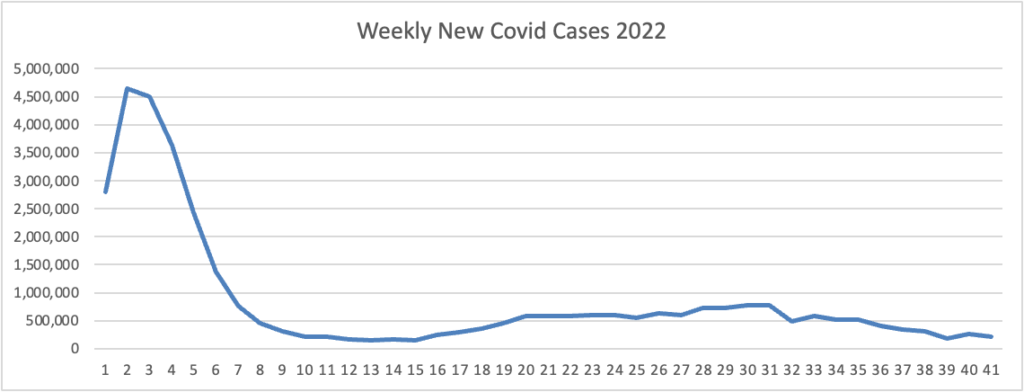
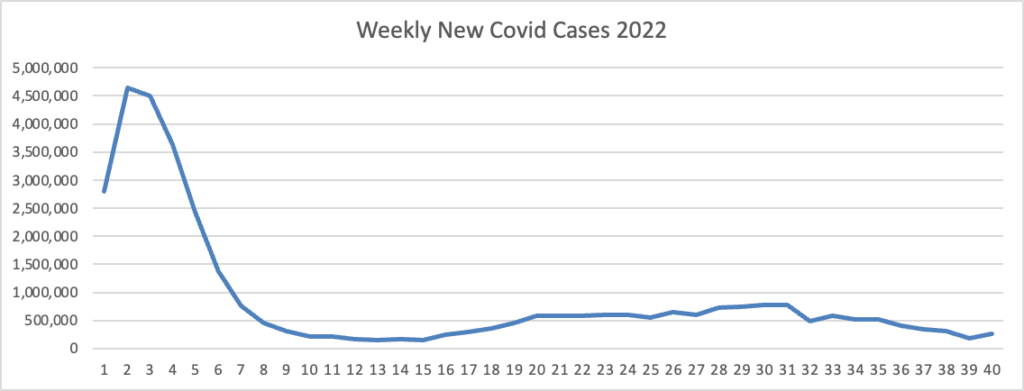
Based on the Centers for Disease Controls Covid Data Tracker and using Thursday as the first day of the week, here is the FEHBlog’s weekly chart of new Covid cases for 2022:

The CDC’s weekly review of its Covid statistics notes “As of July 27, 2022, the current 7-day moving average of daily new cases (126,272) decreased 0.9% compared with the previous 7-day moving average (127,478).”

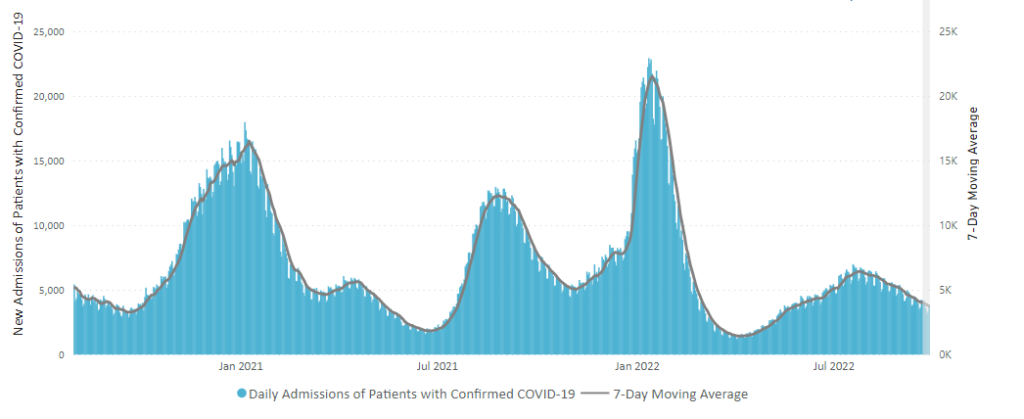
Here is the CDC’s chart of daily trends in new Covid hospital admissions:

The CDC’s weekly review notes “The current 7-day daily average for July 20–26, 2022, was 6,340. This is a 1.7% increase from the prior 7-day average (6,231) from July 13–19, 2022.

Also, “CDC Nowcast projections for the week ending July 23, 2022, estimate that the combined national proportion of lineages designated as Omicron will continue to be 100% with the predominant Omicron lineage being BA.5, projected at 81.9% (95% PI 79.9-83.8%).”

STAT News reports

[New Yorker Janet] Handal and the roughly 200,000 other Americans to receive Evusheld have had to recalibrate their hopes. Although the Food and Drug Administration doubled the recommended dose to compensate, and the drug — when given along with the full complement of vaccines — still offers protection against severe disease, gone are hopes that the most vulnerable could ditch masks or return to their pre-Covid lives.

Although the problem is now eight months old, few other prophylactic drugs for people with compromised immune systems are on the horizon. Several companies have announced plans to bring forward new Covid-19 antibodies, but they virtually are all either still in animal studies or are being principally developed as therapeutics.

The absence is particularly notable given the potential size of the market: Although Evusheld has remained vastly underused, a fact some physicians attribute to its hazily defined efficacy, between 7 and 10 million Americans are immunocompromised — a huge market by drug industry standards.

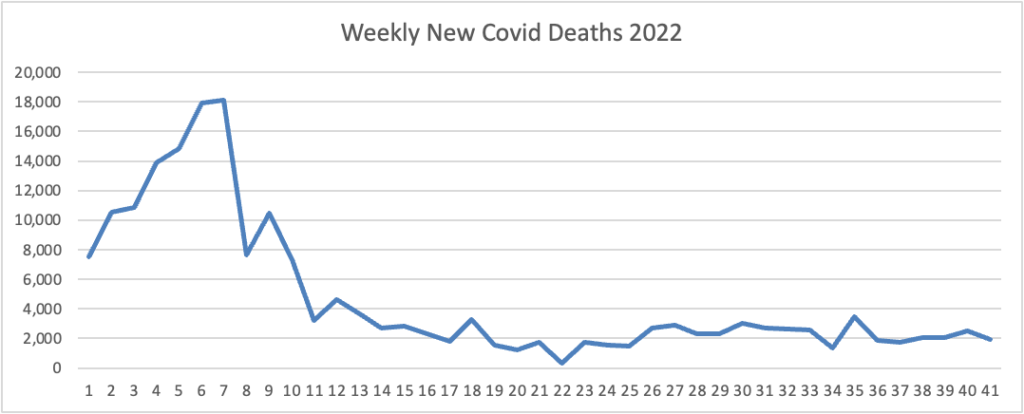
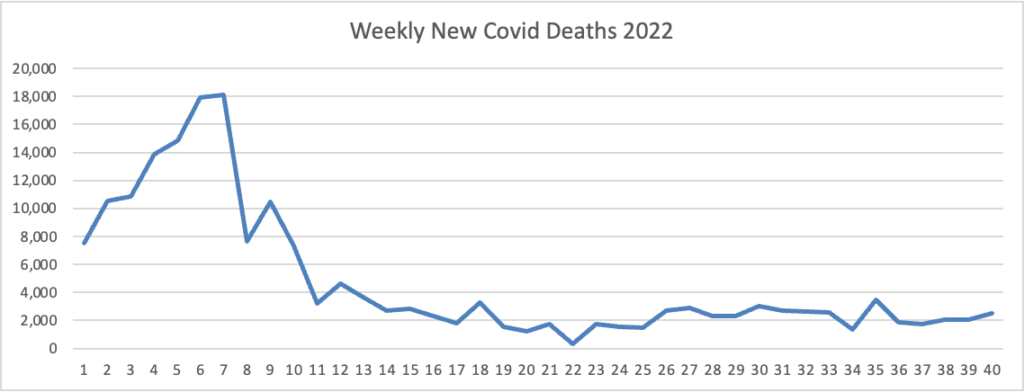
Here’s the FEHBlog’s weekly chart of new Covid deaths for 2022:

The CDC’s weekly review notes “The current 7-day moving average of new deaths (364) has decreased 4.8% compared with the previous 7-day moving average (382).”

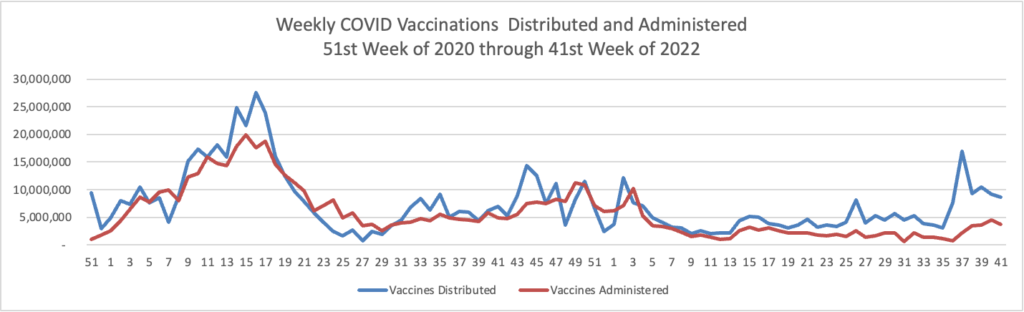
Here’s the FEHBlog’s weekly chart of Covid vaccinations distributed and administered from the 50th week of 2020, when the Covid vaccination era began to the 30th week of 2022:

The CDC’s weekly review notes, “About 223.2 million people, or 67.2% of the total U.S. population, have been fully vaccinated.* Of those fully vaccinated, about 107.9 million people have received a booster dose, but 50.1% of the total booster-eligible population has not yet received a booster dose.”

Reuters reports

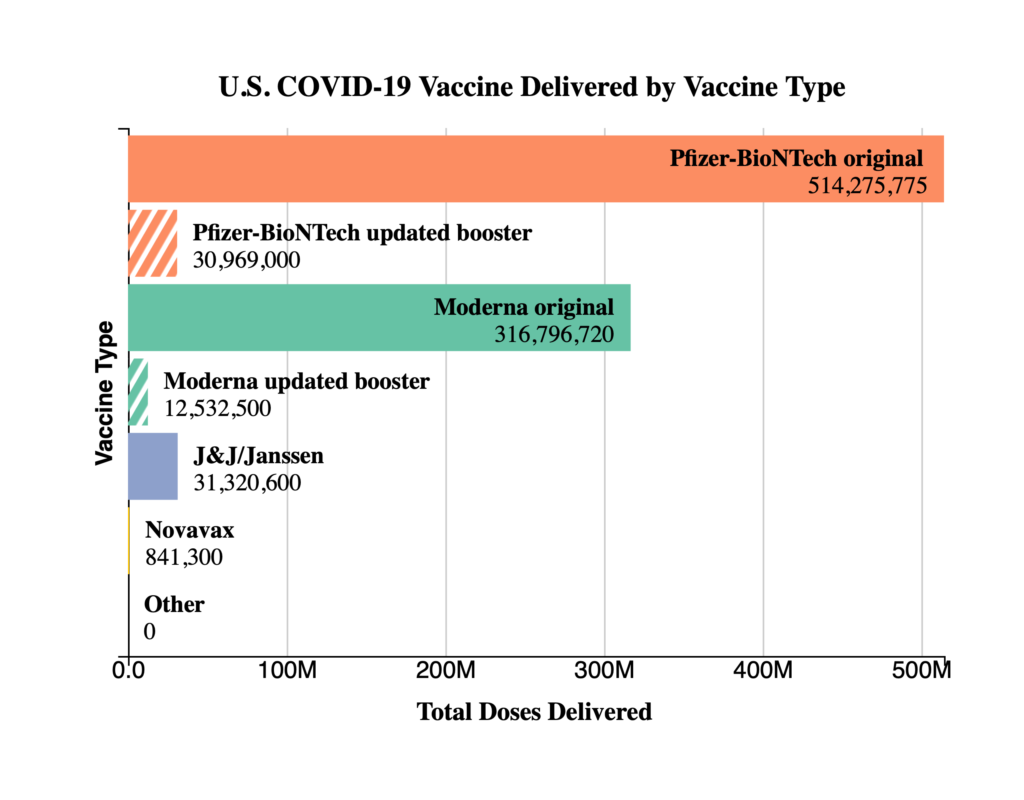
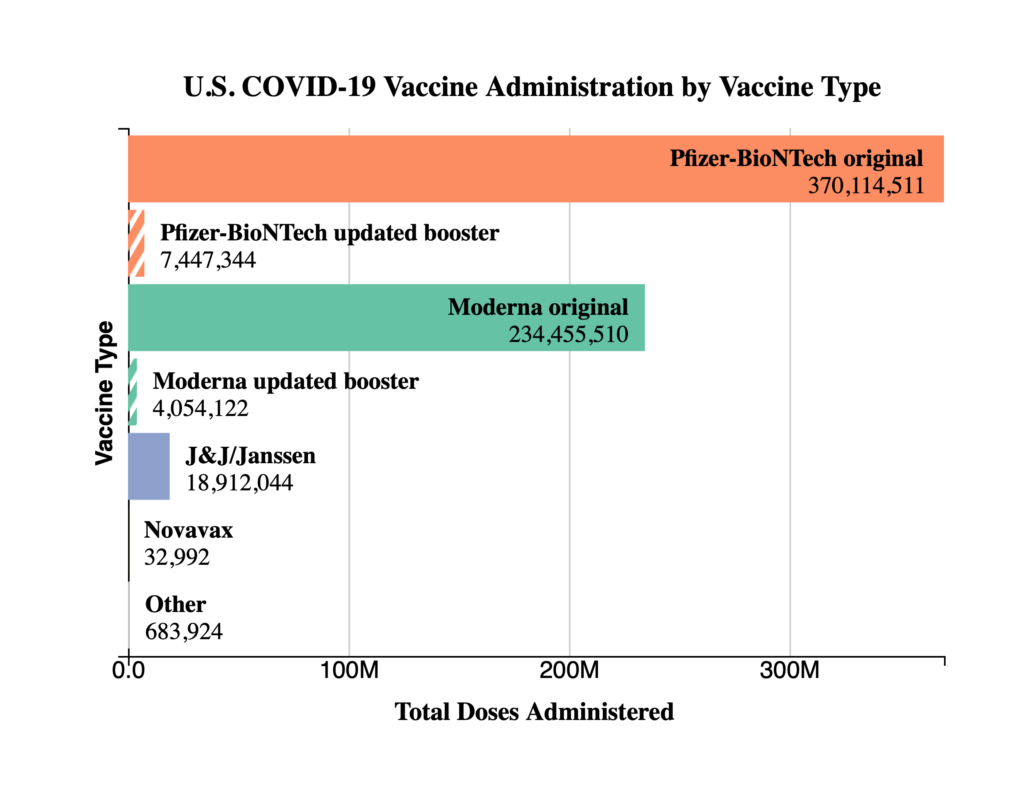
The U.S. government said on Friday it agreed to a $1.74 billion deal for 66 million doses of a Moderna COVID vaccine updated for the Omicron subvariant for use in a fall and winter booster campaign ***. Combined with 105 million doses the government already agreed to buy from Pfizer Inc and partner BioNTech SE for $3.2 billion, the latest deal puts the U.S. booster dose supply at about 171 million shots. read more

In CDC Communities News

As of July 28, 2022, there are 1,474 (45.8%) counties, districts, or territories with a high COVID-19 Community Level, 1,144 (35.5%) counties with a medium Community Level, and 602 (18.7%) counties with a low Community Level. Compared with last week, this represents a moderate increase (+3.9 percentage points) in the number of high-level counties, and a small decrease (−2.11 percentage points) in the number of medium-level counties and also a small decrease (−1.74 percentage points) in the number of low-level counties. 49 out of 52 jurisdictions* had high- or medium-level counties this week. Rhode Island, New Hampshire, and the District of Columbia are the only jurisdictions to have all counties at low Community Levels.

To check your COVID-19 Community Level, visit COVID Data Tracker. To learn which prevention measures are recommended based on your COVID-19 Community Level, visit COVID-19 Community Level and COVID-19 Prevention.

From the monkeypox front, the FDA provides an update on the agency’s response to this outbreak.

From the mental healthcare front —

MedPage Today brings us encouraging news

Local outpatient mental health providers are doing fine handling the increased demand from the newly launched nationwide “988” Suicide and Crisis Lifeline, despite fears that they wouldn’t be ready, according to a senior administration official.

“The states and call centers across the country absolutely rose to the increased volume that we saw,” the official said Thursday evening during a background briefing on distribution of federal grants to shore up mental health services in schools. “We can see a 45% increase in the volume of calls that came in the week of the launch, compared to the week prior, across the country — an additional 23,000 … calls, texts, and chats that came in across the lifeline.”

Healthcare Dive reports that CVS Health has appointed its first chief psychiatric officer. “Taft Parsons, MD, who has previously worked for Molina Healthcare and Henry Ford Health System, will be tasked with focusing on mental well-being for patients and will lead the Aetna Medical Affairs Behavioral Health organization.” Good luck, Dr. Parsons.

From the medical research front —

  • HealthDay informs us  “Obesity, depression, high blood pressure, asthma: These are just a few of the chronic health conditions that are now affecting almost 40 million Americans between the ages 18 and 34, new federal data shows.”
  • Mhealth Intelligence adds “While discovering new methods of care during the COVID-19 pandemic, Stanford Medicine researchers found that a smartphone app known as SkinIO is highly resourceful when detecting skin cancer among older people.”

From the telehealth front —

  • UPI reports “Using telehealth to supplement or replace in-person maternal care services, such as postpartum depression and diabetes and hypertension monitoring during pregnancy, leads to similar — and sometimes better — clinical outcomes and patient satisfaction compared to in-person care. That’s the gist of a study whose findings were published Monday in Annals of Internal Medicine.”

Finally, Health Payer Intelligence discusses a strategy for communicating relating high health plan premium increases for next year.

There are two key factors that will influence employer-sponsored health plan premiums in 2023, Jim Winkler, chief strategy officer at the Business Group on Health, told HealthPayerIntelligence by email: 

* Market inflation on prices of healthcare services

* Utilization rate of healthcare services

“Heading into 2023, employers face uncertainty in terms of the impact of market inflation on the prices of health care services and potential increases in utilization of those services,” Winkler said. 

“This all comes at a time when employers also have a heightened focus on attracting and retaining key talent while addressing the overall health and well-being needs of the workforce and their families.” * * *

“As employers prepare to communicate with their workforce, they will see that employees tend to be focused on what any cost increase means to them, both in terms of out-of-pocket costs and paycheck deductions. Employers will therefore need to assist employees on understanding how best to manage their own costs,” Winkler recommended.

Omnichannel communication with health plan members can be particularly useful for improving member engagement in employer-sponsored health plans. With omnichannel communication, payers and employers coordinate communication across multiple channels and platforms, improving the timeliness and convenience of member interactions.